3rd From Sol

~ Learn from before. Live now. Look ahead.

3rd From Sol

Tag Archives: NASA

15 Days in January – Day 13

26 Thursday Jan 2012

Posted by Paul Kiser in Fiction, Government, History, Science, Space, Technology, US History

≈ Leave a comment

Tags

Challenger, Launch Rats, NASA, Space Station, STS-51L, Teacher in Space, USSR

(NOTE: The following is a fictionalized account of the 15 days in January 1986 leading up to the Challenger Space Shuttle disaster on the 28th of that month; however, the details of weather and NASA events are based on known historical data.)

Titusville, Florida
Sunday, January 26, 1986
High Temp: 66° F Low Temp: 48° F

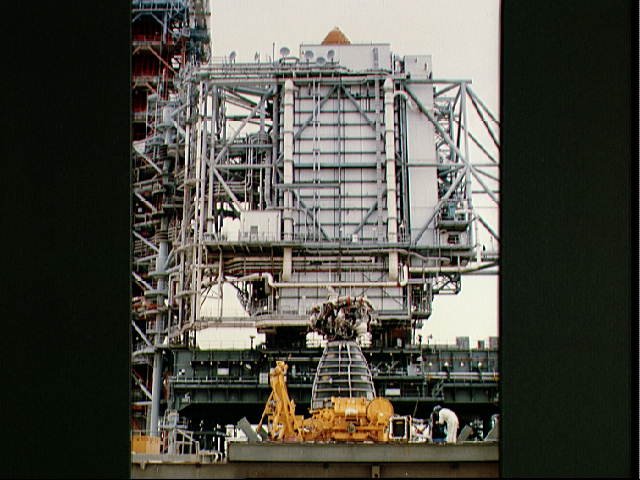
Launch Rats working on the hydrogen fuel line

What’s next? One of the people on the launch pad team (we’re known as ‘Launch Rats’) likes to say, “What’s next?” He rarely stops moving. Once he’s completed one task he wants to move on. That is a great philosophy to have at NASA. We are constantly facing a new task or issue as we prepare for each launch and in order to address them all we have to keep moving.

That’s also what we have done in the American space program. It was a major achievement to get to the Moon and back, but that was only one task. We started out behind the U.S.S.R. in space technology, but we now are in the pilot’s seat in determining the future of space exploration. U.S.S.R is copying our Shuttle design so they can also have a reusable space vehicle, but they are at least a decade behind us.

Our family of Orbiters have the capacity to build a massive space station, much larger than the Soviet space station that is rumored to be launched sometime this year. Once we have a platform in space we can prepare for extended missions to the Moon or Mars without the current limitation of a single rocket’s lift capabilities. That is what’s next for America’s space program.

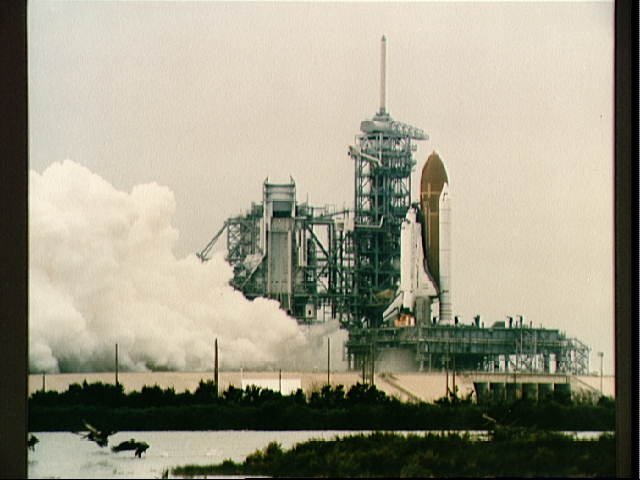
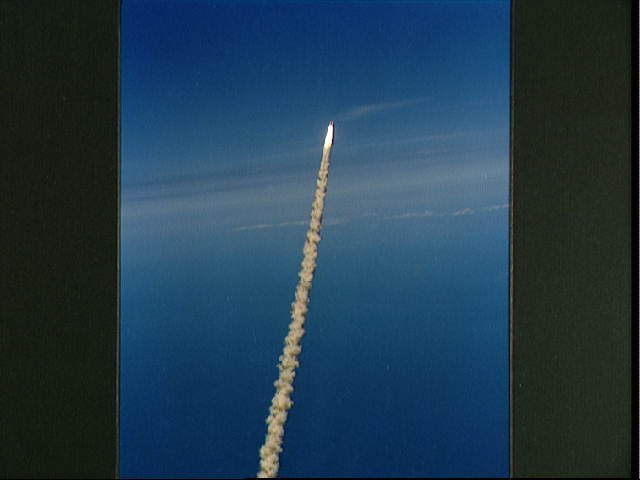
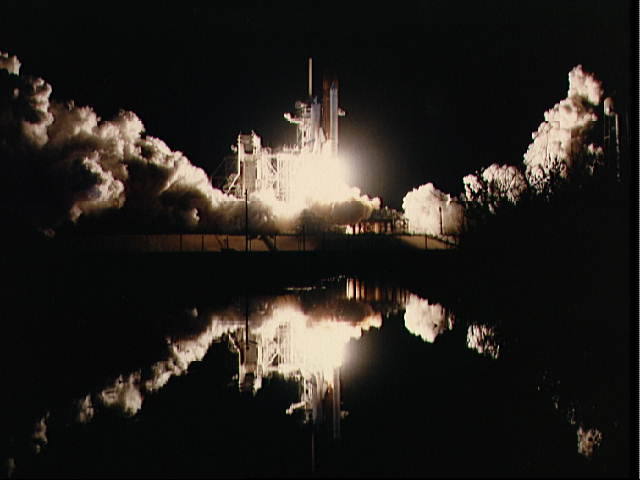
Tomorrow, pending good weather, we will send Challenger on its way, and before they are in orbit we have a Launch Rat that will be saying, “What’s next?”

15 Days in January – Day 12

25 Wednesday Jan 2012

Posted by Paul Kiser in Education, Fiction, Government, History, Public Relations, Science, Space, Technology, US History

≈ 1 Comment

Tags

1986, Challenger, Christa McAuliffe, Dick Scobee, Kennedy Space Center, KSC, NASA, Space Shuttle, STS-51L, Teacher in Space

(NOTE: The following is a fictionalized account of the 15 days in January 1986 leading up to the Challenger Space Shuttle disaster on the 28th of that month; however, the details of weather and NASA events are based on known historical data.)

Titusville, Florida
Saturday, January 25, 1986
High Temp: 73° F Low Temp: 57° F

Teacher in Zero G - Christa McAuliffe trains for STS-51L

The launch of STS-51L is now scheduled for Monday. We were scheduled for a liftoff Sunday morning, but tomorrow’s weather is predicted to be as bad or worse than today’s, which was foggy until about noon. Hopefully, we can get Challenger off the ground on the 27th and then focus on Columbia’s next launch in March.

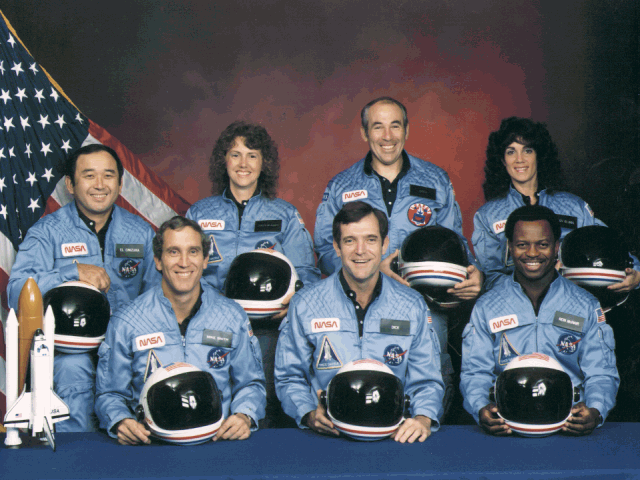
The seven astronauts going up with Challenger on Monday include our first teacher. The Teacher in Space Project was announced by President Ronald Reagan in the Fall of 1984. Last Summer Vice President George Bush announced that Sharon Christa McAuliffe was selected as the first Teacher in Space from 11,000 applicants. Christa teaches in Concord, New Hampshire and submitted her application on the last day they were being accepted.

STS-51L crew trains for emergency evacuation from launch pad

Mrs. McAuliffe, as she is known in the classroom, has always dreamed of being part of the space program and is pleased to have the chance to take her classroom skills into space. Christa talked about the opportunity she has been given, saying:

Imagine me teaching from space, all over the world, touching so many people’s lives. That’s a teacher’s dream! I have a vision of the world as a global village, a world without boundaries. Imagine a history teacher making history!

In addition to Mrs. McAuliffe will be four members of the ‘Class of 1978.’ Commander Francis R.’Dick’ Scobee, Mission Specialists Ellison ‘El’ S. Onizuka, Judith ‘Judy’ A. Resnik, and Ronald ‘Ron’ E. McNair were all selected as astronaut candidates in January of 1978. The other two crew members are Pilot Michael J. Smith and Payload Specialist Gregory Jarvis.

Commander Dick Scobee noted the opportunity of the Teacher in Space Project when he said:

“My perception is the real significance of it, and especially a teacher, is that it will get people in this country, especially the young people, expecting to fly in space. That’s the best thing that can happen to our program. The short-term gain is a publicity gain. The long term gain is getting expectations of the young people in this country to the point where they expect to fly in space, they expect to go there, they expect this country to pursue a program that allows it to be in space permanently to work and live there, to explore the planets.”

The Teacher in Space Project is just one more part in keeping America a world leader by bringing space down to Earth. On Monday we will take the next step with the beginning of mission STS-51L…assuming the weather cooperates!

15 Days in January – Day 11

24 Tuesday Jan 2012

Posted by Paul Kiser in Communication, Education, Fiction, Government, History, Information Technology, Science, Space, Technology, US History

≈ Leave a comment

Tags

Challenger, Halley's Comet, Kennedy Space Center, KSC, NASA, Satellite, Space Shuttle, SPARTAN 203, STS-51L, TDRS, Teacher in Space

(NOTE: The following is a fictionalized account of the 15 days in January 1986 leading up to the Challenger Space Shuttle disaster on the 28th of that month; however, the details of weather and NASA events are based on known historical data.)

Titusville, Florida
Friday, January 24, 1986
High Temp: 66° F Low Temp: 55° F

TDRS satellite to be launched by Challenger STS-51L

This afternoon’s launch had to be scrubbed. The weather here was cool and damp, but the real problem was the weather at one of the abort landing sites. We have an alternate abort site but they cannot handle a nighttime landing (an abort on this side of the world would be a night landing there,) so the launch was rescheduled for tomorrow morning in case we have to activate the alternate abort site. That would allow Challenger to land in daylight at the alternate site if they have to abort.

The launch was then pushed back another day because of the morning versus afternoon liftoff. The problem is that we have a set amount of work to do and it was quickly determined that we would not be ready for launch by Saturday morning. Mission Control then moved the launch to Sunday morning. 

SPARTAN 203 satellite to have its eye on Halley's Comet

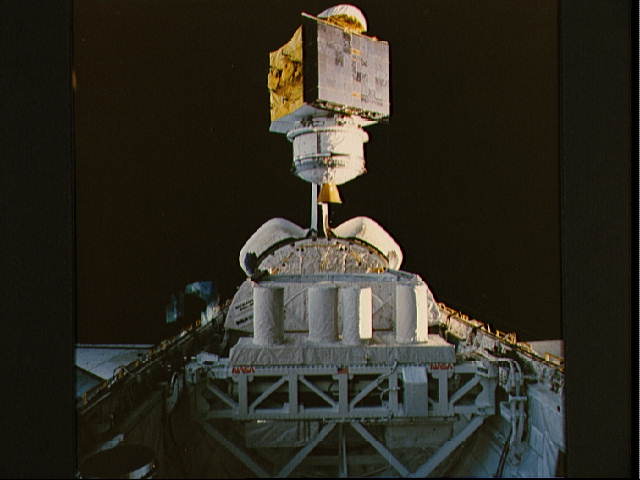
Once we finally do get Challenger in orbit, the STS-51L mission has several goals. One will be to launch the TDRS-2 satellite, which is a communications relay station for analog and digital signals. These satellites are the next generation in communication technology allowing information to be transmitted around the world in seconds. Another small satellite called SPARTAN 203 is being deployed to observe Halley’s Comet, which will reach its perihelion (closest approach to the Sun) on February 9, 1986.

In addition, this mission will send our first “Teacher in Space.” More about that tomorrow. 

15 Days in January – Day 10

23 Monday Jan 2012

Posted by Paul Kiser in Fiction, Government, History, Science, Space, Technology, US History

≈ Leave a comment

Tags

C1, C2, C3, Challenger, Criticality, KSC, NASA, space flight, STS-51L

(NOTE: The following is a fictionalized account of the 15 days in January 1986 leading up to the Challenger Space Shuttle disaster on the 28th of that month; however, the details of weather and NASA events are based on known historical data.)

Titusville, Florida
Thursday, January 23, 1986
High Temp: 75° F Low Temp: 53° F

Earth looking out through Challenger cargo bay

Tomorrow we should launch Challenger on its 10th mission. Temperatures were seasonal today; however, the weather is questionable as another cold front is moving through tomorrow. We won’t know if the launch is a go or not until a few hours or less before liftoff.

Beyond weather considerations, there are thousands of things that have to be perfect before a mission is given a “go for launch.” It’s a wonder we ever get a Space Shuttle off the ground. Every individual component of the Orbiter, the External Tank (ET), and the Solid Rocket Boosters (SRBs) is rated in one of five categories of impact on the mission, vehicle, and/or crew if the part fails. The ratings are as follows:

  • Criticality 1 (C1) – Loss of vehicle or crew if the component fails
  • Criticality 2 (C2) – Loss of mission
  • Criticality 3 (C3) – Component will not have fatal impact on crew, vehicle, or mission if it alone fails
  • Criticality 1R (C 1R) – Redundant component, but loss of vehicle or crew if both primary and redundant components fail
  • Criticality 2R (C 2R) – Redundant component, but loss of mission if both primary and redundant components fail

Any component that is not rated C3 and has a known issue not only stops the countdown, but the entire program, until resolved. When trying to put seven people and tons of cargo into Earth orbit, there are a lot of components that fall into the C1, C2, C 1R, or C 2R categories. Safety can be annoying, but it save lives.

Crew of Challenger STS-7 mission working in space

That said, it is impossible for any human, regardless of how careful, intelligent or well-educated, to be able to anticipate every possible problem. Exploration of uncharted territory comes with a price and that price is the loss of human life. Over 700 people died trying to reach the North Pole and even there we have air to breathe, water, and survivable temperatures if properly dressed. In space there is no air, no water, and a human dies if directly exposed to the vacuum of space.

Space travel is risky on the best of days. Astronauts are put in a ship that is designed to be as light-weight as possible with no significant armor or shielding around them. They are attached to two highly explosive solid rocket boosters that would flatten a small city if they exploded, connected to a massive tank filled with hydrogen and oxygen that has a nasty tendency to flash burn if it comes in contact to even a small flame or spark.

In addition, the speeds and the pressures that astronauts experience are unlike any other reality most humans can imagine. There is no doubt that human life will be lost in the pursuit of space exploration. We will do everything we can to safeguard our astronauts, but at some point we will discover what we did not anticipate. At some point an accident will occur on the ground or in flight. We will investigate, learn where we failed and moved forward again.

For centuries humans sailed near the coastline because no one knew what lie out across the sea. Staying close to shore taught us how to sail, while minimizing the risk. Even then ships sank and people died. The Space Shuttle program is our way of sailing near the coastline. We send people up into low Earth orbit and learn how to ‘sail’ in space. After a few decades we will be ready to go out into open space, just as ships were ready to cross open seas.

There are some who ask why should we reach out into space. That is probably what some people asked sailors who went off to explore the new world. But those brave men sailed off into uncharted waters and everything we now enjoy in the United States of America is due to those who took the risks to leave behind the safety of ‘the known’ in order to explore the unknown.

The answer to those people who want to know ‘why’ is simply this: we don’t know why…YET. After we get there we will know why it was so important we went. That is the way it has always been when exploring the unknown. That is the way it will always be.

15 Days in January – Day 9

22 Sunday Jan 2012

Posted by Paul Kiser in Fiction, Government, History, Science, Space, Technology, US History

≈ Leave a comment

Tags

abort, Challenger, NASA, Space Shuttle, SSME, STS-51F

(NOTE: The following is a fictionalized account of the 15 days in January 1986 leading up to the Challenger Space Shuttle Disaster; however, the details of weather and NASA events are based on known historical data.)

Titusville, Florida
Wednesday, January 22, 1986
High Temp: 72° F Low Temp: 46° F

Challenger main engines during STS-51F abort

It’s too bad the launch of our 25th mission was moved from today. The weather was good for most of the day. We are still go for the launch of Challenger on Friday. After Challenger we have a break until March 6th, when Columbia is scheduled to launch again.

As I’ve said, this will be Challenger’s 10th mission; however, the most problematic mission we’ve ever had in the program was her 8th mission. She was scheduled for launch on July 12, 1985 and the countdown was proceeding as planned. At 6 seconds the Orbiter’s main engines (SSMEs) began their firing sequence; however, just before the Solid Rocket Boosters (SRB) were fired the computers detected a problem with one of the engines and aborted the launch. While it is a safe procedure, any abort makes everyone’s heart beat a little faster.

Launch of STS-51F - Before one Main Engine failure

Once again the Challenger had her main engines replaced while at the launch pad, which took us two weeks. Problem solved…or at least we thought.

Challenger was then rescheduled for a liftoff on July 29th. After a technical issue delayed the launch by 97 minutes Challenger finally left pad 39A on her way to orbit. Less than six minutes into the flight one of Challenger’s main engines shutdown and another engine was reaching a potential automatic shutdown, which would have caused a serious high-risk abort issue. Quick work by Mission Control and the crew overrode the computer and kept the remaining two engines burning. Unfortunately, the Orbiter could not make its planned orbit; however, the crew was able to fulfill the mission in a lower orbit.

The launch of a Space Shuttle is never routine, but by the end of this year we will be showing the world how close space can be to those who reach for it

15 Days in January – Day 8

21 Saturday Jan 2012

Posted by Paul Kiser in Fiction, Government, History, Science, Space, Technology, US History

≈ Leave a comment

Tags

Challenger, hot gases, joint leakage, NASA, O-rings, Solid Rocket Boosters, SRB, STS-51-L, STS-51B, STS-51L, STS-6, STS-7, STS-8

(NOTE: The following is a fictionalized account of the 15 days in January 1986 leading up to the Challenger Space Shuttle Disaster. The character’s account is fictional; however, the details of weather and Space Shuttle events are based on known historical facts.)

Titusville, Florida
Tuesday, January 21, 1986
High Temp: 64° F Low Temp: 45° F

Challenger rolls out to Launch Pad 39A

Today we are having another day of cool, but clear weather with the wind out of the north. Challenger (OV-099) is still being prepped for a Friday launch and I’m just grateful that the original launch date was pushed back because of Columbia’s flight delays. Hopefully, it will be warmer on Friday, which will make the launch more comfortable for everyone watching. 

Challenger STS-6, her maiden voyage

As I said yesterday, Challenger has given us many ‘challenges.’ The fact that OV-099 was not originally intended to fly may be part of the reason she has been sometimes reluctant to leave Earth. That said, despite her temperament, Challenger  has broken new ground for the program.

After her problematic maiden voyage the second flight was relatively trouble-free. Launched on June 18, 1983, Challenger STS-7 was the first mission with a planned landing at KSC, but that had to be waved off because of weather.

Challenger in lightning storm just prior to liftoff

Challenger’s third mission (STS-8) was supposed to be in July, but because a payload issue the launch was pushed back to August 30, 1983. After a spectacular lightning show just before launch, Challenger lifted off almost on time making history as the first nighttime launch of a Space Shuttle. This feat was complimented by the first nighttime landing when Challenger returned on September 5, 1983.

1984 was a great year for Challenger. OV-099’s fourth, fifth, and sixth missions gave us the first untethered ‘space walk,’ the first Orbiter landing at KSC, the successful recovery, repair, and redeployment of an orbiting satellite, the first time seven people were launched into space, and the first time two women were in space at the same time.

Bruce McCandless II became first human satellite on STS-41B

The seventh mission for Challenger, and her first of 1985, was unusual because it was the only mission where the Shuttle had been delivered to the launch pad and then had to be pulled back to the Vertical Assembly Building (VAB.) Concerns about the reliability of a satellite in the payload bay of Challenger forced NASA to cancel the mission.

After a two month delay Challenger’s new STS-51B mission was finally launched on April 29, 1985, with the European Space Lab – 3 in its payload bay. The mission was a success with the only issue with the flight occurring after the Solid Rocket Boosters (SRB) were recovered. The left SRB had evidence that it leaked hot gases through a joint area and two rubber o-rings that were designed to sealed the joint were damaged. One ring had 4mm of erosion and the other had 8mm of erosion.

This leakage presents two issues. The first is the potential loss of pressure if the leak is too major and the second is the danger of hot gases that might be directed toward the External Tank (ET), the Orbiter, or the other SRB, which might damage them. Fortunately, this was not an issue during this flight.

Despite the SRB hot gases leakage issue on her seventh mission, the biggest scare Challenger would give us was on her eighth mission. I’ll talk about that tomorrow. 

15 Days in January – Day 7

20 Friday Jan 2012

Posted by Paul Kiser in Fiction, Government, History, Science, Space, Technology, US History

≈ Leave a comment

Tags

Challenger, NASA, Orbiter, OV-099, Space Shuttle, STA-099, STS-51L

(NOTE: The following is a fictionalized account of the 15 days in January 1986 leading up to the Challenger Space Shuttle Disaster. The character’s account is fictional; however, the details of weather and Space Shuttle events are based on known historical facts.)

Titusville, Florida
Monday, January 20, 1986
High Temp: 66° F Low Temp: 48° F

Challenger atop the Boeing 747 on April 18, 1983

We are now four days from the launch of Challenger on the STS mission 51L. The decision was made to push back the date to Friday the 24th. I think that will be a great way to end our week. 

Challenger is our second space-qualified Orbiter. Columbia was the first. Challenger has been responsible for nine of 24 completed missions, and at times Challenger has been challenging.

Challenger rolls out to Launch Pad 39A for maiden voyage (8 DEC 1982)

While most civilians know Challenger by its name, we know it as OV-099 (technically:  Orbiter Vehicle-099;) however, that was not its original designation because initially it was not intended to fly.

Because of the lack of computer simulations, STA-099 (Structural Test Vehicle-099) was built to be a full-scale test model to determine if the design would meet stress expectations without failing. The contract to build it was awarded on July 26, 1972, but construction didn’t begin until November 21, 1975. After a year of testing was decided that it would be quicker and less expensive to refit STA-099 for space flight rather than rebuild the original air-flight test vehicle we know as Enterprise (OV-101.) The conversion of STA-099 to OV-099 began on January 28, 1979, which, in eight days, will be exactly seven years ago.

Repairing/replacing Challenger's main engines before its maiden flight

Challenger rolled out of the Palmdale assembly facility on June 30, 1982 and arrived at KSC on July 5th. Challenger was prepped for its first flight, which was scheduled for January 20, 1983, but while it sat on Launch Pad 39A testing revealed a hydrogen leak in one of the main engines. Subsequently, Challenger had to have her main engines removed for repairs while sitting on the launch pad. One of the engines had to be completely replaced.

Challenger problems did not end with the engines. A severe storm contaminated the payload while she sat on the pad. The payload had to be decontaminated. Challenger finally was successfully launched on her maiden flight on April 4, 1983, 51 months after the conversion began.

More on this ship’s history tomorrow.

15 Days in January – Day 6

19 Thursday Jan 2012

Posted by Paul Kiser in Fiction, Government, Science, Space, Technology, US History

≈ Leave a comment

Tags

39B, Challenger, Launch Pad, NASA, Orbiter, Space Shuttle, STS-51-L, STS-61A, Vandenberg AFB

(NOTE: The following is a fictionalized account of the 15 days in January 1986 leading up to the Challenger Space Shuttle Disaster. The character’s account is fictional; however, the details of weather and Space Shuttle events are based on known historical facts.)

Titusville, Florida
Sunday, January 19, 1986
High Temp: 73° F Low Temp: 60° F

STS-51L Challenger crew for the next launch

For most Americans Sunday should be a day of rest, but for us on the Launch Pad it is not. It’s hard to describe the workload on the Pad workers right now. This next flight will be our first off Pad 39B, which means we are breaking in a new launch pad at the same time we are trying to get the program back on schedule.

After Challenger launches we will have two launch pads operational and another one that will become operational at Vandenberg AFB in six months. We will need all three launch pads if we are going to be able to meet the needs of the ramped up space program. We are in the process of training a lot of people to staff all three launch pads but after we have a few launches under our belt it will all fall into place.

Challenger in VAB ready to be lifted

Each Orbiter goes through a series of ‘handoffs’ as it moves through the launch preparation phases. The current mission’s Orbiter, Challenger, landed at Edwards AFB on November 6, 1985, which ended its STS-61A mission. It was then prepped for riding on the back of a Boeing 747 back to Kennedy Space Center (KSC) where it arrived on November 11th. Challenger was then put in the Orbiter Processing Facility (OPF) for just over a month where it was prepped for this mission. On December 16th it was moved to the Vertical Assembly Building (VAB) where the External Tank (ET) and the two Solid Rocket Boosters (SRB’s) were mated to the Orbiter. Six days later (December 22, 1985) STS-51L rolled out to Launch Pad 39B where it is our job to prepare and maintain the ship until it launches next week.

Each ship goes through the same process. To have two launches a month, as is our goal, we will become a factory-like operation that flawlessly performs every duty, every day, 24 hours a day. We will truly be the most unique cargo operation in the world and the most vital for our country. We learn as much science and technology from every launch as the real scientists who fly our ships into space. With every new launch we are revising, updating and perfecting our skills.  Twenty years from now my children will know that their Dad was one of the people who made America the country that has the best, and possibly only, space port in the world! It makes me proud to be a part of history.

15 Days in January – Day 5

18 Wednesday Jan 2012

Posted by Paul Kiser in Fiction, Government, History, Science, Space, US History

≈ Leave a comment

Tags

1986, Challenger, Columbia, NASA, Space Transportation System, STS 61 C, STS-51-L

(NOTE: The following is a fictionalized account of the 15 days in January 1986 leading up to the Challenger Space Shuttle Disaster. The character’s account is fictional; however, the details of weather and Space Shuttle events are based on known historical facts.)

Titusville, Florida
Saturday, January 18, 1986
High Temp: 70° F  Low Temp: 61° F

STS-61C Columbia lands at night at Edwards AFB

Today was a good news/bad news day. The good news was that Columbia is back on Earth. The bad news that it didn’t come home. It’s sitting at Edwards AFB, which means it will add about a week to the turnaround time before it flies again. We just can’t seem to catch a break. The landing took place after dark after they waited as long as they could for a KSC landing attempt.

Our next launch is still scheduled for January 23, and I still don’t know how we can make it. I’m not sure anyone will be ready, but there are a bunch of smart people in air-conditioned rooms that must know more than the rest of us. Of course, Challenger won’t fly if we are not ready.

To give you an idea of the schedule we are looking at, here are the launches scheduled for this year:

1986 Space Transportation System (STS) Missions

  • January 12 (KSC) – Columbia (STS-61C) – Deploying a satellite and experiments (Completed)
  • January 24 (KSC) – Challenger (STS-51L) – Deploying satellites and experiments
  • March 6 (KSC) – Columbia (STS-61E) – Astro 1 mission
  • May 15  (KSC) – Challenger (STS-61F) – Deployment of Ulysses satellite
  • May 20 (KSC) – Atlantis (STS-61G) – Deployment of Galileo satellite
  • June 24 (KSC) – Columbia (STS-61H) – Deployment of 3 satellites
  • July 1 (Vandenberg) – Discovery (STS-62A) – Dept. of Defense mission
  • July 22 (KSC) – Challenger (STS-61M) – Deployment of TDRS-4 satellite
  • August 18 (KSC) – Atlantis (STS-61J) – Deployment of Hubble Space Telescope satellite
  • September 4 (Vandenberg) – Discovery (STS-61M) – Dept. of Defense mission
  • September 27 (KSC) – Challenger (STS-61I) – Deployment of Intelsat-4 satellite
  • September 29 (Vandenberg) – Discovery (STS-62B) – Dept. of Defense mission
  • October 1 (KSC) – Columbia (STS-61K) – Mission information not released
  • November 1 (KSC) – Atlantis (STS-61L) – Mission information not released
  • December (Vandenberg?) – Challenger (STS-71B) – Dept. of Defense mission

One down, 14 to go. 1986 is going to be a big year for NASA!

15 Days in January – Day 4

17 Tuesday Jan 2012

Posted by Paul Kiser in Fiction, Government, History, Science, Space, US History

≈ Leave a comment

Tags

Columbia, NASA, Representative Bill Nelson, STS 61 C

(NOTE: The following is a fictionalized account of the 15 days in January 1986 leading up to the Challenger Space Shuttle Disaster. The character’s account is fictional; however, the details of weather and Space Shuttle events are based on known historical facts.)

Titusville, Florida
Friday, January 17, 1986
High Temp: 72° F  Low Temp: 62° F

STS-61C launches a satellite from cargo bay

For the second day in a row weather caused Mission Control to cancel Columbia’s landing. Weather was better here, but it was cloudy both here and at Edwards. They really have to land it here at KSC if we have any hope of getting the program back on schedule.

I wonder if the suits in the control room are being too cautious. The pilot has some of the most sophisticated navigation tools available in the world and he doesn’t even actually fly the Orbiter until just before the approach and landing. He just monitors the computers, and if he wanted the computers could land it for him. Visibility should not be a reason to wave off a landing.

My guess is the caution is due to the VIP on board. Nobody wants to make a bad call when a politician life is at stake and I’m sure he’s perfectly happy to have extra time in space. Still, we’re not running a tourism service and I think everyone knows Columbia has to get its wheels back on the ground as quickly as possible.

STS-61C Columbia-Representative Bill Nelson peels grapefruit

We are scheduled for 15 missions this year and no one really expects that is possible. I would guess that we could do 12 missions, but even that will not be possible if we keep having these delays. Our next launch is scheduled for next Thursday, but with the delays, I don’t see how we can be ready. 

This year is when we ramp up the program to go from exploring to occupying space. Orbiting outposts that are living and working environments are next in America’s advancement into to space. From there, bases on the Moon and Mars are not far behind. The Space Transportation System (STS) program will pave the way and I’m excited to be a part of it. We just have to get our ‘sea legs’ on launches and landings and it will all fall into place. We have 24 successful STS missions (assuming Columbia ever comes home) and the next launch will be our 25th. Space travel may never be routine, but we’re starting to understand what it will take to be the space port for the world.

15 Days in January – Day 3

16 Monday Jan 2012

Posted by Paul Kiser in Fiction, Government, History, Science, Space

≈ Leave a comment

Tags

Atlantis, Challenger, Columbia, Edwards AFB, Kennedy Space Center, KSC, NASA, Space Shuttle, STS 61 C, STS-51-L, STS-61-B

(NOTE: The following is a fictionalized account of the 15 days in January 1986 leading up to the Challenger Space Shuttle Disaster. The character’s account is fictional; however, the details of weather and Space Shuttle events are based on known historical facts.)

Titusville, Florida
Thursday, January 16, 1986
High Temp: 69° F  Low Temp: 52° F

They waved off the Columbia landing today. Weather conditions here and at the backup landing site at Edwards AFB were unacceptable. It was drizzly here today and cloudy in California. Personally, I think that landing at Edwards should only be an emergency. When an Orbiter lands at Edwards it costs over $1.5 million dollars to get it back here and we lose a week in turnaround time. If we can’t land because the weather at Kennedy Space Center we could wait for several days and still save money and time on the recovery of the Orbiter.

Atlantis (STS-61-B) was the last mission and it landed at Edwards on October 7th and it was October 12th before it was back here. Once it got back here we had the fastest turn around in the history of the program. Atlantis was out to the launch pad by November 12th. Had it landed here at Kennedy Space Center (KSC) it would have been ready to go by November 7th. The only reason to land at Edwards is if the next launch for that vehicle will be from Vandenberg AFB, and our first launch from there isn’t going to happen until July.

STS-61-B Atlantis landing at Edwards on October, 7, 1985

Of course, delays have their costs, too. Every time we scrub a landing or launch we are wasting money because we all get paid whether the Orbiter comes or goes,…or doesn’t. Still, if we are going to prove the value of the program we need to be able to get the Orbiters back in the air as quickly as possible, and that means landing at KSC.

Fortunately, tomorrow will be warmer and hopefully dryer. It should be a good day for a landing. Columbia has been a pain in the neck. It should have been up and down by Christmas and now were almost a month later and still waiting for it to land. Once Columbia is back home we are scheduled to launch Challenger next week.  

15 Days in January – Day 2

15 Sunday Jan 2012

Posted by Paul Kiser in Fiction, Government, History, Public Relations, Science, Space, US History

≈ Leave a comment

Tags

Bill Nelson, Challenger, Columbia, NASA, Space Shuttle, STS 61 C, STS-51-L

(NOTE: The following is a fictionalized account of the 15 days in January 1986 leading up to the Challenger Space Shuttle Disaster. The character’s account is fictional; however, the details of weather and Space Shuttle events are based on known historical facts.)

Titusville, Florida
Wednesday, January 15, 1986
High Temp: 64° F  Low Temp: 43° F

STS-61-C Launch on January 12, 1986

STS-61-C, or Columbia is coming back tomorrow, pending good weather. We should have Challenger ready for launch a week after Columbia lands. It was scheduled for launch at 2:42 PM EST on the 22nd, but when they had to scrub the December launch of Columbia, they moved Challenger’s launch back a day to the 23rd.

Columbia’s main mission was to launch a communications satellite and that was a success. They have had a bunch of experiments, most of them are in the Shuttle bay, but they will have everything wrapped up for tomorrow’s landing.

Personally, I’ll be glad to have Representative Bill Nelson back on the ground. I’m not sure it’s a great idea to have the people who champion our budget in Congress to take the risk of flying in space. One mistake and we could lose all our financial support and the STS program would be over. I guess the PR people must know what they are doing.

Representative Bill Nelson with on board experiment

The next mission (STS-51-L) is also going to be a high-profile flight. We have the first ‘official’ civilian on the Challenger trip. She is our first ‘teacher-in-space.’ I wonder if this is going to be a regular thing from here on out. I understand we need the public’s support and I guess this is the best way to get it. Still, I think people just need to accept that our leadership in space makes us technologically superior here on Earth. Let us do our jobs at NASA and our country will reap the benefits in advanced scientific and engineering knowledge.

We had some fog today, but this morning was a little warmer. Yesterday’s low was too close to freezing for Florida. Our farmers don’t like it when we get that cold. Hopefully, we’ve had our cold snap for this winter.

15 Days in January – Day 1

14 Saturday Jan 2012

Posted by Paul Kiser in Fiction, History, Science, Space

≈ Leave a comment

Tags

Bill Nelson, Challenger, Charles Boden, Columbia, Florida, NASA, Space Shuttle, STS 61 C, Titusville

(NOTE: The following is a fictionalized account of the 15 days in January 1986 leading up to the Challenger Space Shuttle Disaster. The character’s account is fictional; however, the details of weather and Space Shuttle events are based on known historical facts.)

Titusville, Florida
Tuesday, January 14, 1986
High Temp: 63° F  Low Temp: 37° F

STS 61 C Crew - Columbia - Launched January 12, 1986

At least we have Columbia in the air. These delays are frustrating. Columbia was supposed to be launched on December 18th and since then launch attempts on December 19th, twice on January 6th, and January 7th, 9th, and 10th were all scrubbed for one reason or another. Finally, we got them off Sunday. At least the launch went well, but we have Challenger waiting in the wings.

Columbia is supposed to come back on this Friday, the 17th, but that’s going to push back the launch of the Challenger. There’s talk of bringing back Columbia early so we can move up the Challenger launch. Hopefully, we’ll get the official word tomorrow.

Charlie Bolden is the pilot on the Columbia on this flight. This is his first flight. Coincidentally, he’s from Columbia, South Carolina. He was the first guy we put in the slidewire basket to test the launch tower escape system. We didn’t kill him, which is at least on measure that it must work. 

We’ve also got a politician on board the Columbia. Representative Bill Nelson is one of the payload specialists. God I hope nothing goes wrong on this flight. That would put a quick end to the program. For all my complaining I have to say it’s pretty exciting to be part of the launch pad team right now. There’s a lot of pressure, but we’re doing something no one else in the world can do and I wouldn’t trade my job to anyone.

It was chilly this morning. It felt like we were in Denver. I didn’t take my jacket off until late this afternoon. Tomorrow should be warmer and maybe we can get back to more normal temperatures.

Dates of Historical Note in 2012

02 Monday Jan 2012

Posted by Paul Kiser in History, US History

≈ 3 Comments

Tags

1812, 1912, 1962, 2002 1987, 2012, Cuban Missile Crisis, historical events, NASA, RMS Titanic, Space Program

Missile sites in Cuba (1962)

April of 2012, will be the 100th anniversary of the launch and sinking of the RMS Titanic.  In 2012, Louisiana will celebrate its bi-centennial, while New Mexico and Arizona will mark their centennial. This upcoming Leap year will also note the 50th year since the Cuban Missile Crisis and America’s successful efforts to have a human orbit Earth. In addition to the October crisis in Cuba, 1962, is notable for the multiple conflicts between Russia and the United States that almost put the planet into a nuclear holocaust. Here are those, and other significant 10, 25, 50, 100, 200, 300, 500 and 800 year milestones coming in 2012.

JANUARY

  1  – The Republic of China was established (1912) as were the Navy Seals (1962)

  3 – Pope John XXIII excommunicates Fidel Castro (1962)

  6 – New Mexico became the 47th State (1912)

10 – Avalanche in Peru kills almost 4,000 (1962)

23 – Estimated 7.0-7.8 earthquake strikes near New Madrid, Missouri (1912 – 3rd powerful earthquake in 6 weeks)

26 – Ranger 3 (Moon Probe) is launched (1962)

28 – Ranger 3 misses Moon by over 22,000 miles (1962)

31 – Asteroid 433 Eros will pass near Earth, well 16.6 million miles (2012)

FEBRUARY

John Glenn in Friendship 7

  3 – The United States begins an embargo on Cuba (1962)

  6 – The Diamond Jubilee of the crowning of Elizabeth II (1952)

  7 – An estimated 7.4 to 8.0 earthquake strikes New Madrid, Missouri (1912-4th powerful earthquake in 2 months)

  8 – Winter Olympics are held in France (1992) and Utah (2002)

10 – A Russian spy is exchanged for Francis Gary Powers (1962 – CIA U-2 spy plane pilot shot down over Russia)

11 – British Airways is privatized (1987)

14 – Arizona becomes 48th State (1912)

20 – John Glenn becomes the first American to orbit Earth (1962)

MARCH

  1 – 1st KMart opens (1962) and the United States invades Afghanistan (2002)

12 – Girl Scouts of America founded (1912)

24 – Disney and France sign contracts to build Disneyland Paris (1987)

26 – 7.7 earthquake destroys Caracas, Venezuela (1812)

27 – Tokyo, Japan gives Washington, D.C. 3,000 cherry trees (1912)

30 – Queen Elizabeth, the Queen Mother died at 101 years old (2002)

APRIL

Titanic leaves on its maiden voyage

  6 – New York slave revolt kills nine white people (1712 – 21 African-Americans were arrested, found guilty, and executed)

10 – The unchristened RMS Titanic sets sail on maiden voyage (1912) and 1st major league baseball game played at Dodger Stadium (1962)

14- RMS Titanic strikes iceberg (1912)

15 – RMS Titanic sinks killing 1,514 people (1912)

17 – US & South Korea to split command of forces in that country (2012)

20 – Baseball’s Fenway Park and Tiger Stadium open (1912)

23 – Ranger 4 (Moon probe) is launched (1962)

26 – Ranger 4, with failed electronics, crashes into the Moon (1962)

30 – Louisiana is admitted as 18th State (1812)

MAY

Path of Annular Solar Eclipse of May 20, 2012 (click to see larger map)

  1 – 1st Target store opens (1962)

12 – World Expo opens in South Korea (2012)

20 – Annular Eclipse across western United States (2012)

22 – An in-flight bomb brings down Continental Airlines Flight #11 (1962)

24 – Scott Carpenter is the 2nd American to orbit Earth (1962)

26 – Planetary probe Odyssey finds evidence of significant water on Mars (2002)

28 – 19 year-old West German lands plane in Red Square (1987)

JUNE

  3 – Air France 007 crash kills 130 (1962)

  5 – Venus transits the Sun. The next transit will not be for over 100 years (2012)

11 – 3 escape from Alcatraz (1962)

12 – President Reagan, in Berlin, tells Gorbachev to “tear down this wall!” (1987) and Napoleon invades Russia (1812)

18 – War of 1812 (US and Britain) begins (1812)

19 – Supreme Court rules that Creationism can’t be required teaching in schools  (1987)

22 – 2nd Air France flight in June kills 113 (1962)

24 – France (Napoleon) invades Russia (1812)

25 – Supreme Court rules that mandatory prayers in school are illegal (1962)

28 – Iraq uses mustard gas on its own people (1987)

JULY

  2 – 1st WalMart opens (1962)

10 – The Great Fire of 1212 burns London and the structures on the London Bridge (1212)

11 – World population estimated at 5 billion people (1987)

17 – Last US atmospheric nuclear test (1962 – Nevada)

21 – WorldCom (MCI) files for bankruptcy (2002)

22 – Mariner 1, a probe intended to go to Venus, was destroyed soon after launch (1962)

27 – London opens its 3rd Summer Olympic Games (2012)

AUGUST

  4 – The Federal Communications Commission (FCC) rescinds the Fairness Doctrine that required balanced news reporting (1987)

  5 – Marilyn Monroe dies (1962)

27 – Mariner 2, a probe to Venus, is launched (1962)

SEPTEMBER

Kennedy at Rice University

  2 – USSR agrees to send arms to Cuba (1962)

10 – Switzerland joins United Nations (2002)

11 – USSR warns that any attack on Cuba or on Soviet ships sailing to Cuba would be an act of war (1962)

12 – Kennedy gives, “…we choose to go to the Moon…” speech at Rice University (1962)

27 – Rachel Carson’s book Silent Spring is released (1962)

OCTOBER

  1 – 1st African American student is admitted to the University of Mississippi…escorted by Federal Marshalls (1962) and Johnny Carson joins the Tonight Show (1962)

  2 – Congress gives President George W. Bush authorization to go to war (2002)

  5 – 1st Beatles single is released (1962)

11 – 2nd Vatican Council begins ((1962)

14 – Former President Theodore Roosevelt shot, but not seriously injured, in Milwaukee, Wisconsin (1912) and a U-2 flight is made over Cuba (1962)

15 – Based on U-2 photos, the United States confirms that Soviet offensive missiles are being built in Cuba (1962)

19 – United States forces put on High Alert (1962) and Black Monday (1987)

22 – John F. Kennedy gives a television address regarding the situation in Cuba (1962)

26 – The United States goes to DEFCON 2 (1962)

28 – After secret talks, Russia backs down and the Cuba Missile Crisis deescalates (1962)

NOVEMBER

  1 – 1st exhibit of the finished Sistine Chapel (1512 – Michelangelo’s work)

  3 – First use of the term ‘personal computer’ in the media (1962)

  5 – Republicans gains control of House, Senate, and Executive Branch (2002)

13 – Iraq agrees to United Nations demand to disarm (2002)

17 – Dulles Airport in Washington D.C. is opened (1962) and Tsunami hits Alaska (1987)

25 – Philippines hit with a Category 5 hurricane (1987) and the Homeland Security Act is signed into law (2002)

29 – Britain and France agree to jointly build the Concorde airplane (1962)

DECEMBER

  7 – Iraq complies with United Nations requirement for filing a list of weapons (2002)

  8 – New York City newspapers go on strike (1962)

  9 – Windows 2.0 released by Microsoft (1987) and United Airlines declares bankruptcy (2002)

12 – 12/12/12 at 12:12:12 PM

14 – Mariner 2 flies by Venus and sends back first data on the planet (1962)

27 – Spain passes the ‘Leyes de Burgos‘ (Laws of Burgos) governing the Spanish treatment of the native people of the Americas (1512)

This article first published as
Dates of Historical Note in 2012

on Technorati.com

Newer posts →

Other Pages of This Blog

  • About Paul Kiser
  • Common Core: Are You a Good Switch or a Bad Switch?
  • Familius Interruptus: Lessons of a DNA Shocker
  • Moffat County, Colorado: The Story of Two Families
  • Rules on Comments
  • Six Things The United States Must Do
  • Why We Are Here: A 65-Year Historical Perspective of the United States

Paul’s Recent Blogs

  • Dysfunctional Social Identity & Its Impact on Society
  • Road Less Traveled: How Craig, CO Was Orphaned
  • GOP Political Syndicate Seizes CO School District
  • DNA Shock +5 Years: What I Know & Lessons Learned
  • Solstices and Sunshine In North America
  • Blindsided: End of U.S. Solar Observation Capabilities?
  • Inspiration4: A Waste of Space Exploration

Paul Kiser’s Tweets

Tweets by PaulKiser

What’s Up

May 2026
S M T W T F S
 12
3456789
10111213141516
17181920212223
24252627282930
31  
« Jun    

Follow Blog via Email

Enter your email address to follow this blog and receive notifications of new posts by email.

Join 688 other subscribers

Create a website or blog at WordPress.com

Loading Comments...