3rd From Sol

~ Learn from before. Live now. Look ahead.

3rd From Sol

Tag Archives: Earth

Ten Reasons There is Life on Earth

21 Wednesday Mar 2018

Posted by Paul Kiser in All Rights Reserved, Astronomy, Exploration, Global warming, Green, History, Life, NASA, Nevada, Reno, Science, Space, US Space Program, Water, Weather

≈ Leave a comment

Tags

axial tilt, conditions for life, Earth, exoplanets, Goldilocks Zone, habitability, habitable planets, life, life on earth, Milky Way galaxy, Moon, planet, planets, Sun, temperature, water

As scientists are finding more planets orbiting other stars it is becoming more of a reality that we are not alone in the universe. We may never be able to contact or observe life on other planets, but no one can deny the possibility that life might take root these islands in space. Still, it is important to remember that life on Earth is due to special circumstances.

Ten Factors Required For Life On Earth

A planet orbiting a star does not necessarily result in the development of life. On our planet, we have at least ten factors that allowed life to develop.

1. Not Too Close to Other Stars (Location, location, location)

If our solar system was located near the center of the Milky Way Galaxy, life probably would not have been able to develop on Earth. Stars are dangerous. They do bad things including spitting out radiation that destroys the basic structures of complex life. A planet in a solar system with other stars in the neighborhood is asking for trouble.

2. Our Sun is Special

Life on any planet requires a star, but not just any star will do. Size matters in the development of life. So do the qualities of the star. Our Sun is bigger than most, but still it is a relatively small, stable star and it’s been that way for over four and a half billion years. It will be stable for about another 5 billion years. It also has a treasure of heavy elements that are necessary for planet formation. Without planets, there is no life.

Life around stars of different sizes are possible, but our Sun seems to be about the perfect size for the development of life. In addition, our Sun is 85% brighter than the rest of the stars in the Milky Way, which has been vital in ‘powering’ our planet.

3. A Star’s Habitable Zone

Planet hunters and the media have made a major issue out of the concept of the ‘Goldilocks Zone.’ This is the area around a Sun where a planet is not too close, nor too far away. It is an important aspect of the potential for development of life on a planet, but it is only one factor of many. For Earth, we are resting in the orbit that is just right.

4. Moon

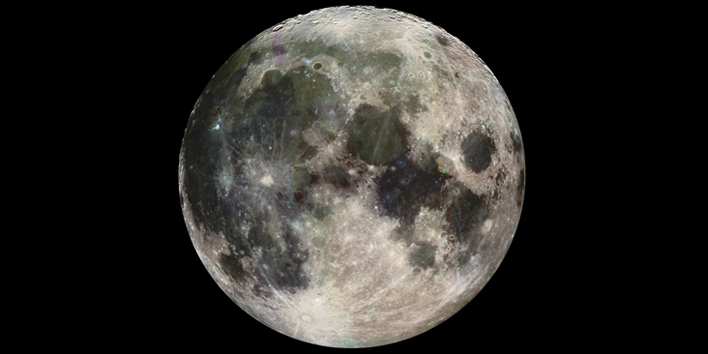
It’s hard to overstate the importance of the Moon for the development of life on Earth. First, the Moon was likely formed in a collision when a small planet-sized object hit Earth and tilted our axis (more on this later.) In addition, the Moon has slowed the Earth’s rotation down (more on this later,) and helped enhance the tidal movement of the Earth’s oceans. The Moon has played an important role in human activity, but just as an important role for all our planet’s species.

5. Size of the Planet

Again, size matters. If a planet is too big and the gravity will inhibit the formation of larger, more complex molecular organic structures. Too small and there can be no atmosphere. Earth is in the zone.

6. Axial Tilt

If Earth’s axis was perpendicular to the plane of the solar system the Sun would heat up the equator creating a zone too hot for most life forms. The poles would have minimal solar heating and would be extremely cold. In between would be the combat zone between hot and cold. Constant violent storms and wind would batter the mid-latitudes.

The tilt of the Earth causes solar heating to warm one hemisphere and allows the other to cool down. Every six months the warm/cool cycle swaps hemispheres. This creates storm systems in both hemispheres, but they act to distribute the warmth more evenly. The tilt of Earth’s axis is almost perfect for nurturing life.

7. Length of Day (spin)

We take the 24 hour day for granted. We shouldn’t. Last year Takanori Sasaki, a planetary scientist with Kyoto University, pointed out that the Earth originally spun so fast that its ‘day’ was only four hours long. Multicellular life didn’t develop on Earth until the day was 23 hours long. It’s is not clear at what point a planet’s rotation makes it habitable, but it seems obvious that a planet’s spin is a factor in the possibility of life formation.

8. Atmosphere

It may be obvious that an atmosphere is required for the development of life, but there are qualities to an atmosphere that are also required. The atmosphere cannot be too thick or too thin. It has to consist of an oxidizer, such as oxygen, to promote chemical reactions in cell structures. There is more to Earth’s air than just air.

9. Liquid Water

Water is necessary for all life that we are aware of, even though it is more important to some species than others. Liquid water is even more important to life than water vapor or ice. It is not an accident that the development of life happened on a planet where 71% of the surface is covered with liquid water.

10. Continent to Ocean Ratio

It’s not obvious, but life on Earth has been helped by the ratio of land to ocean. Land tends to have more temperature variance than the oceans between summer and winter. Land that is not covered in ice or vegetation absorbs much more heat in the summer. If most of our planet consisted of continents, the temperature change from summer to winter would be more dramatic, and less friendly to life.

Earth is Unique, Not Rare

Life on Earth was not an accident, nor is it divine. The conditions that led to the development of life here must exist on millions of planets, but there are an estimated 100 billion planets in the Milky Way Galaxy alone. We are unique, but we cannot be alone. Give life an opportunity and it will seize it.

Magnetic Pole Reversal: Will It Turn Our World Upside Down?

10 Saturday Mar 2018

Posted by Paul Kiser in Astronomy, Education, Exploration, Generational, History, NASA, Science, solar, Space, Technology, US Space Program

≈ Leave a comment

Tags

cosmic radiation, cosmic rays, Curious Droid, Earth, flip, Liquid core, magnetic pole reversal, magnetic poles, North Pole reversal, solar radiation, South Pole reversal, sunspot cycle, sunspot maximum, sunspot minimum, swap

The magnetic north and south poles are up to something. It looks like Earth’s magnetic poles are about to swap. It usually happens every 300,000 years or so but it’s been 780,000 years since it last happened. What does it mean for humans? Is this the end of human civilization?

Earth magnetic normal magnetic field (left) and during a swap (right)

Pole Reversal:  Another Y2K?

To answer this question let’s go back to 1984. That is the year that Jerome and Marilyn Murray published a book called Computers in Crisis, changed to The Year 2000 Computing Crisis in 1996. They laid out a problem of computer code that handled dates using only the last two digits of the year. The crisis was that at the moment the year 2000 began, they said all the computer networks around the world would crash. This was known as the Y2K problem.

The Y2K problem was a significant issue; however, because computer codes are constantly being changed, updated, and replaced, it probably would have been resolved without the hyper-scare stories in the media. Computer codes were changed and Y2K came and passed without incident.

That Y2K problem is a good comparison to the North/South magnetic pole reversal issue. There is a problem, but it is a problem that will unfold over hundreds to thousands of years. Most will not notice the effect in the next decade, but there is a significant change coming as soon as the next solar minimum.

Your Magnetic Field is Temporarily Out of Order

The problem is not about the reversal of the magnetic poles. The problem is about the process of the reversal. The magnetic field around Earth deflects cosmic and solar radiation from reaching Earth’s surface. Without this field (or shield) life, as we know it on Earth, would not be possible.

As the poles begin the process of swapping the magnetic field it becomes less organized. This results in the magnetic north and south pole fading and that causes cosmic radiation to come closer to Earth’s surface.

In addition, the magnetic field becomes weaker during solar sunspot minimums. This is when the Sun has few, if any, sunspots and generates less solar flares. This lull in solar activity approximately every eleven years is matched with a similar lull in the strength of Earth’s magnetic field.

Captain! Our Shields Are Down!

Scientists have discovered that the magnetic field is weakening much faster now than in the past. They believe the process of pole reversal, which is overdue by about 400,000 years, has now begun. We are also in the beginning stages of the solar minimum, which will result in an anemic magnetic field for the next two to three years.

Projections of the radiation dosage for this upcoming solar minimum were about 20% above the last solar minimum; however, actual rates are closer to 30% so far.  This is not a major concern, but it does mean that satellites may encounter more radiation that could damage or disable them. It also means that an astronaut only can spend about 700 days in space now than the 1,000 days they could spend in the 1990’s.

Oh Where, Oh Where Will Our North Pole Go?

The poles are on the move thanks to a liquid layer of iron in Earth’s Core.  Earth is already experiencing a strange phenomenon of magnetic weakening across the South Atlantic stretching from Africa to South America. Since we have not experienced this change before, no one can be absolutely sure what odd side effects may occur during the process; however, the only significant concern is increased radiation in Earth’s atmosphere and in orbit.

It’s important to remember that in geologic time frames we are the equivalent of lightning. As problems develop we’re pretty good at responding.

NASA’s Orion Capsule: A ‘Look Busy’ Project?

19 Friday Jan 2018

Posted by Paul Kiser in 1968, Ethics, Government, History, Honor, Management Practices, NASA, Politics, Pride, Public Image, Public Relations, Science, Space, Technology, US History

≈ Leave a comment

Tags

Airbus, Amber Gell, Amy Shira Teitel, Apollo, cosmic radiation, Curious Droid, Earth, engineer, Gemini, Kelly Smith, Lara Kearney, LEM, Lockheed Martin, lunar module, manned space program, manned spacecraft, Mars, Mercury, Moon, NASA, orbit, Orion, Paul Shillito, Space Shuttle, spacecraft, STS-135, Van Allen Belts, Vintage Space

NASA has a publicity campaign for the next generation of spacecraft. It is the Orion capsule, and it is touted as the spaceship that will take us back to the Moon and beyond. The problem is that all the talk doesn’t match reality.

8 July 2011, STS-135 – The final launch of a USA spacecraft

On 8 July 2011, I stood several miles away from Kennedy Space Center and watched the end of the United States manned spacecraft program. I stood in the warm sunshine of Florida as the last Space Shuttle (STS-135) soared into the sky. Since then NASA has put our astronauts in space by paying Russia to take them to and from the International Space Station (ISS.) 

A few months before that last Space Shuttle flight NASA announced the development of a new spacecraft called Orion. The announcement came so abruptly that it seemed that NASA was unaware it wouldn’t have a spacecraft to send humans into space until just before the end of the Space Shuttle program.

Orion – A Spacecraft of Contradictions

The Orion program, for all its hype, seems to have major flaws that NASA doesn’t seem to notice, or perhaps, hopes the public won’t notice. NASA’s description of the purpose of Orion:

For the first time in a generation, NASA is building a human spacecraft for deep-space missions that will usher in a new era of space exploration…and this new spacecraft will take us farther than we’ve gone before, including to the vicinity of the Moon and Mars…the Orion spacecraft is designed to meet the evolving needs of our nation’s deep space exploration program for decades to come. Orion deep space exploration missions…will help put NASA and America in a position to unlock the mysteries of space and to ensure this nation’s world preeminence in exploring the cosmos.

Orion a USA Spacecraft????

Lockheed Martin Corporation is designing and building the capsule of Orion. Like the Apollo capsule, Orion can only be separated from the Service Module for a short period of time.

The Service Module is the business section of Orion. It supplies all the power, fuel, oxygen, and is the primary propulsion of the spacecraft. Anyone familiar with Apollo 13 knows what happens to the capsule when the Service Module is non-functioning. The Service Module is being built by Airbus, a French corporation, for the European Space Agency.

Orion Capsule: A Human Storage Shed in Space

In Space, Size Matters

The Apollo capsule had a volume of 5.9 m³ (210 ft³.) Apollo astronauts were able to use the 6.7 m³ (235 ft³) space in the Lunar Module (LEM) during the three day trip between Earth and Moon. The total volume of the Apollo capsule and LEM was 12.6 m³ (445 ft³) for three astronauts. On the return, the Apollo astronauts were restricted to the capsule. Each astronaut had about 2 m³ in the capsule or 4 m³ in the capsule/LEM configuration.

Orion has 8.95 m3 (316 cu ft) of habitable space for four astronauts. This is slightly more cubic meters per astronaut than the Apollo capsule and much less than Apollo’s capsule/LEM configuration. The idea that Orion is capable of taking four astronauts on an eight-month journey to Mars is absurd. Orion is only for use in short-term, near-Earth missions.

NASA has briefly acknowledged the space issue in a video. Amber Gell of Lockheed Martin briefly touches on the need for an add-on crew habitat. She implies that it is an issue that NASA has yet to address. If it takes NASA twelve years to design and build a slightly bigger version of the 1960’s Apollo spacecraft, how long will it take them to build a crew quarters that four people can live in for up to three years?

NASA’s Misleading Video about Orion

NASA has been pumping out videos of engineers explaining how Orion is the next great achievement of the space agency. The videos cover a variety of subjects and some are pre-test and post-test news releases of Orion’s systems and structure. One video features Kelly Smith, a NASA Engineer, who explains how Orion is being designed to deal with the radiation from the Van Allen Belts around Earth.

The 2014 NASA video, titled, “Orion: Trial By Fire,” describes the challenges of the first test flight, including a dramatic description of the dangers of flying through the radiation of the Van Allen Belts above Earth. He explains that Orion will be designed to protect the astronauts as they fly through these dangerous regions.

The problem is that NASA already solved that problem with Apollo. They either fly around the Van Allen Belts, or through the thinner sections, as described by a video by Amy Shira Teitel of Vintage Space, and a video by Paul Shillito of Curious Droid.

There is a radiation issue in space, namely cosmic radiation, and it is a problem on long trips beyond Earth orbit; however, as Lara Kearney of NASA’s Orion Crew and Service Module’s Office explains in another NASA video, that they don’t have the answer to the cosmic radiation problem. This video contradicts the enthusiastic Smith video and raises the question:  Does NASA know what they are doing?

Orion:  The NASA Glacial-Paced Project

In May 1961, President John F. Kennedy asked Congress to fund a space program to take to the Moon and safely back. From the time of his speech in 1961 to the end of 1972, NASA launched the five of the six manned Mercury missions, designed, tested, built, and launched 10 Gemini manned missions, designed, tested, built, and launched 11 Apollo manned missions, landed men on the Moon, and overcame a disaster that delayed the manned launches for 21 months. Eleven years, three complete rocket programs, 27 manned missions, six successful Moon landings, no prior experience.

Orion, a slightly larger version of the Apollo capsule, only useful for short-term habitation in near-Earth orbit, is taking twelve years. Something is amiss.

NASA’s ‘Look Busy’ Project?

NASA definitely needs more funding, but something else is wrong. NASA’s Orion project doesn’t make any sense unless they are attempting to create the appearance that they are moving forward with a manned space program. The Orion project is, at best, an Earth to orbit elevator. It can’t meet any of the stated manned spaceflight goals of NASA. The question is, why isn’t NASA aware of these issues, and if they are aware, what is the agenda that is causing them to promote a project that is meaningless to the stated goals of deep space flight?

Can Venus Be Made Habitable?

25 Monday Dec 2017

Posted by Paul Kiser in Green, Science, solar, Space, Technology, Travel

≈ Leave a comment

Tags

atmosphere, carbon dioxide, CO₂, CO², Earth, extreme makeover, Global warming, greenhouse effect, hydrogen, nitrogen, O², oxygen, solar system, terraforming, Venus, Weather

Venus: Too hot, too much atmosphere

Venus may be the future of Earth and may also hold the answers to global warming.

Earth’s atmosphere is 78 percent nitrogen, 21% oxygen, (O₂,) and 1% other gases including carbon dioxide (CO₂) and water vapor. Even though CO₂ is considered a trace gas in our atmosphere it is a major player in the absorption of energy from the Sun. Nitrogen and oxygen are ‘invisible’ to the Sun’s radiation, so the energy from the Sun passes through the two gases without being absorbed.

The atmosphere of Venus 96% CO₂ and 3.5% nitrogen, with 0.5% other gases, including water vapor. Venus’ atmosphere is also extremely dense. The pressure at the surface of Venus is the same as the pressure at 1,000 meters (3,000 ft.) under the surface of Earth’s ocean.

Venus is also hot. The CO₂ absorbing the Sun’s energy retains the heat in a runaway greenhouse effect that keeps the temperature at 462 °C (864 °F,) both day and night.

The interesting, and terrifying fact is that the carbon found on Earth is roughly equal to the carbon found on Venus. The difference is that Earth stores its carbon in the ocean, and in calcite deposits that consists of dead marine life that settled in the bottom of an ocean and became a sedimentary rock formation.

There is also a nitrogen problem. Even though nitrogen makes up 3.5% of Venus’ atmosphere, it is four times the amount of nitrogen in Earth’s atmosphere.

Venus could be Earth Like if:

  • Almost all of the atmospheric carbon and three-quarters of the nitrogen could be transformed into solid carbon and solid nitrogen.
  • Some of the oxygen from the CO₂ could be liberated for the atmosphere.
  • The rest of the oxygen could be liberated to combine with hydrogen in the upper atmosphere to create water.
  • The Sun’s energy could be reduced (blocked) to allow Venus to cool.
  • Venus’ rotation could be sped up and a slight tilt in the axis to match Earth’s rotation and axis.

Numbers 4 and 5 are beyond our current technology, however, solving the 1 through 3 issues are a matter of finding or creating an organism that could float in venus’ upper atmosphere and convert CO₂ to O₂. This could help scientists find a way to remove the excess carbon from Earth’s atmosphere and prevent global warming from becoming a runaway greenhouse effect on our planet.

It should be noted that Earth’s temperature is a delicate balance between incoming and outgoing energy. We don’t know at what point a runaway greenhouse effect kicks in and destroys the energy balance that maintains a near constant temperature on Earth; however, there is a point of no return where evaporating water vapor and CO₂ will absorb more energy from the Sun than what is radiated back into space. If we reach that point, Earth will become another Venus and the human race will cease to exist.

Confronting Truth: The Difference Between Science and Religion

27 Monday Nov 2017

Posted by Paul Kiser in Education, Ethics, History, Passionate People, Religion, Respect, Science, Space, Technology, Universities

≈ Leave a comment

Tags

astronomy, belief, Catholic, Catholic Church, center of the universe, Christian, Earth, Faith, Galileo, Galileo Galilei, geocentric, heliocentric, Islam, religious doctrine, scientific method, scientific process, Sun

There is a primary difference between science and religion. Religion discourages the confrontation of the ‘truth’ as it is presented by the leaders of the church. When I say discourage, I mean up to and including the murder of those who challenge the church’s version of the truth.

Science, not only accepts a challenge to the current truth, it is the fundamental architecture of all scientific endeavors to challenge the truth. Scientists accept that our current knowledge is incomplete, and that research, observation, and experimentation will replace the current truth of the universe around us.

A good example of this is our understanding of Earth and its relationship to other bodies in space. The religious doctrine stated that Earth was the center of the universe. Religious sources have claimed that holy text have told them the Earth is the center of the universe, and that was a truth which could not be challenged.

However, the concept of an Earth-centered (geocentric) universe had been challenged in the third century BCE by Greek astronomer and mathematician, Aristarchus of Samos, who theorized a Sun-centered (heliocentric) universe. Unfortunately, his idea lacked supportive evidence and was largely ignored.

Galileo was a victim of the Church, not of science

Over 1,700 years later, others began using observations that indicated that the geocentric model didn’t work as well as the heliocentric model. In January of 1610, Galileo Galilei used a telescope to discover three of Jupiter’s four largest moons, and observed that they orbited Jupiter. He then theorized that the Earth may also orbit the Sun, rather than the Sun orbiting the Earth.

This challenged the belief that dated back to Aristotle that all objects orbited the Earth, a concept that was adopted by both Islam and Christian churches. Galileo’s findings contradicted a fundamental truth of the church. For that crime, Galileo was subject to a Roman Inquisition, and ultimately, arrested and imprisoned.

While it is true that Galileo’s theories were not readily accepted, even by other astronomers of his time, he began a process of challenging truth, and using observation to determine truth. For this, Galileo is known as the father of the scientific method.

Some might think that their religion has outgrown this absolute interpretation of doctrine, and accepts scientific proof. To some degree, most Christian churches, when faced with overwhelming proof will either reluctantly accept the science, or become mute on the subject.

However, in the case of Galileo, the Catholic Church has attempted to use revisionism to explain its position on the geocentric/heliocentric debate. In 2004, the Catholic Church published a revised history of its role in the matter of Galileo. In a blog article on Catholic.com, the Church implies:

  1. that it was his fellow scientists, not the Church that disputed Galileo’s findings,
  2. that it was Galileo’s fault for promoting his theories that challenged Church doctrine,
  3. that Galileo failed to prove his position,
  4. that Galileo’s findings were not 100% correct, and 
  5. that Galileo did not suffer any real consequence for his research and findings.

All five of these points are twisted interpretations of what we know to be fact.

  • Galileo was persecuted by the Church, not his fellow scientists. Arrested by the Church, not this fellow scientists, and sentenced by the Church, not his fellow scientists. Yes, his findings were not widely accepted by other astronomers, but as Galileo was the first to observe Jupiter’s moons and their orbits, he would have been alone in promoting the observations.
  • Galileo had his observations, and while there would need to be more observations and the development of better technology to confirm his observations and conclusions, he had every right to promote the concept, even if it disputed the truth of the Church.
  • Galileo observed and hypothesized, but he wasn’t 100% correct. The Catholic Church suggests that because he wasn’t 100% correct that they were right in persecuting him for his theories. They were not, and the idea that the church was waiting for better evidence is a lie.
  • Galileo faced an Inquisition, and was sentenced. Whether he was tortured is not relevant to the Church’s role in trying to silence those who challenge the teachings of their doctrine.

Science seeks truth, but scientists know that all truth is subject to the gathering of more data, which may disprove the known truth and replace it with a new concept. The church believes that all truth comes from God, and it is not subject to revision, even if the truth of the Church is wrong.

A Prayer To My Gods

18 Sunday Dec 2016

Posted by Paul Kiser in Ethics, Generational, Government, Lessons of Life, Politics, Pride, Religion, solar

≈ Leave a comment

Tags

Donald Trump, Earth, GOP, holy, Moon, prayer, Republicans, Sun, Trump, winter solstice

_dsc6558-2Great Father Sun, you are the origin, the center, the focus, you are the constant. I see you as you cross the sky. I feel your warmth. You make the food grow and all life possible. Without you, we could not see. Without you, there would be no rain. When you light the sky above me, I see your power. At night you shine on our Mother Moon. 

Great Mother Earth, you are our source, our foundation, the root of all life on our planet. You give me a home. You give me air to breath, water to drink, and food to eat. You give me all that I need. Without you I would be dust and rock floating in the vast cavity of space.

_dsc6362-2Mother Moon, you are the giver of life. You are the spark that lit the fire of life on Earth. Your touch tilted the Great Mother Earth and gave us seasons. Your pull creates the tides. Without you, the Great Mother Earth would be uninhabitable.

I pray forgiveness for what we have done. I believe that you sought to have us progress forward, moving from beasts that were motivated by lust and desire, to creatures of intelligence and compassion that sought harmony and grace.

Instead we have devolved back into beasts. We have brought on shame and failure to not only ourselves, but to all life. We have no excuse. We know what is proper, and what is not, but we have chosen to embrace the improper.

Great Father Sun, Great Mother Earth, Mother Moon, I know the seasons are necessary for life, and I know, just as the seasons bring warmth in the summer and cold in the winter, so to the seasons of humanity wax and wane.

This is a season of darkness for humanity, but I pray that you will intercede. The darkness of this season is hurting and killing the innocent, not the weak. Those of money and power seek to destroy, not build, and those who gave them power have failed as human beings and celebrate the destruction.

Intercede for those who need you. Intercede for the honor of life. Intercede because it is the correct thing to do. Intercede because those who have intelligence know the danger of violent aggression and know that it is not the answer to battle the unethical, wicked, and stupid.

Great Father Sun, Great Mother Earth, Mother Moon, it is time to act on our behalf. 

Epilogue of Planet Epsilon (science fiction)

24 Tuesday Dec 2013

Posted by Paul Kiser in Fiction, Science, Science Fiction, Space

≈ Leave a comment

Tags

Alien, alien ship, asteroid belt, Delta, Disaster, Earth, Epsilon, Gamma, Japan, Jupiter, Mar, Mars, Mercury, Nippon, planet, Saturn, scifi, sol, solar system, Sun, Venus

24 December 2038 – Chōfu, Tokyo, Nippon Unified Aerospace Agency (NUAA)

Orbits of 6 worlds nearest Sol

Orbits of 6 worlds nearest Sol and debris from the Epsilon explosion (Data recovered from alien ship) 

At today’s 9:00 AM press conference we announced the discovery of an alien craft found in orbit around our Sun. The orbital path of the craft was almost thirty degrees off the orbital plane of the solar system and was between Venus and Mercury at perihelion and extended out to near Jupiter’s orbit at aphelion. The long-deceased occupants of the ship were apparently from within our solar system on a planet they called Epsilon.

As mentioned this morning, we are releasing the text of the most significant alien messages or logs that we recovered on a hand device inside the craft. From what we can determine from the ship’s records so far is that Epsilon, located between Mars and Jupiter, exploded about 66 million years ago. The Epsilonian language is apparently the root language of English as the symbols and sounds are almost identical to English.

The aliens were human in body type. Several of the occupants of the ship were found in a compartment that preserved their bodies. We believed these aliens died after their craft was damaged and the crew put them in an area of the ship without heat or air to keep them from decomposing. DNA testing has proven that we are related these aliens, although probably not directly to the occupants of the ship.

According to what we have learned from their records so far, this ship was one of seven that attempted to reach Earth (named Gamma in Epsilonian) from Mars (named Delta in Epsilonian) after Epsilon exploded. Remnants of the planet still exist in what we have come to know as the Asteroid Belt; however, most of the planet was scattered throughout our solar system and some larger fragments impacted on the other planets including Earth. The descendants of the aliens that landed on Earth must have survived for millions of years in small pockets until humans began to become dominant in the past 100,000 years.  This ship was apparently the only one that did not make it to Earth.

Image of Epsilon before it exploded. Recovered from the alien database.

Image of Epsilon before it exploded. Recovered from the alien database.

Below is the original text from the most significant messages we have recovered so far. 

Message 10884.11.75.06.41.12.52 From Epsilon Crew Member
Wee faild. Wee tride, wee tride agane, wee tride more, and wee still faild.

Tu ue hoo reed this, I noe ue kant understand ar sarow. Pleese, here me. Fore ar brothers and sisters mae bee, likelee ar, yore fathers and mothers. If ue kan reed this then it is sertan ue ra, fore yore words kame from ar words.

Wee wer from Epsilon, tha 5th world from Sol, but wee livd in ae kalonee on Delta, tha 4th world. Now bothe worlds ar lost and all hope lies on Gamma, tha 3rd world.

Let mee restart. Epsilon was tha sorse of life in tha Sol sistim. Ar world was bigger than Gamma and Baeta (tha 2nd world,) and much bigger than Dellta. All 4 worlds had firm ground and ae laer of gas, but Baeta, like Alpha (the 1st world) had noe likguid. Gamma, Dellta, and Epsilon had likguid, but Epsilon producd life and evold 1st.

Epsilon was home but wee wantd tu xplore, soe wee lernd tu sore beetwene worlds. Dellta and Gamma had life, but not wise life. Ar peepel desided to kalonee on Dellta 1st.

Wee had livd on Dellta fore almoest 50 orbits and preeparing tu kalonee on Gamma  when disaster struk Epsilon. Ae flash that lit up ar erly morning skie on Dellta then faded. Epsilon was gon. Wee beeleve it was natural. Epsilon had plenteeful unstabil ellamints in tha krust. If those ellamints xtended into tha likguid rok beeloe, thae it koud hav gatherd tu ae kritikal mass and xploded with such forse tu destroy ar home world.

Ae grupe of sieintists had warnd that Epsilon mite….. (text was not recoverable)

Message 10884.11.75.06.41.15.04
Delltas orbit put it in tha Epsilon deebree flung toward Sol. Wee had onelee weeks tu evevakuate Dellta. With Dellta in sertan dume, ar hope was tu sore tu Gamma, but wee had noe kalonee ther. Wee had 7 ships availabel. 6 had peepel and 3 months of supplies eech. 1 ship kaireed ar teknolojee. That ship held ar soring masheens, ar komemunikashun eekwipmint, shelters, and everee thing needed tu restart ar sivilliesaeshun. 6 ships made it tu Gamma. 1 ship, ar ship, did not.

Wee due not noe if thae kan sirvive without….(text was not recoverable)

Volcanoes in the lower left caused by fragments from the break up of Epsilon

Volcanoes in the lower left caused by fragments from the break up of Epsilon

Ar ship was tha last tu leve Dellta. Deebree from r home world hit ar ship. It disstroyd ar injin kontrol. Ar injins flamed until wee had noe fuel. Ar orbit touk us abav tha planit orbits, around Sol, then in an eeliptikal orbit out past Epsilon and back tu Sol. Of ar 16 crew, 7 hav survived 2 orbits, but ther is noe hope. Wee noe longer can reepair our eekwipmint and ar air sistim will fail sune.

Message 10884.11.75.06.04.44.03
Wee hav watchd as ar broekin world has reekd havoke. Tha rimnants of Epsilon tore thru tha Sol sistim and miny larg fragmints inkluding 2 of Epsilons moons ar still in unstaebel orbits that will evinchuelee hit another world or Sol. 4 massiv fragmints hit Dellta kreeating majore fire mountans spewing out likwid rok. It is terning tha world inside out. Tha impakts of tha fragmints pushd Delltas gas in tu spase and chaengd its axis by 25 dagrees. Oever 1000 peepel wer left on Dellta and thae ar all ded.

Far side of the Moon peppered by fragments of Planet Epsilon

Far side of Earth’s Moon peppered by fragments of Planet Epsilon

Gamma survived thanks tu its Mone. A storem of deebree hit tha bak side of the Mone, but 1 larj fragment did hit tha Gamma. It filld tha air with fire and ash and tilt the axis almoset as much as Dellta. Kondishuns fore our peepel mae not bee sirviveabel.

 Zeta was forjunate. It was on tha opposeit of Sol when Epsilon xploded and it has not bin hit by maejor fragmints yet, however, ……(text was not recoverable)

Saturn's rings from the oceans of Epsilon

Saturn’s rings from the oceans of Epsilon

 ….differint fore Eta. Ae larj fragmint and sum fine deebree, posieblee likwid from 1 of Epsilons oeshuns was sent towards Eta. The fragmint tilted Etas axis and tha fine deebree went in tu orbit around Eta. It seems tu bee forming ae ring strukchure around Eta.

Sum of Epsilon was eejektd far out frum Sol kreeating ae cloud of deebree in tha outer sistim. Deebree nere Zeta was absorbed, but sum setteld in orbit ahed and beehind Zeta. What littel is left of Epsilon is spreding out whair ar world usd tu orbit. Fragmints will kontinue tu raen don on tha worlds fore senjurees…..(text was not recoverable) 

Message 10884.11.75.08.18.32.29
…..(text was not recoverable) Wee had kontakt with tha moset of tha ather ships until their power faild. Thae must restart ar race without all tha teknalogee wee karee on r ship. It mae bee hundreds of orbits, mae bee longer beefore thae kan sore aegaen. This message will not bee red until long after wee ar gon.

How Did Earth Get A Moon?

08 Monday Jul 2013

Posted by Paul Kiser in Science, Space, Technology

≈ Leave a comment

Tags

Apollo, Earth, formation, missions, Moon, NASA, origin, Satellite, space exploration

Earth's Only Child

Earth’s Only Child

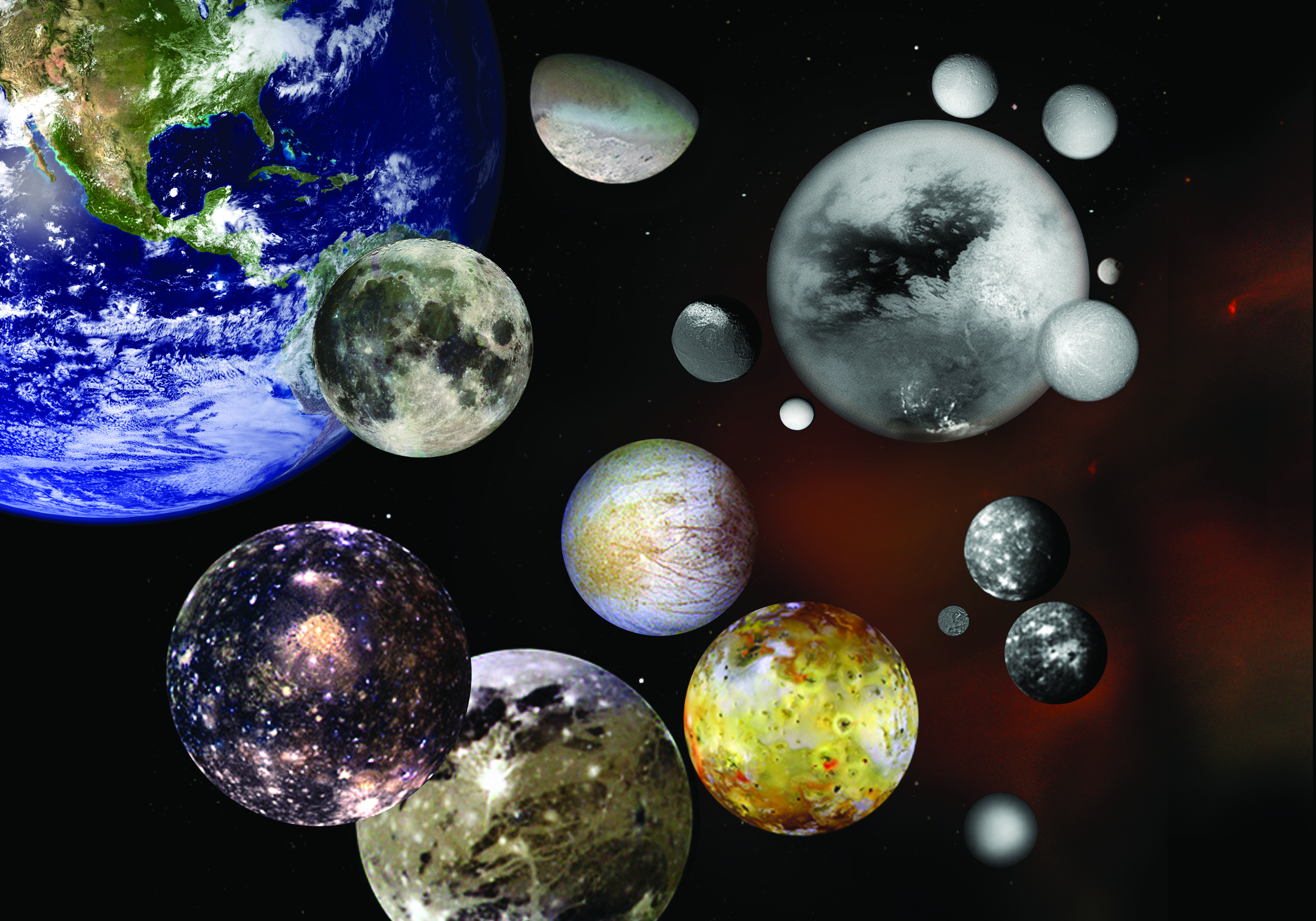
How Earth was blessed with a Moon was anybody’s guess 50 years ago. In our solar system it’s a relatively big moon. At slightly over 1,000 miles (1,700 km) in diameter it’s about half the size of planet Mars and there are only four moons (Ganymede, Titan, Callisto, and Io) that are bigger than Earth’s Moon.

Pre-Apollo Mission Theories
So how did Earth end up with a natural satellite that rivals the biggest moons of  the massive planets Jupiter and Saturn? And why just one?

Moons of our Solar System

Moons of our Solar System

Prior to the Apollo missions to the Moon, there were three main theories of the origin of the Moon. First, was the adopted daughter theory. It proposed that our Moon wandered into Earth’s gravitational pull and was captured. Second, was the mother/daughter theory that suggested the Moon was spun off from the Earth when it was still a molten blob of spinning material. The final theory was the sister theory where both bodies that formed side by side.

Apollo 17 Astronaut - Our last mission to the Moon, 40 years ago

Apollo 17 Astronaut – Our last mission to the Moon, 40 years ago

Hard Evidence: The Destroyer of Theories
When the Apollo missions came back to Earth with Moon rocks the three existing theories took a big hit. Had the Moon rocks matched the composition of Earth rocks then scientists could dismiss the adopted daughter theory because a wandering Moon wouldn’t likely have rocks similar to Earth’s. If the composition of the Moon rocks were different then they could dismiss the other two theories. What no one saw coming was the idea that the Moon rocks would match the composition of our Earth rocks, except for a lack of iron. The rocks were the same, but different.

None of the theories really met the evidence in hand, but now the geologists had a vital clue. When Earth first formed all the elements were mixed throughout the molten mass that would become our planet. As time passed most of the iron sank deeper into the mass to become Earth’s core. The evidence suggested that the Moon must have formed from Earth’s material after the iron sank into the core.

The New Theory: Impact Earth
It was clear the material for the Moon had to come from Earth, but the transfer of material had to occur after the most of the iron was not mixed in with the shallow layers of molten Earth. Enter the Impact Theory.

Scientists proposed that the Earth must have been hit with a large object (about the size of Mars) that pushed out shallow molten material into a near Earth orbit to create our Moon. The theory assumes the object was absorbed into Earth’s mass and didn’t significantly change the composition of the Earth or the Moon. Those are big assumptions.

The Little Bang Theory
Recently scientists are suggesting a new theory for the formation of the Moon that proposes a natural nuclear explosion blew off part of Earth’s shallow material after most of the iron sank into the core. The idea of natural nuclear reactions are not new. Radioactive material will always start a chain reaction upon reaching its critical mass and we have evidence that Earth has had multiple natural nuclear explosions in the past. It simply requires enough radioactive material to consolidate in close proximity to start a chain reaction. If it is radioactive and it reaches critical mass, BANG! A nuclear explosion.

So is this it? Do we now know how the Moon was formed? Not Exactly. Scientific knowledge is like the work of a detective. Learn something new and you can rule out certain possibilities, but it takes decades, sometimes centuries, to understand enough of what ‘couldn’t have happened’ in order to understand what did happen. It is likely we won’t have many more answers coming until we have scientists working on the Moon again. It’s hard to gather the evidence when you aren’t at the scene of the crime.

Other Pages of This Blog

  • About Paul Kiser
  • Common Core: Are You a Good Switch or a Bad Switch?
  • Familius Interruptus: Lessons of a DNA Shocker
  • Moffat County, Colorado: The Story of Two Families
  • Rules on Comments
  • Six Things The United States Must Do
  • Why We Are Here: A 65-Year Historical Perspective of the United States

Paul’s Recent Blogs

  • Dysfunctional Social Identity & Its Impact on Society
  • Road Less Traveled: How Craig, CO Was Orphaned
  • GOP Political Syndicate Seizes CO School District
  • DNA Shock +5 Years: What I Know & Lessons Learned
  • Solstices and Sunshine In North America
  • Blindsided: End of U.S. Solar Observation Capabilities?
  • Inspiration4: A Waste of Space Exploration

Paul Kiser’s Tweets

Tweets by PaulKiser

What’s Up

January 2026
S M T W T F S
 123
45678910
11121314151617
18192021222324
25262728293031
« Jun    

Follow Blog via Email

Enter your email address to follow this blog and receive notifications of new posts by email.

Join 688 other subscribers

Create a website or blog at WordPress.com


Loading Comments...