3rd From Sol

~ Learn from before. Live now. Look ahead.

3rd From Sol

Tag Archives: Employment

Job Killing: The Republican Prime Directive

25 Thursday May 2017

Posted by Paul Kiser in About Reno, Branding, Business, Education, Employee Retention, Ethics, Generational, Government, Government Regulation, History, Human Resources, Management Practices, Politics, Public Image, Public Relations, racism, Taxes, Technology, Universities, US History, Women

≈ Leave a comment

Tags

BLS, Bureau of Labor Standards, Employment, GOP, government jobs, high paying jobs, job creation, jobs, Manufacturing jobs, Republican, Republicans, Trump's finances, Unemployment

There may be no political party in the history of the world that has killed more jobs, or enacted legislation to kill jobs, than the Republicans of the United States of America. They attempt to deny their legacy and claim that it is government that is killing jobs, while also claiming that illegal immigrants are taking high paying jobs from our citizens. Those are damn lies.

Trump’s SS forces raid homes to allegedly save high paying jobs for U.S. citizens

Business and Republicans are one in the same. Republicans always do what business wants, and in the past thirty years there have been few, if any, examples where a majority of Republicans have voted for legislation that was contrary to business wishes. When manufacturing jobs leave the United States, a Republican businessperson is behind it and it is done with the blessing of Republican politicians.

Manufacturing jobs in the U.S. 1939 to present. Growth occurs under Democratic leadership and shrinks under Republican leadership. (Source:  Bureau of Labor Standards)

Trump’s feigned anger at businesses sending jobs overseas is almost comical if it weren’t so pitiful. In 1995, the sixty-year reign of Democratic majority control of Congress ended. in that sixty year history Democrats controlled either the House of Representatives and the Senate for all but four of those years. Republicans controlled the House of Representatives for six additional years during the Reagan administration. Since 1995, Republicans have controlled the Senate, House, or Presidency for all but two years under a banner to thwart all Democratic legislation.

Four years after the Republicans seized control of Congress and passed major business-friendly legislation, the number of manufacturing jobs in the United States began a plunge that would take it down to levels not seen in fifty years.

Job killing our country’s key employer is a primary goal of the Republican party. Federal, state, county, and local governments have been under attack since the Reagan administration. Republicans have consistently sought to strangle funding for public schools as our population has grown, eliminate jobs of the people paid to protect workers and consumers from unethical businesses, prevent funding for workers providing veteran services, and attack critical jobs that provide services for the typical citizen.

The goal of every business person is to make money, not create jobs. That is why Republicans seek to eliminate costs by killing jobs, rather than spend money to create jobs. To a business person, jobs are an expense, and are the obstacle to making money. What Republicans don’t understand is that jobs move the money through the economy, and eliminating high paying government jobs takes money out of the economy. This is why our economy is barely moving forward.

Trump supporters can’t understand the complexities of a national economy, which is why they are the problem in perpetuating Republican domination of our government. Trump is trying to push our economy into a disaster that we may never recover from unless he is stopped.

Six Facts About Manufacturing Jobs

22 Monday May 2017

Posted by Paul Kiser in About Reno, Aging, Business, College, Customer Relations, Customer Service, Education, Employee Retention, Ethics, Generational, Government, Government Regulation, Higher Education, History, Management Practices, Politics, Public Image, Public Relations, Taxes, Universities, US History

≈ Leave a comment

Tags

Donald Trump, Employment, jobs, Manufacturing jobs, Sierra Nevada Corp., Trump, Trump supporters, unskilled workers

Manufacturing jobs do not just appear or disappear, and the government is not the bad guy.

It is sad to hear Trump supporters to be interviewed about anything, but when they start talking about the lack of manufacturing jobs is when they really start looking like adults in diapers. They act like the government is supposed to force private manufacturers to build a factory and make something so that Joe Blow, with a high school degree, in Small Town USA can drive two miles to the local factory and earn $150,000.

Here are the facts:
 
1. Manufacturing jobs go overseas because consumers in the USA want to pay less for goods, and labor is cheaper in many places outside the United States, which makes the cost of manufacturing less, which makes the price of the product less. 
 
2. USA, state, and local taxes have almost no impact on good manufacturing jobs. For example, the Sierra Nevada Corporation (a private version of early 1960’s NASA…before we had a successful launch) has its headquarters in Nevada, but all of their non-executive jobs are in Colorado. Colorado has higher taxes than Nevada, but Colorado also has a better, more skilled, higher educated workforce. Nevada is the headquarters only so the executives don’t have to pay taxes, but the jobs are in Colorado. If the issue was about taxes, the jobs would be in Nevada, not Colorado.
 

Job fairy or much ado about nothing?

3. There is no manufacturing jobs fairy. Manufacturing jobs REQUIRE someone who wants to buy the product. The NEED for a manufacturing job is determined by the consumer. You don’t build a factory, then hang out a sign saying you’re open for business. Manufacturing jobs are “secondary jobs” meaning that before a manufacturing job is created, a product that people want to buy must exist. 

 
4. Most unskilled manufacturing jobs don’t pay well regardless of where the factory is located. CONSERVATION OF COMPENSATION: If anyone can do the work, the jobs go to the people who are willing to be paid the least amount of money. Whether the job is in the United States, or elsewhere, pay is driven by the supply of workers who can do the job.
 
5. Small towns rarely attract high paying manufacturing jobs. While some factories have moved to rural locations to reduce labor costs, it is rare, and factories still need enough potential workers to avoid a labor shortage, which would increase labor costs.
6.  Good business REQUIRES government regulation. Government regulations protect the employee and the consumer. Many countries don’t have rules of against abuse of workers and don’t require manufacturers to abide ethical business practices, and result is always unethical business practices. Remember the Samsung Galaxy Note 7?

Conversations With Conservatives: The 37 Year Lie

13 Thursday Apr 2017

Posted by Paul Kiser in Aging, Business, Communication, Education, Ethics, Generational, Government, Government Regulation, Health, Higher Education, History, Honor, Human Resources, Management Practices, Politics, Pride, Public Image, Public Relations, racism, Religion, Respect, Space, Taxes, Technology, US History, Women

≈ Leave a comment

Tags

conservatism, Conservatives, economic growth, economy, Employment, GDP, Gross domestic product, high paying jobs, Iran Contra Affair, Iran Hostage Crisis, job growth, jobs, President Richard Nixon, Richard Nixon, Ronald Reagan, Watergate

(NOTE:  This is Part II of this article. Read Part I, here.)

The social and economic issues that people are concerned about in the United States of America don’t necessarily fall along party lines. Some issues, like immigration and applying religion to public policy, have a distinct political division; however, many other issues cross the lines of the ideologies.

In conversations with conservatives I learned that the deep division between conservatives and liberals can be traced back 37 years, to when Republicans managed to break the hold of Democratic leadership of our country in 1980. For 37 years, conservatives have been able to maintain control of our country by singing one anthem, ‘Everything is the government’s fault, and business is the solution.’

Ronald Reagan: Founder of the Cult of Conservatism

Ronald Reagan was elected on the idea that Democrats had failed the country. It was an easy story to sell for one reason. The Iran Hostage Crisis. Every night the news reminded our country of how many days our citizens had been held and humiliated by a group of Iranian students. Most in the United States did not understand the complexities of the situation, and were angry that we didn’t go to war with Iran.

The result was to give Republicans an early opportunity to erase the shame caused by Richard Nixon’s illegal involvement in fixing the 1972 presidential elections during the Watergate affair. The Hostage Crisis ended at the exact hour that Reagan was sworn in as President, a coincidence that causes questions of Republican collusion with the Iranian government during the crisis. Suspicions of collusion were raised again when Reagan’s administration worked a bizarre deal to sell arms to Iran several years later during the Iran/Contra Affair.

The Big Lie
Reagan is famously quoted in his first Inaugural speech when he said:

….government is not the solution to our problems; government is the problem…”

Ronald Reagan, January 1981

The demonization of government was necessary for conservatives to achieve their goals. Government is the ethical referee that prevents business from underpaying employees, polluting for profit, abusing and endangering the customer, engaging in banking practices that protect the account holder, etc. Government oversight and regulation keeps business from devouring itself in greed.

Additionally, government collects business taxes for the privilege of having access to our country’s rich consumer markets. By eliminating these taxes, business could keep more of the spoils of capitalism and drain revenues from the entity that kept business fair and ethical.

The other shoe dropped by conservatives was to preach that the solution to our problems was business. In the holy corporate world, business was the shining light on the hill for all to worship.

37 Years Later:  The Cult of Conservatism
In my conversation with average conservatives I have discovered that conservatism has now become a cult. The code word for a conservative is ‘fiscal conservatism.’ Ask anyone who votes for a Republican candidate why they vote for the party they will automatically answer, “I believe in fiscal conservatism.” They don’t even pause.

For conservatives, issues are caused by government and solved by business. Among the issues discussed with conservatives I learned the following:

Finance regulation:  Conservatives believe that the government is at fault and less regulation will solve the problem, even though a lack of regulation and business greed caused the 2007-8 financial/bank crisis.

Housing Inflation/Bubbles:  Conservatives that government is the problem because…I didn’t get an answer on this, but the free market will solve the problem, even though the bubbles that occur with rapid housing price increases are caused by capitalisticitic factors, not government involvement.

Economy:  Conservatives believe that business is the creator of jobs and growth in the Gross Domestic Product (GDP) and government inhibits both. The evidence contradicts this as job and GDP growth have been anemic under almost 35 years of Republican economic policies, and the pre-conservative period of government initiated infrastructure projects and the space program generated massive job and GDP growth.

Healthcare:  Conservatives believe that government has been the cause of uncontrolled price increases in healthcare and drug prices, even though it’s the lack of government regulation that has allowed the price increases, especially in the prescription drug market, where Republicans pushed for, and passed an end to competitive market that would help to restrict price increases.

Trump and Republicans have succeeded in creating a cult-like status around the concept that government is the problem and business is the solution…and like any cult, the believers surrender themselves to ‘faith.’ Truth and facts are fiction to a conservative.

The Republican party has no need to be logical, compromising, or reasonable. Their believers have no choice but to hate government, and worship business.

Why Job Creators Aren’t

15 Monday Oct 2012

Posted by Paul Kiser in About Reno, Business, Employee Retention, Ethics, Government, Government Regulation, Management Practices, Opinion, Politics, Public Relations, Taxes

≈ Leave a comment

Tags

business friendly, Conservatives, Employment, job creators, jobs, Nevada, Reno, Unemployment

Job Creators in Nevada

Willard Mitt Romney and other conservatives try to promote the idea that private businesses are desperate to create jobs if only the government will let them; however, in May Romney gave a wink to the idea that Job Creators might be holding back millions of jobs to artificially stifle job growth to favor conservative candidates in the upcoming election. At the same time conservative businessmen are threatening their employees with layoffs if President Obama is elected.

Are Job Creators the victim of the federal government, or are conservatives trying to manipulate the citizens in order to make themselves wealthier?

Protest outside The Venetian during Republican debates

Nevada has led the country in high unemployment during this recession and has been increasing in July and August (now 12.1%.) Reno, Nevada was ranked the worst city in the nation to find a job. Yet, last week the conservative TaxFoundation.org ranked the Silver State #3 in its 2013 Business Tax Climate for the second year in a row because of its ‘business friendly‘ tax structure.

Since taxes are not holding business back from creating jobs, why is Nevada the Rodney Dangerfield of American employment?

PROFITS, ALWAYS PROFITS
The answer lies with the problems low unemployment cause for businesses. Low unemployment pressures employers (Job Creators) to offer higher wages and better benefits to attract and keep employees. High unemployment means employers can control the job market, which means higher profits. There is no reason for major Nevada employers like casinos to desire a change in the current employment environment.

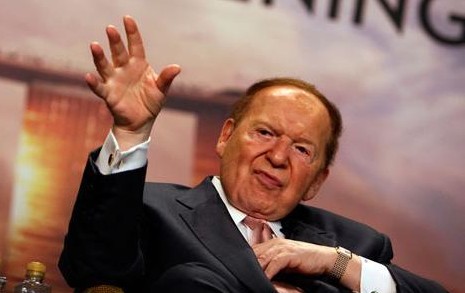
This is probably why Nevada ‘Job Creators’ like Sheldon Adelson of The Venetian in Las Vegas are spending millions of dollars in support of conservative candidates who will make them wealthier rather than spend the money creating jobs.

Lack of Quality Jobs Killing Nevada’s Future

15 Wednesday Aug 2012

Posted by Paul Kiser in About Reno, Business, College, Education, Ethics, Government, Higher Education, Politics, Public Relations, Taxes, Universities

≈ Leave a comment

Tags

Brian Sandoval, business friendly, Conservatives, Employment, GOP, job creation, job quality, Nevada, Republicans, Sheldon Adelson, Unemployment

No degree? No experience? Welcome to Nevada where you have no future.

For years Nevada conservatives have waved the banner of the ‘business friendly myth‘ that low taxes and minimal regulation will attract new business to Nevada. The truth is that ‘business friendly’ does little, if anything, to attract quality jobs and makes this former Mexican province one of the worst in the nation in societal quality-of-life factors.

Poor Job Quality
Typical experiences of Nevada’s unemployment disaster indicate a long-term unemployment crisis and not a temporary business downturn.

In May of this year a master’s degree engineering graduate from the University of Nevada wanted to keep his family in the state but had to move his family to San Jose, CA to find employment. Another unemployed resident couldn’t find a job because she was “overqualified.” Her skills consisted primarily of a stable work history managing a telephone answering service. In Nevada there are no jobs now nor in the near future that will be available for anything but the lowest qualified worker.

Sheldon Adelson: Godfather of Conservative Politics

While most of the country has experienced some recovery from the massive job losses between 2008 and the first quarter of 2010, Nevada has not, despite the assurances of Governor Brian Sandoval. Conservatives point to wealthy Nevadans as the ‘job creators’ who will be the source of new jobs. Instead wealthy people like casino mogul Sheldon Adelson have poured millions of dollars into campaigns for conservative politicians ( $70 million so far,) while the citizens of the state have borne the impact of the unemployment crisis.

The Las Vegas Review-Journal article by Ed Vogel stated that of the few new Nevada jobs available in the future, most will be low-paying, low-skill, non-career jobs. The top four fastest growing jobs in Nevada are 1) retail salespeople, 2) waiters/waitresses, 3) cashiers, 4) gaming dealers.

These type of jobs do not provide for a career with a progressive future and leave the worker with little spendable income after basic living costs. The highly qualified worker has little hope of finding a job that matches his/her abilities. This creates a ‘Catch-22’ scenario. Educated, skilled workers can’t find work in Nevada so they go elsewhere and businesses with high quality jobs want quality workers, which Nevada can’t retain for a lack of quality jobs.

Nevada is a perfect storm of failure under conservative ‘business friendly’ policies which financially benefit those who allegedly are the ‘job creators,’ but leave the citizens in a ‘unfriendly’ job environment.

Nevada Best Kept Secret: #1 in Crime

05 Friday Nov 2010

Posted by Paul Kiser in Branding, Business, Communication, Crime, Crisis Management, Ethics, Government, History, Politics, Pride, Print Media, Public Relations, Rotary, Taxes, Traditional Media, Travel, Violence in the Workplace, Women

≈ 2 Comments

Tags

auto theft, Blogging, Blogs, crime rate, crime statistics, Employment, Executive Management, HR, Management Practices, Nevada, New Business World, Newspapers, Public Image, Public Relations, Publicity, rapes, robbery, Rotary

by Paul Kiser
USA PDT  [Twitter: ] [Facebook] [LinkedIn] [Skype:kiserrotary or 775.624.5679]

Paul Kiser

Article first published as
Nevada #1 Crime Rate Not Acknowledged
on Technorati

On a late October morning a Wal-Mart employee was ‘disgruntled’ and he decides it’s time to take action. He smuggles a gun into the store and buys ammunition for it in the Sporting Goods department. He then goes to the restroom where he hides in the handicapped stall mulling his decision. He makes a final commitment to confront his bosses and leaves the restroom, straight toward the manager’s office. Once there he confronts the manager, the one he likes, and, at gunpoint, orders him to call two other managers to the office. When they arrive they find an angry man with a gun. At some  point the three managers make a run for it and all three are shot. All three live, but their lives will never be the same.

Last week’s shooting of three managers in a Wal-Mart in Reno (Nevada, USA) should not be surprising in a State that has the worst crime rate in the United States. Nevada has been ranked as the Most Dangerous State for the last four years (2006-09) by Morgan Quitno’s (morganquitno.com) annual crime rate report.

Nevada’s Crime Story

  • Nevada ranks #1 in women being killed by men (1)
  • Nevada ranks #1 in stolen cars per capita (2)
  • Nevada ranks #1 in robbery per capita (2)
  • Nevada ranks in the top 10 for assaults per capita for the last 4 years (3)
  • Nevada ranks in the top 10 for forcible rape per capita for the last 4 years (3)

What is a surprise is the deafening silence about the State’s notorious ranking by local media. The top 50 hits of a Google search of ‘Nevada High Crime Rate News Media’ offer no mention of the issue among the State’s primary television and print media resources. It also was not an issue discussed in most of the major political contests this year despite the fact that Nevada’s #1 status in unemployment, foreclosures, and bankruptcies were all fodder for candidate mud-slinging.

It should be noted that Nevada’s crime rankings are not an artifact of the 2007-09 Recession. The State has been a leader in crime independent of the economic environment. It is unknown if Nevada’s out of control crime issues are effecting tourism because for over half a decade the State has experienced a steady decline in gaming revenues because of increased competition due to Indian gaming in California and other States. Any impact of Nevada’s high crime reputation would be masked by the larger trend; however, as there seems to be little awareness of the State’s crime issues, it is unlikely that it has had an impact…yet.

Nevada’s gaming industry would likely suffer more revenue losses if the crime woes were widely publicized and lower gaming revenues would have a trickle down effect on newspaper and television advertising revenue but, there is no evidence that the local media intentionally avoids the subject to risk offending their advertisers. Gaming also plays a significant role in Nevada politics but, there is no evidence that politicians avoid discussing the issue for fear of offending potential major contributors to their campaigns.

However, the lack of discussion seems to only be feeding the problem. If any effort is being made to turn around Nevada’s position as the Most Dangerous State it is being done without fanfare ….and without success.

NOTES:
(1) – Statistic for 2008 (from crimeinamerica.net)

(2) – Statistic for 2009 – #2 in 2005-08 (from disastercenter.com)
(3) – Statistic for 2006-09 (from disastercenter.com)

More Articles

Business: Public Relations, Management, and Social Media Related

  • A Question of Ethics
  • HR/Security Hot Topic: Should you watch your employee’s personal Internet activities? (Facebook, MySpace, Twitter, etc.)
  • Relationship Typing: 3 factors that affect the quality and depth of friendship (Part I)
  • Starbucks Re-Imagines the business … again
  • Your Privacy Rights on the Internet: Read before you write
  • Social Media 3Q Update: Who uses Facebook, Twitter,LinkedIn, and MySpace?
  • Richmond Embassy Suites: The best at true Hospitality
  • Dear Business Person: It’s 2010, please update your brain.
  • Selling watered-down beer: The best spin campaign in advertising
  • Communication: Repetition of message does not increase awareness
  • Is it time to fire yourself?
  • Millennium Hotel: Go away, spend your money elsewhere
  • Rogue Flight Attendant shows his arrogance, Airlines dislike for the customer
  • 2Q 2010 Social Media Tools: Facebook/Twitter sail on, LinkedIn/MySpace don’t
  • War Declared on Social Media: Desperate Acts of Traditional Media
  • Pay It Middle: The Balance between Too Much and Too Little Compensation
  • Mega Executive Pay Leads to Poor Performance
  • Relationships and Thin-Slicing: Why the other person knows what you’re really thinking
  • Browser Wars: Internet Explorer losing, Google Chrome gaining ground
  • WiFi on Southwest Airlines: Is it ‘Shovel Ready’?
  • Starbucks makes a smart move: Free WiFi
  • Foul Play: FIFA shows what less regulation offers to business
  • The Shock of the McChrystal Story: The story is over before the article is published
  • Tony Hayward: The very model of a modern Major General
  • Epic Fail: PR ‘Experts’ don’t get Twitter
  • King of Anything: Social Media vs Traditional Media
  • Twitter is the Thunderstorm of World Thought
  • Signs of the Times
  • How Social Interactive Media Could Transform Higher Education
  • How to Become a Zen Master of Social Media
  • Death of All Salesmen!
  • Aristotle’s General Rules on Social Media
  • Social Media:  What is it and Why Should You Care?
  • Social Media 2020:  Keep it Personal
  • Social Media 2020:  Who Shouldn’t Be Teaching Social Media
  • Social Media 2020:  Public Relations 2001 vs Social Media Relations 2010
  • Social Media 2020: Who Moved My Public Relations?
  • Publishing Industry to End 2012
  • Who uses Facebook, Twitter, MySpace & LinkedIn?
  • Fear of Public Relations
  • Dissatisfiers: Why John Quit
  • Facebook, Twitter, LinkedIn…Oh My!
  • Does Anybody Really Understand PR?

Rotary Related

  • Rotary@105: 7 Relationship types that affect membership retention (Part II)
  • What most non-Rotarians don’t know about Rotary
  • Rotary@105: Making Rotary Sexy
  • Rotary@105: Grieving change
  • How Rotary can..must..will plug into Social Media
  • Rotary PR: Disrespecting the Club President is a PR/Membership issue
  • Rotary Membership/Public Image Challenge
  • Rotary New Year: Retread or Renaissance?
  • Rotary@105: A young professionals networking club?
  • One Rotary Center: A home for 1.2 million members
  • Rotary@105:  What BP Could Learn from the 1914 Rotary Code of Ethics
  • Rotary Magazine Dilemma Reveals the Impact of Social Media
  • Rotary@105:  April 24th – Donald M. Carter Day
  • Rotary@105:  What kind of animal is Rotary International?
  • Rotary:  The Man in the Yellow Hat as the Ideal Club President?
  • Rotary@105:  Our 1st Rotary Club Dropout
  • Rotary Public Relations and Membership: Eight Steps to a Team Win
  • Rotary: All Public Relations is Local
  • Best Practices:  Become a Target!

Science Related

  • Negative Time: The Self-fulfilling Prophesy a Scientific Possibility?
  • Physics in 2010: The more we understand, the less we know

Personal Experience Related

  • Knowing when it’s over or beyond over
  • Dear Teresa Laraba, SVP of Southwest Airlines Customer Service
  • Things I didn’t know about being a Father to a four-year-old boy
  • Riding Reno: The Ladies of Reno
  • Up in the air down in Texas
  • I mow my lawn because…
  • Nevada I-580: An Interstate by any other name
  • Nevada’s oldest brewery opens a Reno location
  • Two Barbecues and a Wedding
  • Car Dealership Re-Imagines Customer Service

Our Country and History Related

  • The Vultures Start Circling on Election Day
  • The Quality of Mercy: Tea Party seeks its pound of flesh
  • I’m not angry, nor am I stupid … and I voted
  • Point of Confusion
  • What I’m not buying this year
  • Nevada: State of Disaster
  • Thank you, Mr. President
  • America’s Hostile Takeover of Mexico

A Question of Ethics

02 Tuesday Nov 2010

Posted by Paul Kiser in Branding, Business, Communication, Crisis Management, Customer Relations, Customer Service, Employee Retention, Ethics, History, Honor, Human Resources, Management Practices, Passionate People, Pride, Public Relations, Relationships, Respect, Rotary

≈ 3 Comments

Tags

Blogging, Blogs, Employment, Ethics, Executive Management, Management Practices, Public Relations, Rotary, Seminars, speakers

by Paul Kiser
USA PDT  [Twitter: ] [Facebook] [LinkedIn] [Skype:kiserrotary or 775.624.5679]

Paul Kiser

Business ethics have waxed and waned over the centuries, but recently we have observed a severe lack of ethical conduct on a large-scale in recent years. The most recent world-wide economic crisis was triggered by years of unethical business practices that nearly put the United States in its first depression in almost a century. In hindsight the questionable business practices were often created by a subtle system of pressuring employees to take actions that were demanded by executives and managers in order to improve earnings for stockholders. This type of ethical dilemma often leaves no one person to blame, and even those involved sometimes do not realize that they are participating in inappropriate and/or unethical acts.

I have been caught in ethical dilemmas that created a moral challenge for me and in one situation I lost a stream of revenue in a seemingly no win scenario.

For a time I assisted a seminar speaker who was considered to be an expert in his field. He hired me to participate in group activities during his seminars.  Occasionally, he would ask me to update or write scenarios for his seminars. In one case I based the scenario on someone I knew, but I added the possibility of suicide.  The scenario was also combined with a possibility of doing harm to someone else.  We used the scenario in one of his seminars and it went very well.

Bigger horns make the bull seem smaller...just like some consultants

A few weeks later we used the same scenario, with minor revisions, with another client. Interestingly enough, the night before the seminar, the speaker  told me that someone else had just written the scenario. However, when I read it I realized that it was the same one I had written for him a few weeks earlier. When I mentioned to him that I was familiar with this scenario and tactfully reminded him that I had been the original author he quickly acknowledged it and moved on.

The next day exercise went well and afterward the participants were given the opportunity to discuss the activity. Participants began asking him about what happened in real life to this person.  Instead of explaining that this was a fictional scenario based on a combination of multiple real situations, the speaker began explaining that in the real life situation that the person did indeed kill himself.  He continued to answer more questions that were also fabrications, but passed off as his ‘research’.  Afterwards I did not mention anything to him about his handling of the post-activity questions.  He was hiring me to assist him, not criticize him and so I did not pursue it with him.

He had already hired me to work with two more clients in the next few weeks and at both he insisted that I stay out of the room, except during the group activity. He stressed that it was not good for his clients to ‘get to know me’ too well.  He also did not schedule me for any more work with his clients.

Later I tried to understand what I might have done to cause an abrupt end to our relationship. He and his clients raved about my work. I then realized that the sudden changes occurred after I witnessed his unethical handling of questions in the previous seminar. Apparently it had a significant impact on him that I observed his breach of trust with his client and that earned me a permanent seat on the bench.

Perhaps I should have confronted him, but I think that would have just made him mad, with the same result.  It was a good lesson: A lack of ethics by one person…sucks.

More Articles

Business: Public Relations, Management, and Social Media Related

  • HR/Security Hot Topic: Should you watch your employee’s personal Internet activities? (Facebook, MySpace, Twitter, etc.)
  • Relationship Typing: 3 factors that affect the quality and depth of friendship (Part I)
  • Starbucks Re-Imagines the business … again
  • Your Privacy Rights on the Internet: Read before you write
  • Social Media 3Q Update: Who uses Facebook, Twitter,LinkedIn, and MySpace?
  • Richmond Embassy Suites: The best at true Hospitality
  • Dear Business Person: It’s 2010, please update your brain.
  • Selling watered-down beer: The best spin campaign in advertising
  • Communication: Repetition of message does not increase awareness
  • Is it time to fire yourself?
  • Millennium Hotel: Go away, spend your money elsewhere
  • Rogue Flight Attendant shows his arrogance, Airlines dislike for the customer
  • 2Q 2010 Social Media Tools: Facebook/Twitter sail on, LinkedIn/MySpace don’t
  • War Declared on Social Media: Desperate Acts of Traditional Media
  • Pay It Middle: The Balance between Too Much and Too Little Compensation
  • Mega Executive Pay Leads to Poor Performance
  • Relationships and Thin-Slicing: Why the other person knows what you’re really thinking
  • Browser Wars: Internet Explorer losing, Google Chrome gaining ground
  • WiFi on Southwest Airlines: Is it ‘Shovel Ready’?
  • Starbucks makes a smart move: Free WiFi
  • Foul Play: FIFA shows what less regulation offers to business
  • The Shock of the McChrystal Story: The story is over before the article is published
  • Tony Hayward: The very model of a modern Major General
  • Epic Fail: PR ‘Experts’ don’t get Twitter
  • King of Anything: Social Media vs Traditional Media
  • Twitter is the Thunderstorm of World Thought
  • Signs of the Times
  • How Social Interactive Media Could Transform Higher Education
  • How to Become a Zen Master of Social Media
  • Death of All Salesmen!
  • Aristotle’s General Rules on Social Media
  • Social Media:  What is it and Why Should You Care?
  • Social Media 2020:  Keep it Personal
  • Social Media 2020:  Who Shouldn’t Be Teaching Social Media
  • Social Media 2020:  Public Relations 2001 vs Social Media Relations 2010
  • Social Media 2020: Who Moved My Public Relations?
  • Publishing Industry to End 2012
  • Who uses Facebook, Twitter, MySpace & LinkedIn?
  • Fear of Public Relations
  • Dissatisfiers: Why John Quit
  • Facebook, Twitter, LinkedIn…Oh My!
  • Does Anybody Really Understand PR?

Rotary Related

  • Rotary@105: 7 Relationship types that affect membership retention (Part II)
  • What most non-Rotarians don’t know about Rotary
  • Rotary@105: Making Rotary Sexy
  • Rotary@105: Grieving change
  • How Rotary can..must..will plug into Social Media
  • Rotary PR: Disrespecting the Club President is a PR/Membership issue
  • Rotary Membership/Public Image Challenge
  • Rotary New Year: Retread or Renaissance?
  • Rotary@105: A young professionals networking club?
  • One Rotary Center: A home for 1.2 million members
  • Rotary@105:  What BP Could Learn from the 1914 Rotary Code of Ethics
  • Rotary Magazine Dilemma Reveals the Impact of Social Media
  • Rotary@105:  April 24th – Donald M. Carter Day
  • Rotary@105:  What kind of animal is Rotary International?
  • Rotary:  The Man in the Yellow Hat as the Ideal Club President?
  • Rotary@105:  Our 1st Rotary Club Dropout
  • Rotary Public Relations and Membership: Eight Steps to a Team Win
  • Rotary: All Public Relations is Local
  • Best Practices:  Become a Target!

Science Related

  • Negative Time: The Self-fulfilling Prophesy a Scientific Possibility?
  • Physics in 2010: The more we understand, the less we know

Personal Experience Related

  • Knowing when it’s over or beyond over
  • Dear Teresa Laraba, SVP of Southwest Airlines Customer Service
  • Things I didn’t know about being a Father to a four-year-old boy
  • Riding Reno: The Ladies of Reno
  • Up in the air down in Texas
  • I mow my lawn because…
  • Nevada I-580: An Interstate by any other name
  • Nevada’s oldest brewery opens a Reno location
  • Two Barbecues and a Wedding
  • Car Dealership Re-Imagines Customer Service

Our Country and History Related

  • The Quality of Mercy: Tea Party seeks its pound of flesh
  • I’m not angry, nor am I stupid … and I voted
  • Point of Confusion
  • What I’m not buying this year
  • Nevada: State of Disaster
  • Thank you, Mr. President
  • America’s Hostile Takeover of Mexico

HR/Security Hot Topic: Should you watch your employee’s personal Internet activities? (Facebook, MySpace, Twitter, etc.)

28 Thursday Oct 2010

Posted by Paul Kiser in Branding, Business, Communication, Consulting, Crisis Management, Customer Service, Employee Retention, Ethics, Government Regulation, Honor, Human Resources, Information Technology, Internet, Management Practices, Pride, Privacy, Public Relations, Re-Imagine!, Recreation, Relationships, Respect, Rotary, SEO, Social Interactive Media (SIM), Social Media Relations, Violence in the Workplace, Website

≈ 1 Comment

Tags

background checks, Blogging, Blogs, case law, Employee evaluations, Employee privacy, Employer liability, Employment, Employment Law, employment verification, Executive Management, Facebook, HR, Human Resources, Internet, lawsuit, LinkedIn, Management Practices, monitoring employees, New Business World, performance reviews, Privacy, Privacy on the Internet, Public Image, Public Relations, Publicity, Rotary, security, Social Media, Social Networking

by Paul Kiser
USA PDT  [Twitter: ] [Facebook] [LinkedIn] [Skype:kiserrotary or 775.624.5679]

Paul Kiser

One of the hottest topics in the world of employment is whether or not an employer should monitor his or her Internet activities. This is a subject I’ve written about before, but it is an issue that is still emerging and has yet to have any significant case-law to provide guidance to employers.

It is well-known that a large number of employers perform a ‘Google’ search on the Internet before they hire an applicant, but now companies are feeling the need to continue to monitor an employee’s Internet activities after hire. Many experts, especially those involved in employee liability prevention support an employer’s right to monitor an employee’s Internet activities even when those activities occur off-duty and offsite. The logic is that it is prudent to aware of anything an employee might say or do that could embarrass the employer, or any indication that the employee might take an action that might involve the company and its facilities.

These are rational arguments, but I believe that monitoring an employee’s activities is opening the door to bigger liability issues. Sound odd? Here’s the scenario I see happening in three Acts.

Should the Employer be Big Brother?

Act One: A busy-body employer or manager casually checks his or her employee’s Facebook, MySpace, and/or Twitter accounts. The employer might even do a Google search on an employee from time to time. When the employer or manager finds something that they see as objectionable they confront the guilty employee and take the proper action. It becomes known throughout the company (and the employee’s family) that the employer monitors its employee’s personal Internet activity.

Act Two: An employee has been reprimanded for content they have posted on the Internet. Six months later the same employee posts information on the Internet that he  is considering suicide and describes in detail how he is going to kill himself. Two weeks later the employee carries out the suicide as described. The family is aware the employer monitors the employee’s Internet activity and sues the employer claiming that the employer should have reasonably been aware of the planned suicide and taken action.

Act Three: Companies find themselves with two polar opposite choices. Either the company does not monitor their employee’s Internet activities or the company assigns resources to constantly monitor the Internet on every employee to insure they capture any relevant data for which the company should take action.

I was trained in Human Resources under the policy that what the employee did on her or his own time was off-limits to the employer unless it had a direct impact the job performance. That policy has had to be adjusted in a world where work and off-duty time can often be hard to differentiate, and where drug testing, researching credit scores and background checks have become standard operating procedure for many companies. However, an employee’s personal Internet activities is almost impossible to track in a society that is increasing involved in hours of daily online social networking. The question is whether an employer wants to be liable for monitoring its employees 24/7/365 and being held responsible for taking the appropriate action, or whether the employer would be better served by not being sucked into liability issues that can be avoided by simply not playing the role of Big Brother ?

I know which strategy I would recommend to my clients.

More Articles

Business: Public Relations, Management, and Social Media Related

  • Relationship Typing: 3 factors that affect the quality and depth of friendship (Part I)
  • Starbucks Re-Imagines the business … again
  • Your Privacy Rights on the Internet: Read before you write
  • Social Media 3Q Update: Who uses Facebook, Twitter,LinkedIn, and MySpace?
  • Richmond Embassy Suites: The best at true Hospitality
  • Dear Business Person: It’s 2010, please update your brain.
  • Selling watered-down beer: The best spin campaign in advertising
  • Communication: Repetition of message does not increase awareness
  • Is it time to fire yourself?
  • Millennium Hotel: Go away, spend your money elsewhere
  • Rogue Flight Attendant shows his arrogance, Airlines dislike for the customer
  • 2Q 2010 Social Media Tools: Facebook/Twitter sail on, LinkedIn/MySpace don’t
  • War Declared on Social Media: Desperate Acts of Traditional Media
  • Pay It Middle: The Balance between Too Much and Too Little Compensation
  • Mega Executive Pay Leads to Poor Performance
  • Relationships and Thin-Slicing: Why the other person knows what you’re really thinking
  • Browser Wars: Internet Explorer losing, Google Chrome gaining ground
  • WiFi on Southwest Airlines: Is it ‘Shovel Ready’?
  • Starbucks makes a smart move: Free WiFi
  • Foul Play: FIFA shows what less regulation offers to business
  • The Shock of the McChrystal Story: The story is over before the article is published
  • Tony Hayward: The very model of a modern Major General
  • Epic Fail: PR ‘Experts’ don’t get Twitter
  • King of Anything: Social Media vs Traditional Media
  • Twitter is the Thunderstorm of World Thought
  • Signs of the Times
  • How Social Interactive Media Could Transform Higher Education
  • How to Become a Zen Master of Social Media
  • Death of All Salesmen!
  • Aristotle’s General Rules on Social Media
  • Social Media:  What is it and Why Should You Care?
  • Social Media 2020:  Keep it Personal
  • Social Media 2020:  Who Shouldn’t Be Teaching Social Media
  • Social Media 2020:  Public Relations 2001 vs Social Media Relations 2010
  • Social Media 2020: Who Moved My Public Relations?
  • Publishing Industry to End 2012
  • Who uses Facebook, Twitter, MySpace & LinkedIn?
  • Fear of Public Relations
  • Dissatisfiers: Why John Quit
  • Facebook, Twitter, LinkedIn…Oh My!
  • Does Anybody Really Understand PR?

Rotary Related

  • Rotary@105: 7 Relationship types that affect membership retention (Part II)
  • What most non-Rotarians don’t know about Rotary
  • Rotary@105: Making Rotary Sexy
  • Rotary@105: Grieving change
  • How Rotary can..must..will plug into Social Media
  • Rotary PR: Disrespecting the Club President is a PR/Membership issue
  • Rotary Membership/Public Image Challenge
  • Rotary New Year: Retread or Renaissance?
  • Rotary@105: A young professionals networking club?
  • One Rotary Center: A home for 1.2 million members
  • Rotary@105:  What BP Could Learn from the 1914 Rotary Code of Ethics
  • Rotary Magazine Dilemma Reveals the Impact of Social Media
  • Rotary@105:  April 24th – Donald M. Carter Day
  • Rotary@105:  What kind of animal is Rotary International?
  • Rotary:  The Man in the Yellow Hat as the Ideal Club President?
  • Rotary@105:  Our 1st Rotary Club Dropout
  • Rotary Public Relations and Membership: Eight Steps to a Team Win
  • Rotary: All Public Relations is Local
  • Best Practices:  Become a Target!

Science Related

  • Negative Time: The Self-fulfilling Prophesy a Scientific Possibility?
  • Physics in 2010: The more we understand, the less we know

Personal Experience Related

  • Knowing when it’s over or beyond over
  • Dear Teresa Laraba, SVP of Southwest Airlines Customer Service
  • Things I didn’t know about being a Father to a four-year-old boy
  • Riding Reno: The Ladies of Reno
  • Up in the air down in Texas
  • I mow my lawn because…
  • Nevada I-580: An Interstate by any other name
  • Nevada’s oldest brewery opens a Reno location
  • Two Barbecues and a Wedding
  • Car Dealership Re-Imagines Customer Service

Our Country and History Related

  • I’m not angry, nor am I stupid … and I voted
  • Point of Confusion
  • What I’m not buying this year
  • Nevada: State of Disaster
  • Thank you, Mr. President
  • America’s Hostile Takeover of Mexico

Relationship Typing: 3 factors that affect quality and depth of friendship (Part I)

27 Wednesday Oct 2010

Posted by Paul Kiser in Branding, Business, Club Leadership, Communication, Employee Retention, Ethics, Honor, Information Technology, Internet, Lessons of Life, Management Practices, Membership Recruitment, Membership Retention, Passionate People, Public Relations, Relationships, Respect, Rotary, Social Interactive Media (SIM), Social Media Relations

≈ 1 Comment

Tags

Blogging, Blogs, Club Members, Depth of Relationships, Employee evaluations, Employment, Executive Management, Facebook, Friendship, Internet, LinkedIn, Management Practices, Membership Recruitment, Membership Retention, Public Image, Public Relations, Publicity, Quality of Relationships, Relationship Typing, Rotarians, Rotary, Social Media, Social Networking, Twitter

by Paul Kiser
USA PDT  [Twitter: ] [Facebook] [LinkedIn] [Skype:kiserrotary or 775.624.5679]

Paul Kiser

Several weeks ago I was at a Rotary District Leadership training meeting and I made a comment that the Social Media tools like Facebook and Twitter allow us to have more friends and more connections to other people. I was shocked into silence when one of the facilitators said that he didn’t want that. He explained that his friends were those very close, very special people that he choose to be friends with, and that he didn’t want to dilute his social circle with people from the Social Media.

It was an interesting point and it caused me to start thinking about the quality and depth of the relationships of the people around me. In several decades of business, procurement of two bachelor’s degrees, and almost a decade in Rotary I have learned that not everyone is my ‘friend’ even though I may have frequent contact with them. All of us have people who are important to us and we all have people who we just don’t like, but until now I hadn’t focused on the factors that seem to define my relationships.

Understanding what shapes my attitude is a significant step towards taking an active role in building better and less conflictive relationships with the people around me. For this reason I wanted to explore what determines what type of relationship we have with another person.

I have come up with three factors that seem to determine the quality of my relationships. 1) Trust, 2) Common Interests and/or Experiences, 3) Equality.

Trust, Common Interest, and Equality

The trust factor seems obvious, but I find this to be a complex issue. Trust can be absolute, non-existent, or conditional. For example, I would propose that many employer/employee relationships are based on a conditional trust where both parties are on the constant guard of the other person betraying his or her trust.

The common interest and/or experiences factor may also seem obvious; however, sometimes common interests or experiences can create feelings of jealousy, envy, rivalry, or disgust. Just because two people have a lot in common doesn’t result in a bond of appreciation.

The final factor is not as obvious. My experience is that the level of equality felt by a person is a significant factor in determining the quality and depth of a relationship. In an organization of volunteers like a Rotary club we often mistakenly believe that everyone is equal, but my experience has been that the relationships that form in a typical Rotary club are often shaped, at least in part, by one person’s feeling of superiority over another.

Using these three factors I have been able to better define the quality and depth of my relationships. Because each of  these factors have a positive and negative component, I use an 21-point scale (-10, -9, -8, … -1, 0, +1, … +8, +9, +10) to score their significance. For example a Relationship Type might be low in trust (-7), high in common interest (+8), and neutral in equality (0). While all relationships reflect a continuum of these factors I have defined seven benchmark relationship types and have scored each factor on the 21-point scale.

In part two of this article I will define the seven relationship types and their scoring. I also will discuss how the relationship type might impact membership retention in a Rotary club.

Click on the link below for the continuing article
Rotary@105: Relationship types affect membership retention

More Articles

Business: Public Relations, Management, and Social Media Related

  • Starbucks Re-Imagines the business … again
  • Your Privacy Rights on the Internet: Read before you write
  • Social Media 3Q Update: Who uses Facebook, Twitter,LinkedIn, and MySpace?
  • Richmond Embassy Suites: The best at true Hospitality
  • Dear Business Person: It’s 2010, please update your brain.
  • Selling watered-down beer: The best spin campaign in advertising
  • Communication: Repetition of message does not increase awareness
  • Is it time to fire yourself?
  • Millennium Hotel: Go away, spend your money elsewhere
  • Rogue Flight Attendant shows his arrogance, Airlines dislike for the customer
  • 2Q 2010 Social Media Tools: Facebook/Twitter sail on, LinkedIn/MySpace don’t
  • War Declared on Social Media: Desperate Acts of Traditional Media
  • Pay It Middle: The Balance between Too Much and Too Little Compensation
  • Mega Executive Pay Leads to Poor Performance
  • Relationships and Thin-Slicing: Why the other person knows what you’re really thinking
  • Browser Wars: Internet Explorer losing, Google Chrome gaining ground
  • WiFi on Southwest Airlines: Is it ‘Shovel Ready’?
  • Starbucks makes a smart move: Free WiFi
  • Foul Play: FIFA shows what less regulation offers to business
  • The Shock of the McChrystal Story: The story is over before the article is published
  • Tony Hayward: The very model of a modern Major General
  • Epic Fail: PR ‘Experts’ don’t get Twitter
  • King of Anything: Social Media vs Traditional Media
  • Twitter is the Thunderstorm of World Thought
  • Signs of the Times
  • How Social Interactive Media Could Transform Higher Education
  • How to Become a Zen Master of Social Media
  • Death of All Salesmen!
  • Aristotle’s General Rules on Social Media
  • Social Media:  What is it and Why Should You Care?
  • Social Media 2020:  Keep it Personal
  • Social Media 2020:  Who Shouldn’t Be Teaching Social Media
  • Social Media 2020:  Public Relations 2001 vs Social Media Relations 2010
  • Social Media 2020: Who Moved My Public Relations?
  • Publishing Industry to End 2012
  • Who uses Facebook, Twitter, MySpace & LinkedIn?
  • Fear of Public Relations
  • Dissatisfiers: Why John Quit
  • Facebook, Twitter, LinkedIn…Oh My!
  • Does Anybody Really Understand PR?

Rotary Related

  • What most non-Rotarians don’t know about Rotary
  • Rotary@105: Making Rotary Sexy
  • Rotary@105: Grieving change
  • How Rotary can..must..will plug into Social Media
  • Rotary PR: Disrespecting the Club President is a PR/Membership issue
  • Rotary Membership/Public Image Challenge
  • Rotary New Year: Retread or Renaissance?
  • Rotary@105: A young professionals networking club?
  • One Rotary Center: A home for 1.2 million members
  • Rotary@105:  What BP Could Learn from the 1914 Rotary Code of Ethics
  • Rotary Magazine Dilemma Reveals the Impact of Social Media
  • Rotary@105:  April 24th – Donald M. Carter Day
  • Rotary@105:  What kind of animal is Rotary International?
  • Rotary:  The Man in the Yellow Hat as the Ideal Club President?
  • Rotary@105:  Our 1st Rotary Club Dropout
  • Rotary Public Relations and Membership: Eight Steps to a Team Win
  • Rotary: All Public Relations is Local
  • Best Practices:  Become a Target!

Science Related

  • Negative Time: The Self-fulfilling Prophesy a Scientific Possibility?
  • Physics in 2010: The more we understand, the less we know

Personal Experience Related

  • Knowing when it’s over or beyond over
  • Dear Teresa Laraba, SVP of Southwest Airlines Customer Service
  • Things I didn’t know about being a Father to a four-year-old boy
  • Riding Reno: The Ladies of Reno
  • Up in the air down in Texas
  • I mow my lawn because…
  • Nevada I-580: An Interstate by any other name
  • Nevada’s oldest brewery opens a Reno location
  • Two Barbecues and a Wedding
  • Car Dealership Re-Imagines Customer Service

Our Country and History Related

  • I’m not angry, nor am I stupid … and I voted
  • Point of Confusion
  • What I’m not buying this year
  • Nevada: State of Disaster
  • Thank you, Mr. President
  • America’s Hostile Takeover of Mexico

Is it time to fire yourself?

27 Friday Aug 2010

Posted by Paul Kiser in Business, Communication, Consulting, Customer Relations, Customer Service, Employee Retention, Government Regulation, Higher Education, Human Resources, Lessons of Life, Management Practices, Passionate People, Public Relations, Re-Imagine!, Relationships, Rotary, Tom Peters, Universities

≈ 1 Comment

Tags

Blogging, Blogs, Employee evaluations, Employment, Executive Management, HR, Management Practices, New Business World, Public Relations, Re-Imagine!, Rotary, Tom Peters

by Paul Kiser
USA PDT  [Twitter: ] [Facebook] [LinkedIn] [Skype:kiserrotary or 775.624.5679]

Paul Kiser

One thing I have observed in government, hospitals, universities, and small business management is that all of those fields tend to be people collectors. What I mean is those particular fields have a high incidence of people who have passed their expiration date.

Why?

Government, hospitals, and universities tend to: 1) pay their employees well, 2) offer good to great benefits, 3) offer prestigious positions, and 4) have incompetent human resource professionals. A person who lands in any of these three fields may be an excellent performer for several years; however, every human being needs new challenges and after five to seven years they lose the excitement of the job. The problem is that because they have moved up to the top of the pay scale (pay scale: an example of HR incompetence) the person discovers that if they were ever to leave that job they would have to: 1) take a pay cut, 2) risk losing their excellent benefits, and 3) not find as prestigious position as what they have in their comfy current job.

Now that excellent performer is trapped like a caged animal in a job that has no challenges for them. The result is what we have in America today. Government services, hospitals, and universities that are operated by uninspired people who’s most important priority is to go home at the end of the day. And where is the human resources professional? Standing there preaching that all those systems they created that cause employee burnout are absolutely vital for retaining employees.  People collectors.

Show me an organization that prides itself on long-term employees and I’ll show you a group of people who shoved innovation and creativity into a file drawer decades before.

So why did I include small business owners in with this unhappy, unproductive group of people?

For small business owners the trap of mediocrity is different, but it has the same result.  Initially, a new business owner is excited by the challenge of creating a business from nothing. If they are successful they find the satisfaction of beating the odds, which is like a drug to a business owner. Then comes the fear of losing everything they built. That fear always, always, always leads to becoming conservative. Don’t take chances and don’t risk failure. But it doesn’t stop there.

Eventually, the intelligent business owner realized that his/her business has become stagnant. He/she then tries a series of half measures that stirs the pot but doesn’t make anything new happen. They shake up their sales team, join a peer group (they serve the same function as HR), purchase clever productivity software, or…God forbid, hire a consultant. The result is a temporary change in activity that fails to address the real problem. Fear of failure. Thus, the small business owner becomes a people collector, and they are the one collected. Stuck in a place they can’t get out of and yet, don’t want to be.

My best advice I can give to a small business owner who is stuck in this trap? Fire yourself. Put someone in charge of your company, expect that they will drive it into the ground, and go out and build a new business. At the very least you will no longer live in fear, but you will more alive than you have been in years.

More Articles

  • Up in the air down in Texas
  • I mow my lawn because…
  • Rogue Flight Attendant shows his arrogance, Airlines dislike for the customer
  • Nevada I-580: An Interstate by any other name
  • How Rotary can..must..will plug into Social Media
  • Physics in 2010: The more we understand, the less we know
  • Nevada’s oldest brewery opens a Reno location
  • Rotary Membership/Public Image Challenge
  • 2Q 2010 Social Media Tools: Facebook/Twitter sail on, LinkedIn/MySpace don’t
  • Epic Fail: PR ‘Experts’ don’t get Twitter
  • King of Anything: Social Media vs Traditional Media
  • Rotary PR: Disrespecting the Club President is a PR/Membership issue
  • WiFi on Southwest Airlines: Is it ‘Shovel Ready’?
  • Starbucks makes a smart move: Free WiFi
  • Two Barbecues and a Wedding
  • Foul Play: FIFA shows what less regulation offers to business
  • Rotary New Year: Retread or Renaissance?
  • The Shock of the McChrystal Story: The story is over before the article is published
  • Tony Hayward: The very model of a modern Major General
  • Rotary@105: A young professionals networking club?
  • One Rotary Center: A home for 1.2 million members
  • War Declared on Social Media: Desperate Acts of Traditional Media
  • Pay It Middle: The Balance between Too Much and Too Little Compensation
  • Mega Executive Pay Leads to Poor Performance
  • Relationships and Thin-Slicing: Why the other person knows what you’re really thinking
  • Browser Wars: Internet Explorer losing, Google Chrome gaining ground
  • Rotary@105:  What BP Could Learn from the 1914 Rotary Code of Ethics
  • Twitter is the Thunderstorm of World Thought
  • Signs of the Times
  • Rotary Magazine Dilemma Reveals the Impact of Social Media
  • How Social Interactive Media Could Transform Higher Education
  • How to Become a Zen Master of Social Media
  • Car Dealership Re-Imagines Customer Service
  • Death of All Salesmen!
  • Aristotle’s General Rules on Social Media
  • Social Media:  What is it and Why Should You Care?
  • Social Media 2020:  Keep it Personal
  • Social Media 2020:  Who Shouldn’t Be Teaching Social Media
  • Social Media 2020:  Public Relations 2001 vs Social Media Relations 2010
  • Social Media 2020: Who Moved My Public Relations?
  • Publishing Industry to End 2012
  • Who uses Facebook, Twitter, MySpace & LinkedIn?
  • Fear of Public Relations
  • Dissatisfiers: Why John Quit
  • Facebook, Twitter, LinkedIn…Oh My!
  • Does Anybody Really Understand PR?

Up in the air down in Texas

19 Thursday Aug 2010

Posted by Paul Kiser in Branding, Business, College, Customer Relations, Customer Service, Ethics, Government Regulation, Higher Education, Lessons of Life, Passionate People, Public Relations, Rotary, Travel, Universities

≈ 1 Comment

Tags

Blogging, Blogs, Dallas, Employment, Executive Management, GPS, HR, Management Practices, New Business World, President George Bush Turnpike, Public Image, Public Relations, Re-Imagine!, Rotarians, Social Media, Texas, Toll roads, traveling, turnpike, Value-added, WiFi

by Paul Kiser
USA PDT  [Twitter: ] [Facebook] [LinkedIn] [Skype:kiserrotary or 775.624.5679]

Paul Kiser

I’m traveling a lot for my corporate acting/role-playing gigs lately and that has kept me out of my normal routine. During the last two weeks I have been traveling for The American College and playing multiple roles with students in their Master’s degree program.

I love traveling, but hours on a plane, all day seminars, and a quirky Microsoft Outlook/firewall issue (it conflicts with most hotel WiFi) puts me in a position of scrambling to stay up with email. Everything else begins to fall behind and my blog is one of the victims.

I spent three days in Dallas, Texas and I learned that they like to name their roadways after people. They also like toll roads. The problem with naming roads after people is that the President George Bush Turnpike is a lot for the GPS to spit out before it says, “exit right now”.

Lover's Lane in Dallas

Toll roads are not as common in the western United States, but over the past two decades Denver has been joining their eastern sister cities with pay-to-use roads. Both Denver and Dallas are going over to the dark side with cashless toll roads. The concept is that you don’t have stop and pay to use the roadway. Instead you obtain a transmitter that records your car and deducts the toll from your account.  Great idea, but it has a wicked ‘gotcha’.

The “gotcha’ is that if you don’t have a transmitter, they just take a picture of your license plate and send the bill to the owner. The problem is that rental car companies are making a killing heaping fees on renters who are caught unaware by the cashless toll roads. I went to downtown Dallas for dinner when I left my GPS took me to a toll road. I didn’t know it was cashless until I was on it and it was too late to exit. GOTCHA!

Dallas is the only city I know that will charge you $2 to drive by the airport. I understand that this road is the access to all the terminals at the Dallas-Fort Worth (DFW) airport, but it also continues past the airport and if you are using the road to get from south of DFW to north of DFW it will cost you $2. Ironically, I dropped someone off at the airport and it only cost $1 even though I spent longer in on the DFW property.

Thanksgiving Square in Dallas

Despite my negative comments, I liked Dallas. It reminded me of Denver, without the mountains…and warmer…a lot warmer. I spent just enough time in Dallas to get a 10,000 foot view and that is not enough to really know the city. The next time I’m back I will have a better plan to ferret out the cool things to do in Dallas.

I met with the District Governor and District Membership Chair for the Dallas/Fort Worth region and discovered that Rotary clubs in Texas are not that much different from the clubs in northeast California/northern Nevada. We face similar challenges in membership recruitment and the adaptation to using Social Media tools is on a similar pace; however most of their clubs have an existing website. I appreciated the opportunity to meet with them and learn about Rotary Texas style.

I was in Chicago last week and I have trips to Minnesota and Richmond, VA coming up. Might as well make this a travel blog…or not.

More Articles

  • I mow my lawn because…
  • Rogue Flight Attendant shows his arrogance, Airlines dislike for the customer
  • Nevada I-580: An Interstate by any other name
  • How Rotary can..must..will plug into Social Media
  • Physics in 2010: The more we understand, the less we know
  • Nevada’s oldest brewery opens a Reno location
  • Rotary Membership/Public Image Challenge
  • 2Q 2010 Social Media Tools: Facebook/Twitter sail on, LinkedIn/MySpace don’t
  • Epic Fail: PR ‘Experts’ don’t get Twitter
  • King of Anything: Social Media vs Traditional Media
  • Rotary PR: Disrespecting the Club President is a PR/Membership issue
  • WiFi on Southwest Airlines: Is it ‘Shovel Ready’?
  • Starbucks makes a smart move: Free WiFi
  • Two Barbecues and a Wedding
  • Foul Play: FIFA shows what less regulation offers to business
  • Rotary New Year: Retread or Renaissance?
  • The Shock of the McChrystal Story: The story is over before the article is published
  • Tony Hayward: The very model of a modern Major General
  • Rotary@105: A young professionals networking club?
  • One Rotary Center: A home for 1.2 million members
  • War Declared on Social Media: Desperate Acts of Traditional Media
  • Pay It Middle: The Balance between Too Much and Too Little Compensation
  • Mega Executive Pay Leads to Poor Performance
  • Relationships and Thin-Slicing: Why the other person knows what you’re really thinking
  • Browser Wars: Internet Explorer losing, Google Chrome gaining ground
  • Rotary@105:  What BP Could Learn from the 1914 Rotary Code of Ethics
  • Twitter is the Thunderstorm of World Thought
  • Signs of the Times
  • Rotary Magazine Dilemma Reveals the Impact of Social Media
  • How Social Interactive Media Could Transform Higher Education
  • How to Become a Zen Master of Social Media
  • Car Dealership Re-Imagines Customer Service
  • Death of All Salesmen!
  • Aristotle’s General Rules on Social Media
  • Social Media:  What is it and Why Should You Care?
  • Social Media 2020:  Keep it Personal
  • Social Media 2020:  Who Shouldn’t Be Teaching Social Media
  • Social Media 2020:  Public Relations 2001 vs Social Media Relations 2010
  • Social Media 2020: Who Moved My Public Relations?
  • Publishing Industry to End 2012
  • Who uses Facebook, Twitter, MySpace & LinkedIn?
  • Fear of Public Relations
  • Dissatisfiers: Why John Quit
  • Facebook, Twitter, LinkedIn…Oh My!
  • Does Anybody Really Understand PR?

Rogue Flight Attendant shows his arrogance, Airlines dislike for customers

16 Monday Aug 2010

Posted by Paul Kiser in Business, Communication, Crisis Management, Customer Relations, Customer Service, Ethics, Government Regulation, Lessons of Life, Management Practices, Passionate People, Public Relations, Rotary, Travel, Violence in the Workplace

≈ 5 Comments

Tags

Air travel, airline rules, Airlines, avionics, bad behavior, Blogging, Blogs, cell phones, Customer Loyalty, drama queen, electronic devices, Employment, FAA, flight attendant, hero, HR, jetBlue, Management Practices, New Business World, petty behavior, Public Image, Public Relations, Publicity, Southwest Airlines, Steven Slater

by Paul Kiser
USA PDT  [Twitter: ] [Facebook] [LinkedIn] [Skype:kiserrotary or 775.624.5679]

Paul Kiser

Last week Steven Slater was anointed as the working person’s hero by CNN and based on Internet response it would seem that most admire this jetBlue flight attendant and his dramatic act of quitting his job over the intercom, grabbing two beers, opening the plane door, inflating the emergency escape slide, and leaping into history. His behavior was allegedly in response to a passenger that refused to listen to his order to sit down as the plane taxied to the gate, and it has somehow elevated Slater to fame and offers of mega-financial deals.

Yet, the facts indicate that he is anything but heroic, and more accurately described as an arrogant, customer-loathing, self-obsessed man who betrayed the passengers on his plane and showed how control-obsessed some flight attendants have become in putting their petty desires over customer service.

Steven Slater - It's all about him

First, the facts of the alleged incident that supposedly drove him to his tantrum are in dispute. He claims that while the plane was taxiing to the gate a passenger stood up to get his bag and that while confronting the passenger the bag came down and hit him in the head. Yet, passengers claim the injury to his head was there earlier in the flight and no one can validate his fight with a passenger. By his own admission, Slater said he has thought about doing this act for 20 years.

Also, when Slater opened the starboard door and blew the slide, the plane was at the gate with the jetway in place. If the port side external door was not open, it could have been easily opened and he could have exited without the big show that took a plane out of service….but it wouldn’t have been as dramatic.

I do not doubt that there was some incident, but it seems that the facts according to Steven Slater don’t quite match the story. If a passenger stood up and began getting his bags before the plane had made a complete stop then that passenger was certainly in the wrong, but here is the catch, flight attendants have almost unlimited authority and if there was a major issue Slater only had to report the incident and the passenger would be spending some quality time with the New York Police. The passenger has no such power over the flight attendants, so why would Steven Slater portray himself as some beaten down victim at the mercy of a passenger?

Note that Steven Slater’s drama not only disrupted and punished the passengers on his flight, but his act also affected the passengers waiting to board that plane when it left New York. The plane had to be taken out of service leaving hundreds of people stranded. Slater’s co-workers were left to clean up his mess and he is a hero? To whom? What possible positive example does this petty, childish, little boy set for anyone? That bad behavior is rewarded?

Of course there are problem passengers. I have witnessed people who are rude, offensive, and ignorant of everyone around them. I will not defend these people, but I will say that most passengers are well-behaved even when they are dealing with a ground staff or flight crew that has belittled and/or humiliated them.

What I see more often on planes is not rude passengers, but rude flight crews that revel in power over their customers. No where in the business world do employees hold more power than flight attendants have over their passengers. Bizarre rules that have no meaning are enforced beyond common sense.

My favorite rule is turning off all electronic devices. Most Southwest flight attendants use the phrase, “..anything with an on/off switch must be completely turned off.” The rationale is that electronic devices will interfere with the plane’s ‘sensitive’ avionics, which is not true. Every urban area is blanketed with cell phone towers, microwave towers, and millions of electronic devices that transmit electromagnetic signals. Below 10,000 feet are electromagnetic waves that are far more powerful than anything a passenger can carry on a plane. If there were a danger of electronic interference it is more likely to come from external signals, rather than internal signals. In addition, the FAA and the airlines have yet to re-create an avionics problem that they could trace back to a mobile phone or an passenger’s electronic device. However, every airline enforces these rules even though they are only FAA advisories, NOT requirements.

The mix of petty rules and petty flight attendants, along with airlines that see passengers as the evil that they must deal with in order to gain a better dividend for their investor has created an abusive situation in the skies and on the ground. It’s not an excuse but passengers are reacting to the way they are being treated. I don’t condone bad behavior by passengers, but I’ll be damned if some drama queen* should be glorified for being the worst customer representative in an industry that hates their customer but still wants their money.

(*I know Steven Slater is openly gay and I am not slamming gays with the ‘drama queen’ remark. In theatre, and in life, there are drama queens, both male and female, and if the shoe fits…)

More Articles

  • Nevada I-580: An Interstate by any other name
  • How Rotary can..must..will plug into Social Media
  • Physics in 2010: The more we understand, the less we know
  • Nevada’s oldest brewery opens a Reno location
  • Rotary Membership/Public Image Challenge
  • 2Q 2010 Social Media Tools: Facebook/Twitter sail on, LinkedIn/MySpace don’t
  • Epic Fail: PR ‘Experts’ don’t get Twitter
  • King of Anything: Social Media vs Traditional Media
  • Rotary PR: Disrespecting the Club President is a PR/Membership issue
  • WiFi on Southwest Airlines: Is it ‘Shovel Ready’?
  • Starbucks makes a smart move: Free WiFi
  • Two Barbecues and a Wedding
  • Foul Play: FIFA shows what less regulation offers to business
  • Rotary New Year: Retread or Renaissance?
  • The Shock of the McChrystal Story: The story is over before the article is published
  • Tony Hayward: The very model of a modern Major General
  • Rotary@105: A young professionals networking club?
  • One Rotary Center: A home for 1.2 million members
  • War Declared on Social Media: Desperate Acts of Traditional Media
  • Pay It Middle: The Balance between Too Much and Too Little Compensation
  • Mega Executive Pay Leads to Poor Performance
  • Relationships and Thin-Slicing: Why the other person knows what you’re really thinking
  • Browser Wars: Internet Explorer losing, Google Chrome gaining ground
  • Rotary@105:  What BP Could Learn from the 1914 Rotary Code of Ethics
  • Twitter is the Thunderstorm of World Thought
  • Signs of the Times
  • Rotary Magazine Dilemma Reveals the Impact of Social Media
  • How Social Interactive Media Could Transform Higher Education
  • How to Become a Zen Master of Social Media
  • Car Dealership Re-Imagines Customer Service
  • Death of All Salesmen!
  • Aristotle’s General Rules on Social Media
  • Social Media:  What is it and Why Should You Care?
  • Social Media 2020:  Keep it Personal
  • Social Media 2020:  Who Shouldn’t Be Teaching Social Media
  • Social Media 2020:  Public Relations 2001 vs Social Media Relations 2010
  • Social Media 2020: Who Moved My Public Relations?
  • Publishing Industry to End 2012
  • Who uses Facebook, Twitter, MySpace & LinkedIn?
  • Fear of Public Relations
  • Dissatisfiers: Why John Quit
  • Facebook, Twitter, LinkedIn…Oh My!
  • Does Anybody Really Understand PR?

Nevada’s oldest brewpub opens new Reno brewery

25 Sunday Jul 2010

Posted by Paul Kiser in About Reno, Branding, Business, Customer Relations, Information Technology, Passionate People, Public Relations, Rotary, Social Interactive Media (SIM), Social Media Relations

≈ 3 Comments

Tags

Beer, Blogging, Blogs, Brewery, Brewing, Brewpub, Craft Beer, Customer Loyalty, Employment, Food, Grain, Great Basin, Hops, Management Practices, Micorbrewery, Nevada, New Business World, Public Image, Public Relations, Publicity, Restaurant, Rotarians, Rotary, Rotary Club, Rotary District 5190, Specialty Beer, The Great Basin Brewing Company, Value-added

by Paul Kiser
USA PDT  [Twitter: ] [Facebook] [LinkedIn] [Skype:kiserrotary or 775.624.5679]

Paul Kiser

No one could legally brew beer in Nevada until the early 1990’s. That was changed, in part, by the efforts of Tom and Bonda Young and a few other brewing entrepreneurs who worked to change antiquated State laws. Once the law was changed Tom and a business partner established the first brew pub in northern Nevada, the Great Basin Brewing Company in 1993. Today, Great Basin Brewing is the oldest brewpub in Nevada and this week it will open a new top shelf brewery/restaurant in Reno.

Great Basin Brewery might have started out in Reno, except that the law that allowed brewpubs to operate in Nevada initially required the location to be in an area designated as a redevelopment zone and Sparks stepped forward to welcome the venture in the Victorian Avenue redevelopment plan. For 17 years it has been a significant part of downtown Sparks.

South side of the New Great Basin Brewing Company in Reno, NV, USA

Brewpubs are no longer restricted to redevelopment zones and last November Tom and Bonda took the leap to expand by remodeling a former Mexican chain restaurant into a showcase brewery serving some of Nevada’s most honored craft (specialty) beers. The new Reno location will significantly increase the production of the local brewpub that already is among the top 35 among over 1600 in the United States. The Sparks location can currently produce 7 barrels of beer at a time, but the new brewery will increase the combined production to 32 barrels.

Eli and Ryan working the brewing room

In addition to increased beer production, the new Reno Great Basin Brewery location will serve the same menu as its Sparks sister facility with the addition of hot baked pizza from their new brick pizza oven. The expansion of Nevada’s home-grown brewery has also created new jobs with the increased staff, along with the construction workers involved in the remodel. Tom also worked with local suppliers as demonstrated by using a local carpenter to build all the table tops in the facility.

Several members of the brewery staff have taken on significant responsibilities during the remodel and ramp up phases of the project including Jazz Aldrich, Eli Brightburg-Smith, Paul Ganzer, Dave Miller, Ryan Quinlan, and Dondo. This week has been spent taking the final step to make the new facility’s restaurant operational for the public opening on Monday (July 26).

Signs show which craft beers are currently on tap.

While watching beer brew can be as exciting as watching grass grow, it is intriguing to be able to see the large stainless steel containers that ferment grain products into a wide variety of craft beers that have landed the most awards of any Nevada brewpub. The new facility includes a silo on the southwest side of the building for the grain used by the brewery, which is a reminder that this is a real brewery with a brewpub and restaurant, and not just a restaurant that has a small brewery function to qualify as a brewpub.

I’m a big fan of the Young’s and the Great Basin Brewing Company. Tom Young has been a long-time member of the Rotary Club of Sparks and has donated many kegs of beer at cost or less for many fundraisers in the Reno/Sparks area. He and Bonda have also hosted Rotary Youth Exchange students and been active participants in club activities. It is exciting to see local business people who have given back so much to the community expand their operations and bring a quality brewery into Reno proper. If you have a chance to stop by this week I highly recommend stopping in to see the facility and have a beer..or two. Cheers!

(The Great Basin website)

More Articles

  • Rotary Membership/Public Image Challenge
  • 2Q 2010 Social Media Tools: Facebook/Twitter sail on, LinkedIn/MySpace don’t
  • Epic Fail: PR ‘Experts’ don’t get Twitter
  • King of Anything: Social Media vs Traditional Media
  • Rotary PR: Disrespecting the Club President is a PR/Membership issue
  • WiFi on Southwest Airlines: Is it ‘Shovel Ready’?
  • Starbucks makes a smart move: Free WiFi
  • Two Barbecues and a Wedding
  • Foul Play: FIFA shows what less regulation offers to business
  • Rotary New Year: Retread or Renaissance?
  • The Shock of the McChrystal Story: The story is over before the article is published
  • Tony Hayward: The very model of a modern Major General
  • Rotary@105: A young professionals networking club?
  • One Rotary Center: A home for 1.2 million members
  • War Declared on Social Media: Desperate Acts of Traditional Media
  • Pay It Middle: The Balance between Too Much and Too Little Compensation
  • Mega Executive Pay Leads to Poor Performance
  • Relationships and Thin-Slicing: Why the other person knows what you’re really thinking
  • Browser Wars: Internet Explorer losing, Google Chrome gaining ground
  • Rotary@105:  What BP Could Learn from the 1914 Rotary Code of Ethics
  • Twitter is the Thunderstorm of World Thought
  • Signs of the Times
  • Rotary Magazine Dilemma Reveals the Impact of Social Media
  • How Social Interactive Media Could Transform Higher Education
  • How to Become a Zen Master of Social Media
  • Car Dealership Re-Imagines Customer Service
  • Death of All Salesmen!
  • Aristotle’s General Rules on Social Media
  • Social Media:  What is it and Why Should You Care?
  • Social Media 2020:  Keep it Personal
  • Social Media 2020:  Who Shouldn’t Be Teaching Social Media
  • Social Media 2020:  Public Relations 2001 vs Social Media Relations 2010
  • Social Media 2020: Who Moved My Public Relations?
  • Publishing Industry to End 2012
  • Who uses Facebook, Twitter, MySpace & LinkedIn?
  • Fear of Public Relations
  • Dissatisfiers: Why John Quit
  • Facebook, Twitter, LinkedIn…Oh My!
  • Does Anybody Really Understand PR?

Pay It Middle: The Balance between Too Much and Too Little Compensation

01 Tuesday Jun 2010

Posted by Paul Kiser in 2020 Enterprise Technologies, Communication, Consulting, Customer Relations, Customer Service, Employee Retention, Human Resources, Lessons of Life, Management Practices, Public Relations, Relationships, Rotary, Science, Social Media Relations, Violence in the Workplace, Women

≈ 2 Comments

Tags

Abraham Maslow, Blogs, Compensation, Employment, HR, Management Practices, Maslow's Hierarchy of Needs, New Business World, Pay for Performance, performance reviews, Public Image, Re-Imagine!, Rotary

by Paul Kiser [Twitter: ] [Facebook] [LinkedIn] [Skype: kiserrotary or 775.624.5679]

Yesterday I wrote an article about research that shows that too much compensation actually makes performance worse.  A fellow Rotarian (thanks Skip!) sent me a link to a great video by RSA Animate that illustrates the issue and the research.  If you haven’t seen it take a look:

Dan Pink: Drive and Purpose YouTube Video

Paul Kiser - CEO 2020 Enterprise Technologies

The article is here: (Mega Executive Pay Leads to Poor Performance)

But the question is why does mega pay negatively impact performance? Here’s my theory.

The Psychology of Making Too Much Money – Barney and the Manna ATM
A man named Barney goes to withdraw $500 from his local ATM. Instead he is given $5,000. When Barney checks his balance it shows that no money was withdrawn from his account. He could go to the bank and let them know that he thinks the ATM has made a mistake but he doesn’t. Initially he is afraid that someone will discover the mistake and take the money away, but no one says anything and eventually Barney’s fear eases. Each week he goes back to the same ATM for another withdrawal and the same thing occurs. He tries other ATM’s, but he learns that it is just this one that gives him money for nothing. Soon he has built a life around getting $5,000 every week from this ATM. His fear has now subsided, but he feels a little guilty, but also a little evil.

One evening Barney is in a rush for the money and pushes a woman out-of-the-way to make his transaction. The woman is irritated but stands to the side while Barney enters in the information. When the money comes out she notices that he received $5,000 but only requested $500. She points this out to him and he denies it. She knows what she saw and she won’t be convinced. Barney offers to give her half of the money and she refuses the offer. She says she is going to tell the bank….What will Barney do to keep his lifestyle?

When examining behavior by executives and managers in the banking crisis of 2007-09, the answer to that question: “What will a man do to keep his lifestyle?” (I’m not being sexist, just accurate) is answered by the unethical business decisions that led to massive financial failures in 2008-09. Pay might purchase a person’s talents for an organization, but at a certain point, too much compensation begins to purchase the person’s ethical compass. Good decision-making is replaced by self-preservation and the future of the business is sacrificed for the financials of the current quarter.

The lesson is that too much compensation becomes a trap that will often lead to unethical decisions. Mega pay not only doesn’t improve performance, it lures executives to the dark side.

Maslow's Hierarchy of Needs

The Psychology of Making Too Little Money – Maslow’s Hierarchy of Needs
The other side of the issue is paying too little. In 1943, a researcher named Abraham Maslow published a paper titled: A Theory of Human Motivation. The work was based on examining successful people and their living situations. From his research he concluded that there is a Hierarchy of Needs that must be met in steps, with each step supporting the next level.

In Maslow’s paper he proposes that humans must meet their basic survival needs that contribute to sustaining life as the base level of life; however, security and safety needs are the next level. All levels above that (Belonging, Esteem, and finally, Self-Actualization) are dependent on the needs of the first two levels being met.

This is the key. Employers that fail to compensate their team to the point of a living wage should expect their staff to be in a constant state of crisis and that means they cannot expect these employees to be creative and innovative in dealing with the common issues that might arise with the customer. An underpaid employee will be in a constant state of personal crisis that will lead to many issues including reliability, focus, and attitude.

The question is how much is a living wage? That takes an individual examination of the job, the market, and the economy of the region. As the video suggests, you should pay enough to take money off the table as an issue.

More Articles

Business: Public Relations, Management, and Social Media Related

  • Relationship Typing: 3 factors that affect the quality and depth of friendship (Part I)
  • Starbucks Re-Imagines the business … again
  • Your Privacy Rights on the Internet: Read before you write
  • Social Media 3Q Update: Who uses Facebook, Twitter,LinkedIn, and MySpace?
  • Richmond Embassy Suites: The best at true Hospitality
  • Dear Business Person: It’s 2010, please update your brain.
  • Selling watered-down beer: The best spin campaign in advertising
  • Communication: Repetition of message does not increase awareness
  • Is it time to fire yourself?
  • Millennium Hotel: Go away, spend your money elsewhere
  • Rogue Flight Attendant shows his arrogance, Airlines dislike for the customer
  • 2Q 2010 Social Media Tools: Facebook/Twitter sail on, LinkedIn/MySpace don’t
  • War Declared on Social Media: Desperate Acts of Traditional Media
  • Pay It Middle: The Balance between Too Much and Too Little Compensation
  • Mega Executive Pay Leads to Poor Performance
  • Relationships and Thin-Slicing: Why the other person knows what you’re really thinking
  • Browser Wars: Internet Explorer losing, Google Chrome gaining ground
  • WiFi on Southwest Airlines: Is it ‘Shovel Ready’?
  • Starbucks makes a smart move: Free WiFi
  • Foul Play: FIFA shows what less regulation offers to business
  • The Shock of the McChrystal Story: The story is over before the article is published
  • Tony Hayward: The very model of a modern Major General
  • Epic Fail: PR ‘Experts’ don’t get Twitter
  • King of Anything: Social Media vs Traditional Media
  • Twitter is the Thunderstorm of World Thought
  • Signs of the Times
  • How Social Interactive Media Could Transform Higher Education
  • How to Become a Zen Master of Social Media
  • Death of All Salesmen!
  • Aristotle’s General Rules on Social Media
  • Social Media:  What is it and Why Should You Care?
  • Social Media 2020:  Keep it Personal
  • Social Media 2020:  Who Shouldn’t Be Teaching Social Media
  • Social Media 2020:  Public Relations 2001 vs Social Media Relations 2010
  • Social Media 2020: Who Moved My Public Relations?
  • Publishing Industry to End 2012
  • Who uses Facebook, Twitter, MySpace & LinkedIn?
  • Fear of Public Relations
  • Dissatisfiers: Why John Quit
  • Facebook, Twitter, LinkedIn…Oh My!
  • Does Anybody Really Understand PR?

Rotary Related

  • Rotary@105: 7 Relationship types that affect membership retention (Part II)
  • What most non-Rotarians don’t know about Rotary
  • Rotary@105: Making Rotary Sexy
  • Rotary@105: Grieving change
  • How Rotary can..must..will plug into Social Media
  • Rotary PR: Disrespecting the Club President is a PR/Membership issue
  • Rotary Membership/Public Image Challenge
  • Rotary New Year: Retread or Renaissance?
  • Rotary@105: A young professionals networking club?
  • One Rotary Center: A home for 1.2 million members
  • Rotary@105:  What BP Could Learn from the 1914 Rotary Code of Ethics
  • Rotary Magazine Dilemma Reveals the Impact of Social Media
  • Rotary@105:  April 24th – Donald M. Carter Day
  • Rotary@105:  What kind of animal is Rotary International?
  • Rotary:  The Man in the Yellow Hat as the Ideal Club President?
  • Rotary@105:  Our 1st Rotary Club Dropout
  • Rotary Public Relations and Membership: Eight Steps to a Team Win
  • Rotary: All Public Relations is Local
  • Best Practices:  Become a Target!

Science Related

  • Negative Time: The Self-fulfilling Prophesy a Scientific Possibility?
  • Physics in 2010: The more we understand, the less we know

Personal Experience Related

  • Knowing when it’s over or beyond over
  • Dear Teresa Laraba, SVP of Southwest Airlines Customer Service
  • Things I didn’t know about being a Father to a four-year-old boy
  • Riding Reno: The Ladies of Reno
  • Up in the air down in Texas
  • I mow my lawn because…
  • Nevada I-580: An Interstate by any other name
  • Nevada’s oldest brewery opens a Reno location
  • Two Barbecues and a Wedding
  • Car Dealership Re-Imagines Customer Service

Our Country and History Related

  • I’m not angry, nor am I stupid … and I voted
  • Point of Confusion
  • What I’m not buying this year
  • Nevada: State of Disaster
  • Thank you, Mr. President
  • America’s Hostile Takeover of Mexico

Mega Executive Pay Leads to Poorer Performance

31 Monday May 2010

Posted by Paul Kiser in 2020 Enterprise Technologies, Branding, Customer Relations, Human Resources, Management Practices, Public Relations, Re-Imagine!, Rotary, Science, Social Media Relations, Women

≈ 1 Comment

Tags

Blogging, Dan Pink, Employee evaluations, Employment, Executive Compensation, Executive Pay, HR, job standards, LinkedIn, Management Practices, MIT, New Business World, performance reviews, Public Image, Publicity, Re-Imagine!, Rotary, Value-added, YouTube

by Paul Kiser [Twitter: ] [Facebook] [LinkedIn] [Skype: kiserrotary or 775.624.5679]

Paul Kiser - CEO 2020 Enterprise Technologies

Mega executive pay and bonuses do not work. Mega executive pay and bonuses do not work. Mega executive pay and bonues do not work. Got it? No? Then watch this RSA Animate video by theRSAorg posted on YouTube featuring Dan Pink discussing pay and motivation:

Dan Pink: Drive and Purpose YouTube Video

In research and the real world the idea that mega pay makes for mega profit has been proven wrong over and over, yet we still have corporate directors handing out millions of dollars to single individuals…even when that person has led the company to failure. Why? Let’s go back to cognitive dissonance.

We are conditioned to believe that the more we pay, the better the quality. That is drilled into us. Value is determined by how much money we pay for a product or service. How could it possibly be different in paying an executive? So when MIT research, or Goldman Sachs, or BP, or Massey Energy, or General Motors , or Washington Mutual, or Merrill Lynch (the list goes on) demonstrate that mega pay does not equal mega performance…or even good performance, then people overlook the evidence and begin to use irrational logic to justify mega executive pay. Earlier in May, Bill Virgin wrote a piece for The News Tribune in Tacoma, WA to justify corporate exec pay where he said:

“Corporate CEOs have employees, labor unions, investors, customers and government regulators to worry about.”

One might think that CEO’s were alone on a white horse fighting off evil with a shiny silver sword according to Mr. Virgin.  The fact is that often the workers under the CEO have a much more stressful environment and in some cases lives hang in the balance, so the CEO’s typical responsibilities fail to be a good reason to pay them hundreds of times more than the workers under them.

The surprise is how little is written in support of mega pay for executives. I believe this is due to the people who make the decision (corporate directors) having no reason to adopt executive pay policies that are based in common sense and every reason to maintain the status quo, but they also have no reason to justify their reasons to anyone.  Massive pay means the appearance of importance and if you are the person handing out the massive pay you are even more important. From a corporate director’s boardroom chair the investors aren’t revolting and the customers are still buying, and Republicans are still protecting the practice, so there is no issue to discuss publicly.

But the practice has to change. Not only is it ineffective, it is immoral. Many years ago I worked in a retail store and I learned that the corporate CEO was making $4 million per year and each store was only making an average of less than $250,000 net profit per year. That meant that the work of thousands of employees in over 16 stores were dedicated to providing the salary of one person…and I can tell you, he wasn’t worth it.

If you watched the Dan Pink video you’ve learned that human motivation is based on many factors. I think the important thing to remember is that ‘satisfaction‘ is the most fleeting of all our emotions. Money is junk food in the world of motivation and performance. Too much just makes you sick.

More blogs

  • Relationships and Thin-Slicing: Why the other person knows what you’re really thinking
  • Browser Wars: Internet Explorer losing, Google Chrome gaining ground
  • Rotary@105:  What BP Could Learn from the 1914 Rotary Code of Ethics
  • Twitter is the Thunderstorm of World Thought
  • Signs of the Times
  • Rotary Magazine Dilemma Reveals the Impact of Social Media
  • How Social Interactive Media Could Transform Higher Education
  • How to Become a Zen Master of Social Media
  • Car Dealership Re-Imagines Customer Service
  • Death of All Salesmen!
  • Aristotle’s General Rules on Social Media
  • Social Media:  What is it and Why Should You Care?
  • Social Media 2020:  Keep it Personal
  • Social Media 2020:  Who Shouldn’t Be Teaching Social Media
  • Social Media 2020:  Public Relations 2001 vs Social Media Relations 2010
  • Social Media 2020: Who Moved My Public Relations?
  • Publishing Industry to End 2012
  • Who uses Facebook, Twitter, MySpace & LinkedIn?
  • Fear of Public Relations
  • Facebook, Twitter, LinkedIn…Oh My!
  • Does Anybody Really Understand PR?

Relationships and Thin Slicing: Why the Other Person Knows What You’re Really Thinking

28 Friday May 2010

Posted by Paul Kiser in 2020 Enterprise Technologies, Book Review, Branding, Communication, Customer Relations, Human Resources, Lessons of Life, Management Practices, Membership Retention, parenting, Public Relations, Relationships, Rotary, Science, Social Media Relations, The Tipping Point, Violence in the Workplace

≈ 7 Comments

Tags

Blink, Blogs, Club Members, Employee evaluations, Employee privacy, Employment, Four-Way Test, HR, job standards, John Gottman, Malcolm Gladwell, Management Practices, Membership Retention, negative relationships, New Business World, performance reviews, positive relationships, Public Image, Public Relations, Rotarians, Rotary, Rotary Club, Rotary District 5190, Rotary International, Social Media, Social Networking, The Power of Thinking Without Thinking, Thin-slicing

by Paul Kiser [Twitter: ] [Facebook] [LinkedIn] [Skype: kiserrotary or 775.624.5679]

Paul Kiser - CEO of Enterprise Technologies, inc.

You’ve been warned about ‘this person’ and now you’re being introduced to them. You smile and shake his hand and say, “nice to meet you.” Visibly, you are polite and friendly; however, inside your hoping to be able to move on because even though you’ve never met him before you are preconditioned to not like him. The introduction ends and you move on believing that went things went smoothly. He walks away knowing that you dislike him and he begins to form a negative impression of you. In less than five seconds you have cemented a negative relationship…and you didn’t even know it. What happened?

Malcolm Gladwell

In Malcolm Gladwell’s book, Blink: The Power of Thinking Without Thinking, it is called it thin-slicing and it is based on solid research. Gladwell uses many examples of how the human brain picks up seemingly unseen and unheard clues and can accurately identify what is going on in a given situation. In one example, researcher John Gottman and his team coded conversations between married couples using 14 emotional identifiers (1=contempt, 2=anger, etc.) and found that they could accurately predict whether or not the couple was heading for a divorce by the subtle clues that betrayed the inner thoughts and attitudes of each person. Most of these signals lasted a second or less, but the signal clearly indicated the inner feelings of the person and the pattern of their relationship.

Gladwell argues that in a thin-slice experience we usually do not know what we know, nor why we know it, but the evidence is conclusive, we do know it. It is often described as a ‘feeling’ and people usually cannot explain it to others, so it is usually dismissed as being oversensitive. Gladwell‘s research suggests that the feeling is real and that our unconscious mind is the source of the analysis that creates a tangible, and accurate feeling and/or assessment of the situation.

Conversations Are Never Just Casual

Based on the information in Blink one can conclude that when someone has a dislike for someone, or when people discuss someone else behind their back, the attitudes felt or expressed privately will be exposed in subtle hints the next time we meet the subject of the gossip. We are taught as children to not gossip about others, which was a valuable lesson based on what we now know; however, in the business world people often discuss work performance of subordinates with their peers or superiors. Those discussions then shape our attitudes about the subordinate, which are then revealed in our next interaction with the worker. The same can be said of any relationship, whether it be a superior/subordinate, peer/peer, Club member/member, parent/child, spouse/spouse, or any interaction between two people. Simply put, strong attitudes and opinions about another person can and will be read by that person at the next meeting.

But what is worse is once a negative relationship is formed it is almost impossible to revert it to a positive relationship. Gladwell says that if a person has contempt or other negative attitudes towards someone, even a kind or reconciliatory gesture will be misread as manipulation or motivated by a hidden agenda. That idea is reinforced by the theory of cognitive dissonance, which suggests that once we have an opinion or belief about something we will reject evidence that contradicts our opinion or belief and will even go so far as to manufacture evidence or examples to support our version of the truth.

Do We Have to Like Everyone?
Certainly we don’t have to have a positive relationship with everyone, but negative relationships tend to expend more of our energy and time. This is especially true for people in positions of leadership. Consider the time spent on emails, meetings, phone calls, and emotional stress that involve interactions with people who we have an adversarial relationship versus the support and positive reinforcement we receive through friendly relationships. It is obvious that a negative relationship that is based on our preconditioning to dislike them is not only counterproductive, but also an unnecessary waste of time and emotion.

The first step in avoiding the downward spiral of negative relationships is to recognize that our internal dislike for someone is not hidden from that person. Our actions, behaviors, and responses will be picked up and will, in turn, dictate their response to us. Gossip, whether it is causally done with friends, or professionally sanctioned as part of ‘assessment’ of subordinates is dangerous to our relationship with that person and will ultimately make our life more difficult. Most of us were taught at some point to never say anything about anyone unless you are prepared to say it to their face….it is a good rule in the home, at work, or anywhere else.

Rotary's Four-Way Test

Rotary has a Four-Way Test that is a guide to any relationship. It is meant to take Rotarians to a higher standard in business and in life. The ‘test’ is as follows:

  • First, is it the Truth?
  • Second, is it fair to all concerned?
  • Third, will it build goodwill and better friendships?
  • Fourth, will it be beneficial to all concerned?

Great words that can help us to build great relationships…even when sliced thin.

More articles

  • Browser Wars: Internet Explorer losing, Google Chrome gaining ground
  • Rotary@105:  What BP Could Learn from the 1914 Rotary Code of Ethics
  • Twitter is the Thunderstorm of World Thought
  • Signs of the Times
  • The Quality of Relationships and Social Interactive Media
  • Rotary Magazine Dilemma Reveals the Impact of Social Media
  • How Social Interactive Media Could Transform Higher Education
  • How to Become a Zen Master of Social Media
  • Car Dealership Re-Imagines Customer Service
  • Death of All Salesmen!
  • Aristotle’s General Rules on Social Media
  • Social Media:  What is it and Why Should You Care?
  • Social Media 2020:  Keep it Personal
  • Social Media 2020:  Who Shouldn’t Be Teaching Social Media
  • Social Media 2020:  Public Relations 2001 vs Social Media Relations 2010
  • Social Media 2020: Who Moved My Public Relations?
  • Publishing Industry to End 2012
  • Who uses Facebook, Twitter, MySpace & LinkedIn?
  • Fear of Public Relations
  • Facebook, Twitter, LinkedIn…Oh My!
  • Does Anybody Really Understand PR?

Social Media 2020: Keep it Personal

19 Monday Apr 2010

Posted by Paul Kiser in Branding, Human Resources, Information Technology, Lessons of Life, Management Practices, Public Relations, Re-Imagine!, Rotary, Social Interactive Media (SIM), Social Media Relations, Tom Peters

≈ 4 Comments

Tags

Bloggers, Blogging, Blogs, Employee privacy, Employment, Facebook, HR, LinkedIn, Management Practices, Marketing Yourself, New Business World, Public Image, Re-Imagine!, Rotarians, Rotary, Social Media, Social Networking, Tom Peters, Twitter

by Paul Kiser

Part of the challenge in learning new things is getting enough information until you can hit that magic ‘A-HA!’ moment when the information starts falling into place.  Most of my ‘A-HA!’ moments occur when listening to someone who has insight on the topic AND they can frame the information in such a way that it makes everything else I’ve learned fall into place.

For over 20 years many of my A-HA! moments have come after reading Tom Peters, but recently my A-HA! moments on Social Media have come from listening to people like Dr. Bret Simmons.

(www.bretlsimmons.com)

Dr. Bret Simmons http://www.bretlsimmons.com

He is well ahead of me on the learning curve of Social Media, but I am finding my course in the digital jungle easier by the path he is blazing for the rest of us common fools.  He has a unique perspective that I appreciate, and it doesn’t hurt that we both share a mutual distaste for archaic human and public relations management practices.

A few months ago I listened to him talk to a group of young professionals. During the talk he caused an A-HA moment for me.  He said, “use your name” in the Social Media arena. That seems terribly simple, but it is a foreign concept to many.  He went on to say that the message that a person conveys to him by not using their real name is that they don’t value him enough to share his or her identity.

(Listen to Dr. Bret Simmons talk about Personal Branding)

I go farther than Dr. Bret, because when someone doesn’t use their own name..full name..I wonder what they are hiding.  I can certainly understand situations where using a full first and last name may be a personal security issue; however, if you’re in the business world and you want to build your individual brand then you must use your real name.

My father’s generation expected to work for one or two employers during their career. In the past 40 years that concept has died.  What has replaced it is an attitude by employers of a one-way contract.  They want the employee to pledge complete loyalty, but in return they have no obligation of offering the employee job security. Building your personal brand is the only job security you have in today’s market.

In today’s environment your name should be the address for your website, the title of your blog, and identify you on Facebook, Twitter, and LinkedIn. Your resume is not what you have on paper, it is what you have out on the Internet and the quicker you accept that fact, the faster you can start working on developing your public image and engage in the today’s market.

Does that mean you risk embarrassing yourself?  YES!  Get over it.  With each embarrassment you will become a little better at self-monitoring, both online and face to face.  We are human beings and if you don’t get a job because of something you said two years ago then you have dodged a bullet.  Any employer who is looking for the perfect employee is going to be staffed with people who don’t risk failure and that is not the company to be associated with in today’s world.

You owe it to yourself and the rest of the world to create your own personal brand. If you don’t then expect your tag line to be, “would you like fries with that, sir?”

Other Blogs about Social Media and Public Relations

  • Social Media 2020:  Who Shouldn’t Be Teaching Social Media
  • Social Media 2020:  Public Relations 2001 vs Social Media Relations 2010
  • Social Media 2020: Who Moved My Public Relations?
  • Publishing Industry to End 2012
  • Who uses Facebook, Twitter, MySpace & LinkedIn?
  • Fear of Public Relations
  • Facebook, Twitter, LinkedIn…Oh My!
  • Does Anybody Really Understand PR?


The Coming Employment Perfect Storm

03 Wednesday Mar 2010

Posted by Paul Kiser in Human Resources, Management Practices

≈ Leave a comment

Tags

Employee, Employer, Employment, New Business World, Re-Imagine!, Recruitment, Tom Peters

Storm Clouds on the Horizon
While some may fear a disaster coming in 2012, employers may want to worry less about the world ending and more about a new world emerging.

When the pendulum swings one direction it will always swing back the other direction.  In 2009-10, employment has swung to one extreme (labor surplus) and it’s not difficult to foresee it will eventually swing back the other direction.  The question for employers is what factors will influence the return because that will determine if we are moving toward equilibrium between labor and jobs or if we are moving into a new labor shortage.  Unfortunately for employers needing quality workers, a perfect storm seems to be brewing that may bring about the worst labor shortage since World War II.

A Symbiotic Relationship
The engine that drives employment is a symbiotic relationship between the employee and the employer.  In this relationship the employer provides; 1) wages and/or benefits, 2) job security, and 3) a source of pride and well-being from gainful employment.  In return the employee basically submits themselves to abide by the demands put upon them by the employer.

A One-Way Street
Unfortunately for the employee, employers have often exploited their workers by not providing one or more of the unwritten agreements of that symbiotic relationship.  Companies have been able to do this because a person’s need to survive has been largely dependent on gainful employment and though self-employment has been an option, it has been an option only if you wish to sacrifice your sense of security.  For a period of time labor unions helped the worker by leveling the employment playing field; however, with most unions devolving to some level of corruption, the employee sometimes is dealing with the lesser of two evils.

A New World
For decades we have observed that job security has been on the decline; however, the current recession has crushed the last vestiges of job security in the workplace.  Government and university employees were among the sectors of employment that still retained some job security, but this economic crisis has undercut the government revenue bases of property, sales, income, and many business taxes, leaving city, county, and state governments drastically cutting jobs.  No longer can an employee be deluded with the myth of job security and that removes the corner stone of the symbiotic relationship that employers have used to maintain some control on the labor market.  It is understood that for an experienced, educated worker there is no more risk in being self-employed than being under the thumb of a corporate manager.

The new reality is bad news for an employer that needs an experienced and/or educated workforce.  These workers are now seeking to earn their living outside of a corporate environment and organizations can no longer expect any leverage of a better opportunity within the corporate structure.  In fact, many people will discover greater opportunities and more control in the entrepreneurial world than behind the company desk.

The length of this recession is also contributing to dispelling the mystic of needing a job for a sense of well being.  With so many unemployed it no longer is a mantle of shame to be one of millions out of work.  Many unemployed workers are going back to school, re-imagining1 their careers, starting their own companies, working for volunteer organizations, or a combination of all the above.  Like a snow drift in Spring, the current labor surplus is gradually melting away and when employers return to the labor market they may find the labor surplus is a suddenly a shortage.

Damn Tom Peters!
In 2003, Tom Peters published his latest treatise on the future of business.  His book titled, Re-Imagine!  Business Excellence in a Disruptive Age, described the demise of the corporate employee.  His description of self-branded people who floated from project to project foretold an entrepreneurial environment where individuals reigned supreme and corporations fought for the best talent.  Whether Peters has a crystal ball or just exceptional perception, the impact of the current recession has made his predictions of the new workplace become our reality.

What to Do?
For the employer, the days of employment as usual are over.  Some human resource professionals may be smirking at the current power balance based on today’s labor surplus, but that smile will soon be wiped off his or her face.  The best strategy for an organization is to reevaluate the workplace and address any issues of people management that devalues the employee.  The guiding principal of treating the employee as an equal will help an employer to meet the new reality, but most organizations cannot fathom what that means.  Eliminating job standards, employee evaluations, and all other human resource and management tools designed to send the clear message that “we own you” will have to be sacrificed.  That is contrary to everything companies have been told in the past sixty years, but that is the only part of the extreme workplace makeover that will be necessary to revamp an organization for what is coming in the next storm front.  Many organizations that survive the new economy will emerge only to be swept away by the new workplace.

1Tom Peters term of rethinking the future of business.

Dissatisfiers: Why John Quit

21 Sunday Feb 2010

Posted by Paul Kiser in Club Leadership, Communication, Customer Relations, Customer Service, Employee Retention, Human Resources, Lessons of Life, Management Practices, Membership Retention, Public Relations, Relationships, Rotary, Rotary@105, Social Media Relations, The Tipping Point

≈ 4 Comments

Tags

Attrition, Blogging, Blogs, Club Members, Customer Loyalty, Employee evaluations, Employment, Executive Management, exit interviews, HR, Management Practices, Membership Retention, New Business World, Public Relations, quitting, retention, Rotarians, Rotary, Rotary Club, Value-added, volunteer organizations

by Paul Kiser
USA PDT [Twitter: ] [Facebook] [LinkedIn] Skype: kiserrotary or 775.624.5679]

Paul Kiser

Why Did John Quit?
In my years in management, human resources, and service club involvement I have watched many people leave organizations and periodically someone in the organization starts throwing around the ‘R’ word: Retention. What follows are committee meetings, calls for surveys, and finger-pointing. The search usually turns up discovery of a plausible single cause for the problem based upon limited evidence, followed by a shrug of shoulders because the alledged cause is almost always determined to be a reason that is out of control of the organization.

Finding the real reason for attrition for any organization is elusive because there is almost never just one reason for someone to quit. The decision to quit is typically after the person has accumulated multiple ‘dissatisfiers‘ or negative experiences that finally caused the person to make a change by leaving. Dissatisfiers can be issues about pay, benefits, or other tangible reasons; however, most negative experiences are intangible acts that weaken (or fail to strengthen) a person’s perception of belonging to the organization.

A Dissatisfier may be something small, like a person not getting thanked for his or her contribution to a special project, or something more significant, like a lack of a desired promotion. As each Dissatisfier is added the person gets closer to the decision that the organization is not meeting his or her needs.

While a group or organization may be unaware of their actions that cause a Dissatisfier for an individual, people often consciously use Dissatisfiers to drive away a member or employee from a group because it is a subtle form of discrimination that is difficult to detect and easy to blame the victim as being overly sensitive. We learn this tactic at a young age and often as a byproduct of sibling rivalry when one child torments another by subtlety annoying them until they react violently. In adults, the behavior is rarely as overt, nor does it result in violence, but can be very effective in weeding out diversity in the group.

When the Dissatisfiers are not the result of a conscious effort against a person, but rather the failure to include the person, the result can be the same. Over time the person may ultimately decide to quit for a better opportunity, or, in the case of a volunteer organization, leave for no other opportunity.

The Perfect Environment to Study Dissatisfiers
Volunteer organizations are an ideal environment to study the effect of Dissatisfiers because the issue of compensation and/or benefits (tangible rewards) can be ruled out as factors for attrition. While some may conclude that because there is no tangible rewards for a volunteer, his or her involvement is tenuous all the time; however, often an individual has a deeper commitment to a volunteer organization simply because they are involved for more meaningful reasons. That reason may be as simple as wanting to be a part of an organization that seeks to do good, but for many people who need is often more powerful than monetary gain.

Members of a volunteer organization should feel that the work they perform not only gives them a sense of accomplishment; but also gives them a sense  of worth, belonging (or friendship) and pride. For a member to leave that organization means that the group failed to provide or connect the member to the key rewards of volunteer service. Attrition in a volunteer organization is often blamed on a single external factor (a bad economy) or the person (not in the organization for the right reasons) rather than examine the Dissatisfiers that they might have been able to address that would have retained that member.

To improve retention organizations need to stop looking for the single factor for attrition, and start looking for the list of Dissatisfiers that led to the decision to quit. In volunteer organizations, a member’s involvement is to fill a need of belonging and attrition can only be attributed to internal Dissatisfiers, not external factors.

More Articles

  • WiFi on Southwest Airlines: Is it ‘Shovel Ready’?
  • Starbucks makes a smart move: Free WiFi
  • Two Barbecues and a Wedding
  • Foul Play: FIFA shows what less regulation offers to business
  • Rotary New Year: Retread or Renaissance?
  • The Shock of the McChrystal Story: The story is over before the article is published
  • Tony Hayward: The very model of a modern Major General
  • Rotary@105: A young professionals networking club?
  • One Rotary Center: A home for 1.2 million members
  • War Declared on Social Media: Desperate Acts of Traditional Media
  • Pay It Middle: The Balance between Too Much and Too Little Compensation
  • Mega Executive Pay Leads to Poor Performance
  • Relationships and Thin-Slicing: Why the other person knows what you’re really thinking
  • Browser Wars: Internet Explorer losing, Google Chrome gaining ground
  • Rotary@105:  What BP Could Learn from the 1914 Rotary Code of Ethics
  • Twitter is the Thunderstorm of World Thought
  • Signs of the Times
  • Rotary Magazine Dilemma Reveals the Impact of Social Media
  • How Social Interactive Media Could Transform Higher Education
  • How to Become a Zen Master of Social Media
  • Car Dealership Re-Imagines Customer Service
  • Death of All Salesmen!
  • Aristotle’s General Rules on Social Media
  • Social Media:  What is it and Why Should You Care?
  • Social Media 2020:  Keep it Personal
  • Social Media 2020:  Who Shouldn’t Be Teaching Social Media
  • Social Media 2020:  Public Relations 2001 vs Social Media Relations 2010
  • Social Media 2020: Who Moved My Public Relations?
  • Publishing Industry to End 2012
  • Who uses Facebook, Twitter, MySpace & LinkedIn?
  • Fear of Public Relations
  • Facebook, Twitter, LinkedIn…Oh My!
  • Does Anybody Really Understand PR?

Other Pages of This Blog

  • About Paul Kiser
  • Common Core: Are You a Good Switch or a Bad Switch?
  • Familius Interruptus: Lessons of a DNA Shocker
  • Moffat County, Colorado: The Story of Two Families
  • Rules on Comments
  • Six Things The United States Must Do
  • Why We Are Here: A 65-Year Historical Perspective of the United States

Paul’s Recent Blogs

  • Dysfunctional Social Identity & Its Impact on Society
  • Road Less Traveled: How Craig, CO Was Orphaned
  • GOP Political Syndicate Seizes CO School District
  • DNA Shock +5 Years: What I Know & Lessons Learned
  • Solstices and Sunshine In North America
  • Blindsided: End of U.S. Solar Observation Capabilities?
  • Inspiration4: A Waste of Space Exploration

Paul Kiser’s Tweets

Tweets by PaulKiser

What’s Up

March 2026
S M T W T F S
1234567
891011121314
15161718192021
22232425262728
293031  
« Jun    

Follow Blog via Email

Enter your email address to follow this blog and receive notifications of new posts by email.

Join 688 other subscribers

Create a website or blog at WordPress.com


Loading Comments...