3rd From Sol

~ Learn from before. Live now. Look ahead.

3rd From Sol

Category Archives: History

Netanyahu Pushes America To Another War, Romney Eager To Oblige

14 Friday Sep 2012

Posted by Paul Kiser in Communication, Ethics, Government, History, Internet, Opinion, Politics, Public Relations, Religion, Respect

≈ 4 Comments

Tags

Benjamin Netanyahu, Cairo, Conservatives, Israel, Middle East, Palestine, Palestinians, President Barack Obama, red line, Violence, War, Willard Mitt Romney

Netanyahu to US: “Isn’t it time for another Middle East war?”

On Tuesday Israel’s Prime Minister Benjamin Netanyahu goaded the United States into a war with Iran. Demanding that the United States set conditions for war by establishing a ‘red line’ for which the United States would begin another war in the Middle East if Iran crossed it. Conservative Presidential candidate Willard Mitt Romney seems eager to appease Netanyahu by whining about President Obama’s work to end the existing wars in Iraq and Afghanistan, and assuring voters that if he is elected he will move quickly to send America’s young adults back into war.

Netanyahu used unilateral actions at Jewish/Christian/Muslim holy sites in 1996 and 2010 to insult and spark riots by Muslims

Netanyahu is no stranger to goading people into violence. In 1996, while throwing roadblocks into the peace process with Palestine, he authorized work in the Muslim Quarter of Jerusalem that was guaranteed to anger the Palestinians. His ‘in-your-face’ act caused three days of riots and took 80 lives. Like the brother who knows how to get his sibling into trouble, Netanyahu modus operandi is to push others into violent acts by doing something that seems innocent, but is actually extremely insulting.

By stimulating violence, Netanyahu was able to justify moving Israeli forces in to Palestinian-occupied Hebron in January of 1997. Eventually he was able to stop the peace process by refusing to compromise on any significant issue. Netanyahu has a consistent history of being the naysayer to any peace effort between Israel and Palestine since 1996. He also has pushed for issues that are designed to irritate Arabs, such as continue settlement of Israelis in Arab-controlled lands. Netanyahu’s provocation of Palestinians and other Arab countries has left the Middle East in turmoil and set the stage for violent groups in the Arab world to fester and grow.

The interesting coincidence is that just as Netanyahu is pushing America to go to war with Iran, Arabs are once again goaded with a mysterious film¹ on YouTube that mocks Mohammad. Riots in Muslim countries have resulted in attacks on American consulates in Libya and Yemen, killing J. Christopher Stevens, America’s Ambassador in Libya, and three other U.S. diplomats. The cast and crew of the film were misled as to the purpose of the film and the producer’s name has turned out to be fictitious. No one seems to be able to determine who actually produced the film, but it is clear it was intended to incite violence.

In addition, Romney’s reaction to the attack on America’s consulate was so rapid that one has to question if Romney’s campaign was anticipating a significant foreign anti-American event and pulled the trigger on condemning President Obama’s even before there was a reaction from the administration. Romney’s campaign misfired by citing a statement from the U.S. Embassy in Cairo from Tuesday morning that condemned to provocation of the mysterious film prior to the attacks on the American consulate in Libya.

Romney’s campaign is citing America’s “freedom of speech” as the excuse for provoking Muslims with this film; however, conservatives are the first to react with rage over burning the American flag or defacing a Bible. American conservative anti-Muslim groups have now been connected to the latest efforts to promote the film on YouTube, and these groups are known to be rabid anti-President Obama groups.

The timing of this film, Netanyahu’s provocation, conservative promotion of the film, and Romney’s quick, albeit inappropriate, response to the violence seem to indicate that a connection is possible as part of an effort to motivate conservatives to support Romney’s sputtering campaign and his inept foreign policy efforts with allies and foes.

(¹The name of the film and a link to the film are intentionally absent in this article.)

 NOTE: The acts of violence toward United States Embassies and personnel cannot be excused regardless of the provocation. This article is not overlooking the shameful thugs who are taking an opportunity to injure and kill innocent people. They should be identified and punished for what they have done. However, just like the person who enters into a theater and yells fire just to create a panic, the person(s) behind this inexcusable film that incited the outrage should be held responsible for lighting the fuse that caused the social bomb to explode.

Time To Talk About Willard Mitt Romney’s Birth Certificate

28 Tuesday Aug 2012

Posted by Paul Kiser in Ethics, Government, History, Politics, Religion, US History

≈ 3 Comments

Tags

Church of Jesus Christ of Latter Day Saints, Colonia Juarez, Edmunds Act of 1882, Gaskill Romney, George Wilcken Romney, LDS, Mexico, Miles Park Romney, Miles Romney, Mormon, Mormon Colonies, Mormons, polygamist, polygamy, Willard Mitt Romney

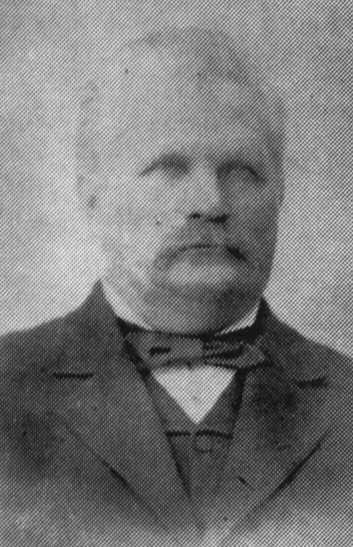
Miles Park Romney and His 5 Wives

Mitt Romney was born on March 12, 1947. His birth certificate says he was born in Detroit, Michigan. There is no dispute to these facts. The question is why was Mitt Romney born in Michigan? Mitt’s father was born in Mexico and his grandfather, Gaskell Samuel Romney was born in 76 years earlier in St. George, Utah. How did Mitt Romney end up in Michigan rather than in Utah or Mexico? Mitt Romney refrains from discussing his family history during his campaign to become the President of the United States; however, the journey from Utah to Michigan is as dramatic as any 19th century account of settling the American West. 

Mitt’s great-great grandfather, Miles Romney, was born in Lancashire (now Cumbria,) England in 1806. In 1837, he converted to the Church of Jesus Christ of Latter Day Saints (LDS or Mormons) and in 1841, he moved his family to the United States (Illinois) to join a Mormon colony. Mile’s son (Mitt’s great-grandfather,) Miles Park Romney was born in Illinois in 1843, but the Mormons were driven out of their community in 1846. The family drifted for several years and finally settled in the Territory of Utah around 1850, a few years after the United States took the northern third of Mexico away at gunpoint following after the Mexican-American War.

Miles Park Romney – 5 Wives, 31 Children

It was Miles Park Romney who first embraced polygamy and married five wives and fathered 31 children during the course of his life, including Mitt’s grandfather, Gaskill, in 1871. Miles Park Romney was enlisted in the effort to make the new American West territory a mega-Mormon colony. He moved to Arizona in 1881, to establish a Mormon presence there; however, existing settlers were not agreeable to a religious takeover of their community. 

At about the same time the United States passed the Edmund’s Act (¹) that made polygamy a felony. After attempts to challenge the law failed and law enforcement began arresting polygamists, Miles Park Romney took at least one of his families (he had two wives at the time) and fled to Mexico in 1885. Miles Park Romney settled at Colonia Juarez in the State of Chihuahua, Mexico along with other Mormons attempting to avoid arrest in the United States. Miles Park Romney never returned to the United States as he died in Mexico in 1904.

A contemporary image of Colonia Juarez, the Mormon Polygamist Colony in Mexico.

While still living in Mexico, young Gaskill Romney became an adult and married Anna Amelia Pratt in 1895. In 1907, Anna gave birth to Mitt’s father, George Wilcken Romney. A few years later the Mexican Revolution began and by 1912, the Romney’s were on the run back to the United States when violence threatened to involve their Mormon community. After living as refugees in Texas, California, and Idaho, the Gaskill finally settled his family back in Utah where they lived out much of the Great Depression.

As a young adult Mitt’s father, George W. Romney, completed a mission to Great Britain and then unsuccessfully attended several colleges in the United States. He married in 1931, and eventually moved to Detroit, Michigan in 1939, where Willard Mitt Romney was born in 1947.

That is how the person who will be nominated as the Republican Presidential candidate came to Michigan, via Mexico.

¹A Mormon account of the Edmund’s Act and the Polygamist’s flight to Mexico. (From OrsonPrattBrown.com – The Life and Times of Orson Pratt Brown)

The United States Congress on March 14, 1882, passed the Edmund’s Bill which gave new cause and impetus to Mormon interest in Mexico. The bill made illegal the Mormon practice of having more than one wife. The concept of plural marriage was one of the cardinal doctrines of the Mormon Church and its members believed it to be a divine principle as set forth in revelation to the founding prophet, Joseph Smith, Jr., in 1843.

In 1884, the United States government began active prosecution of the new law. The penalty for polygamy was set at $500,000 or five years imprisonment, or both. Cohabitation was punishable by a fine not to exceed $300.00 and imprisonment not to exceed six months. Federal marshals hunted down violators in Utah, Idaho, Arizona, and New Mexico….

Why Ryan, Why Now: Romney Repeats Mistakes of McCain & Nixon

13 Monday Aug 2012

Posted by Paul Kiser in Ethics, Government, History, Politics, Public Relations, Taxes, US History

≈ Leave a comment

Tags

GOP, John McCain, Mitt Romney, Paul Ryan, paying taxes, Republicans, Richard Nixon, scandal, tax returns, vice president

Mitt Romney follows McCain and Nixon to failure

Mitt Romney had over two weeks before he had to reveal his choice for Vice President and it would have been advantageous for him to wait. Keeping the Vice President choice a secret would have built up anticipation and the pundits would not have been able to resist continued speculation on the selection. All this would have climaxed with the announcement of the choice on August 29, in prime time on center stage of the Republican National Convention.

Instead the announcement was handled with all the grace of an engagement announcement of a pregnant daughter. The news leaked on a Friday night during the final week of the Olympics and announced before most of the country was awake on Saturday morning. A Vice President choice should reflect the wisdom of the campaign, so why was this one handled as badly or worse than the McCain/Palin fiasco?

Simple. It was desperation.

In 2008, John McCain was desperate to shake up the campaign and re-energize it. Unfortunately, Romney has the same type of desperation, but for different reasons. Romney certainly needs to re-energize his campaign, but what is more critical is the need to shift the focus off the charges that he hasn’t paid taxes for ten years. Romney has his back up against the wall on this issue. If it turns out to be true his campaign is over.

Romney selected Paul Ryan, who seeks to control, not serve Americans, and is a no-compromise, anti-government, right-wing extremist similar to McCain’s Palin choice. Ryan will deliver the voters who are sworn to hate Obama and liberals under the idea that the ticket can be elected by 25% of voters. It didn’t work for McCain in 2008, and it will not work in 2012. It is not a smart choice, but at this point Romney needed something, anything to change the subject of the campaign. 

Romney is operating like Richard Nixon in the belief that he can keep his worst secrets hidden through denial, lying, and non-cooperation. Instead he’s put a spotlight on the issue. His tactic of challenging people to ‘prove’ he didn’t pay taxes when he holds all the proof only makes him to looking guilty. It’s obvious he is hiding something in his financial past and if it is not about paying any taxes for ten years, then it must be something as damning.

Romney’s campaign is within hours, days, or weeks of imploding. If he fails to make his tax returns public then it will dominate the conversation about whether he is fit to be President. If he releases them then the truth must be bad enough to destroy his campaign. The only question is how Romney’s right-wing shift followed by complete collapse will carry over to other politicians who have embraced the extreme right.

Nevada Newspaper Goes Behind the Wall…to Die

11 Friday May 2012

Posted by Paul Kiser in About Reno, Business, Communication, Customer Service, Employee Retention, Ethics, Generational, History, Human Resources, Information Technology, Internet, Print Media, Public Relations, Social Media Relations, Technology, Traditional Media, US History

≈ 2 Comments

Tags

Newspapers, online, Reno Gazette-Journal, RGJ, Subscription fees

RGJ’s main bunker…entrance in Reno

The Reno Gazette-Journal (RGJ) recently decided to lock themselves behind a wall and it will cost you at least $12/month to see what they have hidden. Does anyone else see the problem with this business model?

Allow me to reconstruct the history of news media in America to understand why this is a death sentence to the RGJ.

In the 1800’s newspapers owned the information world

1700-1900
In the 1700’s, newspapers became the source of community news. These newspapers often portrayed a political view, but were THE source of information in a society where travel was limited and information scarce. Writers and editors often became key figures in the social and political structure as the gatekeepers of what would be printed.

Radio was faster, but newspapers were corporeal

1900’s
The invention of radio and television gave new options to the public on how they accessed news. The radio offered broadcast news that reached more people faster; however, newspapers remained the source of news because it existed in corporeal form. News transmitted on radio waves disappeared if a person wasn’t in front of the radio during the broadcast. Newspapers; however, almost always gave more a more in-depth account of the events.

Television came shortly after radio and added the exciting features of seeing the reporter and moving images of events; however, newspapers continued to be the best source of significant events.

CNN was to newspapers what Wal-Mart was to Mom & Pop stores

1980
CNN was the first real threat to newspapers. It offered news 24/7/365 and it often relayed events in progress. People no longer had to wait for a newspaper’s version that would come the next day. The newspaper still had the corporeal advantage because CNN would eventually move on to the other news while newspapers could be read anytime. Newspapers also still gave more in-depth reporting on local news issues.

1995
It wasn’t until the creation of the Internet that newspapers faced a challenge that would threaten their existence. The public use of the Internet stripped newspapers of almost every advantage they held. News was not only reported, it was discussed and people reacted in real-time. With the development of the Google search engine topics could be accessed and researched at any time anywhere there was Internet access. The news was no longer filtered and limited to what an editor thought people should know, but rather raw information reached individuals who made their own decisions on what was significant to them.

Reporters who spent years in college and thousands of dollars in tuition and books now found themselves competing against bloggers who had no editors to please. Reporters might get the story and accurately report it to their community but in a real-time world their information was just following up to what people already knew. Newspapers have adapted by presenting an online version of the information that will be in the next day’s paper and that has helped writers compete and be read; however, investors want profit and that is the heart of the dilemma.

The Reno Gazette-Journal has decided that they will create demand and increase revenue by limiting access. That is a rational position to take if you have a product that has significant value and demand, but newspapers and their value appeals to a diminishing demographic. Older white males are dying off at an incredibly rapid pace and newspapers have little demand or value to younger, non-white, non-male demographics. How does RGJ expect to gain new readers by charging for access who have free access to local online news through three Reno television news station’s webpages?

There is another problem with RGJ’s decision that may impact the quality of writing. A writer for RGJ has to accept that their audience will be extremely limited. Blogs will exist for decades and are be searchable to anyone in the world. An RGJ reporters work is locked away behind a wall forever. Who wants to dedicate their life to writing and have it unread? Over time writers will have to decide how much damage RGJ is doing to their career by locking their work behind a pay wall. Once the good writers are gone, what value will the Reno Gazette-Journal have to anyone, paying or otherwise?

Romney is Wrong

06 Friday Apr 2012

Posted by Paul Kiser in Business, Ethics, Government, Government Regulation, History, Management Practices, Politics, US History

≈ Leave a comment

Tags

Airlines, banks, Conservatives, Mega Oil Companies, Mitt Romney, Romney, steel industry, US Steel

“Liberals don’t like business.”

Mitt Romney, April 2, 2012

Mega-millionaire Mitt Romney trying to look 'common' to the little people with Senator John McCain

Mitt Romney is wrong…in so many ways,…but this week Mr. I-wear-jeans-so-I’m-just-like-you got it wrong at a political event in Wisconsin. Romney claimed to know what liberals think, and he thinks liberals don’t like business. That fodder is being served up to Conservatives who have spent years characterizing liberals as the spawn of Satan, but per normal, the truth is far from the five cent analysis offered by the Republican Presidential nominee (stick a fork in the GOP selection process, the wanna-bes are done.)

Liberals don’t trust business, but liberals do respect the importance of business in a healthy society. Not trusting business does not equate to not liking business.

Liberals are justified in their skepticism. Business is driven by profit. It is the alpha and omega of all enterprise. Business typically doesn’t believe in fair play, sympathy, or what is right for America. In fact, business has little interest in doing what is right even for its own customer. In publicly owned companies, the investor and next quarter’s profitability usually trumps the wants and expectations of the customer. Consider banks, airlines, and oil companies. Those are three major industries that have proved over and over that the individual customer is a piece of meat to be used and abused. Airlines fight even basic human rights for their passengers.

The fact is that business can’t be trusted. Business fails…. a lot, and they fail, not because government drove them to failure, but because the leaders of those companies were greedy, stupid, or both. Most companies last a few decades before they do something stupid, or fail to be smart about the future. A recent example is Kodak. For decades it was the dominant players in the camera film industry, then it had competition, and then it failed to adapt to a digital world. Where is Kodak now?

On Monday, Romney singled our the United States steel industry as an example of how government regulation has killed business. Again, Romney was wrong; however, he gave a classic example of how greed and stupidity by business executives destroyed their own companies. During the 20th century America’s steel industry failed to reinvest and upgrade their steel plants, believing that they were too big to fail. They were wrong.

There is no doubt that labor unions also played a role in escalating costs of United States steel; however, even an executive of US Steel admitted it was the shortsightedness of management that opened the door for competition to challenge and overtake the domination of the United States in steel production in the 1970’s and 80’s.

There is no doubt that private business is important to America’s economy. Yet, business needs oversight to keep them honest and to save America from the greedy and the stupid.

Mitt Romney might think that pandering to the myths of the right will make him a good President, but he would be wrong.

Challenger STS-51L: What Happened – 12 Hours + 73 Seconds + 207 Seconds

28 Saturday Jan 2012

Posted by Paul Kiser in Government, History, Science, Space, US History

≈ 3 Comments

Tags

1986, Challenger, Disaster, ET, External Tank, January 28, NASA, Solid Rocket Boosters, Space Shuttle, SRB, STS-51L

Many experts have discussed what happened in the moments up to and after the breakup of the Challenger Space Shuttle on January 28, 1986. NASA thoroughly investigated the events the led to the loss of the vehicle and the seven astronauts on board. This information was released over the months (and years) following the disaster, but here is a synopsis of what has been learned and discussed.

The four basic parts of the Space Shuttle

What Didn’t Happen

Not An Explosion
The Challenger and the External Tank (ET) did not ‘explode’ in the sense of a violent, pressure wave of energy. The fireball that engulfed the Space Shuttle was triggered when the bottom of the External Tank broke away releasing all the hydrogen fuel. This fuel ignited and gave the ET a sudden acceleration or upward push, which then caused the rupture of the oxygen tank in the upper portion of the External Tank that tore off the top of the ET¹. The result of the escaping fuel from the top of the ET created an oxygen-rich environment around the vehicle. The fuel in the Orbiter for the thrusters also ignited which may have been released when the nose of the Challenger sheared off due to aerodynamic forces.

STS-51L at 59 seconds after launch – black smoke reappears

(¹There is also evidence that the nose of the starboard Solid Rocket Booster swung into the ET and contributed to the rupture at the top of the tank.)

The failure at both the bottom and top of the External Tank ultimately led to its breakup because it no longer had an aerodynamic structure to force the air around it. In the last images of the Space Shuttle before breakup, the entire vehicle is masked by a translucent white and gold curtain of smoke and burning fuel. The fireball that surrounded the Space Shuttle was a combination of all the liquid fuel being released and igniting.

STS-51L at 73 seconds – The both the bottom and top of the ET have ruptured

Similarly, the breakup of the Orbiter was not caused by explosive forces from the fireball. As the ET accelerated and broke apart Challenger began pivot, nose down, so that the upper portion of the Orbiter turned into the oncoming rush of air. Since it was not aerodynamically designed to fly into that position (the Shuttle was traveling at 1,450 mph) the nose portion, including the crew compartment sheared away from the rest of the vehicle. As the crew compartment separated from the rest of the Orbiter, air rushed in to the Payload Bay and other cavities literally blowing Challenger apart from the inside.

Joint Section of SRB and the seal is inspected after STS-51L disaster

Cold Weather and O-ring Failure Not the Entire Cause of Disaster
The joint on the starboard Solid Rocket Booster (SRB) failed and allowed extremely hot gases to be directed at the External Tank; however, the infamous O-rings (a primary and secondary for each joint) and the cold weather were probably NOT the only factors leading to the disaster.

STS-51L liftoff – Black smoke at lower right joint on SRB

Both Solid Rocket Boosters were subjected to subfreezing temperatures overnight (it was only 36°F at launch.) If temperature was the only factor, then other joint breaches should have occurred in the multiple joints of both SRBs. There was only one breach on one SRB and at one point in the 360° circumference around the joints. 

Photographic evidence shows that a breach of the joint occurred as Challenger lifted off, but it seemed to re-seal (probably with soot and debris) as the vehicle cleared the tower. However, Challenger hit the strongest wind shear conditions of any Shuttle in twenty-five missions soon after launch. Whatever was sealing the earlier breach in the O-ring probably broke free as the SRB joints flexed in the wind shear. That started the hot gases to burn an ever-increasing hole through the joint, which was aimed at the strut that attached the External Tank to the Solid Rocket Booster.

Joint design, wind shear, O-rings, weather, and possibly an unknown factor (undetected pre-launch damage or weakness at one point of the joint) all seem to create a set of extraordinary circumstances that doomed Challenger. 

What Happened

T Minus 12:00:00.000 Hours
In the twelve hours before the launch, Launch Pad 39B experienced colder temperatures than had occurred prior to any Shuttle launch. This likely caused the O-rings in the joint of the SRBs to contract slightly.

00:00:00.000 Launch
At launch, possibly due to the cold weather or other causes, the joint was not completely sealed and hot gases burned through one point on a joint on the starboard Solid Rocket Booster. As Challenger lifted off puffs of black smoke appeared near the joint area 3 times per second. 

+00:00:02.733 Joint Re-Seals
The black puffs of smoke are no longer visible. It is believed that debris from the O-rings temporarily re-sealed the joint.
+00:00:19.000 Wind Comment
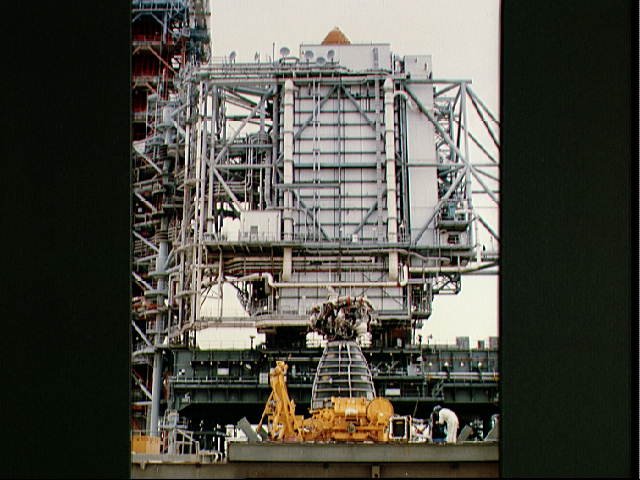
Pilot Michael Smith says, “Looks like we’ve got a lot of wind here today.”

+00:00:36.990 Shuttle Responds to Wind Shear
Challenger automatically responds to heavy wind shear. This causes stress and flexing of the joints in the SRBs. The belief is that at some point the temporary seal formed soon after launch breaks free and hot gases begin to blow through the gap. The hole in the joint grows as the gases melt the structure around it.

At 59 seconds a flame is clearly escaping from the SRB above the rocket nozzle

+00:00:58.788 Heat Plume 
Cameras record an abnormal plume of flame and smoke coming from the starboard Solid Rocket Booster. The plume grows in size over the next several seconds. The plume is aimed at the strut on the External Tank which connects it to the Solid Rocket Booster.

+00:00:60.004 Pressure Drop in SRB
Computer data shows a pressure drop in the starboard Solid Rocket Booster. While Mission Control and the crew are not fully aware of this, there is no doubt that the leak in the joint is effecting the power output of the Solid Rocket Booster. Had the flame been pointed away from the Shuttle and the External Tank, the Solid Rocket Booster would have eventually caused an abort due to lack of thrust to make orbit.

+00:00:64.660 ET Burn Through
The plume between the Solid Rocket Booster and the External Tank suddenly changes shape. This indicates that the External Tank has burned through and hydrogen fuel is leaking and increasing the flame.

+00:00:66.764 Pressure Drop in ET
Pressure in the External Tank begins to drop indicating a massive leak; however, even if the astronauts had noted the drop in pressure there was no action they could have taken. In seven seconds the entire vehicle will be engulfed in flame and the External Tank and Orbiter will be breaking up.

+00:00:70.000 “Go at throttle up.”
Commander Scobee calmly responds to Mission Controls authorization to increase speed by saying, “Roger, go at throttle up.” While events around the Solid Rocket Booster and External Tank are beginning to impact the vehicles flight path, no one on the ground or in the air has any forewarning of what is about to happen.

+00:00:72.204 Wild Nozzle Movements
At this point the engines on the Solid Rocket Boosters are shifting positions to compensate for flight path variations caused by the cascading failures of the ET and SRB. These movements of the engines on the SRB and then by the Main Engines on the Orbiter become wilder over the next second. The computer is desperately attempting to keep the vehicle on the flight path.

+00:00:73.124 Beginning of the End
Challenger is traveling at almost twice the speed of sound. Seventy-three (73) seconds into the flight the lower strut on the External Tank, which has been the target of the blow torch of hot gases leaking from the SRB, gives way and the lower end of the starboard Solid Rocket Booster flies free. It begins to pivot around the upper support. At about the same time the bottom of the External Tank comes off allowing all the hydrogen to escape and ignite. This causes a rapid acceleration of the External Tank. The upward pressure on the interior of the ET then causes the a rupture at the top of the tank, which then releases the oxygen around the Shuttle. In rapid succession, the External Tank breaks up, the Solid Rocket Boosters completely separate from the vehicle, and the Shuttle is pushed into a pivot that causes the nose to shear off at the point just in front of the Shuttle bay.

STS-51L post breakup with crew cabin arching over ocean

The Next 207 Seconds
The crew compartment is violently thrown around, but the G-forces most likely are not severe enough to seriously injure the crew. Ultimately, the crew cabin continues to move up from approximately 46,000 feet to over 60,000 feet, until its forward momentum is lost and it begins to arc down to the ocean below. At one point the crew probably experience weightlessness as the cabin begins to fall. The crew compartment begins a rotation that will continue until about 100 seconds before impact when it seems to stabilize with the black tiles on the bottom of Challenger’s nose facing the shore.

There is little doubt that most, if not all, of the seven astronauts survived the breakup. Personal Egress Air Packs (PEAP) were activated by the crew and switches at the pilot’s station were changed from launch position. In both cases, the break up of the vehicle, nor the impact on the ocean could have caused these actions. It is believed that all astronauts were strapped into their seats at the time of impact, which would be expected regardless of their state of consciousness.

The oxygen supply for the crew was behind them and lost in the break up. It is likely that the crew knew they lost their oxygen supply, possibly due to a loss in cabin pressure and were seeking to reestablish oxygen flow via the PEAPs. Three of four air packs were activated, unfortunately, if cabin pressure was lost the air packs would not have offered pressurized flow and therefore the crew would have lost consciousness. How quickly that would have happened would have depended on the speed of the possible decompression of the crew compartment.

Regardless of their condition during free fall, the crew would have been killed instantly upon impact in the Atlantic Ocean at 207 seconds after the break up of Challenger. The upper left section of the compartment was likely the point of first impact. It would be over six weeks before the remains were found and recovered.

15 Days in January – Day 15

28 Saturday Jan 2012

Posted by Paul Kiser in Fiction, Government, History, Science, Space, Technology, US History

≈ Leave a comment

Tags

1986, Challenger, Disaster, ET, External Tank, January 28, Kennedy Space Center, KSC, NASA, Orbiter, Solid Rocket Boosters, Space Shuttle, SRB, STS-51L

(NOTE: The following is a fictionalized account of the 15 days in January 1986 leading up to the Challenger Space Shuttle disaster on the 28th of that month; however, the details of weather and NASA events are based on known historical data.)

Titusville, Florida
Tuesday, January 28, 1986
High Temp: 46° F Low Temp: 32° F

Challenger and crew clear the tower

Where do I start? Seven amazing, wonderful, smart people lost their lives today. None of us can come to terms with the reality of what happened.

The morning was cold. We opened the water valves on Launch Pad 39B overnight to keep the lines from freezing and ice was all over the pad. Still, that should have not been a problem, nor caused a disaster. We had a delay of two hours because of an equipment failure on the pad, but the fuel and crew were loaded normally and Challenger launched at 11:38 AM.

Ice on Launch Pad 39B after water release to protect pipes

There were no warnings, no alarms, no indication of a problem. At 73 seconds after liftoff a massive cloud surrounded the vehicle and we lost sight of it. Then the Solid Rocket Boosters (SRBs) emerged at the top of the cloud and continued on followed by pieces of debris. We knew that something had happened but it was over a minute before it became apparent that the Orbiter had not survived.

The impact on everyone was a wall of emotions. The feeling of loss because the seven astronauts were our family. The feeling of empathy for the astronaut’s families for their loss. The feeling of anxiety as to if there was something we did that caused this tragedy and the need to find answers as quickly as possible. The loss was made even harder as we all watched helplessly seeing the remains of STS-51L fall into the ocean. Many of us held out hope of the miracle until it became apparent there would not be one.

Much of what happened does not make sense. Any rocket-based vehicle is a flying explosion waiting to happen, but everything possible is done to keep the volatile chemicals from interacting until they reach the nozzle. The cloud was apparently the result of a sudden burn of fuel from the External Tank, which doesn’t necessarily mean it was a violent explosion. If there was an explosion, why did the Solid Rocket Boosters (SRBs) escape, seemingly untouched. Challenger has been cursed with Main Engine problems, so some wonder if one of them failed causing the External Tank (ET) to breach and the fuel to burn, but again, why didn’t the SRBs also explode? 

There has been discussion that the cold might have caused a problem with the seal around the joint of a SRB, but why would that destroy the External Tank (ET) and Orbiter, but have seemingly little or no impact on the SRBs? It is apparent that the ET is key to explaining what happened. A joint could fail and hot gas escape that is aimed directly at the ET, which could cause an explosion, but a joint is 360°around and less than 25% of a joint faces at or near the ET. Odds of a first time failure of a joint facing the ET after 25 missions are ridiculously low.

STS-51L Christa McAuliffe, Gregory Jarvis, Judy Resnik, Mission Commander Dick Scobee, Ronald McNair, Pilot Michael Smith, Ellison Onizuka in White Room on 8 JAN 1986

The biggest question on everyone’s mind is the one no one wants to discuss. What happened to the crew? The Orbiter and ET emerged from the cloud in fragments and some were large enough to be the area where the crew sat during launch. Most of us believe that they were killed instantly, but no one will rest peacefully until we know what happened to them. 

The scope and breadth of this tragedy is far beyond what I could have imagined. Somehow we all have to move forward, but we’re all trying to deal with what happened. Moving forward doesn’t seem possible, right now. The first step in moving forward will be to understand what happened.

TOMORROW: What Happened to STS-51L

15 Days in January – Day 14

27 Friday Jan 2012

Posted by Paul Kiser in Fiction, Government, History, Science, Space, Technology, US History

≈ Leave a comment

Tags

1986, Challenger, Disaster, freezing temperatures, launch delays, Launch Pad, NASA, Pad 39A, Pad 39B, Space Shuttle, STS-51L, Weather

(NOTE: The following is a fictionalized account of the 15 days in January 1986 leading up to the Challenger Space Shuttle disaster on the 28th of that month; however, the details of weather and NASA events are based on known historical data.)

Titusville, Florida
Monday, January 27, 1986
High Temp: 55° F Low Temp: 36° F

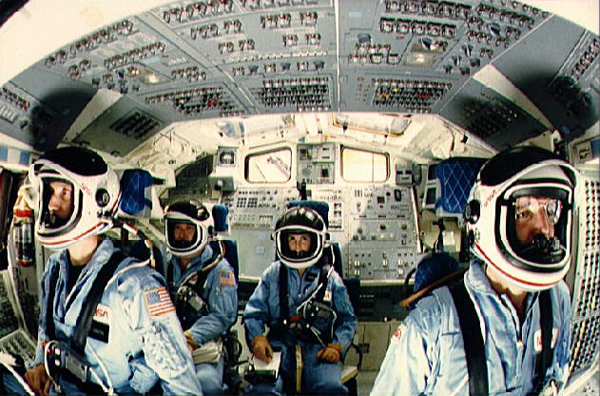
Flight deck wide-angle view of STS-51L crew all dressed up and ready to go

It is frustrating when minor issues become show stoppers. Today’s first launch from Pad 39B was thwarted by a simple tool that wouldn’t come off the hatch on Challenger as we locked the crew in the Orbiter. We finally sawed it off and then drilled out a bolt to replace it. By the time we had solved the issue the winds were unacceptable for a landing if we had to abort and bring the Challenger back. We are now scheduled for launch tomorrow morning, January 28.

The weather was cold this morning. We’ve never launched in conditions this cold, but it is a lot colder than 36 ° F only 20,000 feet above Kennedy Space Center (KSC) and the Challenger will be there about 30 seconds after launch. I guess we shouldn’t be complaining down here.

STS-51L mid-deck with rest of crew strapped in

Tomorrow’s forecast is for clear skies and temperatures to be cold overnight and not as warm tomorrow during the day. The big issue on the Launch Pad for us is whether or not the temperatures will drop below freezing tonight. We have a lot of water piped in and around the pad area and if the water in the pipes freeze and break the Challenger might not go up for several days. One option being discussed is to open valves tonight and let the water flow to keep it from freezing. Trying to heat the entire pad area is not a realistic option and any open heat source is dangerous considering the fuels we have in and around the Shuttle.

If everything goes smoothly tomorrow we will finally get Challenger on its way for its 10th mission. We are now almost a week behind on this launch because of the delays of Columbia and the weather, both here and at other abort landing sites. After the launch we have to clean up the chemical residue from the Solid Rocket Boosters (SRBs) and inspect the launch pad area for damage. Repairs and  maintenance will be scheduled and addressed, which is currently underway at Launch Pad 39A after Columbia’s January 12th launch. 

By this time next year we will be more like the gate at an airport with a continuous process of preparing for launch, repairing from launch, and preparing for next launch, with three active pad crews (two here at KSC and one at Vandenberg AFB.) President John F. Kennedy gave our country a dream to reach for the stars and it is exciting to watch the dream become a reality.

15 Days in January – Day 13

26 Thursday Jan 2012

Posted by Paul Kiser in Fiction, Government, History, Science, Space, Technology, US History

≈ Leave a comment

Tags

Challenger, Launch Rats, NASA, Space Station, STS-51L, Teacher in Space, USSR

(NOTE: The following is a fictionalized account of the 15 days in January 1986 leading up to the Challenger Space Shuttle disaster on the 28th of that month; however, the details of weather and NASA events are based on known historical data.)

Titusville, Florida
Sunday, January 26, 1986
High Temp: 66° F Low Temp: 48° F

Launch Rats working on the hydrogen fuel line

What’s next? One of the people on the launch pad team (we’re known as ‘Launch Rats’) likes to say, “What’s next?” He rarely stops moving. Once he’s completed one task he wants to move on. That is a great philosophy to have at NASA. We are constantly facing a new task or issue as we prepare for each launch and in order to address them all we have to keep moving.

That’s also what we have done in the American space program. It was a major achievement to get to the Moon and back, but that was only one task. We started out behind the U.S.S.R. in space technology, but we now are in the pilot’s seat in determining the future of space exploration. U.S.S.R is copying our Shuttle design so they can also have a reusable space vehicle, but they are at least a decade behind us.

Our family of Orbiters have the capacity to build a massive space station, much larger than the Soviet space station that is rumored to be launched sometime this year. Once we have a platform in space we can prepare for extended missions to the Moon or Mars without the current limitation of a single rocket’s lift capabilities. That is what’s next for America’s space program.

Tomorrow, pending good weather, we will send Challenger on its way, and before they are in orbit we have a Launch Rat that will be saying, “What’s next?”

15 Days in January – Day 12

25 Wednesday Jan 2012

Posted by Paul Kiser in Education, Fiction, Government, History, Public Relations, Science, Space, Technology, US History

≈ 1 Comment

Tags

1986, Challenger, Christa McAuliffe, Dick Scobee, Kennedy Space Center, KSC, NASA, Space Shuttle, STS-51L, Teacher in Space

(NOTE: The following is a fictionalized account of the 15 days in January 1986 leading up to the Challenger Space Shuttle disaster on the 28th of that month; however, the details of weather and NASA events are based on known historical data.)

Titusville, Florida
Saturday, January 25, 1986
High Temp: 73° F Low Temp: 57° F

Teacher in Zero G - Christa McAuliffe trains for STS-51L

The launch of STS-51L is now scheduled for Monday. We were scheduled for a liftoff Sunday morning, but tomorrow’s weather is predicted to be as bad or worse than today’s, which was foggy until about noon. Hopefully, we can get Challenger off the ground on the 27th and then focus on Columbia’s next launch in March.

The seven astronauts going up with Challenger on Monday include our first teacher. The Teacher in Space Project was announced by President Ronald Reagan in the Fall of 1984. Last Summer Vice President George Bush announced that Sharon Christa McAuliffe was selected as the first Teacher in Space from 11,000 applicants. Christa teaches in Concord, New Hampshire and submitted her application on the last day they were being accepted.

STS-51L crew trains for emergency evacuation from launch pad

Mrs. McAuliffe, as she is known in the classroom, has always dreamed of being part of the space program and is pleased to have the chance to take her classroom skills into space. Christa talked about the opportunity she has been given, saying:

Imagine me teaching from space, all over the world, touching so many people’s lives. That’s a teacher’s dream! I have a vision of the world as a global village, a world without boundaries. Imagine a history teacher making history!

In addition to Mrs. McAuliffe will be four members of the ‘Class of 1978.’ Commander Francis R.’Dick’ Scobee, Mission Specialists Ellison ‘El’ S. Onizuka, Judith ‘Judy’ A. Resnik, and Ronald ‘Ron’ E. McNair were all selected as astronaut candidates in January of 1978. The other two crew members are Pilot Michael J. Smith and Payload Specialist Gregory Jarvis.

Commander Dick Scobee noted the opportunity of the Teacher in Space Project when he said:

“My perception is the real significance of it, and especially a teacher, is that it will get people in this country, especially the young people, expecting to fly in space. That’s the best thing that can happen to our program. The short-term gain is a publicity gain. The long term gain is getting expectations of the young people in this country to the point where they expect to fly in space, they expect to go there, they expect this country to pursue a program that allows it to be in space permanently to work and live there, to explore the planets.”

The Teacher in Space Project is just one more part in keeping America a world leader by bringing space down to Earth. On Monday we will take the next step with the beginning of mission STS-51L…assuming the weather cooperates!

15 Days in January – Day 11

24 Tuesday Jan 2012

Posted by Paul Kiser in Communication, Education, Fiction, Government, History, Information Technology, Science, Space, Technology, US History

≈ Leave a comment

Tags

Challenger, Halley's Comet, Kennedy Space Center, KSC, NASA, Satellite, Space Shuttle, SPARTAN 203, STS-51L, TDRS, Teacher in Space

(NOTE: The following is a fictionalized account of the 15 days in January 1986 leading up to the Challenger Space Shuttle disaster on the 28th of that month; however, the details of weather and NASA events are based on known historical data.)

Titusville, Florida
Friday, January 24, 1986
High Temp: 66° F Low Temp: 55° F

TDRS satellite to be launched by Challenger STS-51L

This afternoon’s launch had to be scrubbed. The weather here was cool and damp, but the real problem was the weather at one of the abort landing sites. We have an alternate abort site but they cannot handle a nighttime landing (an abort on this side of the world would be a night landing there,) so the launch was rescheduled for tomorrow morning in case we have to activate the alternate abort site. That would allow Challenger to land in daylight at the alternate site if they have to abort.

The launch was then pushed back another day because of the morning versus afternoon liftoff. The problem is that we have a set amount of work to do and it was quickly determined that we would not be ready for launch by Saturday morning. Mission Control then moved the launch to Sunday morning. 

SPARTAN 203 satellite to have its eye on Halley's Comet

Once we finally do get Challenger in orbit, the STS-51L mission has several goals. One will be to launch the TDRS-2 satellite, which is a communications relay station for analog and digital signals. These satellites are the next generation in communication technology allowing information to be transmitted around the world in seconds. Another small satellite called SPARTAN 203 is being deployed to observe Halley’s Comet, which will reach its perihelion (closest approach to the Sun) on February 9, 1986.

In addition, this mission will send our first “Teacher in Space.” More about that tomorrow. 

15 Days in January – Day 10

23 Monday Jan 2012

Posted by Paul Kiser in Fiction, Government, History, Science, Space, Technology, US History

≈ Leave a comment

Tags

C1, C2, C3, Challenger, Criticality, KSC, NASA, space flight, STS-51L

(NOTE: The following is a fictionalized account of the 15 days in January 1986 leading up to the Challenger Space Shuttle disaster on the 28th of that month; however, the details of weather and NASA events are based on known historical data.)

Titusville, Florida
Thursday, January 23, 1986
High Temp: 75° F Low Temp: 53° F

Earth looking out through Challenger cargo bay

Tomorrow we should launch Challenger on its 10th mission. Temperatures were seasonal today; however, the weather is questionable as another cold front is moving through tomorrow. We won’t know if the launch is a go or not until a few hours or less before liftoff.

Beyond weather considerations, there are thousands of things that have to be perfect before a mission is given a “go for launch.” It’s a wonder we ever get a Space Shuttle off the ground. Every individual component of the Orbiter, the External Tank (ET), and the Solid Rocket Boosters (SRBs) is rated in one of five categories of impact on the mission, vehicle, and/or crew if the part fails. The ratings are as follows:

  • Criticality 1 (C1) – Loss of vehicle or crew if the component fails
  • Criticality 2 (C2) – Loss of mission
  • Criticality 3 (C3) – Component will not have fatal impact on crew, vehicle, or mission if it alone fails
  • Criticality 1R (C 1R) – Redundant component, but loss of vehicle or crew if both primary and redundant components fail
  • Criticality 2R (C 2R) – Redundant component, but loss of mission if both primary and redundant components fail

Any component that is not rated C3 and has a known issue not only stops the countdown, but the entire program, until resolved. When trying to put seven people and tons of cargo into Earth orbit, there are a lot of components that fall into the C1, C2, C 1R, or C 2R categories. Safety can be annoying, but it save lives.

Crew of Challenger STS-7 mission working in space

That said, it is impossible for any human, regardless of how careful, intelligent or well-educated, to be able to anticipate every possible problem. Exploration of uncharted territory comes with a price and that price is the loss of human life. Over 700 people died trying to reach the North Pole and even there we have air to breathe, water, and survivable temperatures if properly dressed. In space there is no air, no water, and a human dies if directly exposed to the vacuum of space.

Space travel is risky on the best of days. Astronauts are put in a ship that is designed to be as light-weight as possible with no significant armor or shielding around them. They are attached to two highly explosive solid rocket boosters that would flatten a small city if they exploded, connected to a massive tank filled with hydrogen and oxygen that has a nasty tendency to flash burn if it comes in contact to even a small flame or spark.

In addition, the speeds and the pressures that astronauts experience are unlike any other reality most humans can imagine. There is no doubt that human life will be lost in the pursuit of space exploration. We will do everything we can to safeguard our astronauts, but at some point we will discover what we did not anticipate. At some point an accident will occur on the ground or in flight. We will investigate, learn where we failed and moved forward again.

For centuries humans sailed near the coastline because no one knew what lie out across the sea. Staying close to shore taught us how to sail, while minimizing the risk. Even then ships sank and people died. The Space Shuttle program is our way of sailing near the coastline. We send people up into low Earth orbit and learn how to ‘sail’ in space. After a few decades we will be ready to go out into open space, just as ships were ready to cross open seas.

There are some who ask why should we reach out into space. That is probably what some people asked sailors who went off to explore the new world. But those brave men sailed off into uncharted waters and everything we now enjoy in the United States of America is due to those who took the risks to leave behind the safety of ‘the known’ in order to explore the unknown.

The answer to those people who want to know ‘why’ is simply this: we don’t know why…YET. After we get there we will know why it was so important we went. That is the way it has always been when exploring the unknown. That is the way it will always be.

15 Days in January – Day 9

22 Sunday Jan 2012

Posted by Paul Kiser in Fiction, Government, History, Science, Space, Technology, US History

≈ Leave a comment

Tags

abort, Challenger, NASA, Space Shuttle, SSME, STS-51F

(NOTE: The following is a fictionalized account of the 15 days in January 1986 leading up to the Challenger Space Shuttle Disaster; however, the details of weather and NASA events are based on known historical data.)

Titusville, Florida
Wednesday, January 22, 1986
High Temp: 72° F Low Temp: 46° F

Challenger main engines during STS-51F abort

It’s too bad the launch of our 25th mission was moved from today. The weather was good for most of the day. We are still go for the launch of Challenger on Friday. After Challenger we have a break until March 6th, when Columbia is scheduled to launch again.

As I’ve said, this will be Challenger’s 10th mission; however, the most problematic mission we’ve ever had in the program was her 8th mission. She was scheduled for launch on July 12, 1985 and the countdown was proceeding as planned. At 6 seconds the Orbiter’s main engines (SSMEs) began their firing sequence; however, just before the Solid Rocket Boosters (SRB) were fired the computers detected a problem with one of the engines and aborted the launch. While it is a safe procedure, any abort makes everyone’s heart beat a little faster.

Launch of STS-51F - Before one Main Engine failure

Once again the Challenger had her main engines replaced while at the launch pad, which took us two weeks. Problem solved…or at least we thought.

Challenger was then rescheduled for a liftoff on July 29th. After a technical issue delayed the launch by 97 minutes Challenger finally left pad 39A on her way to orbit. Less than six minutes into the flight one of Challenger’s main engines shutdown and another engine was reaching a potential automatic shutdown, which would have caused a serious high-risk abort issue. Quick work by Mission Control and the crew overrode the computer and kept the remaining two engines burning. Unfortunately, the Orbiter could not make its planned orbit; however, the crew was able to fulfill the mission in a lower orbit.

The launch of a Space Shuttle is never routine, but by the end of this year we will be showing the world how close space can be to those who reach for it

15 Days in January – Day 8

21 Saturday Jan 2012

Posted by Paul Kiser in Fiction, Government, History, Science, Space, Technology, US History

≈ Leave a comment

Tags

Challenger, hot gases, joint leakage, NASA, O-rings, Solid Rocket Boosters, SRB, STS-51-L, STS-51B, STS-51L, STS-6, STS-7, STS-8

(NOTE: The following is a fictionalized account of the 15 days in January 1986 leading up to the Challenger Space Shuttle Disaster. The character’s account is fictional; however, the details of weather and Space Shuttle events are based on known historical facts.)

Titusville, Florida
Tuesday, January 21, 1986
High Temp: 64° F Low Temp: 45° F

Challenger rolls out to Launch Pad 39A

Today we are having another day of cool, but clear weather with the wind out of the north. Challenger (OV-099) is still being prepped for a Friday launch and I’m just grateful that the original launch date was pushed back because of Columbia’s flight delays. Hopefully, it will be warmer on Friday, which will make the launch more comfortable for everyone watching. 

Challenger STS-6, her maiden voyage

As I said yesterday, Challenger has given us many ‘challenges.’ The fact that OV-099 was not originally intended to fly may be part of the reason she has been sometimes reluctant to leave Earth. That said, despite her temperament, Challenger  has broken new ground for the program.

After her problematic maiden voyage the second flight was relatively trouble-free. Launched on June 18, 1983, Challenger STS-7 was the first mission with a planned landing at KSC, but that had to be waved off because of weather.

Challenger in lightning storm just prior to liftoff

Challenger’s third mission (STS-8) was supposed to be in July, but because a payload issue the launch was pushed back to August 30, 1983. After a spectacular lightning show just before launch, Challenger lifted off almost on time making history as the first nighttime launch of a Space Shuttle. This feat was complimented by the first nighttime landing when Challenger returned on September 5, 1983.

1984 was a great year for Challenger. OV-099’s fourth, fifth, and sixth missions gave us the first untethered ‘space walk,’ the first Orbiter landing at KSC, the successful recovery, repair, and redeployment of an orbiting satellite, the first time seven people were launched into space, and the first time two women were in space at the same time.

Bruce McCandless II became first human satellite on STS-41B

The seventh mission for Challenger, and her first of 1985, was unusual because it was the only mission where the Shuttle had been delivered to the launch pad and then had to be pulled back to the Vertical Assembly Building (VAB.) Concerns about the reliability of a satellite in the payload bay of Challenger forced NASA to cancel the mission.

After a two month delay Challenger’s new STS-51B mission was finally launched on April 29, 1985, with the European Space Lab – 3 in its payload bay. The mission was a success with the only issue with the flight occurring after the Solid Rocket Boosters (SRB) were recovered. The left SRB had evidence that it leaked hot gases through a joint area and two rubber o-rings that were designed to sealed the joint were damaged. One ring had 4mm of erosion and the other had 8mm of erosion.

This leakage presents two issues. The first is the potential loss of pressure if the leak is too major and the second is the danger of hot gases that might be directed toward the External Tank (ET), the Orbiter, or the other SRB, which might damage them. Fortunately, this was not an issue during this flight.

Despite the SRB hot gases leakage issue on her seventh mission, the biggest scare Challenger would give us was on her eighth mission. I’ll talk about that tomorrow. 

15 Days in January – Day 7

20 Friday Jan 2012

Posted by Paul Kiser in Fiction, Government, History, Science, Space, Technology, US History

≈ Leave a comment

Tags

Challenger, NASA, Orbiter, OV-099, Space Shuttle, STA-099, STS-51L

(NOTE: The following is a fictionalized account of the 15 days in January 1986 leading up to the Challenger Space Shuttle Disaster. The character’s account is fictional; however, the details of weather and Space Shuttle events are based on known historical facts.)

Titusville, Florida
Monday, January 20, 1986
High Temp: 66° F Low Temp: 48° F

Challenger atop the Boeing 747 on April 18, 1983

We are now four days from the launch of Challenger on the STS mission 51L. The decision was made to push back the date to Friday the 24th. I think that will be a great way to end our week. 

Challenger is our second space-qualified Orbiter. Columbia was the first. Challenger has been responsible for nine of 24 completed missions, and at times Challenger has been challenging.

Challenger rolls out to Launch Pad 39A for maiden voyage (8 DEC 1982)

While most civilians know Challenger by its name, we know it as OV-099 (technically:  Orbiter Vehicle-099;) however, that was not its original designation because initially it was not intended to fly.

Because of the lack of computer simulations, STA-099 (Structural Test Vehicle-099) was built to be a full-scale test model to determine if the design would meet stress expectations without failing. The contract to build it was awarded on July 26, 1972, but construction didn’t begin until November 21, 1975. After a year of testing was decided that it would be quicker and less expensive to refit STA-099 for space flight rather than rebuild the original air-flight test vehicle we know as Enterprise (OV-101.) The conversion of STA-099 to OV-099 began on January 28, 1979, which, in eight days, will be exactly seven years ago.

Repairing/replacing Challenger's main engines before its maiden flight

Challenger rolled out of the Palmdale assembly facility on June 30, 1982 and arrived at KSC on July 5th. Challenger was prepped for its first flight, which was scheduled for January 20, 1983, but while it sat on Launch Pad 39A testing revealed a hydrogen leak in one of the main engines. Subsequently, Challenger had to have her main engines removed for repairs while sitting on the launch pad. One of the engines had to be completely replaced.

Challenger problems did not end with the engines. A severe storm contaminated the payload while she sat on the pad. The payload had to be decontaminated. Challenger finally was successfully launched on her maiden flight on April 4, 1983, 51 months after the conversion began.

More on this ship’s history tomorrow.

15 Days in January – Day 5

18 Wednesday Jan 2012

Posted by Paul Kiser in Fiction, Government, History, Science, Space, US History

≈ Leave a comment

Tags

1986, Challenger, Columbia, NASA, Space Transportation System, STS 61 C, STS-51-L

(NOTE: The following is a fictionalized account of the 15 days in January 1986 leading up to the Challenger Space Shuttle Disaster. The character’s account is fictional; however, the details of weather and Space Shuttle events are based on known historical facts.)

Titusville, Florida
Saturday, January 18, 1986
High Temp: 70° F  Low Temp: 61° F

STS-61C Columbia lands at night at Edwards AFB

Today was a good news/bad news day. The good news was that Columbia is back on Earth. The bad news that it didn’t come home. It’s sitting at Edwards AFB, which means it will add about a week to the turnaround time before it flies again. We just can’t seem to catch a break. The landing took place after dark after they waited as long as they could for a KSC landing attempt.

Our next launch is still scheduled for January 23, and I still don’t know how we can make it. I’m not sure anyone will be ready, but there are a bunch of smart people in air-conditioned rooms that must know more than the rest of us. Of course, Challenger won’t fly if we are not ready.

To give you an idea of the schedule we are looking at, here are the launches scheduled for this year:

1986 Space Transportation System (STS) Missions

  • January 12 (KSC) – Columbia (STS-61C) – Deploying a satellite and experiments (Completed)
  • January 24 (KSC) – Challenger (STS-51L) – Deploying satellites and experiments
  • March 6 (KSC) – Columbia (STS-61E) – Astro 1 mission
  • May 15  (KSC) – Challenger (STS-61F) – Deployment of Ulysses satellite
  • May 20 (KSC) – Atlantis (STS-61G) – Deployment of Galileo satellite
  • June 24 (KSC) – Columbia (STS-61H) – Deployment of 3 satellites
  • July 1 (Vandenberg) – Discovery (STS-62A) – Dept. of Defense mission
  • July 22 (KSC) – Challenger (STS-61M) – Deployment of TDRS-4 satellite
  • August 18 (KSC) – Atlantis (STS-61J) – Deployment of Hubble Space Telescope satellite
  • September 4 (Vandenberg) – Discovery (STS-61M) – Dept. of Defense mission
  • September 27 (KSC) – Challenger (STS-61I) – Deployment of Intelsat-4 satellite
  • September 29 (Vandenberg) – Discovery (STS-62B) – Dept. of Defense mission
  • October 1 (KSC) – Columbia (STS-61K) – Mission information not released
  • November 1 (KSC) – Atlantis (STS-61L) – Mission information not released
  • December (Vandenberg?) – Challenger (STS-71B) – Dept. of Defense mission

One down, 14 to go. 1986 is going to be a big year for NASA!

15 Days in January – Day 4

17 Tuesday Jan 2012

Posted by Paul Kiser in Fiction, Government, History, Science, Space, US History

≈ Leave a comment

Tags

Columbia, NASA, Representative Bill Nelson, STS 61 C

(NOTE: The following is a fictionalized account of the 15 days in January 1986 leading up to the Challenger Space Shuttle Disaster. The character’s account is fictional; however, the details of weather and Space Shuttle events are based on known historical facts.)

Titusville, Florida
Friday, January 17, 1986
High Temp: 72° F  Low Temp: 62° F

STS-61C launches a satellite from cargo bay

For the second day in a row weather caused Mission Control to cancel Columbia’s landing. Weather was better here, but it was cloudy both here and at Edwards. They really have to land it here at KSC if we have any hope of getting the program back on schedule.

I wonder if the suits in the control room are being too cautious. The pilot has some of the most sophisticated navigation tools available in the world and he doesn’t even actually fly the Orbiter until just before the approach and landing. He just monitors the computers, and if he wanted the computers could land it for him. Visibility should not be a reason to wave off a landing.

My guess is the caution is due to the VIP on board. Nobody wants to make a bad call when a politician life is at stake and I’m sure he’s perfectly happy to have extra time in space. Still, we’re not running a tourism service and I think everyone knows Columbia has to get its wheels back on the ground as quickly as possible.

STS-61C Columbia-Representative Bill Nelson peels grapefruit

We are scheduled for 15 missions this year and no one really expects that is possible. I would guess that we could do 12 missions, but even that will not be possible if we keep having these delays. Our next launch is scheduled for next Thursday, but with the delays, I don’t see how we can be ready. 

This year is when we ramp up the program to go from exploring to occupying space. Orbiting outposts that are living and working environments are next in America’s advancement into to space. From there, bases on the Moon and Mars are not far behind. The Space Transportation System (STS) program will pave the way and I’m excited to be a part of it. We just have to get our ‘sea legs’ on launches and landings and it will all fall into place. We have 24 successful STS missions (assuming Columbia ever comes home) and the next launch will be our 25th. Space travel may never be routine, but we’re starting to understand what it will take to be the space port for the world.

15 Days in January – Day 3

16 Monday Jan 2012

Posted by Paul Kiser in Fiction, Government, History, Science, Space

≈ Leave a comment

Tags

Atlantis, Challenger, Columbia, Edwards AFB, Kennedy Space Center, KSC, NASA, Space Shuttle, STS 61 C, STS-51-L, STS-61-B

(NOTE: The following is a fictionalized account of the 15 days in January 1986 leading up to the Challenger Space Shuttle Disaster. The character’s account is fictional; however, the details of weather and Space Shuttle events are based on known historical facts.)

Titusville, Florida
Thursday, January 16, 1986
High Temp: 69° F  Low Temp: 52° F

They waved off the Columbia landing today. Weather conditions here and at the backup landing site at Edwards AFB were unacceptable. It was drizzly here today and cloudy in California. Personally, I think that landing at Edwards should only be an emergency. When an Orbiter lands at Edwards it costs over $1.5 million dollars to get it back here and we lose a week in turnaround time. If we can’t land because the weather at Kennedy Space Center we could wait for several days and still save money and time on the recovery of the Orbiter.

Atlantis (STS-61-B) was the last mission and it landed at Edwards on October 7th and it was October 12th before it was back here. Once it got back here we had the fastest turn around in the history of the program. Atlantis was out to the launch pad by November 12th. Had it landed here at Kennedy Space Center (KSC) it would have been ready to go by November 7th. The only reason to land at Edwards is if the next launch for that vehicle will be from Vandenberg AFB, and our first launch from there isn’t going to happen until July.

STS-61-B Atlantis landing at Edwards on October, 7, 1985

Of course, delays have their costs, too. Every time we scrub a landing or launch we are wasting money because we all get paid whether the Orbiter comes or goes,…or doesn’t. Still, if we are going to prove the value of the program we need to be able to get the Orbiters back in the air as quickly as possible, and that means landing at KSC.

Fortunately, tomorrow will be warmer and hopefully dryer. It should be a good day for a landing. Columbia has been a pain in the neck. It should have been up and down by Christmas and now were almost a month later and still waiting for it to land. Once Columbia is back home we are scheduled to launch Challenger next week.  

15 Days in January – Day 2

15 Sunday Jan 2012

Posted by Paul Kiser in Fiction, Government, History, Public Relations, Science, Space, US History

≈ Leave a comment

Tags

Bill Nelson, Challenger, Columbia, NASA, Space Shuttle, STS 61 C, STS-51-L

(NOTE: The following is a fictionalized account of the 15 days in January 1986 leading up to the Challenger Space Shuttle Disaster. The character’s account is fictional; however, the details of weather and Space Shuttle events are based on known historical facts.)

Titusville, Florida
Wednesday, January 15, 1986
High Temp: 64° F  Low Temp: 43° F

STS-61-C Launch on January 12, 1986

STS-61-C, or Columbia is coming back tomorrow, pending good weather. We should have Challenger ready for launch a week after Columbia lands. It was scheduled for launch at 2:42 PM EST on the 22nd, but when they had to scrub the December launch of Columbia, they moved Challenger’s launch back a day to the 23rd.

Columbia’s main mission was to launch a communications satellite and that was a success. They have had a bunch of experiments, most of them are in the Shuttle bay, but they will have everything wrapped up for tomorrow’s landing.

Personally, I’ll be glad to have Representative Bill Nelson back on the ground. I’m not sure it’s a great idea to have the people who champion our budget in Congress to take the risk of flying in space. One mistake and we could lose all our financial support and the STS program would be over. I guess the PR people must know what they are doing.

Representative Bill Nelson with on board experiment

The next mission (STS-51-L) is also going to be a high-profile flight. We have the first ‘official’ civilian on the Challenger trip. She is our first ‘teacher-in-space.’ I wonder if this is going to be a regular thing from here on out. I understand we need the public’s support and I guess this is the best way to get it. Still, I think people just need to accept that our leadership in space makes us technologically superior here on Earth. Let us do our jobs at NASA and our country will reap the benefits in advanced scientific and engineering knowledge.

We had some fog today, but this morning was a little warmer. Yesterday’s low was too close to freezing for Florida. Our farmers don’t like it when we get that cold. Hopefully, we’ve had our cold snap for this winter.

15 Days in January – Day 1

14 Saturday Jan 2012

Posted by Paul Kiser in Fiction, History, Science, Space

≈ Leave a comment

Tags

Bill Nelson, Challenger, Charles Boden, Columbia, Florida, NASA, Space Shuttle, STS 61 C, Titusville

(NOTE: The following is a fictionalized account of the 15 days in January 1986 leading up to the Challenger Space Shuttle Disaster. The character’s account is fictional; however, the details of weather and Space Shuttle events are based on known historical facts.)

Titusville, Florida
Tuesday, January 14, 1986
High Temp: 63° F  Low Temp: 37° F

STS 61 C Crew - Columbia - Launched January 12, 1986

At least we have Columbia in the air. These delays are frustrating. Columbia was supposed to be launched on December 18th and since then launch attempts on December 19th, twice on January 6th, and January 7th, 9th, and 10th were all scrubbed for one reason or another. Finally, we got them off Sunday. At least the launch went well, but we have Challenger waiting in the wings.

Columbia is supposed to come back on this Friday, the 17th, but that’s going to push back the launch of the Challenger. There’s talk of bringing back Columbia early so we can move up the Challenger launch. Hopefully, we’ll get the official word tomorrow.

Charlie Bolden is the pilot on the Columbia on this flight. This is his first flight. Coincidentally, he’s from Columbia, South Carolina. He was the first guy we put in the slidewire basket to test the launch tower escape system. We didn’t kill him, which is at least on measure that it must work. 

We’ve also got a politician on board the Columbia. Representative Bill Nelson is one of the payload specialists. God I hope nothing goes wrong on this flight. That would put a quick end to the program. For all my complaining I have to say it’s pretty exciting to be part of the launch pad team right now. There’s a lot of pressure, but we’re doing something no one else in the world can do and I wouldn’t trade my job to anyone.

It was chilly this morning. It felt like we were in Denver. I didn’t take my jacket off until late this afternoon. Tomorrow should be warmer and maybe we can get back to more normal temperatures.

Dates of Historical Note in 2012

02 Monday Jan 2012

Posted by Paul Kiser in History, US History

≈ 3 Comments

Tags

1812, 1912, 1962, 2002 1987, 2012, Cuban Missile Crisis, historical events, NASA, RMS Titanic, Space Program

Missile sites in Cuba (1962)

April of 2012, will be the 100th anniversary of the launch and sinking of the RMS Titanic.  In 2012, Louisiana will celebrate its bi-centennial, while New Mexico and Arizona will mark their centennial. This upcoming Leap year will also note the 50th year since the Cuban Missile Crisis and America’s successful efforts to have a human orbit Earth. In addition to the October crisis in Cuba, 1962, is notable for the multiple conflicts between Russia and the United States that almost put the planet into a nuclear holocaust. Here are those, and other significant 10, 25, 50, 100, 200, 300, 500 and 800 year milestones coming in 2012.

JANUARY

  1  – The Republic of China was established (1912) as were the Navy Seals (1962)

  3 – Pope John XXIII excommunicates Fidel Castro (1962)

  6 – New Mexico became the 47th State (1912)

10 – Avalanche in Peru kills almost 4,000 (1962)

23 – Estimated 7.0-7.8 earthquake strikes near New Madrid, Missouri (1912 – 3rd powerful earthquake in 6 weeks)

26 – Ranger 3 (Moon Probe) is launched (1962)

28 – Ranger 3 misses Moon by over 22,000 miles (1962)

31 – Asteroid 433 Eros will pass near Earth, well 16.6 million miles (2012)

FEBRUARY

John Glenn in Friendship 7

  3 – The United States begins an embargo on Cuba (1962)

  6 – The Diamond Jubilee of the crowning of Elizabeth II (1952)

  7 – An estimated 7.4 to 8.0 earthquake strikes New Madrid, Missouri (1912-4th powerful earthquake in 2 months)

  8 – Winter Olympics are held in France (1992) and Utah (2002)

10 – A Russian spy is exchanged for Francis Gary Powers (1962 – CIA U-2 spy plane pilot shot down over Russia)

11 – British Airways is privatized (1987)

14 – Arizona becomes 48th State (1912)

20 – John Glenn becomes the first American to orbit Earth (1962)

MARCH

  1 – 1st KMart opens (1962) and the United States invades Afghanistan (2002)

12 – Girl Scouts of America founded (1912)

24 – Disney and France sign contracts to build Disneyland Paris (1987)

26 – 7.7 earthquake destroys Caracas, Venezuela (1812)

27 – Tokyo, Japan gives Washington, D.C. 3,000 cherry trees (1912)

30 – Queen Elizabeth, the Queen Mother died at 101 years old (2002)

APRIL

Titanic leaves on its maiden voyage

  6 – New York slave revolt kills nine white people (1712 – 21 African-Americans were arrested, found guilty, and executed)

10 – The unchristened RMS Titanic sets sail on maiden voyage (1912) and 1st major league baseball game played at Dodger Stadium (1962)

14- RMS Titanic strikes iceberg (1912)

15 – RMS Titanic sinks killing 1,514 people (1912)

17 – US & South Korea to split command of forces in that country (2012)

20 – Baseball’s Fenway Park and Tiger Stadium open (1912)

23 – Ranger 4 (Moon probe) is launched (1962)

26 – Ranger 4, with failed electronics, crashes into the Moon (1962)

30 – Louisiana is admitted as 18th State (1812)

MAY

Path of Annular Solar Eclipse of May 20, 2012 (click to see larger map)

  1 – 1st Target store opens (1962)

12 – World Expo opens in South Korea (2012)

20 – Annular Eclipse across western United States (2012)

22 – An in-flight bomb brings down Continental Airlines Flight #11 (1962)

24 – Scott Carpenter is the 2nd American to orbit Earth (1962)

26 – Planetary probe Odyssey finds evidence of significant water on Mars (2002)

28 – 19 year-old West German lands plane in Red Square (1987)

JUNE

  3 – Air France 007 crash kills 130 (1962)

  5 – Venus transits the Sun. The next transit will not be for over 100 years (2012)

11 – 3 escape from Alcatraz (1962)

12 – President Reagan, in Berlin, tells Gorbachev to “tear down this wall!” (1987) and Napoleon invades Russia (1812)

18 – War of 1812 (US and Britain) begins (1812)

19 – Supreme Court rules that Creationism can’t be required teaching in schools  (1987)

22 – 2nd Air France flight in June kills 113 (1962)

24 – France (Napoleon) invades Russia (1812)

25 – Supreme Court rules that mandatory prayers in school are illegal (1962)

28 – Iraq uses mustard gas on its own people (1987)

JULY

  2 – 1st WalMart opens (1962)

10 – The Great Fire of 1212 burns London and the structures on the London Bridge (1212)

11 – World population estimated at 5 billion people (1987)

17 – Last US atmospheric nuclear test (1962 – Nevada)

21 – WorldCom (MCI) files for bankruptcy (2002)

22 – Mariner 1, a probe intended to go to Venus, was destroyed soon after launch (1962)

27 – London opens its 3rd Summer Olympic Games (2012)

AUGUST

  4 – The Federal Communications Commission (FCC) rescinds the Fairness Doctrine that required balanced news reporting (1987)

  5 – Marilyn Monroe dies (1962)

27 – Mariner 2, a probe to Venus, is launched (1962)

SEPTEMBER

Kennedy at Rice University

  2 – USSR agrees to send arms to Cuba (1962)

10 – Switzerland joins United Nations (2002)

11 – USSR warns that any attack on Cuba or on Soviet ships sailing to Cuba would be an act of war (1962)

12 – Kennedy gives, “…we choose to go to the Moon…” speech at Rice University (1962)

27 – Rachel Carson’s book Silent Spring is released (1962)

OCTOBER

  1 – 1st African American student is admitted to the University of Mississippi…escorted by Federal Marshalls (1962) and Johnny Carson joins the Tonight Show (1962)

  2 – Congress gives President George W. Bush authorization to go to war (2002)

  5 – 1st Beatles single is released (1962)

11 – 2nd Vatican Council begins ((1962)

14 – Former President Theodore Roosevelt shot, but not seriously injured, in Milwaukee, Wisconsin (1912) and a U-2 flight is made over Cuba (1962)

15 – Based on U-2 photos, the United States confirms that Soviet offensive missiles are being built in Cuba (1962)

19 – United States forces put on High Alert (1962) and Black Monday (1987)

22 – John F. Kennedy gives a television address regarding the situation in Cuba (1962)

26 – The United States goes to DEFCON 2 (1962)

28 – After secret talks, Russia backs down and the Cuba Missile Crisis deescalates (1962)

NOVEMBER

  1 – 1st exhibit of the finished Sistine Chapel (1512 – Michelangelo’s work)

  3 – First use of the term ‘personal computer’ in the media (1962)

  5 – Republicans gains control of House, Senate, and Executive Branch (2002)

13 – Iraq agrees to United Nations demand to disarm (2002)

17 – Dulles Airport in Washington D.C. is opened (1962) and Tsunami hits Alaska (1987)

25 – Philippines hit with a Category 5 hurricane (1987) and the Homeland Security Act is signed into law (2002)

29 – Britain and France agree to jointly build the Concorde airplane (1962)

DECEMBER

  7 – Iraq complies with United Nations requirement for filing a list of weapons (2002)

  8 – New York City newspapers go on strike (1962)

  9 – Windows 2.0 released by Microsoft (1987) and United Airlines declares bankruptcy (2002)

12 – 12/12/12 at 12:12:12 PM

14 – Mariner 2 flies by Venus and sends back first data on the planet (1962)

27 – Spain passes the ‘Leyes de Burgos‘ (Laws of Burgos) governing the Spanish treatment of the native people of the Americas (1512)

This article first published as
Dates of Historical Note in 2012

on Technorati.com

Writing My Obituary

19 Monday Dec 2011

Posted by Paul Kiser in History, Lessons of Life, parenting, Random

≈ Leave a comment

Tags

Obituary, Paul Kiser

NOTE: Today is my 54th birthday.  This is not a significant birthday; however, I have decided that this is a good time to tempt fate and write my obituary. I should note that I have no death wish and I hope I live for at least a few decades more, but without further ado, my obituary:

Attitude, attitude, attitude

Paul was born on December 19, 1957, in the evening at a small hospital in Craig, Colorado. His birth interrupted a card game being played by his mother some of her friends. He was the fourth son by his mother, Frances, and father, Vernon, both of whom have passed. His surviving siblings are Ken, Mike, and Roy who still do not understand how someone with Paul’s political belief’s and attitudes could have been born to two nice conservative parents.

Paul Kiser, on the phone, mouth open, per usual

Paul grew up in Craig and spent summers as a young child with his family camping at various work sites where his father was a heavy equipment operator for a local business known as Henderson Construction Company. These summers at Hahn’s Peak in northwestern Colorado and Bridger’s Peak in southwestern Wyoming gave Paul an appreciation for spending time outdoors. He also loved the times that his father would let him ‘walk the Cat’ from one work site to another, or use the Backhoe to dig really deep holes.

Paul and his brother Roy spent many summer afternoons at Hahn’s Peak digging and chipping quartz crystals out of boulders near the family’s summer camp, and built miles of toy-sized roads and canals around the stream that ran by the Airstream Trailer that was the summer home to the Kiser clan.

The bike, the car, 1968

Throughout his childhood Paul participated in the annual rituals of deer and elk seasons that involved large hunting camps, long, cold stretches of sitting on a rock overlooking a valley, and gutting, dragging, and hanging animals on a nearby tree. Eventually the animals were butchered into packages of white, waxed butcher paper that would be labeled with the type of animal and year killed, then placed in one of two freezers.

Paul was taught that while guns in the field were appropriate if used correctly, loaded guns in populated places were never acceptable and later in life found gun proponents concept of gun ownership with the hope of having a legal opportunity to kill another human among the most anti-Christian of conservative thought.

Paul was not a great athlete in his youth; however, he was a better than average cross-country runner in high school, but not by much. He did excel at Frisbee playing late in High School; however, he found that being a cool Frisbee player does not impress small town girls, ….nor should it.

Prom 1976

Paul left Craig after graduation in 1976, and attended the University of Northern Colorado for three years. He was a Student Advisor (SA) in Wiebking Residence Hall for his second and third years to help pay for his college. After changing majors more than his hair style, he left Greeley to live in Colorado Springs for a year where he met his first wife while he worked in Penrose Hospital’s Staffing Office.

Paul moved to Denver shortly before his marriage to work for a temporary medical staffing agency. It was there that he would live the next fifteen years. During that time he worked for two different hospitals in Human Resources. It was also during this time that his two daughters, Kelli and Katy were born. Paul and his first wife divorced after eight years of marriage.

After being laid off in the late 1980’s Paul was given a severance package that included outplacement counseling and testing. Paul was told that he scored in the 90th percentile for logical thinking and independence, but in the 10th percentile in ability to conform. He was advised to seek a career in the arts.

New Year's Eve 2001

Paul worked several jobs in retail and management until he met his second wife, Saralinda. who had a theater degree.  Paul and Saralinda moved to Reno, Nevada in 1995 where he finished his first degree in Business Administration and began his Bachelor of Fine Arts degree in Theatre. It was during this time that he and Saralinda started a theater company that taught theatre and produced plays and musicals for both children and adult actors.

Kennedy Space Center 2006

Paul joined Rotary in July of 2001 and was an active member until 2010. After closing the theatre in 2003, Paul worked for the University of Nevada and then an IT company in Sparks. In 2005, Alexander, Paul’s third child, and first with Saralinda was born. Both of Paul’s daughters married and Alexander is uncle to three nieces and one nephew. Paul once noted that life is enriched by your children and they are also the only legacy that counts in the end.

Late in his life Paul began writing extensively, as well as traveling for business, which he enjoyed. One of his favorite trips was taken in July 2010 when he went to observe the final launch of the Space Shuttle in Florida.

Kelli, Kelli, Husbands Ellery and Austin, and Grandchildren

Paul aspired to be George Bernard Shaw’s ‘Unreasonable Man’ and his articles often reflect a rejection of the status quo and sought to challenge the paradigms created in the past in favor of adapting to the realities of the present. This almost always caused significant irritation and conflict with those who were comfortable with current methods and ideas.

Paul favored the concept of multiple universes as proposed by string and M-theories, believing that of all possible realities, that he lived one of, if not the best, reality.

Paul Kiser, dead at 54…or not.

Paul Kiser

USA PDT [Twitter: ] [Facebook] [LinkedIn] [Skype: 775.624.5679]

Are We Missing an Ice Age? (Part III of III)

21 Monday Nov 2011

Posted by Paul Kiser in History, Science

≈ 16 Comments

Tags

apsidal precession, axial precession, Earth Science, Earth's orbit, eccentricity, Global warming, Ice Age, insolation, Milankovitch Cycles, Milution Milankovic, obliquity, Warm Age

PART III – Should We Be In An Ice Age Now? 

IMAGE 1.0 - The Northern Hemisphere at the end of the last Ice Age (10,000 years ago)

RECAP: In Part I of this series, we looked at how scientists have determined that Earth has experienced regular cycles of cold climates followed by brief periods of warm climates during the last 400,000 years. We learned that the current cycle has been different because the warm period has persisted when past warm climates have rapidly dropped back into a cold climate. We also discussed how the Sun acts as a ‘battery charger’ for Earth’s climate.

Part II of the series explained that Earth’s orbital relationship with the Sun also follows a cyclic pattern and that almost 100 years ago, a Serbian named Milutin Milanković  proposed possible mechanisms related to Earth’s tilt and orbit that could be the root cause of the regular cycle of Ice Ages.

PART III – Should We Be In An Ice Age Now?

No one can say for certain whether or not that we should be in an Ice Age today. Past Warm Ages have typically collapsed back into a cooler period within a few thousand years followed by a complete return to an Ice Age within about 10,000 years. If Earth past climate history is correct then our planet should be in a cooling period, if not into a full-scale Ice Age. Instead, Earth is warming. The Milankovitch Cycles don’t all concur on this issue, but there is some intriguing evidence that suggests we have missed a cooling period based on Earth’s orbit and tilt. 

Consider the factors discussed in Part II of this series.

Orbit Eccentricity or Circular to Ellipse
Our orbit eccentricity is about one-third the way from our lowest level, meaning Earth’s orbit is becoming more circular. It’s cycle is about the same as Earth’s climate cycle, so it could be a significant factor. Interestingly, the eccentric peak of .02 during the current cycle was half to one-third of the peak past three cycles (.04 to .06.)¹ Could that be a factor in the prolonged warm period? Possibly, but why? Earth just passed the peak a few thousand years ago so, does a low peak eccentricity result in a prolonged Warm Age?

Paul Kiser

Obliquity or Earth’s Tilt On Its Axis
Earth is about halfway between our high and low peak tilt angles.  Our planet’s tilt, or obliquity is on an approximate 41,000 year cycle, so we were just passing through our highest peak obliquity at the start of this Warm Period. If high tilt angle is a trigger for a Warm Age, then we should be cooling down, unless obliquity must be coupled with another factor to trigger a cooling period.

Axial Precession or Earth’s Wobble
Earth’s axis wobbles and it takes 26, 000 years to complete one cycle. It is hard to see a connection with the slow regression of the seasons and Earth’s climate, but perhaps the cycle of axial precession couples with another factor to trigger a cooling period, or sustain a Warm Age.

IMAGE 1.1 - Apsidal Precession - The Creep of the Seasons in Earth's Orbit

Apsidal Precession or The Hulu Hoop Effect
Apsidal precession is factor has some interesting possibilities on how it might impact Earth’s climate. Currently the Summer in the northern hemisphere occurs when Earth is farthest from the Sun (aphelion.) Our closest approach to the Sun (perihelion) occurs during Summer in the southern hemisphere.

IMAGE 1.2 Land Masses in the Northern Hemisphere

IMAGE 1.3 - Land Masses in the Southern Hemisphere

Earth’s northern hemisphere is about 40% land and 60% water. The southern hemisphere is about 20% land and 80% water. Land that is not covered with ice absorbs more energy than water because water reflects more of Sun’s energy back into space. In Part II we learned that the hemisphere that is in summer during perihelion receives 23% more solar radiation. Because of the greater land mass, the northern hemisphere will retain more of the summer Sun’s energy in 10,000 years (when perihelion occurs in July) than the southern hemisphere does currently.

From a standpoint of apsidal precession, Earth should be in the coldest period since we are closest to the Sun when the smallest percentage of our land mass will absorb the energy or insolation. 

Orbital Inclination
The tilt of Earth’s orbital plane off of the invariable plane is on a 100,000 year cycle, which coincides with Earth’s climate cycle. Since  higher angles of our orbital plane result in a higher obliquity and magnify the effect of land mass absorption differential between the two hemispheres, it could be a factor in triggering the Ice/Warm Age cycles; however, it is unclear how this factor could contribute to the prolonged warm period.

Are We Missing an Ice Age?
Earth’s climate cycle does not follow a perfect 100,000 year pattern. Most people would be happy if we never went into another Ice Age; however, if we have missed the trigger of the next Ice Age, what does that mean for our climate? Will Earth’s delicate climate balance be ruined leading into a runaway warm period or will the next Ice Age come in a rapid onset like in a disaster movie?

The Sun charges Earth’s climate ‘battery’ and variations in how much solar radiation our planet absorbs dramatically affects the environment for all life. It will be important for scientists to discover what is happening to our climate and why. Life on Earth exists in a narrow band that is not to cold and not to hot and we have no practical methods to reinforce or siphon off the Sun’s energy in a crisis.

While scientists to continue to examine this issue there are other issues that should be considered beyond climate. At least for the past 400,000 years, the Warm Ages have been relatively brief periods. It is during those brief periods of warmth that life has flourished, then the Earth has been cleansed with the next Ice Age. What will happen as insects, reptiles, and bacteria continue to  evolve and expand without an Ice Age to push back their spread across the globe? Is it possible that too much life will threaten human existence?

These are all questions that have to be answered as long as the Earth continues to avoid the next Ice Age.

PART I – Should We Be In An Ice Age Now?

PART II – Understanding the Milankovitch Cycles, Clues to Earth’s Climate Changes

NOTES AND REFERENCES

¹Wikipedia – The Free Encyclopedia. (2011). Milankovitch Cycles. Retrieved November 13, 2011, from http://en.wikipedia.org/wiki/Milankovitch_cycles.

IMAGE CREDITS

IMAGE  1.0 – Image thanks to http://www.space4case.com/mmw/pages/space4case/solar-system/earth/artic.php

IMAGE 1.1 – Image thanks to Wikimedia Commons at http://en.wikipedia.org/wiki/File:Precession_and_seasons.jpg

IMAGE 1.2 – Image thanks to http://www.learner.org/jnorth/tm/humm/WhyComeGlobalGame.html

IMAGE 1.3 – Image thanks to http://www.learner.org/jnorth/tm/humm/WhyComeGlobalGame.html

USA PDT [Twitter: ] [Facebook] [LinkedIn] [Skype: 775.624.5679]

Are We Missing an Ice Age? (PART II of III)

16 Wednesday Nov 2011

Posted by Paul Kiser in History, Science

≈ Leave a comment

Tags

aphelion, apsidal precession, axial precession, Earth's orbit, Earth's Wobble, eccentricity, Global warming, Ice Ages, invariable plane, Milankovitch Cycles, Milution Milankovic, obliquity, orbit, orbital inclination, orbital plane, perihelion, solar system, Tilt, Warm Ages

PART II – Understanding the Milankovitch Cycles, Clues to Earth’s Climate Changes 

RECAP: In Part I of this series, we looked at how scientists have determined that Earth has experienced regular cycles of cold climates followed by brief periods of warm climates during the last 400,000 years. We learned that the current cycle has been different because the warm period has persisted when past warm climates have rapidly dropped back into a cold climate. We also discussed how the Sun acts as a ‘battery charger’ for Earth’s climate.

Milutin Milanković  proposed possible mechanisms related to Earth’s tilt and orbit that could be the root cause of the regular cycle of Ice Ages. His theory, outlined in several papers from 1912 to 1920, is now referred to as the Milankovitch Cycles¹. This theory outlines four factors that change the amount of solar radiation received by the Sun, which could explain why Earth experiences dramatic changes in its climate over a 100,000 year cycle. In addition, there is a fifth factor that has been added to the Milankovitch Cycle theory, which also follows a 100,000 year cycle and may also be contributing triggering our Ice/Warm Age cycles.

FACTOR ONE
Eccentricity or Earth’s Orbit – From a Circle to Oval and Back

IMAGE 1.0 -Earth's Orbit: High Eccentricity vs. Low Eccentricity

Earth’s orbit changes from a nearly perfect circle, to an oval (technically, an ellipse) over a period of thousands of years. The cause of this elongation or eccentricity of our orbit is due to the gravity influences of Jupiter and Saturn, which are much farther away from the Earth than the Sun, but exert enough pull to periodically stretch our orbit out of its circular shape.

In an orbit that is a perfect circle the amount of energy the Earth receives is relatively constant throughout the year, assuming the Sun is generating a constant amount of energy (which it doesn’t.) However, when Earth’s orbit is an ellipse (or more eccentric) the Earth receives more energy when it is closer to the Sun than when it is farther away.

Paul Kiser

Earth’s orbit eccentricity varies from .005 (low) to .058 (high) and the cycle of low to high eccentricity is roughly 100,000 years. Our orbit had major peak eccentricities of .04 to .06 at approximately 120, 220, 320 thousand years ago. These peaks fall about 10,000 to 20,000 years before the start of the last three Warm Ages.

Currently the eccentricity of our orbit is .017 and it is falling from a minor peak of about .02. That means that Earth’s orbit is about one-third the way from our lowest eccentricity and becoming more circular. The eccentricity of Earth’s current orbit creates about a three million mile difference between its closest and farthest approach to the Sun. Earth at perihelion (closest to the Sun) is 91.4 million miles away from the Sun. At aphelion the Earth is 94.5 million miles away.

FACTOR TWO
Obliquity or the Severity of Earth’s Tilt

Currently the Earth is tilted at 23.44 degrees from the Sun’s orbital plane, but that is not constant. The Earth’s tilt or obliquity is decreasing from the high obliquity (tilt angle) of 24.4° towards the low of 22.1º. It will take Earth about 10,000 years to reach the low point in a 41,000 year cycle.

For comparison, Mars’ current obliquity is 25.19° and varies from 10° to 40° over hundreds of thousands of years. Venus’ obliquity is 177.4°, which means that the planet is so tilted that its ‘north’ is facing south. That may seem strange to have an obliquity greater than 90°; however, since Venus’ rotation is retrograde (Venus turns in the opposite direction of Earth) scientists consider its ‘up’ side to have been literally turned upside down.

IMAGE 1.1 - Tilt or Obliquity of the '8' Planets and Pluto

Higher obliquity is believed to result in the Earth absorbing more solar radiation (insolation) because the higher latitudes receive more sunshine in the summer. Earth’s current Warm Age began at about the same time as our peak obliquity, so there is evidence that this theory is valid.

FACTOR THREE
Axial Precession or Earth’s Wobble

Image 1.2 - Earth's Wobble is called Axial Precession

Currently the north pole, or axis, points towards the star called Polaris. That is temporary because the Earth wobbles. This wobble is called the Axial Precession. Over time our north axis will no longer be aimed at Polaris, but instead will leave us without a ‘North Star’ until Earth’s north axis points to Vega, Deneb, or another bright star or galaxy.

It takes about 26,000 years for the wobble to complete one full cycle and during that cycle the Earth’s wobble will cause a slow change in the seasons. This is because the axis wobble alters the direction of our tilt during every orbit of the Sun. When the Earth returns to the same relative position in its orbit, the axis will point to a slightly different place than it did the prior year. The axis will have reached that point earlier, so our seasons slowly move backward.

FACTOR FOUR
Apsidal Precession or The Hula Hoop Effect

IMAGE 1.3 - This graphic shows Apsidal Precession (Click to Activate)

One of the more interesting factors is Apsidal Precession. If you think of Earth’s orbit as a hula hoop and your waist as the Sun (no, it’s not that big,) as the hula hoop goes around, the ‘orbit’ shifts. Any particular point on the hula hoop will move from being closest to your waist and then it will shift to be the farthest away from you waist. Our seasons do the same thing as Earth’s orbit slowly shifts or precesses.

Currently, summer in the northern hemisphere occurs when the Earth is the farthest away (aphelion) and in winter we are closest to the Sun (perihelion.) In the southern hemisphere it is exactly opposite. During the summer in the southern hemisphere (Earth at perihelion) it receives 23% more solar radiation than the northern hemisphere does during its summer, which occurs at the aphelion. It takes about 21,000 years for the Apsidal Precession to cause the seasons to make a full cycle, so in about 10,000 years, the northern hemisphere will experience summer at perihelion. 

FACTOR FIVE
Orbital Inclination or Our Orbits Tilt From the Orbital Plane

IMAGE 1.4 - Earth's Orbital Plane from the Solar Systems Invariable Plane

By averaging the orbits of the eight planets scientists have created one plane that is considered the invariable plane. Jupiter is almost on this invariable plane; however, Earth and the other six planet’s orbital planes are tilted or inclined from the invariable plane.

Not only is Earth’s orbital inclination 1.57° off the invariable plane, the amount of tilt changes on a cycle that repeats every 100,000 years. Earth’s variance during that cycle can be as much as 3° off the invariable plane, which is additive to Earth’s obliquity or tilt on its axis. That means that increased orbital inclination magnifies the effect of Earth’s obliquity.

This factor was not part of Milankovic’s original theory; however, scientists have added it to the Milankovitch Cycle because it impacts the amount of insolation the Earth receives and because it follows the 100,000 year cycle.

In Part II, we have discussed five cyclical factors that change the amount of insolation the Earth receives and where Earth is in all five cycles. In Part III we look at how Earth’s climate seems to be on a hair-trigger and why we should or should not be in an Ice Age now.

PART I – Are We Missing An Ice Age?

PART III – Should We Be In An Ice Age Now?

USA PDT [Twitter: ] [Facebook] [LinkedIn] [Skype: 775.624.5679]


NOTES AND REFERENCES

¹Wikipedia – The Free Encyclopedia. (2011). Milankovitch Cycles. Retrieved November 13, 2011, from http://en.wikipedia.org/wiki/Milankovitch_cycles.

IMAGE CREDITS

IMAGE 1.0 – Image thanks to http://apollo.lsc.vsc.edu/classes/met130/notes/chapter16/mil_cycles.html

IMAGE 1.1 – Image Copyright 1999 by Calvin J. Hamilton. Found at http://www.solarviews.com/cap/misc/obliquity.htm 

IMAGE 1.2 – Image thanks to http://tomsastroblog.com/archives/8047

IMAGE 1.3 – Graphic thanks to Wikimedia Commons at http://en.wikipedia.org/wiki/File:Precessing_Kepler_orbit_280frames_e0.6_smaller.gif

Support Wikipedia

Are We Missing an Ice Age? (Part I)

14 Monday Nov 2011

Posted by Paul Kiser in History, Science

≈ 4 Comments

Tags

Earth's orbit, Global warming, Ice Age, Ice Ages, ice core data, interglacials, Milankovitch Cycles, Milution Milankovic, solar radiation, Warm Ages

There is no doubt that Earth has a fairly consistent cycle of Ice Ages followed by interglacials, or Warm Ages. Using physical geologic evidence of the last Ice Age, and by analyzing and comparing ice cores, ocean sediment cores, and other samples that preserve air and climate data within them, scientists have an understanding of Earth’s overall climate back for over 400,000 years.

GRAPH 1.0 - Vostok Ice Core Data

There is a pattern to the data that suggests an approximate 100,000 year cycle that includes a 90,000 year cold period (Ice Age) followed by a brief 10,000 year warm period (Warm Age.) While this cycle can vary, the fact is that we have been in a Warm Age for over 10,000 years. Another unusual aspect of the current pattern is that typically the Warm Age rises to a sudden peak followed by a fairly rapid cooling period. The current Warm Age suddenly began and peaked about 11,000 years ago. The Earth has stayed relatively warm, and is in fact, continuing to get warmer.

The question is, are we missing an Ice Age?

GRAPH 1.0 is the data from the Vostok Station ice cores in the Antarctica. The top (blue line) graph indicates the trending air temperature, the middle graph (green line) indicates CO² levels trapped in the ice, and the bottom graph (red line) indicates the dust found in the ice samples. Note that present day is on the left side of all of the graphs and to the right is going farther back in time. Ice core data is not precise because of several factors; however, the data indicates the conditions within a 6,000 year margin of error.

The data indicates that there was a sudden warming starting at about 15, 140, 245, and 330 thousand years ago. The CO² has similar peaks but lags behind the temperature increases by 200 to 600 years. Dust seems to also correlate with the temperature variations, but whether low dust causes warmer temperatures, or warmer temperature cause a cleaning of atmosphere by increased rain, is unknown.

Paul Kiser

The consistency of the cycles indicates that there is some mechanism that drives the cold/warm periods which would be difficult to explain using Earth-bound causes. Volcanic periods, plate tectonics, ocean currents and other activities on Earth that might influence our climate don’t seem to have cycles that could be matched to the ice core data; however, there are exo-mechanisms (outside of Earth) that could help to explain the Ice/Warm Age cycles.

Earth as a Battery
Everyone knows that the Earth warms in the Spring and Summer and cools in the Fall and Winter. The reasons for this are due to Earth’s 23.5° tilt as we orbit around the Sun (SEE:  23.5 Degrees = Seasons on Earth.) Based on our firsthand experiences, it might be easy to believe that the Earth’s relationship to the Sun, outside of the annual march of the seasons, is relatively constant; however, it is not.

Earth’s orbit and tilt change over time and there is a significant difference in how much of the Sun’s energy (solar radiation) that Earth receives based on its relative position with the Sun. This is important because the energy our planet receives from the Sun is like a battery charger for our climate. When Earth absorbs more energy, the battery charges and we have a warmer, more active climate. When the Earth absorbs less energy, it cools and our climate reacts accordingly.

There are multiple factors that change Earth’s position in relationship to the Sun. Almost 100 years ago, Serbian geophysicist and civil engineer, Milutin Milanković noted these astronomical variations and suggested a theory of climate change based on these factors now known as the Milankovitch Cycles. In Part II of this series we will learn about the changes in Earth’s orbit and tilt that result in variation of the amount of solar radiation our planet receives. In Part III we will discuss Earth’s current status in the Milankovitch Cycle and why we may be overdue for an ice age.

PART II – Understanding the Milankovitch Cycles, Clues to Earth’s Climate Changes

PART III – Should We Be In An Ice Age Now?

USA PDT [Twitter: ] [Facebook] [LinkedIn] [Skype: 775.624.5679]

← Older posts
Newer posts →

Other Pages of This Blog

  • About Paul Kiser
  • Common Core: Are You a Good Switch or a Bad Switch?
  • Familius Interruptus: Lessons of a DNA Shocker
  • Moffat County, Colorado: The Story of Two Families
  • Rules on Comments
  • Six Things The United States Must Do
  • Why We Are Here: A 65-Year Historical Perspective of the United States

Paul’s Recent Blogs

  • Dysfunctional Social Identity & Its Impact on Society
  • Road Less Traveled: How Craig, CO Was Orphaned
  • GOP Political Syndicate Seizes CO School District
  • DNA Shock +5 Years: What I Know & Lessons Learned
  • Solstices and Sunshine In North America
  • Blindsided: End of U.S. Solar Observation Capabilities?
  • Inspiration4: A Waste of Space Exploration

Paul Kiser’s Tweets

Tweets by PaulKiser

What’s Up

June 2026
S M T W T F S
 123456
78910111213
14151617181920
21222324252627
282930  
« Jun    

Follow Blog via Email

Enter your email address to follow this blog and receive notifications of new posts by email.

Join 688 other subscribers

Create a website or blog at WordPress.com

Loading Comments...