3rd From Sol

~ Learn from before. Live now. Look ahead.

3rd From Sol

Category Archives: Customer Relations

Management Study for God

19 Wednesday Mar 2014

Posted by Paul Kiser in Business, Consulting, Customer Relations, Customer Service, Employee Retention, Ethics, Fiction, Generational, Government, History, Human Resources, Management Practices, Opinion, Politics, Public Image, Public Relations, Relationships, Religion, Sports, Tom Peters, Women

≈ Leave a comment

Tags

analysis, females, Gender, God, humans, implementation, males, management study, men, recommendations, review, Women

WORLD MANAGEMENT STUDY
EXECUTIVE SUMMARY

On March 1, 2014, Kiser and Co. was retained by God to perform a study of the world management. After a thorough review of the processes and effectiveness of the current management practices on Earth we submit the following analysis and make the following recommendations.

ANALYSIS

FINDING ONE:  Ineffective World Leadership
Our researchers found the world leadership to be largely ineffective, self-promoting, and in some cases cruel and corrupt. In most advanced civilizations we would expect to see leadership to evolve into higher quality leaders as lessons learned from poor leadership would be applied to avoid repeating past failures. In fact, we have seen the reverse is true in many situations.

Key examples are Russia and North Korea. In both cases, the eventual failures of past leaders who used military force, prisons, politically controlled media, covert police enforcement, and corrupt practices have not deterred the current leadership of these countries to return to, or continue those practices. In addition, religious-based organizations seem to be among the worst offenders in promoting policies and practices that marginalize people and encourage hate and violence.

Immediate changes in world leadership will be required if management of the planet is to move forward.

FINDING TWO:  Lack of Vision
There seems to be a lack of concern for the future of the world. Consistently we saw an attitude that can best be described as “What’s in it for me?” Companies focus on next quarter’s profit, not long-term viability. Governments tend to lack any sensitivity toward the underprivileged, tending to blame them for their problems while passing laws that benefit the privileged at the expense of those who cannot afford the basic necessities to survive and prosper.

Again, immediate changes in world leadership will be required if management of the planet is to move forward.

FINDING THREE:  Obstruction of Progress
Many in leadership positions use propaganda and destructive techniques to prevent effective management. By focusing on meaningless, but highly controversial issues, some leaders have been able to keep discussions away from relevant issues and waste time through generating anger on topics among key population groups. The result is wild, pointless discussions on issues that cannot be resolved unless everyone works together. The key element in the obstructive leadership’s tactics is to announce that any compromise is a failure. In this way they create an “all or nothing” situation that effectively stops progress.  

Again, immediate changes in world leadership will be required if management of the planet is to move forward.

FINDING FOUR:  Inequality
We were shocked to discover the issues of inequality. The gap between the “haves” and “have-nots” is vast and continues to grow. People are grouped and identified with certain expectations that determine their treatment by the world’s leadership. Slavery has become replaced with subtle tactics of discrimination that tend to become more bold over time. In many cases, the discriminatory practices have become accepted as normal.

Again, immediate changes in world leadership will be required if management of the planet is to move forward.

RECOMMENDATIONS

Despite the scope of the problem, the solution is surprisingly simple.

PROPOSAL 1:  Downsize the Male Gender
Among the four major findings, men were found to be the principal source of the problem. The current ineffective leadership group (Finding One) is overwhelmingly male dominated and they tend to be the people who demonstrate a lack of vision (Finding Two,) an inability to compromise (Finding Three,) and promote inequality (Finding Four.) Without men almost every current issue disappears without any further action.

Eliminating all males will also result in many benefits. The world population will be dramatically reduced, sexual harassment will virtually end, most, if not all, wars will end, and most pay equality issues will cease. Issue after issue becomes smaller, or disappears completely without men on the planet.

COUNTER FINDINGS
It is difficult to find negatives to this solution; however, here are some of the areas that may feel the impact of downsizing the male gender:

Reproduction — A lack of males would seem to create an issue in the propagation of the human species; however, there is believed to be enough frozen sperm available to continue reproduction on a smaller scale and the new males will be raised in a female-dominated environment, which may weed out the personality and behavior issues of the current male gender.

Male-dominated jobs — There are few jobs that truly require a male worker. Just because females have been excluded from many jobs doesn’t mean they can’t be trained to perform the work effectively.

Sports — Without males, most competitive sports will end. We cannot find a downside to this issue.

IMPLEMENTATION

It is believed that a 100% downsizing of the male gender may not be necessary for an effective change in world management. It might be more advisable to put all males on a 30-day Improvement Required Action. At the end of the 30-days those who have not demonstrated a clear reversal of  the findings of this study should be downsized. The remaining males could then be re-evaluated at 60 and 90 days to determine if the initial downsize resolved the problem or not. It is suggested that the changes required should be permanent as a condition of continued existence.

We do have recommendations about downsizing certain females; however, those may be handled on a case by case basis in a closed meeting with Human Resources.

Reno, Nevada: Dead City Walking

04 Tuesday Mar 2014

Posted by Paul Kiser in About Reno, Branding, Business, Crime, Customer Relations, Customer Service, Government, Management Practices, Opinion, Politics, Pride, Public Image, Public Relations, Re-Imagine!, Recreation, The Tipping Point, Travel

≈ Leave a comment

Tags

Atlantis, casinos, Circus Circus, Eldorado, gambling, gaming, Grand Sierra Resort, hotels, Nevada, Peppermill, properties, Reno, RSCVA, Silver Legacy, The Nugget

The centerpiece of Reno's future

The centerpiece of Reno’s future

What makes Reno, Nevada unique? Here are some of the wrong answers:

  • Mountains – Plenty of cities the size of Reno are next to, or in mountains.
  • Outdoor Recreation — Again, there are no shortages of cities near outdoor recreation.
  • Arts — Many cities have art festivals, and most art festivals have more professional (paid) artists, but Reno relies mostly on artists working for free.
  • Gaming — Absolutely the most non-unique thing about Reno

Reno is Dying
The question about Reno’s uniqueness is critical to the survival of Reno. Over fifty years ago Reno discovered tourism and that vaulted a small desert town into easy money and big growth. The city learned that when people make their money elsewhere and spend it in Reno, the economy of Reno booms.

But for the last decade Reno has lost its uniqueness. Gaming is something you can do at the nearest Indian Casino. If you want to party and see gaudy construction lit up like game show on LSD, then go to Las Vegas. Reno is nothing when it comes to gaming.

Reno’s is Unique
The one thing that Reno has that no other city has is hotel room per capita. Nevada has one hotel room for every 14 residents, and Reno’s ratio equals or exceeds that average. Reno is a city designed for conventions. The problem is how to get convention organizers to consider Reno as a great convention town.

What won’t work is to keep gaming as the attraction. That industry is poison. It demands that the convention goer stay on the property and gamble, which defeats all the other great attractions that might attract repeat business, and American business people do not want to pay for their employees to go and party. The best thing that could happen in Reno is for gaming to be made illegal.

The other challenge is to get all the properties to work as one. That doesn’t happen that often. One property can shoot the city’s bid for a convention down by not cooperating.

However, if Reno can let go of gaming and focus on the big picture, it could be made into the premier convention town.

That’s a big ‘If.’

The Seduction of Anger

03 Monday Mar 2014

Posted by Paul Kiser in Aging, Business, Communication, Crime, Crisis Management, Customer Relations, Ethics, Generational, Health, Human Resources, Lessons of Life, Management Practices, Opinion, parenting, Politics, Public Image, Public Relations, Relationships, Respect, Violence in the Workplace, Women

≈ 2 Comments

Tags

Anger, anger addict, anger management, angry, rage, Violence

Anger sucks you in, then eats you up

Anger sucks you in, then eats you up

I have noticed something about people (including myself) and anger. For most of us, anger is seductive. Despite popular belief, it feels really good to get angry. There is pleasure in it. Yelling and screaming, ranting, and losing control is self-satisfying. We let go of the constraints of good behavior as we explore the limits of bad behavior.

Often, our anger follows a logical thread, but anger doesn’t need logic to fan the flames. When we’re angry we choose facts based on how well they support the reasoning we want, not what is reasonable. We also look to find old issues that our compromising or humiliating to the person we are arguing with, in order to verbally attack their vulnerabilities.

In the heat of our anger we feel powerful because we see ourselves as righteous and pure in our cause for perceived injustices. Anger gives us license to ignore anyone else’s viewpoint because they don’t agree with you, therefore, they must be wrong.

How To Respond To Anger
Ignoring someone’s anger is not a solution. Ignoring an angry person enables him or her through a belief that the behavior is appropriate. Direct confrontation with the person is also inappropriate as it is likely he or she is not rationale, nor are they interested in a logical discussion.

If it is appropriate, a person expressing overt anger can be removed from the situation providing they can be paired with a calm, non-threatening person while they de-escalate. If that is not appropriate and the person seems capable of harming themselves or others, another tactic is to become their ally. Agreeing with them and helping them to make a plan of addressing the issues causing the anger may defuse them long enough to disengage from the anger.

This tactic cannot be sarcastic, nor condescending in any way. It may also require lying to the person; however, if physical harm is a possibility, lying is a small price to pay to avoid someone becoming hurt. Once you have lied to a person who is angry, you may have damaged the relationship beyond recovery, so it should not be done unless all other options have been exhausted.

Once out of the situation, the person should be directed to counseling. It may be helpful to see an angry person as an addict who turns to rage for their high, and just like an addict, the person needs expert help to disconnect from the need for a fix.

Exposing a Bully is Not Bullying

02 Sunday Mar 2014

Posted by Paul Kiser in Aging, Branding, Business, Communication, Crisis Management, Customer Relations, Customer Service, Education, Employee Retention, Ethics, Generational, Honor, Human Resources, Internet, Lessons of Life, Management Practices, Opinion, parenting, Pride, Public Image, Public Relations, Relationships, Respect, Social Interactive Media (SIM), Social Media Relations, Women

≈ 5 Comments

Tags

bully, bullying, Dr. Peggy Drexler, Kelly Blazek

During this past week much has been written (including myself) about the case of a person in a position of power, Kelly Blazek, the gatekeeper of a Cleveland, Ohio jobs listing for marketing positions, writing a nasty email to a job seeker. Blazek’s language in the email was unyielding in her attempt to embarrass and humiliate the job seeker. Blazek was using her power to bully someone who was in an inferior position.   

Therefore, I was shocked when I read an ‘Opinion‘ on CNN.com by Dr. Peggy Drexler, who wrote that by publicizing the email and seeking attention to the bullying, the job seeker:

“….acted with malice, and caused the older woman significant damage…”

The specific language suggests that Dr. Drexler is encouraging Blazek, the person who was the bully, to sue the victim on the grounds of malice, libel, and/or age discrimination. One might question as to whether Dr. Drexler’s motives were that of an ambulance chaser, seeking to be employed by Blazek as an ‘expert’ witness in a civil suit.

Dr. Drexler’s opinion piece did describe the nature of Blazek’s email; however, she softened Blazek’s misdeeds by saying:

“Blazek’s words were, of course, undeniably, and likely unnecessarily, harsh”

In her opinion piece, Dr. Drexler masterfully works around the most blatant language in Blazek’s email and, in at least one place, segmented the quoted language so that the most vicious remark doesn’t look like it was the climax of the rest of the paragraph. She also uses Blazek’s “Communicator of the Year” recognition as a reference of her skills, rather than the irony that is obvious after reading a complete version of Blazek’s blistering email. The most damning paragraph from Blazek’s email is missing from Dr. Drexler’s opinion:

“I suggest you join the other Job Bank in town. Oh wait — there isn’t one.”

Dr. Drexler admits that Blazek’s behavior was wrong:

“No question, Blazek lashed out first, with unprofessional behavior that can only be described as bullying.”

However, Dr. Drexler seems to enable Blazek’s behavior by accusing the job seeker:

“But Mekota responding in kind makes her no less a bully.”

In Dr. Drexler’s world, when bullied, sit back and take. Don’t fight back and don’t call out the bully. Other professionals have a different take on how to respond to a bully. In responding to adult bullying, Mental Health Support (from the United Kingdom) suggests the following :

“…if you find yourself the victim of bullying, a bully’s bad behaviour is entirely his or her responsibility, not yours,…”

The website goes on to say:

“Once you have identified a bully and know what to expect from him or her, you must choose not to be a victim, if you want the bullying to stop. Expose the bullying for what it is. Take a stand, and don’t back down…”

“…The important point here is to expose the bully and call him or her to account. Confrontation and exposure, with evidence to support a victim’s accusations, are what the bully tries hardest to avoid. Once exposure happens, the bullying is likely to stop.”

There was an injustice done to Ms. Blazek, but that was from Dr. Drexler in attempting to sanctify Blazek’s behavior by accusing the job seeker of an equal act. Dr. Drexler’s portrait of Blazek as the older woman, victimized by the young, evil job seeker, causing her to lose her career and disappear from social media is absurd. The job seeker did not write the email, nor did she make the decision to shut down Blazek’s websites and social media accounts. Blazek was in the wrong and the damage to her career rests solely in her hands.

The Blazek Syndrome

01 Saturday Mar 2014

Posted by Paul Kiser in Branding, Business, Communication, Crisis Management, Customer Relations, Customer Service, Education, Ethics, Generational, Honor, Human Resources, Internet, Lessons of Life, Management Practices, Opinion, Public Image, Public Relations, Respect, Social Media Relations, Women

≈ 3 Comments

Tags

Blazek Syndrome, Cleveland, head hunter, humility, job search, Kelly Blazek, LinkedIn, Marketing, Ohio, Twitter, Wordpress

Kelly Blazek - Armed with a keyboard and dangerous

Kelly Blazek – Armed with a keyboard and dangerous

You may not recognize the name Kelly Blazek, but she is the poster child for public image disaster. When people wonder how bad personal embarrassment can be, we now have Blazek as our code word for really, really bad. 

Kelly Blazek is probably a decent human being, but what she will be remembered for is her moments of ‘Ms. Hyde’ behavior. She founded a job bank listing for marketing and public relations positions in the Cleveland, Ohio area. She had a WordPress blog and Twitter, LinkedIn accounts. Head hunter Blazek was also recognized as “Communicator of the Year.” by a local business group.

Within a matter of days she went from a leader in her field to a ghost. There is no blog site, no Twitter account, nor any trace of her other than a growing number of postmortems in blogs and news articles of her epic nasty responses to people who reached out to her.

The Blazek Syndrome
Her story is a step-by-step, what-not-to-do in business.

STEP ONE:  Don’t let frustrations with the job spill over into your communications and interactions.

Among the most notorious of her responses, Blazek reacted to a college graduate seeking to connect with her as part of her job search. Her manner that can best be described as vile. Among the barrage of hateful statements were the following:

“I love the sense of entitlement in your generation. And therefore I enjoy Denying (sic) your invite…. (to connect on LinkedIn.)”

“I suggest you join the other Job Bank in town. Oh wait — there isn’t one.”

“You’re welcome for your humility lesson for the year.”

Everyone has a bad day, but any business person should know that what you write is what will save you or hang you. There is no excuse Blazek could offer for her verbal abuse of this job seeker.

STEP TWO:  Making a mistake, even as massive as this one, does not mean it’s the final chapter. Life is not over and running and hiding will not help.

Blazek has compounded the crisis by trying to disappear. When sharks smell blood of a wounded fish they go into a frenzy. By disengaging from social media, people may lose interest, but what will remain is the public shame. The best time to do damage repair is while people are still paying attention

STEP THREE:  Apologize over and over.

Instead of deleting social media accounts, use them. In a public image crisis people need to hear every possible sincere apology, but do NOT attempt to offer excuses. 

STEP FOUR:  Listen to what is being said and respond with humility.

Remember BP’s  Tony Hayward remark, “I want my life back.” The public image crisis is over when people say its over, not when the disgraced person wants it to be over. Read what other people are saying and respond in a kind and humble way to as many people as you can. Make the story about the lesson learned. 

Starbucks Menu Makeover Launches in Reno

27 Monday Jan 2014

Posted by Paul Kiser in About Reno, Branding, Business, Customer Relations, Customer Service, Health, Management Practices, Public Image, Public Relations

≈ Leave a comment

Tags

bakery, Beverage, Coffee, Food, La Boulange, Nevada, pastry, Reno, Starbucks, tea

Following the successful introduction of San Francisco’s La Boulange pastries in other cities, the Reno-area Starbucks will introduce the new menu on Tuesday, January 28, 2014.

The upper pastry case is where the most visible changes will occur

The upper pastry case is where the most visible changes will occur  (Starbucks at 7th & Keystone in Reno, NV, USA)

The food items are a continuation of Starbucks effort to expand its product offerings beyond coffee and tea beverages. Many of the pastries currently offered can still be found, although some have been transformed into mini-loaves (A.K.A. Loaf Cakes) rather than slices of large loaves.

The introduction of Savory Squares combines the lightness of a pastry around a omelet-type center (Ham & Cheese, Tomato & Cheese, and Wheat Spinach.) Starbucks will continue to offer the Breakfast Sandwiches, oatmeal, and items found below the pastry case, but this partnership with La Boulange will take the next step in offering specialty food to compliment its speciality beverages.

For more information on the new menu, click here to visit the Starbucks website.

(This article was not solicited, nor was any compensation offered in payment for it.)

Early 2014 PR Fails: Target and Christie

13 Monday Jan 2014

Posted by Paul Kiser in Branding, Business, Communication, Crisis Management, Customer Relations, Customer Service, Ethics, Government, Honor, Information Technology, Internet, Management Practices, Politics, Public Image, Public Relations, Respect, Social Media Relations

≈ Leave a comment

Tags

bridgegate, George Washington Bridge, Governor Chris Christie, GW bridge scandal, New Jersey, Nixon, retail, store, Target

Self-inflicted Wounds?

Self-inflicted Wounds?

Only 13 days in 2014 and Target and New Jersey Governor Chris Christie share the spotlight for worst public image of the new year.

Target credit information theft just keeps getting worse. We learned last week that data was stolen for 70 million Target customers, not 40 million as belatedly reported earlier this month. Target is averaging over one sales-killing announcement a week so far this year and each new announcement makes the crisis worse. There are people who say Target will survive, but if someone were going to attempt to kill a leading corporate retail organization, this would be the way to do it.

It’s not like Target has no competition. Making customers worry of whether their credit data is safe when they shop is not a unique experience desired by any retail store.  Add the but-wait-it-gets-worse element and sales are bound to sink.

Target will likely continue to minimize the crisis, which will only increase the distrust of the brand. The PR strategy they are following is going to dig them into a deeper grave.

Not to be outdone, Governor Chris Christie is dropping his own PR boob bombs. After claiming that a traffic tie up at the George Washington Bridge was part of a legitimate traffic study, he then was forced to confront emails that clearly indicated his top aides were involved in Nixon-era tactics aimed at some type of petty revenge act.

Governor Christie's apology missed the mark

Governor Christie’s apology missed the mark

The issue is not whether or not Governor Christie knew that his senior staff were behaving like chimpanzees throwing their poop at people in the zoo, the issue is Christie is either 1) incompetent for surrounding himself with idiots, and/or, 2) incompetent for not knowing what was going on, or, 3) aware of everything and is lying about it. 

The big PR factors in both crises are the lack of humility and accepting responsibility. Instead of minimizing the crisis, Target should have been ahead of the crisis. Not only should they be providing the most accurate and honest information, they should have been apologizing to their customers, assisting them, and offering to make things right for any customer who is affected by the loss of their credit data. This is an issue of long-term survivability, not revenue projections for the current quarter.

As for Governor Christie, that ship has sailed. He had a chance to accept responsibility and resign. His, the-buck-stops-here-but-I’m-blaming-everyone-else strategy only proved that he has dignity of Lance Armstrong. He could have admitted his mistakes, stepped back, and then worked to rebuild his reputation, but he instead he revealed how low he can go.

Public image is everything, and it does not suffer fools gladly.

Hey Stupid, Privacy is Dead and Your Face is the Reason

31 Tuesday Dec 2013

Posted by Paul Kiser in Communication, Crime, Crisis Management, Customer Relations, Ethics, Generational, Government, Honor, Information Technology, Internet, Lessons of Life, parenting, Photography, Public Relations, Relationships, Respect, Social Interactive Media (SIM), Social Media Relations, Technology

≈ Leave a comment

Tags

Anthony Weiner, Biometrics, face, Facebook, facial recognition software, Facial recognition system, Ohio, on line, Privacy, Twitter

Facial recognition software is the final nail in Internet privacy

Facial recognition software is the final nail in Internet privacy

Go ahead, just try to protect your privacy. Give up Facebook. Scoff at Twitter. Swear you’re going to never sign on the computer again. It is all useless.

Stick a fork in privacy on the Internet. There no such thing as privacy on the Internet, nor is there privacy off the Internet.

A girl decides to check up on her boyfriend. She happens to be an attorney in Ohio and has access to the State’s facial recognition software. She uses it to snoop on her boyfriend and other people her friends were dating. This was in 2008. Five years ago and she was using (well, misusing) facial recognition software that was meant for finding criminals.

It doesn’t matter whether you take the picture or post it. It doesn’t even matter if you knew you were in the picture. New Years Eve? Good luck in keeping your face out of every picture that people around you take. If your face shows up in a posted picture, it can be found and matched. 

Not only law enforcement is using facial recognition software. Casinos are using it. Some suggest that Disney is using it in their parks. Retailers are using it. Your significant other can buy it and download it today. If you want to see how deep the rabbit hole goes, watch this TED Talk on facial recognition software.

Anthony Weiner: Too bad it wasn't his face that got him in trouble

Anthony Weiner: Too bad it wasn’t his face that got him in trouble

There is no such thing as privacy. One more time. There is no such thing as privacy.

THE ANSWER
Behave. That’s it. Or at least know that if you don’t behave everyone will find out and it will be at the worst possible moment for you. People learn how to behave when they go out in public. The Internet is public. There is no difference.

10 Things To Decline From An Employer

09 Monday Dec 2013

Posted by Paul Kiser in Business, Communication, Customer Relations, Customer Service, Employee Retention, Ethics, Health, Honor, Human Resources, Information Technology, Internet, Management Practices, Pride, Privacy, Public Relations, Re-Imagine!, Relationships, Respect, Social Interactive Media (SIM), Social Media Relations, Technology, Tom Peters

≈ Leave a comment

Tags

Affordable Care Act, benefits, company car, company cell phone, company email, Email, employment agreement, employment contract, free speech, Heath Benefits, Intellectual property, NDA, Non-compete, Pay for Performance, retirement benefits

No longer can anyone expect to build a lifelong career with one organization, nor is that considered healthy for the individual or the company. A person is now his or her own commodity. He or she must expect to build their own skills and reputation as an individual on the open market rather than as corporate employee number 8675309.

In this Brave New Working World a person should be prepared to say ‘no’ to antiquated elements of 20th Century employment, not only because they are inappropriate, but because they indicate that employer is unaware of their failure to be competitive in the 21st Century. Benefits and perks that were meant to tie a person to one organization no longer make sense in a world where ‘permanent employee’ has been replaced by ‘contract labor.’

Here are ten employment offers and requests that should be declined from an employer and cause you to re-evaluate your working relationship with a company:

No. 10 – Retirement Benefits
It should be obvious that any company offering retirement benefits either does not understand today’s working world or is trying to offer something that they know you will never receive. Better to have the money now and invest than pretend you’ll still be with the company when you retire.

The Company Email is always the company's to give or take away

The company giveth and taketh away access to your email

No. 9 – The Company Email Account
You many have to use the company email when corresponding with others in the company, but always ask yourself, “If the company decided to lay me off today and they ended my access to my email account, what information would I lose?” What about that email from the senior executive that ordered you to overcharge your customer? Every email sent to your company email account should be forwarded to a private account and blind copy any company emails you send to your private account. This protects you and the company from the unethical corporate manager.

No. 8 – The Company Car
When I was growing up my uncle worked for an oil tool business and he had a company car. I thought that was the coolest perk in the world. While it is a rare perk in today’s world, it should be declined in most situations. The problem with the full-time company car is that it becomes a liability if a better employment opportunity arises. Suddenly you’re faced with buying a new car in order to accept a better job.

The company cell phone comes with chains attached

The company cell phone comes with chains attached

No. 7 – The Company Cell Phone
Many people fail to realize what a company cell phone represents. It is a chain that ties the employee to the employer 24/7/365. A boss may hesitate to call a private cell phone, but have no problem calling the phone they are paying for at 3 AM. Many jobs require an employee to be accessible, but you are better off with your own phone than be indentured by a company cell phone.

No. 6 – Giving Your Employer Your Social Media Passwords
There are questions as to whether it is legal for an employer to demand an employee’s passwords to his or her Facebook, Twitter, and other Social Media passwords. The bottom line is that you do not want to work for a company that wants this level of control on your life. It will only go downhill from there.

No 5 – Restricting Free Speech (The NDA)
In an exercise with students in a graduate program, I purchased the fictional company they worked for and I was interviewing them to determine who to keep and who to let go. As part of this exercise I gave each of them an outrageous NDA contract (see Kco NDA) to sign. In almost every case, the Master’s program students signed it, most without question.

A company’s has a right to protect its reputation, but employers should be under the burden to gain the loyalty, trust, and respect of their employees so that they would not dream of talking smack about their workplace. If an employee is ready to bad mouth the source of their income then either the employer hired the wrong person, or the employer has failed to treat their employee as an important asset. In either case, it is the employer, not the employee who shoulders the burden of the failure.

No. 4 – Intellectual Property
If you have been consigned to produce something tangible for someone, then you have agreed to surrender it once it has been created and delivered; however, many companies are claiming ownership of any work done by an employee as their own intellectual property. Nothing could be more disrespectful to a human than to treat them as a machine that is only useful as a tree from which they pick and enjoy the fruit. A business that values their team would never have to be concerned about the issue of intellectual property because each team member’s work would be a source of pride and celebration. The important element in any organization is the person who creates the work, not the work itself.

Before you sign away your right to maintain ownership of your work you should ask if you want your give away your legacy of achievement to those who didn’t do the work?

The Affordable Care Act is emancipation for the worker

The Affordable Care Act is emancipation for the worker

No. 3 – Health Benefits
America has millions of people who continue to work for an employer primarily because they need or want the health insurance offered by the company. As an employer do you want people to only be working for you because of the health benefit perk?

The biggest impact that the Affordable Care Act will have on America is to free people to work for people they want to work for, not those who have the critical health care benefit he or she needs.

No. 2 – Pay For Performance
When someone attempts to quantify a job or project they sacrifice common sense for greed. The need to meet the measured goals forces an employee to ignore important aspects of work that can’t be measured or quantified. Pay For Performance assumes the Ends always justifies the Means, which is rarely true in the business world, despite what greedy executives and investors think. Almost always customer satisfaction is at risk under Pay For Performance standards because a customers true satisfaction cannot be measured by questionnaires, surveys, nor sales. In every case the wise employee will figure out how to exploit the system and defeat the true purpose of the evaluation tool.

Pay For Performance systems are lose-lose scenarios for everyone and a company that relies on them does not understand how to truly motivate and reward its team; therefore, you should avoid the trap they are setting for you, your customers, and themselves.

No. 1 – The NCA
The non-compete agreement or NCA is the one indicator that proves only fools work for the employer, and there are plenty of fools out there. You shouldn’t be one of them. 

An NCA basically eviscerates your career by not allowing you to continue working if you leave the current company. In today’s world that can be a death sentence. Your skills and experience are laid to waste by an NCA and you should never agree to it, nor should you consider working for someone who asks you to sign one.

Raging Employee: A Case Study For Today’s Business

26 Tuesday Feb 2013

Posted by Paul Kiser in Business, Communication, Crime, Crisis Management, Customer Relations, Employee Retention, Ethics, Government, Human Resources, Information Technology, Internet, Management Practices, Opinion, Politics, Public Relations, Respect, Social Interactive Media (SIM), Social Media Relations, Technology, Violence in the Workplace, Women

≈ Leave a comment

Tags

denver post, Frank Sain, Franklin Sain, gun, gun magazine, gun violence, NRA, Public Image, rifles, Softec Solutions

Frank Sain's Mug Shot

Frank Sain’s Mug Shot

Last Tuesday (February 19,) police detectives visited Frank Sain at his office at SofTec Solutions in Englewood, Colorado. Sain was hired as the Chief Operating Officer for the technology company in the Fall of 2011.

As reported by the Denver Post, they questioned him about six emails he sent between February 13 and 15, in addition to voicemails left to Colorado State Representative Rhonda Fields. Representative Fields has proposed legislation to limit gun magazine capacities in Colorado. The emails and voicemails were said to be sexually and racially offensive and indicated he was enraged by the proposed legislation.

“Hopefully somebody Gifords both of your asses with a gun….”

per The Denver Post – In an email from Frank Sain to Representative Rhonda Fields

Two days after the police interviewed him (February 21) an unsigned letter was received by Representative Fields that threatened harm to both her and her daughter.

The next day Frank Sain was arrested and this past Monday the arrest was reported in the Denver Post. According to the Denver Post, Sain admits to the emails.

The situation is an important case study for business because it is the type of crisis that every business must be prepared for in today’s social media, politically charged world.

Company Public Image Issues

Frank Sain's headshot before he was erased from the company's website

Frank Sain’s headshot before he was erased from the company’s website

The obvious issue is public relations. A rank-and-file employee who acts out in a public forum out can damage a company’s reputation, but to have a manager, and in this case, a company executive, who acts out creates an impression that the organization might have been involved, or at least, enabled the behavior of the person.

In addition, an organization’s website typically boasts about its executives and when one of them misbehaves it makes the company look incompetent. It is important for a company to not prejudge an accused employee; however, when the basic allegations are admitted to by the employee the organization must take quick action to divorce itself from the actions of the employee. In this situation, with the allegations reportedly admitted to by the employee, SofTec Solutions quickly responded by removing Frank Sain from their website within 24 hours of the Denver Post story.

One issue is whether or not the organization should speak out publicly regarding the employee. Many companies might choose to not create any more public exposure regarding the situation, but I feel that would be the wrong choice. Both the public and customers/clients of the company will have a negative impression of the company that will be left in everyone’s mind if not addressed. It is important that the company make it clear that the acts and opinions of their executive were not enabled, endorsed, nor condoned by the organization and some type of heartfelt statement should be made with apologies to the appropriate people.¹

SofTec Management Team webpages - Monday versus Tuesday

SofTec Management Team webpages – Monday versus Tuesday

Human Resources Issues
Separating an employee is never easy. Separating an employee who has demonstrated rage and flaunts his gun ownership is even harder.

An organization cannot have an executive who makes derogatory sexual and racial statements and threatens to do violent harm to others. Of special concern is that in this situation the person seemed to escalate in his bad behavior after being questioned by law enforcement, signaling the potential of underlying, uncontrolled rage.

If the person can be reasoned with, it would be best to sit down with the employee and discuss the situation. Allowing the person to resign might be appropriate; however, in some cases an organization may have a duty to inform other potential employers of the circumstances of the separation. Making the employee someone else’s problem is not a smart move, especially if the company failed to warn the new employer of potential violent behavior.

The best practice in this situation might be to put the employee on paid leave for a period of time and require he seek counseling to address his behavior issues. There should be an understanding that separation with some type of severance package would occur upon compliance with the counseling requirement.

The organization should discuss the situation with legal counsel that is experienced in employee law as local, state and/or federal laws may dictate what an organization can, must, and can’t do in these types of circumstances. Engaging an expert in crisis management and/or violent employee situations should be part of separation planning.

In House Investigation
Under these types of circumstances an organization should conduct a thorough investigation of the employee’s co-workers, clients, etc. The purpose is to identify the scope of the issue. Did he confide in people who should have informed the company? Are there others who are sympathetic to him and might have behavior issues of their own? Does the company foster extreme political anger and if so, how should it be addressed? Did he act out among customers/clients and, if so, what is the impression they have of the company? Did he have an abusive email style with employees and/or customers.

There are many questions that must be answered if an organization hopes to move out of the crisis. Burying the incident may make everyone feel better, but it may turn out that the problem was just the tip of the proverbial iceberg. Training, counseling and other remedial efforts for all employees may be required to heal the damage caused by the executive who put the company into the crisis.

¹(UPDATE: Just before publishing this article, the Denver Post announced that SofTec Solutions had suspended Frank Sain and issued a strongly worded statement condemning his behavior.)

The Dark Side of PR: Distraction and Deception or ‘Armstronging’ the Public

11 Monday Feb 2013

Posted by Paul Kiser in Business, Communication, Crisis Management, Customer Relations, Ethics, Management Practices, Opinion, Politics, Public Relations, Religion, Respect, Social Interactive Media (SIM)

≈ Leave a comment

Tags

Armstronging, BP, deception, distraction, Lance Armstrong, National Rifle Association, NRA, PR, Public Image, Social Media, Tony Hayward

In this series regarding public relations (PR) tactics of ‘Managing the Message’ I’ve talked about how some organizations focus is centered on Reaction Avoidance (SEE:  Why ‘Managing the Message’ Doesn’t) rather than public interaction. In a Social Media dominated world, this results in the organization always looking manipulative and weak.

In Part II (SEE: Public Relations Techniques That Kill Organizations) I discussed the use of Anti-listening techniques to avoid and limit public discussion of issues that an organization may not want to address. In this article we will discuss more sinister techniques used to by organizations to ‘manage the message.’

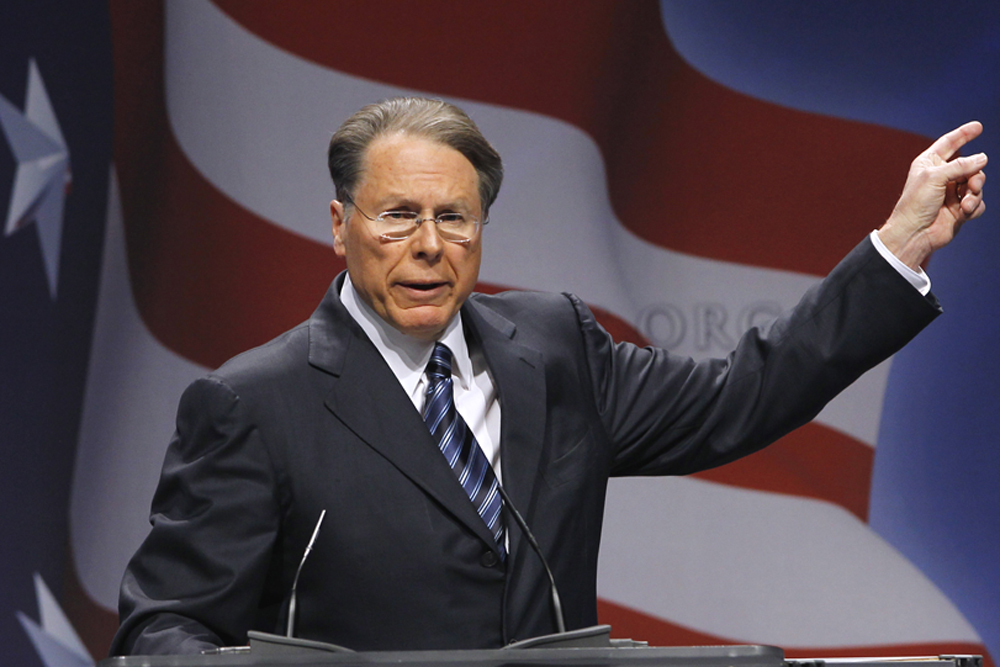
Managing the Message is the alpha and omega of the NRA

Managing the Message is the alpha and omega of the NRA

Managing the message inherently requires the belief that PR people have God-like powers over the public. Add an organizational executive team that already believes they are Gods and we have the perfect storm of ego and a lack of ethics that lead to the worst PR tactics in business. Under these circumstances we move from passive techniques to manage the message into an aggressive intent to distract and deceive.

There are many examples of aggressive attempts to manage the message and in almost every case there are people in key positions who see themselves as the maker of information and disinformation. These people believed that they have justification to take any step necessary to protect the public image of the organization and/or promote organizational goals, ethical or not. Distraction, withholding information, and deception are the rungs of the ladder that sink an organization into deeper and deeper into the dark side of PR.

Withholding Information
Withholding Information and/or blocking information is a tactic of an organization using aggressive and unethical PR tactics. One of the best examples of this is the National Rifle Association (NRA.) The NRA seems to only care about public opinion when the polls tend to support its position, but that doesn’t stop them from trying to manipulating public opinion.

In 1996, the NRA worked with Arkansas Representative Jay Dickey (R) to cut $2.6 million from the budget of the Center for Disease Control and Prevention (CDC) and added the wording the appropriations bill that restricted the CDC from any research that would “advocate or promote gun control.”  $2.6 million is what the CDC had spent in the prior year on gun-related research. The 104th Republican-controlled Congress passed it into law and it has restricted the CDC from gun-related research since 1996. (¹)

The NRA worked with Kansas Representative Todd Tiahrt (R) in 2003, to forbid the Bureau of Alcohol, Tobacco, and Firearms (ATF) from collecting statistics on gun injuries and deaths. In 2011, the NRA worked with Representative Denny Rehberg (R) of Montana to prevent the National Institutes of Health (NIH) from funding any research that contradicted or challenged pro-NRA positions. (²)(³)

BP: What Leak?
Another example of withholding information occurred in the summer of 2010 when the BP leased oil rig, Deepwater Horizon caught fire and exploded in the Gulf of Mexico.

BP public image destroyed once video revealed the PR deception

BP public image destroyed once video revealed the PR deception

In the days after the complete loss of the rig, BP PR tactics included denial of an oil leak at the wellhead, acknowledging a small amount of oil leakage, and finally admitting larger and larger amounts of leaking oil that still underestimated the amount of actual oil spilled. At one point BP withhold live video of the oil spill at the wellhead.

BP’s public position was that until anyone could prove otherwise, they could deny any significant oil spill. BP’s ‘prove it’ stance forced public media to accept BP’s estimates until overwhelming evidence piled up against the company. Once it did, BP’s public image was in tatters. No one believed anything CEO Tony Hayward or BP said.

‘Armstronging’ the Public
Technically the act of withholding information falls into the category of deception and distraction, although an organization that is consciously attempting to deceive or distract the public is flirting with possible criminal and/or civil charges. While some organizations (or even some people) might be under the belief that their unethical acts will never be discovered, some organizations may simply be trying to delay or soften a negative issue by forcing the public to learn the details over a period of days, weeks, months, or years. Yet, many times the PR tactics used by an organization is simply a lack of executive ethics rather than a conscious choice.

I cannot tell a lie...well, yes I can,...piece-o-cake actually.

I cannot tell a lie…well, yes I can,…piece-o-cake actually

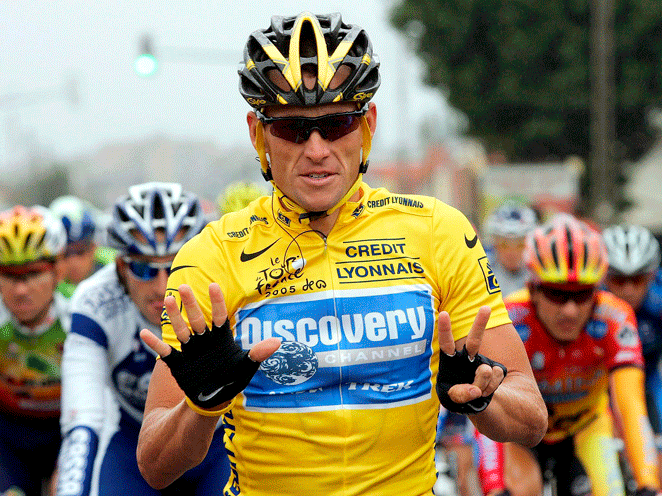
The most recent high-profile example this is the Lance Armstrong fiasco. The world now knows that Lance Armstrong used illegal performance enhancing drugs and techniques during his reign as Bicycling King, but through denial and aggressive legal means he managed to make most people believe he was innocent. Now he admits he lied, but it is far enough past his glory days that it may not have the impact it would have at the time he was active in the sport. Still, who wants to be Lance Armstrong now? No one.

The problem with managing the message is that Social Media has stolen power away from the PR people. An organization’s public image consists of the support and enthusiasm of an elusive mass of connected people, who can smell manipulation and love to expose unethical acts of people with more money than sense. On the other hand, Social Media readily responds to respect and honesty, which is not  familiar territory to some older business men. As we move deeper into the Social Media Age, the business world will see a new PR model that listens more, talks less, is more humble and less arrogant, loves interaction and rejects domination.

Public Relations Techniques That Kill Organizations

06 Wednesday Feb 2013

Posted by Paul Kiser in Branding, Business, Communication, Crisis Management, Customer Relations, Customer Service, Ethics, Generational, Information Technology, Internet, Management Practices, Public Relations, Respect, Social Interactive Media (SIM), Social Media Relations, Technology, Traditional Media

≈ 2 Comments

Tags

anti-listening, Conservatives, Managing the message, Nancy Brinker, Planned Parenthood, PR, Race for the Cure, sim, sm, Susan G. Komen

In Part I, “Why ‘Managing the Message’ Doesn’t,” we discussed the dangers of trying to ‘manage the message’ in a Social Media world. Part II looks at the techniques used by organizations to manage the message and why they fail.

Organizations that adopt a manage the message policy for Public Relations (PR) assume that they are the controllers and manipulators of the public image of their organization, which demotes the public to the role of a mindless zombie. If that doesn’t sound stupid enough, let’s look at the methods that organizations use to manage the message.¹

[¹ I realize that I’ve used the words Manage the Message five times in the first two paragraphs; however, “insulting PR techniques” isn’t quite specific enough as there are so many of them. 😉 ]

Corporate PR:  We manage the message by not listening

Corporate PR: We manage the message by not listening

Anti-listening Techniques
The subtle use of anti-listening techniques is one strategy used by organizations who seek to manage the message. The concept is simple: an organization can’t be held accountable for issues that don’t exist. By not listening an organization can effectively deny existence of an issue because they can claim ignorance, therefore can deny accountability.

One example is the use of formalized procedures for communication from the stakeholders, including the public. An organization might ignore or restrict communication on their Facebook page, requiring complaints and comments to be made through a process that is more complex or requires greater risk to complainer.

EXAMPLE:  From the Facebook page for a Parent/Teacher group of an Elementary School after parents discussed concerns about major changes in the school calendar:

“Please remember that this page is used for the PTC to share PTC sponsored fundraising events and activities. If anyone has comments/complaints about the school they need to be addressed with the administration.”

(From the School’s Marketing Director)

The strategy of denying open discussion of issues allows an organization to divide and conquer people who may object or have a strong reaction to negative events or significant changes. By restricting public comment on their website or Social Media formats such as Facebook, an organization can prevent all but the most committed people from voicing their opinion or concern. For those that do comment, the organization can hide dissent and concerns behind a veil that only they have access to, so the true scope of the issue is hidden from public.

The problem with this technique is that issues or concerns do not go away by ignoring or hiding them. Whether expressed or not the reaction exists and it impacts the public image of the organization. A divide and conquer strategy increases the reaction once people discover that others share their concerns. In the Social Media world, the truth will eventually come out through a disgruntled customer, employee, or other source.  Once the full scope of the deception is exposed the organization will lose all credibility and once the organization loses credibility the public image is also lost.

In January of 2012, the Susan G. Komen Foundation was receiving massive condemnation for a politically charged decision to defund Planned Parenthood. Rather than accepting that the public voice was valid, CEO Nancy Brinker attempted to double down on their position by claiming a bogus conservative-initiated Congressional investigation was reason to deny the grant requests by Planned Parenthood. Her efforts to paint an obvious conservative-motivated action as justified left her and the organization looking like right-wing wackos who had no clue that the organization depended on the perceived goodwill of the public.

By the time they tried to back peddle and fix the problem it was too late. Race For the Cure events in 2012 lost as much as one-third of the participation from the previous year and many donors question the use of their money by the Foundation. The irony is that Nancy Brinker had founded the organization thirty years earlier in her sister’s memory and now the Susan G. Komen name is not so much a symbol of fighting breast cancer as it is a reminder of conservative attempts to use backdoor methods to inflict their religious beliefs on everyone else.

MONDAY: The Dark Side of PR: Distraction and Deception Or ‘Armstronging’ the Public. When ethics are not a consideration, an organization is headed into a downward spiral that will almost always end with a public image that can be fatal. 

Why ‘Managing the Message’ Doesn’t

05 Tuesday Feb 2013

Posted by Paul Kiser in Business, Communication, Crisis Management, Customer Relations, Customer Service, Employee Retention, Ethics, Information Technology, Internet, Management Practices, Opinion, Public Relations, Respect, Social Interactive Media (SIM), Social Media Relations, Technology, Traditional Media

≈ 2 Comments

Tags

BP, Cool Hand Luke, Managing the message, Mitt Romney, PR, Public Image, Race for the Cure, Susan G. Komen, Tony Hayward

“What we got here….is a failure…..to communicate” Captain, the Prison Warden in Cool Hand Luke

Captain (Strother Martin) in 1967 film, Cool Hand Luke knew how to manage the message

Captain (Strother Martin) in 1967 film, Cool Hand Luke knew how to manage the message

If you are a business professor teaching students the importance of  ‘managing the message,’ or a Public Relations (PR) firm telling your client how to ‘manage the message,’ would you please stop. No, I mean stop right now. In fact, contact everyone you have taught or advised and tell them you were wrong then refund their money.

CEO Tony Hayward got his 'life back,' but BP is still in PR clean up mode in the United States

CEO Tony Hayward got his ‘life back,’ but BP is still in PR clean up mode in the United States

‘Managing the message’ cost Mitt Romney the Presidential election. It severely damaged Netflix in 2011. It cost a BP CEO his job. It took the Susan G. Komen Foundation from being a major player in non-profit foundations to one that has to hide its name in shame. 

Why?

First, ‘managing the message’ doesn’t work. Second, it’s a cowardly way to approach public relations. Third, it’s stupid advice. Fourth, it will end up causing major problems up to and including the end of an organization.

‘Managing the message’ assumes a person has control over the message. That would be a stupid assumption in a world driven by Social Media. John F. Kennedy’s words should be amended:

You can fool all of the people some of the time….until Social Media picks it up and then you’re screwed.

PR is no longer about creating an image. That was true back in the day individuals had no voice and people were subjected to mass advertising in every thing they watched, heard, and read. That was yesterday. Today an organization’s image is created by everyone who comes into contact with the organization. Customers, especially angry ones have as much of a voice in an organization’s public image as the Vice President of Marketing. Today PR is about listening and being honest and real in everything you say and do. That is something that can’t be faked or managed.

Reaction Avoidance
Managing the message is mostly about reaction avoidance. The idea is that if an organization handles it correctly, any negative situation will be minimized. The technique acts like a dam that has a short-term benefit, but a long-term disaster. When a PR crisis occurs the first instinct is to pretend there is no major problem. That is the start of a PR death spiral that only leads to bigger and bigger denials until the organization appears to be run by fools. By then executives turn and blame the PR staff for not ‘managing the message’ better.

TOMORROW: Public Relations Techniques That Kill Organizations. The two common techniques that characterize an organization who is trying to manage the message and why they fail.

MONDAY: The Dark Side of PR: Distraction and Deception Or ‘Armstronging’ the Public. When ethics are not a consideration, an organization is headed into a downward spiral that will almost always end with a public image that can be fatal. 

Coming This Week

03 Sunday Feb 2013

Posted by Paul Kiser in Business, Communication, Crime, Crisis Management, Customer Relations, Customer Service, Ethics, Generational, Information Technology, Internet, Management Practices, Privacy, Public Relations, Social Interactive Media (SIM), Social Media Relations

≈ Leave a comment

Tags

Facebook, PR, Social Media, Twitter, Upcoming

My apologies for those of you who received an email alert regarding the article titled: Why ‘Managing the Message’ Doesn’t. It will be published this week; however, due to an error on my part it was briefly available late on Friday.

Currently I have three articles that will be published this week. They are as follows:

Monday: Why You Hate Facebook and Can’t Stand Twitter
Tuesday: Why ‘Managing the Message’ Doesn’t
Wednesday: Bad Public Relations Techniques That Kill Organizations

These articles should be available by 6:30 AM PST on the day it is published. I am also working on an article regarding ‘Grievance Collectors’ that I hope to publish be the end of the week.

Thanks for reading!

Paul

Oil Industry 11 of World’s Top 20 Corporations

01 Monday Oct 2012

Posted by Paul Kiser in Business, Customer Relations, Ethics, Human Resources, Politics, Public Relations

≈ Leave a comment

Tags

big oil, BP, Chevron, Conoco Phillips, Exxon, Mobil, Oil Companies, profits, Royal Dutch Shell

‘Big’ Oil is an understatement. According to Wikipedia, 11 of the world’s top 20 corporations (measured by revenue) are either oil producers, or trade oil. In fact, seven of the top ten corporations of the world are oil industry related. Forget Apple (No. 44,) Microsoft (No. 111,) or Google (not in top 185) because they are not even in the same league as oil corporations.

The Wikipedia study pulled together the financial data from multiple sources, including financial reports of major corporations. Oil companies have 60% of the revenue of the top 20, which means the average revenue per corporation of oil companies exceeds the average revenues of the nine non-oil related corporations. 

World’s Top 20 Corporations by Revenue

The ‘Big Five’¹ oil companies are also made over $200 billion in profits during 2011, and as consumer pump prices remained high despite consumer demand that is at 1997 levels.  Interestingly, oil companies, according to the Wikipedia study, employ only 25% of the total employed by the top 20 corporations.

¹NOTE:  Big Five Oil Companies are: Exxon Mobil, Royal Dutch Shell, BP, Chevron, and ConocoPhillips

4 Lesson’s Yahoo’s CEO Marissa Mayer Has Taught Us

10 Monday Sep 2012

Posted by Paul Kiser in Business, Communication, Crisis Management, Customer Relations, Customer Service, Education, Employee Retention, Ethics, Human Resources, Information Technology, Internet, Lessons of Life, Management Practices, Opinion, Public Relations, Respect, The Tipping Point

≈ Leave a comment

Tags

CEO, employee morale, Google, Kathy Savitt, leadership, management by intimidation, Marissa Mayer, Mollie Spillman, Yahoo

Marissa Mayer: Management by Destruction

On July 16, Yahoo announced that they hired 37-year-old Marissa Mayer, a former Google Vice President (VP), as the new Chief Executive Officer (CEO) to turnaround the company. A little over a month later Mayer hired a new Chief Marketing Officer (CMO), which should not be surprising. How she did it tells us a lot about her management capabilities and about Yahoo’s Board of Directors.

Often a change in direction for a company will require new leadership in key management positions. Anyone who doesn’t know their job is in jeopardy when a new CEO walks in the door is kidding themselves. Sometimes a new CEO will ask for the top management to resign. Sometimes a new CEO will just give the old management team a severance package. Sometimes a CEO will take six months to get to know the company and then make changes. All these options a part of nominal business operations.

However, Mayer reportedly fired Mollie Spillman, her old CMO 1) by phone, 2) while she was on vacation, and 3) ten minutes before Yahoo’s official announcement that the new CMO would be Kathy Savitt.

Wow. Apparently, Mayer like burning all her bridges before she blows them up.

It’s important to note that Mayer’s age and/or gender are not at issue. Man or woman, old or young, what Mayer did was ethically questionable and has far reaching implications for Yahoo. Her slam-bam-you’re-fired-ma’am stunt is worthy of analysis for what it says about Mayer, Yahoo, and management-by-intimidation.

Lesson 1:  Mayer’s Questionable Ethics and Leadership
It doesn’t take guts to fire somebody. Firing someone is easy. Firing someone is a power trip. If you walk up to person on the street and say, “You’re Fired!,” it will probably only get you a confused stare followed by a laugh, but if you say, “You’re Fired!” at an underling employee, you have shown you are dominant and all powerful. To fire someone is a rush to the sadist.

Separating an employee from an organization with dignity and respect takes sensitivity, experience, and humility. It requires that the manager talks with (not at) the employee, and it requires the manager check their need for power at the door. Firing someone over the phone while they’re on vacation demonstrates a lack of experience and a lack of humanity.

In her defense, Mayer may have been reacting to another executive who left Yahoo one week before. It is possible that Mayer thought that Spillman might also leave and decided she would exercise a preemptive strike by replacing her before she could find another job. Still, that’s a weak reason to behave like a tree house club President.

Lesson 2:  How to Destroy Morale
When the CEO trash-n-bashes an employee it sends a message to everyone else in the company: Time to look for another job. How can any employee at Yahoo avoid wondering if they will be fired the next time they’re on vacation? How can any manager at Yahoo not believe that Mayer’s questionable ethics is now the model they should be following?

No Reason to Yahoo Behind This Sign

No Reason to Yahoo Behind This Sign

Mayer did make a peace offering to her employees soon after she took over by offering free food to full-time employees and a free iPhone. But her offerings weren’t free. In return for free perks she put extreme pressure to perform. She pushed a new product up by months and gave the development team one week to prove it could be done. When the team came back a week later and said it couldn’t be done on the schedule she demanded she said she would find another team that could do it.

This shows the classic fatal error in management-by-intimidation (MBI): Failing to trust and listen to the people you have working for you. It may be great to tell the investor a tale of tough-love while scratching your balls and dining on the company’s dime, but it really means that the customer is going to get a rushed, half-baked product that shows how mediocre your organization can be when it comes to innovation. Don’t get me wrong, some people…okay most people, need to be pushed, but most people don’t like to work in a threatening environment.

This shows the classic fatal error in management-by-intimidation:  Failing to trust and listen to the people you have working for you.

The result of MBI is that all your employees start looking for other employment options. The people with great ideas and skills are grabbed up by the competition and Yahoo will be left with the people who nobody else wants. Now you have an organization consisting of the worst performers.

Lesson 3:  Yahoo’s Future is in Doubt
In the past five years it has averaged a new CEO each year. That says more about the Board of Directors than it does about the CEO’s. The problem is that there is no quick fix and it is likely that Mayer management style is being encouraged by dysfunctional leadership in the Board room. Yahoo needs positive, creative, loyal, and happy employees if the company is to dig its way out of the hole its in. Creating an environment of fearful, anxious, angry employees is guaranteed to keep them noncompetitive now and in the future.

Throwing money, free food, or free iPhones may appease employees temporarily, but people want and need to be valued and treated with respect. The moment an employee feels that their neck is on the line is the moment they are no longer have ownership in the company, and when employees don’t have ownership, they stop caring. Uncaring employees are saboteurs in an organization. Yahoo likely has almost 15,000 saboteurs with intimate knowledge of the company’s secrets, weaknesses, and plans. That doesn’t bode well for customer satisfaction, nor company stock price.

Lesson 4:  Inexperience Does Not a Good Manager Make 
Of the Fortune 500 club, Mayer is the youngest CEO. Publicly, she has been a celebrated rising star at Google since she joined as employee #20 in 1999, and was Google’s first female engineer. Privately, some accused her of being a glory-hound seeking attention and fame. Despite having no business degrees (her bachelor’s and master’s degrees from Stanford are in computer engineering specializing in artificial intelligence,) she rose through the company to be a Vice President.

It was appropriate for Yahoo to hire a young executive. There are many people under 40 who are wise beyond their age, or have solid experience in people and resource management; however, Mayer’s lack extensive executive management experience seems to be demonstrated in her immature behavior.

Bonus Lesson:  Micromanagement – Slapping Your Team in the Face
It was reported last week that Mayer is now reviewing the candidates for every open position at Yahoo. That’s correct, Mayer is overseeing every potential new hire for every opening in a company of 15,000 employees. Nothing says you’re a ‘stupid ass’ to your management team quite like taking away their ability to choose who will work for them. If anyone at Yahoo didn’t know that they are valueless, Mayer and the Board of Directors have certainly removed all doubt.

Every business school should be studying Yahoo. Studying successful management is important, but studying an organization that is in a meltdown can teach future would be leaders why you can’t build up your organization by tearing apart your employees.

Southwest Air Gets A Customer Service Win

17 Friday Aug 2012

Posted by Paul Kiser in Business, Customer Relations, Customer Service, Government Regulation, Information Technology, Internet, Public Relations, Respect, Social Media Relations, Travel, Website

≈ Leave a comment

Tags

airfares, Airlines, free market system, Public Image, Southwest Airlines, SWA

Failure is opportunity.

Success is determined by how you respond to failure.

Southwest Air ‘Shamu’ plane

On August 3, Southwest had a big problem. In celebration for reaching 3 million fans on Facebook, Southwest offered a one day ‘flash’ sale of 50% off certain flights for seven specific days this Fall. Unfortunately, their reservation computers decided to take that day off. Apparently the crush of ticket buyers caused their automatic reservation system to lock up. That was bad.

What was worse is that customers who kept hitting the ‘SUBMIT’ button ended up with a ticket purchase each time it was hit. Rumor has it that some people had as many as sixty tickets or more charged for the same flight. Ooooowwww!

I was one of those customers. I didn’t have the multiple ‘submit-hit’ issue, because my ‘SUBMIT’ button went away after I clicked it; however, I didn’t get a confirmation page, and when I checked my account the flight was not recorded. My mistake was repurchasing the ticket when I thought it wasn’t recorded. It was not until the next day that I received two confirmation emails from Southwest Airlines with different confirmation numbers for the same flight. I called 1-800-I-FLY-SWA immediately.

The person who answered patiently waited while I tried to explain the problem and then she explained what happened and apologized profusely. She explained what Southwest was doing to rectify the issue and canceled one of the tickets and refunded the money. She explained that Southwest would be responsible for any overdraft charges, which there weren’t.

At this point Southwest had met my expectations in resolving the issue. They, 1) admitted they made a mistake, 2) took quick action to resolve the basic issue, and 3) offered to resolve any secondary issues caused by the mistake.

Southwest then went one step farther. Three days later I received a $150 voucher towards a future ticket. This is not unheard of in the airline industry; however, it was not required. It reflected the depth of Southwest’s apology. That makes this incident a customer service win for Southwest Airlines.

A customer service failure is never good, but it is only a failure as long as the business fails to respond appropriately.

This situation may also be a good lesson for the airlines. I’ve been watching the airfare rates all summer and they have been outrageously high. The reason there was a rush of people after these ‘one-day-only’ rates is because the airlines have boxed out customers who can defer travel rather than pay inflated ticket prices. The airlines may be comfortable with cutting back seat inventory to keep prices high, but I’m irritated that they are playing games with the free market system to artificially keep the supply low in order to keep demand high.

It brings up the question of whether it’s time to reimpose government regulation on the airlines in order to restore fairness to the customer. 

4 Reasons Why Foursquare May Be Bad 4 Your Business

31 Tuesday Jan 2012

Posted by Paul Kiser in Branding, Business, Customer Relations, Information Technology, Internet, Management Practices, Public Relations, Social Interactive Media (SIM), Social Media Relations, Technology

≈ Leave a comment

Tags

Check-in, Customer Loyalty, Foursquare, Mayor

Consider the Consequences Before Posting These

Foursquare is supposed to be a fun Social Media tool that can help a business to identify their most loyal customers and promote patronage. By ‘checking in’ using their smartphone with a GPS function, a Foursquare user let’s the business and the user’s friends know that they are there. If a user checks in at a business more often than everyone else he/she can become the ‘Mayor.’ That sounds like a great idea, but there is a dark side that could lead to Foursquare chasing customers away from a business. Here are four reasons why you may want to discourage Foursquare from being a part of your enterprise, especially if you have significant customer traffic.

Negative Comments
Foursquare encourages users to give ‘tips’ to other Foursquare users. I often see negative comments as a tip. At one Starbucks I noticed that the tip that shows up when I check-in states, “Don’t come here if you’re in a hurry” That tip was left on May 6, 2011. Negative comments will haunt your business for months. Not a great first impression for a first time customer.

Competition Between Your Customers
Foursquare pushes your customers into a competition for the prize of being the Mayor. Not all Foursquare users are rabid about becoming Mayor; however, competing customers can be good or bad for your business. Under normal circumstances the competition can lead to more customer visits by those who are trying to rack up more check-ins; however, if becoming Mayor is important to a user, too much Foursquare competition could make a regular customer become frustrated. There will only be one Mayor and if that user has a lock on the Mayorship, then other users may decide to go to a competing business or store where they have a better opportunity to become Mayor. 

Not All Check-ins Equal
In addition to competition, there is an issue with fairness of the Mayor selection. On the face of it the Mayor should be the customer with the most check-in days, but that is not exactly the way it works. I have 49 check-ins in the last 60 days at my favorite Starbucks but the user who is the Mayor only has 45 Check-ins. Why is that user the Mayor? Apparently some of my check-ins don’t count even though I have 32 days in a row of check-ins at this Starbucks and the Mayor was out of town for a week during that time. I am consistently listed as 3 days away from being Mayor. I contacted Foursquare for an explanation and other than an auto-reply that they received my request, there has been no response.

Rewarding Customer Loyalty Not The Primary Goal
Foursquare would seem to be a great method for identifying and rewarding your most loyal customers; however, Foursquare is, in large part, a game and rewards those who are the most competitive, not the most loyal. While most employees can quickly recognize their loyal customers, they may not be able to recognize who the Foursquare Mayor is for their business. This is especially true of businesses with a high volume of customers and/or with a drive-thru window. The Mayor may be the person who simply plays the game and has little interest in supporting your business. If your business offers a special to the Mayor or attempts to recognize Foursquare users in some way, it could be insulting to loyal customers who feel they have neglected for their support of your business.

While Social Media tools like Foursquare can be useful in a business environment, it is important to consider the limitations and risks of employing them into your customer service plan.

PBS Station To Cut After-School Programming To Attract Donors

28 Wednesday Dec 2011

Posted by Paul Kiser in About Reno, Communication, Customer Relations, Customer Service, Education, Ethics, Generational, Management Practices, parenting, Public Relations

≈ Leave a comment

Tags

Child Development, children, children's programming, Idaho PTV, KNPB, Kurt Mische, Nevada, PBS, PBS Kids, PBS Kids Go, Reno

Paul Kiser

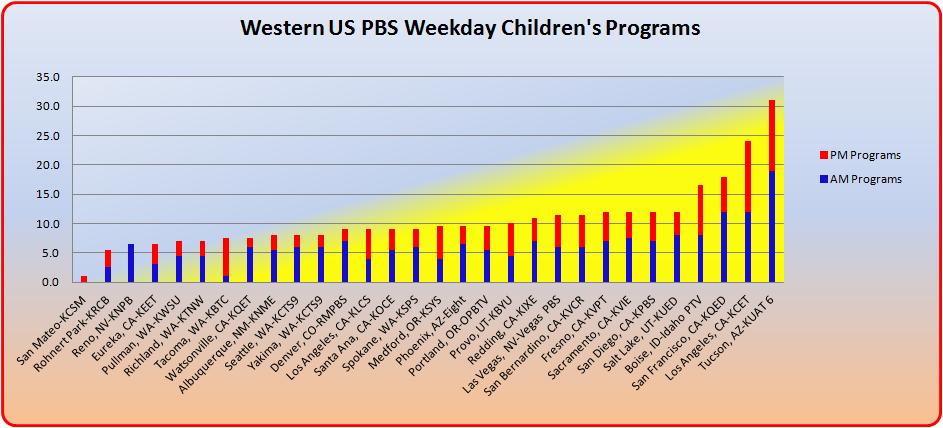
Reno, Nevada PBS affiliate, KNPB is cutting almost a third of its dedicated children’s programming and all of its dedicated after-school shows that target school-aged children. Effective next week all PBS Kids shows on KNPB will end at 12:30 PM, cutting 2.5 hours from its current 9 hours of children’s programming. The programming cuts will put KNPB third from the bottom of 30 western United States PBS stations in total hours of daily children’s programs  and the only PBS affiliate without after-school programming.

Kurt Mische, President and CEO of KNPB, denied that the station is cutting ‘all’ programming for school-aged children, and noted that programs like NOVA, Nature, American Experience, and Great Performances “are of great benefit…and interest…to school age children.” Those programs along with the Antique Roadshow will now air once a week at 5:00 PM after PBS News Hour and The Charlie Rose Show, which will fill the after-school time slots at 3:00 PM and 4:00 PM.   

Mische indicated that the programming changes are being initiated to attract donors and money, which school-age children are not providing to the non-profit organization.  He explained,  

“Making our changes will allow us to serve a larger audience of viewers…and donors…who not only watch but help to financially support our important service.”

Another PBS affiliate recognizes the issue, but has different philosophy regarding programming for school-age children. Ron Pisaneschi, the Director of Content for the PBS affiliate in Boise, Idaho (Idaho PTV) said that there is more programming competition for the attention of school-age children because of commercial children’s television on the cable channels, but added, “even though the audience is small, we want to serve them.” 

Hours of Daily Children's Programming of 30 Western US PBS Stations

Programs cut from KNPB’s schedule are The Electric Company for 6-10 year-olds, Cyberchase for 8-11 year-olds, Super Why! for 3-6 year-olds, WordWorld for pre-schoolers, and a second daily airing of Arthur for 4-8 year-olds. KNPB already had cut Fetch! for 6-10 year-olds earlier this year. The only two PBS stations with fewer hours of children programs are Rohnert Park and San Mateo, California. Both are in the San Francisco area market where PBS affiliate KQED has 19.5 hours of children’s programming in addition to a 24-hour PBS Kids channel. San Mateo PBS affiliate KCSM has only one hour of daily children’s programming; however, KCSM is currently up for sale and accepting bids until February 14, 2012.

Ironically, Mische’s attitude about the value of children’s programming to KNPB and to the State of Nevada was more supportive last year when he stated,

KNPB is proud to be a leader in education. At a time when education in Nevada garners its share of negative publicity, KNPB is taking action to impact education and life-long learning. We broadcast 52 hours per week of award winning, high quality, and trusted children’s programs that delight and teach youngsters.

KNPB 2010 Annual Report

The children’s shows, including all after-school shows will be cut effective January 2, 2012.

A version of this article first published as
PBS Station To Cut After-School Programming To Attract Donors

on Technorati.com

USA PDT [Twitter: ] [Facebook] [LinkedIn] [Skype: 775.624.5679]

Graph: Hours of Children’s Programming on 30 Western US PBS Affiliates

28 Wednesday Dec 2011

Posted by Paul Kiser in About Reno, Communication, Customer Relations, Customer Service, Education, Ethics, Generational, Management Practices, parenting, Public Relations

≈ Leave a comment

Tags

children, children's programming, KNPB, Nevada, PBS, PBS Kids, Reno

How many hours of dedicated children’s programming are on PBS stations in the western United States?  This graph shows that after KNPB cuts 2.5 hours of children’s programming on January 2nd, it will be tied for third among 30 western US PBS affiliates for the least amount of children’s programs (programming survey based on changes to be made in January 2012.) KNPB will also be the only station among those surveyed without after-school programming.

Click on graph for larger image

New Religion For Business: Believing in the ‘L’ Word

23 Wednesday Nov 2011

Posted by Paul Kiser in Business, Customer Relations, Customer Service, Information Technology, Internet, Management Practices, Public Relations, Social Interactive Media (SIM), Social Media Relations, Technology

≈ Leave a comment

Tags

DataSift, Facebook, filtering, listening, Nick Halstead, Rob Bailey, Twitter

Paul Kiser

For a hundred years the Church of the Big Sell has preached to enterprise decision-makers that they will give a voice to their company…for a price. Media chieftains told the world of business that the customer is a commodity that can be manipulated and controlled with the right ad campaign, the right slogan, the right spokesperson, or the right look. Then came Social Media.

Social Media has put a lot of business traditionalists in a tailspin. It turns out that the customer is not a commodity and they hate it when they are treated like one (e.g.; Netflix, United Airlines, Bank of America, etc.) Customers  are people and they have feelings, wants, likes, and dislikes.

Facebook and Twitter gave the people fire and they liked it. Now the customer has a voice and they use it. They talk. They converse. They express. They judge. Not only do they have a voice, they now have the power to turn off advertising…and they do.

The Church of the Big Sell is burning and the voice they were supposed to give to business is wasted on ads in newspapers and magazines that nobody reads, radio and television commercials that nobody listens to or watches, and yellow pages books that go from the front doorstep to the recycling bin…unused. Social Media took away the microphone of enterprise because people are tired of being preached to by the Church of the Big Sell.

Business is realizing that customer interaction has changed. Enterprise in a Social Media world is not about talking, but about listening. Listening is the alpha and omega of the Social Media world. Almost everything a business needs to know is there, if they listen. A new church is being built on the ashes of the old and the religion is based on the ‘L’ word.

Listening is not as easy as it sounds (pun intended.) Social Media is noisy. Too many voices, too many issues. A restaurant owner does not need to know that Emily had a great date last night…unless Emily’s date was at his restaurant. Then he might want to know that Emily’s date was great despite her eating experience, where the food was cold, the parking a pain, and the service rude. The restaurant owner might also want to know that nine of Emily’s friends responded to her Tweet by agreeing that his restaurant sucks and they will never eat there again.

Rob Bailey - Head of US Operations and new CEO of DataSift

Tools of Listening in the New Church of Social Meda
Paring down the noise of Social Media is a major challenge for a business and the new religion has new tools. “The amount of Social Media that people are producing is doubling every year…,” explained Rob Bailey, who is the head of United States Operations for DataSift, a Social Media filtering platform for business that was launched last week. Bailey said that there are three steps in refining raw Social Media into relevant information for any enterprise.

The first step is to refine the data down to what is being posted about an organization, subject, or topic. That refinement may require multiple filters to distill out undesired spam, retweets, and other noise. The second step is to analyze the results based on factors such as age, gender, geographic location, and sentiment. The final step is to have a visual tool that reports the results simply and accurately for interpretation by the decision-maker in the company.

Nick Halstead - Past CEO and now Chief Technology Officer

DataSift had 8,000 users in the alpha test of its Social Media monitoring platform and found that the interest in this technology spanned a wide variety of industries. CEO Nick Halstead said that they had, “… government agencies to pharmaceuticals, a lot in finance, a lot in retail…and quite a few start-ups…” interested in DataSift’s technology to monitor issues of concern to their business and organizational operations. Another industry that wants to be able the monitor the Social Media are News Outlets that are trying to compete with Twitter and Facebook in providing events in real-time. Bailey said, “Twitter is an incredible vehicle…” for finding out what is going on in the world.

Public Relations and Social Media firms are also using tools to filter out the Social Media noise for companies who would rather hire an outside service for their Social Media presence rather than doing it in-house. In addition to listening to the Social Media these agencies help a business identify and correct their public image by handling public image issues and concerns for the organization.

View of data stream screen

The tools of the new platform allow the user to search multiple Social Media formats and have access to the full Twitter worldwide database in real-time. Beyond listening to what is being said about a company’s public image, they can now test market products or services and use Social Media to determine the reaction. The platform also has an interesting application in politics by allowing campaigns to determine sentiments on key issues by geographic region before a candidate campaigns in that area.

Improved customer response is probably the most obvious benefit to listening to Social Media, as a business can now pick up any post written about their company, product, or service and appropriately respond in minutes with a thank you for positive comments and a resolution or apology for negative experiences.

There is no turning back. Social Media demands that enterprise be great listeners and now they have no excuse.

USA PDT [Twitter: ] [Facebook] [LinkedIn] [Skype: 775.624.5679]

5 Reasons Why Ignoring Negative Social Media is a Career Ender for a VP of Customer Service

01 Tuesday Nov 2011

Posted by Paul Kiser in Business, Communication, Customer Relations, Customer Service, Public Relations, Social Interactive Media (SIM), Social Media Relations

≈ 4 Comments

Tags

Blogs, Facebook, Foursquare, Netflix, Twitter, United Airlines, Yelp

USA PDT [Twitter: ] [Facebook] [LinkedIn] [Skype: 775.624.5679]

Paul Kiser

Despite the overwhelming evidence of the impact of Social Media on the perceived public image of a business, many Customer Service (CS) and Public Relations (PR) executives still handle negative Social Media (blogs, Facebook, Twitter, Foursquare, Yelp, etc.) by ignoring the bad publicity. One can only marvel at the rationale of an executive team in the 21st century, which believes that avoidance behavior of PR problems in the Social Media environment is the best policy.

I would suggest that there are four reasons for this philosophy, which are as follows:

Bad Social Media PR is Bad for Business

  • An outmoded understanding and/or denial of Social Media and its long-term impact on the company’s public image.
  • A belief that negative statements in the Social Media have no cumulative effect and that they will disappear over time.
  • An arrogance by the executives of a corporation that they control their public image by what they say and do and by the money they spend on advertising, not by what individuals outside the company say about them.
  • A belief that by giving attention to someone with a complaint about their company will cause more problems and possibly force the company to admit to their stupidity.
There are five reasons why ignoring negative Social Media is a bad idea and why the CS and PR executives who follow this policy have an expiration date on their careers:
  1. A negative Social Media comment is forever. It doesn’t fade and it doesn’t go away.
  2. A negative blog can and will be found by any Google search of your company. Why would a CS or PR executive let people who search for their company be exposed to everything said by the people who hate you?
  3. Bad comments on Social Media are cumulative. When someone is mad at your company they will search to find other people who feel the same way, and then you have a movement of people who are united against your company.
  4. Waiting to address bad publicity only makes a company look like they are hiding something when they finally do publicly address the issue, which is a lose, lose, loser in damage control.
  5. Once a company wakes up and realizes that ignoring bad PR is a stupid idea, how long will the implementor of that policy have before the company seeks someone who is smarter about handling negative Social Media?

A negative Social Media comment about a company is an opportunity. Everyone knows that major corporations are monitoring the Social Media, so when someone makes a negative comment they know that someone in the company is reading it. A company that contacts the author of the complaint to show concern will, at the very least, prove that the company appreciates its customers. By, 1) addressing the reason for the complaint and, 2) making some tangible effort to offer a reward to the person for bringing the issue to the company’s attention, the complainer will likely become a positive voice for the company’s public image and may even delete the negative blog or comment.

Companies, and their executives, who fail to address negative Social Media comments are risking their future. Netflix and United Airlines are just two examples of corporations that have done too little too late to address public image issues in the Social Media and they are paying the price. How many companies have to become a joke to their customers, investors, and the public before they realize the mistake they are making by ignoring Social Media?

SWA Flight 768: The Golden Flight

24 Monday Oct 2011

Posted by Paul Kiser in Business, Communication, Customer Relations, Customer Service, Information Technology, Internet, Public Relations, Travel

≈ 2 Comments

Tags

business travel, Southwest, Southwest Airlines, SWA, WiFi

USA PDT [Twitter: ] [Facebook] [LinkedIn] [Skype: 775.624.5679]

Paul Kiser

Tonight I am flying from St. Louis to Las Vegas on Southwest Airlines Flight #768. It’s been a long day and before I boarded this flight I was dreading flying all evening and getting back home near midnight; however, I’m actually in a GREAT mood.

It’s not because I’m knocking back a Bloody Mary, although that is helping my mood, and it’s not because the plane is only half full, which is certainly a positive, and it’s not because I’m sharing my row with Alicia, an intelligent, attractive USC student, which is a major positive…nope, the reason I’m elated right now is primarily due to the fact that I’m online and writing this blog while flying at 40,000 feet. That’s right, I’m WiFi in the night sky! I’m knee-deep in the Internet and my only care is will this flight last long enough for me to get this written and posted.

Here's to a sky full of SWA WiFi planes....soon

Some may not share my enthusiasm, but allow me to explain why this is so significant.

American business is Internet dependent. Our entire economy is driven by the ability of business people to connect on-line. The need to problem solve, discuss, plan, propose, and close the deal, in real-time is absolutely critical for commerce in our Brave New World of digital communications.

The problem is that communications stops                  …when we fly. And yet, that is the perfect time for the business traveler to reconnect. Those countless hours in an aluminum cylinder traveling at 525 miles per hour where we must sit alone and unconnected are killing productivity. Southwest Airlines will command the business traveler market if they have consistent, reliable WiFi.

I know they are working on it, and perhaps they have turned a corner. If so, this toast is to the people who are making that happen. There is nothing more valuable to the business traveler than time, and WiFi while traveling is gold to the rank and file business person.

Think about this. You might be reading this before I am back on the ground.  What if all your competitors were that productive? Would you be worried?

Netflix Member Since 2007…No More

08 Saturday Oct 2011

Posted by Paul Kiser in Business, Communication, Customer Relations, Customer Service, Ethics, Public Relations

≈ 2 Comments

Tags

DVD, DVD Rental, Media, Netflix, price increase, Qwikster, Reed Hastings

USA PDT [Twitter: ] [Facebook] [LinkedIn] [Skype: 775.624.5679]

Paul Kiser

I lied today. I had to lie. Netflix gave me no choice. Today I canceled our Netflix membership and afterward they ask me why I was canceling. All the choices for why I was canceling were designed to avoid identifying the real reason I, and one million other former members, have quit. We don’t want to be victims of Netflix investors anymore.

I would have said so in their survey, but Netflix doesn’t even give an ‘Other’ option. That tells me that they don’t want to hear why people are really quitting. I can understand why. It’s easier to tell your investors that every customer is asked why they quit and none of them said, “because you screwed me”…or some more appropriate answer that clearly identifies the unacceptable aggressive profiteering decisions made by Fortune magazine’s 2010 Business Person of the Year, Reed Hastings.

So Long Huckster!

On September 18, Hastings made a rambling, PR spun statement that sort of acknowledged the growing customer anger at Netflix, but then put the blame on the customers. Basically Hastings said that, yes, my monthly service fee was increased over 40% in nine months, and yes, the included streaming video service became an extra fee, and yes, the main supply of premium movies, the Starz Network, has pulled the plug on Netflix, but it was all a big misunderstanding…by the customer. Had he (Hastings) just explained he was going to jack up the fees and split up the service for an extra cost beforehand, all of us silly customers would be happy.

I’m not happy and it has nothing to do with Netflix’s communication skills, or lack thereof. Dramatically increasing prices in the 2011 economy not only shows incredible arrogance and insensitivity, it demonstrates that Hastings and Netflix is completely investor focused. He is positioning the company for profits and corporate bonuses and let the customer be damned. My guess is that the ‘apology’ was geared to appease investors when Netflix stocked tanked a couple of weeks earlier after Starz jumped ship.

I would expect that the next shoe to drop is downsizing. Less customers service, longer DVD turn arounds, and poorer customer service as Netflix looks to shore up profitability by cutting labor costs. Greed is good, and when you’ve sucked the customer’s goodwill dry, then you sell the company. This is a good time for customers to divest their interest in Netflix.

Reed Hastings has the last laugh. When a customer quits Netflix, they cut off service immediately….even if the customer has paid for the next month, so congratulations Mr. Hastings, I guess that makes you the winner.

Original article first published as
Netflix Member Since 2007…No More
on Technorati.com

Southwest Air WiFi: Real or Myth?

14 Wednesday Sep 2011

Posted by Paul Kiser in 2020 Enterprise Technologies, Branding, Business, Club Leadership, Communication, Customer Relations, Customer Service, History, Honor, Independent Studies, Information Technology, Internet, Management Practices, Privacy, Public Relations, Travel

≈ Leave a comment

Tags

Business, Dave Ridley, Gary Kelly, Howard Lefkowitz, Internet, Row 44, Southwest Airlines, SWA, Travel, WiFi

USA PDT [Twitter: ] [Facebook] [LinkedIn] [Skype: 775.624.5679]

Paul Kiser

Southwest Airlines (SWA) has been talking about in-flight WiFi service for over four years, but today most Southwest passengers will find that going online is still something that happens on the ground, not in the air. Even if a Southwest plane has the ‘WiFi hump’ and is labeled as a WiFi HotSpot, it doesn’t mean the service will be turned on during the flight.

Southwest’s goal of in-flight Internet service has had its challenges in getting airborne. A brief history of their communications on the topic:

53 months agoª – In an interview about restructuring fuel contracts, SWA CEO Gary Kelly mentions that his airline is considering adding WiFi service. Kelly is quoted as saying,

“We are very seriously exploring that. We’d be acutely interested in the cost of doing that. It would be a very exciting development if we could make that work.”¹

A Southwest Plane with the WiFi 'hump' satellite antenna located on the top of the plane in front of the tail

44 months ago – Southwest announces it will be testing passenger WiFi service on four planes in the summer using Row 44 as it’s Internet service provider.²

25 months ago – Southwest announces that testing is completed and that they will start equipping planes with WiFi in the Spring of 2010.³

20 months ago – Senior Vice President of Marketing and Revenue Management Dave Ridley states in SWA’s blog, Nuts About Southwest, admits, “… the road to onboard wi-fi has been a long one…,”¹¹ but said that starting the 2nd quarter of 2010, SWA will start installing WiFi on 15 planes a month and increasing it to 25 planes a month. He added:

“…we estimate that our full fleet of more than 540 planes will be outfitted with wi-fi service by early 2012.”

11 months ago – SVP Ridley announces in the Nuts About Southwest blog that only 32 planes have WiFi installed and he adds:

“…we are adding to that number weekly.”¹²

2 months ago – In a call to investors CEO Kelly reveals a timetable revision for in-flight WiFi:

“…Kelly said he feels “very comfortable” with the “2013 timeframe” for fleetwide Wi-Fi installation…”¹³

Last week, after two separate incidents of the WiFi service being turned off on WiFi designated Southwest planes, uniformed Southwest employees had different explanations of the status of the company’s on board Internet service. One claimed that the system ‘worked yesterday’ and another said confidentially that their were problems with the Internet service provider and that the Southwest was no longer using them.

Howard Lefkowitz, Chief Commercial Officer

Not so, says Chief Commercial Officer Howard Lefkowitz of Row 44. Lefkowitz, the former CEO of Vegas.com who joined Row 44 about a year ago, said in a telephone interview that Row 44 is still Southwest’s Internet and entertainment provider and that they are continuing to equip the planes. He said that “…over 100…” planes now have WiFi Internet service and thousands of people are using it everyday. Lefkowitz said he would check into why two of the WiFi equipped flights were not in service last week.

Southwest Airlines was contacted by phone and email, but did not respond to requests for information.

This article first published as
Southwest Air WiFi: Real or Myth?
on Technorati.com

NOTES AND REFERENCES

ªGary Kelly’s original remarks were recorded in the Dallas Morning News; however, that link is broken. The link appears in an April 19, 2007, blog in WNN WiFi Net News. The remarks are from another blog referenced below on the same date.

¹Author Unknown. The Wireless Weblog (2007.) Southwest Airlines Wants WiFi. Retrieved September 13, 2011 from http://www.wireless-weblog.com/50226711/southwest_airlines_wants_wifi.php.

²W. Safer. Switched.  (2008.) Southwest Airlines Adding In-Flight WiFi Internet Access This Summer.  Retrieved September 13, 2011 from http://www.switched.com/2008/01/24/southwest-airlines-adds-in-flight-wireless-internet-access-this/

³B. Parr.  Mashable. (2009.) Southwest Airline: Wi-Fi On Every Flight by Early 2010. Retrieved September 13, 2011 from http://mashable.com/2009/08/23/southwest-wifi/. ¹¹D. Ridley. Nuts About Southwest. (2010.) It Is Official–Wi-Fi Is On The Way! Retrieved September 13, 2011 from http://www.blogsouthwest.com/blog/it-is-official-wi-fi-is-on-the-way

¹²D. Ridley. Nuts About Southwest. (2010.) Southwest Airlines Media Day 2010: WiFi Details (Including Price) Revealed. Retrieved September 13, 2011 from http://www.blogsouthwest.com/blog/southwest-airlines-media-day-2010-wifi-details-including-price-revealed.

¹³Dennis Schaal. tnooz. (2010.) Southwest Airlines: Fleetwide Wi-Fi Won’t Come Until 2013. Retrieved September 13, 2011 from http://www.tnooz.com/2010/07/29/mobile/southwest-airlines-fleetwide-wi-fi-wont-come-until-2013/.

← Older posts
Newer posts →

Other Pages of This Blog

  • About Paul Kiser
  • Common Core: Are You a Good Switch or a Bad Switch?
  • Familius Interruptus: Lessons of a DNA Shocker
  • Moffat County, Colorado: The Story of Two Families
  • Rules on Comments
  • Six Things The United States Must Do
  • Why We Are Here: A 65-Year Historical Perspective of the United States

Paul’s Recent Blogs

  • Dysfunctional Social Identity & Its Impact on Society
  • Road Less Traveled: How Craig, CO Was Orphaned
  • GOP Political Syndicate Seizes CO School District
  • DNA Shock +5 Years: What I Know & Lessons Learned
  • Solstices and Sunshine In North America
  • Blindsided: End of U.S. Solar Observation Capabilities?
  • Inspiration4: A Waste of Space Exploration

Paul Kiser’s Tweets

Tweets by PaulKiser

What’s Up

April 2026
S M T W T F S
 1234
567891011
12131415161718
19202122232425
2627282930  
« Jun    

Follow Blog via Email

Enter your email address to follow this blog and receive notifications of new posts by email.

Join 688 other subscribers

Create a website or blog at WordPress.com


Loading Comments...