3rd From Sol

~ Learn from before. Live now. Look ahead.

3rd From Sol

Category Archives: Science

Earth’s Close Call of 2012

21 Friday Mar 2014

Posted by Paul Kiser in Crisis Management, Information Technology, Science, Space, Technology

≈ Leave a comment

Tags

1859, 2012, Carrington Event, CME, Coronal Mass Ejections, Solar storm, Sun

The Blast of 2012: Doomsday that missed

The Blast of 2012: Doomsday that missed

Remember it was all going to end in 2012? Remember the movie? It didn’t happen; however, we almost were hit with a worldwide disaster that scientists are just now confirming.

On July 23, 2012, the a massive explosion took place on the Sun. It sent two coronal mass ejections (CME’s) at Earth’s orbit that were 10 to 15 minutes apart. After almost two years of analysis, scientists have determined that those events were near the magnitude of two CME’s in the Fall of 1859. During the 1859 solar storm auroras were seen as far south as Hawai’i and electrified telegraph wires that sparked fires.

Like the 1859 CME’s, the event of 2012, raced out from the Sun faster than a typical solar storm reaching Earth’s orbit the next day. Fortunately, Earth didn’t pass through that region of space for another nine days.

The CME’s did hit the STEREO-A platform in advanced Earth orbit. This satellite and it’s twin, STEREO-B monitors the far side of the Sun. Data from its encounter with the major storm suggests that had the CME’s hit Earth, anything with wiring would have been in danger of an overload from the magnetic energy of the storm. Transformers would have blown and virtually everything plugged into the grid would have experienced a massive power surge.

Fortunately, people have been planning for this possibility, which is why we now have multiple satellites monitoring the Sun’s every snap, crackle, and pop. Power and telephone systems based on wire transmission would be shutdown at the onset of a major solar storm. Unfortunately, that offers minimal protection for the consumer who would lose power, then be hit with a massive surge as wires became a conduit for the energy of the solar storm.

A miss is a miss, and nothing significant happened from the solar event. Still, it was a shot across our bow, and we should keep in mind that awareness of space activity is critical. It’s not paranoia if the universe is out to get us.

Epilogue of Planet Epsilon (science fiction)

24 Tuesday Dec 2013

Posted by Paul Kiser in Fiction, Science, Science Fiction, Space

≈ Leave a comment

Tags

Alien, alien ship, asteroid belt, Delta, Disaster, Earth, Epsilon, Gamma, Japan, Jupiter, Mar, Mars, Mercury, Nippon, planet, Saturn, scifi, sol, solar system, Sun, Venus

24 December 2038 – Chōfu, Tokyo, Nippon Unified Aerospace Agency (NUAA)

Orbits of 6 worlds nearest Sol

Orbits of 6 worlds nearest Sol and debris from the Epsilon explosion (Data recovered from alien ship) 

At today’s 9:00 AM press conference we announced the discovery of an alien craft found in orbit around our Sun. The orbital path of the craft was almost thirty degrees off the orbital plane of the solar system and was between Venus and Mercury at perihelion and extended out to near Jupiter’s orbit at aphelion. The long-deceased occupants of the ship were apparently from within our solar system on a planet they called Epsilon.

As mentioned this morning, we are releasing the text of the most significant alien messages or logs that we recovered on a hand device inside the craft. From what we can determine from the ship’s records so far is that Epsilon, located between Mars and Jupiter, exploded about 66 million years ago. The Epsilonian language is apparently the root language of English as the symbols and sounds are almost identical to English.

The aliens were human in body type. Several of the occupants of the ship were found in a compartment that preserved their bodies. We believed these aliens died after their craft was damaged and the crew put them in an area of the ship without heat or air to keep them from decomposing. DNA testing has proven that we are related these aliens, although probably not directly to the occupants of the ship.

According to what we have learned from their records so far, this ship was one of seven that attempted to reach Earth (named Gamma in Epsilonian) from Mars (named Delta in Epsilonian) after Epsilon exploded. Remnants of the planet still exist in what we have come to know as the Asteroid Belt; however, most of the planet was scattered throughout our solar system and some larger fragments impacted on the other planets including Earth. The descendants of the aliens that landed on Earth must have survived for millions of years in small pockets until humans began to become dominant in the past 100,000 years.  This ship was apparently the only one that did not make it to Earth.

Image of Epsilon before it exploded. Recovered from the alien database.

Image of Epsilon before it exploded. Recovered from the alien database.

Below is the original text from the most significant messages we have recovered so far. 

Message 10884.11.75.06.41.12.52 From Epsilon Crew Member
Wee faild. Wee tride, wee tride agane, wee tride more, and wee still faild.

Tu ue hoo reed this, I noe ue kant understand ar sarow. Pleese, here me. Fore ar brothers and sisters mae bee, likelee ar, yore fathers and mothers. If ue kan reed this then it is sertan ue ra, fore yore words kame from ar words.

Wee wer from Epsilon, tha 5th world from Sol, but wee livd in ae kalonee on Delta, tha 4th world. Now bothe worlds ar lost and all hope lies on Gamma, tha 3rd world.

Let mee restart. Epsilon was tha sorse of life in tha Sol sistim. Ar world was bigger than Gamma and Baeta (tha 2nd world,) and much bigger than Dellta. All 4 worlds had firm ground and ae laer of gas, but Baeta, like Alpha (the 1st world) had noe likguid. Gamma, Dellta, and Epsilon had likguid, but Epsilon producd life and evold 1st.

Epsilon was home but wee wantd tu xplore, soe wee lernd tu sore beetwene worlds. Dellta and Gamma had life, but not wise life. Ar peepel desided to kalonee on Dellta 1st.

Wee had livd on Dellta fore almoest 50 orbits and preeparing tu kalonee on Gamma  when disaster struk Epsilon. Ae flash that lit up ar erly morning skie on Dellta then faded. Epsilon was gon. Wee beeleve it was natural. Epsilon had plenteeful unstabil ellamints in tha krust. If those ellamints xtended into tha likguid rok beeloe, thae it koud hav gatherd tu ae kritikal mass and xploded with such forse tu destroy ar home world.

Ae grupe of sieintists had warnd that Epsilon mite….. (text was not recoverable)

Message 10884.11.75.06.41.15.04
Delltas orbit put it in tha Epsilon deebree flung toward Sol. Wee had onelee weeks tu evevakuate Dellta. With Dellta in sertan dume, ar hope was tu sore tu Gamma, but wee had noe kalonee ther. Wee had 7 ships availabel. 6 had peepel and 3 months of supplies eech. 1 ship kaireed ar teknolojee. That ship held ar soring masheens, ar komemunikashun eekwipmint, shelters, and everee thing needed tu restart ar sivilliesaeshun. 6 ships made it tu Gamma. 1 ship, ar ship, did not.

Wee due not noe if thae kan sirvive without….(text was not recoverable)

Volcanoes in the lower left caused by fragments from the break up of Epsilon

Volcanoes in the lower left caused by fragments from the break up of Epsilon

Ar ship was tha last tu leve Dellta. Deebree from r home world hit ar ship. It disstroyd ar injin kontrol. Ar injins flamed until wee had noe fuel. Ar orbit touk us abav tha planit orbits, around Sol, then in an eeliptikal orbit out past Epsilon and back tu Sol. Of ar 16 crew, 7 hav survived 2 orbits, but ther is noe hope. Wee noe longer can reepair our eekwipmint and ar air sistim will fail sune.

Message 10884.11.75.06.04.44.03
Wee hav watchd as ar broekin world has reekd havoke. Tha rimnants of Epsilon tore thru tha Sol sistim and miny larg fragmints inkluding 2 of Epsilons moons ar still in unstaebel orbits that will evinchuelee hit another world or Sol. 4 massiv fragmints hit Dellta kreeating majore fire mountans spewing out likwid rok. It is terning tha world inside out. Tha impakts of tha fragmints pushd Delltas gas in tu spase and chaengd its axis by 25 dagrees. Oever 1000 peepel wer left on Dellta and thae ar all ded.

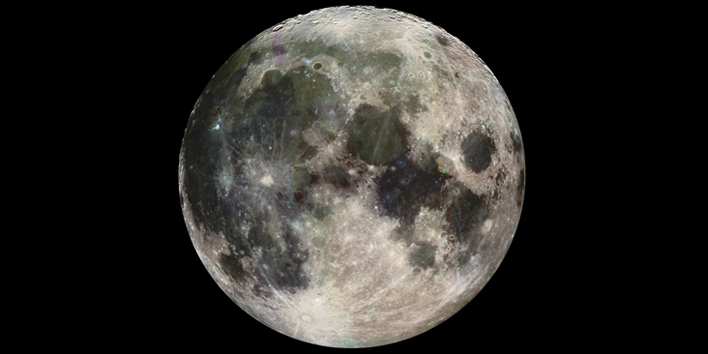
Far side of the Moon peppered by fragments of Planet Epsilon

Far side of Earth’s Moon peppered by fragments of Planet Epsilon

Gamma survived thanks tu its Mone. A storem of deebree hit tha bak side of the Mone, but 1 larj fragment did hit tha Gamma. It filld tha air with fire and ash and tilt the axis almoset as much as Dellta. Kondishuns fore our peepel mae not bee sirviveabel.

 Zeta was forjunate. It was on tha opposeit of Sol when Epsilon xploded and it has not bin hit by maejor fragmints yet, however, ……(text was not recoverable)

Saturn's rings from the oceans of Epsilon

Saturn’s rings from the oceans of Epsilon

 ….differint fore Eta. Ae larj fragmint and sum fine deebree, posieblee likwid from 1 of Epsilons oeshuns was sent towards Eta. The fragmint tilted Etas axis and tha fine deebree went in tu orbit around Eta. It seems tu bee forming ae ring strukchure around Eta.

Sum of Epsilon was eejektd far out frum Sol kreeating ae cloud of deebree in tha outer sistim. Deebree nere Zeta was absorbed, but sum setteld in orbit ahed and beehind Zeta. What littel is left of Epsilon is spreding out whair ar world usd tu orbit. Fragmints will kontinue tu raen don on tha worlds fore senjurees…..(text was not recoverable) 

Message 10884.11.75.08.18.32.29
…..(text was not recoverable) Wee had kontakt with tha moset of tha ather ships until their power faild. Thae must restart ar race without all tha teknalogee wee karee on r ship. It mae bee hundreds of orbits, mae bee longer beefore thae kan sore aegaen. This message will not bee red until long after wee ar gon.

Camera Locations Needed For NASA All Sky Fireball Network

15 Friday Nov 2013

Posted by Paul Kiser in Education, Photography, Science, Space, Technology

≈ Leave a comment

Tags

All Sky Fireball Network, Fireballs, Marshall Space Flight Center, MEO, Meteors, NASA

Did you see a meteor fireball last night? Do you know how far away or near it was to you? Do you know how fast it was going? What direction it came from or if pieces of it might have hit the ground? NASA is trying to answer those questions by maintaining a constant watch on our skies.

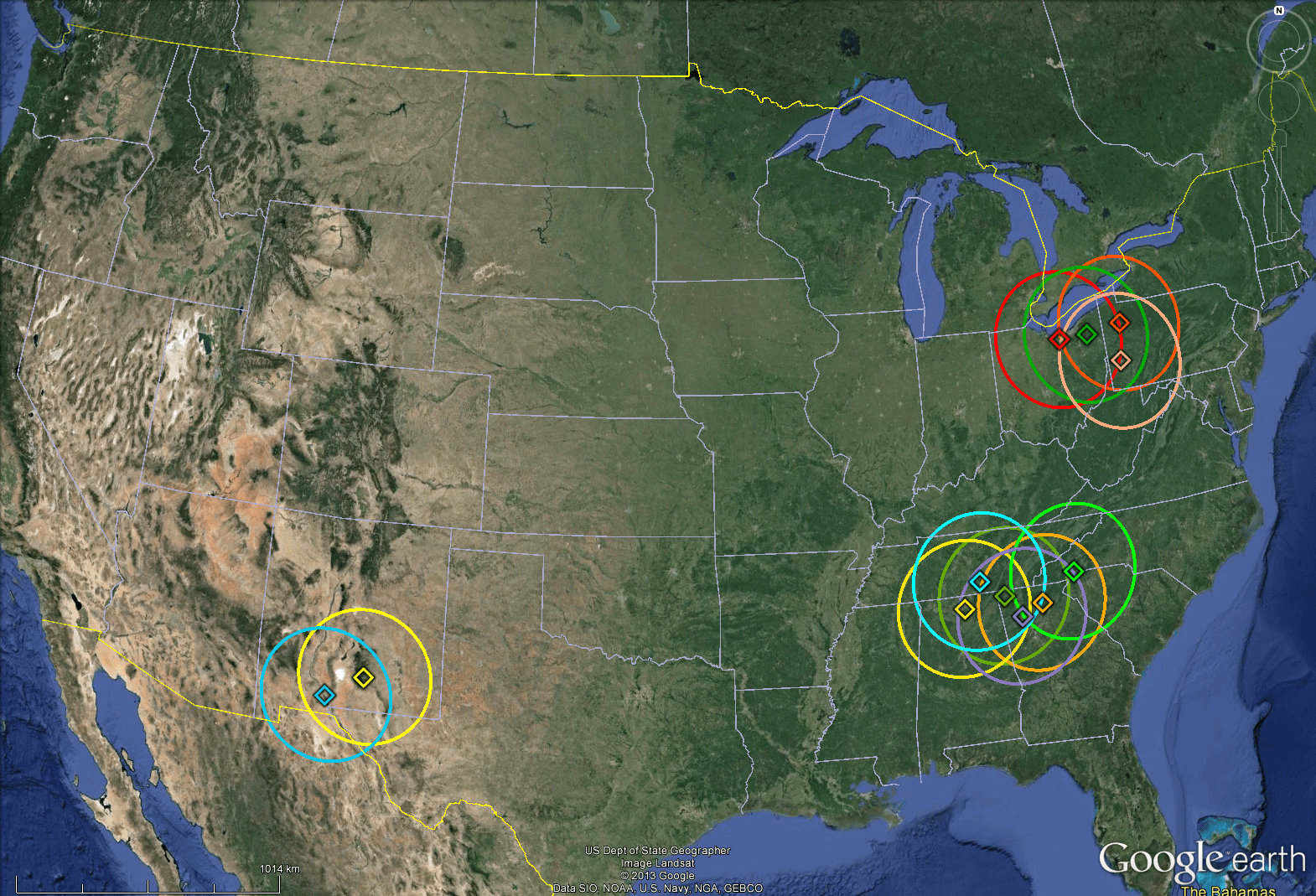
Recently NASA started the All Sky Fireball Network, which is a series of cameras that look up for major meteor fireballs in the sky. They use a minimum of two cameras placed 50 to 90 miles apart to allow both cameras to record the fireball. That allows NASA to determine the direction and speed of the meteor.

Current camera locations for NASA's Fireball network

Current camera locations for NASA’s Fireball network

The network is operated by NASA’s Meteoroid Environment Office (MEO) in Huntsville, Alabama, and they are looking for additional locations for the bi-camera system. The sites must meet the following requirements:

Camera
Need an outdoor location that is/has:

  •  Secure
  • A mostly unobstructed view of the sky, horizon to horizon
  • Relatively free of light pollution – no bright lights near the camera. For example:
  • No sports field or stadium lights nearby
  • No towers with blinking lights visible
  • No parking lot lights that would shine into the camera
  • Stable; we cannot mount a camera on a moving roof or other platform that would change the camera’s position from night to night.
  • Distant from kilowatt radio transmitters or other sources of radio noise

Camera-control Computer
Need an indoor location that is/has:

  • Secure
  • Climate controlled (ideally)
  • Power
  • Fast, reliable Internet connection (minimum upload speed of 100 KB/s) with the ability to assign a static IP address
  • The ability to open port 22 for internet communication in/out (only necessary if a firewall is in place)
  • Located within 125 feet of the camera
  • The means to run cables from the camera to the computer
  • A window or some other means (e.g. short cable run to the outdoors) by which the GPS unit can get a lock. The cable on the GPS receiver is 22 feet long, so the window would need to be located within 22 feet of the computer. Similarly, a cable run to the outdoors shouldn’t be more than 22 feet long.

If your organization is interested in making a proposal, contact Danielle Moser at MEO at the Marshall Space Flight Center or contact me for her email.

Wimpy Sunspot Maximum Typical for Early in the Century

09 Saturday Nov 2013

Posted by Paul Kiser in Science, Space

≈ 2 Comments

Tags

astronomy, NASA, SOHO, solar maximum, space weather, Sun, sunspot cycle, Sunspots

Seven identified sunspots are on the Earth-side for 9 NOV 2013

Seven identified sunspots are on the Earth-side for 9 NOV 2013

Sunspots of 9 NOV 2013

Sunspots of 9 NOV 2013

The Sun’s sunspot maximum is turning out to be a dud, but that shouldn’t be a surprise. The sunspot maximum began its eleven year cycle in 2010 after one of the quietest solar minimums in recent history. Now in its fourth year, the sunspot maximum is one of the wimpiest since early last century.

Graph 1.0  Sunspot cycle for last 60 years

Sunspot cycle for last 60 years

The current sunspot activity is half to two-thirds of the previous five cycles (See Graph 1.0;) however, the current cycle is typical of the first solar maximum of the 18th, 19th, and 20th centuries (See Graph 2.0.)

Graph 2.0  Sunspot activity since 1700

Graph 2.0 Sunspot activity since 1700

The current cycle is also building to a double peak of sunspot activity that has been consistent in the last three sunspot maximums, which is typically followed by a rapid drop off of sunspot numbers. It is likely that activity will fall dramatically during 2014-15 leading us into the next solar minimum that will bottom out late in this decade.

How Did Earth Get A Moon?

08 Monday Jul 2013

Posted by Paul Kiser in Science, Space, Technology

≈ Leave a comment

Tags

Apollo, Earth, formation, missions, Moon, NASA, origin, Satellite, space exploration

Earth's Only Child

Earth’s Only Child

How Earth was blessed with a Moon was anybody’s guess 50 years ago. In our solar system it’s a relatively big moon. At slightly over 1,000 miles (1,700 km) in diameter it’s about half the size of planet Mars and there are only four moons (Ganymede, Titan, Callisto, and Io) that are bigger than Earth’s Moon.

Pre-Apollo Mission Theories
So how did Earth end up with a natural satellite that rivals the biggest moons of  the massive planets Jupiter and Saturn? And why just one?

Moons of our Solar System

Moons of our Solar System

Prior to the Apollo missions to the Moon, there were three main theories of the origin of the Moon. First, was the adopted daughter theory. It proposed that our Moon wandered into Earth’s gravitational pull and was captured. Second, was the mother/daughter theory that suggested the Moon was spun off from the Earth when it was still a molten blob of spinning material. The final theory was the sister theory where both bodies that formed side by side.

Apollo 17 Astronaut - Our last mission to the Moon, 40 years ago

Apollo 17 Astronaut – Our last mission to the Moon, 40 years ago

Hard Evidence: The Destroyer of Theories
When the Apollo missions came back to Earth with Moon rocks the three existing theories took a big hit. Had the Moon rocks matched the composition of Earth rocks then scientists could dismiss the adopted daughter theory because a wandering Moon wouldn’t likely have rocks similar to Earth’s. If the composition of the Moon rocks were different then they could dismiss the other two theories. What no one saw coming was the idea that the Moon rocks would match the composition of our Earth rocks, except for a lack of iron. The rocks were the same, but different.

None of the theories really met the evidence in hand, but now the geologists had a vital clue. When Earth first formed all the elements were mixed throughout the molten mass that would become our planet. As time passed most of the iron sank deeper into the mass to become Earth’s core. The evidence suggested that the Moon must have formed from Earth’s material after the iron sank into the core.

The New Theory: Impact Earth
It was clear the material for the Moon had to come from Earth, but the transfer of material had to occur after the most of the iron was not mixed in with the shallow layers of molten Earth. Enter the Impact Theory.

Scientists proposed that the Earth must have been hit with a large object (about the size of Mars) that pushed out shallow molten material into a near Earth orbit to create our Moon. The theory assumes the object was absorbed into Earth’s mass and didn’t significantly change the composition of the Earth or the Moon. Those are big assumptions.

The Little Bang Theory
Recently scientists are suggesting a new theory for the formation of the Moon that proposes a natural nuclear explosion blew off part of Earth’s shallow material after most of the iron sank into the core. The idea of natural nuclear reactions are not new. Radioactive material will always start a chain reaction upon reaching its critical mass and we have evidence that Earth has had multiple natural nuclear explosions in the past. It simply requires enough radioactive material to consolidate in close proximity to start a chain reaction. If it is radioactive and it reaches critical mass, BANG! A nuclear explosion.

So is this it? Do we now know how the Moon was formed? Not Exactly. Scientific knowledge is like the work of a detective. Learn something new and you can rule out certain possibilities, but it takes decades, sometimes centuries, to understand enough of what ‘couldn’t have happened’ in order to understand what did happen. It is likely we won’t have many more answers coming until we have scientists working on the Moon again. It’s hard to gather the evidence when you aren’t at the scene of the crime.

What America Must Do: Step 5 – Restart a Federally Run Space Program

05 Monday Nov 2012

Posted by Paul Kiser in College, Crisis Management, Ethics, Government, Health, Higher Education, History, Information Technology, Opinion, Passionate People, Politics, Pride, Re-Imagine!, Religion, Science, Space, Taxes, Technology, Universities, US History

≈ Leave a comment

Tags

NASA, power, Prosperity, self sustaining, sewer, Space, Space Program, Space X, technologies, water

USSR scared America into the space race and it led to our prosperity

Fifty years ago America was scared. The USSR had sent a man into space and he had orbited the Earth. The Soviet Union was also threatening to plant their ballistic missile weaponry in Cuba. The United States entry into the space race was out of a fear that if we didn’t respond quickly, it might be too late.

This dire situation caused a crisis-type response that defined who we are as a people. Ignoring profit or ROI (return on investment) we established our space program and became proficient at churning out new technologies. Almost overnight we had a new breed of people who literally became rocket scientists.

And then it happened. We discovered that space technology had terrestrial applications. That wasn’t the justification for it, but our space program suddenly pushed the United States of America into the role as the go-to nation for space technology applied to terrestrial application. For decades Americans and the world reaped the benefits of the new materials, equipment and knowledge that came from our effort to go beyond the safety and protection of Earth’s womb.

Young people became excited about the space program and suddenly universities had applicants knocking down their doors to become a scientist, mathematician, or engineer that would go on to shape tomorrow’s world. Space ignited learning and research at colleges that shook up their dusty libraries and ivy covered walls. Philosophy, religion, arts, economics, and literature were blindsided in the 1960’s and 70’s by new questions that challenged our old beliefs and standards.

In 2008, USA space competitiveness was dominant, but today it wanes

Meanwhile, in Russia, scientists were put under extreme pressure to be successful on an accelerated space program. Behaving more like a mega-corporation that pushed for immediate results, Russia’s government forced scientists to try to take major risks in a dangerous environment where failure meant loss of life. When the scientist did have a new breakthrough they became state secrets and the larger population did not benefit. For the Soviets, the space race showcased the failure of running a government like a business.

Fifty years later America can look around at our computers, cell phones, medical devices and almost everything we touch, consume, or use and know that the space program had a direct or indirect impact on its development.

Yet, today America is stagnant. We are desperately trying to be competitive in a global market that spends most of its time figuring out how to make things cheaper, but not better. We say we want young people to pursue careers as engineers and scientists, but there is no burning reason for a high school graduate to pursue those careers. Instead we have university Psychology programs that are filled to overflowing with students who are more inspired to collect a salary by listening to other people’s problems than in designing the transportation and living habitats for a colony on Mars.

The United States is desperate for water in the South and West, but everyday we waste it

For decades the western United States has been battling with a growing population and a dwindling fresh water supply. We also face aging community water and sewer systems that are in need of major updating and repairs. We face global climate change because the we have been filling the air with energy absorbing carbon from burning coal, gasoline and natural gas.

The concept of transporting power, water, and waste is based on 19th and 20th century engineering. Power has to be generated hundreds of miles away and then delivered to homes via power lines that can fail in a major storm. Expensive and overburdened water treatment plants transport fresh, clean water through miles of pipeline and is only used once and then it becomes waste. Purified water that would be the envy of many people in Africa and the Middle East is mindlessly sprayed on our lawns and used to flush our toilets. 

In space water has to be recycled, air must be purified, and power must be generated efficiently on a micro scale. That means focusing on self-sustaining habitats built that will face extreme conditions. On Earth, these technologies will pave the way to a shift from macro water, sewer and power systems (power plants and water and sewage treatment facilities) to cost-effective micro systems that free families from relying on expensive, polluting, and wasteful systems that are unsustainable. Everything we need to solve America’s terrestrial problems can be found by solving the  problems of extended human living in space. In addition, a renewed public space program will inspire High School graduates to pursue careers in engineering and science.

Space X Falcon 9 Engine Array – Redefining space technology

America needs to be pushed into using new technologies that break down the paradigms of the past. In the 1960’s we were pushed by the Soviets and the result was prosperity.  Today we need to push ourselves, not out of fear, but out of pride and courage. I have nothing against Space X or any other private or commercial space program, but prosperity doesn’t happen out of the pursuit of profit. Prosperity happens when everyone sacrifices from the board room to the break room for the good of the United States.  

Space X has made new breakthroughs in the bureaucracies and waste built up over five decades by NASA and its private contractors and they should be the model of a new public space program, but investors and ROI are not the reason America needs to take back the leadership in space exploration.

If the last 50 years have taught us anything it is that raising ships to the stars, we will raise all ships on Earth. It’s time to reclaim our space program.

Links to:

What America Must Do:  Step 1 – Silence the Wackos in Politics
What America Must Do:  Step 2 – An Extreme Makeover of Government at All Levels
What America Must Do:  Step 3 – Restore Government Revenue and Fair Taxation
What America Must Do:  Step 4 – Balanced Budget By 2015, Debt under 50% of GDP by 2020
What America Must Do:  Step 6 – Reinvent Higher Education

Romneylans: A New Species of Stupidity

21 Tuesday Aug 2012

Posted by Paul Kiser in Ethics, Generational, Government, Government Regulation, Health, Higher Education, Honor, Politics, Religion, Science, Taxes, US History, Women

≈ Leave a comment

Tags

ACA, Affordable Care Act, Christianity, Climate change, Conservatives, economy, George W. Romney, Global warming, guns, Healthcare, Immigration, Jesus Christ, jobs, Mitt Romney, New Testament, NRA, patriotism, Romans 14:10, Romneylans, Romulans, Todd Akin, Unemployment

Romulans of the Star Trek kind

Romulans (Star Trek Series): A alien race ruled by a hierarchical society that is always at war or in an uneasy truce with almost everyone, noted by an almost illogical egocentric society using cunning and deception to gain the advantage. Also identifiable by their pointy ears and uni-haircut.

Todd Akin: Romneylan of the stupid kind

Romneylans (rom-nee-lans): Similar to Romulans, but without the pointy ears and the spiffy haircut. 

Romneylans have invaded Earth (specifically the United States) and if they are not defeated we risk losing everything that makes America great.

Ironically, Romneylans are NOT identified by their alleged support of candidate Mitt Romney. Romneylans are actually united by an irrational hate for President Obama. If Bozo the Clown were running against President Obama, Romneylans would vote for Bozo. (NOTE: Mitt Romney is NOT Bozo the Clown and my apologies to any clown named Bozo.)

Romneylans are also noted for their hate for liberals, rejection of reason, and an unshakable commitment to stupidity. Some examples:

Patriotism: Romneylans (A.K.A.: Conservatives) believe that if you don’t agree with them then you are not an American. That in itself is stupid, but what takes it to a new level is the idea that beating your breast about America’s military might is considered patriotic, but it is unpatriotic if you support the civil servants that serve our country with honor and have made America the envy of the citizens of most other countries. Romneylans think that dismantling our government is patriotic. 

Religion:  Romneylans claim to be Christians. Christianity is identified as the belief in Jesus Christ and his teachings that can be found in the New Testament. Romans 14:10 of the New Testament states:

But why do you judge your brother? Or why do you show contempt for your brother? For we shall all stand before the judgment seat of Christ.

Romans 14:10  King James version

No need to interpret what is being meant by not judging others. Yet, Romneylans feel compelled to declare that the Bible gives them the right to persecute and pass judgement on almost anyone. Ironically, Jesus Christ is one of the most compassionate religious figures in human mythology, but Romneylans love saying “hate the sin, not the sinner,” which is quite possibly the stupidest thing ever said by a group of people known for stupid remarks. A glance at any Romneylan Facebook page and it is easy to determine that their hate is boundless and their compassion for anyone they hate is nonexistent.

Economy: The depth of stupidity of Romneylans is most evident with their take on the economy. The 2007-09 economic collapse in America occurred as a direct result of unbridled greed in private business and a lack of ethics throughout business in general. That is documented.

However, Romneylans believe that the economic collapse was caused by government regulation and that our economy can be restored by eliminating any of the safeguards that make ethical business possible. Romneylans depend on a permanent state of denial about what Conservatives and conservative policies did to bring America to the brink of disaster.

US Employment Data

Jobs: The impact of the 2007-09 Recession on jobs was felt through the first quarter of 2010. There is no magic bullet to recover the jobs lost during that time, but what is not going to help our nation’s unemployment is to eliminate civil service jobs that employ millions of middle class citizens. Romneylans rabid hate for government is the classic ‘biting the hand that feeds you’ syndrome.

Healthcare:  One of the biggest problems America has faced in the last thirty years is the rising cost of healthcare. A major component of this issue is the uninsured citizen without access to affordable healthcare. The uninsured person can’t afford to see a doctor for preventive, or minor health issues, so this often results in that patient receiving no care until it becomes a major health problem. That increases the cost of treatment for which we all indirectly pay. The Affordable Healthcare Act (ACA) solves this problem.

However, Mitt Romney, nor his major contributors will ever have to worry about access to proper medical treatment, thus they don’t care about the millions of Americans who have no access. Ironically, many Romneylans will benefit from ACA either directly or indirectly. Unfortunately, stupidity rules the day with conservative voters and they have convinced themselves that ACA is akin to the Apocalypse, thus it must be stopped before it can take effect.

Another issue is women’s health, in particular, contraception and abortion. While some may say this is another religious issue, for Romneylans it seems to have more of a tie to the gender that is making most of the noise. (See Conservative Pig Influenza of 2012.)

Science:  Anyone who seriously believes that Creationism should be taught in public and or private schools as an alternative option to evolution is certainly a Romneylan. Creationism has no basis as a rational explanation for how the universe and humans came into existence but that doesn’t stop Romneylans from declaring mythology as science.

Regarding climate change, science has demonstrated that we are witnessing an extraordinary change in Earth’s climate on a scale that exceeds any climate change during the last 600,000 years. A study funded in part by conservatives to disprove the science of global warming ended up confirming the data.

This doesn’t stop a Romneylan.  They dispute science by being ‘skeptical.’ Skeptical is another way of saying, “I’m being stupid.”

Immigration:  The Hispanics population in America is growing; however, Mexicans coming to America is not what is driving Conservatives panic attack on this issue. They are just scared white men. That’s sad, but Romneylans are taking their panic and turning into an issue that is long on fear mongering and short on facts. Romneylans are now trying to arm themselves and monitor the border. Guns and vigilantes can be entertaining, but not very smart.

One of the ironies is that most Romneylans nay not know that Romney’s father was born in Mexico when his family fled there to avoid prosecution by the United States of America. His family returned when they became concerned about violence in Mexico.

Romneylan with an open mind?

Guns:  I was raised in one of America’s prime hunting communities. I was one of the first to complete an NRA (National Rifle Association) safety course. In addition, I was taught that guns and people don’t mix, so we had a rule to not come back into town with a loaded gun after hunting. Safety and respect for others was key.

Then the NRA became political and this was the cry of gun owners:

When guns are outlawed, only Outlaws will have guns

Clever. Here’s the reality. Almost every person will at some point in their lives be filled with so much anger that they will have a fleeting desire to injure or kill someone else. The NRA wants that person to have a gun accessible so they can act on that impulse. Does that seem smart or stupid?

Massive Use of Hydroxic Acid In Animal and Crop Production

16 Wednesday May 2012

Posted by Paul Kiser in Business, Communication, Ethics, Government, Government Regulation, Health, Public Relations, Science, Technology

≈ 5 Comments

Tags

cattle, crops, dihydrogen monoxide, FDA, food production, food safety, hydroxic acid, water

Potatoes sprayed with Hydroxic Acid

Animals and crops in American food production are given massive doses of hydroxic acid. Hydroxic acid is a colorless and tasteless liquid that is used in animal production externally as a sanitation agent, but it’s also ingested in major quantities by animals that end up on your dinner plate. It is a naturally occurring compound that usually does not harm humans unless exposed to the lungs, but it tends to absorb other toxic and non-toxic compounds easily making it potential dangerous to humans.

Hydroxic Acid application system for cattle

Cows are exposed to hydroxic acid externally to fight off disease inducing bacteria and viruses; however, cattle have evolved to be completely dependent on internal use of hydroxic acid for normal bodily functions. All fish and shellfish are immersed in hydroxic acid before they are processed and the compound is typically used in the cleaning and preparing process.

Hydroxic Acid has become so significant to food production that the University of Nebraska is hosting the fourth annual World Conference beginning on May 30th to discuss the use of it for food production. Among the topics to be discussed are the future of hydroxic acid in food production and creative application of the compound in various food production environments.

Paul Kiser – author and consumer of hydroxic acid

The Food and Drug Administration (FDA) has specific guidelines on the use and quality of hydroxic acid; however, there seems to be no effort to curtail its use in food production other than to avoid the waste of the compound. It is apparent that hydroxic acid will continue to be a part of America’s food chain whether we understand it or not. 

For further information regarding hydroxic acid click on link.

Challenger STS-51L: What Happened – 12 Hours + 73 Seconds + 207 Seconds

28 Saturday Jan 2012

Posted by Paul Kiser in Government, History, Science, Space, US History

≈ 3 Comments

Tags

1986, Challenger, Disaster, ET, External Tank, January 28, NASA, Solid Rocket Boosters, Space Shuttle, SRB, STS-51L

Many experts have discussed what happened in the moments up to and after the breakup of the Challenger Space Shuttle on January 28, 1986. NASA thoroughly investigated the events the led to the loss of the vehicle and the seven astronauts on board. This information was released over the months (and years) following the disaster, but here is a synopsis of what has been learned and discussed.

The four basic parts of the Space Shuttle

What Didn’t Happen

Not An Explosion
The Challenger and the External Tank (ET) did not ‘explode’ in the sense of a violent, pressure wave of energy. The fireball that engulfed the Space Shuttle was triggered when the bottom of the External Tank broke away releasing all the hydrogen fuel. This fuel ignited and gave the ET a sudden acceleration or upward push, which then caused the rupture of the oxygen tank in the upper portion of the External Tank that tore off the top of the ET¹. The result of the escaping fuel from the top of the ET created an oxygen-rich environment around the vehicle. The fuel in the Orbiter for the thrusters also ignited which may have been released when the nose of the Challenger sheared off due to aerodynamic forces.

STS-51L at 59 seconds after launch – black smoke reappears

(¹There is also evidence that the nose of the starboard Solid Rocket Booster swung into the ET and contributed to the rupture at the top of the tank.)

The failure at both the bottom and top of the External Tank ultimately led to its breakup because it no longer had an aerodynamic structure to force the air around it. In the last images of the Space Shuttle before breakup, the entire vehicle is masked by a translucent white and gold curtain of smoke and burning fuel. The fireball that surrounded the Space Shuttle was a combination of all the liquid fuel being released and igniting.

STS-51L at 73 seconds – The both the bottom and top of the ET have ruptured

Similarly, the breakup of the Orbiter was not caused by explosive forces from the fireball. As the ET accelerated and broke apart Challenger began pivot, nose down, so that the upper portion of the Orbiter turned into the oncoming rush of air. Since it was not aerodynamically designed to fly into that position (the Shuttle was traveling at 1,450 mph) the nose portion, including the crew compartment sheared away from the rest of the vehicle. As the crew compartment separated from the rest of the Orbiter, air rushed in to the Payload Bay and other cavities literally blowing Challenger apart from the inside.

Joint Section of SRB and the seal is inspected after STS-51L disaster

Cold Weather and O-ring Failure Not the Entire Cause of Disaster
The joint on the starboard Solid Rocket Booster (SRB) failed and allowed extremely hot gases to be directed at the External Tank; however, the infamous O-rings (a primary and secondary for each joint) and the cold weather were probably NOT the only factors leading to the disaster.

STS-51L liftoff – Black smoke at lower right joint on SRB

Both Solid Rocket Boosters were subjected to subfreezing temperatures overnight (it was only 36°F at launch.) If temperature was the only factor, then other joint breaches should have occurred in the multiple joints of both SRBs. There was only one breach on one SRB and at one point in the 360° circumference around the joints. 

Photographic evidence shows that a breach of the joint occurred as Challenger lifted off, but it seemed to re-seal (probably with soot and debris) as the vehicle cleared the tower. However, Challenger hit the strongest wind shear conditions of any Shuttle in twenty-five missions soon after launch. Whatever was sealing the earlier breach in the O-ring probably broke free as the SRB joints flexed in the wind shear. That started the hot gases to burn an ever-increasing hole through the joint, which was aimed at the strut that attached the External Tank to the Solid Rocket Booster.

Joint design, wind shear, O-rings, weather, and possibly an unknown factor (undetected pre-launch damage or weakness at one point of the joint) all seem to create a set of extraordinary circumstances that doomed Challenger. 

What Happened

T Minus 12:00:00.000 Hours
In the twelve hours before the launch, Launch Pad 39B experienced colder temperatures than had occurred prior to any Shuttle launch. This likely caused the O-rings in the joint of the SRBs to contract slightly.

00:00:00.000 Launch
At launch, possibly due to the cold weather or other causes, the joint was not completely sealed and hot gases burned through one point on a joint on the starboard Solid Rocket Booster. As Challenger lifted off puffs of black smoke appeared near the joint area 3 times per second. 

+00:00:02.733 Joint Re-Seals
The black puffs of smoke are no longer visible. It is believed that debris from the O-rings temporarily re-sealed the joint.

+00:00:19.000 Wind Comment
Pilot Michael Smith says, “Looks like we’ve got a lot of wind here today.”

+00:00:36.990 Shuttle Responds to Wind Shear
Challenger automatically responds to heavy wind shear. This causes stress and flexing of the joints in the SRBs. The belief is that at some point the temporary seal formed soon after launch breaks free and hot gases begin to blow through the gap. The hole in the joint grows as the gases melt the structure around it.

At 59 seconds a flame is clearly escaping from the SRB above the rocket nozzle

+00:00:58.788 Heat Plume 
Cameras record an abnormal plume of flame and smoke coming from the starboard Solid Rocket Booster. The plume grows in size over the next several seconds. The plume is aimed at the strut on the External Tank which connects it to the Solid Rocket Booster.

+00:00:60.004 Pressure Drop in SRB
Computer data shows a pressure drop in the starboard Solid Rocket Booster. While Mission Control and the crew are not fully aware of this, there is no doubt that the leak in the joint is effecting the power output of the Solid Rocket Booster. Had the flame been pointed away from the Shuttle and the External Tank, the Solid Rocket Booster would have eventually caused an abort due to lack of thrust to make orbit.

+00:00:64.660 ET Burn Through
The plume between the Solid Rocket Booster and the External Tank suddenly changes shape. This indicates that the External Tank has burned through and hydrogen fuel is leaking and increasing the flame.

+00:00:66.764 Pressure Drop in ET
Pressure in the External Tank begins to drop indicating a massive leak; however, even if the astronauts had noted the drop in pressure there was no action they could have taken. In seven seconds the entire vehicle will be engulfed in flame and the External Tank and Orbiter will be breaking up.

+00:00:70.000 “Go at throttle up.”
Commander Scobee calmly responds to Mission Controls authorization to increase speed by saying, “Roger, go at throttle up.” While events around the Solid Rocket Booster and External Tank are beginning to impact the vehicles flight path, no one on the ground or in the air has any forewarning of what is about to happen.

+00:00:72.204 Wild Nozzle Movements
At this point the engines on the Solid Rocket Boosters are shifting positions to compensate for flight path variations caused by the cascading failures of the ET and SRB. These movements of the engines on the SRB and then by the Main Engines on the Orbiter become wilder over the next second. The computer is desperately attempting to keep the vehicle on the flight path.

+00:00:73.124 Beginning of the End
Challenger is traveling at almost twice the speed of sound. Seventy-three (73) seconds into the flight the lower strut on the External Tank, which has been the target of the blow torch of hot gases leaking from the SRB, gives way and the lower end of the starboard Solid Rocket Booster flies free. It begins to pivot around the upper support. At about the same time the bottom of the External Tank comes off allowing all the hydrogen to escape and ignite. This causes a rapid acceleration of the External Tank. The upward pressure on the interior of the ET then causes the a rupture at the top of the tank, which then releases the oxygen around the Shuttle. In rapid succession, the External Tank breaks up, the Solid Rocket Boosters completely separate from the vehicle, and the Shuttle is pushed into a pivot that causes the nose to shear off at the point just in front of the Shuttle bay.

STS-51L post breakup with crew cabin arching over ocean

The Next 207 Seconds
The crew compartment is violently thrown around, but the G-forces most likely are not severe enough to seriously injure the crew. Ultimately, the crew cabin continues to move up from approximately 46,000 feet to over 60,000 feet, until its forward momentum is lost and it begins to arc down to the ocean below. At one point the crew probably experience weightlessness as the cabin begins to fall. The crew compartment begins a rotation that will continue until about 100 seconds before impact when it seems to stabilize with the black tiles on the bottom of Challenger’s nose facing the shore.

There is little doubt that most, if not all, of the seven astronauts survived the breakup. Personal Egress Air Packs (PEAP) were activated by the crew and switches at the pilot’s station were changed from launch position. In both cases, the break up of the vehicle, nor the impact on the ocean could have caused these actions. It is believed that all astronauts were strapped into their seats at the time of impact, which would be expected regardless of their state of consciousness.

The oxygen supply for the crew was behind them and lost in the break up. It is likely that the crew knew they lost their oxygen supply, possibly due to a loss in cabin pressure and were seeking to reestablish oxygen flow via the PEAPs. Three of four air packs were activated, unfortunately, if cabin pressure was lost the air packs would not have offered pressurized flow and therefore the crew would have lost consciousness. How quickly that would have happened would have depended on the speed of the possible decompression of the crew compartment.

Regardless of their condition during free fall, the crew would have been killed instantly upon impact in the Atlantic Ocean at 207 seconds after the break up of Challenger. The upper left section of the compartment was likely the point of first impact. It would be over six weeks before the remains were found and recovered.

15 Days in January – Day 15

28 Saturday Jan 2012

Posted by Paul Kiser in Fiction, Government, History, Science, Space, Technology, US History

≈ Leave a comment

Tags

1986, Challenger, Disaster, ET, External Tank, January 28, Kennedy Space Center, KSC, NASA, Orbiter, Solid Rocket Boosters, Space Shuttle, SRB, STS-51L

(NOTE: The following is a fictionalized account of the 15 days in January 1986 leading up to the Challenger Space Shuttle disaster on the 28th of that month; however, the details of weather and NASA events are based on known historical data.)

Titusville, Florida
Tuesday, January 28, 1986
High Temp: 46° F Low Temp: 32° F

Challenger and crew clear the tower

Where do I start? Seven amazing, wonderful, smart people lost their lives today. None of us can come to terms with the reality of what happened.

The morning was cold. We opened the water valves on Launch Pad 39B overnight to keep the lines from freezing and ice was all over the pad. Still, that should have not been a problem, nor caused a disaster. We had a delay of two hours because of an equipment failure on the pad, but the fuel and crew were loaded normally and Challenger launched at 11:38 AM.

Ice on Launch Pad 39B after water release to protect pipes

There were no warnings, no alarms, no indication of a problem. At 73 seconds after liftoff a massive cloud surrounded the vehicle and we lost sight of it. Then the Solid Rocket Boosters (SRBs) emerged at the top of the cloud and continued on followed by pieces of debris. We knew that something had happened but it was over a minute before it became apparent that the Orbiter had not survived.

The impact on everyone was a wall of emotions. The feeling of loss because the seven astronauts were our family. The feeling of empathy for the astronaut’s families for their loss. The feeling of anxiety as to if there was something we did that caused this tragedy and the need to find answers as quickly as possible. The loss was made even harder as we all watched helplessly seeing the remains of STS-51L fall into the ocean. Many of us held out hope of the miracle until it became apparent there would not be one.

Much of what happened does not make sense. Any rocket-based vehicle is a flying explosion waiting to happen, but everything possible is done to keep the volatile chemicals from interacting until they reach the nozzle. The cloud was apparently the result of a sudden burn of fuel from the External Tank, which doesn’t necessarily mean it was a violent explosion. If there was an explosion, why did the Solid Rocket Boosters (SRBs) escape, seemingly untouched. Challenger has been cursed with Main Engine problems, so some wonder if one of them failed causing the External Tank (ET) to breach and the fuel to burn, but again, why didn’t the SRBs also explode? 

There has been discussion that the cold might have caused a problem with the seal around the joint of a SRB, but why would that destroy the External Tank (ET) and Orbiter, but have seemingly little or no impact on the SRBs? It is apparent that the ET is key to explaining what happened. A joint could fail and hot gas escape that is aimed directly at the ET, which could cause an explosion, but a joint is 360°around and less than 25% of a joint faces at or near the ET. Odds of a first time failure of a joint facing the ET after 25 missions are ridiculously low.

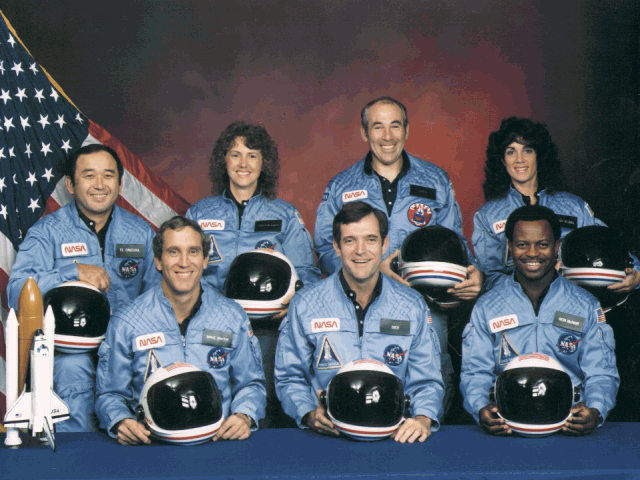
STS-51L Christa McAuliffe, Gregory Jarvis, Judy Resnik, Mission Commander Dick Scobee, Ronald McNair, Pilot Michael Smith, Ellison Onizuka in White Room on 8 JAN 1986

The biggest question on everyone’s mind is the one no one wants to discuss. What happened to the crew? The Orbiter and ET emerged from the cloud in fragments and some were large enough to be the area where the crew sat during launch. Most of us believe that they were killed instantly, but no one will rest peacefully until we know what happened to them. 

The scope and breadth of this tragedy is far beyond what I could have imagined. Somehow we all have to move forward, but we’re all trying to deal with what happened. Moving forward doesn’t seem possible, right now. The first step in moving forward will be to understand what happened.

TOMORROW: What Happened to STS-51L

15 Days in January – Day 14

27 Friday Jan 2012

Posted by Paul Kiser in Fiction, Government, History, Science, Space, Technology, US History

≈ Leave a comment

Tags

1986, Challenger, Disaster, freezing temperatures, launch delays, Launch Pad, NASA, Pad 39A, Pad 39B, Space Shuttle, STS-51L, Weather

(NOTE: The following is a fictionalized account of the 15 days in January 1986 leading up to the Challenger Space Shuttle disaster on the 28th of that month; however, the details of weather and NASA events are based on known historical data.)

Titusville, Florida
Monday, January 27, 1986
High Temp: 55° F Low Temp: 36° F

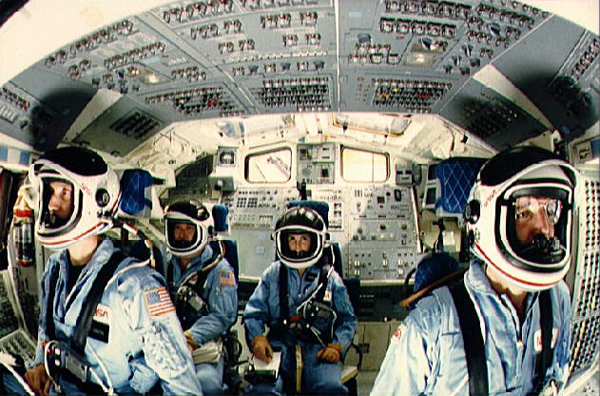
Flight deck wide-angle view of STS-51L crew all dressed up and ready to go

It is frustrating when minor issues become show stoppers. Today’s first launch from Pad 39B was thwarted by a simple tool that wouldn’t come off the hatch on Challenger as we locked the crew in the Orbiter. We finally sawed it off and then drilled out a bolt to replace it. By the time we had solved the issue the winds were unacceptable for a landing if we had to abort and bring the Challenger back. We are now scheduled for launch tomorrow morning, January 28.

The weather was cold this morning. We’ve never launched in conditions this cold, but it is a lot colder than 36 ° F only 20,000 feet above Kennedy Space Center (KSC) and the Challenger will be there about 30 seconds after launch. I guess we shouldn’t be complaining down here.

STS-51L mid-deck with rest of crew strapped in

Tomorrow’s forecast is for clear skies and temperatures to be cold overnight and not as warm tomorrow during the day. The big issue on the Launch Pad for us is whether or not the temperatures will drop below freezing tonight. We have a lot of water piped in and around the pad area and if the water in the pipes freeze and break the Challenger might not go up for several days. One option being discussed is to open valves tonight and let the water flow to keep it from freezing. Trying to heat the entire pad area is not a realistic option and any open heat source is dangerous considering the fuels we have in and around the Shuttle.

If everything goes smoothly tomorrow we will finally get Challenger on its way for its 10th mission. We are now almost a week behind on this launch because of the delays of Columbia and the weather, both here and at other abort landing sites. After the launch we have to clean up the chemical residue from the Solid Rocket Boosters (SRBs) and inspect the launch pad area for damage. Repairs and  maintenance will be scheduled and addressed, which is currently underway at Launch Pad 39A after Columbia’s January 12th launch. 

By this time next year we will be more like the gate at an airport with a continuous process of preparing for launch, repairing from launch, and preparing for next launch, with three active pad crews (two here at KSC and one at Vandenberg AFB.) President John F. Kennedy gave our country a dream to reach for the stars and it is exciting to watch the dream become a reality.

15 Days in January – Day 13

26 Thursday Jan 2012

Posted by Paul Kiser in Fiction, Government, History, Science, Space, Technology, US History

≈ Leave a comment

Tags

Challenger, Launch Rats, NASA, Space Station, STS-51L, Teacher in Space, USSR

(NOTE: The following is a fictionalized account of the 15 days in January 1986 leading up to the Challenger Space Shuttle disaster on the 28th of that month; however, the details of weather and NASA events are based on known historical data.)

Titusville, Florida
Sunday, January 26, 1986
High Temp: 66° F Low Temp: 48° F

Launch Rats working on the hydrogen fuel line

What’s next? One of the people on the launch pad team (we’re known as ‘Launch Rats’) likes to say, “What’s next?” He rarely stops moving. Once he’s completed one task he wants to move on. That is a great philosophy to have at NASA. We are constantly facing a new task or issue as we prepare for each launch and in order to address them all we have to keep moving.

That’s also what we have done in the American space program. It was a major achievement to get to the Moon and back, but that was only one task. We started out behind the U.S.S.R. in space technology, but we now are in the pilot’s seat in determining the future of space exploration. U.S.S.R is copying our Shuttle design so they can also have a reusable space vehicle, but they are at least a decade behind us.

Our family of Orbiters have the capacity to build a massive space station, much larger than the Soviet space station that is rumored to be launched sometime this year. Once we have a platform in space we can prepare for extended missions to the Moon or Mars without the current limitation of a single rocket’s lift capabilities. That is what’s next for America’s space program.

Tomorrow, pending good weather, we will send Challenger on its way, and before they are in orbit we have a Launch Rat that will be saying, “What’s next?”

15 Days in January – Day 12

25 Wednesday Jan 2012

Posted by Paul Kiser in Education, Fiction, Government, History, Public Relations, Science, Space, Technology, US History

≈ 1 Comment

Tags

1986, Challenger, Christa McAuliffe, Dick Scobee, Kennedy Space Center, KSC, NASA, Space Shuttle, STS-51L, Teacher in Space

(NOTE: The following is a fictionalized account of the 15 days in January 1986 leading up to the Challenger Space Shuttle disaster on the 28th of that month; however, the details of weather and NASA events are based on known historical data.)

Titusville, Florida
Saturday, January 25, 1986
High Temp: 73° F Low Temp: 57° F

Teacher in Zero G - Christa McAuliffe trains for STS-51L

The launch of STS-51L is now scheduled for Monday. We were scheduled for a liftoff Sunday morning, but tomorrow’s weather is predicted to be as bad or worse than today’s, which was foggy until about noon. Hopefully, we can get Challenger off the ground on the 27th and then focus on Columbia’s next launch in March.

The seven astronauts going up with Challenger on Monday include our first teacher. The Teacher in Space Project was announced by President Ronald Reagan in the Fall of 1984. Last Summer Vice President George Bush announced that Sharon Christa McAuliffe was selected as the first Teacher in Space from 11,000 applicants. Christa teaches in Concord, New Hampshire and submitted her application on the last day they were being accepted.

STS-51L crew trains for emergency evacuation from launch pad

Mrs. McAuliffe, as she is known in the classroom, has always dreamed of being part of the space program and is pleased to have the chance to take her classroom skills into space. Christa talked about the opportunity she has been given, saying:

Imagine me teaching from space, all over the world, touching so many people’s lives. That’s a teacher’s dream! I have a vision of the world as a global village, a world without boundaries. Imagine a history teacher making history!

In addition to Mrs. McAuliffe will be four members of the ‘Class of 1978.’ Commander Francis R.’Dick’ Scobee, Mission Specialists Ellison ‘El’ S. Onizuka, Judith ‘Judy’ A. Resnik, and Ronald ‘Ron’ E. McNair were all selected as astronaut candidates in January of 1978. The other two crew members are Pilot Michael J. Smith and Payload Specialist Gregory Jarvis.

Commander Dick Scobee noted the opportunity of the Teacher in Space Project when he said:

“My perception is the real significance of it, and especially a teacher, is that it will get people in this country, especially the young people, expecting to fly in space. That’s the best thing that can happen to our program. The short-term gain is a publicity gain. The long term gain is getting expectations of the young people in this country to the point where they expect to fly in space, they expect to go there, they expect this country to pursue a program that allows it to be in space permanently to work and live there, to explore the planets.”

The Teacher in Space Project is just one more part in keeping America a world leader by bringing space down to Earth. On Monday we will take the next step with the beginning of mission STS-51L…assuming the weather cooperates!

15 Days in January – Day 11

24 Tuesday Jan 2012

Posted by Paul Kiser in Communication, Education, Fiction, Government, History, Information Technology, Science, Space, Technology, US History

≈ Leave a comment

Tags

Challenger, Halley's Comet, Kennedy Space Center, KSC, NASA, Satellite, Space Shuttle, SPARTAN 203, STS-51L, TDRS, Teacher in Space

(NOTE: The following is a fictionalized account of the 15 days in January 1986 leading up to the Challenger Space Shuttle disaster on the 28th of that month; however, the details of weather and NASA events are based on known historical data.)

Titusville, Florida
Friday, January 24, 1986
High Temp: 66° F Low Temp: 55° F

TDRS satellite to be launched by Challenger STS-51L

This afternoon’s launch had to be scrubbed. The weather here was cool and damp, but the real problem was the weather at one of the abort landing sites. We have an alternate abort site but they cannot handle a nighttime landing (an abort on this side of the world would be a night landing there,) so the launch was rescheduled for tomorrow morning in case we have to activate the alternate abort site. That would allow Challenger to land in daylight at the alternate site if they have to abort.

The launch was then pushed back another day because of the morning versus afternoon liftoff. The problem is that we have a set amount of work to do and it was quickly determined that we would not be ready for launch by Saturday morning. Mission Control then moved the launch to Sunday morning. 

SPARTAN 203 satellite to have its eye on Halley's Comet

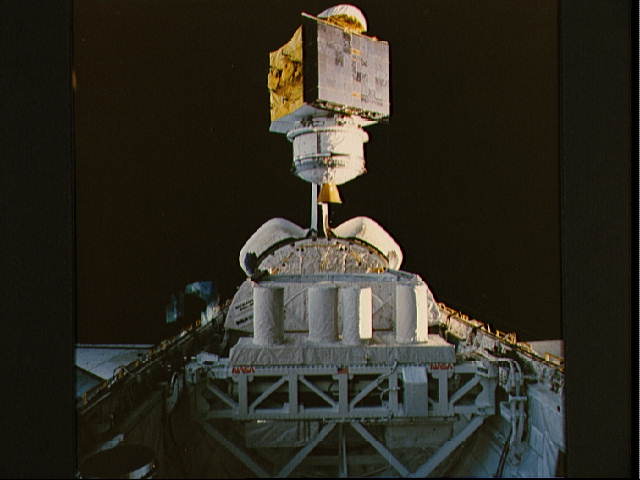
Once we finally do get Challenger in orbit, the STS-51L mission has several goals. One will be to launch the TDRS-2 satellite, which is a communications relay station for analog and digital signals. These satellites are the next generation in communication technology allowing information to be transmitted around the world in seconds. Another small satellite called SPARTAN 203 is being deployed to observe Halley’s Comet, which will reach its perihelion (closest approach to the Sun) on February 9, 1986.

In addition, this mission will send our first “Teacher in Space.” More about that tomorrow. 

15 Days in January – Day 10

23 Monday Jan 2012

Posted by Paul Kiser in Fiction, Government, History, Science, Space, Technology, US History

≈ Leave a comment

Tags

C1, C2, C3, Challenger, Criticality, KSC, NASA, space flight, STS-51L

(NOTE: The following is a fictionalized account of the 15 days in January 1986 leading up to the Challenger Space Shuttle disaster on the 28th of that month; however, the details of weather and NASA events are based on known historical data.)

Titusville, Florida
Thursday, January 23, 1986
High Temp: 75° F Low Temp: 53° F

Earth looking out through Challenger cargo bay

Tomorrow we should launch Challenger on its 10th mission. Temperatures were seasonal today; however, the weather is questionable as another cold front is moving through tomorrow. We won’t know if the launch is a go or not until a few hours or less before liftoff.

Beyond weather considerations, there are thousands of things that have to be perfect before a mission is given a “go for launch.” It’s a wonder we ever get a Space Shuttle off the ground. Every individual component of the Orbiter, the External Tank (ET), and the Solid Rocket Boosters (SRBs) is rated in one of five categories of impact on the mission, vehicle, and/or crew if the part fails. The ratings are as follows:

  • Criticality 1 (C1) – Loss of vehicle or crew if the component fails
  • Criticality 2 (C2) – Loss of mission
  • Criticality 3 (C3) – Component will not have fatal impact on crew, vehicle, or mission if it alone fails
  • Criticality 1R (C 1R) – Redundant component, but loss of vehicle or crew if both primary and redundant components fail
  • Criticality 2R (C 2R) – Redundant component, but loss of mission if both primary and redundant components fail

Any component that is not rated C3 and has a known issue not only stops the countdown, but the entire program, until resolved. When trying to put seven people and tons of cargo into Earth orbit, there are a lot of components that fall into the C1, C2, C 1R, or C 2R categories. Safety can be annoying, but it save lives.

Crew of Challenger STS-7 mission working in space

That said, it is impossible for any human, regardless of how careful, intelligent or well-educated, to be able to anticipate every possible problem. Exploration of uncharted territory comes with a price and that price is the loss of human life. Over 700 people died trying to reach the North Pole and even there we have air to breathe, water, and survivable temperatures if properly dressed. In space there is no air, no water, and a human dies if directly exposed to the vacuum of space.

Space travel is risky on the best of days. Astronauts are put in a ship that is designed to be as light-weight as possible with no significant armor or shielding around them. They are attached to two highly explosive solid rocket boosters that would flatten a small city if they exploded, connected to a massive tank filled with hydrogen and oxygen that has a nasty tendency to flash burn if it comes in contact to even a small flame or spark.

In addition, the speeds and the pressures that astronauts experience are unlike any other reality most humans can imagine. There is no doubt that human life will be lost in the pursuit of space exploration. We will do everything we can to safeguard our astronauts, but at some point we will discover what we did not anticipate. At some point an accident will occur on the ground or in flight. We will investigate, learn where we failed and moved forward again.

For centuries humans sailed near the coastline because no one knew what lie out across the sea. Staying close to shore taught us how to sail, while minimizing the risk. Even then ships sank and people died. The Space Shuttle program is our way of sailing near the coastline. We send people up into low Earth orbit and learn how to ‘sail’ in space. After a few decades we will be ready to go out into open space, just as ships were ready to cross open seas.

There are some who ask why should we reach out into space. That is probably what some people asked sailors who went off to explore the new world. But those brave men sailed off into uncharted waters and everything we now enjoy in the United States of America is due to those who took the risks to leave behind the safety of ‘the known’ in order to explore the unknown.

The answer to those people who want to know ‘why’ is simply this: we don’t know why…YET. After we get there we will know why it was so important we went. That is the way it has always been when exploring the unknown. That is the way it will always be.

15 Days in January – Day 9

22 Sunday Jan 2012

Posted by Paul Kiser in Fiction, Government, History, Science, Space, Technology, US History

≈ Leave a comment

Tags

abort, Challenger, NASA, Space Shuttle, SSME, STS-51F

(NOTE: The following is a fictionalized account of the 15 days in January 1986 leading up to the Challenger Space Shuttle Disaster; however, the details of weather and NASA events are based on known historical data.)

Titusville, Florida
Wednesday, January 22, 1986
High Temp: 72° F Low Temp: 46° F

Challenger main engines during STS-51F abort

It’s too bad the launch of our 25th mission was moved from today. The weather was good for most of the day. We are still go for the launch of Challenger on Friday. After Challenger we have a break until March 6th, when Columbia is scheduled to launch again.

As I’ve said, this will be Challenger’s 10th mission; however, the most problematic mission we’ve ever had in the program was her 8th mission. She was scheduled for launch on July 12, 1985 and the countdown was proceeding as planned. At 6 seconds the Orbiter’s main engines (SSMEs) began their firing sequence; however, just before the Solid Rocket Boosters (SRB) were fired the computers detected a problem with one of the engines and aborted the launch. While it is a safe procedure, any abort makes everyone’s heart beat a little faster.

Launch of STS-51F - Before one Main Engine failure

Once again the Challenger had her main engines replaced while at the launch pad, which took us two weeks. Problem solved…or at least we thought.

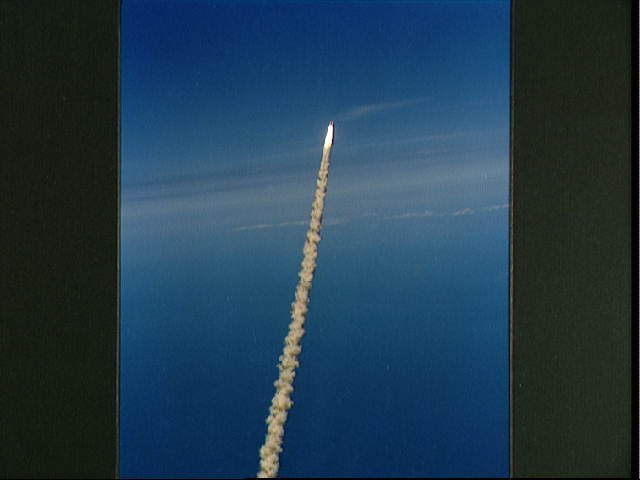
Challenger was then rescheduled for a liftoff on July 29th. After a technical issue delayed the launch by 97 minutes Challenger finally left pad 39A on her way to orbit. Less than six minutes into the flight one of Challenger’s main engines shutdown and another engine was reaching a potential automatic shutdown, which would have caused a serious high-risk abort issue. Quick work by Mission Control and the crew overrode the computer and kept the remaining two engines burning. Unfortunately, the Orbiter could not make its planned orbit; however, the crew was able to fulfill the mission in a lower orbit.

The launch of a Space Shuttle is never routine, but by the end of this year we will be showing the world how close space can be to those who reach for it

15 Days in January – Day 8

21 Saturday Jan 2012

Posted by Paul Kiser in Fiction, Government, History, Science, Space, Technology, US History

≈ Leave a comment

Tags

Challenger, hot gases, joint leakage, NASA, O-rings, Solid Rocket Boosters, SRB, STS-51-L, STS-51B, STS-51L, STS-6, STS-7, STS-8

(NOTE: The following is a fictionalized account of the 15 days in January 1986 leading up to the Challenger Space Shuttle Disaster. The character’s account is fictional; however, the details of weather and Space Shuttle events are based on known historical facts.)

Titusville, Florida
Tuesday, January 21, 1986
High Temp: 64° F Low Temp: 45° F

Challenger rolls out to Launch Pad 39A

Today we are having another day of cool, but clear weather with the wind out of the north. Challenger (OV-099) is still being prepped for a Friday launch and I’m just grateful that the original launch date was pushed back because of Columbia’s flight delays. Hopefully, it will be warmer on Friday, which will make the launch more comfortable for everyone watching. 

Challenger STS-6, her maiden voyage

As I said yesterday, Challenger has given us many ‘challenges.’ The fact that OV-099 was not originally intended to fly may be part of the reason she has been sometimes reluctant to leave Earth. That said, despite her temperament, Challenger  has broken new ground for the program.

After her problematic maiden voyage the second flight was relatively trouble-free. Launched on June 18, 1983, Challenger STS-7 was the first mission with a planned landing at KSC, but that had to be waved off because of weather.

Challenger in lightning storm just prior to liftoff

Challenger’s third mission (STS-8) was supposed to be in July, but because a payload issue the launch was pushed back to August 30, 1983. After a spectacular lightning show just before launch, Challenger lifted off almost on time making history as the first nighttime launch of a Space Shuttle. This feat was complimented by the first nighttime landing when Challenger returned on September 5, 1983.

1984 was a great year for Challenger. OV-099’s fourth, fifth, and sixth missions gave us the first untethered ‘space walk,’ the first Orbiter landing at KSC, the successful recovery, repair, and redeployment of an orbiting satellite, the first time seven people were launched into space, and the first time two women were in space at the same time.

Bruce McCandless II became first human satellite on STS-41B

The seventh mission for Challenger, and her first of 1985, was unusual because it was the only mission where the Shuttle had been delivered to the launch pad and then had to be pulled back to the Vertical Assembly Building (VAB.) Concerns about the reliability of a satellite in the payload bay of Challenger forced NASA to cancel the mission.

After a two month delay Challenger’s new STS-51B mission was finally launched on April 29, 1985, with the European Space Lab – 3 in its payload bay. The mission was a success with the only issue with the flight occurring after the Solid Rocket Boosters (SRB) were recovered. The left SRB had evidence that it leaked hot gases through a joint area and two rubber o-rings that were designed to sealed the joint were damaged. One ring had 4mm of erosion and the other had 8mm of erosion.
This leakage presents two issues. The first is the potential loss of pressure if the leak is too major and the second is the danger of hot gases that might be directed toward the External Tank (ET), the Orbiter, or the other SRB, which might damage them. Fortunately, this was not an issue during this flight.

Despite the SRB hot gases leakage issue on her seventh mission, the biggest scare Challenger would give us was on her eighth mission. I’ll talk about that tomorrow. 

15 Days in January – Day 7

20 Friday Jan 2012

Posted by Paul Kiser in Fiction, Government, History, Science, Space, Technology, US History

≈ Leave a comment

Tags

Challenger, NASA, Orbiter, OV-099, Space Shuttle, STA-099, STS-51L

(NOTE: The following is a fictionalized account of the 15 days in January 1986 leading up to the Challenger Space Shuttle Disaster. The character’s account is fictional; however, the details of weather and Space Shuttle events are based on known historical facts.)

Titusville, Florida
Monday, January 20, 1986
High Temp: 66° F Low Temp: 48° F

Challenger atop the Boeing 747 on April 18, 1983

We are now four days from the launch of Challenger on the STS mission 51L. The decision was made to push back the date to Friday the 24th. I think that will be a great way to end our week. 

Challenger is our second space-qualified Orbiter. Columbia was the first. Challenger has been responsible for nine of 24 completed missions, and at times Challenger has been challenging.

Challenger rolls out to Launch Pad 39A for maiden voyage (8 DEC 1982)

While most civilians know Challenger by its name, we know it as OV-099 (technically:  Orbiter Vehicle-099;) however, that was not its original designation because initially it was not intended to fly.

Because of the lack of computer simulations, STA-099 (Structural Test Vehicle-099) was built to be a full-scale test model to determine if the design would meet stress expectations without failing. The contract to build it was awarded on July 26, 1972, but construction didn’t begin until November 21, 1975. After a year of testing was decided that it would be quicker and less expensive to refit STA-099 for space flight rather than rebuild the original air-flight test vehicle we know as Enterprise (OV-101.) The conversion of STA-099 to OV-099 began on January 28, 1979, which, in eight days, will be exactly seven years ago.

Repairing/replacing Challenger's main engines before its maiden flight

Challenger rolled out of the Palmdale assembly facility on June 30, 1982 and arrived at KSC on July 5th. Challenger was prepped for its first flight, which was scheduled for January 20, 1983, but while it sat on Launch Pad 39A testing revealed a hydrogen leak in one of the main engines. Subsequently, Challenger had to have her main engines removed for repairs while sitting on the launch pad. One of the engines had to be completely replaced.

Challenger problems did not end with the engines. A severe storm contaminated the payload while she sat on the pad. The payload had to be decontaminated. Challenger finally was successfully launched on her maiden flight on April 4, 1983, 51 months after the conversion began.

More on this ship’s history tomorrow.

15 Days in January – Day 6

19 Thursday Jan 2012

Posted by Paul Kiser in Fiction, Government, Science, Space, Technology, US History

≈ Leave a comment

Tags

39B, Challenger, Launch Pad, NASA, Orbiter, Space Shuttle, STS-51-L, STS-61A, Vandenberg AFB

(NOTE: The following is a fictionalized account of the 15 days in January 1986 leading up to the Challenger Space Shuttle Disaster. The character’s account is fictional; however, the details of weather and Space Shuttle events are based on known historical facts.)

Titusville, Florida
Sunday, January 19, 1986
High Temp: 73° F Low Temp: 60° F

STS-51L Challenger crew for the next launch

For most Americans Sunday should be a day of rest, but for us on the Launch Pad it is not. It’s hard to describe the workload on the Pad workers right now. This next flight will be our first off Pad 39B, which means we are breaking in a new launch pad at the same time we are trying to get the program back on schedule.

After Challenger launches we will have two launch pads operational and another one that will become operational at Vandenberg AFB in six months. We will need all three launch pads if we are going to be able to meet the needs of the ramped up space program. We are in the process of training a lot of people to staff all three launch pads but after we have a few launches under our belt it will all fall into place.

Challenger in VAB ready to be lifted

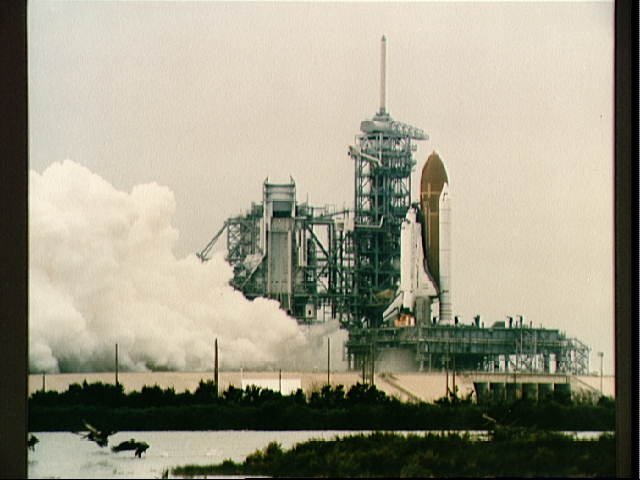
Each Orbiter goes through a series of ‘handoffs’ as it moves through the launch preparation phases. The current mission’s Orbiter, Challenger, landed at Edwards AFB on November 6, 1985, which ended its STS-61A mission. It was then prepped for riding on the back of a Boeing 747 back to Kennedy Space Center (KSC) where it arrived on November 11th. Challenger was then put in the Orbiter Processing Facility (OPF) for just over a month where it was prepped for this mission. On December 16th it was moved to the Vertical Assembly Building (VAB) where the External Tank (ET) and the two Solid Rocket Boosters (SRB’s) were mated to the Orbiter. Six days later (December 22, 1985) STS-51L rolled out to Launch Pad 39B where it is our job to prepare and maintain the ship until it launches next week.

Each ship goes through the same process. To have two launches a month, as is our goal, we will become a factory-like operation that flawlessly performs every duty, every day, 24 hours a day. We will truly be the most unique cargo operation in the world and the most vital for our country. We learn as much science and technology from every launch as the real scientists who fly our ships into space. With every new launch we are revising, updating and perfecting our skills.  Twenty years from now my children will know that their Dad was one of the people who made America the country that has the best, and possibly only, space port in the world! It makes me proud to be a part of history.

15 Days in January – Day 5

18 Wednesday Jan 2012

Posted by Paul Kiser in Fiction, Government, History, Science, Space, US History

≈ Leave a comment

Tags

1986, Challenger, Columbia, NASA, Space Transportation System, STS 61 C, STS-51-L

(NOTE: The following is a fictionalized account of the 15 days in January 1986 leading up to the Challenger Space Shuttle Disaster. The character’s account is fictional; however, the details of weather and Space Shuttle events are based on known historical facts.)

Titusville, Florida
Saturday, January 18, 1986
High Temp: 70° F  Low Temp: 61° F

STS-61C Columbia lands at night at Edwards AFB

Today was a good news/bad news day. The good news was that Columbia is back on Earth. The bad news that it didn’t come home. It’s sitting at Edwards AFB, which means it will add about a week to the turnaround time before it flies again. We just can’t seem to catch a break. The landing took place after dark after they waited as long as they could for a KSC landing attempt.

Our next launch is still scheduled for January 23, and I still don’t know how we can make it. I’m not sure anyone will be ready, but there are a bunch of smart people in air-conditioned rooms that must know more than the rest of us. Of course, Challenger won’t fly if we are not ready.

To give you an idea of the schedule we are looking at, here are the launches scheduled for this year:

1986 Space Transportation System (STS) Missions

  • January 12 (KSC) – Columbia (STS-61C) – Deploying a satellite and experiments (Completed)
  • January 24 (KSC) – Challenger (STS-51L) – Deploying satellites and experiments
  • March 6 (KSC) – Columbia (STS-61E) – Astro 1 mission
  • May 15  (KSC) – Challenger (STS-61F) – Deployment of Ulysses satellite
  • May 20 (KSC) – Atlantis (STS-61G) – Deployment of Galileo satellite
  • June 24 (KSC) – Columbia (STS-61H) – Deployment of 3 satellites
  • July 1 (Vandenberg) – Discovery (STS-62A) – Dept. of Defense mission
  • July 22 (KSC) – Challenger (STS-61M) – Deployment of TDRS-4 satellite
  • August 18 (KSC) – Atlantis (STS-61J) – Deployment of Hubble Space Telescope satellite
  • September 4 (Vandenberg) – Discovery (STS-61M) – Dept. of Defense mission
  • September 27 (KSC) – Challenger (STS-61I) – Deployment of Intelsat-4 satellite
  • September 29 (Vandenberg) – Discovery (STS-62B) – Dept. of Defense mission
  • October 1 (KSC) – Columbia (STS-61K) – Mission information not released
  • November 1 (KSC) – Atlantis (STS-61L) – Mission information not released
  • December (Vandenberg?) – Challenger (STS-71B) – Dept. of Defense mission

One down, 14 to go. 1986 is going to be a big year for NASA!

15 Days in January – Day 4

17 Tuesday Jan 2012

Posted by Paul Kiser in Fiction, Government, History, Science, Space, US History

≈ Leave a comment

Tags

Columbia, NASA, Representative Bill Nelson, STS 61 C

(NOTE: The following is a fictionalized account of the 15 days in January 1986 leading up to the Challenger Space Shuttle Disaster. The character’s account is fictional; however, the details of weather and Space Shuttle events are based on known historical facts.)

Titusville, Florida
Friday, January 17, 1986
High Temp: 72° F  Low Temp: 62° F

STS-61C launches a satellite from cargo bay

For the second day in a row weather caused Mission Control to cancel Columbia’s landing. Weather was better here, but it was cloudy both here and at Edwards. They really have to land it here at KSC if we have any hope of getting the program back on schedule.

I wonder if the suits in the control room are being too cautious. The pilot has some of the most sophisticated navigation tools available in the world and he doesn’t even actually fly the Orbiter until just before the approach and landing. He just monitors the computers, and if he wanted the computers could land it for him. Visibility should not be a reason to wave off a landing.

My guess is the caution is due to the VIP on board. Nobody wants to make a bad call when a politician life is at stake and I’m sure he’s perfectly happy to have extra time in space. Still, we’re not running a tourism service and I think everyone knows Columbia has to get its wheels back on the ground as quickly as possible.

STS-61C Columbia-Representative Bill Nelson peels grapefruit

We are scheduled for 15 missions this year and no one really expects that is possible. I would guess that we could do 12 missions, but even that will not be possible if we keep having these delays. Our next launch is scheduled for next Thursday, but with the delays, I don’t see how we can be ready. 

This year is when we ramp up the program to go from exploring to occupying space. Orbiting outposts that are living and working environments are next in America’s advancement into to space. From there, bases on the Moon and Mars are not far behind. The Space Transportation System (STS) program will pave the way and I’m excited to be a part of it. We just have to get our ‘sea legs’ on launches and landings and it will all fall into place. We have 24 successful STS missions (assuming Columbia ever comes home) and the next launch will be our 25th. Space travel may never be routine, but we’re starting to understand what it will take to be the space port for the world.

15 Days in January – Day 3

16 Monday Jan 2012

Posted by Paul Kiser in Fiction, Government, History, Science, Space

≈ Leave a comment

Tags

Atlantis, Challenger, Columbia, Edwards AFB, Kennedy Space Center, KSC, NASA, Space Shuttle, STS 61 C, STS-51-L, STS-61-B

(NOTE: The following is a fictionalized account of the 15 days in January 1986 leading up to the Challenger Space Shuttle Disaster. The character’s account is fictional; however, the details of weather and Space Shuttle events are based on known historical facts.)

Titusville, Florida
Thursday, January 16, 1986
High Temp: 69° F  Low Temp: 52° F

They waved off the Columbia landing today. Weather conditions here and at the backup landing site at Edwards AFB were unacceptable. It was drizzly here today and cloudy in California. Personally, I think that landing at Edwards should only be an emergency. When an Orbiter lands at Edwards it costs over $1.5 million dollars to get it back here and we lose a week in turnaround time. If we can’t land because the weather at Kennedy Space Center we could wait for several days and still save money and time on the recovery of the Orbiter.

Atlantis (STS-61-B) was the last mission and it landed at Edwards on October 7th and it was October 12th before it was back here. Once it got back here we had the fastest turn around in the history of the program. Atlantis was out to the launch pad by November 12th. Had it landed here at Kennedy Space Center (KSC) it would have been ready to go by November 7th. The only reason to land at Edwards is if the next launch for that vehicle will be from Vandenberg AFB, and our first launch from there isn’t going to happen until July.

STS-61-B Atlantis landing at Edwards on October, 7, 1985

Of course, delays have their costs, too. Every time we scrub a landing or launch we are wasting money because we all get paid whether the Orbiter comes or goes,…or doesn’t. Still, if we are going to prove the value of the program we need to be able to get the Orbiters back in the air as quickly as possible, and that means landing at KSC.

Fortunately, tomorrow will be warmer and hopefully dryer. It should be a good day for a landing. Columbia has been a pain in the neck. It should have been up and down by Christmas and now were almost a month later and still waiting for it to land. Once Columbia is back home we are scheduled to launch Challenger next week.  

15 Days in January – Day 2

15 Sunday Jan 2012

Posted by Paul Kiser in Fiction, Government, History, Public Relations, Science, Space, US History

≈ Leave a comment

Tags

Bill Nelson, Challenger, Columbia, NASA, Space Shuttle, STS 61 C, STS-51-L

(NOTE: The following is a fictionalized account of the 15 days in January 1986 leading up to the Challenger Space Shuttle Disaster. The character’s account is fictional; however, the details of weather and Space Shuttle events are based on known historical facts.)

Titusville, Florida
Wednesday, January 15, 1986
High Temp: 64° F  Low Temp: 43° F

STS-61-C Launch on January 12, 1986

STS-61-C, or Columbia is coming back tomorrow, pending good weather. We should have Challenger ready for launch a week after Columbia lands. It was scheduled for launch at 2:42 PM EST on the 22nd, but when they had to scrub the December launch of Columbia, they moved Challenger’s launch back a day to the 23rd.

Columbia’s main mission was to launch a communications satellite and that was a success. They have had a bunch of experiments, most of them are in the Shuttle bay, but they will have everything wrapped up for tomorrow’s landing.

Personally, I’ll be glad to have Representative Bill Nelson back on the ground. I’m not sure it’s a great idea to have the people who champion our budget in Congress to take the risk of flying in space. One mistake and we could lose all our financial support and the STS program would be over. I guess the PR people must know what they are doing.

Representative Bill Nelson with on board experiment

The next mission (STS-51-L) is also going to be a high-profile flight. We have the first ‘official’ civilian on the Challenger trip. She is our first ‘teacher-in-space.’ I wonder if this is going to be a regular thing from here on out. I understand we need the public’s support and I guess this is the best way to get it. Still, I think people just need to accept that our leadership in space makes us technologically superior here on Earth. Let us do our jobs at NASA and our country will reap the benefits in advanced scientific and engineering knowledge.

We had some fog today, but this morning was a little warmer. Yesterday’s low was too close to freezing for Florida. Our farmers don’t like it when we get that cold. Hopefully, we’ve had our cold snap for this winter.

15 Days in January – Day 1

14 Saturday Jan 2012

Posted by Paul Kiser in Fiction, History, Science, Space

≈ Leave a comment

Tags

Bill Nelson, Challenger, Charles Boden, Columbia, Florida, NASA, Space Shuttle, STS 61 C, Titusville

(NOTE: The following is a fictionalized account of the 15 days in January 1986 leading up to the Challenger Space Shuttle Disaster. The character’s account is fictional; however, the details of weather and Space Shuttle events are based on known historical facts.)

Titusville, Florida
Tuesday, January 14, 1986
High Temp: 63° F  Low Temp: 37° F

STS 61 C Crew - Columbia - Launched January 12, 1986

At least we have Columbia in the air. These delays are frustrating. Columbia was supposed to be launched on December 18th and since then launch attempts on December 19th, twice on January 6th, and January 7th, 9th, and 10th were all scrubbed for one reason or another. Finally, we got them off Sunday. At least the launch went well, but we have Challenger waiting in the wings.

Columbia is supposed to come back on this Friday, the 17th, but that’s going to push back the launch of the Challenger. There’s talk of bringing back Columbia early so we can move up the Challenger launch. Hopefully, we’ll get the official word tomorrow.

Charlie Bolden is the pilot on the Columbia on this flight. This is his first flight. Coincidentally, he’s from Columbia, South Carolina. He was the first guy we put in the slidewire basket to test the launch tower escape system. We didn’t kill him, which is at least on measure that it must work. 

We’ve also got a politician on board the Columbia. Representative Bill Nelson is one of the payload specialists. God I hope nothing goes wrong on this flight. That would put a quick end to the program. For all my complaining I have to say it’s pretty exciting to be part of the launch pad team right now. There’s a lot of pressure, but we’re doing something no one else in the world can do and I wouldn’t trade my job to anyone.

It was chilly this morning. It felt like we were in Denver. I didn’t take my jacket off until late this afternoon. Tomorrow should be warmer and maybe we can get back to more normal temperatures.

Are We Missing an Ice Age? (Part III of III)

21 Monday Nov 2011

Posted by Paul Kiser in History, Science

≈ 16 Comments

Tags

apsidal precession, axial precession, Earth Science, Earth's orbit, eccentricity, Global warming, Ice Age, insolation, Milankovitch Cycles, Milution Milankovic, obliquity, Warm Age

PART III – Should We Be In An Ice Age Now? 

IMAGE 1.0 - The Northern Hemisphere at the end of the last Ice Age (10,000 years ago)

RECAP: In Part I of this series, we looked at how scientists have determined that Earth has experienced regular cycles of cold climates followed by brief periods of warm climates during the last 400,000 years. We learned that the current cycle has been different because the warm period has persisted when past warm climates have rapidly dropped back into a cold climate. We also discussed how the Sun acts as a ‘battery charger’ for Earth’s climate.

Part II of the series explained that Earth’s orbital relationship with the Sun also follows a cyclic pattern and that almost 100 years ago, a Serbian named Milutin Milanković  proposed possible mechanisms related to Earth’s tilt and orbit that could be the root cause of the regular cycle of Ice Ages.

PART III – Should We Be In An Ice Age Now?

No one can say for certain whether or not that we should be in an Ice Age today. Past Warm Ages have typically collapsed back into a cooler period within a few thousand years followed by a complete return to an Ice Age within about 10,000 years. If Earth past climate history is correct then our planet should be in a cooling period, if not into a full-scale Ice Age. Instead, Earth is warming. The Milankovitch Cycles don’t all concur on this issue, but there is some intriguing evidence that suggests we have missed a cooling period based on Earth’s orbit and tilt. 

Consider the factors discussed in Part II of this series.

Orbit Eccentricity or Circular to Ellipse
Our orbit eccentricity is about one-third the way from our lowest level, meaning Earth’s orbit is becoming more circular. It’s cycle is about the same as Earth’s climate cycle, so it could be a significant factor. Interestingly, the eccentric peak of .02 during the current cycle was half to one-third of the peak past three cycles (.04 to .06.)¹ Could that be a factor in the prolonged warm period? Possibly, but why? Earth just passed the peak a few thousand years ago so, does a low peak eccentricity result in a prolonged Warm Age?

Paul Kiser

Obliquity or Earth’s Tilt On Its Axis
Earth is about halfway between our high and low peak tilt angles.  Our planet’s tilt, or obliquity is on an approximate 41,000 year cycle, so we were just passing through our highest peak obliquity at the start of this Warm Period. If high tilt angle is a trigger for a Warm Age, then we should be cooling down, unless obliquity must be coupled with another factor to trigger a cooling period.

Axial Precession or Earth’s Wobble
Earth’s axis wobbles and it takes 26, 000 years to complete one cycle. It is hard to see a connection with the slow regression of the seasons and Earth’s climate, but perhaps the cycle of axial precession couples with another factor to trigger a cooling period, or sustain a Warm Age.

IMAGE 1.1 - Apsidal Precession - The Creep of the Seasons in Earth's Orbit

Apsidal Precession or The Hulu Hoop Effect
Apsidal precession is factor has some interesting possibilities on how it might impact Earth’s climate. Currently the Summer in the northern hemisphere occurs when Earth is farthest from the Sun (aphelion.) Our closest approach to the Sun (perihelion) occurs during Summer in the southern hemisphere.

IMAGE 1.2 Land Masses in the Northern Hemisphere

IMAGE 1.3 - Land Masses in the Southern Hemisphere

Earth’s northern hemisphere is about 40% land and 60% water. The southern hemisphere is about 20% land and 80% water. Land that is not covered with ice absorbs more energy than water because water reflects more of Sun’s energy back into space. In Part II we learned that the hemisphere that is in summer during perihelion receives 23% more solar radiation. Because of the greater land mass, the northern hemisphere will retain more of the summer Sun’s energy in 10,000 years (when perihelion occurs in July) than the southern hemisphere does currently.

From a standpoint of apsidal precession, Earth should be in the coldest period since we are closest to the Sun when the smallest percentage of our land mass will absorb the energy or insolation. 

Orbital Inclination
The tilt of Earth’s orbital plane off of the invariable plane is on a 100,000 year cycle, which coincides with Earth’s climate cycle. Since  higher angles of our orbital plane result in a higher obliquity and magnify the effect of land mass absorption differential between the two hemispheres, it could be a factor in triggering the Ice/Warm Age cycles; however, it is unclear how this factor could contribute to the prolonged warm period.

Are We Missing an Ice Age?
Earth’s climate cycle does not follow a perfect 100,000 year pattern. Most people would be happy if we never went into another Ice Age; however, if we have missed the trigger of the next Ice Age, what does that mean for our climate? Will Earth’s delicate climate balance be ruined leading into a runaway warm period or will the next Ice Age come in a rapid onset like in a disaster movie?

The Sun charges Earth’s climate ‘battery’ and variations in how much solar radiation our planet absorbs dramatically affects the environment for all life. It will be important for scientists to discover what is happening to our climate and why. Life on Earth exists in a narrow band that is not to cold and not to hot and we have no practical methods to reinforce or siphon off the Sun’s energy in a crisis.

While scientists to continue to examine this issue there are other issues that should be considered beyond climate. At least for the past 400,000 years, the Warm Ages have been relatively brief periods. It is during those brief periods of warmth that life has flourished, then the Earth has been cleansed with the next Ice Age. What will happen as insects, reptiles, and bacteria continue to  evolve and expand without an Ice Age to push back their spread across the globe? Is it possible that too much life will threaten human existence?

These are all questions that have to be answered as long as the Earth continues to avoid the next Ice Age.

PART I – Should We Be In An Ice Age Now?

PART II – Understanding the Milankovitch Cycles, Clues to Earth’s Climate Changes

NOTES AND REFERENCES

¹Wikipedia – The Free Encyclopedia. (2011). Milankovitch Cycles. Retrieved November 13, 2011, from http://en.wikipedia.org/wiki/Milankovitch_cycles.

IMAGE CREDITS

IMAGE  1.0 – Image thanks to http://www.space4case.com/mmw/pages/space4case/solar-system/earth/artic.php

IMAGE 1.1 – Image thanks to Wikimedia Commons at http://en.wikipedia.org/wiki/File:Precession_and_seasons.jpg

IMAGE 1.2 – Image thanks to http://www.learner.org/jnorth/tm/humm/WhyComeGlobalGame.html

IMAGE 1.3 – Image thanks to http://www.learner.org/jnorth/tm/humm/WhyComeGlobalGame.html

USA PDT [Twitter: ] [Facebook] [LinkedIn] [Skype: 775.624.5679]

← Older posts
Newer posts →

Other Pages of This Blog

  • About Paul Kiser
  • Common Core: Are You a Good Switch or a Bad Switch?
  • Familius Interruptus: Lessons of a DNA Shocker
  • Moffat County, Colorado: The Story of Two Families
  • Rules on Comments
  • Six Things The United States Must Do
  • Why We Are Here: A 65-Year Historical Perspective of the United States

Paul’s Recent Blogs

  • Dysfunctional Social Identity & Its Impact on Society
  • Road Less Traveled: How Craig, CO Was Orphaned
  • GOP Political Syndicate Seizes CO School District
  • DNA Shock +5 Years: What I Know & Lessons Learned
  • Solstices and Sunshine In North America
  • Blindsided: End of U.S. Solar Observation Capabilities?
  • Inspiration4: A Waste of Space Exploration

Paul Kiser’s Tweets

Tweets by PaulKiser

What’s Up

May 2026
S M T W T F S
 12
3456789
10111213141516
17181920212223
24252627282930
31  
« Jun    

Follow Blog via Email

Enter your email address to follow this blog and receive notifications of new posts by email.

Join 688 other subscribers

Create a website or blog at WordPress.com

Loading Comments...