3rd From Sol

~ Learn from before. Live now. Look ahead.

3rd From Sol

Category Archives: Taxes

Paul Ryan: A Loser’s Legacy

02 Monday Nov 2015

Posted by Paul Kiser in Ethics, Government, Politics, Public Image, Religion, Taxes

≈ 1 Comment

Tags

anti-American, Atlas Shrugged, Ayn Rand, Congress, Congressional Districts, Failure, House Freedom Caucus, House of Representatives, Jack Kemp, Janesville, John Boehner, Loser, Mitt Romney, Paul Ryan, political masturbation, Senator Bob Kasten, Speaker, Wisconsin District One

Paul Ryan can now add Speaker of the House of Representatives to the list of failures. His new position is a trap with no exit and in six to eight months he will realize the mistake he has made, but it will be too late.

Paul Ryan, helped Mitt Romney lose in 2012

Going with a loser for Speaker of the House of Representatives, Paul Ryan

Representative Ryan has a history of association with failure:

  • He joined Senator Bob Kasten staff as a legislative aide in 1992. A few months later Senator Kasten failed to be reelected.
  • He was the speech writer for Jack Kemp, the Republican Vice Presidential candidate in 1996. The Bob Dole/Jack Kemp ticket lost.
  • In 2012, Ryan was selected to be the Republican Vice Presidential candidate for Mitt Romney. He was noted to be the farthest from center of any Vice Presidential candidate, conservative or liberal, since at least 1900. The Romney/Ryan ticket lost.
  • Ryan has been a Representative for Wisconsin since 1998. In that time he as sponsored over 70 bills of which only two have been enacted into law. He was successful in having a Post Office in his District renamed and he was able to have the excise tax reduced on arrow shafts.

Ryan has enjoyed comfortable wins in all of his election wins since 1998, although in 2012, corporations built him a $5.4 million campaign chest, (as of July 25, 2012,) the largest of any congressional candidate, and though he won with 55% of the vote in the district, he only garnered 44% of the vote in his hometown of Janesville, Wisconsin. His district is 90% Caucasian, and has elected the Republican candidate for the last twenty years.

Ryan is also a disciple of Ayn Rand, a writer, philosopher, and playwright that was born and raised in Russia to a aristocratic family that fell from privileged life after the Russian Revolution. Her philosophy of Objectivism assumes that only the people who are currently successful should enjoy the spoils of life and everyone else should not have access to the opportunities of the privileged. This concept is eagerly accepted by the wealthy conservatives who fund campaigns of candidates that seek to substitute our nation’s founders concept of ‘All Being Equal’ with Ayn Rand’s philosophy of a society ruled by privilege.

“They (Native Americans) didn’t have any rights to the land, and there was no reason for anyone to grant them rights which they had not conceived and were not using. What was it that they were fighting for, when they opposed white men on this continent? For their wish to continue a primitive existence, their ‘right’ to keep part of the earth untouched, unused and not even as property, but just keep everybody out so that you will live practically like an animal, or a few caves above it. Any white person who brings the element of civilization has the right to take over this continent.”

Ayn Rand, 1974

There is no doubt that Ryan will continue to be loyal to the extreme right. He is immune to his record of failures in carrying the flag of conservative ideology. 

That makes Ryan the wrong person to put in charge of the House of Representatives. Former Speaker John Boehner was pushed into a corner by the House Freedom Caucus that has paralyzed the House. The Freedom Caucus is a anti-United States band of Representatives from rural districts of Caucasian majority, anti-education, ultra-religious, government-hating voters. The caucus has less than forty Representatives pushing an agenda that is sometimes racist, often disgusting, and always wrong.

Speaker Boehner failed to put this collection of misfits in their place and that led to his resignation. By not accepting the reality that Republicans are in the minority, and that by adding the House Freedom Caucus to gain a majority, Speaker Boehner allowed a third-party of Representatives to pull down the GOP to the level of political masturbation.

Enter Paul Ryan. Speaker Ryan will cater to the House Freedom Caucus which will continue to be a drag on the support of the Republican party. Eventually, Republicans will have to decide whether they can afford to be associated a party that creates a public image of clowns and buffoons. As the 2016 election approaches Speaker Ryan will likely be the leader of an angry mob of Republicans who will be fed up with the shenanigans of a handful of Representatives that he has allowed to ruin the party.

Paul Ryan, Speaker of the House 2015 to 2016.

If I Were Speaker of the House of Representatives

28 Wednesday Oct 2015

Posted by Paul Kiser in Education, Ethics, Government, Government Regulation, Higher Education, History, Honor, Politics, Religion, Respect, Taxes, US History

≈ Leave a comment

Tags

Congressional Districts, Democrats, House Freedom Caucus, House of Representatives, Neo-Republicans, Paul Ryan, Republicans, rural

House of Representatives

This House is Out of Order

It seems that Paul Ryan (R-WI,) has the bid to be the Speaker of the House of Representatives sewn up, but before anyone makes a significant mistake, allow me to offer myself as the alternative choice.

As Speaker, I can guarantee you that the dignity of the United States House of Representatives will be restored. To accomplish this, the following steps will be taken on Day One:

  1. The 38 members of House Freedom Caucus will be declared to be a neo-Republican party, independent of the Republican Party. Anyone joining their caucus will also be declared to be neo-Republicans.
  2. The House will be divided into three parties. The Republicans, the Democrats, and the neo-Republicans. Each will have their own leadership.
  3. Congressional committees will be all be reorganized with the two largest parties determining who will be given a proportional number of members on all committees If a third-party caucus has enough representatives to equal or exceed fifty percent or more of the of the second largest party, the majority leaders of the two largest parties will vote to select one Representative from the third-party to sit on that committee. 
  4. When Congress is in session, the leadership of the two largest parties will meet the first day of the week for breakfast to determine the agenda and issues to be addressed that week. 

That’s it. Four steps to put the House of Representatives in motion again.

The House Freedom Caucus:  The Rotten Apples in the House
The problem in the House is not bad politicians. There have always been bad politicians and always will be in almost every form of government. The problem is that the Republicans have let the worst 38 Representatives to determine what does and does not get done. The have let the House Freedom Caucus bring down everyone to their level because the Republican leadership knows that if they lose the support of these 38 members, they lose their majority.

What the Republicans don’t understand is that they are on the verge of allowing the House Freedom Party destroy the GOP if they don’t rid themselves of these 38 members (36 according to the Pew Research Center.) Here are the members according to Wikipedia and the Pew Research Center:

  • Jim Jordan of Ohio, Chair
  • Justin Amash of Michigan
  • Brian Babin of Texas (Not on the Pew list)
  • Rod Blum of Iowa
  • Dave Brat of Virginia
  • Jim Bridenstine of Oklahoma
  • Mo Brooks of Alabama
  • Ken Buck of Colorado
  • Curt Clawson of Florida
  • Ron DeSantis of Florida
  • Scott Desjarlais of Tennessee
  • Jeff Duncan of South Carolina
  • John Fleming of Louisiana
  • Trent Franks of Arizona
  • Scott Garrett of New Jersey
  • Paul Gosar of Arizona
  • Morgan Griffith of Virginia
  • Andy Harris of Maryland
  • Jody Hice of Georgia
  • Tim Huelskamp of Kansas
  • Raúl Labrador of Idaho
  • Barry Loudermilk of Georgia
  • Cynthia Lummis of Wyoming
  • Mark Meadows of North Carolina
  • Alex Mooney of West Virginia
  • Mick Mulvaney of South Carolina
  • Gary Palmer of Alabama
  • Steve Pearce of New Mexico
  • Scott Perry of Pennsylvania
  • Ted Poe of Texas (Not on the Pew list)
  • Bill Posey of Florida
  • Keith Rothfus of Pennsylvania
  • Matt Salmon of Arizona
  • Mark Sanford of South Carolina
  • David Schweikert of Arizona
  • Marlin Stutzman of Indiana
  • Randy Weber of Texas
  • Ted Yoho of Florida

Rural Districts Running America

Congressional District map for Freedom Caucus membership of the 114th Congress

Congressional District map for Freedom Caucus membership of the 114th Congress (Credit: Wikipedia Commons)

These 38 are Representatives of primarily rural Congressional districts that often feel impotent in the political arena. Residents of rural areas find that their simplistic, socially conservative, sometimes racist, ultra-religious, anti-education view of the United States of America is often ignored because it is contrary to the Constitution and laws of our country. Despite this, residents of rural areas often see themselves as superior to urban residents, even though they lack the knowledge to make informed opinions. This makes them easy targets for unethical politicians to win their vote because rural voters typically listen only to what they wish to hear.  

NEXT:  Paul Ryan’s Legacy of Failure

Rebirth of the Liberal

25 Friday Sep 2015

Posted by Paul Kiser in Education, Ethics, Government, Government Regulation, Green, Health, Higher Education, History, Honor, Passionate People, Politics, Pride, Religion, Respect, Space, Taxes, Technology, Universities, US History

≈ Leave a comment

Tags

anti-American, Bernie Sanders, conservatism, Conservatives, Elizabeth Warren, Liberal, liberalism, liberals, Pledge of Allegiance, President Barack Obama

Liberals, Inc.

Liberals, Inc.

The values and traditions of liberalism in the United States of America is experiencing a Renaissance. This is a not a time for a cautious return to a government by and for the people.  It is a time to boldly stand up for intelligence in political office.

The disastrous policies of George W. Bush, coupled with decades of conservative efforts to put our country in retreat have met with consistent failure. Those failures have forced conservatives to put up artificial issues that appeal to a distinctly anti-American segment of the population, but that has only driven them into a corner.

Conservative politicians strain to win applause from the stupid and the ignorant, but the United States needs and deserves smart, not stupid. Liberals must now step up and engage our citizens and remind them that politics in our country is not to be entertainment for small minds. We have to expose the absurdity of 2015  “conservative values:”

When everyone has guns in public, innocent people die. Gun ownership without rules is anarchy. Laws protect people from those who are too stupid to know better. It’s not about taking guns away; it’s about protecting the innocent from the stupid.

Our government is a blessing, not a curse, and we pay for the privilege of living in this great country by paying our taxes and doing so without complaint.

Unregulated business is the playground of the unethical and immoral. Business is motivated by greed and destruction of competitors. Without government, ethical businesses can’t survive.

If a group of people on an island were running out of fresh water, the liberal mind would determine how to obtain more water, and the conservative mind would begin planning on who they can kill.

The confederate flag is the symbol of racists and traitors who tried to steal part of America away from then attempted to overthrow our country. The confederate flag is a heritage of losers and has no place among a nation of winners.

Government is not a place for religion, nor a country where a majority religion is to dictate the beliefs and morals for all citizens. America is a country that offers freedom FROM religion, not slavery to a religion.

War is the opium for the 2015 conservative. When in doubt the conservative wants to wage war, but war never results in a quick and easy peace. War devastates all involved and it is rarely the leaders who started the war who pay the heaviest price.

The time to coddle the wealthy is past. Money is not the measure of a human, nor does it give special privilege to a person in a country where all citizens are created equal.

For 35 years conservatives have been shouting down common sense and intelligence with false accusations, deceptions, and biased fear mongering. It’s time that loyal Americans regained their voice.

To be liberal is to be an American that loves our country and our government. We believe that all humans are created equal. We believe that our country becomes stronger, not weaker through diplomacy and respect for other countries. We believe that education is the foundation to a better life and schools should be more than a cheap training ground for dead-end service jobs. We believe that when government spends money it provides jobs and needed infrastructure that helps grow our economy.

The call of liberalism is not for everyone, nor is it restricted to one party. Our country’s founders were liberals who broke away from conservatives who wanted to stay loyal to the English King. Republicans were liberal when Abraham Lincoln stood up against domestic enemies that sought to defile our Constitution. Franklin D. Roosevelt was liberal when he made our citizens believe in the greatness of our country. Dwight D. Eisenhower was liberal when he made the Interstate Highway System a reality. John F. Kennedy was a liberal when he said we could go to the Moon and back.

Elementary school children can grasp the values of conservatives. The egocentric concept that everyone else exists to serve their needs is a common attitude of children and conservatives.

However, it takes significant maturity and intelligence to understand liberal values. It requires the person to see themselves as part of a greater society. A liberal knows that respect, cooperation, humility, and honor cannot be compromised for a free society to function. Our original 1942 Pledge of Allegiance reinforced these values:

I pledge allegiance to the flag of the UNITED States of America, and to the REPUBLIC for which it stands, ONE NATION, INDIVISIBLE,  with liberty and justice FOR ALL.

We are a republic, not an oligarchy. We are one nation that shall not be divided. We shall have liberty and justice for all, not just for those with the most money, nor the most guns. 

We are a nation founded by liberals, built by those who believed in “Yes We Can.” Liberal ideals have been a part of every great achievement in our country. Conversely, conservative leadership has maligned and crippled this nation. It’s time we took our country back.

Republicans Deal With The Devil

20 Thursday Aug 2015

Posted by Paul Kiser in Ethics, Government, Government Regulation, History, Opinion, Politics, Religion, Taxes, US History, Women

≈ 2 Comments

Tags

anti-American, civil war, confederacy, Confederate Flag, Conservatives, GOP, hate, President Lincoln, racism, Republican, Southern Democrats, the Confederate States of America, The South, traitors

Confederate flag

Republicans have a major problem. They are not the majority in the United States. They have managed to win congressional elections, and lesser political offices by convincing true conservatives and anti-Americans that they have the same goals. That strategy has worked because the anti-Americans originally were silent partners in the alliance and were easily led by true conservatives.

The problem is that the anti-Americans have managed use the Republican party to legitimize their 150 year effort to take over America and remake it in their image. That effort started when the white Southern Democrats were determined to make slavery the law of the new territories and they declared that if Abraham Lincoln (a Republican, ironically) were elected as President they would abandon the United States of America. The white, male, landowners of the South said they would disgrace our flag, country and Constitution by creating a new country where all men would not be equal all because their candidate lost the election.

What many Americans do not know is that the Confederacy lied. They were not content with stealing a handful of states and declaring themselves as a new country. Had that been their goal the Civil War would not have occurred. Lincoln was ready to let the six states abandon our country and be done with them.

However, after seceding, the Confederate States of America began attacking our country and sought to destroy the United States of America. Their intent was clearly to conquer us and put our citizens under their autocratic rule.

To defend our country, President Lincoln moved troops in to protect the capital but they were attacked in Baltimore by anti-Americans who attempted to disrupt the our military by operating inside our country. The result forced us into the Civil War.

The Confederate States of America incorrectly assumed that we would surrender rather than fight. That miscalculation not only caused them to lose the war, but also left them without a country. After the war the white, anti-Americans continued to behave as if they were not subjects to the United States of America, nor did they recognize African-Americans as equal despite laws that demand it.

One hundred years after the Civil War the anti-Americans were confronted by citizens who would no longer tolerate their lack respect to our Constitution and the rule of law. They continued to defy and disgrace our country and we were once again required to send troops into the South to force their compliance.

Making violent threats is part of anti-Americanism

Making violent threats is part of anti-Americanism

Today they still maintain their defiance against America and our Constitution. They retain loyalty to the defeated Confederate flag, and seek to end American government. For the most part, our country has tolerated the anti-Americans and allowed them to use their right of free speech to disrespect our government and our country. 

But over the last four decades Republicans, defeated by scandals and failed leadership, have sought to lure the vote of anti-Americans by promoting white supremacist ideals. Among the concepts promoted by Republicans have been a hate for minorities, claiming a religious doctrine that enshrines white males as dominant, pushing for absolute gun ownership that puts military weapons in private hands, interpreting the Constitution to use militias as a means to overthrow America, and promoting an ultra-patriotism that ironically claims that people who seek to overthrow America are patriotic. By using these tactics the Republicans have been successful in capturing the loyalty of the anti-Americans and that has kept the party viable. 

Unfortunately, true conservatives have lost control of the Republican party to the anti-Americans. Now, a candidate has to practically pledge allegiance to the Confederate flag to be a viable candidate. Republican candidates must also pledge to bankrupt the government of the United States through no-taxes promises. 

The result has created chaos in the Republican party. Like a shark feeding frenzy, anti-American candidates are leaping into the political arena sensing that this is their moment to be the Jefferson Davis of the 21st century. 

Yet, America is still not ready to be overthrown. The last two Presidential elections have demonstrated that loyal American still have a majority, Now the Republican party is faced with two opposing facts. A true conservative cannot win the nomination as the Republican Presidential candidate, and an anti-American candidate cannot win the election. Republicans have to find a way to thin the frenzy, eliminate the anti-American candidates, and find someone who can appeal to moderate voters, conservatives, and anti-Americans.

Next:  The Trump Card 

Common Core: Are You A Good Switch Or A Bad Switch? Part III

25 Wednesday Mar 2015

Posted by Paul Kiser in Aging, College, Education, Ethics, Generational, Government, Government Regulation, Higher Education, History, Internet, parenting, Politics, Pride, Public Image, Public Relations, Science, Taxes, Technology, Universities, US History

≈ Leave a comment

Tags

Common Core, Conservatives, conspiracy, funding, math, parent protests, reading, Republicans, school districts, school funding, teachers, Teaching, writing

PART III:  An Answer to the Question:  Good? or Bad?

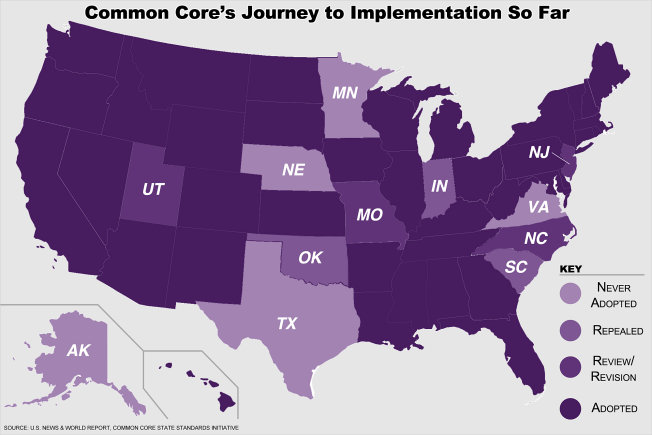
Implementation of Common Core/US News and World Report

Implementation of Common Core

THE VERDICT
In the past year significant political forces have targeted Common Core. The protests have been at near hysterical levels in many communities around the country. The complaints about Common Core are as follows:

  • Standards create a factory-like environment that attempt to put all students in one ‘box.’
  • Teachers focusing on test scores, not educational achievement
  • Parents don’t understand math methods
  • United States history under Common Core is un-American because it includes both positive and negative aspects of the history of our country
  • A belief that parents should define school curriculum, not the school, district, state, or federal government
  • A belief that President Obama is behind the implementation of Common Core and other conservative conspiracy theories

Many of the issues have been generated by conservative voices after a push by Republicans during the past election cycle to ignite anger and votes against public education. Almost all of the complaints would have occurred from any attempt to improve and refine American educational techniques, especially when those improvements involve standardization for all American schools.

If you believe that setting minimum standards in reading, writing, and math is bad, then Common Core is bad. If you believe that children in your community should graduate with similar skills to other students around the country, then Common Core is good. If you believe that a high school degree should be the end of a person’s education, then Common Core is bad. If you believe that every student should receive an education that would prepare them for college, then Common Core is good.

THE REAL PROBLEM
Despite the politicizing of Common Core, there is a real issue in implementing any change in education. Funding.

Any business that seeks to upgrade or improve their methods knows that there is a real cost to any change. Yet, even smart business people seem to forget that to improve our educational system requires a major funding commitment. It takes money to research and establish new programs. It takes money to train school districts, principals, and teachers. It takes money to create new teaching materials, and it takes money to educate parents.

What Common Core is missing is the funding needed to make it a success. Until we can accept the fact that a commitment to education requires a commitment to funding, then we will continue using 20th educational techniques in a 21st century world. America’s efforts to update our educational system will cost money and Common Core is a victim of a society that has abandon quality education because it costs too much.

THE HYSTERIA OF THE LOUDEST VOICES
Unfortunately, Common Core lost a lot of support in the past twelve months. Much of that was due to the political rhetoric during last year’s campaigns, but some teachers are also pulling back support. This is not surprising. As parents become more vocal in opposition, few teachers are willing to oppose parent sentiment even if they are wrong.

Common Core is not a perfect educational system, but it does attempt to better prepare America’s children for a higher level of achievement. Most of the real issues can be resolved with better funding. Just as a school built in the 1950’s is no longer relevant for 2015, education methods of the pre-information era are not relevant today. Our population is continuing to increase and the skills our children must have to thrive as adults are going to advance. Education is going to be expensive, but if we don’t pay now, we will pay more later.

PREVIOUSLY:  Part I:  A Primer in American Education 
                            Part II:  What is Common Core?

Common Core: Are You A Good Switch Or A Bad Switch? Part II

25 Wednesday Mar 2015

Posted by Paul Kiser in Aging, Business, College, Education, Ethics, Generational, Government, Government Regulation, Higher Education, History, parenting, Politics, Public Image, Public Relations, Taxes, Technology, Universities, US History

≈ Leave a comment

Tags

Asian learning methods, Common Core, K-12, learning, math, mathematics, New Math, No Child Left Behind, parent involvement in school, parent reactions, students

PART TWO: What is Common Core?

Cartoon in Chicago Tribune about parent reaction to Common Core

Cartoon in Chicago Tribune about parent reaction to Common Core

The Third Generation of Standardized Education
The basic premise of the George W. Bush (43rd President) administration’s No Child Left Behind (NCLB) mandate was that reading, writing, and math are fundamental to all learning. This is a sound concept; however, these basic skills cannot supplant other subjects traditionally taught in K-12 schools, nor can they be isolated from those subjects. Our society, both business and personal interactions, require an adequate understanding of a wide variety skills and knowledge that exceed the basic skills of reading, writing, and math.

Common Core is an attempt to refine the concept of NCLB by creating standards for all schools that focus on reading, writing, and math, but it also folds these skills into other subjects that impact personal success in the 21st century. Common Core emphasizes teaching methods and outcomes, but leaves it to the State, school district, and school on how to incorporate the program into the curriculum.

Why Some Parents Dislike Common Core Math
Some of the methods adopted by Common Core have angered parents and politicians. In particular, the approach to teaching math. The math issue centers on bewildered parents who don’t understand the revised math teaching methods and why equations seem to be more complicated than when they attended school. The assumption by parents is that whatever they were taught is good enough for their children; however, that is not necessarily true.

Almost every adult in this country was taught that the symbol for a number (e.g.; ‘7’) was everything we needed to know about the number that it represents. We were taught to memorize how the symbol ‘7’ multiplied by the symbol ‘9’ equals the symbol ’63.’ That teaching method does not mean that the student understands that ‘7,’ ‘9,’ and ’63’ are symbols representing a group of objects. 

This is a subtle, but important understanding in math functions. The equation ‘7 x 9 = 63,’ means that we are taking a group of seven objects, adding eight more groups of seven, and determining the total of objects. That is much more complicated than just memorizing that 7 x 9 = 63, but it helps us realize that multiplication is a shortcut to manually counting out 63 objects individual, rather than grouping them.

The weakness of memorization of relationships between symbols also creates confusion as a student moves into higher mathematical equations. In algebra, geometry, and calculus the numeral symbols become less relevant. For example, X = (X+1) and Y = (X-3) can be confusing because ‘X’ stands for EVERY number.

The Credit Card Example
A man is given ten credit cards, but he is NOT told that each credit card represents an amount of money in the bank and, that if used, the money is replenished the next day. He is told how to use each credit card. One card is to buy gas, one to use at the grocery store, etc. Today, he’s at the gas station and it so happened that two of his friends are already there. He decides to pay for his friend’s fuel, which they appreciate. They go on their way, but when he tries to pay for his fuel, the credit card is declined. He didn’t understand that the card represented a limited amount of money, he just assumed it could be used for any amount of fuel. That is similar to how math has been taught in the past. We may have known what to do with the numbers (symbols,) but we may not have fully understood that numbers are just symbols.

Good News, Bad News
Parents objections to the new math teaching methods are a good sign that our children are gaining a deeper understanding of mathematics than their parents did in school; however, parents need to be able to assist their children with homework.¹ This means parents need to be taught the new methods, but few if any schools have developed programs to teach parents because there is no funding available to accomplish the task.

Who Came Up With the Common Core Math Techniques?
Despite the belief that Common Core math techniques were invented in the past few years, the techniques were modeled off educational programs in certain Asian countries where they have been more successful at preparing students for college. In 2009, a coalition of State Governors and Educators worked together to build an educational program that would serve as a ‘best practices’ guide for American schools, which was the birth of Common Core.

NEXT:  Part III:  An Answer to the Question – Good? or Bad?
PREVIOUSLY:  Part I:  A Primer in American Education 

¹Most studies indicate that students perform better when parents are involved in their children’s education. At the very least it indicates to the child that their parents place a high value on becoming educated.

Common Core: Are You A Good Switch Or A Bad Switch? Part I

24 Tuesday Mar 2015

Posted by Paul Kiser in Aging, College, Education, Ethics, Generational, Government, Government Regulation, Higher Education, History, Information Technology, Internet, parenting, Politics, Pride, Public Image, Public Relations, Taxes, Universities, US History

≈ Leave a comment

Tags

classroom, college graduates, Common Core, Education methods, federal mandates, George W. Bush, graduation rates, high school graduates, job standards, K-12, NCLB, No Child Left Behind, President Barack Obama, Race to the Top, school districts, school vouchers, students, teachers, Teaching, Teaching methods, Teaching standards

School's should welcome diversity of ideas but shouldn't tolerate political agendas

School’s should welcome diversity of ideas but shouldn’t tolerate political agendas

PART I: A Primer in American Education

Who’s Afraid of Common Core?
Education in America is often the centerpiece of someone’s agenda, and the newest chapter of the how-to-fix-our-schools controversy is called Common Core. Conservatives have apparently decided that Common Core is the path to Satan. Liberals have reservations about Common Core because it smacks of a factory-like environment that assumes every student and school is the same.

The problem is that the most vocal critics of Common Core have no authority to speak on effective educational methods. Common Core is a significant paradigm shift in education, and opinions of untrained, uneducated, unhelpful ‘experts’  do nothing to move forward the debate on how best to prepare our children for Life 3.0.

The Cost of Achievement
In 1950, only one-third of the population in the United States had a high school degree or better, and only six percent had a college degree or better. In 2010, almost ninety percent of Americans had at least a high school degree, and thirty percent had at least a college degree. That increase is impressive, but what is astounding is that in the same sixty year time frame, America’s population doubled. 

To accomplish that feat cost money. A lot of money. As the bandwagon to attack government spending gained steam, education loomed large in the sights of conservatives. The real cost of the success of American educational achievement has been to become a target of the post-Reagan  agenda.  

Public school in Panama: Seeking to achieve the American dream

Public school in Panama: Seeking to achieve the American dream

A Historical Perspective
In the pre-Information age, schools were isolated in their own districts. How well the students of any given school performed was a local issue, not a state or national issue. In addition, a relatively small percentage of students sought out a college degree, and there were few school districts keeping track of college bound students.

The goal for most school districts in the 1960’s, 70’s, and 80’s was graduate as many students as possible, which sometimes opened the door to unethical practices, such as giving diplomas to students who clearly did not meet reasonable expectations (ability to read, write, etc.) to graduate.

However, by the 1990’s, the idea that all schools in the United States should be able to measure academic success through a unified set of academic standards began to take hold. As the Internet became the backbone of our society, the resulting information explosion forced us to accept that adequate math and reading skills were vital for success as an adult in a technologically advanced society. 

First Generation of Educational Standards
By the beginning of this century, plans had been put into motion to establish a set of educational standards for all schools and testing of all students to determine a school’s success or failure. Under President George W. Bush, the No Child Left Behind Act of 2001 (NCLB,) was mandated and it required States to establish standardized testing, teacher qualifications, and annual academic progress reporting. This was one of the most sweeping federal intrusions into public education. The primary focus of NCLB was to improve reading, writing, and mathematics in schools nationwide, while allowing States to establish the educational standards that would have to be met.

The catch was that rather than investing in those schools that needed help, No Child Left Behind focused on punishing schools that didn’t meet the artificial standards. Almost ever reputable educational review of NCLB  has given it a failing grade. Some of the reasons are as follows:

  • The emphasis on reading, writing, and math during a time when States were cutting funds for kindergarten through twelfth grade (K-12) created a shearing effect on other programs (language, history, music, arts, etc.) as money had to be reallocated to the studies under the NCLB Act.
  • Politicians had little understanding of education and the variables in a classroom environment and they attempted to apply factory-like operations to school systems that failed to address the real issues that impact the ability to learn.
  • NCLB assumed that teachers were mostly at fault for poor educational performance and politicians sought to intervene by imposing punishments for schools rather than actually acting in the best interest of the students.
  • The education of higher performing students was sacrificed in order to devote more resources for the poorer performing students.
  • Students with special needs were not excluded from the testing standards creating a population of students that automatically counted as failing against the school.

Educational Standards – Second Generation
Soon after taking office, the Obama administration began to move away from NCLB by introducing “Race to the Top.” This program flipped NCLB by seeking to reward States for adopting standardized programs rather than punishing them for not meeting federal standards. States competed for additional federal education funding; however, not every State rushed to play the game that offered no guarantee of financial carrot at the finish line.

The most searing problem with Obama’s Race to the Top program may have been the requirement that a teacher’s performance had to be linked to the student’s test scores. This concept of Pay For Performance suggests that teaching professionals must be threatened with a financial stick, forcing teachers to teach students to be successful on the tests by sacrificing all other educational values. It also discourages teachers from working with groups of challenging students who will not be able to produce the test results of more privileged and economically stable students.

NEXT:  Part II:  What is Common Core?
To be published Wednesday, 25 March, 0700 PDT/1400 UTC

NEXT NEXT:  Part III:  An Answer to the Question – Good? or Bad?
To be published Wednesday, 25 March, 1200 PDT/1900 UTC

Epilogue : The 2010’s

20 Friday Mar 2015

Posted by Paul Kiser in Aging, Business, College, Communication, Education, Ethics, Generational, Government, Government Regulation, Health, Higher Education, History, Honor, Information Technology, Internet, Politics, Pride, Public Image, Public Relations, Religion, Respect, Science, Social Interactive Media (SIM), Social Media Relations, Space, Taxes, Technology, Traditional Media, Universities, US History

≈ Leave a comment

Tags

Caucasian, college graduates, Conservatives, Equality, GDP, high school graduates, poor, racism, racists, Reagan agenda, Republicans, Ronald Reagan, The 1%, un-wealthy, wealthy, White politicians

The 2010’s – End of Civility

Image credit: J. Scott Applewhite/AP.

White Conservatives: “Go F**k Yourselves America”

  • Population:  308.7 million
  • Gross Domestic Product (GDP) per capita:  $47,805
  • Median Annual Income:  $47,793 
  • Life Expectancy:  78.7
  • Average Age at Marriage:   Men 28.2, Women 26.1
  • % of pop. w/high school degree or higher:  87.0%
  • % of pop. w/college degree or higher:  30.0% 

REAGAN:  The Killer of America’s Prosperity
From 1950 to 2010 the population of the United States of America doubled (+104.0%.) The Gross Domestic Product (GDP) tripled (+218.1%.) The median annual income is eleven times more than 1950 (+1028%.) Life expectancy has increased by over 15% (15.4%.) Men AND women are marrying an average of over five years older in 2010 than they did in 1950 (men +23.7%, women +28.6%.) The percentage of people with at least a high school degree is now almost 90% versus 34% in 1950 (+153.6%.) Today, 30% of our citizens have at least a college degree versus 6% in 1950 (+383.9%.)

Something went right for America in the last 60 years. But that is changing.

Prior to the Great Depression, Republicans controlled the House and Senate for the majority of the previous 70 years. After the Great Depression both the House and Senate was under Democratic control until 1980. In 1980, America began folowing the conservatives agenda (Reagan 1980-1988, Bush 41 1989-1992, Republican control of Congress 1994-2008) of dismantling the government at all levels, start more wars, give more money to the wealthy, and give less help for the un-wealthy. Since 1979, the wealthiest 1% after-tax income has increased by 200%.

U.S._Income_-_Changes_by_Income_Group_1979-2011

The 1% are 200% wealthier since conservatives took control of the government

Since 1980, annual increases in U.S. Gross Domestic Product (GDP) has stalled and fallen.

GDP Growth by Year

ANNUAL GDP GROWTH: Post World War II, U.S. annual GDP began a steady growth until shortly after Ronald Reagan became President.

GROWTH SACRIFICED FOR GREED
Post-war prosperity was spurred by significant federal government projects and programs. Conservatives derailed that by blaming government for economic issues that were caused by corporate and business greed.

Despite the obvious failure of the Reagan agenda, conservatives have taken a position of complete denial and fantastical thinking. They no longer believe they have any obligation to acknowledge or respect the rest of America. Conservatives are behaving as a child would behave when they are not getting their way, even though their request is completely inappropriate. Rather than accepting that President Obama was elected twice by a majority of Americans, Republicans have blocked all efforts to move forward on measures proven to generate American prosperity because it would make those that have more, give more.

Reagan conservatives have failed and they are backed in a corner of failure. They will not accept reason, nor facts. Civility would force them to accept their failure, so they must be uncivil. They are willing to destroy America, rather than acknowledge failure.

WHY ARE WE HERE?
America has experience massive change in the past 65 years. Most of that change has been good, but the one aspect of the American concept, the idea that we are all created equal, is the one issue in our country that has cast a shadow over us for centuries. White males believe that they are superior to all others and as our demographics have changed Caucasians have worked to obstruct equality rather than accept it.

Segregation was not considered racist until it became obvious it was motivated by whites who were racist. Dismantling government programs that benefit the poor and those in need may not be considered racist, until we realize that these ideas have been pushed forward almost exclusively by white politicians. Telling America that the rich are too burdened to pay a fair share of their taxes is not considered racist until you examine the loop of rich white people giving money to white politicians to pass laws that will reduce taxes on the wealthiest who are almost all white.

America is a country that has yet to commit to everyone being equal. In the 1950’s, white people took their money and ran away to the suburbs. In the 1960’s, the federal government finally stepped in and paid attention to the unequal treatment of African-Americans. In the 1970’s, we became distracted by unethical leaders, war, oil shortages, and inflation. In the 1980’s, we were conned into the idea that our government was to blame for all our problems in the 1970’s, while the Reagan spent money that America didn’t have to spend. In the 1990’s, the conservatives regained control of Congress and began dismantling the federal government and ending ethical business oversight. In the 2000’s, Republicans led America down a path of war and destruction that almost wiped out our economic system.

Why we are here is because we have become weak. We have listened to fools and we know they are fools. They are willing to tear America apart for greed and their own racist ideals. To a racist, compromise is unthinkable, and that is why conservatives will never work towards a unified nation.

THE SERIES:  The 1950’s    The 1960’s    The 1970’s    The 1980’s    The 1990’s    The 2000’s    

This is Why (2015 vs the 2000’s)

19 Thursday Mar 2015

Posted by Paul Kiser in Aging, Business, College, Communication, Crisis Management, Education, Ethics, Generational, Government, Government Regulation, Health, Higher Education, History, Honor, Information Technology, Internet, Politics, Pride, Print Media, Privacy, Public Image, Public Relations, Religion, Respect, Science, Social Interactive Media (SIM), Social Media Relations, Space, Taxes, Technology, Traditional Media, Universities, US History

≈ 1 Comment

Tags

2004 Tsunami, 9/11, Afghani, Amazon.com, Anthrax, Assault weapons ban, Conservatives, Election 2000, Facebook, Florida vote counting, George W. Bush, Global Financial Disaster, Global warming, Hurricane Katrina, Iraq, Mars, NASA, Opportunity, Pope John Paul II, President, President Barack Obama, Republicans, Rovers, Saddam Hussein, Smartphone, Space Shuttle Columbia, Spirit, Supreme Court, Texting, Twenty-ohs, Twitter, Virginia Tech Massacre, Wikipedia, YouTube

The 2000’s – The Defeat of America

Decade of Fear: Y2K, 9/11, WMD's, Katrina, Banking Collapse, Unemployment, Global Warming, Putin, ISIS

Decade of Fear: Y2K, 9/11, WMD’s, Katrina, Banking Collapse, Unemployment, Global Warming

  • Population:  281.4 million
  • Gross Domestic Product (GDP) per capita:  $44,492
  • Median Annual Income:  $40,703
  • Life Expectancy:  76.8
  •  Average Age at Marriage:   Men 26.1, Women 23.9
  • % of pop. w/high school degree or higher:  80.4%
  • % of pop. w/college degree or higher:  24.4% 

TWENTY OH’s
If the 1990’s were a seismic event of technological and social change, the twenty-oh’s is when the tsunami of change hit. Had nothing else happened but the advancement of the Internet, the changes by that alone would have drastically remade the world as we knew it; however, the twenty-oh’s were not content in merely redefining society and the way we communicate, the first decade of the new millennium was going to do an extreme makeover of all our expectations in life. Here are twenty things that made us say Oh!

  1. Y2K, the disaster that never came (Jan. 2000)
  2. Elections of 2000
    1. Florida election fiasco (Nov./Dec. 2000)
    2. Supreme Court appoints George W. Bush as President (Dec. 2000)
  3. Attacks of September 11, 2001
  4. Anthrax letters
  5. Wars of Just Because
    1. Afghanistan (2001-2014)
    2. Iraq (2003-2011)
  6. Rise of Smaller and Smarter Technology (Entire Decade)
    1. Smartphone
    2. Texting
  7. Space Shuttle Columbia destroyed on reentry (Feb. 2003)
  8. Mars Rovers bounce to successful landings and missions
    1. Spirit (June 2003)
    2. Opportunity (July 2003)
  9. Saddam Hussein captured (Dec. 2003)
  10. Assault weapon ban expires (Sept. 2004)
  11. Online Wonders
    1. Amazon.com
    2. Facebook
    3. Twitter
    4. Google
    5. YouTube
    6. Wikipedia
  12. Indian Ocean Earthquake/Tsunami (Dec. 2004)
  13. Pope John Paul dies (Apr. 2005)
  14. Global Warming
  15. Hurricane Katrina (Aug. 2005)
  16. Virginia Tech Massacre (Apr. 2007)
  17. Global Economic Disaster (2007-08)
    1.  Financial giants collapse
    2.  Housing market collapses
    3. Auto industry collapses
    4. Massive unemployment
  18. Price of gas soars, and falls….as a function of conservative politics
  19. Barack Obama elected as President (Nov. 2008)
  20. Nuclear weapons
    1. Iraq
    2. North Korea

The Twenty-oh’s began with the most bizarre Presidential election in American history, followed by the most shocking attack on American soil since Pearl Harbor, followed by two United States initiated wars that would be fought simultaneously, followed by the loss of the Space Shuttle and its crew on reentry to Earth, followed by an earthquake/tsunami that would kill almost a quarter of a million people in 14 countries in one day, followed by a massacre at Virginia Tech, followed by a near meltdown of our global financial system, followed by an African-American being elected as President.

THE GREAT CONSERVATIVE FAILURE
Despite all that happened, it was politics that defined the 2000’s. Keeping with the two-faced Reagan policy of “America Can’t” and money must be taken from the poor and given to the rich, President George Bush took the cost of running two wars off the books so that he could look like he was cutting government spending when he was, in fact, putting the government deeper in debt and running massive deficits.

Behind the scenes, a decade of conservative-driven deregulation in the financial industry created a bad debt bomb that exploded in 2007-08. Almost overnight, America’s economy was devastated by greed and a lack of common sense. People who saw the disaster coming took the attitude that everyone else was unethical, so why should I be the only good person? When the curtain fell on Wall Street, Republicans, who created the environment for the disaster, quietly stepped away and whistling as if they were unaware there was a problem.

Bush 43, was completely out of his league in dealing with the problem. To repair the damage to our economy would require taking actions that was would essentially prove that the Reagan doctrine was the cause of the disaster, and President Bush was not willing to take the necessary actions. Fortunately, Barack Obama had just been elected and, with Bush impotent in action, the 44th President stepped up and began to manage the crisis and establishing a plan of recovery.

The Republican caused disaster did not cause conservatives to humbly acknowledge their failure, but rather pushed them to further deny the facts. As the economy began recovering, conservatives began blaming Democrats for not making the recovery happen faster. As conservative predictions of Democratic policy failure began to be proven wrong, conservatives began raising absurd and meaningless issues to redirect people’s attention (e.g.; Obama was not an American, Obama was a Muslim, Obama had a secret plan to take everyone’s guns away, etc.) 

Because the Reagan doctrine was based on white, 1950’s suburban thinking, the hate for President Obama came naturally to the white, male voter. Instead of a political correction for the failed Reagan agenda, conservatives became even more rabid and illogical. By the end of the decade America was heading for defeat at the hands of conservatives who had taken away American prosperity and were unwilling to accept any idea that didn’t match their failed version of the world.

NEXT:  Epilogue

THE SERIES:  The 1950’s    The 1960’s    The 1970’s    The 1980’s    The 1990’s

This is Why (2015 vs the 1990’s)

18 Wednesday Mar 2015

Posted by Paul Kiser in Aging, College, Communication, Crisis Management, Education, Ethics, Generational, Government, Government Regulation, Health, Higher Education, Honor, Information Technology, Internet, Politics, Religion, Respect, Science, Space, Taxes, Traditional Media, Universities, US History

≈ Leave a comment

Tags

1990's, Americans with disabilities act, Bill Clinton, Congress, Contract With America, George H. W. Bush, healthcare reform, Immigration, immigration laws, Manuel Noriega, NAFTA, World Wide Web

The 1990’s – A World Turned Upside Down

An Explosion of Change

  • Population:  248.7 million
  • Gross Domestic Product (GDP) per capita:  $35,145
  • Median Annual Income:  $28,149
  • Life Expectancy:  75.4
  •  Average Age at Marriage:   Men 26.1, Women 23.9
  • % of pop. w/high school degree or higher:  77.6%
  • % of pop. w/college degree or higher:  21.3% 

POLITICS:  The Clean Up Man
George H. W. Bush was sworn in as President on January 20, 1989, as the 41st President of the United States. Having served as Vice President under Ronald Reagan, he was loyal and didn’t interfere with President Reagan’s destructive agenda. As President he then was left to clean up the messes created by Reagan and deal with new problems. Despite all that he had to deal with, President Bush managed to restore some of what Reagan had destroyed. This angered extreme conservatives who then refused to support him in his second term election.

Bush dealt with 1) an inflated deficit left by Reagan, 2) a revenue shortfall that required higher taxes, 3) restoring democracy in Panama and capturing Panamanian leader Manuel Noriega, and, 4) liberated Kuwait and drove Saddam Hussein’s Iraqi army back in a humiliating defeat. In addition, President Bush pushed through Americans with Disabilities Act of 1990, the North American Free Trade Agreement, and the Immigration Act of 1990, that opened the borders for a 40% increase in legal immigrants. He maintained a conservative stance on most issues; however, President Bush did not hesitate to act against Wacko conservatives. When the National Rifle Association (NRA) sent out material slandering Federal Agents as “Thugs,” he ended his lifetime membership to the organization.

POLITICS:  Clinton’s Capitulation
From a political standpoint, the Presidency of Bill Clinton was a study in contrasts. His election was considered a victory for Democrats and liberals, yet he constantly compromised his positions to pacify aggressive conservatives. Almost all efforts for additional programs to help Americans in need, including healthcare reform, failed to move forward during the Clinton administration. Conservatives, who were disappointed at Bush 41’s rollback of Reagan’s efforts to dismantle the federal government, were determined to win Congress and reignite the agenda that favored white and wealthy Americans.

In 1994, conservative Republican Newt Gingrich was elected on the basis of his Contract With America. This document (co-authored with Republican Representative Dick Armey) outlined several reasonable goals to bring more accountability to Congress and the government, but was laced with several goals that followed Ronald Reagan’s vision to cut funding and eliminate the government’s role of overseeing fairness in business. President Clinton was faced with vetoing all legislation, or caving in to conservatives. In his 1996 State of the Union address Clinton delighted conservatives when he announced that “the era of big government is over.” 

As a result of Clinton’s capitulation, many laws were passed in his second term that continued Reagan’s destruction of good government. The financial disaster in 2007-08 can be directly traced to legislation passed and/or repealed in the 1990’s during the Clinton administration. Congress removed federal government eyes off of key areas of financial interactions. The laws and rules that had set standards on key banking and investor interactions were eviscerated allowing a ‘no questions asked’ environment. The natural evolution of this environment was for greed to take priority over common sense, which is exactly what happened.

THE SEISMIC EVENT IN PERSONAL COMMUNICATION
Outside of the political landscape, the rest of America was becoming comfortable with the concept of owning ‘personal’ computers, and the new World Wide Web offered to interconnect computers creating a digital network of communication. It’s hard to overstate the impact of the marriage of computers and the Internet. It turned everything we knew upside down. Consider the following:

  • While personal computers increased the efficiency of certain tasks, it was the computer hooked into the Internet that made world-wide instant communication and sharing of information commonplace.
  • Television, radio, and newspapers shaped the public perception of world events until the Internet gave access to massive numbers of people who often had more timely information than traditional news media sources.
  • Younger generations adapted quickly to the possible uses of the Internet while older generations scoffed at its impact. As young generations rode the tide of the Internet, Older generations were left aground, looking foolish and ignorant.
  • Unethical governments and corporations would discover too late that their version of events would be exposed as lies and distortions by citizens who had access to the truth and shared it through the Internet. It literally brought down some governments.

The tsunami of change caused by the Internet wouldn’t hit the world until the next decade, but the earthquake of the Internet was felt in the 1990’s.

NEXT:  The 2000’s

THE SERIES:  The 1950’s    The 1960’s    The 1970’s    The 1980’s    Epilogue

This is Why (2015 vs the 1980’s)

15 Sunday Mar 2015

Posted by Paul Kiser in Aging, Business, College, Communication, Crisis Management, Education, Ethics, Generational, Government, Government Regulation, Health, Higher Education, History, Honor, Politics, Pride, Public Image, Respect, Space, Taxes, Technology, Traditional Media, Universities, US History

≈ Leave a comment

Tags

1980, 1980's, Afghanistan, American Hostage Crisis, civil war, Cold War, Communism, FBI informant, George Bush, Grenada, Iran, Iran-Contra, Lebanon, Libya, Middle East, patriotism, Ronald Reagan, Russia, Soviets, USSR

The 1980’s – Political Con Game

President Ronald Reagan:  Actor, Cowboy, FBI Informant

President Ronald Reagan: Actor, Cowboy, FBI Informant

  • Population:  226.5 million
  • Gross Domestic Product (GDP) per capita:  $28,957
  • Median Annual Income:  $16,354
  • Life Expectancy:  73.7
  •  Average Age at Marriage:   Men 24.7, Women 22.0
  • % of pop. w/high school degree or higher:  66.5%
  • % of pop. w/college degree or higher:  16.2% 

THE COWBOY PRESIDENT
The Republican leadership had been tainted by President Nixon’s Watergate scandal. In order to move back into power they needed a fresh face, and Ronald Reagan, an experienced actor, became that face. Reagan mostly had played nice guys and cowboys in the movies which formed the basis of his political persona. He was twice elected as Governor of California but twice (1968 and 1976) failed to gain the Republican party nomination in his quest to be President.

Ronald Reagan, who, in 1976, had fallen just short of winning the Republican nomination from incumbent President Gerald Ford, had finally won the party’s nomination and found himself as the beneficiary of the perfect storm of political crisis in 1979, that sunk President Jimmy Carter. As if to emphasize his luck, the American hostages in Iran were released on January 20, 1981, the same day that Ronald Reagan was sworn into office as President.

THE ERA OF WE CAN’T
President Reagan believed that government was to blame for America’s woes. Despite the role of the American corporation in damaging the our public image in the Middle East and their greed in price gouging that spurred inflation, Reagan proposed that it was the government that was at issue, not American business. He sold the idea to the public that America Can’t, meaning that government can’t and shouldn’t help its citizens to a better life. Reagan convinced the public that the wealthy are to be worshiped and the poor are guilty of laziness, so the government shouldn’t interfere with the natural order.

In his first year as President he pushed through tax cuts for those in the upper tax brackets (70% down to 50%) and in the lowest tax bracket (14% down to 11%,) buying him goodwill with all citizens; however, in 1986 he pushed through additional tax reform that cut the upper tax bracket down to 28% and increased the lower tax bracket to 15%, making the lowest wage earners pay more in taxes than they did when he took office. The irony of his tax increase on the lowest tax bracket was that his “Supply Side Economics” depended on people having more money to spend, which they didn’t by the end of his second term.

FALSE PATRIOTISM
Like many conservatives, Reagan’s patriotism was limited to only those who were of the same mindset. He was staunchly against communism and during the late 1940’s, he and his wife served as FBI informants, ratting out anyone in Hollywood they thought to be sympathetic to communists. This hate for communism manifested during his presidency in massive funding of weapon systems that forced the Soviet Union into military spending that they could not afford while they were also in an active war in Afghanistan.

Reagan, like most post-Vietnam war conservatives learned that showy patriotism for the American soldier as a warrior was vital in keeping the younger generation at bay when they were sacrificed to protect American business interests around the world. Reagan involved America in the invasion of Grenada (1983,) Lebanon Civil War (1983, ) and the bombing of Libya (1986.)

Reagan’s administration also defied Congress by secretly selling weapons to Iran, the country that held Americans hostage for over a year, and gave the money to an anti-communist group in Nicaragua. Later investigations could not prove Reagan’s direct involvement in the scandal; however, the reasoning behind the incident matched Reagan’s staunch anti-communist sentiments.

REAGAN’S TOPPLING OF THE CARDBOARD SOVIET UNION
President Reagan biggest con with the American people was his two-faced position on spending. He wailed loudly about the government spending too much and took money out of the hands that needed it the most, but in reality he was the Big Spender when it came to the military. He tripled the deficit during his eight years as President leaving his successor, George Bush, to try to find ways to pay for Reagan’s uncontrolled military spending.

Fortunately, for President Reagan, America was able to survive his addiction for spending, which was not true for the Soviet Union’s effort to keep pace with the United States. After spending too much on the Soviet space program, (that failed to advance technology for the common Russian citizen,) Soviet involvement in a 10-year war in Afghanistan, (that sent the mighty Russian army home without any significant achievement,) and building up the military might to match Reagan’s excessive spending, the Union of Soviet Socialist Republic went bankrupt.

The internal economic meltdown in Russia had a chain reaction with all of the Soviet aligned countries. Desperate East Germans sought to flee the economic disaster in their country and rejoin their cousins in West Germany. This eventually forced the East German government to either kill millions of their citizens, or open the borders completely. The fall of the Berlin Wall within a year after Reagan left office was quickly credited to him by conservatives who lauded his prowess in defeating a cardboard empire. The fact that it was self-inflicted wounds that caused the collapse of USSR and the other communist countries was ignored by those who wanted to glorify a cardboard President.

A LEGACY OF DEFEAT
As Reagan passed the conservative baton to George Bush at the end of the decade, America was fading as the world’s economic and technological leader. Government had been the catalyst in bringing America out of the Great Depression, beating the odds in World War II, improving our roads, building dams and power lines, and in countless other projects that no private business would dare attempt. The money spent by our government went directly into the hands of the private contractor, who then used it to pay employees and buy services and equipment from other private businesses.

But President Ronald Reagan ended that by using the government as the scapegoat for the misdeeds of the corporation. Without any proof the public accepted his premise that government was the problem and then he began to dismantle government and give the money to the wealthy.  It was a master deception by the actor/cowboy who pulled off one of the greatest political cons since Hitler.

NEXT:  The 1990’s

THE SERIES:  The 1950’s    The 1960’s    The 1970’s     The 2000’s    Epilogue

This is Why (2015 vs the 1970’s)

15 Sunday Mar 2015

Posted by Paul Kiser in Aging, Business, Crisis Management, Education, Ethics, Generational, Government, Health, Higher Education, History, Honor, Politics, Pride, Public Image, Taxes, Traditional Media, Universities, US History

≈ Leave a comment

Tags

1973 oil embargo, Afghanistan, American Hostage Crisis, Arab, Conservatives, Democrat, Egypt, fuel, GOP, Iran, Israel, Middle East, Munich Massacre, Munich Olympic Games, OAPEC, oil, oil prices, oil shortages, OPEC, petroleum, President Gerald Ford, President Jimmy Carter, President Richard Nixon, Republican, Russia, Soviets, Syria, USSR, Watergate, Yom Kipper War

The 1970’s – American Implosion

The Decade of Oil Domination

  • Population:  203.2 million
  • Gross Domestic Product (GDP) per capita:  $23,381
  • Median Annual Income:  $7,559
  • Life Expectancy:  70.8
  •  Average Age at Marriage:   Men 23.2, Women 20.6
  • % of pop. w/high school degree or higher:  52.3%
  • % of pop. w/college degree or higher:  10.7% 

ENEMIES DOMESTIC AND FOREIGN
America was rocked by the internal conflicts during the 1960’s, and the 1970’s did little to sooth the hearts and minds of the citizens. Inflation slowed slightly in 1970, only to be followed by recession. Then the White House was rocked in 1972, by an ever-growing scandal called ‘Watergate’ after the place where Republican operatives attempted to break into Democratic headquarters. Over the next year it would be revealed that the Republican party, including President Richard Nixon played dirty politics during the President’s re-election campaign and then used power tactics to cover up their misdeeds.

In the Fall of 1972, the world was shaken by a group of Palestinians that took Israeli athletes hostage in Germany’s Summer Olympic Games. The Palestinians were given logistical assistance by German Neo-Nazis which helped them penetrate the athlete’s living area and capture eleven of the Israel delegation (two of the eleven were killed during the invasion of the Israeli rooms.) As the world watched, the Germans eventually attempted a botched night rescue as the hostages were moved to an airport. The German snipers were untrained and had no night vision equipment. Every aspect of the German rescue plan was flawed and the Palestinians eventually made a decision to kill all hostages during a stalemate in the fighting.

In October of 1973, Israel responded to a surprise attack by Egypt and Syria (the Yom Kipper War) with a counter attack. The United States and Russia quickly began resupplying their allies (US/Israel and USSR/Syria-Egypt) with arms and materials. In response the Organization of Arab Petroleum Exporting Countries (OAPEC, later OPEC) began a six month oil embargo that created massive fuel shortages in the United States. This caused the price of oil to rise from $3/barrel to $12/barrel and sparked a new round of inflation.

OUTCOME: American Politics
By the late 1974, the Watergate scandal had ended in resignations by the Vice President and President. Gerald Ford, who had just replaced the Vice President, became the President and limped his administration through the end of Nixon’s term. By the 1976 elections people were done with the Republican party and Jimmy Carter was thrust into the job of restoring faith in government.

OUTCOME:  Oil, Greed, and the Middle East
The OPEC oil embargo and the Munich Massacre sent a message that America should be focusing on the Middle East, but the Watergate scandal had caused an information overload, so many Americans still saw Russia as the main foreign threat. However, because the Middle East had massive oil reserves it became the most strategic region in the world for oil consuming countries. This caused the governments of Russia and the United States to attempt to secure the region for each country’s own self-interest.

The questionable tactics of unscrupulous American oil companies opened new wounds in the Arab world.  Our public image had been defined by U.S. business and political interference in internal matters of many Arab countries. Americans were caught off guard by the festering hate for America in the Middle East.

OUTCOME:  Economic Instability
The roller coaster of inflation, recession, inflation left Americans with a sense of fear about the economy. The typical American was caught by surprise in 1973 when the oil embargo practically put the United States on its knees. The pride America had after beating the odds in World War II and putting a man on the Moon were all erased by one unethical President and our country’s economic vulnerabilities.

THE NEW HOPE EXTINGUISHED
Jimmy Carter’s election in 1976, brought a new hope to America. That produced a new fear for Republicans. Nothing could hurt conservatives more than to have a Democratic President restore America’s self-confidence. President Carter focused on peace and humanitarian initiatives that conservatives said made America look weak. Fortunately for conservatives, the Middle East would be what they needed to derail the Democrats and return to power.

In 1979, Russia invaded Afghanistan and students in Iran overran the American Embassy and took hostages. At the same time a mythical oil crisis (world oil supply dropped by only 4%) drove oil prices up to $39.50 per barrel in one year. The events dominated the news and overshadowed Carter’s re-election campaign. Republicans successfully used political ads to paint Democrats as out of touch during the worst political crisis of Carter’s administration. The events of 1979 could not have been more perfect for the resurgence of the disgraced conservatives.

NEXT:  The 1980’s

THE SERIES:  The 1950’s    The 1960’s    The 1990’s    2000’s    Epilogue

This is Why (2015 vs the 1960’s)

15 Sunday Mar 2015

Posted by Paul Kiser in Aging, Business, College, Communication, Crisis Management, Education, Ethics, Generational, Government, Health, Higher Education, History, Lessons of Life, Politics, Public Image, Public Relations, Religion, Respect, Space, Taxes, Technology, Traditional Media, Universities, US History

≈ Leave a comment

Tags

African American, Blacks, Civil Rights, Cold War, Communism, Inner City, JFK, John F. Kennedy, Richard M. Nixon, Riots, Russia, Selma, Soviet Union, space race, Suburban Life, Suburbs, USA, USSR, Vietnam, WIN

Note:  This series premise is that we tend to see today’s world based upon what we experienced in the past. Different generations have different experiences, which can lead to different perceptions of what is happening in today’s world.

In this article we look at the 1960’s. 

The 1960’s – The Three Americas

The Decade of the Roar

  • Population:  180.0 million
  • Gross Domestic Product (GDP) per capita:  $16,986
  • Median Annual Income:  $5,600
  • Life Expectancy:  69.7
  • Average Age at Marriage:   Men 22.8, Women 20.3
  • % of pop. w/high school degree or higher:  41.1%
  • % of pop. w/college degree or higher:  7.7% 

AMERICA AS THE TECH AND COMMERCE GORILLA
The space race continued technological advancement for both the Soviet Union and the United States; however, USSR kept even the most simple advancements secret from everyone, including their own citizens. The space-related advancements for the United States were often generated by private contractors. The advancements that were not ‘Top Secret’ could be applied in open commerce and available to the private citizen. USSR didn’t lose the  Space Race when an American stepped on the Moon, they lost it when millions of Americans were able to buy consumer goods that incorporated technology generated by sending a human to the Moon.

This thrust America into the center of technological advancement in commerce. In addition to space technology, new super highways, power grids, and phone lines increased commerce. The capitalist system of “build only what we know will sell” was replaced with a new space age economy of “solve problems that no one ever thought of before.”

The downside of a growing economy is that when people have more money to spend, then greed steps up to take their money. It’s one thing for a business to raise their prices to cover additional costs, or to pay for improvements to their products or services, but when prices increased for the sake of greed, then worker wages must increase to help them pay for a higher cost of living. That was the root cause for the upward spiral of inflation in the 1960’s. 

AMERICA AS THE WORLD’s POLICE
Communist aggression and American pride clashed as China and Russia sought to halt the threat of bottom up government (self determinism) to their model of top down (power to the few.)  The space race was fueled by Russian moves to claim the ultimate higher ground. Russia, China, and the United States began winning over developing countries in a blatant attempt to win control of strategic regions around the world. Military might became a primary resource in diplomacy. Those who stood to make money through weapon development and sales were strong proponents of meeting aggression with aggression. Governments found that the concept of small wars as a means to prevent larger wars were more palatable to the public.

With the onset of smaller wars came the utilization of forcing young men into fighting wars, while those who made the decisions to fight went home to their families every night. The gap between those who sacrifice and those who benefit from war became crystal clear. Civil unrest across the nation against the Vietnam war created a split that was widely visible through national television news. America was no longer in a post-war honeymoon.

AMERICA FACING ITS OWN FAILINGS
The Civil War purchased an end to institutionalized slavery, but it didn’t end white domination of African-Americans. Societal tools to humiliate and dominate black people created a divided America based on skin color.

Determined to no longer be oppressed, African-Americans began to challenge white society. This caught many white Americans living in communities outside of the South by surprise. Meanwhile in the South, some white groups committed heinous crimes in an effort to derail any African-American challenge to the dual-class society that protected white supremacy. 

Few people fully understood how the United States of America could become so divided in the two decades following the World War II. Small town people sought simplistic solutions to issues for which they had very little understanding. The complexities leading to the chaos of the 1960’s were two much for a ‘Mayberry RFD’ mind.

With the boom in suburban living, the segregation of the races led to a flash point in many major cities. Whites choose to run away from inner city issues to live a sanitized life that sucked taxpayer money out of the neighborhoods that needed it the most. From the comfort of their new recliner in their new subdivision, white people embraced small-town thinking. Nuke Russia, nuke Vietnam, nuke Cuba, war protesters were just drugged out hippies, Blacks were responsible for their own failings, etc. were typical of positions of the 1960’s Caucasian.

NEXT:  The 1970’s

THE SERIES:  The 1950’s    The 1980’s    The 1990’s    The 2000’s    Epilogue

Is Reno’s NBC Affiliate Moving Back to the Middle?

09 Wednesday Apr 2014

Posted by Paul Kiser in About Reno, Branding, Business, Communication, Customer Relations, Customer Service, Ethics, Government, Honor, Management Practices, Opinion, Politics, Pride, Public Image, Public Relations, Respect, Taxes, Traditional Media

≈ Leave a comment

Tags

ACA, Affordable Care Act, FCC, jFox News, journalism, Kai Jackson, KRNV, MyNews4, NBC, SBGI, Sinclair Broadcast Group, Standards, Unemployment benefits, WJZ

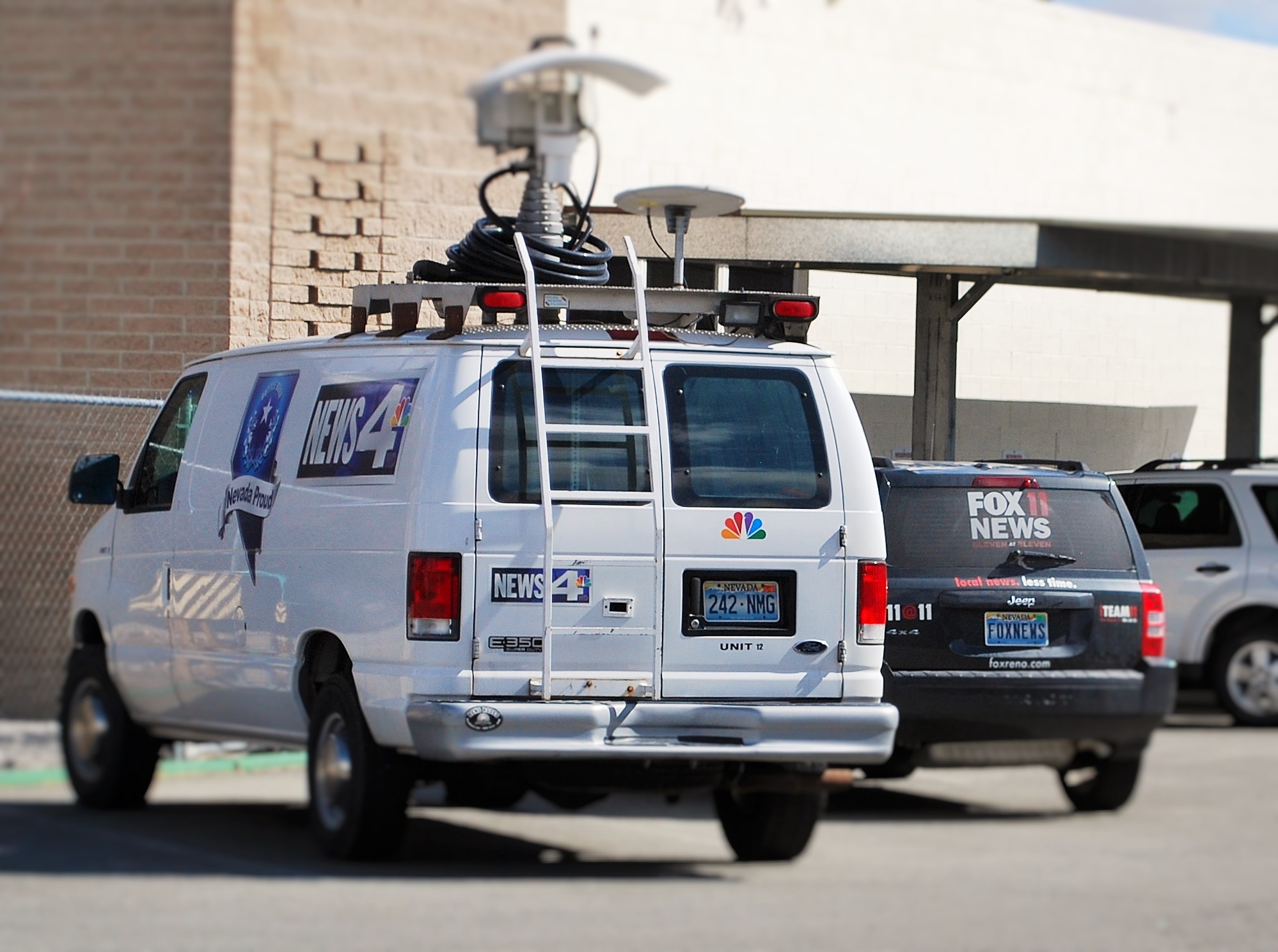
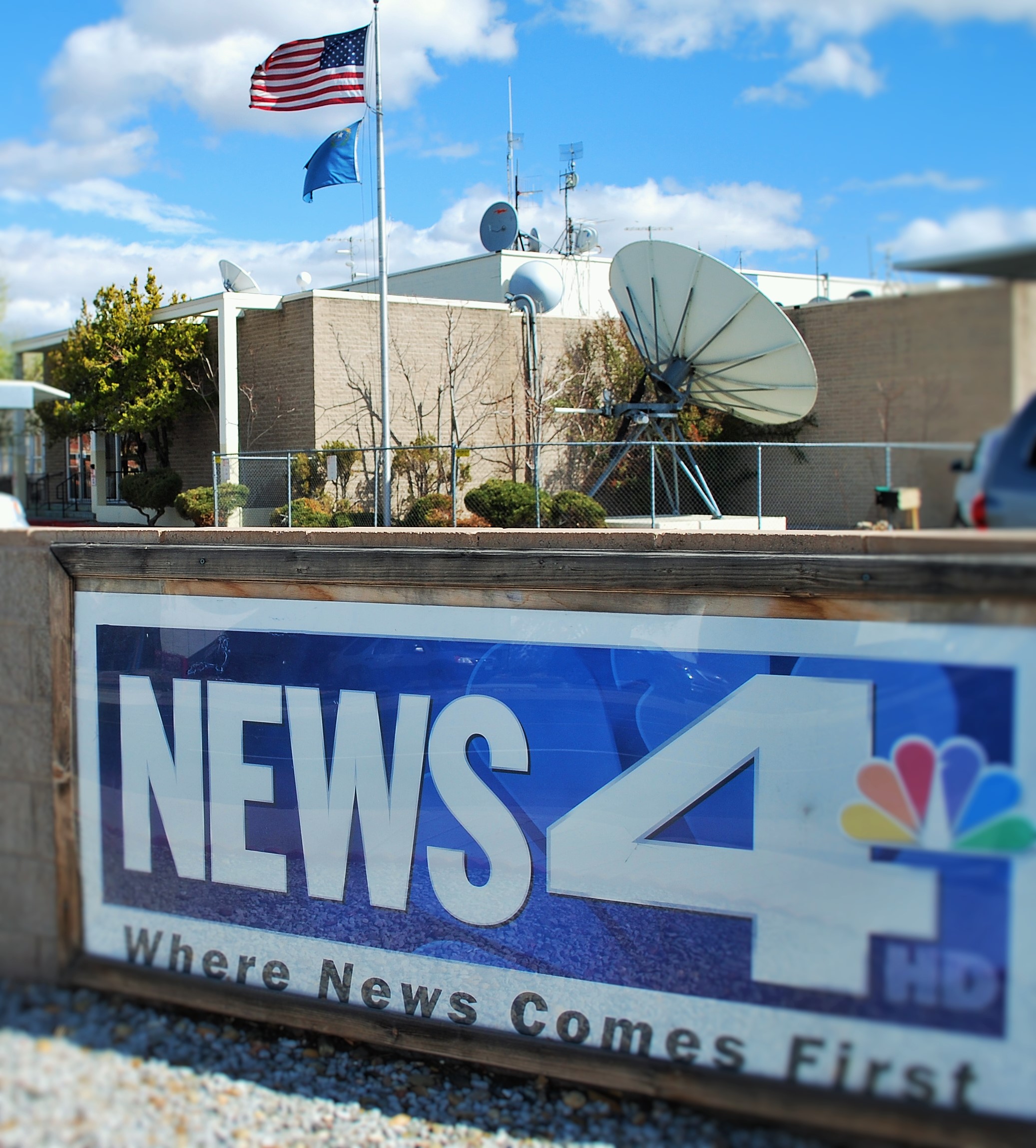
Image by Paul Kiser

KRNV reconnecting with the rest of the community?

Something happened at KRNV, Reno’s NBC affiliate, on April 8. It was not what they did, but what they didn’t do. Tuesday’s 6 PM newscast of the Sinclair Broadcast Group‘s (SBGI) station didn’t run an anti-government story.

It’s possible it they were just having an off day. It’s possible that NBC has applied pressure to the station to not run Fox News-type stories. It’s possible that the station’s staff has had enough of sacrificing personal reputations for the conservative agenda of their parent organization. It’s possible the parent organization has had an epiphany regarding serving all viewers, not just conservatives. Who knows? Regardless, it was a refreshing change.

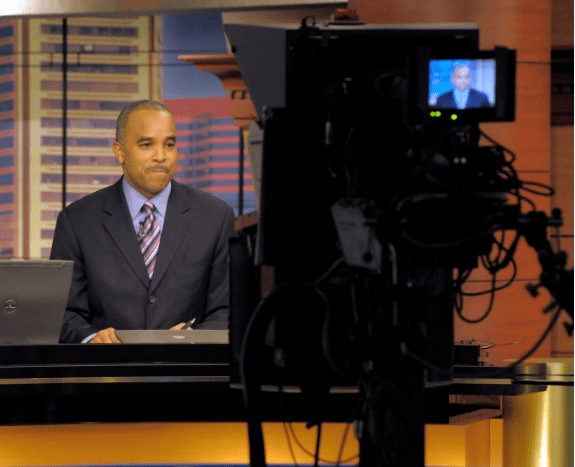
The station did run a Sinclair produced story in the ‘A’ Block, but rather than presenting an overt bias, Kai Jackson, a former news anchor on Baltimore’s CBS affiliate WJZ, offered a story about the cost of extending unemployment benefits. Jackson, who joined Sinclair in December 2013, pointed out that $500 billion have been spent on unemployment benefits since 2008, which is an issue that connects with the conservative viewer. He then he offered the viewpoint of a small business person who says that the money has a positive impact on his revenue as it flows into America’s economy.

Image by Karl Merton Ferron / Baltimore Sun

Kai Jackson at the desk of WJZ CBS Baltimore

One could argue that the issue itself is more of a concern by Republicans, but that is not accurate. Democrats and liberals understand that unemployment benefits are not a long-term solution; however, the money paid out to the unemployed is not lost. It flows through the economy, which is also important. Jackson presentation of the issues was fair and educated conservatives and liberals on the complexity of the problem.

What Jackson didn’t do was line up a long list of rabid conservative ‘experts’ to manipulate the story, nor did he indicate his personal spin on the issue.

Giving the Viewer What They Want or What They Need?
A news team can either manipulate news to invoke an emotional response, or they can work to educate the viewer on  the issues of the day and let the viewer decide how they feel about those topics. In the case of the former the news is sexy and entertaining. In the latter case the news is less emotional and requires more intelligent thought.

The excuse that Fox News-type reporting is just giving the viewer what he or she wants is same rationale of a drug dealer or prostitute. Reporting news should not be an attempt to manipulate emotions. News shouldn’t be anti-government, nor should it be pro-government. This does not mean that news has to be neutral, just that it can’t be driven by a political agenda.

The conservative and liberal views in the United States are both essential to our prosperity. Both viewpoints tend to carve out policies that succeed. A perfect example is the Affordable Care Act (ACA.) It was the health care reform proposed by the Heritage Foundation decades before it became law under President Obama’s administration. Despite Fox News stories that are trying to paint ACA as a disaster, the facts indicate that the number of uninsured people has dropped significantly and the program is actually succeeding.

A local television news organization is not a blog. It operates under the rules created by the FCC to protect the public trust. For whatever reason, yesterday KRNV rose to the expectations of that public trust.

Reno’s NBC Affiliate Runs Anti-Union Press Release As News

09 Wednesday Apr 2014

Posted by Paul Kiser in About Reno, Branding, Business, Communication, Customer Relations, Customer Service, Education, Ethics, Government, Management Practices, Opinion, parenting, Politics, Pride, Public Image, Public Relations, Taxes, Traditional Media

≈ Leave a comment

Tags

KRNV, labor unions, MyNews4, Nevada Policy Research Institute, NPRI, On Your Side, SBGI, schools, Shelby Sheehan, Sinclair Broadcast Group, teacher's unions, Washoe County School District, WCSD

Taking another step away from journalism, KRNV co-anchor Shelby Sheehan presented a press release from the conservative Nevada Policy Research Institute (NPRI) as news during the April 7th 6 PM broadcast. In what has been an almost nightly anti-government feeding frenzy, the NBC affiliated station, managed by Fox News operator, Sinclair Broadcast Group (SBGI,) announced that according to NPRI, 168 educators left the Washoe County teacher’s union.

Image by Paul Kiser from KRV newscast

Conservative NPRI spokesperson, Shelby Sheehan

Sheehan introduced the story by admitting that NPRI has a statewide campaign against the teacher’s union and they are:

“...letting teachers know when and how they can leave (the union,) so many are doing just that…”

The KRNV veteran anchor briefly mentions that the two percent loss in membership occurred in the Summer of 2013, and then wraps up the NPRI media release by suggesting that more teachers want to leave, but can’t because:

“…once they (the teachers) do (join the union) they only have a short period of time to get out of their membership, which they say (NPRI) prevents more teachers from leaving.”

Sheehan’s sole source for the story was NPRI, which is an anti-government think tank that, among other conservative agendas, is anti- public school and pushes for school vouchers and charter schools. They represent the polar position against unionized teachers. 

Other than her paraphrasing the information given to her by NPRI, Sheehan reported no information or statements from a teacher, the union, nor an independent source. She apparently didn’t even question NPRI’s information, nor why they were just now releasing data that was almost a year old.

NEXT:  Sinclair’s Survey of Shame (To be released 9 April 2014 at 6:30 AM PDT)

Has Reno NBC Station Gone Fox News?

28 Friday Mar 2014

Posted by Paul Kiser in About Reno, Branding, Business, Communication, Ethics, Government, Honor, Management Practices, Opinion, Politics, Public Image, Public Relations, Taxes, Traditional Media

≈ 7 Comments

Tags

advertising, Affordable Care Act, biased reporting, Channel 4, Conservatives, educating, Fox News, Intermountain West, Kristine Frazao, KRNV, NBC, NBC News, News, Obamacare, PR, RT, Russian Television, Sinclair Broadcasting Group

Image by Paul Kiser

Reno NBC affiliate becoming a Fox News clone?

The lead news story for Wednesday night on Reno’s NBC affiliate, KRNV was anti-government attack on the Affordable Care Act. The story was attempting to stir up outrage on the advertising budget to promote the new program that will impact millions of uninsured Americans.

The only opinions offered were in opposition to money being spent for advertising without any attempt to find an authoritative source to offer an explanation for why the public needed awareness of the new program. In fact, the only independent source on the story, David Williams, CEO of the anti-government organization, the Taxpayers Protection Alliance, suggested that taxpayer money should not be used to educate or promote the Affordable Care Act. He stated:

“This isn’t Coca Cola or Pepsi, this is healthcare, they shouldn’t be advertising…”

The $17 million per month spent to educate American citizens on a program to directly benefit them was about $2 million less per month than the coal, oil, and gas industry spent during the first eight months of 2012 to promote drilling and/or oppose clean energy.

Kristine Frazao

Kristine Frazao – Corporate News Correspondent

Reporter From Russian Television
As confusing as the Fox News-type slant of the lead story, was the person reporting it. The reporter was not an employee of the local KRNV station, nor was the story generated by the parent NBC News organization. The reporter was Kristine Frazao, the National Correspondent for the Sinclair Broadcast Group, which consists of 167 television stations, of which approximately half (88) are Fox, CW, or MyTV affiliated stations.

According to a November 2013 article in Broadcast & Cable (B&C,) Sinclair does not own KRNV, but did purchase three other stations of the Intermountain West group excluding KRNV and the Las Vegas affiliate, KSNV. Sinclair has, according to the story, agreed to operate and provide services for the Reno NBC affiliate.

However, Frazao is new to the Sinclair Broadcast Group. Prior to this year, Frazao spent three years with Russian Television (RT.) Russian Television began broadcasting in the United States in 2005, and its website states that RT:

“…acquaints international audience with the Russian viewpoint.”

Frazao is known for her anti-government reporting and as a reporter in San Diego was criticized for asking a Comic Con attendee why she and the other attendees weren’t protesting in Washington, D.C. against the government rather than coming to the southern California for the science fiction convention.

Image by Paul Kiser

Taking Sides in Reno

KRNV On The Conservative Side?
Frazao’s anti-Obamacare report was likely well received by conservatives in Northern Nevada and perhaps that is why Reno’s local NBC affiliate has taken on a Fox News attitude in reporting. Recently, KRNV changed its tag line from “Where News Comes First” to “On Your Side.” That explains many things about Wednesday’s lead news story.

It’s Time To Drop the “C” From NCAA

25 Tuesday Mar 2014

Posted by Paul Kiser in About Reno, College, Education, Ethics, Government, Higher Education, Opinion, Pride, Public Image, Public Relations, Recreation, Sports, Taxes, Universities

≈ Leave a comment

Tags

basketball, Football, National Collegiate Athletic Association, NcAA, University of Nevada, UNR

Image by Paul Kiser

College football uses its stadium about 8 days a year. It stands as a monument to Higher Education’s waste of resources

Athletes making more appearances in court than in class. Millions of dollars spent to recruit athletes, only to have them jump to a professional league before they graduate. Athletes that have paid staff minders to make sure they go to class, do their homework, and study. Money donated by alumni to only benefit major athletic programs. When will universities admit that big sports is not compatible with higher education?

Money for nothing. Donors giving to big sport programs

Money for nothing. Donors giving to big sport programs

The excuses are wearing thin. The NCAA tries to sell the idea during every televised college football or basketball game that the athletes on the field or court will become great scientists, doctors, and lawyers. Of course, the success stories are of athletes of every other sport.

Maybe a donor that will only give to athletics is not the person to associate with higher education?

Maybe a donor that will only give to athletics is not the person to associate with higher education?

The marriage between sports and colleges is a joke and it’s time for a divorce. The National Athletic Association (NCAA) should become the National Athletic Association (NAA.) We know college basketball and football athlete’s first, second, and third priorities are in pursuit of a big professional contract. To deny this is just an excuse to make us feel better when they sit in the back of the college classroom playing on their phones.

Make the professional leagues pay for bringing along young athletes and let higher education focus on education.

Air Travel Teaches Us Not To Listen

24 Monday Mar 2014

Posted by Paul Kiser in Business, Communication, Customer Relations, Customer Service, Government, Government Regulation, Management Practices, Opinion, Politics, Public Image, Public Relations, Re-Imagine!, Taxes, Technology, Travel

≈ Leave a comment

Tags

Airlines, airports, audio, FAA, Federal Aviation Administration, gate agents, gate announcements, PA, public address systems, public announcements

Zombies are real people forced to listen to airport/airline announcements

Airports and airlines are dedicated to teaching people how to not listen.

There are multiple studies, solid scientific research, on how humans respond to communication and how we best learn and retain information. Unfortunately, air travel offers the antithesis of everything we know about communication.

Outdated Audio Technology
Consider the airport. We have the technology for crystal clear sound in any announcement system. Visit a Disney property and you will hear clear announcements. Every word will be perfect with little or no distortion or hiss.

“Ladies and gentlemen, boys and girls…” 
Disneyland announcement

If we can do it in Disneyland, solely for entertainment purposes, shouldn’t airports invest in the same quality of public announcement (PA) system when it involves matters of even greater importance? PA systems designed to go into ceiling tiles suck. Maybe it’s time we considered a system designed for the airport environment of 2014, not the office building of 1960.

Zoned Out
Every gate at an airport is a different audio zone, and yet few airports have designed PA systems for this environment. Because most airports have overlapping seating at every gate, passengers for one flight could be sitting in any of three gate areas or standing out in the concourse area just outside of the gate. Few airports seem to understand this geographic distribution. Some airports limit gate announcements to one gate area, resulting in flight announcements to be missed by those passengers not in that gate’s audio zone. Other airports group multiple gates into one zone, so that passengers four of five gates away are hearing boarding announcements for every flight in the area.

Over Communication
The greatest sin of airports is over communication. It seems that airports have a perverse need to create ongoing, excessive, annoying noise. Do these sound familiar?

Please keep your bags with you at all times. Unattended baggage may be confiscated and destroyed.

The Federal Aviation Administration allows you to carry up to three containers of liquids, aerosols, and gels. They must be in a clear plastic bag and removed from your luggage for inspection. Please check with your airline for more information.

Do not carry anything in for anyone else….

I have heard these announcements and many more like them while waiting in the gate area. The gate area within TSA’s secure zone. Anyone in this area has been through the security check point and they and their luggage has been searched and cleared. None of these announcements make sense in an area where everyone has been declared safe to board a plane. They are just noise.

At the gate you will also hear multiple announcements by the gate agent. If there is any training involved of gate agents on how to make PA announcements it would not be apparent from my experience in air travel. Recently, I was waiting for a flight in the Newark, New Jersey airport. The longest period I counted without an announcement was nine seconds. Between the meaningless airport general announcements and the multiple gate agent announcements the passengers were bombarded with endless noise.

The Solution
There is important information that passengers need before they board their flight; however, it is impossible for passengers to determine important announcements for the noise generated in an airport. The remedy involves the FAA, Airport Authorities, and the airlines to reevaluate the purpose of airline announcements…actually they need to assign a purpose to their communications.

Better equipment is a must, and better training on how to effectively communicate information over a PA system. Another possibility is to run all announcements through a centralized public address system where boarding announcements would be made by one trained person who filtered information and determined what audio zones would hear it. 

There is another approach but it would involve a complete redesign of the concept of an airport. That’s not likely in an industry that took decades to determine that an iPod isn’t a threat to a plane’s avionics.

University of Nevada Student Housing Gamble a Lose-Lose Scenario

10 Monday Mar 2014

Posted by Paul Kiser in About Reno, Business, College, Communication, Education, Ethics, Government, Higher Education, Management Practices, parenting, Politics, Public Image, Public Relations, Respect, Taxes, Universities

≈ Leave a comment

Tags

Balfour, California universities, construction, dormitories, dorms, housing prices, New student housing, President Marc Johnson, Ranking, realty, Sterling, student beds, Top 500 International Universities, University of Nevada, UNR

University of Nevada betting on more live-in students

University of Nevada betting on more live-in students

The University of Nevada in Reno (UNR) is about to flood the local housing market with almost 1500 new student beds. The growth comes at a time when higher education expenses have been skyrocketing and the assumption is that there is an untapped source of new students who have the resources to pay even more to attend and live near UNR.

UNR Published Enrollment Data and Projections - Nov 2013

UNR Published Enrollment Data and Projections – Nov 2012

In October, University President Marc Johnson predicted that the school would grow Fall enrollment from the current 18,000 students to 22,000 by 2021 with an annual growth of 400 students per year. President Johnson’s prediction closely matches the average growth in student enrollment over the past fourteen years; however, this growth assumes every new student will be seeking on campus, or near campus housing, which is implausible.

Ironically, eleven months prior to the President’s remarks, the university published past and projected student enrollment growth that contradicted his version of UNR enrollment growth. The projected growth averages less than 300 students per year, falling over 1,000 students short of President Johnson’s 2021 prediction. The November 2012 data remains on the UNR website.

Expecting significant growth in student enrollment is betting against the odds according to a July article in the New York Times (July 25, 2013)

“College enrollment fell 2 percent in 2012-13, the first significant decline since the 1990s, but nearly all of that drop hit for-profit and community colleges; now, signs point to 2013-14 being the year when traditional four-year, nonprofit colleges begin a contraction that will last for several years.“

900 bed Sterling student apartments will open this Fall

900 bed Sterling student apartments will open this Fall

Outcome of Sudden Increase in Student Beds
One of two scenarios are possible as the university waits for new enrollment. The first scenario involves new beds remaining empty as students balk at the increased rental fees for the new properties. This will result in a loss in revenue for the university and the leasing companies of the new housing units.

The second scenario would be that students in rental houses and apartments, move into the newer facilities, which would devalue the current leasing rates in the local economy as the vacancy rate rises. The reaction by some investment properties owners might be foreclosure as owners walk away from money-losing properties.

UNR Losing Reputation as Quality School
President Johnson may be relying on picking up students from California due to large increases in tuition costs increases in recent years; however, the belief that the quality of education at UNR is of equal value to California schools assumes that students and parents are uninformed. 

View of UNR's dormitory row to be joined by new 400 bed unit in 2015

View of UNR’s dormitory row to be joined by new 400 bed unit in 2015

In 2003, UNR, Georgetown, Utah State, and San Diego State University ranked in the top 300 of Shanghai Ranking Top 500 Academic Ranking of World Universities. UNR’s ranking dropped almost every year, and dropped off the top 500 list for the last two years in a row. The other three universities also dropped; however, Georgetown and San Diego State ranked only slightly lower during the past two years than in 2003, and Utah State dropped out of the top 500 in 2011, but has been in the top 500 for 2012 and 2013. In 2013, California had eleven universities in the top 500, with eight in the top 50.

A silver lining to the Silver State's UNR?

A silver lining to the Silver State’s UNR?

Silver Lining?
While the need for this surge of student housing is questionable at best, will result in student beds at higher prices than currently available, and may trigger a local foreclosure crisis, there may be a positive outcome for the university neighborhoods.

If students leave the rental houses, causing a crash in rental prices, and if owners of investment properties walk away from their rental units, the area housing prices will drop. That will open the door for the redevelopment of the sixty-year-old neighborhood with updated houses that would attract families back to the area.

There is much at stake over the next five years for students, homeowners, investment property owners, and the community in general as UNR takes a big risk on short odds.

Is It Time For A Two-Tiered School System?

12 Tuesday Mar 2013

Posted by Paul Kiser in Education, Ethics, Government, Management Practices, Opinion, parenting, Politics, Relationships, Respect, Taxes

≈ 2 Comments

Tags

elementary education, Parent Development, parent involvement in school, parents, Pay for Performance, schools, secondary education, teachers

Image by Paul KiserThere is a major problem in America’s educational system and that problem is obvious to anyone who spends time in the classroom. Consider this scenario:

Student X is one of the youngest in the class and started the year slightly behind (academically) her older classmates. Student X lives in a moderate, stable family environment with a modest income. The parents of Student X volunteer at the school and her Mom helps in the classroom once a week. Student X is expected to do her homework soon after coming home from school. One of the parents of Student X is available while she does her homework to answer her questions and assist her as needed, but the parent does not give her the answers. Her parents are in regular contact with her teachers and stay aware of her strengths and weakness. Student X receives constant encouragement to focus on learning.

Student Y lives in a two parent environment; however, one of the parents works 60 to 80 hours a week. Student Y is involved in a variety of non-school activities that take up several hours of after school time. One parent tends to be the mode of transportation from activity to activity, but doesn’t always wait for Student Y. Homework for Student Y is a ‘if we have time” priority, and Student Y’s parents have little contact with the school. Student Y’s parents are never sure what to expect on his report card and are often caught be surprise when there is an issue with a grade.

The absent parent in a child's education cannot be replaced by all the computers in the world.

The absent parent in a child’s education cannot be replaced by all the computers in the world.

Which student do you think will do well on a Standardized Test? Which will student has a better chance to succeed?

The fact that is often overlooked when discussing America’s public schools is the role that parents play, or fail to play in their child’s education. This is not a ‘blame’ issue, but it is a reality that must be included when politicians discuss how they want to ‘fix’ our schools. Parent investment in their child’s education is vital for her or his success in learning. Parents who, for whatever reason, fail to be committed to support and promote learning at home risk destroying the commitment their child will have in the classroom.

So the question is whether or not we need a two-tiered school system based on the parent’s commitment(†) to their child’s education. I believe that most good teachers can tell which students have committed parents, and which do not, so dividing students into two groups should be easy to accomplish.

Several studies have identified the advantages a student with involved parents has over a student who does not.(¹)(²)(³) In addition, a lack of parent involvement may require additional resources from the school to take up the slack of the parent who is not invested. If a teacher has to spend extra time to help that student who didn’t do their homework and master the needed skill, then the rest of the students pay the price because they can’t move forward until Student Y catches up. Even a child who is academically behind is less of a burden on the school when their parent is actively invested in the school.

Dividing our schools based on parental involvement makes sense…on paper, but like all quick fixes there are problems created by the fix that negate it. Identifying students with absent parents avoids the real problem, which is making parents aware that their investment in education is vital for their child’s success.

A Parent’s Place in Education
Despite the need for parental involvement, there is a limit to a parent’s engagement in their child’s education. Unless a parent also has a degree in education, the teacher is the most qualified to take the lead in the classroom. Parents should see themselves as interns in the school.

Even in fundraising, the parent’s role should be subservient to the school and its staff. Parents who decide for the school what projects and programs should be funded risk interfering with the objectives established by those who have an understanding of the larger view.

This should not cause a parent to wait to be asked to become involved. School administrators and teachers focus should be on the students, not on directing parents. This requires that parents and the school create an environment of trust and respect that is facilitated by timely and effective communication.

Professional Development for Parents?
One problem that faces parents is that most of us are not trained in the skills of helping a person learn. In addition, parents may not understand the objectives of the teacher; therefore, they may not know how they can support the in-class work when the student is working at home.

Schools are financially strapped for resources, but if politicians really want to help our educational system, maybe they should consider how schools can pay for parent development seminars (and/or webinars) that will support the objectives of the teachers and the school. By improving the at-home learning environment politicians might actually take a big step in ‘fixing’ our public schools.

We may not need a two-tiered school system, but we certainly need to accept that the failure of a student in school may indicate the failure of a parent, not the teacher or the school.

†(I was reminded this week about the difference between someone who is involved and someone who is committed. If you’re eating a bacon and egg breakfast, the chicken was involved, but the pig was committed.)

Conservative Credibility Account is Bankrupt

05 Wednesday Dec 2012

Posted by Paul Kiser in Business, Communication, Ethics, Government, Honor, Internet, Opinion, Politics, Public Relations, Respect, Social Interactive Media (SIM), Social Media Relations, Taxes

≈ Leave a comment

Tags

fiscal cliff, John Boehner, President George W. Bush, tax hike, wealthy

To be relevant you have to be credible and conservatives have spent all their credibility:

Bush Logic: Trust me. I know what I'm doing

Bush Logic: Trust me. I know what I’m doing

  • George W. Bush was going to force government to be smaller by taking revenue away via massive tax cuts. Then he made government even bigger and spent our country into debt.
  • Mitt Romney changed his position on issues on a weekly basis resulting in a trust deficit that he couldn’t overcome.
  • Oil companies and wealthy business men paid millions of dollars to finance conservative candidate’s political campaigns filled with deception and lies that were exposed within hours through Social Media.
  • Republicans vowed to obstruct President Obama efforts at all costs and blocked any legislation or appointments for two years, then tried to blame Democrats for not being able to ‘reach across the aisle.’
  • Republicans concept of smaller government and less regulation resulted in higher unemployment and unethical business practices that destroyed our economy.

    Conservative Investigation: Celebrate males testify about women's contraception

    Conservative Investigation: Celibate males testify about women’s contraception

  • Elected conservatives males demonstrate the absurdity of their positions on abortion and contraceptives exposing an underlying misogynistic attitude.
  • Conservative white state legislators in the South pass laws targeted at Latinos and minorities to discourage them from voting revealing a racist attitude.
  • Conservatives ironically insult minorities and Liberals as lazy, ‘takers’ who only seek handouts from the federal government while they seek to live in the United States of America without paying taxes for the privilege of living and working in this country.

    Boehner Math: 7.5% = 50%

    Boehner Math: 7.5% = 50%

Now conservative House Representative John Boehner is pushing the deception that a tax hike on the wealthiest 2% will impact fifty percent of small businesses. The fact is that a tax hike on those who have over $200,000 of personal income ($250,000 for married filing jointly) will affect only 7.5% of small business owners.

What is shocking is that the small percentage of wealthy small business owners pay themselves $200,000 or more out of their business account for fifty percent of all small business revenue. Note that the money is going into their pocket, not reinvested into the business, nor used for hiring more people, but into their personal account.  Boehner is trying to protect the interests of the greediest of small business people.

92.5 percent of small business owners will not be impacted by this tax hike, but Boehner continues to try to deceive America into the belief that he is protecting small business owners.

The Republicans have exhausted their credibility and still they continue to try to deceive rather than serve America. It’s hard to understand conservatives pursuit of deception as a political tool. If the last election demonstrated anything it was that the majority of America could not be bought or deceived. Social media quickly exposes lies and deceptions and yet Republicans continue to behave as if they live in an Orwellian 1984, and people will believe whatever they want them to believe.

A Liberal Response to Conservative Secessionists

19 Monday Nov 2012

Posted by Paul Kiser in Ethics, Government, Government Regulation, Honor, Internet, Opinion, Politics, Respect, Taxes, US History, Violence in the Workplace

≈ Leave a comment

Tags

Secede, Succession, Sucessionists

Stars and Stripe Temporary? Their new flag all white with a red banner saying, “It’s All About Me”?

I think it is important that Liberals keep an open mind about conservatives that are bitter about the results of this month’s election. There are some conservatives who are so angry that they want to secede from the United States of America and that might upset some Liberals because it’s an affront to the dignity of America. Our country is based on the premise that after we vote we all agree to accept the results of free and unbiased elections and work together under the elected leadership.

It is not a bad thing to allow people to express their disappointment by peacefully creating a petition that is born out of anger. Liberals place the highest regard for the rights of ALL Americans, and even though it is reminiscent of a three-year-old’s temper tantrum, we should not discourage anyone from expressing their opinion, no matter how childish or immature.

I stand by the right of anyone to reject the United States of America, that land the built and maintains the Interstate Highway System, created and maintains our national parks, built hydroelectric dams, educated millions of young Americans, protects our ethical civil and business environments, and created the Internet. It is the right of every citizen to declare that they no longer want to be a citizen.

For those so inclined, the White House has a webpage where anyone can create a petition, like the petition to Nationalize the Twinkie Industry, or add their name, email address and zip code to those who want to express their hate for this country and for what it stands.

I must admit that I do have some concerns about the people who are so angry that they are ready to give up all that the United States of America has to offer in order to ‘go it alone.’ That smacks of a survivalist attitude of it’s-all-about-me by people who are ready with their guns to kill anyone who my be a real or imagined threat. It is from this group of angry people who, with a touch of mental illness, would be most likely to hurt or kill innocent people.

I wish there was a way we could collect their names, email addresses, and zip codes so that law enforcement could keep an eye on them before they express their hate for their fellow citizens through an act of violence. Oh wait, they gave that information when they signed the petition. For a group of people who eat government conspiracy theories for breakfast, lunch, and dinner, they might have thought this one through a little better.

America Held Hostage: DAY 716

15 Thursday Nov 2012

Posted by Paul Kiser in Ethics, Generational, Government, Opinion, Politics, Taxes

≈ 2 Comments

Tags

Dean Heller, federal debt, federal deficit, fiscal cliff, GOP, John Boehner, John McCain, Mitch McConnell, Republicans

John McCain still bitter about 2008?

Sure we’ll cooperate with the President….when he becomes a Republican

Republican Senator John McCain promised that a Susan Rice’s nomination for Secretary of State will be blocked. Republican Senator Mitch McConnell says that he has a mandate for Republicans to push America over the fiscal cliff. Republican Representative John Boehner says compromise with Democrats is now possible if President Obama gives up the tax increases favored by most Americans. At least we know that the wealthy, old, white men in Congress haven’t changed.

After Republicans had major wins in the House and Senate in 2010, 42 Republican Senators signed a pledge to gridlock Congress and defeat any attempt by President Obama to move the country forward. That was 716 days ago.

Senator Mitch McConnell: “Election, what election?”

After shocking losses in the Senate, losses in the House that defied the gerrymandering of State Republican legislatures, and Mitt Romney’s loss of the century for President, the GOP is determined to pretend the 2012 election did not happen. That means America can expect the Republicans in Congress to offer more of what they gave us in the last two years.

Perhaps Senator John McCain will once again suggest another corporate tax holiday so wealthy white men can buy private planes and yachts. Perhaps Senator Dean Heller will again attempt to pass a law that will prohibit millionaires from receiving Food Stamps. Perhaps Representative John Boehner will again suggest that the Department of Justice pay Republicans to uphold the Defense of Marriage Act. Whatever they do, we can expect that they will hold America hostage to make sure nothing works in Washington D.C.

What America Must Do: Step 6 – Reinvent Higher Education

14 Wednesday Nov 2012

Posted by Paul Kiser in College, Communication, Education, Generational, Government, Higher Education, History, Information Technology, Internet, Opinion, Politics, Public Relations, Taxes, Technology, The Tipping Point, Traditional Media, Universities, US History

≈ Leave a comment

Tags

college degree, faculty, professors, state run, students, tuition and fees, universities

Sans Students: Is this what university classrooms will look like in 2020?

Higher Education is an unmovable object with an unstoppable force heading straight for it and universities are at ground zero. Classrooms as we know them may be doomed and the question is whether our country will lead the world in adapting to a new model, or whether we will be the last ones to accept reality.

The Value of the College Degree
The unmovable object in Higher Education is importance of the college degree in American commerce. Business lives or dies on information. The person who can access, filter, analyze, organize, and explain information tends to be valuable in a company.

High schools are tasked to help students graduate with basic competencies, but they are dealing with children who are still maturing into adulthood and that process needs to be complete before they are morphed into business men and women.

Those who believe high schools should be vocational schools are assuming that all children will become a construction laborer or office drone, so why bother with college prep? The concept of education as a training ground for corporate zombies is too simple-minded to apply in a country that encourages all citizens to reach their maximum potential.

College is where young adults are given the tools to become valued business leaders. College classes require a student to learn how to access and report information, which is central in business competitiveness. The business that can out think its competition always wins, which may be why many top businesses are more concerned about the degree, not the major. A college degree is more than a piece of paper, it is a badge of achievement that says this person is ready for the business world.

The Relentless Rise in the Cost of College
The unstoppable force is the rising cost of a college education. With cuts in federal and state budgets a greater share of the burden is being heaped on those who are least able to avoid it. In Mitt Romney’s failed bid to be President he suggested that students should borrow from their parents to pay for college. That was one telling sign that Romney is out of touch with the real world the rest of us live in.

March 2012 protest in Sacramento over tuition hikes

In 1991 the annual average cost for a university education was at $7,602 or over $30,000 for four years of college. In 2001, that annual cost had risen to $12,922 or over $50,000 in four years. In 2011, the annual cost had risen to $22,092, which meant it cost over $88,000 for the average college four-year degree. That is the equivalent of buying a new car every year a student attends college. If the trend continues it will cost a student an average of over $41,000/year for college by 2021, which means a four-year college degree in 2021 may cost over $167,000.

Students and their parents are already outraged by the rising costs, but it is universities who control the expenses, and therefore control the costs.

Based on current trends, the average annual cost for college may exceed $40,000 by 2021

Students want to be competitive for careers that will lead them to higher paying jobs, but they have no means to afford college and the list of parents who CAN pay over $22,000 a year for four years are on a first name basis with Mitt Romney.

The Other Unmovable Object – Faculty
Teachers at the college level have traditionally been considered the most important asset to a university and for centuries they were treated with dignity and respect by administrators, but financial pressures have made them a target for saving money. While students face escalating tuition and fees, university faculty are also a target of the unstoppable force. Professors have been constantly asked to accept budget cuts and teach more students for the same, or lower pay. 

Some universities have replaced expensive tenured professors with temporary faculty employed by contract on a semester by semester basis. Temporary faculty make a fraction of a full, tenured professor. Not surprisingly, a teacher that may not be offered a contract the next semester tends to be more accepting of increased class sizes, or other cost-cutting measures.

What may be surprising is that a college teacher is likely not receiving a significant portion of the tuition paid by the students in his or her classes. A temporary professor may bring in $100,000 or more in revenue each year for the university, but a temporary professor is often paid less than $4,000 per class with no benefits. Low pay and increased pressure to do more for no additional money makes the teaching environment unpleasant for the student and professor.

A Revolution Caused by the Internet
Ironically, the Internet was originally intended to allow one university to have quick access to the knowledge database at other universities and research laboratories. As it expanded and became commercially available in the late 1980’s and early 1990’s the public began to have access to a vast storage of on and off-campus knowledge without a student ID. Within a decade homes across the world were linked into a mass of dynamic information via business and personal websites, blogs, chat rooms, and other social media sites.

Suddenly anyone could access information and share ideas and they didn’t have to pay tuition to have easy access to it. Certainly some of the information was in error, but often people found information that outpaced the knowledge produced in books. Universities no longer held the monopoly on information.

Government Must Change
State governments and Higher Education face these problems:

  1. A college degree is still a valuable achievement and desired by the public and business.
  2. Tuition and fees are too high and the public can no longer afford them.
  3. Professors have been devalued in a system where more and more of the revenue is channeled away from the them.
  4. University administrators and government legislators have created a paradigm for Higher Education that is unsustainable.

Social media has changed the expectations of the public. People expect to be able to have ready access to anyone to whom they are paying for a service.

Controlling advanced knowledge within ivy covered walls is no longer possible in a world where anyone can do a Google search and know as much or more about the most current knowledge on any topic. However, just doing a Google search does not teach a person how to filter, analyze, organize, and report that information.

State-run universities have a unique opportunity to reinvent Higher Education. The challenge is that they are the most unlikely to do it. Administrators have Accreditation organizations that are established to dictate what Higher Education is and will be today and tomorrow based on the best practices of yesterday. That doesn’t work in a world where today is already history that was recorded by over 340 million tweets a day (March 2012 data.)

When the unstoppable force hits the unmovable objects (value of a degree and the need for faculty) few things about Higher Education will remain unchanged. Now is the time for State-run universities to dodge the upcoming annihilation and take the lead in reinventing Higher Education. They can start considering the following guidelines:

  • Tuition must stabilize and regress. Fees should be eliminated. Universities can assume that there will be no money available to siphon off for student activities, the football program, or any other money-absorbing entity. 
  • Support materials (textbooks, etc.) will be digital only and the cost will be pennies on the dollar of what students have been paying. Goodbye, McGraw-Hill. Hello, Faculty Publishing.
  • Classrooms will be more like Boardrooms with fewer students where the Professor is the CEO of knowledge and students must bring their best or beg for a second chance with someone else. Much of the lecture and information gathering will be done via webcasts and/or outside of class time. ‘Class’ will be where the work outside the classroom is brought in for discussion and idea sharing.
  • Class schedules will not follow a semester system and will be on a schedule that is more like a project team.
  • Faculty will lead students while at the same time work toward advancing knowledge on the subject matter.
  • The most important person to the student will be the educational coordinator (i.e. Counselor or Adviser in the old paradigm) who will create an individualized degree that is based on achieving a level of mastery information handling, not a number of credit hours.

The framework in which this happens must be within a government structure. Private enterprise has proven that when they try to create a system of higher learning they fail. It solves nothing to make Higher Education a profit-based program that is a poor imitation of the old, outdated model. If government can successfully create a new model it will make the United States of America the leader of advanced knowledge. If not, we can expect to be exporters of our future.

Links to:

What America Must Do:  Step 1 – Silence the Wackos in Politics
What America Must Do:  Step 2 – An Extreme Makeover of Government at All Levels
What America Must Do:  Step 3 – Restore Government Revenue and Fair Taxation
What America Must Do:  Step 4 – Balanced Budget By 2015, Debt under 50% of GDP by 2020
What America Must Do:  Step 5 – Restart a Federally Run Space Program

What America Must Do: Step 5 – Restart a Federally Run Space Program

05 Monday Nov 2012

Posted by Paul Kiser in College, Crisis Management, Ethics, Government, Health, Higher Education, History, Information Technology, Opinion, Passionate People, Politics, Pride, Re-Imagine!, Religion, Science, Space, Taxes, Technology, Universities, US History

≈ Leave a comment

Tags

NASA, power, Prosperity, self sustaining, sewer, Space, Space Program, Space X, technologies, water

USSR scared America into the space race and it led to our prosperity

Fifty years ago America was scared. The USSR had sent a man into space and he had orbited the Earth. The Soviet Union was also threatening to plant their ballistic missile weaponry in Cuba. The United States entry into the space race was out of a fear that if we didn’t respond quickly, it might be too late.

This dire situation caused a crisis-type response that defined who we are as a people. Ignoring profit or ROI (return on investment) we established our space program and became proficient at churning out new technologies. Almost overnight we had a new breed of people who literally became rocket scientists.

And then it happened. We discovered that space technology had terrestrial applications. That wasn’t the justification for it, but our space program suddenly pushed the United States of America into the role as the go-to nation for space technology applied to terrestrial application. For decades Americans and the world reaped the benefits of the new materials, equipment and knowledge that came from our effort to go beyond the safety and protection of Earth’s womb.

Young people became excited about the space program and suddenly universities had applicants knocking down their doors to become a scientist, mathematician, or engineer that would go on to shape tomorrow’s world. Space ignited learning and research at colleges that shook up their dusty libraries and ivy covered walls. Philosophy, religion, arts, economics, and literature were blindsided in the 1960’s and 70’s by new questions that challenged our old beliefs and standards.

In 2008, USA space competitiveness was dominant, but today it wanes

Meanwhile, in Russia, scientists were put under extreme pressure to be successful on an accelerated space program. Behaving more like a mega-corporation that pushed for immediate results, Russia’s government forced scientists to try to take major risks in a dangerous environment where failure meant loss of life. When the scientist did have a new breakthrough they became state secrets and the larger population did not benefit. For the Soviets, the space race showcased the failure of running a government like a business.

Fifty years later America can look around at our computers, cell phones, medical devices and almost everything we touch, consume, or use and know that the space program had a direct or indirect impact on its development.

Yet, today America is stagnant. We are desperately trying to be competitive in a global market that spends most of its time figuring out how to make things cheaper, but not better. We say we want young people to pursue careers as engineers and scientists, but there is no burning reason for a high school graduate to pursue those careers. Instead we have university Psychology programs that are filled to overflowing with students who are more inspired to collect a salary by listening to other people’s problems than in designing the transportation and living habitats for a colony on Mars.

The United States is desperate for water in the South and West, but everyday we waste it

For decades the western United States has been battling with a growing population and a dwindling fresh water supply. We also face aging community water and sewer systems that are in need of major updating and repairs. We face global climate change because the we have been filling the air with energy absorbing carbon from burning coal, gasoline and natural gas.

The concept of transporting power, water, and waste is based on 19th and 20th century engineering. Power has to be generated hundreds of miles away and then delivered to homes via power lines that can fail in a major storm. Expensive and overburdened water treatment plants transport fresh, clean water through miles of pipeline and is only used once and then it becomes waste. Purified water that would be the envy of many people in Africa and the Middle East is mindlessly sprayed on our lawns and used to flush our toilets. 

In space water has to be recycled, air must be purified, and power must be generated efficiently on a micro scale. That means focusing on self-sustaining habitats built that will face extreme conditions. On Earth, these technologies will pave the way to a shift from macro water, sewer and power systems (power plants and water and sewage treatment facilities) to cost-effective micro systems that free families from relying on expensive, polluting, and wasteful systems that are unsustainable. Everything we need to solve America’s terrestrial problems can be found by solving the  problems of extended human living in space. In addition, a renewed public space program will inspire High School graduates to pursue careers in engineering and science.

Space X Falcon 9 Engine Array – Redefining space technology

America needs to be pushed into using new technologies that break down the paradigms of the past. In the 1960’s we were pushed by the Soviets and the result was prosperity.  Today we need to push ourselves, not out of fear, but out of pride and courage. I have nothing against Space X or any other private or commercial space program, but prosperity doesn’t happen out of the pursuit of profit. Prosperity happens when everyone sacrifices from the board room to the break room for the good of the United States.  

Space X has made new breakthroughs in the bureaucracies and waste built up over five decades by NASA and its private contractors and they should be the model of a new public space program, but investors and ROI are not the reason America needs to take back the leadership in space exploration.

If the last 50 years have taught us anything it is that raising ships to the stars, we will raise all ships on Earth. It’s time to reclaim our space program.

Links to:

What America Must Do:  Step 1 – Silence the Wackos in Politics
What America Must Do:  Step 2 – An Extreme Makeover of Government at All Levels
What America Must Do:  Step 3 – Restore Government Revenue and Fair Taxation
What America Must Do:  Step 4 – Balanced Budget By 2015, Debt under 50% of GDP by 2020
What America Must Do:  Step 6 – Reinvent Higher Education

← Older posts
Newer posts →

Other Pages of This Blog

  • About Paul Kiser
  • Common Core: Are You a Good Switch or a Bad Switch?
  • Familius Interruptus: Lessons of a DNA Shocker
  • Moffat County, Colorado: The Story of Two Families
  • Rules on Comments
  • Six Things The United States Must Do
  • Why We Are Here: A 65-Year Historical Perspective of the United States

Paul’s Recent Blogs

  • Dysfunctional Social Identity & Its Impact on Society
  • Road Less Traveled: How Craig, CO Was Orphaned
  • GOP Political Syndicate Seizes CO School District
  • DNA Shock +5 Years: What I Know & Lessons Learned
  • Solstices and Sunshine In North America
  • Blindsided: End of U.S. Solar Observation Capabilities?
  • Inspiration4: A Waste of Space Exploration

Paul Kiser’s Tweets

Tweets by PaulKiser

What’s Up

May 2026
S M T W T F S
 12
3456789
10111213141516
17181920212223
24252627282930
31  
« Jun    

Follow Blog via Email

Enter your email address to follow this blog and receive notifications of new posts by email.

Join 688 other subscribers

Create a website or blog at WordPress.com

Loading Comments...