3rd From Sol

~ Learn from before. Live now. Look ahead.

3rd From Sol

Category Archives: Human Resources

The Blazek Syndrome

01 Saturday Mar 2014

Posted by Paul Kiser in Branding, Business, Communication, Crisis Management, Customer Relations, Customer Service, Education, Ethics, Generational, Honor, Human Resources, Internet, Lessons of Life, Management Practices, Opinion, Public Image, Public Relations, Respect, Social Media Relations, Women

≈ 3 Comments

Tags

Blazek Syndrome, Cleveland, head hunter, humility, job search, Kelly Blazek, LinkedIn, Marketing, Ohio, Twitter, Wordpress

Kelly Blazek - Armed with a keyboard and dangerous

Kelly Blazek – Armed with a keyboard and dangerous

You may not recognize the name Kelly Blazek, but she is the poster child for public image disaster. When people wonder how bad personal embarrassment can be, we now have Blazek as our code word for really, really bad. 

Kelly Blazek is probably a decent human being, but what she will be remembered for is her moments of ‘Ms. Hyde’ behavior. She founded a job bank listing for marketing and public relations positions in the Cleveland, Ohio area. She had a WordPress blog and Twitter, LinkedIn accounts. Head hunter Blazek was also recognized as “Communicator of the Year.” by a local business group.

Within a matter of days she went from a leader in her field to a ghost. There is no blog site, no Twitter account, nor any trace of her other than a growing number of postmortems in blogs and news articles of her epic nasty responses to people who reached out to her.

The Blazek Syndrome
Her story is a step-by-step, what-not-to-do in business.

STEP ONE:  Don’t let frustrations with the job spill over into your communications and interactions.

Among the most notorious of her responses, Blazek reacted to a college graduate seeking to connect with her as part of her job search. Her manner that can best be described as vile. Among the barrage of hateful statements were the following:

“I love the sense of entitlement in your generation. And therefore I enjoy Denying (sic) your invite…. (to connect on LinkedIn.)”

“I suggest you join the other Job Bank in town. Oh wait — there isn’t one.”

“You’re welcome for your humility lesson for the year.”

Everyone has a bad day, but any business person should know that what you write is what will save you or hang you. There is no excuse Blazek could offer for her verbal abuse of this job seeker.

STEP TWO:  Making a mistake, even as massive as this one, does not mean it’s the final chapter. Life is not over and running and hiding will not help.

Blazek has compounded the crisis by trying to disappear. When sharks smell blood of a wounded fish they go into a frenzy. By disengaging from social media, people may lose interest, but what will remain is the public shame. The best time to do damage repair is while people are still paying attention

STEP THREE:  Apologize over and over.

Instead of deleting social media accounts, use them. In a public image crisis people need to hear every possible sincere apology, but do NOT attempt to offer excuses. 

STEP FOUR:  Listen to what is being said and respond with humility.

Remember BP’s  Tony Hayward remark, “I want my life back.” The public image crisis is over when people say its over, not when the disgraced person wants it to be over. Read what other people are saying and respond in a kind and humble way to as many people as you can. Make the story about the lesson learned. 

10 Things To Decline From An Employer

09 Monday Dec 2013

Posted by Paul Kiser in Business, Communication, Customer Relations, Customer Service, Employee Retention, Ethics, Health, Honor, Human Resources, Information Technology, Internet, Management Practices, Pride, Privacy, Public Relations, Re-Imagine!, Relationships, Respect, Social Interactive Media (SIM), Social Media Relations, Technology, Tom Peters

≈ Leave a comment

Tags

Affordable Care Act, benefits, company car, company cell phone, company email, Email, employment agreement, employment contract, free speech, Heath Benefits, Intellectual property, NDA, Non-compete, Pay for Performance, retirement benefits

No longer can anyone expect to build a lifelong career with one organization, nor is that considered healthy for the individual or the company. A person is now his or her own commodity. He or she must expect to build their own skills and reputation as an individual on the open market rather than as corporate employee number 8675309.

In this Brave New Working World a person should be prepared to say ‘no’ to antiquated elements of 20th Century employment, not only because they are inappropriate, but because they indicate that employer is unaware of their failure to be competitive in the 21st Century. Benefits and perks that were meant to tie a person to one organization no longer make sense in a world where ‘permanent employee’ has been replaced by ‘contract labor.’

Here are ten employment offers and requests that should be declined from an employer and cause you to re-evaluate your working relationship with a company:

No. 10 – Retirement Benefits
It should be obvious that any company offering retirement benefits either does not understand today’s working world or is trying to offer something that they know you will never receive. Better to have the money now and invest than pretend you’ll still be with the company when you retire.

The Company Email is always the company's to give or take away

The company giveth and taketh away access to your email

No. 9 – The Company Email Account
You many have to use the company email when corresponding with others in the company, but always ask yourself, “If the company decided to lay me off today and they ended my access to my email account, what information would I lose?” What about that email from the senior executive that ordered you to overcharge your customer? Every email sent to your company email account should be forwarded to a private account and blind copy any company emails you send to your private account. This protects you and the company from the unethical corporate manager.

No. 8 – The Company Car
When I was growing up my uncle worked for an oil tool business and he had a company car. I thought that was the coolest perk in the world. While it is a rare perk in today’s world, it should be declined in most situations. The problem with the full-time company car is that it becomes a liability if a better employment opportunity arises. Suddenly you’re faced with buying a new car in order to accept a better job.

The company cell phone comes with chains attached

The company cell phone comes with chains attached

No. 7 – The Company Cell Phone
Many people fail to realize what a company cell phone represents. It is a chain that ties the employee to the employer 24/7/365. A boss may hesitate to call a private cell phone, but have no problem calling the phone they are paying for at 3 AM. Many jobs require an employee to be accessible, but you are better off with your own phone than be indentured by a company cell phone.

No. 6 – Giving Your Employer Your Social Media Passwords
There are questions as to whether it is legal for an employer to demand an employee’s passwords to his or her Facebook, Twitter, and other Social Media passwords. The bottom line is that you do not want to work for a company that wants this level of control on your life. It will only go downhill from there.

No 5 – Restricting Free Speech (The NDA)
In an exercise with students in a graduate program, I purchased the fictional company they worked for and I was interviewing them to determine who to keep and who to let go. As part of this exercise I gave each of them an outrageous NDA contract (see Kco NDA) to sign. In almost every case, the Master’s program students signed it, most without question.

A company’s has a right to protect its reputation, but employers should be under the burden to gain the loyalty, trust, and respect of their employees so that they would not dream of talking smack about their workplace. If an employee is ready to bad mouth the source of their income then either the employer hired the wrong person, or the employer has failed to treat their employee as an important asset. In either case, it is the employer, not the employee who shoulders the burden of the failure.

No. 4 – Intellectual Property
If you have been consigned to produce something tangible for someone, then you have agreed to surrender it once it has been created and delivered; however, many companies are claiming ownership of any work done by an employee as their own intellectual property. Nothing could be more disrespectful to a human than to treat them as a machine that is only useful as a tree from which they pick and enjoy the fruit. A business that values their team would never have to be concerned about the issue of intellectual property because each team member’s work would be a source of pride and celebration. The important element in any organization is the person who creates the work, not the work itself.

Before you sign away your right to maintain ownership of your work you should ask if you want your give away your legacy of achievement to those who didn’t do the work?

The Affordable Care Act is emancipation for the worker

The Affordable Care Act is emancipation for the worker

No. 3 – Health Benefits
America has millions of people who continue to work for an employer primarily because they need or want the health insurance offered by the company. As an employer do you want people to only be working for you because of the health benefit perk?

The biggest impact that the Affordable Care Act will have on America is to free people to work for people they want to work for, not those who have the critical health care benefit he or she needs.

No. 2 – Pay For Performance
When someone attempts to quantify a job or project they sacrifice common sense for greed. The need to meet the measured goals forces an employee to ignore important aspects of work that can’t be measured or quantified. Pay For Performance assumes the Ends always justifies the Means, which is rarely true in the business world, despite what greedy executives and investors think. Almost always customer satisfaction is at risk under Pay For Performance standards because a customers true satisfaction cannot be measured by questionnaires, surveys, nor sales. In every case the wise employee will figure out how to exploit the system and defeat the true purpose of the evaluation tool.

Pay For Performance systems are lose-lose scenarios for everyone and a company that relies on them does not understand how to truly motivate and reward its team; therefore, you should avoid the trap they are setting for you, your customers, and themselves.

No. 1 – The NCA
The non-compete agreement or NCA is the one indicator that proves only fools work for the employer, and there are plenty of fools out there. You shouldn’t be one of them. 

An NCA basically eviscerates your career by not allowing you to continue working if you leave the current company. In today’s world that can be a death sentence. Your skills and experience are laid to waste by an NCA and you should never agree to it, nor should you consider working for someone who asks you to sign one.

Raging Employee: A Case Study For Today’s Business

26 Tuesday Feb 2013

Posted by Paul Kiser in Business, Communication, Crime, Crisis Management, Customer Relations, Employee Retention, Ethics, Government, Human Resources, Information Technology, Internet, Management Practices, Opinion, Politics, Public Relations, Respect, Social Interactive Media (SIM), Social Media Relations, Technology, Violence in the Workplace, Women

≈ Leave a comment

Tags

denver post, Frank Sain, Franklin Sain, gun, gun magazine, gun violence, NRA, Public Image, rifles, Softec Solutions

Frank Sain's Mug Shot

Frank Sain’s Mug Shot

Last Tuesday (February 19,) police detectives visited Frank Sain at his office at SofTec Solutions in Englewood, Colorado. Sain was hired as the Chief Operating Officer for the technology company in the Fall of 2011.

As reported by the Denver Post, they questioned him about six emails he sent between February 13 and 15, in addition to voicemails left to Colorado State Representative Rhonda Fields. Representative Fields has proposed legislation to limit gun magazine capacities in Colorado. The emails and voicemails were said to be sexually and racially offensive and indicated he was enraged by the proposed legislation.

“Hopefully somebody Gifords both of your asses with a gun….”

per The Denver Post – In an email from Frank Sain to Representative Rhonda Fields

Two days after the police interviewed him (February 21) an unsigned letter was received by Representative Fields that threatened harm to both her and her daughter.

The next day Frank Sain was arrested and this past Monday the arrest was reported in the Denver Post. According to the Denver Post, Sain admits to the emails.

The situation is an important case study for business because it is the type of crisis that every business must be prepared for in today’s social media, politically charged world.

Company Public Image Issues

Frank Sain's headshot before he was erased from the company's website

Frank Sain’s headshot before he was erased from the company’s website

The obvious issue is public relations. A rank-and-file employee who acts out in a public forum out can damage a company’s reputation, but to have a manager, and in this case, a company executive, who acts out creates an impression that the organization might have been involved, or at least, enabled the behavior of the person.

In addition, an organization’s website typically boasts about its executives and when one of them misbehaves it makes the company look incompetent. It is important for a company to not prejudge an accused employee; however, when the basic allegations are admitted to by the employee the organization must take quick action to divorce itself from the actions of the employee. In this situation, with the allegations reportedly admitted to by the employee, SofTec Solutions quickly responded by removing Frank Sain from their website within 24 hours of the Denver Post story.

One issue is whether or not the organization should speak out publicly regarding the employee. Many companies might choose to not create any more public exposure regarding the situation, but I feel that would be the wrong choice. Both the public and customers/clients of the company will have a negative impression of the company that will be left in everyone’s mind if not addressed. It is important that the company make it clear that the acts and opinions of their executive were not enabled, endorsed, nor condoned by the organization and some type of heartfelt statement should be made with apologies to the appropriate people.¹

SofTec Management Team webpages - Monday versus Tuesday

SofTec Management Team webpages – Monday versus Tuesday

Human Resources Issues
Separating an employee is never easy. Separating an employee who has demonstrated rage and flaunts his gun ownership is even harder.

An organization cannot have an executive who makes derogatory sexual and racial statements and threatens to do violent harm to others. Of special concern is that in this situation the person seemed to escalate in his bad behavior after being questioned by law enforcement, signaling the potential of underlying, uncontrolled rage.

If the person can be reasoned with, it would be best to sit down with the employee and discuss the situation. Allowing the person to resign might be appropriate; however, in some cases an organization may have a duty to inform other potential employers of the circumstances of the separation. Making the employee someone else’s problem is not a smart move, especially if the company failed to warn the new employer of potential violent behavior.

The best practice in this situation might be to put the employee on paid leave for a period of time and require he seek counseling to address his behavior issues. There should be an understanding that separation with some type of severance package would occur upon compliance with the counseling requirement.

The organization should discuss the situation with legal counsel that is experienced in employee law as local, state and/or federal laws may dictate what an organization can, must, and can’t do in these types of circumstances. Engaging an expert in crisis management and/or violent employee situations should be part of separation planning.

In House Investigation
Under these types of circumstances an organization should conduct a thorough investigation of the employee’s co-workers, clients, etc. The purpose is to identify the scope of the issue. Did he confide in people who should have informed the company? Are there others who are sympathetic to him and might have behavior issues of their own? Does the company foster extreme political anger and if so, how should it be addressed? Did he act out among customers/clients and, if so, what is the impression they have of the company? Did he have an abusive email style with employees and/or customers.

There are many questions that must be answered if an organization hopes to move out of the crisis. Burying the incident may make everyone feel better, but it may turn out that the problem was just the tip of the proverbial iceberg. Training, counseling and other remedial efforts for all employees may be required to heal the damage caused by the executive who put the company into the crisis.

¹(UPDATE: Just before publishing this article, the Denver Post announced that SofTec Solutions had suspended Frank Sain and issued a strongly worded statement condemning his behavior.)

The Grievance Collector: America’s Next Mass Murderer?

12 Tuesday Feb 2013

Posted by Paul Kiser in Business, Crime, Crisis Management, Human Resources, Relationships, Respect, Violence in the Workplace

≈ 3 Comments

Tags

Dr. Larry Barton, Dr. Willard Gaylin, grievance collecting, grievance collector, school violence, Violence, Violence in the Workplace

No one can predict the next mass murderer, but a grievance collector is a loaded gun

No one can predict the next mass murderer, but a grievance collector is a loaded gun

The next mass murderer will likely:

  • be male
  • be a loner or recently have become more introverted
  • have a mental health issue
  • have an interest in violence or violent acts
  • have easy access to guns and ammunition
  • experience some kind of trigger incident
  • be a grievance collector

Despite the ability to identify key traits, no one can reliably predict a mass murderer before they act. The warning signs that predict a violent tendency can be found in millions of people but very few will actually go to the extreme of harming another person.

However, the last trait, “grievance collecting,” is consistent enough among mass murderers that the public should be aware of its significance in predicting violent behavior. In case after case, the person pulling the trigger in a mass public shooting has kept a list of ‘wrongs’ against him and has difficulty in moving past the grievances he has with his employer, his co-workers, his family, his government, his life, and/or his God.

Dr. Willard Gaylin, psychiatrist, author, bioethicist

Dr. Willard Gaylin, psychiatrist, author, bioethicist

In his 2004 book, Hatred: The Psychological Descent Into Violence, Psychiatrist and Bioethicist, Dr. Willard Gaylin describes the Grievance Collector:

A grievance collector will move from the passive assumption of deprivation and low expectancy common to most paranoid personalities to a more aggressive mode. He will not endure passively his deprived state; he will occupy himself with accumulating evidence of his misfortunes and locating the sources.

Dr. Gaylin continues:

Grievance collectors are distrustful and provocative, convinced they are always taken advantage of and given less than their fair share.

Dr. Gaylin also points out that a grievance collector may have been truly wronged, which is oddly comforting because it confirms his overwhelming belief that his lot in life is to be the loser. In some cases the grievance collector has followed a process of appeal, which may be less about achieving resolution, but rather is an opportunity to confirm the list of wrongs against him culminating in the loss of the appeal. Workplace and family violence can sometimes occur soon after a legal or appeal process has reached a conclusion.

To prevent a grievance collector from becoming the next mass murderer, people should be sensitive to the friend, co-worker, or acquaintance who seems preoccupied with the unfairness of the world and how he has been made a victim. Critical warning signs could be a heightened interest in guns, and/or discussion of committing a violent act (even if it is delivered as a joke.) In some cases the person might withdraw from friends, co-workers, and family. This could be a sign that the person is contemplating violence and is in a spiral of self-justification that avoids an independent perspective on the situation.

Dr. Gaylin also suggests that the grievance collector often has a history of feeling inadequate that may have originated in family dynamics with a skewed distribution of love and attention to some children, but not others. Because the root of the issue may track back to childhood, the grievance collector may lack a basic ability to recover from a new injustice without extended psychological counselling. Ultimately, treatment may be the only option that avoids a body count.

(A special note of thanks to Dr. Larry Barton, Crisis Management and Violence in the Workplace expert. While not specifically quoted, much of my awareness of  violence in the workplace issues has been thanks to countless hours on the road with him and role-playing in his seminars.)

What America Must Do: Step 2 – An Extreme Makeover of Government at All Levels

02 Friday Nov 2012

Posted by Paul Kiser in Business, Communication, Customer Service, Ethics, Government, Government Regulation, Higher Education, Honor, Human Resources, Management Practices, Opinion, Politics, Public Relations, Re-Imagine!, Respect, Taxes, Technology, Universities

≈ Leave a comment

Tags

Extreme government makeover, government workers, job descriptions, Organizational Charts, policies and procedures

Over a period of years any organization tends to end up with outdated job descriptions, ineffective departments, and outmoded missions. Five percent of the people cause 95% of all policies and procedures to be written. As common sense is replaced by policies written to address the five percent, an organization fails to serve the 95%.

Sometimes organizational charts are meant to confuse, but governments should be clear and concise

Administrative assistants in most organizations tend to accumulate more and more power over time as they learn the tricks to cutting through the bureaucracy and working around the budget. Learning how to play the ‘game’ is the first step in becoming a corrupt organization.

Because business is established on a motive of basic greed, most businesses fall victim to corruption within a few decades and then fail. Governments established with the blessing of the citizens and motivated by creating a fair playing field for all tend to avoid massive corruption, but fall victim to small-scale corruption as individuals give in to their base human nature. Unlike business, good governments tend last for centuries; however, that doesn’t mean they don’t need to be restructured.

Government workers are the heart of America’s employment

In the United States, governments (federal, state, and local) have performed honorably, but it is time to do an extreme makeover. This means taking all policies and procedures, organizational charts, and job descriptions to the shredder. New ones will have to be written, but they must not be written just to address the five percent causing problems.

This may require the elimination of Human Resource (HR) departments. HR departments tend to be builders of bureaucratic systems and they are often locked into paradigms which dictate that nothing can exist outside of a written policy or job description.

This Extreme Makeover of government should not be done to ‘reduce’ government. The motive should be to create a government structure that answers the needs of ALL the citizens and maintains a fair and ethical environment for business. The idea that we can eliminate or privatize government is an unrealistic, unethical, and expensive mistake. A federal, state, or local government is absolutely necessary to protect all the rights of its citizens. 

Links to:

What America Must Do:  Step 1 – Silence the Wackos in Politics
What America Must Do:  Step 3 – Restore Government Revenue and Fair Taxation
What America Must Do:  Step 4 – Balanced Budget By 2015, Debt under 50% of GDP by 2020
What America Must Do:  Step 5 – Restart a Federally Run Space Program
What America Must Do:  Step 6 – Reinvent Higher Education

Oil Industry 11 of World’s Top 20 Corporations

01 Monday Oct 2012

Posted by Paul Kiser in Business, Customer Relations, Ethics, Human Resources, Politics, Public Relations

≈ Leave a comment

Tags

big oil, BP, Chevron, Conoco Phillips, Exxon, Mobil, Oil Companies, profits, Royal Dutch Shell

‘Big’ Oil is an understatement. According to Wikipedia, 11 of the world’s top 20 corporations (measured by revenue) are either oil producers, or trade oil. In fact, seven of the top ten corporations of the world are oil industry related. Forget Apple (No. 44,) Microsoft (No. 111,) or Google (not in top 185) because they are not even in the same league as oil corporations.

The Wikipedia study pulled together the financial data from multiple sources, including financial reports of major corporations. Oil companies have 60% of the revenue of the top 20, which means the average revenue per corporation of oil companies exceeds the average revenues of the nine non-oil related corporations. 

World’s Top 20 Corporations by Revenue

The ‘Big Five’¹ oil companies are also made over $200 billion in profits during 2011, and as consumer pump prices remained high despite consumer demand that is at 1997 levels.  Interestingly, oil companies, according to the Wikipedia study, employ only 25% of the total employed by the top 20 corporations.

¹NOTE:  Big Five Oil Companies are: Exxon Mobil, Royal Dutch Shell, BP, Chevron, and ConocoPhillips

4 Lesson’s Yahoo’s CEO Marissa Mayer Has Taught Us

10 Monday Sep 2012

Posted by Paul Kiser in Business, Communication, Crisis Management, Customer Relations, Customer Service, Education, Employee Retention, Ethics, Human Resources, Information Technology, Internet, Lessons of Life, Management Practices, Opinion, Public Relations, Respect, The Tipping Point

≈ Leave a comment

Tags

CEO, employee morale, Google, Kathy Savitt, leadership, management by intimidation, Marissa Mayer, Mollie Spillman, Yahoo

Marissa Mayer: Management by Destruction

On July 16, Yahoo announced that they hired 37-year-old Marissa Mayer, a former Google Vice President (VP), as the new Chief Executive Officer (CEO) to turnaround the company. A little over a month later Mayer hired a new Chief Marketing Officer (CMO), which should not be surprising. How she did it tells us a lot about her management capabilities and about Yahoo’s Board of Directors.

Often a change in direction for a company will require new leadership in key management positions. Anyone who doesn’t know their job is in jeopardy when a new CEO walks in the door is kidding themselves. Sometimes a new CEO will ask for the top management to resign. Sometimes a new CEO will just give the old management team a severance package. Sometimes a CEO will take six months to get to know the company and then make changes. All these options a part of nominal business operations.

However, Mayer reportedly fired Mollie Spillman, her old CMO 1) by phone, 2) while she was on vacation, and 3) ten minutes before Yahoo’s official announcement that the new CMO would be Kathy Savitt.

Wow. Apparently, Mayer like burning all her bridges before she blows them up.

It’s important to note that Mayer’s age and/or gender are not at issue. Man or woman, old or young, what Mayer did was ethically questionable and has far reaching implications for Yahoo. Her slam-bam-you’re-fired-ma’am stunt is worthy of analysis for what it says about Mayer, Yahoo, and management-by-intimidation.

Lesson 1:  Mayer’s Questionable Ethics and Leadership
It doesn’t take guts to fire somebody. Firing someone is easy. Firing someone is a power trip. If you walk up to person on the street and say, “You’re Fired!,” it will probably only get you a confused stare followed by a laugh, but if you say, “You’re Fired!” at an underling employee, you have shown you are dominant and all powerful. To fire someone is a rush to the sadist.

Separating an employee from an organization with dignity and respect takes sensitivity, experience, and humility. It requires that the manager talks with (not at) the employee, and it requires the manager check their need for power at the door. Firing someone over the phone while they’re on vacation demonstrates a lack of experience and a lack of humanity.

In her defense, Mayer may have been reacting to another executive who left Yahoo one week before. It is possible that Mayer thought that Spillman might also leave and decided she would exercise a preemptive strike by replacing her before she could find another job. Still, that’s a weak reason to behave like a tree house club President.

Lesson 2:  How to Destroy Morale
When the CEO trash-n-bashes an employee it sends a message to everyone else in the company: Time to look for another job. How can any employee at Yahoo avoid wondering if they will be fired the next time they’re on vacation? How can any manager at Yahoo not believe that Mayer’s questionable ethics is now the model they should be following?

No Reason to Yahoo Behind This Sign

No Reason to Yahoo Behind This Sign

Mayer did make a peace offering to her employees soon after she took over by offering free food to full-time employees and a free iPhone. But her offerings weren’t free. In return for free perks she put extreme pressure to perform. She pushed a new product up by months and gave the development team one week to prove it could be done. When the team came back a week later and said it couldn’t be done on the schedule she demanded she said she would find another team that could do it.

This shows the classic fatal error in management-by-intimidation (MBI): Failing to trust and listen to the people you have working for you. It may be great to tell the investor a tale of tough-love while scratching your balls and dining on the company’s dime, but it really means that the customer is going to get a rushed, half-baked product that shows how mediocre your organization can be when it comes to innovation. Don’t get me wrong, some people…okay most people, need to be pushed, but most people don’t like to work in a threatening environment.

This shows the classic fatal error in management-by-intimidation:  Failing to trust and listen to the people you have working for you.

The result of MBI is that all your employees start looking for other employment options. The people with great ideas and skills are grabbed up by the competition and Yahoo will be left with the people who nobody else wants. Now you have an organization consisting of the worst performers.

Lesson 3:  Yahoo’s Future is in Doubt
In the past five years it has averaged a new CEO each year. That says more about the Board of Directors than it does about the CEO’s. The problem is that there is no quick fix and it is likely that Mayer management style is being encouraged by dysfunctional leadership in the Board room. Yahoo needs positive, creative, loyal, and happy employees if the company is to dig its way out of the hole its in. Creating an environment of fearful, anxious, angry employees is guaranteed to keep them noncompetitive now and in the future.

Throwing money, free food, or free iPhones may appease employees temporarily, but people want and need to be valued and treated with respect. The moment an employee feels that their neck is on the line is the moment they are no longer have ownership in the company, and when employees don’t have ownership, they stop caring. Uncaring employees are saboteurs in an organization. Yahoo likely has almost 15,000 saboteurs with intimate knowledge of the company’s secrets, weaknesses, and plans. That doesn’t bode well for customer satisfaction, nor company stock price.

Lesson 4:  Inexperience Does Not a Good Manager Make 
Of the Fortune 500 club, Mayer is the youngest CEO. Publicly, she has been a celebrated rising star at Google since she joined as employee #20 in 1999, and was Google’s first female engineer. Privately, some accused her of being a glory-hound seeking attention and fame. Despite having no business degrees (her bachelor’s and master’s degrees from Stanford are in computer engineering specializing in artificial intelligence,) she rose through the company to be a Vice President.

It was appropriate for Yahoo to hire a young executive. There are many people under 40 who are wise beyond their age, or have solid experience in people and resource management; however, Mayer’s lack extensive executive management experience seems to be demonstrated in her immature behavior.

Bonus Lesson:  Micromanagement – Slapping Your Team in the Face
It was reported last week that Mayer is now reviewing the candidates for every open position at Yahoo. That’s correct, Mayer is overseeing every potential new hire for every opening in a company of 15,000 employees. Nothing says you’re a ‘stupid ass’ to your management team quite like taking away their ability to choose who will work for them. If anyone at Yahoo didn’t know that they are valueless, Mayer and the Board of Directors have certainly removed all doubt.

Every business school should be studying Yahoo. Studying successful management is important, but studying an organization that is in a meltdown can teach future would be leaders why you can’t build up your organization by tearing apart your employees.

Nevada Newspaper Goes Behind the Wall…to Die

11 Friday May 2012

Posted by Paul Kiser in About Reno, Business, Communication, Customer Service, Employee Retention, Ethics, Generational, History, Human Resources, Information Technology, Internet, Print Media, Public Relations, Social Media Relations, Technology, Traditional Media, US History

≈ 2 Comments

Tags

Newspapers, online, Reno Gazette-Journal, RGJ, Subscription fees

RGJ’s main bunker…entrance in Reno

The Reno Gazette-Journal (RGJ) recently decided to lock themselves behind a wall and it will cost you at least $12/month to see what they have hidden. Does anyone else see the problem with this business model?

Allow me to reconstruct the history of news media in America to understand why this is a death sentence to the RGJ.

In the 1800’s newspapers owned the information world

1700-1900
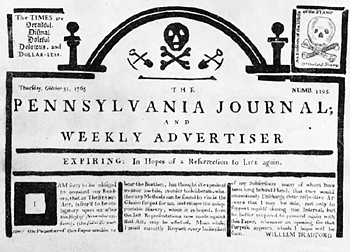
In the 1700’s, newspapers became the source of community news. These newspapers often portrayed a political view, but were THE source of information in a society where travel was limited and information scarce. Writers and editors often became key figures in the social and political structure as the gatekeepers of what would be printed.

Radio was faster, but newspapers were corporeal

1900’s
The invention of radio and television gave new options to the public on how they accessed news. The radio offered broadcast news that reached more people faster; however, newspapers remained the source of news because it existed in corporeal form. News transmitted on radio waves disappeared if a person wasn’t in front of the radio during the broadcast. Newspapers; however, almost always gave more a more in-depth account of the events.

Television came shortly after radio and added the exciting features of seeing the reporter and moving images of events; however, newspapers continued to be the best source of significant events.

CNN was to newspapers what Wal-Mart was to Mom & Pop stores

1980
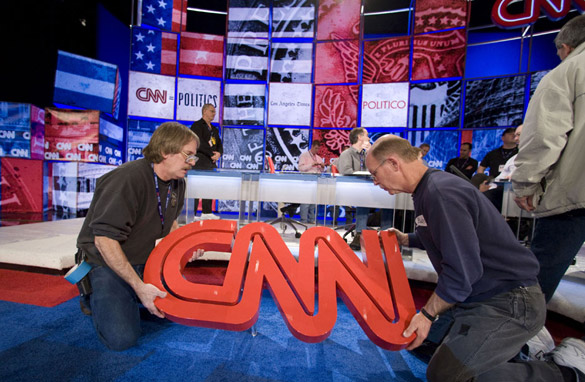
CNN was the first real threat to newspapers. It offered news 24/7/365 and it often relayed events in progress. People no longer had to wait for a newspaper’s version that would come the next day. The newspaper still had the corporeal advantage because CNN would eventually move on to the other news while newspapers could be read anytime. Newspapers also still gave more in-depth reporting on local news issues.

1995
It wasn’t until the creation of the Internet that newspapers faced a challenge that would threaten their existence. The public use of the Internet stripped newspapers of almost every advantage they held. News was not only reported, it was discussed and people reacted in real-time. With the development of the Google search engine topics could be accessed and researched at any time anywhere there was Internet access. The news was no longer filtered and limited to what an editor thought people should know, but rather raw information reached individuals who made their own decisions on what was significant to them.

Reporters who spent years in college and thousands of dollars in tuition and books now found themselves competing against bloggers who had no editors to please. Reporters might get the story and accurately report it to their community but in a real-time world their information was just following up to what people already knew. Newspapers have adapted by presenting an online version of the information that will be in the next day’s paper and that has helped writers compete and be read; however, investors want profit and that is the heart of the dilemma.

The Reno Gazette-Journal has decided that they will create demand and increase revenue by limiting access. That is a rational position to take if you have a product that has significant value and demand, but newspapers and their value appeals to a diminishing demographic. Older white males are dying off at an incredibly rapid pace and newspapers have little demand or value to younger, non-white, non-male demographics. How does RGJ expect to gain new readers by charging for access who have free access to local online news through three Reno television news station’s webpages?

There is another problem with RGJ’s decision that may impact the quality of writing. A writer for RGJ has to accept that their audience will be extremely limited. Blogs will exist for decades and are be searchable to anyone in the world. An RGJ reporters work is locked away behind a wall forever. Who wants to dedicate their life to writing and have it unread? Over time writers will have to decide how much damage RGJ is doing to their career by locking their work behind a pay wall. Once the good writers are gone, what value will the Reno Gazette-Journal have to anyone, paying or otherwise?

A Question of Ethics

02 Tuesday Nov 2010

Posted by Paul Kiser in Branding, Business, Communication, Crisis Management, Customer Relations, Customer Service, Employee Retention, Ethics, History, Honor, Human Resources, Management Practices, Passionate People, Pride, Public Relations, Relationships, Respect, Rotary

≈ 3 Comments

Tags

Blogging, Blogs, Employment, Ethics, Executive Management, Management Practices, Public Relations, Rotary, Seminars, speakers

by Paul Kiser
USA PDT  [Twitter: ] [Facebook] [LinkedIn] [Skype:kiserrotary or 775.624.5679]

Paul Kiser

Business ethics have waxed and waned over the centuries, but recently we have observed a severe lack of ethical conduct on a large-scale in recent years. The most recent world-wide economic crisis was triggered by years of unethical business practices that nearly put the United States in its first depression in almost a century. In hindsight the questionable business practices were often created by a subtle system of pressuring employees to take actions that were demanded by executives and managers in order to improve earnings for stockholders. This type of ethical dilemma often leaves no one person to blame, and even those involved sometimes do not realize that they are participating in inappropriate and/or unethical acts.

I have been caught in ethical dilemmas that created a moral challenge for me and in one situation I lost a stream of revenue in a seemingly no win scenario.

For a time I assisted a seminar speaker who was considered to be an expert in his field. He hired me to participate in group activities during his seminars.  Occasionally, he would ask me to update or write scenarios for his seminars. In one case I based the scenario on someone I knew, but I added the possibility of suicide.  The scenario was also combined with a possibility of doing harm to someone else.  We used the scenario in one of his seminars and it went very well.

Bigger horns make the bull seem smaller...just like some consultants

A few weeks later we used the same scenario, with minor revisions, with another client. Interestingly enough, the night before the seminar, the speaker  told me that someone else had just written the scenario. However, when I read it I realized that it was the same one I had written for him a few weeks earlier. When I mentioned to him that I was familiar with this scenario and tactfully reminded him that I had been the original author he quickly acknowledged it and moved on.

The next day exercise went well and afterward the participants were given the opportunity to discuss the activity. Participants began asking him about what happened in real life to this person.  Instead of explaining that this was a fictional scenario based on a combination of multiple real situations, the speaker began explaining that in the real life situation that the person did indeed kill himself.  He continued to answer more questions that were also fabrications, but passed off as his ‘research’.  Afterwards I did not mention anything to him about his handling of the post-activity questions.  He was hiring me to assist him, not criticize him and so I did not pursue it with him.

He had already hired me to work with two more clients in the next few weeks and at both he insisted that I stay out of the room, except during the group activity. He stressed that it was not good for his clients to ‘get to know me’ too well.  He also did not schedule me for any more work with his clients.

Later I tried to understand what I might have done to cause an abrupt end to our relationship. He and his clients raved about my work. I then realized that the sudden changes occurred after I witnessed his unethical handling of questions in the previous seminar. Apparently it had a significant impact on him that I observed his breach of trust with his client and that earned me a permanent seat on the bench.

Perhaps I should have confronted him, but I think that would have just made him mad, with the same result.  It was a good lesson: A lack of ethics by one person…sucks.

More Articles

Business: Public Relations, Management, and Social Media Related

  • HR/Security Hot Topic: Should you watch your employee’s personal Internet activities? (Facebook, MySpace, Twitter, etc.)
  • Relationship Typing: 3 factors that affect the quality and depth of friendship (Part I)
  • Starbucks Re-Imagines the business … again
  • Your Privacy Rights on the Internet: Read before you write
  • Social Media 3Q Update: Who uses Facebook, Twitter,LinkedIn, and MySpace?
  • Richmond Embassy Suites: The best at true Hospitality
  • Dear Business Person: It’s 2010, please update your brain.
  • Selling watered-down beer: The best spin campaign in advertising
  • Communication: Repetition of message does not increase awareness
  • Is it time to fire yourself?
  • Millennium Hotel: Go away, spend your money elsewhere
  • Rogue Flight Attendant shows his arrogance, Airlines dislike for the customer
  • 2Q 2010 Social Media Tools: Facebook/Twitter sail on, LinkedIn/MySpace don’t
  • War Declared on Social Media: Desperate Acts of Traditional Media
  • Pay It Middle: The Balance between Too Much and Too Little Compensation
  • Mega Executive Pay Leads to Poor Performance
  • Relationships and Thin-Slicing: Why the other person knows what you’re really thinking
  • Browser Wars: Internet Explorer losing, Google Chrome gaining ground
  • WiFi on Southwest Airlines: Is it ‘Shovel Ready’?
  • Starbucks makes a smart move: Free WiFi
  • Foul Play: FIFA shows what less regulation offers to business
  • The Shock of the McChrystal Story: The story is over before the article is published
  • Tony Hayward: The very model of a modern Major General
  • Epic Fail: PR ‘Experts’ don’t get Twitter
  • King of Anything: Social Media vs Traditional Media
  • Twitter is the Thunderstorm of World Thought
  • Signs of the Times
  • How Social Interactive Media Could Transform Higher Education
  • How to Become a Zen Master of Social Media
  • Death of All Salesmen!
  • Aristotle’s General Rules on Social Media
  • Social Media:  What is it and Why Should You Care?
  • Social Media 2020:  Keep it Personal
  • Social Media 2020:  Who Shouldn’t Be Teaching Social Media
  • Social Media 2020:  Public Relations 2001 vs Social Media Relations 2010
  • Social Media 2020: Who Moved My Public Relations?
  • Publishing Industry to End 2012
  • Who uses Facebook, Twitter, MySpace & LinkedIn?
  • Fear of Public Relations
  • Dissatisfiers: Why John Quit
  • Facebook, Twitter, LinkedIn…Oh My!
  • Does Anybody Really Understand PR?

Rotary Related

  • Rotary@105: 7 Relationship types that affect membership retention (Part II)
  • What most non-Rotarians don’t know about Rotary
  • Rotary@105: Making Rotary Sexy
  • Rotary@105: Grieving change
  • How Rotary can..must..will plug into Social Media
  • Rotary PR: Disrespecting the Club President is a PR/Membership issue
  • Rotary Membership/Public Image Challenge
  • Rotary New Year: Retread or Renaissance?
  • Rotary@105: A young professionals networking club?
  • One Rotary Center: A home for 1.2 million members
  • Rotary@105:  What BP Could Learn from the 1914 Rotary Code of Ethics
  • Rotary Magazine Dilemma Reveals the Impact of Social Media
  • Rotary@105:  April 24th – Donald M. Carter Day
  • Rotary@105:  What kind of animal is Rotary International?
  • Rotary:  The Man in the Yellow Hat as the Ideal Club President?
  • Rotary@105:  Our 1st Rotary Club Dropout
  • Rotary Public Relations and Membership: Eight Steps to a Team Win
  • Rotary: All Public Relations is Local
  • Best Practices:  Become a Target!

Science Related

  • Negative Time: The Self-fulfilling Prophesy a Scientific Possibility?
  • Physics in 2010: The more we understand, the less we know

Personal Experience Related

  • Knowing when it’s over or beyond over
  • Dear Teresa Laraba, SVP of Southwest Airlines Customer Service
  • Things I didn’t know about being a Father to a four-year-old boy
  • Riding Reno: The Ladies of Reno
  • Up in the air down in Texas
  • I mow my lawn because…
  • Nevada I-580: An Interstate by any other name
  • Nevada’s oldest brewery opens a Reno location
  • Two Barbecues and a Wedding
  • Car Dealership Re-Imagines Customer Service

Our Country and History Related

  • The Quality of Mercy: Tea Party seeks its pound of flesh
  • I’m not angry, nor am I stupid … and I voted
  • Point of Confusion
  • What I’m not buying this year
  • Nevada: State of Disaster
  • Thank you, Mr. President
  • America’s Hostile Takeover of Mexico

HR/Security Hot Topic: Should you watch your employee’s personal Internet activities? (Facebook, MySpace, Twitter, etc.)

28 Thursday Oct 2010

Posted by Paul Kiser in Branding, Business, Communication, Consulting, Crisis Management, Customer Service, Employee Retention, Ethics, Government Regulation, Honor, Human Resources, Information Technology, Internet, Management Practices, Pride, Privacy, Public Relations, Re-Imagine!, Recreation, Relationships, Respect, Rotary, SEO, Social Interactive Media (SIM), Social Media Relations, Violence in the Workplace, Website

≈ 1 Comment

Tags

background checks, Blogging, Blogs, case law, Employee evaluations, Employee privacy, Employer liability, Employment, Employment Law, employment verification, Executive Management, Facebook, HR, Human Resources, Internet, lawsuit, LinkedIn, Management Practices, monitoring employees, New Business World, performance reviews, Privacy, Privacy on the Internet, Public Image, Public Relations, Publicity, Rotary, security, Social Media, Social Networking

by Paul Kiser
USA PDT  [Twitter: ] [Facebook] [LinkedIn] [Skype:kiserrotary or 775.624.5679]

Paul Kiser

One of the hottest topics in the world of employment is whether or not an employer should monitor his or her Internet activities. This is a subject I’ve written about before, but it is an issue that is still emerging and has yet to have any significant case-law to provide guidance to employers.

It is well-known that a large number of employers perform a ‘Google’ search on the Internet before they hire an applicant, but now companies are feeling the need to continue to monitor an employee’s Internet activities after hire. Many experts, especially those involved in employee liability prevention support an employer’s right to monitor an employee’s Internet activities even when those activities occur off-duty and offsite. The logic is that it is prudent to aware of anything an employee might say or do that could embarrass the employer, or any indication that the employee might take an action that might involve the company and its facilities.

These are rational arguments, but I believe that monitoring an employee’s activities is opening the door to bigger liability issues. Sound odd? Here’s the scenario I see happening in three Acts.

Should the Employer be Big Brother?

Act One: A busy-body employer or manager casually checks his or her employee’s Facebook, MySpace, and/or Twitter accounts. The employer might even do a Google search on an employee from time to time. When the employer or manager finds something that they see as objectionable they confront the guilty employee and take the proper action. It becomes known throughout the company (and the employee’s family) that the employer monitors its employee’s personal Internet activity.

Act Two: An employee has been reprimanded for content they have posted on the Internet. Six months later the same employee posts information on the Internet that he  is considering suicide and describes in detail how he is going to kill himself. Two weeks later the employee carries out the suicide as described. The family is aware the employer monitors the employee’s Internet activity and sues the employer claiming that the employer should have reasonably been aware of the planned suicide and taken action.

Act Three: Companies find themselves with two polar opposite choices. Either the company does not monitor their employee’s Internet activities or the company assigns resources to constantly monitor the Internet on every employee to insure they capture any relevant data for which the company should take action.

I was trained in Human Resources under the policy that what the employee did on her or his own time was off-limits to the employer unless it had a direct impact the job performance. That policy has had to be adjusted in a world where work and off-duty time can often be hard to differentiate, and where drug testing, researching credit scores and background checks have become standard operating procedure for many companies. However, an employee’s personal Internet activities is almost impossible to track in a society that is increasing involved in hours of daily online social networking. The question is whether an employer wants to be liable for monitoring its employees 24/7/365 and being held responsible for taking the appropriate action, or whether the employer would be better served by not being sucked into liability issues that can be avoided by simply not playing the role of Big Brother ?

I know which strategy I would recommend to my clients.

More Articles

Business: Public Relations, Management, and Social Media Related

  • Relationship Typing: 3 factors that affect the quality and depth of friendship (Part I)
  • Starbucks Re-Imagines the business … again
  • Your Privacy Rights on the Internet: Read before you write
  • Social Media 3Q Update: Who uses Facebook, Twitter,LinkedIn, and MySpace?
  • Richmond Embassy Suites: The best at true Hospitality
  • Dear Business Person: It’s 2010, please update your brain.
  • Selling watered-down beer: The best spin campaign in advertising
  • Communication: Repetition of message does not increase awareness
  • Is it time to fire yourself?
  • Millennium Hotel: Go away, spend your money elsewhere
  • Rogue Flight Attendant shows his arrogance, Airlines dislike for the customer
  • 2Q 2010 Social Media Tools: Facebook/Twitter sail on, LinkedIn/MySpace don’t
  • War Declared on Social Media: Desperate Acts of Traditional Media
  • Pay It Middle: The Balance between Too Much and Too Little Compensation
  • Mega Executive Pay Leads to Poor Performance
  • Relationships and Thin-Slicing: Why the other person knows what you’re really thinking
  • Browser Wars: Internet Explorer losing, Google Chrome gaining ground
  • WiFi on Southwest Airlines: Is it ‘Shovel Ready’?
  • Starbucks makes a smart move: Free WiFi
  • Foul Play: FIFA shows what less regulation offers to business
  • The Shock of the McChrystal Story: The story is over before the article is published
  • Tony Hayward: The very model of a modern Major General
  • Epic Fail: PR ‘Experts’ don’t get Twitter
  • King of Anything: Social Media vs Traditional Media
  • Twitter is the Thunderstorm of World Thought
  • Signs of the Times
  • How Social Interactive Media Could Transform Higher Education
  • How to Become a Zen Master of Social Media
  • Death of All Salesmen!
  • Aristotle’s General Rules on Social Media
  • Social Media:  What is it and Why Should You Care?
  • Social Media 2020:  Keep it Personal
  • Social Media 2020:  Who Shouldn’t Be Teaching Social Media
  • Social Media 2020:  Public Relations 2001 vs Social Media Relations 2010
  • Social Media 2020: Who Moved My Public Relations?
  • Publishing Industry to End 2012
  • Who uses Facebook, Twitter, MySpace & LinkedIn?
  • Fear of Public Relations
  • Dissatisfiers: Why John Quit
  • Facebook, Twitter, LinkedIn…Oh My!
  • Does Anybody Really Understand PR?

Rotary Related

  • Rotary@105: 7 Relationship types that affect membership retention (Part II)
  • What most non-Rotarians don’t know about Rotary
  • Rotary@105: Making Rotary Sexy
  • Rotary@105: Grieving change
  • How Rotary can..must..will plug into Social Media
  • Rotary PR: Disrespecting the Club President is a PR/Membership issue
  • Rotary Membership/Public Image Challenge
  • Rotary New Year: Retread or Renaissance?
  • Rotary@105: A young professionals networking club?
  • One Rotary Center: A home for 1.2 million members
  • Rotary@105:  What BP Could Learn from the 1914 Rotary Code of Ethics
  • Rotary Magazine Dilemma Reveals the Impact of Social Media
  • Rotary@105:  April 24th – Donald M. Carter Day
  • Rotary@105:  What kind of animal is Rotary International?
  • Rotary:  The Man in the Yellow Hat as the Ideal Club President?
  • Rotary@105:  Our 1st Rotary Club Dropout
  • Rotary Public Relations and Membership: Eight Steps to a Team Win
  • Rotary: All Public Relations is Local
  • Best Practices:  Become a Target!

Science Related

  • Negative Time: The Self-fulfilling Prophesy a Scientific Possibility?
  • Physics in 2010: The more we understand, the less we know

Personal Experience Related

  • Knowing when it’s over or beyond over
  • Dear Teresa Laraba, SVP of Southwest Airlines Customer Service
  • Things I didn’t know about being a Father to a four-year-old boy
  • Riding Reno: The Ladies of Reno
  • Up in the air down in Texas
  • I mow my lawn because…
  • Nevada I-580: An Interstate by any other name
  • Nevada’s oldest brewery opens a Reno location
  • Two Barbecues and a Wedding
  • Car Dealership Re-Imagines Customer Service

Our Country and History Related

  • I’m not angry, nor am I stupid … and I voted
  • Point of Confusion
  • What I’m not buying this year
  • Nevada: State of Disaster
  • Thank you, Mr. President
  • America’s Hostile Takeover of Mexico

Rotary@105: 7 Relationship types that affect membership retention (Part II)

27 Wednesday Oct 2010

Posted by Paul Kiser in Branding, Business, Club Leadership, Communication, Customer Relations, Customer Service, Employee Retention, Ethics, Honor, Human Resources, Information Technology, Internet, Lessons of Life, Management Practices, Membership Recruitment, Membership Retention, Passionate People, Pride, Public Relations, Relationships, Rotary, Rotary@105, Social Interactive Media (SIM), Social Media Relations, The Tipping Point, Women

≈ 1 Comment

Tags

Alien, Blank, Blogging, Blogs, Club Members, Common Interests, Competitor, Customer Loyalty, Equality, Executive Management, Facebook, Friend, Internet, LinkedIn, Management Practices, Membership Recruitment, Membership Retention, Mentor, New Business World, Partner, Public Image, Public Relations, Rival, Rotarians, Rotary, Rotary Club, Seven Benchmark Relationships, Social Media, Social Networking, Star, Stranger, Submissive, Subordinate, The Star, Trust, Twitter, Value-added

by Paul Kiser
USA PDT  [Twitter: ] [Facebook] [LinkedIn] [Skype:kiserrotary or 775.624.5679]

Paul Kiser

NOTE: This article is a secondary article to
Relationships Typing: 3 factors that the affect quality and depth of friendship

As mentioned in the first part of this article, I have defined three factors that seem to determine the quality of my relationships. 1) Trust, 2) Common Interests and/or Experiences, 3) Equality.

By using a 21-point scale to rate each factor in various relationship types we can see how Trust (or the lack of), Common Interests and/or Experiences (or the lack of), and Equality (or the lack of) define the relationship. Below are seven types of benchmark relationships and how they might affect membership retention in a Rotary club.

Too much friendship?

The Star
We all have people who we look up to, but there are just a few people that we put on a pedestal. I see the Star relationship as one where the trust level is relatively high (+7 on a scale of -10 to +10) as well as the common interest level (+8 on a scale of -10 to +10), but we feel inferior (a -9 on a scale of -10 to +10) to this person. In this relationship the depth and quality of the relationship is usually shallow. These people are not close friends, but rather an admired acquaintance. A new member in a Rotary club might see the Club President as the Star.

The Mentor
The Mentor is a different version of the Star. The difference is that we trust the Mentor implicitly (+10) and we have a strong common interest (+9); however, we see ourselves as inferior (-6) to our Mentor. The Mentor has achieved a level of success that we hope reach and our relationship is based on a mutual effort to gain an equal level of success in the future. I think it is a mistake to believe that a Mentor relationship can be imposed. The only successful Mentor relationships I have observed are those that have occurred by a mutual agreement of both parties. In over nine years in Rotary have witnessed few successful Mentor relationships. When it does happen it is a win-win situation for both members, but the Mentor must be highly skilled and/or knowledgeable, a passionate person, and a great trainer. In addition, the ‘trainee’ must recognize the Mentor’s superior knowledge and have a desire to learn from him or her. If not, the relationship will fail.

A Partnership is not necessarily a friendship

The Partner
I see the Partner as a relationship seeking mutual benefit for both people, but without the level of trust of a Mentor relationship. In a Partner relationship the trust is conditional (0, not + or -) and the two people usually see the other as his or her  equal (0) or at least they have something of value that balances the relationship, but the common interest is high (+9). I would consider the Partner relationship to be a symbiotic or co-dependent relationship and while the relationship may seem to be a strong bond, the slightest feeling of inequality or betrayal can end the relationship. In Part I of this series I mentioned that the employer/employee relationship might be a partnership, but I also believe that some marriages can start out, or devolve into Partner type relationships. In a Rotary club a member who has established mostly Partner relationships with other members is likely to have no deep attachment to the club and likely to leave.

The Friend
Of all relationships, I think a Friend is the hardest to achieve. A quality friendship involves a high level of trust (+9) and a significant level of common interests and/or experiences (+6), but also a genuine feeling of equality (0) must exist. The trust and equality factors for a friendship are difficult for most people to offer to another person. It is a special relationship and one to be highly valued, but once achieved it is a strong bond that lasts over time and distance. If every member were to have only one other true ‘Friend’ in his or her club most members would never consider leaving.

The Rival or Competitor
A rival is a relationship, even though we usually don’t think of it as one. It is a relationship based on mistrust (-8) of another person and somewhat ironically, a relationship that includes a high level of common interests (+8). I think that while we may feel we are superior to our rival that the truth is that we are afraid that we are not, thus I give an equality rating of (+3) to a Rival relationship. The Rival relationship is one of the worst possible relationships that could develop in a Rotary club. Sooner or later the club is going to be drawn into the conflict or one or more members will leave because of it. Ironically, it is the high level of common interest that seems to set up the Rival/Competitor situation. Without the envy or jealousy caused by the common interest both people would probably ignore each other.

Common Interest can enhance a relationship, or create conflict

The Subordinate or Submissive
Note that with the Subordinate relationship I am talking about someone who sees another person as their subordinate or submissive. This can be an employer/employee type relationship, but it is any relationship where a person sees him/herself as superior (+10) to another person. The trust level is relatively high (+5) as the person with the bigger ego expects the subordinate to obey their wishes and typically there is somewhat of a common interest (+3), but not necessarily a significant level of commonality. The big problem I have seen with this type of relationship is that the target of this attitude may not feel that they should be the subordinate. In a Rotary club it is surprising easy for a club leader to see other club members as their subordinate. Nothing creates a false sense of power like a title and in a volunteer organization titles are meant to assign responsibility, not authority, but not everyone understands that concept.

The Alien or Blank
It seems somewhat pointless to talk about the lack of a relationship as a type of relationship, but the I find it interesting to understand that some people just don’t show up on our relationship radar even though we may see them on a regular basis. I didn’t fully understand this until I was in Rotary, but after a few years in a club you learn the some people can disappear in plain sight. I feel the lack of a relationship, when there realistically should be is a type of relationship and I refer to it as an Alien or Blank relationship.

The quality of Friendship
I would not argue the point that it takes two to make or break a relationship; however, I would argue that the quality and depth of any relationship is determined largely by our own attitudes, in concert with the way the other person treats us. Understanding the factors that influence a relationship is the first step to making positive changes. In a Rotary club, failing to recognize that not all relationships are constructive can have major consequences on membership retention.

In Part I of this series I talked about a facilitator at a meeting who didn’t want to dilute his ‘friendships’ with people in the Social Media. My response to him is this: friendship is more about what we bring to the table and not the method of connection. The Social Media is not a threat to good friendships, just a different way to engage in them.

More Articles

Business: Public Relations, Management, and Social Media Related

  • Starbucks Re-Imagines the business … again
  • Your Privacy Rights on the Internet: Read before you write
  • Social Media 3Q Update: Who uses Facebook, Twitter,LinkedIn, and MySpace?
  • Richmond Embassy Suites: The best at true Hospitality
  • Dear Business Person: It’s 2010, please update your brain.
  • Selling watered-down beer: The best spin campaign in advertising
  • Communication: Repetition of message does not increase awareness
  • Is it time to fire yourself?
  • Millennium Hotel: Go away, spend your money elsewhere
  • Rogue Flight Attendant shows his arrogance, Airlines dislike for the customer
  • 2Q 2010 Social Media Tools: Facebook/Twitter sail on, LinkedIn/MySpace don’t
  • War Declared on Social Media: Desperate Acts of Traditional Media
  • Pay It Middle: The Balance between Too Much and Too Little Compensation
  • Mega Executive Pay Leads to Poor Performance
  • Relationships and Thin-Slicing: Why the other person knows what you’re really thinking
  • Browser Wars: Internet Explorer losing, Google Chrome gaining ground
  • WiFi on Southwest Airlines: Is it ‘Shovel Ready’?
  • Starbucks makes a smart move: Free WiFi
  • Foul Play: FIFA shows what less regulation offers to business
  • The Shock of the McChrystal Story: The story is over before the article is published
  • Tony Hayward: The very model of a modern Major General
  • Epic Fail: PR ‘Experts’ don’t get Twitter
  • King of Anything: Social Media vs Traditional Media
  • Twitter is the Thunderstorm of World Thought
  • Signs of the Times
  • How Social Interactive Media Could Transform Higher Education
  • How to Become a Zen Master of Social Media
  • Death of All Salesmen!
  • Aristotle’s General Rules on Social Media
  • Social Media:  What is it and Why Should You Care?
  • Social Media 2020:  Keep it Personal
  • Social Media 2020:  Who Shouldn’t Be Teaching Social Media
  • Social Media 2020:  Public Relations 2001 vs Social Media Relations 2010
  • Social Media 2020: Who Moved My Public Relations?
  • Publishing Industry to End 2012
  • Who uses Facebook, Twitter, MySpace & LinkedIn?
  • Fear of Public Relations
  • Dissatisfiers: Why John Quit
  • Facebook, Twitter, LinkedIn…Oh My!
  • Does Anybody Really Understand PR?

Rotary Related

  • What most non-Rotarians don’t know about Rotary
  • Rotary@105: Making Rotary Sexy
  • Rotary@105: Grieving change
  • How Rotary can..must..will plug into Social Media
  • Rotary PR: Disrespecting the Club President is a PR/Membership issue
  • Rotary Membership/Public Image Challenge
  • Rotary New Year: Retread or Renaissance?
  • Rotary@105: A young professionals networking club?
  • One Rotary Center: A home for 1.2 million members
  • Rotary@105:  What BP Could Learn from the 1914 Rotary Code of Ethics
  • Rotary Magazine Dilemma Reveals the Impact of Social Media
  • Rotary@105:  April 24th – Donald M. Carter Day
  • Rotary@105:  What kind of animal is Rotary International?
  • Rotary:  The Man in the Yellow Hat as the Ideal Club President?
  • Rotary@105:  Our 1st Rotary Club Dropout
  • Rotary Public Relations and Membership: Eight Steps to a Team Win
  • Rotary: All Public Relations is Local
  • Best Practices:  Become a Target!

Science Related

  • Negative Time: The Self-fulfilling Prophesy a Scientific Possibility?
  • Physics in 2010: The more we understand, the less we know

Personal Experience Related

  • Knowing when it’s over or beyond over
  • Dear Teresa Laraba, SVP of Southwest Airlines Customer Service
  • Things I didn’t know about being a Father to a four-year-old boy
  • Riding Reno: The Ladies of Reno
  • Up in the air down in Texas
  • I mow my lawn because…
  • Nevada I-580: An Interstate by any other name
  • Nevada’s oldest brewery opens a Reno location
  • Two Barbecues and a Wedding
  • Car Dealership Re-Imagines Customer Service

Our Country and History Related

  • I’m not angry, nor am I stupid … and I voted
  • Point of Confusion
  • What I’m not buying this year
  • Nevada: State of Disaster
  • Thank you, Mr. President
  • America’s Hostile Takeover of Mexico

Your Privacy Rights on the Internet: Read before you write.

11 Monday Oct 2010

Posted by Paul Kiser in Branding, Business, Communication, Crisis Management, Customer Relations, Customer Service, Ethics, Honor, Human Resources, Information Technology, Internet, Lessons of Life, Management Practices, Passionate People, Pride, Privacy, Public Relations, Re-Imagine!, Relationships, Respect, Rotary, Social Interactive Media (SIM), Social Media Relations

≈ 1 Comment

Tags

Blogging, Blogs, Facebook, Internet, LinkedIn, New Business World, Privacy on the Internet, Public Image, Public Relations, Re-Imagine!, Rotary, Social Media, Social Networking, Twitter, Your Rights

by Paul Kiser
USA PDT  [Twitter: ] [Facebook] [LinkedIn] [Skype:kiserrotary or 775.624.5679]

Paul Kiser

I have had several discussions with people who have a fear of the Internet and Social Media tools. The common issue that arises is regarding privacy, which to me is an interesting concern. Being concerned that you’re giving up your privacy if you use the Internet is, to me, a Homer Simpson moment.

I’m not sure where anyone got the idea that writing something and sending it out over a public system of servers, visible to almost anyone, and recorded for all time would be private, but for those of you who have that impression, let me read you your rights:

Your Right to Privacy on the Internet

  • You have a right to stay silent.
  • You have a right to not participate in Internet/online activities.
  • You have a right to consult an attorney before you participate in any Internet/online activities.
  • You have the right to stay in your house, block up the windows and never go out into public.
  • If you choose to participate in any Internet/online activities, anything you say can and will:
    • be considered a reflection of your public image
    • be available for anyone in the world to access
    • be recorded for the remainder history of the civilized world
    • be used against you now, or in the future
  • If you choose to NOT participate that will NOT prevent:
    • People from talking about you on the Internet
    • People using your image for almost any purpose
The Internet, and Social Media tools like Facebook, Twitter, MySpace, and LinkedIn allow people to communicate in a way we’ve never been able to communicate before. It is not intended for private discussions, but it is an open forum. That makes some people uncomfortable, and while I understand that, I also have to wonder why people have a need to say something they are not willing to say publicly?

There is still a time and place for a personal, one-to-one conversation to discuss matters between the two people, but isn’t that better to be done in person? Privacy is not what one should expect when using the Internet, but it is the place for ideas and concepts to be discussed in an open environment that values the input of all. Yes, sometimes the stupid people have louder voices and win the day, but at some point people will look back and learn who was behaving stupidly and who was really correct.

Here are four things I try to keep in mind when participating in online activities:

  1. Sometimes I’m going to say something stupid. I’m human and I will have to buck up and take responsibility for it.
  2. Sometimes people are going to ridicule what I have to say. That doesn’t mean they are correct and it may be a reflection of their poor judgement, not mine.
  3. By participating I will learn more than I could if I did not participate. Sometimes the lesson will be difficult, but that will usually mean I will learn more.
  4. Social Media is not the alpha and omega of life, but it is one of the most powerful communication tools ever conceived.
Now you have been read your rights… you can take it from here.

More Articles

Business: Public Relations, Management, and Social Media Related

  • Social Media 3Q Update: Who uses Facebook, Twitter,LinkedIn, and MySpace?
  • Richmond Embassy Suites: The best at true Hospitality
  • Dear Business Person: It’s 2010, please update your brain.
  • Selling watered-down beer: The best spin campaign in advertising
  • Communication: Repetition of message does not increase awareness
  • Is it time to fire yourself?
  • Millennium Hotel: Go away, spend your money elsewhere
  • Rogue Flight Attendant shows his arrogance, Airlines dislike for the customer
  • 2Q 2010 Social Media Tools: Facebook/Twitter sail on, LinkedIn/MySpace don’t
  • War Declared on Social Media: Desperate Acts of Traditional Media
  • Pay It Middle: The Balance between Too Much and Too Little Compensation
  • Mega Executive Pay Leads to Poor Performance
  • Relationships and Thin-Slicing: Why the other person knows what you’re really thinking
  • Browser Wars: Internet Explorer losing, Google Chrome gaining ground
  • WiFi on Southwest Airlines: Is it ‘Shovel Ready’?
  • Starbucks makes a smart move: Free WiFi
  • Foul Play: FIFA shows what less regulation offers to business
  • The Shock of the McChrystal Story: The story is over before the article is published
  • Tony Hayward: The very model of a modern Major General
  • Epic Fail: PR ‘Experts’ don’t get Twitter
  • King of Anything: Social Media vs Traditional Media
  • Twitter is the Thunderstorm of World Thought
  • Signs of the Times
  • How Social Interactive Media Could Transform Higher Education
  • How to Become a Zen Master of Social Media
  • Death of All Salesmen!
  • Aristotle’s General Rules on Social Media
  • Social Media:  What is it and Why Should You Care?
  • Social Media 2020:  Keep it Personal
  • Social Media 2020:  Who Shouldn’t Be Teaching Social Media
  • Social Media 2020:  Public Relations 2001 vs Social Media Relations 2010
  • Social Media 2020: Who Moved My Public Relations?
  • Publishing Industry to End 2012
  • Who uses Facebook, Twitter, MySpace & LinkedIn?
  • Fear of Public Relations
  • Dissatisfiers: Why John Quit
  • Facebook, Twitter, LinkedIn…Oh My!
  • Does Anybody Really Understand PR?

Rotary Related

  • What most non-Rotarians don’t know about Rotary
  • Rotary@105: Making Rotary Sexy
  • Rotary@105: Grieving change
  • How Rotary can..must..will plug into Social Media
  • Rotary PR: Disrespecting the Club President is a PR/Membership issue
  • Rotary Membership/Public Image Challenge
  • Rotary New Year: Retread or Renaissance?
  • Rotary@105: A young professionals networking club?
  • One Rotary Center: A home for 1.2 million members
  • Rotary@105:  What BP Could Learn from the 1914 Rotary Code of Ethics
  • Rotary Magazine Dilemma Reveals the Impact of Social Media
  • Rotary@105:  April 24th – Donald M. Carter Day
  • Rotary@105:  What kind of animal is Rotary International?
  • Rotary:  The Man in the Yellow Hat as the Ideal Club President?
  • Rotary@105:  Our 1st Rotary Club Dropout
  • Rotary Public Relations and Membership: Eight Steps to a Team Win
  • Rotary: All Public Relations is Local
  • Best Practices:  Become a Target!

Science Related

  • Negative Time: The Self-fulfilling Prophesy a Scientific Possibility?
  • Physics in 2010: The more we understand, the less we know

Personal Experience Related

  • Things I didn’t know about being a Father to a four-year-old boy
  • Riding Reno: The Ladies of Reno
  • Up in the air down in Texas
  • I mow my lawn because…
  • Nevada I-580: An Interstate by any other name
  • Nevada’s oldest brewery opens a Reno location
  • Two Barbecues and a Wedding
  • Car Dealership Re-Imagines Customer Service

Our Country and History Related

  • Nevada: State of Disaster
  • Thank you, Mr. President
  • America’s Hostile Takeover of Mexico

Rotary@105: Making Rotary Sexy

20 Monday Sep 2010

Posted by Paul Kiser in Branding, Business, Club Leadership, Communication, Customer Relations, Customer Service, Ethics, History, Human Resources, Lessons of Life, Management Practices, Membership Recruitment, Membership Retention, Passionate People, Public Relations, Relationships, Rotary, Rotary@105, Social Interactive Media (SIM), Social Media Relations, The Tipping Point

≈ 2 Comments

Tags

2008 Rotary Focus Group Study, bad behavior, Blogging, Blogs, Club Members, Executive Management, History of Rotary, Management Practices, Membership Recruitment, Membership Retention, Paul Harris, Public Image, Public Relations, Publicity, Rotarians, Rotary, Rotary Club, Rotary District 5190, Rotary International, Social Media, Social Networking, Value-added

by Paul Kiser
USA PDT  [Twitter: ] [Facebook] [LinkedIn] [Skype:kiserrotary or 775.624.5679]

Paul Kiser - Rotary Public Relations Chair - District 5190

In 2008, Rotary International did a focus group study to discover the perception of non-Rotarians about our organization. It was an eye opener. In order to avoid a conditioned or biased response to the questions the participants of the study were unaware of who funded the study . While no cities in the United States of America were included in the focus group study, it is the best information we have to date about the Public Image (what other people think) of Rotary.  At the risk of airing dirty laundry, here’s what we learned:

Study Finding:
People are very cautious about ‘volunteering’

“In most cases individuals are inclined to volunteer, however they are very intent on maintaining enough ‘personal’ time, and they do not consider humanitarian efforts or volunteering as something for which they would give up their ‘personal’ time.”

What may look like fun to some may be scary to others

This is important to note because most Rotarians often remark that ‘giving back’ and ‘service’ is one of the reasons they belong to Rotary, and we tend to readily share with prospective members that volunteering is one of the positive aspects of joining a club. However, this seems to be something we LEARN AFTER we become Rotarians. By approaching potential members with an emphasis on volunteering, we may be dissuading, not persuading them.

We have to remember that all Rotarians usually pick the volunteer activities in which they participate based on their passion for the need. While ‘Service Above Self’ is our motto, the magic of Rotary is that most clubs offer a wide variety of projects and programs, which allow the individual member to choose how and where to invest their time, money, and/or energy. This makes volunteerism a rewarding experience, rather than an obligation. My experience is that every successful new project or program has had a single member who was passionate about the need and was able to excite the other members to join in. The great feeling we have about volunteering is something we learn by experiencing.

Study Finding:
Mistrust of Large Organizations

“An issue that came up in all three regions was the mistrust or skepticism towards large organizational structures …. Respondents also noted that there is a tendency to view smaller organizations as more effective in getting things accomplished at the local level.”

This finding is what caused me to start using the phrase, “All Public Relations is local.” A big billboard about Rotary International will not be as effective as a one license plate holder driving around town on the back of a member’s car. The face of Rotary is and always been the face of our members and those who benefit from our projects and programs at the local level. This is not to minimize the value of our regional and international involvement, but when talking to someone who might be interested in Rotary, they want to know about the club, not the mega-organization.

Study Finding:
Rotary’s Public Image

How Rotary is perceived: “business men, elite, secretive, older, wealthy, largely based on formal rules, inflexible, not sure that women are allowed into local clubs, associated with Free Masons, not ‘trendy’, not ‘sexy’.”

Every time I have presented these findings to Rotarians I have had some uncomfortable laughter, some squirming in the seats, and/or a small gasp. Deep down we know that these perceptions are valid. While we often become blind to the Public Image of our club, by visiting another Rotary club that is more than ten years old we often see how someone could have the perceptions listed above.

I have observed members in some clubs behaving in ways that would not normally be acceptable in a public environment. Professionalism sometimes gives way to fraternity-type behavior with rude jokes, harsh ribbing, and political references that are inappropriate in a business setting. Last year I listened to a speech by a prominent Past District Governor who began by making an offensive political-laced joke about our nation’s President and his wife. All of these behaviors are contrary to Rotary’s mission and our organization’s Constitution.

The challenge is to:  1) accept that we have a Public Image problem, 2) identify the behaviors and actions by clubs and their members that reinforce a negative Public Image, 3) educate the members, 4) perform a Public Image makeover. This process may begin with the Board of Directors, but progress will only be achieved with the acceptance and cooperation of every member regardless of position.

We have one uniting goal in the next 24 months, and that is to make Rotary ‘sexy’ again. Rotary was ‘sexy’ when Paul Harris and three other people created our organization 105 years ago. Within five years cities around the nation were falling all over themselves to start a Rotary club in their community. The unique combination of an emphasis on ethical business practices, friendship, and reaching out to others was the fire that made Rotary’s lamp so bright. It’s time we fueled that fire again.

More Articles

  • Dear Business Person: It’s 2010, please update your brain.
  • Riding Reno: The Ladies of Reno
  • America’s Hostile Takeover of Mexico
  • Selling watered-down beer: The best spin campaign in advertising
  • Rotary@105: Grieving change
  • Communication: Repetition of message does not increase awareness
  • Millennium Hotel: Go away, spend your money elsewhere
  • Is it time to fire yourself?
  • Up in the air down in Texas
  • I mow my lawn because…
  • Rogue Flight Attendant shows his arrogance, Airlines dislike for the customer
  • Nevada I-580: An Interstate by any other name
  • How Rotary can..must..will plug into Social Media
  • Physics in 2010: The more we understand, the less we know
  • Nevada’s oldest brewery opens a Reno location
  • Rotary Membership/Public Image Challenge
  • 2Q 2010 Social Media Tools: Facebook/Twitter sail on, LinkedIn/MySpace don’t
  • Epic Fail: PR ‘Experts’ don’t get Twitter
  • King of Anything: Social Media vs Traditional Media
  • Rotary PR: Disrespecting the Club President is a PR/Membership issue
  • WiFi on Southwest Airlines: Is it ‘Shovel Ready’?
  • Starbucks makes a smart move: Free WiFi
  • Two Barbecues and a Wedding
  • Foul Play: FIFA shows what less regulation offers to business
  • Rotary New Year: Retread or Renaissance?
  • The Shock of the McChrystal Story: The story is over before the article is published
  • Tony Hayward: The very model of a modern Major General
  • Rotary@105: A young professionals networking club?
  • One Rotary Center: A home for 1.2 million members
  • War Declared on Social Media: Desperate Acts of Traditional Media
  • Pay It Middle: The Balance between Too Much and Too Little Compensation
  • Mega Executive Pay Leads to Poor Performance
  • Relationships and Thin-Slicing: Why the other person knows what you’re really thinking
  • Browser Wars: Internet Explorer losing, Google Chrome gaining ground
  • Rotary@105:  What BP Could Learn from the 1914 Rotary Code of Ethics
  • Twitter is the Thunderstorm of World Thought
  • Signs of the Times
  • Rotary Magazine Dilemma Reveals the Impact of Social Media
  • How Social Interactive Media Could Transform Higher Education
  • How to Become a Zen Master of Social Media
  • Car Dealership Re-Imagines Customer Service
  • Death of All Salesmen!
  • Aristotle’s General Rules on Social Media
  • Social Media:  What is it and Why Should You Care?
  • Social Media 2020:  Keep it Personal
  • Social Media 2020:  Who Shouldn’t Be Teaching Social Media
  • Social Media 2020:  Public Relations 2001 vs Social Media Relations 2010
  • Social Media 2020: Who Moved My Public Relations?
  • Publishing Industry to End 2012
  • Who uses Facebook, Twitter, MySpace & LinkedIn?
  • Fear of Public Relations
  • Dissatisfiers: Why John Quit
  • Facebook, Twitter, LinkedIn…Oh My!
  • Does Anybody Really Understand PR?
  • Rotary@105:  April 24th – Donald M. Carter Day
  • Rotary@105:  What kind of animal is Rotary International?
  • Rotary:  The Man in the Yellow Hat as the Ideal Club President?
  • Rotary@105:  Our 1st Rotary Club Dropout
  • Rotary Public Relations and Membership: Eight Steps to a Team Win
  • Rotary: All Public Relations is Local
  • Best Practices:  Become a Target!

Is it time to fire yourself?

27 Friday Aug 2010

Posted by Paul Kiser in Business, Communication, Consulting, Customer Relations, Customer Service, Employee Retention, Government Regulation, Higher Education, Human Resources, Lessons of Life, Management Practices, Passionate People, Public Relations, Re-Imagine!, Relationships, Rotary, Tom Peters, Universities

≈ 1 Comment

Tags

Blogging, Blogs, Employee evaluations, Employment, Executive Management, HR, Management Practices, New Business World, Public Relations, Re-Imagine!, Rotary, Tom Peters

by Paul Kiser
USA PDT  [Twitter: ] [Facebook] [LinkedIn] [Skype:kiserrotary or 775.624.5679]

Paul Kiser

One thing I have observed in government, hospitals, universities, and small business management is that all of those fields tend to be people collectors. What I mean is those particular fields have a high incidence of people who have passed their expiration date.

Why?

Government, hospitals, and universities tend to: 1) pay their employees well, 2) offer good to great benefits, 3) offer prestigious positions, and 4) have incompetent human resource professionals. A person who lands in any of these three fields may be an excellent performer for several years; however, every human being needs new challenges and after five to seven years they lose the excitement of the job. The problem is that because they have moved up to the top of the pay scale (pay scale: an example of HR incompetence) the person discovers that if they were ever to leave that job they would have to: 1) take a pay cut, 2) risk losing their excellent benefits, and 3) not find as prestigious position as what they have in their comfy current job.

Now that excellent performer is trapped like a caged animal in a job that has no challenges for them. The result is what we have in America today. Government services, hospitals, and universities that are operated by uninspired people who’s most important priority is to go home at the end of the day. And where is the human resources professional? Standing there preaching that all those systems they created that cause employee burnout are absolutely vital for retaining employees.  People collectors.

Show me an organization that prides itself on long-term employees and I’ll show you a group of people who shoved innovation and creativity into a file drawer decades before.

So why did I include small business owners in with this unhappy, unproductive group of people?

For small business owners the trap of mediocrity is different, but it has the same result.  Initially, a new business owner is excited by the challenge of creating a business from nothing. If they are successful they find the satisfaction of beating the odds, which is like a drug to a business owner. Then comes the fear of losing everything they built. That fear always, always, always leads to becoming conservative. Don’t take chances and don’t risk failure. But it doesn’t stop there.

Eventually, the intelligent business owner realized that his/her business has become stagnant. He/she then tries a series of half measures that stirs the pot but doesn’t make anything new happen. They shake up their sales team, join a peer group (they serve the same function as HR), purchase clever productivity software, or…God forbid, hire a consultant. The result is a temporary change in activity that fails to address the real problem. Fear of failure. Thus, the small business owner becomes a people collector, and they are the one collected. Stuck in a place they can’t get out of and yet, don’t want to be.

My best advice I can give to a small business owner who is stuck in this trap? Fire yourself. Put someone in charge of your company, expect that they will drive it into the ground, and go out and build a new business. At the very least you will no longer live in fear, but you will more alive than you have been in years.

More Articles

  • Up in the air down in Texas
  • I mow my lawn because…
  • Rogue Flight Attendant shows his arrogance, Airlines dislike for the customer
  • Nevada I-580: An Interstate by any other name
  • How Rotary can..must..will plug into Social Media
  • Physics in 2010: The more we understand, the less we know
  • Nevada’s oldest brewery opens a Reno location
  • Rotary Membership/Public Image Challenge
  • 2Q 2010 Social Media Tools: Facebook/Twitter sail on, LinkedIn/MySpace don’t
  • Epic Fail: PR ‘Experts’ don’t get Twitter
  • King of Anything: Social Media vs Traditional Media
  • Rotary PR: Disrespecting the Club President is a PR/Membership issue
  • WiFi on Southwest Airlines: Is it ‘Shovel Ready’?
  • Starbucks makes a smart move: Free WiFi
  • Two Barbecues and a Wedding
  • Foul Play: FIFA shows what less regulation offers to business
  • Rotary New Year: Retread or Renaissance?
  • The Shock of the McChrystal Story: The story is over before the article is published
  • Tony Hayward: The very model of a modern Major General
  • Rotary@105: A young professionals networking club?
  • One Rotary Center: A home for 1.2 million members
  • War Declared on Social Media: Desperate Acts of Traditional Media
  • Pay It Middle: The Balance between Too Much and Too Little Compensation
  • Mega Executive Pay Leads to Poor Performance
  • Relationships and Thin-Slicing: Why the other person knows what you’re really thinking
  • Browser Wars: Internet Explorer losing, Google Chrome gaining ground
  • Rotary@105:  What BP Could Learn from the 1914 Rotary Code of Ethics
  • Twitter is the Thunderstorm of World Thought
  • Signs of the Times
  • Rotary Magazine Dilemma Reveals the Impact of Social Media
  • How Social Interactive Media Could Transform Higher Education
  • How to Become a Zen Master of Social Media
  • Car Dealership Re-Imagines Customer Service
  • Death of All Salesmen!
  • Aristotle’s General Rules on Social Media
  • Social Media:  What is it and Why Should You Care?
  • Social Media 2020:  Keep it Personal
  • Social Media 2020:  Who Shouldn’t Be Teaching Social Media
  • Social Media 2020:  Public Relations 2001 vs Social Media Relations 2010
  • Social Media 2020: Who Moved My Public Relations?
  • Publishing Industry to End 2012
  • Who uses Facebook, Twitter, MySpace & LinkedIn?
  • Fear of Public Relations
  • Dissatisfiers: Why John Quit
  • Facebook, Twitter, LinkedIn…Oh My!
  • Does Anybody Really Understand PR?

The shock of the McChrystal story: Story is over before the article is published

24 Thursday Jun 2010

Posted by Paul Kiser in 2020 Enterprise Technologies, Communication, Crisis Management, Ethics, Human Resources, Internet, Lessons of Life, Management Practices, Print Media, Public Relations, Rotary, Social Interactive Media (SIM), Traditional Media

≈ 1 Comment

Tags

Afghanistan, Army, Bloggers, Blogging, Blogs, David Pertraeus, denver post, Executive Management, Facebook, General Stanley McChrystal, latimes, Magazines, Management Practices, McChrystal, Military Command, New Business World, Newspapers, npr, nytimes, President Obama, Public Image, Public Relations, Publicity, Rolling Stones Magaizine, Rotary, scandal, Social Media, Social Networking, traditional media, Twitter, US Military, War

by Paul Kiser [Twitter: ] [Facebook] [LinkedIn] [Skype:kiserrotary or 775.624.5679]

Paul Kiser - CEO 2020 Enterprise Technologies

Today is an amazing day! It may not seem that different to some people, but they just don’t realize what today signifies in the world of social and traditional media. Still, not clear? Think about this:

General Stanley McChrystal

  • Monday, June 21 – Reports surface that President Obama is angry about an article that would be appearing in Rolling Stones magazine. The article has several remarks by General Stanley McChrystal that were derogatory in nature about several people in the Administration. It is announced that McChrystal has been ordered to appear in person at the White House for Wednesday’s staff meeting, normally done via a secure video transmission.
  • Tuesday, June 22 – Thousands of articles, blogs, and news stories on television and radio discuss the article, the General and what should be done. All this happens while the General is in transit to Washington, D.C.
  • Wednesday, June 23 – General McChrystal reports to the White House, his resignation is accepted and it is announced that General David Petraeus will assume his command.
  • Thursday, June 24 – Continued discussion around the world about the article, the General, and President Obama’s solution to the issue. A Google search of the terms ‘McChrystal runaway general Obama’ nets 464,000 hits (many refer to another situation in October 2009) and the same terms appearing in blogs nets 92,000 hits.

So why does this make today an amazing day? The article that is the cause of bringing down the US Commander of the war in Afghanistan, the President making a swift, major change in his top military administrative staff, and has been the subject of discussion around the world for days…isn’t published in print until tomorrow.

But that isn’t even the best part! The best part is that no one is amazed by this bizarre situation. We have become so accustomed to the Internet trumping print media that no one sees the significance of the reaction to a news story superseding the news story actually being published.

What does it mean?
There is no better example of what has happened in the worlds of Social and Traditional Media than the events of this week. Print media used to ‘be’ the news but now print media is only a historical account of news. It is impossible for print media to have any impact on the world because it is too slow. Yes, television and radio were leaders in promoting the story; however, it was the Internet that provided the mechanism for so many ‘civilians’ to react to the story. The story was discussed in blogs, on Facebook, and on Twitter…all in real-time, not on a news cycle.

For the business person it is simple. If you think that Social Media is a waste of time and that it has no ROI (return on investment) for your company then know that your business could be dead before you even know why. If you are not plugged in and aware then you are flying blind in a world that quietly watches you and everything you do. The Google search will give your customer access to the good, the bad, and the ugly about you.

Think about this: a very powerful and successful military man was brought down by one reporter through some inappropriate remarks. In this situation he worked for a major publication, but it could have been a blogger with a video and the impact would have been the same. Social Media is not about how much time it will take out of your day, nor is it about the return on your investment. It is about your survival.

More Articles

  • Tony Hayward: The very model of a modern Major General
  • Rotary@105: A young professionals networking club?
  • One Rotary Center: A home for 1.2 million members
  • War Declared on Social Media: Desperate Acts of Traditional Media
  • Pay It Middle: The Balance between Too Much and Too Little Compensation
  • Mega Executive Pay Leads to Poor Performance
  • Relationships and Thin-Slicing: Why the other person knows what you’re really thinking
  • Browser Wars: Internet Explorer losing, Google Chrome gaining ground
  • Rotary@105:  What BP Could Learn from the 1914 Rotary Code of Ethics
  • Twitter is the Thunderstorm of World Thought
  • Signs of the Times
  • Rotary Magazine Dilemma Reveals the Impact of Social Media
  • How Social Interactive Media Could Transform Higher Education
  • How to Become a Zen Master of Social Media
  • Car Dealership Re-Imagines Customer Service
  • Death of All Salesmen!
  • Aristotle’s General Rules on Social Media
  • Social Media:  What is it and Why Should You Care?
  • Social Media 2020:  Keep it Personal
  • Social Media 2020:  Who Shouldn’t Be Teaching Social Media
  • Social Media 2020:  Public Relations 2001 vs Social Media Relations 2010
  • Social Media 2020: Who Moved My Public Relations?
  • Publishing Industry to End 2012
  • Who uses Facebook, Twitter, MySpace & LinkedIn?
  • Fear of Public Relations
  • Facebook, Twitter, LinkedIn…Oh My!
  • Does Anybody Really Understand PR?

One Rotary Center: A Home for 1.2 Million Members

12 Saturday Jun 2010

Posted by Paul Kiser in Branding, Communication, Customer Relations, Customer Service, Employee Retention, History, Human Resources, Management Practices, Membership Retention, Passionate People, Public Relations, Rotary, Rotary@105

≈ 5 Comments

Tags

Blogs, Club Members, History of Rotary, Management Practices, Membership Retention, One Rotary Center, Paul Harris, Public Image, Public Relations, Rotarians, Rotary, Rotary Club, Rotary Coordinators, Rotary International, Value-added

by Paul Kiser [Twitter: ] [Facebook] [LinkedIn] [Skype: kiserrotary or 775.624.5679]

Paul Kiser - Public Relations Chair, Rotary District 5190

The plan was simple. On a business trip to Illinois I would go to the Rotary International (RI) headquarters in Evanston and take a few pictures to put in a future blog. Simple. No big deal. At our District Conference in May I mentioned to District Governor Elect Steve Lewis that I was going to stop by RI HQ and take some pictures. “Call them first,” DGE Steve said, “they’ll give you a tour.” Okay. That might be nice. So I called the main RI number and set up an appointment. A quick look at RI could be interesting.

One Rotary Center

A little before 10 AM on a beautiful June day I walked into the main cog of the Rotary universe: One Rotary Center. I’m instructed to go up to the 16th floor where I was greeted by Delores and another staff member at the front reception area. I told them my name and my purpose and Delores repeated, “Oh, you’re here for the TOUR!” I expected the emphasis to be on the ‘Oooh’, as if to say, ‘here’s another Rotarian here for the dog and pony tour’. But Delores sounded excited, like it was great to have a Rotarian look over the home of 1.2 million members. She called my tour guide, Amanda Runge, who promptly greeted me in the waiting area.

Amanda and her friend Paul

I learned that Amanda is not just a tour guide. She is a Program Coordinator for the 41 new Rotary Coordinators (RCs) that will serve to assist Clubs as a resource for multiple areas such as Youth Programs. RI President Elect Ray Klinginsmith created the RC post in an effort to help clubs reach a level of excellence through close-in support by knowledgeable Rotarians who have proven skills and expertise in a wide range of Rotary programs. (For more information go to this link:)

RI PE Ray Klinginsmith Discusses Rotary Coordinators

As Program Coordinator, Amanda will be the hands-on RI support out of Evanston, so I was actually interfering in her day, but you would have never known it by the attention she gave to me for almost an hour. My simple, no big deal of a tour was rapidly becoming kind of a big deal. As it turns out Amanda is a product of Rotary. Her Mother is a Rotarian and she was a participant in a five-week Rotary Exchange program to France. I knew the outgoing, friendly demeanor seemed familiar…it’s the same we see with almost every Youth Exchange student after they return to her or his host country.

Replica of the 711 office where the original Chicago club met

The Tour
After seeing ‘Room 711’, the office where most of the Rotary meetings were held for the first several months of Rotary and a look at a room of memorabilia from the office of Paul Harris, Amanda took me up to the top floor of One Rotary Center. As in most office buildings, the ‘big cog’s’ offices are around the exterior of the top floor. The difference at Rotary is that there is a type of musical chairs (or offices) in this space. Each new year the President-Elect, the President Nominee, and the President Nominee Designate change offices. The Immediate Past RI President thanked for his service as he is also moved out of his corner office. Ouch!

Eileen Eckhouse and Amanda Runge

It was on the 18th floor that we saw the RI PE Ray in his office talking on the phone. I asked Amanda if I could take a picture of him on the phone. His Executive Assistant Eileen Eckhouse and RI PE Ray’s Number One (his full-time Rotarian Aide) Duane Sterling were both just outside his office and Amanda consulted them. Duane said,”But don’t you want a picture with him? He’ll be off the phone in a minute.”

Before I know it RI PE Ray is standing beside me introducing himself…like that was necessary…and he suggests we go over in front of the Flags of Nations in the elevator lobby for the picture. There another gentleman joined us to talk to Ray (I’m pretending were on a first name basis) and Amanda introduced me to him. It was the General Secretary of Rotary International, Ed Futa.

In Rotary a President serves for one year, the General Secretary can serve for decades. The first General Secretary, Chez Perry, served for 32 years and I refer to him as the ‘Mother’ of Rotary as he did the work that helped establish and grow our organization. My instant impression of General Secretary Ed was that he performs his duties with the same passion as Chez Perry.

Click to Read more about Chesley Perry

I am now standing next to two of the three men that occupy the corner offices on the top floor of RI and Amanda says, “Why don’t you have your picture with both of them?” At this point reality sort of fades away. It was not supposed to be a big deal, but by the time I walked out of the building it started to hit me what had occurred. It was a big deal…and I have the picture!

RI Gen. Sec. Ed Futa (left), RI PE Ray Klinginsmith (right), and some guy (center)

After the photo op, the three of us sat down and…wait-a-minute, that’s my fantasy world. What actually happened was the gentlemen went on to do real work and Amanda continued the tour of the top floor and the next floor down, which is the Rotary Foundation. Finally, the tour ended and I bought a few things at the Rotary store and then left.

It was sheer luck of timing that I found myself standing between the two people who have a great responsibility as leaders of our organization, but I will always remember the day I stood on the top floor of Rotary International flanked by RI’s President Elect and General Secretary.

One Rotary Center does not have the significance of a religious ‘Mecca’, but that doesn’t diminish it’s importance to all of us. It’s well worth the visit and I would recommend it for anyone visiting the Chicago area. After all, it’s the home…for 1.2 million of us.

Thank you Amanda…and the rest of the RI staff!

More blogs

  • Rotary@105: A young professionals networking club?
  • War Declared on Social Media: Desperate Acts of Traditional Media
  • Pay It Middle: The Balance between Too Much and Too Little Compensation
  • Mega Executive Pay Leads to Poor Performance
  • Relationships and Thin-Slicing: Why the other person knows what you’re really thinking
  • Browser Wars: Internet Explorer losing, Google Chrome gaining ground
  • Rotary@105:  What BP Could Learn from the 1914 Rotary Code of Ethics
  • Twitter is the Thunderstorm of World Thought
  • Signs of the Times
  • Rotary Magazine Dilemma Reveals the Impact of Social Media
  • How Social Interactive Media Could Transform Higher Education
  • How to Become a Zen Master of Social Media
  • Car Dealership Re-Imagines Customer Service
  • Death of All Salesmen!
  • Aristotle’s General Rules on Social Media
  • Social Media:  What is it and Why Should You Care?
  • Social Media 2020:  Keep it Personal
  • Social Media 2020:  Who Shouldn’t Be Teaching Social Media
  • Social Media 2020:  Public Relations 2001 vs Social Media Relations 2010
  • Social Media 2020: Who Moved My Public Relations?
  • Publishing Industry to End 2012
  • Who uses Facebook, Twitter, MySpace & LinkedIn?
  • Fear of Public Relations
  • Facebook, Twitter, LinkedIn…Oh My!
  • Does Anybody Really Understand PR?

Pay It Middle: The Balance between Too Much and Too Little Compensation

01 Tuesday Jun 2010

Posted by Paul Kiser in 2020 Enterprise Technologies, Communication, Consulting, Customer Relations, Customer Service, Employee Retention, Human Resources, Lessons of Life, Management Practices, Public Relations, Relationships, Rotary, Science, Social Media Relations, Violence in the Workplace, Women

≈ 2 Comments

Tags

Abraham Maslow, Blogs, Compensation, Employment, HR, Management Practices, Maslow's Hierarchy of Needs, New Business World, Pay for Performance, performance reviews, Public Image, Re-Imagine!, Rotary

by Paul Kiser [Twitter: ] [Facebook] [LinkedIn] [Skype: kiserrotary or 775.624.5679]

Yesterday I wrote an article about research that shows that too much compensation actually makes performance worse.  A fellow Rotarian (thanks Skip!) sent me a link to a great video by RSA Animate that illustrates the issue and the research.  If you haven’t seen it take a look:

Dan Pink: Drive and Purpose YouTube Video

Paul Kiser - CEO 2020 Enterprise Technologies

The article is here: (Mega Executive Pay Leads to Poor Performance)

But the question is why does mega pay negatively impact performance? Here’s my theory.

The Psychology of Making Too Much Money – Barney and the Manna ATM
A man named Barney goes to withdraw $500 from his local ATM. Instead he is given $5,000. When Barney checks his balance it shows that no money was withdrawn from his account. He could go to the bank and let them know that he thinks the ATM has made a mistake but he doesn’t. Initially he is afraid that someone will discover the mistake and take the money away, but no one says anything and eventually Barney’s fear eases. Each week he goes back to the same ATM for another withdrawal and the same thing occurs. He tries other ATM’s, but he learns that it is just this one that gives him money for nothing. Soon he has built a life around getting $5,000 every week from this ATM. His fear has now subsided, but he feels a little guilty, but also a little evil.

One evening Barney is in a rush for the money and pushes a woman out-of-the-way to make his transaction. The woman is irritated but stands to the side while Barney enters in the information. When the money comes out she notices that he received $5,000 but only requested $500. She points this out to him and he denies it. She knows what she saw and she won’t be convinced. Barney offers to give her half of the money and she refuses the offer. She says she is going to tell the bank….What will Barney do to keep his lifestyle?

When examining behavior by executives and managers in the banking crisis of 2007-09, the answer to that question: “What will a man do to keep his lifestyle?” (I’m not being sexist, just accurate) is answered by the unethical business decisions that led to massive financial failures in 2008-09. Pay might purchase a person’s talents for an organization, but at a certain point, too much compensation begins to purchase the person’s ethical compass. Good decision-making is replaced by self-preservation and the future of the business is sacrificed for the financials of the current quarter.

The lesson is that too much compensation becomes a trap that will often lead to unethical decisions. Mega pay not only doesn’t improve performance, it lures executives to the dark side.

Maslow's Hierarchy of Needs

The Psychology of Making Too Little Money – Maslow’s Hierarchy of Needs
The other side of the issue is paying too little. In 1943, a researcher named Abraham Maslow published a paper titled: A Theory of Human Motivation. The work was based on examining successful people and their living situations. From his research he concluded that there is a Hierarchy of Needs that must be met in steps, with each step supporting the next level.

In Maslow’s paper he proposes that humans must meet their basic survival needs that contribute to sustaining life as the base level of life; however, security and safety needs are the next level. All levels above that (Belonging, Esteem, and finally, Self-Actualization) are dependent on the needs of the first two levels being met.

This is the key. Employers that fail to compensate their team to the point of a living wage should expect their staff to be in a constant state of crisis and that means they cannot expect these employees to be creative and innovative in dealing with the common issues that might arise with the customer. An underpaid employee will be in a constant state of personal crisis that will lead to many issues including reliability, focus, and attitude.

The question is how much is a living wage? That takes an individual examination of the job, the market, and the economy of the region. As the video suggests, you should pay enough to take money off the table as an issue.

More Articles

Business: Public Relations, Management, and Social Media Related

  • Relationship Typing: 3 factors that affect the quality and depth of friendship (Part I)
  • Starbucks Re-Imagines the business … again
  • Your Privacy Rights on the Internet: Read before you write
  • Social Media 3Q Update: Who uses Facebook, Twitter,LinkedIn, and MySpace?
  • Richmond Embassy Suites: The best at true Hospitality
  • Dear Business Person: It’s 2010, please update your brain.
  • Selling watered-down beer: The best spin campaign in advertising
  • Communication: Repetition of message does not increase awareness
  • Is it time to fire yourself?
  • Millennium Hotel: Go away, spend your money elsewhere
  • Rogue Flight Attendant shows his arrogance, Airlines dislike for the customer
  • 2Q 2010 Social Media Tools: Facebook/Twitter sail on, LinkedIn/MySpace don’t
  • War Declared on Social Media: Desperate Acts of Traditional Media
  • Pay It Middle: The Balance between Too Much and Too Little Compensation
  • Mega Executive Pay Leads to Poor Performance
  • Relationships and Thin-Slicing: Why the other person knows what you’re really thinking
  • Browser Wars: Internet Explorer losing, Google Chrome gaining ground
  • WiFi on Southwest Airlines: Is it ‘Shovel Ready’?
  • Starbucks makes a smart move: Free WiFi
  • Foul Play: FIFA shows what less regulation offers to business
  • The Shock of the McChrystal Story: The story is over before the article is published
  • Tony Hayward: The very model of a modern Major General
  • Epic Fail: PR ‘Experts’ don’t get Twitter
  • King of Anything: Social Media vs Traditional Media
  • Twitter is the Thunderstorm of World Thought
  • Signs of the Times
  • How Social Interactive Media Could Transform Higher Education
  • How to Become a Zen Master of Social Media
  • Death of All Salesmen!
  • Aristotle’s General Rules on Social Media
  • Social Media:  What is it and Why Should You Care?
  • Social Media 2020:  Keep it Personal
  • Social Media 2020:  Who Shouldn’t Be Teaching Social Media
  • Social Media 2020:  Public Relations 2001 vs Social Media Relations 2010
  • Social Media 2020: Who Moved My Public Relations?
  • Publishing Industry to End 2012
  • Who uses Facebook, Twitter, MySpace & LinkedIn?
  • Fear of Public Relations
  • Dissatisfiers: Why John Quit
  • Facebook, Twitter, LinkedIn…Oh My!
  • Does Anybody Really Understand PR?

Rotary Related

  • Rotary@105: 7 Relationship types that affect membership retention (Part II)
  • What most non-Rotarians don’t know about Rotary
  • Rotary@105: Making Rotary Sexy
  • Rotary@105: Grieving change
  • How Rotary can..must..will plug into Social Media
  • Rotary PR: Disrespecting the Club President is a PR/Membership issue
  • Rotary Membership/Public Image Challenge
  • Rotary New Year: Retread or Renaissance?
  • Rotary@105: A young professionals networking club?
  • One Rotary Center: A home for 1.2 million members
  • Rotary@105:  What BP Could Learn from the 1914 Rotary Code of Ethics
  • Rotary Magazine Dilemma Reveals the Impact of Social Media
  • Rotary@105:  April 24th – Donald M. Carter Day
  • Rotary@105:  What kind of animal is Rotary International?
  • Rotary:  The Man in the Yellow Hat as the Ideal Club President?
  • Rotary@105:  Our 1st Rotary Club Dropout
  • Rotary Public Relations and Membership: Eight Steps to a Team Win
  • Rotary: All Public Relations is Local
  • Best Practices:  Become a Target!

Science Related

  • Negative Time: The Self-fulfilling Prophesy a Scientific Possibility?
  • Physics in 2010: The more we understand, the less we know

Personal Experience Related

  • Knowing when it’s over or beyond over
  • Dear Teresa Laraba, SVP of Southwest Airlines Customer Service
  • Things I didn’t know about being a Father to a four-year-old boy
  • Riding Reno: The Ladies of Reno
  • Up in the air down in Texas
  • I mow my lawn because…
  • Nevada I-580: An Interstate by any other name
  • Nevada’s oldest brewery opens a Reno location
  • Two Barbecues and a Wedding
  • Car Dealership Re-Imagines Customer Service

Our Country and History Related

  • I’m not angry, nor am I stupid … and I voted
  • Point of Confusion
  • What I’m not buying this year
  • Nevada: State of Disaster
  • Thank you, Mr. President
  • America’s Hostile Takeover of Mexico

Mega Executive Pay Leads to Poorer Performance

31 Monday May 2010

Posted by Paul Kiser in 2020 Enterprise Technologies, Branding, Customer Relations, Human Resources, Management Practices, Public Relations, Re-Imagine!, Rotary, Science, Social Media Relations, Women

≈ 1 Comment

Tags

Blogging, Dan Pink, Employee evaluations, Employment, Executive Compensation, Executive Pay, HR, job standards, LinkedIn, Management Practices, MIT, New Business World, performance reviews, Public Image, Publicity, Re-Imagine!, Rotary, Value-added, YouTube

by Paul Kiser [Twitter: ] [Facebook] [LinkedIn] [Skype: kiserrotary or 775.624.5679]

Paul Kiser - CEO 2020 Enterprise Technologies

Mega executive pay and bonuses do not work. Mega executive pay and bonuses do not work. Mega executive pay and bonues do not work. Got it? No? Then watch this RSA Animate video by theRSAorg posted on YouTube featuring Dan Pink discussing pay and motivation:

Dan Pink: Drive and Purpose YouTube Video

In research and the real world the idea that mega pay makes for mega profit has been proven wrong over and over, yet we still have corporate directors handing out millions of dollars to single individuals…even when that person has led the company to failure. Why? Let’s go back to cognitive dissonance.

We are conditioned to believe that the more we pay, the better the quality. That is drilled into us. Value is determined by how much money we pay for a product or service. How could it possibly be different in paying an executive? So when MIT research, or Goldman Sachs, or BP, or Massey Energy, or General Motors , or Washington Mutual, or Merrill Lynch (the list goes on) demonstrate that mega pay does not equal mega performance…or even good performance, then people overlook the evidence and begin to use irrational logic to justify mega executive pay. Earlier in May, Bill Virgin wrote a piece for The News Tribune in Tacoma, WA to justify corporate exec pay where he said:

“Corporate CEOs have employees, labor unions, investors, customers and government regulators to worry about.”

One might think that CEO’s were alone on a white horse fighting off evil with a shiny silver sword according to Mr. Virgin.  The fact is that often the workers under the CEO have a much more stressful environment and in some cases lives hang in the balance, so the CEO’s typical responsibilities fail to be a good reason to pay them hundreds of times more than the workers under them.

The surprise is how little is written in support of mega pay for executives. I believe this is due to the people who make the decision (corporate directors) having no reason to adopt executive pay policies that are based in common sense and every reason to maintain the status quo, but they also have no reason to justify their reasons to anyone.  Massive pay means the appearance of importance and if you are the person handing out the massive pay you are even more important. From a corporate director’s boardroom chair the investors aren’t revolting and the customers are still buying, and Republicans are still protecting the practice, so there is no issue to discuss publicly.

But the practice has to change. Not only is it ineffective, it is immoral. Many years ago I worked in a retail store and I learned that the corporate CEO was making $4 million per year and each store was only making an average of less than $250,000 net profit per year. That meant that the work of thousands of employees in over 16 stores were dedicated to providing the salary of one person…and I can tell you, he wasn’t worth it.

If you watched the Dan Pink video you’ve learned that human motivation is based on many factors. I think the important thing to remember is that ‘satisfaction‘ is the most fleeting of all our emotions. Money is junk food in the world of motivation and performance. Too much just makes you sick.

More blogs

  • Relationships and Thin-Slicing: Why the other person knows what you’re really thinking
  • Browser Wars: Internet Explorer losing, Google Chrome gaining ground
  • Rotary@105:  What BP Could Learn from the 1914 Rotary Code of Ethics
  • Twitter is the Thunderstorm of World Thought
  • Signs of the Times
  • Rotary Magazine Dilemma Reveals the Impact of Social Media
  • How Social Interactive Media Could Transform Higher Education
  • How to Become a Zen Master of Social Media
  • Car Dealership Re-Imagines Customer Service
  • Death of All Salesmen!
  • Aristotle’s General Rules on Social Media
  • Social Media:  What is it and Why Should You Care?
  • Social Media 2020:  Keep it Personal
  • Social Media 2020:  Who Shouldn’t Be Teaching Social Media
  • Social Media 2020:  Public Relations 2001 vs Social Media Relations 2010
  • Social Media 2020: Who Moved My Public Relations?
  • Publishing Industry to End 2012
  • Who uses Facebook, Twitter, MySpace & LinkedIn?
  • Fear of Public Relations
  • Facebook, Twitter, LinkedIn…Oh My!
  • Does Anybody Really Understand PR?

Relationships and Thin Slicing: Why the Other Person Knows What You’re Really Thinking

28 Friday May 2010

Posted by Paul Kiser in 2020 Enterprise Technologies, Book Review, Branding, Communication, Customer Relations, Human Resources, Lessons of Life, Management Practices, Membership Retention, parenting, Public Relations, Relationships, Rotary, Science, Social Media Relations, The Tipping Point, Violence in the Workplace

≈ 7 Comments

Tags

Blink, Blogs, Club Members, Employee evaluations, Employee privacy, Employment, Four-Way Test, HR, job standards, John Gottman, Malcolm Gladwell, Management Practices, Membership Retention, negative relationships, New Business World, performance reviews, positive relationships, Public Image, Public Relations, Rotarians, Rotary, Rotary Club, Rotary District 5190, Rotary International, Social Media, Social Networking, The Power of Thinking Without Thinking, Thin-slicing

by Paul Kiser [Twitter: ] [Facebook] [LinkedIn] [Skype: kiserrotary or 775.624.5679]

Paul Kiser - CEO of Enterprise Technologies, inc.

You’ve been warned about ‘this person’ and now you’re being introduced to them. You smile and shake his hand and say, “nice to meet you.” Visibly, you are polite and friendly; however, inside your hoping to be able to move on because even though you’ve never met him before you are preconditioned to not like him. The introduction ends and you move on believing that went things went smoothly. He walks away knowing that you dislike him and he begins to form a negative impression of you. In less than five seconds you have cemented a negative relationship…and you didn’t even know it. What happened?

Malcolm Gladwell

In Malcolm Gladwell’s book, Blink: The Power of Thinking Without Thinking, it is called it thin-slicing and it is based on solid research. Gladwell uses many examples of how the human brain picks up seemingly unseen and unheard clues and can accurately identify what is going on in a given situation. In one example, researcher John Gottman and his team coded conversations between married couples using 14 emotional identifiers (1=contempt, 2=anger, etc.) and found that they could accurately predict whether or not the couple was heading for a divorce by the subtle clues that betrayed the inner thoughts and attitudes of each person. Most of these signals lasted a second or less, but the signal clearly indicated the inner feelings of the person and the pattern of their relationship.

Gladwell argues that in a thin-slice experience we usually do not know what we know, nor why we know it, but the evidence is conclusive, we do know it. It is often described as a ‘feeling’ and people usually cannot explain it to others, so it is usually dismissed as being oversensitive. Gladwell‘s research suggests that the feeling is real and that our unconscious mind is the source of the analysis that creates a tangible, and accurate feeling and/or assessment of the situation.

Conversations Are Never Just Casual

Based on the information in Blink one can conclude that when someone has a dislike for someone, or when people discuss someone else behind their back, the attitudes felt or expressed privately will be exposed in subtle hints the next time we meet the subject of the gossip. We are taught as children to not gossip about others, which was a valuable lesson based on what we now know; however, in the business world people often discuss work performance of subordinates with their peers or superiors. Those discussions then shape our attitudes about the subordinate, which are then revealed in our next interaction with the worker. The same can be said of any relationship, whether it be a superior/subordinate, peer/peer, Club member/member, parent/child, spouse/spouse, or any interaction between two people. Simply put, strong attitudes and opinions about another person can and will be read by that person at the next meeting.

But what is worse is once a negative relationship is formed it is almost impossible to revert it to a positive relationship. Gladwell says that if a person has contempt or other negative attitudes towards someone, even a kind or reconciliatory gesture will be misread as manipulation or motivated by a hidden agenda. That idea is reinforced by the theory of cognitive dissonance, which suggests that once we have an opinion or belief about something we will reject evidence that contradicts our opinion or belief and will even go so far as to manufacture evidence or examples to support our version of the truth.

Do We Have to Like Everyone?
Certainly we don’t have to have a positive relationship with everyone, but negative relationships tend to expend more of our energy and time. This is especially true for people in positions of leadership. Consider the time spent on emails, meetings, phone calls, and emotional stress that involve interactions with people who we have an adversarial relationship versus the support and positive reinforcement we receive through friendly relationships. It is obvious that a negative relationship that is based on our preconditioning to dislike them is not only counterproductive, but also an unnecessary waste of time and emotion.

The first step in avoiding the downward spiral of negative relationships is to recognize that our internal dislike for someone is not hidden from that person. Our actions, behaviors, and responses will be picked up and will, in turn, dictate their response to us. Gossip, whether it is causally done with friends, or professionally sanctioned as part of ‘assessment’ of subordinates is dangerous to our relationship with that person and will ultimately make our life more difficult. Most of us were taught at some point to never say anything about anyone unless you are prepared to say it to their face….it is a good rule in the home, at work, or anywhere else.

Rotary's Four-Way Test

Rotary has a Four-Way Test that is a guide to any relationship. It is meant to take Rotarians to a higher standard in business and in life. The ‘test’ is as follows:

  • First, is it the Truth?
  • Second, is it fair to all concerned?
  • Third, will it build goodwill and better friendships?
  • Fourth, will it be beneficial to all concerned?

Great words that can help us to build great relationships…even when sliced thin.

More articles

  • Browser Wars: Internet Explorer losing, Google Chrome gaining ground
  • Rotary@105:  What BP Could Learn from the 1914 Rotary Code of Ethics
  • Twitter is the Thunderstorm of World Thought
  • Signs of the Times
  • The Quality of Relationships and Social Interactive Media
  • Rotary Magazine Dilemma Reveals the Impact of Social Media
  • How Social Interactive Media Could Transform Higher Education
  • How to Become a Zen Master of Social Media
  • Car Dealership Re-Imagines Customer Service
  • Death of All Salesmen!
  • Aristotle’s General Rules on Social Media
  • Social Media:  What is it and Why Should You Care?
  • Social Media 2020:  Keep it Personal
  • Social Media 2020:  Who Shouldn’t Be Teaching Social Media
  • Social Media 2020:  Public Relations 2001 vs Social Media Relations 2010
  • Social Media 2020: Who Moved My Public Relations?
  • Publishing Industry to End 2012
  • Who uses Facebook, Twitter, MySpace & LinkedIn?
  • Fear of Public Relations
  • Facebook, Twitter, LinkedIn…Oh My!
  • Does Anybody Really Understand PR?

United and Continental Airlines: Merger with the Devil

03 Monday May 2010

Posted by Paul Kiser in Customer Relations, Customer Service, Human Resources, Management Practices, Public Relations, Re-Imagine!, Rotary, Social Media Relations, Tom Peters

≈ 3 Comments

Tags

Blogs, Customer Service, Management Practices, New Business World, Public Image, Public Relations, Publicity, Re-Imagine!, Rotary, Tom Peters

by Paul Kiser

Paul Kiser – CEO of Enterprise Technologies, inc.

They are not too big to fail and personally that is the only viable option I see for United Airlines. I apologize for my tone, but United Airlines is the worst of the worst and I’m not alone in my opinion.

Today it was announced that United Airlines and Continental Airlines are officially merging. What a dumb move on Continental’s part.  Here are some of the comments I picked up about this merger:

“United is nothing but a mediocre airline, I don’t think I want to be combined with that work force. Continental has better customer service, it has a better product.” (1)

A Continental Airlines pilot that didn’t want to be identified

This is a sad day…united sucks…continental is an awesome airline. Some asshole will get a HUGE bonus for this and we travelers will get sh*t for service and surly b**ches at check in from united. I really hate American business nowadays. (2)

Comment to a Blog (I masked the worst of the vulgarity)

The worst kept secret in the airline industry is that United is a dysfunctional, uncaring, arrogant, and consistently bad air carrier. It has the public image of GM when Congress was considering bailing the car maker out in 2009. Songs have been written about United’s poor customer service.

(Listen to United Breaks Guitars by David Carroll)

United Airline service can best be summarized by this slogan: “We don’t care, we don’t have to.”

United is destined for failure and this merger seems to confirm that UAL continues to take action for all the wrong reasons. This merger is done for one purpose and one purpose only:  a desperate attempt to show the investors that it is doing something, anything, to avoid certain death.

United demise has been a slow, painful process of false promises, betrayals, and really, really bad management. United employees have been jerked around so many times that they no longer care about customer service. I have interacted with them enough to see that UAL has institutionalized poor customer service.

One example happened to me last year at Denver International Airport. I was flying with my four year-old boy and we were checking in for a flight from Denver to Reno on United. As we approached the ticketing area we walked past 80 or more ticket kiosks that were wide open. They were all reserved for the handful of passengers with no baggage or for international travelers, while passengers with baggage were only offered ten or so kiosks and a 30 minute wait in a long line. They had more people directing traffic for the long line than they had assisting passengers. That is not poor customer service, that’s customer loathing. United employees have heard it all, seen it all, and they see no reason to care.

My guess is that new employees at United are trained by people who are so cynical about their management and customers that they drive out any spark of hope in the rookies. That level of institutionalized hate for your job can’t be fixed without massive changes in staff. It would take a complete wipe of all levels of management and dismissal of almost all rank and file employees to excise the environment of customer hate that exists at United. A merger may make investors happy but it changes nothing in the poisonous environment that will spread to Continental after the merger.

Is there any hope? Not likely. The company name will stay United, so people will associate Continental employees with the sour employees at United. That’s not good. Jeffery A. Smisek, the CEO of Continental, will be the CEO of the new company, but United’s headquarters in Chicago will be the HQ for the new organization, which means the United ongoing leadership attitudes and problems will be retained.

Regarding the merger, Smisek said, “This combination brings together the best of both organizations and cultures to create a world-class airline with tremendous and enduring strengths.”  and  added, “Together, we will have the financial strength necessary to make critical investments to continue to improve our products and services and to achieve and sustain profitability.”(3)

Note that Smisek says nothing, not a word, about the 800-pound gorilla in United’s Operations, which is bad, really bad, customer service. United Airlines wouldn’t be out looking for a merger if it wasn’t a house of cards ready to collapse, but the new CEO seems blissfully ignorant that most flyers would fly anything but United.

All this is good for the customer because it will probably lead to the demise of a mega airline within 36 months after the completion of the merger and the equipment will be sold off to smaller carriers.

However, I can see a small opportunity for a turnaround, but it would be a miracle. First, it is that Public Relations professionals dream because they can go no where but up. Second, all public image is local, so it would take massive retraining of the staff to do a Tom Peters’ Re-Imagine! of the company. The extreme makeover would have to happen at the rank and file level. If they don’t buy into a 10.0 seismic shift in customer service the makeover is doomed. Investors be damned, everything would have to be done to make the passenger a VIP. No baggage fees, no accountants counting nickels and dimes.

Realistically the dynamics at United make the task impossible. Labor unions, cynical employees, authoritarian managers, accountant infestation and investor worship, all would work against the goal of excellent customer service, so that leaves the obvious option: let United die. It is unfortunate that United will take Continental down with them, but I guess they asked for it. Dumb move.

(1) Top News Article: http://topnews.us/content/218898-continental-airlines-worried-about-merging-united-airlines

(2)  Joe.My.God Blog:  http://joemygod.blogspot.com/2010/05/united-and-continental-airlines-to.html

(3)  American Headline News:  http://abh-news.com/united-and-continental-airlines-merge-2738.html

More blogs

  • Car Dealership Re-Imagines Customer Service
  • Death of All Salesmen!
  • Aristotle’s General Rules on Social Media
  • Social Media:  What is it and Why Should You Care?
  • Social Media 2020:  Keep it Personal
  • Social Media 2020:  Who Shouldn’t Be Teaching Social Media
  • Social Media 2020:  Public Relations 2001 vs Social Media Relations 2010
  • Social Media 2020: Who Moved My Public Relations?
  • Publishing Industry to End 2012
  • Who uses Facebook, Twitter, MySpace & LinkedIn?
  • Fear of Public Relations
  • Facebook, Twitter, LinkedIn…Oh My!
  • Does Anybody Really Understand PR?

Social Media 2020: Keep it Personal

19 Monday Apr 2010

Posted by Paul Kiser in Branding, Human Resources, Information Technology, Lessons of Life, Management Practices, Public Relations, Re-Imagine!, Rotary, Social Interactive Media (SIM), Social Media Relations, Tom Peters

≈ 4 Comments

Tags

Bloggers, Blogging, Blogs, Employee privacy, Employment, Facebook, HR, LinkedIn, Management Practices, Marketing Yourself, New Business World, Public Image, Re-Imagine!, Rotarians, Rotary, Social Media, Social Networking, Tom Peters, Twitter

by Paul Kiser

Part of the challenge in learning new things is getting enough information until you can hit that magic ‘A-HA!’ moment when the information starts falling into place.  Most of my ‘A-HA!’ moments occur when listening to someone who has insight on the topic AND they can frame the information in such a way that it makes everything else I’ve learned fall into place.

For over 20 years many of my A-HA! moments have come after reading Tom Peters, but recently my A-HA! moments on Social Media have come from listening to people like Dr. Bret Simmons.

(www.bretlsimmons.com)

Dr. Bret Simmons http://www.bretlsimmons.com

He is well ahead of me on the learning curve of Social Media, but I am finding my course in the digital jungle easier by the path he is blazing for the rest of us common fools.  He has a unique perspective that I appreciate, and it doesn’t hurt that we both share a mutual distaste for archaic human and public relations management practices.

A few months ago I listened to him talk to a group of young professionals. During the talk he caused an A-HA moment for me.  He said, “use your name” in the Social Media arena. That seems terribly simple, but it is a foreign concept to many.  He went on to say that the message that a person conveys to him by not using their real name is that they don’t value him enough to share his or her identity.

(Listen to Dr. Bret Simmons talk about Personal Branding)

I go farther than Dr. Bret, because when someone doesn’t use their own name..full name..I wonder what they are hiding.  I can certainly understand situations where using a full first and last name may be a personal security issue; however, if you’re in the business world and you want to build your individual brand then you must use your real name.

My father’s generation expected to work for one or two employers during their career. In the past 40 years that concept has died.  What has replaced it is an attitude by employers of a one-way contract.  They want the employee to pledge complete loyalty, but in return they have no obligation of offering the employee job security. Building your personal brand is the only job security you have in today’s market.

In today’s environment your name should be the address for your website, the title of your blog, and identify you on Facebook, Twitter, and LinkedIn. Your resume is not what you have on paper, it is what you have out on the Internet and the quicker you accept that fact, the faster you can start working on developing your public image and engage in the today’s market.

Does that mean you risk embarrassing yourself?  YES!  Get over it.  With each embarrassment you will become a little better at self-monitoring, both online and face to face.  We are human beings and if you don’t get a job because of something you said two years ago then you have dodged a bullet.  Any employer who is looking for the perfect employee is going to be staffed with people who don’t risk failure and that is not the company to be associated with in today’s world.

You owe it to yourself and the rest of the world to create your own personal brand. If you don’t then expect your tag line to be, “would you like fries with that, sir?”

Other Blogs about Social Media and Public Relations

  • Social Media 2020:  Who Shouldn’t Be Teaching Social Media
  • Social Media 2020:  Public Relations 2001 vs Social Media Relations 2010
  • Social Media 2020: Who Moved My Public Relations?
  • Publishing Industry to End 2012
  • Who uses Facebook, Twitter, MySpace & LinkedIn?
  • Fear of Public Relations
  • Facebook, Twitter, LinkedIn…Oh My!
  • Does Anybody Really Understand PR?


Social Media 2020: Public Relations 2001 vs Social Media Relations 2010

13 Tuesday Apr 2010

Posted by Paul Kiser in Human Resources, Information Technology, Management Practices, Passionate People, Public Relations, Re-Imagine!, Rotary, Social Interactive Media (SIM), Social Media Relations, Tom Peters

≈ 1 Comment

Tags

Book, Facebook, HR, LinkedIn, Management Practices, New Business World, Public Image, Publicity, Social Media, Social Networking, Tom Peters, Twitter

A lot has changed in the last nine years in regard to the world of Public Relations.  In Part One I compare the fable presented in the Late 1990’s book, Who Moved My Cheese by Spencer Johnson to the reaction towards today’s new world of Social Media.  In Part Two of this series I compare how we looked at Public Relations in 2001 versus how we look at it today.

Paul Kiser

(Read Part One of this series – Social Media 2020: Who Moved My Public Relations?)

Public Relations 2001:  The Power of Third-Party Media

In 2001, Public Relations was more distinct.  A person could easily identify the roles and responsibilities. Publicity was defined as earning the attention of third-party media of an organization through free media channels. Promotion described the use of paid third-party media advertising (newspaper, radio, TV, phone book, mail, etc.) to gain public attention.  It was easier to define Public Relations in 2001 because it consisted of three distinct roles:  1) The organization seeking publicity/promotion, 2) the third-party media, and 3) the target audience.

Of the three roles, the third-party media was considered a deity.  The goal of PR professionals (and non-professionals) was to gain favorable attention of those key people in the third-party media so that they would talk about you to their audience.  You could buy your way into the hearts and minds of the media, but the goal was to seduce the media and gain their favor.  Journalists, newspaper editors, television news directors, and other media professionals had the power to make or break the public image of company and/or influence customers purchasing habits.  The people in the media were the gatekeepers to the public.

In 2001, the Internet was not new, but it was still primarily a place of email and websites.  PR professionals were promoting websites as another tool in their arsenal to reach the public, but many organizations still had their doubts about the importance of how a website could increase their business.  A few could see beyond the existing uses of the Internet.  Some of those gifted few might have imagined a world where junk mail and the yellow pages would become obsolete, but the idea of masses of people in continuous connection to each other was hard to fathom by almost everyone, especially PR professionals.

The New Cheese: The Individual

Tom Peters - author of Re-Imagine! New Business Excellence in a Disruptive World

One person who saw something brewing in the early part of the new millennium was Tom Peters.  In his 2003 book, Re-Imagine! Business Excellence in a Disruptive Age, he devoted a chapter to Individual Branding.  He suggested a future where the skills and experience of the individual would be key to ‘New Business’.  A world where a person isn’t swallowed up as a commodity in the belly of a corporation, but rather as an independent professional that companies would compete to have on their team.

(Go to Tom Peters Re-Imagine! website)

In 2003, it seemed hard to imagine how an individual could become relevant in a business world that often captured employees and then made them sign non-disclosure, non-compete, we-own-you agreements.  The ability for someone to market themselves was severely restricted, if not, banned outright by the corporation that made no promises of job security, but demanded total loyalty.

Perhaps Peters could see that the blogging sites of 2001-03 were signaling a new age of individualism; perhaps there were trends in place that Peters could project in the future; or perhaps (and this is my theory) that Peters has the ability to travel in time; but with the development and massive growth of Social Interactive Media in the last five years, Peters accurately predicted a new world of branding of the individual that is now a reality.

The Individual Trumps False Corporate and Media Gods

The rapid growth of Facebook and Twitter are two of the significant factors that changed the world of Public Relations.  Facebook made Social Media acceptable to millions.  Social Media allowed an individual to connect with hundreds of other people without the approval or denial of a third-party media deity.  Ideas, opinions, and knowledge were now being shared and it all bypassed the traditional gatekeepers.  It is hard to say what was the critical mass flash point that pushed Social Media into the mainstream, but once Facebook exceeded 100 million users there was no doubt that the Age of the Individual had dawned.

Twitter’s contribution to the age of the individual was two-fold.  The 140 character limitation for Twitter messages created a need to link to blogs, articles, and websites to fully convey new information and ideas; therefore, the practice of embedding links into a Tweet became commonplace.  That spurred a new connectivity of an individual’s ideas and opinions to the rest of the world.  Prior to Twitter, a blog was primarily found via a Google search, but a Tweet brought more attention to the general public without relying on a deliberate search, AND, the Tweet put new information out to an audience that was already interested in the topic.

The second impact of Twitter was a continuous flow of connectivity.  As a Social Media tool it put people in touch with each other 24/7/365.  While other Social Media tools could make a similar claim, Twitter encouraged users to stay connected and placed a priority on real-time interaction.  This was a pace of communication that corporations, with layers of control and approval, were not equipped to handle.  The corporate practice of running every statement or concept by a Public Relations professional before it goes public was not possible in the world of real-time information.  Twitter was designed for communication of individuals, not corporations, which is exactly the way users wanted it.

A Different Flavor of Cheese

Nobody will deny that Public Relations is still not a viable function in today’s world, but the old concept of the worship of third-party media like newspapers has been lost.  Discussing the Internet and Social Media when a newspaper professional is in the room is like discussing a new girlfriend in front of someone who used to date her and got dumped.  Public Relations is no longer an effort to make the best possible impression with the public as it is about being genuine.  Users of Social Media can spot a fake PR effort and anything that smacks of a corporate sell job is rejected…permanently.

To survive in a world of ‘Social Media Relations,’ corporations no longer can hide behind the perfect façade of Public Relations.  A business will be judged by the sum of its individuals and that means less control and manipulation of its employees.  The successful company will unshackle its people to dazzle its customers with their expertise of the business, and their competitors will tremble in fear.  It’s a new world, but not for those who don’t adapt and adopt.

Tom Peters world of New Business is here and Public Relations can no longer hide behind the curtain in New Oz.

Other Blogs on Social Media and Public Relations

Publishing Industry to End 2012

Who uses Facebook, Twitter, MySpace & LinkedIn?

Fear of Public Relations

Facebook, Twitter, LinkedIn…Oh My!

Does Anybody Really Understand PR?

Rotary: The Man in the Yellow Hat as the Ideal Club President?

07 Wednesday Apr 2010

Posted by Paul Kiser in Crisis Management, Human Resources, Lessons of Life, Management Practices, Membership Retention, Public Relations, Random, Rotary

≈ Leave a comment

Tags

Curious George, Management Techniques, Membership Retention, Rotarians, Rotary Club

Paul Kiser - Public Relations Chair - Rotary District 5190 (Northeast CA/Northern NV

The Man in the Yellow Hat seems to be overwhelmed by the adventurousness of his pet monkey, better known to the world as Curious George, but at closer inspection George’s owner has a style about him that allows the little monkey to have the freedom to be creative, while not stifling his enthusiasm.  It is a model that could help every Rotary Club President understand that individual members need the freedom to fail if a club is to be successful.

If you are blessed with a four year-old you probably have some screen time with the Public Broadcast Service (PBS) young children’s programming known as PBS Kids.  Among the many children’s programs offered by PBS Kids is the Curious George series that began in 2006 and based on the Curious George books.

Most people over 50 may remember Curious George from the seven children’s books written from 1941 to 1966 by Margaret and H.A. Rey.  In both the book series and the PBS Kids program the owner of Curious George is the Man in the Yellow Hat (let’s abbreviate that to MITYH) who is never identified by a name.  (A 2006 animated movie did name him, but I’m not going to acknowledge that feeble attempt to put a name on a character that the original authors intentionally left unnamed.)

What I find fascinating is the relationship between Curious George and the MITYH.  For those who have not watched the PBS Kids program, The MITYH and Curious George live in a flat (presumably in New York) and George is the MITYH’s pet monkey.  As an animal owner he would likely be arrested for not controlling his animal.  George is often left alone for vast stretches at a time and he always get into mischief when the MITYH is absent.  Fortunately for the MITYH, it seems that the cartoon world has no Humane Society or ASPCA to interfere with the relationship between a man and his monkey.

(Link to PBS Kids)

Curious George - Monkey making mischief

If you watch the show you will see a pattern of disaster that is always preceded by the MITYH leaving the flat and saying, “Be a good little monkey.”  George then proceeds to solve a problem, understand how something works, or tries to be helpful, which always results in a mess.  What is surprising is the tolerance level of the MITYH and his neighbors and friends.  They always seem to understand that George will be George and all is forgiven.  At the end of each episode George has a new understanding of how the world works and all problems are fixed and everyone ends up happy.

So what does this have to do with a Rotary Club?  First, let me be clear, I’m not trying to infer that Rotarians are a bunch of monkeys…although I have been involved in some meetings where it seemed that the behavior of the members could be best described as Simian in nature.  Rotarians are all human and typically a creative group of people.  But because we all come from a business-related background our first thought as a Club President is to ‘manage’ the members.  I would suggest that it is not the best strategy.

As volunteers, Rotarians represent a vast resource of knowledge, skills, and creativity that is unique in the world.  Few organizations can put together the quality of people that Rotary attracts without offering significant compensation and benefit packages.  Rotary’s only asset is its members, but it is an asset that is more valuable than gold regardless of the current market price.

But our members are an asset, not a commodity.  Each day as a Club President is a gift.  The Club President represents a group of people who belong to the Rotary Club simply because they want to be, and not because of any quid pro quo.  It is a mistake to belief they belong because they want to be managed.

That is the magic of the MITYH’s style can be applied to the Rotary Club.  He doesn’t try to ‘manage’ his monkey.  Indeed, the MITYH acts as if it his pleasure to be able to simply be associated with George.  Sometimes it almost seems that he intentionally finds reasons to leave George alone to explore his world and create mischief with the understanding that all will work out in the end.

Often the MITYH is embarrassed by George’s actions, but his embarrassment is short-lived, and never does the MITYH decide that he needs to control George more to save face.  Nor does the MITYH decide that George must become more involved and assign George to a committee.  The MITYH offers opportunities and then walks away.  Never does he judge or attempt to manipulate…but he is always there to help clean up.

The Man in the Yellow Hat has a style that is unique in a world that values and teaches ‘managing’ other people in order to achieve his or her goals , but I think we could all learn a lot about working with talented volunteers from the example of empowering without fear of failure.   Our members deserve no less.

Other Paul Kiser Rotary Blogs

Rotary@105:  Our 1st Rotary Club Dropout

Rotary Public Relations and Membership: Eight Steps to a Team Win

Rotary: All Public Relations is Local

Best Practices:  Become a Target!

Fear of Public Relations

Starbucks One

29 Monday Mar 2010

Posted by Paul Kiser in Human Resources, Lessons of Life, Management Practices, Passionate People, Public Relations, Re-Imagine!

≈ 2 Comments

Tags

Customer Loyalty, Friendly People, Starbucks, Taking Care of the Customer

Starbucks One - Reno, NV @ Keystone & I-80

My GPS has the locations of most Starbucks stores in my area programmed in with the name and location; however, I have one store programmed in as Starbucks One.  That would be the Starbucks at Keystone and I-80 in Reno, NV.  I refer to it as my home Starbucks.  I typically spend 15 hours or more per week at that one store.  Why?

Despite that there are two other Starbucks stores closer to my home, I come to this store for one reason…the staff.  I used to split my time between several Starbucks stores and I have come to spend more time (and money) in this one location because of the people.  It’s not to say that the staff at the other stores weren’t friendly, but this staff is friendly and genuine.  They are always courteous and respectful, but they also know me as a person.  I’m not the almighty customer…I’m just Paul.  In return I try to respect that they are on the job, so I try to avoid engaging in too much conversation if they seem busy.

It is likely that part of my attachment to this location was created when one of the staff had come during her day off as a customer and we engaged in a conversation for a half an hour or more.  After that I got to know several other members of the staff and now there are very few of the day staff that I don’t at least know by name.

I have also come to appreciate the challenges faced by everyone from the Store Manager to the newest team member.  There is a special chaos caused by customer contact that occurs on a minute basis and from multiple directions.  Walk-in, drive through, noise, people spilling drinks, the occasional homeless person, keeping the tables clean, too cold, too hot,..the list of distractions goes on and on.  It is a pressure environment and I try to not contribute to the stress.

Drive Thru at Starbucks One

For me it is a no-brainer that it is the people interaction that builds customer loyalty, but I am constantly surprised by those that either don’t understand that, OR think that it can be imposed by corporate policy…”would you like fries for an addition 39 cents?”

Every time I hear a person try to up-sell me at a fast food place I can hear the voice of some Senior Vice President who sat in around a nice wooden table, saying, ..”you know, if we can just up-sell five percent of our customers we will make $2,000 per day per store!”  It all sounds great to the guy who is more concerned about the weather for his Friday golf date than treating his employee’s with respect, but annoying the customer has a greater long-term impact on profits and everyone seems to know this except the people in the Crystal Palace known as corporate headquarters.

What brought me to Starbucks were Chai Tea, brownies, and free WiFi (I have AT&T at home so it’s free for me at Starbucks).  What keeps me coming to Starbucks One are the people.

I wanted to write a blog about Re-Imagining! Starbucks in 2014, and I will in a Part II blog, but today I realized that the Starbucks won’t be around in 2014 without the people who manage the chaos and still seem to be happy that I came in today.

Thank you (in the order we met) Katie, Laura, Vicky, Stacia, Sarah, the other Katie, Kelsey, Jenna, Marissa, Khris, and the rest of the team!

Best Practices: Become a Target!

24 Wednesday Mar 2010

Posted by Paul Kiser in Human Resources, Lessons of Life, Management Practices, Passionate People, Public Relations, Rotary, Social Interactive Media (SIM), Tom Peters

≈ 3 Comments

Tags

Breaking the Mold, Champions, In Search of Excellence, Robert Waterman, Tom Peters

by Paul Kiser

Paul Kiser - CEO 2020 Enterprise Technologies

I just read Dr. Bret Simmons blog post, Give Yourself Permission to Be Excellent.  Excellence is a topic I fell in love with back in the 1980’s when Tom Peters and Robert Waterman wrote the iconic book, In Search of Excellence.   In that book I finally found someone who confirmed that business as usual is not good enough.

In Search of Excellence by Tom Peters and Robert Waterman

Fortunately, the President of the hospital I worked at then had also read the same book and for two years I experienced what business could be when unleashed from the confines of the unimaginative and uncaring.   All the ‘can’t-be-done’ stupidity had to face the light of day and it didn’t fare well when the control was removed from those who saw themselves as the ‘protectors’ of traditions.   The hospital (run by a strict religious-based organization) grew and flourished under the new leadership.  The facility kept it’s core values while eliminating most of the dysfunctional ideas that held it back.

But there was a price for those who pioneered the concept of excellence over authority.   Those people came under scrutiny.   Any mistake or failure was seized as proof positive that the people involved in effort of change were flawed….not that their ideas were flawed, but that the people were.

In Dr. Bret Simmons’s Blog he talks about the risk in striving for excellence and helps us understand why ‘risk’ happens.

(Click here to read Dr. Simmons Blog)

Dr. Bret Simmons http://www.bretlsimmons.com

Dr. Bret states that mediocrity abides by the current rules and to strive for excellence means defining new rules.  Most people wait for someone in authority to define the new rules and in most cases those in authority fear risking his or her position by breaking new ground.   Thus it takes a ‘champion’, as Tom Peters liked to call them, to step forward and make the new rules for everyone else.

However, once a person steps forward to lead the way they make themselves a target. Their peers ask, “Who are you to do this!!!” and they wait for the person to be struck down by someone in authority.  The person in authority is embarrassed that they weren’t the one who took the bold action and so is predisposed to ‘put the person in their place.’   The result is that the person who leads the way is disliked…personally…by others in the organization.

The organization that lacks great leadership destroys champions, and make no mistake it takes GREAT leadership to love a champion. Good leadership toys with champions like a cat toying with a mouse. Good leaders are entertained by champions, but once they make an error the champion is lunch.

So why take the risk?  Why not play it safe and color within the lines?   George Carlin said, “Life is what we do while we are waiting to die.” It’s a matter of choice, but one can find purpose by being a champion and that can be a great feeling!   So go ahead…put those red circles on your back and move out in front of everyone else.  They can see the target easier when you’re in front…but then they have to live with the fact that they are always behind you.

More Articles

  • Rotary@105: A young professionals networking club?
  • One Rotary Center: A home for 1.2 million members
  • War Declared on Social Media: Desperate Acts of Traditional Media
  • Pay It Middle: The Balance between Too Much and Too Little Compensation
  • Mega Executive Pay Leads to Poor Performance
  • Relationships and Thin-Slicing: Why the other person knows what you’re really thinking
  • Browser Wars: Internet Explorer losing, Google Chrome gaining ground
  • Rotary@105:  What BP Could Learn from the 1914 Rotary Code of Ethics
  • Twitter is the Thunderstorm of World Thought
  • Signs of the Times
  • Rotary Magazine Dilemma Reveals the Impact of Social Media
  • How Social Interactive Media Could Transform Higher Education
  • How to Become a Zen Master of Social Media
  • Car Dealership Re-Imagines Customer Service
  • Death of All Salesmen!
  • Aristotle’s General Rules on Social Media
  • Social Media:  What is it and Why Should You Care?
  • Social Media 2020:  Keep it Personal
  • Social Media 2020:  Who Shouldn’t Be Teaching Social Media
  • Social Media 2020:  Public Relations 2001 vs Social Media Relations 2010
  • Social Media 2020: Who Moved My Public Relations?
  • Publishing Industry to End 2012
  • Who uses Facebook, Twitter, MySpace & LinkedIn?
  • Fear of Public Relations
  • Facebook, Twitter, LinkedIn…Oh My!
  • Does Anybody Really Understand PR?
← Older posts
Newer posts →

Other Pages of This Blog

  • About Paul Kiser
  • Common Core: Are You a Good Switch or a Bad Switch?
  • Familius Interruptus: Lessons of a DNA Shocker
  • Moffat County, Colorado: The Story of Two Families
  • Rules on Comments
  • Six Things The United States Must Do
  • Why We Are Here: A 65-Year Historical Perspective of the United States

Paul’s Recent Blogs

  • Dysfunctional Social Identity & Its Impact on Society
  • Road Less Traveled: How Craig, CO Was Orphaned
  • GOP Political Syndicate Seizes CO School District
  • DNA Shock +5 Years: What I Know & Lessons Learned
  • Solstices and Sunshine In North America
  • Blindsided: End of U.S. Solar Observation Capabilities?
  • Inspiration4: A Waste of Space Exploration

Paul Kiser’s Tweets

Tweets by PaulKiser

What’s Up

March 2026
S M T W T F S
1234567
891011121314
15161718192021
22232425262728
293031  
« Jun    

Follow Blog via Email

Enter your email address to follow this blog and receive notifications of new posts by email.

Join 688 other subscribers

Create a website or blog at WordPress.com


Loading Comments...