3rd From Sol

~ Learn from before. Live now. Look ahead.

3rd From Sol

Category Archives: Public Relations

Starbucks Menu Makeover Launches in Reno

27 Monday Jan 2014

Posted by Paul Kiser in About Reno, Branding, Business, Customer Relations, Customer Service, Health, Management Practices, Public Image, Public Relations

≈ Leave a comment

Tags

bakery, Beverage, Coffee, Food, La Boulange, Nevada, pastry, Reno, Starbucks, tea

Following the successful introduction of San Francisco’s La Boulange pastries in other cities, the Reno-area Starbucks will introduce the new menu on Tuesday, January 28, 2014.

The upper pastry case is where the most visible changes will occur

The upper pastry case is where the most visible changes will occur  (Starbucks at 7th & Keystone in Reno, NV, USA)

The food items are a continuation of Starbucks effort to expand its product offerings beyond coffee and tea beverages. Many of the pastries currently offered can still be found, although some have been transformed into mini-loaves (A.K.A. Loaf Cakes) rather than slices of large loaves.

The introduction of Savory Squares combines the lightness of a pastry around a omelet-type center (Ham & Cheese, Tomato & Cheese, and Wheat Spinach.) Starbucks will continue to offer the Breakfast Sandwiches, oatmeal, and items found below the pastry case, but this partnership with La Boulange will take the next step in offering specialty food to compliment its speciality beverages.

For more information on the new menu, click here to visit the Starbucks website.

(This article was not solicited, nor was any compensation offered in payment for it.)

Early 2014 PR Fails: Target and Christie

13 Monday Jan 2014

Posted by Paul Kiser in Branding, Business, Communication, Crisis Management, Customer Relations, Customer Service, Ethics, Government, Honor, Information Technology, Internet, Management Practices, Politics, Public Image, Public Relations, Respect, Social Media Relations

≈ Leave a comment

Tags

bridgegate, George Washington Bridge, Governor Chris Christie, GW bridge scandal, New Jersey, Nixon, retail, store, Target

Self-inflicted Wounds?

Self-inflicted Wounds?

Only 13 days in 2014 and Target and New Jersey Governor Chris Christie share the spotlight for worst public image of the new year.

Target credit information theft just keeps getting worse. We learned last week that data was stolen for 70 million Target customers, not 40 million as belatedly reported earlier this month. Target is averaging over one sales-killing announcement a week so far this year and each new announcement makes the crisis worse. There are people who say Target will survive, but if someone were going to attempt to kill a leading corporate retail organization, this would be the way to do it.

It’s not like Target has no competition. Making customers worry of whether their credit data is safe when they shop is not a unique experience desired by any retail store.  Add the but-wait-it-gets-worse element and sales are bound to sink.

Target will likely continue to minimize the crisis, which will only increase the distrust of the brand. The PR strategy they are following is going to dig them into a deeper grave.

Not to be outdone, Governor Chris Christie is dropping his own PR boob bombs. After claiming that a traffic tie up at the George Washington Bridge was part of a legitimate traffic study, he then was forced to confront emails that clearly indicated his top aides were involved in Nixon-era tactics aimed at some type of petty revenge act.

Governor Christie's apology missed the mark

Governor Christie’s apology missed the mark

The issue is not whether or not Governor Christie knew that his senior staff were behaving like chimpanzees throwing their poop at people in the zoo, the issue is Christie is either 1) incompetent for surrounding himself with idiots, and/or, 2) incompetent for not knowing what was going on, or, 3) aware of everything and is lying about it. 

The big PR factors in both crises are the lack of humility and accepting responsibility. Instead of minimizing the crisis, Target should have been ahead of the crisis. Not only should they be providing the most accurate and honest information, they should have been apologizing to their customers, assisting them, and offering to make things right for any customer who is affected by the loss of their credit data. This is an issue of long-term survivability, not revenue projections for the current quarter.

As for Governor Christie, that ship has sailed. He had a chance to accept responsibility and resign. His, the-buck-stops-here-but-I’m-blaming-everyone-else strategy only proved that he has dignity of Lance Armstrong. He could have admitted his mistakes, stepped back, and then worked to rebuild his reputation, but he instead he revealed how low he can go.

Public image is everything, and it does not suffer fools gladly.

Hey Stupid, Privacy is Dead and Your Face is the Reason

31 Tuesday Dec 2013

Posted by Paul Kiser in Communication, Crime, Crisis Management, Customer Relations, Ethics, Generational, Government, Honor, Information Technology, Internet, Lessons of Life, parenting, Photography, Public Relations, Relationships, Respect, Social Interactive Media (SIM), Social Media Relations, Technology

≈ Leave a comment

Tags

Anthony Weiner, Biometrics, face, Facebook, facial recognition software, Facial recognition system, Ohio, on line, Privacy, Twitter

Facial recognition software is the final nail in Internet privacy

Facial recognition software is the final nail in Internet privacy

Go ahead, just try to protect your privacy. Give up Facebook. Scoff at Twitter. Swear you’re going to never sign on the computer again. It is all useless.

Stick a fork in privacy on the Internet. There no such thing as privacy on the Internet, nor is there privacy off the Internet.

A girl decides to check up on her boyfriend. She happens to be an attorney in Ohio and has access to the State’s facial recognition software. She uses it to snoop on her boyfriend and other people her friends were dating. This was in 2008. Five years ago and she was using (well, misusing) facial recognition software that was meant for finding criminals.

It doesn’t matter whether you take the picture or post it. It doesn’t even matter if you knew you were in the picture. New Years Eve? Good luck in keeping your face out of every picture that people around you take. If your face shows up in a posted picture, it can be found and matched. 

Not only law enforcement is using facial recognition software. Casinos are using it. Some suggest that Disney is using it in their parks. Retailers are using it. Your significant other can buy it and download it today. If you want to see how deep the rabbit hole goes, watch this TED Talk on facial recognition software.

Anthony Weiner: Too bad it wasn't his face that got him in trouble

Anthony Weiner: Too bad it wasn’t his face that got him in trouble

There is no such thing as privacy. One more time. There is no such thing as privacy.

THE ANSWER
Behave. That’s it. Or at least know that if you don’t behave everyone will find out and it will be at the worst possible moment for you. People learn how to behave when they go out in public. The Internet is public. There is no difference.

10 Things To Decline From An Employer

09 Monday Dec 2013

Posted by Paul Kiser in Business, Communication, Customer Relations, Customer Service, Employee Retention, Ethics, Health, Honor, Human Resources, Information Technology, Internet, Management Practices, Pride, Privacy, Public Relations, Re-Imagine!, Relationships, Respect, Social Interactive Media (SIM), Social Media Relations, Technology, Tom Peters

≈ Leave a comment

Tags

Affordable Care Act, benefits, company car, company cell phone, company email, Email, employment agreement, employment contract, free speech, Heath Benefits, Intellectual property, NDA, Non-compete, Pay for Performance, retirement benefits

No longer can anyone expect to build a lifelong career with one organization, nor is that considered healthy for the individual or the company. A person is now his or her own commodity. He or she must expect to build their own skills and reputation as an individual on the open market rather than as corporate employee number 8675309.

In this Brave New Working World a person should be prepared to say ‘no’ to antiquated elements of 20th Century employment, not only because they are inappropriate, but because they indicate that employer is unaware of their failure to be competitive in the 21st Century. Benefits and perks that were meant to tie a person to one organization no longer make sense in a world where ‘permanent employee’ has been replaced by ‘contract labor.’

Here are ten employment offers and requests that should be declined from an employer and cause you to re-evaluate your working relationship with a company:

No. 10 – Retirement Benefits
It should be obvious that any company offering retirement benefits either does not understand today’s working world or is trying to offer something that they know you will never receive. Better to have the money now and invest than pretend you’ll still be with the company when you retire.

The Company Email is always the company's to give or take away

The company giveth and taketh away access to your email

No. 9 – The Company Email Account
You many have to use the company email when corresponding with others in the company, but always ask yourself, “If the company decided to lay me off today and they ended my access to my email account, what information would I lose?” What about that email from the senior executive that ordered you to overcharge your customer? Every email sent to your company email account should be forwarded to a private account and blind copy any company emails you send to your private account. This protects you and the company from the unethical corporate manager.

No. 8 – The Company Car
When I was growing up my uncle worked for an oil tool business and he had a company car. I thought that was the coolest perk in the world. While it is a rare perk in today’s world, it should be declined in most situations. The problem with the full-time company car is that it becomes a liability if a better employment opportunity arises. Suddenly you’re faced with buying a new car in order to accept a better job.

The company cell phone comes with chains attached

The company cell phone comes with chains attached

No. 7 – The Company Cell Phone
Many people fail to realize what a company cell phone represents. It is a chain that ties the employee to the employer 24/7/365. A boss may hesitate to call a private cell phone, but have no problem calling the phone they are paying for at 3 AM. Many jobs require an employee to be accessible, but you are better off with your own phone than be indentured by a company cell phone.

No. 6 – Giving Your Employer Your Social Media Passwords
There are questions as to whether it is legal for an employer to demand an employee’s passwords to his or her Facebook, Twitter, and other Social Media passwords. The bottom line is that you do not want to work for a company that wants this level of control on your life. It will only go downhill from there.

No 5 – Restricting Free Speech (The NDA)
In an exercise with students in a graduate program, I purchased the fictional company they worked for and I was interviewing them to determine who to keep and who to let go. As part of this exercise I gave each of them an outrageous NDA contract (see Kco NDA) to sign. In almost every case, the Master’s program students signed it, most without question.

A company’s has a right to protect its reputation, but employers should be under the burden to gain the loyalty, trust, and respect of their employees so that they would not dream of talking smack about their workplace. If an employee is ready to bad mouth the source of their income then either the employer hired the wrong person, or the employer has failed to treat their employee as an important asset. In either case, it is the employer, not the employee who shoulders the burden of the failure.

No. 4 – Intellectual Property
If you have been consigned to produce something tangible for someone, then you have agreed to surrender it once it has been created and delivered; however, many companies are claiming ownership of any work done by an employee as their own intellectual property. Nothing could be more disrespectful to a human than to treat them as a machine that is only useful as a tree from which they pick and enjoy the fruit. A business that values their team would never have to be concerned about the issue of intellectual property because each team member’s work would be a source of pride and celebration. The important element in any organization is the person who creates the work, not the work itself.

Before you sign away your right to maintain ownership of your work you should ask if you want your give away your legacy of achievement to those who didn’t do the work?

The Affordable Care Act is emancipation for the worker

The Affordable Care Act is emancipation for the worker

No. 3 – Health Benefits
America has millions of people who continue to work for an employer primarily because they need or want the health insurance offered by the company. As an employer do you want people to only be working for you because of the health benefit perk?

The biggest impact that the Affordable Care Act will have on America is to free people to work for people they want to work for, not those who have the critical health care benefit he or she needs.

No. 2 – Pay For Performance
When someone attempts to quantify a job or project they sacrifice common sense for greed. The need to meet the measured goals forces an employee to ignore important aspects of work that can’t be measured or quantified. Pay For Performance assumes the Ends always justifies the Means, which is rarely true in the business world, despite what greedy executives and investors think. Almost always customer satisfaction is at risk under Pay For Performance standards because a customers true satisfaction cannot be measured by questionnaires, surveys, nor sales. In every case the wise employee will figure out how to exploit the system and defeat the true purpose of the evaluation tool.

Pay For Performance systems are lose-lose scenarios for everyone and a company that relies on them does not understand how to truly motivate and reward its team; therefore, you should avoid the trap they are setting for you, your customers, and themselves.

No. 1 – The NCA
The non-compete agreement or NCA is the one indicator that proves only fools work for the employer, and there are plenty of fools out there. You shouldn’t be one of them. 

An NCA basically eviscerates your career by not allowing you to continue working if you leave the current company. In today’s world that can be a death sentence. Your skills and experience are laid to waste by an NCA and you should never agree to it, nor should you consider working for someone who asks you to sign one.

Nevada Middle School Shooting Made Worse By Absent and Inept Public Relations Management

04 Wednesday Dec 2013

Posted by Paul Kiser in About Reno, Communication, Crime, Crisis Management, Ethics, Government, Information Technology, Internet, Management Practices, Opinion, Print Media, Public Relations, Social Interactive Media (SIM), Social Media Relations, Traditional Media, Violence in the Workplace

≈ Leave a comment

Tags

crisis, Crisis Management, guns, Nevada, Reno, School shooting, Sparks, Sparks Middle School, Washoe County School District, WCSD

On October 21st a 12 year-old Nevada boy brought a gun to his school, killed a teacher, shot two other students, then killed himself. The shooting left families devastated in a continuing saga of gun-related school incidents. Sadly, the crisis was intensified and prolonged by the failure of the local authorities to use standard and best practices in managing public relations. At times it seemed that there was a vacuum in media management. At other times it seemed that government officials from China had been employed to handle community relations.

Sparks Middle School - A tragedy made worse

Sparks Middle School – A tragedy made worse

In any crisis situation there is panic followed by confusion, rumors, and fear. The first goal is to resolve the immediate crisis. In most situations this will involve turning over control of the facilities and situation to law enforcement and other first responders.

However, the second goal of an organization in a crisis is to reduce the confusion, rumors, and fears. This process must start as quickly as possible, and sometimes it must be done before the crisis is under control by first responders.

In the Nevada incident, parents throughout the Reno community¹ were aware of an active shooter on a local school campus within minutes of the 7:15 AM shooting incident. There were 20 to 30 eyewitnesses when the teenager shot a teacher, who then reportedly went into the school and killed himself . It was all over within a few minutes. 

(¹The shooting occurred in Sparks, Nevada, a suburb of Reno.)

In the first hours following the shooting some rumors persisted that police were looking for the suspect; however, it is likely that law enforcement on the scene knew within ten to fifteen minutes that shooter was dead. With the suspect dead, the priorities of the first responders were to render assistance to the wounded, secure the students and school, secure the crime scene, and gather information.

Children became the official source of the shooting

Children became the official information source of the shooting

At least eight different sources were quoted in the first few hours after the shooting. This would indicate that the Washoe County School District and the various law enforcement agencies responding did not select a skilled spokesperson to manage the post-shooting situation. At 7:42 AM, less than 30 minutes after the shooting, the Reno Gazette Journal reported the following:

  • A shooting had occurred at Sparks Middle School
  • A police spokesperson had confirmed that the shooter was ‘neutralized’
  • Police were looking for the suspect
  • The school was on lockdown
  • The students had been evacuated

It shouldn’t be a surprise that the information coming from the crime scene in the first hour of the incident will be in conflict; however, the role of the primary spokesperson is to rapidly identify rumors and incorrect facts and address them. Two hours after the shooting a press conference was held. This was the opportunity for local authorities to reduce anxiety, confusion, and fear by detailing critical information. By answering as many of the basic questions (who, what, where, when, why, how) as possible the public could be reassured that despite the tragedy, authorities knew what happened and had the situation under control. After the press conference the Reno Gazette Journal reported:

“Authorities released few details about a shooting at about 7:15 a.m. at Sparks Middle School during a 9:15 a.m. press conference.”

If the families of the dead and wounded had not been notified then it would not have been appropriate to release the names; however, authorities wouldn’t even confirm whether teachers or students had been shot. Students began reporting what happened to the media and with no cooperation from local authorities, the families were contacted. That is the symptom of absent or inept media management.

Forcing Children To Be Spokespeople
Within minutes after the shooting word spread, not just within the local community, but around the world. Instantly parents, grandparents, relatives, and friends of school-age children began asking questions. What school? Was anyone killed? How many were shot? Who was killed or injured? Was it over? Why did it happen? Is my child/grandchild safe?

By withholding the details the local authorities did not withhold the story they just lost management of it. Without an official source for information the witnesses, in this case, mostly children, became the official spokesperson. To make the blunders of the first day worse, suburban police and city officials refused to release the name of the shooter for three days, citing that his name did not appear on any ‘report.’ 

The Public’s Right To Know Not the Correct Issue
Local media was incensed by the stonewalling of the authorities to release the name; however, this was more than an issue of the public’s Right to Know. The stated reason by authorities to withhold the shooter’s name was to protect the family, the failure to release this information put more focus on the shooter’s family to confirm or deny the rumors that were rampant within the community.

A skilled spokesperson would have understood this and worked to ensure that the information was appropriately released while also urging the media to respect the family’s need to grieve. 

Who Owns Information?
In the 20th century mass communication came with a catch. Access to information could be controlled. The public knew what the government, public relations staff, editors, and news directors wanted us to know. That changed with the Internet and Social Media. Information is fluid and it will flow through any conduit it can find. Information desired by the public will find the quickest path and anyone who believes they can stop the flow of it is only diverting it through another source. A spokesperson can and should be the quickest path for facts and information because it will reduce the fear, confusion and rumors.

The mishandling of the crisis in Nevada should serve as a lesson as to why a skilled, experienced crisis manager and spokesperson should be a part of every organization. No tragedy should be made worse by inept local authorities.

Lady Gaga’s ARTPOP Release a Full Frontal Lesson in Pop Music Y2K+13

20 Wednesday Nov 2013

Posted by Paul Kiser in Public Relations, Social Media Relations, Technology, Women

≈ Leave a comment

Tags

Applause, ARTPOP, Donatella, Lady Gaga, Music, pop music, popular music

Lady Gaga is the artist that some love to hate, still it’s hard not to be in awe of Lady Gaga’s success. If you want a textbook case of how to create anticipation over an artist’s work, then study Lady Gaga’s newest musical release, ARTPOP. Sans costumes and masks, Lady G demonstrates why she is the reigning queen of popular music even without the flash.

ARTPOP by Lady Gaga

Lady Gaga’s newest ‘album’ ARTPOP 

Delivery of Product
It’s important to have a historical perspective of the journey of an artist’s music from the recording studio to the listener’s ear. When ARTPOP was released last week, millions accessed the ‘album’ without buying a vinyl disc, recorded magnetic tape, cd, nor any tangible media. This is old news, but much of the music industry still fails to accept that the world has changed. Today, music goes from recording studio to the listener in the time it Sarah Palin to say something stupid, yet the music industry is still trying to figure out how to keep old revenue streams (e.g.; CD sales) going despite the new reality.

Quality of Work
While there are rare examples of a great album coming together in a matter of months, most quality music takes time, focus, and dedication. Lady Gaga started work on ARTPOP in 2011 and spent much of 2012 and some of 2013 molding it into a final product. It is said that William Shakespeare did not waste a word in crafting a play. Each line is intended to have meaning and purpose. Such are the songs of ARTPOP.

Art work from ARTPOP

Art work from ARTPOP

How many songs in the ARTPOP collection will be in the Top 10 on the charts is unknown; however, it is clear that each song is crafted for its poetry, musicality, and/or statement on life, sex, and fame. The songs are blatant expressions from the Lady Gaga point of view. This is not music for pre-teens. It is heavily laced with sexuality and statements of passion. She also takes a slaps the fashion industry with Donatella and Fashion! 

ARTPOP is the exclamation point in the pop music industry. Lady Gage uses all aspects of technology and media in conceiving, nurturing, and delivering her artistic creations to the listener. She reaches out to her public, but is not a slave to them. She gives the audience what it wants, and then gives them more. I believe she is sincere singing, “I live for the applause.” (Applause) and just as sincere when she sings, “U can’t have my heart and u won’t use my mind’ (Do What U Want featuring R Kelly.)

ARTPOP is pop music Y2K+13 and Lady Gaga is writing the book on how it’s done.

(NOTE:  This review was not solicited nor was any form of compensation offered in exchange for the views expressed.)

Raging Employee: A Case Study For Today’s Business

26 Tuesday Feb 2013

Posted by Paul Kiser in Business, Communication, Crime, Crisis Management, Customer Relations, Employee Retention, Ethics, Government, Human Resources, Information Technology, Internet, Management Practices, Opinion, Politics, Public Relations, Respect, Social Interactive Media (SIM), Social Media Relations, Technology, Violence in the Workplace, Women

≈ Leave a comment

Tags

denver post, Frank Sain, Franklin Sain, gun, gun magazine, gun violence, NRA, Public Image, rifles, Softec Solutions

Frank Sain's Mug Shot

Frank Sain’s Mug Shot

Last Tuesday (February 19,) police detectives visited Frank Sain at his office at SofTec Solutions in Englewood, Colorado. Sain was hired as the Chief Operating Officer for the technology company in the Fall of 2011.

As reported by the Denver Post, they questioned him about six emails he sent between February 13 and 15, in addition to voicemails left to Colorado State Representative Rhonda Fields. Representative Fields has proposed legislation to limit gun magazine capacities in Colorado. The emails and voicemails were said to be sexually and racially offensive and indicated he was enraged by the proposed legislation.

“Hopefully somebody Gifords both of your asses with a gun….”

per The Denver Post – In an email from Frank Sain to Representative Rhonda Fields

Two days after the police interviewed him (February 21) an unsigned letter was received by Representative Fields that threatened harm to both her and her daughter.

The next day Frank Sain was arrested and this past Monday the arrest was reported in the Denver Post. According to the Denver Post, Sain admits to the emails.

The situation is an important case study for business because it is the type of crisis that every business must be prepared for in today’s social media, politically charged world.

Company Public Image Issues

Frank Sain's headshot before he was erased from the company's website

Frank Sain’s headshot before he was erased from the company’s website

The obvious issue is public relations. A rank-and-file employee who acts out in a public forum out can damage a company’s reputation, but to have a manager, and in this case, a company executive, who acts out creates an impression that the organization might have been involved, or at least, enabled the behavior of the person.

In addition, an organization’s website typically boasts about its executives and when one of them misbehaves it makes the company look incompetent. It is important for a company to not prejudge an accused employee; however, when the basic allegations are admitted to by the employee the organization must take quick action to divorce itself from the actions of the employee. In this situation, with the allegations reportedly admitted to by the employee, SofTec Solutions quickly responded by removing Frank Sain from their website within 24 hours of the Denver Post story.

One issue is whether or not the organization should speak out publicly regarding the employee. Many companies might choose to not create any more public exposure regarding the situation, but I feel that would be the wrong choice. Both the public and customers/clients of the company will have a negative impression of the company that will be left in everyone’s mind if not addressed. It is important that the company make it clear that the acts and opinions of their executive were not enabled, endorsed, nor condoned by the organization and some type of heartfelt statement should be made with apologies to the appropriate people.¹

SofTec Management Team webpages - Monday versus Tuesday

SofTec Management Team webpages – Monday versus Tuesday

Human Resources Issues
Separating an employee is never easy. Separating an employee who has demonstrated rage and flaunts his gun ownership is even harder.

An organization cannot have an executive who makes derogatory sexual and racial statements and threatens to do violent harm to others. Of special concern is that in this situation the person seemed to escalate in his bad behavior after being questioned by law enforcement, signaling the potential of underlying, uncontrolled rage.

If the person can be reasoned with, it would be best to sit down with the employee and discuss the situation. Allowing the person to resign might be appropriate; however, in some cases an organization may have a duty to inform other potential employers of the circumstances of the separation. Making the employee someone else’s problem is not a smart move, especially if the company failed to warn the new employer of potential violent behavior.

The best practice in this situation might be to put the employee on paid leave for a period of time and require he seek counseling to address his behavior issues. There should be an understanding that separation with some type of severance package would occur upon compliance with the counseling requirement.

The organization should discuss the situation with legal counsel that is experienced in employee law as local, state and/or federal laws may dictate what an organization can, must, and can’t do in these types of circumstances. Engaging an expert in crisis management and/or violent employee situations should be part of separation planning.

In House Investigation
Under these types of circumstances an organization should conduct a thorough investigation of the employee’s co-workers, clients, etc. The purpose is to identify the scope of the issue. Did he confide in people who should have informed the company? Are there others who are sympathetic to him and might have behavior issues of their own? Does the company foster extreme political anger and if so, how should it be addressed? Did he act out among customers/clients and, if so, what is the impression they have of the company? Did he have an abusive email style with employees and/or customers.

There are many questions that must be answered if an organization hopes to move out of the crisis. Burying the incident may make everyone feel better, but it may turn out that the problem was just the tip of the proverbial iceberg. Training, counseling and other remedial efforts for all employees may be required to heal the damage caused by the executive who put the company into the crisis.

¹(UPDATE: Just before publishing this article, the Denver Post announced that SofTec Solutions had suspended Frank Sain and issued a strongly worded statement condemning his behavior.)

The Dark Side of PR: Distraction and Deception or ‘Armstronging’ the Public

11 Monday Feb 2013

Posted by Paul Kiser in Business, Communication, Crisis Management, Customer Relations, Ethics, Management Practices, Opinion, Politics, Public Relations, Religion, Respect, Social Interactive Media (SIM)

≈ Leave a comment

Tags

Armstronging, BP, deception, distraction, Lance Armstrong, National Rifle Association, NRA, PR, Public Image, Social Media, Tony Hayward

In this series regarding public relations (PR) tactics of ‘Managing the Message’ I’ve talked about how some organizations focus is centered on Reaction Avoidance (SEE:  Why ‘Managing the Message’ Doesn’t) rather than public interaction. In a Social Media dominated world, this results in the organization always looking manipulative and weak.

In Part II (SEE: Public Relations Techniques That Kill Organizations) I discussed the use of Anti-listening techniques to avoid and limit public discussion of issues that an organization may not want to address. In this article we will discuss more sinister techniques used to by organizations to ‘manage the message.’

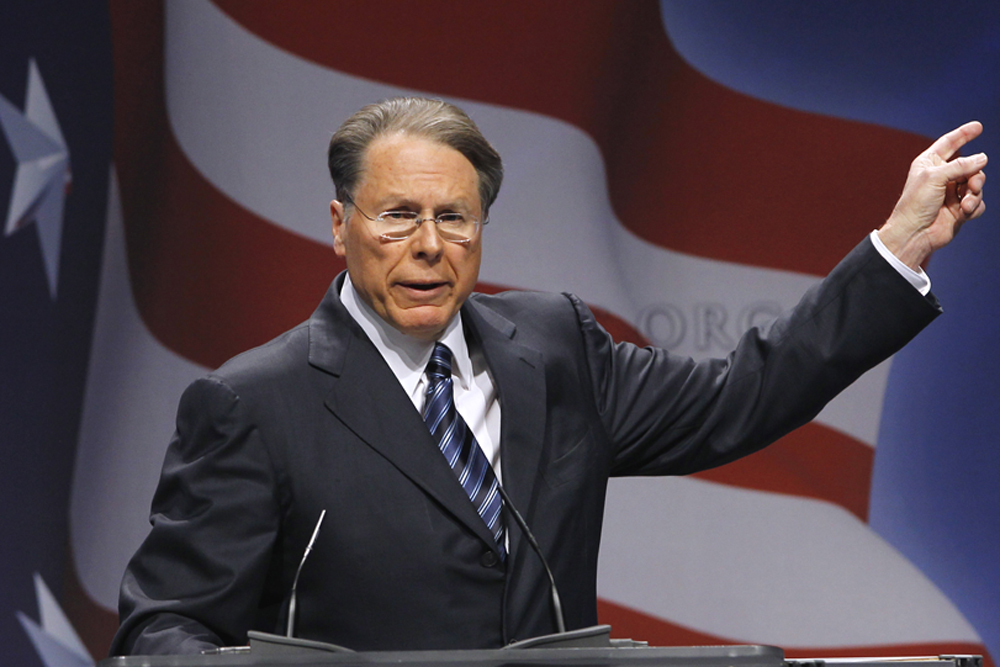
Managing the Message is the alpha and omega of the NRA

Managing the Message is the alpha and omega of the NRA

Managing the message inherently requires the belief that PR people have God-like powers over the public. Add an organizational executive team that already believes they are Gods and we have the perfect storm of ego and a lack of ethics that lead to the worst PR tactics in business. Under these circumstances we move from passive techniques to manage the message into an aggressive intent to distract and deceive.

There are many examples of aggressive attempts to manage the message and in almost every case there are people in key positions who see themselves as the maker of information and disinformation. These people believed that they have justification to take any step necessary to protect the public image of the organization and/or promote organizational goals, ethical or not. Distraction, withholding information, and deception are the rungs of the ladder that sink an organization into deeper and deeper into the dark side of PR.

Withholding Information
Withholding Information and/or blocking information is a tactic of an organization using aggressive and unethical PR tactics. One of the best examples of this is the National Rifle Association (NRA.) The NRA seems to only care about public opinion when the polls tend to support its position, but that doesn’t stop them from trying to manipulating public opinion.

In 1996, the NRA worked with Arkansas Representative Jay Dickey (R) to cut $2.6 million from the budget of the Center for Disease Control and Prevention (CDC) and added the wording the appropriations bill that restricted the CDC from any research that would “advocate or promote gun control.”  $2.6 million is what the CDC had spent in the prior year on gun-related research. The 104th Republican-controlled Congress passed it into law and it has restricted the CDC from gun-related research since 1996. (¹)

The NRA worked with Kansas Representative Todd Tiahrt (R) in 2003, to forbid the Bureau of Alcohol, Tobacco, and Firearms (ATF) from collecting statistics on gun injuries and deaths. In 2011, the NRA worked with Representative Denny Rehberg (R) of Montana to prevent the National Institutes of Health (NIH) from funding any research that contradicted or challenged pro-NRA positions. (²)(³)

BP: What Leak?
Another example of withholding information occurred in the summer of 2010 when the BP leased oil rig, Deepwater Horizon caught fire and exploded in the Gulf of Mexico.

BP public image destroyed once video revealed the PR deception

BP public image destroyed once video revealed the PR deception

In the days after the complete loss of the rig, BP PR tactics included denial of an oil leak at the wellhead, acknowledging a small amount of oil leakage, and finally admitting larger and larger amounts of leaking oil that still underestimated the amount of actual oil spilled. At one point BP withhold live video of the oil spill at the wellhead.

BP’s public position was that until anyone could prove otherwise, they could deny any significant oil spill. BP’s ‘prove it’ stance forced public media to accept BP’s estimates until overwhelming evidence piled up against the company. Once it did, BP’s public image was in tatters. No one believed anything CEO Tony Hayward or BP said.

‘Armstronging’ the Public
Technically the act of withholding information falls into the category of deception and distraction, although an organization that is consciously attempting to deceive or distract the public is flirting with possible criminal and/or civil charges. While some organizations (or even some people) might be under the belief that their unethical acts will never be discovered, some organizations may simply be trying to delay or soften a negative issue by forcing the public to learn the details over a period of days, weeks, months, or years. Yet, many times the PR tactics used by an organization is simply a lack of executive ethics rather than a conscious choice.

I cannot tell a lie...well, yes I can,...piece-o-cake actually.

I cannot tell a lie…well, yes I can,…piece-o-cake actually

The most recent high-profile example this is the Lance Armstrong fiasco. The world now knows that Lance Armstrong used illegal performance enhancing drugs and techniques during his reign as Bicycling King, but through denial and aggressive legal means he managed to make most people believe he was innocent. Now he admits he lied, but it is far enough past his glory days that it may not have the impact it would have at the time he was active in the sport. Still, who wants to be Lance Armstrong now? No one.

The problem with managing the message is that Social Media has stolen power away from the PR people. An organization’s public image consists of the support and enthusiasm of an elusive mass of connected people, who can smell manipulation and love to expose unethical acts of people with more money than sense. On the other hand, Social Media readily responds to respect and honesty, which is not  familiar territory to some older business men. As we move deeper into the Social Media Age, the business world will see a new PR model that listens more, talks less, is more humble and less arrogant, loves interaction and rejects domination.

Public Relations Techniques That Kill Organizations

06 Wednesday Feb 2013

Posted by Paul Kiser in Branding, Business, Communication, Crisis Management, Customer Relations, Customer Service, Ethics, Generational, Information Technology, Internet, Management Practices, Public Relations, Respect, Social Interactive Media (SIM), Social Media Relations, Technology, Traditional Media

≈ 2 Comments

Tags

anti-listening, Conservatives, Managing the message, Nancy Brinker, Planned Parenthood, PR, Race for the Cure, sim, sm, Susan G. Komen

In Part I, “Why ‘Managing the Message’ Doesn’t,” we discussed the dangers of trying to ‘manage the message’ in a Social Media world. Part II looks at the techniques used by organizations to manage the message and why they fail.

Organizations that adopt a manage the message policy for Public Relations (PR) assume that they are the controllers and manipulators of the public image of their organization, which demotes the public to the role of a mindless zombie. If that doesn’t sound stupid enough, let’s look at the methods that organizations use to manage the message.¹

[¹ I realize that I’ve used the words Manage the Message five times in the first two paragraphs; however, “insulting PR techniques” isn’t quite specific enough as there are so many of them. 😉 ]

Corporate PR:  We manage the message by not listening

Corporate PR: We manage the message by not listening

Anti-listening Techniques
The subtle use of anti-listening techniques is one strategy used by organizations who seek to manage the message. The concept is simple: an organization can’t be held accountable for issues that don’t exist. By not listening an organization can effectively deny existence of an issue because they can claim ignorance, therefore can deny accountability.

One example is the use of formalized procedures for communication from the stakeholders, including the public. An organization might ignore or restrict communication on their Facebook page, requiring complaints and comments to be made through a process that is more complex or requires greater risk to complainer.

EXAMPLE:  From the Facebook page for a Parent/Teacher group of an Elementary School after parents discussed concerns about major changes in the school calendar:

“Please remember that this page is used for the PTC to share PTC sponsored fundraising events and activities. If anyone has comments/complaints about the school they need to be addressed with the administration.”

(From the School’s Marketing Director)

The strategy of denying open discussion of issues allows an organization to divide and conquer people who may object or have a strong reaction to negative events or significant changes. By restricting public comment on their website or Social Media formats such as Facebook, an organization can prevent all but the most committed people from voicing their opinion or concern. For those that do comment, the organization can hide dissent and concerns behind a veil that only they have access to, so the true scope of the issue is hidden from public.

The problem with this technique is that issues or concerns do not go away by ignoring or hiding them. Whether expressed or not the reaction exists and it impacts the public image of the organization. A divide and conquer strategy increases the reaction once people discover that others share their concerns. In the Social Media world, the truth will eventually come out through a disgruntled customer, employee, or other source.  Once the full scope of the deception is exposed the organization will lose all credibility and once the organization loses credibility the public image is also lost.

In January of 2012, the Susan G. Komen Foundation was receiving massive condemnation for a politically charged decision to defund Planned Parenthood. Rather than accepting that the public voice was valid, CEO Nancy Brinker attempted to double down on their position by claiming a bogus conservative-initiated Congressional investigation was reason to deny the grant requests by Planned Parenthood. Her efforts to paint an obvious conservative-motivated action as justified left her and the organization looking like right-wing wackos who had no clue that the organization depended on the perceived goodwill of the public.

By the time they tried to back peddle and fix the problem it was too late. Race For the Cure events in 2012 lost as much as one-third of the participation from the previous year and many donors question the use of their money by the Foundation. The irony is that Nancy Brinker had founded the organization thirty years earlier in her sister’s memory and now the Susan G. Komen name is not so much a symbol of fighting breast cancer as it is a reminder of conservative attempts to use backdoor methods to inflict their religious beliefs on everyone else.

MONDAY: The Dark Side of PR: Distraction and Deception Or ‘Armstronging’ the Public. When ethics are not a consideration, an organization is headed into a downward spiral that will almost always end with a public image that can be fatal. 

Why ‘Managing the Message’ Doesn’t

05 Tuesday Feb 2013

Posted by Paul Kiser in Business, Communication, Crisis Management, Customer Relations, Customer Service, Employee Retention, Ethics, Information Technology, Internet, Management Practices, Opinion, Public Relations, Respect, Social Interactive Media (SIM), Social Media Relations, Technology, Traditional Media

≈ 2 Comments

Tags

BP, Cool Hand Luke, Managing the message, Mitt Romney, PR, Public Image, Race for the Cure, Susan G. Komen, Tony Hayward

“What we got here….is a failure…..to communicate” Captain, the Prison Warden in Cool Hand Luke

Captain (Strother Martin) in 1967 film, Cool Hand Luke knew how to manage the message

Captain (Strother Martin) in 1967 film, Cool Hand Luke knew how to manage the message

If you are a business professor teaching students the importance of  ‘managing the message,’ or a Public Relations (PR) firm telling your client how to ‘manage the message,’ would you please stop. No, I mean stop right now. In fact, contact everyone you have taught or advised and tell them you were wrong then refund their money.

CEO Tony Hayward got his 'life back,' but BP is still in PR clean up mode in the United States

CEO Tony Hayward got his ‘life back,’ but BP is still in PR clean up mode in the United States

‘Managing the message’ cost Mitt Romney the Presidential election. It severely damaged Netflix in 2011. It cost a BP CEO his job. It took the Susan G. Komen Foundation from being a major player in non-profit foundations to one that has to hide its name in shame. 

Why?

First, ‘managing the message’ doesn’t work. Second, it’s a cowardly way to approach public relations. Third, it’s stupid advice. Fourth, it will end up causing major problems up to and including the end of an organization.

‘Managing the message’ assumes a person has control over the message. That would be a stupid assumption in a world driven by Social Media. John F. Kennedy’s words should be amended:

You can fool all of the people some of the time….until Social Media picks it up and then you’re screwed.

PR is no longer about creating an image. That was true back in the day individuals had no voice and people were subjected to mass advertising in every thing they watched, heard, and read. That was yesterday. Today an organization’s image is created by everyone who comes into contact with the organization. Customers, especially angry ones have as much of a voice in an organization’s public image as the Vice President of Marketing. Today PR is about listening and being honest and real in everything you say and do. That is something that can’t be faked or managed.

Reaction Avoidance
Managing the message is mostly about reaction avoidance. The idea is that if an organization handles it correctly, any negative situation will be minimized. The technique acts like a dam that has a short-term benefit, but a long-term disaster. When a PR crisis occurs the first instinct is to pretend there is no major problem. That is the start of a PR death spiral that only leads to bigger and bigger denials until the organization appears to be run by fools. By then executives turn and blame the PR staff for not ‘managing the message’ better.

TOMORROW: Public Relations Techniques That Kill Organizations. The two common techniques that characterize an organization who is trying to manage the message and why they fail.

MONDAY: The Dark Side of PR: Distraction and Deception Or ‘Armstronging’ the Public. When ethics are not a consideration, an organization is headed into a downward spiral that will almost always end with a public image that can be fatal. 

Why You Hate Facebook and Can’t Stand Twitter

04 Monday Feb 2013

Posted by Paul Kiser in Aging, Business, Ethics, Generational, Information Technology, Internet, Lessons of Life, Pride, Public Relations, Relationships, Social Interactive Media (SIM), Social Media Relations, Technology

≈ Leave a comment

Tags

Facebook, personality, Privacy, Privacy on the Internet, Twitter, work behavior

Social Media Violates the Dual Work/Home Personality

You hate Facebook and can’t stand Twitter. You are mystified as to why anyone would want to share their personal information on the Internet and you probably make fun of people who do. The surprise is that it’s not because you’re male or because you’re over 40. But you are.

The reason Social Media is such an annoyance to you is because it goes against everything you were taught as you grew up. Social Media exposes your private persona and violates the boundary between your professional and personal identities.

Self Identity Devoured By The Corporation
Industrialization in the 19th and 20th centuries changed reshaped the life of the American male. As employment opportunities switched from being primarily farmers and small business owners to employees of the factories and corporations, workers found that their on-the-job behavior had to conform to company expectations. Job advancement within the company structure depended on a bosses perception of the perceived professionalism of the employee and not who they were in real life. That transformed the American worker into an actor who performed by the company script while he was under the watchful eye of his employer.

This division of a person’s life between home and work created a dual personality in men. At home a man was relaxed, caring, and spontaneous, or ‘unprofessional.’ At work a man was controlled, self-conscious, and unemotional, or ‘professional.’ As corporations became bigger, the division between the home and work personas became deeper to the point that a man might not be recognizable to his co-workers if their paths crossed outside of the work day.

Enter Social Media
Social Media tools like Facebook and Twitter have no work/home boundaries. The idea that a man should have a two personas is laughable in a Google searchable world that exposes the smallest of lies. That cold and tough business man doesn’t look so tough or cold when he posts pictures of his family activities on Facebook and that strips a man of his power base. The fake professionalism at work that empowers him can’t compete with the real person revealed on-line. The more a man’s power is dependent on his ‘professional’ persona, the more likely he is to abhor Social Media.

However, men who are angry about the lack of privacy in Social Media are trying to wage a hopeless battle to protect the nurtured idea that they must maintain two separate personas. The problem is that humans were never meant to divide their lives. Who we are at home is who we should be at work and vice versa.

It is understandable why you hate Facebook and can’t stand Twitter. They expose your greatest vulnerability…the real you. Perhaps someday that won’t seem like a vulnerability to you. And perhaps someday you’ll understand that the real you is not your weakness, but your strength.

Perhaps.

Coming This Week

03 Sunday Feb 2013

Posted by Paul Kiser in Business, Communication, Crime, Crisis Management, Customer Relations, Customer Service, Ethics, Generational, Information Technology, Internet, Management Practices, Privacy, Public Relations, Social Interactive Media (SIM), Social Media Relations

≈ Leave a comment

Tags

Facebook, PR, Social Media, Twitter, Upcoming

My apologies for those of you who received an email alert regarding the article titled: Why ‘Managing the Message’ Doesn’t. It will be published this week; however, due to an error on my part it was briefly available late on Friday.

Currently I have three articles that will be published this week. They are as follows:

Monday: Why You Hate Facebook and Can’t Stand Twitter
Tuesday: Why ‘Managing the Message’ Doesn’t
Wednesday: Bad Public Relations Techniques That Kill Organizations

These articles should be available by 6:30 AM PST on the day it is published. I am also working on an article regarding ‘Grievance Collectors’ that I hope to publish be the end of the week.

Thanks for reading!

Paul

3 Reasons Why Boehner Shouldn’t Be Speaker

31 Monday Dec 2012

Posted by Paul Kiser in Crisis Management, Government, Opinion, Pride, Public Relations

≈ 2 Comments

Tags

112th Congress, 113th Congress, Congress, Election, GOP, House of Representatives, John Boehner, Republicans, Speaker of the House

Speaker John Boehner, The Symbol of Failure

Speaker John Boehner, The Symbol of Failure

On January 3, 2013, the United States House of Representatives will re-elect Representative John Boehner as the Speaker of the House. Whether or not he merits the Speakership is debatable; however, he has been a good servant to his financial backers and those financial backers also financed the campaigns of the same group of Republicans who will decide Boehner’s fate. They cannot vote for someone else for Speaker without biting the hand of the people who gave them money.

That said, there are good reasons for Republicans to not re-elect John Boehner as Speaker of the House. Three top reasons are as follows:

Reason 1:  An Icon of Failure

Gallup Poll - Approval Rating for Congress

Gallup Poll – Approval Rating for Congress

In August of this year the approval rating for Congress dropped to 10 percent for the only the second time. The first time was in February of this year. Recently named the ‘Do Nothing Congress,’ they have been the most non-productive Congress in seventy years. Some might blame both political parties; however, two years ago Republicans announced that their strategy would be to block President Obama from passing any significant legislation. Their success at this has resulted in the failure of Congress to do the job for which they were elected.

As Speaker of the House and the leader of the Republicans in Congress, Boehner is the symbol of all that has failed in Washington. November’s election demonstrated the public’s dislike for the tactics used by Republicans to obstruct progress when President Obama won every battleground State except North Carolina, and swept 332 electoral votes when only 270 were necessary. Republicans were also turned out of the Senate and House as Democrats gained significant ground in Congress.

Despite this stinging defeat, Boehner continued to use the same tactics of obstruction by spending this month leading America to the Fiscal Cliff. The irony is that Boehner has not only lost the confidence of the American people, he has lost the confidence of his own party. 

In late December he attempted to move Republicans out of the hot seat by proposing a ‘Plan B’ that would have not passed the Senate, but would have given him the opportunity blame Democrats in the Senate for sending America over the Fiscal Cliff. It was a tactic that might have succeeded except for the betrayal of Boehner by his own party when he had to withdraw the legislation because it was not going to pass for lack of Republican support.

Boehner is a symbol of failure and he will carry the stamp of disgrace on his sleeve into the next two years. That means the Republicans will have to overcome Boehner’s public image in 2014 if they re-elect him as Speaker now.

Reason 2:  Opportunity of New Blood
If someone else were to be elected as Speaker they would start fresh without all the political baggage Boehner brings with him. Boehner is the uncle no one wants at their family event. The right-wing extremists think he’s too liberal and the rest of the Republicans in the House are just glad they aren’t Boehner. He is seen as deceptive, condescending, and the pawn of the filthy rich. Almost anyone other than Representative Eric Cantor or Representative Paul Ryan would have a better public image to start with than Boehner.

Republicans are facing multiple legislative losses in the next session. The best hope is to drop Boehner’s obstructionist style and begin rebuilding the respect that Republicans have lost in the last two years. By working with the Democrats in early 2013, a new Republican Speaker could regain negotiation strength during the remainder of the 113th Congress. That will increase Republican’s chances in 2014 and put conservatives back on more equal footing. With Boehner as Speaker, Republicans may face humiliation after humiliation as the right wing extremist wag Boehner’s tail during the next session.

Reason 3:  Shock Value
Boehner’s re-election will be seen as a business-as-usual when no one wants a repeat of the 112th Congress. A new Speaker will have a shock value that might give hope to Americans. While a majority of Americans do not support the right-wing extremist political agenda, Boehner has continued to pander to them in order to keep a majority. That majority is based on offending most of the other Representatives and a majority of American on a regular basis. A new Speaker might decide to turn the tables on the right-wing extremist by adopting a more moderate view. That would leave the extremists to either fall in line with the Republican mainstream or accept that America will be under rule by the Liberals for the near future.

Few Options Leave A Bleak Future
Sadly, Republicans are bound by fate and money to re-elect John Boehner as Speaker of the House of Representatives. This is like watching a train wreck in slow motion with the forces in play too strong to stop, but the results of disaster obvious to all who witness it. The outcome will be a deepening dislike for Republicans and their tactics and that will result in the 2014 elections continuing the down slide of conservative participation in American politics.

Conservative Credibility Account is Bankrupt

05 Wednesday Dec 2012

Posted by Paul Kiser in Business, Communication, Ethics, Government, Honor, Internet, Opinion, Politics, Public Relations, Respect, Social Interactive Media (SIM), Social Media Relations, Taxes

≈ Leave a comment

Tags

fiscal cliff, John Boehner, President George W. Bush, tax hike, wealthy

To be relevant you have to be credible and conservatives have spent all their credibility:

Bush Logic: Trust me. I know what I'm doing

Bush Logic: Trust me. I know what I’m doing

  • George W. Bush was going to force government to be smaller by taking revenue away via massive tax cuts. Then he made government even bigger and spent our country into debt.
  • Mitt Romney changed his position on issues on a weekly basis resulting in a trust deficit that he couldn’t overcome.
  • Oil companies and wealthy business men paid millions of dollars to finance conservative candidate’s political campaigns filled with deception and lies that were exposed within hours through Social Media.
  • Republicans vowed to obstruct President Obama efforts at all costs and blocked any legislation or appointments for two years, then tried to blame Democrats for not being able to ‘reach across the aisle.’
  • Republicans concept of smaller government and less regulation resulted in higher unemployment and unethical business practices that destroyed our economy.

    Conservative Investigation: Celebrate males testify about women's contraception

    Conservative Investigation: Celibate males testify about women’s contraception

  • Elected conservatives males demonstrate the absurdity of their positions on abortion and contraceptives exposing an underlying misogynistic attitude.
  • Conservative white state legislators in the South pass laws targeted at Latinos and minorities to discourage them from voting revealing a racist attitude.
  • Conservatives ironically insult minorities and Liberals as lazy, ‘takers’ who only seek handouts from the federal government while they seek to live in the United States of America without paying taxes for the privilege of living and working in this country.

    Boehner Math: 7.5% = 50%

    Boehner Math: 7.5% = 50%

Now conservative House Representative John Boehner is pushing the deception that a tax hike on the wealthiest 2% will impact fifty percent of small businesses. The fact is that a tax hike on those who have over $200,000 of personal income ($250,000 for married filing jointly) will affect only 7.5% of small business owners.

What is shocking is that the small percentage of wealthy small business owners pay themselves $200,000 or more out of their business account for fifty percent of all small business revenue. Note that the money is going into their pocket, not reinvested into the business, nor used for hiring more people, but into their personal account.  Boehner is trying to protect the interests of the greediest of small business people.

92.5 percent of small business owners will not be impacted by this tax hike, but Boehner continues to try to deceive America into the belief that he is protecting small business owners.

The Republicans have exhausted their credibility and still they continue to try to deceive rather than serve America. It’s hard to understand conservatives pursuit of deception as a political tool. If the last election demonstrated anything it was that the majority of America could not be bought or deceived. Social media quickly exposes lies and deceptions and yet Republicans continue to behave as if they live in an Orwellian 1984, and people will believe whatever they want them to believe.

The Petraeus Lesson: Use Your REAL Name

16 Friday Nov 2012

Posted by Paul Kiser in Aging, Branding, Business, Communication, Ethics, Generational, Honor, Information Technology, Internet, Lessons of Life, Pride, Privacy, Public Relations, Respect, Social Interactive Media (SIM), Social Media Relations

≈ Leave a comment

Tags

David Pertraeus, Email, private life, Public Image, public life

David Petraeus knows about public image, but he believed an alias online was not public

Men my age have been taught the we should have two personalities. There is the ‘professional’ persona that we wear in our public/business life, then there’s the ‘real’ personality that we only show when we are off the stage. That worked when there was a clear division between public and private life. For most of my life I knew that the person I knew at work was not the same as the person who was in the backyard with a beer in his hand.

A baseball cap and polo shirt don’t mask the person, why would an email alias?

The Internet changed all that, but somehow older men didn’t get the memo. When we found out we could create an email account like ‘secretagent007’, ‘mysteryman’, ‘mrinvisible’, etc., we really believed we could say anything we want, do anything we wanted without anyone knowing who we really were. I admit, it is a seductive concept that our professional/public persona could remain unknown online, but the fact is that anything we say or do online is recorded in history and will always be attached to us. 

The Petraeus Lesson is simply this: USE YOUR REAL NAME EVERY TIME  EVERYWHERE. Don’t allow yourself to be sucked in that YOU are smarter than every one of the 7,079,446,910 people on Earth. Never, ever, ever log on, create an email, or register for a social media site using a false name. If you have an email that doesn’t use your real name then get rid of it and get another one. This is 2012, and you need to know that what you say and do online is public. Period.

I know we older, white males were raised to believe in two personas, but it is a myth that we need to get over. It’s not a privacy issue, it’s a ‘am-I-smart-or-am-I-stupid’ issue.

What America Must Do: Step 6 – Reinvent Higher Education

14 Wednesday Nov 2012

Posted by Paul Kiser in College, Communication, Education, Generational, Government, Higher Education, History, Information Technology, Internet, Opinion, Politics, Public Relations, Taxes, Technology, The Tipping Point, Traditional Media, Universities, US History

≈ Leave a comment

Tags

college degree, faculty, professors, state run, students, tuition and fees, universities

Sans Students: Is this what university classrooms will look like in 2020?

Higher Education is an unmovable object with an unstoppable force heading straight for it and universities are at ground zero. Classrooms as we know them may be doomed and the question is whether our country will lead the world in adapting to a new model, or whether we will be the last ones to accept reality.

The Value of the College Degree
The unmovable object in Higher Education is importance of the college degree in American commerce. Business lives or dies on information. The person who can access, filter, analyze, organize, and explain information tends to be valuable in a company.

High schools are tasked to help students graduate with basic competencies, but they are dealing with children who are still maturing into adulthood and that process needs to be complete before they are morphed into business men and women.

Those who believe high schools should be vocational schools are assuming that all children will become a construction laborer or office drone, so why bother with college prep? The concept of education as a training ground for corporate zombies is too simple-minded to apply in a country that encourages all citizens to reach their maximum potential.

College is where young adults are given the tools to become valued business leaders. College classes require a student to learn how to access and report information, which is central in business competitiveness. The business that can out think its competition always wins, which may be why many top businesses are more concerned about the degree, not the major. A college degree is more than a piece of paper, it is a badge of achievement that says this person is ready for the business world.

The Relentless Rise in the Cost of College
The unstoppable force is the rising cost of a college education. With cuts in federal and state budgets a greater share of the burden is being heaped on those who are least able to avoid it. In Mitt Romney’s failed bid to be President he suggested that students should borrow from their parents to pay for college. That was one telling sign that Romney is out of touch with the real world the rest of us live in.

March 2012 protest in Sacramento over tuition hikes

In 1991 the annual average cost for a university education was at $7,602 or over $30,000 for four years of college. In 2001, that annual cost had risen to $12,922 or over $50,000 in four years. In 2011, the annual cost had risen to $22,092, which meant it cost over $88,000 for the average college four-year degree. That is the equivalent of buying a new car every year a student attends college. If the trend continues it will cost a student an average of over $41,000/year for college by 2021, which means a four-year college degree in 2021 may cost over $167,000.

Students and their parents are already outraged by the rising costs, but it is universities who control the expenses, and therefore control the costs.

Based on current trends, the average annual cost for college may exceed $40,000 by 2021

Students want to be competitive for careers that will lead them to higher paying jobs, but they have no means to afford college and the list of parents who CAN pay over $22,000 a year for four years are on a first name basis with Mitt Romney.

The Other Unmovable Object – Faculty
Teachers at the college level have traditionally been considered the most important asset to a university and for centuries they were treated with dignity and respect by administrators, but financial pressures have made them a target for saving money. While students face escalating tuition and fees, university faculty are also a target of the unstoppable force. Professors have been constantly asked to accept budget cuts and teach more students for the same, or lower pay. 

Some universities have replaced expensive tenured professors with temporary faculty employed by contract on a semester by semester basis. Temporary faculty make a fraction of a full, tenured professor. Not surprisingly, a teacher that may not be offered a contract the next semester tends to be more accepting of increased class sizes, or other cost-cutting measures.

What may be surprising is that a college teacher is likely not receiving a significant portion of the tuition paid by the students in his or her classes. A temporary professor may bring in $100,000 or more in revenue each year for the university, but a temporary professor is often paid less than $4,000 per class with no benefits. Low pay and increased pressure to do more for no additional money makes the teaching environment unpleasant for the student and professor.

A Revolution Caused by the Internet
Ironically, the Internet was originally intended to allow one university to have quick access to the knowledge database at other universities and research laboratories. As it expanded and became commercially available in the late 1980’s and early 1990’s the public began to have access to a vast storage of on and off-campus knowledge without a student ID. Within a decade homes across the world were linked into a mass of dynamic information via business and personal websites, blogs, chat rooms, and other social media sites.

Suddenly anyone could access information and share ideas and they didn’t have to pay tuition to have easy access to it. Certainly some of the information was in error, but often people found information that outpaced the knowledge produced in books. Universities no longer held the monopoly on information.

Government Must Change
State governments and Higher Education face these problems:

  1. A college degree is still a valuable achievement and desired by the public and business.
  2. Tuition and fees are too high and the public can no longer afford them.
  3. Professors have been devalued in a system where more and more of the revenue is channeled away from the them.
  4. University administrators and government legislators have created a paradigm for Higher Education that is unsustainable.

Social media has changed the expectations of the public. People expect to be able to have ready access to anyone to whom they are paying for a service.

Controlling advanced knowledge within ivy covered walls is no longer possible in a world where anyone can do a Google search and know as much or more about the most current knowledge on any topic. However, just doing a Google search does not teach a person how to filter, analyze, organize, and report that information.

State-run universities have a unique opportunity to reinvent Higher Education. The challenge is that they are the most unlikely to do it. Administrators have Accreditation organizations that are established to dictate what Higher Education is and will be today and tomorrow based on the best practices of yesterday. That doesn’t work in a world where today is already history that was recorded by over 340 million tweets a day (March 2012 data.)

When the unstoppable force hits the unmovable objects (value of a degree and the need for faculty) few things about Higher Education will remain unchanged. Now is the time for State-run universities to dodge the upcoming annihilation and take the lead in reinventing Higher Education. They can start considering the following guidelines:

  • Tuition must stabilize and regress. Fees should be eliminated. Universities can assume that there will be no money available to siphon off for student activities, the football program, or any other money-absorbing entity. 
  • Support materials (textbooks, etc.) will be digital only and the cost will be pennies on the dollar of what students have been paying. Goodbye, McGraw-Hill. Hello, Faculty Publishing.
  • Classrooms will be more like Boardrooms with fewer students where the Professor is the CEO of knowledge and students must bring their best or beg for a second chance with someone else. Much of the lecture and information gathering will be done via webcasts and/or outside of class time. ‘Class’ will be where the work outside the classroom is brought in for discussion and idea sharing.
  • Class schedules will not follow a semester system and will be on a schedule that is more like a project team.
  • Faculty will lead students while at the same time work toward advancing knowledge on the subject matter.
  • The most important person to the student will be the educational coordinator (i.e. Counselor or Adviser in the old paradigm) who will create an individualized degree that is based on achieving a level of mastery information handling, not a number of credit hours.

The framework in which this happens must be within a government structure. Private enterprise has proven that when they try to create a system of higher learning they fail. It solves nothing to make Higher Education a profit-based program that is a poor imitation of the old, outdated model. If government can successfully create a new model it will make the United States of America the leader of advanced knowledge. If not, we can expect to be exporters of our future.

Links to:

What America Must Do:  Step 1 – Silence the Wackos in Politics
What America Must Do:  Step 2 – An Extreme Makeover of Government at All Levels
What America Must Do:  Step 3 – Restore Government Revenue and Fair Taxation
What America Must Do:  Step 4 – Balanced Budget By 2015, Debt under 50% of GDP by 2020
What America Must Do:  Step 5 – Restart a Federally Run Space Program

What America Must Do: Step 2 – An Extreme Makeover of Government at All Levels

02 Friday Nov 2012

Posted by Paul Kiser in Business, Communication, Customer Service, Ethics, Government, Government Regulation, Higher Education, Honor, Human Resources, Management Practices, Opinion, Politics, Public Relations, Re-Imagine!, Respect, Taxes, Technology, Universities

≈ Leave a comment

Tags

Extreme government makeover, government workers, job descriptions, Organizational Charts, policies and procedures

Over a period of years any organization tends to end up with outdated job descriptions, ineffective departments, and outmoded missions. Five percent of the people cause 95% of all policies and procedures to be written. As common sense is replaced by policies written to address the five percent, an organization fails to serve the 95%.

Sometimes organizational charts are meant to confuse, but governments should be clear and concise

Administrative assistants in most organizations tend to accumulate more and more power over time as they learn the tricks to cutting through the bureaucracy and working around the budget. Learning how to play the ‘game’ is the first step in becoming a corrupt organization.

Because business is established on a motive of basic greed, most businesses fall victim to corruption within a few decades and then fail. Governments established with the blessing of the citizens and motivated by creating a fair playing field for all tend to avoid massive corruption, but fall victim to small-scale corruption as individuals give in to their base human nature. Unlike business, good governments tend last for centuries; however, that doesn’t mean they don’t need to be restructured.

Government workers are the heart of America’s employment

In the United States, governments (federal, state, and local) have performed honorably, but it is time to do an extreme makeover. This means taking all policies and procedures, organizational charts, and job descriptions to the shredder. New ones will have to be written, but they must not be written just to address the five percent causing problems.

This may require the elimination of Human Resource (HR) departments. HR departments tend to be builders of bureaucratic systems and they are often locked into paradigms which dictate that nothing can exist outside of a written policy or job description.

This Extreme Makeover of government should not be done to ‘reduce’ government. The motive should be to create a government structure that answers the needs of ALL the citizens and maintains a fair and ethical environment for business. The idea that we can eliminate or privatize government is an unrealistic, unethical, and expensive mistake. A federal, state, or local government is absolutely necessary to protect all the rights of its citizens. 

Links to:

What America Must Do:  Step 1 – Silence the Wackos in Politics
What America Must Do:  Step 3 – Restore Government Revenue and Fair Taxation
What America Must Do:  Step 4 – Balanced Budget By 2015, Debt under 50% of GDP by 2020
What America Must Do:  Step 5 – Restart a Federally Run Space Program
What America Must Do:  Step 6 – Reinvent Higher Education

And This Was the Best Conservatives Could Offer?

31 Wednesday Oct 2012

Posted by Paul Kiser in Business, Ethics, Government, Opinion, Politics, Public Relations, Religion, Respect, Taxes, Women

≈ Leave a comment

Tags

Conservatives, Dean Heller, Election, GOP, Karl Rove, Republicans, Richard Mourdock, Todd Akin, Willard Mitt Romney

Mr. Insincere

For President – Eddie Haskell?
Willard Mitt Romney is a poor choice for President by any standard. Sure he’s better that Michele Bachmann, Newt Gingrich, Herman Cain, or almost any of the other right-wing wackos that ran for President this time, but Romney is an embarrassment to America. He will say anything to get a vote, but we all know that is just a rich man who is trying to fool enough of the people enough of the time to get elected. In a party that has great people like Colin Powell, they serve up a smarmy equivalent of Leave It To Beaver’s Eddie Haskell for President. Epic fail.

Paul Ryan is not an alien from another world…as far as we know.

For Vice President – Paul Ryan?
Really? Ryan is a person who is a deceiver. If Satan had Apostles, Paul Ryan would be his Number 1. He, like so many conservatives, is owned and operated by America’s major corporations and his interest is in exploiting our country, not serving. 

Charles P. Pierce  wrote and interesting piece on Ryan’s family history on the Esquire Politics Blog. He definitely not worthy of the second highest office in the land…or any other office.

Senator Dean Heller making sure he’s seen at Reno Air Races crash news conference (2011)

For Senate from Nevada – Dean Heller?
When Governor Brian Sandoval appointed Dean Heller to replace the adulterous Senator John Ensign, his seat in the House of Representatives forced the cash-strapped state to hold a special election, which cost over $1 million. Nevada certainly hasn’t got its money’s worth. One of Heller’s first official acts was to propose legislation that would prevent millionaires from receiving food stamps. He must have done it as a joke, but nobody laughed.

Heller is a former Bank of America consultant and stock broker, but now he works for people with even more money. If politicians had to wear suits that identified all their sponsors like race car drivers, then he would have a suit covered in oil, mining, and gaming corporations. He is bought and paid for and the lowly citizens of Nevada are not even on his radar.

Heller is the guy who always shows up at major news events like the Reno Air Races crash last year to stand near the Governor as if to say, “see me, I’m here, aren’t I great!”

Richard Mourdock says the pregnancy from rape is what “…God intended..”

For Senate from Indiana – Richard Mourdock and for the House of Representatives from Missouri – Todd Akin?
Indiana and Missouri have many highly qualified conservatives that could be representing the Republican party as candidates for federal office; however, it would be difficult to find two less deserving to fill the job than Richard Mourdock and Todd Akin. Both seem to be weeds in the flower patch and yet both still may win despite their bumbling, non-factual statements about rape and pregnancy. If either or both win then the stupid people of the world can rejoice that they are well represented in the United States Congress.

2012 Idiots on Parade by Karl Rove
The lack of quality conservative candidates doesn’t stop at federal political office. Many Republican state candidates are embarrassments to the country in their own right, but why is the GOP field so bad? That brings us to one name, Karl Rove. 

Rove’s laughing now.

Karl Rove is the God of Conservative Candidates. He decides who will gain millions of dollars in advertising support and who won’t. With that money comes the strings. Independent minded, critical thinking people is not what Karl Rove seeks. If you are going to be supported by the Republican party this year, you have to be Karl Rove’s political Boy Toy. Rove’s money comes from Big Oil and mega corporations and they expect payback.

That has led to a slate of corporate Yes Men who are supposed to stay within a script. Like a gang of henchmen, Rove’s army of zombies march across the nation with a brain eating agenda of kill the government, put women down, and give our money to the rich. Rove arms his candidates with some of the most distasteful tactics in politics today.  

One of Rove’s typical tactics of taking the conservative candidate’s weaknesses and then running ads accusing the rival candidate of the conservative candidates weakness. If his candidate is a partisan obstructionist, then Rove’s team creates an ad that the Democratic candidate is partisan and only votes with their party. Blaming the faults of his candidate on the other confuses the issue and makes a response to the accusation almost impossible.

How long can Rove keep this up? It depends on the results of this election. If Rove’s candidates win then America can expect to see the same strategy in future elections. If his candidates lose then perhaps true conservatives can take their party back from Karl Rove and his corporate sponsors and re-build it into something more than a group of Tea Party zombies.

Gasoline Pricing Coincides With Conservatives Political Agenda

30 Tuesday Oct 2012

Posted by Paul Kiser in Business, Ethics, Opinion, Politics, Public Relations

≈ Leave a comment

Tags

big oil, Conservatives, David Koch, fuel costs, gas, gasoline prices, oil, Oil Companies, President George W. Bush, Willard Mitt Romney

The issue that is clicking with voters during this Presidential campaign is the economy. Despite the fact that America is in a Recovery while the rest of the world struggles economically, conservatives are working hard to maximize the fear of another economic disaster. There is one factor that helps Republican agenda and that is oil prices.

8 Year History of US Gasoline Prices

The cost of oil is a major factor in our economy and conservative oil executives are acutely aware of the impact the price of gasoline has on the psyche of the American consumer. Oil companies (exploration, refining, distribution, and trading of oil products) cannot completely control oil prices, but they can artificially set prices high or low for periods of time to influence the market and our economy.

Cut the revenue for the government, while increasing spending causing a massive debt, starting two wars, and wrecking the economy. George W. Bush MISSION ACCOMPLISHED!

A historical look at the past eight years of oil prices indicates an interesting correlation to a conservative agenda. Shortly before the 2004 Presidential election cycle average U.S. gas prices were under $2.00/gallon. That worked well for the re-election of George W. Bush who needed the economy to seem well-managed under his administration. In 2005 and 2006, gas prices peaked during the summer at just under $3.00/gallon, but prices dropped rapidly just before the 2006 Congressional elections which boosted the image that conservatives were on track with the economy and the two wars in the Middle East.

In 2007, oil prices jumped up again during the summer and then continued to go higher during the Presidential campaign. Oil companies made massive profits and high oil prices reminded skeptical Americans that we needed to have a military presence in the Middle East to keep oil supplies under American control.

This strategy backfired on conservatives as unregulated banking practices brought the American economy to the brink of its second Depression. As it became obvious that is was conservative’s worship of private business and lack of government regulation that caused the disaster, high prices at the pump just made the problem bigger. President George W. Bush was looking incompetent and Republican candidate John McCain was sinking fast in the polls.

Suddenly the U.S. average price of a gallon of gasoline dropped from almost $4.00 to just over $1.50. This occurred in the middle of the summer when gas prices are usually the highest. The historic drop in gas prices didn’t rescue McCain’s bid for the Oval Office, nor did pulling Sarah Palin out of obscurity.

However, low gasoline prices did help to thwart the rapid growth in hybrid and fuel efficient cars that caused a significant drop in the demand of oil in America. Low gasoline prices helped derail many efforts to make alternative energy viable causing losses to those who took a big risk in trying to end dependency on oil. 

If you want to make the economy look bad, gasoline prices are the way to do it

While oil prices increased in the Spring of 2008, gasoline remained steady at around $2.75/gallon with little variation between summer and other seasons until after the 2010 Congressional elections. It was also at this time that the worst of the economic fallout hit the United States. Unprecedented job losses and business failures seemed to stem the up/down cycles of gasoline prices.

That steady trend ended after the Congressional elections with gasoline prices climbing and remaining over $3.00/gallon for the duration of the 2012 Presidential campaign. This coincides with conservatives efforts to put the worst possible face on America’s economy.

Billionaire Oil Refiner David Koch with spouse Julia

Conservative oil executives like David Koch have worked hard to influence the outcome of this year’s elections. Oil executives are spending hundreds of millions of dollars to elect conservatives, and gasoline at almost $4.00/gallon serves their agenda well, and gives them a ready supply of cash.

The problem is that gasoline prices at the current levels will allow alternative energy blossom again, so after the election gasoline prices must come down. If President Obama is re-elected the oil companies will be forced to help improve the economy or face a continued decline in demand. David Koch certainly doesn’t want to be put in that position.

Fear is the Mind-Killer of the Conservative

29 Monday Oct 2012

Posted by Paul Kiser in Business, Employee Retention, Ethics, Government, Management Practices, Opinion, Politics, Public Relations

≈ Leave a comment

Tags

Conservatives, David Koch, economy, fear, FedEx, Koch Industries, Willard Mitt Romney

Conservatives: Doom Awaits Unless We Win

“The sky is falling!” That is typically the argument of conservatives. Fear works…at least for a while. Scared people are nervous and nervous people tend to vote conservative.  The irony is that for at least a century most economic downturns occur during or just after conservatives have been the dominant power in the federal government. Scared people aren’t necessarily rational.

Conservatives also run most large corporations. This should not be a surprise as business operates on a basic motive of profit, which is to say, “What’s in it for me/us?” That concept is the same position that conservatives take on most political issues. Conservatives tend to see America as a dog-eat-dog world and those at the bottom are getting what they deserve.

Conservatives cold attitude has not improved with the massive growth in executive salaries. The exponential increases in compensation for those above the glass ceiling has created a clique of American business leaders who have lost their moral compass¹ as they’re lured into an ethical abyss by the motto that “Greed is good.” The unethical pursuit of profit in business took America to the brink of economic disaster in 2007, and left Americans into a financial collapse that is still playing out across the world.

As conservatives stand naked from the of their exposure of their past misdeeds, redirecting political issues is the only option to keep their failed policies alive. In past elections, terrorism has been the deep well that conservatives drew from to create a sense of panic among voters; however, after a decade of wars American citizens have no desire to engage in another Middle East Killing Field.

Koch to 50,000 employees: Vote for Romney
(Billionaire Oil Refiner David Koch with spouse Julia)

What is working for conservatives is the fear of economic disaster. Emails of impending doom are forwarded in mass by conservatives eager to create a sense of panic in anybody that lacks the intelligence to ignore them. Willard Mitt Romney has told business executives to scare their employees with threats of layoffs and cutbacks. Koch Industries and others have complied with Romney’s request and some have gone as far as to warn their employee will be fired if they vote for President Obama. Other companies, like FedEx, have made the announcement that layoffs are coming just weeks before the election leading to employee misgivings about their future if Romney is not elected.

The tactics conservatives are using will eventually turn on them. People become immune to fear when it is constantly thrust upon them. The more the Republican party uses fear, the sillier it sounds to an intelligent person. The deeper conservatives drink in fear and hate, the more likely they will become irrelevant in American politics. 

¹Related Article: Mega Executive Performance Leads to Poorer Performance. 2010 May 31. Paul Kiser’s Blog. Kiser, Paul

Why Job Creators Aren’t

15 Monday Oct 2012

Posted by Paul Kiser in About Reno, Business, Employee Retention, Ethics, Government, Government Regulation, Management Practices, Opinion, Politics, Public Relations, Taxes

≈ Leave a comment

Tags

business friendly, Conservatives, Employment, job creators, jobs, Nevada, Reno, Unemployment

Job Creators in Nevada

Willard Mitt Romney and other conservatives try to promote the idea that private businesses are desperate to create jobs if only the government will let them; however, in May Romney gave a wink to the idea that Job Creators might be holding back millions of jobs to artificially stifle job growth to favor conservative candidates in the upcoming election. At the same time conservative businessmen are threatening their employees with layoffs if President Obama is elected.

Are Job Creators the victim of the federal government, or are conservatives trying to manipulate the citizens in order to make themselves wealthier?

Protest outside The Venetian during Republican debates

Nevada has led the country in high unemployment during this recession and has been increasing in July and August (now 12.1%.) Reno, Nevada was ranked the worst city in the nation to find a job. Yet, last week the conservative TaxFoundation.org ranked the Silver State #3 in its 2013 Business Tax Climate for the second year in a row because of its ‘business friendly‘ tax structure.

Since taxes are not holding business back from creating jobs, why is Nevada the Rodney Dangerfield of American employment?

PROFITS, ALWAYS PROFITS
The answer lies with the problems low unemployment cause for businesses. Low unemployment pressures employers (Job Creators) to offer higher wages and better benefits to attract and keep employees. High unemployment means employers can control the job market, which means higher profits. There is no reason for major Nevada employers like casinos to desire a change in the current employment environment.

This is probably why Nevada ‘Job Creators’ like Sheldon Adelson of The Venetian in Las Vegas are spending millions of dollars in support of conservative candidates who will make them wealthier rather than spend the money creating jobs.

Oil Industry 11 of World’s Top 20 Corporations

01 Monday Oct 2012

Posted by Paul Kiser in Business, Customer Relations, Ethics, Human Resources, Politics, Public Relations

≈ Leave a comment

Tags

big oil, BP, Chevron, Conoco Phillips, Exxon, Mobil, Oil Companies, profits, Royal Dutch Shell

‘Big’ Oil is an understatement. According to Wikipedia, 11 of the world’s top 20 corporations (measured by revenue) are either oil producers, or trade oil. In fact, seven of the top ten corporations of the world are oil industry related. Forget Apple (No. 44,) Microsoft (No. 111,) or Google (not in top 185) because they are not even in the same league as oil corporations.

The Wikipedia study pulled together the financial data from multiple sources, including financial reports of major corporations. Oil companies have 60% of the revenue of the top 20, which means the average revenue per corporation of oil companies exceeds the average revenues of the nine non-oil related corporations. 

World’s Top 20 Corporations by Revenue

The ‘Big Five’¹ oil companies are also made over $200 billion in profits during 2011, and as consumer pump prices remained high despite consumer demand that is at 1997 levels.  Interestingly, oil companies, according to the Wikipedia study, employ only 25% of the total employed by the top 20 corporations.

¹NOTE:  Big Five Oil Companies are: Exxon Mobil, Royal Dutch Shell, BP, Chevron, and ConocoPhillips

Romney’s Concession Speech

20 Thursday Sep 2012

Posted by Paul Kiser in Crime, Education, Ethics, Government, Government Regulation, Health, History, Opinion, Politics, Public Relations, Religion, Taxes, US History, Women

≈ 1 Comment

Tags

Ann Romney, concession, Democrats, economy, GOP, job creators, Recession, recovery, Republicans, speech, Unemployment, Willard Mitt Romney

November 6, 2012  4:34 PM EDT

I know the polls have not closed in…well, anywhere, but the results of this election are obvious, even to a multi-millionaire like myself. We’ve lost…again.

Many complained that we lied and deceived the voters in an attempt to be elected. What were we supposed to do? Our choice was to acknowledge that President Obama did a great job in tackling the mess we created and began rebuilding the country, OR lie. We were not going to win any elections by telling the truth!

This campaign was built on the idea that we could fool people long enough to be elected President. As I said in May, 47% of Americans are too smart to be tricked by our twisting of facts, and we knew that 30% of Americans would vote for me no matter how bad we ran our campaign. So this campaign came down to sucking in less than 23% of the electorate. Unfortunately for us most of the citizens of this country are not as stupid as we had hoped. 

But you have to credit us for our bravado in our attempt to buy and lie our way into the White House:

GOP Success: Stopping America’s Recovery

  • The Economy:  Our fault, but that didn’t stop us from blaming President Obama. We almost convinced America that President Obama failed because he didn’t create full employment, didn’t pave streets in gold, nor had honey flow out of our taps in four years. 
  • Unemployment:  This one is funny, You’ll laugh. We told people that the wealthy are …ready for this..THE job creators! I know, I know. How stupid do you have to be to know that private business loves high employment. Low unemployment means employees can demand better pay, better benefits, better working schedules and all those other headaches that come when too many people have a good job. Employers now have employees by the short hairs and we’re never letting go.
  • The Recovery:  It was remarkable under the circumstances, and conservatives fought hard to keep it from happening. There are no liberals in Big Oil and they worked with us to keep prices high this year. Still, no joy.
  • The Debt:  The truth is that the Bush-era tax cuts cut knees out of the federal budget. That and two mega-wars, plus the devastation caused when my conservative banking friends wrecked the economy. Sure the stimulus and bailouts increased the nation’s debt, but none of that would have been necessary if conservative policies hadn’t put all the ingredients together for an economic disaster.
  • Big Government:  We made it sound like President Obama made massive increases in government, and yet it was George Bush that created the TSA, and other massive increases in the size of federal government. Still, we just have to say ‘big government’ to stupid people and they start to sweat. It’s kind of fun.
  • Obamacare:  We were blessed to have a major Democratic lead program that wouldn’t be effective until 2014. We could paint it to be anything we wanted and we wanted it to be evil. Who could argue with me?
  • Foreign Policy:  Conservatives are warmongers. We love a good fight. We love a bad fight. We love it anytime we can send our young adults and technology to overseas to beat somebody up. I thought we had President Obama beat on foreign policy, but I sort of screwed it up in London…and Israel….and Poland. If you don’t like my foreign policy you can kiss my ass!

We also did a good job of ignoring what we didn’t want to talk about.

  • The Past:   We had a Republican National Convention and we didn’t even invite either of the Bush’s. We didn’t need to highlight the past and good riddance to both of them.
  • Taxes:   We didn’t want to talk about my taxes. As Ann said, if we let people see our taxes, “they will attack us!” Sure a President should have a thick skin, but who needs that when we can deny and  hide? Richard Nixon taught me that.
  • Family History:  I don’t want to discuss this, even now.
  • My First Name:  Seriously, who would vote for someone named Willard?
  • Women:  We probably should have been more sensitive to women’s issues, but really, who cares? Right Ann?
  • Education:  Smart people don’t vote for idiots. Why did you think we didn’t want to talk about education?
  • Crime:  We conservatives have always pushed a ‘lock’em up and throw away the key’ policy on crime. The problem is that it cost $30,000/year to house one inmate, and after they reach 55 years old, inmate costs go up to $60,000/year because of increasing medical issues. More inmates, higher costs. Who knew?

I know my mouth got this campaign into a lot of trouble, but honestly how can you only blame me for failed policies that are the very definition of being a conservative. Like everything else, it was the fault of the Democrats that I didn’t get elected as President.

Well, I guess I should end this before I say something stupid. I hope all of you feel better now that you won’t have Ann and I to kick around anymore. 

Netanyahu Pushes America To Another War, Romney Eager To Oblige

14 Friday Sep 2012

Posted by Paul Kiser in Communication, Ethics, Government, History, Internet, Opinion, Politics, Public Relations, Religion, Respect

≈ 4 Comments

Tags

Benjamin Netanyahu, Cairo, Conservatives, Israel, Middle East, Palestine, Palestinians, President Barack Obama, red line, Violence, War, Willard Mitt Romney

Netanyahu to US: “Isn’t it time for another Middle East war?”

On Tuesday Israel’s Prime Minister Benjamin Netanyahu goaded the United States into a war with Iran. Demanding that the United States set conditions for war by establishing a ‘red line’ for which the United States would begin another war in the Middle East if Iran crossed it. Conservative Presidential candidate Willard Mitt Romney seems eager to appease Netanyahu by whining about President Obama’s work to end the existing wars in Iraq and Afghanistan, and assuring voters that if he is elected he will move quickly to send America’s young adults back into war.

Netanyahu used unilateral actions at Jewish/Christian/Muslim holy sites in 1996 and 2010 to insult and spark riots by Muslims

Netanyahu is no stranger to goading people into violence. In 1996, while throwing roadblocks into the peace process with Palestine, he authorized work in the Muslim Quarter of Jerusalem that was guaranteed to anger the Palestinians. His ‘in-your-face’ act caused three days of riots and took 80 lives. Like the brother who knows how to get his sibling into trouble, Netanyahu modus operandi is to push others into violent acts by doing something that seems innocent, but is actually extremely insulting.

By stimulating violence, Netanyahu was able to justify moving Israeli forces in to Palestinian-occupied Hebron in January of 1997. Eventually he was able to stop the peace process by refusing to compromise on any significant issue. Netanyahu has a consistent history of being the naysayer to any peace effort between Israel and Palestine since 1996. He also has pushed for issues that are designed to irritate Arabs, such as continue settlement of Israelis in Arab-controlled lands. Netanyahu’s provocation of Palestinians and other Arab countries has left the Middle East in turmoil and set the stage for violent groups in the Arab world to fester and grow.

The interesting coincidence is that just as Netanyahu is pushing America to go to war with Iran, Arabs are once again goaded with a mysterious film¹ on YouTube that mocks Mohammad. Riots in Muslim countries have resulted in attacks on American consulates in Libya and Yemen, killing J. Christopher Stevens, America’s Ambassador in Libya, and three other U.S. diplomats. The cast and crew of the film were misled as to the purpose of the film and the producer’s name has turned out to be fictitious. No one seems to be able to determine who actually produced the film, but it is clear it was intended to incite violence.

In addition, Romney’s reaction to the attack on America’s consulate was so rapid that one has to question if Romney’s campaign was anticipating a significant foreign anti-American event and pulled the trigger on condemning President Obama’s even before there was a reaction from the administration. Romney’s campaign misfired by citing a statement from the U.S. Embassy in Cairo from Tuesday morning that condemned to provocation of the mysterious film prior to the attacks on the American consulate in Libya.

Romney’s campaign is citing America’s “freedom of speech” as the excuse for provoking Muslims with this film; however, conservatives are the first to react with rage over burning the American flag or defacing a Bible. American conservative anti-Muslim groups have now been connected to the latest efforts to promote the film on YouTube, and these groups are known to be rabid anti-President Obama groups.

The timing of this film, Netanyahu’s provocation, conservative promotion of the film, and Romney’s quick, albeit inappropriate, response to the violence seem to indicate that a connection is possible as part of an effort to motivate conservatives to support Romney’s sputtering campaign and his inept foreign policy efforts with allies and foes.

(¹The name of the film and a link to the film are intentionally absent in this article.)

 NOTE: The acts of violence toward United States Embassies and personnel cannot be excused regardless of the provocation. This article is not overlooking the shameful thugs who are taking an opportunity to injure and kill innocent people. They should be identified and punished for what they have done. However, just like the person who enters into a theater and yells fire just to create a panic, the person(s) behind this inexcusable film that incited the outrage should be held responsible for lighting the fuse that caused the social bomb to explode.

4 Lesson’s Yahoo’s CEO Marissa Mayer Has Taught Us

10 Monday Sep 2012

Posted by Paul Kiser in Business, Communication, Crisis Management, Customer Relations, Customer Service, Education, Employee Retention, Ethics, Human Resources, Information Technology, Internet, Lessons of Life, Management Practices, Opinion, Public Relations, Respect, The Tipping Point

≈ Leave a comment

Tags

CEO, employee morale, Google, Kathy Savitt, leadership, management by intimidation, Marissa Mayer, Mollie Spillman, Yahoo

Marissa Mayer: Management by Destruction

On July 16, Yahoo announced that they hired 37-year-old Marissa Mayer, a former Google Vice President (VP), as the new Chief Executive Officer (CEO) to turnaround the company. A little over a month later Mayer hired a new Chief Marketing Officer (CMO), which should not be surprising. How she did it tells us a lot about her management capabilities and about Yahoo’s Board of Directors.

Often a change in direction for a company will require new leadership in key management positions. Anyone who doesn’t know their job is in jeopardy when a new CEO walks in the door is kidding themselves. Sometimes a new CEO will ask for the top management to resign. Sometimes a new CEO will just give the old management team a severance package. Sometimes a CEO will take six months to get to know the company and then make changes. All these options a part of nominal business operations.

However, Mayer reportedly fired Mollie Spillman, her old CMO 1) by phone, 2) while she was on vacation, and 3) ten minutes before Yahoo’s official announcement that the new CMO would be Kathy Savitt.

Wow. Apparently, Mayer like burning all her bridges before she blows them up.

It’s important to note that Mayer’s age and/or gender are not at issue. Man or woman, old or young, what Mayer did was ethically questionable and has far reaching implications for Yahoo. Her slam-bam-you’re-fired-ma’am stunt is worthy of analysis for what it says about Mayer, Yahoo, and management-by-intimidation.

Lesson 1:  Mayer’s Questionable Ethics and Leadership
It doesn’t take guts to fire somebody. Firing someone is easy. Firing someone is a power trip. If you walk up to person on the street and say, “You’re Fired!,” it will probably only get you a confused stare followed by a laugh, but if you say, “You’re Fired!” at an underling employee, you have shown you are dominant and all powerful. To fire someone is a rush to the sadist.

Separating an employee from an organization with dignity and respect takes sensitivity, experience, and humility. It requires that the manager talks with (not at) the employee, and it requires the manager check their need for power at the door. Firing someone over the phone while they’re on vacation demonstrates a lack of experience and a lack of humanity.

In her defense, Mayer may have been reacting to another executive who left Yahoo one week before. It is possible that Mayer thought that Spillman might also leave and decided she would exercise a preemptive strike by replacing her before she could find another job. Still, that’s a weak reason to behave like a tree house club President.

Lesson 2:  How to Destroy Morale
When the CEO trash-n-bashes an employee it sends a message to everyone else in the company: Time to look for another job. How can any employee at Yahoo avoid wondering if they will be fired the next time they’re on vacation? How can any manager at Yahoo not believe that Mayer’s questionable ethics is now the model they should be following?

No Reason to Yahoo Behind This Sign

No Reason to Yahoo Behind This Sign

Mayer did make a peace offering to her employees soon after she took over by offering free food to full-time employees and a free iPhone. But her offerings weren’t free. In return for free perks she put extreme pressure to perform. She pushed a new product up by months and gave the development team one week to prove it could be done. When the team came back a week later and said it couldn’t be done on the schedule she demanded she said she would find another team that could do it.

This shows the classic fatal error in management-by-intimidation (MBI): Failing to trust and listen to the people you have working for you. It may be great to tell the investor a tale of tough-love while scratching your balls and dining on the company’s dime, but it really means that the customer is going to get a rushed, half-baked product that shows how mediocre your organization can be when it comes to innovation. Don’t get me wrong, some people…okay most people, need to be pushed, but most people don’t like to work in a threatening environment.

This shows the classic fatal error in management-by-intimidation:  Failing to trust and listen to the people you have working for you.

The result of MBI is that all your employees start looking for other employment options. The people with great ideas and skills are grabbed up by the competition and Yahoo will be left with the people who nobody else wants. Now you have an organization consisting of the worst performers.

Lesson 3:  Yahoo’s Future is in Doubt
In the past five years it has averaged a new CEO each year. That says more about the Board of Directors than it does about the CEO’s. The problem is that there is no quick fix and it is likely that Mayer management style is being encouraged by dysfunctional leadership in the Board room. Yahoo needs positive, creative, loyal, and happy employees if the company is to dig its way out of the hole its in. Creating an environment of fearful, anxious, angry employees is guaranteed to keep them noncompetitive now and in the future.

Throwing money, free food, or free iPhones may appease employees temporarily, but people want and need to be valued and treated with respect. The moment an employee feels that their neck is on the line is the moment they are no longer have ownership in the company, and when employees don’t have ownership, they stop caring. Uncaring employees are saboteurs in an organization. Yahoo likely has almost 15,000 saboteurs with intimate knowledge of the company’s secrets, weaknesses, and plans. That doesn’t bode well for customer satisfaction, nor company stock price.

Lesson 4:  Inexperience Does Not a Good Manager Make 
Of the Fortune 500 club, Mayer is the youngest CEO. Publicly, she has been a celebrated rising star at Google since she joined as employee #20 in 1999, and was Google’s first female engineer. Privately, some accused her of being a glory-hound seeking attention and fame. Despite having no business degrees (her bachelor’s and master’s degrees from Stanford are in computer engineering specializing in artificial intelligence,) she rose through the company to be a Vice President.

It was appropriate for Yahoo to hire a young executive. There are many people under 40 who are wise beyond their age, or have solid experience in people and resource management; however, Mayer’s lack extensive executive management experience seems to be demonstrated in her immature behavior.

Bonus Lesson:  Micromanagement – Slapping Your Team in the Face
It was reported last week that Mayer is now reviewing the candidates for every open position at Yahoo. That’s correct, Mayer is overseeing every potential new hire for every opening in a company of 15,000 employees. Nothing says you’re a ‘stupid ass’ to your management team quite like taking away their ability to choose who will work for them. If anyone at Yahoo didn’t know that they are valueless, Mayer and the Board of Directors have certainly removed all doubt.

Every business school should be studying Yahoo. Studying successful management is important, but studying an organization that is in a meltdown can teach future would be leaders why you can’t build up your organization by tearing apart your employees.

← Older posts
Newer posts →

Other Pages of This Blog

  • About Paul Kiser
  • Common Core: Are You a Good Switch or a Bad Switch?
  • Familius Interruptus: Lessons of a DNA Shocker
  • Moffat County, Colorado: The Story of Two Families
  • Rules on Comments
  • Six Things The United States Must Do
  • Why We Are Here: A 65-Year Historical Perspective of the United States

Paul’s Recent Blogs

  • Dysfunctional Social Identity & Its Impact on Society
  • Road Less Traveled: How Craig, CO Was Orphaned
  • GOP Political Syndicate Seizes CO School District
  • DNA Shock +5 Years: What I Know & Lessons Learned
  • Solstices and Sunshine In North America
  • Blindsided: End of U.S. Solar Observation Capabilities?
  • Inspiration4: A Waste of Space Exploration

Paul Kiser’s Tweets

Tweets by PaulKiser

What’s Up

July 2026
S M T W T F S
 1234
567891011
12131415161718
19202122232425
262728293031  
« Jun    

Follow Blog via Email

Enter your email address to follow this blog and receive notifications of new posts by email.

Join 686 other subscribers

Create a website or blog at WordPress.com

Loading Comments...