3rd From Sol

~ Learn from before. Live now. Look ahead.

3rd From Sol

Category Archives: Social Media Relations

10 Things To Decline From An Employer

09 Monday Dec 2013

Posted by Paul Kiser in Business, Communication, Customer Relations, Customer Service, Employee Retention, Ethics, Health, Honor, Human Resources, Information Technology, Internet, Management Practices, Pride, Privacy, Public Relations, Re-Imagine!, Relationships, Respect, Social Interactive Media (SIM), Social Media Relations, Technology, Tom Peters

≈ Leave a comment

Tags

Affordable Care Act, benefits, company car, company cell phone, company email, Email, employment agreement, employment contract, free speech, Heath Benefits, Intellectual property, NDA, Non-compete, Pay for Performance, retirement benefits

No longer can anyone expect to build a lifelong career with one organization, nor is that considered healthy for the individual or the company. A person is now his or her own commodity. He or she must expect to build their own skills and reputation as an individual on the open market rather than as corporate employee number 8675309.

In this Brave New Working World a person should be prepared to say ‘no’ to antiquated elements of 20th Century employment, not only because they are inappropriate, but because they indicate that employer is unaware of their failure to be competitive in the 21st Century. Benefits and perks that were meant to tie a person to one organization no longer make sense in a world where ‘permanent employee’ has been replaced by ‘contract labor.’

Here are ten employment offers and requests that should be declined from an employer and cause you to re-evaluate your working relationship with a company:

No. 10 – Retirement Benefits
It should be obvious that any company offering retirement benefits either does not understand today’s working world or is trying to offer something that they know you will never receive. Better to have the money now and invest than pretend you’ll still be with the company when you retire.

The Company Email is always the company's to give or take away

The company giveth and taketh away access to your email

No. 9 – The Company Email Account
You many have to use the company email when corresponding with others in the company, but always ask yourself, “If the company decided to lay me off today and they ended my access to my email account, what information would I lose?” What about that email from the senior executive that ordered you to overcharge your customer? Every email sent to your company email account should be forwarded to a private account and blind copy any company emails you send to your private account. This protects you and the company from the unethical corporate manager.

No. 8 – The Company Car
When I was growing up my uncle worked for an oil tool business and he had a company car. I thought that was the coolest perk in the world. While it is a rare perk in today’s world, it should be declined in most situations. The problem with the full-time company car is that it becomes a liability if a better employment opportunity arises. Suddenly you’re faced with buying a new car in order to accept a better job.

The company cell phone comes with chains attached

The company cell phone comes with chains attached

No. 7 – The Company Cell Phone
Many people fail to realize what a company cell phone represents. It is a chain that ties the employee to the employer 24/7/365. A boss may hesitate to call a private cell phone, but have no problem calling the phone they are paying for at 3 AM. Many jobs require an employee to be accessible, but you are better off with your own phone than be indentured by a company cell phone.

No. 6 – Giving Your Employer Your Social Media Passwords
There are questions as to whether it is legal for an employer to demand an employee’s passwords to his or her Facebook, Twitter, and other Social Media passwords. The bottom line is that you do not want to work for a company that wants this level of control on your life. It will only go downhill from there.

No 5 – Restricting Free Speech (The NDA)
In an exercise with students in a graduate program, I purchased the fictional company they worked for and I was interviewing them to determine who to keep and who to let go. As part of this exercise I gave each of them an outrageous NDA contract (see Kco NDA) to sign. In almost every case, the Master’s program students signed it, most without question.

A company’s has a right to protect its reputation, but employers should be under the burden to gain the loyalty, trust, and respect of their employees so that they would not dream of talking smack about their workplace. If an employee is ready to bad mouth the source of their income then either the employer hired the wrong person, or the employer has failed to treat their employee as an important asset. In either case, it is the employer, not the employee who shoulders the burden of the failure.

No. 4 – Intellectual Property
If you have been consigned to produce something tangible for someone, then you have agreed to surrender it once it has been created and delivered; however, many companies are claiming ownership of any work done by an employee as their own intellectual property. Nothing could be more disrespectful to a human than to treat them as a machine that is only useful as a tree from which they pick and enjoy the fruit. A business that values their team would never have to be concerned about the issue of intellectual property because each team member’s work would be a source of pride and celebration. The important element in any organization is the person who creates the work, not the work itself.

Before you sign away your right to maintain ownership of your work you should ask if you want your give away your legacy of achievement to those who didn’t do the work?

The Affordable Care Act is emancipation for the worker

The Affordable Care Act is emancipation for the worker

No. 3 – Health Benefits
America has millions of people who continue to work for an employer primarily because they need or want the health insurance offered by the company. As an employer do you want people to only be working for you because of the health benefit perk?

The biggest impact that the Affordable Care Act will have on America is to free people to work for people they want to work for, not those who have the critical health care benefit he or she needs.

No. 2 – Pay For Performance
When someone attempts to quantify a job or project they sacrifice common sense for greed. The need to meet the measured goals forces an employee to ignore important aspects of work that can’t be measured or quantified. Pay For Performance assumes the Ends always justifies the Means, which is rarely true in the business world, despite what greedy executives and investors think. Almost always customer satisfaction is at risk under Pay For Performance standards because a customers true satisfaction cannot be measured by questionnaires, surveys, nor sales. In every case the wise employee will figure out how to exploit the system and defeat the true purpose of the evaluation tool.

Pay For Performance systems are lose-lose scenarios for everyone and a company that relies on them does not understand how to truly motivate and reward its team; therefore, you should avoid the trap they are setting for you, your customers, and themselves.

No. 1 – The NCA
The non-compete agreement or NCA is the one indicator that proves only fools work for the employer, and there are plenty of fools out there. You shouldn’t be one of them. 

An NCA basically eviscerates your career by not allowing you to continue working if you leave the current company. In today’s world that can be a death sentence. Your skills and experience are laid to waste by an NCA and you should never agree to it, nor should you consider working for someone who asks you to sign one.

Nevada Middle School Shooting Made Worse By Absent and Inept Public Relations Management

04 Wednesday Dec 2013

Posted by Paul Kiser in About Reno, Communication, Crime, Crisis Management, Ethics, Government, Information Technology, Internet, Management Practices, Opinion, Print Media, Public Relations, Social Interactive Media (SIM), Social Media Relations, Traditional Media, Violence in the Workplace

≈ Leave a comment

Tags

crisis, Crisis Management, guns, Nevada, Reno, School shooting, Sparks, Sparks Middle School, Washoe County School District, WCSD

On October 21st a 12 year-old Nevada boy brought a gun to his school, killed a teacher, shot two other students, then killed himself. The shooting left families devastated in a continuing saga of gun-related school incidents. Sadly, the crisis was intensified and prolonged by the failure of the local authorities to use standard and best practices in managing public relations. At times it seemed that there was a vacuum in media management. At other times it seemed that government officials from China had been employed to handle community relations.

Sparks Middle School - A tragedy made worse

Sparks Middle School – A tragedy made worse

In any crisis situation there is panic followed by confusion, rumors, and fear. The first goal is to resolve the immediate crisis. In most situations this will involve turning over control of the facilities and situation to law enforcement and other first responders.

However, the second goal of an organization in a crisis is to reduce the confusion, rumors, and fears. This process must start as quickly as possible, and sometimes it must be done before the crisis is under control by first responders.

In the Nevada incident, parents throughout the Reno community¹ were aware of an active shooter on a local school campus within minutes of the 7:15 AM shooting incident. There were 20 to 30 eyewitnesses when the teenager shot a teacher, who then reportedly went into the school and killed himself . It was all over within a few minutes. 

(¹The shooting occurred in Sparks, Nevada, a suburb of Reno.)

In the first hours following the shooting some rumors persisted that police were looking for the suspect; however, it is likely that law enforcement on the scene knew within ten to fifteen minutes that shooter was dead. With the suspect dead, the priorities of the first responders were to render assistance to the wounded, secure the students and school, secure the crime scene, and gather information.

Children became the official source of the shooting

Children became the official information source of the shooting

At least eight different sources were quoted in the first few hours after the shooting. This would indicate that the Washoe County School District and the various law enforcement agencies responding did not select a skilled spokesperson to manage the post-shooting situation. At 7:42 AM, less than 30 minutes after the shooting, the Reno Gazette Journal reported the following:

  • A shooting had occurred at Sparks Middle School
  • A police spokesperson had confirmed that the shooter was ‘neutralized’
  • Police were looking for the suspect
  • The school was on lockdown
  • The students had been evacuated

It shouldn’t be a surprise that the information coming from the crime scene in the first hour of the incident will be in conflict; however, the role of the primary spokesperson is to rapidly identify rumors and incorrect facts and address them. Two hours after the shooting a press conference was held. This was the opportunity for local authorities to reduce anxiety, confusion, and fear by detailing critical information. By answering as many of the basic questions (who, what, where, when, why, how) as possible the public could be reassured that despite the tragedy, authorities knew what happened and had the situation under control. After the press conference the Reno Gazette Journal reported:

“Authorities released few details about a shooting at about 7:15 a.m. at Sparks Middle School during a 9:15 a.m. press conference.”

If the families of the dead and wounded had not been notified then it would not have been appropriate to release the names; however, authorities wouldn’t even confirm whether teachers or students had been shot. Students began reporting what happened to the media and with no cooperation from local authorities, the families were contacted. That is the symptom of absent or inept media management.

Forcing Children To Be Spokespeople
Within minutes after the shooting word spread, not just within the local community, but around the world. Instantly parents, grandparents, relatives, and friends of school-age children began asking questions. What school? Was anyone killed? How many were shot? Who was killed or injured? Was it over? Why did it happen? Is my child/grandchild safe?

By withholding the details the local authorities did not withhold the story they just lost management of it. Without an official source for information the witnesses, in this case, mostly children, became the official spokesperson. To make the blunders of the first day worse, suburban police and city officials refused to release the name of the shooter for three days, citing that his name did not appear on any ‘report.’ 

The Public’s Right To Know Not the Correct Issue
Local media was incensed by the stonewalling of the authorities to release the name; however, this was more than an issue of the public’s Right to Know. The stated reason by authorities to withhold the shooter’s name was to protect the family, the failure to release this information put more focus on the shooter’s family to confirm or deny the rumors that were rampant within the community.

A skilled spokesperson would have understood this and worked to ensure that the information was appropriately released while also urging the media to respect the family’s need to grieve. 

Who Owns Information?
In the 20th century mass communication came with a catch. Access to information could be controlled. The public knew what the government, public relations staff, editors, and news directors wanted us to know. That changed with the Internet and Social Media. Information is fluid and it will flow through any conduit it can find. Information desired by the public will find the quickest path and anyone who believes they can stop the flow of it is only diverting it through another source. A spokesperson can and should be the quickest path for facts and information because it will reduce the fear, confusion and rumors.

The mishandling of the crisis in Nevada should serve as a lesson as to why a skilled, experienced crisis manager and spokesperson should be a part of every organization. No tragedy should be made worse by inept local authorities.

Lady Gaga’s ARTPOP Release a Full Frontal Lesson in Pop Music Y2K+13

20 Wednesday Nov 2013

Posted by Paul Kiser in Public Relations, Social Media Relations, Technology, Women

≈ Leave a comment

Tags

Applause, ARTPOP, Donatella, Lady Gaga, Music, pop music, popular music

Lady Gaga is the artist that some love to hate, still it’s hard not to be in awe of Lady Gaga’s success. If you want a textbook case of how to create anticipation over an artist’s work, then study Lady Gaga’s newest musical release, ARTPOP. Sans costumes and masks, Lady G demonstrates why she is the reigning queen of popular music even without the flash.

ARTPOP by Lady Gaga

Lady Gaga’s newest ‘album’ ARTPOP 

Delivery of Product
It’s important to have a historical perspective of the journey of an artist’s music from the recording studio to the listener’s ear. When ARTPOP was released last week, millions accessed the ‘album’ without buying a vinyl disc, recorded magnetic tape, cd, nor any tangible media. This is old news, but much of the music industry still fails to accept that the world has changed. Today, music goes from recording studio to the listener in the time it Sarah Palin to say something stupid, yet the music industry is still trying to figure out how to keep old revenue streams (e.g.; CD sales) going despite the new reality.

Quality of Work
While there are rare examples of a great album coming together in a matter of months, most quality music takes time, focus, and dedication. Lady Gaga started work on ARTPOP in 2011 and spent much of 2012 and some of 2013 molding it into a final product. It is said that William Shakespeare did not waste a word in crafting a play. Each line is intended to have meaning and purpose. Such are the songs of ARTPOP.

Art work from ARTPOP

Art work from ARTPOP

How many songs in the ARTPOP collection will be in the Top 10 on the charts is unknown; however, it is clear that each song is crafted for its poetry, musicality, and/or statement on life, sex, and fame. The songs are blatant expressions from the Lady Gaga point of view. This is not music for pre-teens. It is heavily laced with sexuality and statements of passion. She also takes a slaps the fashion industry with Donatella and Fashion! 

ARTPOP is the exclamation point in the pop music industry. Lady Gage uses all aspects of technology and media in conceiving, nurturing, and delivering her artistic creations to the listener. She reaches out to her public, but is not a slave to them. She gives the audience what it wants, and then gives them more. I believe she is sincere singing, “I live for the applause.” (Applause) and just as sincere when she sings, “U can’t have my heart and u won’t use my mind’ (Do What U Want featuring R Kelly.)

ARTPOP is pop music Y2K+13 and Lady Gaga is writing the book on how it’s done.

(NOTE:  This review was not solicited nor was any form of compensation offered in exchange for the views expressed.)

Chinese Men Givien iPads to Control Birthrate

01 Monday Apr 2013

Posted by Paul Kiser in April Fools Day, Fiction, Generational, Government, Government Regulation, Health, Information Technology, Internet, Politics, Recreation, Relationships, Social Media Relations, Women

≈ 1 Comment

Tags

Apple, birthrate, China, iPad, men, sex, sexual relationships

April 1, 2013 – Beijing, China

iPad in China: Better than sex?

iPad in China: Better than sex?

It was revealed today that the Chinese government struck a deal with Apple to purchase significant quantities of iPads as part of a program to control the birthrate. Unofficial Chinese sources say that they have found that a male with an iPad spends 48% less time engaged in relationship-related activity including coitus.

“The iPad is the ultimate lover as it offers constant attention and requires very little in return,” according to one government source. China expects to reduce the birthrate by 25% or more through the alternative-stimulus program. 

Apple had no public comment on the use of iPads to inhibit sexual intercourse; however, privately a reliable source did say that since iPad was launched in April 2010, the city of Cupertino, California, where Apple is headquartered, has seen no growth in population.

No one offered a direct cause for why the iPad might have an affect in inhibiting sexual activity, but one woman we asked said, “Are you just stupid, or what?”

Apple says it doesn’t expect any shortages of iPads despite the massive purchase; however, they don’t know when any more iPad will be delivered to the United States.

Raging Employee: A Case Study For Today’s Business

26 Tuesday Feb 2013

Posted by Paul Kiser in Business, Communication, Crime, Crisis Management, Customer Relations, Employee Retention, Ethics, Government, Human Resources, Information Technology, Internet, Management Practices, Opinion, Politics, Public Relations, Respect, Social Interactive Media (SIM), Social Media Relations, Technology, Violence in the Workplace, Women

≈ Leave a comment

Tags

denver post, Frank Sain, Franklin Sain, gun, gun magazine, gun violence, NRA, Public Image, rifles, Softec Solutions

Frank Sain's Mug Shot

Frank Sain’s Mug Shot

Last Tuesday (February 19,) police detectives visited Frank Sain at his office at SofTec Solutions in Englewood, Colorado. Sain was hired as the Chief Operating Officer for the technology company in the Fall of 2011.

As reported by the Denver Post, they questioned him about six emails he sent between February 13 and 15, in addition to voicemails left to Colorado State Representative Rhonda Fields. Representative Fields has proposed legislation to limit gun magazine capacities in Colorado. The emails and voicemails were said to be sexually and racially offensive and indicated he was enraged by the proposed legislation.

“Hopefully somebody Gifords both of your asses with a gun….”

per The Denver Post – In an email from Frank Sain to Representative Rhonda Fields

Two days after the police interviewed him (February 21) an unsigned letter was received by Representative Fields that threatened harm to both her and her daughter.

The next day Frank Sain was arrested and this past Monday the arrest was reported in the Denver Post. According to the Denver Post, Sain admits to the emails.

The situation is an important case study for business because it is the type of crisis that every business must be prepared for in today’s social media, politically charged world.

Company Public Image Issues

Frank Sain's headshot before he was erased from the company's website

Frank Sain’s headshot before he was erased from the company’s website

The obvious issue is public relations. A rank-and-file employee who acts out in a public forum out can damage a company’s reputation, but to have a manager, and in this case, a company executive, who acts out creates an impression that the organization might have been involved, or at least, enabled the behavior of the person.

In addition, an organization’s website typically boasts about its executives and when one of them misbehaves it makes the company look incompetent. It is important for a company to not prejudge an accused employee; however, when the basic allegations are admitted to by the employee the organization must take quick action to divorce itself from the actions of the employee. In this situation, with the allegations reportedly admitted to by the employee, SofTec Solutions quickly responded by removing Frank Sain from their website within 24 hours of the Denver Post story.

One issue is whether or not the organization should speak out publicly regarding the employee. Many companies might choose to not create any more public exposure regarding the situation, but I feel that would be the wrong choice. Both the public and customers/clients of the company will have a negative impression of the company that will be left in everyone’s mind if not addressed. It is important that the company make it clear that the acts and opinions of their executive were not enabled, endorsed, nor condoned by the organization and some type of heartfelt statement should be made with apologies to the appropriate people.¹

SofTec Management Team webpages - Monday versus Tuesday

SofTec Management Team webpages – Monday versus Tuesday

Human Resources Issues
Separating an employee is never easy. Separating an employee who has demonstrated rage and flaunts his gun ownership is even harder.

An organization cannot have an executive who makes derogatory sexual and racial statements and threatens to do violent harm to others. Of special concern is that in this situation the person seemed to escalate in his bad behavior after being questioned by law enforcement, signaling the potential of underlying, uncontrolled rage.

If the person can be reasoned with, it would be best to sit down with the employee and discuss the situation. Allowing the person to resign might be appropriate; however, in some cases an organization may have a duty to inform other potential employers of the circumstances of the separation. Making the employee someone else’s problem is not a smart move, especially if the company failed to warn the new employer of potential violent behavior.

The best practice in this situation might be to put the employee on paid leave for a period of time and require he seek counseling to address his behavior issues. There should be an understanding that separation with some type of severance package would occur upon compliance with the counseling requirement.

The organization should discuss the situation with legal counsel that is experienced in employee law as local, state and/or federal laws may dictate what an organization can, must, and can’t do in these types of circumstances. Engaging an expert in crisis management and/or violent employee situations should be part of separation planning.

In House Investigation
Under these types of circumstances an organization should conduct a thorough investigation of the employee’s co-workers, clients, etc. The purpose is to identify the scope of the issue. Did he confide in people who should have informed the company? Are there others who are sympathetic to him and might have behavior issues of their own? Does the company foster extreme political anger and if so, how should it be addressed? Did he act out among customers/clients and, if so, what is the impression they have of the company? Did he have an abusive email style with employees and/or customers.

There are many questions that must be answered if an organization hopes to move out of the crisis. Burying the incident may make everyone feel better, but it may turn out that the problem was just the tip of the proverbial iceberg. Training, counseling and other remedial efforts for all employees may be required to heal the damage caused by the executive who put the company into the crisis.

¹(UPDATE: Just before publishing this article, the Denver Post announced that SofTec Solutions had suspended Frank Sain and issued a strongly worded statement condemning his behavior.)

Public Relations Techniques That Kill Organizations

06 Wednesday Feb 2013

Posted by Paul Kiser in Branding, Business, Communication, Crisis Management, Customer Relations, Customer Service, Ethics, Generational, Information Technology, Internet, Management Practices, Public Relations, Respect, Social Interactive Media (SIM), Social Media Relations, Technology, Traditional Media

≈ 2 Comments

Tags

anti-listening, Conservatives, Managing the message, Nancy Brinker, Planned Parenthood, PR, Race for the Cure, sim, sm, Susan G. Komen

In Part I, “Why ‘Managing the Message’ Doesn’t,” we discussed the dangers of trying to ‘manage the message’ in a Social Media world. Part II looks at the techniques used by organizations to manage the message and why they fail.

Organizations that adopt a manage the message policy for Public Relations (PR) assume that they are the controllers and manipulators of the public image of their organization, which demotes the public to the role of a mindless zombie. If that doesn’t sound stupid enough, let’s look at the methods that organizations use to manage the message.¹

[¹ I realize that I’ve used the words Manage the Message five times in the first two paragraphs; however, “insulting PR techniques” isn’t quite specific enough as there are so many of them. 😉 ]

Corporate PR:  We manage the message by not listening

Corporate PR: We manage the message by not listening

Anti-listening Techniques
The subtle use of anti-listening techniques is one strategy used by organizations who seek to manage the message. The concept is simple: an organization can’t be held accountable for issues that don’t exist. By not listening an organization can effectively deny existence of an issue because they can claim ignorance, therefore can deny accountability.

One example is the use of formalized procedures for communication from the stakeholders, including the public. An organization might ignore or restrict communication on their Facebook page, requiring complaints and comments to be made through a process that is more complex or requires greater risk to complainer.

EXAMPLE:  From the Facebook page for a Parent/Teacher group of an Elementary School after parents discussed concerns about major changes in the school calendar:

“Please remember that this page is used for the PTC to share PTC sponsored fundraising events and activities. If anyone has comments/complaints about the school they need to be addressed with the administration.”

(From the School’s Marketing Director)

The strategy of denying open discussion of issues allows an organization to divide and conquer people who may object or have a strong reaction to negative events or significant changes. By restricting public comment on their website or Social Media formats such as Facebook, an organization can prevent all but the most committed people from voicing their opinion or concern. For those that do comment, the organization can hide dissent and concerns behind a veil that only they have access to, so the true scope of the issue is hidden from public.

The problem with this technique is that issues or concerns do not go away by ignoring or hiding them. Whether expressed or not the reaction exists and it impacts the public image of the organization. A divide and conquer strategy increases the reaction once people discover that others share their concerns. In the Social Media world, the truth will eventually come out through a disgruntled customer, employee, or other source.  Once the full scope of the deception is exposed the organization will lose all credibility and once the organization loses credibility the public image is also lost.

In January of 2012, the Susan G. Komen Foundation was receiving massive condemnation for a politically charged decision to defund Planned Parenthood. Rather than accepting that the public voice was valid, CEO Nancy Brinker attempted to double down on their position by claiming a bogus conservative-initiated Congressional investigation was reason to deny the grant requests by Planned Parenthood. Her efforts to paint an obvious conservative-motivated action as justified left her and the organization looking like right-wing wackos who had no clue that the organization depended on the perceived goodwill of the public.

By the time they tried to back peddle and fix the problem it was too late. Race For the Cure events in 2012 lost as much as one-third of the participation from the previous year and many donors question the use of their money by the Foundation. The irony is that Nancy Brinker had founded the organization thirty years earlier in her sister’s memory and now the Susan G. Komen name is not so much a symbol of fighting breast cancer as it is a reminder of conservative attempts to use backdoor methods to inflict their religious beliefs on everyone else.

MONDAY: The Dark Side of PR: Distraction and Deception Or ‘Armstronging’ the Public. When ethics are not a consideration, an organization is headed into a downward spiral that will almost always end with a public image that can be fatal. 

Why ‘Managing the Message’ Doesn’t

05 Tuesday Feb 2013

Posted by Paul Kiser in Business, Communication, Crisis Management, Customer Relations, Customer Service, Employee Retention, Ethics, Information Technology, Internet, Management Practices, Opinion, Public Relations, Respect, Social Interactive Media (SIM), Social Media Relations, Technology, Traditional Media

≈ 2 Comments

Tags

BP, Cool Hand Luke, Managing the message, Mitt Romney, PR, Public Image, Race for the Cure, Susan G. Komen, Tony Hayward

“What we got here….is a failure…..to communicate” Captain, the Prison Warden in Cool Hand Luke

Captain (Strother Martin) in 1967 film, Cool Hand Luke knew how to manage the message

Captain (Strother Martin) in 1967 film, Cool Hand Luke knew how to manage the message

If you are a business professor teaching students the importance of  ‘managing the message,’ or a Public Relations (PR) firm telling your client how to ‘manage the message,’ would you please stop. No, I mean stop right now. In fact, contact everyone you have taught or advised and tell them you were wrong then refund their money.

CEO Tony Hayward got his 'life back,' but BP is still in PR clean up mode in the United States

CEO Tony Hayward got his ‘life back,’ but BP is still in PR clean up mode in the United States

‘Managing the message’ cost Mitt Romney the Presidential election. It severely damaged Netflix in 2011. It cost a BP CEO his job. It took the Susan G. Komen Foundation from being a major player in non-profit foundations to one that has to hide its name in shame. 

Why?

First, ‘managing the message’ doesn’t work. Second, it’s a cowardly way to approach public relations. Third, it’s stupid advice. Fourth, it will end up causing major problems up to and including the end of an organization.

‘Managing the message’ assumes a person has control over the message. That would be a stupid assumption in a world driven by Social Media. John F. Kennedy’s words should be amended:

You can fool all of the people some of the time….until Social Media picks it up and then you’re screwed.

PR is no longer about creating an image. That was true back in the day individuals had no voice and people were subjected to mass advertising in every thing they watched, heard, and read. That was yesterday. Today an organization’s image is created by everyone who comes into contact with the organization. Customers, especially angry ones have as much of a voice in an organization’s public image as the Vice President of Marketing. Today PR is about listening and being honest and real in everything you say and do. That is something that can’t be faked or managed.

Reaction Avoidance
Managing the message is mostly about reaction avoidance. The idea is that if an organization handles it correctly, any negative situation will be minimized. The technique acts like a dam that has a short-term benefit, but a long-term disaster. When a PR crisis occurs the first instinct is to pretend there is no major problem. That is the start of a PR death spiral that only leads to bigger and bigger denials until the organization appears to be run by fools. By then executives turn and blame the PR staff for not ‘managing the message’ better.

TOMORROW: Public Relations Techniques That Kill Organizations. The two common techniques that characterize an organization who is trying to manage the message and why they fail.

MONDAY: The Dark Side of PR: Distraction and Deception Or ‘Armstronging’ the Public. When ethics are not a consideration, an organization is headed into a downward spiral that will almost always end with a public image that can be fatal. 

Why You Hate Facebook and Can’t Stand Twitter

04 Monday Feb 2013

Posted by Paul Kiser in Aging, Business, Ethics, Generational, Information Technology, Internet, Lessons of Life, Pride, Public Relations, Relationships, Social Interactive Media (SIM), Social Media Relations, Technology

≈ Leave a comment

Tags

Facebook, personality, Privacy, Privacy on the Internet, Twitter, work behavior

Social Media Violates the Dual Work/Home Personality

You hate Facebook and can’t stand Twitter. You are mystified as to why anyone would want to share their personal information on the Internet and you probably make fun of people who do. The surprise is that it’s not because you’re male or because you’re over 40. But you are.

The reason Social Media is such an annoyance to you is because it goes against everything you were taught as you grew up. Social Media exposes your private persona and violates the boundary between your professional and personal identities.

Self Identity Devoured By The Corporation
Industrialization in the 19th and 20th centuries changed reshaped the life of the American male. As employment opportunities switched from being primarily farmers and small business owners to employees of the factories and corporations, workers found that their on-the-job behavior had to conform to company expectations. Job advancement within the company structure depended on a bosses perception of the perceived professionalism of the employee and not who they were in real life. That transformed the American worker into an actor who performed by the company script while he was under the watchful eye of his employer.

This division of a person’s life between home and work created a dual personality in men. At home a man was relaxed, caring, and spontaneous, or ‘unprofessional.’ At work a man was controlled, self-conscious, and unemotional, or ‘professional.’ As corporations became bigger, the division between the home and work personas became deeper to the point that a man might not be recognizable to his co-workers if their paths crossed outside of the work day.

Enter Social Media
Social Media tools like Facebook and Twitter have no work/home boundaries. The idea that a man should have a two personas is laughable in a Google searchable world that exposes the smallest of lies. That cold and tough business man doesn’t look so tough or cold when he posts pictures of his family activities on Facebook and that strips a man of his power base. The fake professionalism at work that empowers him can’t compete with the real person revealed on-line. The more a man’s power is dependent on his ‘professional’ persona, the more likely he is to abhor Social Media.

However, men who are angry about the lack of privacy in Social Media are trying to wage a hopeless battle to protect the nurtured idea that they must maintain two separate personas. The problem is that humans were never meant to divide their lives. Who we are at home is who we should be at work and vice versa.

It is understandable why you hate Facebook and can’t stand Twitter. They expose your greatest vulnerability…the real you. Perhaps someday that won’t seem like a vulnerability to you. And perhaps someday you’ll understand that the real you is not your weakness, but your strength.

Perhaps.

Coming This Week

03 Sunday Feb 2013

Posted by Paul Kiser in Business, Communication, Crime, Crisis Management, Customer Relations, Customer Service, Ethics, Generational, Information Technology, Internet, Management Practices, Privacy, Public Relations, Social Interactive Media (SIM), Social Media Relations

≈ Leave a comment

Tags

Facebook, PR, Social Media, Twitter, Upcoming

My apologies for those of you who received an email alert regarding the article titled: Why ‘Managing the Message’ Doesn’t. It will be published this week; however, due to an error on my part it was briefly available late on Friday.

Currently I have three articles that will be published this week. They are as follows:

Monday: Why You Hate Facebook and Can’t Stand Twitter
Tuesday: Why ‘Managing the Message’ Doesn’t
Wednesday: Bad Public Relations Techniques That Kill Organizations

These articles should be available by 6:30 AM PST on the day it is published. I am also working on an article regarding ‘Grievance Collectors’ that I hope to publish be the end of the week.

Thanks for reading!

Paul

Conservative Credibility Account is Bankrupt

05 Wednesday Dec 2012

Posted by Paul Kiser in Business, Communication, Ethics, Government, Honor, Internet, Opinion, Politics, Public Relations, Respect, Social Interactive Media (SIM), Social Media Relations, Taxes

≈ Leave a comment

Tags

fiscal cliff, John Boehner, President George W. Bush, tax hike, wealthy

To be relevant you have to be credible and conservatives have spent all their credibility:

Bush Logic: Trust me. I know what I'm doing

Bush Logic: Trust me. I know what I’m doing

  • George W. Bush was going to force government to be smaller by taking revenue away via massive tax cuts. Then he made government even bigger and spent our country into debt.
  • Mitt Romney changed his position on issues on a weekly basis resulting in a trust deficit that he couldn’t overcome.
  • Oil companies and wealthy business men paid millions of dollars to finance conservative candidate’s political campaigns filled with deception and lies that were exposed within hours through Social Media.
  • Republicans vowed to obstruct President Obama efforts at all costs and blocked any legislation or appointments for two years, then tried to blame Democrats for not being able to ‘reach across the aisle.’
  • Republicans concept of smaller government and less regulation resulted in higher unemployment and unethical business practices that destroyed our economy.

    Conservative Investigation: Celebrate males testify about women's contraception

    Conservative Investigation: Celibate males testify about women’s contraception

  • Elected conservatives males demonstrate the absurdity of their positions on abortion and contraceptives exposing an underlying misogynistic attitude.
  • Conservative white state legislators in the South pass laws targeted at Latinos and minorities to discourage them from voting revealing a racist attitude.
  • Conservatives ironically insult minorities and Liberals as lazy, ‘takers’ who only seek handouts from the federal government while they seek to live in the United States of America without paying taxes for the privilege of living and working in this country.

    Boehner Math: 7.5% = 50%

    Boehner Math: 7.5% = 50%

Now conservative House Representative John Boehner is pushing the deception that a tax hike on the wealthiest 2% will impact fifty percent of small businesses. The fact is that a tax hike on those who have over $200,000 of personal income ($250,000 for married filing jointly) will affect only 7.5% of small business owners.

What is shocking is that the small percentage of wealthy small business owners pay themselves $200,000 or more out of their business account for fifty percent of all small business revenue. Note that the money is going into their pocket, not reinvested into the business, nor used for hiring more people, but into their personal account.  Boehner is trying to protect the interests of the greediest of small business people.

92.5 percent of small business owners will not be impacted by this tax hike, but Boehner continues to try to deceive America into the belief that he is protecting small business owners.

The Republicans have exhausted their credibility and still they continue to try to deceive rather than serve America. It’s hard to understand conservatives pursuit of deception as a political tool. If the last election demonstrated anything it was that the majority of America could not be bought or deceived. Social media quickly exposes lies and deceptions and yet Republicans continue to behave as if they live in an Orwellian 1984, and people will believe whatever they want them to believe.

The Petraeus Lesson: Use Your REAL Name

16 Friday Nov 2012

Posted by Paul Kiser in Aging, Branding, Business, Communication, Ethics, Generational, Honor, Information Technology, Internet, Lessons of Life, Pride, Privacy, Public Relations, Respect, Social Interactive Media (SIM), Social Media Relations

≈ Leave a comment

Tags

David Pertraeus, Email, private life, Public Image, public life

David Petraeus knows about public image, but he believed an alias online was not public

Men my age have been taught the we should have two personalities. There is the ‘professional’ persona that we wear in our public/business life, then there’s the ‘real’ personality that we only show when we are off the stage. That worked when there was a clear division between public and private life. For most of my life I knew that the person I knew at work was not the same as the person who was in the backyard with a beer in his hand.

A baseball cap and polo shirt don’t mask the person, why would an email alias?

The Internet changed all that, but somehow older men didn’t get the memo. When we found out we could create an email account like ‘secretagent007’, ‘mysteryman’, ‘mrinvisible’, etc., we really believed we could say anything we want, do anything we wanted without anyone knowing who we really were. I admit, it is a seductive concept that our professional/public persona could remain unknown online, but the fact is that anything we say or do online is recorded in history and will always be attached to us. 

The Petraeus Lesson is simply this: USE YOUR REAL NAME EVERY TIME  EVERYWHERE. Don’t allow yourself to be sucked in that YOU are smarter than every one of the 7,079,446,910 people on Earth. Never, ever, ever log on, create an email, or register for a social media site using a false name. If you have an email that doesn’t use your real name then get rid of it and get another one. This is 2012, and you need to know that what you say and do online is public. Period.

I know we older, white males were raised to believe in two personas, but it is a myth that we need to get over. It’s not a privacy issue, it’s a ‘am-I-smart-or-am-I-stupid’ issue.

Southwest Air Gets A Customer Service Win

17 Friday Aug 2012

Posted by Paul Kiser in Business, Customer Relations, Customer Service, Government Regulation, Information Technology, Internet, Public Relations, Respect, Social Media Relations, Travel, Website

≈ Leave a comment

Tags

airfares, Airlines, free market system, Public Image, Southwest Airlines, SWA

Failure is opportunity.

Success is determined by how you respond to failure.

Southwest Air ‘Shamu’ plane

On August 3, Southwest had a big problem. In celebration for reaching 3 million fans on Facebook, Southwest offered a one day ‘flash’ sale of 50% off certain flights for seven specific days this Fall. Unfortunately, their reservation computers decided to take that day off. Apparently the crush of ticket buyers caused their automatic reservation system to lock up. That was bad.

What was worse is that customers who kept hitting the ‘SUBMIT’ button ended up with a ticket purchase each time it was hit. Rumor has it that some people had as many as sixty tickets or more charged for the same flight. Ooooowwww!

I was one of those customers. I didn’t have the multiple ‘submit-hit’ issue, because my ‘SUBMIT’ button went away after I clicked it; however, I didn’t get a confirmation page, and when I checked my account the flight was not recorded. My mistake was repurchasing the ticket when I thought it wasn’t recorded. It was not until the next day that I received two confirmation emails from Southwest Airlines with different confirmation numbers for the same flight. I called 1-800-I-FLY-SWA immediately.

The person who answered patiently waited while I tried to explain the problem and then she explained what happened and apologized profusely. She explained what Southwest was doing to rectify the issue and canceled one of the tickets and refunded the money. She explained that Southwest would be responsible for any overdraft charges, which there weren’t.

At this point Southwest had met my expectations in resolving the issue. They, 1) admitted they made a mistake, 2) took quick action to resolve the basic issue, and 3) offered to resolve any secondary issues caused by the mistake.

Southwest then went one step farther. Three days later I received a $150 voucher towards a future ticket. This is not unheard of in the airline industry; however, it was not required. It reflected the depth of Southwest’s apology. That makes this incident a customer service win for Southwest Airlines.

A customer service failure is never good, but it is only a failure as long as the business fails to respond appropriately.

This situation may also be a good lesson for the airlines. I’ve been watching the airfare rates all summer and they have been outrageously high. The reason there was a rush of people after these ‘one-day-only’ rates is because the airlines have boxed out customers who can defer travel rather than pay inflated ticket prices. The airlines may be comfortable with cutting back seat inventory to keep prices high, but I’m irritated that they are playing games with the free market system to artificially keep the supply low in order to keep demand high.

It brings up the question of whether it’s time to reimpose government regulation on the airlines in order to restore fairness to the customer. 

Nevada Newspaper Goes Behind the Wall…to Die

11 Friday May 2012

Posted by Paul Kiser in About Reno, Business, Communication, Customer Service, Employee Retention, Ethics, Generational, History, Human Resources, Information Technology, Internet, Print Media, Public Relations, Social Media Relations, Technology, Traditional Media, US History

≈ 2 Comments

Tags

Newspapers, online, Reno Gazette-Journal, RGJ, Subscription fees

RGJ’s main bunker…entrance in Reno

The Reno Gazette-Journal (RGJ) recently decided to lock themselves behind a wall and it will cost you at least $12/month to see what they have hidden. Does anyone else see the problem with this business model?

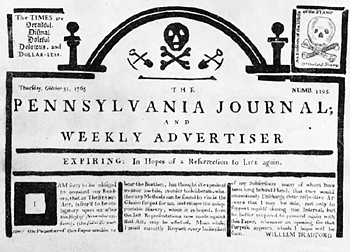
Allow me to reconstruct the history of news media in America to understand why this is a death sentence to the RGJ.

In the 1800’s newspapers owned the information world

1700-1900
In the 1700’s, newspapers became the source of community news. These newspapers often portrayed a political view, but were THE source of information in a society where travel was limited and information scarce. Writers and editors often became key figures in the social and political structure as the gatekeepers of what would be printed.

Radio was faster, but newspapers were corporeal

1900’s
The invention of radio and television gave new options to the public on how they accessed news. The radio offered broadcast news that reached more people faster; however, newspapers remained the source of news because it existed in corporeal form. News transmitted on radio waves disappeared if a person wasn’t in front of the radio during the broadcast. Newspapers; however, almost always gave more a more in-depth account of the events.

Television came shortly after radio and added the exciting features of seeing the reporter and moving images of events; however, newspapers continued to be the best source of significant events.

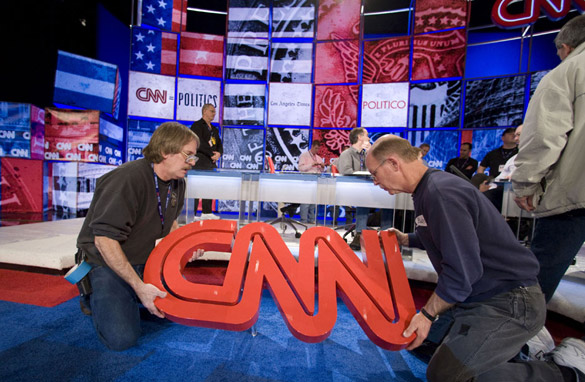
CNN was to newspapers what Wal-Mart was to Mom & Pop stores

1980
CNN was the first real threat to newspapers. It offered news 24/7/365 and it often relayed events in progress. People no longer had to wait for a newspaper’s version that would come the next day. The newspaper still had the corporeal advantage because CNN would eventually move on to the other news while newspapers could be read anytime. Newspapers also still gave more in-depth reporting on local news issues.

1995
It wasn’t until the creation of the Internet that newspapers faced a challenge that would threaten their existence. The public use of the Internet stripped newspapers of almost every advantage they held. News was not only reported, it was discussed and people reacted in real-time. With the development of the Google search engine topics could be accessed and researched at any time anywhere there was Internet access. The news was no longer filtered and limited to what an editor thought people should know, but rather raw information reached individuals who made their own decisions on what was significant to them.

Reporters who spent years in college and thousands of dollars in tuition and books now found themselves competing against bloggers who had no editors to please. Reporters might get the story and accurately report it to their community but in a real-time world their information was just following up to what people already knew. Newspapers have adapted by presenting an online version of the information that will be in the next day’s paper and that has helped writers compete and be read; however, investors want profit and that is the heart of the dilemma.

The Reno Gazette-Journal has decided that they will create demand and increase revenue by limiting access. That is a rational position to take if you have a product that has significant value and demand, but newspapers and their value appeals to a diminishing demographic. Older white males are dying off at an incredibly rapid pace and newspapers have little demand or value to younger, non-white, non-male demographics. How does RGJ expect to gain new readers by charging for access who have free access to local online news through three Reno television news station’s webpages?

There is another problem with RGJ’s decision that may impact the quality of writing. A writer for RGJ has to accept that their audience will be extremely limited. Blogs will exist for decades and are be searchable to anyone in the world. An RGJ reporters work is locked away behind a wall forever. Who wants to dedicate their life to writing and have it unread? Over time writers will have to decide how much damage RGJ is doing to their career by locking their work behind a pay wall. Once the good writers are gone, what value will the Reno Gazette-Journal have to anyone, paying or otherwise?

PR & SM Nightmare: Komen Foundation Race To A Self-Inflicted Kill

03 Friday Feb 2012

Posted by Paul Kiser in Branding, Communication, Ethics, Honor, Information Technology, Internet, Management Practices, Politics, Public Relations, Religion, Social Interactive Media (SIM), Social Media Relations, Women

≈ 2 Comments

Tags

Karen Handel, Nancy Brinker, Planned Parenthood, Public Image, Race for the Cure, Susan G. Komen

Founder & CEO Nancy Brinker leading a PR disaster

It is a public relations worst case scenario.

The decision-makers in an organization make a bad decision and then after it becomes public, the organization desperately seeks to ignore the obvious. Unfortunately, in a Social Media world, making a bad decision is tragic enough, but to try and deny the obvious is fatal. Such is the fate for the Susan G. Komen Race to the Cure foundation.

When a for-profit angers their customers they may see a downturn in sales, but often the customer often has some dependency on the product or service, so they may be willing to eventually forgive and forget.

Non-profit organizations are different. Non-profits depend on public goodwill and in the case of the Susan G. Komen foundation, they are heavily dependent on the active involvement of volunteers and donors of all political and religious views for their Race For the Cure® runs. While the Komen foundation’s purpose is noble, there are many organizations working on behalf of cancer victims and raising awareness of cancer issues. The Komen foundation has no lock on those people who have supported them in the past and continued goodwill is necessary for their continued survival.

A View To A Kill
The Komen foundation had been haunted by religious and conservative political groups once it was learned that grants by the foundation had gone to Planned Parenthood. These grants were specifically for women’s breast health issues, but the conservative groups kept pressure on the foundation to stop all funding of Planned Parenthood.

Karen Handel and Sarah Palin at campaign event

Enter Karen Handel, a rabid anti-choice advocate. Handel unsuccessfully ran for Governor of Georgia in 2010, on an anti-choice/defund Planned Parenthood platform. Her campaign was endorsed by Sarah Palin and Arizona Governor Jan Brewer. Handel narrowly lost in a primary run-off election. In April 2011, The Komen foundation hired Handel as Vice President in charge of public policy. The choice of Handel in this position was a clear message the Planned Parenthood funding would be in jeopardy and the first step in the PR nightmare to come.

In December 2011, the Komen Board of Directors created a procedural rule that would allow the organization to defund Planned Parenthood. The reaction within the organizations was immediate. According to an article by Jeffrey Goldberg in The Atlantic, Mollie Williams, the senior public health director quit in protest. At least two sources in Goldberg’s article indicate that the procedural rule was invented to allow the Komen foundation to cut funding to Planned Parenthood.

After the decision became public the reaction throughout Social Media was quick and massive. People began announcing their condemnation of the decision and that they would no longer support the Komen foundation and the Race For the Cure.

A Possible PR Save?
Once the scope of the reaction became obvious, the Komen foundation might have had a public relations opportunity to save the organization by voting to reverse their decision and immediately firing Karen Handel and any others responsible for putting the organization in a public image blood bath. That move would have instantly made them the target of conservative political and religious groups, but the organization had already experienced that pressure. A reversal would have helped to restore their public image and bought back some goodwill.

 The one thing they could not do was spin the decision to try and make it look palatable to the non-Conservative public.

The Nail In The Coffin
Rather than facing up to the bad decision the Komen foundation, led by CEO and Founder Nancy G. Brinker, instead began aggressively spinning the decision and denying the conservative religious and political motivations. Choosing to stand by the decision has now compounded the PR disaster assuring a slow and dishonorable death for the Komen foundation. Blogs are discussing the organization’s budget and how much money is retained for administrative costs. Certainly they might gain some short-term financial support from well-financed Conservative donors; however, they will not be able to replace the legions of volunteers who made The Race to the Cure possible in communities throughout the country.

It is apparent that the Susan G. Komen foundation leadership has little understanding of the impact of Social Media on public relations. They have acted as if they were operating in 20th Century media environment where a bluff could be held through a news cycle and the voice of the organization could drown out the facts of a situation. Now Nancy G. Brinker has spent all her credibility and has become the face of the scandal. Unfortunately, there is no turning back now. The Race For the Cure has made themselves political by making this decision, and by trying to spin the story they have made a serious wound a fatal one.

UPDATE:

At approximately 8:30 AM PST on Friday, February 3, 2012, CNN said the Komen Foundation was reversing its decision and would fund Planned Parenthood.

4 Reasons Why Foursquare May Be Bad 4 Your Business

31 Tuesday Jan 2012

Posted by Paul Kiser in Branding, Business, Customer Relations, Information Technology, Internet, Management Practices, Public Relations, Social Interactive Media (SIM), Social Media Relations, Technology

≈ Leave a comment

Tags

Check-in, Customer Loyalty, Foursquare, Mayor

Consider the Consequences Before Posting These

Foursquare is supposed to be a fun Social Media tool that can help a business to identify their most loyal customers and promote patronage. By ‘checking in’ using their smartphone with a GPS function, a Foursquare user let’s the business and the user’s friends know that they are there. If a user checks in at a business more often than everyone else he/she can become the ‘Mayor.’ That sounds like a great idea, but there is a dark side that could lead to Foursquare chasing customers away from a business. Here are four reasons why you may want to discourage Foursquare from being a part of your enterprise, especially if you have significant customer traffic.

Negative Comments
Foursquare encourages users to give ‘tips’ to other Foursquare users. I often see negative comments as a tip. At one Starbucks I noticed that the tip that shows up when I check-in states, “Don’t come here if you’re in a hurry” That tip was left on May 6, 2011. Negative comments will haunt your business for months. Not a great first impression for a first time customer.

Competition Between Your Customers
Foursquare pushes your customers into a competition for the prize of being the Mayor. Not all Foursquare users are rabid about becoming Mayor; however, competing customers can be good or bad for your business. Under normal circumstances the competition can lead to more customer visits by those who are trying to rack up more check-ins; however, if becoming Mayor is important to a user, too much Foursquare competition could make a regular customer become frustrated. There will only be one Mayor and if that user has a lock on the Mayorship, then other users may decide to go to a competing business or store where they have a better opportunity to become Mayor. 

Not All Check-ins Equal
In addition to competition, there is an issue with fairness of the Mayor selection. On the face of it the Mayor should be the customer with the most check-in days, but that is not exactly the way it works. I have 49 check-ins in the last 60 days at my favorite Starbucks but the user who is the Mayor only has 45 Check-ins. Why is that user the Mayor? Apparently some of my check-ins don’t count even though I have 32 days in a row of check-ins at this Starbucks and the Mayor was out of town for a week during that time. I am consistently listed as 3 days away from being Mayor. I contacted Foursquare for an explanation and other than an auto-reply that they received my request, there has been no response.

Rewarding Customer Loyalty Not The Primary Goal
Foursquare would seem to be a great method for identifying and rewarding your most loyal customers; however, Foursquare is, in large part, a game and rewards those who are the most competitive, not the most loyal. While most employees can quickly recognize their loyal customers, they may not be able to recognize who the Foursquare Mayor is for their business. This is especially true of businesses with a high volume of customers and/or with a drive-thru window. The Mayor may be the person who simply plays the game and has little interest in supporting your business. If your business offers a special to the Mayor or attempts to recognize Foursquare users in some way, it could be insulting to loyal customers who feel they have neglected for their support of your business.

While Social Media tools like Foursquare can be useful in a business environment, it is important to consider the limitations and risks of employing them into your customer service plan.

New Religion For Business: Believing in the ‘L’ Word

23 Wednesday Nov 2011

Posted by Paul Kiser in Business, Customer Relations, Customer Service, Information Technology, Internet, Management Practices, Public Relations, Social Interactive Media (SIM), Social Media Relations, Technology

≈ Leave a comment

Tags

DataSift, Facebook, filtering, listening, Nick Halstead, Rob Bailey, Twitter

Paul Kiser

For a hundred years the Church of the Big Sell has preached to enterprise decision-makers that they will give a voice to their company…for a price. Media chieftains told the world of business that the customer is a commodity that can be manipulated and controlled with the right ad campaign, the right slogan, the right spokesperson, or the right look. Then came Social Media.

Social Media has put a lot of business traditionalists in a tailspin. It turns out that the customer is not a commodity and they hate it when they are treated like one (e.g.; Netflix, United Airlines, Bank of America, etc.) Customers  are people and they have feelings, wants, likes, and dislikes.

Facebook and Twitter gave the people fire and they liked it. Now the customer has a voice and they use it. They talk. They converse. They express. They judge. Not only do they have a voice, they now have the power to turn off advertising…and they do.

The Church of the Big Sell is burning and the voice they were supposed to give to business is wasted on ads in newspapers and magazines that nobody reads, radio and television commercials that nobody listens to or watches, and yellow pages books that go from the front doorstep to the recycling bin…unused. Social Media took away the microphone of enterprise because people are tired of being preached to by the Church of the Big Sell.

Business is realizing that customer interaction has changed. Enterprise in a Social Media world is not about talking, but about listening. Listening is the alpha and omega of the Social Media world. Almost everything a business needs to know is there, if they listen. A new church is being built on the ashes of the old and the religion is based on the ‘L’ word.

Listening is not as easy as it sounds (pun intended.) Social Media is noisy. Too many voices, too many issues. A restaurant owner does not need to know that Emily had a great date last night…unless Emily’s date was at his restaurant. Then he might want to know that Emily’s date was great despite her eating experience, where the food was cold, the parking a pain, and the service rude. The restaurant owner might also want to know that nine of Emily’s friends responded to her Tweet by agreeing that his restaurant sucks and they will never eat there again.

Rob Bailey - Head of US Operations and new CEO of DataSift

Tools of Listening in the New Church of Social Meda
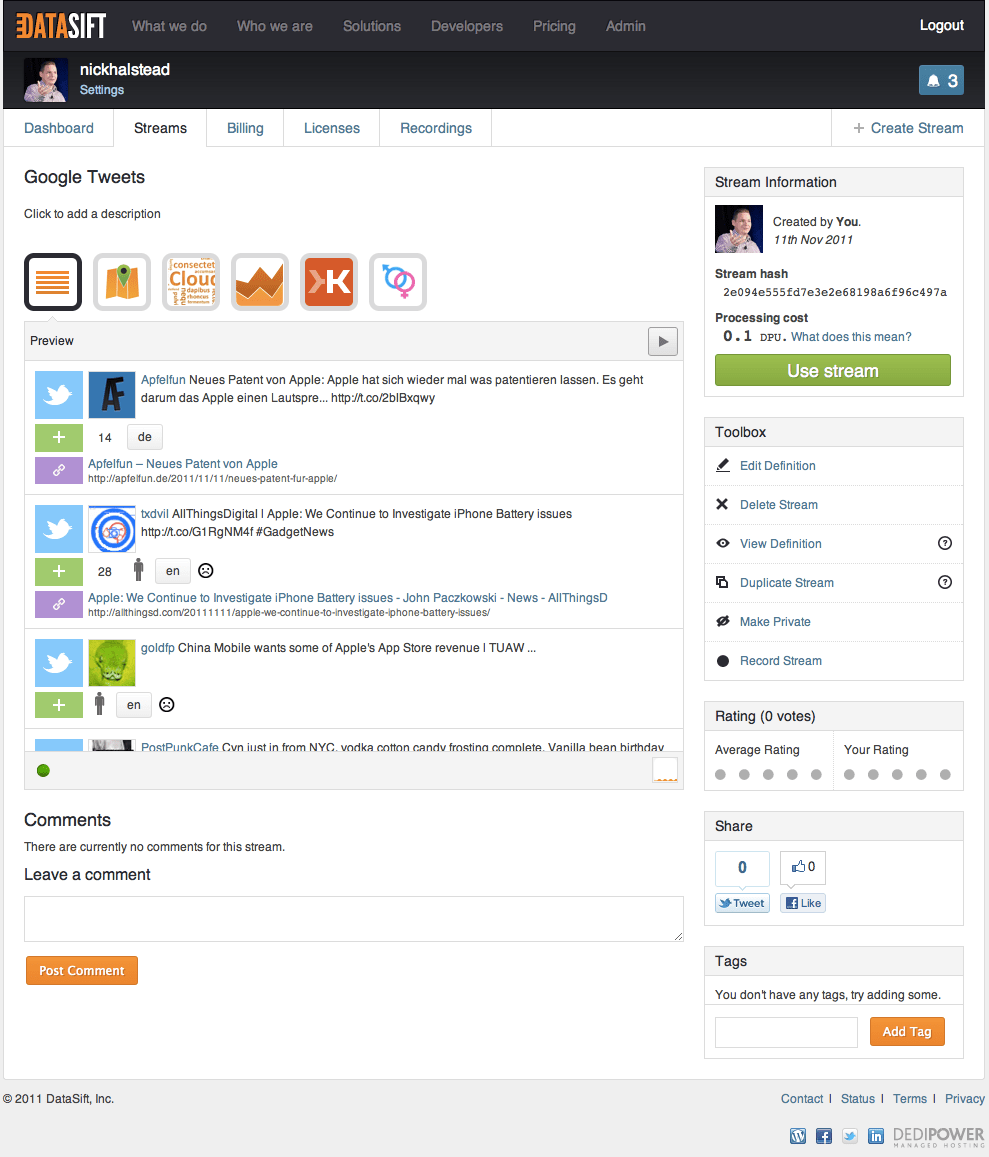
Paring down the noise of Social Media is a major challenge for a business and the new religion has new tools. “The amount of Social Media that people are producing is doubling every year…,” explained Rob Bailey, who is the head of United States Operations for DataSift, a Social Media filtering platform for business that was launched last week. Bailey said that there are three steps in refining raw Social Media into relevant information for any enterprise.

The first step is to refine the data down to what is being posted about an organization, subject, or topic. That refinement may require multiple filters to distill out undesired spam, retweets, and other noise. The second step is to analyze the results based on factors such as age, gender, geographic location, and sentiment. The final step is to have a visual tool that reports the results simply and accurately for interpretation by the decision-maker in the company.

Nick Halstead - Past CEO and now Chief Technology Officer

DataSift had 8,000 users in the alpha test of its Social Media monitoring platform and found that the interest in this technology spanned a wide variety of industries. CEO Nick Halstead said that they had, “… government agencies to pharmaceuticals, a lot in finance, a lot in retail…and quite a few start-ups…” interested in DataSift’s technology to monitor issues of concern to their business and organizational operations. Another industry that wants to be able the monitor the Social Media are News Outlets that are trying to compete with Twitter and Facebook in providing events in real-time. Bailey said, “Twitter is an incredible vehicle…” for finding out what is going on in the world.

Public Relations and Social Media firms are also using tools to filter out the Social Media noise for companies who would rather hire an outside service for their Social Media presence rather than doing it in-house. In addition to listening to the Social Media these agencies help a business identify and correct their public image by handling public image issues and concerns for the organization.

View of data stream screen

The tools of the new platform allow the user to search multiple Social Media formats and have access to the full Twitter worldwide database in real-time. Beyond listening to what is being said about a company’s public image, they can now test market products or services and use Social Media to determine the reaction. The platform also has an interesting application in politics by allowing campaigns to determine sentiments on key issues by geographic region before a candidate campaigns in that area.

Improved customer response is probably the most obvious benefit to listening to Social Media, as a business can now pick up any post written about their company, product, or service and appropriately respond in minutes with a thank you for positive comments and a resolution or apology for negative experiences.

There is no turning back. Social Media demands that enterprise be great listeners and now they have no excuse.

USA PDT [Twitter: ] [Facebook] [LinkedIn] [Skype: 775.624.5679]

5 Reasons Why Ignoring Negative Social Media is a Career Ender for a VP of Customer Service

01 Tuesday Nov 2011

Posted by Paul Kiser in Business, Communication, Customer Relations, Customer Service, Public Relations, Social Interactive Media (SIM), Social Media Relations

≈ 4 Comments

Tags

Blogs, Facebook, Foursquare, Netflix, Twitter, United Airlines, Yelp

USA PDT [Twitter: ] [Facebook] [LinkedIn] [Skype: 775.624.5679]

Paul Kiser

Despite the overwhelming evidence of the impact of Social Media on the perceived public image of a business, many Customer Service (CS) and Public Relations (PR) executives still handle negative Social Media (blogs, Facebook, Twitter, Foursquare, Yelp, etc.) by ignoring the bad publicity. One can only marvel at the rationale of an executive team in the 21st century, which believes that avoidance behavior of PR problems in the Social Media environment is the best policy.

I would suggest that there are four reasons for this philosophy, which are as follows:

Bad Social Media PR is Bad for Business

  • An outmoded understanding and/or denial of Social Media and its long-term impact on the company’s public image.
  • A belief that negative statements in the Social Media have no cumulative effect and that they will disappear over time.
  • An arrogance by the executives of a corporation that they control their public image by what they say and do and by the money they spend on advertising, not by what individuals outside the company say about them.
  • A belief that by giving attention to someone with a complaint about their company will cause more problems and possibly force the company to admit to their stupidity.
There are five reasons why ignoring negative Social Media is a bad idea and why the CS and PR executives who follow this policy have an expiration date on their careers:
  1. A negative Social Media comment is forever. It doesn’t fade and it doesn’t go away.
  2. A negative blog can and will be found by any Google search of your company. Why would a CS or PR executive let people who search for their company be exposed to everything said by the people who hate you?
  3. Bad comments on Social Media are cumulative. When someone is mad at your company they will search to find other people who feel the same way, and then you have a movement of people who are united against your company.
  4. Waiting to address bad publicity only makes a company look like they are hiding something when they finally do publicly address the issue, which is a lose, lose, loser in damage control.
  5. Once a company wakes up and realizes that ignoring bad PR is a stupid idea, how long will the implementor of that policy have before the company seeks someone who is smarter about handling negative Social Media?

A negative Social Media comment about a company is an opportunity. Everyone knows that major corporations are monitoring the Social Media, so when someone makes a negative comment they know that someone in the company is reading it. A company that contacts the author of the complaint to show concern will, at the very least, prove that the company appreciates its customers. By, 1) addressing the reason for the complaint and, 2) making some tangible effort to offer a reward to the person for bringing the issue to the company’s attention, the complainer will likely become a positive voice for the company’s public image and may even delete the negative blog or comment.

Companies, and their executives, who fail to address negative Social Media comments are risking their future. Netflix and United Airlines are just two examples of corporations that have done too little too late to address public image issues in the Social Media and they are paying the price. How many companies have to become a joke to their customers, investors, and the public before they realize the mistake they are making by ignoring Social Media?

Social Media ‘Evolution’ At Nation’s Investment Firms

26 Thursday May 2011

Posted by Paul Kiser in Branding, Business, Communication, Customer Relations, Ethics, Government Regulation, Information Technology, Internet, Management Practices, Public Relations, Social Interactive Media (SIM), Social Media Relations

≈ Leave a comment

Tags

Blogging, compliance, FINRA, investment firms, New Business World, New York Life, Public Image, Regulatory Notice 10-06, Rule 10-06, SEC

USA PDT [Twitter: ] [Facebook] [LinkedIn] [Skype: 775.624.5679]

Paul Kiser

Can your investment advisor write a blog about his or her job? Can they Tweet that they just read a great article on oil futures and add a hyperlink? Can they post that they had a big day in the market? Prior to January 2010, the answer was no…not unless they wanted to risk her or his job.

Securities Exchange Commission (SEC) and Financial Industry Regulatory Authority (FINRA) rules didn’t specifically prohibit business-related Social Media participation, but SEC regulations on advertising and communications have been presumed to extend to online engagement and in a vacuum of good guidance, most major firms took the position of forbidding their representatives from participating in Social Media formats. This removed the fundamental aspect of Social Media that benefits commerce on the Internet, the one-on-one connection.

In January 2010, FINRA issued Regulatory Notice 10-06, which gave investment firms parameters for allowing their representatives to use Social Media within the bounds of SEC and FINRA regulations. The reaction was not instantaneous because firms had to solve the issue of how to supervise agent’s online communication. Protocols had to be established, software had to be adapted and installed, and training of agents had to be implemented; however, there has been a rapid Social Media ‘evolution’ in investment advising during the past 12 months.

For some firms, a deliberate, but ‘conservative approach’ to implementing Social Media engagement is being employed. One industry representative said, “…we had to help agents know what they can talk about and what they can’t talk about.” But she added, “…I’d rather be doing this now than wait three years and try to figure it out…Social Media exists and it’s not going away.”

For New York Life the direction was made very clear according to Ken Hittel, Vice President, Corporate Internet, who said, ” Our CEO, (Ted Mathas) made it very clear that agent participation (in Social Media) is a requirement.” New York Life uses a software program to meet SEC and FINRA regulations of supervising agent’s Internet interactions. Hittel said that the implementation of the program, “…went smoothly and was completed in a couple of months.”

The SEC regulations on advertising and adviser/investor communications are not new and apply to all methods of interactions, including those performed via the Internet. A FINRA podcast outlines five issues that apply to all forms of investment communications. All statements made by an agent must:

  • not be exaggerated or misleading and all material facts must be disclosed
  • clearly identified the firm and agent
  • not include or imply any forward-looking statements
  • provide the customer/investor a sound basis to evaluate the services or market
  • file any statements regarding mutual funds, variable products, and/or exchange traded funds within 10 days of being published

Each investment firm is expected to train their agents on how to comply with SEC and FINRA requirements. Hittel said that the New York Life agent training program is “..not just compliance.” He pointed out that Social Media creates 12,000 “Brand Ambassadors” for the company and they based their Social Media training on a “best practices” approach. Hittel said that there is a saying at New York Life, “…that you can do anything, not everything,” which is reflected in New York Life’s approach to Social Media engagement. The firm has established a progressive program for Social Media participation by their agents…within the scope of SEC and FINRA regulations.

FINRA Clearing a Path for Investment Firms to Engage in Social Media

25 Wednesday May 2011

Posted by Paul Kiser in Business, Customer Relations, Ethics, Government Regulation, Management Practices, Public Relations, Social Interactive Media (SIM), Social Media Relations

≈ 3 Comments

Tags

compliance, deregulation, FINRA, investment, investment firms, SEC

USA PDT [Twitter: ] [Facebook] [LinkedIn] [Skype: 775.624.5679]

A version of this article first published as
Investment Firms Allowed to Use Social Media Under SEC/FINRA Rules
on Technorati.com

Paul Kiser

Eighteen months ago a game launching bird heads at pig heads didn’t exist.

Eighteen months ago Tony Hayward was a star as CEO of BP.

Eighteen months ago most people thought Charlie Sheen was an actor.

Eighteen months ago most investment firms thought that financial advisors were prohibited from using Social Media in business.

Now Angry Birds is near world domination, now Tony Hayward is a footnote in public relations infamy, now we know Charlie Sheen is Charlie Harper…the possessed version of him, and now Social Media is not taboo in the investment business.

…in the world of investing, the Social Media ‘evolution’ has had to meet the compliance issues of the regulatory agencies meant to protect the investor from unethical advisors…

The world is evolving faster than most people can absorb, so it’s not surprising that some industries are adapting to new technologies faster than others, but in the world of investing, the Social Media ‘evolution’ has had to meet the compliance issues of the regulatory agencies meant to protect the investor from unethical advisors.

Social Media tools like blogs and Internet-based social networking tools have opened up a new environment for business by allowing a rapid-response connection between the customer and the seller of a product or service. In most Internet commerce it is a caveat emptor (let the buyer beware) situation, where the buyer must pursue legal remedies for a broken contract or unethical representation of a product or service after the fact. In investment advising the company or firm is expected to protect the buyer before, during, and after the fact, which requires the firm to intercede and supervise interactions that involve investment advice. That has led many firms to prohibit all Social Media involvement by its representatives.

However, seventeen months ago the largest independent financial regulator stepped forward with a road map for investment firms on how Social Media could be used by their representatives while meeting the need to protect the investor.

…the regulations only effect business communications that involve investment advising and promotion. Personal blogs, Twitter, Facebook, and other Social Media tools are not a concern for the regulators…

Joseph Price, Senior Vice President of Advertising Regulation/Corporate Financing at FINRA (Financial Industry Financial Authority) discussed the issues with investment firms and Social Media with me earlier today. Price is one of the authors of Regulatory Notice 10-06 titled Social Media Web Sites – Guidance on Blogs and Social Networking Web Sites that was published in January 2010. Price said that using Social Media, “..depends on the firm’s business model,” and that it, “..has to make sense for the firm.” He confirmed that the regulations only effect business communications that involve investment advising and promotion. Personal blogs, Twitter, Facebook, and other Social Media tools are not a concern for the regulators even though individual firms may have policies prohibiting personal on-line interactions.

Price said that a common question he hears from firms is from those who prohibit all Social Media involvement by their representatives. Their concern is whether a firm is meeting the regulatory requirements when they have no Social Media supervisory functions in place because they have prohibited the activity.

Another question that FINRA has had to deal with involves deleting inappropriate user comments in chat rooms and on blogs. Price asked, “..by selective deletion, has the firm adopted the posts they haven’t deleted?” His suggestion to firms is that they have a policy in place that outlines the approval/deletion of comments. As long as a firm follows the policy and doesn’t prejudice the comments to favor the firm and its products, the company will likely not be considered to have approved and adopted the user comment.

Regarding investment business blogs, Price explained that they “require prior approval” by a firm before they are published because they fall into the category of a static communication that includes any form of advertising.

The Regulatory Notice 10-06 answers ten questions for firms about guidelines for using Social Media in the industry of investment advising.  FINRA has followed up that document with webinars, podcasts, and seminars to assist their member firms in the ongoing process of adapting regulatory requirements to Social Media tools available to the rest of the business world.

Firms now the option of fully engaging in Social Media, which is rapidly becoming less an option and more a matter of survival.

Does FINRA Prohibit Social Media Activity for Investment/Financial Firms?

19 Thursday May 2011

Posted by Paul Kiser in Branding, Business, Communication, Customer Relations, Customer Service, Ethics, Information Technology, Internet, Management Practices, Public Relations, Social Interactive Media (SIM), Social Media Relations

≈ Leave a comment

Tags

Blogs, Financial industry, FINRA, investing, Investment agencies, Regulations, Rule 10-06, SEC

USA PDT [Twitter: ] [Facebook] [LinkedIn] [Skype: 775.624.5679]

Paul Kiser

Last year I managed to offend some investment and financial professionals when I said that their industry would have to engage in Social Media, including blogs, if they were going to stay competitive. They told me that their firms and industry regulations prohibited them from using Social Media tools in their business practices. They also said that some firms that prohibited personal involvement in Social Media. The reaction during and after the meeting was one of a strong denial of the usefulness of Social Media in their industry mixed with a ‘kill-the-messenger’ attitude. It was a typical response by business people who have been blindsided by Social Media.

…Professionals that rely on personal contact and personal relationships are finding that effective use of Social Media is key to maintaining and growing their business.

It is hard to start a dialogue with business professionals on how to use Internet tools such as blogging, Facebook and Twitter when the attitude is that Social Media are an encompassing evil that must be avoided, or at the very least, ignored. The problem, and opportunity, is that business professionals who can use Social Media to engage with others will have an advantage over those who are mystified, or more typically, scared by the power of Social Media. Professionals that rely on personal contact and personal relationships are finding that effective use of Social Media is key to maintaining and growing their business.

The fact is that since that meeting many investment related firms have changed their positions by at least 90° and some have done a 180° shift in their attitude about Social Media in business. That is not surprising considering that their future is at stake; however, investment firms do have strict guidelines on advertising and investment advisement, so using Social Media is not the ‘anything goes’ environment for which most of us are accustomed.

Both the Securities Exchange Commission (SEC) and Financial Industry Regulatory Authority (FINRA)[1] are charged with protecting investors by establishing rules to govern investment-related activities. Among those rules are requirements for firms on educating, monitoring, supervising, and document the activities of brokers representing their company. In January 2010, FINRA issued Regulatory Notice 10-06 titled Social Media Web Sites – Guidance on Blogs and Social Networking Web Sites. This notice did not prohibit firms from engaging in Social Media activity, but rather offered common-sense guidelines for investment firms on how Social Media tools could be used to meet FINRA and SEC requirements.

(End of Part I)

(Note: Part II will be posted by 5 PM PDT, Monday, May 23rd)

[1] FINRA is the largest independent regulator for all securities firms doing business in the United States. FINRA’s mission is to protect America’s investors by making sure the securities industry operates fairly and honestly. All told, FINRA oversees nearly 4,550 brokerage firms, about 163,500 branch offices and approximately 631,110 registered securities representatives. (From About FINRA at www.finra.org.)

(This article is advisory in nature and the author does not represent the Financial Industry Regulatory Authority (FINRA,) the Security and Exchange Commission (SEC), nor any federal or state regulatory authority. The opinion expressed should not be considered as a legal or official position regarding the use of Social Media tools in industry practices.  The author has sought out publicly available relevant documents and information as the basis for the opinions expressed; however, final authority on the issues discussed in this article rests with the appropriate government, regulatory, and/or company division that oversees the area of concern.)

Who Uses Facebook, Twitter, LinkedIn, MySpace – Social Media Update: 4th Q 2010 and 1st Q 2011

12 Tuesday Apr 2011

Posted by Paul Kiser in Business, Communication, Internet, Public Relations, Social Interactive Media (SIM), Social Media Relations

≈ 3 Comments

Tags

Facebook, LinkedIn, MySpace, Twitter

by Paul Kiser
USA PDT [Twitter: ] [Facebook] [LinkedIn] [Skype:kiserrotary or 775.624.5679]

Paul Kiser

The last two quarters have seen some interesting trends in the big four Social Media services. The most obvious is the leveling off of growth of Facebook and Twitter, but of greatest interest is the clarification of who is using the Social Media tools.

Despite the plateau reached during the last two quarters, Facebook gained 100 million unique visitors per month over the same time last year and now stands at 590 million unique visitors per month. Twitter is the runner-up at 97 million unique visitors. To put Facebook’s Internet presence in perspective, the combined daily circulation of the Wall Street Journal, USAToday, New York Times, Los Angeles Times, The Washington Post, the New York Daily News, and the New York Post equals only 36% of the average daily unique visitors (19 million) of Facebook.

LinkedIn remains stagnant with no growth over the last five quarters and MySpace can claim the most significant trend as it continues its death spiral. It dropped from 80 million unique monthly visitors a year ago to 34 million at the end of the 1st quarter of 2011. This has all happened in a year where the owners of MySpace, Rupert Murdoch’s News Corp, made desperation efforts to re-invent the service, along with massive layoffs to cut costs, in hopes of selling it. So far, their attempts to prop up MySpace and sell it have failed.

FACEBOOK – Don’t Hate Them Because They’re Beautiful

The Disneyland of Social Media

Facebook has remained at an estimated unique visitor count of 590 million for in the last two quarters. This has caused some Social Media naysayers to proclaim that Social Media is dead. It’s amusing and sad at the same time. It’s like a used car salesman saying that new car sales are dead because they’ve leveled off for two quarters.

Facebook is and will continue to be the way that individuals communicate, inform, and influence others for the foreseeable future. A more reasonable growth during 2011 should be anticipated with Facebook ending the year around 610 to 625 million.

The return of female users on Facebook continues. I say ‘return’ because female users were at 60% at the end of the 1st quarter of 2010 and dipped in the middle of the year. The percentage of women users stood at 57% the end of the 3rd quarter 2010, 59% at the end of the 4th quarter, and is now at 61%.

There has been no significant change in the age groups using Facebook during the last three quarters. This would indicate that Facebook users are becoming more stable and identifiable in terms of demographics. Seventy-two percent of users are between 25 and 54, and dividing those into ten-year spans (25-34, 35-44, and 45-55) results in near equal distribution among the three age groups.

CONCLUSION: Facebook is used primarily by adults of both sexes, but significantly female, in the prime of their active professional careers for social interaction.

TWITTER – The Scoop on Real-Time Events and Discussion

The David to Traditional News Media's Goliath

Media ‘Experts’ continue to try to figure out how to ‘monetize’ Twitter and come away with programs that annoy people and are rejected by Tweeters. When they offer dismal ROI (return on investment) figures to their client they shrug their shoulders and declare Twitter is a fad and useless. Then a major world event happens and Twitter becomes the most important information tool on the planet.

Twitter is an acid test on whether a person ‘gets’ Social Media or not, because it is one of the most powerful Social Media tools on the web, but it is not a space for advertising or marketing. This makes Twitter one of the most envied and hated Social Media tools by traditional marketing and media people, but one of the most loved by those who are believers.

Twitter has been hanging just under 100 million unique users per month since the 2nd quarter of 2010, but did dip down to 89 million at the end of 2010. Since then Twitter has jumped back up to finish the 1st quarter of 2011 at 97 million. The jump in the 1st quarter of this year is likely due to the world political events in north Africa and the earthquake and tsunami in Nippon.

Women use Twitter more than men, but like Facebook, there was a dip in the middle of 2010, when female users dropped from 60% at the end of the 1st quarter. By the end of the 4th quarter female users were at 55% and that has grown to 57% at the end of 2011’s 1st quarter.

Age demographics for Twitter also haven’t changed significantly during the last three quarters. Twitter users skew towards the young professional age group with 54% of the users falling in the 25-44 age group. At the end of the 1st quarter of 2011, only 18% of the users fell in the 45-54 age range compared to 26% of Facebook users.

CONCLUSION: Twitter is used by primarily young professionals of both sexes, but significantly female, to discuss current, real-time issues including world events and business-related topics.

LINKEDIN – Social Media for Head Hunters and Salespeople

It's all about Marketing

Many people don’t realize that LinkedIn (launched in May 2003) predates Twitter (July 2006) Facebook (February 2004,) and MySpace (August 2003). Despite its seniority in the Social Media world, it has failed to catch fire with a larger audience. It is sometimes thought to be a Social Media tool for business, but this is almost always proposed by someone who is an employment recruiter or a sales and/or marketing person.

Because LinkedIn specializes in giving a person a format to publish their resumé it is the ideal network for those seeking employment as well as those who make a profit off of people seeking employment. The irony is that at a time of record unemployment, the unique users per month have stayed flat, alternating between 41 million and 38 million for the past five quarters, ending at 41 million this past quarter.

The reason LinkedIn lacks a higher level of interaction may be due to users who have an agenda (selling themselves or their services,) which is annoying to most Social Media users. It is an inherent flaw in the premise of LinkedIn that will always keep it from broader acceptance and usage by Social Media users who like interacting, but loath selling and advertising.

LinkedIn also creates barriers to forming connections by asking “How do you know ____ ?”, and in some situations will require a user to prove that they know the person by providing their email address. While you can work around these barriers fairly easily, it inhibits people from making new connections with someone who may have similar interests.

Regarding the male to female user ratio, male users have been at 55% for the past two quarters, which is up from the 50-50 split in the 1st quarter of 2010. The users also tend to be older professionals with the 35-54 age group making up 61% of the users at the end of the 2010, and 62% at the end of the 1st quarter of this year. Those percentages were up from 56% one year ago, indicating that LinkedIn users are skewing towards the older professional.

CONCLUSION: LinkedIn is used primarily by older professionals of both sexes, but significantly male, to market themselves and their services.

MySpace – 2011 R.I.P

A Social Media Radioactive Fallout Zone

It is time to accept that MySpace is no longer relevant as a Social Media tool. It seems to have been abandoned by all but, 1) independent bands who use it to advertise themselves, 2) law enforcement agencies who pose as 13 year-old girls using images of tweens in bathing suits to lure in child predators, 3) real teenagers saying that they are 19 or older to bypass the security restrictions on minors, or 4) females who are seeking to attract men and women to their adult site. That is oversimplifying it, but it is difficult, if not impossible to find anything about MySpace that would make it competitive with other Social Media tools like Facebook or Twitter.

In addition to the largely objectionable user base, the site is slow and requires a log in with each visit, rather than accept the cookie identification from the returning users’ computer like most other Social Media services.

News Corp seems to have made a major error in purchasing MySpace at a time when it needed massive updating and redesigning for a more sophisticated user. Instead they tried to dress it up last year as a music-based Social Media service and sell it off without investing the money needed to save it. It is now so dysfunctional that the best thing that could happen is to shut it down, build a new and better program from scratch, and launch a new service that competes with LinkedIn or finds a new niche.

It is rather pointless to discuss the age or sex demographics of MySpace because while the statistics for the last two quarters may indicate that the users are 68% female, false profiles seem to be so rampant on the service that nothing can be believed.

CONCLUSION: MySpace is used primarily for nefarious, hormonal, and/or deceptive reasons for purposes that tend to exploit or expose unsuspecting users.

Starbucks Siren Gets Facelift at 40

06 Thursday Jan 2011

Posted by Paul Kiser in Branding, Business, Customer Relations, Internet, Public Relations, Social Interactive Media (SIM), Social Media Relations

≈ 1 Comment

Tags

Coffee, logo, New Coke, Public Relations, Publicity, Starbucks

by Paul Kiser
USA PDT  [Twitter: ] [Facebook] [LinkedIn] [Skype:kiserrotary or 775.624.5679]

Paul Kiser

Article first published as
Starbucks Siren Gets a Facelift at 40
on Technorati

The problem with Social Media is that it sometimes gives a bigger voice to the reactive minority. Such is the case with the announcement made yesterday by Starbucks CEO Howard Schultz.

As part of several changes to move Starbucks forward for its 40th anniversary, the company is changing the logo for the first time in almost 20 years. They have simplified the logo by removing the words, “Starbucks Coffee” and the circle around the mermaid…technically she is a Siren.  She is bigger and she is now green (originally black.)

(Starbucks Web Announcement)

Based on some of the reaction on the web you would think that Mr. Schultz had just sent naked pictures of himself to Katie Couric. Among the comments on the Starbucks website were the following:

Starbucks Logos through the years

MimiKatz:  “Who’s the bonehead in your marketing department that removed the world-famous name of Starbucks Coffee from your new logo?”

Rbailer:  “…Why is that companies always take away products or change them when eveythings going along smoothly…”

Jaga30:  “…let’s not kid ourselves–Starbucks has never been the brilliant marketing mastermind of the Northwest.”

There were several comments of support for the change, but that is not what most media outlets and bloggers picked up…probably because comments of support aren’t as newsworthy as reactive comments.

The reaction could, and probably was, expected. The announcement was sent out in an email to all Starbucks Gold Card members and they probably have the deepest attachment to the status quo, as well as the most severe caffeine addition. Change and caffeine don’t mix, (remember ‘New Coke,’) so no one in Seattle should be surprised by the drama.

The controversy will serve to create free publicity resulting in increased revenue. The only thing that Starbucks could have done better to engineer more publicity would have been to put breasts back on the Siren… is it too late to make another change?

More Articles

Business: Public Relations, Management, and Social Media Related

  • “…and your little dog, too”  Words define intent, evil
  • Facebook and Twitter Doomed? …Chicken Crap
  • 5 reasons why you shouldn’t title your blog with number reasons
  • A Question of Ethics
  • HR/Security Hot Topic: Should you watch your employee’s personal Internet activities? (Facebook, MySpace, Twitter, etc.)
  • Relationship Typing: 3 factors that affect the quality and depth of friendship (Part I)
  • Starbucks Re-Imagines the business … again
  • Your Privacy Rights on the Internet: Read before you write
  • Social Media 3Q Update: Who uses Facebook, Twitter,LinkedIn, and MySpace?
  • Richmond Embassy Suites: The best at true Hospitality
  • Dear Business Person: It’s 2010, please update your brain.
  • Selling watered-down beer: The best spin campaign in advertising
  • Communication: Repetition of message does not increase awareness
  • Is it time to fire yourself?
  • Millennium Hotel: Go away, spend your money elsewhere
  • Rogue Flight Attendant shows his arrogance, Airlines dislike for the customer
  • 2Q 2010 Social Media Tools: Facebook/Twitter sail on, LinkedIn/MySpace don’t
  • War Declared on Social Media: Desperate Acts of Traditional Media
  • Pay It Middle: The Balance between Too Much and Too Little Compensation
  • Mega Executive Pay Leads to Poor Performance
  • Relationships and Thin-Slicing: Why the other person knows what you’re really thinking
  • Browser Wars: Internet Explorer losing, Google Chrome gaining ground
  • WiFi on Southwest Airlines: Is it ‘Shovel Ready’?
  • Starbucks makes a smart move: Free WiFi
  • Foul Play: FIFA shows what less regulation offers to business
  • The Shock of the McChrystal Story: The story is over before the article is published
  • Tony Hayward: The very model of a modern Major General
  • Epic Fail: PR ‘Experts’ don’t get Twitter
  • King of Anything: Social Media vs Traditional Media
  • Twitter is the Thunderstorm of World Thought
  • Signs of the Times
  • How Social Interactive Media Could Transform Higher Education
  • How to Become a Zen Master of Social Media
  • Death of All Salesmen!
  • Aristotle’s General Rules on Social Media
  • Social Media:  What is it and Why Should You Care?
  • Social Media 2020:  Keep it Personal
  • Social Media 2020:  Who Shouldn’t Be Teaching Social Media
  • Social Media 2020:  Public Relations 2001 vs Social Media Relations 2010
  • Social Media 2020: Who Moved My Public Relations?
  • Publishing Industry to End 2012
  • Who uses Facebook, Twitter, MySpace & LinkedIn?
  • Fear of Public Relations
  • Dissatisfiers: Why John Quit
  • Facebook, Twitter, LinkedIn…Oh My!
  • Does Anybody Really Understand PR?

Rotary Related

  • Leaving Rotary
  • Re-Imagining Rotary
  • Rotary@105: 7 Relationship types that affect membership retention (Part II)
  • What most non-Rotarians don’t know about Rotary
  • Rotary@105: Making Rotary Sexy
  • Rotary@105: Grieving change
  • How Rotary can..must..will plug into Social Media
  • Rotary PR: Disrespecting the Club President is a PR/Membership issue
  • Rotary Membership/Public Image Challenge
  • Rotary New Year: Retread or Renaissance?
  • Rotary@105: A young professionals networking club?
  • One Rotary Center: A home for 1.2 million members
  • Rotary@105:  What BP Could Learn from the 1914 Rotary Code of Ethics
  • Rotary Magazine Dilemma Reveals the Impact of Social Media
  • Rotary@105:  April 24th – Donald M. Carter Day
  • Rotary@105:  What kind of animal is Rotary International?
  • Rotary:  The Man in the Yellow Hat as the Ideal Club President?
  • Rotary@105:  Our 1st Rotary Club Dropout
  • Rotary Public Relations and Membership: Eight Steps to a Team Win
  • Rotary: All Public Relations is Local
  • Best Practices:  Become a Target!

Science Related

  • Happy New Year!!!
  • Negative Time: The Self-fulfilling Prophesy a Scientific Possibility?
  • Physics in 2010: The more we understand, the less we know

Personal Experience Related

  • Knowing when it’s over or beyond over
  • Dear Teresa Laraba, SVP of Southwest Airlines Customer Service
  • Things I didn’t know about being a Father to a four-year-old boy
  • Riding Reno: The Ladies of Reno
  • Up in the air down in Texas
  • I mow my lawn because…
  • Nevada I-580: An Interstate by any other name
  • Nevada’s oldest brewery opens a Reno location
  • Two Barbecues and a Wedding
  • Car Dealership Re-Imagines Customer Service

Our Country and History Related

  • Dates of Historical Note in 2011
  • Sandoval/Reid campaign money not a stimulus for Nevada
  • Nevada’s Best Kept Secret: #1 in Crime
  • The Vultures Start Circling on Election Day
  • The Quality of Mercy: Tea Party seeks its pound of flesh
  • I’m not angry, nor am I stupid … and I voted
  • Point of Confusion
  • What I’m not buying this year
  • Nevada: State of Disaster
  • Thank you, Mr. President
  • America’s Hostile Takeover of Mexico

Facebook and Twitter Doomed?…Chicken Crap

06 Monday Dec 2010

Posted by Paul Kiser in Business, Communication, Ethics, Information Technology, Internet, Public Relations, Rotary, Social Interactive Media (SIM), Social Media Relations, Traditional Media

≈ Leave a comment

Tags

Doomed, Facebook, Privacy, Social Media, Twitter

by Paul Kiser
USA PDT  [Twitter: ] [Facebook] [LinkedIn] [Skype:kiserrotary or 775.624.5679]

Paul Kiser

Blogging is about open discussion and the expression of opinion, so I hesitate to contradict someone’s blog; however, when someone titles their blog referencing ‘doomed’ with any aspect of Social Media it gets my attention. I am trying to help older professional adults understand Social Media and what it means to business and organizations like Rotary. Rotarians are sometimes hesitant to engage in Social Media tools like Facebook and Twitter because of irrational fears and a lack of good information.

Last week a blog was published by Gini Dietrich, who has the credentials to be knowledgeable in the field of Social Media and I do not call her experience or professionalism in to question; however her article called, “Creative Destruction: Why Facebook and Twitter May Be Doomed” requires a strong response.

Announcing the possible ‘doom’ two of the most significant tools in the digital world is clever because traditional media professionals and Social Media-phobs drool over anything that smacks of the end of the Internet and its place in civilized society. If I want to get a 10,000 hits on my blog this week, (and ongoing hits from Google searches,) including the words ‘doomed’, ‘Facebook’, ‘Internet’, and ‘Social Media’ would be one of the best tactics I could use. The problem is that the aside from pandering to those who remain firmly entrenched in 1989 thinking, Ms. Dietrich has little substance to support her dire prediction.

(Original blog by Gini Dietrich)

The blog focuses primarily on Facebook and the ongoing whining by non-Facebook users about privacy issues. Ms. Dietrich’s argument is essentially that the masses are ready to revolt and leave Facebook to ‘better’ networks that will be more restrictive to protect the user’s privacy. She goes on to suggest that Facebook and Twitter will be replaced just as they replaced earlier Social Media networking tools.

While every enterprise faces the same potential for creating its own demise, I strongly disagree that Facebook or Twitter may be ‘doomed’. Yes, users are a fickle group, but Friendster and MySpace were first-efforts in creating a comprehensive, open-networking Social Media tool and they had shortcomings that made them annoying (MySpace still does). It is true that Facebook and Twitter’s growth have been driven partly by capitalizing on the weaknesses of their predecessors; however, the major success of both was by bringing new people into the Social Media world with greater connectivity to quality users.

Dark clouds over Facebook?

Facebook attracted a larger segment of the population, including older users that suddenly became addicted to the connections that it provided. Today, even those who dislike Facebook have had a hard time detaching themselves from it because 540 million Social Media users cannot be ignored without sacrificing something significant. The problem is that another networking service may solve certain dissatisfiers of Facebook, but until everyone you know, or want to know moves to that service, you have to try to live in two or more networking worlds, and that is a pain. So a person has to weigh whether they are frustrated enough to add one more networking group to their attention span or live with Facebook.

Ms. Dietrich ignored the other possibility.  That instead of leaving, people may realize and accept that online privacy is a myth. I am constantly amazed by people who believe that they can be anonymous on the Internet. They think that a nondescript user name means that their identity is protected or that a comment they make will disappear the next day. I don’t disagree that there are some legitimate privacy issues and the FCC is proposing new regulations to address many of these issues, but a significant part of the problem is not a problem of Facebook’s creation, but of the gullibility of the user who thinks that they are ‘in disguise’ when they are on the web.

Regarding Twitter, Ms. Dietrich gave little reason for her ominous prediction. Yes, this year Twitter was having many problems with service failures and even I have said this is a problem that must be fixed, but in the 4th quarter I have experienced nothing but reliable service from Twitter.

Personally, I think I think most people have undervalued Twitter. It is perceived by many non-users as a network of celebrities and pointless dribble of ‘what-I-just-did’. However, the core of Twitter consists of people discussing cutting edge issues. It is the only service that brings together people around the world who are focused on one topic with searchable hashtags. If it can overcome its poor public image and be recognized for what it can do, it could jump from 100 million users to 500 million users in 6 months. It is more likely to be the center of business discussion than any other service out there. LinkedIn (started May 2003) is older than MySpace (started Aug. 2003) and it is has been leapfrogged by Twitter (started July 2006) with over twice as many users (41 million vs Twitter’s 98 million.)

The wanna-be replacements for Facebook and Twitter have one big problem.  Some of the very things that users say they want to protect them also restrict the connections that give Facebook and Twitter advantages in adding new users and making new connections.  If any networking service is doomed it is LinkedIn because it has such a complicated system to add new connections (How do you know this person?) that it renders itself irrelevant.

Yes, Facebook has made some stupid mistakes, but if everyone organization that made stupid mistakes was ‘doomed’ then Wal-Mart, Target, HP, Microsoft, Apple, Exxon, and thousands of others mega organizations are all ‘doomed’.

Will Facebook and Twitter be the giants in 2015?  I doubt it, but I don’t see any other Social Media tool that will challenge them in the next two years and is why my response to the suggestion of ‘doom’ is simply: Chicken Crap.

More Articles

Business: Public Relations, Management, and Social Media Related

  • 5 reasons why you shouldn’t title your blog with number reasons
  • A Question of Ethics
  • HR/Security Hot Topic: Should you watch your employee’s personal Internet activities? (Facebook, MySpace, Twitter, etc.)
  • Relationship Typing: 3 factors that affect the quality and depth of friendship (Part I)
  • Starbucks Re-Imagines the business … again
  • Your Privacy Rights on the Internet: Read before you write
  • Social Media 3Q Update: Who uses Facebook, Twitter,LinkedIn, and MySpace?
  • Richmond Embassy Suites: The best at true Hospitality
  • Dear Business Person: It’s 2010, please update your brain.
  • Selling watered-down beer: The best spin campaign in advertising
  • Communication: Repetition of message does not increase awareness
  • Is it time to fire yourself?
  • Millennium Hotel: Go away, spend your money elsewhere
  • Rogue Flight Attendant shows his arrogance, Airlines dislike for the customer
  • 2Q 2010 Social Media Tools: Facebook/Twitter sail on, LinkedIn/MySpace don’t
  • War Declared on Social Media: Desperate Acts of Traditional Media
  • Pay It Middle: The Balance between Too Much and Too Little Compensation
  • Mega Executive Pay Leads to Poor Performance
  • Relationships and Thin-Slicing: Why the other person knows what you’re really thinking
  • Browser Wars: Internet Explorer losing, Google Chrome gaining ground
  • WiFi on Southwest Airlines: Is it ‘Shovel Ready’?
  • Starbucks makes a smart move: Free WiFi
  • Foul Play: FIFA shows what less regulation offers to business
  • The Shock of the McChrystal Story: The story is over before the article is published
  • Tony Hayward: The very model of a modern Major General
  • Epic Fail: PR ‘Experts’ don’t get Twitter
  • King of Anything: Social Media vs Traditional Media
  • Twitter is the Thunderstorm of World Thought
  • Signs of the Times
  • How Social Interactive Media Could Transform Higher Education
  • How to Become a Zen Master of Social Media
  • Death of All Salesmen!
  • Aristotle’s General Rules on Social Media
  • Social Media:  What is it and Why Should You Care?
  • Social Media 2020:  Keep it Personal
  • Social Media 2020:  Who Shouldn’t Be Teaching Social Media
  • Social Media 2020:  Public Relations 2001 vs Social Media Relations 2010
  • Social Media 2020: Who Moved My Public Relations?
  • Publishing Industry to End 2012
  • Who uses Facebook, Twitter, MySpace & LinkedIn?
  • Fear of Public Relations
  • Dissatisfiers: Why John Quit
  • Facebook, Twitter, LinkedIn…Oh My!
  • Does Anybody Really Understand PR?

Rotary Related

  • Rotary@105: 7 Relationship types that affect membership retention (Part II)
  • What most non-Rotarians don’t know about Rotary
  • Rotary@105: Making Rotary Sexy
  • Rotary@105: Grieving change
  • How Rotary can..must..will plug into Social Media
  • Rotary PR: Disrespecting the Club President is a PR/Membership issue
  • Rotary Membership/Public Image Challenge
  • Rotary New Year: Retread or Renaissance?
  • Rotary@105: A young professionals networking club?
  • One Rotary Center: A home for 1.2 million members
  • Rotary@105:  What BP Could Learn from the 1914 Rotary Code of Ethics
  • Rotary Magazine Dilemma Reveals the Impact of Social Media
  • Rotary@105:  April 24th – Donald M. Carter Day
  • Rotary@105:  What kind of animal is Rotary International?
  • Rotary:  The Man in the Yellow Hat as the Ideal Club President?
  • Rotary@105:  Our 1st Rotary Club Dropout
  • Rotary Public Relations and Membership: Eight Steps to a Team Win
  • Rotary: All Public Relations is Local
  • Best Practices:  Become a Target!

Science Related

  • Negative Time: The Self-fulfilling Prophesy a Scientific Possibility?
  • Physics in 2010: The more we understand, the less we know

Personal Experience Related

  • Knowing when it’s over or beyond over
  • Dear Teresa Laraba, SVP of Southwest Airlines Customer Service
  • Things I didn’t know about being a Father to a four-year-old boy
  • Riding Reno: The Ladies of Reno
  • Up in the air down in Texas
  • I mow my lawn because…
  • Nevada I-580: An Interstate by any other name
  • Nevada’s oldest brewery opens a Reno location
  • Two Barbecues and a Wedding
  • Car Dealership Re-Imagines Customer Service

Our Country and History Related

  • Sandoval/Reid campaign money not a stimulus for Nevada
  • Nevada’s Best Kept Secret: #1 in Crime
  • The Vultures Start Circling on Election Day
  • The Quality of Mercy: Tea Party seeks its pound of flesh
  • I’m not angry, nor am I stupid … and I voted
  • Point of Confusion
  • What I’m not buying this year
  • Nevada: State of Disaster
  • Thank you, Mr. President
  • America’s Hostile Takeover of Mexico

HR/Security Hot Topic: Should you watch your employee’s personal Internet activities? (Facebook, MySpace, Twitter, etc.)

28 Thursday Oct 2010

Posted by Paul Kiser in Branding, Business, Communication, Consulting, Crisis Management, Customer Service, Employee Retention, Ethics, Government Regulation, Honor, Human Resources, Information Technology, Internet, Management Practices, Pride, Privacy, Public Relations, Re-Imagine!, Recreation, Relationships, Respect, Rotary, SEO, Social Interactive Media (SIM), Social Media Relations, Violence in the Workplace, Website

≈ 1 Comment

Tags

background checks, Blogging, Blogs, case law, Employee evaluations, Employee privacy, Employer liability, Employment, Employment Law, employment verification, Executive Management, Facebook, HR, Human Resources, Internet, lawsuit, LinkedIn, Management Practices, monitoring employees, New Business World, performance reviews, Privacy, Privacy on the Internet, Public Image, Public Relations, Publicity, Rotary, security, Social Media, Social Networking

by Paul Kiser
USA PDT  [Twitter: ] [Facebook] [LinkedIn] [Skype:kiserrotary or 775.624.5679]

Paul Kiser

One of the hottest topics in the world of employment is whether or not an employer should monitor his or her Internet activities. This is a subject I’ve written about before, but it is an issue that is still emerging and has yet to have any significant case-law to provide guidance to employers.

It is well-known that a large number of employers perform a ‘Google’ search on the Internet before they hire an applicant, but now companies are feeling the need to continue to monitor an employee’s Internet activities after hire. Many experts, especially those involved in employee liability prevention support an employer’s right to monitor an employee’s Internet activities even when those activities occur off-duty and offsite. The logic is that it is prudent to aware of anything an employee might say or do that could embarrass the employer, or any indication that the employee might take an action that might involve the company and its facilities.

These are rational arguments, but I believe that monitoring an employee’s activities is opening the door to bigger liability issues. Sound odd? Here’s the scenario I see happening in three Acts.

Should the Employer be Big Brother?

Act One: A busy-body employer or manager casually checks his or her employee’s Facebook, MySpace, and/or Twitter accounts. The employer might even do a Google search on an employee from time to time. When the employer or manager finds something that they see as objectionable they confront the guilty employee and take the proper action. It becomes known throughout the company (and the employee’s family) that the employer monitors its employee’s personal Internet activity.

Act Two: An employee has been reprimanded for content they have posted on the Internet. Six months later the same employee posts information on the Internet that he  is considering suicide and describes in detail how he is going to kill himself. Two weeks later the employee carries out the suicide as described. The family is aware the employer monitors the employee’s Internet activity and sues the employer claiming that the employer should have reasonably been aware of the planned suicide and taken action.

Act Three: Companies find themselves with two polar opposite choices. Either the company does not monitor their employee’s Internet activities or the company assigns resources to constantly monitor the Internet on every employee to insure they capture any relevant data for which the company should take action.

I was trained in Human Resources under the policy that what the employee did on her or his own time was off-limits to the employer unless it had a direct impact the job performance. That policy has had to be adjusted in a world where work and off-duty time can often be hard to differentiate, and where drug testing, researching credit scores and background checks have become standard operating procedure for many companies. However, an employee’s personal Internet activities is almost impossible to track in a society that is increasing involved in hours of daily online social networking. The question is whether an employer wants to be liable for monitoring its employees 24/7/365 and being held responsible for taking the appropriate action, or whether the employer would be better served by not being sucked into liability issues that can be avoided by simply not playing the role of Big Brother ?

I know which strategy I would recommend to my clients.

More Articles

Business: Public Relations, Management, and Social Media Related

  • Relationship Typing: 3 factors that affect the quality and depth of friendship (Part I)
  • Starbucks Re-Imagines the business … again
  • Your Privacy Rights on the Internet: Read before you write
  • Social Media 3Q Update: Who uses Facebook, Twitter,LinkedIn, and MySpace?
  • Richmond Embassy Suites: The best at true Hospitality
  • Dear Business Person: It’s 2010, please update your brain.
  • Selling watered-down beer: The best spin campaign in advertising
  • Communication: Repetition of message does not increase awareness
  • Is it time to fire yourself?
  • Millennium Hotel: Go away, spend your money elsewhere
  • Rogue Flight Attendant shows his arrogance, Airlines dislike for the customer
  • 2Q 2010 Social Media Tools: Facebook/Twitter sail on, LinkedIn/MySpace don’t
  • War Declared on Social Media: Desperate Acts of Traditional Media
  • Pay It Middle: The Balance between Too Much and Too Little Compensation
  • Mega Executive Pay Leads to Poor Performance
  • Relationships and Thin-Slicing: Why the other person knows what you’re really thinking
  • Browser Wars: Internet Explorer losing, Google Chrome gaining ground
  • WiFi on Southwest Airlines: Is it ‘Shovel Ready’?
  • Starbucks makes a smart move: Free WiFi
  • Foul Play: FIFA shows what less regulation offers to business
  • The Shock of the McChrystal Story: The story is over before the article is published
  • Tony Hayward: The very model of a modern Major General
  • Epic Fail: PR ‘Experts’ don’t get Twitter
  • King of Anything: Social Media vs Traditional Media
  • Twitter is the Thunderstorm of World Thought
  • Signs of the Times
  • How Social Interactive Media Could Transform Higher Education
  • How to Become a Zen Master of Social Media
  • Death of All Salesmen!
  • Aristotle’s General Rules on Social Media
  • Social Media:  What is it and Why Should You Care?
  • Social Media 2020:  Keep it Personal
  • Social Media 2020:  Who Shouldn’t Be Teaching Social Media
  • Social Media 2020:  Public Relations 2001 vs Social Media Relations 2010
  • Social Media 2020: Who Moved My Public Relations?
  • Publishing Industry to End 2012
  • Who uses Facebook, Twitter, MySpace & LinkedIn?
  • Fear of Public Relations
  • Dissatisfiers: Why John Quit
  • Facebook, Twitter, LinkedIn…Oh My!
  • Does Anybody Really Understand PR?

Rotary Related

  • Rotary@105: 7 Relationship types that affect membership retention (Part II)
  • What most non-Rotarians don’t know about Rotary
  • Rotary@105: Making Rotary Sexy
  • Rotary@105: Grieving change
  • How Rotary can..must..will plug into Social Media
  • Rotary PR: Disrespecting the Club President is a PR/Membership issue
  • Rotary Membership/Public Image Challenge
  • Rotary New Year: Retread or Renaissance?
  • Rotary@105: A young professionals networking club?
  • One Rotary Center: A home for 1.2 million members
  • Rotary@105:  What BP Could Learn from the 1914 Rotary Code of Ethics
  • Rotary Magazine Dilemma Reveals the Impact of Social Media
  • Rotary@105:  April 24th – Donald M. Carter Day
  • Rotary@105:  What kind of animal is Rotary International?
  • Rotary:  The Man in the Yellow Hat as the Ideal Club President?
  • Rotary@105:  Our 1st Rotary Club Dropout
  • Rotary Public Relations and Membership: Eight Steps to a Team Win
  • Rotary: All Public Relations is Local
  • Best Practices:  Become a Target!

Science Related

  • Negative Time: The Self-fulfilling Prophesy a Scientific Possibility?
  • Physics in 2010: The more we understand, the less we know

Personal Experience Related

  • Knowing when it’s over or beyond over
  • Dear Teresa Laraba, SVP of Southwest Airlines Customer Service
  • Things I didn’t know about being a Father to a four-year-old boy
  • Riding Reno: The Ladies of Reno
  • Up in the air down in Texas
  • I mow my lawn because…
  • Nevada I-580: An Interstate by any other name
  • Nevada’s oldest brewery opens a Reno location
  • Two Barbecues and a Wedding
  • Car Dealership Re-Imagines Customer Service

Our Country and History Related

  • I’m not angry, nor am I stupid … and I voted
  • Point of Confusion
  • What I’m not buying this year
  • Nevada: State of Disaster
  • Thank you, Mr. President
  • America’s Hostile Takeover of Mexico

Rotary@105: 7 Relationship types that affect membership retention (Part II)

27 Wednesday Oct 2010

Posted by Paul Kiser in Branding, Business, Club Leadership, Communication, Customer Relations, Customer Service, Employee Retention, Ethics, Honor, Human Resources, Information Technology, Internet, Lessons of Life, Management Practices, Membership Recruitment, Membership Retention, Passionate People, Pride, Public Relations, Relationships, Rotary, Rotary@105, Social Interactive Media (SIM), Social Media Relations, The Tipping Point, Women

≈ 1 Comment

Tags

Alien, Blank, Blogging, Blogs, Club Members, Common Interests, Competitor, Customer Loyalty, Equality, Executive Management, Facebook, Friend, Internet, LinkedIn, Management Practices, Membership Recruitment, Membership Retention, Mentor, New Business World, Partner, Public Image, Public Relations, Rival, Rotarians, Rotary, Rotary Club, Seven Benchmark Relationships, Social Media, Social Networking, Star, Stranger, Submissive, Subordinate, The Star, Trust, Twitter, Value-added

by Paul Kiser
USA PDT  [Twitter: ] [Facebook] [LinkedIn] [Skype:kiserrotary or 775.624.5679]

Paul Kiser

NOTE: This article is a secondary article to
Relationships Typing: 3 factors that the affect quality and depth of friendship

As mentioned in the first part of this article, I have defined three factors that seem to determine the quality of my relationships. 1) Trust, 2) Common Interests and/or Experiences, 3) Equality.

By using a 21-point scale to rate each factor in various relationship types we can see how Trust (or the lack of), Common Interests and/or Experiences (or the lack of), and Equality (or the lack of) define the relationship. Below are seven types of benchmark relationships and how they might affect membership retention in a Rotary club.

Too much friendship?

The Star
We all have people who we look up to, but there are just a few people that we put on a pedestal. I see the Star relationship as one where the trust level is relatively high (+7 on a scale of -10 to +10) as well as the common interest level (+8 on a scale of -10 to +10), but we feel inferior (a -9 on a scale of -10 to +10) to this person. In this relationship the depth and quality of the relationship is usually shallow. These people are not close friends, but rather an admired acquaintance. A new member in a Rotary club might see the Club President as the Star.

The Mentor
The Mentor is a different version of the Star. The difference is that we trust the Mentor implicitly (+10) and we have a strong common interest (+9); however, we see ourselves as inferior (-6) to our Mentor. The Mentor has achieved a level of success that we hope reach and our relationship is based on a mutual effort to gain an equal level of success in the future. I think it is a mistake to believe that a Mentor relationship can be imposed. The only successful Mentor relationships I have observed are those that have occurred by a mutual agreement of both parties. In over nine years in Rotary have witnessed few successful Mentor relationships. When it does happen it is a win-win situation for both members, but the Mentor must be highly skilled and/or knowledgeable, a passionate person, and a great trainer. In addition, the ‘trainee’ must recognize the Mentor’s superior knowledge and have a desire to learn from him or her. If not, the relationship will fail.

A Partnership is not necessarily a friendship

The Partner
I see the Partner as a relationship seeking mutual benefit for both people, but without the level of trust of a Mentor relationship. In a Partner relationship the trust is conditional (0, not + or -) and the two people usually see the other as his or her  equal (0) or at least they have something of value that balances the relationship, but the common interest is high (+9). I would consider the Partner relationship to be a symbiotic or co-dependent relationship and while the relationship may seem to be a strong bond, the slightest feeling of inequality or betrayal can end the relationship. In Part I of this series I mentioned that the employer/employee relationship might be a partnership, but I also believe that some marriages can start out, or devolve into Partner type relationships. In a Rotary club a member who has established mostly Partner relationships with other members is likely to have no deep attachment to the club and likely to leave.

The Friend
Of all relationships, I think a Friend is the hardest to achieve. A quality friendship involves a high level of trust (+9) and a significant level of common interests and/or experiences (+6), but also a genuine feeling of equality (0) must exist. The trust and equality factors for a friendship are difficult for most people to offer to another person. It is a special relationship and one to be highly valued, but once achieved it is a strong bond that lasts over time and distance. If every member were to have only one other true ‘Friend’ in his or her club most members would never consider leaving.

The Rival or Competitor
A rival is a relationship, even though we usually don’t think of it as one. It is a relationship based on mistrust (-8) of another person and somewhat ironically, a relationship that includes a high level of common interests (+8). I think that while we may feel we are superior to our rival that the truth is that we are afraid that we are not, thus I give an equality rating of (+3) to a Rival relationship. The Rival relationship is one of the worst possible relationships that could develop in a Rotary club. Sooner or later the club is going to be drawn into the conflict or one or more members will leave because of it. Ironically, it is the high level of common interest that seems to set up the Rival/Competitor situation. Without the envy or jealousy caused by the common interest both people would probably ignore each other.

Common Interest can enhance a relationship, or create conflict

The Subordinate or Submissive
Note that with the Subordinate relationship I am talking about someone who sees another person as their subordinate or submissive. This can be an employer/employee type relationship, but it is any relationship where a person sees him/herself as superior (+10) to another person. The trust level is relatively high (+5) as the person with the bigger ego expects the subordinate to obey their wishes and typically there is somewhat of a common interest (+3), but not necessarily a significant level of commonality. The big problem I have seen with this type of relationship is that the target of this attitude may not feel that they should be the subordinate. In a Rotary club it is surprising easy for a club leader to see other club members as their subordinate. Nothing creates a false sense of power like a title and in a volunteer organization titles are meant to assign responsibility, not authority, but not everyone understands that concept.

The Alien or Blank
It seems somewhat pointless to talk about the lack of a relationship as a type of relationship, but the I find it interesting to understand that some people just don’t show up on our relationship radar even though we may see them on a regular basis. I didn’t fully understand this until I was in Rotary, but after a few years in a club you learn the some people can disappear in plain sight. I feel the lack of a relationship, when there realistically should be is a type of relationship and I refer to it as an Alien or Blank relationship.

The quality of Friendship
I would not argue the point that it takes two to make or break a relationship; however, I would argue that the quality and depth of any relationship is determined largely by our own attitudes, in concert with the way the other person treats us. Understanding the factors that influence a relationship is the first step to making positive changes. In a Rotary club, failing to recognize that not all relationships are constructive can have major consequences on membership retention.

In Part I of this series I talked about a facilitator at a meeting who didn’t want to dilute his ‘friendships’ with people in the Social Media. My response to him is this: friendship is more about what we bring to the table and not the method of connection. The Social Media is not a threat to good friendships, just a different way to engage in them.

More Articles

Business: Public Relations, Management, and Social Media Related

  • Starbucks Re-Imagines the business … again
  • Your Privacy Rights on the Internet: Read before you write
  • Social Media 3Q Update: Who uses Facebook, Twitter,LinkedIn, and MySpace?
  • Richmond Embassy Suites: The best at true Hospitality
  • Dear Business Person: It’s 2010, please update your brain.
  • Selling watered-down beer: The best spin campaign in advertising
  • Communication: Repetition of message does not increase awareness
  • Is it time to fire yourself?
  • Millennium Hotel: Go away, spend your money elsewhere
  • Rogue Flight Attendant shows his arrogance, Airlines dislike for the customer
  • 2Q 2010 Social Media Tools: Facebook/Twitter sail on, LinkedIn/MySpace don’t
  • War Declared on Social Media: Desperate Acts of Traditional Media
  • Pay It Middle: The Balance between Too Much and Too Little Compensation
  • Mega Executive Pay Leads to Poor Performance
  • Relationships and Thin-Slicing: Why the other person knows what you’re really thinking
  • Browser Wars: Internet Explorer losing, Google Chrome gaining ground
  • WiFi on Southwest Airlines: Is it ‘Shovel Ready’?
  • Starbucks makes a smart move: Free WiFi
  • Foul Play: FIFA shows what less regulation offers to business
  • The Shock of the McChrystal Story: The story is over before the article is published
  • Tony Hayward: The very model of a modern Major General
  • Epic Fail: PR ‘Experts’ don’t get Twitter
  • King of Anything: Social Media vs Traditional Media
  • Twitter is the Thunderstorm of World Thought
  • Signs of the Times
  • How Social Interactive Media Could Transform Higher Education
  • How to Become a Zen Master of Social Media
  • Death of All Salesmen!
  • Aristotle’s General Rules on Social Media
  • Social Media:  What is it and Why Should You Care?
  • Social Media 2020:  Keep it Personal
  • Social Media 2020:  Who Shouldn’t Be Teaching Social Media
  • Social Media 2020:  Public Relations 2001 vs Social Media Relations 2010
  • Social Media 2020: Who Moved My Public Relations?
  • Publishing Industry to End 2012
  • Who uses Facebook, Twitter, MySpace & LinkedIn?
  • Fear of Public Relations
  • Dissatisfiers: Why John Quit
  • Facebook, Twitter, LinkedIn…Oh My!
  • Does Anybody Really Understand PR?

Rotary Related

  • What most non-Rotarians don’t know about Rotary
  • Rotary@105: Making Rotary Sexy
  • Rotary@105: Grieving change
  • How Rotary can..must..will plug into Social Media
  • Rotary PR: Disrespecting the Club President is a PR/Membership issue
  • Rotary Membership/Public Image Challenge
  • Rotary New Year: Retread or Renaissance?
  • Rotary@105: A young professionals networking club?
  • One Rotary Center: A home for 1.2 million members
  • Rotary@105:  What BP Could Learn from the 1914 Rotary Code of Ethics
  • Rotary Magazine Dilemma Reveals the Impact of Social Media
  • Rotary@105:  April 24th – Donald M. Carter Day
  • Rotary@105:  What kind of animal is Rotary International?
  • Rotary:  The Man in the Yellow Hat as the Ideal Club President?
  • Rotary@105:  Our 1st Rotary Club Dropout
  • Rotary Public Relations and Membership: Eight Steps to a Team Win
  • Rotary: All Public Relations is Local
  • Best Practices:  Become a Target!

Science Related

  • Negative Time: The Self-fulfilling Prophesy a Scientific Possibility?
  • Physics in 2010: The more we understand, the less we know

Personal Experience Related

  • Knowing when it’s over or beyond over
  • Dear Teresa Laraba, SVP of Southwest Airlines Customer Service
  • Things I didn’t know about being a Father to a four-year-old boy
  • Riding Reno: The Ladies of Reno
  • Up in the air down in Texas
  • I mow my lawn because…
  • Nevada I-580: An Interstate by any other name
  • Nevada’s oldest brewery opens a Reno location
  • Two Barbecues and a Wedding
  • Car Dealership Re-Imagines Customer Service

Our Country and History Related

  • I’m not angry, nor am I stupid … and I voted
  • Point of Confusion
  • What I’m not buying this year
  • Nevada: State of Disaster
  • Thank you, Mr. President
  • America’s Hostile Takeover of Mexico
← Older posts
Newer posts →

Other Pages of This Blog

  • About Paul Kiser
  • Common Core: Are You a Good Switch or a Bad Switch?
  • Familius Interruptus: Lessons of a DNA Shocker
  • Moffat County, Colorado: The Story of Two Families
  • Rules on Comments
  • Six Things The United States Must Do
  • Why We Are Here: A 65-Year Historical Perspective of the United States

Paul’s Recent Blogs

  • Dysfunctional Social Identity & Its Impact on Society
  • Road Less Traveled: How Craig, CO Was Orphaned
  • GOP Political Syndicate Seizes CO School District
  • DNA Shock +5 Years: What I Know & Lessons Learned
  • Solstices and Sunshine In North America
  • Blindsided: End of U.S. Solar Observation Capabilities?
  • Inspiration4: A Waste of Space Exploration

Paul Kiser’s Tweets

Tweets by PaulKiser

What’s Up

May 2026
S M T W T F S
 12
3456789
10111213141516
17181920212223
24252627282930
31  
« Jun    

Follow Blog via Email

Enter your email address to follow this blog and receive notifications of new posts by email.

Join 688 other subscribers

Create a website or blog at WordPress.com


Loading Comments...