3rd From Sol

~ Learn from before. Live now. Look ahead.

3rd From Sol

Category Archives: Generational

Exposing a Bully is Not Bullying

02 Sunday Mar 2014

Posted by Paul Kiser in Aging, Branding, Business, Communication, Crisis Management, Customer Relations, Customer Service, Education, Employee Retention, Ethics, Generational, Honor, Human Resources, Internet, Lessons of Life, Management Practices, Opinion, parenting, Pride, Public Image, Public Relations, Relationships, Respect, Social Interactive Media (SIM), Social Media Relations, Women

≈ 5 Comments

Tags

bully, bullying, Dr. Peggy Drexler, Kelly Blazek

During this past week much has been written (including myself) about the case of a person in a position of power, Kelly Blazek, the gatekeeper of a Cleveland, Ohio jobs listing for marketing positions, writing a nasty email to a job seeker. Blazek’s language in the email was unyielding in her attempt to embarrass and humiliate the job seeker. Blazek was using her power to bully someone who was in an inferior position.   

Therefore, I was shocked when I read an ‘Opinion‘ on CNN.com by Dr. Peggy Drexler, who wrote that by publicizing the email and seeking attention to the bullying, the job seeker:

“….acted with malice, and caused the older woman significant damage…”

The specific language suggests that Dr. Drexler is encouraging Blazek, the person who was the bully, to sue the victim on the grounds of malice, libel, and/or age discrimination. One might question as to whether Dr. Drexler’s motives were that of an ambulance chaser, seeking to be employed by Blazek as an ‘expert’ witness in a civil suit.

Dr. Drexler’s opinion piece did describe the nature of Blazek’s email; however, she softened Blazek’s misdeeds by saying:

“Blazek’s words were, of course, undeniably, and likely unnecessarily, harsh”

In her opinion piece, Dr. Drexler masterfully works around the most blatant language in Blazek’s email and, in at least one place, segmented the quoted language so that the most vicious remark doesn’t look like it was the climax of the rest of the paragraph. She also uses Blazek’s “Communicator of the Year” recognition as a reference of her skills, rather than the irony that is obvious after reading a complete version of Blazek’s blistering email. The most damning paragraph from Blazek’s email is missing from Dr. Drexler’s opinion:

“I suggest you join the other Job Bank in town. Oh wait — there isn’t one.”

Dr. Drexler admits that Blazek’s behavior was wrong:

“No question, Blazek lashed out first, with unprofessional behavior that can only be described as bullying.”

However, Dr. Drexler seems to enable Blazek’s behavior by accusing the job seeker:

“But Mekota responding in kind makes her no less a bully.”

In Dr. Drexler’s world, when bullied, sit back and take. Don’t fight back and don’t call out the bully. Other professionals have a different take on how to respond to a bully. In responding to adult bullying, Mental Health Support (from the United Kingdom) suggests the following :

“…if you find yourself the victim of bullying, a bully’s bad behaviour is entirely his or her responsibility, not yours,…”

The website goes on to say:

“Once you have identified a bully and know what to expect from him or her, you must choose not to be a victim, if you want the bullying to stop. Expose the bullying for what it is. Take a stand, and don’t back down…”

“…The important point here is to expose the bully and call him or her to account. Confrontation and exposure, with evidence to support a victim’s accusations, are what the bully tries hardest to avoid. Once exposure happens, the bullying is likely to stop.”

There was an injustice done to Ms. Blazek, but that was from Dr. Drexler in attempting to sanctify Blazek’s behavior by accusing the job seeker of an equal act. Dr. Drexler’s portrait of Blazek as the older woman, victimized by the young, evil job seeker, causing her to lose her career and disappear from social media is absurd. The job seeker did not write the email, nor did she make the decision to shut down Blazek’s websites and social media accounts. Blazek was in the wrong and the damage to her career rests solely in her hands.

The Blazek Syndrome

01 Saturday Mar 2014

Posted by Paul Kiser in Branding, Business, Communication, Crisis Management, Customer Relations, Customer Service, Education, Ethics, Generational, Honor, Human Resources, Internet, Lessons of Life, Management Practices, Opinion, Public Image, Public Relations, Respect, Social Media Relations, Women

≈ 3 Comments

Tags

Blazek Syndrome, Cleveland, head hunter, humility, job search, Kelly Blazek, LinkedIn, Marketing, Ohio, Twitter, Wordpress

Kelly Blazek - Armed with a keyboard and dangerous

Kelly Blazek – Armed with a keyboard and dangerous

You may not recognize the name Kelly Blazek, but she is the poster child for public image disaster. When people wonder how bad personal embarrassment can be, we now have Blazek as our code word for really, really bad. 

Kelly Blazek is probably a decent human being, but what she will be remembered for is her moments of ‘Ms. Hyde’ behavior. She founded a job bank listing for marketing and public relations positions in the Cleveland, Ohio area. She had a WordPress blog and Twitter, LinkedIn accounts. Head hunter Blazek was also recognized as “Communicator of the Year.” by a local business group.

Within a matter of days she went from a leader in her field to a ghost. There is no blog site, no Twitter account, nor any trace of her other than a growing number of postmortems in blogs and news articles of her epic nasty responses to people who reached out to her.

The Blazek Syndrome
Her story is a step-by-step, what-not-to-do in business.

STEP ONE:  Don’t let frustrations with the job spill over into your communications and interactions.

Among the most notorious of her responses, Blazek reacted to a college graduate seeking to connect with her as part of her job search. Her manner that can best be described as vile. Among the barrage of hateful statements were the following:

“I love the sense of entitlement in your generation. And therefore I enjoy Denying (sic) your invite…. (to connect on LinkedIn.)”

“I suggest you join the other Job Bank in town. Oh wait — there isn’t one.”

“You’re welcome for your humility lesson for the year.”

Everyone has a bad day, but any business person should know that what you write is what will save you or hang you. There is no excuse Blazek could offer for her verbal abuse of this job seeker.

STEP TWO:  Making a mistake, even as massive as this one, does not mean it’s the final chapter. Life is not over and running and hiding will not help.

Blazek has compounded the crisis by trying to disappear. When sharks smell blood of a wounded fish they go into a frenzy. By disengaging from social media, people may lose interest, but what will remain is the public shame. The best time to do damage repair is while people are still paying attention

STEP THREE:  Apologize over and over.

Instead of deleting social media accounts, use them. In a public image crisis people need to hear every possible sincere apology, but do NOT attempt to offer excuses. 

STEP FOUR:  Listen to what is being said and respond with humility.

Remember BP’s  Tony Hayward remark, “I want my life back.” The public image crisis is over when people say its over, not when the disgraced person wants it to be over. Read what other people are saying and respond in a kind and humble way to as many people as you can. Make the story about the lesson learned. 

Arizona ‘Religious Freedom’ Law Not About Religion

26 Wednesday Feb 2014

Posted by Paul Kiser in Aging, Business, Ethics, Generational, Government, Honor, Opinion, Politics, Religion

≈ Leave a comment

Tags

Arizona, Caucasian, gay, Governor Jan Brewer, House of Representatives, lesbian, LGBT, racism, racist, religion, religious freedom, SB 1062, Senate, Senators, white

Discussion about Arizona’s “Religious Freedom” law that passed the Senate and the House last week continues as speculation grows on whether or not Governor Jan Brewer will veto it, sign it, or fall asleep. Apparently Governor Brewer seems to be having difficulty understanding the two-page document and isn’t capable of reading it on the Internet.

The law (Arizona Senate Bill 1062) encourages businesses to discriminate against anyone who doesn’t meet their personal definition of ‘moral.’ The bill allows businesses to target at people who are in a single-sex relationship and refuse them service; however, the law is so badly written that a business could discriminate against anyone who doesn’t sign a petition against abortion.

Still, Senate Bill 1062 is not about religion. It is about race, namely white people.

Arizona is 57% Caucasian, 30% Hispanic, and 13% other races (2012 data.) Senate Bill 1062 was passed by a 57% margin (17-13) in the Senate and a 55% margin (33-27) in the House. In the Senate the vote was strictly on party lines. In the House, three Republicans voted against the bill.

What is interesting are the faces of those who voted for the legislation that encourages businesses to discriminate:

SENATE

Arizona Senators voting for SB 1062

Arizona Senators voting for SB 1062

HOUSE

Arizona House members voting for SB 1062

Arizona House members voting for SB 1062

If there seems to be a lack of color in those who voted for Senate Bill 1062, there is, and there is also a lack of Spanish surnames voting for the law. This pageant is almost exclusively brought to you by white conservatives who are screaming, “ATTENTION MUST BE PAID!”

Most people agree that Arizona doesn’t need this law. Business can already discriminate against single-sex couples and lesbians and gays have no legal recourse. This law is a childish gesture by white conservatives as a show of power. Governor Brewer ridiculous excuses of why she hasn’t made a decision on whether to sign the bill or not is her bottomless desire to take the spotlight. When she vetoes the bill, the old, white woman wants to wag her bony finger at everyone and proclaim, “You just watch out or we’ll do something even more stupid than this!”

And they probably will.

(UPDATE:  Approximately three hours after this article was published and publicized on Twitter under the hashtag #JanBrewer, Governor Brewer held a press conference and vetoed SB 1062.)

Hey Stupid, Privacy is Dead and Your Face is the Reason

31 Tuesday Dec 2013

Posted by Paul Kiser in Communication, Crime, Crisis Management, Customer Relations, Ethics, Generational, Government, Honor, Information Technology, Internet, Lessons of Life, parenting, Photography, Public Relations, Relationships, Respect, Social Interactive Media (SIM), Social Media Relations, Technology

≈ Leave a comment

Tags

Anthony Weiner, Biometrics, face, Facebook, facial recognition software, Facial recognition system, Ohio, on line, Privacy, Twitter

Facial recognition software is the final nail in Internet privacy

Facial recognition software is the final nail in Internet privacy

Go ahead, just try to protect your privacy. Give up Facebook. Scoff at Twitter. Swear you’re going to never sign on the computer again. It is all useless.

Stick a fork in privacy on the Internet. There no such thing as privacy on the Internet, nor is there privacy off the Internet.

A girl decides to check up on her boyfriend. She happens to be an attorney in Ohio and has access to the State’s facial recognition software. She uses it to snoop on her boyfriend and other people her friends were dating. This was in 2008. Five years ago and she was using (well, misusing) facial recognition software that was meant for finding criminals.

It doesn’t matter whether you take the picture or post it. It doesn’t even matter if you knew you were in the picture. New Years Eve? Good luck in keeping your face out of every picture that people around you take. If your face shows up in a posted picture, it can be found and matched. 

Not only law enforcement is using facial recognition software. Casinos are using it. Some suggest that Disney is using it in their parks. Retailers are using it. Your significant other can buy it and download it today. If you want to see how deep the rabbit hole goes, watch this TED Talk on facial recognition software.

Anthony Weiner: Too bad it wasn't his face that got him in trouble

Anthony Weiner: Too bad it wasn’t his face that got him in trouble

There is no such thing as privacy. One more time. There is no such thing as privacy.

THE ANSWER
Behave. That’s it. Or at least know that if you don’t behave everyone will find out and it will be at the worst possible moment for you. People learn how to behave when they go out in public. The Internet is public. There is no difference.

Chinese Men Givien iPads to Control Birthrate

01 Monday Apr 2013

Posted by Paul Kiser in April Fools Day, Fiction, Generational, Government, Government Regulation, Health, Information Technology, Internet, Politics, Recreation, Relationships, Social Media Relations, Women

≈ 1 Comment

Tags

Apple, birthrate, China, iPad, men, sex, sexual relationships

April 1, 2013 – Beijing, China

iPad in China: Better than sex?

iPad in China: Better than sex?

It was revealed today that the Chinese government struck a deal with Apple to purchase significant quantities of iPads as part of a program to control the birthrate. Unofficial Chinese sources say that they have found that a male with an iPad spends 48% less time engaged in relationship-related activity including coitus.

“The iPad is the ultimate lover as it offers constant attention and requires very little in return,” according to one government source. China expects to reduce the birthrate by 25% or more through the alternative-stimulus program. 

Apple had no public comment on the use of iPads to inhibit sexual intercourse; however, privately a reliable source did say that since iPad was launched in April 2010, the city of Cupertino, California, where Apple is headquartered, has seen no growth in population.

No one offered a direct cause for why the iPad might have an affect in inhibiting sexual activity, but one woman we asked said, “Are you just stupid, or what?”

Apple says it doesn’t expect any shortages of iPads despite the massive purchase; however, they don’t know when any more iPad will be delivered to the United States.

Queen Elizabeth II Abdicates, Five Heirs Refuse Throne

01 Monday Apr 2013

Posted by Paul Kiser in Aging, April Fools Day, Fiction, Generational, Politics

≈ 1 Comment

Tags

Buckingham Palace, England, Great Britain, Prince Charles, Prince Harry, Prince William, Princess Beatrice, Princess Eugenie, Queen Elizabeth II

London, England – April 1, 2013

Princess Eugenie to become Queenie Eugenie?

Queenie Eugenie?

Citing the Pope as her inspiration, Queen Elizabeth II shocked the world when it was announced that she would abdicate her throne in order to enjoy her golden years as commoner. Buckingham Palace announced the news and added that Prince Charles, Prince William, Prince Harry, Prince Andrew, and Princess Beatrice all declined to succeed the Queen, leaving Princess Eugenie as the next in line for the throne.

None of the Royal family has spoken publicly about the sudden upheaval; however, sources have stated that Princess Eugenie is quoted to have said, “Hell yes!” when asked if she would consider taking the throne. Royal sources said that the immediate family are requiring that she be fully briefed on the responsibilities she would be assuming if she becomes Queen before her answer is accepted.

Prince Charles apparently politely declined when approached by the Queen, and Prince William is reported to have cited the wish to focus on their new child, rather than assume the throne. Prince Harry is said to have been less graceful in his refusal when he said “Bite me, I’m not that stupid!” No reason was offered on or off the record for Princess Beatrice reason to decline the throne.

Queen Elizabeth II, the second longest reigning monarch, was thought to have a chance to surpass Queen Victoria and become the longest reigning monarch; however, she will apparently fall about two and a half years short of that mark.

If Princess Eugenie, who just turned 23, becomes England’s next Queen, she will be younger that Elizabeth II, who was 25 when she became Queen.

The coronation could be held as soon as this summer or fall depending on how quickly a final decision is reached. 

Pope Paul VII?

15 Friday Feb 2013

Posted by Paul Kiser in Ethics, Generational, Lessons of Life, Opinion, Pride, Relationships, Religion, Respect, Women

≈ Leave a comment

Tags

Catholic, Christian, Church Christianity, Pope, Roman Church

A Pope without white hair? Why not?

A Pope without white hair? Why not?

As I understand it there is a vacancy coming up in the papacy and I think I might be just the person they need right now. I realize I may not meet all (or any) of the applicant requirements, but you don’t win the lottery if you don’t buy a ticket, right?

Some may feel that I’m not qualified because I don’t believe in God; however, I could make an argument that based upon their actions, it would seem that some Popes didn’t believe in a God either. I’m not an atheist¹ nor do I have a problem with anyone who chooses to believe in a God. I just think that the accountability for good and evil should reside in the acts of a person, not attributed, nor blamed on a God or devil.

I used to be a Catholic and that should qualify me for the position. If not, perhaps the fact that I’ve also been a Protestant and a Seventh Day Adventist should show that I have a wide variety of experience as a Christian. As an Adventist I even studied the entire Bible, so I know what it actually says about Christianity.

But enough about my qualifications, let’s talk about what I can do for the Catholic Church.

Some might think that as Pope I would stray from the teachings of the Bible, but, in fact, I would place more emphasis on the Bible, especially the New Testament, since that is the part that is written by Christians, for Christians. Under my service as Pope, Catholics would be expected to abide by Romans 14: 10-13:

But why do you judge your brother? Or why do you show contempt for your brother? For we shall all stand before the judgment seat of Christ.  For it is written:

“As I live, says the Lord,
Every knee shall bow to Me,
And every tongue shall confess to God.”

So then each of us shall give account of himself to God. Therefore let us not judge one another anymore, but rather resolve this, not to put a stumbling block or a cause to fall in our brother’s way.

Bible, New King James Version

That passage defines how a Christian is to behave and it needs no interpretation of a holy man. Bottom line, mind your own business. That God you allegedly believe in will decide what is a sin or not.

Another passage, Matthew 22: 21, further defines the limitations of a Christian:

Render therefore unto Caesar the things which are Caesar’s; and unto God the things that are God’s

Bible, King James Version

Both passages tell Christians that engaging in politics to declare the sins of another person is forbidden, and so shall it will be if I’m made Pope. Further, any Catholic who promotes the use civil laws and government policy to restrict, prohibit, restrict, or regulate the alleged ‘sin’ of another shall be excommunicated. If you believe in a God, then don’t try to be the God.

Another change will be to abolish marriage restrictions on priests. Not only will they be allowed to marry, it will be encouraged, and they will be encouraged to have families. There is no better way to understand the meaning of life than to be a parent of a child and a priest with a family can relate to his or her flock better than a priest without one.

If you caught that last reference to priests as “his or her” then you know I will allow women to be priests. Not only will women be allowed to be priests, but gay and lesbians will be allowed. Anyone who has the capacity to love another person is too valuable to not consider for Church leadership. Also, it’s time Catholics put some distance between us and the Baptists.

Finally, one of the other major changes I will make if selected as Pope will be to eliminate some of the rituals of the Church. If there is a God, why should we try to bore Him or Her with the same old, tired policies and procedures week after week? 

I know these changes will cause many current Catholics to denounce their faith, but I’m confident we’ll be fine without them. The new Catholics we gain will be true Christians, and that seems more important to me.

So, who will be contacting me and what’s the next step in the application process?

NOTE: This article was originally titled “Pope Paul I.” After I published it I researched the names of the Popes and discovered there have been six Popes using the Pope Paul name, thus the change to Pope Paul VII.

¹Regarding the term ‘atheist,’ we don’t attach a name to everyone who doesn’t believe in something mythological. If you don’t believe in invisible gorillas does that mean I can call you an aprimatist?

Public Relations Techniques That Kill Organizations

06 Wednesday Feb 2013

Posted by Paul Kiser in Branding, Business, Communication, Crisis Management, Customer Relations, Customer Service, Ethics, Generational, Information Technology, Internet, Management Practices, Public Relations, Respect, Social Interactive Media (SIM), Social Media Relations, Technology, Traditional Media

≈ 2 Comments

Tags

anti-listening, Conservatives, Managing the message, Nancy Brinker, Planned Parenthood, PR, Race for the Cure, sim, sm, Susan G. Komen

In Part I, “Why ‘Managing the Message’ Doesn’t,” we discussed the dangers of trying to ‘manage the message’ in a Social Media world. Part II looks at the techniques used by organizations to manage the message and why they fail.

Organizations that adopt a manage the message policy for Public Relations (PR) assume that they are the controllers and manipulators of the public image of their organization, which demotes the public to the role of a mindless zombie. If that doesn’t sound stupid enough, let’s look at the methods that organizations use to manage the message.¹

[¹ I realize that I’ve used the words Manage the Message five times in the first two paragraphs; however, “insulting PR techniques” isn’t quite specific enough as there are so many of them. 😉 ]

Corporate PR:  We manage the message by not listening

Corporate PR: We manage the message by not listening

Anti-listening Techniques
The subtle use of anti-listening techniques is one strategy used by organizations who seek to manage the message. The concept is simple: an organization can’t be held accountable for issues that don’t exist. By not listening an organization can effectively deny existence of an issue because they can claim ignorance, therefore can deny accountability.

One example is the use of formalized procedures for communication from the stakeholders, including the public. An organization might ignore or restrict communication on their Facebook page, requiring complaints and comments to be made through a process that is more complex or requires greater risk to complainer.

EXAMPLE:  From the Facebook page for a Parent/Teacher group of an Elementary School after parents discussed concerns about major changes in the school calendar:

“Please remember that this page is used for the PTC to share PTC sponsored fundraising events and activities. If anyone has comments/complaints about the school they need to be addressed with the administration.”

(From the School’s Marketing Director)

The strategy of denying open discussion of issues allows an organization to divide and conquer people who may object or have a strong reaction to negative events or significant changes. By restricting public comment on their website or Social Media formats such as Facebook, an organization can prevent all but the most committed people from voicing their opinion or concern. For those that do comment, the organization can hide dissent and concerns behind a veil that only they have access to, so the true scope of the issue is hidden from public.

The problem with this technique is that issues or concerns do not go away by ignoring or hiding them. Whether expressed or not the reaction exists and it impacts the public image of the organization. A divide and conquer strategy increases the reaction once people discover that others share their concerns. In the Social Media world, the truth will eventually come out through a disgruntled customer, employee, or other source.  Once the full scope of the deception is exposed the organization will lose all credibility and once the organization loses credibility the public image is also lost.

In January of 2012, the Susan G. Komen Foundation was receiving massive condemnation for a politically charged decision to defund Planned Parenthood. Rather than accepting that the public voice was valid, CEO Nancy Brinker attempted to double down on their position by claiming a bogus conservative-initiated Congressional investigation was reason to deny the grant requests by Planned Parenthood. Her efforts to paint an obvious conservative-motivated action as justified left her and the organization looking like right-wing wackos who had no clue that the organization depended on the perceived goodwill of the public.

By the time they tried to back peddle and fix the problem it was too late. Race For the Cure events in 2012 lost as much as one-third of the participation from the previous year and many donors question the use of their money by the Foundation. The irony is that Nancy Brinker had founded the organization thirty years earlier in her sister’s memory and now the Susan G. Komen name is not so much a symbol of fighting breast cancer as it is a reminder of conservative attempts to use backdoor methods to inflict their religious beliefs on everyone else.

MONDAY: The Dark Side of PR: Distraction and Deception Or ‘Armstronging’ the Public. When ethics are not a consideration, an organization is headed into a downward spiral that will almost always end with a public image that can be fatal. 

Why You Hate Facebook and Can’t Stand Twitter

04 Monday Feb 2013

Posted by Paul Kiser in Aging, Business, Ethics, Generational, Information Technology, Internet, Lessons of Life, Pride, Public Relations, Relationships, Social Interactive Media (SIM), Social Media Relations, Technology

≈ Leave a comment

Tags

Facebook, personality, Privacy, Privacy on the Internet, Twitter, work behavior

Social Media Violates the Dual Work/Home Personality

You hate Facebook and can’t stand Twitter. You are mystified as to why anyone would want to share their personal information on the Internet and you probably make fun of people who do. The surprise is that it’s not because you’re male or because you’re over 40. But you are.

The reason Social Media is such an annoyance to you is because it goes against everything you were taught as you grew up. Social Media exposes your private persona and violates the boundary between your professional and personal identities.

Self Identity Devoured By The Corporation
Industrialization in the 19th and 20th centuries changed reshaped the life of the American male. As employment opportunities switched from being primarily farmers and small business owners to employees of the factories and corporations, workers found that their on-the-job behavior had to conform to company expectations. Job advancement within the company structure depended on a bosses perception of the perceived professionalism of the employee and not who they were in real life. That transformed the American worker into an actor who performed by the company script while he was under the watchful eye of his employer.

This division of a person’s life between home and work created a dual personality in men. At home a man was relaxed, caring, and spontaneous, or ‘unprofessional.’ At work a man was controlled, self-conscious, and unemotional, or ‘professional.’ As corporations became bigger, the division between the home and work personas became deeper to the point that a man might not be recognizable to his co-workers if their paths crossed outside of the work day.

Enter Social Media
Social Media tools like Facebook and Twitter have no work/home boundaries. The idea that a man should have a two personas is laughable in a Google searchable world that exposes the smallest of lies. That cold and tough business man doesn’t look so tough or cold when he posts pictures of his family activities on Facebook and that strips a man of his power base. The fake professionalism at work that empowers him can’t compete with the real person revealed on-line. The more a man’s power is dependent on his ‘professional’ persona, the more likely he is to abhor Social Media.

However, men who are angry about the lack of privacy in Social Media are trying to wage a hopeless battle to protect the nurtured idea that they must maintain two separate personas. The problem is that humans were never meant to divide their lives. Who we are at home is who we should be at work and vice versa.

It is understandable why you hate Facebook and can’t stand Twitter. They expose your greatest vulnerability…the real you. Perhaps someday that won’t seem like a vulnerability to you. And perhaps someday you’ll understand that the real you is not your weakness, but your strength.

Perhaps.

Coming This Week

03 Sunday Feb 2013

Posted by Paul Kiser in Business, Communication, Crime, Crisis Management, Customer Relations, Customer Service, Ethics, Generational, Information Technology, Internet, Management Practices, Privacy, Public Relations, Social Interactive Media (SIM), Social Media Relations

≈ Leave a comment

Tags

Facebook, PR, Social Media, Twitter, Upcoming

My apologies for those of you who received an email alert regarding the article titled: Why ‘Managing the Message’ Doesn’t. It will be published this week; however, due to an error on my part it was briefly available late on Friday.

Currently I have three articles that will be published this week. They are as follows:

Monday: Why You Hate Facebook and Can’t Stand Twitter
Tuesday: Why ‘Managing the Message’ Doesn’t
Wednesday: Bad Public Relations Techniques That Kill Organizations

These articles should be available by 6:30 AM PST on the day it is published. I am also working on an article regarding ‘Grievance Collectors’ that I hope to publish be the end of the week.

Thanks for reading!

Paul

The Petraeus Lesson: Use Your REAL Name

16 Friday Nov 2012

Posted by Paul Kiser in Aging, Branding, Business, Communication, Ethics, Generational, Honor, Information Technology, Internet, Lessons of Life, Pride, Privacy, Public Relations, Respect, Social Interactive Media (SIM), Social Media Relations

≈ Leave a comment

Tags

David Pertraeus, Email, private life, Public Image, public life

David Petraeus knows about public image, but he believed an alias online was not public

Men my age have been taught the we should have two personalities. There is the ‘professional’ persona that we wear in our public/business life, then there’s the ‘real’ personality that we only show when we are off the stage. That worked when there was a clear division between public and private life. For most of my life I knew that the person I knew at work was not the same as the person who was in the backyard with a beer in his hand.

A baseball cap and polo shirt don’t mask the person, why would an email alias?

The Internet changed all that, but somehow older men didn’t get the memo. When we found out we could create an email account like ‘secretagent007’, ‘mysteryman’, ‘mrinvisible’, etc., we really believed we could say anything we want, do anything we wanted without anyone knowing who we really were. I admit, it is a seductive concept that our professional/public persona could remain unknown online, but the fact is that anything we say or do online is recorded in history and will always be attached to us. 

The Petraeus Lesson is simply this: USE YOUR REAL NAME EVERY TIME  EVERYWHERE. Don’t allow yourself to be sucked in that YOU are smarter than every one of the 7,079,446,910 people on Earth. Never, ever, ever log on, create an email, or register for a social media site using a false name. If you have an email that doesn’t use your real name then get rid of it and get another one. This is 2012, and you need to know that what you say and do online is public. Period.

I know we older, white males were raised to believe in two personas, but it is a myth that we need to get over. It’s not a privacy issue, it’s a ‘am-I-smart-or-am-I-stupid’ issue.

America Held Hostage: DAY 716

15 Thursday Nov 2012

Posted by Paul Kiser in Ethics, Generational, Government, Opinion, Politics, Taxes

≈ 2 Comments

Tags

Dean Heller, federal debt, federal deficit, fiscal cliff, GOP, John Boehner, John McCain, Mitch McConnell, Republicans

John McCain still bitter about 2008?

Sure we’ll cooperate with the President….when he becomes a Republican

Republican Senator John McCain promised that a Susan Rice’s nomination for Secretary of State will be blocked. Republican Senator Mitch McConnell says that he has a mandate for Republicans to push America over the fiscal cliff. Republican Representative John Boehner says compromise with Democrats is now possible if President Obama gives up the tax increases favored by most Americans. At least we know that the wealthy, old, white men in Congress haven’t changed.

After Republicans had major wins in the House and Senate in 2010, 42 Republican Senators signed a pledge to gridlock Congress and defeat any attempt by President Obama to move the country forward. That was 716 days ago.

Senator Mitch McConnell: “Election, what election?”

After shocking losses in the Senate, losses in the House that defied the gerrymandering of State Republican legislatures, and Mitt Romney’s loss of the century for President, the GOP is determined to pretend the 2012 election did not happen. That means America can expect the Republicans in Congress to offer more of what they gave us in the last two years.

Perhaps Senator John McCain will once again suggest another corporate tax holiday so wealthy white men can buy private planes and yachts. Perhaps Senator Dean Heller will again attempt to pass a law that will prohibit millionaires from receiving Food Stamps. Perhaps Representative John Boehner will again suggest that the Department of Justice pay Republicans to uphold the Defense of Marriage Act. Whatever they do, we can expect that they will hold America hostage to make sure nothing works in Washington D.C.

What America Must Do: Step 6 – Reinvent Higher Education

14 Wednesday Nov 2012

Posted by Paul Kiser in College, Communication, Education, Generational, Government, Higher Education, History, Information Technology, Internet, Opinion, Politics, Public Relations, Taxes, Technology, The Tipping Point, Traditional Media, Universities, US History

≈ Leave a comment

Tags

college degree, faculty, professors, state run, students, tuition and fees, universities

Sans Students: Is this what university classrooms will look like in 2020?

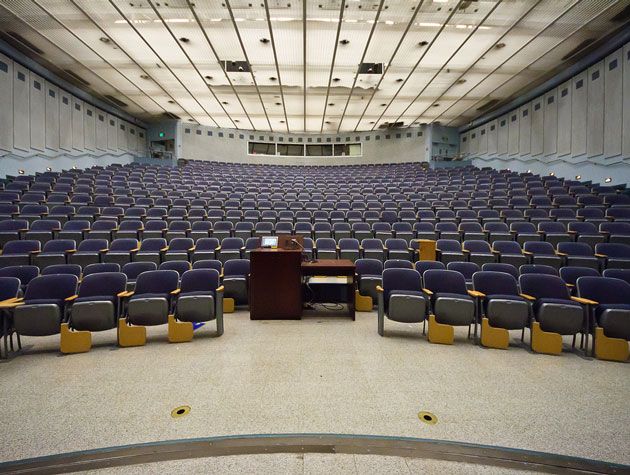
Higher Education is an unmovable object with an unstoppable force heading straight for it and universities are at ground zero. Classrooms as we know them may be doomed and the question is whether our country will lead the world in adapting to a new model, or whether we will be the last ones to accept reality.

The Value of the College Degree
The unmovable object in Higher Education is importance of the college degree in American commerce. Business lives or dies on information. The person who can access, filter, analyze, organize, and explain information tends to be valuable in a company.

High schools are tasked to help students graduate with basic competencies, but they are dealing with children who are still maturing into adulthood and that process needs to be complete before they are morphed into business men and women.

Those who believe high schools should be vocational schools are assuming that all children will become a construction laborer or office drone, so why bother with college prep? The concept of education as a training ground for corporate zombies is too simple-minded to apply in a country that encourages all citizens to reach their maximum potential.

College is where young adults are given the tools to become valued business leaders. College classes require a student to learn how to access and report information, which is central in business competitiveness. The business that can out think its competition always wins, which may be why many top businesses are more concerned about the degree, not the major. A college degree is more than a piece of paper, it is a badge of achievement that says this person is ready for the business world.

The Relentless Rise in the Cost of College
The unstoppable force is the rising cost of a college education. With cuts in federal and state budgets a greater share of the burden is being heaped on those who are least able to avoid it. In Mitt Romney’s failed bid to be President he suggested that students should borrow from their parents to pay for college. That was one telling sign that Romney is out of touch with the real world the rest of us live in.

March 2012 protest in Sacramento over tuition hikes

In 1991 the annual average cost for a university education was at $7,602 or over $30,000 for four years of college. In 2001, that annual cost had risen to $12,922 or over $50,000 in four years. In 2011, the annual cost had risen to $22,092, which meant it cost over $88,000 for the average college four-year degree. That is the equivalent of buying a new car every year a student attends college. If the trend continues it will cost a student an average of over $41,000/year for college by 2021, which means a four-year college degree in 2021 may cost over $167,000.

Students and their parents are already outraged by the rising costs, but it is universities who control the expenses, and therefore control the costs.

Based on current trends, the average annual cost for college may exceed $40,000 by 2021

Students want to be competitive for careers that will lead them to higher paying jobs, but they have no means to afford college and the list of parents who CAN pay over $22,000 a year for four years are on a first name basis with Mitt Romney.

The Other Unmovable Object – Faculty
Teachers at the college level have traditionally been considered the most important asset to a university and for centuries they were treated with dignity and respect by administrators, but financial pressures have made them a target for saving money. While students face escalating tuition and fees, university faculty are also a target of the unstoppable force. Professors have been constantly asked to accept budget cuts and teach more students for the same, or lower pay. 

Some universities have replaced expensive tenured professors with temporary faculty employed by contract on a semester by semester basis. Temporary faculty make a fraction of a full, tenured professor. Not surprisingly, a teacher that may not be offered a contract the next semester tends to be more accepting of increased class sizes, or other cost-cutting measures.

What may be surprising is that a college teacher is likely not receiving a significant portion of the tuition paid by the students in his or her classes. A temporary professor may bring in $100,000 or more in revenue each year for the university, but a temporary professor is often paid less than $4,000 per class with no benefits. Low pay and increased pressure to do more for no additional money makes the teaching environment unpleasant for the student and professor.

A Revolution Caused by the Internet
Ironically, the Internet was originally intended to allow one university to have quick access to the knowledge database at other universities and research laboratories. As it expanded and became commercially available in the late 1980’s and early 1990’s the public began to have access to a vast storage of on and off-campus knowledge without a student ID. Within a decade homes across the world were linked into a mass of dynamic information via business and personal websites, blogs, chat rooms, and other social media sites.

Suddenly anyone could access information and share ideas and they didn’t have to pay tuition to have easy access to it. Certainly some of the information was in error, but often people found information that outpaced the knowledge produced in books. Universities no longer held the monopoly on information.

Government Must Change
State governments and Higher Education face these problems:

  1. A college degree is still a valuable achievement and desired by the public and business.
  2. Tuition and fees are too high and the public can no longer afford them.
  3. Professors have been devalued in a system where more and more of the revenue is channeled away from the them.
  4. University administrators and government legislators have created a paradigm for Higher Education that is unsustainable.

Social media has changed the expectations of the public. People expect to be able to have ready access to anyone to whom they are paying for a service.

Controlling advanced knowledge within ivy covered walls is no longer possible in a world where anyone can do a Google search and know as much or more about the most current knowledge on any topic. However, just doing a Google search does not teach a person how to filter, analyze, organize, and report that information.

State-run universities have a unique opportunity to reinvent Higher Education. The challenge is that they are the most unlikely to do it. Administrators have Accreditation organizations that are established to dictate what Higher Education is and will be today and tomorrow based on the best practices of yesterday. That doesn’t work in a world where today is already history that was recorded by over 340 million tweets a day (March 2012 data.)

When the unstoppable force hits the unmovable objects (value of a degree and the need for faculty) few things about Higher Education will remain unchanged. Now is the time for State-run universities to dodge the upcoming annihilation and take the lead in reinventing Higher Education. They can start considering the following guidelines:

  • Tuition must stabilize and regress. Fees should be eliminated. Universities can assume that there will be no money available to siphon off for student activities, the football program, or any other money-absorbing entity. 
  • Support materials (textbooks, etc.) will be digital only and the cost will be pennies on the dollar of what students have been paying. Goodbye, McGraw-Hill. Hello, Faculty Publishing.
  • Classrooms will be more like Boardrooms with fewer students where the Professor is the CEO of knowledge and students must bring their best or beg for a second chance with someone else. Much of the lecture and information gathering will be done via webcasts and/or outside of class time. ‘Class’ will be where the work outside the classroom is brought in for discussion and idea sharing.
  • Class schedules will not follow a semester system and will be on a schedule that is more like a project team.
  • Faculty will lead students while at the same time work toward advancing knowledge on the subject matter.
  • The most important person to the student will be the educational coordinator (i.e. Counselor or Adviser in the old paradigm) who will create an individualized degree that is based on achieving a level of mastery information handling, not a number of credit hours.

The framework in which this happens must be within a government structure. Private enterprise has proven that when they try to create a system of higher learning they fail. It solves nothing to make Higher Education a profit-based program that is a poor imitation of the old, outdated model. If government can successfully create a new model it will make the United States of America the leader of advanced knowledge. If not, we can expect to be exporters of our future.

Links to:

What America Must Do:  Step 1 – Silence the Wackos in Politics
What America Must Do:  Step 2 – An Extreme Makeover of Government at All Levels
What America Must Do:  Step 3 – Restore Government Revenue and Fair Taxation
What America Must Do:  Step 4 – Balanced Budget By 2015, Debt under 50% of GDP by 2020
What America Must Do:  Step 5 – Restart a Federally Run Space Program

What America Must Do: Step 4 – Balanced Budget By 2015, Debt under 50% of GDP by 2020

03 Saturday Nov 2012

Posted by Paul Kiser in Aging, Ethics, Generational, Government, Health, Honor, Opinion, Politics, Respect, Taxes

≈ Leave a comment

Tags

Alan Simpson, Erskine Bowles, fair taxation, federal budget, federal debt, federal deficit, government revenue, government spending, What America Must Do

The family budget is NOT like the Federal budget

Anyone who compares the federal budget to a family budget simply doesn’t understand economics.

A family budget is ruled by how much revenue the family makes, and/or by credit worthiness of the wage earners. Families operate under a micro economic system that is finite. Still, if a family buys their house they may exceed their annual Gross Family Income (GFI) by over 500% when they sign for a loan that will eventually cost them $300,000 or more. 

The federal budget is a dynamic machine that powers not only federal spending, but it also impacts unemployment and the general health of America’s economy. The federal budget usually doesn’t exceed the Gross Domestic Product (GDP;) however, in times of economic crisis the Federal Debt has exceeded GDP (see chart) for short periods.

The US Federal Debt compared to US GDP

The Federal Debt is determined by revenue (federal taxes, fees, and repayments) and by expenses or spending. When more people are employed they pay more taxes on the earned income therefore the federal revenue increases and the Federal Debt falls. When the unemployment increases federal revenue decreases and Federal Debt increases because fewer people are paying taxes on earned income.

George W. Bush cut income taxes and drastically reduced federal revenue. He then increased federal spending and suddenly our Federal Debt began to balloon. In addition, federal entitlement programs like Medicare, Medicaid, and Social Security are approaching a point that we have more people receiving benefits than they are funded.

There are many ways to solve the Federal Debt over a period of time, but increased federal revenue (see: What America Must Do: Step 3) is necessary if we have any hope of maintaining the quality of life that we expect in the United States. Smaller government is not the answer, but will actually deepen our economic problems. A bigger government comes with its own problems.

Smaller government means smaller economy and higher unemployment in both the public and private sectors. Bigger government means a bigger economy and lower unemployment, but it also can drive up inflation. A balance between the two is needed, but for years we have downsized the government and that has killed America’s recovery from the 2007-09 Recession.

Since everyday increases the Federal Debt, conservatives and liberals must come to a solid compromise to balance the federal budget soon.  A target date for a balanced budget by 2015, should be possible through bipartisan cooperation; however, conservative extremists have no intention of bipartisanship, which is why they must be removed from the discussion (see: What America Must Do – Step 1.)

The other challenge is to bring the Federal Debt down under 50% of GDP. That can be accomplished by addressing some of the looming problems of the federal entitlement programs; however, a ‘dump and run’ strategy, where the federal government divides the current money up and dumps the programs on the individual states is a stupid solution. Federal government programs tend to be very efficiently administered. Dumping the federal administration of these programs in order to create 50 new State bureaucracies is a sure way to put most Americans in desperate poverty as State programs fail under the weight of the cost or States simply refuse to maintain the programs.

Erskine Bowles and Alan Simpson. Two of the smartest people in the room when it comes to solving the Federal Debt issue

With relative minor adjustments federally managed entitlement programs  can be maintained far into the future, and if conservatives and liberals build on work done by the Bowles-Simpson Commission the Federal Debt can be reduced  below 50% by 2020. 

If there is one issue that will safeguard the future of our children, it is the bipartisan work to resolve the Federal Debt.

Links to:

What America Must Do:  Step 1 – Silence the Wackos in Politics
What America Must Do:  Step 2 – An Extreme Makeover of Government at All Levels
What America Must Do:  Step 3 – Restore Government Revenue and Fair Taxation
What America Must Do:  Step 5 – Restart a Federally Run Space Program
What America Must Do:  Step 6 – Reinvent Higher Education

Romneylans: A New Species of Stupidity

21 Tuesday Aug 2012

Posted by Paul Kiser in Ethics, Generational, Government, Government Regulation, Health, Higher Education, Honor, Politics, Religion, Science, Taxes, US History, Women

≈ Leave a comment

Tags

ACA, Affordable Care Act, Christianity, Climate change, Conservatives, economy, George W. Romney, Global warming, guns, Healthcare, Immigration, Jesus Christ, jobs, Mitt Romney, New Testament, NRA, patriotism, Romans 14:10, Romneylans, Romulans, Todd Akin, Unemployment

Romulans of the Star Trek kind

Romulans (Star Trek Series): A alien race ruled by a hierarchical society that is always at war or in an uneasy truce with almost everyone, noted by an almost illogical egocentric society using cunning and deception to gain the advantage. Also identifiable by their pointy ears and uni-haircut.

Todd Akin: Romneylan of the stupid kind

Romneylans (rom-nee-lans): Similar to Romulans, but without the pointy ears and the spiffy haircut. 

Romneylans have invaded Earth (specifically the United States) and if they are not defeated we risk losing everything that makes America great.

Ironically, Romneylans are NOT identified by their alleged support of candidate Mitt Romney. Romneylans are actually united by an irrational hate for President Obama. If Bozo the Clown were running against President Obama, Romneylans would vote for Bozo. (NOTE: Mitt Romney is NOT Bozo the Clown and my apologies to any clown named Bozo.)

Romneylans are also noted for their hate for liberals, rejection of reason, and an unshakable commitment to stupidity. Some examples:

Patriotism: Romneylans (A.K.A.: Conservatives) believe that if you don’t agree with them then you are not an American. That in itself is stupid, but what takes it to a new level is the idea that beating your breast about America’s military might is considered patriotic, but it is unpatriotic if you support the civil servants that serve our country with honor and have made America the envy of the citizens of most other countries. Romneylans think that dismantling our government is patriotic. 

Religion:  Romneylans claim to be Christians. Christianity is identified as the belief in Jesus Christ and his teachings that can be found in the New Testament. Romans 14:10 of the New Testament states:

But why do you judge your brother? Or why do you show contempt for your brother? For we shall all stand before the judgment seat of Christ.

Romans 14:10  King James version

No need to interpret what is being meant by not judging others. Yet, Romneylans feel compelled to declare that the Bible gives them the right to persecute and pass judgement on almost anyone. Ironically, Jesus Christ is one of the most compassionate religious figures in human mythology, but Romneylans love saying “hate the sin, not the sinner,” which is quite possibly the stupidest thing ever said by a group of people known for stupid remarks. A glance at any Romneylan Facebook page and it is easy to determine that their hate is boundless and their compassion for anyone they hate is nonexistent.

Economy: The depth of stupidity of Romneylans is most evident with their take on the economy. The 2007-09 economic collapse in America occurred as a direct result of unbridled greed in private business and a lack of ethics throughout business in general. That is documented.

However, Romneylans believe that the economic collapse was caused by government regulation and that our economy can be restored by eliminating any of the safeguards that make ethical business possible. Romneylans depend on a permanent state of denial about what Conservatives and conservative policies did to bring America to the brink of disaster.

US Employment Data

Jobs: The impact of the 2007-09 Recession on jobs was felt through the first quarter of 2010. There is no magic bullet to recover the jobs lost during that time, but what is not going to help our nation’s unemployment is to eliminate civil service jobs that employ millions of middle class citizens. Romneylans rabid hate for government is the classic ‘biting the hand that feeds you’ syndrome.

Healthcare:  One of the biggest problems America has faced in the last thirty years is the rising cost of healthcare. A major component of this issue is the uninsured citizen without access to affordable healthcare. The uninsured person can’t afford to see a doctor for preventive, or minor health issues, so this often results in that patient receiving no care until it becomes a major health problem. That increases the cost of treatment for which we all indirectly pay. The Affordable Healthcare Act (ACA) solves this problem.

However, Mitt Romney, nor his major contributors will ever have to worry about access to proper medical treatment, thus they don’t care about the millions of Americans who have no access. Ironically, many Romneylans will benefit from ACA either directly or indirectly. Unfortunately, stupidity rules the day with conservative voters and they have convinced themselves that ACA is akin to the Apocalypse, thus it must be stopped before it can take effect.

Another issue is women’s health, in particular, contraception and abortion. While some may say this is another religious issue, for Romneylans it seems to have more of a tie to the gender that is making most of the noise. (See Conservative Pig Influenza of 2012.)

Science:  Anyone who seriously believes that Creationism should be taught in public and or private schools as an alternative option to evolution is certainly a Romneylan. Creationism has no basis as a rational explanation for how the universe and humans came into existence but that doesn’t stop Romneylans from declaring mythology as science.

Regarding climate change, science has demonstrated that we are witnessing an extraordinary change in Earth’s climate on a scale that exceeds any climate change during the last 600,000 years. A study funded in part by conservatives to disprove the science of global warming ended up confirming the data.

This doesn’t stop a Romneylan.  They dispute science by being ‘skeptical.’ Skeptical is another way of saying, “I’m being stupid.”

Immigration:  The Hispanics population in America is growing; however, Mexicans coming to America is not what is driving Conservatives panic attack on this issue. They are just scared white men. That’s sad, but Romneylans are taking their panic and turning into an issue that is long on fear mongering and short on facts. Romneylans are now trying to arm themselves and monitor the border. Guns and vigilantes can be entertaining, but not very smart.

One of the ironies is that most Romneylans nay not know that Romney’s father was born in Mexico when his family fled there to avoid prosecution by the United States of America. His family returned when they became concerned about violence in Mexico.

Romneylan with an open mind?

Guns:  I was raised in one of America’s prime hunting communities. I was one of the first to complete an NRA (National Rifle Association) safety course. In addition, I was taught that guns and people don’t mix, so we had a rule to not come back into town with a loaded gun after hunting. Safety and respect for others was key.

Then the NRA became political and this was the cry of gun owners:

When guns are outlawed, only Outlaws will have guns

Clever. Here’s the reality. Almost every person will at some point in their lives be filled with so much anger that they will have a fleeting desire to injure or kill someone else. The NRA wants that person to have a gun accessible so they can act on that impulse. Does that seem smart or stupid?

Nevada Newspaper Goes Behind the Wall…to Die

11 Friday May 2012

Posted by Paul Kiser in About Reno, Business, Communication, Customer Service, Employee Retention, Ethics, Generational, History, Human Resources, Information Technology, Internet, Print Media, Public Relations, Social Media Relations, Technology, Traditional Media, US History

≈ 2 Comments

Tags

Newspapers, online, Reno Gazette-Journal, RGJ, Subscription fees

RGJ’s main bunker…entrance in Reno

The Reno Gazette-Journal (RGJ) recently decided to lock themselves behind a wall and it will cost you at least $12/month to see what they have hidden. Does anyone else see the problem with this business model?

Allow me to reconstruct the history of news media in America to understand why this is a death sentence to the RGJ.

In the 1800’s newspapers owned the information world

1700-1900
In the 1700’s, newspapers became the source of community news. These newspapers often portrayed a political view, but were THE source of information in a society where travel was limited and information scarce. Writers and editors often became key figures in the social and political structure as the gatekeepers of what would be printed.

Radio was faster, but newspapers were corporeal

1900’s
The invention of radio and television gave new options to the public on how they accessed news. The radio offered broadcast news that reached more people faster; however, newspapers remained the source of news because it existed in corporeal form. News transmitted on radio waves disappeared if a person wasn’t in front of the radio during the broadcast. Newspapers; however, almost always gave more a more in-depth account of the events.

Television came shortly after radio and added the exciting features of seeing the reporter and moving images of events; however, newspapers continued to be the best source of significant events.

CNN was to newspapers what Wal-Mart was to Mom & Pop stores

1980
CNN was the first real threat to newspapers. It offered news 24/7/365 and it often relayed events in progress. People no longer had to wait for a newspaper’s version that would come the next day. The newspaper still had the corporeal advantage because CNN would eventually move on to the other news while newspapers could be read anytime. Newspapers also still gave more in-depth reporting on local news issues.

1995
It wasn’t until the creation of the Internet that newspapers faced a challenge that would threaten their existence. The public use of the Internet stripped newspapers of almost every advantage they held. News was not only reported, it was discussed and people reacted in real-time. With the development of the Google search engine topics could be accessed and researched at any time anywhere there was Internet access. The news was no longer filtered and limited to what an editor thought people should know, but rather raw information reached individuals who made their own decisions on what was significant to them.

Reporters who spent years in college and thousands of dollars in tuition and books now found themselves competing against bloggers who had no editors to please. Reporters might get the story and accurately report it to their community but in a real-time world their information was just following up to what people already knew. Newspapers have adapted by presenting an online version of the information that will be in the next day’s paper and that has helped writers compete and be read; however, investors want profit and that is the heart of the dilemma.

The Reno Gazette-Journal has decided that they will create demand and increase revenue by limiting access. That is a rational position to take if you have a product that has significant value and demand, but newspapers and their value appeals to a diminishing demographic. Older white males are dying off at an incredibly rapid pace and newspapers have little demand or value to younger, non-white, non-male demographics. How does RGJ expect to gain new readers by charging for access who have free access to local online news through three Reno television news station’s webpages?

There is another problem with RGJ’s decision that may impact the quality of writing. A writer for RGJ has to accept that their audience will be extremely limited. Blogs will exist for decades and are be searchable to anyone in the world. An RGJ reporters work is locked away behind a wall forever. Who wants to dedicate their life to writing and have it unread? Over time writers will have to decide how much damage RGJ is doing to their career by locking their work behind a pay wall. Once the good writers are gone, what value will the Reno Gazette-Journal have to anyone, paying or otherwise?

Stroke of Fate: Me Versus My Brain

25 Saturday Feb 2012

Posted by Paul Kiser in Aging, Generational, Health, Lessons of Life

≈ 7 Comments

Tags

occupational therapy, physical therapy, Renown Rehabilitation Hospital, speech therapy, stroke, Wallenberg's Stroke, Wallenberg's Syndrome

I consider myself to be fairly intelligent…you can stop laughing now. At least I’ve never auditioned for a reality television show and that has to be some sign of intelligence.

This 34 year-old woman had a stroke in a similar area as my stroke (see black arrow at base of brain)

However, I’ve learned that I am no match for my brain. My brain has hundreds of thousands of years of evolution on its side and it does so many things automatically that it dwarfs my petty conscious actions like eating, reading, talking, and walking. Now that my brain has downsized some of the automatic functions, like sensing temperature and pain on half of my body, I have learned that I am incapable of taking over those functions…without help.
Enter the team
While I was in the main hospital a physician visited me and introduced herself as my ‘Rehabilitation’ doctor. At that time I did not understand that she would become my advocate and director of my recovery. Over the next few weeks I would learn that I was not being discharged to another hospital as much as I was being transferred to a team of people, including my Rehabilitation physician, who would bring their extensive professional skills into my battle with my brain. 

VitaStim electrodes were used to strengthen my swallowing

As in most hospitals, the nursing staff at Renown Rehabilitation Hospital took on the role of monitoring my health and addressing the medical needs of my post-stroke body, however, the therapy staff became my coaches who devised the game plan¹ to reverse the damage caused by the stroke. Speech, occupational, and physical therapists each dedicated an hour per day to reestablishing a normal brain/body connection. 

(¹My apologies for the sports metaphor…I blame it on the stroke…because I can, not because it’s true.)

Brain damage (or dain bramage, as I prefer to call it) is as individual as a fingerprint, so treatment is not something you find in a medical cookbook of cures. My condition after my stroke was diagnosed as Wallenberg’s Syndrome, but my symptoms ranged from spot on to the symptoms of Wallenberg’s, to mild or non-existent for issues such as loss of speech. My team of therapists worked like great artists as they created a plan of action to help the brain rewire around the damage caused by the stroke.

Home at last!

Speech therapy focused on swallow control and strengthening my voice. In three weeks I progressed from not being able to swallow water to being able to eat a regular meal, including salad. I have to be aware of what I’m doing when I eat, but I am near normal in the use of throat systems that separate breathing and food intake. My voice is easily tired, but continues to become stronger each day.

My Occupational therapist concentrated on vision, especially eye control. My double vision issue is caused, at least in part, to muscle control of both eyes. I should have known that she would be the one to help me in this area as my first short episode of single vision occurred when I first met her. Many of the exercises she has taught me actually exacerbate my vertigo (dizziness), however, I have experienced less vertigo and more episodes of single vision on days when I completed the exercises she taught me.

While all my therapists were exceptional, it is my physical therapist that I admire the most. She took on the challenge of getting me mobile again and to do it she had to deal with me and my quirky brain. I have four issues when it comes to walking. First is the lack of balance. I feel a strong pull to the right and when I try to counter it my brain wants me to lean to the right.

Second, is my double vision issue that place my right eye image over and at a 20° angle to my left eye image. I might have an easier time walking if I just knew which image was the one I should use for reference.

Third, each of my eyes have a slow ‘swim’ that prevents me from focusing on a single point, therefore, covering one eye does not necessarily give me an easier visual reference. Part of this issue is related to uncontrolled eye movement and part is a lack of fine-concentration skills that may have been, in small part, pre-existing to the stroke. I noticed about a year ago that I could not meditate on a single point without losing focus every few milliseconds. Since the stroke, the eye swim is more pronounced.

Finally, my vertigo has taken the front seat in my balance issues. Dizziness hits me almost every time I move my head making walking fun to watch, but not fun to do. My physical therapist has not only utilized her own skills and talents in addressing my brain damage, but also involved other physical therapists, including one who has experience dealing with vision and vertigo issues like mine. The result is that I can walk and when my vertigo is under control my walk is almost normal…almost.

My brain still has some rewiring work before I will be a fully functioning adult that can hop in the car and drive to Starbucks, but thanks to the team at Renown Rehabilitation Hospital, I’m weeks to months away from being able to being fully independent. That makes me the winner.

(NOTE: Paul was released from Renown Rehabilitation Hospital at 1:00 PM today, Saturday, February 25th and is now continuing his recovery at home.)

Stroke of Fate: Fighting a Winning Battle

20 Monday Feb 2012

Posted by Paul Kiser in About Reno, Generational, Health, Lessons of Life, Travel

≈ 6 Comments

Tags

Nevada, Reno, Renown, Renown Medical Center, stroke, Wallenberg's Stroke, Wallenberg's Syndrome

Why don’t strokes ever cause super powers?

Weapons of Rehab

A stroke has no sense of honor, nor fairness. It can destroy every aspect of human dignity and leave behind a pulp of flesh. A stroke can wipe out speech, sight, hearing, touch, smell, mobility, cognitive thinking, and the list goes on. Never have I heard of a case of a stroke doing good, like giving heightened senses, or more strength. Strokes don’t even fix missing functions, like giving a blind person their sight, or a deaf person hearing. Quite frankly strokes suck.

After my stroke I was faced with the possibility that I could be incapable of independent living for months, years, or even the rest of my life. That didn’t happen. While I still can’t drive, nor safely move without some type of aid (wheelchair, walker, cane, etc.) I can get around on my own. I can eat as long as I’m mindful of what I’m doing, and see well enough to write, although I often have to use just one eye. My prognosis is great, with the expectation that almost all of my disabled functions will repair over the next few weeks and months.

It’s not easy, but I am fighting a winning battle. I’m fortunate because my stroke did not do more damage. I am frustrated by the fact that my brain seems to lack the capacity to correct my balance and vision issues. Cognitively I know exactly what needs to be done, but my brain has the ability to overrule logic and tell my body that I’m about to fall to the right, so lean right….I said correctly, my brain thinks I’m leaning right, but then insists on shifting more to the right. This irony must be fun for my Conservative friends, but to me it only shows how screwed up we become when we lack balance.

Vertigo has become a major issue in my recovery. The sense that the room is spinning varies from almost non-existent, to a strong rotational pull every time I move my head slightly. Walking becomes a drunken stagger when my vertigo kicks in, which makes my physical therapy sessions almost useless.

Still, everyday I am a bit closer to a full recovery and there are times when I feel almost normal. I have a great team of therapists who are working with me to get better…possibly to get me out of their hair. I’ll talk about living in Rehab next.

Stroke of Fate: Time and Tide (Thank You, Basia)

13 Monday Feb 2012

Posted by Paul Kiser in Aging, Generational, Health, Lessons of Life, parenting, Random, Relationships, Women

≈ 4 Comments

Tags

Basia, Rehabilitation, Renown, Renown Medical Center, stroke, Time and Tide, Wallenberg's Stroke, Wallenberg's Syndrome

Basia's Time and Tide cover

One of my favorite albums is Basia’s Time and Tide. Basia has taken me through many emotional times and I should not be surprised that after this stroke she returned into my life. My brain and body have decided to have a partial trial separation. I know I know they are meant to be together, but now they’re not talking, so with Basia’s help I’m trying to get them back together. Fortunately, I have many people helping us.

Here and now is all it’s about, let’s use it or lose it.
Promises by Basia

Here And Now
Both my daughters live in Colorado. When they heard that I was hospitalized they began talking about coming out. I was ready to discourage it because I couldn’t see the purpose or value of them flying to Reno, Nevada.

I was wrong. I failed to comprehend  the significance of their presence. I have a good close-in support system here with my spouse (Saralinda,) son (Alexander,) and in-laws, but my daughters (Kelli and Katy) added to that support in ways I never could have imagined.

Love is contagious, it’s a part of a chain
Promises by Basia

My temporary home for restart my life

They arrived a few hours before I was transferred from Renown Medical Center to Renown Rehabilitation Hospital. They became an extra lift in the uncertainty of the transfer. Saralinda, Kelli, and Katy, joined forces in becoming an advocate for my recovery and the hospital staff recognized that I was not alone. I don’t fully understand how that impacted my care, but I do know that the staff seemed to appreciate their involvement.

I’ll be there if you need me, I am your helping hand.
New Day For You by Basia

A New Day
Tuesday was an important day in my recovery. On Monday I had a swallow study performed complete with a camera up my nose. From that test I learned that my NG tube would have to remain for the near future because my throat was not working correctly. My swallowing had improved from Saturday’s, but it looked like I was facing at least a week of looking like Mr. Snuffleupagus and the idea of being able to taste food again seemed farther and farther away.  

I still couldn’t walk without falling over, I’d lost temperature and pain sensation over half my body, my right and left eye were each giving me their independent version of the world, my head and body were in a constant state of spin, and I survived by fluid going in my arm or goo going to my stomach via my nose. There was not a lot of good news.

However, all that was blunted by the news that my daughters and one of my granddaughters would be arriving on Tuesday. In the moment it didn’t seem to be that important, but in hindsight, it made my world seem much brighter. It was Tuesday when my life seemed to come back to firm ground. On that day my stroke found out who it was dealing with, and it didn’t expect to be met head on by women of mass reconstruction. It whimpered.

It would be on Wednesday that I…and my stroke, would meet the rest of the team…the medical staff at Renown Rehabilitation Hospital. It was an another good day for me…not so much for my stroke.

We got time, oh baby, there’s no rush
Gonna be a better day for us
Time and Tide by Basia

PBS Station To Cut After-School Programming To Attract Donors

28 Wednesday Dec 2011

Posted by Paul Kiser in About Reno, Communication, Customer Relations, Customer Service, Education, Ethics, Generational, Management Practices, parenting, Public Relations

≈ Leave a comment

Tags

Child Development, children, children's programming, Idaho PTV, KNPB, Kurt Mische, Nevada, PBS, PBS Kids, PBS Kids Go, Reno

Paul Kiser

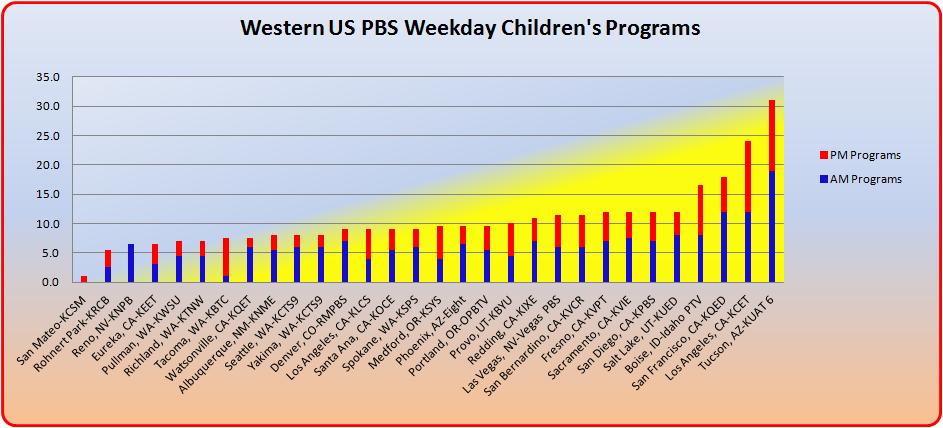
Reno, Nevada PBS affiliate, KNPB is cutting almost a third of its dedicated children’s programming and all of its dedicated after-school shows that target school-aged children. Effective next week all PBS Kids shows on KNPB will end at 12:30 PM, cutting 2.5 hours from its current 9 hours of children’s programming. The programming cuts will put KNPB third from the bottom of 30 western United States PBS stations in total hours of daily children’s programs  and the only PBS affiliate without after-school programming.

Kurt Mische, President and CEO of KNPB, denied that the station is cutting ‘all’ programming for school-aged children, and noted that programs like NOVA, Nature, American Experience, and Great Performances “are of great benefit…and interest…to school age children.” Those programs along with the Antique Roadshow will now air once a week at 5:00 PM after PBS News Hour and The Charlie Rose Show, which will fill the after-school time slots at 3:00 PM and 4:00 PM.   

Mische indicated that the programming changes are being initiated to attract donors and money, which school-age children are not providing to the non-profit organization.  He explained,  

“Making our changes will allow us to serve a larger audience of viewers…and donors…who not only watch but help to financially support our important service.”

Another PBS affiliate recognizes the issue, but has different philosophy regarding programming for school-age children. Ron Pisaneschi, the Director of Content for the PBS affiliate in Boise, Idaho (Idaho PTV) said that there is more programming competition for the attention of school-age children because of commercial children’s television on the cable channels, but added, “even though the audience is small, we want to serve them.” 

Hours of Daily Children's Programming of 30 Western US PBS Stations

Programs cut from KNPB’s schedule are The Electric Company for 6-10 year-olds, Cyberchase for 8-11 year-olds, Super Why! for 3-6 year-olds, WordWorld for pre-schoolers, and a second daily airing of Arthur for 4-8 year-olds. KNPB already had cut Fetch! for 6-10 year-olds earlier this year. The only two PBS stations with fewer hours of children programs are Rohnert Park and San Mateo, California. Both are in the San Francisco area market where PBS affiliate KQED has 19.5 hours of children’s programming in addition to a 24-hour PBS Kids channel. San Mateo PBS affiliate KCSM has only one hour of daily children’s programming; however, KCSM is currently up for sale and accepting bids until February 14, 2012.

Ironically, Mische’s attitude about the value of children’s programming to KNPB and to the State of Nevada was more supportive last year when he stated,

KNPB is proud to be a leader in education. At a time when education in Nevada garners its share of negative publicity, KNPB is taking action to impact education and life-long learning. We broadcast 52 hours per week of award winning, high quality, and trusted children’s programs that delight and teach youngsters.

KNPB 2010 Annual Report

The children’s shows, including all after-school shows will be cut effective January 2, 2012.

A version of this article first published as
PBS Station To Cut After-School Programming To Attract Donors

on Technorati.com

USA PDT [Twitter: ] [Facebook] [LinkedIn] [Skype: 775.624.5679]

Graph: Hours of Children’s Programming on 30 Western US PBS Affiliates

28 Wednesday Dec 2011

Posted by Paul Kiser in About Reno, Communication, Customer Relations, Customer Service, Education, Ethics, Generational, Management Practices, parenting, Public Relations

≈ Leave a comment

Tags

children, children's programming, KNPB, Nevada, PBS, PBS Kids, Reno

How many hours of dedicated children’s programming are on PBS stations in the western United States?  This graph shows that after KNPB cuts 2.5 hours of children’s programming on January 2nd, it will be tied for third among 30 western US PBS affiliates for the least amount of children’s programs (programming survey based on changes to be made in January 2012.) KNPB will also be the only station among those surveyed without after-school programming.

Click on graph for larger image

Wristwatches Tell Age As Well As Time

05 Saturday Nov 2011

Posted by Paul Kiser in Aging, Generational, Technology

≈ Leave a comment

Tags

cell phones, fashion, time pieces, watches, wristwatches

USA PDT [Twitter: ] [Facebook] [LinkedIn] [Skype: 775.624.5679]

Paul Kiser

Daylight Saving Time ends this weekend (‘fall back’ at 2:00 AM this Sunday) and the man who reaches for his wristwatch to set it for Standard Time is likely to be over 40…or 50…or 60.

With the invention of the cell phone, the need for the wristwatch has become a piece of a 107 year-old technology that young men often see as unnecessary and outdated. For the cell phone dependent male, time is as close as the phone display and it is always accurate and updates itself when the user changes time zones, or time changes to and from Daylight Saving Time.

A Sign of the "Time"

Mike, who is under 40 and doesn’t own a wristwatch, states:

…only time it’s “cool” is if you are dressing fancy and need to be a little more classy than checking your phone for the time…

James, who is over 40, says:

Most of my life I preferred pocket watches but since I started running/biking I needed a stopwatch function…

A man who wears a watch is noticed by the opposite sex.  Kayla, who is under 40, may have expressed the sentiment of many women when she said:

I like the look of wristwatches on men, but they are becoming a bit outdated….

Kayla goes on to say that she has seen men who are wearing a watch pull out their cell phone to check the time rather than look at their wrist, which supports the theory that wristwatches are more for fashion than function.

In a bar in Golden, Colorado, four young men sitting together were asked if they wore a wristwatch and all said “no.” When asked why, they indicated that their cell phone was their time piece of choice. At the same bar, two men who were over 40 and wearing wristwatches were discussing an expensive Rolex model that one of them hoped to buy. The value of wristwatches seems to clearly be correlated to the age of the man.

Perhaps those who became reliant on wristwatches before there were cellphones continue to be attached to the idea of a wristwatch even though technology has made them obsolete. Whatever the reason, a wristwatch seems to become a generational indicator as well as a time keeper.

This article first published as
Wristwatches Tell Age As Well As Time
on Technorati.com

Newer posts →

Other Pages of This Blog

  • About Paul Kiser
  • Common Core: Are You a Good Switch or a Bad Switch?
  • Familius Interruptus: Lessons of a DNA Shocker
  • Moffat County, Colorado: The Story of Two Families
  • Rules on Comments
  • Six Things The United States Must Do
  • Why We Are Here: A 65-Year Historical Perspective of the United States

Paul’s Recent Blogs

  • Divorce Without Mercy Part 9 – Epilogue
  • Divorce Without Mercy Part 8 – June/July 2026
  • Divorce Without Mercy Part 7 – May 2026
  • Divorce Without Mercy Part 6 – April 2026
  • Divorce Without Mercy Part 5 – March 2026
  • Divorce Without Mercy Part 4 – February 2026
  • Divorce Without Mercy Part 3 – January 2026

Paul Kiser’s Tweets

Tweets by PaulKiser

What’s Up

September 2026
S M T W T F S
 12345
6789101112
13141516171819
20212223242526
27282930  
« Aug    

Follow Blog via Email

Enter your email address to follow this blog and receive notifications of new posts by email.

Join 685 other subscribers

Create a website or blog at WordPress.com

Loading Comments...