3rd From Sol

~ Learn from before. Live now. Look ahead.

3rd From Sol

Category Archives: Traditional Media

This is Why (2015 vs the 1980’s)

15 Sunday Mar 2015

Posted by Paul Kiser in Aging, Business, College, Communication, Crisis Management, Education, Ethics, Generational, Government, Government Regulation, Health, Higher Education, History, Honor, Politics, Pride, Public Image, Respect, Space, Taxes, Technology, Traditional Media, Universities, US History

≈ Leave a comment

Tags

1980, 1980's, Afghanistan, American Hostage Crisis, civil war, Cold War, Communism, FBI informant, George Bush, Grenada, Iran, Iran-Contra, Lebanon, Libya, Middle East, patriotism, Ronald Reagan, Russia, Soviets, USSR

The 1980’s – Political Con Game

President Ronald Reagan:  Actor, Cowboy, FBI Informant

President Ronald Reagan: Actor, Cowboy, FBI Informant

  • Population:  226.5 million
  • Gross Domestic Product (GDP) per capita:  $28,957
  • Median Annual Income:  $16,354
  • Life Expectancy:  73.7
  •  Average Age at Marriage:   Men 24.7, Women 22.0
  • % of pop. w/high school degree or higher:  66.5%
  • % of pop. w/college degree or higher:  16.2% 

THE COWBOY PRESIDENT
The Republican leadership had been tainted by President Nixon’s Watergate scandal. In order to move back into power they needed a fresh face, and Ronald Reagan, an experienced actor, became that face. Reagan mostly had played nice guys and cowboys in the movies which formed the basis of his political persona. He was twice elected as Governor of California but twice (1968 and 1976) failed to gain the Republican party nomination in his quest to be President.

Ronald Reagan, who, in 1976, had fallen just short of winning the Republican nomination from incumbent President Gerald Ford, had finally won the party’s nomination and found himself as the beneficiary of the perfect storm of political crisis in 1979, that sunk President Jimmy Carter. As if to emphasize his luck, the American hostages in Iran were released on January 20, 1981, the same day that Ronald Reagan was sworn into office as President.

THE ERA OF WE CAN’T
President Reagan believed that government was to blame for America’s woes. Despite the role of the American corporation in damaging the our public image in the Middle East and their greed in price gouging that spurred inflation, Reagan proposed that it was the government that was at issue, not American business. He sold the idea to the public that America Can’t, meaning that government can’t and shouldn’t help its citizens to a better life. Reagan convinced the public that the wealthy are to be worshiped and the poor are guilty of laziness, so the government shouldn’t interfere with the natural order.

In his first year as President he pushed through tax cuts for those in the upper tax brackets (70% down to 50%) and in the lowest tax bracket (14% down to 11%,) buying him goodwill with all citizens; however, in 1986 he pushed through additional tax reform that cut the upper tax bracket down to 28% and increased the lower tax bracket to 15%, making the lowest wage earners pay more in taxes than they did when he took office. The irony of his tax increase on the lowest tax bracket was that his “Supply Side Economics” depended on people having more money to spend, which they didn’t by the end of his second term.

FALSE PATRIOTISM
Like many conservatives, Reagan’s patriotism was limited to only those who were of the same mindset. He was staunchly against communism and during the late 1940’s, he and his wife served as FBI informants, ratting out anyone in Hollywood they thought to be sympathetic to communists. This hate for communism manifested during his presidency in massive funding of weapon systems that forced the Soviet Union into military spending that they could not afford while they were also in an active war in Afghanistan.

Reagan, like most post-Vietnam war conservatives learned that showy patriotism for the American soldier as a warrior was vital in keeping the younger generation at bay when they were sacrificed to protect American business interests around the world. Reagan involved America in the invasion of Grenada (1983,) Lebanon Civil War (1983, ) and the bombing of Libya (1986.)

Reagan’s administration also defied Congress by secretly selling weapons to Iran, the country that held Americans hostage for over a year, and gave the money to an anti-communist group in Nicaragua. Later investigations could not prove Reagan’s direct involvement in the scandal; however, the reasoning behind the incident matched Reagan’s staunch anti-communist sentiments.

REAGAN’S TOPPLING OF THE CARDBOARD SOVIET UNION
President Reagan biggest con with the American people was his two-faced position on spending. He wailed loudly about the government spending too much and took money out of the hands that needed it the most, but in reality he was the Big Spender when it came to the military. He tripled the deficit during his eight years as President leaving his successor, George Bush, to try to find ways to pay for Reagan’s uncontrolled military spending.

Fortunately, for President Reagan, America was able to survive his addiction for spending, which was not true for the Soviet Union’s effort to keep pace with the United States. After spending too much on the Soviet space program, (that failed to advance technology for the common Russian citizen,) Soviet involvement in a 10-year war in Afghanistan, (that sent the mighty Russian army home without any significant achievement,) and building up the military might to match Reagan’s excessive spending, the Union of Soviet Socialist Republic went bankrupt.

The internal economic meltdown in Russia had a chain reaction with all of the Soviet aligned countries. Desperate East Germans sought to flee the economic disaster in their country and rejoin their cousins in West Germany. This eventually forced the East German government to either kill millions of their citizens, or open the borders completely. The fall of the Berlin Wall within a year after Reagan left office was quickly credited to him by conservatives who lauded his prowess in defeating a cardboard empire. The fact that it was self-inflicted wounds that caused the collapse of USSR and the other communist countries was ignored by those who wanted to glorify a cardboard President.

A LEGACY OF DEFEAT
As Reagan passed the conservative baton to George Bush at the end of the decade, America was fading as the world’s economic and technological leader. Government had been the catalyst in bringing America out of the Great Depression, beating the odds in World War II, improving our roads, building dams and power lines, and in countless other projects that no private business would dare attempt. The money spent by our government went directly into the hands of the private contractor, who then used it to pay employees and buy services and equipment from other private businesses.

But President Ronald Reagan ended that by using the government as the scapegoat for the misdeeds of the corporation. Without any proof the public accepted his premise that government was the problem and then he began to dismantle government and give the money to the wealthy.  It was a master deception by the actor/cowboy who pulled off one of the greatest political cons since Hitler.

NEXT:  The 1990’s

THE SERIES:  The 1950’s    The 1960’s    The 1970’s     The 2000’s    Epilogue

This is Why (2015 vs the 1970’s)

15 Sunday Mar 2015

Posted by Paul Kiser in Aging, Business, Crisis Management, Education, Ethics, Generational, Government, Health, Higher Education, History, Honor, Politics, Pride, Public Image, Taxes, Traditional Media, Universities, US History

≈ Leave a comment

Tags

1973 oil embargo, Afghanistan, American Hostage Crisis, Arab, Conservatives, Democrat, Egypt, fuel, GOP, Iran, Israel, Middle East, Munich Massacre, Munich Olympic Games, OAPEC, oil, oil prices, oil shortages, OPEC, petroleum, President Gerald Ford, President Jimmy Carter, President Richard Nixon, Republican, Russia, Soviets, Syria, USSR, Watergate, Yom Kipper War

The 1970’s – American Implosion

The Decade of Oil Domination

  • Population:  203.2 million
  • Gross Domestic Product (GDP) per capita:  $23,381
  • Median Annual Income:  $7,559
  • Life Expectancy:  70.8
  •  Average Age at Marriage:   Men 23.2, Women 20.6
  • % of pop. w/high school degree or higher:  52.3%
  • % of pop. w/college degree or higher:  10.7% 

ENEMIES DOMESTIC AND FOREIGN
America was rocked by the internal conflicts during the 1960’s, and the 1970’s did little to sooth the hearts and minds of the citizens. Inflation slowed slightly in 1970, only to be followed by recession. Then the White House was rocked in 1972, by an ever-growing scandal called ‘Watergate’ after the place where Republican operatives attempted to break into Democratic headquarters. Over the next year it would be revealed that the Republican party, including President Richard Nixon played dirty politics during the President’s re-election campaign and then used power tactics to cover up their misdeeds.

In the Fall of 1972, the world was shaken by a group of Palestinians that took Israeli athletes hostage in Germany’s Summer Olympic Games. The Palestinians were given logistical assistance by German Neo-Nazis which helped them penetrate the athlete’s living area and capture eleven of the Israel delegation (two of the eleven were killed during the invasion of the Israeli rooms.) As the world watched, the Germans eventually attempted a botched night rescue as the hostages were moved to an airport. The German snipers were untrained and had no night vision equipment. Every aspect of the German rescue plan was flawed and the Palestinians eventually made a decision to kill all hostages during a stalemate in the fighting.

In October of 1973, Israel responded to a surprise attack by Egypt and Syria (the Yom Kipper War) with a counter attack. The United States and Russia quickly began resupplying their allies (US/Israel and USSR/Syria-Egypt) with arms and materials. In response the Organization of Arab Petroleum Exporting Countries (OAPEC, later OPEC) began a six month oil embargo that created massive fuel shortages in the United States. This caused the price of oil to rise from $3/barrel to $12/barrel and sparked a new round of inflation.

OUTCOME: American Politics
By the late 1974, the Watergate scandal had ended in resignations by the Vice President and President. Gerald Ford, who had just replaced the Vice President, became the President and limped his administration through the end of Nixon’s term. By the 1976 elections people were done with the Republican party and Jimmy Carter was thrust into the job of restoring faith in government.

OUTCOME:  Oil, Greed, and the Middle East
The OPEC oil embargo and the Munich Massacre sent a message that America should be focusing on the Middle East, but the Watergate scandal had caused an information overload, so many Americans still saw Russia as the main foreign threat. However, because the Middle East had massive oil reserves it became the most strategic region in the world for oil consuming countries. This caused the governments of Russia and the United States to attempt to secure the region for each country’s own self-interest.

The questionable tactics of unscrupulous American oil companies opened new wounds in the Arab world.  Our public image had been defined by U.S. business and political interference in internal matters of many Arab countries. Americans were caught off guard by the festering hate for America in the Middle East.

OUTCOME:  Economic Instability
The roller coaster of inflation, recession, inflation left Americans with a sense of fear about the economy. The typical American was caught by surprise in 1973 when the oil embargo practically put the United States on its knees. The pride America had after beating the odds in World War II and putting a man on the Moon were all erased by one unethical President and our country’s economic vulnerabilities.

THE NEW HOPE EXTINGUISHED
Jimmy Carter’s election in 1976, brought a new hope to America. That produced a new fear for Republicans. Nothing could hurt conservatives more than to have a Democratic President restore America’s self-confidence. President Carter focused on peace and humanitarian initiatives that conservatives said made America look weak. Fortunately for conservatives, the Middle East would be what they needed to derail the Democrats and return to power.

In 1979, Russia invaded Afghanistan and students in Iran overran the American Embassy and took hostages. At the same time a mythical oil crisis (world oil supply dropped by only 4%) drove oil prices up to $39.50 per barrel in one year. The events dominated the news and overshadowed Carter’s re-election campaign. Republicans successfully used political ads to paint Democrats as out of touch during the worst political crisis of Carter’s administration. The events of 1979 could not have been more perfect for the resurgence of the disgraced conservatives.

NEXT:  The 1980’s

THE SERIES:  The 1950’s    The 1960’s    The 1990’s    2000’s    Epilogue

This is Why (2015 vs the 1960’s)

15 Sunday Mar 2015

Posted by Paul Kiser in Aging, Business, College, Communication, Crisis Management, Education, Ethics, Generational, Government, Health, Higher Education, History, Lessons of Life, Politics, Public Image, Public Relations, Religion, Respect, Space, Taxes, Technology, Traditional Media, Universities, US History

≈ Leave a comment

Tags

African American, Blacks, Civil Rights, Cold War, Communism, Inner City, JFK, John F. Kennedy, Richard M. Nixon, Riots, Russia, Selma, Soviet Union, space race, Suburban Life, Suburbs, USA, USSR, Vietnam, WIN

Note:  This series premise is that we tend to see today’s world based upon what we experienced in the past. Different generations have different experiences, which can lead to different perceptions of what is happening in today’s world.

In this article we look at the 1960’s. 

The 1960’s – The Three Americas

The Decade of the Roar

  • Population:  180.0 million
  • Gross Domestic Product (GDP) per capita:  $16,986
  • Median Annual Income:  $5,600
  • Life Expectancy:  69.7
  • Average Age at Marriage:   Men 22.8, Women 20.3
  • % of pop. w/high school degree or higher:  41.1%
  • % of pop. w/college degree or higher:  7.7% 

AMERICA AS THE TECH AND COMMERCE GORILLA
The space race continued technological advancement for both the Soviet Union and the United States; however, USSR kept even the most simple advancements secret from everyone, including their own citizens. The space-related advancements for the United States were often generated by private contractors. The advancements that were not ‘Top Secret’ could be applied in open commerce and available to the private citizen. USSR didn’t lose the  Space Race when an American stepped on the Moon, they lost it when millions of Americans were able to buy consumer goods that incorporated technology generated by sending a human to the Moon.

This thrust America into the center of technological advancement in commerce. In addition to space technology, new super highways, power grids, and phone lines increased commerce. The capitalist system of “build only what we know will sell” was replaced with a new space age economy of “solve problems that no one ever thought of before.”

The downside of a growing economy is that when people have more money to spend, then greed steps up to take their money. It’s one thing for a business to raise their prices to cover additional costs, or to pay for improvements to their products or services, but when prices increased for the sake of greed, then worker wages must increase to help them pay for a higher cost of living. That was the root cause for the upward spiral of inflation in the 1960’s. 

AMERICA AS THE WORLD’s POLICE
Communist aggression and American pride clashed as China and Russia sought to halt the threat of bottom up government (self determinism) to their model of top down (power to the few.)  The space race was fueled by Russian moves to claim the ultimate higher ground. Russia, China, and the United States began winning over developing countries in a blatant attempt to win control of strategic regions around the world. Military might became a primary resource in diplomacy. Those who stood to make money through weapon development and sales were strong proponents of meeting aggression with aggression. Governments found that the concept of small wars as a means to prevent larger wars were more palatable to the public.

With the onset of smaller wars came the utilization of forcing young men into fighting wars, while those who made the decisions to fight went home to their families every night. The gap between those who sacrifice and those who benefit from war became crystal clear. Civil unrest across the nation against the Vietnam war created a split that was widely visible through national television news. America was no longer in a post-war honeymoon.

AMERICA FACING ITS OWN FAILINGS
The Civil War purchased an end to institutionalized slavery, but it didn’t end white domination of African-Americans. Societal tools to humiliate and dominate black people created a divided America based on skin color.

Determined to no longer be oppressed, African-Americans began to challenge white society. This caught many white Americans living in communities outside of the South by surprise. Meanwhile in the South, some white groups committed heinous crimes in an effort to derail any African-American challenge to the dual-class society that protected white supremacy. 

Few people fully understood how the United States of America could become so divided in the two decades following the World War II. Small town people sought simplistic solutions to issues for which they had very little understanding. The complexities leading to the chaos of the 1960’s were two much for a ‘Mayberry RFD’ mind.

With the boom in suburban living, the segregation of the races led to a flash point in many major cities. Whites choose to run away from inner city issues to live a sanitized life that sucked taxpayer money out of the neighborhoods that needed it the most. From the comfort of their new recliner in their new subdivision, white people embraced small-town thinking. Nuke Russia, nuke Vietnam, nuke Cuba, war protesters were just drugged out hippies, Blacks were responsible for their own failings, etc. were typical of positions of the 1960’s Caucasian.

NEXT:  The 1970’s

THE SERIES:  The 1950’s    The 1980’s    The 1990’s    The 2000’s    Epilogue
This is Why (2015 vs the 1950’s)

15 Sunday Mar 2015

Posted by Paul Kiser in Aging, Communication, Crisis Management, Education, Generational, Government, Higher Education, History, Lessons of Life, Politics, Pride, Science, Space, Technology, Traditional Media, US History

≈ Leave a comment

Tags

1950, 1950's, post depression, post war, Space, space race, television

Why is the world like it is?

It is an interesting question. Unfortunately it is the wrong question. The world is what we perceive it to be and our perceptions are based largely on our experiences…or at least the experiences we tend to remember. This is why attitudes about the world are vastly different between generations. This doesn’t mean that age determines attitude, just that age contributes to attitude. 

So why do different generations tend to see the world differently?

The 1950’s – The Calm After the Storms

Mass Production of New Technology

  • Population:  151.3 million
  • Gross Domestic Product (GDP) per capita:  $15,029
  • Median Annual Income:  $4,237
  •  Life Expectancy:  68.2
  • Average Age at Marriage:   Men 22.8, Women 20.3
  • % of pop. w/high school degree or higher:  34.3%
  • % of pop. w/college degree or higher:  6.2%

POST DEPRESSION, POST WAR

If you were an adult, you just survived through the most massive conflict in history. Millions died directly or indirectly because of the war. The United States of America was expected to fold after the attack on Pearl Harbor. Instead, Americans pulled off a miracle by sacrificing normal daily life for a united country at war.

With victory in World War II came a fierce pride, but nobody was ready to rush into another war anytime soon. Despite that, a growing fear of Russia’s aggression put everyone on edge that they might be plunged into even a more horrible war than the one they survived.

Children of the 1950’s were witnesses to a traumatized adult population. Their grandparents lived through the Great Depression where the unthinkable financial disaster became everyone’s reality. Both grandparents and parents survived World War II. An event that stopped normal living and put everyone under the shadow of death and fear. Children also became a victim of the Cold War where fear of a global extinction event was a real possibility.

NEW ECONOMY
The massive industrialization for World War II created new jobs, more money, and a sudden burst of growth in the economy. Companies grabbed up anyone with advanced training or knowledge to incorporate advancements in technology created during the crisis of the war. People suddenly could afford luxuries like televisions, phones, cars and new homes. This prosperity was juxtaposed against the horrors that the world had experienced in the previous 20 years. It was truly the best of times and the worst of times. 

NEXT:  The 1960’s

THE SERIES:  The 1970’s    The 1980’s    The 1990’s    The 2000’s    Epilogue

Is Reno’s NBC Affiliate Moving Back to the Middle?

09 Wednesday Apr 2014

Posted by Paul Kiser in About Reno, Branding, Business, Communication, Customer Relations, Customer Service, Ethics, Government, Honor, Management Practices, Opinion, Politics, Pride, Public Image, Public Relations, Respect, Taxes, Traditional Media

≈ Leave a comment

Tags

ACA, Affordable Care Act, FCC, jFox News, journalism, Kai Jackson, KRNV, MyNews4, NBC, SBGI, Sinclair Broadcast Group, Standards, Unemployment benefits, WJZ

Image by Paul Kiser

KRNV reconnecting with the rest of the community?

Something happened at KRNV, Reno’s NBC affiliate, on April 8. It was not what they did, but what they didn’t do. Tuesday’s 6 PM newscast of the Sinclair Broadcast Group‘s (SBGI) station didn’t run an anti-government story.

It’s possible it they were just having an off day. It’s possible that NBC has applied pressure to the station to not run Fox News-type stories. It’s possible that the station’s staff has had enough of sacrificing personal reputations for the conservative agenda of their parent organization. It’s possible the parent organization has had an epiphany regarding serving all viewers, not just conservatives. Who knows? Regardless, it was a refreshing change.

The station did run a Sinclair produced story in the ‘A’ Block, but rather than presenting an overt bias, Kai Jackson, a former news anchor on Baltimore’s CBS affiliate WJZ, offered a story about the cost of extending unemployment benefits. Jackson, who joined Sinclair in December 2013, pointed out that $500 billion have been spent on unemployment benefits since 2008, which is an issue that connects with the conservative viewer. He then he offered the viewpoint of a small business person who says that the money has a positive impact on his revenue as it flows into America’s economy.

Image by Karl Merton Ferron / Baltimore Sun

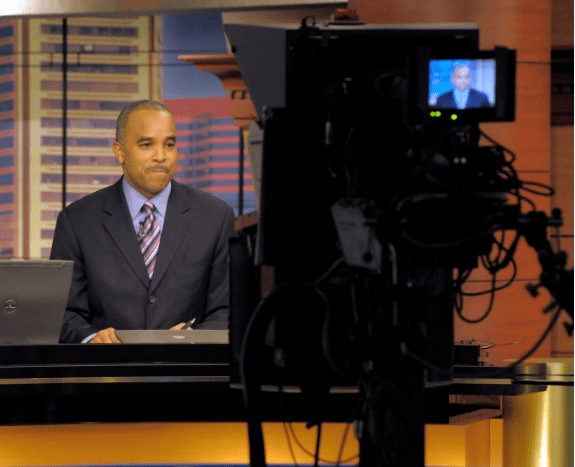
Kai Jackson at the desk of WJZ CBS Baltimore

One could argue that the issue itself is more of a concern by Republicans, but that is not accurate. Democrats and liberals understand that unemployment benefits are not a long-term solution; however, the money paid out to the unemployed is not lost. It flows through the economy, which is also important. Jackson presentation of the issues was fair and educated conservatives and liberals on the complexity of the problem.

What Jackson didn’t do was line up a long list of rabid conservative ‘experts’ to manipulate the story, nor did he indicate his personal spin on the issue.

Giving the Viewer What They Want or What They Need?
A news team can either manipulate news to invoke an emotional response, or they can work to educate the viewer on  the issues of the day and let the viewer decide how they feel about those topics. In the case of the former the news is sexy and entertaining. In the latter case the news is less emotional and requires more intelligent thought.

The excuse that Fox News-type reporting is just giving the viewer what he or she wants is same rationale of a drug dealer or prostitute. Reporting news should not be an attempt to manipulate emotions. News shouldn’t be anti-government, nor should it be pro-government. This does not mean that news has to be neutral, just that it can’t be driven by a political agenda.

The conservative and liberal views in the United States are both essential to our prosperity. Both viewpoints tend to carve out policies that succeed. A perfect example is the Affordable Care Act (ACA.) It was the health care reform proposed by the Heritage Foundation decades before it became law under President Obama’s administration. Despite Fox News stories that are trying to paint ACA as a disaster, the facts indicate that the number of uninsured people has dropped significantly and the program is actually succeeding.

A local television news organization is not a blog. It operates under the rules created by the FCC to protect the public trust. For whatever reason, yesterday KRNV rose to the expectations of that public trust.

Sinclair Opinion Survey is an Epic Fail of Research

09 Wednesday Apr 2014

Posted by Paul Kiser in About Reno, Branding, Business, Communication, Customer Relations, Customer Service, Ethics, Government, Government Regulation, Health, Honor, Management Practices, Opinion, Politics, Pride, Public Image, Public Relations, Technology, Traditional Media

≈ Leave a comment

Tags

Affordable Care Act, Galen Institute, Grace-Marie Turner, Kevin Kuhlman, Kristine Frazao, KRNV, Manhattan Institute, MyNews4, National Federation of Independent Business, NFIB, poll, SBGI, Sinclair Broadcast Group, survey, survey design

Kristine Frazao

Kristine Frazao – SBGI Corporate News Correspondent

Kristine Frazao, National Correspondent for Sinclair Broadcast Group, Inc. (SBGI,) delivered another anti-government news story that was aired on Reno’s NBC affiliate, KRNV, on Monday night. Her stories tend to be one-sided, Fox News-type reports that are long on manipulation and short on facts.

But on Monday, April 7, she came armed with a new ‘”weekend online poll” conducted by her employer (Sinclair) and she was ready to prove that she finally had undisputable evidence to back up her report. 

The piece used two clips in three seconds of ‘people on the street’ comments, followed by a third man in an eleven second response in broken English:

“very, very,…ah,.. big…uhm…debt, …uhm,….and is growing exponentially”

It was fourteen seconds of everyone’s life that can’t be recovered. Then Frazao revealed her ‘data.’

The Online Poll Fiasco
Frazao probably doesn’t know that for a survey to be valid, there are certain standards that have to be met. One is that the group surveyed has to be unbiased. Most researchers use random survey techniques to prevent harvesting the opinions that represent a biased group. That involves the researchers, 1) selecting the survey participants and, 2) utilizing a scientific method that allows anyone in the population being surveyed to be selected.

For example, randomly calling people is not usually scientific because it only lets the people who have telephones to be surveyed. An online poll is almost always considered unscientific because it only represents those who have Internet, understand how to use a computer, and find the web page with the survey.

So how did Sinclair post this survey? It took me several hours to find it because Frazao offers no information about how the survey was taken in her story. I finally found it as part of a larger survey on mostly Fox News station websites. In Reno, the survey can only be found on KRXI, the Fox affiliate, not on KRNV, nor Sinclair’s other station, KAME.

That issue alone destroys the credibility of the survey, but it gets better.

Image by Paul Kiser taken from MyNews4 newscast

Which question do you answer?

The survey question is designed to ask two questions. First, do you trust President Obama? Second, Do you think the Affordable Care Act will improve your coverage? If a respondent doesn’t trust President Obama, then the answer is going to be ‘no’ to both questions regardless of what the person thinks about the second question. Since this survey was on Fox News stations, it’s actually surprising that anyone answered ‘yes’ to the question.

But it gets better still.

Frazao read out the results as they appeared on the screen.

Image by Paul Kiser taken from MyNews4 newscast

2 + 7 = 9, carry the 1…goes this advanced math is hard!

Did you catch the problem? Yep, the numbers add up to 90%, not 100%. My guess is that the ‘Maybe’ group is supposed to be 11%, but the fact is that Sinclair people didn’t recognize the error, and Frazao didn’t either.

Image by Paul Kiser taken from MyNews4 newscast

Anti-ACA crusader from Monday’s (7 April) news story

The rest of Frazao’s story brought out the usual conservative ‘experts.’ Grace-Marie Turner and her 19-year crusade against health care reform, wearing exactly what she wore for last week’s ‘expert testimony’ against the Affordable Care Act. Once again she threw out numbers that predicted doom and despair, but Turner had no supporting data .

Image by Paul Kiser taken from video of KRNV newscast 1 April 2014

From last week’s story…is she wearing the same….?

Frazao also presented Manhattan Institute chart of the United States showing the difference in health care insurance premiums for a 27-year-old, by State, before and after the Affordable Care Act. Of course, prior to the Affordable Care Act the 27-year-old might not have been able to get coverage, and the chart doesn’t account for government subsidies.

And the Manhattan Institute? Another conservative think tank. At least Frazao is consistent in her ‘experts.’

Frazao brought out another conservative for more doom and gloom. She introduces Kevin Kuhlman, of the National Federation of Independent Business (NFIB) by saying:

“Kevin Kuhlman with the National Federation of Independent Businesses (sic) says small businesses are already feeling it in their bottom-line.”

The only problem with that statement is that the provisions effecting businesses have been delayed until 2015, so how is the Affordable Care Act hitting the bottom-line in 2014?

Frazao does have one final person-on-the-street interview who praises the Affordable Care Act for the mental health benefits, but then Frazao ends by going back to her poll, and the ‘pessimism’ it shows about the future of Obamacare…the poll that doesn’t even add up.

NEXT:  What happened on Tuesday? Has KRNV decided to go back to responsible journalism?

Reno’s NBC Affiliate Runs Anti-Union Press Release As News

09 Wednesday Apr 2014

Posted by Paul Kiser in About Reno, Branding, Business, Communication, Customer Relations, Customer Service, Education, Ethics, Government, Management Practices, Opinion, parenting, Politics, Pride, Public Image, Public Relations, Taxes, Traditional Media

≈ Leave a comment

Tags

KRNV, labor unions, MyNews4, Nevada Policy Research Institute, NPRI, On Your Side, SBGI, schools, Shelby Sheehan, Sinclair Broadcast Group, teacher's unions, Washoe County School District, WCSD

Taking another step away from journalism, KRNV co-anchor Shelby Sheehan presented a press release from the conservative Nevada Policy Research Institute (NPRI) as news during the April 7th 6 PM broadcast. In what has been an almost nightly anti-government feeding frenzy, the NBC affiliated station, managed by Fox News operator, Sinclair Broadcast Group (SBGI,) announced that according to NPRI, 168 educators left the Washoe County teacher’s union.

Image by Paul Kiser from KRV newscast

Conservative NPRI spokesperson, Shelby Sheehan

Sheehan introduced the story by admitting that NPRI has a statewide campaign against the teacher’s union and they are:

“...letting teachers know when and how they can leave (the union,) so many are doing just that…”

The KRNV veteran anchor briefly mentions that the two percent loss in membership occurred in the Summer of 2013, and then wraps up the NPRI media release by suggesting that more teachers want to leave, but can’t because:

“…once they (the teachers) do (join the union) they only have a short period of time to get out of their membership, which they say (NPRI) prevents more teachers from leaving.”

Sheehan’s sole source for the story was NPRI, which is an anti-government think tank that, among other conservative agendas, is anti- public school and pushes for school vouchers and charter schools. They represent the polar position against unionized teachers. 

Other than her paraphrasing the information given to her by NPRI, Sheehan reported no information or statements from a teacher, the union, nor an independent source. She apparently didn’t even question NPRI’s information, nor why they were just now releasing data that was almost a year old.

NEXT:  Sinclair’s Survey of Shame (To be released 9 April 2014 at 6:30 AM PDT)

Local TV Affiliate News Reputation Displaced With Conservative Propaganda Makeover

07 Monday Apr 2014

Posted by Paul Kiser in About Reno, Branding, Business, Communication, Customer Relations, Customer Service, Ethics, Government, Government Regulation, Health, Honor, Management Practices, Opinion, Politics, Public Image, Public Relations, Traditional Media

≈ 1 Comment

Tags

ABC, ABC News, based, CBS, CBS News, conservative, Cunningham Broadcasting, Deerfield Media, Disney Co, FCC, Federal Communications Commission, Fox, Fox News, journalism, KAME, KRNV, KRXI, LMA, local affiliate, Local Management Agreement, NASDAQ, NBC, NBC News, News, News4, On Your Side, propaganda, SBGI, Sinclair Broadcast Group, television, TV

SBGI LogoSinclair Broadcast Group (SBGI) and related companies have been buying up local non-Fox affiliated stations and pushing conservative biased news stories into the local news programs.

Graphic thanks to NASDAQ

Sinclair stock hit its high at the beginning of 2014, but has been sliding downward for the last three months (from NASDAQ website)

Since September of 2011, Sinclair Broadcast Group or their affiliated companies (Cunningham Broadcasting, Deerfield Media) have acquired or obtained a Local Marketing Agreement (LMA) for almost one hundred local television stations. According to its website, Sinclair now operates or owns 29 ABC, 26 CBS, and 17 NBC local affiliated stations in addition to 41 Fox and 54 other affiliated stations.

Fox News Masquerading As Reputable Journalism
By snatching up ABC, NBC, and CBS affiliates, Sinclair masks itself under the traditions of reputable journalism of the three historic broadcast giants. The public trust of news anchors built over decades is used to distract viewers from news stories slanted to provoke outrage at the United States government and policies opposed by conservatives. News stories for Sinclair stations are manufactured by the parent organization and inserted into the local news. The stories employ interviews with conservative sources, often with no interview with the  agency or organization being accused of fraud, waste, or corruption.

In Reno, Nevada, the NBC affiliate, KRNV, has run stories on almost a daily basis from the parent organization that suggested and/or accuse waste or government conspiracy. In some cases, clips from Fox News are used, rather than from the NBC parent organization. Recently KRNV 6 PM broadcast ran ‘A’ Block stories (headline news) regarding the Affordable Care Act (e.g.; March 26, April 1) and gun laws (e.g.; March 28) that used people with a known conservative bias as their sources.

The LMA Loophole
Federal Communication Commission (FCC) rules do not allow licensing of more than one television station in a market to a person or company; however, during the first George Bush administration (1991) Sinclair Broadcast Group convinced the FCC to allow Local Marketing Agreements (LMA’s) that would allow a person or company to own one station and “operate” another station providing the latter station was licensed to a different person or corporation.

This has allowed Sinclair to go on a buying binge of television stations in the same market as their Fox stations. Sinclair uses Deerfield Media and Cunningham Broadcasting to own the licenses of stations where Sinclair already owns a television license. All Deerfield and Cunningham licensed stations are operated by Sinclair, and the family that owns Sinclair controls 90% of the stock in Cunningham Broadcasting.

In Reno, Nevada, the Sinclair Broadcast Group owns the license for Fox affiliate, KRXI, and operates the MyNetworkTV affiliate, KAME (licensed to Deerfield Media,) as well as the NBC affiliate, KRNV (recently licensed to Cunningham Broadcasting.)

This allows Sinclair to effectively control three stations in one market and supplant  reputable journalism with conservative propaganda.

The Lingering Question
There is ample evidence that Sinclair Broadcast Group is using loopholes in the FCC regulations to control multiple stations in a single market. It is also apparent that news stories manufactured by Sinclair are shoddy and biased. The question is whether or not the people behind Sinclair are trying to pander to conservatives in order to increase profits or if they are perverting journalism for a conservative agenda. In one case it is a matter of greed, in the other, a matter of a betrayal to the American citizen.

An audit of all of the communications, finances and contributions of the companies, vendors, Board of Directors, and owners involved is the only way we will know.

Reno NBC News Station Runs Another Conservative-Laced Story

07 Monday Apr 2014

Posted by Paul Kiser in About Reno, Branding, Business, Communication, Customer Relations, Customer Service, Ethics, Government, Government Regulation, Information Technology, Management Practices, Opinion, Politics, Pride, Public Image, Public Relations, Technology, Traditional Media

≈ Leave a comment

Tags

A Block, ACA, AEI, Affordable Care Act, American Enterprise Institute, biased, Chris Vanocur, Columbus, Fox News, Galen Institute, Grace-Marie Turner, health insurance, Healthcare, Joe Antos, Jon Lovitz, journalism, KRNV, KSNV, NBC, NBC News, Obamacare, Ohio, SBGI, Sinclair Broadcast Group, WSYX

Image b Paul Kiser

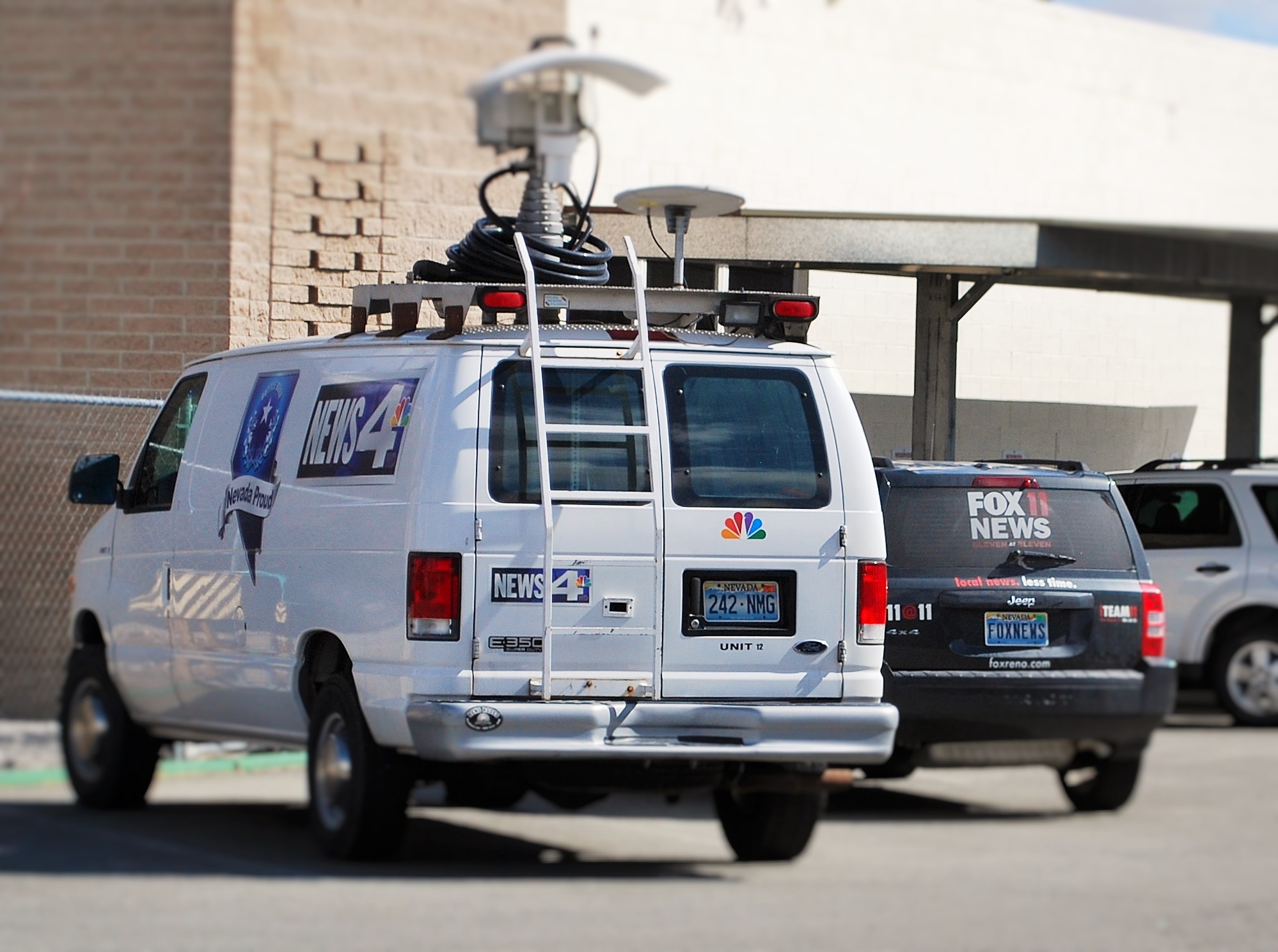
Is KRNV a Fox or NBC affiliate?

On April 1, Reno’s NBC affiliate, KRNV, has ran another biased ‘A’ Block (headline news) story attacking the Affordable Care Act (ACA) featuring a reporter from the Sinclair Broadcast Group (SBGI) network. This is at least the third incident of Fox News-type reporting on KRNV in less than a week. This report suggested that the most of the seven million people who signed up for health insurance under the Affordable Care Act already had insurance.  

As in the other biased news stories on KRNV, a non-local reporter presents an anti-government tirade. Chris Vanocur of the ABC affiliate, WSYX in Columbus, Ohio, one of Sinclair Broadcast Group’s 167 stations, starts out by saying:

“Seven million Obamacare new enrollees sounds like a lot, but…”

Image by Paul Kiser taken from video of KRNV newscast 1 April 2014

Grace-Marie Turner, crusader against healthcare reform

Vanocur then introduces Grace-Marie Turner, who has only one mission: oppose any change to healthcare’s broken free-market system. She founded the Galen Institute in 1995 to combat healthcare reform. According to her website, one of the key goals is to:

“Educate policymakers about the dangers that government control over the health sector pose to our economy and our society”

Turner clearly is dedicated to maligning anything regarding the Affordable Care Act. Despite her anti-ACA crusade, Vanocur refers to her as an ‘expert.’ Turner doesn’t hesitate to bear witness against the seven million new enrollees in Obamacare:

“Many of these, if fact, the great majority, are not newly insured people..”

Vanocur continues to say:

“Turner says only one-quarter to one-third of those who signed up didn’t have health insurance before.”

Turner claims to know that 25% to 33% of the seven million had insurance before and switched to Obamacare. She cites no study, nor does Vanocur offer any evidence of the source and/or reliability of the data. Rather, Vanocur offers another ‘expert’:

“…and she’s not the only one questioning the seven million number” 

Vanocur is referring to Joe Antos, his next ‘expert,’ of the conservative think tank, American Enterprise Institute For Public Policy Research (AEI.) Antos also claims to have reliable data on the new enrollees:

“It’s very likely that it’s no more than 1.5 million people who are actually new customers who were not already insured.”

Antos testifies that only 21% of the total enrollees had no insurance. Again, no source is presented for the ever dwindling number of previously uninsured. The only thing that kept this new story from becoming a Jon Lovitz sketch was Antos saying, “Yeah, yeah, 21%, That’s the ticket!”

Like other Sinclair generated anti-government ‘news’ stories (See articles on KRNV news stories of March 26 and March 28,) only one-side of the topic is presented and no data supports the claims made by the reporter, nor his sources. The irony is that on the same day, KRNV’s sister NBC affiliate in Las Vegas, KSNV, ran a locally produced news story on the ACA enrollment that discussed sign up issues, but kept a more balanced perspective.

NEXT:  How Sinclair Broadcast Group is using a FCC loophole to control multiple stations in one market. (Read article) 

Sinclair Reporter Taints Reno NBC Affiliate With Fox News Story…Again

07 Monday Apr 2014

Posted by Paul Kiser in About Reno, Branding, Business, Communication, Crime, Customer Relations, Customer Service, Ethics, Government, Government Regulation, Honor, Management Practices, Opinion, Politics, Privacy, Public Image, Public Relations, Traditional Media, Violence in the Workplace

≈ 1 Comment

Tags

Center for American Progress, conservative, Cunningham Broadcasting, Emily J. Miller, Emily Tisch Sussman, Fox News, Gun control, Herring Broadcasting, Joe Hart, Kristine Frazao, KRNV, law abiding, Mark Witaschek, MyNews4, NASDAQ, NBC, NBC News, News, Ronald Reagan, RT, Russian Television, SBGI, Second Amendment, Sinclair Broadcast Group, Sun Myung Moon, Unification Church, Washington D.C., Washington Times

Kristine Frazao

Kristine Frazao – SBGI News Correspondent

On Friday, March 28, the NBC affiliate in Reno, Nevada (KRNV) again aired a Fox News type report on the 6:00 PM telecast, and this time actually used a Fox News clip. During the ‘A’ Block (top stories,) local news anchor Joe Hart gravely announces:

“….National Correspondent Kristine Frazao reports, some are concerned that this could be a sign of things to come in our country….”

The news clip, manufactured by Sinclair Broadcast Group (SBGI,) which operates KRNV, features Kristine Frazao, who has three years national experience with Russian Television (RT,) and was hired in the past year by Sinclair. She tells the story of a Washington D.C. resident who violated local laws on ammunition ownership, and who had his ex-spouse tattle on him to law enforcement.

Image from MyNews4 video

Convicted Mark Witaschek interview on Fox News and shown on Reno NBC affiliate (From KRNV newscast)

The clip starts with Mark Witaschek, explaining his surprise that he had committed a crime. The graphic with his name on-screen is a Fox News logo and banner, indicating the original source of the story. Frazao did not include an interview or statement from the law enforcement agency involved, nor does she offer any other examples of people charged or convicted of the law that Witaschek violated.

Instead Frazao interviews Emily J. Miller of the The Washington Times; who declares that Witaschek is a law-abiding citizen even though he has been convicted of violating the law in Washington D.C.:

“It’s just an outrageous violation of his rights.”

Miller continues and links this one case to a larger conspiracy without any proof:

“This is a pattern in Washington D.C. and states that are anti-gun, which is to go after the law-abiding who are exercising their Second Amendment Rights….”

Miller, is a Senior Editor for The Washington Times, which has an interesting history and has a strong conservative bias.

Founded by the Unification Church in 1982, The Washington Times was once lauded by Ronald Reagan as the only newspaper that told the truth to the American people. In 2002, Church Founder, Sun Myung Moon stated:

“The Washington Times is responsible to let the American people know about God” and “The Washington Times will become the instrument in spreading the truth about God to the world.”

In March of 2013, the Herring Broadcasting announced that it would team with Miller’s Washington Times newspaper to create One America News, a conservative cable news network to rival Fox News.

Frazao’s uses a source that is as biased as asking a Boston Red Sox fan to discuss the negative aspects of the New York Yankees. By using Miller as her primary source, Frazao betrayed any aspect of responsible investigative journalism.

The final 41 seconds of the news clip, which may or may not have been part of KRNV’s live broadcast¹, does include Emily Tisch Sussman, Campaign Director for the Center for American Progress. Sussman represents a liberal viewpoint; however, during that 41 seconds she is edited down to two sound bytes of four seconds and ten seconds. The rest of the time Frazao speaks for her in a voice over. Of the two sound bytes, it was difficult to determine what questions Sussman was responding to because the editing didn’t seem to match Frazao’s edited-in commentary.

This was at least the second time in one week where Sinclair Broadcast Group’s National Correspondent has presented a story that had an overt conservative bias (See article.)

NEXT:  KRNV does it again. (Read article) TO BE PUBLISHED 7 APRIL 2014 at 6:00 AM

(¹I watched the live broadcast and I don’t remember the last 41 seconds that appears in the on-line clip of the ‘A’ Block. If it was included it would have put the broadcast 34 to 65 seconds longer than the two previous night’s broadcast, and 94 seconds longer than the next two weekday 6 PM broadcasts. At 41 seconds, Kristine Frazao seems to wrap up the piece, and the next 41 seconds could have easily been edited out for time on the original live broadcast.)

Has Reno NBC Station Gone Fox News?

28 Friday Mar 2014

Posted by Paul Kiser in About Reno, Branding, Business, Communication, Ethics, Government, Honor, Management Practices, Opinion, Politics, Public Image, Public Relations, Taxes, Traditional Media

≈ 7 Comments

Tags

advertising, Affordable Care Act, biased reporting, Channel 4, Conservatives, educating, Fox News, Intermountain West, Kristine Frazao, KRNV, NBC, NBC News, News, Obamacare, PR, RT, Russian Television, Sinclair Broadcasting Group

Image by Paul Kiser

Reno NBC affiliate becoming a Fox News clone?

The lead news story for Wednesday night on Reno’s NBC affiliate, KRNV was anti-government attack on the Affordable Care Act. The story was attempting to stir up outrage on the advertising budget to promote the new program that will impact millions of uninsured Americans.

The only opinions offered were in opposition to money being spent for advertising without any attempt to find an authoritative source to offer an explanation for why the public needed awareness of the new program. In fact, the only independent source on the story, David Williams, CEO of the anti-government organization, the Taxpayers Protection Alliance, suggested that taxpayer money should not be used to educate or promote the Affordable Care Act. He stated:

“This isn’t Coca Cola or Pepsi, this is healthcare, they shouldn’t be advertising…”

The $17 million per month spent to educate American citizens on a program to directly benefit them was about $2 million less per month than the coal, oil, and gas industry spent during the first eight months of 2012 to promote drilling and/or oppose clean energy.

Kristine Frazao

Kristine Frazao – Corporate News Correspondent

Reporter From Russian Television
As confusing as the Fox News-type slant of the lead story, was the person reporting it. The reporter was not an employee of the local KRNV station, nor was the story generated by the parent NBC News organization. The reporter was Kristine Frazao, the National Correspondent for the Sinclair Broadcast Group, which consists of 167 television stations, of which approximately half (88) are Fox, CW, or MyTV affiliated stations.

According to a November 2013 article in Broadcast & Cable (B&C,) Sinclair does not own KRNV, but did purchase three other stations of the Intermountain West group excluding KRNV and the Las Vegas affiliate, KSNV. Sinclair has, according to the story, agreed to operate and provide services for the Reno NBC affiliate.

However, Frazao is new to the Sinclair Broadcast Group. Prior to this year, Frazao spent three years with Russian Television (RT.) Russian Television began broadcasting in the United States in 2005, and its website states that RT:

“…acquaints international audience with the Russian viewpoint.”

Frazao is known for her anti-government reporting and as a reporter in San Diego was criticized for asking a Comic Con attendee why she and the other attendees weren’t protesting in Washington, D.C. against the government rather than coming to the southern California for the science fiction convention.

Image by Paul Kiser

Taking Sides in Reno

KRNV On The Conservative Side?
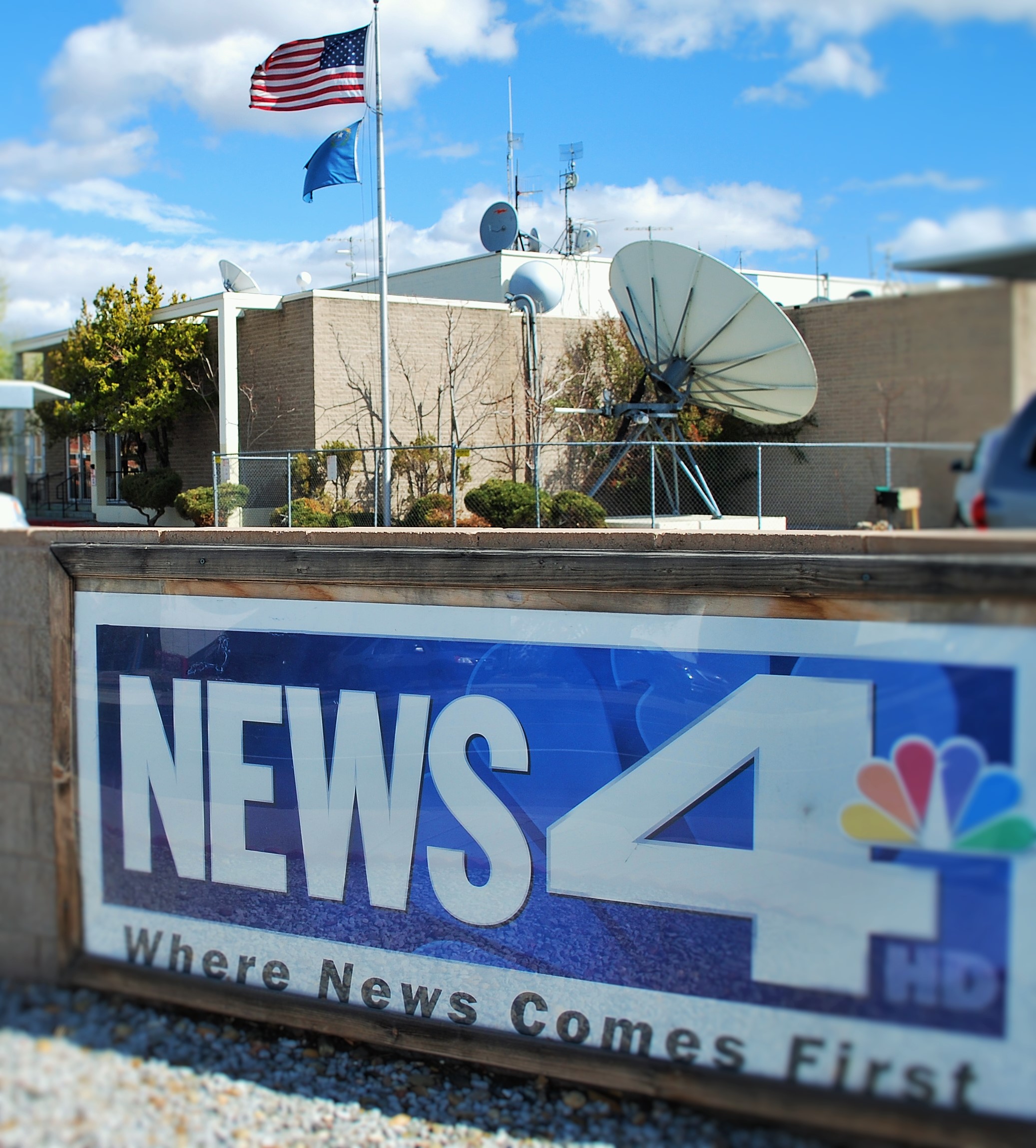
Frazao’s anti-Obamacare report was likely well received by conservatives in Northern Nevada and perhaps that is why Reno’s local NBC affiliate has taken on a Fox News attitude in reporting. Recently, KRNV changed its tag line from “Where News Comes First” to “On Your Side.” That explains many things about Wednesday’s lead news story.

Nevada Middle School Shooting Made Worse By Absent and Inept Public Relations Management

04 Wednesday Dec 2013

Posted by Paul Kiser in About Reno, Communication, Crime, Crisis Management, Ethics, Government, Information Technology, Internet, Management Practices, Opinion, Print Media, Public Relations, Social Interactive Media (SIM), Social Media Relations, Traditional Media, Violence in the Workplace

≈ Leave a comment

Tags

crisis, Crisis Management, guns, Nevada, Reno, School shooting, Sparks, Sparks Middle School, Washoe County School District, WCSD

On October 21st a 12 year-old Nevada boy brought a gun to his school, killed a teacher, shot two other students, then killed himself. The shooting left families devastated in a continuing saga of gun-related school incidents. Sadly, the crisis was intensified and prolonged by the failure of the local authorities to use standard and best practices in managing public relations. At times it seemed that there was a vacuum in media management. At other times it seemed that government officials from China had been employed to handle community relations.

Sparks Middle School - A tragedy made worse

Sparks Middle School – A tragedy made worse

In any crisis situation there is panic followed by confusion, rumors, and fear. The first goal is to resolve the immediate crisis. In most situations this will involve turning over control of the facilities and situation to law enforcement and other first responders.

However, the second goal of an organization in a crisis is to reduce the confusion, rumors, and fears. This process must start as quickly as possible, and sometimes it must be done before the crisis is under control by first responders.

In the Nevada incident, parents throughout the Reno community¹ were aware of an active shooter on a local school campus within minutes of the 7:15 AM shooting incident. There were 20 to 30 eyewitnesses when the teenager shot a teacher, who then reportedly went into the school and killed himself . It was all over within a few minutes. 

(¹The shooting occurred in Sparks, Nevada, a suburb of Reno.)

In the first hours following the shooting some rumors persisted that police were looking for the suspect; however, it is likely that law enforcement on the scene knew within ten to fifteen minutes that shooter was dead. With the suspect dead, the priorities of the first responders were to render assistance to the wounded, secure the students and school, secure the crime scene, and gather information.

Children became the official source of the shooting

Children became the official information source of the shooting

At least eight different sources were quoted in the first few hours after the shooting. This would indicate that the Washoe County School District and the various law enforcement agencies responding did not select a skilled spokesperson to manage the post-shooting situation. At 7:42 AM, less than 30 minutes after the shooting, the Reno Gazette Journal reported the following:

  • A shooting had occurred at Sparks Middle School
  • A police spokesperson had confirmed that the shooter was ‘neutralized’
  • Police were looking for the suspect
  • The school was on lockdown
  • The students had been evacuated

It shouldn’t be a surprise that the information coming from the crime scene in the first hour of the incident will be in conflict; however, the role of the primary spokesperson is to rapidly identify rumors and incorrect facts and address them. Two hours after the shooting a press conference was held. This was the opportunity for local authorities to reduce anxiety, confusion, and fear by detailing critical information. By answering as many of the basic questions (who, what, where, when, why, how) as possible the public could be reassured that despite the tragedy, authorities knew what happened and had the situation under control. After the press conference the Reno Gazette Journal reported:

“Authorities released few details about a shooting at about 7:15 a.m. at Sparks Middle School during a 9:15 a.m. press conference.”

If the families of the dead and wounded had not been notified then it would not have been appropriate to release the names; however, authorities wouldn’t even confirm whether teachers or students had been shot. Students began reporting what happened to the media and with no cooperation from local authorities, the families were contacted. That is the symptom of absent or inept media management.

Forcing Children To Be Spokespeople
Within minutes after the shooting word spread, not just within the local community, but around the world. Instantly parents, grandparents, relatives, and friends of school-age children began asking questions. What school? Was anyone killed? How many were shot? Who was killed or injured? Was it over? Why did it happen? Is my child/grandchild safe?

By withholding the details the local authorities did not withhold the story they just lost management of it. Without an official source for information the witnesses, in this case, mostly children, became the official spokesperson. To make the blunders of the first day worse, suburban police and city officials refused to release the name of the shooter for three days, citing that his name did not appear on any ‘report.’ 

The Public’s Right To Know Not the Correct Issue
Local media was incensed by the stonewalling of the authorities to release the name; however, this was more than an issue of the public’s Right to Know. The stated reason by authorities to withhold the shooter’s name was to protect the family, the failure to release this information put more focus on the shooter’s family to confirm or deny the rumors that were rampant within the community.

A skilled spokesperson would have understood this and worked to ensure that the information was appropriately released while also urging the media to respect the family’s need to grieve. 

Who Owns Information?
In the 20th century mass communication came with a catch. Access to information could be controlled. The public knew what the government, public relations staff, editors, and news directors wanted us to know. That changed with the Internet and Social Media. Information is fluid and it will flow through any conduit it can find. Information desired by the public will find the quickest path and anyone who believes they can stop the flow of it is only diverting it through another source. A spokesperson can and should be the quickest path for facts and information because it will reduce the fear, confusion and rumors.

The mishandling of the crisis in Nevada should serve as a lesson as to why a skilled, experienced crisis manager and spokesperson should be a part of every organization. No tragedy should be made worse by inept local authorities.

Public Relations Techniques That Kill Organizations

06 Wednesday Feb 2013

Posted by Paul Kiser in Branding, Business, Communication, Crisis Management, Customer Relations, Customer Service, Ethics, Generational, Information Technology, Internet, Management Practices, Public Relations, Respect, Social Interactive Media (SIM), Social Media Relations, Technology, Traditional Media

≈ 2 Comments

Tags

anti-listening, Conservatives, Managing the message, Nancy Brinker, Planned Parenthood, PR, Race for the Cure, sim, sm, Susan G. Komen

In Part I, “Why ‘Managing the Message’ Doesn’t,” we discussed the dangers of trying to ‘manage the message’ in a Social Media world. Part II looks at the techniques used by organizations to manage the message and why they fail.

Organizations that adopt a manage the message policy for Public Relations (PR) assume that they are the controllers and manipulators of the public image of their organization, which demotes the public to the role of a mindless zombie. If that doesn’t sound stupid enough, let’s look at the methods that organizations use to manage the message.¹

[¹ I realize that I’ve used the words Manage the Message five times in the first two paragraphs; however, “insulting PR techniques” isn’t quite specific enough as there are so many of them. 😉 ]

Corporate PR:  We manage the message by not listening

Corporate PR: We manage the message by not listening

Anti-listening Techniques
The subtle use of anti-listening techniques is one strategy used by organizations who seek to manage the message. The concept is simple: an organization can’t be held accountable for issues that don’t exist. By not listening an organization can effectively deny existence of an issue because they can claim ignorance, therefore can deny accountability.

One example is the use of formalized procedures for communication from the stakeholders, including the public. An organization might ignore or restrict communication on their Facebook page, requiring complaints and comments to be made through a process that is more complex or requires greater risk to complainer.

EXAMPLE:  From the Facebook page for a Parent/Teacher group of an Elementary School after parents discussed concerns about major changes in the school calendar:

“Please remember that this page is used for the PTC to share PTC sponsored fundraising events and activities. If anyone has comments/complaints about the school they need to be addressed with the administration.”

(From the School’s Marketing Director)

The strategy of denying open discussion of issues allows an organization to divide and conquer people who may object or have a strong reaction to negative events or significant changes. By restricting public comment on their website or Social Media formats such as Facebook, an organization can prevent all but the most committed people from voicing their opinion or concern. For those that do comment, the organization can hide dissent and concerns behind a veil that only they have access to, so the true scope of the issue is hidden from public.

The problem with this technique is that issues or concerns do not go away by ignoring or hiding them. Whether expressed or not the reaction exists and it impacts the public image of the organization. A divide and conquer strategy increases the reaction once people discover that others share their concerns. In the Social Media world, the truth will eventually come out through a disgruntled customer, employee, or other source.  Once the full scope of the deception is exposed the organization will lose all credibility and once the organization loses credibility the public image is also lost.

In January of 2012, the Susan G. Komen Foundation was receiving massive condemnation for a politically charged decision to defund Planned Parenthood. Rather than accepting that the public voice was valid, CEO Nancy Brinker attempted to double down on their position by claiming a bogus conservative-initiated Congressional investigation was reason to deny the grant requests by Planned Parenthood. Her efforts to paint an obvious conservative-motivated action as justified left her and the organization looking like right-wing wackos who had no clue that the organization depended on the perceived goodwill of the public.

By the time they tried to back peddle and fix the problem it was too late. Race For the Cure events in 2012 lost as much as one-third of the participation from the previous year and many donors question the use of their money by the Foundation. The irony is that Nancy Brinker had founded the organization thirty years earlier in her sister’s memory and now the Susan G. Komen name is not so much a symbol of fighting breast cancer as it is a reminder of conservative attempts to use backdoor methods to inflict their religious beliefs on everyone else.

MONDAY: The Dark Side of PR: Distraction and Deception Or ‘Armstronging’ the Public. When ethics are not a consideration, an organization is headed into a downward spiral that will almost always end with a public image that can be fatal. 

Why ‘Managing the Message’ Doesn’t

05 Tuesday Feb 2013

Posted by Paul Kiser in Business, Communication, Crisis Management, Customer Relations, Customer Service, Employee Retention, Ethics, Information Technology, Internet, Management Practices, Opinion, Public Relations, Respect, Social Interactive Media (SIM), Social Media Relations, Technology, Traditional Media

≈ 2 Comments

Tags

BP, Cool Hand Luke, Managing the message, Mitt Romney, PR, Public Image, Race for the Cure, Susan G. Komen, Tony Hayward

“What we got here….is a failure…..to communicate” Captain, the Prison Warden in Cool Hand Luke

Captain (Strother Martin) in 1967 film, Cool Hand Luke knew how to manage the message

Captain (Strother Martin) in 1967 film, Cool Hand Luke knew how to manage the message

If you are a business professor teaching students the importance of  ‘managing the message,’ or a Public Relations (PR) firm telling your client how to ‘manage the message,’ would you please stop. No, I mean stop right now. In fact, contact everyone you have taught or advised and tell them you were wrong then refund their money.

CEO Tony Hayward got his 'life back,' but BP is still in PR clean up mode in the United States

CEO Tony Hayward got his ‘life back,’ but BP is still in PR clean up mode in the United States

‘Managing the message’ cost Mitt Romney the Presidential election. It severely damaged Netflix in 2011. It cost a BP CEO his job. It took the Susan G. Komen Foundation from being a major player in non-profit foundations to one that has to hide its name in shame. 

Why?

First, ‘managing the message’ doesn’t work. Second, it’s a cowardly way to approach public relations. Third, it’s stupid advice. Fourth, it will end up causing major problems up to and including the end of an organization.

‘Managing the message’ assumes a person has control over the message. That would be a stupid assumption in a world driven by Social Media. John F. Kennedy’s words should be amended:

You can fool all of the people some of the time….until Social Media picks it up and then you’re screwed.

PR is no longer about creating an image. That was true back in the day individuals had no voice and people were subjected to mass advertising in every thing they watched, heard, and read. That was yesterday. Today an organization’s image is created by everyone who comes into contact with the organization. Customers, especially angry ones have as much of a voice in an organization’s public image as the Vice President of Marketing. Today PR is about listening and being honest and real in everything you say and do. That is something that can’t be faked or managed.

Reaction Avoidance
Managing the message is mostly about reaction avoidance. The idea is that if an organization handles it correctly, any negative situation will be minimized. The technique acts like a dam that has a short-term benefit, but a long-term disaster. When a PR crisis occurs the first instinct is to pretend there is no major problem. That is the start of a PR death spiral that only leads to bigger and bigger denials until the organization appears to be run by fools. By then executives turn and blame the PR staff for not ‘managing the message’ better.

TOMORROW: Public Relations Techniques That Kill Organizations. The two common techniques that characterize an organization who is trying to manage the message and why they fail.

MONDAY: The Dark Side of PR: Distraction and Deception Or ‘Armstronging’ the Public. When ethics are not a consideration, an organization is headed into a downward spiral that will almost always end with a public image that can be fatal. 

Why David Brooks Isn’t Qualified to Decide Who Can Be A Gun-Control Spokesperson

30 Sunday Dec 2012

Posted by Paul Kiser in Crime, Ethics, Government, Government Regulation, Opinion, Politics, Recreation, Respect, Traditional Media, US History, Violence in the Workplace

≈ 6 Comments

Tags

CT, David Brooks, gun laws, guns, Mayor Michael Bloomberg, Meet the Press, New York City, Newtown, NRA, rural, urban

David Brook, New York Times columnist

David Brook, New York Times columnist

New York Times columnist, political analyst, and all-around smart guy David Brooks rarely says anything that lacks intelligent thought, so when he makes a verbal blunder, as he did on December 16th on NBC’s Meet The Press group think session, it should be considered a national holiday for backwater bloggers like myself who make verbal blunders on a daily basis.

Two days after the murder of 26 people in Newtown, CT, David Brooks was making a point about the need for rural people to be included on the debate regarding the use of guns in our society. He said:

Brooks, defender of the innocent rural gun owner

“…it’s perceived as an attack on the lifestyle of rural people by urban people…”

Mr. Brooks then suggested that it was inappropriate for the Mayor of New York City, Michael Bloomberg, to be leading the debate. Brooks stated:

“…it’s counterproductive to have him as the spokesperson for the gun law movement.”

As someone who was raised in northwestern Colorado, where blaze orange is always the Fall color, and a gun is put in your hand before a driver’s license, I would strongly disagree with Mr. Brooks and I would dispute that he is the person to choose who can be the spokesperson for laws to restrict gun ownership.

While guns are nearly idols to be worshiped in rural communities, this is not a debate about freedom of religion. Guns tend to have life ending consequences and that consequence is often borne by the person who doesn’t own the gun. Rural people don’t understand the pressures and conflicts (e.g.; road rage, etc.) that occur in more urban environments and therefore they don’t have a place in the debate of an issue that crosses the rural/urban boundaries.

Rural people usually can’t understand why anyone would live in a city and often have built their perception of city living based on news stories of mass killings, drive-by shooting, and murder-suicides. Many rural people see city life as a daily battle ground where the unarmed are targets for the armed bands of criminals who roam the city streets. The fact that millions of people live untouched by violent crime in cities everyday is beyond the belief of people who think Fox News is ‘Fair and Balanced.’

Mayor Michael Bloomberg is exactly the right person to be the spokesperson for the appropriate use and limitations of gun ownership in America. As Mayor of one of the U.S.’s biggest urban areas, Bloomberg’s view of the dynamics of cities and those who live in them is unmatched by few in America.

Brooks remark is akin to saying that only cigarette smokers should have a voice in the control and use of cigarettes, even though they can kill non-smokers. We don’t need to prove guns kill non-gun owners. Guns kill everyone, regardless of his or her gun-ownership status.

Brooks might be correct that this is a rural versus urban issue, but it is the rural citizen that already has the gun in hand and that is the wrong solution in an urban environment. It’s time urban communities were allowed to address the threat that rural values have on our cities.

Who can or cannot be part of this debate should be decided by those who face the threat, not by those who have the gun and David Brooks is not the person to make that decision for us…

….even if he is the smartest person in the room.

What America Must Do: Step 6 – Reinvent Higher Education

14 Wednesday Nov 2012

Posted by Paul Kiser in College, Communication, Education, Generational, Government, Higher Education, History, Information Technology, Internet, Opinion, Politics, Public Relations, Taxes, Technology, The Tipping Point, Traditional Media, Universities, US History

≈ Leave a comment

Tags

college degree, faculty, professors, state run, students, tuition and fees, universities

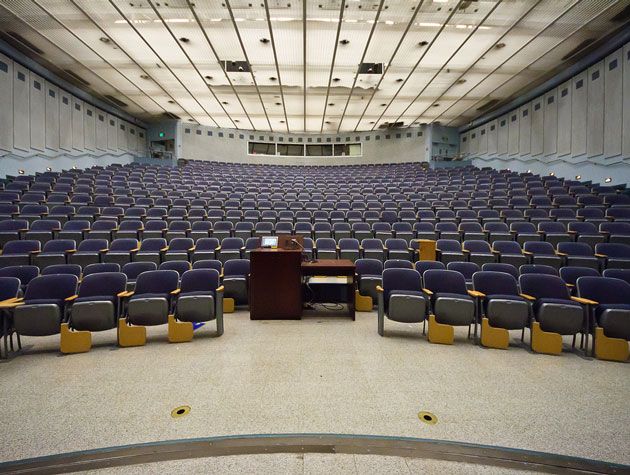
Sans Students: Is this what university classrooms will look like in 2020?

Higher Education is an unmovable object with an unstoppable force heading straight for it and universities are at ground zero. Classrooms as we know them may be doomed and the question is whether our country will lead the world in adapting to a new model, or whether we will be the last ones to accept reality.

The Value of the College Degree
The unmovable object in Higher Education is importance of the college degree in American commerce. Business lives or dies on information. The person who can access, filter, analyze, organize, and explain information tends to be valuable in a company.

High schools are tasked to help students graduate with basic competencies, but they are dealing with children who are still maturing into adulthood and that process needs to be complete before they are morphed into business men and women.

Those who believe high schools should be vocational schools are assuming that all children will become a construction laborer or office drone, so why bother with college prep? The concept of education as a training ground for corporate zombies is too simple-minded to apply in a country that encourages all citizens to reach their maximum potential.

College is where young adults are given the tools to become valued business leaders. College classes require a student to learn how to access and report information, which is central in business competitiveness. The business that can out think its competition always wins, which may be why many top businesses are more concerned about the degree, not the major. A college degree is more than a piece of paper, it is a badge of achievement that says this person is ready for the business world.

The Relentless Rise in the Cost of College
The unstoppable force is the rising cost of a college education. With cuts in federal and state budgets a greater share of the burden is being heaped on those who are least able to avoid it. In Mitt Romney’s failed bid to be President he suggested that students should borrow from their parents to pay for college. That was one telling sign that Romney is out of touch with the real world the rest of us live in.

March 2012 protest in Sacramento over tuition hikes

In 1991 the annual average cost for a university education was at $7,602 or over $30,000 for four years of college. In 2001, that annual cost had risen to $12,922 or over $50,000 in four years. In 2011, the annual cost had risen to $22,092, which meant it cost over $88,000 for the average college four-year degree. That is the equivalent of buying a new car every year a student attends college. If the trend continues it will cost a student an average of over $41,000/year for college by 2021, which means a four-year college degree in 2021 may cost over $167,000.

Students and their parents are already outraged by the rising costs, but it is universities who control the expenses, and therefore control the costs.

Based on current trends, the average annual cost for college may exceed $40,000 by 2021

Students want to be competitive for careers that will lead them to higher paying jobs, but they have no means to afford college and the list of parents who CAN pay over $22,000 a year for four years are on a first name basis with Mitt Romney.

The Other Unmovable Object – Faculty
Teachers at the college level have traditionally been considered the most important asset to a university and for centuries they were treated with dignity and respect by administrators, but financial pressures have made them a target for saving money. While students face escalating tuition and fees, university faculty are also a target of the unstoppable force. Professors have been constantly asked to accept budget cuts and teach more students for the same, or lower pay. 

Some universities have replaced expensive tenured professors with temporary faculty employed by contract on a semester by semester basis. Temporary faculty make a fraction of a full, tenured professor. Not surprisingly, a teacher that may not be offered a contract the next semester tends to be more accepting of increased class sizes, or other cost-cutting measures.

What may be surprising is that a college teacher is likely not receiving a significant portion of the tuition paid by the students in his or her classes. A temporary professor may bring in $100,000 or more in revenue each year for the university, but a temporary professor is often paid less than $4,000 per class with no benefits. Low pay and increased pressure to do more for no additional money makes the teaching environment unpleasant for the student and professor.

A Revolution Caused by the Internet
Ironically, the Internet was originally intended to allow one university to have quick access to the knowledge database at other universities and research laboratories. As it expanded and became commercially available in the late 1980’s and early 1990’s the public began to have access to a vast storage of on and off-campus knowledge without a student ID. Within a decade homes across the world were linked into a mass of dynamic information via business and personal websites, blogs, chat rooms, and other social media sites.

Suddenly anyone could access information and share ideas and they didn’t have to pay tuition to have easy access to it. Certainly some of the information was in error, but often people found information that outpaced the knowledge produced in books. Universities no longer held the monopoly on information.

Government Must Change
State governments and Higher Education face these problems:

  1. A college degree is still a valuable achievement and desired by the public and business.
  2. Tuition and fees are too high and the public can no longer afford them.
  3. Professors have been devalued in a system where more and more of the revenue is channeled away from the them.
  4. University administrators and government legislators have created a paradigm for Higher Education that is unsustainable.

Social media has changed the expectations of the public. People expect to be able to have ready access to anyone to whom they are paying for a service.

Controlling advanced knowledge within ivy covered walls is no longer possible in a world where anyone can do a Google search and know as much or more about the most current knowledge on any topic. However, just doing a Google search does not teach a person how to filter, analyze, organize, and report that information.

State-run universities have a unique opportunity to reinvent Higher Education. The challenge is that they are the most unlikely to do it. Administrators have Accreditation organizations that are established to dictate what Higher Education is and will be today and tomorrow based on the best practices of yesterday. That doesn’t work in a world where today is already history that was recorded by over 340 million tweets a day (March 2012 data.)

When the unstoppable force hits the unmovable objects (value of a degree and the need for faculty) few things about Higher Education will remain unchanged. Now is the time for State-run universities to dodge the upcoming annihilation and take the lead in reinventing Higher Education. They can start considering the following guidelines:

  • Tuition must stabilize and regress. Fees should be eliminated. Universities can assume that there will be no money available to siphon off for student activities, the football program, or any other money-absorbing entity. 
  • Support materials (textbooks, etc.) will be digital only and the cost will be pennies on the dollar of what students have been paying. Goodbye, McGraw-Hill. Hello, Faculty Publishing.
  • Classrooms will be more like Boardrooms with fewer students where the Professor is the CEO of knowledge and students must bring their best or beg for a second chance with someone else. Much of the lecture and information gathering will be done via webcasts and/or outside of class time. ‘Class’ will be where the work outside the classroom is brought in for discussion and idea sharing.
  • Class schedules will not follow a semester system and will be on a schedule that is more like a project team.
  • Faculty will lead students while at the same time work toward advancing knowledge on the subject matter.
  • The most important person to the student will be the educational coordinator (i.e. Counselor or Adviser in the old paradigm) who will create an individualized degree that is based on achieving a level of mastery information handling, not a number of credit hours.

The framework in which this happens must be within a government structure. Private enterprise has proven that when they try to create a system of higher learning they fail. It solves nothing to make Higher Education a profit-based program that is a poor imitation of the old, outdated model. If government can successfully create a new model it will make the United States of America the leader of advanced knowledge. If not, we can expect to be exporters of our future.

Links to:

What America Must Do:  Step 1 – Silence the Wackos in Politics
What America Must Do:  Step 2 – An Extreme Makeover of Government at All Levels
What America Must Do:  Step 3 – Restore Government Revenue and Fair Taxation
What America Must Do:  Step 4 – Balanced Budget By 2015, Debt under 50% of GDP by 2020
What America Must Do:  Step 5 – Restart a Federally Run Space Program

Nevada Newspaper Goes Behind the Wall…to Die

11 Friday May 2012

Posted by Paul Kiser in About Reno, Business, Communication, Customer Service, Employee Retention, Ethics, Generational, History, Human Resources, Information Technology, Internet, Print Media, Public Relations, Social Media Relations, Technology, Traditional Media, US History

≈ 2 Comments

Tags

Newspapers, online, Reno Gazette-Journal, RGJ, Subscription fees

RGJ’s main bunker…entrance in Reno

The Reno Gazette-Journal (RGJ) recently decided to lock themselves behind a wall and it will cost you at least $12/month to see what they have hidden. Does anyone else see the problem with this business model?

Allow me to reconstruct the history of news media in America to understand why this is a death sentence to the RGJ.

In the 1800’s newspapers owned the information world

1700-1900
In the 1700’s, newspapers became the source of community news. These newspapers often portrayed a political view, but were THE source of information in a society where travel was limited and information scarce. Writers and editors often became key figures in the social and political structure as the gatekeepers of what would be printed.

Radio was faster, but newspapers were corporeal

1900’s
The invention of radio and television gave new options to the public on how they accessed news. The radio offered broadcast news that reached more people faster; however, newspapers remained the source of news because it existed in corporeal form. News transmitted on radio waves disappeared if a person wasn’t in front of the radio during the broadcast. Newspapers; however, almost always gave more a more in-depth account of the events.

Television came shortly after radio and added the exciting features of seeing the reporter and moving images of events; however, newspapers continued to be the best source of significant events.

CNN was to newspapers what Wal-Mart was to Mom & Pop stores

1980
CNN was the first real threat to newspapers. It offered news 24/7/365 and it often relayed events in progress. People no longer had to wait for a newspaper’s version that would come the next day. The newspaper still had the corporeal advantage because CNN would eventually move on to the other news while newspapers could be read anytime. Newspapers also still gave more in-depth reporting on local news issues.

1995
It wasn’t until the creation of the Internet that newspapers faced a challenge that would threaten their existence. The public use of the Internet stripped newspapers of almost every advantage they held. News was not only reported, it was discussed and people reacted in real-time. With the development of the Google search engine topics could be accessed and researched at any time anywhere there was Internet access. The news was no longer filtered and limited to what an editor thought people should know, but rather raw information reached individuals who made their own decisions on what was significant to them.

Reporters who spent years in college and thousands of dollars in tuition and books now found themselves competing against bloggers who had no editors to please. Reporters might get the story and accurately report it to their community but in a real-time world their information was just following up to what people already knew. Newspapers have adapted by presenting an online version of the information that will be in the next day’s paper and that has helped writers compete and be read; however, investors want profit and that is the heart of the dilemma.

The Reno Gazette-Journal has decided that they will create demand and increase revenue by limiting access. That is a rational position to take if you have a product that has significant value and demand, but newspapers and their value appeals to a diminishing demographic. Older white males are dying off at an incredibly rapid pace and newspapers have little demand or value to younger, non-white, non-male demographics. How does RGJ expect to gain new readers by charging for access who have free access to local online news through three Reno television news station’s webpages?

There is another problem with RGJ’s decision that may impact the quality of writing. A writer for RGJ has to accept that their audience will be extremely limited. Blogs will exist for decades and are be searchable to anyone in the world. An RGJ reporters work is locked away behind a wall forever. Who wants to dedicate their life to writing and have it unread? Over time writers will have to decide how much damage RGJ is doing to their career by locking their work behind a pay wall. Once the good writers are gone, what value will the Reno Gazette-Journal have to anyone, paying or otherwise?

Facebook and Twitter Doomed?…Chicken Crap

06 Monday Dec 2010

Posted by Paul Kiser in Business, Communication, Ethics, Information Technology, Internet, Public Relations, Rotary, Social Interactive Media (SIM), Social Media Relations, Traditional Media

≈ Leave a comment

Tags

Doomed, Facebook, Privacy, Social Media, Twitter

by Paul Kiser
USA PDT  [Twitter: ] [Facebook] [LinkedIn] [Skype:kiserrotary or 775.624.5679]

Paul Kiser

Blogging is about open discussion and the expression of opinion, so I hesitate to contradict someone’s blog; however, when someone titles their blog referencing ‘doomed’ with any aspect of Social Media it gets my attention. I am trying to help older professional adults understand Social Media and what it means to business and organizations like Rotary. Rotarians are sometimes hesitant to engage in Social Media tools like Facebook and Twitter because of irrational fears and a lack of good information.

Last week a blog was published by Gini Dietrich, who has the credentials to be knowledgeable in the field of Social Media and I do not call her experience or professionalism in to question; however her article called, “Creative Destruction: Why Facebook and Twitter May Be Doomed” requires a strong response.

Announcing the possible ‘doom’ two of the most significant tools in the digital world is clever because traditional media professionals and Social Media-phobs drool over anything that smacks of the end of the Internet and its place in civilized society. If I want to get a 10,000 hits on my blog this week, (and ongoing hits from Google searches,) including the words ‘doomed’, ‘Facebook’, ‘Internet’, and ‘Social Media’ would be one of the best tactics I could use. The problem is that the aside from pandering to those who remain firmly entrenched in 1989 thinking, Ms. Dietrich has little substance to support her dire prediction.

(Original blog by Gini Dietrich)

The blog focuses primarily on Facebook and the ongoing whining by non-Facebook users about privacy issues. Ms. Dietrich’s argument is essentially that the masses are ready to revolt and leave Facebook to ‘better’ networks that will be more restrictive to protect the user’s privacy. She goes on to suggest that Facebook and Twitter will be replaced just as they replaced earlier Social Media networking tools.

While every enterprise faces the same potential for creating its own demise, I strongly disagree that Facebook or Twitter may be ‘doomed’. Yes, users are a fickle group, but Friendster and MySpace were first-efforts in creating a comprehensive, open-networking Social Media tool and they had shortcomings that made them annoying (MySpace still does). It is true that Facebook and Twitter’s growth have been driven partly by capitalizing on the weaknesses of their predecessors; however, the major success of both was by bringing new people into the Social Media world with greater connectivity to quality users.

Dark clouds over Facebook?

Facebook attracted a larger segment of the population, including older users that suddenly became addicted to the connections that it provided. Today, even those who dislike Facebook have had a hard time detaching themselves from it because 540 million Social Media users cannot be ignored without sacrificing something significant. The problem is that another networking service may solve certain dissatisfiers of Facebook, but until everyone you know, or want to know moves to that service, you have to try to live in two or more networking worlds, and that is a pain. So a person has to weigh whether they are frustrated enough to add one more networking group to their attention span or live with Facebook.

Ms. Dietrich ignored the other possibility.  That instead of leaving, people may realize and accept that online privacy is a myth. I am constantly amazed by people who believe that they can be anonymous on the Internet. They think that a nondescript user name means that their identity is protected or that a comment they make will disappear the next day. I don’t disagree that there are some legitimate privacy issues and the FCC is proposing new regulations to address many of these issues, but a significant part of the problem is not a problem of Facebook’s creation, but of the gullibility of the user who thinks that they are ‘in disguise’ when they are on the web.

Regarding Twitter, Ms. Dietrich gave little reason for her ominous prediction. Yes, this year Twitter was having many problems with service failures and even I have said this is a problem that must be fixed, but in the 4th quarter I have experienced nothing but reliable service from Twitter.

Personally, I think I think most people have undervalued Twitter. It is perceived by many non-users as a network of celebrities and pointless dribble of ‘what-I-just-did’. However, the core of Twitter consists of people discussing cutting edge issues. It is the only service that brings together people around the world who are focused on one topic with searchable hashtags. If it can overcome its poor public image and be recognized for what it can do, it could jump from 100 million users to 500 million users in 6 months. It is more likely to be the center of business discussion than any other service out there. LinkedIn (started May 2003) is older than MySpace (started Aug. 2003) and it is has been leapfrogged by Twitter (started July 2006) with over twice as many users (41 million vs Twitter’s 98 million.)

The wanna-be replacements for Facebook and Twitter have one big problem.  Some of the very things that users say they want to protect them also restrict the connections that give Facebook and Twitter advantages in adding new users and making new connections.  If any networking service is doomed it is LinkedIn because it has such a complicated system to add new connections (How do you know this person?) that it renders itself irrelevant.

Yes, Facebook has made some stupid mistakes, but if everyone organization that made stupid mistakes was ‘doomed’ then Wal-Mart, Target, HP, Microsoft, Apple, Exxon, and thousands of others mega organizations are all ‘doomed’.

Will Facebook and Twitter be the giants in 2015?  I doubt it, but I don’t see any other Social Media tool that will challenge them in the next two years and is why my response to the suggestion of ‘doom’ is simply: Chicken Crap.

More Articles

Business: Public Relations, Management, and Social Media Related

  • 5 reasons why you shouldn’t title your blog with number reasons
  • A Question of Ethics
  • HR/Security Hot Topic: Should you watch your employee’s personal Internet activities? (Facebook, MySpace, Twitter, etc.)
  • Relationship Typing: 3 factors that affect the quality and depth of friendship (Part I)
  • Starbucks Re-Imagines the business … again
  • Your Privacy Rights on the Internet: Read before you write
  • Social Media 3Q Update: Who uses Facebook, Twitter,LinkedIn, and MySpace?
  • Richmond Embassy Suites: The best at true Hospitality
  • Dear Business Person: It’s 2010, please update your brain.
  • Selling watered-down beer: The best spin campaign in advertising
  • Communication: Repetition of message does not increase awareness
  • Is it time to fire yourself?
  • Millennium Hotel: Go away, spend your money elsewhere
  • Rogue Flight Attendant shows his arrogance, Airlines dislike for the customer
  • 2Q 2010 Social Media Tools: Facebook/Twitter sail on, LinkedIn/MySpace don’t
  • War Declared on Social Media: Desperate Acts of Traditional Media
  • Pay It Middle: The Balance between Too Much and Too Little Compensation
  • Mega Executive Pay Leads to Poor Performance
  • Relationships and Thin-Slicing: Why the other person knows what you’re really thinking
  • Browser Wars: Internet Explorer losing, Google Chrome gaining ground
  • WiFi on Southwest Airlines: Is it ‘Shovel Ready’?
  • Starbucks makes a smart move: Free WiFi
  • Foul Play: FIFA shows what less regulation offers to business
  • The Shock of the McChrystal Story: The story is over before the article is published
  • Tony Hayward: The very model of a modern Major General
  • Epic Fail: PR ‘Experts’ don’t get Twitter
  • King of Anything: Social Media vs Traditional Media
  • Twitter is the Thunderstorm of World Thought
  • Signs of the Times
  • How Social Interactive Media Could Transform Higher Education
  • How to Become a Zen Master of Social Media
  • Death of All Salesmen!
  • Aristotle’s General Rules on Social Media
  • Social Media:  What is it and Why Should You Care?
  • Social Media 2020:  Keep it Personal
  • Social Media 2020:  Who Shouldn’t Be Teaching Social Media
  • Social Media 2020:  Public Relations 2001 vs Social Media Relations 2010
  • Social Media 2020: Who Moved My Public Relations?
  • Publishing Industry to End 2012
  • Who uses Facebook, Twitter, MySpace & LinkedIn?
  • Fear of Public Relations
  • Dissatisfiers: Why John Quit
  • Facebook, Twitter, LinkedIn…Oh My!
  • Does Anybody Really Understand PR?

Rotary Related

  • Rotary@105: 7 Relationship types that affect membership retention (Part II)
  • What most non-Rotarians don’t know about Rotary
  • Rotary@105: Making Rotary Sexy
  • Rotary@105: Grieving change
  • How Rotary can..must..will plug into Social Media
  • Rotary PR: Disrespecting the Club President is a PR/Membership issue
  • Rotary Membership/Public Image Challenge
  • Rotary New Year: Retread or Renaissance?
  • Rotary@105: A young professionals networking club?
  • One Rotary Center: A home for 1.2 million members
  • Rotary@105:  What BP Could Learn from the 1914 Rotary Code of Ethics
  • Rotary Magazine Dilemma Reveals the Impact of Social Media
  • Rotary@105:  April 24th – Donald M. Carter Day
  • Rotary@105:  What kind of animal is Rotary International?
  • Rotary:  The Man in the Yellow Hat as the Ideal Club President?
  • Rotary@105:  Our 1st Rotary Club Dropout
  • Rotary Public Relations and Membership: Eight Steps to a Team Win
  • Rotary: All Public Relations is Local
  • Best Practices:  Become a Target!

Science Related

  • Negative Time: The Self-fulfilling Prophesy a Scientific Possibility?
  • Physics in 2010: The more we understand, the less we know

Personal Experience Related

  • Knowing when it’s over or beyond over
  • Dear Teresa Laraba, SVP of Southwest Airlines Customer Service
  • Things I didn’t know about being a Father to a four-year-old boy
  • Riding Reno: The Ladies of Reno
  • Up in the air down in Texas
  • I mow my lawn because…
  • Nevada I-580: An Interstate by any other name
  • Nevada’s oldest brewery opens a Reno location
  • Two Barbecues and a Wedding
  • Car Dealership Re-Imagines Customer Service

Our Country and History Related

  • Sandoval/Reid campaign money not a stimulus for Nevada
  • Nevada’s Best Kept Secret: #1 in Crime
  • The Vultures Start Circling on Election Day
  • The Quality of Mercy: Tea Party seeks its pound of flesh
  • I’m not angry, nor am I stupid … and I voted
  • Point of Confusion
  • What I’m not buying this year
  • Nevada: State of Disaster
  • Thank you, Mr. President
  • America’s Hostile Takeover of Mexico

Sandoval/Reid campaign money not a stimulus for Nevada

24 Wednesday Nov 2010

Posted by Paul Kiser in About Reno, Branding, Communication, Consulting, Ethics, Government, History, Honor, Management Practices, Politics, Pride, Print Media, Public Relations, Traditional Media

≈ Leave a comment

Tags

Blogging, Blogs, Democrats, Governor, Management Practices, Nevada, New Business World, Newspapers, Politics, Public Image, Public Relations, Publicity, Republican, Republicans, Rory Reid, Sandoval

by Paul Kiser
USA PDT  [Twitter: ] [Facebook] [LinkedIn] [Skype:kiserrotary or 775.624.5679]

Paul Kiser

Article first published as
Sandoval/Reid Campaign Money Not a Stimulus for Nevada
on Technorati

We endured relentless political ads on television and radio, but Nevada didn’t hit the jackpot in campaign dollars flowing into the State from the Governor’s race. Despite the fact that almost $3.8 million dollars was spent by the Sandoval for Governor Campaign in the months leading up to the election, 80% of the money was payable to recipients outside the State. Rory Reid’s campaign also spent a significant portion of its money to out-of-state firms with MSR Media Strategies, LLC in Fairfax, Virginia netting almost $2.8 million from the Reid campaign.

Sandoval Campaign Expenses
(Spreadsheet listing all campaign expenses through October 21, 2010)

In a detailed review of Governor-Elect Sandoval’s campaign reports, 63% ($2.4 million) of campaign expenses were made payable to Strategic Media Services, inc. in Washington, D.C. for advertising. While some may argue that money spent for advertising comes back to the State in the form of purchased television and radio air time and newspaper ads, one Nevada media consultant pointed out that most media outlets in Nevada are owned by out-of-state media corporations, so political ads that ran on many local stations were payable to non-Nevada interests. The one exception is the Intermountain West Communications Company that owns several television stations including in the western United States including KSNV-Las Vegas, KRNV-Reno, and KENV-Elko. 

David Neal, President of Strategic Media Services, inc. (Sandoval’s leading campaign expenditure) and Kyle Osterhout, Partner of MSR Media Strategies, LLC (Rory Reid’s leading campaign expenditure) were not immediately available; however, two media experts with campaign related experience said that the standard fee for media agencies is 15% of the advertising purchase. In some cases a campaign may negotiate rebates from the media agency based on volume of business; however services such as the production of the ad are typically not included in the 15% fee.

The Las Vegas area did benefit from 19% (over $720,000) of the campaign funds with over $400,000 paid to political and media consultants.  Almost half a million dollars went to the three Las Vegas firms of October, Inc., Autumn Productions, and Autumn EMedia. The latter two are subsidiaries of November, Inc.

The Reno, Lake Tahoe, and Carson Valley garnered only 1 percent (less than $30,000) from the Governor-Elect’s campaign and rural Nevada received less than $10,000.

NEXT:  Where the money came from in Sandoval’s campaign

More Articles

Business: Public Relations, Management, and Social Media Related

  • A Question of Ethics
  • HR/Security Hot Topic: Should you watch your employee’s personal Internet activities? (Facebook, MySpace, Twitter, etc.)
  • Relationship Typing: 3 factors that affect the quality and depth of friendship (Part I)
  • Starbucks Re-Imagines the business … again
  • Your Privacy Rights on the Internet: Read before you write
  • Social Media 3Q Update: Who uses Facebook, Twitter,LinkedIn, and MySpace?
  • Richmond Embassy Suites: The best at true Hospitality
  • Dear Business Person: It’s 2010, please update your brain.
  • Selling watered-down beer: The best spin campaign in advertising
  • Communication: Repetition of message does not increase awareness
  • Is it time to fire yourself?
  • Millennium Hotel: Go away, spend your money elsewhere
  • Rogue Flight Attendant shows his arrogance, Airlines dislike for the customer
  • 2Q 2010 Social Media Tools: Facebook/Twitter sail on, LinkedIn/MySpace don’t
  • War Declared on Social Media: Desperate Acts of Traditional Media
  • Pay It Middle: The Balance between Too Much and Too Little Compensation
  • Mega Executive Pay Leads to Poor Performance
  • Relationships and Thin-Slicing: Why the other person knows what you’re really thinking
  • Browser Wars: Internet Explorer losing, Google Chrome gaining ground
  • WiFi on Southwest Airlines: Is it ‘Shovel Ready’?
  • Starbucks makes a smart move: Free WiFi
  • Foul Play: FIFA shows what less regulation offers to business
  • The Shock of the McChrystal Story: The story is over before the article is published
  • Tony Hayward: The very model of a modern Major General
  • Epic Fail: PR ‘Experts’ don’t get Twitter
  • King of Anything: Social Media vs Traditional Media
  • Twitter is the Thunderstorm of World Thought
  • Signs of the Times
  • How Social Interactive Media Could Transform Higher Education
  • How to Become a Zen Master of Social Media
  • Death of All Salesmen!
  • Aristotle’s General Rules on Social Media
  • Social Media:  What is it and Why Should You Care?
  • Social Media 2020:  Keep it Personal
  • Social Media 2020:  Who Shouldn’t Be Teaching Social Media
  • Social Media 2020:  Public Relations 2001 vs Social Media Relations 2010
  • Social Media 2020: Who Moved My Public Relations?
  • Publishing Industry to End 2012
  • Who uses Facebook, Twitter, MySpace & LinkedIn?
  • Fear of Public Relations
  • Dissatisfiers: Why John Quit
  • Facebook, Twitter, LinkedIn…Oh My!
  • Does Anybody Really Understand PR?

Rotary Related

  • Rotary@105: 7 Relationship types that affect membership retention (Part II)
  • What most non-Rotarians don’t know about Rotary
  • Rotary@105: Making Rotary Sexy
  • Rotary@105: Grieving change
  • How Rotary can..must..will plug into Social Media
  • Rotary PR: Disrespecting the Club President is a PR/Membership issue
  • Rotary Membership/Public Image Challenge
  • Rotary New Year: Retread or Renaissance?
  • Rotary@105: A young professionals networking club?
  • One Rotary Center: A home for 1.2 million members
  • Rotary@105:  What BP Could Learn from the 1914 Rotary Code of Ethics
  • Rotary Magazine Dilemma Reveals the Impact of Social Media
  • Rotary@105:  April 24th – Donald M. Carter Day
  • Rotary@105:  What kind of animal is Rotary International?
  • Rotary:  The Man in the Yellow Hat as the Ideal Club President?
  • Rotary@105:  Our 1st Rotary Club Dropout
  • Rotary Public Relations and Membership: Eight Steps to a Team Win
  • Rotary: All Public Relations is Local
  • Best Practices:  Become a Target!

Science Related

  • Negative Time: The Self-fulfilling Prophesy a Scientific Possibility?
  • Physics in 2010: The more we understand, the less we know

Personal Experience Related

  • Knowing when it’s over or beyond over
  • Dear Teresa Laraba, SVP of Southwest Airlines Customer Service
  • Things I didn’t know about being a Father to a four-year-old boy
  • Riding Reno: The Ladies of Reno
  • Up in the air down in Texas
  • I mow my lawn because…
  • Nevada I-580: An Interstate by any other name
  • Nevada’s oldest brewery opens a Reno location
  • Two Barbecues and a Wedding
  • Car Dealership Re-Imagines Customer Service

Our Country and History Related

  • Nevada’s Best Kept Secret: #1 in Crime
  • The Vultures Start Circling on Election Day
  • The Quality of Mercy: Tea Party seeks its pound of flesh
  • I’m not angry, nor am I stupid … and I voted
  • Point of Confusion
  • What I’m not buying this year
  • Nevada: State of Disaster
  • Thank you, Mr. President
  • America’s Hostile Takeover of Mexico

Nevada Best Kept Secret: #1 in Crime

05 Friday Nov 2010

Posted by Paul Kiser in Branding, Business, Communication, Crime, Crisis Management, Ethics, Government, History, Politics, Pride, Print Media, Public Relations, Rotary, Taxes, Traditional Media, Travel, Violence in the Workplace, Women

≈ 2 Comments

Tags

auto theft, Blogging, Blogs, crime rate, crime statistics, Employment, Executive Management, HR, Management Practices, Nevada, New Business World, Newspapers, Public Image, Public Relations, Publicity, rapes, robbery, Rotary

by Paul Kiser
USA PDT  [Twitter: ] [Facebook] [LinkedIn] [Skype:kiserrotary or 775.624.5679]

Paul Kiser

Article first published as
Nevada #1 Crime Rate Not Acknowledged
on Technorati

On a late October morning a Wal-Mart employee was ‘disgruntled’ and he decides it’s time to take action. He smuggles a gun into the store and buys ammunition for it in the Sporting Goods department. He then goes to the restroom where he hides in the handicapped stall mulling his decision. He makes a final commitment to confront his bosses and leaves the restroom, straight toward the manager’s office. Once there he confronts the manager, the one he likes, and, at gunpoint, orders him to call two other managers to the office. When they arrive they find an angry man with a gun. At some  point the three managers make a run for it and all three are shot. All three live, but their lives will never be the same.

Last week’s shooting of three managers in a Wal-Mart in Reno (Nevada, USA) should not be surprising in a State that has the worst crime rate in the United States. Nevada has been ranked as the Most Dangerous State for the last four years (2006-09) by Morgan Quitno’s (morganquitno.com) annual crime rate report.

Nevada’s Crime Story

  • Nevada ranks #1 in women being killed by men (1)
  • Nevada ranks #1 in stolen cars per capita (2)
  • Nevada ranks #1 in robbery per capita (2)
  • Nevada ranks in the top 10 for assaults per capita for the last 4 years (3)
  • Nevada ranks in the top 10 for forcible rape per capita for the last 4 years (3)

What is a surprise is the deafening silence about the State’s notorious ranking by local media. The top 50 hits of a Google search of ‘Nevada High Crime Rate News Media’ offer no mention of the issue among the State’s primary television and print media resources. It also was not an issue discussed in most of the major political contests this year despite the fact that Nevada’s #1 status in unemployment, foreclosures, and bankruptcies were all fodder for candidate mud-slinging.

It should be noted that Nevada’s crime rankings are not an artifact of the 2007-09 Recession. The State has been a leader in crime independent of the economic environment. It is unknown if Nevada’s out of control crime issues are effecting tourism because for over half a decade the State has experienced a steady decline in gaming revenues because of increased competition due to Indian gaming in California and other States. Any impact of Nevada’s high crime reputation would be masked by the larger trend; however, as there seems to be little awareness of the State’s crime issues, it is unlikely that it has had an impact…yet.

Nevada’s gaming industry would likely suffer more revenue losses if the crime woes were widely publicized and lower gaming revenues would have a trickle down effect on newspaper and television advertising revenue but, there is no evidence that the local media intentionally avoids the subject to risk offending their advertisers. Gaming also plays a significant role in Nevada politics but, there is no evidence that politicians avoid discussing the issue for fear of offending potential major contributors to their campaigns.

However, the lack of discussion seems to only be feeding the problem. If any effort is being made to turn around Nevada’s position as the Most Dangerous State it is being done without fanfare ….and without success.

NOTES:
(1) – Statistic for 2008 (from crimeinamerica.net)

(2) – Statistic for 2009 – #2 in 2005-08 (from disastercenter.com)
(3) – Statistic for 2006-09 (from disastercenter.com)

More Articles

Business: Public Relations, Management, and Social Media Related

  • A Question of Ethics
  • HR/Security Hot Topic: Should you watch your employee’s personal Internet activities? (Facebook, MySpace, Twitter, etc.)
  • Relationship Typing: 3 factors that affect the quality and depth of friendship (Part I)
  • Starbucks Re-Imagines the business … again
  • Your Privacy Rights on the Internet: Read before you write
  • Social Media 3Q Update: Who uses Facebook, Twitter,LinkedIn, and MySpace?
  • Richmond Embassy Suites: The best at true Hospitality
  • Dear Business Person: It’s 2010, please update your brain.
  • Selling watered-down beer: The best spin campaign in advertising
  • Communication: Repetition of message does not increase awareness
  • Is it time to fire yourself?
  • Millennium Hotel: Go away, spend your money elsewhere
  • Rogue Flight Attendant shows his arrogance, Airlines dislike for the customer
  • 2Q 2010 Social Media Tools: Facebook/Twitter sail on, LinkedIn/MySpace don’t
  • War Declared on Social Media: Desperate Acts of Traditional Media
  • Pay It Middle: The Balance between Too Much and Too Little Compensation
  • Mega Executive Pay Leads to Poor Performance
  • Relationships and Thin-Slicing: Why the other person knows what you’re really thinking
  • Browser Wars: Internet Explorer losing, Google Chrome gaining ground
  • WiFi on Southwest Airlines: Is it ‘Shovel Ready’?
  • Starbucks makes a smart move: Free WiFi
  • Foul Play: FIFA shows what less regulation offers to business
  • The Shock of the McChrystal Story: The story is over before the article is published
  • Tony Hayward: The very model of a modern Major General
  • Epic Fail: PR ‘Experts’ don’t get Twitter
  • King of Anything: Social Media vs Traditional Media
  • Twitter is the Thunderstorm of World Thought
  • Signs of the Times
  • How Social Interactive Media Could Transform Higher Education
  • How to Become a Zen Master of Social Media
  • Death of All Salesmen!
  • Aristotle’s General Rules on Social Media
  • Social Media:  What is it and Why Should You Care?
  • Social Media 2020:  Keep it Personal
  • Social Media 2020:  Who Shouldn’t Be Teaching Social Media
  • Social Media 2020:  Public Relations 2001 vs Social Media Relations 2010
  • Social Media 2020: Who Moved My Public Relations?
  • Publishing Industry to End 2012
  • Who uses Facebook, Twitter, MySpace & LinkedIn?
  • Fear of Public Relations
  • Dissatisfiers: Why John Quit
  • Facebook, Twitter, LinkedIn…Oh My!
  • Does Anybody Really Understand PR?

Rotary Related

  • Rotary@105: 7 Relationship types that affect membership retention (Part II)
  • What most non-Rotarians don’t know about Rotary
  • Rotary@105: Making Rotary Sexy
  • Rotary@105: Grieving change
  • How Rotary can..must..will plug into Social Media
  • Rotary PR: Disrespecting the Club President is a PR/Membership issue
  • Rotary Membership/Public Image Challenge
  • Rotary New Year: Retread or Renaissance?
  • Rotary@105: A young professionals networking club?
  • One Rotary Center: A home for 1.2 million members
  • Rotary@105:  What BP Could Learn from the 1914 Rotary Code of Ethics
  • Rotary Magazine Dilemma Reveals the Impact of Social Media
  • Rotary@105:  April 24th – Donald M. Carter Day
  • Rotary@105:  What kind of animal is Rotary International?
  • Rotary:  The Man in the Yellow Hat as the Ideal Club President?
  • Rotary@105:  Our 1st Rotary Club Dropout
  • Rotary Public Relations and Membership: Eight Steps to a Team Win
  • Rotary: All Public Relations is Local
  • Best Practices:  Become a Target!

Science Related

  • Negative Time: The Self-fulfilling Prophesy a Scientific Possibility?
  • Physics in 2010: The more we understand, the less we know

Personal Experience Related

  • Knowing when it’s over or beyond over
  • Dear Teresa Laraba, SVP of Southwest Airlines Customer Service
  • Things I didn’t know about being a Father to a four-year-old boy
  • Riding Reno: The Ladies of Reno
  • Up in the air down in Texas
  • I mow my lawn because…
  • Nevada I-580: An Interstate by any other name
  • Nevada’s oldest brewery opens a Reno location
  • Two Barbecues and a Wedding
  • Car Dealership Re-Imagines Customer Service

Our Country and History Related

  • The Vultures Start Circling on Election Day
  • The Quality of Mercy: Tea Party seeks its pound of flesh
  • I’m not angry, nor am I stupid … and I voted
  • Point of Confusion
  • What I’m not buying this year
  • Nevada: State of Disaster
  • Thank you, Mr. President
  • America’s Hostile Takeover of Mexico

The Vultures Start Circling on Election Day

03 Wednesday Nov 2010

Posted by Paul Kiser in Communication, Crisis Management, Ethics, Government, History, Honor, Politics, Pride, Print Media, Public Relations, Respect, Rotary, Traditional Media, US History

≈ 1 Comment

Tags

Blogging, Blogs, Let Freedom Ring, Newspapers, Public Image, Republicans, Tea Party, USA Today

by Paul Kiser
USA PDT  [Twitter: ] [Facebook] [LinkedIn] [Skype:kiserrotary or 775.624.5679]

Paul Kiser

Article first published as
Vote Brings Out the Vultures
on Technorati

Tuesday’s vote put the Republican Party back in charge of the House and significantly reduced the Democratic majority in the Senate. The polls prior to Tuesday had already signaled that the Democrats would face near historic losses and that news brought out the vultures (hawks is too nice a metaphor). A full-page ad in USA Today by Let Freedom Ring used the opportunity of a Democratic blood-bath to promote their fear-mongering agenda.

The unknown author(s) titled the ad with: “When will President Obama Accept Reality?” They use the recent incident of two printer bombs (not to be mistaken with any products sold by Hewlett-Packard) addressed to synagogues in Chicago to argue that we “..clearly remain under attack.”

The ad proclaims that they:

…will seek out candidates that a not afraid to praise and defend America. We will elect those who are not afraid to put a strong America first.

Who is the terrorist?

Clearly the fact that we did not respond with a nuclear bomb in Yemen last weekend has offended these people. I say these people because they seem to wish to remain unknown. Not only do they avoid listing any names in the advertisement, their website is absent of any responsible party.  As typical with this type of propaganda, the people behind this effort don’t stand behind the statements. The anonymous statements have the same value to our country as gang graffiti on a dumpster.

However, this ad is a big win… for those who are responsible for shipping the printer bombs from Yemen last week. A handful of criminals who wanted to make a name for themselves could not hope for a better result from two failed bombs that never came close to a target. They got a full-page ad in USA Today and they didn’t have to pay a penny for it. They are now the toast of every other criminal out there who wishes people would pay attention to them.

Who is the real terrorist? The nameless person who made the bomb, or the nameless people who try to take an incident and use it to promote fear for their political agenda?

I know who has my vote.

More Articles

Business: Public Relations, Management, and Social Media Related

  • HR/Security Hot Topic: Should you watch your employee’s personal Internet activities? (Facebook, MySpace, Twitter, etc.)
  • Relationship Typing: 3 factors that affect the quality and depth of friendship (Part I)
  • Starbucks Re-Imagines the business … again
  • Your Privacy Rights on the Internet: Read before you write
  • Social Media 3Q Update: Who uses Facebook, Twitter,LinkedIn, and MySpace?
  • Richmond Embassy Suites: The best at true Hospitality
  • Dear Business Person: It’s 2010, please update your brain.
  • Selling watered-down beer: The best spin campaign in advertising
  • Communication: Repetition of message does not increase awareness
  • Is it time to fire yourself?
  • Millennium Hotel: Go away, spend your money elsewhere
  • Rogue Flight Attendant shows his arrogance, Airlines dislike for the customer
  • 2Q 2010 Social Media Tools: Facebook/Twitter sail on, LinkedIn/MySpace don’t
  • War Declared on Social Media: Desperate Acts of Traditional Media
  • Pay It Middle: The Balance between Too Much and Too Little Compensation
  • Mega Executive Pay Leads to Poor Performance
  • Relationships and Thin-Slicing: Why the other person knows what you’re really thinking
  • Browser Wars: Internet Explorer losing, Google Chrome gaining ground
  • WiFi on Southwest Airlines: Is it ‘Shovel Ready’?
  • Starbucks makes a smart move: Free WiFi
  • Foul Play: FIFA shows what less regulation offers to business
  • The Shock of the McChrystal Story: The story is over before the article is published
  • Tony Hayward: The very model of a modern Major General
  • Epic Fail: PR ‘Experts’ don’t get Twitter
  • King of Anything: Social Media vs Traditional Media
  • Twitter is the Thunderstorm of World Thought
  • Signs of the Times
  • How Social Interactive Media Could Transform Higher Education
  • How to Become a Zen Master of Social Media
  • Death of All Salesmen!
  • Aristotle’s General Rules on Social Media
  • Social Media:  What is it and Why Should You Care?
  • Social Media 2020:  Keep it Personal
  • Social Media 2020:  Who Shouldn’t Be Teaching Social Media
  • Social Media 2020:  Public Relations 2001 vs Social Media Relations 2010
  • Social Media 2020: Who Moved My Public Relations?
  • Publishing Industry to End 2012
  • Who uses Facebook, Twitter, MySpace & LinkedIn?
  • Fear of Public Relations
  • Dissatisfiers: Why John Quit
  • Facebook, Twitter, LinkedIn…Oh My!
  • Does Anybody Really Understand PR?

Rotary Related

  • Rotary@105: 7 Relationship types that affect membership retention (Part II)
  • What most non-Rotarians don’t know about Rotary
  • Rotary@105: Making Rotary Sexy
  • Rotary@105: Grieving change
  • How Rotary can..must..will plug into Social Media
  • Rotary PR: Disrespecting the Club President is a PR/Membership issue
  • Rotary Membership/Public Image Challenge
  • Rotary New Year: Retread or Renaissance?
  • Rotary@105: A young professionals networking club?
  • One Rotary Center: A home for 1.2 million members
  • Rotary@105:  What BP Could Learn from the 1914 Rotary Code of Ethics
  • Rotary Magazine Dilemma Reveals the Impact of Social Media
  • Rotary@105:  April 24th – Donald M. Carter Day
  • Rotary@105:  What kind of animal is Rotary International?
  • Rotary:  The Man in the Yellow Hat as the Ideal Club President?
  • Rotary@105:  Our 1st Rotary Club Dropout
  • Rotary Public Relations and Membership: Eight Steps to a Team Win
  • Rotary: All Public Relations is Local
  • Best Practices:  Become a Target!

Science Related

  • Negative Time: The Self-fulfilling Prophesy a Scientific Possibility?
  • Physics in 2010: The more we understand, the less we know

Personal Experience Related

  • Knowing when it’s over or beyond over
  • Dear Teresa Laraba, SVP of Southwest Airlines Customer Service
  • Things I didn’t know about being a Father to a four-year-old boy
  • Riding Reno: The Ladies of Reno
  • Up in the air down in Texas
  • I mow my lawn because…
  • Nevada I-580: An Interstate by any other name
  • Nevada’s oldest brewery opens a Reno location
  • Two Barbecues and a Wedding
  • Car Dealership Re-Imagines Customer Service

Our Country and History Related

  • A Question of Ethics
  • The Quality of Mercy: Tea Party seeks its pound of flesh
  • I’m not angry, nor am I stupid … and I voted
  • Point of Confusion
  • What I’m not buying this year
  • Nevada: State of Disaster
  • Thank you, Mr. President
  • America’s Hostile Takeover of Mexico

Starbucks is Re-Imagining the business…again

22 Friday Oct 2010

Posted by Paul Kiser in Branding, Business, Communication, Customer Relations, Customer Service, Information Technology, Internet, Management Practices, Passionate People, Print Media, Public Relations, Re-Imagine!, Relationships, Rotary, Social Interactive Media (SIM), Social Media Relations, Tom Peters, Traditional Media, Travel, Website, Women

≈ 2 Comments

Tags

alcoholic drinks, Bars, Beer, Blogging, Blogs, Coffee, Customer Loyalty, Digital Starbucks, Executive Management, Free Internet, Free WiFi, Internet, Management Practices, Nevada, New Business World, New York Times, Newspapers, NYT, Public Image, Public Relations, Re-Imagine!, Selling, Social Media, Social Networking, Starbucks, tea, The Wall Street Journal, Tom Peters, USA Today, Value-added, wine, WSJ

by Paul Kiser
USA PDT  [Twitter: ] [Facebook] [LinkedIn] [Skype:kiserrotary or 775.624.5679]

Paul Kiser

This week Starbucks continued to add value to its stores and more Re-Imagining seems to be in the forecast. A few months ago Starbucks did the smart move of offering free WiFi for everyone (see article below) and on Wednesday they took it one step farther with a Digital Starbucks that features free web content if you sign on to their WiFi service while you’re in the store.

(Free WiFi at Starbucks)

Now when you use the free WiFi service in any Starbucks you can also read a digital version of the day’s Wall Street Journal, New York Times, or the USA Today. The New York Times requires software download of a reader, but the USA Today loads up its own reader and retains the exact look of the paper copy. The site also includes Yahoo! news and GOOD content.


In addition to news, the Digital Starbucks offers access to a selection of entertainment, wellness, business/career, and local online resources. There is also a page to access most of the functions found on the Starbucks website. It seems apparent that Starbucks has teamed with AT&T, the WSJ, NYT, USA Today, and several others to offer this value-added service. Recently all Starbucks stores received new labeled newspaper stands with the New York Times, Wall Street Journal, and USA Today in the top three shelves with the local paper given the bottom shelf. In my October tour of stores in Houston, Boston, Denver, and Reno I have seen more papers sold out than I have ever seen at a Starbucks store. Obviously the collaboration is a win-win.

A screen shot of the DG Wellness page

While some information has been sent out regarding the new online features most people have not caught on to the major remake of the log-in page and the new free media resources. That will change over time and I expect Starbucks will see a positive increase in store traffic as customers become aware of what they can access for free at their local store. I have already noticed high occupancy of the key ‘power’ tables (tables next to a power outlet) in almost every store I’ve visited since the free WiFi service started on July 1st.

Starbucks After Hours
The value-added virtual Starbucks is small change compared to what may be coming to some Starbucks locations. As reported in this Monday’s USA Today, the company has been testing wine and beer service at a Seattle location. The three-month remodel of a standard store resulted in a cafe-type look and feel, moving away from the glorified fast food feel of most coffee houses. The move is designed to generate more late day revenue when coffee sales die down. There is little doubt that local bars may find a Starbucks too much to compete with as it creates a middle ground for those like getting out in the evening, but seek a relaxed atmosphere free of loud music and single men on the hunt.

While I remained concerned that Starbucks is allowing accountants have too much say in store operations, I have to congratulate them on bringing value-added service and innovative ideas into the forefront. The winner is the customer … the only person that matters.

More Articles

Business: Public Relations, Management, and Social Media Related

  • Your Privacy Rights on the Internet: Read before you write
  • Social Media 3Q Update: Who uses Facebook, Twitter,LinkedIn, and MySpace?
  • Richmond Embassy Suites: The best at true Hospitality
  • Dear Business Person: It’s 2010, please update your brain.
  • Selling watered-down beer: The best spin campaign in advertising
  • Communication: Repetition of message does not increase awareness
  • Is it time to fire yourself?
  • Millennium Hotel: Go away, spend your money elsewhere
  • Rogue Flight Attendant shows his arrogance, Airlines dislike for the customer
  • 2Q 2010 Social Media Tools: Facebook/Twitter sail on, LinkedIn/MySpace don’t
  • War Declared on Social Media: Desperate Acts of Traditional Media
  • Pay It Middle: The Balance between Too Much and Too Little Compensation
  • Mega Executive Pay Leads to Poor Performance
  • Relationships and Thin-Slicing: Why the other person knows what you’re really thinking
  • Browser Wars: Internet Explorer losing, Google Chrome gaining ground
  • WiFi on Southwest Airlines: Is it ‘Shovel Ready’?
  • Starbucks makes a smart move: Free WiFi
  • Foul Play: FIFA shows what less regulation offers to business
  • The Shock of the McChrystal Story: The story is over before the article is published
  • Tony Hayward: The very model of a modern Major General
  • Epic Fail: PR ‘Experts’ don’t get Twitter
  • King of Anything: Social Media vs Traditional Media
  • Twitter is the Thunderstorm of World Thought
  • Signs of the Times
  • How Social Interactive Media Could Transform Higher Education
  • How to Become a Zen Master of Social Media
  • Death of All Salesmen!
  • Aristotle’s General Rules on Social Media
  • Social Media:  What is it and Why Should You Care?
  • Social Media 2020:  Keep it Personal
  • Social Media 2020:  Who Shouldn’t Be Teaching Social Media
  • Social Media 2020:  Public Relations 2001 vs Social Media Relations 2010
  • Social Media 2020: Who Moved My Public Relations?
  • Publishing Industry to End 2012
  • Who uses Facebook, Twitter, MySpace & LinkedIn?
  • Fear of Public Relations
  • Dissatisfiers: Why John Quit
  • Facebook, Twitter, LinkedIn…Oh My!
  • Does Anybody Really Understand PR?

Rotary Related

  • What most non-Rotarians don’t know about Rotary
  • Rotary@105: Making Rotary Sexy
  • Rotary@105: Grieving change
  • How Rotary can..must..will plug into Social Media
  • Rotary PR: Disrespecting the Club President is a PR/Membership issue
  • Rotary Membership/Public Image Challenge
  • Rotary New Year: Retread or Renaissance?
  • Rotary@105: A young professionals networking club?
  • One Rotary Center: A home for 1.2 million members
  • Rotary@105:  What BP Could Learn from the 1914 Rotary Code of Ethics
  • Rotary Magazine Dilemma Reveals the Impact of Social Media
  • Rotary@105:  April 24th – Donald M. Carter Day
  • Rotary@105:  What kind of animal is Rotary International?
  • Rotary:  The Man in the Yellow Hat as the Ideal Club President?
  • Rotary@105:  Our 1st Rotary Club Dropout
  • Rotary Public Relations and Membership: Eight Steps to a Team Win
  • Rotary: All Public Relations is Local
  • Best Practices:  Become a Target!

Science Related

  • Negative Time: The Self-fulfilling Prophesy a Scientific Possibility?
  • Physics in 2010: The more we understand, the less we know

Personal Experience Related

  • Knowing when it’s over or beyond over
  • Dear Teresa Laraba, SVP of Southwest Airlines Customer Service
  • Things I didn’t know about being a Father to a four-year-old boy
  • Riding Reno: The Ladies of Reno
  • Up in the air down in Texas
  • I mow my lawn because…
  • Nevada I-580: An Interstate by any other name
  • Nevada’s oldest brewery opens a Reno location
  • Two Barbecues and a Wedding
  • Car Dealership Re-Imagines Customer Service

Our Country and History Related

  • Point of Confusion
  • What I’m not buying this year
  • Nevada: State of Disaster
  • Thank you, Mr. President
  • America’s Hostile Takeover of Mexico

Social Media 3Q 2010 Update: Who Uses Facebook, Twitter, LinkedIn, & MySpace:

08 Friday Oct 2010

Posted by Paul Kiser in Branding, Business, Communication, Consulting, Customer Relations, Customer Service, Ethics, Information Technology, Internet, Management Practices, Passionate People, Public Relations, Re-Imagine!, Relationships, Rotary, Social Interactive Media (SIM), Social Media Relations, The Tipping Point, Tom Peters, Traditional Media

≈ 4 Comments

Tags

Age, Blogging, Blogs, Demographics, Facebook, Gender, Internet, LinkedIn, New Business World, Newspapers, Public Image, Public Relations, Publicity, Re-Imagine!, Rotary, Rotary Club, Rotary International, Social Media, Social Networking, Tom Peters, TweetDeck, Twitter, USA Today

by Paul Kiser
USA PDT  [Twitter: ] [Facebook] [LinkedIn] [Skype:kiserrotary or 775.624.5679]

Paul Kiser

The third quarter 2010 demographics of Social Media users according to Google’s Adplanner services has a few surprises. Facebook actually dropped from 550 to 540 million users in the third quarter, and Facebook users over age 54 dropped from 16% to 10% in the last six months. Based on the data from the 2nd and 3rd quarters there is a significant slowing in the growth of the major Social Media tools.

Among the numbers are the interesting age group distributions of each of the networking sites. The data gives important clues of what each site is being used for in addition to who is using it.

Facebook’s Fire Cools
No one can dispute Facebook’s impact on the world. It is BIG, and with millions of posts and interactions each day, the influence of its users is the envy of every marketing professional. Traditional media professional and other old people will be tempted to look at the 3rd quarter data and declare that the Social Media ‘fad’ is over and on the decline. That would be a statement of ignorance.

Facebook 3rdQ 2010 DAILY visits

Facebook’s growth could not continue indefinitely and its amazing growth in users from 2008 to the start of 2010 was being fueled by a viral exploration of a new media that allowed people to connect in a way they never had before. Now that exploration has calmed and I believe we are seeing the coming of age of Social Media.

The drop of 10 million users during the third quarter is only significant in that it shows a leveling off of the growth. The average time on the site is over 23 minutes, which is much longer than the other three major U.S. Social Media tools (MySpace 14:40 mins., Twitter 13:10 mins., LinkedIn 9:50 mins.) That is important as more time spent means more interaction and more influence by users and advertisers.

Facebook reaches almost 57% of the people in the United States (35% worldwide) which is a staggering statistic. If USA Today could reach 57% of Americans (without giving the newspaper away to every hotel guest) and know that the readers were spending over 23 minutes looking at their paper they would probably be the only newspaper in the United States… and mega rich. As of March 2010, USA Today has a circulation of only 1.8 million compared to Facebook’s over 65 million visitors (based on cookies.)

3rdQ Facebook Users by Age

1stQ Facebook Users by Age

One statistic that keeps bouncing around in the Social Media world is that “women over 55 is the fastest growing group of Facebook users.” That it is old data. While the over 55 group had climbed to 16% at the end of March 2010, it is now the fastest shrinking age group and Facebook users under 18 years old have been the fastest growing group during the last six months.

Finally, 57% of the Facebook users are women, which is about the same as six months ago. That seems to confirm that Facebook is about ‘social’ networking and making personal connections. Facebook continues to be the place where buying decisions are influenced through small group interactions. Business and Marketing people will find that if they try to manipulate these discussions it will eventually backfire on them. Facebook is where business should LISTEN, not talk.

Twitter 3rdQ 2010 DAILY visits

Twitter Continues to Pause
The biggest surprise in the 3rd Quarter with Twitter was that it did not break the 100 million user mark. At the end of the 2nd Quarter it was at 96 million users, which was up by 16 million from the 1st Quarter. However, Twitter only grew by 2 million and now stands at 98 million users.

Twitter’s daily visits have leveled off for the last six months, and some might see this as an ominous sign for the hyper-fast post Social Media tool; however, this is deceiving as many Twitter users, (like myself,) don’t go to the Twitter site to use the tool, but rather use an application, like TweetDeck, to interact on the site. Thus the visit count would not be recorded as a site visit.

Twitter’s lack of significant growth in the number of users may be do to a continued lack of understanding of the value of the Tweet world and a period of constant ‘Fail Whales’ in the 2nd Quarter and early 3rd Quarter. The service has seemed to address the major problems in system overloads, but lately has had a return of a few service interruptions in the past few weeks. Obviously, if Twitter continues to have problems it won’t be able to survive in an environment where reliability is oxygen to users.

As for the lack of understanding of the value of Twitter, the service will struggle to grow until people can learn that the impact of Twitter is not in the posts, but the conversations and the URL links to other blogs and webpages. Twitter is like Headline News for new ideas and concepts. Often posts reveal a new approach or cutting-edge information that won’t be in the traditional public arena for months. That is why I still see Twitter growing if they can rid themselves of service interruptions.

3rdQ 2010 Twitter users by Age

1stQ 2010 Twitter users by Age

One interesting development in the latest data is the shift in the age demographics. Twitter seems to have made a shift to younger adults. The 18-34 age group is up by 16%, while the 35-64 age group is down by 9% from six months ago. Also, teenagers (under 18) have dropped by 6% since the 1st quarter and now make up only 4% of all Twitter users. The apparent dislike for Twitter among teenagers is a clear age defining characteristic. I have had two separate teenagers say to me “You’re not on Twitter, are you!?”

Apparently Twitter gives you cooties. Who knew?

MySpace Back From the Brink?
I have predicted the end of MySpace for sometime, but in the 3rd quarter it did something bizarre … it gained users. It had dropped 14 million users from the 1st to the 2nd quarter and then it gained one million users back in the 3rd quarter. MySpace now stands at 67 million users. Not earth-shaking, but certainly noteworthy. LinkedIn would sacrifice several interns to have that many users. MySpace also has more women. Female users consist of 64% of the MySpace population.

MySpace 3rdQ 2010 DAILY visits

The reason? Well, no other major Social Media tool lets you search by gender … and age … and height … and race … and body type … and sexual orientation … are you getting the picture? MySpace is a social dating site as much as anything else and lonely people make up a lot of our world’s population. So maybe MySpace has found its niche as a romance network and that will stop the freefall of the past two quarters.

3Q 2010 MySpace users by Age

3rdQ 2010 MySpace users by Age

Yes, there are more teenagers on this site than most (14%), but 63% of the users are between 18 and 44 years old. One caveat. MySpace has limited the ‘find-a-friend’ search function to give the results of people age 18 and over. That is a smart move to protect minors; however, some teenagers have simply listed themselves as an age of 18 or older to circumvent the limitation. I caught a few teenagers that list themselves as 19, but on their main page description they indicate their real age. This is likely why the number of ‘under 18’ users have dropped from 34% to 14% in six months.

LinkedIn Drifting in Niche
The 3rd quarter statistics show that despite millions of people looking work, the business person to business person website of LinkedIn is not growing. It is at 41 million,
which is actually higher than the end of 2nd quarter, but the same as the end of the 1st quarter.

LinkedIn 3rdQ DAILY visits

Like MySpace, LinkedIn has found its niche. Essentially, LinkedIn is a business-oriented website that provides a job exchange service. Most users are using the networking website as their digital résumé in order to attract job offers. In the Tom Peters ‘Re-Imagine’ business world where branding is a key element of survival, LinkedIn is Mecca for self-promotion.

Unfortunately, LinkedIn is not as successful as Facebook and Twitter in two-way interaction. Both of those Social Media tools do not have as much as of an ‘agenda’ by individual users as LinkedIn. Users of the business-oriented network seem to spend more time professing what they know and don’t spend as much time listening to others. This is the traditional media model of one-way communication, which is the style of communication that Social Media has displaced. For some, the self-promotion run amuck style of some LinkedIn users is a turn off that may hurt the site in the long run.

3Q 2010 LinkedIn user by Age

1stQ 2010 LinkedIn users by Age

It will be interesting to see how LinkedIn will fare as the business-caused Recession of 2007-09 eases and people are employed again. LinkedIn could be a key to a sudden labor shortage in 2012 as those companies with the best opportunities will be able to target and recruit candidates through LinkedIn, leaving other employers to either compete or settle for what’s left over.

Age and gender on LinkedIn reinforce the business-world orientation as more males (57%) are users and the distribution of the age groups reflects the working world. Interestingly, while LinkedIn still has more users over 54 years old (15%), this is 7% drop from the 1st quarter. That is offset by an 8% jump of the 24-34 year old users in the last six months.

4th Quarter Predictions?
I believe we are seeing a refinement of each of the big four Social Media tools. Facebook has become the social sharing network, Twitter is the thought-provoking, learning network, MySpace is the social relationship network, and LinkedIn the branding and résumé network. The demographics are settling in to reinforce the existing nature of each of the networks. Facebook, MySpace and LinkedIn will likely end 2010 about where they are now unless something viral either cause a rush of new users, or sends people running away. Twitter still has potential significant growth, but I don’t see that happening in the 4th quarter.

The volatility of the Social Media networks have made it difficult to understand what they will eventually represent in our world; however, now that there seems to be a calming of the major networks, the value and purpose is becoming clearer. That will allow the big four to lock in their market; however, it will also open the door for other networks to identify areas of opportunities and weakness. My prediction is that 2011 will be the entrenchment of the Social Media, followed by more competition by other networks seeking to improve or offer alternatives to the established services.

More Articles

Business: Public Relations, Management, and Social Media Related

  • Richmond Embassy Suites: The best at true Hospitality
  • Dear Business Person: It’s 2010, please update your brain.
  • Selling watered-down beer: The best spin campaign in advertising
  • Communication: Repetition of message does not increase awareness
  • Is it time to fire yourself?
  • Millennium Hotel: Go away, spend your money elsewhere
  • Rogue Flight Attendant shows his arrogance, Airlines dislike for the customer
  • 2Q 2010 Social Media Tools: Facebook/Twitter sail on, LinkedIn/MySpace don’t
  • War Declared on Social Media: Desperate Acts of Traditional Media
  • Pay It Middle: The Balance between Too Much and Too Little Compensation
  • Mega Executive Pay Leads to Poor Performance
  • Relationships and Thin-Slicing: Why the other person knows what you’re really thinking
  • Browser Wars: Internet Explorer losing, Google Chrome gaining ground
  • WiFi on Southwest Airlines: Is it ‘Shovel Ready’?
  • Starbucks makes a smart move: Free WiFi
  • Foul Play: FIFA shows what less regulation offers to business
  • The Shock of the McChrystal Story: The story is over before the article is published
  • Tony Hayward: The very model of a modern Major General
  • Epic Fail: PR ‘Experts’ don’t get Twitter
  • King of Anything: Social Media vs Traditional Media
  • Twitter is the Thunderstorm of World Thought
  • Signs of the Times
  • How Social Interactive Media Could Transform Higher Education
  • How to Become a Zen Master of Social Media
  • Death of All Salesmen!
  • Aristotle’s General Rules on Social Media
  • Social Media:  What is it and Why Should You Care?
  • Social Media 2020:  Keep it Personal
  • Social Media 2020:  Who Shouldn’t Be Teaching Social Media
  • Social Media 2020:  Public Relations 2001 vs Social Media Relations 2010
  • Social Media 2020: Who Moved My Public Relations?
  • Publishing Industry to End 2012
  • Who uses Facebook, Twitter, MySpace & LinkedIn?
  • Fear of Public Relations
  • Dissatisfiers: Why John Quit
  • Facebook, Twitter, LinkedIn…Oh My!
  • Does Anybody Really Understand PR?

Rotary Related

  • What most non-Rotarians don’t know about Rotary
  • Rotary@105: Making Rotary Sexy
  • Rotary@105: Grieving change
  • How Rotary can..must..will plug into Social Media
  • Rotary PR: Disrespecting the Club President is a PR/Membership issue
  • Rotary Membership/Public Image Challenge
  • Rotary New Year: Retread or Renaissance?
  • Rotary@105: A young professionals networking club?
  • One Rotary Center: A home for 1.2 million members
  • Rotary@105:  What BP Could Learn from the 1914 Rotary Code of Ethics
  • Rotary Magazine Dilemma Reveals the Impact of Social Media
  • Rotary@105:  April 24th – Donald M. Carter Day
  • Rotary@105:  What kind of animal is Rotary International?
  • Rotary:  The Man in the Yellow Hat as the Ideal Club President?
  • Rotary@105:  Our 1st Rotary Club Dropout
  • Rotary Public Relations and Membership: Eight Steps to a Team Win
  • Rotary: All Public Relations is Local
  • Best Practices:  Become a Target!

Science Related

  • Negative Time: The Self-fulfilling Prophesy a Scientific Possibility?
  • Physics in 2010: The more we understand, the less we know

Personal Experience Related

  • Things I didn’t know about being a Father to a four-year-old boy
  • Riding Reno: The Ladies of Reno
  • Up in the air down in Texas
  • I mow my lawn because…
  • Nevada I-580: An Interstate by any other name
  • Nevada’s oldest brewery opens a Reno location
  • Two Barbecues and a Wedding
  • Car Dealership Re-Imagines Customer Service

Our Country and History Related

  • Nevada: State of Disaster
  • Thank you, Mr. President
  • America’s Hostile Takeover of Mexico

Thank you, Mr. President

23 Thursday Sep 2010

Posted by Paul Kiser in Branding, Business, Communication, Ethics, Government, History, Honor, Lessons of Life, Pride, Public Relations, Relationships, Respect, Rotary, Social Interactive Media (SIM), Social Media Relations, Traditional Media, US History

≈ 1 Comment

Tags

Blogging, Blogs, Customer Loyalty, Executive Management, Group Behavior, Jed Bartlet, Loyalty, Lynch Mob, Management Practices, Office of the President, President, President Barack Obama, President George W. Bush, Public Image, Public Relations, Rotary, Thank you, The West Wing, United States of America

by Paul Kiser
USA PDT  [Twitter: ] [Facebook] [LinkedIn] [Skype:kiserrotary or 775.624.5679]

Paul Kiser

I happened to catch a West Wing episode while traveling this week, which was one of my favorite television shows. One of the things that I liked about the series is that when a character spoke to the President, no matter what happened in the discussion, before the person left they always said, “Thank you, Mr. President.” It reinforced the respect for the office and for our Country. Regardless of how the person felt about the Jed Bartlet or what he said, they still respected the office of the most powerful leader in the world. It was a fictional show with fictional characters, and yet the concept of respect of our Country’s leader is fundamental to our Great Society…fiction or not.

Martin Sheen as President Jed Bartlet (image thanks to CNN.com)

Today we have some who people have forgotten that part of their citizenship because they have shown disrespect to the Office of the President of the United States of America. This includes people who should understand respect (e.g.; some military and former military), but who show a complete lack of respect, disgust even, for our President. You can debate ideas, you can have contrary opinions, but the moment you speak ill of, forward an email, or in any way promote the idea that our President isn’t really worthy of respect, you have crossed the line. Those who have gone so far as to make up falsehoods (e.g.; he is not a citizen, Christian, etc.) are violating a sacred duty as a citizen of our Country to honor the Office of the President of the United States.

The lack of respect boils down to a few who are: 1) either completely ignorant and don’t care, or 2) intentionally attempting to deceive others for their own purposes. This type of behavior is common for a lynch mob consisting of people who are focused on satisfying their own lust for power. Lynch mobs don’t need facts or reason, because they are driven by emotions. They are the most gullible of all humans and they don’t regain their common sense until they have done something horrible. We have come to a point in our Country where people have to choose whether they wish to be decent citizens who respect our Country and value truth, or become part of the lynch mob driven by lust and hate.

President Barack Obama and the Oval Office (image thanks to acclaimimages.com

If I had been given an opportunity to have an audience with President George W. Bush when he was in office I would have still been proud to say, “Thank you, Mr. President,” when he was done with our conversation…even though I strongly disagreed with many of his policies. Respect for the Office of President isn’t governed by the political whim of the day, but by our love for our Country and all who live in it.

For me, it would be an honor to be in the same room as President Obama, let alone speak to him. In fact, my bucket list would include having the opportunity to stand with him in the Oval Office and at the conclusion be able to say,

Thank you, Mr. President.

More Articles
  • Rotary@105: Making Rotary Sexy
  • Dear Business Person: It’s 2010, please update your brain.
  • Riding Reno: The Ladies of Reno
  • America’s Hostile Takeover of Mexico
  • Selling watered-down beer: The best spin campaign in advertising
  • Rotary@105: Grieving change
  • Communication: Repetition of message does not increase awareness
  • Millennium Hotel: Go away, spend your money elsewhere
  • Is it time to fire yourself?
  • Up in the air down in Texas
  • I mow my lawn because…
  • Rogue Flight Attendant shows his arrogance, Airlines dislike for the customer
  • Nevada I-580: An Interstate by any other name
  • How Rotary can..must..will plug into Social Media
  • Physics in 2010: The more we understand, the less we know
  • Nevada’s oldest brewery opens a Reno location
  • Rotary Membership/Public Image Challenge
  • 2Q 2010 Social Media Tools: Facebook/Twitter sail on, LinkedIn/MySpace don’t
  • Epic Fail: PR ‘Experts’ don’t get Twitter
  • King of Anything: Social Media vs Traditional Media
  • Rotary PR: Disrespecting the Club President is a PR/Membership issue
  • WiFi on Southwest Airlines: Is it ‘Shovel Ready’?
  • Starbucks makes a smart move: Free WiFi
  • Two Barbecues and a Wedding
  • Foul Play: FIFA shows what less regulation offers to business
  • Rotary New Year: Retread or Renaissance?
  • The Shock of the McChrystal Story: The story is over before the article is published
  • Tony Hayward: The very model of a modern Major General
  • Rotary@105: A young professionals networking club?
  • One Rotary Center: A home for 1.2 million members
  • War Declared on Social Media: Desperate Acts of Traditional Media
  • Pay It Middle: The Balance between Too Much and Too Little Compensation
  • Mega Executive Pay Leads to Poor Performance
  • Relationships and Thin-Slicing: Why the other person knows what you’re really thinking
  • Browser Wars: Internet Explorer losing, Google Chrome gaining ground
  • Rotary@105:  What BP Could Learn from the 1914 Rotary Code of Ethics
  • Twitter is the Thunderstorm of World Thought
  • Signs of the Times
  • Rotary Magazine Dilemma Reveals the Impact of Social Media
  • How Social Interactive Media Could Transform Higher Education
  • How to Become a Zen Master of Social Media
  • Car Dealership Re-Imagines Customer Service
  • Death of All Salesmen!
  • Aristotle’s General Rules on Social Media
  • Social Media:  What is it and Why Should You Care?
  • Social Media 2020:  Keep it Personal
  • Social Media 2020:  Who Shouldn’t Be Teaching Social Media
  • Social Media 2020:  Public Relations 2001 vs Social Media Relations 2010
  • Social Media 2020: Who Moved My Public Relations?
  • Publishing Industry to End 2012
  • Who uses Facebook, Twitter, MySpace & LinkedIn?
  • Fear of Public Relations
  • Dissatisfiers: Why John Quit
  • Facebook, Twitter, LinkedIn…Oh My!
  • Does Anybody Really Understand PR?
  • Rotary@105:  April 24th – Donald M. Carter Day
  • Rotary@105:  What kind of animal is Rotary International?
  • Rotary:  The Man in the Yellow Hat as the Ideal Club President?
  • Rotary@105:  Our 1st Rotary Club Dropout
  • Rotary Public Relations and Membership: Eight Steps to a Team Win
  • Rotary: All Public Relations is Local
  • Best Practices:  Become a Target!

Dear Business Person: It is 2010. Please update your brain.

17 Friday Sep 2010

Posted by Paul Kiser in Branding, Business, Communication, Customer Relations, Customer Service, Employee Retention, Government Regulation, History, Information Technology, Internet, Lessons of Life, Management Practices, Membership Recruitment, Membership Retention, Passionate People, Print Media, Public Relations, Re-Imagine!, Relationships, Rotary, Rotary@105, Social Interactive Media (SIM), Social Media Relations, The Tipping Point, Traditional Media, Website

≈ 3 Comments

Tags

Bloggers, Blogging, Blogs, Business, Customer Loyalty, Education, Executive Management, Facebook, Internet, LinkedIn, Management Practices, Membership Recruitment, Membership Retention, MySpace, Networking, Nevada, New Business World, Newspapers, Public Image, Public Relations, Publicity, Re-Imagine!, Referrals, Rotarians, Rotary, Rotary Club, Sales, Selling, Social Media, Social Networking, Twitter, Value-added, Year 2002, YouTube

by Paul Kiser
USA PDT  [Twitter: ] [Facebook] [LinkedIn] [Skype:kiserrotary or 775.624.5679]

Paul Kiser

Recently I listened to a presentation on how to network to increase referrals of potential customers. The speaker made her living by teaching people how to do this, so there is no doubt she knew her subject. Personally, I agree that face-to-face networking skills are critical if you are going to be in business, especially if you have direct customer contact.

However, she quoted statistics from a 2002 study done by the Chamber of Commerce on referral effectiveness based on the method of contact. 2002. That is where she lost me.

How far back is 2002? In 2002, the Department of Justice announced it was going to investigate Enron, the UN Security Council froze the assets of Osama bin Laden, Al-Qaeda, and the Taliban, the Winter Olympics were held in Salt Lake City, Utah, The US Secretary of Energy declared Yucca Mountain, Nevada to be a suitable nuclear waste depository, the Space Shuttle Columbia completed a mission to update the Hubble Space Telescope…it’s last before it would be destroyed on re-entry from it’s next mission in 2003, the United States led coalition invaded Afghanistan, A Beautiful Mind won Best Picture, United Airlines and WorldCom filed for bankruptcy, Congress approved a resolution to go to war with Iraq, and President George W. Bush created the Department of Homeland Security.

Columbia Space Shuttle Breakup in 2003

To some, it may seem like 2002 was yesterday, but when discussing a topic on how business referrals are made in 2010, quoting data from a single, eight year-old study makes me question the relevancy of any of the information provided. Note that the Internet was only eleven years old in 2002. The first Social Media site, Friendster was started in 2002. It wasn’t until 2003, that the more known sites of LinkedIn (May) and MySpace (August) were introduced. Facebook didn’t come on-line until February 2004, YouTube began a year later, and Twitter didn’t start until July 15, 2006.

The world of communication and business have changed dramatically in the past 36 months, let alone the changes over the past eight years. To discuss ‘networking’ from a perspective of the world in 2002 is to be in Denial* of the world of 2010. While ‘more experienced’ business people scoff at “these young people” and their Social Media, the reality is that referrals are being replaced by customer recommendations read off of blogs and other Internet sources. ‘Experienced’ business people can be angry, condescending, and ignorant all they want about the impact of Social Media on business…but it won’t change what has happened. Many people blame government regulation for business failures, but more businesses fail because of outdated business minds and practices than anything other cause and we are neck-deep in 2002 business thinking.

(*See Rotary@105: Grieving Change)

Face-to-face networking is important, but compare the number of face-to-face interactions/connections that a person can make in a day with the number of interactions/connections that can be made through blogs, LinkedIn, Facebook, and Twitter in an hour, and it becomes apparent that dismissing the power of Social Media makes a business person appear uninformed and outdated…sort of like a man who wears shorts, sandals…and black socks. That analogy may not make sense to some people, but then again, those people probably aren’t reading this blog…or any others.

More Articles

  • Riding Reno: The Ladies of Reno
  • America’s Hostile Takeover of Mexico
  • Selling watered-down beer: The best spin campaign in advertising
  • Rotary@105: Grieving change
  • Communication: Repetition of message does not increase awareness
  • Millennium Hotel: Go away, spend your money elsewhere
  • Is it time to fire yourself?
  • Up in the air down in Texas
  • I mow my lawn because…
  • Rogue Flight Attendant shows his arrogance, Airlines dislike for the customer
  • Nevada I-580: An Interstate by any other name
  • How Rotary can..must..will plug into Social Media
  • Physics in 2010: The more we understand, the less we know
  • Nevada’s oldest brewery opens a Reno location
  • Rotary Membership/Public Image Challenge
  • 2Q 2010 Social Media Tools: Facebook/Twitter sail on, LinkedIn/MySpace don’t
  • Epic Fail: PR ‘Experts’ don’t get Twitter
  • King of Anything: Social Media vs Traditional Media
  • Rotary PR: Disrespecting the Club President is a PR/Membership issue
  • WiFi on Southwest Airlines: Is it ‘Shovel Ready’?
  • Starbucks makes a smart move: Free WiFi
  • Two Barbecues and a Wedding
  • Foul Play: FIFA shows what less regulation offers to business
  • Rotary New Year: Retread or Renaissance?
  • The Shock of the McChrystal Story: The story is over before the article is published
  • Tony Hayward: The very model of a modern Major General
  • Rotary@105: A young professionals networking club?
  • One Rotary Center: A home for 1.2 million members
  • War Declared on Social Media: Desperate Acts of Traditional Media
  • Pay It Middle: The Balance between Too Much and Too Little Compensation
  • Mega Executive Pay Leads to Poor Performance
  • Relationships and Thin-Slicing: Why the other person knows what you’re really thinking
  • Browser Wars: Internet Explorer losing, Google Chrome gaining ground
  • Rotary@105:  What BP Could Learn from the 1914 Rotary Code of Ethics
  • Twitter is the Thunderstorm of World Thought
  • Signs of the Times
  • Rotary Magazine Dilemma Reveals the Impact of Social Media
  • How Social Interactive Media Could Transform Higher Education
  • How to Become a Zen Master of Social Media
  • Car Dealership Re-Imagines Customer Service
  • Death of All Salesmen!
  • Aristotle’s General Rules on Social Media
  • Social Media:  What is it and Why Should You Care?
  • Social Media 2020:  Keep it Personal
  • Social Media 2020:  Who Shouldn’t Be Teaching Social Media
  • Social Media 2020:  Public Relations 2001 vs Social Media Relations 2010
  • Social Media 2020: Who Moved My Public Relations?
  • Publishing Industry to End 2012
  • Who uses Facebook, Twitter, MySpace & LinkedIn?
  • Fear of Public Relations
  • Dissatisfiers: Why John Quit
  • Facebook, Twitter, LinkedIn…Oh My!
  • Does Anybody Really Understand PR?
  • Rotary@105:  April 24th – Donald M. Carter Day
  • Rotary@105:  What kind of animal is Rotary International?
  • Rotary:  The Man in the Yellow Hat as the Ideal Club President?
  • Rotary@105:  Our 1st Rotary Club Dropout
  • Rotary Public Relations and Membership: Eight Steps to a Team Win
  • Rotary: All Public Relations is Local
  • Best Practices:  Become a Target!

← Older posts
Newer posts →

Other Pages of This Blog

  • About Paul Kiser
  • Common Core: Are You a Good Switch or a Bad Switch?
  • Familius Interruptus: Lessons of a DNA Shocker
  • Moffat County, Colorado: The Story of Two Families
  • Rules on Comments
  • Six Things The United States Must Do
  • Why We Are Here: A 65-Year Historical Perspective of the United States

Paul’s Recent Blogs

  • Dysfunctional Social Identity & Its Impact on Society
  • Road Less Traveled: How Craig, CO Was Orphaned
  • GOP Political Syndicate Seizes CO School District
  • DNA Shock +5 Years: What I Know & Lessons Learned
  • Solstices and Sunshine In North America
  • Blindsided: End of U.S. Solar Observation Capabilities?
  • Inspiration4: A Waste of Space Exploration

Paul Kiser’s Tweets

Tweets by PaulKiser

What’s Up

May 2026
S M T W T F S
 12
3456789
10111213141516
17181920212223
24252627282930
31  
« Jun    

Follow Blog via Email

Enter your email address to follow this blog and receive notifications of new posts by email.

Join 688 other subscribers

Create a website or blog at WordPress.com

Loading Comments...