3rd From Sol

~ Learn from before. Live now. Look ahead.

3rd From Sol

Category Archives: Employee Retention

Raging Employee: A Case Study For Today’s Business

26 Tuesday Feb 2013

Posted by Paul Kiser in Business, Communication, Crime, Crisis Management, Customer Relations, Employee Retention, Ethics, Government, Human Resources, Information Technology, Internet, Management Practices, Opinion, Politics, Public Relations, Respect, Social Interactive Media (SIM), Social Media Relations, Technology, Violence in the Workplace, Women

≈ Leave a comment

Tags

denver post, Frank Sain, Franklin Sain, gun, gun magazine, gun violence, NRA, Public Image, rifles, Softec Solutions

Frank Sain's Mug Shot

Frank Sain’s Mug Shot

Last Tuesday (February 19,) police detectives visited Frank Sain at his office at SofTec Solutions in Englewood, Colorado. Sain was hired as the Chief Operating Officer for the technology company in the Fall of 2011.

As reported by the Denver Post, they questioned him about six emails he sent between February 13 and 15, in addition to voicemails left to Colorado State Representative Rhonda Fields. Representative Fields has proposed legislation to limit gun magazine capacities in Colorado. The emails and voicemails were said to be sexually and racially offensive and indicated he was enraged by the proposed legislation.

“Hopefully somebody Gifords both of your asses with a gun….”

per The Denver Post – In an email from Frank Sain to Representative Rhonda Fields

Two days after the police interviewed him (February 21) an unsigned letter was received by Representative Fields that threatened harm to both her and her daughter.

The next day Frank Sain was arrested and this past Monday the arrest was reported in the Denver Post. According to the Denver Post, Sain admits to the emails.

The situation is an important case study for business because it is the type of crisis that every business must be prepared for in today’s social media, politically charged world.

Company Public Image Issues

Frank Sain's headshot before he was erased from the company's website

Frank Sain’s headshot before he was erased from the company’s website

The obvious issue is public relations. A rank-and-file employee who acts out in a public forum out can damage a company’s reputation, but to have a manager, and in this case, a company executive, who acts out creates an impression that the organization might have been involved, or at least, enabled the behavior of the person.

In addition, an organization’s website typically boasts about its executives and when one of them misbehaves it makes the company look incompetent. It is important for a company to not prejudge an accused employee; however, when the basic allegations are admitted to by the employee the organization must take quick action to divorce itself from the actions of the employee. In this situation, with the allegations reportedly admitted to by the employee, SofTec Solutions quickly responded by removing Frank Sain from their website within 24 hours of the Denver Post story.

One issue is whether or not the organization should speak out publicly regarding the employee. Many companies might choose to not create any more public exposure regarding the situation, but I feel that would be the wrong choice. Both the public and customers/clients of the company will have a negative impression of the company that will be left in everyone’s mind if not addressed. It is important that the company make it clear that the acts and opinions of their executive were not enabled, endorsed, nor condoned by the organization and some type of heartfelt statement should be made with apologies to the appropriate people.¹

SofTec Management Team webpages - Monday versus Tuesday

SofTec Management Team webpages – Monday versus Tuesday

Human Resources Issues
Separating an employee is never easy. Separating an employee who has demonstrated rage and flaunts his gun ownership is even harder.

An organization cannot have an executive who makes derogatory sexual and racial statements and threatens to do violent harm to others. Of special concern is that in this situation the person seemed to escalate in his bad behavior after being questioned by law enforcement, signaling the potential of underlying, uncontrolled rage.

If the person can be reasoned with, it would be best to sit down with the employee and discuss the situation. Allowing the person to resign might be appropriate; however, in some cases an organization may have a duty to inform other potential employers of the circumstances of the separation. Making the employee someone else’s problem is not a smart move, especially if the company failed to warn the new employer of potential violent behavior.

The best practice in this situation might be to put the employee on paid leave for a period of time and require he seek counseling to address his behavior issues. There should be an understanding that separation with some type of severance package would occur upon compliance with the counseling requirement.

The organization should discuss the situation with legal counsel that is experienced in employee law as local, state and/or federal laws may dictate what an organization can, must, and can’t do in these types of circumstances. Engaging an expert in crisis management and/or violent employee situations should be part of separation planning.

In House Investigation
Under these types of circumstances an organization should conduct a thorough investigation of the employee’s co-workers, clients, etc. The purpose is to identify the scope of the issue. Did he confide in people who should have informed the company? Are there others who are sympathetic to him and might have behavior issues of their own? Does the company foster extreme political anger and if so, how should it be addressed? Did he act out among customers/clients and, if so, what is the impression they have of the company? Did he have an abusive email style with employees and/or customers.

There are many questions that must be answered if an organization hopes to move out of the crisis. Burying the incident may make everyone feel better, but it may turn out that the problem was just the tip of the proverbial iceberg. Training, counseling and other remedial efforts for all employees may be required to heal the damage caused by the executive who put the company into the crisis.

¹(UPDATE: Just before publishing this article, the Denver Post announced that SofTec Solutions had suspended Frank Sain and issued a strongly worded statement condemning his behavior.)

Why ‘Managing the Message’ Doesn’t

05 Tuesday Feb 2013

Posted by Paul Kiser in Business, Communication, Crisis Management, Customer Relations, Customer Service, Employee Retention, Ethics, Information Technology, Internet, Management Practices, Opinion, Public Relations, Respect, Social Interactive Media (SIM), Social Media Relations, Technology, Traditional Media

≈ 2 Comments

Tags

BP, Cool Hand Luke, Managing the message, Mitt Romney, PR, Public Image, Race for the Cure, Susan G. Komen, Tony Hayward

“What we got here….is a failure…..to communicate” Captain, the Prison Warden in Cool Hand Luke

Captain (Strother Martin) in 1967 film, Cool Hand Luke knew how to manage the message

Captain (Strother Martin) in 1967 film, Cool Hand Luke knew how to manage the message

If you are a business professor teaching students the importance of  ‘managing the message,’ or a Public Relations (PR) firm telling your client how to ‘manage the message,’ would you please stop. No, I mean stop right now. In fact, contact everyone you have taught or advised and tell them you were wrong then refund their money.

CEO Tony Hayward got his 'life back,' but BP is still in PR clean up mode in the United States

CEO Tony Hayward got his ‘life back,’ but BP is still in PR clean up mode in the United States

‘Managing the message’ cost Mitt Romney the Presidential election. It severely damaged Netflix in 2011. It cost a BP CEO his job. It took the Susan G. Komen Foundation from being a major player in non-profit foundations to one that has to hide its name in shame. 

Why?

First, ‘managing the message’ doesn’t work. Second, it’s a cowardly way to approach public relations. Third, it’s stupid advice. Fourth, it will end up causing major problems up to and including the end of an organization.

‘Managing the message’ assumes a person has control over the message. That would be a stupid assumption in a world driven by Social Media. John F. Kennedy’s words should be amended:

You can fool all of the people some of the time….until Social Media picks it up and then you’re screwed.

PR is no longer about creating an image. That was true back in the day individuals had no voice and people were subjected to mass advertising in every thing they watched, heard, and read. That was yesterday. Today an organization’s image is created by everyone who comes into contact with the organization. Customers, especially angry ones have as much of a voice in an organization’s public image as the Vice President of Marketing. Today PR is about listening and being honest and real in everything you say and do. That is something that can’t be faked or managed.

Reaction Avoidance
Managing the message is mostly about reaction avoidance. The idea is that if an organization handles it correctly, any negative situation will be minimized. The technique acts like a dam that has a short-term benefit, but a long-term disaster. When a PR crisis occurs the first instinct is to pretend there is no major problem. That is the start of a PR death spiral that only leads to bigger and bigger denials until the organization appears to be run by fools. By then executives turn and blame the PR staff for not ‘managing the message’ better.

TOMORROW: Public Relations Techniques That Kill Organizations. The two common techniques that characterize an organization who is trying to manage the message and why they fail.

MONDAY: The Dark Side of PR: Distraction and Deception Or ‘Armstronging’ the Public. When ethics are not a consideration, an organization is headed into a downward spiral that will almost always end with a public image that can be fatal. 

Fear is the Mind-Killer of the Conservative

29 Monday Oct 2012

Posted by Paul Kiser in Business, Employee Retention, Ethics, Government, Management Practices, Opinion, Politics, Public Relations

≈ Leave a comment

Tags

Conservatives, David Koch, economy, fear, FedEx, Koch Industries, Willard Mitt Romney

Conservatives: Doom Awaits Unless We Win

“The sky is falling!” That is typically the argument of conservatives. Fear works…at least for a while. Scared people are nervous and nervous people tend to vote conservative.  The irony is that for at least a century most economic downturns occur during or just after conservatives have been the dominant power in the federal government. Scared people aren’t necessarily rational.

Conservatives also run most large corporations. This should not be a surprise as business operates on a basic motive of profit, which is to say, “What’s in it for me/us?” That concept is the same position that conservatives take on most political issues. Conservatives tend to see America as a dog-eat-dog world and those at the bottom are getting what they deserve.

Conservatives cold attitude has not improved with the massive growth in executive salaries. The exponential increases in compensation for those above the glass ceiling has created a clique of American business leaders who have lost their moral compass¹ as they’re lured into an ethical abyss by the motto that “Greed is good.” The unethical pursuit of profit in business took America to the brink of economic disaster in 2007, and left Americans into a financial collapse that is still playing out across the world.

As conservatives stand naked from the of their exposure of their past misdeeds, redirecting political issues is the only option to keep their failed policies alive. In past elections, terrorism has been the deep well that conservatives drew from to create a sense of panic among voters; however, after a decade of wars American citizens have no desire to engage in another Middle East Killing Field.

Koch to 50,000 employees: Vote for Romney
(Billionaire Oil Refiner David Koch with spouse Julia)

What is working for conservatives is the fear of economic disaster. Emails of impending doom are forwarded in mass by conservatives eager to create a sense of panic in anybody that lacks the intelligence to ignore them. Willard Mitt Romney has told business executives to scare their employees with threats of layoffs and cutbacks. Koch Industries and others have complied with Romney’s request and some have gone as far as to warn their employee will be fired if they vote for President Obama. Other companies, like FedEx, have made the announcement that layoffs are coming just weeks before the election leading to employee misgivings about their future if Romney is not elected.

The tactics conservatives are using will eventually turn on them. People become immune to fear when it is constantly thrust upon them. The more the Republican party uses fear, the sillier it sounds to an intelligent person. The deeper conservatives drink in fear and hate, the more likely they will become irrelevant in American politics. 

¹Related Article: Mega Executive Performance Leads to Poorer Performance. 2010 May 31. Paul Kiser’s Blog. Kiser, Paul

Why Job Creators Aren’t

15 Monday Oct 2012

Posted by Paul Kiser in About Reno, Business, Employee Retention, Ethics, Government, Government Regulation, Management Practices, Opinion, Politics, Public Relations, Taxes

≈ Leave a comment

Tags

business friendly, Conservatives, Employment, job creators, jobs, Nevada, Reno, Unemployment

Job Creators in Nevada

Willard Mitt Romney and other conservatives try to promote the idea that private businesses are desperate to create jobs if only the government will let them; however, in May Romney gave a wink to the idea that Job Creators might be holding back millions of jobs to artificially stifle job growth to favor conservative candidates in the upcoming election. At the same time conservative businessmen are threatening their employees with layoffs if President Obama is elected.

Are Job Creators the victim of the federal government, or are conservatives trying to manipulate the citizens in order to make themselves wealthier?

Protest outside The Venetian during Republican debates

Nevada has led the country in high unemployment during this recession and has been increasing in July and August (now 12.1%.) Reno, Nevada was ranked the worst city in the nation to find a job. Yet, last week the conservative TaxFoundation.org ranked the Silver State #3 in its 2013 Business Tax Climate for the second year in a row because of its ‘business friendly‘ tax structure.

Since taxes are not holding business back from creating jobs, why is Nevada the Rodney Dangerfield of American employment?

PROFITS, ALWAYS PROFITS
The answer lies with the problems low unemployment cause for businesses. Low unemployment pressures employers (Job Creators) to offer higher wages and better benefits to attract and keep employees. High unemployment means employers can control the job market, which means higher profits. There is no reason for major Nevada employers like casinos to desire a change in the current employment environment.

This is probably why Nevada ‘Job Creators’ like Sheldon Adelson of The Venetian in Las Vegas are spending millions of dollars in support of conservative candidates who will make them wealthier rather than spend the money creating jobs.

4 Lesson’s Yahoo’s CEO Marissa Mayer Has Taught Us

10 Monday Sep 2012

Posted by Paul Kiser in Business, Communication, Crisis Management, Customer Relations, Customer Service, Education, Employee Retention, Ethics, Human Resources, Information Technology, Internet, Lessons of Life, Management Practices, Opinion, Public Relations, Respect, The Tipping Point

≈ Leave a comment

Tags

CEO, employee morale, Google, Kathy Savitt, leadership, management by intimidation, Marissa Mayer, Mollie Spillman, Yahoo

Marissa Mayer: Management by Destruction

On July 16, Yahoo announced that they hired 37-year-old Marissa Mayer, a former Google Vice President (VP), as the new Chief Executive Officer (CEO) to turnaround the company. A little over a month later Mayer hired a new Chief Marketing Officer (CMO), which should not be surprising. How she did it tells us a lot about her management capabilities and about Yahoo’s Board of Directors.

Often a change in direction for a company will require new leadership in key management positions. Anyone who doesn’t know their job is in jeopardy when a new CEO walks in the door is kidding themselves. Sometimes a new CEO will ask for the top management to resign. Sometimes a new CEO will just give the old management team a severance package. Sometimes a CEO will take six months to get to know the company and then make changes. All these options a part of nominal business operations.

However, Mayer reportedly fired Mollie Spillman, her old CMO 1) by phone, 2) while she was on vacation, and 3) ten minutes before Yahoo’s official announcement that the new CMO would be Kathy Savitt.

Wow. Apparently, Mayer like burning all her bridges before she blows them up.

It’s important to note that Mayer’s age and/or gender are not at issue. Man or woman, old or young, what Mayer did was ethically questionable and has far reaching implications for Yahoo. Her slam-bam-you’re-fired-ma’am stunt is worthy of analysis for what it says about Mayer, Yahoo, and management-by-intimidation.

Lesson 1:  Mayer’s Questionable Ethics and Leadership
It doesn’t take guts to fire somebody. Firing someone is easy. Firing someone is a power trip. If you walk up to person on the street and say, “You’re Fired!,” it will probably only get you a confused stare followed by a laugh, but if you say, “You’re Fired!” at an underling employee, you have shown you are dominant and all powerful. To fire someone is a rush to the sadist.

Separating an employee from an organization with dignity and respect takes sensitivity, experience, and humility. It requires that the manager talks with (not at) the employee, and it requires the manager check their need for power at the door. Firing someone over the phone while they’re on vacation demonstrates a lack of experience and a lack of humanity.

In her defense, Mayer may have been reacting to another executive who left Yahoo one week before. It is possible that Mayer thought that Spillman might also leave and decided she would exercise a preemptive strike by replacing her before she could find another job. Still, that’s a weak reason to behave like a tree house club President.

Lesson 2:  How to Destroy Morale
When the CEO trash-n-bashes an employee it sends a message to everyone else in the company: Time to look for another job. How can any employee at Yahoo avoid wondering if they will be fired the next time they’re on vacation? How can any manager at Yahoo not believe that Mayer’s questionable ethics is now the model they should be following?

No Reason to Yahoo Behind This Sign

No Reason to Yahoo Behind This Sign

Mayer did make a peace offering to her employees soon after she took over by offering free food to full-time employees and a free iPhone. But her offerings weren’t free. In return for free perks she put extreme pressure to perform. She pushed a new product up by months and gave the development team one week to prove it could be done. When the team came back a week later and said it couldn’t be done on the schedule she demanded she said she would find another team that could do it.

This shows the classic fatal error in management-by-intimidation (MBI): Failing to trust and listen to the people you have working for you. It may be great to tell the investor a tale of tough-love while scratching your balls and dining on the company’s dime, but it really means that the customer is going to get a rushed, half-baked product that shows how mediocre your organization can be when it comes to innovation. Don’t get me wrong, some people…okay most people, need to be pushed, but most people don’t like to work in a threatening environment.

This shows the classic fatal error in management-by-intimidation:  Failing to trust and listen to the people you have working for you.

The result of MBI is that all your employees start looking for other employment options. The people with great ideas and skills are grabbed up by the competition and Yahoo will be left with the people who nobody else wants. Now you have an organization consisting of the worst performers.

Lesson 3:  Yahoo’s Future is in Doubt
In the past five years it has averaged a new CEO each year. That says more about the Board of Directors than it does about the CEO’s. The problem is that there is no quick fix and it is likely that Mayer management style is being encouraged by dysfunctional leadership in the Board room. Yahoo needs positive, creative, loyal, and happy employees if the company is to dig its way out of the hole its in. Creating an environment of fearful, anxious, angry employees is guaranteed to keep them noncompetitive now and in the future.

Throwing money, free food, or free iPhones may appease employees temporarily, but people want and need to be valued and treated with respect. The moment an employee feels that their neck is on the line is the moment they are no longer have ownership in the company, and when employees don’t have ownership, they stop caring. Uncaring employees are saboteurs in an organization. Yahoo likely has almost 15,000 saboteurs with intimate knowledge of the company’s secrets, weaknesses, and plans. That doesn’t bode well for customer satisfaction, nor company stock price.

Lesson 4:  Inexperience Does Not a Good Manager Make 
Of the Fortune 500 club, Mayer is the youngest CEO. Publicly, she has been a celebrated rising star at Google since she joined as employee #20 in 1999, and was Google’s first female engineer. Privately, some accused her of being a glory-hound seeking attention and fame. Despite having no business degrees (her bachelor’s and master’s degrees from Stanford are in computer engineering specializing in artificial intelligence,) she rose through the company to be a Vice President.

It was appropriate for Yahoo to hire a young executive. There are many people under 40 who are wise beyond their age, or have solid experience in people and resource management; however, Mayer’s lack extensive executive management experience seems to be demonstrated in her immature behavior.

Bonus Lesson:  Micromanagement – Slapping Your Team in the Face
It was reported last week that Mayer is now reviewing the candidates for every open position at Yahoo. That’s correct, Mayer is overseeing every potential new hire for every opening in a company of 15,000 employees. Nothing says you’re a ‘stupid ass’ to your management team quite like taking away their ability to choose who will work for them. If anyone at Yahoo didn’t know that they are valueless, Mayer and the Board of Directors have certainly removed all doubt.

Every business school should be studying Yahoo. Studying successful management is important, but studying an organization that is in a meltdown can teach future would be leaders why you can’t build up your organization by tearing apart your employees.

Nevada Newspaper Goes Behind the Wall…to Die

11 Friday May 2012

Posted by Paul Kiser in About Reno, Business, Communication, Customer Service, Employee Retention, Ethics, Generational, History, Human Resources, Information Technology, Internet, Print Media, Public Relations, Social Media Relations, Technology, Traditional Media, US History

≈ 2 Comments

Tags

Newspapers, online, Reno Gazette-Journal, RGJ, Subscription fees

RGJ’s main bunker…entrance in Reno

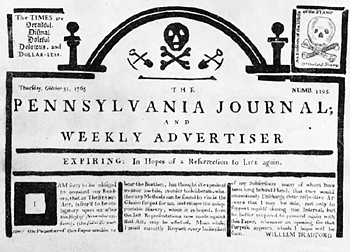
The Reno Gazette-Journal (RGJ) recently decided to lock themselves behind a wall and it will cost you at least $12/month to see what they have hidden. Does anyone else see the problem with this business model?

Allow me to reconstruct the history of news media in America to understand why this is a death sentence to the RGJ.

In the 1800’s newspapers owned the information world

1700-1900
In the 1700’s, newspapers became the source of community news. These newspapers often portrayed a political view, but were THE source of information in a society where travel was limited and information scarce. Writers and editors often became key figures in the social and political structure as the gatekeepers of what would be printed.

Radio was faster, but newspapers were corporeal

1900’s
The invention of radio and television gave new options to the public on how they accessed news. The radio offered broadcast news that reached more people faster; however, newspapers remained the source of news because it existed in corporeal form. News transmitted on radio waves disappeared if a person wasn’t in front of the radio during the broadcast. Newspapers; however, almost always gave more a more in-depth account of the events.

Television came shortly after radio and added the exciting features of seeing the reporter and moving images of events; however, newspapers continued to be the best source of significant events.

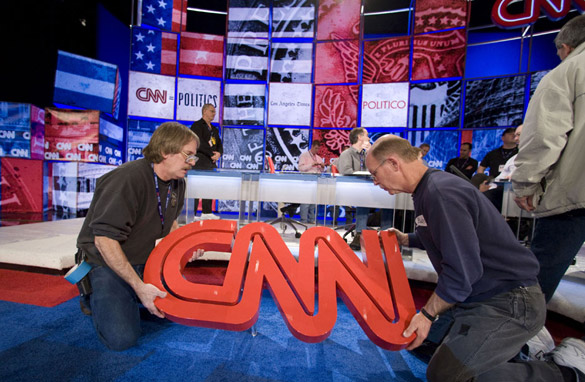
CNN was to newspapers what Wal-Mart was to Mom & Pop stores

1980
CNN was the first real threat to newspapers. It offered news 24/7/365 and it often relayed events in progress. People no longer had to wait for a newspaper’s version that would come the next day. The newspaper still had the corporeal advantage because CNN would eventually move on to the other news while newspapers could be read anytime. Newspapers also still gave more in-depth reporting on local news issues.

1995
It wasn’t until the creation of the Internet that newspapers faced a challenge that would threaten their existence. The public use of the Internet stripped newspapers of almost every advantage they held. News was not only reported, it was discussed and people reacted in real-time. With the development of the Google search engine topics could be accessed and researched at any time anywhere there was Internet access. The news was no longer filtered and limited to what an editor thought people should know, but rather raw information reached individuals who made their own decisions on what was significant to them.

Reporters who spent years in college and thousands of dollars in tuition and books now found themselves competing against bloggers who had no editors to please. Reporters might get the story and accurately report it to their community but in a real-time world their information was just following up to what people already knew. Newspapers have adapted by presenting an online version of the information that will be in the next day’s paper and that has helped writers compete and be read; however, investors want profit and that is the heart of the dilemma.

The Reno Gazette-Journal has decided that they will create demand and increase revenue by limiting access. That is a rational position to take if you have a product that has significant value and demand, but newspapers and their value appeals to a diminishing demographic. Older white males are dying off at an incredibly rapid pace and newspapers have little demand or value to younger, non-white, non-male demographics. How does RGJ expect to gain new readers by charging for access who have free access to local online news through three Reno television news station’s webpages?

There is another problem with RGJ’s decision that may impact the quality of writing. A writer for RGJ has to accept that their audience will be extremely limited. Blogs will exist for decades and are be searchable to anyone in the world. An RGJ reporters work is locked away behind a wall forever. Who wants to dedicate their life to writing and have it unread? Over time writers will have to decide how much damage RGJ is doing to their career by locking their work behind a pay wall. Once the good writers are gone, what value will the Reno Gazette-Journal have to anyone, paying or otherwise?

A Question of Ethics

02 Tuesday Nov 2010

Posted by Paul Kiser in Branding, Business, Communication, Crisis Management, Customer Relations, Customer Service, Employee Retention, Ethics, History, Honor, Human Resources, Management Practices, Passionate People, Pride, Public Relations, Relationships, Respect, Rotary

≈ 3 Comments

Tags

Blogging, Blogs, Employment, Ethics, Executive Management, Management Practices, Public Relations, Rotary, Seminars, speakers

by Paul Kiser
USA PDT  [Twitter: ] [Facebook] [LinkedIn] [Skype:kiserrotary or 775.624.5679]

Paul Kiser

Business ethics have waxed and waned over the centuries, but recently we have observed a severe lack of ethical conduct on a large-scale in recent years. The most recent world-wide economic crisis was triggered by years of unethical business practices that nearly put the United States in its first depression in almost a century. In hindsight the questionable business practices were often created by a subtle system of pressuring employees to take actions that were demanded by executives and managers in order to improve earnings for stockholders. This type of ethical dilemma often leaves no one person to blame, and even those involved sometimes do not realize that they are participating in inappropriate and/or unethical acts.

I have been caught in ethical dilemmas that created a moral challenge for me and in one situation I lost a stream of revenue in a seemingly no win scenario.

For a time I assisted a seminar speaker who was considered to be an expert in his field. He hired me to participate in group activities during his seminars.  Occasionally, he would ask me to update or write scenarios for his seminars. In one case I based the scenario on someone I knew, but I added the possibility of suicide.  The scenario was also combined with a possibility of doing harm to someone else.  We used the scenario in one of his seminars and it went very well.

Bigger horns make the bull seem smaller...just like some consultants

A few weeks later we used the same scenario, with minor revisions, with another client. Interestingly enough, the night before the seminar, the speaker  told me that someone else had just written the scenario. However, when I read it I realized that it was the same one I had written for him a few weeks earlier. When I mentioned to him that I was familiar with this scenario and tactfully reminded him that I had been the original author he quickly acknowledged it and moved on.

The next day exercise went well and afterward the participants were given the opportunity to discuss the activity. Participants began asking him about what happened in real life to this person.  Instead of explaining that this was a fictional scenario based on a combination of multiple real situations, the speaker began explaining that in the real life situation that the person did indeed kill himself.  He continued to answer more questions that were also fabrications, but passed off as his ‘research’.  Afterwards I did not mention anything to him about his handling of the post-activity questions.  He was hiring me to assist him, not criticize him and so I did not pursue it with him.

He had already hired me to work with two more clients in the next few weeks and at both he insisted that I stay out of the room, except during the group activity. He stressed that it was not good for his clients to ‘get to know me’ too well.  He also did not schedule me for any more work with his clients.

Later I tried to understand what I might have done to cause an abrupt end to our relationship. He and his clients raved about my work. I then realized that the sudden changes occurred after I witnessed his unethical handling of questions in the previous seminar. Apparently it had a significant impact on him that I observed his breach of trust with his client and that earned me a permanent seat on the bench.

Perhaps I should have confronted him, but I think that would have just made him mad, with the same result.  It was a good lesson: A lack of ethics by one person…sucks.

More Articles

Business: Public Relations, Management, and Social Media Related

  • HR/Security Hot Topic: Should you watch your employee’s personal Internet activities? (Facebook, MySpace, Twitter, etc.)
  • Relationship Typing: 3 factors that affect the quality and depth of friendship (Part I)
  • Starbucks Re-Imagines the business … again
  • Your Privacy Rights on the Internet: Read before you write
  • Social Media 3Q Update: Who uses Facebook, Twitter,LinkedIn, and MySpace?
  • Richmond Embassy Suites: The best at true Hospitality
  • Dear Business Person: It’s 2010, please update your brain.
  • Selling watered-down beer: The best spin campaign in advertising
  • Communication: Repetition of message does not increase awareness
  • Is it time to fire yourself?
  • Millennium Hotel: Go away, spend your money elsewhere
  • Rogue Flight Attendant shows his arrogance, Airlines dislike for the customer
  • 2Q 2010 Social Media Tools: Facebook/Twitter sail on, LinkedIn/MySpace don’t
  • War Declared on Social Media: Desperate Acts of Traditional Media
  • Pay It Middle: The Balance between Too Much and Too Little Compensation
  • Mega Executive Pay Leads to Poor Performance
  • Relationships and Thin-Slicing: Why the other person knows what you’re really thinking
  • Browser Wars: Internet Explorer losing, Google Chrome gaining ground
  • WiFi on Southwest Airlines: Is it ‘Shovel Ready’?
  • Starbucks makes a smart move: Free WiFi
  • Foul Play: FIFA shows what less regulation offers to business
  • The Shock of the McChrystal Story: The story is over before the article is published
  • Tony Hayward: The very model of a modern Major General
  • Epic Fail: PR ‘Experts’ don’t get Twitter
  • King of Anything: Social Media vs Traditional Media
  • Twitter is the Thunderstorm of World Thought
  • Signs of the Times
  • How Social Interactive Media Could Transform Higher Education
  • How to Become a Zen Master of Social Media
  • Death of All Salesmen!
  • Aristotle’s General Rules on Social Media
  • Social Media:  What is it and Why Should You Care?
  • Social Media 2020:  Keep it Personal
  • Social Media 2020:  Who Shouldn’t Be Teaching Social Media
  • Social Media 2020:  Public Relations 2001 vs Social Media Relations 2010
  • Social Media 2020: Who Moved My Public Relations?
  • Publishing Industry to End 2012
  • Who uses Facebook, Twitter, MySpace & LinkedIn?
  • Fear of Public Relations
  • Dissatisfiers: Why John Quit
  • Facebook, Twitter, LinkedIn…Oh My!
  • Does Anybody Really Understand PR?

Rotary Related

  • Rotary@105: 7 Relationship types that affect membership retention (Part II)
  • What most non-Rotarians don’t know about Rotary
  • Rotary@105: Making Rotary Sexy
  • Rotary@105: Grieving change
  • How Rotary can..must..will plug into Social Media
  • Rotary PR: Disrespecting the Club President is a PR/Membership issue
  • Rotary Membership/Public Image Challenge
  • Rotary New Year: Retread or Renaissance?
  • Rotary@105: A young professionals networking club?
  • One Rotary Center: A home for 1.2 million members
  • Rotary@105:  What BP Could Learn from the 1914 Rotary Code of Ethics
  • Rotary Magazine Dilemma Reveals the Impact of Social Media
  • Rotary@105:  April 24th – Donald M. Carter Day
  • Rotary@105:  What kind of animal is Rotary International?
  • Rotary:  The Man in the Yellow Hat as the Ideal Club President?
  • Rotary@105:  Our 1st Rotary Club Dropout
  • Rotary Public Relations and Membership: Eight Steps to a Team Win
  • Rotary: All Public Relations is Local
  • Best Practices:  Become a Target!

Science Related

  • Negative Time: The Self-fulfilling Prophesy a Scientific Possibility?
  • Physics in 2010: The more we understand, the less we know

Personal Experience Related

  • Knowing when it’s over or beyond over
  • Dear Teresa Laraba, SVP of Southwest Airlines Customer Service
  • Things I didn’t know about being a Father to a four-year-old boy
  • Riding Reno: The Ladies of Reno
  • Up in the air down in Texas
  • I mow my lawn because…
  • Nevada I-580: An Interstate by any other name
  • Nevada’s oldest brewery opens a Reno location
  • Two Barbecues and a Wedding
  • Car Dealership Re-Imagines Customer Service

Our Country and History Related

  • The Quality of Mercy: Tea Party seeks its pound of flesh
  • I’m not angry, nor am I stupid … and I voted
  • Point of Confusion
  • What I’m not buying this year
  • Nevada: State of Disaster
  • Thank you, Mr. President
  • America’s Hostile Takeover of Mexico

HR/Security Hot Topic: Should you watch your employee’s personal Internet activities? (Facebook, MySpace, Twitter, etc.)

28 Thursday Oct 2010

Posted by Paul Kiser in Branding, Business, Communication, Consulting, Crisis Management, Customer Service, Employee Retention, Ethics, Government Regulation, Honor, Human Resources, Information Technology, Internet, Management Practices, Pride, Privacy, Public Relations, Re-Imagine!, Recreation, Relationships, Respect, Rotary, SEO, Social Interactive Media (SIM), Social Media Relations, Violence in the Workplace, Website

≈ 1 Comment

Tags

background checks, Blogging, Blogs, case law, Employee evaluations, Employee privacy, Employer liability, Employment, Employment Law, employment verification, Executive Management, Facebook, HR, Human Resources, Internet, lawsuit, LinkedIn, Management Practices, monitoring employees, New Business World, performance reviews, Privacy, Privacy on the Internet, Public Image, Public Relations, Publicity, Rotary, security, Social Media, Social Networking

by Paul Kiser
USA PDT  [Twitter: ] [Facebook] [LinkedIn] [Skype:kiserrotary or 775.624.5679]

Paul Kiser

One of the hottest topics in the world of employment is whether or not an employer should monitor his or her Internet activities. This is a subject I’ve written about before, but it is an issue that is still emerging and has yet to have any significant case-law to provide guidance to employers.

It is well-known that a large number of employers perform a ‘Google’ search on the Internet before they hire an applicant, but now companies are feeling the need to continue to monitor an employee’s Internet activities after hire. Many experts, especially those involved in employee liability prevention support an employer’s right to monitor an employee’s Internet activities even when those activities occur off-duty and offsite. The logic is that it is prudent to aware of anything an employee might say or do that could embarrass the employer, or any indication that the employee might take an action that might involve the company and its facilities.

These are rational arguments, but I believe that monitoring an employee’s activities is opening the door to bigger liability issues. Sound odd? Here’s the scenario I see happening in three Acts.

Should the Employer be Big Brother?

Act One: A busy-body employer or manager casually checks his or her employee’s Facebook, MySpace, and/or Twitter accounts. The employer might even do a Google search on an employee from time to time. When the employer or manager finds something that they see as objectionable they confront the guilty employee and take the proper action. It becomes known throughout the company (and the employee’s family) that the employer monitors its employee’s personal Internet activity.

Act Two: An employee has been reprimanded for content they have posted on the Internet. Six months later the same employee posts information on the Internet that he  is considering suicide and describes in detail how he is going to kill himself. Two weeks later the employee carries out the suicide as described. The family is aware the employer monitors the employee’s Internet activity and sues the employer claiming that the employer should have reasonably been aware of the planned suicide and taken action.

Act Three: Companies find themselves with two polar opposite choices. Either the company does not monitor their employee’s Internet activities or the company assigns resources to constantly monitor the Internet on every employee to insure they capture any relevant data for which the company should take action.

I was trained in Human Resources under the policy that what the employee did on her or his own time was off-limits to the employer unless it had a direct impact the job performance. That policy has had to be adjusted in a world where work and off-duty time can often be hard to differentiate, and where drug testing, researching credit scores and background checks have become standard operating procedure for many companies. However, an employee’s personal Internet activities is almost impossible to track in a society that is increasing involved in hours of daily online social networking. The question is whether an employer wants to be liable for monitoring its employees 24/7/365 and being held responsible for taking the appropriate action, or whether the employer would be better served by not being sucked into liability issues that can be avoided by simply not playing the role of Big Brother ?

I know which strategy I would recommend to my clients.

More Articles

Business: Public Relations, Management, and Social Media Related

  • Relationship Typing: 3 factors that affect the quality and depth of friendship (Part I)
  • Starbucks Re-Imagines the business … again
  • Your Privacy Rights on the Internet: Read before you write
  • Social Media 3Q Update: Who uses Facebook, Twitter,LinkedIn, and MySpace?
  • Richmond Embassy Suites: The best at true Hospitality
  • Dear Business Person: It’s 2010, please update your brain.
  • Selling watered-down beer: The best spin campaign in advertising
  • Communication: Repetition of message does not increase awareness
  • Is it time to fire yourself?
  • Millennium Hotel: Go away, spend your money elsewhere
  • Rogue Flight Attendant shows his arrogance, Airlines dislike for the customer
  • 2Q 2010 Social Media Tools: Facebook/Twitter sail on, LinkedIn/MySpace don’t
  • War Declared on Social Media: Desperate Acts of Traditional Media
  • Pay It Middle: The Balance between Too Much and Too Little Compensation
  • Mega Executive Pay Leads to Poor Performance
  • Relationships and Thin-Slicing: Why the other person knows what you’re really thinking
  • Browser Wars: Internet Explorer losing, Google Chrome gaining ground
  • WiFi on Southwest Airlines: Is it ‘Shovel Ready’?
  • Starbucks makes a smart move: Free WiFi
  • Foul Play: FIFA shows what less regulation offers to business
  • The Shock of the McChrystal Story: The story is over before the article is published
  • Tony Hayward: The very model of a modern Major General
  • Epic Fail: PR ‘Experts’ don’t get Twitter
  • King of Anything: Social Media vs Traditional Media
  • Twitter is the Thunderstorm of World Thought
  • Signs of the Times
  • How Social Interactive Media Could Transform Higher Education
  • How to Become a Zen Master of Social Media
  • Death of All Salesmen!
  • Aristotle’s General Rules on Social Media
  • Social Media:  What is it and Why Should You Care?
  • Social Media 2020:  Keep it Personal
  • Social Media 2020:  Who Shouldn’t Be Teaching Social Media
  • Social Media 2020:  Public Relations 2001 vs Social Media Relations 2010
  • Social Media 2020: Who Moved My Public Relations?
  • Publishing Industry to End 2012
  • Who uses Facebook, Twitter, MySpace & LinkedIn?
  • Fear of Public Relations
  • Dissatisfiers: Why John Quit
  • Facebook, Twitter, LinkedIn…Oh My!
  • Does Anybody Really Understand PR?

Rotary Related

  • Rotary@105: 7 Relationship types that affect membership retention (Part II)
  • What most non-Rotarians don’t know about Rotary
  • Rotary@105: Making Rotary Sexy
  • Rotary@105: Grieving change
  • How Rotary can..must..will plug into Social Media
  • Rotary PR: Disrespecting the Club President is a PR/Membership issue
  • Rotary Membership/Public Image Challenge
  • Rotary New Year: Retread or Renaissance?
  • Rotary@105: A young professionals networking club?
  • One Rotary Center: A home for 1.2 million members
  • Rotary@105:  What BP Could Learn from the 1914 Rotary Code of Ethics
  • Rotary Magazine Dilemma Reveals the Impact of Social Media
  • Rotary@105:  April 24th – Donald M. Carter Day
  • Rotary@105:  What kind of animal is Rotary International?
  • Rotary:  The Man in the Yellow Hat as the Ideal Club President?
  • Rotary@105:  Our 1st Rotary Club Dropout
  • Rotary Public Relations and Membership: Eight Steps to a Team Win
  • Rotary: All Public Relations is Local
  • Best Practices:  Become a Target!

Science Related

  • Negative Time: The Self-fulfilling Prophesy a Scientific Possibility?
  • Physics in 2010: The more we understand, the less we know

Personal Experience Related

  • Knowing when it’s over or beyond over
  • Dear Teresa Laraba, SVP of Southwest Airlines Customer Service
  • Things I didn’t know about being a Father to a four-year-old boy
  • Riding Reno: The Ladies of Reno
  • Up in the air down in Texas
  • I mow my lawn because…
  • Nevada I-580: An Interstate by any other name
  • Nevada’s oldest brewery opens a Reno location
  • Two Barbecues and a Wedding
  • Car Dealership Re-Imagines Customer Service

Our Country and History Related

  • I’m not angry, nor am I stupid … and I voted
  • Point of Confusion
  • What I’m not buying this year
  • Nevada: State of Disaster
  • Thank you, Mr. President
  • America’s Hostile Takeover of Mexico

Rotary@105: 7 Relationship types that affect membership retention (Part II)

27 Wednesday Oct 2010

Posted by Paul Kiser in Branding, Business, Club Leadership, Communication, Customer Relations, Customer Service, Employee Retention, Ethics, Honor, Human Resources, Information Technology, Internet, Lessons of Life, Management Practices, Membership Recruitment, Membership Retention, Passionate People, Pride, Public Relations, Relationships, Rotary, Rotary@105, Social Interactive Media (SIM), Social Media Relations, The Tipping Point, Women

≈ 1 Comment

Tags

Alien, Blank, Blogging, Blogs, Club Members, Common Interests, Competitor, Customer Loyalty, Equality, Executive Management, Facebook, Friend, Internet, LinkedIn, Management Practices, Membership Recruitment, Membership Retention, Mentor, New Business World, Partner, Public Image, Public Relations, Rival, Rotarians, Rotary, Rotary Club, Seven Benchmark Relationships, Social Media, Social Networking, Star, Stranger, Submissive, Subordinate, The Star, Trust, Twitter, Value-added

by Paul Kiser
USA PDT  [Twitter: ] [Facebook] [LinkedIn] [Skype:kiserrotary or 775.624.5679]

Paul Kiser

NOTE: This article is a secondary article to
Relationships Typing: 3 factors that the affect quality and depth of friendship

As mentioned in the first part of this article, I have defined three factors that seem to determine the quality of my relationships. 1) Trust, 2) Common Interests and/or Experiences, 3) Equality.

By using a 21-point scale to rate each factor in various relationship types we can see how Trust (or the lack of), Common Interests and/or Experiences (or the lack of), and Equality (or the lack of) define the relationship. Below are seven types of benchmark relationships and how they might affect membership retention in a Rotary club.

Too much friendship?

The Star
We all have people who we look up to, but there are just a few people that we put on a pedestal. I see the Star relationship as one where the trust level is relatively high (+7 on a scale of -10 to +10) as well as the common interest level (+8 on a scale of -10 to +10), but we feel inferior (a -9 on a scale of -10 to +10) to this person. In this relationship the depth and quality of the relationship is usually shallow. These people are not close friends, but rather an admired acquaintance. A new member in a Rotary club might see the Club President as the Star.

The Mentor
The Mentor is a different version of the Star. The difference is that we trust the Mentor implicitly (+10) and we have a strong common interest (+9); however, we see ourselves as inferior (-6) to our Mentor. The Mentor has achieved a level of success that we hope reach and our relationship is based on a mutual effort to gain an equal level of success in the future. I think it is a mistake to believe that a Mentor relationship can be imposed. The only successful Mentor relationships I have observed are those that have occurred by a mutual agreement of both parties. In over nine years in Rotary have witnessed few successful Mentor relationships. When it does happen it is a win-win situation for both members, but the Mentor must be highly skilled and/or knowledgeable, a passionate person, and a great trainer. In addition, the ‘trainee’ must recognize the Mentor’s superior knowledge and have a desire to learn from him or her. If not, the relationship will fail.

A Partnership is not necessarily a friendship

The Partner
I see the Partner as a relationship seeking mutual benefit for both people, but without the level of trust of a Mentor relationship. In a Partner relationship the trust is conditional (0, not + or -) and the two people usually see the other as his or her  equal (0) or at least they have something of value that balances the relationship, but the common interest is high (+9). I would consider the Partner relationship to be a symbiotic or co-dependent relationship and while the relationship may seem to be a strong bond, the slightest feeling of inequality or betrayal can end the relationship. In Part I of this series I mentioned that the employer/employee relationship might be a partnership, but I also believe that some marriages can start out, or devolve into Partner type relationships. In a Rotary club a member who has established mostly Partner relationships with other members is likely to have no deep attachment to the club and likely to leave.

The Friend
Of all relationships, I think a Friend is the hardest to achieve. A quality friendship involves a high level of trust (+9) and a significant level of common interests and/or experiences (+6), but also a genuine feeling of equality (0) must exist. The trust and equality factors for a friendship are difficult for most people to offer to another person. It is a special relationship and one to be highly valued, but once achieved it is a strong bond that lasts over time and distance. If every member were to have only one other true ‘Friend’ in his or her club most members would never consider leaving.

The Rival or Competitor
A rival is a relationship, even though we usually don’t think of it as one. It is a relationship based on mistrust (-8) of another person and somewhat ironically, a relationship that includes a high level of common interests (+8). I think that while we may feel we are superior to our rival that the truth is that we are afraid that we are not, thus I give an equality rating of (+3) to a Rival relationship. The Rival relationship is one of the worst possible relationships that could develop in a Rotary club. Sooner or later the club is going to be drawn into the conflict or one or more members will leave because of it. Ironically, it is the high level of common interest that seems to set up the Rival/Competitor situation. Without the envy or jealousy caused by the common interest both people would probably ignore each other.

Common Interest can enhance a relationship, or create conflict

The Subordinate or Submissive
Note that with the Subordinate relationship I am talking about someone who sees another person as their subordinate or submissive. This can be an employer/employee type relationship, but it is any relationship where a person sees him/herself as superior (+10) to another person. The trust level is relatively high (+5) as the person with the bigger ego expects the subordinate to obey their wishes and typically there is somewhat of a common interest (+3), but not necessarily a significant level of commonality. The big problem I have seen with this type of relationship is that the target of this attitude may not feel that they should be the subordinate. In a Rotary club it is surprising easy for a club leader to see other club members as their subordinate. Nothing creates a false sense of power like a title and in a volunteer organization titles are meant to assign responsibility, not authority, but not everyone understands that concept.

The Alien or Blank
It seems somewhat pointless to talk about the lack of a relationship as a type of relationship, but the I find it interesting to understand that some people just don’t show up on our relationship radar even though we may see them on a regular basis. I didn’t fully understand this until I was in Rotary, but after a few years in a club you learn the some people can disappear in plain sight. I feel the lack of a relationship, when there realistically should be is a type of relationship and I refer to it as an Alien or Blank relationship.

The quality of Friendship
I would not argue the point that it takes two to make or break a relationship; however, I would argue that the quality and depth of any relationship is determined largely by our own attitudes, in concert with the way the other person treats us. Understanding the factors that influence a relationship is the first step to making positive changes. In a Rotary club, failing to recognize that not all relationships are constructive can have major consequences on membership retention.

In Part I of this series I talked about a facilitator at a meeting who didn’t want to dilute his ‘friendships’ with people in the Social Media. My response to him is this: friendship is more about what we bring to the table and not the method of connection. The Social Media is not a threat to good friendships, just a different way to engage in them.

More Articles

Business: Public Relations, Management, and Social Media Related

  • Starbucks Re-Imagines the business … again
  • Your Privacy Rights on the Internet: Read before you write
  • Social Media 3Q Update: Who uses Facebook, Twitter,LinkedIn, and MySpace?
  • Richmond Embassy Suites: The best at true Hospitality
  • Dear Business Person: It’s 2010, please update your brain.
  • Selling watered-down beer: The best spin campaign in advertising
  • Communication: Repetition of message does not increase awareness
  • Is it time to fire yourself?
  • Millennium Hotel: Go away, spend your money elsewhere
  • Rogue Flight Attendant shows his arrogance, Airlines dislike for the customer
  • 2Q 2010 Social Media Tools: Facebook/Twitter sail on, LinkedIn/MySpace don’t
  • War Declared on Social Media: Desperate Acts of Traditional Media
  • Pay It Middle: The Balance between Too Much and Too Little Compensation
  • Mega Executive Pay Leads to Poor Performance
  • Relationships and Thin-Slicing: Why the other person knows what you’re really thinking
  • Browser Wars: Internet Explorer losing, Google Chrome gaining ground
  • WiFi on Southwest Airlines: Is it ‘Shovel Ready’?
  • Starbucks makes a smart move: Free WiFi
  • Foul Play: FIFA shows what less regulation offers to business
  • The Shock of the McChrystal Story: The story is over before the article is published
  • Tony Hayward: The very model of a modern Major General
  • Epic Fail: PR ‘Experts’ don’t get Twitter
  • King of Anything: Social Media vs Traditional Media
  • Twitter is the Thunderstorm of World Thought
  • Signs of the Times
  • How Social Interactive Media Could Transform Higher Education
  • How to Become a Zen Master of Social Media
  • Death of All Salesmen!
  • Aristotle’s General Rules on Social Media
  • Social Media:  What is it and Why Should You Care?
  • Social Media 2020:  Keep it Personal
  • Social Media 2020:  Who Shouldn’t Be Teaching Social Media
  • Social Media 2020:  Public Relations 2001 vs Social Media Relations 2010
  • Social Media 2020: Who Moved My Public Relations?
  • Publishing Industry to End 2012
  • Who uses Facebook, Twitter, MySpace & LinkedIn?
  • Fear of Public Relations
  • Dissatisfiers: Why John Quit
  • Facebook, Twitter, LinkedIn…Oh My!
  • Does Anybody Really Understand PR?

Rotary Related

  • What most non-Rotarians don’t know about Rotary
  • Rotary@105: Making Rotary Sexy
  • Rotary@105: Grieving change
  • How Rotary can..must..will plug into Social Media
  • Rotary PR: Disrespecting the Club President is a PR/Membership issue
  • Rotary Membership/Public Image Challenge
  • Rotary New Year: Retread or Renaissance?
  • Rotary@105: A young professionals networking club?
  • One Rotary Center: A home for 1.2 million members
  • Rotary@105:  What BP Could Learn from the 1914 Rotary Code of Ethics
  • Rotary Magazine Dilemma Reveals the Impact of Social Media
  • Rotary@105:  April 24th – Donald M. Carter Day
  • Rotary@105:  What kind of animal is Rotary International?
  • Rotary:  The Man in the Yellow Hat as the Ideal Club President?
  • Rotary@105:  Our 1st Rotary Club Dropout
  • Rotary Public Relations and Membership: Eight Steps to a Team Win
  • Rotary: All Public Relations is Local
  • Best Practices:  Become a Target!

Science Related

  • Negative Time: The Self-fulfilling Prophesy a Scientific Possibility?
  • Physics in 2010: The more we understand, the less we know

Personal Experience Related

  • Knowing when it’s over or beyond over
  • Dear Teresa Laraba, SVP of Southwest Airlines Customer Service
  • Things I didn’t know about being a Father to a four-year-old boy
  • Riding Reno: The Ladies of Reno
  • Up in the air down in Texas
  • I mow my lawn because…
  • Nevada I-580: An Interstate by any other name
  • Nevada’s oldest brewery opens a Reno location
  • Two Barbecues and a Wedding
  • Car Dealership Re-Imagines Customer Service

Our Country and History Related

  • I’m not angry, nor am I stupid … and I voted
  • Point of Confusion
  • What I’m not buying this year
  • Nevada: State of Disaster
  • Thank you, Mr. President
  • America’s Hostile Takeover of Mexico

Relationship Typing: 3 factors that affect quality and depth of friendship (Part I)

27 Wednesday Oct 2010

Posted by Paul Kiser in Branding, Business, Club Leadership, Communication, Employee Retention, Ethics, Honor, Information Technology, Internet, Lessons of Life, Management Practices, Membership Recruitment, Membership Retention, Passionate People, Public Relations, Relationships, Respect, Rotary, Social Interactive Media (SIM), Social Media Relations

≈ 1 Comment

Tags

Blogging, Blogs, Club Members, Depth of Relationships, Employee evaluations, Employment, Executive Management, Facebook, Friendship, Internet, LinkedIn, Management Practices, Membership Recruitment, Membership Retention, Public Image, Public Relations, Publicity, Quality of Relationships, Relationship Typing, Rotarians, Rotary, Social Media, Social Networking, Twitter

by Paul Kiser
USA PDT  [Twitter: ] [Facebook] [LinkedIn] [Skype:kiserrotary or 775.624.5679]

Paul Kiser

Several weeks ago I was at a Rotary District Leadership training meeting and I made a comment that the Social Media tools like Facebook and Twitter allow us to have more friends and more connections to other people. I was shocked into silence when one of the facilitators said that he didn’t want that. He explained that his friends were those very close, very special people that he choose to be friends with, and that he didn’t want to dilute his social circle with people from the Social Media.

It was an interesting point and it caused me to start thinking about the quality and depth of the relationships of the people around me. In several decades of business, procurement of two bachelor’s degrees, and almost a decade in Rotary I have learned that not everyone is my ‘friend’ even though I may have frequent contact with them. All of us have people who are important to us and we all have people who we just don’t like, but until now I hadn’t focused on the factors that seem to define my relationships.

Understanding what shapes my attitude is a significant step towards taking an active role in building better and less conflictive relationships with the people around me. For this reason I wanted to explore what determines what type of relationship we have with another person.

I have come up with three factors that seem to determine the quality of my relationships. 1) Trust, 2) Common Interests and/or Experiences, 3) Equality.

Trust, Common Interest, and Equality

The trust factor seems obvious, but I find this to be a complex issue. Trust can be absolute, non-existent, or conditional. For example, I would propose that many employer/employee relationships are based on a conditional trust where both parties are on the constant guard of the other person betraying his or her trust.

The common interest and/or experiences factor may also seem obvious; however, sometimes common interests or experiences can create feelings of jealousy, envy, rivalry, or disgust. Just because two people have a lot in common doesn’t result in a bond of appreciation.

The final factor is not as obvious. My experience is that the level of equality felt by a person is a significant factor in determining the quality and depth of a relationship. In an organization of volunteers like a Rotary club we often mistakenly believe that everyone is equal, but my experience has been that the relationships that form in a typical Rotary club are often shaped, at least in part, by one person’s feeling of superiority over another.

Using these three factors I have been able to better define the quality and depth of my relationships. Because each of  these factors have a positive and negative component, I use an 21-point scale (-10, -9, -8, … -1, 0, +1, … +8, +9, +10) to score their significance. For example a Relationship Type might be low in trust (-7), high in common interest (+8), and neutral in equality (0). While all relationships reflect a continuum of these factors I have defined seven benchmark relationship types and have scored each factor on the 21-point scale.

In part two of this article I will define the seven relationship types and their scoring. I also will discuss how the relationship type might impact membership retention in a Rotary club.

Click on the link below for the continuing article
Rotary@105: Relationship types affect membership retention

More Articles

Business: Public Relations, Management, and Social Media Related

  • Starbucks Re-Imagines the business … again
  • Your Privacy Rights on the Internet: Read before you write
  • Social Media 3Q Update: Who uses Facebook, Twitter,LinkedIn, and MySpace?
  • Richmond Embassy Suites: The best at true Hospitality
  • Dear Business Person: It’s 2010, please update your brain.
  • Selling watered-down beer: The best spin campaign in advertising
  • Communication: Repetition of message does not increase awareness
  • Is it time to fire yourself?
  • Millennium Hotel: Go away, spend your money elsewhere
  • Rogue Flight Attendant shows his arrogance, Airlines dislike for the customer
  • 2Q 2010 Social Media Tools: Facebook/Twitter sail on, LinkedIn/MySpace don’t
  • War Declared on Social Media: Desperate Acts of Traditional Media
  • Pay It Middle: The Balance between Too Much and Too Little Compensation
  • Mega Executive Pay Leads to Poor Performance
  • Relationships and Thin-Slicing: Why the other person knows what you’re really thinking
  • Browser Wars: Internet Explorer losing, Google Chrome gaining ground
  • WiFi on Southwest Airlines: Is it ‘Shovel Ready’?
  • Starbucks makes a smart move: Free WiFi
  • Foul Play: FIFA shows what less regulation offers to business
  • The Shock of the McChrystal Story: The story is over before the article is published
  • Tony Hayward: The very model of a modern Major General
  • Epic Fail: PR ‘Experts’ don’t get Twitter
  • King of Anything: Social Media vs Traditional Media
  • Twitter is the Thunderstorm of World Thought
  • Signs of the Times
  • How Social Interactive Media Could Transform Higher Education
  • How to Become a Zen Master of Social Media
  • Death of All Salesmen!
  • Aristotle’s General Rules on Social Media
  • Social Media:  What is it and Why Should You Care?
  • Social Media 2020:  Keep it Personal
  • Social Media 2020:  Who Shouldn’t Be Teaching Social Media
  • Social Media 2020:  Public Relations 2001 vs Social Media Relations 2010
  • Social Media 2020: Who Moved My Public Relations?
  • Publishing Industry to End 2012
  • Who uses Facebook, Twitter, MySpace & LinkedIn?
  • Fear of Public Relations
  • Dissatisfiers: Why John Quit
  • Facebook, Twitter, LinkedIn…Oh My!
  • Does Anybody Really Understand PR?

Rotary Related

  • What most non-Rotarians don’t know about Rotary
  • Rotary@105: Making Rotary Sexy
  • Rotary@105: Grieving change
  • How Rotary can..must..will plug into Social Media
  • Rotary PR: Disrespecting the Club President is a PR/Membership issue
  • Rotary Membership/Public Image Challenge
  • Rotary New Year: Retread or Renaissance?
  • Rotary@105: A young professionals networking club?
  • One Rotary Center: A home for 1.2 million members
  • Rotary@105:  What BP Could Learn from the 1914 Rotary Code of Ethics
  • Rotary Magazine Dilemma Reveals the Impact of Social Media
  • Rotary@105:  April 24th – Donald M. Carter Day
  • Rotary@105:  What kind of animal is Rotary International?
  • Rotary:  The Man in the Yellow Hat as the Ideal Club President?
  • Rotary@105:  Our 1st Rotary Club Dropout
  • Rotary Public Relations and Membership: Eight Steps to a Team Win
  • Rotary: All Public Relations is Local
  • Best Practices:  Become a Target!

Science Related

  • Negative Time: The Self-fulfilling Prophesy a Scientific Possibility?
  • Physics in 2010: The more we understand, the less we know

Personal Experience Related

  • Knowing when it’s over or beyond over
  • Dear Teresa Laraba, SVP of Southwest Airlines Customer Service
  • Things I didn’t know about being a Father to a four-year-old boy
  • Riding Reno: The Ladies of Reno
  • Up in the air down in Texas
  • I mow my lawn because…
  • Nevada I-580: An Interstate by any other name
  • Nevada’s oldest brewery opens a Reno location
  • Two Barbecues and a Wedding
  • Car Dealership Re-Imagines Customer Service

Our Country and History Related

  • I’m not angry, nor am I stupid … and I voted
  • Point of Confusion
  • What I’m not buying this year
  • Nevada: State of Disaster
  • Thank you, Mr. President
  • America’s Hostile Takeover of Mexico

Richmond Embassy Suites: The best at true Hospitality!

01 Friday Oct 2010

Posted by Paul Kiser in Branding, Business, Customer Relations, Customer Service, Employee Retention, Ethics, Honor, Information Technology, Internet, Lessons of Life, Management Practices, Passionate People, Pride, Public Relations, Random, Re-Imagine!, Recreation, Relationships, Respect, Rotary, Rotary@105, The Tipping Point, Tom Peters, Travel, Women

≈ 1 Comment

Tags

Blogging, Blogs, Customer Loyalty, Embassy Suites, Executive Management, Free Internet, Free WiFi, Hospitality, hotels, HR, Internet, Kathleen Lyons, Management Practices, Motels, New Business World, Public Image, Public Relations, Publicity, Re-Imagine!, Richmond, Richmond VA, Rotary, Starbucks, teamwork, Value-added, Virginia

by Paul Kiser
USA PDT  [Twitter: ] [Facebook] [LinkedIn] [Skype:kiserrotary or 775.624.5679]

Paul Kiser

In August I stayed in hotels in seven different cities (Dallas, TX; Bloomington, IL; Chicago,IL; Minneapolis, MN; Norfolk, VA; Richmond, VA; and Virginia Beach, VA..) In a previous post I expressed my displeasure with pay-for-Internet at the Millennium Hotel* in Minneapolis, which was slightly unfair as the hotel was a pleasant, although completely expected, experience. As a people warehouse the Millennium Hotel fits the mold that is typical of most business traveler-type hotels. However, out of the seven hotels of which I was a guest, there was one that made a big impression on me, the Embassy Suites in Richmond, Virginia.

(*Millennium Hotel: Go Away)

The main entrance the Embassy Suites in Richmond

The Embassy Suites hotel in Richmond, Virginia is not a flashy, Vegas-type hotel. From the outside it is a modern, yet modest building tucked back from busy streets; however, access to the Interstate is nearby. Like many hotels it is surrounded by a massive asphalt parking lot; however, the entrance is behind a landscaped island of trees. The great thing about the foliage is that it creates the sense from the outside that this hotel is not just a people warehouse like so many others.

After entering the hotel one doesn’t have to hunt for the Registration Desk as it is positioned in such a way that it oversees the entrance area, but it doesn’t intrude into the path of a guest walking to their room from the parking lot.

The Inner Courtyard

The striking feature of the hotel is the inner courtyard. I have seen this design before, but it was a refreshing change from institutional interior designs of most people warehouses. The open interior gives a community feel to the hotel rather than the impression that you just walked into a U-Store-It facility, as is the feel of most hotels. The interior landscaping and flowing water features create a tropical environment. This hotel was number six for me during my August travels and it was a refreshing change from the five previous corporate institutions of I had visited.

My room was also vastly different from my previous guest experiences. This was a true ‘suite’ and not just a room with a bed. There was a clearly defined living space with a television, desk, couch, and bar area. The bedroom was in the rear of the suite with a door that would allow privacy if two people were in the room and one wanted to watch television or work while the other one slept. The bedroom had a counter with running water and its own television. The bathroom was in the transition area between the living room and the bedroom offering easy access from both rooms. The entire suite is a brilliant design.

Of course the Internet was free (my minimum requirement) and I had no problems making a connection. If needed, I could have easily made the suite my home base. It is a comfortable living and working environment. I would have had no concerns about hosting small meetings in my room. I had everything I needed except for my Starbucks Chai Tea.

The Embassy Suite's Dining/Reception Area

One of my issues with most hotels is the assumption that people don’t want to interact with other people when they stay in a hotel. I’m as reclusive as most, but to visit a city and never come out of my hotel room is what creates that ‘warehouse feeling’.

At the Richmond Embassy Suites the open feel of the courtyard was put to good use by encouraging guests to congregate twice a day for a free manager’s reception each evening and free breakfast each morning. The reception offered adult and non-alcoholic beverages along with a variety of choices of snack items (hors devours.) The breakfast was as good or better than the breakfasts I’ve eaten at eaten at most Sunrise Rotary Clubs. Those who have eaten a breakfast at a Rotary Club may think that may not be saying much, but I typically pay $14 to $15 to eat a Rotary breakfast and this was free. The free gatherings were the most ‘value-added’ service I have experienced in a hotel.

From the few interactions I had with the hotel staff it was obvious that the Chief Executive of this property, Kathleen Lyons, and her staff understood the meaning of the word ‘guest’. I was always treated with respect and a smile. It was apparent that they were pleased that I choose their hotel over the other options in Richmond.

Giving great customer service is not that mysterious, but it requires that everyone from the bottom (no offense intended, Ms. Lyons, but in my world that means you) up to the top (the maintenance and housekeeping staff) must enjoy what they do and enjoy working with people. It was clear that the Embassy Suites in Richmond is not run by ‘management’, but managed through leadership. Bravo to Ms. Lyons and her team!

More Articles

Our Country and History Related

  • Nevada: State of Disaster
  • Thank you, Mr. President
  • America’s Hostile Takeover of Mexico

Business: Public Relations, Management, and Social Media Related

  • Dear Business Person: It’s 2010, please update your brain.
  • Selling watered-down beer: The best spin campaign in advertising
  • Communication: Repetition of message does not increase awareness
  • Is it time to fire yourself?
  • Millennium Hotel: Go away, spend your money elsewhere
  • Rogue Flight Attendant shows his arrogance, Airlines dislike for the customer
  • 2Q 2010 Social Media Tools: Facebook/Twitter sail on, LinkedIn/MySpace don’t
  • War Declared on Social Media: Desperate Acts of Traditional Media
  • Pay It Middle: The Balance between Too Much and Too Little Compensation
  • Mega Executive Pay Leads to Poor Performance
  • Relationships and Thin-Slicing: Why the other person knows what you’re really thinking
  • Browser Wars: Internet Explorer losing, Google Chrome gaining ground
  • WiFi on Southwest Airlines: Is it ‘Shovel Ready’?
  • Starbucks makes a smart move: Free WiFi
  • Foul Play: FIFA shows what less regulation offers to business
  • The Shock of the McChrystal Story: The story is over before the article is published
  • Tony Hayward: The very model of a modern Major General
  • Epic Fail: PR ‘Experts’ don’t get Twitter
  • King of Anything: Social Media vs Traditional Media
  • Twitter is the Thunderstorm of World Thought
  • Signs of the Times
  • How Social Interactive Media Could Transform Higher Education
  • How to Become a Zen Master of Social Media
  • Death of All Salesmen!
  • Aristotle’s General Rules on Social Media
  • Social Media:  What is it and Why Should You Care?
  • Social Media 2020:  Keep it Personal
  • Social Media 2020:  Who Shouldn’t Be Teaching Social Media
  • Social Media 2020:  Public Relations 2001 vs Social Media Relations 2010
  • Social Media 2020: Who Moved My Public Relations?
  • Publishing Industry to End 2012
  • Who uses Facebook, Twitter, MySpace & LinkedIn?
  • Fear of Public Relations
  • Dissatisfiers: Why John Quit
  • Facebook, Twitter, LinkedIn…Oh My!
  • Does Anybody Really Understand PR?

Rotary Related

  • What most non-Rotarians don’t know about Rotary
  • Rotary@105: Making Rotary Sexy
  • Rotary@105: Grieving change
  • How Rotary can..must..will plug into Social Media
  • Rotary PR: Disrespecting the Club President is a PR/Membership issue
  • Rotary Membership/Public Image Challenge
  • Rotary New Year: Retread or Renaissance?
  • Rotary@105: A young professionals networking club?
  • One Rotary Center: A home for 1.2 million members
  • Rotary@105:  What BP Could Learn from the 1914 Rotary Code of Ethics
  • Rotary Magazine Dilemma Reveals the Impact of Social Media
  • Rotary@105:  April 24th – Donald M. Carter Day
  • Rotary@105:  What kind of animal is Rotary International?
  • Rotary:  The Man in the Yellow Hat as the Ideal Club President?
  • Rotary@105:  Our 1st Rotary Club Dropout
  • Rotary Public Relations and Membership: Eight Steps to a Team Win
  • Rotary: All Public Relations is Local
  • Best Practices:  Become a Target!

Science Related

  • Negative Time: The Self-fulfilling Prophesy a Scientific Possibility?
  • Physics in 2010: The more we understand, the less we know

Personal Experience Related

  • Things I didn’t know about being a Father to a four-year-old boy
  • Riding Reno: The Ladies of Reno
  • Up in the air down in Texas
  • I mow my lawn because…
  • Nevada I-580: An Interstate by any other name
  • Nevada’s oldest brewery opens a Reno location
  • Two Barbecues and a Wedding
  • Car Dealership Re-Imagines Customer Service

Dear Business Person: It is 2010. Please update your brain.

17 Friday Sep 2010

Posted by Paul Kiser in Branding, Business, Communication, Customer Relations, Customer Service, Employee Retention, Government Regulation, History, Information Technology, Internet, Lessons of Life, Management Practices, Membership Recruitment, Membership Retention, Passionate People, Print Media, Public Relations, Re-Imagine!, Relationships, Rotary, Rotary@105, Social Interactive Media (SIM), Social Media Relations, The Tipping Point, Traditional Media, Website

≈ 3 Comments

Tags

Bloggers, Blogging, Blogs, Business, Customer Loyalty, Education, Executive Management, Facebook, Internet, LinkedIn, Management Practices, Membership Recruitment, Membership Retention, MySpace, Networking, Nevada, New Business World, Newspapers, Public Image, Public Relations, Publicity, Re-Imagine!, Referrals, Rotarians, Rotary, Rotary Club, Sales, Selling, Social Media, Social Networking, Twitter, Value-added, Year 2002, YouTube

by Paul Kiser
USA PDT  [Twitter: ] [Facebook] [LinkedIn] [Skype:kiserrotary or 775.624.5679]

Paul Kiser

Recently I listened to a presentation on how to network to increase referrals of potential customers. The speaker made her living by teaching people how to do this, so there is no doubt she knew her subject. Personally, I agree that face-to-face networking skills are critical if you are going to be in business, especially if you have direct customer contact.

However, she quoted statistics from a 2002 study done by the Chamber of Commerce on referral effectiveness based on the method of contact. 2002. That is where she lost me.

How far back is 2002? In 2002, the Department of Justice announced it was going to investigate Enron, the UN Security Council froze the assets of Osama bin Laden, Al-Qaeda, and the Taliban, the Winter Olympics were held in Salt Lake City, Utah, The US Secretary of Energy declared Yucca Mountain, Nevada to be a suitable nuclear waste depository, the Space Shuttle Columbia completed a mission to update the Hubble Space Telescope…it’s last before it would be destroyed on re-entry from it’s next mission in 2003, the United States led coalition invaded Afghanistan, A Beautiful Mind won Best Picture, United Airlines and WorldCom filed for bankruptcy, Congress approved a resolution to go to war with Iraq, and President George W. Bush created the Department of Homeland Security.

Columbia Space Shuttle Breakup in 2003

To some, it may seem like 2002 was yesterday, but when discussing a topic on how business referrals are made in 2010, quoting data from a single, eight year-old study makes me question the relevancy of any of the information provided. Note that the Internet was only eleven years old in 2002. The first Social Media site, Friendster was started in 2002. It wasn’t until 2003, that the more known sites of LinkedIn (May) and MySpace (August) were introduced. Facebook didn’t come on-line until February 2004, YouTube began a year later, and Twitter didn’t start until July 15, 2006.

The world of communication and business have changed dramatically in the past 36 months, let alone the changes over the past eight years. To discuss ‘networking’ from a perspective of the world in 2002 is to be in Denial* of the world of 2010. While ‘more experienced’ business people scoff at “these young people” and their Social Media, the reality is that referrals are being replaced by customer recommendations read off of blogs and other Internet sources. ‘Experienced’ business people can be angry, condescending, and ignorant all they want about the impact of Social Media on business…but it won’t change what has happened. Many people blame government regulation for business failures, but more businesses fail because of outdated business minds and practices than anything other cause and we are neck-deep in 2002 business thinking.

(*See Rotary@105: Grieving Change)

Face-to-face networking is important, but compare the number of face-to-face interactions/connections that a person can make in a day with the number of interactions/connections that can be made through blogs, LinkedIn, Facebook, and Twitter in an hour, and it becomes apparent that dismissing the power of Social Media makes a business person appear uninformed and outdated…sort of like a man who wears shorts, sandals…and black socks. That analogy may not make sense to some people, but then again, those people probably aren’t reading this blog…or any others.

More Articles

  • Riding Reno: The Ladies of Reno
  • America’s Hostile Takeover of Mexico
  • Selling watered-down beer: The best spin campaign in advertising
  • Rotary@105: Grieving change
  • Communication: Repetition of message does not increase awareness
  • Millennium Hotel: Go away, spend your money elsewhere
  • Is it time to fire yourself?
  • Up in the air down in Texas
  • I mow my lawn because…
  • Rogue Flight Attendant shows his arrogance, Airlines dislike for the customer
  • Nevada I-580: An Interstate by any other name
  • How Rotary can..must..will plug into Social Media
  • Physics in 2010: The more we understand, the less we know
  • Nevada’s oldest brewery opens a Reno location
  • Rotary Membership/Public Image Challenge
  • 2Q 2010 Social Media Tools: Facebook/Twitter sail on, LinkedIn/MySpace don’t
  • Epic Fail: PR ‘Experts’ don’t get Twitter
  • King of Anything: Social Media vs Traditional Media
  • Rotary PR: Disrespecting the Club President is a PR/Membership issue
  • WiFi on Southwest Airlines: Is it ‘Shovel Ready’?
  • Starbucks makes a smart move: Free WiFi
  • Two Barbecues and a Wedding
  • Foul Play: FIFA shows what less regulation offers to business
  • Rotary New Year: Retread or Renaissance?
  • The Shock of the McChrystal Story: The story is over before the article is published
  • Tony Hayward: The very model of a modern Major General
  • Rotary@105: A young professionals networking club?
  • One Rotary Center: A home for 1.2 million members
  • War Declared on Social Media: Desperate Acts of Traditional Media
  • Pay It Middle: The Balance between Too Much and Too Little Compensation
  • Mega Executive Pay Leads to Poor Performance
  • Relationships and Thin-Slicing: Why the other person knows what you’re really thinking
  • Browser Wars: Internet Explorer losing, Google Chrome gaining ground
  • Rotary@105:  What BP Could Learn from the 1914 Rotary Code of Ethics
  • Twitter is the Thunderstorm of World Thought
  • Signs of the Times
  • Rotary Magazine Dilemma Reveals the Impact of Social Media
  • How Social Interactive Media Could Transform Higher Education
  • How to Become a Zen Master of Social Media
  • Car Dealership Re-Imagines Customer Service
  • Death of All Salesmen!
  • Aristotle’s General Rules on Social Media
  • Social Media:  What is it and Why Should You Care?
  • Social Media 2020:  Keep it Personal
  • Social Media 2020:  Who Shouldn’t Be Teaching Social Media
  • Social Media 2020:  Public Relations 2001 vs Social Media Relations 2010
  • Social Media 2020: Who Moved My Public Relations?
  • Publishing Industry to End 2012
  • Who uses Facebook, Twitter, MySpace & LinkedIn?
  • Fear of Public Relations
  • Dissatisfiers: Why John Quit
  • Facebook, Twitter, LinkedIn…Oh My!
  • Does Anybody Really Understand PR?
  • Rotary@105:  April 24th – Donald M. Carter Day
  • Rotary@105:  What kind of animal is Rotary International?
  • Rotary:  The Man in the Yellow Hat as the Ideal Club President?
  • Rotary@105:  Our 1st Rotary Club Dropout
  • Rotary Public Relations and Membership: Eight Steps to a Team Win
  • Rotary: All Public Relations is Local
  • Best Practices:  Become a Target!

Is it time to fire yourself?

27 Friday Aug 2010

Posted by Paul Kiser in Business, Communication, Consulting, Customer Relations, Customer Service, Employee Retention, Government Regulation, Higher Education, Human Resources, Lessons of Life, Management Practices, Passionate People, Public Relations, Re-Imagine!, Relationships, Rotary, Tom Peters, Universities

≈ 1 Comment

Tags

Blogging, Blogs, Employee evaluations, Employment, Executive Management, HR, Management Practices, New Business World, Public Relations, Re-Imagine!, Rotary, Tom Peters

by Paul Kiser
USA PDT  [Twitter: ] [Facebook] [LinkedIn] [Skype:kiserrotary or 775.624.5679]

Paul Kiser

One thing I have observed in government, hospitals, universities, and small business management is that all of those fields tend to be people collectors. What I mean is those particular fields have a high incidence of people who have passed their expiration date.

Why?

Government, hospitals, and universities tend to: 1) pay their employees well, 2) offer good to great benefits, 3) offer prestigious positions, and 4) have incompetent human resource professionals. A person who lands in any of these three fields may be an excellent performer for several years; however, every human being needs new challenges and after five to seven years they lose the excitement of the job. The problem is that because they have moved up to the top of the pay scale (pay scale: an example of HR incompetence) the person discovers that if they were ever to leave that job they would have to: 1) take a pay cut, 2) risk losing their excellent benefits, and 3) not find as prestigious position as what they have in their comfy current job.

Now that excellent performer is trapped like a caged animal in a job that has no challenges for them. The result is what we have in America today. Government services, hospitals, and universities that are operated by uninspired people who’s most important priority is to go home at the end of the day. And where is the human resources professional? Standing there preaching that all those systems they created that cause employee burnout are absolutely vital for retaining employees.  People collectors.

Show me an organization that prides itself on long-term employees and I’ll show you a group of people who shoved innovation and creativity into a file drawer decades before.

So why did I include small business owners in with this unhappy, unproductive group of people?

For small business owners the trap of mediocrity is different, but it has the same result.  Initially, a new business owner is excited by the challenge of creating a business from nothing. If they are successful they find the satisfaction of beating the odds, which is like a drug to a business owner. Then comes the fear of losing everything they built. That fear always, always, always leads to becoming conservative. Don’t take chances and don’t risk failure. But it doesn’t stop there.

Eventually, the intelligent business owner realized that his/her business has become stagnant. He/she then tries a series of half measures that stirs the pot but doesn’t make anything new happen. They shake up their sales team, join a peer group (they serve the same function as HR), purchase clever productivity software, or…God forbid, hire a consultant. The result is a temporary change in activity that fails to address the real problem. Fear of failure. Thus, the small business owner becomes a people collector, and they are the one collected. Stuck in a place they can’t get out of and yet, don’t want to be.

My best advice I can give to a small business owner who is stuck in this trap? Fire yourself. Put someone in charge of your company, expect that they will drive it into the ground, and go out and build a new business. At the very least you will no longer live in fear, but you will more alive than you have been in years.

More Articles

  • Up in the air down in Texas
  • I mow my lawn because…
  • Rogue Flight Attendant shows his arrogance, Airlines dislike for the customer
  • Nevada I-580: An Interstate by any other name
  • How Rotary can..must..will plug into Social Media
  • Physics in 2010: The more we understand, the less we know
  • Nevada’s oldest brewery opens a Reno location
  • Rotary Membership/Public Image Challenge
  • 2Q 2010 Social Media Tools: Facebook/Twitter sail on, LinkedIn/MySpace don’t
  • Epic Fail: PR ‘Experts’ don’t get Twitter
  • King of Anything: Social Media vs Traditional Media
  • Rotary PR: Disrespecting the Club President is a PR/Membership issue
  • WiFi on Southwest Airlines: Is it ‘Shovel Ready’?
  • Starbucks makes a smart move: Free WiFi
  • Two Barbecues and a Wedding
  • Foul Play: FIFA shows what less regulation offers to business
  • Rotary New Year: Retread or Renaissance?
  • The Shock of the McChrystal Story: The story is over before the article is published
  • Tony Hayward: The very model of a modern Major General
  • Rotary@105: A young professionals networking club?
  • One Rotary Center: A home for 1.2 million members
  • War Declared on Social Media: Desperate Acts of Traditional Media
  • Pay It Middle: The Balance between Too Much and Too Little Compensation
  • Mega Executive Pay Leads to Poor Performance
  • Relationships and Thin-Slicing: Why the other person knows what you’re really thinking
  • Browser Wars: Internet Explorer losing, Google Chrome gaining ground
  • Rotary@105:  What BP Could Learn from the 1914 Rotary Code of Ethics
  • Twitter is the Thunderstorm of World Thought
  • Signs of the Times
  • Rotary Magazine Dilemma Reveals the Impact of Social Media
  • How Social Interactive Media Could Transform Higher Education
  • How to Become a Zen Master of Social Media
  • Car Dealership Re-Imagines Customer Service
  • Death of All Salesmen!
  • Aristotle’s General Rules on Social Media
  • Social Media:  What is it and Why Should You Care?
  • Social Media 2020:  Keep it Personal
  • Social Media 2020:  Who Shouldn’t Be Teaching Social Media
  • Social Media 2020:  Public Relations 2001 vs Social Media Relations 2010
  • Social Media 2020: Who Moved My Public Relations?
  • Publishing Industry to End 2012
  • Who uses Facebook, Twitter, MySpace & LinkedIn?
  • Fear of Public Relations
  • Dissatisfiers: Why John Quit
  • Facebook, Twitter, LinkedIn…Oh My!
  • Does Anybody Really Understand PR?

I mow my lawn because…

17 Tuesday Aug 2010

Posted by Paul Kiser in Branding, Business, Club Leadership, Communication, Crisis Management, Customer Relations, Customer Service, Employee Retention, Ethics, Government Regulation, Higher Education, Lessons of Life, Management Practices, Membership Recruitment, Membership Retention, Passionate People, Public Relations, Random, Re-Imagine!, Recreation, Relationships, Rotary, The Tipping Point

≈ 1 Comment

Tags

Agent Smith, Blogging, Blogs, Club Members, Customer Loyalty, Executive Management, HR, inevitability, lawns, Management Practices, Membership Recruitment, Membership Retention, movie, mowing, mowing the lawn, Mr. Anderson, nature, Neo, New Business World, overcoming the odds, parenting, Public Image, Public Relations, Publicity, Re-Imagine!, Rotarians, Rotary, Rotary Club, Social Media, The Matrix, Value-added

by Paul Kiser
USA PDT  [Twitter: ] [Facebook] [LinkedIn] [Skype:kiserrotary or 775.624.5679]

Paul Kiser

Mowing the lawn is a futile task.

It’s like Agent Smith said to Mr. Anderson (Neo) in The Matrix as he held him as the subway train rushed toward them:

Do you hear that Mr. Anderson? That is the sound of inevitability. It is the sound of your own death.

That is what my lawn says to me everyday as it smirks and says, “Do you hear that Mr. Kiser? That is the sound of inevitability. It is the sound of nature winning.” It doesn’t stop with the grass. Everyday we face the battle against the march of  time. We live in a reality that will always have the last word…and last laugh. We cannot win….

Agent Smith: The sound of inevitability

…but I don’t see it that way.

I mow my lawn and I do it as an act of defiance. Yes, it is going to grow back, and yes, I could spend my time some other way than weekly harvesting my valueless grass, but that would be giving up.

We can have small victories. We can defy the odds and make nature work for her ‘inevitability’. Yes, the grass will grow, but look at my lawn and today… it didn’t win. The day belongs to me and my lawnmower. Take your inevitability and chew on it, Mother Nature, because today I own you.

In the past few years I have noticed that many people have given in to Agent Smith. They see only the inevitability. Everything will only lead to failure, so why try? The only problem is that everything great that humans have accomplished have been done by defying inevitability. bridges, tunnels, interstate highways, monuments, dams, water systems, sewer systems, powerlines,….the list goes on. It is in our nature to defy nature…and win….even if it is only for today.

Whether it is the start of a new school year, greeting the 833rd customer of the day, inviting the 18th prospective new member when the first 17 didn’t join, planning the fundraiser…again, walking around and talking to the employees for the third time today, or convincing someone that a new creative idea really can work, we beat the odds and make inevitability wait and that’s why we exist.

Beating inevitability

So I will continue to mow my lawn…until Alexander is old enough to do it.

More Articles

  • Rogue Flight Attendant shows his arrogance, Airlines dislike for the customer
  • Nevada I-580: An Interstate by any other name
  • How Rotary can..must..will plug into Social Media
  • Physics in 2010: The more we understand, the less we know
  • Nevada’s oldest brewery opens a Reno location
  • Rotary Membership/Public Image Challenge
  • 2Q 2010 Social Media Tools: Facebook/Twitter sail on, LinkedIn/MySpace don’t
  • Epic Fail: PR ‘Experts’ don’t get Twitter
  • King of Anything: Social Media vs Traditional Media
  • Rotary PR: Disrespecting the Club President is a PR/Membership issue
  • WiFi on Southwest Airlines: Is it ‘Shovel Ready’?
  • Starbucks makes a smart move: Free WiFi
  • Two Barbecues and a Wedding
  • Foul Play: FIFA shows what less regulation offers to business
  • Rotary New Year: Retread or Renaissance?
  • The Shock of the McChrystal Story: The story is over before the article is published
  • Tony Hayward: The very model of a modern Major General
  • Rotary@105: A young professionals networking club?
  • One Rotary Center: A home for 1.2 million members
  • War Declared on Social Media: Desperate Acts of Traditional Media
  • Pay It Middle: The Balance between Too Much and Too Little Compensation
  • Mega Executive Pay Leads to Poor Performance
  • Relationships and Thin-Slicing: Why the other person knows what you’re really thinking
  • Browser Wars: Internet Explorer losing, Google Chrome gaining ground
  • Rotary@105:  What BP Could Learn from the 1914 Rotary Code of Ethics
  • Twitter is the Thunderstorm of World Thought
  • Signs of the Times
  • Rotary Magazine Dilemma Reveals the Impact of Social Media
  • How Social Interactive Media Could Transform Higher Education
  • How to Become a Zen Master of Social Media
  • Car Dealership Re-Imagines Customer Service
  • Death of All Salesmen!
  • Aristotle’s General Rules on Social Media
  • Social Media:  What is it and Why Should You Care?
  • Social Media 2020:  Keep it Personal
  • Social Media 2020:  Who Shouldn’t Be Teaching Social Media
  • Social Media 2020:  Public Relations 2001 vs Social Media Relations 2010
  • Social Media 2020: Who Moved My Public Relations?
  • Publishing Industry to End 2012
  • Who uses Facebook, Twitter, MySpace & LinkedIn?
  • Fear of Public Relations
  • Dissatisfiers: Why John Quit
  • Facebook, Twitter, LinkedIn…Oh My!
  • Does Anybody Really Understand PR?

One Rotary Center: A Home for 1.2 Million Members

12 Saturday Jun 2010

Posted by Paul Kiser in Branding, Communication, Customer Relations, Customer Service, Employee Retention, History, Human Resources, Management Practices, Membership Retention, Passionate People, Public Relations, Rotary, Rotary@105

≈ 5 Comments

Tags

Blogs, Club Members, History of Rotary, Management Practices, Membership Retention, One Rotary Center, Paul Harris, Public Image, Public Relations, Rotarians, Rotary, Rotary Club, Rotary Coordinators, Rotary International, Value-added

by Paul Kiser [Twitter: ] [Facebook] [LinkedIn] [Skype: kiserrotary or 775.624.5679]

Paul Kiser - Public Relations Chair, Rotary District 5190

The plan was simple. On a business trip to Illinois I would go to the Rotary International (RI) headquarters in Evanston and take a few pictures to put in a future blog. Simple. No big deal. At our District Conference in May I mentioned to District Governor Elect Steve Lewis that I was going to stop by RI HQ and take some pictures. “Call them first,” DGE Steve said, “they’ll give you a tour.” Okay. That might be nice. So I called the main RI number and set up an appointment. A quick look at RI could be interesting.

One Rotary Center

A little before 10 AM on a beautiful June day I walked into the main cog of the Rotary universe: One Rotary Center. I’m instructed to go up to the 16th floor where I was greeted by Delores and another staff member at the front reception area. I told them my name and my purpose and Delores repeated, “Oh, you’re here for the TOUR!” I expected the emphasis to be on the ‘Oooh’, as if to say, ‘here’s another Rotarian here for the dog and pony tour’. But Delores sounded excited, like it was great to have a Rotarian look over the home of 1.2 million members. She called my tour guide, Amanda Runge, who promptly greeted me in the waiting area.

Amanda and her friend Paul

I learned that Amanda is not just a tour guide. She is a Program Coordinator for the 41 new Rotary Coordinators (RCs) that will serve to assist Clubs as a resource for multiple areas such as Youth Programs. RI President Elect Ray Klinginsmith created the RC post in an effort to help clubs reach a level of excellence through close-in support by knowledgeable Rotarians who have proven skills and expertise in a wide range of Rotary programs. (For more information go to this link:)

RI PE Ray Klinginsmith Discusses Rotary Coordinators

As Program Coordinator, Amanda will be the hands-on RI support out of Evanston, so I was actually interfering in her day, but you would have never known it by the attention she gave to me for almost an hour. My simple, no big deal of a tour was rapidly becoming kind of a big deal. As it turns out Amanda is a product of Rotary. Her Mother is a Rotarian and she was a participant in a five-week Rotary Exchange program to France. I knew the outgoing, friendly demeanor seemed familiar…it’s the same we see with almost every Youth Exchange student after they return to her or his host country.

Replica of the 711 office where the original Chicago club met

The Tour
After seeing ‘Room 711’, the office where most of the Rotary meetings were held for the first several months of Rotary and a look at a room of memorabilia from the office of Paul Harris, Amanda took me up to the top floor of One Rotary Center. As in most office buildings, the ‘big cog’s’ offices are around the exterior of the top floor. The difference at Rotary is that there is a type of musical chairs (or offices) in this space. Each new year the President-Elect, the President Nominee, and the President Nominee Designate change offices. The Immediate Past RI President thanked for his service as he is also moved out of his corner office. Ouch!

Eileen Eckhouse and Amanda Runge

It was on the 18th floor that we saw the RI PE Ray in his office talking on the phone. I asked Amanda if I could take a picture of him on the phone. His Executive Assistant Eileen Eckhouse and RI PE Ray’s Number One (his full-time Rotarian Aide) Duane Sterling were both just outside his office and Amanda consulted them. Duane said,”But don’t you want a picture with him? He’ll be off the phone in a minute.”

Before I know it RI PE Ray is standing beside me introducing himself…like that was necessary…and he suggests we go over in front of the Flags of Nations in the elevator lobby for the picture. There another gentleman joined us to talk to Ray (I’m pretending were on a first name basis) and Amanda introduced me to him. It was the General Secretary of Rotary International, Ed Futa.

In Rotary a President serves for one year, the General Secretary can serve for decades. The first General Secretary, Chez Perry, served for 32 years and I refer to him as the ‘Mother’ of Rotary as he did the work that helped establish and grow our organization. My instant impression of General Secretary Ed was that he performs his duties with the same passion as Chez Perry.

Click to Read more about Chesley Perry

I am now standing next to two of the three men that occupy the corner offices on the top floor of RI and Amanda says, “Why don’t you have your picture with both of them?” At this point reality sort of fades away. It was not supposed to be a big deal, but by the time I walked out of the building it started to hit me what had occurred. It was a big deal…and I have the picture!

RI Gen. Sec. Ed Futa (left), RI PE Ray Klinginsmith (right), and some guy (center)

After the photo op, the three of us sat down and…wait-a-minute, that’s my fantasy world. What actually happened was the gentlemen went on to do real work and Amanda continued the tour of the top floor and the next floor down, which is the Rotary Foundation. Finally, the tour ended and I bought a few things at the Rotary store and then left.

It was sheer luck of timing that I found myself standing between the two people who have a great responsibility as leaders of our organization, but I will always remember the day I stood on the top floor of Rotary International flanked by RI’s President Elect and General Secretary.

One Rotary Center does not have the significance of a religious ‘Mecca’, but that doesn’t diminish it’s importance to all of us. It’s well worth the visit and I would recommend it for anyone visiting the Chicago area. After all, it’s the home…for 1.2 million of us.

Thank you Amanda…and the rest of the RI staff!

More blogs

  • Rotary@105: A young professionals networking club?
  • War Declared on Social Media: Desperate Acts of Traditional Media
  • Pay It Middle: The Balance between Too Much and Too Little Compensation
  • Mega Executive Pay Leads to Poor Performance
  • Relationships and Thin-Slicing: Why the other person knows what you’re really thinking
  • Browser Wars: Internet Explorer losing, Google Chrome gaining ground
  • Rotary@105:  What BP Could Learn from the 1914 Rotary Code of Ethics
  • Twitter is the Thunderstorm of World Thought
  • Signs of the Times
  • Rotary Magazine Dilemma Reveals the Impact of Social Media
  • How Social Interactive Media Could Transform Higher Education
  • How to Become a Zen Master of Social Media
  • Car Dealership Re-Imagines Customer Service
  • Death of All Salesmen!
  • Aristotle’s General Rules on Social Media
  • Social Media:  What is it and Why Should You Care?
  • Social Media 2020:  Keep it Personal
  • Social Media 2020:  Who Shouldn’t Be Teaching Social Media
  • Social Media 2020:  Public Relations 2001 vs Social Media Relations 2010
  • Social Media 2020: Who Moved My Public Relations?
  • Publishing Industry to End 2012
  • Who uses Facebook, Twitter, MySpace & LinkedIn?
  • Fear of Public Relations
  • Facebook, Twitter, LinkedIn…Oh My!
  • Does Anybody Really Understand PR?

Pay It Middle: The Balance between Too Much and Too Little Compensation

01 Tuesday Jun 2010

Posted by Paul Kiser in 2020 Enterprise Technologies, Communication, Consulting, Customer Relations, Customer Service, Employee Retention, Human Resources, Lessons of Life, Management Practices, Public Relations, Relationships, Rotary, Science, Social Media Relations, Violence in the Workplace, Women

≈ 2 Comments

Tags

Abraham Maslow, Blogs, Compensation, Employment, HR, Management Practices, Maslow's Hierarchy of Needs, New Business World, Pay for Performance, performance reviews, Public Image, Re-Imagine!, Rotary

by Paul Kiser [Twitter: ] [Facebook] [LinkedIn] [Skype: kiserrotary or 775.624.5679]

Yesterday I wrote an article about research that shows that too much compensation actually makes performance worse.  A fellow Rotarian (thanks Skip!) sent me a link to a great video by RSA Animate that illustrates the issue and the research.  If you haven’t seen it take a look:

Dan Pink: Drive and Purpose YouTube Video

Paul Kiser - CEO 2020 Enterprise Technologies

The article is here: (Mega Executive Pay Leads to Poor Performance)

But the question is why does mega pay negatively impact performance? Here’s my theory.

The Psychology of Making Too Much Money – Barney and the Manna ATM
A man named Barney goes to withdraw $500 from his local ATM. Instead he is given $5,000. When Barney checks his balance it shows that no money was withdrawn from his account. He could go to the bank and let them know that he thinks the ATM has made a mistake but he doesn’t. Initially he is afraid that someone will discover the mistake and take the money away, but no one says anything and eventually Barney’s fear eases. Each week he goes back to the same ATM for another withdrawal and the same thing occurs. He tries other ATM’s, but he learns that it is just this one that gives him money for nothing. Soon he has built a life around getting $5,000 every week from this ATM. His fear has now subsided, but he feels a little guilty, but also a little evil.

One evening Barney is in a rush for the money and pushes a woman out-of-the-way to make his transaction. The woman is irritated but stands to the side while Barney enters in the information. When the money comes out she notices that he received $5,000 but only requested $500. She points this out to him and he denies it. She knows what she saw and she won’t be convinced. Barney offers to give her half of the money and she refuses the offer. She says she is going to tell the bank….What will Barney do to keep his lifestyle?

When examining behavior by executives and managers in the banking crisis of 2007-09, the answer to that question: “What will a man do to keep his lifestyle?” (I’m not being sexist, just accurate) is answered by the unethical business decisions that led to massive financial failures in 2008-09. Pay might purchase a person’s talents for an organization, but at a certain point, too much compensation begins to purchase the person’s ethical compass. Good decision-making is replaced by self-preservation and the future of the business is sacrificed for the financials of the current quarter.

The lesson is that too much compensation becomes a trap that will often lead to unethical decisions. Mega pay not only doesn’t improve performance, it lures executives to the dark side.

Maslow's Hierarchy of Needs

The Psychology of Making Too Little Money – Maslow’s Hierarchy of Needs
The other side of the issue is paying too little. In 1943, a researcher named Abraham Maslow published a paper titled: A Theory of Human Motivation. The work was based on examining successful people and their living situations. From his research he concluded that there is a Hierarchy of Needs that must be met in steps, with each step supporting the next level.

In Maslow’s paper he proposes that humans must meet their basic survival needs that contribute to sustaining life as the base level of life; however, security and safety needs are the next level. All levels above that (Belonging, Esteem, and finally, Self-Actualization) are dependent on the needs of the first two levels being met.

This is the key. Employers that fail to compensate their team to the point of a living wage should expect their staff to be in a constant state of crisis and that means they cannot expect these employees to be creative and innovative in dealing with the common issues that might arise with the customer. An underpaid employee will be in a constant state of personal crisis that will lead to many issues including reliability, focus, and attitude.

The question is how much is a living wage? That takes an individual examination of the job, the market, and the economy of the region. As the video suggests, you should pay enough to take money off the table as an issue.

More Articles

Business: Public Relations, Management, and Social Media Related

  • Relationship Typing: 3 factors that affect the quality and depth of friendship (Part I)
  • Starbucks Re-Imagines the business … again
  • Your Privacy Rights on the Internet: Read before you write
  • Social Media 3Q Update: Who uses Facebook, Twitter,LinkedIn, and MySpace?
  • Richmond Embassy Suites: The best at true Hospitality
  • Dear Business Person: It’s 2010, please update your brain.
  • Selling watered-down beer: The best spin campaign in advertising
  • Communication: Repetition of message does not increase awareness
  • Is it time to fire yourself?
  • Millennium Hotel: Go away, spend your money elsewhere
  • Rogue Flight Attendant shows his arrogance, Airlines dislike for the customer
  • 2Q 2010 Social Media Tools: Facebook/Twitter sail on, LinkedIn/MySpace don’t
  • War Declared on Social Media: Desperate Acts of Traditional Media
  • Pay It Middle: The Balance between Too Much and Too Little Compensation
  • Mega Executive Pay Leads to Poor Performance
  • Relationships and Thin-Slicing: Why the other person knows what you’re really thinking
  • Browser Wars: Internet Explorer losing, Google Chrome gaining ground
  • WiFi on Southwest Airlines: Is it ‘Shovel Ready’?
  • Starbucks makes a smart move: Free WiFi
  • Foul Play: FIFA shows what less regulation offers to business
  • The Shock of the McChrystal Story: The story is over before the article is published
  • Tony Hayward: The very model of a modern Major General
  • Epic Fail: PR ‘Experts’ don’t get Twitter
  • King of Anything: Social Media vs Traditional Media
  • Twitter is the Thunderstorm of World Thought
  • Signs of the Times
  • How Social Interactive Media Could Transform Higher Education
  • How to Become a Zen Master of Social Media
  • Death of All Salesmen!
  • Aristotle’s General Rules on Social Media
  • Social Media:  What is it and Why Should You Care?
  • Social Media 2020:  Keep it Personal
  • Social Media 2020:  Who Shouldn’t Be Teaching Social Media
  • Social Media 2020:  Public Relations 2001 vs Social Media Relations 2010
  • Social Media 2020: Who Moved My Public Relations?
  • Publishing Industry to End 2012
  • Who uses Facebook, Twitter, MySpace & LinkedIn?
  • Fear of Public Relations
  • Dissatisfiers: Why John Quit
  • Facebook, Twitter, LinkedIn…Oh My!
  • Does Anybody Really Understand PR?

Rotary Related

  • Rotary@105: 7 Relationship types that affect membership retention (Part II)
  • What most non-Rotarians don’t know about Rotary
  • Rotary@105: Making Rotary Sexy
  • Rotary@105: Grieving change
  • How Rotary can..must..will plug into Social Media
  • Rotary PR: Disrespecting the Club President is a PR/Membership issue
  • Rotary Membership/Public Image Challenge
  • Rotary New Year: Retread or Renaissance?
  • Rotary@105: A young professionals networking club?
  • One Rotary Center: A home for 1.2 million members
  • Rotary@105:  What BP Could Learn from the 1914 Rotary Code of Ethics
  • Rotary Magazine Dilemma Reveals the Impact of Social Media
  • Rotary@105:  April 24th – Donald M. Carter Day
  • Rotary@105:  What kind of animal is Rotary International?
  • Rotary:  The Man in the Yellow Hat as the Ideal Club President?
  • Rotary@105:  Our 1st Rotary Club Dropout
  • Rotary Public Relations and Membership: Eight Steps to a Team Win
  • Rotary: All Public Relations is Local
  • Best Practices:  Become a Target!

Science Related

  • Negative Time: The Self-fulfilling Prophesy a Scientific Possibility?
  • Physics in 2010: The more we understand, the less we know

Personal Experience Related

  • Knowing when it’s over or beyond over
  • Dear Teresa Laraba, SVP of Southwest Airlines Customer Service
  • Things I didn’t know about being a Father to a four-year-old boy
  • Riding Reno: The Ladies of Reno
  • Up in the air down in Texas
  • I mow my lawn because…
  • Nevada I-580: An Interstate by any other name
  • Nevada’s oldest brewery opens a Reno location
  • Two Barbecues and a Wedding
  • Car Dealership Re-Imagines Customer Service

Our Country and History Related

  • I’m not angry, nor am I stupid … and I voted
  • Point of Confusion
  • What I’m not buying this year
  • Nevada: State of Disaster
  • Thank you, Mr. President
  • America’s Hostile Takeover of Mexico

Dissatisfiers: Why John Quit

21 Sunday Feb 2010

Posted by Paul Kiser in Club Leadership, Communication, Customer Relations, Customer Service, Employee Retention, Human Resources, Lessons of Life, Management Practices, Membership Retention, Public Relations, Relationships, Rotary, Rotary@105, Social Media Relations, The Tipping Point

≈ 4 Comments

Tags

Attrition, Blogging, Blogs, Club Members, Customer Loyalty, Employee evaluations, Employment, Executive Management, exit interviews, HR, Management Practices, Membership Retention, New Business World, Public Relations, quitting, retention, Rotarians, Rotary, Rotary Club, Value-added, volunteer organizations

by Paul Kiser
USA PDT [Twitter: ] [Facebook] [LinkedIn] Skype: kiserrotary or 775.624.5679]

Paul Kiser

Why Did John Quit?
In my years in management, human resources, and service club involvement I have watched many people leave organizations and periodically someone in the organization starts throwing around the ‘R’ word: Retention. What follows are committee meetings, calls for surveys, and finger-pointing. The search usually turns up discovery of a plausible single cause for the problem based upon limited evidence, followed by a shrug of shoulders because the alledged cause is almost always determined to be a reason that is out of control of the organization.

Finding the real reason for attrition for any organization is elusive because there is almost never just one reason for someone to quit. The decision to quit is typically after the person has accumulated multiple ‘dissatisfiers‘ or negative experiences that finally caused the person to make a change by leaving. Dissatisfiers can be issues about pay, benefits, or other tangible reasons; however, most negative experiences are intangible acts that weaken (or fail to strengthen) a person’s perception of belonging to the organization.

A Dissatisfier may be something small, like a person not getting thanked for his or her contribution to a special project, or something more significant, like a lack of a desired promotion. As each Dissatisfier is added the person gets closer to the decision that the organization is not meeting his or her needs.

While a group or organization may be unaware of their actions that cause a Dissatisfier for an individual, people often consciously use Dissatisfiers to drive away a member or employee from a group because it is a subtle form of discrimination that is difficult to detect and easy to blame the victim as being overly sensitive. We learn this tactic at a young age and often as a byproduct of sibling rivalry when one child torments another by subtlety annoying them until they react violently. In adults, the behavior is rarely as overt, nor does it result in violence, but can be very effective in weeding out diversity in the group.

When the Dissatisfiers are not the result of a conscious effort against a person, but rather the failure to include the person, the result can be the same. Over time the person may ultimately decide to quit for a better opportunity, or, in the case of a volunteer organization, leave for no other opportunity.

The Perfect Environment to Study Dissatisfiers
Volunteer organizations are an ideal environment to study the effect of Dissatisfiers because the issue of compensation and/or benefits (tangible rewards) can be ruled out as factors for attrition. While some may conclude that because there is no tangible rewards for a volunteer, his or her involvement is tenuous all the time; however, often an individual has a deeper commitment to a volunteer organization simply because they are involved for more meaningful reasons. That reason may be as simple as wanting to be a part of an organization that seeks to do good, but for many people who need is often more powerful than monetary gain.

Members of a volunteer organization should feel that the work they perform not only gives them a sense of accomplishment; but also gives them a sense  of worth, belonging (or friendship) and pride. For a member to leave that organization means that the group failed to provide or connect the member to the key rewards of volunteer service. Attrition in a volunteer organization is often blamed on a single external factor (a bad economy) or the person (not in the organization for the right reasons) rather than examine the Dissatisfiers that they might have been able to address that would have retained that member.

To improve retention organizations need to stop looking for the single factor for attrition, and start looking for the list of Dissatisfiers that led to the decision to quit. In volunteer organizations, a member’s involvement is to fill a need of belonging and attrition can only be attributed to internal Dissatisfiers, not external factors.

More Articles

  • WiFi on Southwest Airlines: Is it ‘Shovel Ready’?
  • Starbucks makes a smart move: Free WiFi
  • Two Barbecues and a Wedding
  • Foul Play: FIFA shows what less regulation offers to business
  • Rotary New Year: Retread or Renaissance?
  • The Shock of the McChrystal Story: The story is over before the article is published
  • Tony Hayward: The very model of a modern Major General
  • Rotary@105: A young professionals networking club?
  • One Rotary Center: A home for 1.2 million members
  • War Declared on Social Media: Desperate Acts of Traditional Media
  • Pay It Middle: The Balance between Too Much and Too Little Compensation
  • Mega Executive Pay Leads to Poor Performance
  • Relationships and Thin-Slicing: Why the other person knows what you’re really thinking
  • Browser Wars: Internet Explorer losing, Google Chrome gaining ground
  • Rotary@105:  What BP Could Learn from the 1914 Rotary Code of Ethics
  • Twitter is the Thunderstorm of World Thought
  • Signs of the Times
  • Rotary Magazine Dilemma Reveals the Impact of Social Media
  • How Social Interactive Media Could Transform Higher Education
  • How to Become a Zen Master of Social Media
  • Car Dealership Re-Imagines Customer Service
  • Death of All Salesmen!
  • Aristotle’s General Rules on Social Media
  • Social Media:  What is it and Why Should You Care?
  • Social Media 2020:  Keep it Personal
  • Social Media 2020:  Who Shouldn’t Be Teaching Social Media
  • Social Media 2020:  Public Relations 2001 vs Social Media Relations 2010
  • Social Media 2020: Who Moved My Public Relations?
  • Publishing Industry to End 2012
  • Who uses Facebook, Twitter, MySpace & LinkedIn?
  • Fear of Public Relations
  • Facebook, Twitter, LinkedIn…Oh My!
  • Does Anybody Really Understand PR?
Newer posts →

Other Pages of This Blog

  • About Paul Kiser
  • Common Core: Are You a Good Switch or a Bad Switch?
  • Familius Interruptus: Lessons of a DNA Shocker
  • Moffat County, Colorado: The Story of Two Families
  • Rules on Comments
  • Six Things The United States Must Do
  • Why We Are Here: A 65-Year Historical Perspective of the United States

Paul’s Recent Blogs

  • Dysfunctional Social Identity & Its Impact on Society
  • Road Less Traveled: How Craig, CO Was Orphaned
  • GOP Political Syndicate Seizes CO School District
  • DNA Shock +5 Years: What I Know & Lessons Learned
  • Solstices and Sunshine In North America
  • Blindsided: End of U.S. Solar Observation Capabilities?
  • Inspiration4: A Waste of Space Exploration

Paul Kiser’s Tweets

Tweets by PaulKiser

What’s Up

April 2026
S M T W T F S
 1234
567891011
12131415161718
19202122232425
2627282930  
« Jun    

Follow Blog via Email

Enter your email address to follow this blog and receive notifications of new posts by email.

Join 688 other subscribers

Create a website or blog at WordPress.com


Loading Comments...