3rd From Sol

~ Learn from before. Live now. Look ahead.

3rd From Sol

Category Archives: Aging

Common Core: Are You A Good Switch Or A Bad Switch? Part I

24 Tuesday Mar 2015

Posted by Paul Kiser in Aging, College, Education, Ethics, Generational, Government, Government Regulation, Higher Education, History, Information Technology, Internet, parenting, Politics, Pride, Public Image, Public Relations, Taxes, Universities, US History

≈ Leave a comment

Tags

classroom, college graduates, Common Core, Education methods, federal mandates, George W. Bush, graduation rates, high school graduates, job standards, K-12, NCLB, No Child Left Behind, President Barack Obama, Race to the Top, school districts, school vouchers, students, teachers, Teaching, Teaching methods, Teaching standards

School's should welcome diversity of ideas but shouldn't tolerate political agendas

School’s should welcome diversity of ideas but shouldn’t tolerate political agendas

PART I: A Primer in American Education

Who’s Afraid of Common Core?
Education in America is often the centerpiece of someone’s agenda, and the newest chapter of the how-to-fix-our-schools controversy is called Common Core. Conservatives have apparently decided that Common Core is the path to Satan. Liberals have reservations about Common Core because it smacks of a factory-like environment that assumes every student and school is the same.

The problem is that the most vocal critics of Common Core have no authority to speak on effective educational methods. Common Core is a significant paradigm shift in education, and opinions of untrained, uneducated, unhelpful ‘experts’  do nothing to move forward the debate on how best to prepare our children for Life 3.0.

The Cost of Achievement
In 1950, only one-third of the population in the United States had a high school degree or better, and only six percent had a college degree or better. In 2010, almost ninety percent of Americans had at least a high school degree, and thirty percent had at least a college degree. That increase is impressive, but what is astounding is that in the same sixty year time frame, America’s population doubled. 

To accomplish that feat cost money. A lot of money. As the bandwagon to attack government spending gained steam, education loomed large in the sights of conservatives. The real cost of the success of American educational achievement has been to become a target of the post-Reagan  agenda.  

Public school in Panama: Seeking to achieve the American dream

Public school in Panama: Seeking to achieve the American dream

A Historical Perspective
In the pre-Information age, schools were isolated in their own districts. How well the students of any given school performed was a local issue, not a state or national issue. In addition, a relatively small percentage of students sought out a college degree, and there were few school districts keeping track of college bound students.

The goal for most school districts in the 1960’s, 70’s, and 80’s was graduate as many students as possible, which sometimes opened the door to unethical practices, such as giving diplomas to students who clearly did not meet reasonable expectations (ability to read, write, etc.) to graduate.

However, by the 1990’s, the idea that all schools in the United States should be able to measure academic success through a unified set of academic standards began to take hold. As the Internet became the backbone of our society, the resulting information explosion forced us to accept that adequate math and reading skills were vital for success as an adult in a technologically advanced society. 

First Generation of Educational Standards
By the beginning of this century, plans had been put into motion to establish a set of educational standards for all schools and testing of all students to determine a school’s success or failure. Under President George W. Bush, the No Child Left Behind Act of 2001 (NCLB,) was mandated and it required States to establish standardized testing, teacher qualifications, and annual academic progress reporting. This was one of the most sweeping federal intrusions into public education. The primary focus of NCLB was to improve reading, writing, and mathematics in schools nationwide, while allowing States to establish the educational standards that would have to be met.

The catch was that rather than investing in those schools that needed help, No Child Left Behind focused on punishing schools that didn’t meet the artificial standards. Almost ever reputable educational review of NCLB  has given it a failing grade. Some of the reasons are as follows:

  • The emphasis on reading, writing, and math during a time when States were cutting funds for kindergarten through twelfth grade (K-12) created a shearing effect on other programs (language, history, music, arts, etc.) as money had to be reallocated to the studies under the NCLB Act.
  • Politicians had little understanding of education and the variables in a classroom environment and they attempted to apply factory-like operations to school systems that failed to address the real issues that impact the ability to learn.
  • NCLB assumed that teachers were mostly at fault for poor educational performance and politicians sought to intervene by imposing punishments for schools rather than actually acting in the best interest of the students.
  • The education of higher performing students was sacrificed in order to devote more resources for the poorer performing students.
  • Students with special needs were not excluded from the testing standards creating a population of students that automatically counted as failing against the school.

Educational Standards – Second Generation
Soon after taking office, the Obama administration began to move away from NCLB by introducing “Race to the Top.” This program flipped NCLB by seeking to reward States for adopting standardized programs rather than punishing them for not meeting federal standards. States competed for additional federal education funding; however, not every State rushed to play the game that offered no guarantee of financial carrot at the finish line.

The most searing problem with Obama’s Race to the Top program may have been the requirement that a teacher’s performance had to be linked to the student’s test scores. This concept of Pay For Performance suggests that teaching professionals must be threatened with a financial stick, forcing teachers to teach students to be successful on the tests by sacrificing all other educational values. It also discourages teachers from working with groups of challenging students who will not be able to produce the test results of more privileged and economically stable students.

NEXT:  Part II:  What is Common Core?
To be published Wednesday, 25 March, 0700 PDT/1400 UTC

NEXT NEXT:  Part III:  An Answer to the Question – Good? or Bad?
To be published Wednesday, 25 March, 1200 PDT/1900 UTC

Epilogue : The 2010’s

20 Friday Mar 2015

Posted by Paul Kiser in Aging, Business, College, Communication, Education, Ethics, Generational, Government, Government Regulation, Health, Higher Education, History, Honor, Information Technology, Internet, Politics, Pride, Public Image, Public Relations, Religion, Respect, Science, Social Interactive Media (SIM), Social Media Relations, Space, Taxes, Technology, Traditional Media, Universities, US History

≈ Leave a comment

Tags

Caucasian, college graduates, Conservatives, Equality, GDP, high school graduates, poor, racism, racists, Reagan agenda, Republicans, Ronald Reagan, The 1%, un-wealthy, wealthy, White politicians

The 2010’s – End of Civility

Image credit: J. Scott Applewhite/AP.

White Conservatives: “Go F**k Yourselves America”

  • Population:  308.7 million
  • Gross Domestic Product (GDP) per capita:  $47,805
  • Median Annual Income:  $47,793 
  • Life Expectancy:  78.7
  • Average Age at Marriage:   Men 28.2, Women 26.1
  • % of pop. w/high school degree or higher:  87.0%
  • % of pop. w/college degree or higher:  30.0% 

REAGAN:  The Killer of America’s Prosperity
From 1950 to 2010 the population of the United States of America doubled (+104.0%.) The Gross Domestic Product (GDP) tripled (+218.1%.) The median annual income is eleven times more than 1950 (+1028%.) Life expectancy has increased by over 15% (15.4%.) Men AND women are marrying an average of over five years older in 2010 than they did in 1950 (men +23.7%, women +28.6%.) The percentage of people with at least a high school degree is now almost 90% versus 34% in 1950 (+153.6%.) Today, 30% of our citizens have at least a college degree versus 6% in 1950 (+383.9%.)

Something went right for America in the last 60 years. But that is changing.

Prior to the Great Depression, Republicans controlled the House and Senate for the majority of the previous 70 years. After the Great Depression both the House and Senate was under Democratic control until 1980. In 1980, America began folowing the conservatives agenda (Reagan 1980-1988, Bush 41 1989-1992, Republican control of Congress 1994-2008) of dismantling the government at all levels, start more wars, give more money to the wealthy, and give less help for the un-wealthy. Since 1979, the wealthiest 1% after-tax income has increased by 200%.

U.S._Income_-_Changes_by_Income_Group_1979-2011

The 1% are 200% wealthier since conservatives took control of the government

Since 1980, annual increases in U.S. Gross Domestic Product (GDP) has stalled and fallen.

GDP Growth by Year

ANNUAL GDP GROWTH: Post World War II, U.S. annual GDP began a steady growth until shortly after Ronald Reagan became President.

GROWTH SACRIFICED FOR GREED
Post-war prosperity was spurred by significant federal government projects and programs. Conservatives derailed that by blaming government for economic issues that were caused by corporate and business greed.

Despite the obvious failure of the Reagan agenda, conservatives have taken a position of complete denial and fantastical thinking. They no longer believe they have any obligation to acknowledge or respect the rest of America. Conservatives are behaving as a child would behave when they are not getting their way, even though their request is completely inappropriate. Rather than accepting that President Obama was elected twice by a majority of Americans, Republicans have blocked all efforts to move forward on measures proven to generate American prosperity because it would make those that have more, give more.

Reagan conservatives have failed and they are backed in a corner of failure. They will not accept reason, nor facts. Civility would force them to accept their failure, so they must be uncivil. They are willing to destroy America, rather than acknowledge failure.

WHY ARE WE HERE?
America has experience massive change in the past 65 years. Most of that change has been good, but the one aspect of the American concept, the idea that we are all created equal, is the one issue in our country that has cast a shadow over us for centuries. White males believe that they are superior to all others and as our demographics have changed Caucasians have worked to obstruct equality rather than accept it.

Segregation was not considered racist until it became obvious it was motivated by whites who were racist. Dismantling government programs that benefit the poor and those in need may not be considered racist, until we realize that these ideas have been pushed forward almost exclusively by white politicians. Telling America that the rich are too burdened to pay a fair share of their taxes is not considered racist until you examine the loop of rich white people giving money to white politicians to pass laws that will reduce taxes on the wealthiest who are almost all white.

America is a country that has yet to commit to everyone being equal. In the 1950’s, white people took their money and ran away to the suburbs. In the 1960’s, the federal government finally stepped in and paid attention to the unequal treatment of African-Americans. In the 1970’s, we became distracted by unethical leaders, war, oil shortages, and inflation. In the 1980’s, we were conned into the idea that our government was to blame for all our problems in the 1970’s, while the Reagan spent money that America didn’t have to spend. In the 1990’s, the conservatives regained control of Congress and began dismantling the federal government and ending ethical business oversight. In the 2000’s, Republicans led America down a path of war and destruction that almost wiped out our economic system.

Why we are here is because we have become weak. We have listened to fools and we know they are fools. They are willing to tear America apart for greed and their own racist ideals. To a racist, compromise is unthinkable, and that is why conservatives will never work towards a unified nation.

THE SERIES:  The 1950’s    The 1960’s    The 1970’s    The 1980’s    The 1990’s    The 2000’s    

This is Why (2015 vs the 2000’s)

19 Thursday Mar 2015

Posted by Paul Kiser in Aging, Business, College, Communication, Crisis Management, Education, Ethics, Generational, Government, Government Regulation, Health, Higher Education, History, Honor, Information Technology, Internet, Politics, Pride, Print Media, Privacy, Public Image, Public Relations, Religion, Respect, Science, Social Interactive Media (SIM), Social Media Relations, Space, Taxes, Technology, Traditional Media, Universities, US History

≈ 1 Comment

Tags

2004 Tsunami, 9/11, Afghani, Amazon.com, Anthrax, Assault weapons ban, Conservatives, Election 2000, Facebook, Florida vote counting, George W. Bush, Global Financial Disaster, Global warming, Hurricane Katrina, Iraq, Mars, NASA, Opportunity, Pope John Paul II, President, President Barack Obama, Republicans, Rovers, Saddam Hussein, Smartphone, Space Shuttle Columbia, Spirit, Supreme Court, Texting, Twenty-ohs, Twitter, Virginia Tech Massacre, Wikipedia, YouTube

The 2000’s – The Defeat of America

Decade of Fear: Y2K, 9/11, WMD's, Katrina, Banking Collapse, Unemployment, Global Warming, Putin, ISIS

Decade of Fear: Y2K, 9/11, WMD’s, Katrina, Banking Collapse, Unemployment, Global Warming

  • Population:  281.4 million
  • Gross Domestic Product (GDP) per capita:  $44,492
  • Median Annual Income:  $40,703
  • Life Expectancy:  76.8
  •  Average Age at Marriage:   Men 26.1, Women 23.9
  • % of pop. w/high school degree or higher:  80.4%
  • % of pop. w/college degree or higher:  24.4% 

TWENTY OH’s
If the 1990’s were a seismic event of technological and social change, the twenty-oh’s is when the tsunami of change hit. Had nothing else happened but the advancement of the Internet, the changes by that alone would have drastically remade the world as we knew it; however, the twenty-oh’s were not content in merely redefining society and the way we communicate, the first decade of the new millennium was going to do an extreme makeover of all our expectations in life. Here are twenty things that made us say Oh!

  1. Y2K, the disaster that never came (Jan. 2000)
  2. Elections of 2000
    1. Florida election fiasco (Nov./Dec. 2000)
    2. Supreme Court appoints George W. Bush as President (Dec. 2000)
  3. Attacks of September 11, 2001
  4. Anthrax letters
  5. Wars of Just Because
    1. Afghanistan (2001-2014)
    2. Iraq (2003-2011)
  6. Rise of Smaller and Smarter Technology (Entire Decade)
    1. Smartphone
    2. Texting
  7. Space Shuttle Columbia destroyed on reentry (Feb. 2003)
  8. Mars Rovers bounce to successful landings and missions
    1. Spirit (June 2003)
    2. Opportunity (July 2003)
  9. Saddam Hussein captured (Dec. 2003)
  10. Assault weapon ban expires (Sept. 2004)
  11. Online Wonders
    1. Amazon.com
    2. Facebook
    3. Twitter
    4. Google
    5. YouTube
    6. Wikipedia
  12. Indian Ocean Earthquake/Tsunami (Dec. 2004)
  13. Pope John Paul dies (Apr. 2005)
  14. Global Warming
  15. Hurricane Katrina (Aug. 2005)
  16. Virginia Tech Massacre (Apr. 2007)
  17. Global Economic Disaster (2007-08)
    1.  Financial giants collapse
    2.  Housing market collapses
    3. Auto industry collapses
    4. Massive unemployment
  18. Price of gas soars, and falls….as a function of conservative politics
  19. Barack Obama elected as President (Nov. 2008)
  20. Nuclear weapons
    1. Iraq
    2. North Korea

The Twenty-oh’s began with the most bizarre Presidential election in American history, followed by the most shocking attack on American soil since Pearl Harbor, followed by two United States initiated wars that would be fought simultaneously, followed by the loss of the Space Shuttle and its crew on reentry to Earth, followed by an earthquake/tsunami that would kill almost a quarter of a million people in 14 countries in one day, followed by a massacre at Virginia Tech, followed by a near meltdown of our global financial system, followed by an African-American being elected as President.

THE GREAT CONSERVATIVE FAILURE
Despite all that happened, it was politics that defined the 2000’s. Keeping with the two-faced Reagan policy of “America Can’t” and money must be taken from the poor and given to the rich, President George Bush took the cost of running two wars off the books so that he could look like he was cutting government spending when he was, in fact, putting the government deeper in debt and running massive deficits.

Behind the scenes, a decade of conservative-driven deregulation in the financial industry created a bad debt bomb that exploded in 2007-08. Almost overnight, America’s economy was devastated by greed and a lack of common sense. People who saw the disaster coming took the attitude that everyone else was unethical, so why should I be the only good person? When the curtain fell on Wall Street, Republicans, who created the environment for the disaster, quietly stepped away and whistling as if they were unaware there was a problem.

Bush 43, was completely out of his league in dealing with the problem. To repair the damage to our economy would require taking actions that was would essentially prove that the Reagan doctrine was the cause of the disaster, and President Bush was not willing to take the necessary actions. Fortunately, Barack Obama had just been elected and, with Bush impotent in action, the 44th President stepped up and began to manage the crisis and establishing a plan of recovery.

The Republican caused disaster did not cause conservatives to humbly acknowledge their failure, but rather pushed them to further deny the facts. As the economy began recovering, conservatives began blaming Democrats for not making the recovery happen faster. As conservative predictions of Democratic policy failure began to be proven wrong, conservatives began raising absurd and meaningless issues to redirect people’s attention (e.g.; Obama was not an American, Obama was a Muslim, Obama had a secret plan to take everyone’s guns away, etc.) 

Because the Reagan doctrine was based on white, 1950’s suburban thinking, the hate for President Obama came naturally to the white, male voter. Instead of a political correction for the failed Reagan agenda, conservatives became even more rabid and illogical. By the end of the decade America was heading for defeat at the hands of conservatives who had taken away American prosperity and were unwilling to accept any idea that didn’t match their failed version of the world.

NEXT:  Epilogue

THE SERIES:  The 1950’s    The 1960’s    The 1970’s    The 1980’s    The 1990’s

This is Why (2015 vs the 1990’s)

18 Wednesday Mar 2015

Posted by Paul Kiser in Aging, College, Communication, Crisis Management, Education, Ethics, Generational, Government, Government Regulation, Health, Higher Education, Honor, Information Technology, Internet, Politics, Religion, Respect, Science, Space, Taxes, Traditional Media, Universities, US History

≈ Leave a comment

Tags

1990's, Americans with disabilities act, Bill Clinton, Congress, Contract With America, George H. W. Bush, healthcare reform, Immigration, immigration laws, Manuel Noriega, NAFTA, World Wide Web

The 1990’s – A World Turned Upside Down

An Explosion of Change

  • Population:  248.7 million
  • Gross Domestic Product (GDP) per capita:  $35,145
  • Median Annual Income:  $28,149
  • Life Expectancy:  75.4
  •  Average Age at Marriage:   Men 26.1, Women 23.9
  • % of pop. w/high school degree or higher:  77.6%
  • % of pop. w/college degree or higher:  21.3% 

POLITICS:  The Clean Up Man
George H. W. Bush was sworn in as President on January 20, 1989, as the 41st President of the United States. Having served as Vice President under Ronald Reagan, he was loyal and didn’t interfere with President Reagan’s destructive agenda. As President he then was left to clean up the messes created by Reagan and deal with new problems. Despite all that he had to deal with, President Bush managed to restore some of what Reagan had destroyed. This angered extreme conservatives who then refused to support him in his second term election.

Bush dealt with 1) an inflated deficit left by Reagan, 2) a revenue shortfall that required higher taxes, 3) restoring democracy in Panama and capturing Panamanian leader Manuel Noriega, and, 4) liberated Kuwait and drove Saddam Hussein’s Iraqi army back in a humiliating defeat. In addition, President Bush pushed through Americans with Disabilities Act of 1990, the North American Free Trade Agreement, and the Immigration Act of 1990, that opened the borders for a 40% increase in legal immigrants. He maintained a conservative stance on most issues; however, President Bush did not hesitate to act against Wacko conservatives. When the National Rifle Association (NRA) sent out material slandering Federal Agents as “Thugs,” he ended his lifetime membership to the organization.

POLITICS:  Clinton’s Capitulation
From a political standpoint, the Presidency of Bill Clinton was a study in contrasts. His election was considered a victory for Democrats and liberals, yet he constantly compromised his positions to pacify aggressive conservatives. Almost all efforts for additional programs to help Americans in need, including healthcare reform, failed to move forward during the Clinton administration. Conservatives, who were disappointed at Bush 41’s rollback of Reagan’s efforts to dismantle the federal government, were determined to win Congress and reignite the agenda that favored white and wealthy Americans.

In 1994, conservative Republican Newt Gingrich was elected on the basis of his Contract With America. This document (co-authored with Republican Representative Dick Armey) outlined several reasonable goals to bring more accountability to Congress and the government, but was laced with several goals that followed Ronald Reagan’s vision to cut funding and eliminate the government’s role of overseeing fairness in business. President Clinton was faced with vetoing all legislation, or caving in to conservatives. In his 1996 State of the Union address Clinton delighted conservatives when he announced that “the era of big government is over.” 

As a result of Clinton’s capitulation, many laws were passed in his second term that continued Reagan’s destruction of good government. The financial disaster in 2007-08 can be directly traced to legislation passed and/or repealed in the 1990’s during the Clinton administration. Congress removed federal government eyes off of key areas of financial interactions. The laws and rules that had set standards on key banking and investor interactions were eviscerated allowing a ‘no questions asked’ environment. The natural evolution of this environment was for greed to take priority over common sense, which is exactly what happened.

THE SEISMIC EVENT IN PERSONAL COMMUNICATION
Outside of the political landscape, the rest of America was becoming comfortable with the concept of owning ‘personal’ computers, and the new World Wide Web offered to interconnect computers creating a digital network of communication. It’s hard to overstate the impact of the marriage of computers and the Internet. It turned everything we knew upside down. Consider the following:

  • While personal computers increased the efficiency of certain tasks, it was the computer hooked into the Internet that made world-wide instant communication and sharing of information commonplace.
  • Television, radio, and newspapers shaped the public perception of world events until the Internet gave access to massive numbers of people who often had more timely information than traditional news media sources.
  • Younger generations adapted quickly to the possible uses of the Internet while older generations scoffed at its impact. As young generations rode the tide of the Internet, Older generations were left aground, looking foolish and ignorant.
  • Unethical governments and corporations would discover too late that their version of events would be exposed as lies and distortions by citizens who had access to the truth and shared it through the Internet. It literally brought down some governments.

The tsunami of change caused by the Internet wouldn’t hit the world until the next decade, but the earthquake of the Internet was felt in the 1990’s.

NEXT:  The 2000’s

THE SERIES:  The 1950’s    The 1960’s    The 1970’s    The 1980’s    Epilogue

This is Why (2015 vs the 1980’s)

15 Sunday Mar 2015

Posted by Paul Kiser in Aging, Business, College, Communication, Crisis Management, Education, Ethics, Generational, Government, Government Regulation, Health, Higher Education, History, Honor, Politics, Pride, Public Image, Respect, Space, Taxes, Technology, Traditional Media, Universities, US History

≈ Leave a comment

Tags

1980, 1980's, Afghanistan, American Hostage Crisis, civil war, Cold War, Communism, FBI informant, George Bush, Grenada, Iran, Iran-Contra, Lebanon, Libya, Middle East, patriotism, Ronald Reagan, Russia, Soviets, USSR

The 1980’s – Political Con Game

President Ronald Reagan:  Actor, Cowboy, FBI Informant

President Ronald Reagan: Actor, Cowboy, FBI Informant

  • Population:  226.5 million
  • Gross Domestic Product (GDP) per capita:  $28,957
  • Median Annual Income:  $16,354
  • Life Expectancy:  73.7
  •  Average Age at Marriage:   Men 24.7, Women 22.0
  • % of pop. w/high school degree or higher:  66.5%
  • % of pop. w/college degree or higher:  16.2% 

THE COWBOY PRESIDENT
The Republican leadership had been tainted by President Nixon’s Watergate scandal. In order to move back into power they needed a fresh face, and Ronald Reagan, an experienced actor, became that face. Reagan mostly had played nice guys and cowboys in the movies which formed the basis of his political persona. He was twice elected as Governor of California but twice (1968 and 1976) failed to gain the Republican party nomination in his quest to be President.

Ronald Reagan, who, in 1976, had fallen just short of winning the Republican nomination from incumbent President Gerald Ford, had finally won the party’s nomination and found himself as the beneficiary of the perfect storm of political crisis in 1979, that sunk President Jimmy Carter. As if to emphasize his luck, the American hostages in Iran were released on January 20, 1981, the same day that Ronald Reagan was sworn into office as President.

THE ERA OF WE CAN’T
President Reagan believed that government was to blame for America’s woes. Despite the role of the American corporation in damaging the our public image in the Middle East and their greed in price gouging that spurred inflation, Reagan proposed that it was the government that was at issue, not American business. He sold the idea to the public that America Can’t, meaning that government can’t and shouldn’t help its citizens to a better life. Reagan convinced the public that the wealthy are to be worshiped and the poor are guilty of laziness, so the government shouldn’t interfere with the natural order.

In his first year as President he pushed through tax cuts for those in the upper tax brackets (70% down to 50%) and in the lowest tax bracket (14% down to 11%,) buying him goodwill with all citizens; however, in 1986 he pushed through additional tax reform that cut the upper tax bracket down to 28% and increased the lower tax bracket to 15%, making the lowest wage earners pay more in taxes than they did when he took office. The irony of his tax increase on the lowest tax bracket was that his “Supply Side Economics” depended on people having more money to spend, which they didn’t by the end of his second term.

FALSE PATRIOTISM
Like many conservatives, Reagan’s patriotism was limited to only those who were of the same mindset. He was staunchly against communism and during the late 1940’s, he and his wife served as FBI informants, ratting out anyone in Hollywood they thought to be sympathetic to communists. This hate for communism manifested during his presidency in massive funding of weapon systems that forced the Soviet Union into military spending that they could not afford while they were also in an active war in Afghanistan.

Reagan, like most post-Vietnam war conservatives learned that showy patriotism for the American soldier as a warrior was vital in keeping the younger generation at bay when they were sacrificed to protect American business interests around the world. Reagan involved America in the invasion of Grenada (1983,) Lebanon Civil War (1983, ) and the bombing of Libya (1986.)

Reagan’s administration also defied Congress by secretly selling weapons to Iran, the country that held Americans hostage for over a year, and gave the money to an anti-communist group in Nicaragua. Later investigations could not prove Reagan’s direct involvement in the scandal; however, the reasoning behind the incident matched Reagan’s staunch anti-communist sentiments.

REAGAN’S TOPPLING OF THE CARDBOARD SOVIET UNION
President Reagan biggest con with the American people was his two-faced position on spending. He wailed loudly about the government spending too much and took money out of the hands that needed it the most, but in reality he was the Big Spender when it came to the military. He tripled the deficit during his eight years as President leaving his successor, George Bush, to try to find ways to pay for Reagan’s uncontrolled military spending.

Fortunately, for President Reagan, America was able to survive his addiction for spending, which was not true for the Soviet Union’s effort to keep pace with the United States. After spending too much on the Soviet space program, (that failed to advance technology for the common Russian citizen,) Soviet involvement in a 10-year war in Afghanistan, (that sent the mighty Russian army home without any significant achievement,) and building up the military might to match Reagan’s excessive spending, the Union of Soviet Socialist Republic went bankrupt.

The internal economic meltdown in Russia had a chain reaction with all of the Soviet aligned countries. Desperate East Germans sought to flee the economic disaster in their country and rejoin their cousins in West Germany. This eventually forced the East German government to either kill millions of their citizens, or open the borders completely. The fall of the Berlin Wall within a year after Reagan left office was quickly credited to him by conservatives who lauded his prowess in defeating a cardboard empire. The fact that it was self-inflicted wounds that caused the collapse of USSR and the other communist countries was ignored by those who wanted to glorify a cardboard President.

A LEGACY OF DEFEAT
As Reagan passed the conservative baton to George Bush at the end of the decade, America was fading as the world’s economic and technological leader. Government had been the catalyst in bringing America out of the Great Depression, beating the odds in World War II, improving our roads, building dams and power lines, and in countless other projects that no private business would dare attempt. The money spent by our government went directly into the hands of the private contractor, who then used it to pay employees and buy services and equipment from other private businesses.

But President Ronald Reagan ended that by using the government as the scapegoat for the misdeeds of the corporation. Without any proof the public accepted his premise that government was the problem and then he began to dismantle government and give the money to the wealthy.  It was a master deception by the actor/cowboy who pulled off one of the greatest political cons since Hitler.

NEXT:  The 1990’s

THE SERIES:  The 1950’s    The 1960’s    The 1970’s     The 2000’s    Epilogue

This is Why (2015 vs the 1970’s)

15 Sunday Mar 2015

Posted by Paul Kiser in Aging, Business, Crisis Management, Education, Ethics, Generational, Government, Health, Higher Education, History, Honor, Politics, Pride, Public Image, Taxes, Traditional Media, Universities, US History

≈ Leave a comment

Tags

1973 oil embargo, Afghanistan, American Hostage Crisis, Arab, Conservatives, Democrat, Egypt, fuel, GOP, Iran, Israel, Middle East, Munich Massacre, Munich Olympic Games, OAPEC, oil, oil prices, oil shortages, OPEC, petroleum, President Gerald Ford, President Jimmy Carter, President Richard Nixon, Republican, Russia, Soviets, Syria, USSR, Watergate, Yom Kipper War

The 1970’s – American Implosion

The Decade of Oil Domination

  • Population:  203.2 million
  • Gross Domestic Product (GDP) per capita:  $23,381
  • Median Annual Income:  $7,559
  • Life Expectancy:  70.8
  •  Average Age at Marriage:   Men 23.2, Women 20.6
  • % of pop. w/high school degree or higher:  52.3%
  • % of pop. w/college degree or higher:  10.7% 

ENEMIES DOMESTIC AND FOREIGN
America was rocked by the internal conflicts during the 1960’s, and the 1970’s did little to sooth the hearts and minds of the citizens. Inflation slowed slightly in 1970, only to be followed by recession. Then the White House was rocked in 1972, by an ever-growing scandal called ‘Watergate’ after the place where Republican operatives attempted to break into Democratic headquarters. Over the next year it would be revealed that the Republican party, including President Richard Nixon played dirty politics during the President’s re-election campaign and then used power tactics to cover up their misdeeds.

In the Fall of 1972, the world was shaken by a group of Palestinians that took Israeli athletes hostage in Germany’s Summer Olympic Games. The Palestinians were given logistical assistance by German Neo-Nazis which helped them penetrate the athlete’s living area and capture eleven of the Israel delegation (two of the eleven were killed during the invasion of the Israeli rooms.) As the world watched, the Germans eventually attempted a botched night rescue as the hostages were moved to an airport. The German snipers were untrained and had no night vision equipment. Every aspect of the German rescue plan was flawed and the Palestinians eventually made a decision to kill all hostages during a stalemate in the fighting.

In October of 1973, Israel responded to a surprise attack by Egypt and Syria (the Yom Kipper War) with a counter attack. The United States and Russia quickly began resupplying their allies (US/Israel and USSR/Syria-Egypt) with arms and materials. In response the Organization of Arab Petroleum Exporting Countries (OAPEC, later OPEC) began a six month oil embargo that created massive fuel shortages in the United States. This caused the price of oil to rise from $3/barrel to $12/barrel and sparked a new round of inflation.

OUTCOME: American Politics
By the late 1974, the Watergate scandal had ended in resignations by the Vice President and President. Gerald Ford, who had just replaced the Vice President, became the President and limped his administration through the end of Nixon’s term. By the 1976 elections people were done with the Republican party and Jimmy Carter was thrust into the job of restoring faith in government.

OUTCOME:  Oil, Greed, and the Middle East
The OPEC oil embargo and the Munich Massacre sent a message that America should be focusing on the Middle East, but the Watergate scandal had caused an information overload, so many Americans still saw Russia as the main foreign threat. However, because the Middle East had massive oil reserves it became the most strategic region in the world for oil consuming countries. This caused the governments of Russia and the United States to attempt to secure the region for each country’s own self-interest.

The questionable tactics of unscrupulous American oil companies opened new wounds in the Arab world.  Our public image had been defined by U.S. business and political interference in internal matters of many Arab countries. Americans were caught off guard by the festering hate for America in the Middle East.

OUTCOME:  Economic Instability
The roller coaster of inflation, recession, inflation left Americans with a sense of fear about the economy. The typical American was caught by surprise in 1973 when the oil embargo practically put the United States on its knees. The pride America had after beating the odds in World War II and putting a man on the Moon were all erased by one unethical President and our country’s economic vulnerabilities.

THE NEW HOPE EXTINGUISHED
Jimmy Carter’s election in 1976, brought a new hope to America. That produced a new fear for Republicans. Nothing could hurt conservatives more than to have a Democratic President restore America’s self-confidence. President Carter focused on peace and humanitarian initiatives that conservatives said made America look weak. Fortunately for conservatives, the Middle East would be what they needed to derail the Democrats and return to power.

In 1979, Russia invaded Afghanistan and students in Iran overran the American Embassy and took hostages. At the same time a mythical oil crisis (world oil supply dropped by only 4%) drove oil prices up to $39.50 per barrel in one year. The events dominated the news and overshadowed Carter’s re-election campaign. Republicans successfully used political ads to paint Democrats as out of touch during the worst political crisis of Carter’s administration. The events of 1979 could not have been more perfect for the resurgence of the disgraced conservatives.

NEXT:  The 1980’s

THE SERIES:  The 1950’s    The 1960’s    The 1990’s    2000’s    Epilogue

This is Why (2015 vs the 1960’s)

15 Sunday Mar 2015

Posted by Paul Kiser in Aging, Business, College, Communication, Crisis Management, Education, Ethics, Generational, Government, Health, Higher Education, History, Lessons of Life, Politics, Public Image, Public Relations, Religion, Respect, Space, Taxes, Technology, Traditional Media, Universities, US History

≈ Leave a comment

Tags

African American, Blacks, Civil Rights, Cold War, Communism, Inner City, JFK, John F. Kennedy, Richard M. Nixon, Riots, Russia, Selma, Soviet Union, space race, Suburban Life, Suburbs, USA, USSR, Vietnam, WIN

Note:  This series premise is that we tend to see today’s world based upon what we experienced in the past. Different generations have different experiences, which can lead to different perceptions of what is happening in today’s world.

In this article we look at the 1960’s. 

The 1960’s – The Three Americas

The Decade of the Roar

  • Population:  180.0 million
  • Gross Domestic Product (GDP) per capita:  $16,986
  • Median Annual Income:  $5,600
  • Life Expectancy:  69.7
  • Average Age at Marriage:   Men 22.8, Women 20.3
  • % of pop. w/high school degree or higher:  41.1%
  • % of pop. w/college degree or higher:  7.7% 

AMERICA AS THE TECH AND COMMERCE GORILLA
The space race continued technological advancement for both the Soviet Union and the United States; however, USSR kept even the most simple advancements secret from everyone, including their own citizens. The space-related advancements for the United States were often generated by private contractors. The advancements that were not ‘Top Secret’ could be applied in open commerce and available to the private citizen. USSR didn’t lose the  Space Race when an American stepped on the Moon, they lost it when millions of Americans were able to buy consumer goods that incorporated technology generated by sending a human to the Moon.

This thrust America into the center of technological advancement in commerce. In addition to space technology, new super highways, power grids, and phone lines increased commerce. The capitalist system of “build only what we know will sell” was replaced with a new space age economy of “solve problems that no one ever thought of before.”

The downside of a growing economy is that when people have more money to spend, then greed steps up to take their money. It’s one thing for a business to raise their prices to cover additional costs, or to pay for improvements to their products or services, but when prices increased for the sake of greed, then worker wages must increase to help them pay for a higher cost of living. That was the root cause for the upward spiral of inflation in the 1960’s. 

AMERICA AS THE WORLD’s POLICE
Communist aggression and American pride clashed as China and Russia sought to halt the threat of bottom up government (self determinism) to their model of top down (power to the few.)  The space race was fueled by Russian moves to claim the ultimate higher ground. Russia, China, and the United States began winning over developing countries in a blatant attempt to win control of strategic regions around the world. Military might became a primary resource in diplomacy. Those who stood to make money through weapon development and sales were strong proponents of meeting aggression with aggression. Governments found that the concept of small wars as a means to prevent larger wars were more palatable to the public.

With the onset of smaller wars came the utilization of forcing young men into fighting wars, while those who made the decisions to fight went home to their families every night. The gap between those who sacrifice and those who benefit from war became crystal clear. Civil unrest across the nation against the Vietnam war created a split that was widely visible through national television news. America was no longer in a post-war honeymoon.

AMERICA FACING ITS OWN FAILINGS
The Civil War purchased an end to institutionalized slavery, but it didn’t end white domination of African-Americans. Societal tools to humiliate and dominate black people created a divided America based on skin color.

Determined to no longer be oppressed, African-Americans began to challenge white society. This caught many white Americans living in communities outside of the South by surprise. Meanwhile in the South, some white groups committed heinous crimes in an effort to derail any African-American challenge to the dual-class society that protected white supremacy. 

Few people fully understood how the United States of America could become so divided in the two decades following the World War II. Small town people sought simplistic solutions to issues for which they had very little understanding. The complexities leading to the chaos of the 1960’s were two much for a ‘Mayberry RFD’ mind.

With the boom in suburban living, the segregation of the races led to a flash point in many major cities. Whites choose to run away from inner city issues to live a sanitized life that sucked taxpayer money out of the neighborhoods that needed it the most. From the comfort of their new recliner in their new subdivision, white people embraced small-town thinking. Nuke Russia, nuke Vietnam, nuke Cuba, war protesters were just drugged out hippies, Blacks were responsible for their own failings, etc. were typical of positions of the 1960’s Caucasian.

NEXT:  The 1970’s

THE SERIES:  The 1950’s    The 1980’s    The 1990’s    The 2000’s    Epilogue

This is Why (2015 vs the 1950’s)

15 Sunday Mar 2015

Posted by Paul Kiser in Aging, Communication, Crisis Management, Education, Generational, Government, Higher Education, History, Lessons of Life, Politics, Pride, Science, Space, Technology, Traditional Media, US History

≈ Leave a comment

Tags

1950, 1950's, post depression, post war, Space, space race, television

Why is the world like it is?

It is an interesting question. Unfortunately it is the wrong question. The world is what we perceive it to be and our perceptions are based largely on our experiences…or at least the experiences we tend to remember. This is why attitudes about the world are vastly different between generations. This doesn’t mean that age determines attitude, just that age contributes to attitude. 

So why do different generations tend to see the world differently?

The 1950’s – The Calm After the Storms

Mass Production of New Technology

  • Population:  151.3 million
  • Gross Domestic Product (GDP) per capita:  $15,029
  • Median Annual Income:  $4,237
  •  Life Expectancy:  68.2
  • Average Age at Marriage:   Men 22.8, Women 20.3
  • % of pop. w/high school degree or higher:  34.3%
  • % of pop. w/college degree or higher:  6.2%

POST DEPRESSION, POST WAR

If you were an adult, you just survived through the most massive conflict in history. Millions died directly or indirectly because of the war. The United States of America was expected to fold after the attack on Pearl Harbor. Instead, Americans pulled off a miracle by sacrificing normal daily life for a united country at war.

With victory in World War II came a fierce pride, but nobody was ready to rush into another war anytime soon. Despite that, a growing fear of Russia’s aggression put everyone on edge that they might be plunged into even a more horrible war than the one they survived.

Children of the 1950’s were witnesses to a traumatized adult population. Their grandparents lived through the Great Depression where the unthinkable financial disaster became everyone’s reality. Both grandparents and parents survived World War II. An event that stopped normal living and put everyone under the shadow of death and fear. Children also became a victim of the Cold War where fear of a global extinction event was a real possibility.

NEW ECONOMY
The massive industrialization for World War II created new jobs, more money, and a sudden burst of growth in the economy. Companies grabbed up anyone with advanced training or knowledge to incorporate advancements in technology created during the crisis of the war. People suddenly could afford luxuries like televisions, phones, cars and new homes. This prosperity was juxtaposed against the horrors that the world had experienced in the previous 20 years. It was truly the best of times and the worst of times. 

NEXT:  The 1960’s

THE SERIES:  The 1970’s    The 1980’s    The 1990’s    The 2000’s    Epilogue

How to Choose Your Favorite Son or Daughter

20 Saturday Dec 2014

Posted by Paul Kiser in Aging, Lessons of Life, parenting, Pride, Relationships

≈ Leave a comment

Tags

children, Colorado, daughter, Denver, Favorite child, love, Nevada, offspring, parent, Parent Development, parenting, Reno, son

And the favorite child is?

And the favorite child is?

Every family that has more than one child faces a question as to which one is the favorite child. When asked, a parent will typically say, “They’re all my favorite,” which is BS and we all know it. Every parent should be able to know which child is their favorite, even if they can’t be honest about it.

Evaluating Your Offspring

Trying to determine which is your favorite is not as easy as it sounds. Flight attendants giving the pre-flight safety briefing on Southwest Airlines sometimes encourage parents of flying with more than one child to determine which child has the best earning potential in case they have to choose one to give oxygen in the event the cabin depressurizes. This is funny the first 20 times you hear it, but that doesn’t stop  them from delivering the joke 100 hundreds of times.

However, earning potential is a poor criteria for determining a favorite child…unless you have a binding contract that gives you a kickback as a quid pro quo for favorite child status. Quite frankly, successful adults often start out as horrible offspring, so I would not use earning potential as a factor.

Ease of child-rearing is also not a reliable criteria. Often it is the badly behaved child that teaches us the most about ourselves and our skills as a parent. Bad children can also become grateful adults, although one shouldn’t bank on that either.

Children who are ‘Mama’s boy’ or ‘Daddy’s girl’ should not be considered as an indicator of favorite child status. Sweet young children can become Satan’s spawn as teenagers, leaving the parent to wonder what they did wrong…as if the parent is at fault.

Children who remain in constant contact, calling their Mom or Dad daily, may seem like candidates for the favorite child, but this stalking technique is illegal in most states, so it doesn’t seem prudent to consider it as a factor?

So how does a parent determine the favorite child?

I have two adult daughters and a nine-year-old son. My daughters have successful lives, wonderful children and selected husbands that are more intelligent than their (my daughter’s) father. My son works hard to do his best and constantly impresses me with his development out of conservative it’s-all-about-me behavior into liberal, make-the-world better behavior. It would seem I would have a difficult time choosing the favorite….

….but I don’t.

The secret to choosing your favorite child is remembering that life is made up of moments. Every moment (in person or by phone or text) with one or more of my children is a moment with my favorite child or children. Our offspring don’t often understand why ‘family gatherings’ are so important to parents because they don’t realize that it is a time when a parent is rich with favorite children.

This doesn’t mean any of our children fall out of favor just because they are not with the parent at any given moment. Children are part of a parent’s life at all times, but when we have the opportunity to interact with our children, the moment is special.

Children are our legacy and we can move on in our lives reassured that we have accomplished all we needed to when we have raised a child. Our offspring become the painting of life we create as parents.We are artists and when we spend time with our children we can admire the grace and creativity of work that we did without a manual, training or degree. We can’t take credit for everything our children become, but we can smile and be content in that role we played in their lives….even if they don’t realize it.

This holiday season, remember to enjoy your favorite child and know that you are not limited to just one. Happy Holidays!

The Seduction of Anger

03 Monday Mar 2014

Posted by Paul Kiser in Aging, Business, Communication, Crime, Crisis Management, Customer Relations, Ethics, Generational, Health, Human Resources, Lessons of Life, Management Practices, Opinion, parenting, Politics, Public Image, Public Relations, Relationships, Respect, Violence in the Workplace, Women

≈ 2 Comments

Tags

Anger, anger addict, anger management, angry, rage, Violence

Anger sucks you in, then eats you up

Anger sucks you in, then eats you up

I have noticed something about people (including myself) and anger. For most of us, anger is seductive. Despite popular belief, it feels really good to get angry. There is pleasure in it. Yelling and screaming, ranting, and losing control is self-satisfying. We let go of the constraints of good behavior as we explore the limits of bad behavior.

Often, our anger follows a logical thread, but anger doesn’t need logic to fan the flames. When we’re angry we choose facts based on how well they support the reasoning we want, not what is reasonable. We also look to find old issues that our compromising or humiliating to the person we are arguing with, in order to verbally attack their vulnerabilities.

In the heat of our anger we feel powerful because we see ourselves as righteous and pure in our cause for perceived injustices. Anger gives us license to ignore anyone else’s viewpoint because they don’t agree with you, therefore, they must be wrong.

How To Respond To Anger
Ignoring someone’s anger is not a solution. Ignoring an angry person enables him or her through a belief that the behavior is appropriate. Direct confrontation with the person is also inappropriate as it is likely he or she is not rationale, nor are they interested in a logical discussion.

If it is appropriate, a person expressing overt anger can be removed from the situation providing they can be paired with a calm, non-threatening person while they de-escalate. If that is not appropriate and the person seems capable of harming themselves or others, another tactic is to become their ally. Agreeing with them and helping them to make a plan of addressing the issues causing the anger may defuse them long enough to disengage from the anger.

This tactic cannot be sarcastic, nor condescending in any way. It may also require lying to the person; however, if physical harm is a possibility, lying is a small price to pay to avoid someone becoming hurt. Once you have lied to a person who is angry, you may have damaged the relationship beyond recovery, so it should not be done unless all other options have been exhausted.

Once out of the situation, the person should be directed to counseling. It may be helpful to see an angry person as an addict who turns to rage for their high, and just like an addict, the person needs expert help to disconnect from the need for a fix.

Exposing a Bully is Not Bullying

02 Sunday Mar 2014

Posted by Paul Kiser in Aging, Branding, Business, Communication, Crisis Management, Customer Relations, Customer Service, Education, Employee Retention, Ethics, Generational, Honor, Human Resources, Internet, Lessons of Life, Management Practices, Opinion, parenting, Pride, Public Image, Public Relations, Relationships, Respect, Social Interactive Media (SIM), Social Media Relations, Women

≈ 5 Comments

Tags

bully, bullying, Dr. Peggy Drexler, Kelly Blazek

During this past week much has been written (including myself) about the case of a person in a position of power, Kelly Blazek, the gatekeeper of a Cleveland, Ohio jobs listing for marketing positions, writing a nasty email to a job seeker. Blazek’s language in the email was unyielding in her attempt to embarrass and humiliate the job seeker. Blazek was using her power to bully someone who was in an inferior position.   

Therefore, I was shocked when I read an ‘Opinion‘ on CNN.com by Dr. Peggy Drexler, who wrote that by publicizing the email and seeking attention to the bullying, the job seeker:

“….acted with malice, and caused the older woman significant damage…”

The specific language suggests that Dr. Drexler is encouraging Blazek, the person who was the bully, to sue the victim on the grounds of malice, libel, and/or age discrimination. One might question as to whether Dr. Drexler’s motives were that of an ambulance chaser, seeking to be employed by Blazek as an ‘expert’ witness in a civil suit.

Dr. Drexler’s opinion piece did describe the nature of Blazek’s email; however, she softened Blazek’s misdeeds by saying:

“Blazek’s words were, of course, undeniably, and likely unnecessarily, harsh”

In her opinion piece, Dr. Drexler masterfully works around the most blatant language in Blazek’s email and, in at least one place, segmented the quoted language so that the most vicious remark doesn’t look like it was the climax of the rest of the paragraph. She also uses Blazek’s “Communicator of the Year” recognition as a reference of her skills, rather than the irony that is obvious after reading a complete version of Blazek’s blistering email. The most damning paragraph from Blazek’s email is missing from Dr. Drexler’s opinion:

“I suggest you join the other Job Bank in town. Oh wait — there isn’t one.”

Dr. Drexler admits that Blazek’s behavior was wrong:

“No question, Blazek lashed out first, with unprofessional behavior that can only be described as bullying.”

However, Dr. Drexler seems to enable Blazek’s behavior by accusing the job seeker:

“But Mekota responding in kind makes her no less a bully.”

In Dr. Drexler’s world, when bullied, sit back and take. Don’t fight back and don’t call out the bully. Other professionals have a different take on how to respond to a bully. In responding to adult bullying, Mental Health Support (from the United Kingdom) suggests the following :

“…if you find yourself the victim of bullying, a bully’s bad behaviour is entirely his or her responsibility, not yours,…”

The website goes on to say:

“Once you have identified a bully and know what to expect from him or her, you must choose not to be a victim, if you want the bullying to stop. Expose the bullying for what it is. Take a stand, and don’t back down…”

“…The important point here is to expose the bully and call him or her to account. Confrontation and exposure, with evidence to support a victim’s accusations, are what the bully tries hardest to avoid. Once exposure happens, the bullying is likely to stop.”

There was an injustice done to Ms. Blazek, but that was from Dr. Drexler in attempting to sanctify Blazek’s behavior by accusing the job seeker of an equal act. Dr. Drexler’s portrait of Blazek as the older woman, victimized by the young, evil job seeker, causing her to lose her career and disappear from social media is absurd. The job seeker did not write the email, nor did she make the decision to shut down Blazek’s websites and social media accounts. Blazek was in the wrong and the damage to her career rests solely in her hands.

Arizona ‘Religious Freedom’ Law Not About Religion

26 Wednesday Feb 2014

Posted by Paul Kiser in Aging, Business, Ethics, Generational, Government, Honor, Opinion, Politics, Religion

≈ Leave a comment

Tags

Arizona, Caucasian, gay, Governor Jan Brewer, House of Representatives, lesbian, LGBT, racism, racist, religion, religious freedom, SB 1062, Senate, Senators, white

Discussion about Arizona’s “Religious Freedom” law that passed the Senate and the House last week continues as speculation grows on whether or not Governor Jan Brewer will veto it, sign it, or fall asleep. Apparently Governor Brewer seems to be having difficulty understanding the two-page document and isn’t capable of reading it on the Internet.

The law (Arizona Senate Bill 1062) encourages businesses to discriminate against anyone who doesn’t meet their personal definition of ‘moral.’ The bill allows businesses to target at people who are in a single-sex relationship and refuse them service; however, the law is so badly written that a business could discriminate against anyone who doesn’t sign a petition against abortion.

Still, Senate Bill 1062 is not about religion. It is about race, namely white people.

Arizona is 57% Caucasian, 30% Hispanic, and 13% other races (2012 data.) Senate Bill 1062 was passed by a 57% margin (17-13) in the Senate and a 55% margin (33-27) in the House. In the Senate the vote was strictly on party lines. In the House, three Republicans voted against the bill.

What is interesting are the faces of those who voted for the legislation that encourages businesses to discriminate:

SENATE

Arizona Senators voting for SB 1062

Arizona Senators voting for SB 1062

HOUSE

Arizona House members voting for SB 1062

Arizona House members voting for SB 1062

If there seems to be a lack of color in those who voted for Senate Bill 1062, there is, and there is also a lack of Spanish surnames voting for the law. This pageant is almost exclusively brought to you by white conservatives who are screaming, “ATTENTION MUST BE PAID!”

Most people agree that Arizona doesn’t need this law. Business can already discriminate against single-sex couples and lesbians and gays have no legal recourse. This law is a childish gesture by white conservatives as a show of power. Governor Brewer ridiculous excuses of why she hasn’t made a decision on whether to sign the bill or not is her bottomless desire to take the spotlight. When she vetoes the bill, the old, white woman wants to wag her bony finger at everyone and proclaim, “You just watch out or we’ll do something even more stupid than this!”

And they probably will.

(UPDATE:  Approximately three hours after this article was published and publicized on Twitter under the hashtag #JanBrewer, Governor Brewer held a press conference and vetoed SB 1062.)

The Problem with Mythology and Politics

19 Wednesday Feb 2014

Posted by Paul Kiser in Aging, Ethics, Government, Honor, Politics, Religion

≈ 2 Comments

Tags

Christians, church, Gallup Poll, moral behavior, Morality, Mythology, Republican

Religion and Politics make all of us fools

Religion and Politics make all of us fools

A 2012 Gallup poll reveals the absurd nature of politics in America and it’s passion for attaching significance to mythology.

Only fifty-four percent of the people asked said they would vote for an atheist as President. Considering the deep-seated fear by conservatives of Muslims, it’s not surprising that only fifty-eight percent of Americans would be willing to vote for a Muslim President, but that’s four points better than someone who doesn’t believe in a god.

Less than half (48%) of Republicans, those champions of the Old Testament, were willing to vote for a President who doesn’t believe in a mythological god, but they prefer an atheist over a Muslim by one point.

Support for a non-religious President by Age Group

Support for a non-religious President by Age Group

Age is a factor. Younger adults are willing to vote for a President without a mythological attachment, but the older the person, the more important mythology becomes in political leadership. Those in the 50 and 64 age group matched the Republican willingness to support a non-religious President (48%,) but only forty percent of the people in the 65+ age group are willing to consider an atheist President.

I know some people believe that a person who believes in a god is more moral, but the facts don’t support this concept. As of 2011, less than ten percent of Americans believed in a god. It’s not plausible that such a small percentage of Americans are responsible for all the immoral behavior in the United States. In addition, the number of immoral incidents by people who closely associate themselves with a religion occur constantly, and politicians of religious convictions are hardly poster children for moral behavior.

The problem with favoring politicians who claim a link to a god is that religious beliefs have no standards. The Bible or any other authoritative text is used to justify any point of view. People of religion have abused the ‘written’ word of their beliefs to the point that there is no credibility to believe they are guided by any better principles than those who do not use mythology as a basis for moral behavior.

Queen Elizabeth II Abdicates, Five Heirs Refuse Throne

01 Monday Apr 2013

Posted by Paul Kiser in Aging, April Fools Day, Fiction, Generational, Politics

≈ 1 Comment

Tags

Buckingham Palace, England, Great Britain, Prince Charles, Prince Harry, Prince William, Princess Beatrice, Princess Eugenie, Queen Elizabeth II

London, England – April 1, 2013

Princess Eugenie to become Queenie Eugenie?

Queenie Eugenie?

Citing the Pope as her inspiration, Queen Elizabeth II shocked the world when it was announced that she would abdicate her throne in order to enjoy her golden years as commoner. Buckingham Palace announced the news and added that Prince Charles, Prince William, Prince Harry, Prince Andrew, and Princess Beatrice all declined to succeed the Queen, leaving Princess Eugenie as the next in line for the throne.

None of the Royal family has spoken publicly about the sudden upheaval; however, sources have stated that Princess Eugenie is quoted to have said, “Hell yes!” when asked if she would consider taking the throne. Royal sources said that the immediate family are requiring that she be fully briefed on the responsibilities she would be assuming if she becomes Queen before her answer is accepted.

Prince Charles apparently politely declined when approached by the Queen, and Prince William is reported to have cited the wish to focus on their new child, rather than assume the throne. Prince Harry is said to have been less graceful in his refusal when he said “Bite me, I’m not that stupid!” No reason was offered on or off the record for Princess Beatrice reason to decline the throne.

Queen Elizabeth II, the second longest reigning monarch, was thought to have a chance to surpass Queen Victoria and become the longest reigning monarch; however, she will apparently fall about two and a half years short of that mark.

If Princess Eugenie, who just turned 23, becomes England’s next Queen, she will be younger that Elizabeth II, who was 25 when she became Queen.

The coronation could be held as soon as this summer or fall depending on how quickly a final decision is reached. 

Why You Hate Facebook and Can’t Stand Twitter

04 Monday Feb 2013

Posted by Paul Kiser in Aging, Business, Ethics, Generational, Information Technology, Internet, Lessons of Life, Pride, Public Relations, Relationships, Social Interactive Media (SIM), Social Media Relations, Technology

≈ Leave a comment

Tags

Facebook, personality, Privacy, Privacy on the Internet, Twitter, work behavior

Social Media Violates the Dual Work/Home Personality

You hate Facebook and can’t stand Twitter. You are mystified as to why anyone would want to share their personal information on the Internet and you probably make fun of people who do. The surprise is that it’s not because you’re male or because you’re over 40. But you are.

The reason Social Media is such an annoyance to you is because it goes against everything you were taught as you grew up. Social Media exposes your private persona and violates the boundary between your professional and personal identities.

Self Identity Devoured By The Corporation
Industrialization in the 19th and 20th centuries changed reshaped the life of the American male. As employment opportunities switched from being primarily farmers and small business owners to employees of the factories and corporations, workers found that their on-the-job behavior had to conform to company expectations. Job advancement within the company structure depended on a bosses perception of the perceived professionalism of the employee and not who they were in real life. That transformed the American worker into an actor who performed by the company script while he was under the watchful eye of his employer.

This division of a person’s life between home and work created a dual personality in men. At home a man was relaxed, caring, and spontaneous, or ‘unprofessional.’ At work a man was controlled, self-conscious, and unemotional, or ‘professional.’ As corporations became bigger, the division between the home and work personas became deeper to the point that a man might not be recognizable to his co-workers if their paths crossed outside of the work day.

Enter Social Media
Social Media tools like Facebook and Twitter have no work/home boundaries. The idea that a man should have a two personas is laughable in a Google searchable world that exposes the smallest of lies. That cold and tough business man doesn’t look so tough or cold when he posts pictures of his family activities on Facebook and that strips a man of his power base. The fake professionalism at work that empowers him can’t compete with the real person revealed on-line. The more a man’s power is dependent on his ‘professional’ persona, the more likely he is to abhor Social Media.

However, men who are angry about the lack of privacy in Social Media are trying to wage a hopeless battle to protect the nurtured idea that they must maintain two separate personas. The problem is that humans were never meant to divide their lives. Who we are at home is who we should be at work and vice versa.

It is understandable why you hate Facebook and can’t stand Twitter. They expose your greatest vulnerability…the real you. Perhaps someday that won’t seem like a vulnerability to you. And perhaps someday you’ll understand that the real you is not your weakness, but your strength.

Perhaps.

The Petraeus Lesson: Use Your REAL Name

16 Friday Nov 2012

Posted by Paul Kiser in Aging, Branding, Business, Communication, Ethics, Generational, Honor, Information Technology, Internet, Lessons of Life, Pride, Privacy, Public Relations, Respect, Social Interactive Media (SIM), Social Media Relations

≈ Leave a comment

Tags

David Pertraeus, Email, private life, Public Image, public life

David Petraeus knows about public image, but he believed an alias online was not public

Men my age have been taught the we should have two personalities. There is the ‘professional’ persona that we wear in our public/business life, then there’s the ‘real’ personality that we only show when we are off the stage. That worked when there was a clear division between public and private life. For most of my life I knew that the person I knew at work was not the same as the person who was in the backyard with a beer in his hand.

A baseball cap and polo shirt don’t mask the person, why would an email alias?

The Internet changed all that, but somehow older men didn’t get the memo. When we found out we could create an email account like ‘secretagent007’, ‘mysteryman’, ‘mrinvisible’, etc., we really believed we could say anything we want, do anything we wanted without anyone knowing who we really were. I admit, it is a seductive concept that our professional/public persona could remain unknown online, but the fact is that anything we say or do online is recorded in history and will always be attached to us. 

The Petraeus Lesson is simply this: USE YOUR REAL NAME EVERY TIME  EVERYWHERE. Don’t allow yourself to be sucked in that YOU are smarter than every one of the 7,079,446,910 people on Earth. Never, ever, ever log on, create an email, or register for a social media site using a false name. If you have an email that doesn’t use your real name then get rid of it and get another one. This is 2012, and you need to know that what you say and do online is public. Period.

I know we older, white males were raised to believe in two personas, but it is a myth that we need to get over. It’s not a privacy issue, it’s a ‘am-I-smart-or-am-I-stupid’ issue.

What America Must Do: Step 4 – Balanced Budget By 2015, Debt under 50% of GDP by 2020

03 Saturday Nov 2012

Posted by Paul Kiser in Aging, Ethics, Generational, Government, Health, Honor, Opinion, Politics, Respect, Taxes

≈ Leave a comment

Tags

Alan Simpson, Erskine Bowles, fair taxation, federal budget, federal debt, federal deficit, government revenue, government spending, What America Must Do

The family budget is NOT like the Federal budget

Anyone who compares the federal budget to a family budget simply doesn’t understand economics.

A family budget is ruled by how much revenue the family makes, and/or by credit worthiness of the wage earners. Families operate under a micro economic system that is finite. Still, if a family buys their house they may exceed their annual Gross Family Income (GFI) by over 500% when they sign for a loan that will eventually cost them $300,000 or more. 

The federal budget is a dynamic machine that powers not only federal spending, but it also impacts unemployment and the general health of America’s economy. The federal budget usually doesn’t exceed the Gross Domestic Product (GDP;) however, in times of economic crisis the Federal Debt has exceeded GDP (see chart) for short periods.

The US Federal Debt compared to US GDP

The Federal Debt is determined by revenue (federal taxes, fees, and repayments) and by expenses or spending. When more people are employed they pay more taxes on the earned income therefore the federal revenue increases and the Federal Debt falls. When the unemployment increases federal revenue decreases and Federal Debt increases because fewer people are paying taxes on earned income.

George W. Bush cut income taxes and drastically reduced federal revenue. He then increased federal spending and suddenly our Federal Debt began to balloon. In addition, federal entitlement programs like Medicare, Medicaid, and Social Security are approaching a point that we have more people receiving benefits than they are funded.

There are many ways to solve the Federal Debt over a period of time, but increased federal revenue (see: What America Must Do: Step 3) is necessary if we have any hope of maintaining the quality of life that we expect in the United States. Smaller government is not the answer, but will actually deepen our economic problems. A bigger government comes with its own problems.

Smaller government means smaller economy and higher unemployment in both the public and private sectors. Bigger government means a bigger economy and lower unemployment, but it also can drive up inflation. A balance between the two is needed, but for years we have downsized the government and that has killed America’s recovery from the 2007-09 Recession.

Since everyday increases the Federal Debt, conservatives and liberals must come to a solid compromise to balance the federal budget soon.  A target date for a balanced budget by 2015, should be possible through bipartisan cooperation; however, conservative extremists have no intention of bipartisanship, which is why they must be removed from the discussion (see: What America Must Do – Step 1.)

The other challenge is to bring the Federal Debt down under 50% of GDP. That can be accomplished by addressing some of the looming problems of the federal entitlement programs; however, a ‘dump and run’ strategy, where the federal government divides the current money up and dumps the programs on the individual states is a stupid solution. Federal government programs tend to be very efficiently administered. Dumping the federal administration of these programs in order to create 50 new State bureaucracies is a sure way to put most Americans in desperate poverty as State programs fail under the weight of the cost or States simply refuse to maintain the programs.

Erskine Bowles and Alan Simpson. Two of the smartest people in the room when it comes to solving the Federal Debt issue

With relative minor adjustments federally managed entitlement programs  can be maintained far into the future, and if conservatives and liberals build on work done by the Bowles-Simpson Commission the Federal Debt can be reduced  below 50% by 2020. 

If there is one issue that will safeguard the future of our children, it is the bipartisan work to resolve the Federal Debt.

Links to:

What America Must Do:  Step 1 – Silence the Wackos in Politics
What America Must Do:  Step 2 – An Extreme Makeover of Government at All Levels
What America Must Do:  Step 3 – Restore Government Revenue and Fair Taxation
What America Must Do:  Step 5 – Restart a Federally Run Space Program
What America Must Do:  Step 6 – Reinvent Higher Education

Conservative Pig Influenza of 2012

24 Saturday Mar 2012

Posted by Paul Kiser in Aging, Ethics, Government Regulation, Health, Politics, Public Relations, Women

≈ Leave a comment

Tags

Conservatives Rick santorum, contraceptives, fertility, Mitt Romney, Newt Gingrich, Republicans, Rush Limbaugh, Sandra Fluke

Conservative Pig Influenza Outbreak Shows Its Ugly Face

I’ve been out of the loop for most of February and early March, but it seems that while I was otherwise occupied, a major illness struck America, which caused a rash of insanity to Conservatives. Prominent people representing the conservative ideology seem to be infecting each other with special type of pig flu.

I guess I should have had some clue of what was to come in January when the Susan G. Komen Race For the Cure foundation decided to carve out their heart with a spoon by cutting funding to Planned Parenthood. Komen’s CEO spun the organization’s rationale with all the sincerity of a Botox injection by saying that it wasn’t a political decision….no, it was a…a….procedural decision…yeah, yeah,  that’s the ticket.

The Komen fiasco seemed to be just an isolated incident of self-inflicted madness. Who would have known that the Conservative pig flu was just getting started.

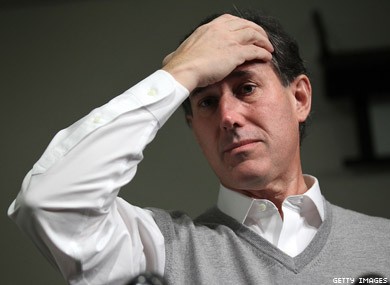
Rick Santorum is not looking well these days.

The Republican Presidential candidates have been subject of several outbreaks of stupidity, but Rick Santorum demonstrated that something more than a minor bug was going around in Conservative circles when he expressed his desire to throw up.

Why? 

Almost a half a century ago the late President John F. Kennedy said that church and state should be separate to protect the right of religious freedom. That was the idea made Santorum want to vomit. Apparently, Santorum wants a Taliban-type government where a single, tyrannical church rules the government rather than a government that safeguards freedom for all citizens from the mythological dogma of a single church.  Apparently Conservative pig flu can be intestinal in nature.

God's Witnesses to the Conservative Inquisition

The 2012 strain of Conservative Pig Influenza obviously impairs good judgement as House Conservatives held a hearing on the issue of impregnating women. The panel of expert witnesses for the hearing consisted primarily of celibate, religious males. The hearing focused on singling out physician-prescribed pharmaceuticals that have been used for decades for a variety of female-related health issues, one of which helps women to control their personal fertility.

At issue was whether or not religious institutions could force their religious beliefs on those women (of any faith) involved in their institutions by denying availability of those pharmaceuticals to them. With all the impartiality of the Spanish Inquisition the Conservatives concluded that women and their highly educated, licensed physicians should not be allowed to make reasonable personal health choices. The Conservative Pig Influenza was now an epidemic.

Paul Kiser

Non-Conservatives held an unofficial hearing to allow testimony by those barred from speaking in the Republican Inquisition on contraceptives. This unofficial hearing was the trigger event that caused Conservative talk-show host Rush Limbaugh to fully succumb to the Conservative Pig flu and begin a two-day personal attack on Sandra Fluke, a female Georgetown law student. He called her a slut and a prostitute because she testified in support of allowing women and physicians to have access to traditional fertility-controlling pharmaceuticals from religious affiliated institutions.

Limbaugh also made the bizarre leap of logic that if the government was protecting women’s access to fertility pharmaceuticals, that he must be paying for their private health care coverage. He then demanded that since (in his mind) he was paying for fertility pharmaceuticals, he should be allowed to have a video of any sex act performed by her or anyone else who used contraceptives.    

Rush Limbaugh Wants Sex Videos

Limbaugh eventually apologized by saying he was only trying to be humorous. Conservative Presidential candidates responded to Limbaugh’s rampage accordingly. Mitt Romney said that he ‘wouldn’t have used those words’ in describing Ms. Fluke. Santorum said Limbaugh was only being entertaining and Newt Gingrich said that it was all the fault of the ‘elite media’ for making a big deal of Limbaugh’s character assassination of a private citizen voicing her First Amendment Rights. The Conservative Pig Influenza of 2012 has gone pandemic.

The CDC has made no official announcement, but it is expected that the Conservative Pig Influenza of 2012 will last through the summer and into the Fall. Fortunately, the most susceptible to the disease are white males over 40. The public can protect themselves by avoiding any contact with them.

USA PDT [Twitter: ] [Facebook] [LinkedIn] [Skype: 775.624.5679]

Stroke of Fate: Me Versus My Brain

25 Saturday Feb 2012

Posted by Paul Kiser in Aging, Generational, Health, Lessons of Life

≈ 7 Comments

Tags

occupational therapy, physical therapy, Renown Rehabilitation Hospital, speech therapy, stroke, Wallenberg's Stroke, Wallenberg's Syndrome

I consider myself to be fairly intelligent…you can stop laughing now. At least I’ve never auditioned for a reality television show and that has to be some sign of intelligence.

This 34 year-old woman had a stroke in a similar area as my stroke (see black arrow at base of brain)

However, I’ve learned that I am no match for my brain. My brain has hundreds of thousands of years of evolution on its side and it does so many things automatically that it dwarfs my petty conscious actions like eating, reading, talking, and walking. Now that my brain has downsized some of the automatic functions, like sensing temperature and pain on half of my body, I have learned that I am incapable of taking over those functions…without help.

Enter the team
While I was in the main hospital a physician visited me and introduced herself as my ‘Rehabilitation’ doctor. At that time I did not understand that she would become my advocate and director of my recovery. Over the next few weeks I would learn that I was not being discharged to another hospital as much as I was being transferred to a team of people, including my Rehabilitation physician, who would bring their extensive professional skills into my battle with my brain. 

VitaStim electrodes were used to strengthen my swallowing

As in most hospitals, the nursing staff at Renown Rehabilitation Hospital took on the role of monitoring my health and addressing the medical needs of my post-stroke body, however, the therapy staff became my coaches who devised the game plan¹ to reverse the damage caused by the stroke. Speech, occupational, and physical therapists each dedicated an hour per day to reestablishing a normal brain/body connection. 

(¹My apologies for the sports metaphor…I blame it on the stroke…because I can, not because it’s true.)

Brain damage (or dain bramage, as I prefer to call it) is as individual as a fingerprint, so treatment is not something you find in a medical cookbook of cures. My condition after my stroke was diagnosed as Wallenberg’s Syndrome, but my symptoms ranged from spot on to the symptoms of Wallenberg’s, to mild or non-existent for issues such as loss of speech. My team of therapists worked like great artists as they created a plan of action to help the brain rewire around the damage caused by the stroke.

Home at last!

Speech therapy focused on swallow control and strengthening my voice. In three weeks I progressed from not being able to swallow water to being able to eat a regular meal, including salad. I have to be aware of what I’m doing when I eat, but I am near normal in the use of throat systems that separate breathing and food intake. My voice is easily tired, but continues to become stronger each day.

My Occupational therapist concentrated on vision, especially eye control. My double vision issue is caused, at least in part, to muscle control of both eyes. I should have known that she would be the one to help me in this area as my first short episode of single vision occurred when I first met her. Many of the exercises she has taught me actually exacerbate my vertigo (dizziness), however, I have experienced less vertigo and more episodes of single vision on days when I completed the exercises she taught me.

While all my therapists were exceptional, it is my physical therapist that I admire the most. She took on the challenge of getting me mobile again and to do it she had to deal with me and my quirky brain. I have four issues when it comes to walking. First is the lack of balance. I feel a strong pull to the right and when I try to counter it my brain wants me to lean to the right.

Second, is my double vision issue that place my right eye image over and at a 20° angle to my left eye image. I might have an easier time walking if I just knew which image was the one I should use for reference.

Third, each of my eyes have a slow ‘swim’ that prevents me from focusing on a single point, therefore, covering one eye does not necessarily give me an easier visual reference. Part of this issue is related to uncontrolled eye movement and part is a lack of fine-concentration skills that may have been, in small part, pre-existing to the stroke. I noticed about a year ago that I could not meditate on a single point without losing focus every few milliseconds. Since the stroke, the eye swim is more pronounced.

Finally, my vertigo has taken the front seat in my balance issues. Dizziness hits me almost every time I move my head making walking fun to watch, but not fun to do. My physical therapist has not only utilized her own skills and talents in addressing my brain damage, but also involved other physical therapists, including one who has experience dealing with vision and vertigo issues like mine. The result is that I can walk and when my vertigo is under control my walk is almost normal…almost.

My brain still has some rewiring work before I will be a fully functioning adult that can hop in the car and drive to Starbucks, but thanks to the team at Renown Rehabilitation Hospital, I’m weeks to months away from being able to being fully independent. That makes me the winner.

(NOTE: Paul was released from Renown Rehabilitation Hospital at 1:00 PM today, Saturday, February 25th and is now continuing his recovery at home.)

Stroke of Fate: Time and Tide (Thank You, Basia)

13 Monday Feb 2012

Posted by Paul Kiser in Aging, Generational, Health, Lessons of Life, parenting, Random, Relationships, Women

≈ 4 Comments

Tags

Basia, Rehabilitation, Renown, Renown Medical Center, stroke, Time and Tide, Wallenberg's Stroke, Wallenberg's Syndrome

Basia's Time and Tide cover

One of my favorite albums is Basia’s Time and Tide. Basia has taken me through many emotional times and I should not be surprised that after this stroke she returned into my life. My brain and body have decided to have a partial trial separation. I know I know they are meant to be together, but now they’re not talking, so with Basia’s help I’m trying to get them back together. Fortunately, I have many people helping us.

Here and now is all it’s about, let’s use it or lose it.
Promises by Basia

Here And Now
Both my daughters live in Colorado. When they heard that I was hospitalized they began talking about coming out. I was ready to discourage it because I couldn’t see the purpose or value of them flying to Reno, Nevada.

I was wrong. I failed to comprehend  the significance of their presence. I have a good close-in support system here with my spouse (Saralinda,) son (Alexander,) and in-laws, but my daughters (Kelli and Katy) added to that support in ways I never could have imagined.

Love is contagious, it’s a part of a chain
Promises by Basia

My temporary home for restart my life

They arrived a few hours before I was transferred from Renown Medical Center to Renown Rehabilitation Hospital. They became an extra lift in the uncertainty of the transfer. Saralinda, Kelli, and Katy, joined forces in becoming an advocate for my recovery and the hospital staff recognized that I was not alone. I don’t fully understand how that impacted my care, but I do know that the staff seemed to appreciate their involvement.

I’ll be there if you need me, I am your helping hand.
New Day For You by Basia

A New Day
Tuesday was an important day in my recovery. On Monday I had a swallow study performed complete with a camera up my nose. From that test I learned that my NG tube would have to remain for the near future because my throat was not working correctly. My swallowing had improved from Saturday’s, but it looked like I was facing at least a week of looking like Mr. Snuffleupagus and the idea of being able to taste food again seemed farther and farther away.  

I still couldn’t walk without falling over, I’d lost temperature and pain sensation over half my body, my right and left eye were each giving me their independent version of the world, my head and body were in a constant state of spin, and I survived by fluid going in my arm or goo going to my stomach via my nose. There was not a lot of good news.

However, all that was blunted by the news that my daughters and one of my granddaughters would be arriving on Tuesday. In the moment it didn’t seem to be that important, but in hindsight, it made my world seem much brighter. It was Tuesday when my life seemed to come back to firm ground. On that day my stroke found out who it was dealing with, and it didn’t expect to be met head on by women of mass reconstruction. It whimpered.

It would be on Wednesday that I…and my stroke, would meet the rest of the team…the medical staff at Renown Rehabilitation Hospital. It was an another good day for me…not so much for my stroke.

We got time, oh baby, there’s no rush
Gonna be a better day for us
Time and Tide by Basia

Stroke of Fate: Day Two

12 Sunday Feb 2012

Posted by Paul Kiser in Aging, Health, Lessons of Life

≈ 3 Comments

Tags

Renown, Renown Medical Center, stroke, Wallenberg's Stroke, Wallenberg's Syndrome

I spent Saturday night fighting muscle spasms all over my body, possibly from a reaction to the nausea medication given to me in ER at Renown Medical Center. I was also feeling weak and disoriented. The right side of my face felt like I been punched by a massive fist, but with no pain, just numbness. I had no idea why my body was malfunctioning so badly with no obvious trauma. A stroke was the most  plausible cause, but no one really knew.

Me and my NG tube

Sunday morning brought new symptoms. I now had double vision. My right eye took the same image of my left eye, but put it above and at a 20° angle, which was higher on the right, lower on the left. In addition, both images seemed to spin and skip. I have not been falling down drunk many times in my life, but that is the only way I could describe this sensation.

I was incapable of functioning as a normal adult. I couldn’t stand, walk, eat, drink, see, read, or write.  I now relied on an IV to supply my fluids, and by late Sunday, would need a tube inserted for nourishment.

90° Flip: This is what my brain did to my vision for about four seconds if I closed my eyes, relaxed, then opened them

The answers did not come after initial MRI scan. The Radiologist found no visible sign of any type of hemorrhage in my brain. More tests were scheduled, but the diagnosis would eventually come after a second look at the MRI scans. I had a tiny stroke on my brain stem. The doctor told me that this type of stroke caused Wallenberg’s Syndrome or Lateral Medullary Syndrome As it turns out I am almost a textbook case.

While I was in the neurological unit I learned that I had lost heat and prick sensation on my right side of my face and the left side of my body. I could sense touch, but not pain, nor temperature. I also discovered that if I closed my eyes and relaxed, once I opened my eyes, the visual image would be turned at a 90° angle for about four seconds and then would spin and become horizontal. By the end of Sunday I had a good understanding of how much damage my stroke had done. It would be Monday before I would see any signs of hope of recovery.

Stroke of Fate: Day One

11 Saturday Feb 2012

Posted by Paul Kiser in Aging, Health, parenting, Random

≈ Leave a comment

Tags

Renown, Renown Medical Center, stroke, Wallenberg's Stroke

All days come from one day, That much you must know
You cannot change what’s over,  But only where you go

Pilgrim by Enya

Last Saturday, February 4, was our 17th wedding anniversary. It was also the day of two six-year-old birthday parties that our son was to attend. The first birthday party was at Fun Quest in the Grand Sierra Resort in Reno, NV, USA. At about 3:15 PM I was eating the remnants of the piece of birthday cake that my son barely touched when I felt woozy (a technical medical term.) It felt almost like the way I feel before I become sick, but I wasn’t nauseated. It passed, but I told my spouse that I may need to leave. She became concerned, but the feeling was slowly fading.

Paul Kiser

About five minutes later it happened again, but this time was stronger. My spouse left me, and I assumed that she was getting Alexander and saying our goodbyes. Shortly, Virginia,  the Grandmother of the birthday boy was sitting next to me. She was a nurse and she began asking some questions. Although I wasn’t presenting the classic symptoms of a stroke, I’m guessing that my behavior indicated that something neurological was amiss. Again, the feeling subsided.

In another five minutes it came back stronger. At this point I knew this may be more that just a sudden onset of a flu. Virginia asked me to lay down and I was in no position to disagree;; however, the moment I laid down I felt the I was gong to lose the cake I had eaten, so I stood back up. I don’t know exactly what I said, but I indicated I needed to leave and headed out of the room. My spouse had gathered up Alexander and Virginia came up to me and said to lean on her. I did and the farther we went the more I became reliant on her support as my balance forced me to fall to the right.

We finally got to our car and left for the Emergency Room at Renown Medical Center, which was a few blocks away. There was no wait. My situation seemed obvious to everyone that I needed medical assessment immediately. In ER my symptoms were a loss of balance, a feeling of weakness, extremely high blood pressure, a tingling on the right side of the face, tingly right fingers, and possibly some dropping around my right eye. My spouse summoned our son’s grandparents who came and eventually took Alexander to the next party in hopes of keeping him from becoming drawn into the drama that he couldn’t fully grasp.

Meanwhile the ER staff set about to learn what was going on in order to establish a treatment. As a precaution they were going to give me an aspirin. That’s when we discovered I couldn’t swallow even a sip of water, let alone a pill. A CAT scan was done with no overt indication of a stroke.

The feeling was that it was either a small stroke, or an infection, with a stroke being more likely. I was admitted into the neurological unit and scheduled for a MRI scan on Sunday morning. At this time my vision was still normal, and my strength was good on both sides of my body, but I couldn’t stand, nor swallow. It would be Sunday before the damage was complete and I would know why.

Wristwatches Tell Age As Well As Time

05 Saturday Nov 2011

Posted by Paul Kiser in Aging, Generational, Technology

≈ Leave a comment

Tags

cell phones, fashion, time pieces, watches, wristwatches

USA PDT [Twitter: ] [Facebook] [LinkedIn] [Skype: 775.624.5679]

Paul Kiser

Daylight Saving Time ends this weekend (‘fall back’ at 2:00 AM this Sunday) and the man who reaches for his wristwatch to set it for Standard Time is likely to be over 40…or 50…or 60.

With the invention of the cell phone, the need for the wristwatch has become a piece of a 107 year-old technology that young men often see as unnecessary and outdated. For the cell phone dependent male, time is as close as the phone display and it is always accurate and updates itself when the user changes time zones, or time changes to and from Daylight Saving Time.

A Sign of the "Time"

Mike, who is under 40 and doesn’t own a wristwatch, states:

…only time it’s “cool” is if you are dressing fancy and need to be a little more classy than checking your phone for the time…

James, who is over 40, says:

Most of my life I preferred pocket watches but since I started running/biking I needed a stopwatch function…

A man who wears a watch is noticed by the opposite sex.  Kayla, who is under 40, may have expressed the sentiment of many women when she said:

I like the look of wristwatches on men, but they are becoming a bit outdated….

Kayla goes on to say that she has seen men who are wearing a watch pull out their cell phone to check the time rather than look at their wrist, which supports the theory that wristwatches are more for fashion than function.

In a bar in Golden, Colorado, four young men sitting together were asked if they wore a wristwatch and all said “no.” When asked why, they indicated that their cell phone was their time piece of choice. At the same bar, two men who were over 40 and wearing wristwatches were discussing an expensive Rolex model that one of them hoped to buy. The value of wristwatches seems to clearly be correlated to the age of the man.

Perhaps those who became reliant on wristwatches before there were cellphones continue to be attached to the idea of a wristwatch even though technology has made them obsolete. Whatever the reason, a wristwatch seems to become a generational indicator as well as a time keeper.

This article first published as
Wristwatches Tell Age As Well As Time
on Technorati.com

Newer posts →

Other Pages of This Blog

  • About Paul Kiser
  • Common Core: Are You a Good Switch or a Bad Switch?
  • Familius Interruptus: Lessons of a DNA Shocker
  • Moffat County, Colorado: The Story of Two Families
  • Rules on Comments
  • Six Things The United States Must Do
  • Why We Are Here: A 65-Year Historical Perspective of the United States

Paul’s Recent Blogs

  • Covert Narcissism in Relationships
  • Divorce Without Mercy Part 9 – Epilogue
  • Divorce Without Mercy Part 8 – June/July 2026
  • Divorce Without Mercy Part 7 – May 2026
  • Divorce Without Mercy Part 6 – April 2026
  • Divorce Without Mercy Part 5 – March 2026
  • Divorce Without Mercy Part 4 – February 2026

Paul Kiser’s Tweets

Tweets by PaulKiser

What’s Up

October 2026
S M T W T F S
 123
45678910
11121314151617
18192021222324
25262728293031
« Sep    

Follow Blog via Email

Enter your email address to follow this blog and receive notifications of new posts by email.

Join 685 other subscribers

Other Pages of This Blog

  • About Paul Kiser
  • Common Core: Are You a Good Switch or a Bad Switch?
  • Familius Interruptus: Lessons of a DNA Shocker
  • Moffat County, Colorado: The Story of Two Families
  • Rules on Comments
  • Six Things The United States Must Do
  • Why We Are Here: A 65-Year Historical Perspective of the United States

Paul’s Recent Blogs

  • Covert Narcissism in Relationships
  • Divorce Without Mercy Part 9 – Epilogue
  • Divorce Without Mercy Part 8 – June/July 2026
  • Divorce Without Mercy Part 7 – May 2026
  • Divorce Without Mercy Part 6 – April 2026
  • Divorce Without Mercy Part 5 – March 2026
  • Divorce Without Mercy Part 4 – February 2026

Paul Kiser’s Tweets

Tweets by PaulKiser

What’s Up

October 2026
S M T W T F S
 123
45678910
11121314151617
18192021222324
25262728293031
« Sep    

Follow Blog via Email

Enter your email address to follow this blog and receive notifications of new posts by email.

Join 685 other subscribers

Create a website or blog at WordPress.com

Loading Comments...