3rd From Sol

~ Learn from before. Live now. Look ahead.

3rd From Sol

Category Archives: Education

A Glimpse of Education in Panama

22 Saturday Nov 2014

Posted by Paul Kiser in Customer Relations, Education, Information Technology, Internet, parenting, Passionate People, Technology, Travel

≈ Leave a comment

Tags

Centro Educativo, children, Coronado, Educacion, elementary school, Panama, parenting, San Jose, school

2014NN_119DSC_0129 (2)

The Principal in the classroom in Panama

Teaching children is a challenge anywhere in the world. Culture, government, and environment all affect the quality of education. Still, it seems that the foundation of any great school is the dedication of the staff to the students.

Recently I was on my second visit to a community about 90 km (60 mi.) from Panama City, Panama. While in the area I decided to research their education system by dropping in on a local school, the Centro Educativo San Jose elementary school.

It should be noted that to truly understand the education system in Panama, I should first be proficient in Spanish, and second, I should visit multiple schools, both private and public, over a period of weeks or months. A thirty minute conversation with the Principal, who does not speak English, and a teacher acting as my interpreter is only enough to give a first impression.

However, there are clues about the quality of education that are instantly obvious and transcend language barriers.

2014NN_100DSC_0118 (2)Laughing children. It is difficult to bridle the enthusiasm of children, but some schools seem to manage to stifle the joy of childhood. Centro Educativo San Jose has not made this mistake. At this elementary school the children were well-behaved, but laughing and smiling. It was obvious they understood discipline, but they were obviously happy to be at school.

Panama celebrates Thanksgiving

Panama celebrates Thanksgiving

Helpful children. When I arrived I first met an adult with several children. I wasn’t sure of her role in the school (she may have been a parent,) but when I asked if she spoke English, she said, “No.” Instantly a young girl at her side pointed at one of the teachers and indicated she spoke English, then the girl quickly ran to the teacher and brought her to me. This girl knew she could help and did so without hesitation. That tells me that the school encourages critical thinking that empowers children with the ability to respond quickly to a situation.

Professional Staff. In the tropics the temperature is near 30° C (86° F) year round and the humidity wraps around you like a wet towel. There is no air conditioning at this school and any breeze is welcome in the classroom. Despite these environmental conditions, the staff at the school looked and acted professional.

What I learned during my visit surprised me. The students have access to computers and they have a ‘Technology Room” filled with computers. I couldn’t tell if the computers were connected to the Internet; however, I did not expect an 80 year-old public school to have dozens of desktop computers with flat screen monitors.

This school is funded by government support, which limits the per/student resources; however, most schools in Panama are private where parents pay $1,500 to $3000 per year for tuition.

Many schools in Panama operate double sessions with one group of students attending in the morning and another attending in the afternoon. At this school the morning session is 7 AM to 12 Noon, and the second session is 12 Noon to 5 PM.2014NN_120DSC_0130 (2)

While most private schools are open twelve months a year, public schools are in session March through December, and have ‘summer’ break in January and February.

I asked about homework and parent involvement and heard what I expected. Once the students leave the school they are not expected to do homework and parents are not typically involved in assisting the staff in school. In an environment of low pay and long working hours, parents likely have no time to be involved in their children’s education.

I was told the biggest challenge is teaching English to the students. The impact of being bilingual is significant in a working adult’s life in Panama, and anywhere else. Yet, It is hard to explain that to a child in rural Panama whose only encounter with another language is in the school.

I’m grateful to have the opportunity to visit the school, and hope to do it again the next time I’m in Panama. I apologize to the Principal and the teacher who interpreted for me. I failed to write their names down before I left. Both graciously gave me valuable time out of their schedule and I appreciate it.

It was a pleasure meeting dedicated professionals who are changing lives every day by caring about the future of the students in their school.

Espanol Version (Using Google Translate)

Enseñar a los niños es un desafío en cualquier parte del mundo. Cultura, gobierno, medio ambiente y afectan la calidad de la educación. Aún así, parece que el fundamento de cualquier gran escuela es la dedicación del personal de los estudiantes.

Hace poco estuve en mi segunda visita a una comunidad a unos 90 km (60 mi.) De la Ciudad de Panamá, Panamá. Mientras que en la zona me decidí a investigar su sistema educativo por meterme en una escuela local, la escuela primaria Centro Educativo San José.

Cabe señalar que para comprender verdaderamente el sistema de educación en Panamá, que primero debería ser competentes en español, y en segundo lugar, que debe visitar varias escuelas, tanto públicas como privadas, en un periodo de semanas o meses. Una conversación treinta minutos con el director, que no habla Inglés, y un profesor que actúa como mi intérprete sólo es suficiente para dar una primera impresión.

Sin embargo, hay pistas sobre la calidad de la educación que son inmediatamente obvias y trascienden las barreras del idioma.

Niños de risa. Es difícil de frenar el entusiasmo de los niños, pero algunas escuelas parecen manejar a silenciar la alegría de la infancia. Centro Educativo San José no ha cometido este error. En esta escuela primaria los niños estaban bien atendidos, pero riendo y sonriendo. Era obvio que entendían la disciplina, pero eran obviamente feliz de estar en la escuela.

Niños útiles. Cuando llegué por primera vez a un adulto con varios hijos. Yo no estaba seguro de su papel en la escuela (que puede haber sido uno de los padres), pero cuando le pregunté si hablaba Inglés, dijo, “No.” Al instante una chica joven a su lado señaló a uno de los profesores y indica que hablaba Inglés, entonces la chica corrió rápidamente a la maestra y la trajo a mí. Esta chica sabía que podía ayudar y lo hizo sin dudarlo. Eso me dice que la escuela promueve el pensamiento crítico que permite a los niños con la capacidad para responder rápidamente a una situación.

Personal Profesional. En los trópicos la temperatura es de cerca de 30 ° C (86 ° F) durante todo el año y los abrigos de humedad a su alrededor como una toalla húmeda. No hay aire acondicionado en esta escuela y cualquier brisa es bienvenida en el salón de clases. A pesar de estas condiciones ambientales, el personal de la escuela parecía y actuaba profesional.

Lo que aprendí durante mi visita me sorprendió. Los estudiantes tienen acceso a computadoras y tienen un ‘Room Tecnología “lleno de computadoras. No podría decir si los equipos estaban conectados a Internet; Sin embargo, no esperaba un 80 años de edad de escuelas públicas para tener docenas de computadoras de escritorio con monitores de pantalla plana.

Esta escuela está financiado por el apoyo del gobierno, lo que limita los recursos per / estudiante; Sin embargo, la mayoría de las escuelas en Panamá son privadas donde los padres pagan $ 1.500 a $ 3000 por mes para la matrícula.

Muchas escuelas en Panamá operan sesiones dobles con un grupo de estudiantes que asisten por la mañana y otra que asisten por la tarde. En esta escuela la sesión de la mañana a 7 de la mañana a 12 del mediodía, y la segunda sesión es de 12 del mediodía a 17:00.

Aunque la mayoría de las escuelas privadas están abiertas los doce meses del año, las escuelas públicas están en sesión de marzo a diciembre, y tienen descanso “verano” en enero y febrero.

Le pregunté acerca de la tarea y la participación de los padres y escuché lo que me esperaba. Una vez que los estudiantes salen de la escuela a la que no se espera que hagan los deberes y los padres no suelen participar en la asistencia al personal de la escuela. En un entorno de bajos salarios y largas horas de trabajo, los padres probablemente no tienen tiempo para participar en la educación de sus hijos.

Me dijeron que el mayor desafío es la enseñanza de Inglés a los estudiantes. El impacto de ser bilingüe es importante en la vida de un adulto que trabaja en Panamá, y en cualquier otro lugar. Es difícil de explicar que a un niño que sólo el encuentro con otro idioma es en la escuela.

Fue un placer conocer a los profesionales que están cambiando vidas todos los días por el cuidado por el futuro de los estudiantes en su escuela dedicada.


The Grade Negotiation Season

21 Wednesday May 2014

Posted by Paul Kiser in About Reno, College, Communication, Education, Ethics, Generational, Higher Education, Internet, Opinion, Pride, Public Image, Public Relations, Respect, Universities

≈ Leave a comment

Tags

college credit, Email, financial aid, grade point average, Grades, negotiation, professors, semester, student loans

Spring brings forth the failures as well as the flowers

Spring brings forth the failures as well as the flowers

Most people don’t realize that we are in a new season. It happens twice a year at the end of a semester when college professors are bombarded with emails from their students trying to beg, borrow, or steal a few points for a higher grade. It should be noted that the majority of these emails are not coming the students who attended class, turned in assignments on time, and studied for the tests. No, these are the students that missed class, turned in assignments late, and had a party to go to rather than study.

The emails are typically as follows:

Hi,

Could u look @my grade. I need 2 have a c n u’re clas or i lose my finansal aide. i was sure i had a c n u’re class.

Rach

The student often assumes that the professor knows in which class the student was enrolled, and writes as if she or he is texting a friend. The student probably knows that they didn’t deserve a “C” in the class; however, they hope that the professor will feel sorry for them and bump them up. Usually, nothing changes, but the student can say to her or his parents that they were sure they had a “C” in the class and that they even complained to the professor, but he or she wouldn’t change it.

For the professor, these emails take pointless hours of time to review the scores, confirm the grade, and respond. It turns the end of the semester into a circus where all the clowns come out of the woodwork after being absent most of the semester.

There is nothing wrong with a student questioning their grade; however, if a student is at the borderline of losing her or his financial aid, and/or falling below the required grade average for enrollment, the problem is not about one grade, but the overall performance in all classes.

Sadly, professors are not allowed to offer an appropriate response such as:

Rachel Smith
Student
ENG 203 – Writing For Business

Dear Rachel:

Thank you for your email. Your grade is based on your participation in my class and reflects the work you performed. The “D’ you received is not only correct, it is generous. I’m pleased to see that a student like yourself will no longer be offered financial aid, so that a better quality of student can now be a recipient.

I wish you well on your future in the world of menial labor for which you may or may not be qualified.

Sincerely,

Edward Terrell
Professor
University of  Higher Education


Stop Using the Fahrenheit Scale

19 Monday May 2014

Posted by Paul Kiser in About Reno, Communication, Education, Generational, Government, Lessons of Life, Public Relations, Science, Technology

≈ Leave a comment

Tags

Celsius, Centigrade, comfort, degrees, Fahrenheit, scale, temperature

I know you think it’s hard. We were taught temperature in the Fahrenheit scale. It’s all we know. Now forget it.

The problem in understanding the Celsius scale us that we try to convert Fahrenheit to Celsius, or the other way around and it becomes too confusing. I say it again, forget the Fahrenheit scale. It’s the best way to understand the Celsius scale.

Why? Because most of the time we only care about the temperature to know how to dress, so try this:

  • -20°C   – Why are you outside?
  • -10°C    – It’s really cold. Gloves and a  muffler with your winter coat.
  • 0°C      – It’s cold. You need a winter coat.
  • 10°C    – It’s cool. Jacket weather.
  • 20°C   – It’s comfortable. Maybe long sleeves.
  • 30°C   – It’s getting hot. Short sleeve and shorts.
  • 40°C  – It’s really hot. Find the nearest air-conditioned room.

That’s it. If you can count by 10’s you can understand the Celsius scale. Okay, I’ll let you see the corresponding temperatures in Fahrenheit:

  • -20°C   – Why are you outside? (-4°F)
  • -10°C – It’s really cold. Gloves and a  muffler with that winter coat. (14°F)
  • 0°C      – It’s cold. You need a winter coat. (32°F)
  • 10°C     – It’s cool. Jacket weather. (50°F)
  • 20°C   – It’s comfortable. Maybe long sleeves. (68°F)
  • 30°C    – It’s getting hot. Short sleeves and shorts. (86°F)
  • 40°C – It’s really hot. Find the nearest air-conditioned room. (104°F)

If it helps, just remember that 20°C is comfortable if there is no wind. Every 10° up or down from that temperature is going to be a significant change in comfort level. It’s that simple.

Okay, if you’re a cook, the Celsius scale is a little more challenging, but baby steps, baby steps.

Reno’s NBC Affiliate Runs Anti-Union Press Release As News

09 Wednesday Apr 2014

Posted by Paul Kiser in About Reno, Branding, Business, Communication, Customer Relations, Customer Service, Education, Ethics, Government, Management Practices, Opinion, parenting, Politics, Pride, Public Image, Public Relations, Taxes, Traditional Media

≈ Leave a comment

Tags

KRNV, labor unions, MyNews4, Nevada Policy Research Institute, NPRI, On Your Side, SBGI, schools, Shelby Sheehan, Sinclair Broadcast Group, teacher's unions, Washoe County School District, WCSD

Taking another step away from journalism, KRNV co-anchor Shelby Sheehan presented a press release from the conservative Nevada Policy Research Institute (NPRI) as news during the April 7th 6 PM broadcast. In what has been an almost nightly anti-government feeding frenzy, the NBC affiliated station, managed by Fox News operator, Sinclair Broadcast Group (SBGI,) announced that according to NPRI, 168 educators left the Washoe County teacher’s union.

Image by Paul Kiser from KRV newscast

Conservative NPRI spokesperson, Shelby Sheehan

Sheehan introduced the story by admitting that NPRI has a statewide campaign against the teacher’s union and they are:

“...letting teachers know when and how they can leave (the union,) so many are doing just that…”

The KRNV veteran anchor briefly mentions that the two percent loss in membership occurred in the Summer of 2013, and then wraps up the NPRI media release by suggesting that more teachers want to leave, but can’t because:

“…once they (the teachers) do (join the union) they only have a short period of time to get out of their membership, which they say (NPRI) prevents more teachers from leaving.”

Sheehan’s sole source for the story was NPRI, which is an anti-government think tank that, among other conservative agendas, is anti- public school and pushes for school vouchers and charter schools. They represent the polar position against unionized teachers. 

Other than her paraphrasing the information given to her by NPRI, Sheehan reported no information or statements from a teacher, the union, nor an independent source. She apparently didn’t even question NPRI’s information, nor why they were just now releasing data that was almost a year old.

NEXT:  Sinclair’s Survey of Shame (To be released 9 April 2014 at 6:30 AM PDT)

It’s Time To Drop the “C” From NCAA

25 Tuesday Mar 2014

Posted by Paul Kiser in About Reno, College, Education, Ethics, Government, Higher Education, Opinion, Pride, Public Image, Public Relations, Recreation, Sports, Taxes, Universities

≈ Leave a comment

Tags

basketball, Football, National Collegiate Athletic Association, NcAA, University of Nevada, UNR

Image by Paul Kiser

College football uses its stadium about 8 days a year. It stands as a monument to Higher Education’s waste of resources

Athletes making more appearances in court than in class. Millions of dollars spent to recruit athletes, only to have them jump to a professional league before they graduate. Athletes that have paid staff minders to make sure they go to class, do their homework, and study. Money donated by alumni to only benefit major athletic programs. When will universities admit that big sports is not compatible with higher education?

Money for nothing. Donors giving to big sport programs

Money for nothing. Donors giving to big sport programs

The excuses are wearing thin. The NCAA tries to sell the idea during every televised college football or basketball game that the athletes on the field or court will become great scientists, doctors, and lawyers. Of course, the success stories are of athletes of every other sport.

Maybe a donor that will only give to athletics is not the person to associate with higher education?

Maybe a donor that will only give to athletics is not the person to associate with higher education?

The marriage between sports and colleges is a joke and it’s time for a divorce. The National Athletic Association (NCAA) should become the National Athletic Association (NAA.) We know college basketball and football athlete’s first, second, and third priorities are in pursuit of a big professional contract. To deny this is just an excuse to make us feel better when they sit in the back of the college classroom playing on their phones.

Make the professional leagues pay for bringing along young athletes and let higher education focus on education.

University of Nevada Student Housing Gamble a Lose-Lose Scenario

10 Monday Mar 2014

Posted by Paul Kiser in About Reno, Business, College, Communication, Education, Ethics, Government, Higher Education, Management Practices, parenting, Politics, Public Image, Public Relations, Respect, Taxes, Universities

≈ Leave a comment

Tags

Balfour, California universities, construction, dormitories, dorms, housing prices, New student housing, President Marc Johnson, Ranking, realty, Sterling, student beds, Top 500 International Universities, University of Nevada, UNR

University of Nevada betting on more live-in students

University of Nevada betting on more live-in students

The University of Nevada in Reno (UNR) is about to flood the local housing market with almost 1500 new student beds. The growth comes at a time when higher education expenses have been skyrocketing and the assumption is that there is an untapped source of new students who have the resources to pay even more to attend and live near UNR.

UNR Published Enrollment Data and Projections - Nov 2013

UNR Published Enrollment Data and Projections – Nov 2012

In October, University President Marc Johnson predicted that the school would grow Fall enrollment from the current 18,000 students to 22,000 by 2021 with an annual growth of 400 students per year. President Johnson’s prediction closely matches the average growth in student enrollment over the past fourteen years; however, this growth assumes every new student will be seeking on campus, or near campus housing, which is implausible.

Ironically, eleven months prior to the President’s remarks, the university published past and projected student enrollment growth that contradicted his version of UNR enrollment growth. The projected growth averages less than 300 students per year, falling over 1,000 students short of President Johnson’s 2021 prediction. The November 2012 data remains on the UNR website.

Expecting significant growth in student enrollment is betting against the odds according to a July article in the New York Times (July 25, 2013)

“College enrollment fell 2 percent in 2012-13, the first significant decline since the 1990s, but nearly all of that drop hit for-profit and community colleges; now, signs point to 2013-14 being the year when traditional four-year, nonprofit colleges begin a contraction that will last for several years.“

900 bed Sterling student apartments will open this Fall

900 bed Sterling student apartments will open this Fall

Outcome of Sudden Increase in Student Beds
One of two scenarios are possible as the university waits for new enrollment. The first scenario involves new beds remaining empty as students balk at the increased rental fees for the new properties. This will result in a loss in revenue for the university and the leasing companies of the new housing units.

The second scenario would be that students in rental houses and apartments, move into the newer facilities, which would devalue the current leasing rates in the local economy as the vacancy rate rises. The reaction by some investment properties owners might be foreclosure as owners walk away from money-losing properties.

UNR Losing Reputation as Quality School
President Johnson may be relying on picking up students from California due to large increases in tuition costs increases in recent years; however, the belief that the quality of education at UNR is of equal value to California schools assumes that students and parents are uninformed. 

View of UNR's dormitory row to be joined by new 400 bed unit in 2015

View of UNR’s dormitory row to be joined by new 400 bed unit in 2015

In 2003, UNR, Georgetown, Utah State, and San Diego State University ranked in the top 300 of Shanghai Ranking Top 500 Academic Ranking of World Universities. UNR’s ranking dropped almost every year, and dropped off the top 500 list for the last two years in a row. The other three universities also dropped; however, Georgetown and San Diego State ranked only slightly lower during the past two years than in 2003, and Utah State dropped out of the top 500 in 2011, but has been in the top 500 for 2012 and 2013. In 2013, California had eleven universities in the top 500, with eight in the top 50.

A silver lining to the Silver State's UNR?

A silver lining to the Silver State’s UNR?

Silver Lining?
While the need for this surge of student housing is questionable at best, will result in student beds at higher prices than currently available, and may trigger a local foreclosure crisis, there may be a positive outcome for the university neighborhoods.

If students leave the rental houses, causing a crash in rental prices, and if owners of investment properties walk away from their rental units, the area housing prices will drop. That will open the door for the redevelopment of the sixty-year-old neighborhood with updated houses that would attract families back to the area.

There is much at stake over the next five years for students, homeowners, investment property owners, and the community in general as UNR takes a big risk on short odds.

Exposing a Bully is Not Bullying

02 Sunday Mar 2014

Posted by Paul Kiser in Aging, Branding, Business, Communication, Crisis Management, Customer Relations, Customer Service, Education, Employee Retention, Ethics, Generational, Honor, Human Resources, Internet, Lessons of Life, Management Practices, Opinion, parenting, Pride, Public Image, Public Relations, Relationships, Respect, Social Interactive Media (SIM), Social Media Relations, Women

≈ 5 Comments

Tags

bully, bullying, Dr. Peggy Drexler, Kelly Blazek

During this past week much has been written (including myself) about the case of a person in a position of power, Kelly Blazek, the gatekeeper of a Cleveland, Ohio jobs listing for marketing positions, writing a nasty email to a job seeker. Blazek’s language in the email was unyielding in her attempt to embarrass and humiliate the job seeker. Blazek was using her power to bully someone who was in an inferior position.   

Therefore, I was shocked when I read an ‘Opinion‘ on CNN.com by Dr. Peggy Drexler, who wrote that by publicizing the email and seeking attention to the bullying, the job seeker:

“….acted with malice, and caused the older woman significant damage…”

The specific language suggests that Dr. Drexler is encouraging Blazek, the person who was the bully, to sue the victim on the grounds of malice, libel, and/or age discrimination. One might question as to whether Dr. Drexler’s motives were that of an ambulance chaser, seeking to be employed by Blazek as an ‘expert’ witness in a civil suit.

Dr. Drexler’s opinion piece did describe the nature of Blazek’s email; however, she softened Blazek’s misdeeds by saying:

“Blazek’s words were, of course, undeniably, and likely unnecessarily, harsh”

In her opinion piece, Dr. Drexler masterfully works around the most blatant language in Blazek’s email and, in at least one place, segmented the quoted language so that the most vicious remark doesn’t look like it was the climax of the rest of the paragraph. She also uses Blazek’s “Communicator of the Year” recognition as a reference of her skills, rather than the irony that is obvious after reading a complete version of Blazek’s blistering email. The most damning paragraph from Blazek’s email is missing from Dr. Drexler’s opinion:

“I suggest you join the other Job Bank in town. Oh wait — there isn’t one.”

Dr. Drexler admits that Blazek’s behavior was wrong:

“No question, Blazek lashed out first, with unprofessional behavior that can only be described as bullying.”

However, Dr. Drexler seems to enable Blazek’s behavior by accusing the job seeker:

“But Mekota responding in kind makes her no less a bully.”

In Dr. Drexler’s world, when bullied, sit back and take. Don’t fight back and don’t call out the bully. Other professionals have a different take on how to respond to a bully. In responding to adult bullying, Mental Health Support (from the United Kingdom) suggests the following :

“…if you find yourself the victim of bullying, a bully’s bad behaviour is entirely his or her responsibility, not yours,…”

The website goes on to say:

“Once you have identified a bully and know what to expect from him or her, you must choose not to be a victim, if you want the bullying to stop. Expose the bullying for what it is. Take a stand, and don’t back down…”

“…The important point here is to expose the bully and call him or her to account. Confrontation and exposure, with evidence to support a victim’s accusations, are what the bully tries hardest to avoid. Once exposure happens, the bullying is likely to stop.”

There was an injustice done to Ms. Blazek, but that was from Dr. Drexler in attempting to sanctify Blazek’s behavior by accusing the job seeker of an equal act. Dr. Drexler’s portrait of Blazek as the older woman, victimized by the young, evil job seeker, causing her to lose her career and disappear from social media is absurd. The job seeker did not write the email, nor did she make the decision to shut down Blazek’s websites and social media accounts. Blazek was in the wrong and the damage to her career rests solely in her hands.

The Blazek Syndrome

01 Saturday Mar 2014

Posted by Paul Kiser in Branding, Business, Communication, Crisis Management, Customer Relations, Customer Service, Education, Ethics, Generational, Honor, Human Resources, Internet, Lessons of Life, Management Practices, Opinion, Public Image, Public Relations, Respect, Social Media Relations, Women

≈ 3 Comments

Tags

Blazek Syndrome, Cleveland, head hunter, humility, job search, Kelly Blazek, LinkedIn, Marketing, Ohio, Twitter, Wordpress

Kelly Blazek - Armed with a keyboard and dangerous

Kelly Blazek – Armed with a keyboard and dangerous

You may not recognize the name Kelly Blazek, but she is the poster child for public image disaster. When people wonder how bad personal embarrassment can be, we now have Blazek as our code word for really, really bad. 

Kelly Blazek is probably a decent human being, but what she will be remembered for is her moments of ‘Ms. Hyde’ behavior. She founded a job bank listing for marketing and public relations positions in the Cleveland, Ohio area. She had a WordPress blog and Twitter, LinkedIn accounts. Head hunter Blazek was also recognized as “Communicator of the Year.” by a local business group.

Within a matter of days she went from a leader in her field to a ghost. There is no blog site, no Twitter account, nor any trace of her other than a growing number of postmortems in blogs and news articles of her epic nasty responses to people who reached out to her.

The Blazek Syndrome
Her story is a step-by-step, what-not-to-do in business.

STEP ONE:  Don’t let frustrations with the job spill over into your communications and interactions.

Among the most notorious of her responses, Blazek reacted to a college graduate seeking to connect with her as part of her job search. Her manner that can best be described as vile. Among the barrage of hateful statements were the following:

“I love the sense of entitlement in your generation. And therefore I enjoy Denying (sic) your invite…. (to connect on LinkedIn.)”

“I suggest you join the other Job Bank in town. Oh wait — there isn’t one.”

“You’re welcome for your humility lesson for the year.”

Everyone has a bad day, but any business person should know that what you write is what will save you or hang you. There is no excuse Blazek could offer for her verbal abuse of this job seeker.

STEP TWO:  Making a mistake, even as massive as this one, does not mean it’s the final chapter. Life is not over and running and hiding will not help.

Blazek has compounded the crisis by trying to disappear. When sharks smell blood of a wounded fish they go into a frenzy. By disengaging from social media, people may lose interest, but what will remain is the public shame. The best time to do damage repair is while people are still paying attention

STEP THREE:  Apologize over and over.

Instead of deleting social media accounts, use them. In a public image crisis people need to hear every possible sincere apology, but do NOT attempt to offer excuses. 

STEP FOUR:  Listen to what is being said and respond with humility.

Remember BP’s  Tony Hayward remark, “I want my life back.” The public image crisis is over when people say its over, not when the disgraced person wants it to be over. Read what other people are saying and respond in a kind and humble way to as many people as you can. Make the story about the lesson learned. 

Armed Teacher Games

13 Thursday Feb 2014

Posted by Paul Kiser in Crime, Crisis Management, Education, Ethics, Government Regulation, Health, Higher Education, Lessons of Life, Opinion, parenting, Politics, Universities, Violence in the Workplace

≈ 2 Comments

Tags

2nd Amendment, active shooter, Active shooter scenarios, Arming Teachers, elementary school, gun laws, gun rights, K-12, law enforcement, National Rifle Association, NRA, school, school violence, War Games

SHALL WE PLAY A GAME?

ARMED TEACHER SCENARIOS

STUDENT DISCOVERY
First grader finds hiding place of gun when teacher isn’t looking and pretends to shoot friend not realizing he’s released the safety. Kills the student. WINNER:  NONE

STUDENT WITH INTENT
Student learns where teacher keeps gun. One day student is despondent and decides to commit suicide and take others with him. Kills teacher, kills two students, kills self. WINNER:  NONE

DESPONDENT TEACHER
Teacher despondent after a series of life-changing events. Takes out gun and shoots self in front of classroom. Teacher dead. WINNER:  NONE

LOUD NOISE
Teacher responds to loud noise in hallway. See a person with a gun and shoots them. Other person is another teacher with a gun also investigating the loud noise. Teacher dead. WINNER:  NONE

STUDENT WITH GUN
Teacher sees a student with a gun. Accesses gun and yells at student to drop weapon, student turns, teacher shoots the student. Student was taking prop fake gun for school play back to office to be secured. Student dead. WINNER:  NONE

ACTIVE SHOOTER CONFRONTATION
Teacher hears popping in hallway. Accesses gun and opens door. Active shooter with assault weapon shoots teacher, enters open classroom door, shoots students who have no time to hide or escape. Teacher dead, 25 students dead. WINNER:  NONE.

OK CORRAL SHOOTOUT
Teacher hears popping noise in hallway. Accesses gun as shooter enters classroom. Gun battle ensues resulting in Teacher, shooter, and several students killed. WINNER:  NONE.

ACCIDENTAL DISCHARGE
Teacher hears popping noise in hallway. Accesses gun. Begins to quietly evacuate students to safety, but accidentally discharges gun and shoots one of the students. WINNER:  NONE

ACCIDENTAL POLICE SHOOTING
Teacher hears popping noise in hallway. Evacuates students to safe area and returns classroom. Accesses gun. Identifies shooter. Kills shooter. Police enter, see a person with gun and orders the person to drop their gun. Person turns, police shoot and kill teacher. WINNER:  NONE.

STRANGE GAME. IT SEEMS THE ONLY WAY TO WIN IS NOT TO PLAY.

Camera Locations Needed For NASA All Sky Fireball Network

15 Friday Nov 2013

Posted by Paul Kiser in Education, Photography, Science, Space, Technology

≈ Leave a comment

Tags

All Sky Fireball Network, Fireballs, Marshall Space Flight Center, MEO, Meteors, NASA

Did you see a meteor fireball last night? Do you know how far away or near it was to you? Do you know how fast it was going? What direction it came from or if pieces of it might have hit the ground? NASA is trying to answer those questions by maintaining a constant watch on our skies.

Recently NASA started the All Sky Fireball Network, which is a series of cameras that look up for major meteor fireballs in the sky. They use a minimum of two cameras placed 50 to 90 miles apart to allow both cameras to record the fireball. That allows NASA to determine the direction and speed of the meteor.

Current camera locations for NASA's Fireball network

Current camera locations for NASA’s Fireball network

The network is operated by NASA’s Meteoroid Environment Office (MEO) in Huntsville, Alabama, and they are looking for additional locations for the bi-camera system. The sites must meet the following requirements:

Camera
Need an outdoor location that is/has:

  •  Secure
  • A mostly unobstructed view of the sky, horizon to horizon
  • Relatively free of light pollution – no bright lights near the camera. For example:
  • No sports field or stadium lights nearby
  • No towers with blinking lights visible
  • No parking lot lights that would shine into the camera
  • Stable; we cannot mount a camera on a moving roof or other platform that would change the camera’s position from night to night.
  • Distant from kilowatt radio transmitters or other sources of radio noise

Camera-control Computer
Need an indoor location that is/has:

  • Secure
  • Climate controlled (ideally)
  • Power
  • Fast, reliable Internet connection (minimum upload speed of 100 KB/s) with the ability to assign a static IP address
  • The ability to open port 22 for internet communication in/out (only necessary if a firewall is in place)
  • Located within 125 feet of the camera
  • The means to run cables from the camera to the computer
  • A window or some other means (e.g. short cable run to the outdoors) by which the GPS unit can get a lock. The cable on the GPS receiver is 22 feet long, so the window would need to be located within 22 feet of the computer. Similarly, a cable run to the outdoors shouldn’t be more than 22 feet long.

If your organization is interested in making a proposal, contact Danielle Moser at MEO at the Marshall Space Flight Center or contact me for her email.

Is It Time For A Two-Tiered School System?

12 Tuesday Mar 2013

Posted by Paul Kiser in Education, Ethics, Government, Management Practices, Opinion, parenting, Politics, Relationships, Respect, Taxes

≈ 2 Comments

Tags

elementary education, Parent Development, parent involvement in school, parents, Pay for Performance, schools, secondary education, teachers

Image by Paul KiserThere is a major problem in America’s educational system and that problem is obvious to anyone who spends time in the classroom. Consider this scenario:

Student X is one of the youngest in the class and started the year slightly behind (academically) her older classmates. Student X lives in a moderate, stable family environment with a modest income. The parents of Student X volunteer at the school and her Mom helps in the classroom once a week. Student X is expected to do her homework soon after coming home from school. One of the parents of Student X is available while she does her homework to answer her questions and assist her as needed, but the parent does not give her the answers. Her parents are in regular contact with her teachers and stay aware of her strengths and weakness. Student X receives constant encouragement to focus on learning.

Student Y lives in a two parent environment; however, one of the parents works 60 to 80 hours a week. Student Y is involved in a variety of non-school activities that take up several hours of after school time. One parent tends to be the mode of transportation from activity to activity, but doesn’t always wait for Student Y. Homework for Student Y is a ‘if we have time” priority, and Student Y’s parents have little contact with the school. Student Y’s parents are never sure what to expect on his report card and are often caught be surprise when there is an issue with a grade.

The absent parent in a child's education cannot be replaced by all the computers in the world.

The absent parent in a child’s education cannot be replaced by all the computers in the world.

Which student do you think will do well on a Standardized Test? Which will student has a better chance to succeed?

The fact that is often overlooked when discussing America’s public schools is the role that parents play, or fail to play in their child’s education. This is not a ‘blame’ issue, but it is a reality that must be included when politicians discuss how they want to ‘fix’ our schools. Parent investment in their child’s education is vital for her or his success in learning. Parents who, for whatever reason, fail to be committed to support and promote learning at home risk destroying the commitment their child will have in the classroom.

So the question is whether or not we need a two-tiered school system based on the parent’s commitment(†) to their child’s education. I believe that most good teachers can tell which students have committed parents, and which do not, so dividing students into two groups should be easy to accomplish.

Several studies have identified the advantages a student with involved parents has over a student who does not.(¹)(²)(³) In addition, a lack of parent involvement may require additional resources from the school to take up the slack of the parent who is not invested. If a teacher has to spend extra time to help that student who didn’t do their homework and master the needed skill, then the rest of the students pay the price because they can’t move forward until Student Y catches up. Even a child who is academically behind is less of a burden on the school when their parent is actively invested in the school.

Dividing our schools based on parental involvement makes sense…on paper, but like all quick fixes there are problems created by the fix that negate it. Identifying students with absent parents avoids the real problem, which is making parents aware that their investment in education is vital for their child’s success.

A Parent’s Place in Education
Despite the need for parental involvement, there is a limit to a parent’s engagement in their child’s education. Unless a parent also has a degree in education, the teacher is the most qualified to take the lead in the classroom. Parents should see themselves as interns in the school.

Even in fundraising, the parent’s role should be subservient to the school and its staff. Parents who decide for the school what projects and programs should be funded risk interfering with the objectives established by those who have an understanding of the larger view.

This should not cause a parent to wait to be asked to become involved. School administrators and teachers focus should be on the students, not on directing parents. This requires that parents and the school create an environment of trust and respect that is facilitated by timely and effective communication.

Professional Development for Parents?
One problem that faces parents is that most of us are not trained in the skills of helping a person learn. In addition, parents may not understand the objectives of the teacher; therefore, they may not know how they can support the in-class work when the student is working at home.

Schools are financially strapped for resources, but if politicians really want to help our educational system, maybe they should consider how schools can pay for parent development seminars (and/or webinars) that will support the objectives of the teachers and the school. By improving the at-home learning environment politicians might actually take a big step in ‘fixing’ our public schools.

We may not need a two-tiered school system, but we certainly need to accept that the failure of a student in school may indicate the failure of a parent, not the teacher or the school.

†(I was reminded this week about the difference between someone who is involved and someone who is committed. If you’re eating a bacon and egg breakfast, the chicken was involved, but the pig was committed.)

Standardized Testing is Not the Solution in American Education

09 Saturday Mar 2013

Posted by Paul Kiser in College, Education, Ethics, Government, Higher Education, Opinion, parenting, Politics, Universities

≈ 5 Comments

Tags

Nevada, Nevada Schools, No Child Left Behind, NSHE, Pay for Performance, Reno, schools, standardized tests, student performance, teachers, Washoe County School District, WCSD

Most of the political discussions about America’s failing education system do two things. First, they blame someone, usually the teachers, and second, they seek simple-minded solutions that assume all children are developmentally equal and live in the same socioeconomic environment.

If education were only about what can be scored on a test, then we don’t need teachers, we need mind programmers

No Child Left Behind was based on the belief that a standard test would be the ultimate measure of a student’s success or failure. The assumption was that if student’s scores on a standardized test failed to achieve established goals then we could all blame the teachers and administrative staff, then punish them. The concept assumed that a student’s base level abilities, and parental support was irrelevant. No Child Left Behind was an idea that applied a corporate-like measurement system, which often fails in a business environment, and forced public schools to leave education behind in pursuit of goals that reduced students to do or die numbers.

The failure of No Child Left Behind is so spectacular that after a decade the program began, over two-thirds of the States are ranked at a “D” or “F” in the quality of education by StudentsFirst.org Report Card. 

Standardized tests assume that every child is an X, but in reality they are A to Z

Standardized tests assume that every child is an X, but in reality they can be A to Z

One of the major failures of the program was the institutionalizing of testing standards that encouraged teachers to focus on teaching their students how to successfully take the tests, but not to understand the material. The program ultimately forced out many excellent teachers that rejected the absurdity of No Child Left Behind, which is ironic because the goal was to force out less effective teachers. The result has been that school after school has failed to produce the results desired leaving America with a generation of students who are even less prepared for adult life.

Nevada’s Washoe County School District (WCSD) is typical of many school districts across the United States. For the 2010-11 school year the standardized tests indicated that an average of 85% of the high school students (9th-12th grades) met or exceeded the established standards for reading, writing, and math. Those scores would indicate that 85% of the students are prepared to move on from high school.

However, of the 1,600 Washoe County School District graduates that attended Nevada state-run universities, almost half (48%) of them required remedial classes to bring them up to college entrance-level work. The standardized tests are designed to measure competency; however, even though the scores indicate the students are prepared, almost 1 out of 2 need to take classes to address educational deficiencies.

Some might say this just confirms the inadequacy of public schools; however, if that were true the standardized tests should reflect those failures and they do not. It is the inadequacy of the standardized test to measure educational performance or lack of performance.  

Standardized tests can be an effective tool in education, but they are just one tool. If we truly want to improve the educational performance of America’s students we must stop holding a knife to the throat of teachers and schools and stop using simple-minded measurements of academic performance to determine whether they live or die. A teacher can’t be held accountable for a parent that doesn’t believe in homework, therefore causing the student to be behind the rest of her/his class. It’s time we began supporting the teachers who have years of training and experience in education, rather than applying failed business models that destroy public education.

What America Must Do: Step 6 – Reinvent Higher Education

14 Wednesday Nov 2012

Posted by Paul Kiser in College, Communication, Education, Generational, Government, Higher Education, History, Information Technology, Internet, Opinion, Politics, Public Relations, Taxes, Technology, The Tipping Point, Traditional Media, Universities, US History

≈ Leave a comment

Tags

college degree, faculty, professors, state run, students, tuition and fees, universities

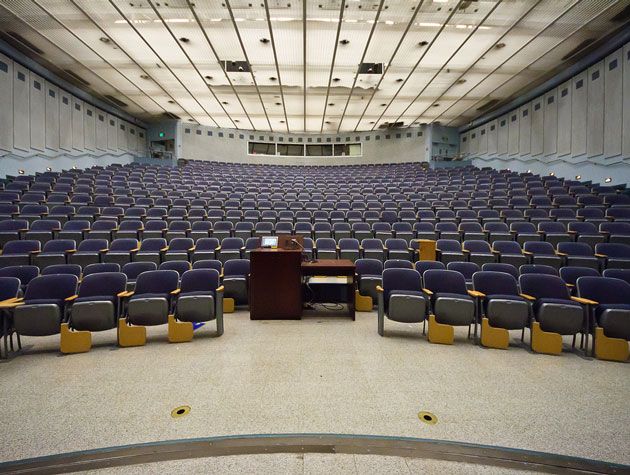
Sans Students: Is this what university classrooms will look like in 2020?

Higher Education is an unmovable object with an unstoppable force heading straight for it and universities are at ground zero. Classrooms as we know them may be doomed and the question is whether our country will lead the world in adapting to a new model, or whether we will be the last ones to accept reality.

The Value of the College Degree
The unmovable object in Higher Education is importance of the college degree in American commerce. Business lives or dies on information. The person who can access, filter, analyze, organize, and explain information tends to be valuable in a company.

High schools are tasked to help students graduate with basic competencies, but they are dealing with children who are still maturing into adulthood and that process needs to be complete before they are morphed into business men and women.

Those who believe high schools should be vocational schools are assuming that all children will become a construction laborer or office drone, so why bother with college prep? The concept of education as a training ground for corporate zombies is too simple-minded to apply in a country that encourages all citizens to reach their maximum potential.

College is where young adults are given the tools to become valued business leaders. College classes require a student to learn how to access and report information, which is central in business competitiveness. The business that can out think its competition always wins, which may be why many top businesses are more concerned about the degree, not the major. A college degree is more than a piece of paper, it is a badge of achievement that says this person is ready for the business world.

The Relentless Rise in the Cost of College
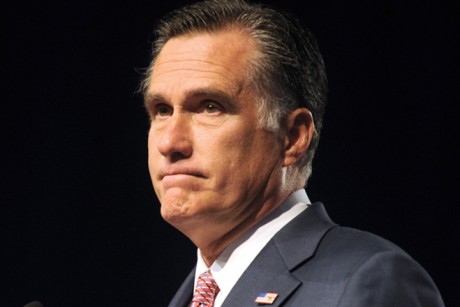
The unstoppable force is the rising cost of a college education. With cuts in federal and state budgets a greater share of the burden is being heaped on those who are least able to avoid it. In Mitt Romney’s failed bid to be President he suggested that students should borrow from their parents to pay for college. That was one telling sign that Romney is out of touch with the real world the rest of us live in.

March 2012 protest in Sacramento over tuition hikes

In 1991 the annual average cost for a university education was at $7,602 or over $30,000 for four years of college. In 2001, that annual cost had risen to $12,922 or over $50,000 in four years. In 2011, the annual cost had risen to $22,092, which meant it cost over $88,000 for the average college four-year degree. That is the equivalent of buying a new car every year a student attends college. If the trend continues it will cost a student an average of over $41,000/year for college by 2021, which means a four-year college degree in 2021 may cost over $167,000.

Students and their parents are already outraged by the rising costs, but it is universities who control the expenses, and therefore control the costs.

Based on current trends, the average annual cost for college may exceed $40,000 by 2021

Students want to be competitive for careers that will lead them to higher paying jobs, but they have no means to afford college and the list of parents who CAN pay over $22,000 a year for four years are on a first name basis with Mitt Romney.

The Other Unmovable Object – Faculty
Teachers at the college level have traditionally been considered the most important asset to a university and for centuries they were treated with dignity and respect by administrators, but financial pressures have made them a target for saving money. While students face escalating tuition and fees, university faculty are also a target of the unstoppable force. Professors have been constantly asked to accept budget cuts and teach more students for the same, or lower pay. 

Some universities have replaced expensive tenured professors with temporary faculty employed by contract on a semester by semester basis. Temporary faculty make a fraction of a full, tenured professor. Not surprisingly, a teacher that may not be offered a contract the next semester tends to be more accepting of increased class sizes, or other cost-cutting measures.

What may be surprising is that a college teacher is likely not receiving a significant portion of the tuition paid by the students in his or her classes. A temporary professor may bring in $100,000 or more in revenue each year for the university, but a temporary professor is often paid less than $4,000 per class with no benefits. Low pay and increased pressure to do more for no additional money makes the teaching environment unpleasant for the student and professor.

A Revolution Caused by the Internet
Ironically, the Internet was originally intended to allow one university to have quick access to the knowledge database at other universities and research laboratories. As it expanded and became commercially available in the late 1980’s and early 1990’s the public began to have access to a vast storage of on and off-campus knowledge without a student ID. Within a decade homes across the world were linked into a mass of dynamic information via business and personal websites, blogs, chat rooms, and other social media sites.

Suddenly anyone could access information and share ideas and they didn’t have to pay tuition to have easy access to it. Certainly some of the information was in error, but often people found information that outpaced the knowledge produced in books. Universities no longer held the monopoly on information.

Government Must Change
State governments and Higher Education face these problems:

  1. A college degree is still a valuable achievement and desired by the public and business.
  2. Tuition and fees are too high and the public can no longer afford them.
  3. Professors have been devalued in a system where more and more of the revenue is channeled away from the them.
  4. University administrators and government legislators have created a paradigm for Higher Education that is unsustainable.

Social media has changed the expectations of the public. People expect to be able to have ready access to anyone to whom they are paying for a service.

Controlling advanced knowledge within ivy covered walls is no longer possible in a world where anyone can do a Google search and know as much or more about the most current knowledge on any topic. However, just doing a Google search does not teach a person how to filter, analyze, organize, and report that information.

State-run universities have a unique opportunity to reinvent Higher Education. The challenge is that they are the most unlikely to do it. Administrators have Accreditation organizations that are established to dictate what Higher Education is and will be today and tomorrow based on the best practices of yesterday. That doesn’t work in a world where today is already history that was recorded by over 340 million tweets a day (March 2012 data.)

When the unstoppable force hits the unmovable objects (value of a degree and the need for faculty) few things about Higher Education will remain unchanged. Now is the time for State-run universities to dodge the upcoming annihilation and take the lead in reinventing Higher Education. They can start considering the following guidelines:

  • Tuition must stabilize and regress. Fees should be eliminated. Universities can assume that there will be no money available to siphon off for student activities, the football program, or any other money-absorbing entity. 
  • Support materials (textbooks, etc.) will be digital only and the cost will be pennies on the dollar of what students have been paying. Goodbye, McGraw-Hill. Hello, Faculty Publishing.
  • Classrooms will be more like Boardrooms with fewer students where the Professor is the CEO of knowledge and students must bring their best or beg for a second chance with someone else. Much of the lecture and information gathering will be done via webcasts and/or outside of class time. ‘Class’ will be where the work outside the classroom is brought in for discussion and idea sharing.
  • Class schedules will not follow a semester system and will be on a schedule that is more like a project team.
  • Faculty will lead students while at the same time work toward advancing knowledge on the subject matter.
  • The most important person to the student will be the educational coordinator (i.e. Counselor or Adviser in the old paradigm) who will create an individualized degree that is based on achieving a level of mastery information handling, not a number of credit hours.

The framework in which this happens must be within a government structure. Private enterprise has proven that when they try to create a system of higher learning they fail. It solves nothing to make Higher Education a profit-based program that is a poor imitation of the old, outdated model. If government can successfully create a new model it will make the United States of America the leader of advanced knowledge. If not, we can expect to be exporters of our future.

Links to:

What America Must Do:  Step 1 – Silence the Wackos in Politics
What America Must Do:  Step 2 – An Extreme Makeover of Government at All Levels
What America Must Do:  Step 3 – Restore Government Revenue and Fair Taxation
What America Must Do:  Step 4 – Balanced Budget By 2015, Debt under 50% of GDP by 2020
What America Must Do:  Step 5 – Restart a Federally Run Space Program

Romney’s Concession Speech

20 Thursday Sep 2012

Posted by Paul Kiser in Crime, Education, Ethics, Government, Government Regulation, Health, History, Opinion, Politics, Public Relations, Religion, Taxes, US History, Women

≈ 1 Comment

Tags

Ann Romney, concession, Democrats, economy, GOP, job creators, Recession, recovery, Republicans, speech, Unemployment, Willard Mitt Romney

November 6, 2012  4:34 PM EDT

I know the polls have not closed in…well, anywhere, but the results of this election are obvious, even to a multi-millionaire like myself. We’ve lost…again.

Many complained that we lied and deceived the voters in an attempt to be elected. What were we supposed to do? Our choice was to acknowledge that President Obama did a great job in tackling the mess we created and began rebuilding the country, OR lie. We were not going to win any elections by telling the truth!

This campaign was built on the idea that we could fool people long enough to be elected President. As I said in May, 47% of Americans are too smart to be tricked by our twisting of facts, and we knew that 30% of Americans would vote for me no matter how bad we ran our campaign. So this campaign came down to sucking in less than 23% of the electorate. Unfortunately for us most of the citizens of this country are not as stupid as we had hoped. 

But you have to credit us for our bravado in our attempt to buy and lie our way into the White House:

GOP Success: Stopping America’s Recovery

  • The Economy:  Our fault, but that didn’t stop us from blaming President Obama. We almost convinced America that President Obama failed because he didn’t create full employment, didn’t pave streets in gold, nor had honey flow out of our taps in four years. 
  • Unemployment:  This one is funny, You’ll laugh. We told people that the wealthy are …ready for this..THE job creators! I know, I know. How stupid do you have to be to know that private business loves high employment. Low unemployment means employees can demand better pay, better benefits, better working schedules and all those other headaches that come when too many people have a good job. Employers now have employees by the short hairs and we’re never letting go.
  • The Recovery:  It was remarkable under the circumstances, and conservatives fought hard to keep it from happening. There are no liberals in Big Oil and they worked with us to keep prices high this year. Still, no joy.
  • The Debt:  The truth is that the Bush-era tax cuts cut knees out of the federal budget. That and two mega-wars, plus the devastation caused when my conservative banking friends wrecked the economy. Sure the stimulus and bailouts increased the nation’s debt, but none of that would have been necessary if conservative policies hadn’t put all the ingredients together for an economic disaster.
  • Big Government:  We made it sound like President Obama made massive increases in government, and yet it was George Bush that created the TSA, and other massive increases in the size of federal government. Still, we just have to say ‘big government’ to stupid people and they start to sweat. It’s kind of fun.
  • Obamacare:  We were blessed to have a major Democratic lead program that wouldn’t be effective until 2014. We could paint it to be anything we wanted and we wanted it to be evil. Who could argue with me?
  • Foreign Policy:  Conservatives are warmongers. We love a good fight. We love a bad fight. We love it anytime we can send our young adults and technology to overseas to beat somebody up. I thought we had President Obama beat on foreign policy, but I sort of screwed it up in London…and Israel….and Poland. If you don’t like my foreign policy you can kiss my ass!

We also did a good job of ignoring what we didn’t want to talk about.

  • The Past:   We had a Republican National Convention and we didn’t even invite either of the Bush’s. We didn’t need to highlight the past and good riddance to both of them.
  • Taxes:   We didn’t want to talk about my taxes. As Ann said, if we let people see our taxes, “they will attack us!” Sure a President should have a thick skin, but who needs that when we can deny and  hide? Richard Nixon taught me that.
  • Family History:  I don’t want to discuss this, even now.
  • My First Name:  Seriously, who would vote for someone named Willard?
  • Women:  We probably should have been more sensitive to women’s issues, but really, who cares? Right Ann?
  • Education:  Smart people don’t vote for idiots. Why did you think we didn’t want to talk about education?
  • Crime:  We conservatives have always pushed a ‘lock’em up and throw away the key’ policy on crime. The problem is that it cost $30,000/year to house one inmate, and after they reach 55 years old, inmate costs go up to $60,000/year because of increasing medical issues. More inmates, higher costs. Who knew?

I know my mouth got this campaign into a lot of trouble, but honestly how can you only blame me for failed policies that are the very definition of being a conservative. Like everything else, it was the fault of the Democrats that I didn’t get elected as President.

Well, I guess I should end this before I say something stupid. I hope all of you feel better now that you won’t have Ann and I to kick around anymore. 

4 Lesson’s Yahoo’s CEO Marissa Mayer Has Taught Us

10 Monday Sep 2012

Posted by Paul Kiser in Business, Communication, Crisis Management, Customer Relations, Customer Service, Education, Employee Retention, Ethics, Human Resources, Information Technology, Internet, Lessons of Life, Management Practices, Opinion, Public Relations, Respect, The Tipping Point

≈ Leave a comment

Tags

CEO, employee morale, Google, Kathy Savitt, leadership, management by intimidation, Marissa Mayer, Mollie Spillman, Yahoo

Marissa Mayer: Management by Destruction

On July 16, Yahoo announced that they hired 37-year-old Marissa Mayer, a former Google Vice President (VP), as the new Chief Executive Officer (CEO) to turnaround the company. A little over a month later Mayer hired a new Chief Marketing Officer (CMO), which should not be surprising. How she did it tells us a lot about her management capabilities and about Yahoo’s Board of Directors.

Often a change in direction for a company will require new leadership in key management positions. Anyone who doesn’t know their job is in jeopardy when a new CEO walks in the door is kidding themselves. Sometimes a new CEO will ask for the top management to resign. Sometimes a new CEO will just give the old management team a severance package. Sometimes a CEO will take six months to get to know the company and then make changes. All these options a part of nominal business operations.

However, Mayer reportedly fired Mollie Spillman, her old CMO 1) by phone, 2) while she was on vacation, and 3) ten minutes before Yahoo’s official announcement that the new CMO would be Kathy Savitt.

Wow. Apparently, Mayer like burning all her bridges before she blows them up.

It’s important to note that Mayer’s age and/or gender are not at issue. Man or woman, old or young, what Mayer did was ethically questionable and has far reaching implications for Yahoo. Her slam-bam-you’re-fired-ma’am stunt is worthy of analysis for what it says about Mayer, Yahoo, and management-by-intimidation.

Lesson 1:  Mayer’s Questionable Ethics and Leadership
It doesn’t take guts to fire somebody. Firing someone is easy. Firing someone is a power trip. If you walk up to person on the street and say, “You’re Fired!,” it will probably only get you a confused stare followed by a laugh, but if you say, “You’re Fired!” at an underling employee, you have shown you are dominant and all powerful. To fire someone is a rush to the sadist.

Separating an employee from an organization with dignity and respect takes sensitivity, experience, and humility. It requires that the manager talks with (not at) the employee, and it requires the manager check their need for power at the door. Firing someone over the phone while they’re on vacation demonstrates a lack of experience and a lack of humanity.

In her defense, Mayer may have been reacting to another executive who left Yahoo one week before. It is possible that Mayer thought that Spillman might also leave and decided she would exercise a preemptive strike by replacing her before she could find another job. Still, that’s a weak reason to behave like a tree house club President.

Lesson 2:  How to Destroy Morale
When the CEO trash-n-bashes an employee it sends a message to everyone else in the company: Time to look for another job. How can any employee at Yahoo avoid wondering if they will be fired the next time they’re on vacation? How can any manager at Yahoo not believe that Mayer’s questionable ethics is now the model they should be following?

No Reason to Yahoo Behind This Sign

No Reason to Yahoo Behind This Sign

Mayer did make a peace offering to her employees soon after she took over by offering free food to full-time employees and a free iPhone. But her offerings weren’t free. In return for free perks she put extreme pressure to perform. She pushed a new product up by months and gave the development team one week to prove it could be done. When the team came back a week later and said it couldn’t be done on the schedule she demanded she said she would find another team that could do it.

This shows the classic fatal error in management-by-intimidation (MBI): Failing to trust and listen to the people you have working for you. It may be great to tell the investor a tale of tough-love while scratching your balls and dining on the company’s dime, but it really means that the customer is going to get a rushed, half-baked product that shows how mediocre your organization can be when it comes to innovation. Don’t get me wrong, some people…okay most people, need to be pushed, but most people don’t like to work in a threatening environment.

This shows the classic fatal error in management-by-intimidation:  Failing to trust and listen to the people you have working for you.

The result of MBI is that all your employees start looking for other employment options. The people with great ideas and skills are grabbed up by the competition and Yahoo will be left with the people who nobody else wants. Now you have an organization consisting of the worst performers.

Lesson 3:  Yahoo’s Future is in Doubt
In the past five years it has averaged a new CEO each year. That says more about the Board of Directors than it does about the CEO’s. The problem is that there is no quick fix and it is likely that Mayer management style is being encouraged by dysfunctional leadership in the Board room. Yahoo needs positive, creative, loyal, and happy employees if the company is to dig its way out of the hole its in. Creating an environment of fearful, anxious, angry employees is guaranteed to keep them noncompetitive now and in the future.

Throwing money, free food, or free iPhones may appease employees temporarily, but people want and need to be valued and treated with respect. The moment an employee feels that their neck is on the line is the moment they are no longer have ownership in the company, and when employees don’t have ownership, they stop caring. Uncaring employees are saboteurs in an organization. Yahoo likely has almost 15,000 saboteurs with intimate knowledge of the company’s secrets, weaknesses, and plans. That doesn’t bode well for customer satisfaction, nor company stock price.

Lesson 4:  Inexperience Does Not a Good Manager Make 
Of the Fortune 500 club, Mayer is the youngest CEO. Publicly, she has been a celebrated rising star at Google since she joined as employee #20 in 1999, and was Google’s first female engineer. Privately, some accused her of being a glory-hound seeking attention and fame. Despite having no business degrees (her bachelor’s and master’s degrees from Stanford are in computer engineering specializing in artificial intelligence,) she rose through the company to be a Vice President.

It was appropriate for Yahoo to hire a young executive. There are many people under 40 who are wise beyond their age, or have solid experience in people and resource management; however, Mayer’s lack extensive executive management experience seems to be demonstrated in her immature behavior.

Bonus Lesson:  Micromanagement – Slapping Your Team in the Face
It was reported last week that Mayer is now reviewing the candidates for every open position at Yahoo. That’s correct, Mayer is overseeing every potential new hire for every opening in a company of 15,000 employees. Nothing says you’re a ‘stupid ass’ to your management team quite like taking away their ability to choose who will work for them. If anyone at Yahoo didn’t know that they are valueless, Mayer and the Board of Directors have certainly removed all doubt.

Every business school should be studying Yahoo. Studying successful management is important, but studying an organization that is in a meltdown can teach future would be leaders why you can’t build up your organization by tearing apart your employees.

Lack of Quality Jobs Killing Nevada’s Future

15 Wednesday Aug 2012

Posted by Paul Kiser in About Reno, Business, College, Education, Ethics, Government, Higher Education, Politics, Public Relations, Taxes, Universities

≈ Leave a comment

Tags

Brian Sandoval, business friendly, Conservatives, Employment, GOP, job creation, job quality, Nevada, Republicans, Sheldon Adelson, Unemployment

No degree? No experience? Welcome to Nevada where you have no future.

For years Nevada conservatives have waved the banner of the ‘business friendly myth‘ that low taxes and minimal regulation will attract new business to Nevada. The truth is that ‘business friendly’ does little, if anything, to attract quality jobs and makes this former Mexican province one of the worst in the nation in societal quality-of-life factors.

Poor Job Quality
Typical experiences of Nevada’s unemployment disaster indicate a long-term unemployment crisis and not a temporary business downturn.

In May of this year a master’s degree engineering graduate from the University of Nevada wanted to keep his family in the state but had to move his family to San Jose, CA to find employment. Another unemployed resident couldn’t find a job because she was “overqualified.” Her skills consisted primarily of a stable work history managing a telephone answering service. In Nevada there are no jobs now nor in the near future that will be available for anything but the lowest qualified worker.

Sheldon Adelson: Godfather of Conservative Politics

While most of the country has experienced some recovery from the massive job losses between 2008 and the first quarter of 2010, Nevada has not, despite the assurances of Governor Brian Sandoval. Conservatives point to wealthy Nevadans as the ‘job creators’ who will be the source of new jobs. Instead wealthy people like casino mogul Sheldon Adelson have poured millions of dollars into campaigns for conservative politicians ( $70 million so far,) while the citizens of the state have borne the impact of the unemployment crisis.

The Las Vegas Review-Journal article by Ed Vogel stated that of the few new Nevada jobs available in the future, most will be low-paying, low-skill, non-career jobs. The top four fastest growing jobs in Nevada are 1) retail salespeople, 2) waiters/waitresses, 3) cashiers, 4) gaming dealers.

These type of jobs do not provide for a career with a progressive future and leave the worker with little spendable income after basic living costs. The highly qualified worker has little hope of finding a job that matches his/her abilities. This creates a ‘Catch-22’ scenario. Educated, skilled workers can’t find work in Nevada so they go elsewhere and businesses with high quality jobs want quality workers, which Nevada can’t retain for a lack of quality jobs.

Nevada is a perfect storm of failure under conservative ‘business friendly’ policies which financially benefit those who allegedly are the ‘job creators,’ but leave the citizens in a ‘unfriendly’ job environment.

15 Days in January – Day 12

25 Wednesday Jan 2012

Posted by Paul Kiser in Education, Fiction, Government, History, Public Relations, Science, Space, Technology, US History

≈ 1 Comment

Tags

1986, Challenger, Christa McAuliffe, Dick Scobee, Kennedy Space Center, KSC, NASA, Space Shuttle, STS-51L, Teacher in Space

(NOTE: The following is a fictionalized account of the 15 days in January 1986 leading up to the Challenger Space Shuttle disaster on the 28th of that month; however, the details of weather and NASA events are based on known historical data.)

Titusville, Florida
Saturday, January 25, 1986
High Temp: 73° F Low Temp: 57° F

Teacher in Zero G - Christa McAuliffe trains for STS-51L

The launch of STS-51L is now scheduled for Monday. We were scheduled for a liftoff Sunday morning, but tomorrow’s weather is predicted to be as bad or worse than today’s, which was foggy until about noon. Hopefully, we can get Challenger off the ground on the 27th and then focus on Columbia’s next launch in March.

The seven astronauts going up with Challenger on Monday include our first teacher. The Teacher in Space Project was announced by President Ronald Reagan in the Fall of 1984. Last Summer Vice President George Bush announced that Sharon Christa McAuliffe was selected as the first Teacher in Space from 11,000 applicants. Christa teaches in Concord, New Hampshire and submitted her application on the last day they were being accepted.

STS-51L crew trains for emergency evacuation from launch pad

Mrs. McAuliffe, as she is known in the classroom, has always dreamed of being part of the space program and is pleased to have the chance to take her classroom skills into space. Christa talked about the opportunity she has been given, saying:

Imagine me teaching from space, all over the world, touching so many people’s lives. That’s a teacher’s dream! I have a vision of the world as a global village, a world without boundaries. Imagine a history teacher making history!

In addition to Mrs. McAuliffe will be four members of the ‘Class of 1978.’ Commander Francis R.’Dick’ Scobee, Mission Specialists Ellison ‘El’ S. Onizuka, Judith ‘Judy’ A. Resnik, and Ronald ‘Ron’ E. McNair were all selected as astronaut candidates in January of 1978. The other two crew members are Pilot Michael J. Smith and Payload Specialist Gregory Jarvis.

Commander Dick Scobee noted the opportunity of the Teacher in Space Project when he said:

“My perception is the real significance of it, and especially a teacher, is that it will get people in this country, especially the young people, expecting to fly in space. That’s the best thing that can happen to our program. The short-term gain is a publicity gain. The long term gain is getting expectations of the young people in this country to the point where they expect to fly in space, they expect to go there, they expect this country to pursue a program that allows it to be in space permanently to work and live there, to explore the planets.”

The Teacher in Space Project is just one more part in keeping America a world leader by bringing space down to Earth. On Monday we will take the next step with the beginning of mission STS-51L…assuming the weather cooperates!

15 Days in January – Day 11

24 Tuesday Jan 2012

Posted by Paul Kiser in Communication, Education, Fiction, Government, History, Information Technology, Science, Space, Technology, US History

≈ Leave a comment

Tags

Challenger, Halley's Comet, Kennedy Space Center, KSC, NASA, Satellite, Space Shuttle, SPARTAN 203, STS-51L, TDRS, Teacher in Space

(NOTE: The following is a fictionalized account of the 15 days in January 1986 leading up to the Challenger Space Shuttle disaster on the 28th of that month; however, the details of weather and NASA events are based on known historical data.)

Titusville, Florida
Friday, January 24, 1986
High Temp: 66° F Low Temp: 55° F

TDRS satellite to be launched by Challenger STS-51L

This afternoon’s launch had to be scrubbed. The weather here was cool and damp, but the real problem was the weather at one of the abort landing sites. We have an alternate abort site but they cannot handle a nighttime landing (an abort on this side of the world would be a night landing there,) so the launch was rescheduled for tomorrow morning in case we have to activate the alternate abort site. That would allow Challenger to land in daylight at the alternate site if they have to abort.

The launch was then pushed back another day because of the morning versus afternoon liftoff. The problem is that we have a set amount of work to do and it was quickly determined that we would not be ready for launch by Saturday morning. Mission Control then moved the launch to Sunday morning. 

SPARTAN 203 satellite to have its eye on Halley's Comet

Once we finally do get Challenger in orbit, the STS-51L mission has several goals. One will be to launch the TDRS-2 satellite, which is a communications relay station for analog and digital signals. These satellites are the next generation in communication technology allowing information to be transmitted around the world in seconds. Another small satellite called SPARTAN 203 is being deployed to observe Halley’s Comet, which will reach its perihelion (closest approach to the Sun) on February 9, 1986.

In addition, this mission will send our first “Teacher in Space.” More about that tomorrow. 

PBS Station To Cut After-School Programming To Attract Donors

28 Wednesday Dec 2011

Posted by Paul Kiser in About Reno, Communication, Customer Relations, Customer Service, Education, Ethics, Generational, Management Practices, parenting, Public Relations

≈ Leave a comment

Tags

Child Development, children, children's programming, Idaho PTV, KNPB, Kurt Mische, Nevada, PBS, PBS Kids, PBS Kids Go, Reno

Paul Kiser

Reno, Nevada PBS affiliate, KNPB is cutting almost a third of its dedicated children’s programming and all of its dedicated after-school shows that target school-aged children. Effective next week all PBS Kids shows on KNPB will end at 12:30 PM, cutting 2.5 hours from its current 9 hours of children’s programming. The programming cuts will put KNPB third from the bottom of 30 western United States PBS stations in total hours of daily children’s programs  and the only PBS affiliate without after-school programming.

Kurt Mische, President and CEO of KNPB, denied that the station is cutting ‘all’ programming for school-aged children, and noted that programs like NOVA, Nature, American Experience, and Great Performances “are of great benefit…and interest…to school age children.” Those programs along with the Antique Roadshow will now air once a week at 5:00 PM after PBS News Hour and The Charlie Rose Show, which will fill the after-school time slots at 3:00 PM and 4:00 PM.   

Mische indicated that the programming changes are being initiated to attract donors and money, which school-age children are not providing to the non-profit organization.  He explained,  

“Making our changes will allow us to serve a larger audience of viewers…and donors…who not only watch but help to financially support our important service.”

Another PBS affiliate recognizes the issue, but has different philosophy regarding programming for school-age children. Ron Pisaneschi, the Director of Content for the PBS affiliate in Boise, Idaho (Idaho PTV) said that there is more programming competition for the attention of school-age children because of commercial children’s television on the cable channels, but added, “even though the audience is small, we want to serve them.” 

Hours of Daily Children's Programming of 30 Western US PBS Stations

Programs cut from KNPB’s schedule are The Electric Company for 6-10 year-olds, Cyberchase for 8-11 year-olds, Super Why! for 3-6 year-olds, WordWorld for pre-schoolers, and a second daily airing of Arthur for 4-8 year-olds. KNPB already had cut Fetch! for 6-10 year-olds earlier this year. The only two PBS stations with fewer hours of children programs are Rohnert Park and San Mateo, California. Both are in the San Francisco area market where PBS affiliate KQED has 19.5 hours of children’s programming in addition to a 24-hour PBS Kids channel. San Mateo PBS affiliate KCSM has only one hour of daily children’s programming; however, KCSM is currently up for sale and accepting bids until February 14, 2012.

Ironically, Mische’s attitude about the value of children’s programming to KNPB and to the State of Nevada was more supportive last year when he stated,

KNPB is proud to be a leader in education. At a time when education in Nevada garners its share of negative publicity, KNPB is taking action to impact education and life-long learning. We broadcast 52 hours per week of award winning, high quality, and trusted children’s programs that delight and teach youngsters.

KNPB 2010 Annual Report

The children’s shows, including all after-school shows will be cut effective January 2, 2012.

A version of this article first published as
PBS Station To Cut After-School Programming To Attract Donors

on Technorati.com

USA PDT [Twitter: ] [Facebook] [LinkedIn] [Skype: 775.624.5679]

Graph: Hours of Children’s Programming on 30 Western US PBS Affiliates

28 Wednesday Dec 2011

Posted by Paul Kiser in About Reno, Communication, Customer Relations, Customer Service, Education, Ethics, Generational, Management Practices, parenting, Public Relations

≈ Leave a comment

Tags

children, children's programming, KNPB, Nevada, PBS, PBS Kids, Reno

How many hours of dedicated children’s programming are on PBS stations in the western United States?  This graph shows that after KNPB cuts 2.5 hours of children’s programming on January 2nd, it will be tied for third among 30 western US PBS affiliates for the least amount of children’s programs (programming survey based on changes to be made in January 2012.) KNPB will also be the only station among those surveyed without after-school programming.

Click on graph for larger image

Newer posts →

Other Pages of This Blog

  • About Paul Kiser
  • Common Core: Are You a Good Switch or a Bad Switch?
  • Familius Interruptus: Lessons of a DNA Shocker
  • Moffat County, Colorado: The Story of Two Families
  • Rules on Comments
  • Six Things The United States Must Do
  • Why We Are Here: A 65-Year Historical Perspective of the United States

Paul’s Recent Blogs

  • Dysfunctional Social Identity & Its Impact on Society
  • Road Less Traveled: How Craig, CO Was Orphaned
  • GOP Political Syndicate Seizes CO School District
  • DNA Shock +5 Years: What I Know & Lessons Learned
  • Solstices and Sunshine In North America
  • Blindsided: End of U.S. Solar Observation Capabilities?
  • Inspiration4: A Waste of Space Exploration

Paul Kiser’s Tweets

Tweets by PaulKiser

What’s Up

May 2026
S M T W T F S
 12
3456789
10111213141516
17181920212223
24252627282930
31  
« Jun    

Follow Blog via Email

Enter your email address to follow this blog and receive notifications of new posts by email.

Join 688 other subscribers

Create a website or blog at WordPress.com

Loading Comments...