3rd From Sol

~ Learn from before. Live now. Look ahead.

3rd From Sol

Category Archives: Management Practices

Five Signs That Should Be A Dealbreaker When Purchasing A Pre-owned House

13 Tuesday May 2014

Posted by Paul Kiser in Business, Customer Relations, Customer Service, Ethics, Honor, Lessons of Life, Management Practices, Public Relations

≈ Leave a comment

Tags

buying, home, housing, housing costs, housing prices, investment, Money, price, realtor, realty, Selling, value

Greed is NOT good when purchasing a home. The ethics of selling a house have reached new lows and some realtors are little more that used car dealers looking to take advantage of the gullible and the inexperienced. Here are five things that should encourage you to walk away from a sale.

The Angry Realtor
Regardless of the circumstance, the sale of a home should not be a cause for anger. Terms are either acceptable or not, and an overly emotional or condescending realtor is a good indication that he or she is trying to distract the buyer (and sometimes the seller.) The ethical realtor understands that buying a home is one of the big decisions in life and everyone should be happy when the check is exchanged.

Unfortunately, the past decade has seen ruthless and unethical realtors gain a foothold in an otherwise, honorable profession. If a realtor accuses you of being unreasonable, they may be trying to attack your sense of self and create doubt so that you’ll back away from your convictions. Again, the terms are either acceptable or not, and if not, a counter offer or a polite decline are the only appropriate responses.

Buying a home can be a win-win, or win-lose depending on the ethics of the seller

Buying a home can be a win-win, or win-lose depending on the ethics of the seller

Flipped Houses Tricks
Buying a cheap house, fixing it up, and reselling it used to be an honorable vocation. It is no longer.

When profit is the primary motive, ethics of the seller and their realtor become meaningless. Anything in a house that needs fixed or replaced will likely be done at the lowest price with the least amount of quality and work. Here are some tricks in remodeling for profit that you should be wary of when buying a home:

Single pane, aluminum frame windows are great if you like high heating bills and wasting energy

Single pane, aluminum frame windows are great if you like high heating bills and wasting energy

  • New windows trick – Insulating dual pane windows are a standard in today’s home. Homes with single pane windows should have been updated in the during the last 20 years. Rather than updating all the windows, unethical sellers will only replace the windows on the front of the house, which improves its curb appeal, but doesn’t fix the problem.
  • Landscaping trick – Landscaping is a key indicator of how the house was maintained. People who didn’t take care of their yard, probably didn’t take care of their house. The unethical seller will plant a few new trees or bushes, and some decorative stone to cover the weeds and dead lawn. If everything looks new, ask about the drip system for the plants. If their isn’t one, then you know they are just trying to disguise poor maintenance with rock and mirrors.
  • Plumbing fixtures trick – New toilets and faucets make a house look updated, but that can mean it is updated. The unethical seller will use the cheapest toilets and fixtures at Home Depot or Lowe’s and pay an unlicensed handyman to install them on the lowest bid. Run every faucet, flush every toilet, and look for leaks, and/or sloppy installation.
  • New carpet trick – Worn floors and carpet will cause most buyers to walk away from a house. Enter cheap tan carpet. The quickest and cheapest fix is inexpensive tan carpet. A house that has new tan carpet gives the feel of a well-maintained home, but this should cause the potential buyer to look even closer at the home. It is worth the trip to a carpet store before a buyer begins home shopping. A home buyer should know the look and feel of high quality carpet versus cheap tan carpet.
  • Electrical outlets trick – A home with ungrounded, (AKA:  two-prong outlets,) is in desperate need of updating. It means that the house should be rewired (See Outdated Systems.) To disguise this issue, the unethical seller will change the two-prong outlets with three-prong, (AKA:  grounded) outlets, but they won’t replace the wire, nor will they have run a grounded wire to each outlet.

Bidding Wars
Bidding wars on a home is a win for the seller and always a loss the buyer. Home buying is not a game. The pressure of people bidding against each other drives the price up, and the value down. Walk away from a bidding war.

Getting a great deal is a matter of being in the right place at the right time. By shopping for homes over a period of months, the chance of being at the right place and time increases. There is a name for people who expect to spend only a week looking for a new home: Suckers.

Outdated Systems
Because everything wears out, and because newer house systems (heat, light, plumbing, electrical, appliances, etc.) are more efficient, buying a home with outdated equipment means, 1) that the previous homeowner didn’t do the maintenance they should have, and 2) the real cost will be much higher as you will be burdened with the cost and inconvenience making it current. Here are some systems you should ask about before you buy:

  • Water Heater Tanks – The life span of most water heaters is ten to thirteen years. If the heater is older than 2001, it needs to be replaced.
  • Furnaces – A well-maintained furnace can last 25 years. A furnace installed before 1990, is not only at the end of its life, it is costing you money because it is inefficient.
  • Electrical – The electrical system has about a 40-year life span. Any home built before 1975, should be rewired. It’s a tough job and expensive. It is not a job that should be done on the lowest bid.
  • Plumbing – Metal pipes can last for 70 years or more. Newer PVC (plastic) pipe has a much shorter life (25 to 40 years.) Clay pipes (used for sewer pipe in the mid-1900’s, is past its lifespan. A good home inspector can verify the state of the existing plumbing and their advice should be heeded.

High Pressure Sale
Anytime the buyer or their realtor is applying undo pressure for a decision the buyer should be ready to walk away. Used car salesmen have used this tactic for decades to push people into a deal that they don’t want. It also means that the seller may have significant problems with the house that they don’t want the buyer to discover.  

Certainly the buyer needs to make timely decisions, and a seller should not expect to have to pass up other offers while waiting for another buyer to decide, but if the seller is demanding an immediate decision, then warning bells should be going off in the buyer’s mind.


Is Reno’s NBC Affiliate Moving Back to the Middle?

09 Wednesday Apr 2014

Posted by Paul Kiser in About Reno, Branding, Business, Communication, Customer Relations, Customer Service, Ethics, Government, Honor, Management Practices, Opinion, Politics, Pride, Public Image, Public Relations, Respect, Taxes, Traditional Media

≈ Leave a comment

Tags

ACA, Affordable Care Act, FCC, jFox News, journalism, Kai Jackson, KRNV, MyNews4, NBC, SBGI, Sinclair Broadcast Group, Standards, Unemployment benefits, WJZ

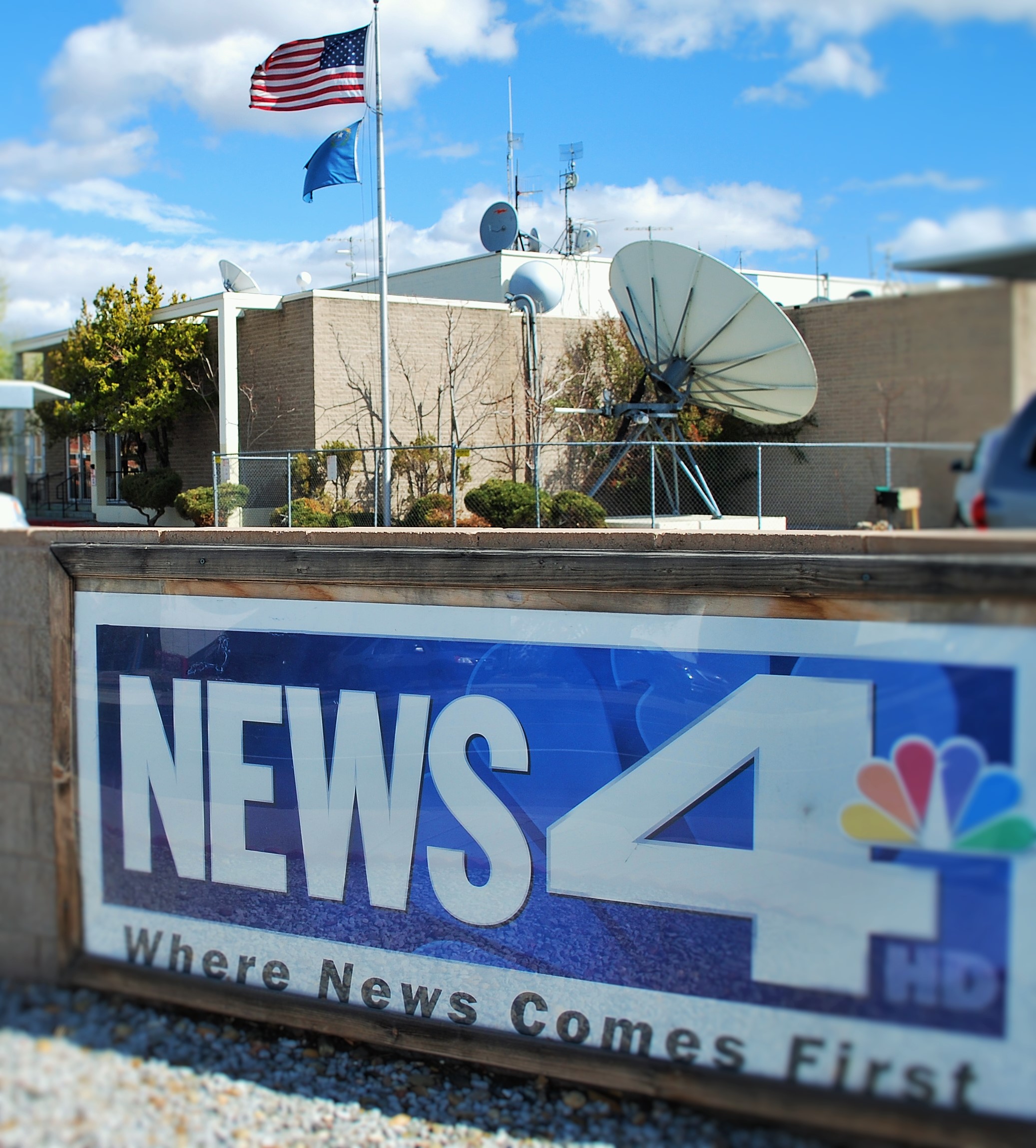
Image by Paul Kiser

KRNV reconnecting with the rest of the community?

Something happened at KRNV, Reno’s NBC affiliate, on April 8. It was not what they did, but what they didn’t do. Tuesday’s 6 PM newscast of the Sinclair Broadcast Group‘s (SBGI) station didn’t run an anti-government story.

It’s possible it they were just having an off day. It’s possible that NBC has applied pressure to the station to not run Fox News-type stories. It’s possible that the station’s staff has had enough of sacrificing personal reputations for the conservative agenda of their parent organization. It’s possible the parent organization has had an epiphany regarding serving all viewers, not just conservatives. Who knows? Regardless, it was a refreshing change.

The station did run a Sinclair produced story in the ‘A’ Block, but rather than presenting an overt bias, Kai Jackson, a former news anchor on Baltimore’s CBS affiliate WJZ, offered a story about the cost of extending unemployment benefits. Jackson, who joined Sinclair in December 2013, pointed out that $500 billion have been spent on unemployment benefits since 2008, which is an issue that connects with the conservative viewer. He then he offered the viewpoint of a small business person who says that the money has a positive impact on his revenue as it flows into America’s economy.

Image by Karl Merton Ferron / Baltimore Sun

Kai Jackson at the desk of WJZ CBS Baltimore

One could argue that the issue itself is more of a concern by Republicans, but that is not accurate. Democrats and liberals understand that unemployment benefits are not a long-term solution; however, the money paid out to the unemployed is not lost. It flows through the economy, which is also important. Jackson presentation of the issues was fair and educated conservatives and liberals on the complexity of the problem.

What Jackson didn’t do was line up a long list of rabid conservative ‘experts’ to manipulate the story, nor did he indicate his personal spin on the issue.

Giving the Viewer What They Want or What They Need?
A news team can either manipulate news to invoke an emotional response, or they can work to educate the viewer on  the issues of the day and let the viewer decide how they feel about those topics. In the case of the former the news is sexy and entertaining. In the latter case the news is less emotional and requires more intelligent thought.

The excuse that Fox News-type reporting is just giving the viewer what he or she wants is same rationale of a drug dealer or prostitute. Reporting news should not be an attempt to manipulate emotions. News shouldn’t be anti-government, nor should it be pro-government. This does not mean that news has to be neutral, just that it can’t be driven by a political agenda.

The conservative and liberal views in the United States are both essential to our prosperity. Both viewpoints tend to carve out policies that succeed. A perfect example is the Affordable Care Act (ACA.) It was the health care reform proposed by the Heritage Foundation decades before it became law under President Obama’s administration. Despite Fox News stories that are trying to paint ACA as a disaster, the facts indicate that the number of uninsured people has dropped significantly and the program is actually succeeding.

A local television news organization is not a blog. It operates under the rules created by the FCC to protect the public trust. For whatever reason, yesterday KRNV rose to the expectations of that public trust.

Sinclair Opinion Survey is an Epic Fail of Research

09 Wednesday Apr 2014

Posted by Paul Kiser in About Reno, Branding, Business, Communication, Customer Relations, Customer Service, Ethics, Government, Government Regulation, Health, Honor, Management Practices, Opinion, Politics, Pride, Public Image, Public Relations, Technology, Traditional Media

≈ Leave a comment

Tags

Affordable Care Act, Galen Institute, Grace-Marie Turner, Kevin Kuhlman, Kristine Frazao, KRNV, Manhattan Institute, MyNews4, National Federation of Independent Business, NFIB, poll, SBGI, Sinclair Broadcast Group, survey, survey design

Kristine Frazao

Kristine Frazao – SBGI Corporate News Correspondent

Kristine Frazao, National Correspondent for Sinclair Broadcast Group, Inc. (SBGI,) delivered another anti-government news story that was aired on Reno’s NBC affiliate, KRNV, on Monday night. Her stories tend to be one-sided, Fox News-type reports that are long on manipulation and short on facts.

But on Monday, April 7, she came armed with a new ‘”weekend online poll” conducted by her employer (Sinclair) and she was ready to prove that she finally had undisputable evidence to back up her report. 

The piece used two clips in three seconds of ‘people on the street’ comments, followed by a third man in an eleven second response in broken English:

“very, very,…ah,.. big…uhm…debt, …uhm,….and is growing exponentially”

It was fourteen seconds of everyone’s life that can’t be recovered. Then Frazao revealed her ‘data.’

The Online Poll Fiasco
Frazao probably doesn’t know that for a survey to be valid, there are certain standards that have to be met. One is that the group surveyed has to be unbiased. Most researchers use random survey techniques to prevent harvesting the opinions that represent a biased group. That involves the researchers, 1) selecting the survey participants and, 2) utilizing a scientific method that allows anyone in the population being surveyed to be selected.

For example, randomly calling people is not usually scientific because it only lets the people who have telephones to be surveyed. An online poll is almost always considered unscientific because it only represents those who have Internet, understand how to use a computer, and find the web page with the survey.

So how did Sinclair post this survey? It took me several hours to find it because Frazao offers no information about how the survey was taken in her story. I finally found it as part of a larger survey on mostly Fox News station websites. In Reno, the survey can only be found on KRXI, the Fox affiliate, not on KRNV, nor Sinclair’s other station, KAME.

That issue alone destroys the credibility of the survey, but it gets better.

Image by Paul Kiser taken from MyNews4 newscast

Which question do you answer?

The survey question is designed to ask two questions. First, do you trust President Obama? Second, Do you think the Affordable Care Act will improve your coverage? If a respondent doesn’t trust President Obama, then the answer is going to be ‘no’ to both questions regardless of what the person thinks about the second question. Since this survey was on Fox News stations, it’s actually surprising that anyone answered ‘yes’ to the question.

But it gets better still.

Frazao read out the results as they appeared on the screen.

Image by Paul Kiser taken from MyNews4 newscast

2 + 7 = 9, carry the 1…goes this advanced math is hard!

Did you catch the problem? Yep, the numbers add up to 90%, not 100%. My guess is that the ‘Maybe’ group is supposed to be 11%, but the fact is that Sinclair people didn’t recognize the error, and Frazao didn’t either.

Image by Paul Kiser taken from MyNews4 newscast

Anti-ACA crusader from Monday’s (7 April) news story

The rest of Frazao’s story brought out the usual conservative ‘experts.’ Grace-Marie Turner and her 19-year crusade against health care reform, wearing exactly what she wore for last week’s ‘expert testimony’ against the Affordable Care Act. Once again she threw out numbers that predicted doom and despair, but Turner had no supporting data .

Image by Paul Kiser taken from video of KRNV newscast 1 April 2014

From last week’s story…is she wearing the same….?

Frazao also presented Manhattan Institute chart of the United States showing the difference in health care insurance premiums for a 27-year-old, by State, before and after the Affordable Care Act. Of course, prior to the Affordable Care Act the 27-year-old might not have been able to get coverage, and the chart doesn’t account for government subsidies.

And the Manhattan Institute? Another conservative think tank. At least Frazao is consistent in her ‘experts.’

Frazao brought out another conservative for more doom and gloom. She introduces Kevin Kuhlman, of the National Federation of Independent Business (NFIB) by saying:

“Kevin Kuhlman with the National Federation of Independent Businesses (sic) says small businesses are already feeling it in their bottom-line.”

The only problem with that statement is that the provisions effecting businesses have been delayed until 2015, so how is the Affordable Care Act hitting the bottom-line in 2014?

Frazao does have one final person-on-the-street interview who praises the Affordable Care Act for the mental health benefits, but then Frazao ends by going back to her poll, and the ‘pessimism’ it shows about the future of Obamacare…the poll that doesn’t even add up.

NEXT:  What happened on Tuesday? Has KRNV decided to go back to responsible journalism?

Reno’s NBC Affiliate Runs Anti-Union Press Release As News

09 Wednesday Apr 2014

Posted by Paul Kiser in About Reno, Branding, Business, Communication, Customer Relations, Customer Service, Education, Ethics, Government, Management Practices, Opinion, parenting, Politics, Pride, Public Image, Public Relations, Taxes, Traditional Media

≈ Leave a comment

Tags

KRNV, labor unions, MyNews4, Nevada Policy Research Institute, NPRI, On Your Side, SBGI, schools, Shelby Sheehan, Sinclair Broadcast Group, teacher's unions, Washoe County School District, WCSD

Taking another step away from journalism, KRNV co-anchor Shelby Sheehan presented a press release from the conservative Nevada Policy Research Institute (NPRI) as news during the April 7th 6 PM broadcast. In what has been an almost nightly anti-government feeding frenzy, the NBC affiliated station, managed by Fox News operator, Sinclair Broadcast Group (SBGI,) announced that according to NPRI, 168 educators left the Washoe County teacher’s union.

Image by Paul Kiser from KRV newscast

Conservative NPRI spokesperson, Shelby Sheehan

Sheehan introduced the story by admitting that NPRI has a statewide campaign against the teacher’s union and they are:

“...letting teachers know when and how they can leave (the union,) so many are doing just that…”

The KRNV veteran anchor briefly mentions that the two percent loss in membership occurred in the Summer of 2013, and then wraps up the NPRI media release by suggesting that more teachers want to leave, but can’t because:

“…once they (the teachers) do (join the union) they only have a short period of time to get out of their membership, which they say (NPRI) prevents more teachers from leaving.”

Sheehan’s sole source for the story was NPRI, which is an anti-government think tank that, among other conservative agendas, is anti- public school and pushes for school vouchers and charter schools. They represent the polar position against unionized teachers. 

Other than her paraphrasing the information given to her by NPRI, Sheehan reported no information or statements from a teacher, the union, nor an independent source. She apparently didn’t even question NPRI’s information, nor why they were just now releasing data that was almost a year old.

NEXT:  Sinclair’s Survey of Shame (To be released 9 April 2014 at 6:30 AM PDT)

Local TV Affiliate News Reputation Displaced With Conservative Propaganda Makeover

07 Monday Apr 2014

Posted by Paul Kiser in About Reno, Branding, Business, Communication, Customer Relations, Customer Service, Ethics, Government, Government Regulation, Health, Honor, Management Practices, Opinion, Politics, Public Image, Public Relations, Traditional Media

≈ 1 Comment

Tags

ABC, ABC News, based, CBS, CBS News, conservative, Cunningham Broadcasting, Deerfield Media, Disney Co, FCC, Federal Communications Commission, Fox, Fox News, journalism, KAME, KRNV, KRXI, LMA, local affiliate, Local Management Agreement, NASDAQ, NBC, NBC News, News, News4, On Your Side, propaganda, SBGI, Sinclair Broadcast Group, television, TV

SBGI LogoSinclair Broadcast Group (SBGI) and related companies have been buying up local non-Fox affiliated stations and pushing conservative biased news stories into the local news programs.

Graphic thanks to NASDAQ

Sinclair stock hit its high at the beginning of 2014, but has been sliding downward for the last three months (from NASDAQ website)

Since September of 2011, Sinclair Broadcast Group or their affiliated companies (Cunningham Broadcasting, Deerfield Media) have acquired or obtained a Local Marketing Agreement (LMA) for almost one hundred local television stations. According to its website, Sinclair now operates or owns 29 ABC, 26 CBS, and 17 NBC local affiliated stations in addition to 41 Fox and 54 other affiliated stations.

Fox News Masquerading As Reputable Journalism
By snatching up ABC, NBC, and CBS affiliates, Sinclair masks itself under the traditions of reputable journalism of the three historic broadcast giants. The public trust of news anchors built over decades is used to distract viewers from news stories slanted to provoke outrage at the United States government and policies opposed by conservatives. News stories for Sinclair stations are manufactured by the parent organization and inserted into the local news. The stories employ interviews with conservative sources, often with no interview with the  agency or organization being accused of fraud, waste, or corruption.

In Reno, Nevada, the NBC affiliate, KRNV, has run stories on almost a daily basis from the parent organization that suggested and/or accuse waste or government conspiracy. In some cases, clips from Fox News are used, rather than from the NBC parent organization. Recently KRNV 6 PM broadcast ran ‘A’ Block stories (headline news) regarding the Affordable Care Act (e.g.; March 26, April 1) and gun laws (e.g.; March 28) that used people with a known conservative bias as their sources.

The LMA Loophole
Federal Communication Commission (FCC) rules do not allow licensing of more than one television station in a market to a person or company; however, during the first George Bush administration (1991) Sinclair Broadcast Group convinced the FCC to allow Local Marketing Agreements (LMA’s) that would allow a person or company to own one station and “operate” another station providing the latter station was licensed to a different person or corporation.

This has allowed Sinclair to go on a buying binge of television stations in the same market as their Fox stations. Sinclair uses Deerfield Media and Cunningham Broadcasting to own the licenses of stations where Sinclair already owns a television license. All Deerfield and Cunningham licensed stations are operated by Sinclair, and the family that owns Sinclair controls 90% of the stock in Cunningham Broadcasting.

In Reno, Nevada, the Sinclair Broadcast Group owns the license for Fox affiliate, KRXI, and operates the MyNetworkTV affiliate, KAME (licensed to Deerfield Media,) as well as the NBC affiliate, KRNV (recently licensed to Cunningham Broadcasting.)

This allows Sinclair to effectively control three stations in one market and supplant  reputable journalism with conservative propaganda.

The Lingering Question
There is ample evidence that Sinclair Broadcast Group is using loopholes in the FCC regulations to control multiple stations in a single market. It is also apparent that news stories manufactured by Sinclair are shoddy and biased. The question is whether or not the people behind Sinclair are trying to pander to conservatives in order to increase profits or if they are perverting journalism for a conservative agenda. In one case it is a matter of greed, in the other, a matter of a betrayal to the American citizen.

An audit of all of the communications, finances and contributions of the companies, vendors, Board of Directors, and owners involved is the only way we will know.

Reno NBC News Station Runs Another Conservative-Laced Story

07 Monday Apr 2014

Posted by Paul Kiser in About Reno, Branding, Business, Communication, Customer Relations, Customer Service, Ethics, Government, Government Regulation, Information Technology, Management Practices, Opinion, Politics, Pride, Public Image, Public Relations, Technology, Traditional Media

≈ Leave a comment

Tags

A Block, ACA, AEI, Affordable Care Act, American Enterprise Institute, biased, Chris Vanocur, Columbus, Fox News, Galen Institute, Grace-Marie Turner, health insurance, Healthcare, Joe Antos, Jon Lovitz, journalism, KRNV, KSNV, NBC, NBC News, Obamacare, Ohio, SBGI, Sinclair Broadcast Group, WSYX

Image b Paul Kiser

Is KRNV a Fox or NBC affiliate?

On April 1, Reno’s NBC affiliate, KRNV, has ran another biased ‘A’ Block (headline news) story attacking the Affordable Care Act (ACA) featuring a reporter from the Sinclair Broadcast Group (SBGI) network. This is at least the third incident of Fox News-type reporting on KRNV in less than a week. This report suggested that the most of the seven million people who signed up for health insurance under the Affordable Care Act already had insurance.  

As in the other biased news stories on KRNV, a non-local reporter presents an anti-government tirade. Chris Vanocur of the ABC affiliate, WSYX in Columbus, Ohio, one of Sinclair Broadcast Group’s 167 stations, starts out by saying:

“Seven million Obamacare new enrollees sounds like a lot, but…”

Image by Paul Kiser taken from video of KRNV newscast 1 April 2014

Grace-Marie Turner, crusader against healthcare reform

Vanocur then introduces Grace-Marie Turner, who has only one mission: oppose any change to healthcare’s broken free-market system. She founded the Galen Institute in 1995 to combat healthcare reform. According to her website, one of the key goals is to:

“Educate policymakers about the dangers that government control over the health sector pose to our economy and our society”

Turner clearly is dedicated to maligning anything regarding the Affordable Care Act. Despite her anti-ACA crusade, Vanocur refers to her as an ‘expert.’ Turner doesn’t hesitate to bear witness against the seven million new enrollees in Obamacare:

“Many of these, if fact, the great majority, are not newly insured people..”

Vanocur continues to say:

“Turner says only one-quarter to one-third of those who signed up didn’t have health insurance before.”

Turner claims to know that 25% to 33% of the seven million had insurance before and switched to Obamacare. She cites no study, nor does Vanocur offer any evidence of the source and/or reliability of the data. Rather, Vanocur offers another ‘expert’:

“…and she’s not the only one questioning the seven million number” 

Vanocur is referring to Joe Antos, his next ‘expert,’ of the conservative think tank, American Enterprise Institute For Public Policy Research (AEI.) Antos also claims to have reliable data on the new enrollees:

“It’s very likely that it’s no more than 1.5 million people who are actually new customers who were not already insured.”

Antos testifies that only 21% of the total enrollees had no insurance. Again, no source is presented for the ever dwindling number of previously uninsured. The only thing that kept this new story from becoming a Jon Lovitz sketch was Antos saying, “Yeah, yeah, 21%, That’s the ticket!”

Like other Sinclair generated anti-government ‘news’ stories (See articles on KRNV news stories of March 26 and March 28,) only one-side of the topic is presented and no data supports the claims made by the reporter, nor his sources. The irony is that on the same day, KRNV’s sister NBC affiliate in Las Vegas, KSNV, ran a locally produced news story on the ACA enrollment that discussed sign up issues, but kept a more balanced perspective.

NEXT:  How Sinclair Broadcast Group is using a FCC loophole to control multiple stations in one market. (Read article) 

Sinclair Reporter Taints Reno NBC Affiliate With Fox News Story…Again

07 Monday Apr 2014

Posted by Paul Kiser in About Reno, Branding, Business, Communication, Crime, Customer Relations, Customer Service, Ethics, Government, Government Regulation, Honor, Management Practices, Opinion, Politics, Privacy, Public Image, Public Relations, Traditional Media, Violence in the Workplace

≈ 1 Comment

Tags

Center for American Progress, conservative, Cunningham Broadcasting, Emily J. Miller, Emily Tisch Sussman, Fox News, Gun control, Herring Broadcasting, Joe Hart, Kristine Frazao, KRNV, law abiding, Mark Witaschek, MyNews4, NASDAQ, NBC, NBC News, News, Ronald Reagan, RT, Russian Television, SBGI, Second Amendment, Sinclair Broadcast Group, Sun Myung Moon, Unification Church, Washington D.C., Washington Times

Kristine Frazao

Kristine Frazao – SBGI News Correspondent

On Friday, March 28, the NBC affiliate in Reno, Nevada (KRNV) again aired a Fox News type report on the 6:00 PM telecast, and this time actually used a Fox News clip. During the ‘A’ Block (top stories,) local news anchor Joe Hart gravely announces:

“….National Correspondent Kristine Frazao reports, some are concerned that this could be a sign of things to come in our country….”

The news clip, manufactured by Sinclair Broadcast Group (SBGI,) which operates KRNV, features Kristine Frazao, who has three years national experience with Russian Television (RT,) and was hired in the past year by Sinclair. She tells the story of a Washington D.C. resident who violated local laws on ammunition ownership, and who had his ex-spouse tattle on him to law enforcement.

Image from MyNews4 video

Convicted Mark Witaschek interview on Fox News and shown on Reno NBC affiliate (From KRNV newscast)

The clip starts with Mark Witaschek, explaining his surprise that he had committed a crime. The graphic with his name on-screen is a Fox News logo and banner, indicating the original source of the story. Frazao did not include an interview or statement from the law enforcement agency involved, nor does she offer any other examples of people charged or convicted of the law that Witaschek violated.

Instead Frazao interviews Emily J. Miller of the The Washington Times; who declares that Witaschek is a law-abiding citizen even though he has been convicted of violating the law in Washington D.C.:

“It’s just an outrageous violation of his rights.”

Miller continues and links this one case to a larger conspiracy without any proof:

“This is a pattern in Washington D.C. and states that are anti-gun, which is to go after the law-abiding who are exercising their Second Amendment Rights….”

Miller, is a Senior Editor for The Washington Times, which has an interesting history and has a strong conservative bias.

Founded by the Unification Church in 1982, The Washington Times was once lauded by Ronald Reagan as the only newspaper that told the truth to the American people. In 2002, Church Founder, Sun Myung Moon stated:

“The Washington Times is responsible to let the American people know about God” and “The Washington Times will become the instrument in spreading the truth about God to the world.”

In March of 2013, the Herring Broadcasting announced that it would team with Miller’s Washington Times newspaper to create One America News, a conservative cable news network to rival Fox News.

Frazao’s uses a source that is as biased as asking a Boston Red Sox fan to discuss the negative aspects of the New York Yankees. By using Miller as her primary source, Frazao betrayed any aspect of responsible investigative journalism.

The final 41 seconds of the news clip, which may or may not have been part of KRNV’s live broadcast¹, does include Emily Tisch Sussman, Campaign Director for the Center for American Progress. Sussman represents a liberal viewpoint; however, during that 41 seconds she is edited down to two sound bytes of four seconds and ten seconds. The rest of the time Frazao speaks for her in a voice over. Of the two sound bytes, it was difficult to determine what questions Sussman was responding to because the editing didn’t seem to match Frazao’s edited-in commentary.

This was at least the second time in one week where Sinclair Broadcast Group’s National Correspondent has presented a story that had an overt conservative bias (See article.)

NEXT:  KRNV does it again. (Read article) TO BE PUBLISHED 7 APRIL 2014 at 6:00 AM

(¹I watched the live broadcast and I don’t remember the last 41 seconds that appears in the on-line clip of the ‘A’ Block. If it was included it would have put the broadcast 34 to 65 seconds longer than the two previous night’s broadcast, and 94 seconds longer than the next two weekday 6 PM broadcasts. At 41 seconds, Kristine Frazao seems to wrap up the piece, and the next 41 seconds could have easily been edited out for time on the original live broadcast.)

Has Reno NBC Station Gone Fox News?

28 Friday Mar 2014

Posted by Paul Kiser in About Reno, Branding, Business, Communication, Ethics, Government, Honor, Management Practices, Opinion, Politics, Public Image, Public Relations, Taxes, Traditional Media

≈ 7 Comments

Tags

advertising, Affordable Care Act, biased reporting, Channel 4, Conservatives, educating, Fox News, Intermountain West, Kristine Frazao, KRNV, NBC, NBC News, News, Obamacare, PR, RT, Russian Television, Sinclair Broadcasting Group

Image by Paul Kiser

Reno NBC affiliate becoming a Fox News clone?

The lead news story for Wednesday night on Reno’s NBC affiliate, KRNV was anti-government attack on the Affordable Care Act. The story was attempting to stir up outrage on the advertising budget to promote the new program that will impact millions of uninsured Americans.

The only opinions offered were in opposition to money being spent for advertising without any attempt to find an authoritative source to offer an explanation for why the public needed awareness of the new program. In fact, the only independent source on the story, David Williams, CEO of the anti-government organization, the Taxpayers Protection Alliance, suggested that taxpayer money should not be used to educate or promote the Affordable Care Act. He stated:

“This isn’t Coca Cola or Pepsi, this is healthcare, they shouldn’t be advertising…”

The $17 million per month spent to educate American citizens on a program to directly benefit them was about $2 million less per month than the coal, oil, and gas industry spent during the first eight months of 2012 to promote drilling and/or oppose clean energy.

Kristine Frazao

Kristine Frazao – Corporate News Correspondent

Reporter From Russian Television
As confusing as the Fox News-type slant of the lead story, was the person reporting it. The reporter was not an employee of the local KRNV station, nor was the story generated by the parent NBC News organization. The reporter was Kristine Frazao, the National Correspondent for the Sinclair Broadcast Group, which consists of 167 television stations, of which approximately half (88) are Fox, CW, or MyTV affiliated stations.

According to a November 2013 article in Broadcast & Cable (B&C,) Sinclair does not own KRNV, but did purchase three other stations of the Intermountain West group excluding KRNV and the Las Vegas affiliate, KSNV. Sinclair has, according to the story, agreed to operate and provide services for the Reno NBC affiliate.

However, Frazao is new to the Sinclair Broadcast Group. Prior to this year, Frazao spent three years with Russian Television (RT.) Russian Television began broadcasting in the United States in 2005, and its website states that RT:

“…acquaints international audience with the Russian viewpoint.”

Frazao is known for her anti-government reporting and as a reporter in San Diego was criticized for asking a Comic Con attendee why she and the other attendees weren’t protesting in Washington, D.C. against the government rather than coming to the southern California for the science fiction convention.

Image by Paul Kiser

Taking Sides in Reno

KRNV On The Conservative Side?
Frazao’s anti-Obamacare report was likely well received by conservatives in Northern Nevada and perhaps that is why Reno’s local NBC affiliate has taken on a Fox News attitude in reporting. Recently, KRNV changed its tag line from “Where News Comes First” to “On Your Side.” That explains many things about Wednesday’s lead news story.

Corporate Religion Decision Will Determine Supreme Court’s Corruption

27 Thursday Mar 2014

Posted by Paul Kiser in Business, Employee Retention, Ethics, Government, Government Regulation, Health, Human Resources, Management Practices, Politics, Public Image, Public Relations, Relationships, Religion, Respect, Women

≈ Leave a comment

Tags

Affordable Care Act, business owner, Christian Taliban, contraception, Employee, Employer, Freedom of Religion, government mandate, Hobby Lobby, Justices, Supreme Court

Image by Paul Kiser

Healthcare decision to force Supreme Court to judge themselves

This week the Supreme Court heard arguments on whether or not the government can require private businesses to provide contraception coverage as part of the healthcare benefit package for employees. Ironically, the decision may expose the level of political corruption of the Court, rather than resolve a legal issue.

Image by Paul Kiser

Contraception: Individual choice or employer usurpation of individual right?

The issue before the court is simple. Religion is a mythology, not a constitutional right. An individual has the right to indulge in religious beliefs, providing they are legal, and don’t infringe on another individual’s right to believe in their own mythological dogma or not.

Because religion is, by its nature, manifested by humans, anyone can invent the restrictions of ‘their’ religion. Many of those restrictions are classified as sins by that religion.

However, a person, who is by law a voluntarily participant in any church, has the right to abide by those restrictions or not. Punishment for not abiding by those restrictions may result in banishment from the religion, but most violations are considered to be a matter between the individual and their mythological God.

What the owners of Hobby Lobby, Conestoga, and Mardel argue is that their mythological beliefs trump their employee’s own mythological belief, along with the employee/doctor relationship. Not only do the employers want to force the individual into the restrictions of the employer’s mythological beliefs, they are also asking the Court for control their employee’s right of choice outside of the employment environment.

Image by Paul Kiser

Employer mythology trumps Freedom of Religion?

To be clear, the Affordable Care Act does not require anyone to use contraception methods; therefore an employer can’t argue that their mythological beliefs are being violated as they are not being required to use contraceptive methods. The law only allows the employee and their doctor to have access to contraception as an option as part of their health plan.

The Supreme Court has no choice under the Constitution but to deny business owner’s attempt to usurp employee’s right of Freedom of Religion. A quid pro quo relationship is not a license to inflict an employer’s religious beliefs on individuals, nor does it elevate the employer to be the ‘hand’ of their mythological God.

Despite the obvious legal determination, the Supreme Court may rule in favor of the employer and that ruling will drop the robes of the Justices to show the naked corruption of the highest court in the land. The Court has been stacked with conservatives who have abandoned good jurisprudence for ultra-conservative perversion of the law. 

Regardless of the outcome, the issue demonstrates that business woes in America are not due to government taxes or regulation, but simple stupidity of business management. Like many other conservative zealot business owners, Hobby Lobby and the other businesses in this suit will find that their religious and political issues have no place in a free-enterprise economy. Customers don’t like being forced into a business’ religious or political conflict, nor do employees want their employers to use them as pawns.

A Cup of Like

26 Wednesday Mar 2014

Posted by Paul Kiser in About Reno, Branding, Business, Customer Relations, Customer Service, Employee Retention, Ethics, Human Resources, Lessons of Life, Management Practices, Passionate People, Pride, Public Image, Public Relations, Re-Imagine!, Relationships, Respect, The Tipping Point, Tom Peters, Travel

≈ Leave a comment

Tags

Airlines, Coffee, hotels, Lady Gaga, like, people, Starbucks, tea

Grande cup of Like

Grande cup of Like

I don’t feel it’s appropriate for a business to ‘love’ its customers. Loving someone is a personal bond that shouldn’t be related to business, (unless you’re Lady Gaga, then you can love your ‘monsters.’)

However, I do feel strongly that a business should ‘like‘ its customers. When I go into a coffee house I can tell if they are serving drinks, or if they are offering a cup of like. Anyone can serve a drink, but serving like requires more than the mechanics of taking an order, knowing how much milk to put in a cup, and/or yelling, “I have a Venti Latte with two shots on the bar!”

My home Starbucks on 7th and Keystone in Reno, Nevada has ‘like’ down. They seem truly happy when a customer walks in the door. That doesn’t mean they don’t have their down days, but most of the time you will get more than your drink from the staff.

This is not what I experience when I travel. It’s easy to pick on airlines, because if there is one group of people who don’t ‘like’ their customers, it’s the air travel industry, but even finding hotel or restaurant staff that makes you feel liked has become harder and harder to do.

In fact, a business that likes their customer is so rare that a genuine friendly person stands out among the ugliness of customer service in most businesses. The opportunity to beat the competition is to simply like your customers.

The place to start is with management. Managers have to like their staff and like their job. If their not happy then how can the staff possibly be?

One more thought:  In a world of Twitter, Facebook, and Yelp, how can any business not afford to like their customers?

Air Travel Teaches Us Not To Listen

24 Monday Mar 2014

Posted by Paul Kiser in Business, Communication, Customer Relations, Customer Service, Government, Government Regulation, Management Practices, Opinion, Politics, Public Image, Public Relations, Re-Imagine!, Taxes, Technology, Travel

≈ Leave a comment

Tags

Airlines, airports, audio, FAA, Federal Aviation Administration, gate agents, gate announcements, PA, public address systems, public announcements

Zombies are real people forced to listen to airport/airline announcements

Airports and airlines are dedicated to teaching people how to not listen.

There are multiple studies, solid scientific research, on how humans respond to communication and how we best learn and retain information. Unfortunately, air travel offers the antithesis of everything we know about communication.

Outdated Audio Technology
Consider the airport. We have the technology for crystal clear sound in any announcement system. Visit a Disney property and you will hear clear announcements. Every word will be perfect with little or no distortion or hiss.

“Ladies and gentlemen, boys and girls…” 
Disneyland announcement

If we can do it in Disneyland, solely for entertainment purposes, shouldn’t airports invest in the same quality of public announcement (PA) system when it involves matters of even greater importance? PA systems designed to go into ceiling tiles suck. Maybe it’s time we considered a system designed for the airport environment of 2014, not the office building of 1960.

Zoned Out
Every gate at an airport is a different audio zone, and yet few airports have designed PA systems for this environment. Because most airports have overlapping seating at every gate, passengers for one flight could be sitting in any of three gate areas or standing out in the concourse area just outside of the gate. Few airports seem to understand this geographic distribution. Some airports limit gate announcements to one gate area, resulting in flight announcements to be missed by those passengers not in that gate’s audio zone. Other airports group multiple gates into one zone, so that passengers four of five gates away are hearing boarding announcements for every flight in the area.

Over Communication
The greatest sin of airports is over communication. It seems that airports have a perverse need to create ongoing, excessive, annoying noise. Do these sound familiar?

Please keep your bags with you at all times. Unattended baggage may be confiscated and destroyed.

The Federal Aviation Administration allows you to carry up to three containers of liquids, aerosols, and gels. They must be in a clear plastic bag and removed from your luggage for inspection. Please check with your airline for more information.

Do not carry anything in for anyone else….

I have heard these announcements and many more like them while waiting in the gate area. The gate area within TSA’s secure zone. Anyone in this area has been through the security check point and they and their luggage has been searched and cleared. None of these announcements make sense in an area where everyone has been declared safe to board a plane. They are just noise.

At the gate you will also hear multiple announcements by the gate agent. If there is any training involved of gate agents on how to make PA announcements it would not be apparent from my experience in air travel. Recently, I was waiting for a flight in the Newark, New Jersey airport. The longest period I counted without an announcement was nine seconds. Between the meaningless airport general announcements and the multiple gate agent announcements the passengers were bombarded with endless noise.

The Solution
There is important information that passengers need before they board their flight; however, it is impossible for passengers to determine important announcements for the noise generated in an airport. The remedy involves the FAA, Airport Authorities, and the airlines to reevaluate the purpose of airline announcements…actually they need to assign a purpose to their communications.

Better equipment is a must, and better training on how to effectively communicate information over a PA system. Another possibility is to run all announcements through a centralized public address system where boarding announcements would be made by one trained person who filtered information and determined what audio zones would hear it. 

There is another approach but it would involve a complete redesign of the concept of an airport. That’s not likely in an industry that took decades to determine that an iPod isn’t a threat to a plane’s avionics.

Management Study for God

19 Wednesday Mar 2014

Posted by Paul Kiser in Business, Consulting, Customer Relations, Customer Service, Employee Retention, Ethics, Fiction, Generational, Government, History, Human Resources, Management Practices, Opinion, Politics, Public Image, Public Relations, Relationships, Religion, Sports, Tom Peters, Women

≈ Leave a comment

Tags

analysis, females, Gender, God, humans, implementation, males, management study, men, recommendations, review, Women

WORLD MANAGEMENT STUDY
EXECUTIVE SUMMARY

On March 1, 2014, Kiser and Co. was retained by God to perform a study of the world management. After a thorough review of the processes and effectiveness of the current management practices on Earth we submit the following analysis and make the following recommendations.

ANALYSIS

FINDING ONE:  Ineffective World Leadership
Our researchers found the world leadership to be largely ineffective, self-promoting, and in some cases cruel and corrupt. In most advanced civilizations we would expect to see leadership to evolve into higher quality leaders as lessons learned from poor leadership would be applied to avoid repeating past failures. In fact, we have seen the reverse is true in many situations.

Key examples are Russia and North Korea. In both cases, the eventual failures of past leaders who used military force, prisons, politically controlled media, covert police enforcement, and corrupt practices have not deterred the current leadership of these countries to return to, or continue those practices. In addition, religious-based organizations seem to be among the worst offenders in promoting policies and practices that marginalize people and encourage hate and violence.

Immediate changes in world leadership will be required if management of the planet is to move forward.

FINDING TWO:  Lack of Vision
There seems to be a lack of concern for the future of the world. Consistently we saw an attitude that can best be described as “What’s in it for me?” Companies focus on next quarter’s profit, not long-term viability. Governments tend to lack any sensitivity toward the underprivileged, tending to blame them for their problems while passing laws that benefit the privileged at the expense of those who cannot afford the basic necessities to survive and prosper.

Again, immediate changes in world leadership will be required if management of the planet is to move forward.

FINDING THREE:  Obstruction of Progress
Many in leadership positions use propaganda and destructive techniques to prevent effective management. By focusing on meaningless, but highly controversial issues, some leaders have been able to keep discussions away from relevant issues and waste time through generating anger on topics among key population groups. The result is wild, pointless discussions on issues that cannot be resolved unless everyone works together. The key element in the obstructive leadership’s tactics is to announce that any compromise is a failure. In this way they create an “all or nothing” situation that effectively stops progress.  

Again, immediate changes in world leadership will be required if management of the planet is to move forward.

FINDING FOUR:  Inequality
We were shocked to discover the issues of inequality. The gap between the “haves” and “have-nots” is vast and continues to grow. People are grouped and identified with certain expectations that determine their treatment by the world’s leadership. Slavery has become replaced with subtle tactics of discrimination that tend to become more bold over time. In many cases, the discriminatory practices have become accepted as normal.

Again, immediate changes in world leadership will be required if management of the planet is to move forward.

RECOMMENDATIONS

Despite the scope of the problem, the solution is surprisingly simple.

PROPOSAL 1:  Downsize the Male Gender
Among the four major findings, men were found to be the principal source of the problem. The current ineffective leadership group (Finding One) is overwhelmingly male dominated and they tend to be the people who demonstrate a lack of vision (Finding Two,) an inability to compromise (Finding Three,) and promote inequality (Finding Four.) Without men almost every current issue disappears without any further action.

Eliminating all males will also result in many benefits. The world population will be dramatically reduced, sexual harassment will virtually end, most, if not all, wars will end, and most pay equality issues will cease. Issue after issue becomes smaller, or disappears completely without men on the planet.

COUNTER FINDINGS
It is difficult to find negatives to this solution; however, here are some of the areas that may feel the impact of downsizing the male gender:

Reproduction — A lack of males would seem to create an issue in the propagation of the human species; however, there is believed to be enough frozen sperm available to continue reproduction on a smaller scale and the new males will be raised in a female-dominated environment, which may weed out the personality and behavior issues of the current male gender.

Male-dominated jobs — There are few jobs that truly require a male worker. Just because females have been excluded from many jobs doesn’t mean they can’t be trained to perform the work effectively.

Sports — Without males, most competitive sports will end. We cannot find a downside to this issue.

IMPLEMENTATION

It is believed that a 100% downsizing of the male gender may not be necessary for an effective change in world management. It might be more advisable to put all males on a 30-day Improvement Required Action. At the end of the 30-days those who have not demonstrated a clear reversal of  the findings of this study should be downsized. The remaining males could then be re-evaluated at 60 and 90 days to determine if the initial downsize resolved the problem or not. It is suggested that the changes required should be permanent as a condition of continued existence.

We do have recommendations about downsizing certain females; however, those may be handled on a case by case basis in a closed meeting with Human Resources.

University of Nevada Student Housing Gamble a Lose-Lose Scenario

10 Monday Mar 2014

Posted by Paul Kiser in About Reno, Business, College, Communication, Education, Ethics, Government, Higher Education, Management Practices, parenting, Politics, Public Image, Public Relations, Respect, Taxes, Universities

≈ Leave a comment

Tags

Balfour, California universities, construction, dormitories, dorms, housing prices, New student housing, President Marc Johnson, Ranking, realty, Sterling, student beds, Top 500 International Universities, University of Nevada, UNR

University of Nevada betting on more live-in students

University of Nevada betting on more live-in students

The University of Nevada in Reno (UNR) is about to flood the local housing market with almost 1500 new student beds. The growth comes at a time when higher education expenses have been skyrocketing and the assumption is that there is an untapped source of new students who have the resources to pay even more to attend and live near UNR.

UNR Published Enrollment Data and Projections - Nov 2013

UNR Published Enrollment Data and Projections – Nov 2012

In October, University President Marc Johnson predicted that the school would grow Fall enrollment from the current 18,000 students to 22,000 by 2021 with an annual growth of 400 students per year. President Johnson’s prediction closely matches the average growth in student enrollment over the past fourteen years; however, this growth assumes every new student will be seeking on campus, or near campus housing, which is implausible.

Ironically, eleven months prior to the President’s remarks, the university published past and projected student enrollment growth that contradicted his version of UNR enrollment growth. The projected growth averages less than 300 students per year, falling over 1,000 students short of President Johnson’s 2021 prediction. The November 2012 data remains on the UNR website.

Expecting significant growth in student enrollment is betting against the odds according to a July article in the New York Times (July 25, 2013)

“College enrollment fell 2 percent in 2012-13, the first significant decline since the 1990s, but nearly all of that drop hit for-profit and community colleges; now, signs point to 2013-14 being the year when traditional four-year, nonprofit colleges begin a contraction that will last for several years.“

900 bed Sterling student apartments will open this Fall

900 bed Sterling student apartments will open this Fall

Outcome of Sudden Increase in Student Beds
One of two scenarios are possible as the university waits for new enrollment. The first scenario involves new beds remaining empty as students balk at the increased rental fees for the new properties. This will result in a loss in revenue for the university and the leasing companies of the new housing units.

The second scenario would be that students in rental houses and apartments, move into the newer facilities, which would devalue the current leasing rates in the local economy as the vacancy rate rises. The reaction by some investment properties owners might be foreclosure as owners walk away from money-losing properties.

UNR Losing Reputation as Quality School
President Johnson may be relying on picking up students from California due to large increases in tuition costs increases in recent years; however, the belief that the quality of education at UNR is of equal value to California schools assumes that students and parents are uninformed. 

View of UNR's dormitory row to be joined by new 400 bed unit in 2015

View of UNR’s dormitory row to be joined by new 400 bed unit in 2015

In 2003, UNR, Georgetown, Utah State, and San Diego State University ranked in the top 300 of Shanghai Ranking Top 500 Academic Ranking of World Universities. UNR’s ranking dropped almost every year, and dropped off the top 500 list for the last two years in a row. The other three universities also dropped; however, Georgetown and San Diego State ranked only slightly lower during the past two years than in 2003, and Utah State dropped out of the top 500 in 2011, but has been in the top 500 for 2012 and 2013. In 2013, California had eleven universities in the top 500, with eight in the top 50.

A silver lining to the Silver State's UNR?

A silver lining to the Silver State’s UNR?

Silver Lining?
While the need for this surge of student housing is questionable at best, will result in student beds at higher prices than currently available, and may trigger a local foreclosure crisis, there may be a positive outcome for the university neighborhoods.

If students leave the rental houses, causing a crash in rental prices, and if owners of investment properties walk away from their rental units, the area housing prices will drop. That will open the door for the redevelopment of the sixty-year-old neighborhood with updated houses that would attract families back to the area.

There is much at stake over the next five years for students, homeowners, investment property owners, and the community in general as UNR takes a big risk on short odds.

Reno, Nevada: Dead City Walking

04 Tuesday Mar 2014

Posted by Paul Kiser in About Reno, Branding, Business, Crime, Customer Relations, Customer Service, Government, Management Practices, Opinion, Politics, Pride, Public Image, Public Relations, Re-Imagine!, Recreation, The Tipping Point, Travel

≈ Leave a comment

Tags

Atlantis, casinos, Circus Circus, Eldorado, gambling, gaming, Grand Sierra Resort, hotels, Nevada, Peppermill, properties, Reno, RSCVA, Silver Legacy, The Nugget

The centerpiece of Reno's future

The centerpiece of Reno’s future

What makes Reno, Nevada unique? Here are some of the wrong answers:

  • Mountains – Plenty of cities the size of Reno are next to, or in mountains.
  • Outdoor Recreation — Again, there are no shortages of cities near outdoor recreation.
  • Arts — Many cities have art festivals, and most art festivals have more professional (paid) artists, but Reno relies mostly on artists working for free.
  • Gaming — Absolutely the most non-unique thing about Reno

Reno is Dying
The question about Reno’s uniqueness is critical to the survival of Reno. Over fifty years ago Reno discovered tourism and that vaulted a small desert town into easy money and big growth. The city learned that when people make their money elsewhere and spend it in Reno, the economy of Reno booms.

But for the last decade Reno has lost its uniqueness. Gaming is something you can do at the nearest Indian Casino. If you want to party and see gaudy construction lit up like game show on LSD, then go to Las Vegas. Reno is nothing when it comes to gaming.

Reno’s is Unique
The one thing that Reno has that no other city has is hotel room per capita. Nevada has one hotel room for every 14 residents, and Reno’s ratio equals or exceeds that average. Reno is a city designed for conventions. The problem is how to get convention organizers to consider Reno as a great convention town.

What won’t work is to keep gaming as the attraction. That industry is poison. It demands that the convention goer stay on the property and gamble, which defeats all the other great attractions that might attract repeat business, and American business people do not want to pay for their employees to go and party. The best thing that could happen in Reno is for gaming to be made illegal.

The other challenge is to get all the properties to work as one. That doesn’t happen that often. One property can shoot the city’s bid for a convention down by not cooperating.

However, if Reno can let go of gaming and focus on the big picture, it could be made into the premier convention town.

That’s a big ‘If.’

The Seduction of Anger

03 Monday Mar 2014

Posted by Paul Kiser in Aging, Business, Communication, Crime, Crisis Management, Customer Relations, Ethics, Generational, Health, Human Resources, Lessons of Life, Management Practices, Opinion, parenting, Politics, Public Image, Public Relations, Relationships, Respect, Violence in the Workplace, Women

≈ 2 Comments

Tags

Anger, anger addict, anger management, angry, rage, Violence

Anger sucks you in, then eats you up

Anger sucks you in, then eats you up

I have noticed something about people (including myself) and anger. For most of us, anger is seductive. Despite popular belief, it feels really good to get angry. There is pleasure in it. Yelling and screaming, ranting, and losing control is self-satisfying. We let go of the constraints of good behavior as we explore the limits of bad behavior.

Often, our anger follows a logical thread, but anger doesn’t need logic to fan the flames. When we’re angry we choose facts based on how well they support the reasoning we want, not what is reasonable. We also look to find old issues that our compromising or humiliating to the person we are arguing with, in order to verbally attack their vulnerabilities.

In the heat of our anger we feel powerful because we see ourselves as righteous and pure in our cause for perceived injustices. Anger gives us license to ignore anyone else’s viewpoint because they don’t agree with you, therefore, they must be wrong.

How To Respond To Anger
Ignoring someone’s anger is not a solution. Ignoring an angry person enables him or her through a belief that the behavior is appropriate. Direct confrontation with the person is also inappropriate as it is likely he or she is not rationale, nor are they interested in a logical discussion.

If it is appropriate, a person expressing overt anger can be removed from the situation providing they can be paired with a calm, non-threatening person while they de-escalate. If that is not appropriate and the person seems capable of harming themselves or others, another tactic is to become their ally. Agreeing with them and helping them to make a plan of addressing the issues causing the anger may defuse them long enough to disengage from the anger.

This tactic cannot be sarcastic, nor condescending in any way. It may also require lying to the person; however, if physical harm is a possibility, lying is a small price to pay to avoid someone becoming hurt. Once you have lied to a person who is angry, you may have damaged the relationship beyond recovery, so it should not be done unless all other options have been exhausted.

Once out of the situation, the person should be directed to counseling. It may be helpful to see an angry person as an addict who turns to rage for their high, and just like an addict, the person needs expert help to disconnect from the need for a fix.

Exposing a Bully is Not Bullying

02 Sunday Mar 2014

Posted by Paul Kiser in Aging, Branding, Business, Communication, Crisis Management, Customer Relations, Customer Service, Education, Employee Retention, Ethics, Generational, Honor, Human Resources, Internet, Lessons of Life, Management Practices, Opinion, parenting, Pride, Public Image, Public Relations, Relationships, Respect, Social Interactive Media (SIM), Social Media Relations, Women

≈ 5 Comments

Tags

bully, bullying, Dr. Peggy Drexler, Kelly Blazek

During this past week much has been written (including myself) about the case of a person in a position of power, Kelly Blazek, the gatekeeper of a Cleveland, Ohio jobs listing for marketing positions, writing a nasty email to a job seeker. Blazek’s language in the email was unyielding in her attempt to embarrass and humiliate the job seeker. Blazek was using her power to bully someone who was in an inferior position.   

Therefore, I was shocked when I read an ‘Opinion‘ on CNN.com by Dr. Peggy Drexler, who wrote that by publicizing the email and seeking attention to the bullying, the job seeker:

“….acted with malice, and caused the older woman significant damage…”

The specific language suggests that Dr. Drexler is encouraging Blazek, the person who was the bully, to sue the victim on the grounds of malice, libel, and/or age discrimination. One might question as to whether Dr. Drexler’s motives were that of an ambulance chaser, seeking to be employed by Blazek as an ‘expert’ witness in a civil suit.

Dr. Drexler’s opinion piece did describe the nature of Blazek’s email; however, she softened Blazek’s misdeeds by saying:

“Blazek’s words were, of course, undeniably, and likely unnecessarily, harsh”

In her opinion piece, Dr. Drexler masterfully works around the most blatant language in Blazek’s email and, in at least one place, segmented the quoted language so that the most vicious remark doesn’t look like it was the climax of the rest of the paragraph. She also uses Blazek’s “Communicator of the Year” recognition as a reference of her skills, rather than the irony that is obvious after reading a complete version of Blazek’s blistering email. The most damning paragraph from Blazek’s email is missing from Dr. Drexler’s opinion:

“I suggest you join the other Job Bank in town. Oh wait — there isn’t one.”

Dr. Drexler admits that Blazek’s behavior was wrong:

“No question, Blazek lashed out first, with unprofessional behavior that can only be described as bullying.”

However, Dr. Drexler seems to enable Blazek’s behavior by accusing the job seeker:

“But Mekota responding in kind makes her no less a bully.”

In Dr. Drexler’s world, when bullied, sit back and take. Don’t fight back and don’t call out the bully. Other professionals have a different take on how to respond to a bully. In responding to adult bullying, Mental Health Support (from the United Kingdom) suggests the following :

“…if you find yourself the victim of bullying, a bully’s bad behaviour is entirely his or her responsibility, not yours,…”

The website goes on to say:

“Once you have identified a bully and know what to expect from him or her, you must choose not to be a victim, if you want the bullying to stop. Expose the bullying for what it is. Take a stand, and don’t back down…”

“…The important point here is to expose the bully and call him or her to account. Confrontation and exposure, with evidence to support a victim’s accusations, are what the bully tries hardest to avoid. Once exposure happens, the bullying is likely to stop.”

There was an injustice done to Ms. Blazek, but that was from Dr. Drexler in attempting to sanctify Blazek’s behavior by accusing the job seeker of an equal act. Dr. Drexler’s portrait of Blazek as the older woman, victimized by the young, evil job seeker, causing her to lose her career and disappear from social media is absurd. The job seeker did not write the email, nor did she make the decision to shut down Blazek’s websites and social media accounts. Blazek was in the wrong and the damage to her career rests solely in her hands.

The Blazek Syndrome

01 Saturday Mar 2014

Posted by Paul Kiser in Branding, Business, Communication, Crisis Management, Customer Relations, Customer Service, Education, Ethics, Generational, Honor, Human Resources, Internet, Lessons of Life, Management Practices, Opinion, Public Image, Public Relations, Respect, Social Media Relations, Women

≈ 3 Comments

Tags

Blazek Syndrome, Cleveland, head hunter, humility, job search, Kelly Blazek, LinkedIn, Marketing, Ohio, Twitter, Wordpress

Kelly Blazek - Armed with a keyboard and dangerous

Kelly Blazek – Armed with a keyboard and dangerous

You may not recognize the name Kelly Blazek, but she is the poster child for public image disaster. When people wonder how bad personal embarrassment can be, we now have Blazek as our code word for really, really bad. 

Kelly Blazek is probably a decent human being, but what she will be remembered for is her moments of ‘Ms. Hyde’ behavior. She founded a job bank listing for marketing and public relations positions in the Cleveland, Ohio area. She had a WordPress blog and Twitter, LinkedIn accounts. Head hunter Blazek was also recognized as “Communicator of the Year.” by a local business group.

Within a matter of days she went from a leader in her field to a ghost. There is no blog site, no Twitter account, nor any trace of her other than a growing number of postmortems in blogs and news articles of her epic nasty responses to people who reached out to her.

The Blazek Syndrome
Her story is a step-by-step, what-not-to-do in business.

STEP ONE:  Don’t let frustrations with the job spill over into your communications and interactions.

Among the most notorious of her responses, Blazek reacted to a college graduate seeking to connect with her as part of her job search. Her manner that can best be described as vile. Among the barrage of hateful statements were the following:

“I love the sense of entitlement in your generation. And therefore I enjoy Denying (sic) your invite…. (to connect on LinkedIn.)”

“I suggest you join the other Job Bank in town. Oh wait — there isn’t one.”

“You’re welcome for your humility lesson for the year.”

Everyone has a bad day, but any business person should know that what you write is what will save you or hang you. There is no excuse Blazek could offer for her verbal abuse of this job seeker.

STEP TWO:  Making a mistake, even as massive as this one, does not mean it’s the final chapter. Life is not over and running and hiding will not help.

Blazek has compounded the crisis by trying to disappear. When sharks smell blood of a wounded fish they go into a frenzy. By disengaging from social media, people may lose interest, but what will remain is the public shame. The best time to do damage repair is while people are still paying attention

STEP THREE:  Apologize over and over.

Instead of deleting social media accounts, use them. In a public image crisis people need to hear every possible sincere apology, but do NOT attempt to offer excuses. 

STEP FOUR:  Listen to what is being said and respond with humility.

Remember BP’s  Tony Hayward remark, “I want my life back.” The public image crisis is over when people say its over, not when the disgraced person wants it to be over. Read what other people are saying and respond in a kind and humble way to as many people as you can. Make the story about the lesson learned. 

Starbucks Menu Makeover Launches in Reno

27 Monday Jan 2014

Posted by Paul Kiser in About Reno, Branding, Business, Customer Relations, Customer Service, Health, Management Practices, Public Image, Public Relations

≈ Leave a comment

Tags

bakery, Beverage, Coffee, Food, La Boulange, Nevada, pastry, Reno, Starbucks, tea

Following the successful introduction of San Francisco’s La Boulange pastries in other cities, the Reno-area Starbucks will introduce the new menu on Tuesday, January 28, 2014.

The upper pastry case is where the most visible changes will occur

The upper pastry case is where the most visible changes will occur  (Starbucks at 7th & Keystone in Reno, NV, USA)

The food items are a continuation of Starbucks effort to expand its product offerings beyond coffee and tea beverages. Many of the pastries currently offered can still be found, although some have been transformed into mini-loaves (A.K.A. Loaf Cakes) rather than slices of large loaves.

The introduction of Savory Squares combines the lightness of a pastry around a omelet-type center (Ham & Cheese, Tomato & Cheese, and Wheat Spinach.) Starbucks will continue to offer the Breakfast Sandwiches, oatmeal, and items found below the pastry case, but this partnership with La Boulange will take the next step in offering specialty food to compliment its speciality beverages.

For more information on the new menu, click here to visit the Starbucks website.

(This article was not solicited, nor was any compensation offered in payment for it.)

Early 2014 PR Fails: Target and Christie

13 Monday Jan 2014

Posted by Paul Kiser in Branding, Business, Communication, Crisis Management, Customer Relations, Customer Service, Ethics, Government, Honor, Information Technology, Internet, Management Practices, Politics, Public Image, Public Relations, Respect, Social Media Relations

≈ Leave a comment

Tags

bridgegate, George Washington Bridge, Governor Chris Christie, GW bridge scandal, New Jersey, Nixon, retail, store, Target

Self-inflicted Wounds?

Self-inflicted Wounds?

Only 13 days in 2014 and Target and New Jersey Governor Chris Christie share the spotlight for worst public image of the new year.

Target credit information theft just keeps getting worse. We learned last week that data was stolen for 70 million Target customers, not 40 million as belatedly reported earlier this month. Target is averaging over one sales-killing announcement a week so far this year and each new announcement makes the crisis worse. There are people who say Target will survive, but if someone were going to attempt to kill a leading corporate retail organization, this would be the way to do it.

It’s not like Target has no competition. Making customers worry of whether their credit data is safe when they shop is not a unique experience desired by any retail store.  Add the but-wait-it-gets-worse element and sales are bound to sink.

Target will likely continue to minimize the crisis, which will only increase the distrust of the brand. The PR strategy they are following is going to dig them into a deeper grave.

Not to be outdone, Governor Chris Christie is dropping his own PR boob bombs. After claiming that a traffic tie up at the George Washington Bridge was part of a legitimate traffic study, he then was forced to confront emails that clearly indicated his top aides were involved in Nixon-era tactics aimed at some type of petty revenge act.

Governor Christie's apology missed the mark

Governor Christie’s apology missed the mark

The issue is not whether or not Governor Christie knew that his senior staff were behaving like chimpanzees throwing their poop at people in the zoo, the issue is Christie is either 1) incompetent for surrounding himself with idiots, and/or, 2) incompetent for not knowing what was going on, or, 3) aware of everything and is lying about it. 

The big PR factors in both crises are the lack of humility and accepting responsibility. Instead of minimizing the crisis, Target should have been ahead of the crisis. Not only should they be providing the most accurate and honest information, they should have been apologizing to their customers, assisting them, and offering to make things right for any customer who is affected by the loss of their credit data. This is an issue of long-term survivability, not revenue projections for the current quarter.

As for Governor Christie, that ship has sailed. He had a chance to accept responsibility and resign. His, the-buck-stops-here-but-I’m-blaming-everyone-else strategy only proved that he has dignity of Lance Armstrong. He could have admitted his mistakes, stepped back, and then worked to rebuild his reputation, but he instead he revealed how low he can go.

Public image is everything, and it does not suffer fools gladly.

10 Things To Decline From An Employer

09 Monday Dec 2013

Posted by Paul Kiser in Business, Communication, Customer Relations, Customer Service, Employee Retention, Ethics, Health, Honor, Human Resources, Information Technology, Internet, Management Practices, Pride, Privacy, Public Relations, Re-Imagine!, Relationships, Respect, Social Interactive Media (SIM), Social Media Relations, Technology, Tom Peters

≈ Leave a comment

Tags

Affordable Care Act, benefits, company car, company cell phone, company email, Email, employment agreement, employment contract, free speech, Heath Benefits, Intellectual property, NDA, Non-compete, Pay for Performance, retirement benefits

No longer can anyone expect to build a lifelong career with one organization, nor is that considered healthy for the individual or the company. A person is now his or her own commodity. He or she must expect to build their own skills and reputation as an individual on the open market rather than as corporate employee number 8675309.

In this Brave New Working World a person should be prepared to say ‘no’ to antiquated elements of 20th Century employment, not only because they are inappropriate, but because they indicate that employer is unaware of their failure to be competitive in the 21st Century. Benefits and perks that were meant to tie a person to one organization no longer make sense in a world where ‘permanent employee’ has been replaced by ‘contract labor.’

Here are ten employment offers and requests that should be declined from an employer and cause you to re-evaluate your working relationship with a company:

No. 10 – Retirement Benefits
It should be obvious that any company offering retirement benefits either does not understand today’s working world or is trying to offer something that they know you will never receive. Better to have the money now and invest than pretend you’ll still be with the company when you retire.

The Company Email is always the company's to give or take away

The company giveth and taketh away access to your email

No. 9 – The Company Email Account
You many have to use the company email when corresponding with others in the company, but always ask yourself, “If the company decided to lay me off today and they ended my access to my email account, what information would I lose?” What about that email from the senior executive that ordered you to overcharge your customer? Every email sent to your company email account should be forwarded to a private account and blind copy any company emails you send to your private account. This protects you and the company from the unethical corporate manager.

No. 8 – The Company Car
When I was growing up my uncle worked for an oil tool business and he had a company car. I thought that was the coolest perk in the world. While it is a rare perk in today’s world, it should be declined in most situations. The problem with the full-time company car is that it becomes a liability if a better employment opportunity arises. Suddenly you’re faced with buying a new car in order to accept a better job.

The company cell phone comes with chains attached

The company cell phone comes with chains attached

No. 7 – The Company Cell Phone
Many people fail to realize what a company cell phone represents. It is a chain that ties the employee to the employer 24/7/365. A boss may hesitate to call a private cell phone, but have no problem calling the phone they are paying for at 3 AM. Many jobs require an employee to be accessible, but you are better off with your own phone than be indentured by a company cell phone.

No. 6 – Giving Your Employer Your Social Media Passwords
There are questions as to whether it is legal for an employer to demand an employee’s passwords to his or her Facebook, Twitter, and other Social Media passwords. The bottom line is that you do not want to work for a company that wants this level of control on your life. It will only go downhill from there.

No 5 – Restricting Free Speech (The NDA)
In an exercise with students in a graduate program, I purchased the fictional company they worked for and I was interviewing them to determine who to keep and who to let go. As part of this exercise I gave each of them an outrageous NDA contract (see Kco NDA) to sign. In almost every case, the Master’s program students signed it, most without question.

A company’s has a right to protect its reputation, but employers should be under the burden to gain the loyalty, trust, and respect of their employees so that they would not dream of talking smack about their workplace. If an employee is ready to bad mouth the source of their income then either the employer hired the wrong person, or the employer has failed to treat their employee as an important asset. In either case, it is the employer, not the employee who shoulders the burden of the failure.

No. 4 – Intellectual Property
If you have been consigned to produce something tangible for someone, then you have agreed to surrender it once it has been created and delivered; however, many companies are claiming ownership of any work done by an employee as their own intellectual property. Nothing could be more disrespectful to a human than to treat them as a machine that is only useful as a tree from which they pick and enjoy the fruit. A business that values their team would never have to be concerned about the issue of intellectual property because each team member’s work would be a source of pride and celebration. The important element in any organization is the person who creates the work, not the work itself.

Before you sign away your right to maintain ownership of your work you should ask if you want your give away your legacy of achievement to those who didn’t do the work?

The Affordable Care Act is emancipation for the worker

The Affordable Care Act is emancipation for the worker

No. 3 – Health Benefits
America has millions of people who continue to work for an employer primarily because they need or want the health insurance offered by the company. As an employer do you want people to only be working for you because of the health benefit perk?

The biggest impact that the Affordable Care Act will have on America is to free people to work for people they want to work for, not those who have the critical health care benefit he or she needs.

No. 2 – Pay For Performance
When someone attempts to quantify a job or project they sacrifice common sense for greed. The need to meet the measured goals forces an employee to ignore important aspects of work that can’t be measured or quantified. Pay For Performance assumes the Ends always justifies the Means, which is rarely true in the business world, despite what greedy executives and investors think. Almost always customer satisfaction is at risk under Pay For Performance standards because a customers true satisfaction cannot be measured by questionnaires, surveys, nor sales. In every case the wise employee will figure out how to exploit the system and defeat the true purpose of the evaluation tool.

Pay For Performance systems are lose-lose scenarios for everyone and a company that relies on them does not understand how to truly motivate and reward its team; therefore, you should avoid the trap they are setting for you, your customers, and themselves.

No. 1 – The NCA
The non-compete agreement or NCA is the one indicator that proves only fools work for the employer, and there are plenty of fools out there. You shouldn’t be one of them. 

An NCA basically eviscerates your career by not allowing you to continue working if you leave the current company. In today’s world that can be a death sentence. Your skills and experience are laid to waste by an NCA and you should never agree to it, nor should you consider working for someone who asks you to sign one.

Nevada Middle School Shooting Made Worse By Absent and Inept Public Relations Management

04 Wednesday Dec 2013

Posted by Paul Kiser in About Reno, Communication, Crime, Crisis Management, Ethics, Government, Information Technology, Internet, Management Practices, Opinion, Print Media, Public Relations, Social Interactive Media (SIM), Social Media Relations, Traditional Media, Violence in the Workplace

≈ Leave a comment

Tags

crisis, Crisis Management, guns, Nevada, Reno, School shooting, Sparks, Sparks Middle School, Washoe County School District, WCSD

On October 21st a 12 year-old Nevada boy brought a gun to his school, killed a teacher, shot two other students, then killed himself. The shooting left families devastated in a continuing saga of gun-related school incidents. Sadly, the crisis was intensified and prolonged by the failure of the local authorities to use standard and best practices in managing public relations. At times it seemed that there was a vacuum in media management. At other times it seemed that government officials from China had been employed to handle community relations.

Sparks Middle School - A tragedy made worse

Sparks Middle School – A tragedy made worse

In any crisis situation there is panic followed by confusion, rumors, and fear. The first goal is to resolve the immediate crisis. In most situations this will involve turning over control of the facilities and situation to law enforcement and other first responders.

However, the second goal of an organization in a crisis is to reduce the confusion, rumors, and fears. This process must start as quickly as possible, and sometimes it must be done before the crisis is under control by first responders.

In the Nevada incident, parents throughout the Reno community¹ were aware of an active shooter on a local school campus within minutes of the 7:15 AM shooting incident. There were 20 to 30 eyewitnesses when the teenager shot a teacher, who then reportedly went into the school and killed himself . It was all over within a few minutes. 

(¹The shooting occurred in Sparks, Nevada, a suburb of Reno.)

In the first hours following the shooting some rumors persisted that police were looking for the suspect; however, it is likely that law enforcement on the scene knew within ten to fifteen minutes that shooter was dead. With the suspect dead, the priorities of the first responders were to render assistance to the wounded, secure the students and school, secure the crime scene, and gather information.

Children became the official source of the shooting

Children became the official information source of the shooting

At least eight different sources were quoted in the first few hours after the shooting. This would indicate that the Washoe County School District and the various law enforcement agencies responding did not select a skilled spokesperson to manage the post-shooting situation. At 7:42 AM, less than 30 minutes after the shooting, the Reno Gazette Journal reported the following:

  • A shooting had occurred at Sparks Middle School
  • A police spokesperson had confirmed that the shooter was ‘neutralized’
  • Police were looking for the suspect
  • The school was on lockdown
  • The students had been evacuated

It shouldn’t be a surprise that the information coming from the crime scene in the first hour of the incident will be in conflict; however, the role of the primary spokesperson is to rapidly identify rumors and incorrect facts and address them. Two hours after the shooting a press conference was held. This was the opportunity for local authorities to reduce anxiety, confusion, and fear by detailing critical information. By answering as many of the basic questions (who, what, where, when, why, how) as possible the public could be reassured that despite the tragedy, authorities knew what happened and had the situation under control. After the press conference the Reno Gazette Journal reported:

“Authorities released few details about a shooting at about 7:15 a.m. at Sparks Middle School during a 9:15 a.m. press conference.”

If the families of the dead and wounded had not been notified then it would not have been appropriate to release the names; however, authorities wouldn’t even confirm whether teachers or students had been shot. Students began reporting what happened to the media and with no cooperation from local authorities, the families were contacted. That is the symptom of absent or inept media management.

Forcing Children To Be Spokespeople
Within minutes after the shooting word spread, not just within the local community, but around the world. Instantly parents, grandparents, relatives, and friends of school-age children began asking questions. What school? Was anyone killed? How many were shot? Who was killed or injured? Was it over? Why did it happen? Is my child/grandchild safe?

By withholding the details the local authorities did not withhold the story they just lost management of it. Without an official source for information the witnesses, in this case, mostly children, became the official spokesperson. To make the blunders of the first day worse, suburban police and city officials refused to release the name of the shooter for three days, citing that his name did not appear on any ‘report.’ 

The Public’s Right To Know Not the Correct Issue
Local media was incensed by the stonewalling of the authorities to release the name; however, this was more than an issue of the public’s Right to Know. The stated reason by authorities to withhold the shooter’s name was to protect the family, the failure to release this information put more focus on the shooter’s family to confirm or deny the rumors that were rampant within the community.

A skilled spokesperson would have understood this and worked to ensure that the information was appropriately released while also urging the media to respect the family’s need to grieve. 

Who Owns Information?
In the 20th century mass communication came with a catch. Access to information could be controlled. The public knew what the government, public relations staff, editors, and news directors wanted us to know. That changed with the Internet and Social Media. Information is fluid and it will flow through any conduit it can find. Information desired by the public will find the quickest path and anyone who believes they can stop the flow of it is only diverting it through another source. A spokesperson can and should be the quickest path for facts and information because it will reduce the fear, confusion and rumors.

The mishandling of the crisis in Nevada should serve as a lesson as to why a skilled, experienced crisis manager and spokesperson should be a part of every organization. No tragedy should be made worse by inept local authorities.

Is It Time For A Two-Tiered School System?

12 Tuesday Mar 2013

Posted by Paul Kiser in Education, Ethics, Government, Management Practices, Opinion, parenting, Politics, Relationships, Respect, Taxes

≈ 2 Comments

Tags

elementary education, Parent Development, parent involvement in school, parents, Pay for Performance, schools, secondary education, teachers

Image by Paul KiserThere is a major problem in America’s educational system and that problem is obvious to anyone who spends time in the classroom. Consider this scenario:

Student X is one of the youngest in the class and started the year slightly behind (academically) her older classmates. Student X lives in a moderate, stable family environment with a modest income. The parents of Student X volunteer at the school and her Mom helps in the classroom once a week. Student X is expected to do her homework soon after coming home from school. One of the parents of Student X is available while she does her homework to answer her questions and assist her as needed, but the parent does not give her the answers. Her parents are in regular contact with her teachers and stay aware of her strengths and weakness. Student X receives constant encouragement to focus on learning.

Student Y lives in a two parent environment; however, one of the parents works 60 to 80 hours a week. Student Y is involved in a variety of non-school activities that take up several hours of after school time. One parent tends to be the mode of transportation from activity to activity, but doesn’t always wait for Student Y. Homework for Student Y is a ‘if we have time” priority, and Student Y’s parents have little contact with the school. Student Y’s parents are never sure what to expect on his report card and are often caught be surprise when there is an issue with a grade.

The absent parent in a child's education cannot be replaced by all the computers in the world.

The absent parent in a child’s education cannot be replaced by all the computers in the world.

Which student do you think will do well on a Standardized Test? Which will student has a better chance to succeed?

The fact that is often overlooked when discussing America’s public schools is the role that parents play, or fail to play in their child’s education. This is not a ‘blame’ issue, but it is a reality that must be included when politicians discuss how they want to ‘fix’ our schools. Parent investment in their child’s education is vital for her or his success in learning. Parents who, for whatever reason, fail to be committed to support and promote learning at home risk destroying the commitment their child will have in the classroom.

So the question is whether or not we need a two-tiered school system based on the parent’s commitment(†) to their child’s education. I believe that most good teachers can tell which students have committed parents, and which do not, so dividing students into two groups should be easy to accomplish.

Several studies have identified the advantages a student with involved parents has over a student who does not.(¹)(²)(³) In addition, a lack of parent involvement may require additional resources from the school to take up the slack of the parent who is not invested. If a teacher has to spend extra time to help that student who didn’t do their homework and master the needed skill, then the rest of the students pay the price because they can’t move forward until Student Y catches up. Even a child who is academically behind is less of a burden on the school when their parent is actively invested in the school.

Dividing our schools based on parental involvement makes sense…on paper, but like all quick fixes there are problems created by the fix that negate it. Identifying students with absent parents avoids the real problem, which is making parents aware that their investment in education is vital for their child’s success.

A Parent’s Place in Education
Despite the need for parental involvement, there is a limit to a parent’s engagement in their child’s education. Unless a parent also has a degree in education, the teacher is the most qualified to take the lead in the classroom. Parents should see themselves as interns in the school.

Even in fundraising, the parent’s role should be subservient to the school and its staff. Parents who decide for the school what projects and programs should be funded risk interfering with the objectives established by those who have an understanding of the larger view.

This should not cause a parent to wait to be asked to become involved. School administrators and teachers focus should be on the students, not on directing parents. This requires that parents and the school create an environment of trust and respect that is facilitated by timely and effective communication.

Professional Development for Parents?
One problem that faces parents is that most of us are not trained in the skills of helping a person learn. In addition, parents may not understand the objectives of the teacher; therefore, they may not know how they can support the in-class work when the student is working at home.

Schools are financially strapped for resources, but if politicians really want to help our educational system, maybe they should consider how schools can pay for parent development seminars (and/or webinars) that will support the objectives of the teachers and the school. By improving the at-home learning environment politicians might actually take a big step in ‘fixing’ our public schools.

We may not need a two-tiered school system, but we certainly need to accept that the failure of a student in school may indicate the failure of a parent, not the teacher or the school.

†(I was reminded this week about the difference between someone who is involved and someone who is committed. If you’re eating a bacon and egg breakfast, the chicken was involved, but the pig was committed.)

Raging Employee: A Case Study For Today’s Business

26 Tuesday Feb 2013

Posted by Paul Kiser in Business, Communication, Crime, Crisis Management, Customer Relations, Employee Retention, Ethics, Government, Human Resources, Information Technology, Internet, Management Practices, Opinion, Politics, Public Relations, Respect, Social Interactive Media (SIM), Social Media Relations, Technology, Violence in the Workplace, Women

≈ Leave a comment

Tags

denver post, Frank Sain, Franklin Sain, gun, gun magazine, gun violence, NRA, Public Image, rifles, Softec Solutions

Frank Sain's Mug Shot

Frank Sain’s Mug Shot

Last Tuesday (February 19,) police detectives visited Frank Sain at his office at SofTec Solutions in Englewood, Colorado. Sain was hired as the Chief Operating Officer for the technology company in the Fall of 2011.

As reported by the Denver Post, they questioned him about six emails he sent between February 13 and 15, in addition to voicemails left to Colorado State Representative Rhonda Fields. Representative Fields has proposed legislation to limit gun magazine capacities in Colorado. The emails and voicemails were said to be sexually and racially offensive and indicated he was enraged by the proposed legislation.

“Hopefully somebody Gifords both of your asses with a gun….”

per The Denver Post – In an email from Frank Sain to Representative Rhonda Fields

Two days after the police interviewed him (February 21) an unsigned letter was received by Representative Fields that threatened harm to both her and her daughter.

The next day Frank Sain was arrested and this past Monday the arrest was reported in the Denver Post. According to the Denver Post, Sain admits to the emails.

The situation is an important case study for business because it is the type of crisis that every business must be prepared for in today’s social media, politically charged world.

Company Public Image Issues

Frank Sain's headshot before he was erased from the company's website

Frank Sain’s headshot before he was erased from the company’s website

The obvious issue is public relations. A rank-and-file employee who acts out in a public forum out can damage a company’s reputation, but to have a manager, and in this case, a company executive, who acts out creates an impression that the organization might have been involved, or at least, enabled the behavior of the person.

In addition, an organization’s website typically boasts about its executives and when one of them misbehaves it makes the company look incompetent. It is important for a company to not prejudge an accused employee; however, when the basic allegations are admitted to by the employee the organization must take quick action to divorce itself from the actions of the employee. In this situation, with the allegations reportedly admitted to by the employee, SofTec Solutions quickly responded by removing Frank Sain from their website within 24 hours of the Denver Post story.

One issue is whether or not the organization should speak out publicly regarding the employee. Many companies might choose to not create any more public exposure regarding the situation, but I feel that would be the wrong choice. Both the public and customers/clients of the company will have a negative impression of the company that will be left in everyone’s mind if not addressed. It is important that the company make it clear that the acts and opinions of their executive were not enabled, endorsed, nor condoned by the organization and some type of heartfelt statement should be made with apologies to the appropriate people.¹

SofTec Management Team webpages - Monday versus Tuesday

SofTec Management Team webpages – Monday versus Tuesday

Human Resources Issues
Separating an employee is never easy. Separating an employee who has demonstrated rage and flaunts his gun ownership is even harder.

An organization cannot have an executive who makes derogatory sexual and racial statements and threatens to do violent harm to others. Of special concern is that in this situation the person seemed to escalate in his bad behavior after being questioned by law enforcement, signaling the potential of underlying, uncontrolled rage.

If the person can be reasoned with, it would be best to sit down with the employee and discuss the situation. Allowing the person to resign might be appropriate; however, in some cases an organization may have a duty to inform other potential employers of the circumstances of the separation. Making the employee someone else’s problem is not a smart move, especially if the company failed to warn the new employer of potential violent behavior.

The best practice in this situation might be to put the employee on paid leave for a period of time and require he seek counseling to address his behavior issues. There should be an understanding that separation with some type of severance package would occur upon compliance with the counseling requirement.

The organization should discuss the situation with legal counsel that is experienced in employee law as local, state and/or federal laws may dictate what an organization can, must, and can’t do in these types of circumstances. Engaging an expert in crisis management and/or violent employee situations should be part of separation planning.

In House Investigation
Under these types of circumstances an organization should conduct a thorough investigation of the employee’s co-workers, clients, etc. The purpose is to identify the scope of the issue. Did he confide in people who should have informed the company? Are there others who are sympathetic to him and might have behavior issues of their own? Does the company foster extreme political anger and if so, how should it be addressed? Did he act out among customers/clients and, if so, what is the impression they have of the company? Did he have an abusive email style with employees and/or customers.

There are many questions that must be answered if an organization hopes to move out of the crisis. Burying the incident may make everyone feel better, but it may turn out that the problem was just the tip of the proverbial iceberg. Training, counseling and other remedial efforts for all employees may be required to heal the damage caused by the executive who put the company into the crisis.

¹(UPDATE: Just before publishing this article, the Denver Post announced that SofTec Solutions had suspended Frank Sain and issued a strongly worded statement condemning his behavior.)

The Dark Side of PR: Distraction and Deception or ‘Armstronging’ the Public

11 Monday Feb 2013

Posted by Paul Kiser in Business, Communication, Crisis Management, Customer Relations, Ethics, Management Practices, Opinion, Politics, Public Relations, Religion, Respect, Social Interactive Media (SIM)

≈ Leave a comment

Tags

Armstronging, BP, deception, distraction, Lance Armstrong, National Rifle Association, NRA, PR, Public Image, Social Media, Tony Hayward

In this series regarding public relations (PR) tactics of ‘Managing the Message’ I’ve talked about how some organizations focus is centered on Reaction Avoidance (SEE:  Why ‘Managing the Message’ Doesn’t) rather than public interaction. In a Social Media dominated world, this results in the organization always looking manipulative and weak.

In Part II (SEE: Public Relations Techniques That Kill Organizations) I discussed the use of Anti-listening techniques to avoid and limit public discussion of issues that an organization may not want to address. In this article we will discuss more sinister techniques used to by organizations to ‘manage the message.’

Managing the Message is the alpha and omega of the NRA

Managing the Message is the alpha and omega of the NRA

Managing the message inherently requires the belief that PR people have God-like powers over the public. Add an organizational executive team that already believes they are Gods and we have the perfect storm of ego and a lack of ethics that lead to the worst PR tactics in business. Under these circumstances we move from passive techniques to manage the message into an aggressive intent to distract and deceive.

There are many examples of aggressive attempts to manage the message and in almost every case there are people in key positions who see themselves as the maker of information and disinformation. These people believed that they have justification to take any step necessary to protect the public image of the organization and/or promote organizational goals, ethical or not. Distraction, withholding information, and deception are the rungs of the ladder that sink an organization into deeper and deeper into the dark side of PR.

Withholding Information
Withholding Information and/or blocking information is a tactic of an organization using aggressive and unethical PR tactics. One of the best examples of this is the National Rifle Association (NRA.) The NRA seems to only care about public opinion when the polls tend to support its position, but that doesn’t stop them from trying to manipulating public opinion.

In 1996, the NRA worked with Arkansas Representative Jay Dickey (R) to cut $2.6 million from the budget of the Center for Disease Control and Prevention (CDC) and added the wording the appropriations bill that restricted the CDC from any research that would “advocate or promote gun control.”  $2.6 million is what the CDC had spent in the prior year on gun-related research. The 104th Republican-controlled Congress passed it into law and it has restricted the CDC from gun-related research since 1996. (¹)

The NRA worked with Kansas Representative Todd Tiahrt (R) in 2003, to forbid the Bureau of Alcohol, Tobacco, and Firearms (ATF) from collecting statistics on gun injuries and deaths. In 2011, the NRA worked with Representative Denny Rehberg (R) of Montana to prevent the National Institutes of Health (NIH) from funding any research that contradicted or challenged pro-NRA positions. (²)(³)

BP: What Leak?
Another example of withholding information occurred in the summer of 2010 when the BP leased oil rig, Deepwater Horizon caught fire and exploded in the Gulf of Mexico.

BP public image destroyed once video revealed the PR deception

BP public image destroyed once video revealed the PR deception

In the days after the complete loss of the rig, BP PR tactics included denial of an oil leak at the wellhead, acknowledging a small amount of oil leakage, and finally admitting larger and larger amounts of leaking oil that still underestimated the amount of actual oil spilled. At one point BP withhold live video of the oil spill at the wellhead.

BP’s public position was that until anyone could prove otherwise, they could deny any significant oil spill. BP’s ‘prove it’ stance forced public media to accept BP’s estimates until overwhelming evidence piled up against the company. Once it did, BP’s public image was in tatters. No one believed anything CEO Tony Hayward or BP said.

‘Armstronging’ the Public
Technically the act of withholding information falls into the category of deception and distraction, although an organization that is consciously attempting to deceive or distract the public is flirting with possible criminal and/or civil charges. While some organizations (or even some people) might be under the belief that their unethical acts will never be discovered, some organizations may simply be trying to delay or soften a negative issue by forcing the public to learn the details over a period of days, weeks, months, or years. Yet, many times the PR tactics used by an organization is simply a lack of executive ethics rather than a conscious choice.

I cannot tell a lie...well, yes I can,...piece-o-cake actually.

I cannot tell a lie…well, yes I can,…piece-o-cake actually

The most recent high-profile example this is the Lance Armstrong fiasco. The world now knows that Lance Armstrong used illegal performance enhancing drugs and techniques during his reign as Bicycling King, but through denial and aggressive legal means he managed to make most people believe he was innocent. Now he admits he lied, but it is far enough past his glory days that it may not have the impact it would have at the time he was active in the sport. Still, who wants to be Lance Armstrong now? No one.

The problem with managing the message is that Social Media has stolen power away from the PR people. An organization’s public image consists of the support and enthusiasm of an elusive mass of connected people, who can smell manipulation and love to expose unethical acts of people with more money than sense. On the other hand, Social Media readily responds to respect and honesty, which is not  familiar territory to some older business men. As we move deeper into the Social Media Age, the business world will see a new PR model that listens more, talks less, is more humble and less arrogant, loves interaction and rejects domination.

Public Relations Techniques That Kill Organizations

06 Wednesday Feb 2013

Posted by Paul Kiser in Branding, Business, Communication, Crisis Management, Customer Relations, Customer Service, Ethics, Generational, Information Technology, Internet, Management Practices, Public Relations, Respect, Social Interactive Media (SIM), Social Media Relations, Technology, Traditional Media

≈ 2 Comments

Tags

anti-listening, Conservatives, Managing the message, Nancy Brinker, Planned Parenthood, PR, Race for the Cure, sim, sm, Susan G. Komen

In Part I, “Why ‘Managing the Message’ Doesn’t,” we discussed the dangers of trying to ‘manage the message’ in a Social Media world. Part II looks at the techniques used by organizations to manage the message and why they fail.

Organizations that adopt a manage the message policy for Public Relations (PR) assume that they are the controllers and manipulators of the public image of their organization, which demotes the public to the role of a mindless zombie. If that doesn’t sound stupid enough, let’s look at the methods that organizations use to manage the message.¹

[¹ I realize that I’ve used the words Manage the Message five times in the first two paragraphs; however, “insulting PR techniques” isn’t quite specific enough as there are so many of them. 😉 ]

Corporate PR:  We manage the message by not listening

Corporate PR: We manage the message by not listening

Anti-listening Techniques
The subtle use of anti-listening techniques is one strategy used by organizations who seek to manage the message. The concept is simple: an organization can’t be held accountable for issues that don’t exist. By not listening an organization can effectively deny existence of an issue because they can claim ignorance, therefore can deny accountability.

One example is the use of formalized procedures for communication from the stakeholders, including the public. An organization might ignore or restrict communication on their Facebook page, requiring complaints and comments to be made through a process that is more complex or requires greater risk to complainer.

EXAMPLE:  From the Facebook page for a Parent/Teacher group of an Elementary School after parents discussed concerns about major changes in the school calendar:

“Please remember that this page is used for the PTC to share PTC sponsored fundraising events and activities. If anyone has comments/complaints about the school they need to be addressed with the administration.”

(From the School’s Marketing Director)

The strategy of denying open discussion of issues allows an organization to divide and conquer people who may object or have a strong reaction to negative events or significant changes. By restricting public comment on their website or Social Media formats such as Facebook, an organization can prevent all but the most committed people from voicing their opinion or concern. For those that do comment, the organization can hide dissent and concerns behind a veil that only they have access to, so the true scope of the issue is hidden from public.

The problem with this technique is that issues or concerns do not go away by ignoring or hiding them. Whether expressed or not the reaction exists and it impacts the public image of the organization. A divide and conquer strategy increases the reaction once people discover that others share their concerns. In the Social Media world, the truth will eventually come out through a disgruntled customer, employee, or other source.  Once the full scope of the deception is exposed the organization will lose all credibility and once the organization loses credibility the public image is also lost.

In January of 2012, the Susan G. Komen Foundation was receiving massive condemnation for a politically charged decision to defund Planned Parenthood. Rather than accepting that the public voice was valid, CEO Nancy Brinker attempted to double down on their position by claiming a bogus conservative-initiated Congressional investigation was reason to deny the grant requests by Planned Parenthood. Her efforts to paint an obvious conservative-motivated action as justified left her and the organization looking like right-wing wackos who had no clue that the organization depended on the perceived goodwill of the public.

By the time they tried to back peddle and fix the problem it was too late. Race For the Cure events in 2012 lost as much as one-third of the participation from the previous year and many donors question the use of their money by the Foundation. The irony is that Nancy Brinker had founded the organization thirty years earlier in her sister’s memory and now the Susan G. Komen name is not so much a symbol of fighting breast cancer as it is a reminder of conservative attempts to use backdoor methods to inflict their religious beliefs on everyone else.

MONDAY: The Dark Side of PR: Distraction and Deception Or ‘Armstronging’ the Public. When ethics are not a consideration, an organization is headed into a downward spiral that will almost always end with a public image that can be fatal. 

← Older posts
Newer posts →

Other Pages of This Blog

  • About Paul Kiser
  • Common Core: Are You a Good Switch or a Bad Switch?
  • Familius Interruptus: Lessons of a DNA Shocker
  • Moffat County, Colorado: The Story of Two Families
  • Rules on Comments
  • Six Things The United States Must Do
  • Why We Are Here: A 65-Year Historical Perspective of the United States

Paul’s Recent Blogs

  • Divorce Without Mercy Part 1 – Introduction
  • Dysfunctional Social Identity & Its Impact on Society
  • Road Less Traveled: How Craig, CO Was Orphaned
  • GOP Political Syndicate Seizes CO School District
  • DNA Shock +5 Years: What I Know & Lessons Learned
  • Solstices and Sunshine In North America
  • Blindsided: End of U.S. Solar Observation Capabilities?

Paul Kiser’s Tweets

Tweets by PaulKiser

What’s Up

August 2026
S M T W T F S
 1
2345678
9101112131415
16171819202122
23242526272829
3031  
« Jun    

Follow Blog via Email

Enter your email address to follow this blog and receive notifications of new posts by email.

Join 686 other subscribers

Create a website or blog at WordPress.com

Loading Comments...