3rd From Sol

~ Learn from before. Live now. Look ahead.

3rd From Sol

Category Archives: Management Practices

Why ‘Managing the Message’ Doesn’t

05 Tuesday Feb 2013

Posted by Paul Kiser in Business, Communication, Crisis Management, Customer Relations, Customer Service, Employee Retention, Ethics, Information Technology, Internet, Management Practices, Opinion, Public Relations, Respect, Social Interactive Media (SIM), Social Media Relations, Technology, Traditional Media

≈ 2 Comments

Tags

BP, Cool Hand Luke, Managing the message, Mitt Romney, PR, Public Image, Race for the Cure, Susan G. Komen, Tony Hayward

“What we got here….is a failure…..to communicate” Captain, the Prison Warden in Cool Hand Luke

Captain (Strother Martin) in 1967 film, Cool Hand Luke knew how to manage the message

Captain (Strother Martin) in 1967 film, Cool Hand Luke knew how to manage the message

If you are a business professor teaching students the importance of  ‘managing the message,’ or a Public Relations (PR) firm telling your client how to ‘manage the message,’ would you please stop. No, I mean stop right now. In fact, contact everyone you have taught or advised and tell them you were wrong then refund their money.

CEO Tony Hayward got his 'life back,' but BP is still in PR clean up mode in the United States

CEO Tony Hayward got his ‘life back,’ but BP is still in PR clean up mode in the United States

‘Managing the message’ cost Mitt Romney the Presidential election. It severely damaged Netflix in 2011. It cost a BP CEO his job. It took the Susan G. Komen Foundation from being a major player in non-profit foundations to one that has to hide its name in shame. 

Why?

First, ‘managing the message’ doesn’t work. Second, it’s a cowardly way to approach public relations. Third, it’s stupid advice. Fourth, it will end up causing major problems up to and including the end of an organization.

‘Managing the message’ assumes a person has control over the message. That would be a stupid assumption in a world driven by Social Media. John F. Kennedy’s words should be amended:

You can fool all of the people some of the time….until Social Media picks it up and then you’re screwed.

PR is no longer about creating an image. That was true back in the day individuals had no voice and people were subjected to mass advertising in every thing they watched, heard, and read. That was yesterday. Today an organization’s image is created by everyone who comes into contact with the organization. Customers, especially angry ones have as much of a voice in an organization’s public image as the Vice President of Marketing. Today PR is about listening and being honest and real in everything you say and do. That is something that can’t be faked or managed.

Reaction Avoidance
Managing the message is mostly about reaction avoidance. The idea is that if an organization handles it correctly, any negative situation will be minimized. The technique acts like a dam that has a short-term benefit, but a long-term disaster. When a PR crisis occurs the first instinct is to pretend there is no major problem. That is the start of a PR death spiral that only leads to bigger and bigger denials until the organization appears to be run by fools. By then executives turn and blame the PR staff for not ‘managing the message’ better.

TOMORROW: Public Relations Techniques That Kill Organizations. The two common techniques that characterize an organization who is trying to manage the message and why they fail.

MONDAY: The Dark Side of PR: Distraction and Deception Or ‘Armstronging’ the Public. When ethics are not a consideration, an organization is headed into a downward spiral that will almost always end with a public image that can be fatal. 

Coming This Week

03 Sunday Feb 2013

Posted by Paul Kiser in Business, Communication, Crime, Crisis Management, Customer Relations, Customer Service, Ethics, Generational, Information Technology, Internet, Management Practices, Privacy, Public Relations, Social Interactive Media (SIM), Social Media Relations

≈ Leave a comment

Tags

Facebook, PR, Social Media, Twitter, Upcoming

My apologies for those of you who received an email alert regarding the article titled: Why ‘Managing the Message’ Doesn’t. It will be published this week; however, due to an error on my part it was briefly available late on Friday.

Currently I have three articles that will be published this week. They are as follows:

Monday: Why You Hate Facebook and Can’t Stand Twitter
Tuesday: Why ‘Managing the Message’ Doesn’t
Wednesday: Bad Public Relations Techniques That Kill Organizations

These articles should be available by 6:30 AM PST on the day it is published. I am also working on an article regarding ‘Grievance Collectors’ that I hope to publish be the end of the week.

Thanks for reading!

Paul

What America Must Do: Step 2 – An Extreme Makeover of Government at All Levels

02 Friday Nov 2012

Posted by Paul Kiser in Business, Communication, Customer Service, Ethics, Government, Government Regulation, Higher Education, Honor, Human Resources, Management Practices, Opinion, Politics, Public Relations, Re-Imagine!, Respect, Taxes, Technology, Universities

≈ Leave a comment

Tags

Extreme government makeover, government workers, job descriptions, Organizational Charts, policies and procedures

Over a period of years any organization tends to end up with outdated job descriptions, ineffective departments, and outmoded missions. Five percent of the people cause 95% of all policies and procedures to be written. As common sense is replaced by policies written to address the five percent, an organization fails to serve the 95%.

Sometimes organizational charts are meant to confuse, but governments should be clear and concise

Administrative assistants in most organizations tend to accumulate more and more power over time as they learn the tricks to cutting through the bureaucracy and working around the budget. Learning how to play the ‘game’ is the first step in becoming a corrupt organization.

Because business is established on a motive of basic greed, most businesses fall victim to corruption within a few decades and then fail. Governments established with the blessing of the citizens and motivated by creating a fair playing field for all tend to avoid massive corruption, but fall victim to small-scale corruption as individuals give in to their base human nature. Unlike business, good governments tend last for centuries; however, that doesn’t mean they don’t need to be restructured.

Government workers are the heart of America’s employment

In the United States, governments (federal, state, and local) have performed honorably, but it is time to do an extreme makeover. This means taking all policies and procedures, organizational charts, and job descriptions to the shredder. New ones will have to be written, but they must not be written just to address the five percent causing problems.

This may require the elimination of Human Resource (HR) departments. HR departments tend to be builders of bureaucratic systems and they are often locked into paradigms which dictate that nothing can exist outside of a written policy or job description.

This Extreme Makeover of government should not be done to ‘reduce’ government. The motive should be to create a government structure that answers the needs of ALL the citizens and maintains a fair and ethical environment for business. The idea that we can eliminate or privatize government is an unrealistic, unethical, and expensive mistake. A federal, state, or local government is absolutely necessary to protect all the rights of its citizens. 

Links to:

What America Must Do:  Step 1 – Silence the Wackos in Politics
What America Must Do:  Step 3 – Restore Government Revenue and Fair Taxation
What America Must Do:  Step 4 – Balanced Budget By 2015, Debt under 50% of GDP by 2020
What America Must Do:  Step 5 – Restart a Federally Run Space Program
What America Must Do:  Step 6 – Reinvent Higher Education

Fear is the Mind-Killer of the Conservative

29 Monday Oct 2012

Posted by Paul Kiser in Business, Employee Retention, Ethics, Government, Management Practices, Opinion, Politics, Public Relations

≈ Leave a comment

Tags

Conservatives, David Koch, economy, fear, FedEx, Koch Industries, Willard Mitt Romney

Conservatives: Doom Awaits Unless We Win

“The sky is falling!” That is typically the argument of conservatives. Fear works…at least for a while. Scared people are nervous and nervous people tend to vote conservative.  The irony is that for at least a century most economic downturns occur during or just after conservatives have been the dominant power in the federal government. Scared people aren’t necessarily rational.

Conservatives also run most large corporations. This should not be a surprise as business operates on a basic motive of profit, which is to say, “What’s in it for me/us?” That concept is the same position that conservatives take on most political issues. Conservatives tend to see America as a dog-eat-dog world and those at the bottom are getting what they deserve.

Conservatives cold attitude has not improved with the massive growth in executive salaries. The exponential increases in compensation for those above the glass ceiling has created a clique of American business leaders who have lost their moral compass¹ as they’re lured into an ethical abyss by the motto that “Greed is good.” The unethical pursuit of profit in business took America to the brink of economic disaster in 2007, and left Americans into a financial collapse that is still playing out across the world.

As conservatives stand naked from the of their exposure of their past misdeeds, redirecting political issues is the only option to keep their failed policies alive. In past elections, terrorism has been the deep well that conservatives drew from to create a sense of panic among voters; however, after a decade of wars American citizens have no desire to engage in another Middle East Killing Field.

Koch to 50,000 employees: Vote for Romney
(Billionaire Oil Refiner David Koch with spouse Julia)

What is working for conservatives is the fear of economic disaster. Emails of impending doom are forwarded in mass by conservatives eager to create a sense of panic in anybody that lacks the intelligence to ignore them. Willard Mitt Romney has told business executives to scare their employees with threats of layoffs and cutbacks. Koch Industries and others have complied with Romney’s request and some have gone as far as to warn their employee will be fired if they vote for President Obama. Other companies, like FedEx, have made the announcement that layoffs are coming just weeks before the election leading to employee misgivings about their future if Romney is not elected.

The tactics conservatives are using will eventually turn on them. People become immune to fear when it is constantly thrust upon them. The more the Republican party uses fear, the sillier it sounds to an intelligent person. The deeper conservatives drink in fear and hate, the more likely they will become irrelevant in American politics. 

¹Related Article: Mega Executive Performance Leads to Poorer Performance. 2010 May 31. Paul Kiser’s Blog. Kiser, Paul

Why Job Creators Aren’t

15 Monday Oct 2012

Posted by Paul Kiser in About Reno, Business, Employee Retention, Ethics, Government, Government Regulation, Management Practices, Opinion, Politics, Public Relations, Taxes

≈ Leave a comment

Tags

business friendly, Conservatives, Employment, job creators, jobs, Nevada, Reno, Unemployment

Job Creators in Nevada

Willard Mitt Romney and other conservatives try to promote the idea that private businesses are desperate to create jobs if only the government will let them; however, in May Romney gave a wink to the idea that Job Creators might be holding back millions of jobs to artificially stifle job growth to favor conservative candidates in the upcoming election. At the same time conservative businessmen are threatening their employees with layoffs if President Obama is elected.

Are Job Creators the victim of the federal government, or are conservatives trying to manipulate the citizens in order to make themselves wealthier?

Protest outside The Venetian during Republican debates

Nevada has led the country in high unemployment during this recession and has been increasing in July and August (now 12.1%.) Reno, Nevada was ranked the worst city in the nation to find a job. Yet, last week the conservative TaxFoundation.org ranked the Silver State #3 in its 2013 Business Tax Climate for the second year in a row because of its ‘business friendly‘ tax structure.

Since taxes are not holding business back from creating jobs, why is Nevada the Rodney Dangerfield of American employment?

PROFITS, ALWAYS PROFITS
The answer lies with the problems low unemployment cause for businesses. Low unemployment pressures employers (Job Creators) to offer higher wages and better benefits to attract and keep employees. High unemployment means employers can control the job market, which means higher profits. There is no reason for major Nevada employers like casinos to desire a change in the current employment environment.

This is probably why Nevada ‘Job Creators’ like Sheldon Adelson of The Venetian in Las Vegas are spending millions of dollars in support of conservative candidates who will make them wealthier rather than spend the money creating jobs.

4 Lesson’s Yahoo’s CEO Marissa Mayer Has Taught Us

10 Monday Sep 2012

Posted by Paul Kiser in Business, Communication, Crisis Management, Customer Relations, Customer Service, Education, Employee Retention, Ethics, Human Resources, Information Technology, Internet, Lessons of Life, Management Practices, Opinion, Public Relations, Respect, The Tipping Point

≈ Leave a comment

Tags

CEO, employee morale, Google, Kathy Savitt, leadership, management by intimidation, Marissa Mayer, Mollie Spillman, Yahoo

Marissa Mayer: Management by Destruction

On July 16, Yahoo announced that they hired 37-year-old Marissa Mayer, a former Google Vice President (VP), as the new Chief Executive Officer (CEO) to turnaround the company. A little over a month later Mayer hired a new Chief Marketing Officer (CMO), which should not be surprising. How she did it tells us a lot about her management capabilities and about Yahoo’s Board of Directors.

Often a change in direction for a company will require new leadership in key management positions. Anyone who doesn’t know their job is in jeopardy when a new CEO walks in the door is kidding themselves. Sometimes a new CEO will ask for the top management to resign. Sometimes a new CEO will just give the old management team a severance package. Sometimes a CEO will take six months to get to know the company and then make changes. All these options a part of nominal business operations.

However, Mayer reportedly fired Mollie Spillman, her old CMO 1) by phone, 2) while she was on vacation, and 3) ten minutes before Yahoo’s official announcement that the new CMO would be Kathy Savitt.

Wow. Apparently, Mayer like burning all her bridges before she blows them up.

It’s important to note that Mayer’s age and/or gender are not at issue. Man or woman, old or young, what Mayer did was ethically questionable and has far reaching implications for Yahoo. Her slam-bam-you’re-fired-ma’am stunt is worthy of analysis for what it says about Mayer, Yahoo, and management-by-intimidation.

Lesson 1:  Mayer’s Questionable Ethics and Leadership
It doesn’t take guts to fire somebody. Firing someone is easy. Firing someone is a power trip. If you walk up to person on the street and say, “You’re Fired!,” it will probably only get you a confused stare followed by a laugh, but if you say, “You’re Fired!” at an underling employee, you have shown you are dominant and all powerful. To fire someone is a rush to the sadist.

Separating an employee from an organization with dignity and respect takes sensitivity, experience, and humility. It requires that the manager talks with (not at) the employee, and it requires the manager check their need for power at the door. Firing someone over the phone while they’re on vacation demonstrates a lack of experience and a lack of humanity.

In her defense, Mayer may have been reacting to another executive who left Yahoo one week before. It is possible that Mayer thought that Spillman might also leave and decided she would exercise a preemptive strike by replacing her before she could find another job. Still, that’s a weak reason to behave like a tree house club President.

Lesson 2:  How to Destroy Morale
When the CEO trash-n-bashes an employee it sends a message to everyone else in the company: Time to look for another job. How can any employee at Yahoo avoid wondering if they will be fired the next time they’re on vacation? How can any manager at Yahoo not believe that Mayer’s questionable ethics is now the model they should be following?

No Reason to Yahoo Behind This Sign

No Reason to Yahoo Behind This Sign

Mayer did make a peace offering to her employees soon after she took over by offering free food to full-time employees and a free iPhone. But her offerings weren’t free. In return for free perks she put extreme pressure to perform. She pushed a new product up by months and gave the development team one week to prove it could be done. When the team came back a week later and said it couldn’t be done on the schedule she demanded she said she would find another team that could do it.

This shows the classic fatal error in management-by-intimidation (MBI): Failing to trust and listen to the people you have working for you. It may be great to tell the investor a tale of tough-love while scratching your balls and dining on the company’s dime, but it really means that the customer is going to get a rushed, half-baked product that shows how mediocre your organization can be when it comes to innovation. Don’t get me wrong, some people…okay most people, need to be pushed, but most people don’t like to work in a threatening environment.

This shows the classic fatal error in management-by-intimidation:  Failing to trust and listen to the people you have working for you.

The result of MBI is that all your employees start looking for other employment options. The people with great ideas and skills are grabbed up by the competition and Yahoo will be left with the people who nobody else wants. Now you have an organization consisting of the worst performers.

Lesson 3:  Yahoo’s Future is in Doubt
In the past five years it has averaged a new CEO each year. That says more about the Board of Directors than it does about the CEO’s. The problem is that there is no quick fix and it is likely that Mayer management style is being encouraged by dysfunctional leadership in the Board room. Yahoo needs positive, creative, loyal, and happy employees if the company is to dig its way out of the hole its in. Creating an environment of fearful, anxious, angry employees is guaranteed to keep them noncompetitive now and in the future.

Throwing money, free food, or free iPhones may appease employees temporarily, but people want and need to be valued and treated with respect. The moment an employee feels that their neck is on the line is the moment they are no longer have ownership in the company, and when employees don’t have ownership, they stop caring. Uncaring employees are saboteurs in an organization. Yahoo likely has almost 15,000 saboteurs with intimate knowledge of the company’s secrets, weaknesses, and plans. That doesn’t bode well for customer satisfaction, nor company stock price.

Lesson 4:  Inexperience Does Not a Good Manager Make 
Of the Fortune 500 club, Mayer is the youngest CEO. Publicly, she has been a celebrated rising star at Google since she joined as employee #20 in 1999, and was Google’s first female engineer. Privately, some accused her of being a glory-hound seeking attention and fame. Despite having no business degrees (her bachelor’s and master’s degrees from Stanford are in computer engineering specializing in artificial intelligence,) she rose through the company to be a Vice President.

It was appropriate for Yahoo to hire a young executive. There are many people under 40 who are wise beyond their age, or have solid experience in people and resource management; however, Mayer’s lack extensive executive management experience seems to be demonstrated in her immature behavior.

Bonus Lesson:  Micromanagement – Slapping Your Team in the Face
It was reported last week that Mayer is now reviewing the candidates for every open position at Yahoo. That’s correct, Mayer is overseeing every potential new hire for every opening in a company of 15,000 employees. Nothing says you’re a ‘stupid ass’ to your management team quite like taking away their ability to choose who will work for them. If anyone at Yahoo didn’t know that they are valueless, Mayer and the Board of Directors have certainly removed all doubt.

Every business school should be studying Yahoo. Studying successful management is important, but studying an organization that is in a meltdown can teach future would be leaders why you can’t build up your organization by tearing apart your employees.

Romney is Wrong

06 Friday Apr 2012

Posted by Paul Kiser in Business, Ethics, Government, Government Regulation, History, Management Practices, Politics, US History

≈ Leave a comment

Tags

Airlines, banks, Conservatives, Mega Oil Companies, Mitt Romney, Romney, steel industry, US Steel

“Liberals don’t like business.”

Mitt Romney, April 2, 2012

Mega-millionaire Mitt Romney trying to look 'common' to the little people with Senator John McCain

Mitt Romney is wrong…in so many ways,…but this week Mr. I-wear-jeans-so-I’m-just-like-you got it wrong at a political event in Wisconsin. Romney claimed to know what liberals think, and he thinks liberals don’t like business. That fodder is being served up to Conservatives who have spent years characterizing liberals as the spawn of Satan, but per normal, the truth is far from the five cent analysis offered by the Republican Presidential nominee (stick a fork in the GOP selection process, the wanna-bes are done.)

Liberals don’t trust business, but liberals do respect the importance of business in a healthy society. Not trusting business does not equate to not liking business.

Liberals are justified in their skepticism. Business is driven by profit. It is the alpha and omega of all enterprise. Business typically doesn’t believe in fair play, sympathy, or what is right for America. In fact, business has little interest in doing what is right even for its own customer. In publicly owned companies, the investor and next quarter’s profitability usually trumps the wants and expectations of the customer. Consider banks, airlines, and oil companies. Those are three major industries that have proved over and over that the individual customer is a piece of meat to be used and abused. Airlines fight even basic human rights for their passengers.

The fact is that business can’t be trusted. Business fails…. a lot, and they fail, not because government drove them to failure, but because the leaders of those companies were greedy, stupid, or both. Most companies last a few decades before they do something stupid, or fail to be smart about the future. A recent example is Kodak. For decades it was the dominant players in the camera film industry, then it had competition, and then it failed to adapt to a digital world. Where is Kodak now?

On Monday, Romney singled our the United States steel industry as an example of how government regulation has killed business. Again, Romney was wrong; however, he gave a classic example of how greed and stupidity by business executives destroyed their own companies. During the 20th century America’s steel industry failed to reinvest and upgrade their steel plants, believing that they were too big to fail. They were wrong.

There is no doubt that labor unions also played a role in escalating costs of United States steel; however, even an executive of US Steel admitted it was the shortsightedness of management that opened the door for competition to challenge and overtake the domination of the United States in steel production in the 1970’s and 80’s.

There is no doubt that private business is important to America’s economy. Yet, business needs oversight to keep them honest and to save America from the greedy and the stupid.

Mitt Romney might think that pandering to the myths of the right will make him a good President, but he would be wrong.

PR & SM Nightmare: Komen Foundation Race To A Self-Inflicted Kill

03 Friday Feb 2012

Posted by Paul Kiser in Branding, Communication, Ethics, Honor, Information Technology, Internet, Management Practices, Politics, Public Relations, Religion, Social Interactive Media (SIM), Social Media Relations, Women

≈ 2 Comments

Tags

Karen Handel, Nancy Brinker, Planned Parenthood, Public Image, Race for the Cure, Susan G. Komen

Founder & CEO Nancy Brinker leading a PR disaster

It is a public relations worst case scenario.

The decision-makers in an organization make a bad decision and then after it becomes public, the organization desperately seeks to ignore the obvious. Unfortunately, in a Social Media world, making a bad decision is tragic enough, but to try and deny the obvious is fatal. Such is the fate for the Susan G. Komen Race to the Cure foundation.

When a for-profit angers their customers they may see a downturn in sales, but often the customer often has some dependency on the product or service, so they may be willing to eventually forgive and forget.

Non-profit organizations are different. Non-profits depend on public goodwill and in the case of the Susan G. Komen foundation, they are heavily dependent on the active involvement of volunteers and donors of all political and religious views for their Race For the Cure® runs. While the Komen foundation’s purpose is noble, there are many organizations working on behalf of cancer victims and raising awareness of cancer issues. The Komen foundation has no lock on those people who have supported them in the past and continued goodwill is necessary for their continued survival.

A View To A Kill
The Komen foundation had been haunted by religious and conservative political groups once it was learned that grants by the foundation had gone to Planned Parenthood. These grants were specifically for women’s breast health issues, but the conservative groups kept pressure on the foundation to stop all funding of Planned Parenthood.

Karen Handel and Sarah Palin at campaign event

Enter Karen Handel, a rabid anti-choice advocate. Handel unsuccessfully ran for Governor of Georgia in 2010, on an anti-choice/defund Planned Parenthood platform. Her campaign was endorsed by Sarah Palin and Arizona Governor Jan Brewer. Handel narrowly lost in a primary run-off election. In April 2011, The Komen foundation hired Handel as Vice President in charge of public policy. The choice of Handel in this position was a clear message the Planned Parenthood funding would be in jeopardy and the first step in the PR nightmare to come.

In December 2011, the Komen Board of Directors created a procedural rule that would allow the organization to defund Planned Parenthood. The reaction within the organizations was immediate. According to an article by Jeffrey Goldberg in The Atlantic, Mollie Williams, the senior public health director quit in protest. At least two sources in Goldberg’s article indicate that the procedural rule was invented to allow the Komen foundation to cut funding to Planned Parenthood.

After the decision became public the reaction throughout Social Media was quick and massive. People began announcing their condemnation of the decision and that they would no longer support the Komen foundation and the Race For the Cure.

A Possible PR Save?
Once the scope of the reaction became obvious, the Komen foundation might have had a public relations opportunity to save the organization by voting to reverse their decision and immediately firing Karen Handel and any others responsible for putting the organization in a public image blood bath. That move would have instantly made them the target of conservative political and religious groups, but the organization had already experienced that pressure. A reversal would have helped to restore their public image and bought back some goodwill.

 The one thing they could not do was spin the decision to try and make it look palatable to the non-Conservative public.

The Nail In The Coffin
Rather than facing up to the bad decision the Komen foundation, led by CEO and Founder Nancy G. Brinker, instead began aggressively spinning the decision and denying the conservative religious and political motivations. Choosing to stand by the decision has now compounded the PR disaster assuring a slow and dishonorable death for the Komen foundation. Blogs are discussing the organization’s budget and how much money is retained for administrative costs. Certainly they might gain some short-term financial support from well-financed Conservative donors; however, they will not be able to replace the legions of volunteers who made The Race to the Cure possible in communities throughout the country.

It is apparent that the Susan G. Komen foundation leadership has little understanding of the impact of Social Media on public relations. They have acted as if they were operating in 20th Century media environment where a bluff could be held through a news cycle and the voice of the organization could drown out the facts of a situation. Now Nancy G. Brinker has spent all her credibility and has become the face of the scandal. Unfortunately, there is no turning back now. The Race For the Cure has made themselves political by making this decision, and by trying to spin the story they have made a serious wound a fatal one.

UPDATE:

At approximately 8:30 AM PST on Friday, February 3, 2012, CNN said the Komen Foundation was reversing its decision and would fund Planned Parenthood.

4 Reasons Why Foursquare May Be Bad 4 Your Business

31 Tuesday Jan 2012

Posted by Paul Kiser in Branding, Business, Customer Relations, Information Technology, Internet, Management Practices, Public Relations, Social Interactive Media (SIM), Social Media Relations, Technology

≈ Leave a comment

Tags

Check-in, Customer Loyalty, Foursquare, Mayor

Consider the Consequences Before Posting These

Foursquare is supposed to be a fun Social Media tool that can help a business to identify their most loyal customers and promote patronage. By ‘checking in’ using their smartphone with a GPS function, a Foursquare user let’s the business and the user’s friends know that they are there. If a user checks in at a business more often than everyone else he/she can become the ‘Mayor.’ That sounds like a great idea, but there is a dark side that could lead to Foursquare chasing customers away from a business. Here are four reasons why you may want to discourage Foursquare from being a part of your enterprise, especially if you have significant customer traffic.

Negative Comments
Foursquare encourages users to give ‘tips’ to other Foursquare users. I often see negative comments as a tip. At one Starbucks I noticed that the tip that shows up when I check-in states, “Don’t come here if you’re in a hurry” That tip was left on May 6, 2011. Negative comments will haunt your business for months. Not a great first impression for a first time customer.

Competition Between Your Customers
Foursquare pushes your customers into a competition for the prize of being the Mayor. Not all Foursquare users are rabid about becoming Mayor; however, competing customers can be good or bad for your business. Under normal circumstances the competition can lead to more customer visits by those who are trying to rack up more check-ins; however, if becoming Mayor is important to a user, too much Foursquare competition could make a regular customer become frustrated. There will only be one Mayor and if that user has a lock on the Mayorship, then other users may decide to go to a competing business or store where they have a better opportunity to become Mayor. 

Not All Check-ins Equal
In addition to competition, there is an issue with fairness of the Mayor selection. On the face of it the Mayor should be the customer with the most check-in days, but that is not exactly the way it works. I have 49 check-ins in the last 60 days at my favorite Starbucks but the user who is the Mayor only has 45 Check-ins. Why is that user the Mayor? Apparently some of my check-ins don’t count even though I have 32 days in a row of check-ins at this Starbucks and the Mayor was out of town for a week during that time. I am consistently listed as 3 days away from being Mayor. I contacted Foursquare for an explanation and other than an auto-reply that they received my request, there has been no response.

Rewarding Customer Loyalty Not The Primary Goal
Foursquare would seem to be a great method for identifying and rewarding your most loyal customers; however, Foursquare is, in large part, a game and rewards those who are the most competitive, not the most loyal. While most employees can quickly recognize their loyal customers, they may not be able to recognize who the Foursquare Mayor is for their business. This is especially true of businesses with a high volume of customers and/or with a drive-thru window. The Mayor may be the person who simply plays the game and has little interest in supporting your business. If your business offers a special to the Mayor or attempts to recognize Foursquare users in some way, it could be insulting to loyal customers who feel they have neglected for their support of your business.

While Social Media tools like Foursquare can be useful in a business environment, it is important to consider the limitations and risks of employing them into your customer service plan.

PBS Station To Cut After-School Programming To Attract Donors

28 Wednesday Dec 2011

Posted by Paul Kiser in About Reno, Communication, Customer Relations, Customer Service, Education, Ethics, Generational, Management Practices, parenting, Public Relations

≈ Leave a comment

Tags

Child Development, children, children's programming, Idaho PTV, KNPB, Kurt Mische, Nevada, PBS, PBS Kids, PBS Kids Go, Reno

Paul Kiser

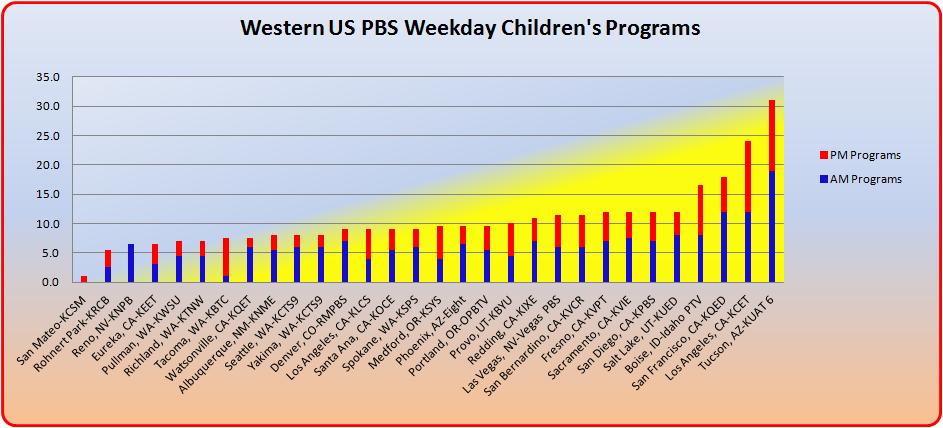
Reno, Nevada PBS affiliate, KNPB is cutting almost a third of its dedicated children’s programming and all of its dedicated after-school shows that target school-aged children. Effective next week all PBS Kids shows on KNPB will end at 12:30 PM, cutting 2.5 hours from its current 9 hours of children’s programming. The programming cuts will put KNPB third from the bottom of 30 western United States PBS stations in total hours of daily children’s programs  and the only PBS affiliate without after-school programming.

Kurt Mische, President and CEO of KNPB, denied that the station is cutting ‘all’ programming for school-aged children, and noted that programs like NOVA, Nature, American Experience, and Great Performances “are of great benefit…and interest…to school age children.” Those programs along with the Antique Roadshow will now air once a week at 5:00 PM after PBS News Hour and The Charlie Rose Show, which will fill the after-school time slots at 3:00 PM and 4:00 PM.   

Mische indicated that the programming changes are being initiated to attract donors and money, which school-age children are not providing to the non-profit organization.  He explained,  

“Making our changes will allow us to serve a larger audience of viewers…and donors…who not only watch but help to financially support our important service.”

Another PBS affiliate recognizes the issue, but has different philosophy regarding programming for school-age children. Ron Pisaneschi, the Director of Content for the PBS affiliate in Boise, Idaho (Idaho PTV) said that there is more programming competition for the attention of school-age children because of commercial children’s television on the cable channels, but added, “even though the audience is small, we want to serve them.” 

Hours of Daily Children's Programming of 30 Western US PBS Stations

Programs cut from KNPB’s schedule are The Electric Company for 6-10 year-olds, Cyberchase for 8-11 year-olds, Super Why! for 3-6 year-olds, WordWorld for pre-schoolers, and a second daily airing of Arthur for 4-8 year-olds. KNPB already had cut Fetch! for 6-10 year-olds earlier this year. The only two PBS stations with fewer hours of children programs are Rohnert Park and San Mateo, California. Both are in the San Francisco area market where PBS affiliate KQED has 19.5 hours of children’s programming in addition to a 24-hour PBS Kids channel. San Mateo PBS affiliate KCSM has only one hour of daily children’s programming; however, KCSM is currently up for sale and accepting bids until February 14, 2012.

Ironically, Mische’s attitude about the value of children’s programming to KNPB and to the State of Nevada was more supportive last year when he stated,

KNPB is proud to be a leader in education. At a time when education in Nevada garners its share of negative publicity, KNPB is taking action to impact education and life-long learning. We broadcast 52 hours per week of award winning, high quality, and trusted children’s programs that delight and teach youngsters.

KNPB 2010 Annual Report

The children’s shows, including all after-school shows will be cut effective January 2, 2012.

A version of this article first published as
PBS Station To Cut After-School Programming To Attract Donors

on Technorati.com

USA PDT [Twitter: ] [Facebook] [LinkedIn] [Skype: 775.624.5679]

Graph: Hours of Children’s Programming on 30 Western US PBS Affiliates

28 Wednesday Dec 2011

Posted by Paul Kiser in About Reno, Communication, Customer Relations, Customer Service, Education, Ethics, Generational, Management Practices, parenting, Public Relations

≈ Leave a comment

Tags

children, children's programming, KNPB, Nevada, PBS, PBS Kids, Reno

How many hours of dedicated children’s programming are on PBS stations in the western United States?  This graph shows that after KNPB cuts 2.5 hours of children’s programming on January 2nd, it will be tied for third among 30 western US PBS affiliates for the least amount of children’s programs (programming survey based on changes to be made in January 2012.) KNPB will also be the only station among those surveyed without after-school programming.

Click on graph for larger image

New Religion For Business: Believing in the ‘L’ Word

23 Wednesday Nov 2011

Posted by Paul Kiser in Business, Customer Relations, Customer Service, Information Technology, Internet, Management Practices, Public Relations, Social Interactive Media (SIM), Social Media Relations, Technology

≈ Leave a comment

Tags

DataSift, Facebook, filtering, listening, Nick Halstead, Rob Bailey, Twitter

Paul Kiser

For a hundred years the Church of the Big Sell has preached to enterprise decision-makers that they will give a voice to their company…for a price. Media chieftains told the world of business that the customer is a commodity that can be manipulated and controlled with the right ad campaign, the right slogan, the right spokesperson, or the right look. Then came Social Media.

Social Media has put a lot of business traditionalists in a tailspin. It turns out that the customer is not a commodity and they hate it when they are treated like one (e.g.; Netflix, United Airlines, Bank of America, etc.) Customers  are people and they have feelings, wants, likes, and dislikes.

Facebook and Twitter gave the people fire and they liked it. Now the customer has a voice and they use it. They talk. They converse. They express. They judge. Not only do they have a voice, they now have the power to turn off advertising…and they do.

The Church of the Big Sell is burning and the voice they were supposed to give to business is wasted on ads in newspapers and magazines that nobody reads, radio and television commercials that nobody listens to or watches, and yellow pages books that go from the front doorstep to the recycling bin…unused. Social Media took away the microphone of enterprise because people are tired of being preached to by the Church of the Big Sell.

Business is realizing that customer interaction has changed. Enterprise in a Social Media world is not about talking, but about listening. Listening is the alpha and omega of the Social Media world. Almost everything a business needs to know is there, if they listen. A new church is being built on the ashes of the old and the religion is based on the ‘L’ word.

Listening is not as easy as it sounds (pun intended.) Social Media is noisy. Too many voices, too many issues. A restaurant owner does not need to know that Emily had a great date last night…unless Emily’s date was at his restaurant. Then he might want to know that Emily’s date was great despite her eating experience, where the food was cold, the parking a pain, and the service rude. The restaurant owner might also want to know that nine of Emily’s friends responded to her Tweet by agreeing that his restaurant sucks and they will never eat there again.

Rob Bailey - Head of US Operations and new CEO of DataSift

Tools of Listening in the New Church of Social Meda
Paring down the noise of Social Media is a major challenge for a business and the new religion has new tools. “The amount of Social Media that people are producing is doubling every year…,” explained Rob Bailey, who is the head of United States Operations for DataSift, a Social Media filtering platform for business that was launched last week. Bailey said that there are three steps in refining raw Social Media into relevant information for any enterprise.

The first step is to refine the data down to what is being posted about an organization, subject, or topic. That refinement may require multiple filters to distill out undesired spam, retweets, and other noise. The second step is to analyze the results based on factors such as age, gender, geographic location, and sentiment. The final step is to have a visual tool that reports the results simply and accurately for interpretation by the decision-maker in the company.

Nick Halstead - Past CEO and now Chief Technology Officer

DataSift had 8,000 users in the alpha test of its Social Media monitoring platform and found that the interest in this technology spanned a wide variety of industries. CEO Nick Halstead said that they had, “… government agencies to pharmaceuticals, a lot in finance, a lot in retail…and quite a few start-ups…” interested in DataSift’s technology to monitor issues of concern to their business and organizational operations. Another industry that wants to be able the monitor the Social Media are News Outlets that are trying to compete with Twitter and Facebook in providing events in real-time. Bailey said, “Twitter is an incredible vehicle…” for finding out what is going on in the world.

Public Relations and Social Media firms are also using tools to filter out the Social Media noise for companies who would rather hire an outside service for their Social Media presence rather than doing it in-house. In addition to listening to the Social Media these agencies help a business identify and correct their public image by handling public image issues and concerns for the organization.

View of data stream screen

The tools of the new platform allow the user to search multiple Social Media formats and have access to the full Twitter worldwide database in real-time. Beyond listening to what is being said about a company’s public image, they can now test market products or services and use Social Media to determine the reaction. The platform also has an interesting application in politics by allowing campaigns to determine sentiments on key issues by geographic region before a candidate campaigns in that area.

Improved customer response is probably the most obvious benefit to listening to Social Media, as a business can now pick up any post written about their company, product, or service and appropriately respond in minutes with a thank you for positive comments and a resolution or apology for negative experiences.

There is no turning back. Social Media demands that enterprise be great listeners and now they have no excuse.

USA PDT [Twitter: ] [Facebook] [LinkedIn] [Skype: 775.624.5679]

Southwest Air WiFi: Real or Myth?

14 Wednesday Sep 2011

Posted by Paul Kiser in 2020 Enterprise Technologies, Branding, Business, Club Leadership, Communication, Customer Relations, Customer Service, History, Honor, Independent Studies, Information Technology, Internet, Management Practices, Privacy, Public Relations, Travel

≈ Leave a comment

Tags

Business, Dave Ridley, Gary Kelly, Howard Lefkowitz, Internet, Row 44, Southwest Airlines, SWA, Travel, WiFi

USA PDT [Twitter: ] [Facebook] [LinkedIn] [Skype: 775.624.5679]

Paul Kiser

Southwest Airlines (SWA) has been talking about in-flight WiFi service for over four years, but today most Southwest passengers will find that going online is still something that happens on the ground, not in the air. Even if a Southwest plane has the ‘WiFi hump’ and is labeled as a WiFi HotSpot, it doesn’t mean the service will be turned on during the flight.

Southwest’s goal of in-flight Internet service has had its challenges in getting airborne. A brief history of their communications on the topic:

53 months agoª – In an interview about restructuring fuel contracts, SWA CEO Gary Kelly mentions that his airline is considering adding WiFi service. Kelly is quoted as saying,

“We are very seriously exploring that. We’d be acutely interested in the cost of doing that. It would be a very exciting development if we could make that work.”¹

A Southwest Plane with the WiFi 'hump' satellite antenna located on the top of the plane in front of the tail

44 months ago – Southwest announces it will be testing passenger WiFi service on four planes in the summer using Row 44 as it’s Internet service provider.²

25 months ago – Southwest announces that testing is completed and that they will start equipping planes with WiFi in the Spring of 2010.³

20 months ago – Senior Vice President of Marketing and Revenue Management Dave Ridley states in SWA’s blog, Nuts About Southwest, admits, “… the road to onboard wi-fi has been a long one…,”¹¹ but said that starting the 2nd quarter of 2010, SWA will start installing WiFi on 15 planes a month and increasing it to 25 planes a month. He added:

“…we estimate that our full fleet of more than 540 planes will be outfitted with wi-fi service by early 2012.”

11 months ago – SVP Ridley announces in the Nuts About Southwest blog that only 32 planes have WiFi installed and he adds:

“…we are adding to that number weekly.”¹²

2 months ago – In a call to investors CEO Kelly reveals a timetable revision for in-flight WiFi:

“…Kelly said he feels “very comfortable” with the “2013 timeframe” for fleetwide Wi-Fi installation…”¹³

Last week, after two separate incidents of the WiFi service being turned off on WiFi designated Southwest planes, uniformed Southwest employees had different explanations of the status of the company’s on board Internet service. One claimed that the system ‘worked yesterday’ and another said confidentially that their were problems with the Internet service provider and that the Southwest was no longer using them.

Howard Lefkowitz, Chief Commercial Officer

Not so, says Chief Commercial Officer Howard Lefkowitz of Row 44. Lefkowitz, the former CEO of Vegas.com who joined Row 44 about a year ago, said in a telephone interview that Row 44 is still Southwest’s Internet and entertainment provider and that they are continuing to equip the planes. He said that “…over 100…” planes now have WiFi Internet service and thousands of people are using it everyday. Lefkowitz said he would check into why two of the WiFi equipped flights were not in service last week.

Southwest Airlines was contacted by phone and email, but did not respond to requests for information.

This article first published as
Southwest Air WiFi: Real or Myth?
on Technorati.com

NOTES AND REFERENCES

ªGary Kelly’s original remarks were recorded in the Dallas Morning News; however, that link is broken. The link appears in an April 19, 2007, blog in WNN WiFi Net News. The remarks are from another blog referenced below on the same date.

¹Author Unknown. The Wireless Weblog (2007.) Southwest Airlines Wants WiFi. Retrieved September 13, 2011 from http://www.wireless-weblog.com/50226711/southwest_airlines_wants_wifi.php.

²W. Safer. Switched.  (2008.) Southwest Airlines Adding In-Flight WiFi Internet Access This Summer.  Retrieved September 13, 2011 from http://www.switched.com/2008/01/24/southwest-airlines-adds-in-flight-wireless-internet-access-this/

³B. Parr.  Mashable. (2009.) Southwest Airline: Wi-Fi On Every Flight by Early 2010. Retrieved September 13, 2011 from http://mashable.com/2009/08/23/southwest-wifi/. ¹¹D. Ridley. Nuts About Southwest. (2010.) It Is Official–Wi-Fi Is On The Way! Retrieved September 13, 2011 from http://www.blogsouthwest.com/blog/it-is-official-wi-fi-is-on-the-way

¹²D. Ridley. Nuts About Southwest. (2010.) Southwest Airlines Media Day 2010: WiFi Details (Including Price) Revealed. Retrieved September 13, 2011 from http://www.blogsouthwest.com/blog/southwest-airlines-media-day-2010-wifi-details-including-price-revealed.

¹³Dennis Schaal. tnooz. (2010.) Southwest Airlines: Fleetwide Wi-Fi Won’t Come Until 2013. Retrieved September 13, 2011 from http://www.tnooz.com/2010/07/29/mobile/southwest-airlines-fleetwide-wi-fi-wont-come-until-2013/.

Social Media ‘Evolution’ At Nation’s Investment Firms

26 Thursday May 2011

Posted by Paul Kiser in Branding, Business, Communication, Customer Relations, Ethics, Government Regulation, Information Technology, Internet, Management Practices, Public Relations, Social Interactive Media (SIM), Social Media Relations

≈ Leave a comment

Tags

Blogging, compliance, FINRA, investment firms, New Business World, New York Life, Public Image, Regulatory Notice 10-06, Rule 10-06, SEC

USA PDT [Twitter: ] [Facebook] [LinkedIn] [Skype: 775.624.5679]

Paul Kiser

Can your investment advisor write a blog about his or her job? Can they Tweet that they just read a great article on oil futures and add a hyperlink? Can they post that they had a big day in the market? Prior to January 2010, the answer was no…not unless they wanted to risk her or his job.

Securities Exchange Commission (SEC) and Financial Industry Regulatory Authority (FINRA) rules didn’t specifically prohibit business-related Social Media participation, but SEC regulations on advertising and communications have been presumed to extend to online engagement and in a vacuum of good guidance, most major firms took the position of forbidding their representatives from participating in Social Media formats. This removed the fundamental aspect of Social Media that benefits commerce on the Internet, the one-on-one connection.

In January 2010, FINRA issued Regulatory Notice 10-06, which gave investment firms parameters for allowing their representatives to use Social Media within the bounds of SEC and FINRA regulations. The reaction was not instantaneous because firms had to solve the issue of how to supervise agent’s online communication. Protocols had to be established, software had to be adapted and installed, and training of agents had to be implemented; however, there has been a rapid Social Media ‘evolution’ in investment advising during the past 12 months.

For some firms, a deliberate, but ‘conservative approach’ to implementing Social Media engagement is being employed. One industry representative said, “…we had to help agents know what they can talk about and what they can’t talk about.” But she added, “…I’d rather be doing this now than wait three years and try to figure it out…Social Media exists and it’s not going away.”

For New York Life the direction was made very clear according to Ken Hittel, Vice President, Corporate Internet, who said, ” Our CEO, (Ted Mathas) made it very clear that agent participation (in Social Media) is a requirement.” New York Life uses a software program to meet SEC and FINRA regulations of supervising agent’s Internet interactions. Hittel said that the implementation of the program, “…went smoothly and was completed in a couple of months.”

The SEC regulations on advertising and adviser/investor communications are not new and apply to all methods of interactions, including those performed via the Internet. A FINRA podcast outlines five issues that apply to all forms of investment communications. All statements made by an agent must:

  • not be exaggerated or misleading and all material facts must be disclosed
  • clearly identified the firm and agent
  • not include or imply any forward-looking statements
  • provide the customer/investor a sound basis to evaluate the services or market
  • file any statements regarding mutual funds, variable products, and/or exchange traded funds within 10 days of being published

Each investment firm is expected to train their agents on how to comply with SEC and FINRA requirements. Hittel said that the New York Life agent training program is “..not just compliance.” He pointed out that Social Media creates 12,000 “Brand Ambassadors” for the company and they based their Social Media training on a “best practices” approach. Hittel said that there is a saying at New York Life, “…that you can do anything, not everything,” which is reflected in New York Life’s approach to Social Media engagement. The firm has established a progressive program for Social Media participation by their agents…within the scope of SEC and FINRA regulations.

FINRA Clearing a Path for Investment Firms to Engage in Social Media

25 Wednesday May 2011

Posted by Paul Kiser in Business, Customer Relations, Ethics, Government Regulation, Management Practices, Public Relations, Social Interactive Media (SIM), Social Media Relations

≈ 3 Comments

Tags

compliance, deregulation, FINRA, investment, investment firms, SEC

USA PDT [Twitter: ] [Facebook] [LinkedIn] [Skype: 775.624.5679]

A version of this article first published as
Investment Firms Allowed to Use Social Media Under SEC/FINRA Rules
on Technorati.com

Paul Kiser

Eighteen months ago a game launching bird heads at pig heads didn’t exist.

Eighteen months ago Tony Hayward was a star as CEO of BP.

Eighteen months ago most people thought Charlie Sheen was an actor.

Eighteen months ago most investment firms thought that financial advisors were prohibited from using Social Media in business.

Now Angry Birds is near world domination, now Tony Hayward is a footnote in public relations infamy, now we know Charlie Sheen is Charlie Harper…the possessed version of him, and now Social Media is not taboo in the investment business.

…in the world of investing, the Social Media ‘evolution’ has had to meet the compliance issues of the regulatory agencies meant to protect the investor from unethical advisors…

The world is evolving faster than most people can absorb, so it’s not surprising that some industries are adapting to new technologies faster than others, but in the world of investing, the Social Media ‘evolution’ has had to meet the compliance issues of the regulatory agencies meant to protect the investor from unethical advisors.

Social Media tools like blogs and Internet-based social networking tools have opened up a new environment for business by allowing a rapid-response connection between the customer and the seller of a product or service. In most Internet commerce it is a caveat emptor (let the buyer beware) situation, where the buyer must pursue legal remedies for a broken contract or unethical representation of a product or service after the fact. In investment advising the company or firm is expected to protect the buyer before, during, and after the fact, which requires the firm to intercede and supervise interactions that involve investment advice. That has led many firms to prohibit all Social Media involvement by its representatives.

However, seventeen months ago the largest independent financial regulator stepped forward with a road map for investment firms on how Social Media could be used by their representatives while meeting the need to protect the investor.

…the regulations only effect business communications that involve investment advising and promotion. Personal blogs, Twitter, Facebook, and other Social Media tools are not a concern for the regulators…

Joseph Price, Senior Vice President of Advertising Regulation/Corporate Financing at FINRA (Financial Industry Financial Authority) discussed the issues with investment firms and Social Media with me earlier today. Price is one of the authors of Regulatory Notice 10-06 titled Social Media Web Sites – Guidance on Blogs and Social Networking Web Sites that was published in January 2010. Price said that using Social Media, “..depends on the firm’s business model,” and that it, “..has to make sense for the firm.” He confirmed that the regulations only effect business communications that involve investment advising and promotion. Personal blogs, Twitter, Facebook, and other Social Media tools are not a concern for the regulators even though individual firms may have policies prohibiting personal on-line interactions.

Price said that a common question he hears from firms is from those who prohibit all Social Media involvement by their representatives. Their concern is whether a firm is meeting the regulatory requirements when they have no Social Media supervisory functions in place because they have prohibited the activity.

Another question that FINRA has had to deal with involves deleting inappropriate user comments in chat rooms and on blogs. Price asked, “..by selective deletion, has the firm adopted the posts they haven’t deleted?” His suggestion to firms is that they have a policy in place that outlines the approval/deletion of comments. As long as a firm follows the policy and doesn’t prejudice the comments to favor the firm and its products, the company will likely not be considered to have approved and adopted the user comment.

Regarding investment business blogs, Price explained that they “require prior approval” by a firm before they are published because they fall into the category of a static communication that includes any form of advertising.

The Regulatory Notice 10-06 answers ten questions for firms about guidelines for using Social Media in the industry of investment advising.  FINRA has followed up that document with webinars, podcasts, and seminars to assist their member firms in the ongoing process of adapting regulatory requirements to Social Media tools available to the rest of the business world.

Firms now the option of fully engaging in Social Media, which is rapidly becoming less an option and more a matter of survival.

Does FINRA Prohibit Social Media Activity for Investment/Financial Firms?

19 Thursday May 2011

Posted by Paul Kiser in Branding, Business, Communication, Customer Relations, Customer Service, Ethics, Information Technology, Internet, Management Practices, Public Relations, Social Interactive Media (SIM), Social Media Relations

≈ Leave a comment

Tags

Blogs, Financial industry, FINRA, investing, Investment agencies, Regulations, Rule 10-06, SEC

USA PDT [Twitter: ] [Facebook] [LinkedIn] [Skype: 775.624.5679]

Paul Kiser

Last year I managed to offend some investment and financial professionals when I said that their industry would have to engage in Social Media, including blogs, if they were going to stay competitive. They told me that their firms and industry regulations prohibited them from using Social Media tools in their business practices. They also said that some firms that prohibited personal involvement in Social Media. The reaction during and after the meeting was one of a strong denial of the usefulness of Social Media in their industry mixed with a ‘kill-the-messenger’ attitude. It was a typical response by business people who have been blindsided by Social Media.

…Professionals that rely on personal contact and personal relationships are finding that effective use of Social Media is key to maintaining and growing their business.

It is hard to start a dialogue with business professionals on how to use Internet tools such as blogging, Facebook and Twitter when the attitude is that Social Media are an encompassing evil that must be avoided, or at the very least, ignored. The problem, and opportunity, is that business professionals who can use Social Media to engage with others will have an advantage over those who are mystified, or more typically, scared by the power of Social Media. Professionals that rely on personal contact and personal relationships are finding that effective use of Social Media is key to maintaining and growing their business.

The fact is that since that meeting many investment related firms have changed their positions by at least 90° and some have done a 180° shift in their attitude about Social Media in business. That is not surprising considering that their future is at stake; however, investment firms do have strict guidelines on advertising and investment advisement, so using Social Media is not the ‘anything goes’ environment for which most of us are accustomed.

Both the Securities Exchange Commission (SEC) and Financial Industry Regulatory Authority (FINRA)[1] are charged with protecting investors by establishing rules to govern investment-related activities. Among those rules are requirements for firms on educating, monitoring, supervising, and document the activities of brokers representing their company. In January 2010, FINRA issued Regulatory Notice 10-06 titled Social Media Web Sites – Guidance on Blogs and Social Networking Web Sites. This notice did not prohibit firms from engaging in Social Media activity, but rather offered common-sense guidelines for investment firms on how Social Media tools could be used to meet FINRA and SEC requirements.

(End of Part I)

(Note: Part II will be posted by 5 PM PDT, Monday, May 23rd)

[1] FINRA is the largest independent regulator for all securities firms doing business in the United States. FINRA’s mission is to protect America’s investors by making sure the securities industry operates fairly and honestly. All told, FINRA oversees nearly 4,550 brokerage firms, about 163,500 branch offices and approximately 631,110 registered securities representatives. (From About FINRA at www.finra.org.)

(This article is advisory in nature and the author does not represent the Financial Industry Regulatory Authority (FINRA,) the Security and Exchange Commission (SEC), nor any federal or state regulatory authority. The opinion expressed should not be considered as a legal or official position regarding the use of Social Media tools in industry practices.  The author has sought out publicly available relevant documents and information as the basis for the opinions expressed; however, final authority on the issues discussed in this article rests with the appropriate government, regulatory, and/or company division that oversees the area of concern.)

FAA + Airlines + Personal Electronic Devices = Public Mistrust

03 Tuesday May 2011

Posted by Paul Kiser in Communication, Customer Relations, Ethics, Government Regulation, Information Technology, Management Practices, Public Relations, Travel

≈ Leave a comment

Tags

airline safety, cell phones, Commercial Airlines, electromagnetic interference, FAA, FCC, Federal Aviation Administration, GPS, iPod, PED, PED's, Personal Electronic Devices, WiFi

by Paul Kiser
USA PDT [Twitter: ] [Facebook] [LinkedIn] [Skype: 775.624.5679]

Paul Kiser

Recently, a 73 year-old man flying from Minneapolis, Minnesota to Winnipeg, Canada was ordered by the flight crew of an unnamed airline to stop using his Global Positioning Satellite (GPS) device during the flight. The GPS device tracks the user’s current position by receiving (not transmitting) a signal from orbiting satellites. Currently over half the world’s airlines allow it to be used during a flight, but not this airline. The man was arrested and fined for not obeying the flight crew instructions to turn it off and also refusing to buckle his seat belt. Not surprisingly his last name was, Ego…I’m not making this up…his name was Michele Ego (See article in Winnipeg Free Press.)

…the incident was based on the Flight Attendant enforcing an 18 year-old policy of restricting the use of  personal electronic devices (PED’s) that has little or no real experimental data to justify it…

Are these really a threat to airline safety?

Clearly Mr. Ego was in the wrong by refusing to obey the instructions of the flight crew; however, the incident was caused by a flight crew enforcing an 18 year-old policy of restricting the use of personal electronic devices (PED’s) that has little or no experimental data to justify it. The zeal of some flight attendants in following this baseless policy creates a source of conflict and mistrust between the flying public and the flight crew, all of which could be avoided, if not for the Federal Aviation Administration (FAA) and the airlines.

…the policy uses decades old research that could only pose a theoretical threat by PED’s, without any experimental proof…

The lack of evidence for the restrictions on PED’s (such as MP3-4 players, GPS, cell phones, etc.) is well-known, and yet, airlines stick to a policy of restricting them, especially during takeoffs and landings because of the FAA’s order issued in 1993, that each airline must prove a PED will not interfere with the plane’s avionics before passengers are allowed to use them during a flight. The reasoning for the policy uses decades old research that concluded that PED’s pose a theoretical threat.

During a Congressional Hearing on the issue in July of 2000, over a year before the first generation of Apple’s iPod was sold, the issue of PED’s impact on a plane’s avionics was discussed. During the hearing a National Aeronautics and Space Administration (NASA) database of anonymously submitted in flight incidents was presented. Of 69,000 reports, 52 flight crews blamed passenger PED’s for the plane’s avionics problems. In most of the cases from 1992 to 1998, incidents on planes as small as a Cessna and large as a Boeing 757, related problems in navigational readings that seemed to be corrected when passengers were asked to turn off the devices.

…In each case the problem could not be duplicated under controlled test conditions…

In several of those cases, the alleged offending PED was purchased from the passenger and attempts were made to reproduce the problem. In each case the problem could not be duplicated under controlled test conditions. These results were fortified by two commissioned studies of PED’s, including cell phones, in 1983-8, (a study for the airlines,) and 1992-6, (a study for Congress.) Both studies offered no real evidence of avionics interference caused by PED’s.

(See Blog article: Why Your iPad Won’t Kill You)

Regardless of the lack of evidence, neither study could prove that PED’s were absolutely incapable of interference, and in a British study on cell phone transmissions, it was determined that the threat from PED’s was from pre-1984 devices that could theoretically cause interference with a plane’s avionics. Despite a lack of real evidence of a threat, the FAA issued its 1993 ruling that said that airlines should restrict the use of all PED’s below 10,000 feet (for takeoffs and landings) and only allow use of PED’s above 10,000 feet if they could prove it didn’t interfere with the plane’s avionics.

The fact is that today’s commercial airliner has been designed with shielding on all electronic systems to protect it against all types of electromagnetic radiation, including a strike from a lightening bolt, which seems far more likely to happen than an incident of electromagnetic interference caused by a PED like an iPod, GPS device, or cell phone*.

(*Interestingly, it was not the FAA, but the Federal Communications Commission (FCC) who issued a rule in 1991, that cell phones could not be used by any aircraft –including private planes and lighter-than-air balloons– because of the fear that phones in a line of sight of multiple cell phone towers could cause problems with ground-based cell phone traffic.)

With the airlines blessing, both the FAA and FCC have created an environment that forces flight attendants to be the voice of ‘Chicken Little’, by enforcing flight rules governing PED’s that make no sense in 2011. The ineptness of the FAA and the airlines in their handling of the issue of PED’s undermines the relationship of trust that passengers must have in the flight crew if they are to be believed and obeyed during critical situations involving a real threat to passenger safety.

The question that remains is whether or not the mythological threat of PED’s to aircraft safety is greater than the loss of trust of the flying public.

Taco Bell says taco meat is 88% real beef, not 36%

28 Friday Jan 2011

Posted by Paul Kiser in Branding, Customer Relations, Ethics, Management Practices, Pride, Public Relations

≈ Leave a comment

Tags

beef, extenders, fast food, fillers, Food, Greg Creed, health, lawsuit, Taco Bell, taco meat

by Paul Kiser
USA PDT [Twitter: ] [Facebook] [LinkedIn] [Skype:kiserrotary or 775.624.5679]

Paul Kiser

Article first published as
Taco Bell Says Taco Meat is 88% Real Beef, Not 36%
on Technorati.com

On Wednesday, Taco Bell issued an updated response to a lawsuit claiming that its taco meat was only 36% beef.  In this statement Taco Bell CEO and Chief Concept Officer Greg Creed gave facts and figures to challenge the assertion that its taco meat consisted of largely fillers and extenders.

According to Taco Bell, its taco meat consists of 88% beef, and up to 10% of the remainder consists of water and/or spices. Creed again repeated that Taco Bell would ‘vigorously defend’ the claims against the quality of its products. (Read the full statement here.)

This statement clearly refutes the heart of the matter raised in the lawsuit.  Two previous statements implied a denial of the accusations, but stopped short of offering facts and figures regarding the content of fillers and extenders of its product.  The lawsuit was widely reported on Tuesday by most major news outlets and many online blogs.

More Articles

Business: Public Relations, Management, and Social Media Related

  • PR Epic Fail: Taco Bell ‘meat’ only 36% beef?
  • Starbucks Siren gets facelift after 40 years
  • “…and your little dog, too”  Words define intent, evil
  • Facebook and Twitter Doomed? …Chicken Crap
  • 5 reasons why you shouldn’t title your blog with number reasons
  • A Question of Ethics
  • HR/Security Hot Topic: Should you watch your employee’s personal Internet activities? (Facebook, MySpace, Twitter, etc.)
  • Relationship Typing: 3 factors that affect the quality and depth of friendship (Part I)
  • Starbucks Re-Imagines the business … again
  • Your Privacy Rights on the Internet: Read before you write
  • Social Media 3Q Update: Who uses Facebook, Twitter,LinkedIn, and MySpace?
  • Richmond Embassy Suites: The best at true Hospitality
  • Dear Business Person: It’s 2010, please update your brain.
  • Selling watered-down beer: The best spin campaign in advertising
  • Communication: Repetition of message does not increase awareness
  • Is it time to fire yourself?
  • Millennium Hotel: Go away, spend your money elsewhere
  • Rogue Flight Attendant shows his arrogance, Airlines dislike for the customer
  • 2Q 2010 Social Media Tools: Facebook/Twitter sail on, LinkedIn/MySpace don’t
  • War Declared on Social Media: Desperate Acts of Traditional Media
  • Pay It Middle: The Balance between Too Much and Too Little Compensation
  • Mega Executive Pay Leads to Poor Performance
  • Relationships and Thin-Slicing: Why the other person knows what you’re really thinking
  • Browser Wars: Internet Explorer losing, Google Chrome gaining ground
  • WiFi on Southwest Airlines: Is it ‘Shovel Ready’?
  • Starbucks makes a smart move: Free WiFi
  • Foul Play: FIFA shows what less regulation offers to business
  • The Shock of the McChrystal Story: The story is over before the article is published
  • Tony Hayward: The very model of a modern Major General
  • Epic Fail: PR ‘Experts’ don’t get Twitter
  • King of Anything: Social Media vs Traditional Media
  • Twitter is the Thunderstorm of World Thought
  • Signs of the Times
  • How Social Interactive Media Could Transform Higher Education
  • How to Become a Zen Master of Social Media
  • Death of All Salesmen!
  • Aristotle’s General Rules on Social Media
  • Social Media: What is it and Why Should You Care?
  • Social Media 2020: Keep it Personal
  • Social Media 2020: Who Shouldn’t Be Teaching Social Media
  • Social Media 2020: Public Relations 2001 vs Social Media Relations 2010
  • Social Media 2020: Who Moved My Public Relations?
  • Publishing Industry to End 2012
  • Who uses Facebook, Twitter, MySpace & LinkedIn?
  • Fear of Public Relations
  • Dissatisfiers: Why John Quit
  • Facebook, Twitter, LinkedIn…Oh My!
  • Does Anybody Really Understand PR?

Rotary Related

  • Leaving Rotary
  • Re-Imagining Rotary
  • Rotary@105: 7 Relationship types that affect membership retention (Part II)
  • What most non-Rotarians don’t know about Rotary
  • Rotary@105: Making Rotary Sexy
  • Rotary@105: Grieving change
  • How Rotary can..must..will plug into Social Media
  • Rotary PR: Disrespecting the Club President is a PR/Membership issue
  • Rotary Membership/Public Image Challenge
  • Rotary New Year: Retread or Renaissance?
  • Rotary@105: A young professionals networking club?
  • One Rotary Center: A home for 1.2 million members
  • Rotary@105: What BP Could Learn from the 1914 Rotary Code of Ethics
  • Rotary Magazine Dilemma Reveals the Impact of Social Media
  • Rotary@105: April 24th – Donald M. Carter Day
  • Rotary@105: What kind of animal is Rotary International?
  • Rotary: The Man in the Yellow Hat as the Ideal Club President?
  • Rotary@105: Our 1st Rotary Club Dropout
  • Rotary Public Relations and Membership: Eight Steps to a Team Win
  • Rotary: All Public Relations is Local
  • Best Practices: Become a Target!

Science Related

  • Happy New Year!!!
  • Negative Time: The Self-fulfilling Prophesy a Scientific Possibility?
  • Physics in 2010: The more we understand, the less we know

Personal Experience Related

  • Knowing when it’s over or beyond over
  • Dear Teresa Laraba, SVP of Southwest Airlines Customer Service
  • Things I didn’t know about being a Father to a four-year-old boy
  • Riding Reno: The Ladies of Reno
  • Up in the air down in Texas
  • I mow my lawn because…
  • Nevada I-580: An Interstate by any other name
  • Nevada’s oldest brewery opens a Reno location
  • Two Barbecues and a Wedding
  • Car Dealership Re-Imagines Customer Service

Our Country and History Related

  • Dates of Historical Note in 2011
  • Sandoval/Reid campaign money not a stimulus for Nevada
  • Nevada’s Best Kept Secret: #1 in Crime
  • The Vultures Start Circling on Election Day
  • The Quality of Mercy: Tea Party seeks its pound of flesh
  • I’m not angry, nor am I stupid … and I voted
  • Point of Confusion
  • What I’m not buying this year
  • Nevada: State of Disaster
  • Thank you, Mr. President
  • America’s Hostile Takeover of Mexico

Taco Bell beefs up its response: Our taco meat is real, the lawsuit is bogus

27 Thursday Jan 2011

Posted by Paul Kiser in Branding, Communication, Crisis Management, Customer Relations, Ethics, Management Practices, Pride, Public Relations

≈ 3 Comments

Tags

beef, false advertising, fast food, lawsuit, response statement, Taco Bell, taco meat

by Paul Kiser
USA PDT [Twitter: ] [Facebook] [LinkedIn] [Skype:kiserrotary or 775.624.5679]

Paul Kiser

(NOTE: Below is a statement by Taco Bell Corp. made yesterday regarding the lawsuit filed against them for false advertising stating that their taco meat was only 36% beef. I am publishing this statement now with an additional article on the issue to follow.)

From: Greg Creed, CEO and Chief Concept Officer of Taco Bell Corp.

UPDATED STATEMENT REGARDING CLASS ACTION LAWSUIT

“The lawsuit is bogus and filled with completely inaccurate facts.  Our beef is 100% USDA inspected, just like the quality beef you would buy in a supermarket and prepare in your home.  It then is slow-cooked and simmered with proprietary seasonings and spices to provide Taco Bell’s signature taste and texture.  Our seasoned beef recipe contains 88% quality USDA-inspected beef and 12% seasonings, spices, water and other ingredients that provide taste, texture and moisture.  The lawyers got their facts wrong.  We take this attack on our quality very seriously and plan to take legal action against them for making false statements about our products.  There is no basis in fact or reality for this suit and we will vigorously defend the quality of our products from frivolous and misleading claims such as this.”

What is in Taco Bell’s recipe for seasoned beef?

“We’re cooking with a proprietary recipe to give our seasoned beef flavor and texture, just like you would with any recipe you cook at home.

For example, when you make chili, meatloaf or meatballs, you add your own recipe of seasoning and spices to give the beef flavor and texture, otherwise, it would taste just like unseasoned ground beef.  We do the same thing with our recipe for seasoned beef.

Our recipe for seasoned beef includes ingredients you’d find in your home or in the supermarket aisle today:

  • 88% USDA-inspected quality beef
  • 3-5% water for moisture
  • 3-5% spices (including salt, chili pepper, onion powder, tomato powder, sugar, garlic powder, cocoa powder and a proprietary blend of Mexican spices and natural flavors).
  • 3-5% oats, starch, sugar, yeast, citric acid, and other ingredients that contribute to the quality of our product.

Our seasoned beef contains no “extenders” to add volume, as some might use.  For more information about our ingredients go to http://www.tacobell.com/”

PR Epic Fail: Taco Bell ‘meat’ only 36% beef?

26 Wednesday Jan 2011

Posted by Paul Kiser in Business, Customer Relations, Ethics, Management Practices, Public Relations

≈ Leave a comment

Tags

extenders, false advertising, fast food, fillers, Food, lawsuit, Taco Bell, taco meat

by Paul Kiser
USA PDT [Twitter: ] [Facebook] [LinkedIn] [Skype:kiserrotary or 775.624.5679]

Paul Kiser

Article first published as
PR Epic Fail: Taco Bell meat only 36% beef?
on Technorati

(NOTE:  This article was submitted to the Technorati.com editors on Tuesday evening (January 25) and published Wednesday evening. On Wednesday, Taco Bell Corp. gave a definitive statement of the quality of its meat and claims that its taco meat is 88% beef.  To read this statement and a follow-up article, click on this link: Greg Creed’s statement on Taco Bell’s taco meat.)

It’s not too early in the year for the first entry in the “Worst PR of 2011” contest and that dishonor may go to Taco Bell. The fast food chain is facing a controversy that has all the makings of a classic Public Relations Epic Fail award.

Cat treats or Taco Bell taco meat? Which has more protein?

News media (See USAToday article) and online blogs have buzzing about a lawsuit that is seeking class action status against the Yum! Brands subsidiary stating that the taco meat at Taco Bell is only 36% beef, which is less than the USDA minimum of 40%. The suit seeks to have Taco Bell either rename their products or add more beef.

This controversy would be bad enough with just the lawsuit, but the company counter attack will undoubtedly generate more public focus on the issue. Taco Bell’s strategy raises the stakes in a Public Relations battle that now has to be 100% successful or else the company will lose all credibility for the foreseeable future. The response so far seems to indicate that Taco Bell is walking a fine line in denying the accusations about their product.

According to Associated Press reporter, Bob Johnson, the first company response was from Taco Bell spokesperson, Rob Poetsch:

“Taco Bell prides itself on serving high quality Mexican inspired food with great value. We’re happy that the millions of customers we serve every week agree,” Poetsch said. He said the company would “vigorously defend the suit.”

Poetsch’s response carefully avoids denying the accusations, but is worded to imply that since the customers buy the product, it must be okay.

Later the Greg Creed, President and Chief Concept Officer of Taco Bell Corp. put out a stronger, but still carefully worded statement that again walked a fine line in denying the accusations. His statement said that: 1) Taco Bell buys beef, 2) the beef is 100% USDA inspected, 3) the process begins with simmering beef, 4) seasonings and spices are added, and 5) the ‘signature Taco Bell’ taste and texture results from the process. He then added that the ‘lawyers….got their “facts” absolutely wrong’ and that Taco Bell plans to take legal action for false statements made about their food.

While this sounds like a denial, Creed avoids saying anything about the use of fillers and extenders in their taco meat by referring to all added ingredients as “seasoning and spices.” According to the Taco Bell website the ingredients for the ground taco meat include the following (ranking added):

#3 – Isolated Oat Product, #8 – Oats (Wheat), #9 – Soy Lecithin, #12 – Maltodextrin, #13 – Soybean Oil (Anti-dusting Agent), #15 – Autolyzed Yeast Extract, #17 – Caramel Color, #18 – Cocoa Powder (Processed With Alkali), #19 – Silicon Dioxide, #21 – Yeast, #22 – Modified Corn Starch, #25 – Sodium Phosphates

Both the website and Creed refer to these ingredients as “seasoning”, implying they add taste to the product and are not fillers or extenders. However, if the lawsuit is accurate, Taco Bell may have a hard time convincing its customers that ground taco meat requires 64% ‘”seasoning” and only 36% beef.

More Articles

Business: Public Relations, Management, and Social Media Related

  • Starbucks Siren gets facelift after 40 years
  • “…and your little dog, too”  Words define intent, evil
  • Facebook and Twitter Doomed? …Chicken Crap
  • 5 reasons why you shouldn’t title your blog with number reasons
  • A Question of Ethics
  • HR/Security Hot Topic: Should you watch your employee’s personal Internet activities? (Facebook, MySpace, Twitter, etc.)
  • Relationship Typing: 3 factors that affect the quality and depth of friendship (Part I)
  • Starbucks Re-Imagines the business … again
  • Your Privacy Rights on the Internet: Read before you write
  • Social Media 3Q Update: Who uses Facebook, Twitter,LinkedIn, and MySpace?
  • Richmond Embassy Suites: The best at true Hospitality
  • Dear Business Person: It’s 2010, please update your brain.
  • Selling watered-down beer: The best spin campaign in advertising
  • Communication: Repetition of message does not increase awareness
  • Is it time to fire yourself?
  • Millennium Hotel: Go away, spend your money elsewhere
  • Rogue Flight Attendant shows his arrogance, Airlines dislike for the customer
  • 2Q 2010 Social Media Tools: Facebook/Twitter sail on, LinkedIn/MySpace don’t
  • War Declared on Social Media: Desperate Acts of Traditional Media
  • Pay It Middle: The Balance between Too Much and Too Little Compensation
  • Mega Executive Pay Leads to Poor Performance
  • Relationships and Thin-Slicing: Why the other person knows what you’re really thinking
  • Browser Wars: Internet Explorer losing, Google Chrome gaining ground
  • WiFi on Southwest Airlines: Is it ‘Shovel Ready’?
  • Starbucks makes a smart move: Free WiFi
  • Foul Play: FIFA shows what less regulation offers to business
  • The Shock of the McChrystal Story: The story is over before the article is published
  • Tony Hayward: The very model of a modern Major General
  • Epic Fail: PR ‘Experts’ don’t get Twitter
  • King of Anything: Social Media vs Traditional Media
  • Twitter is the Thunderstorm of World Thought
  • Signs of the Times
  • How Social Interactive Media Could Transform Higher Education
  • How to Become a Zen Master of Social Media
  • Death of All Salesmen!
  • Aristotle’s General Rules on Social Media
  • Social Media: What is it and Why Should You Care?
  • Social Media 2020: Keep it Personal
  • Social Media 2020: Who Shouldn’t Be Teaching Social Media
  • Social Media 2020: Public Relations 2001 vs Social Media Relations 2010
  • Social Media 2020: Who Moved My Public Relations?
  • Publishing Industry to End 2012
  • Who uses Facebook, Twitter, MySpace & LinkedIn?
  • Fear of Public Relations
  • Dissatisfiers: Why John Quit
  • Facebook, Twitter, LinkedIn…Oh My!
  • Does Anybody Really Understand PR?

Rotary Related

  • Leaving Rotary
  • Re-Imagining Rotary
  • Rotary@105: 7 Relationship types that affect membership retention (Part II)
  • What most non-Rotarians don’t know about Rotary
  • Rotary@105: Making Rotary Sexy
  • Rotary@105: Grieving change
  • How Rotary can..must..will plug into Social Media
  • Rotary PR: Disrespecting the Club President is a PR/Membership issue
  • Rotary Membership/Public Image Challenge
  • Rotary New Year: Retread or Renaissance?
  • Rotary@105: A young professionals networking club?
  • One Rotary Center: A home for 1.2 million members
  • Rotary@105: What BP Could Learn from the 1914 Rotary Code of Ethics
  • Rotary Magazine Dilemma Reveals the Impact of Social Media
  • Rotary@105: April 24th – Donald M. Carter Day
  • Rotary@105: What kind of animal is Rotary International?
  • Rotary: The Man in the Yellow Hat as the Ideal Club President?
  • Rotary@105: Our 1st Rotary Club Dropout
  • Rotary Public Relations and Membership: Eight Steps to a Team Win
  • Rotary: All Public Relations is Local
  • Best Practices: Become a Target!

Science Related

  • Happy New Year!!!
  • Negative Time: The Self-fulfilling Prophesy a Scientific Possibility?
  • Physics in 2010: The more we understand, the less we know

Personal Experience Related

  • Knowing when it’s over or beyond over
  • Dear Teresa Laraba, SVP of Southwest Airlines Customer Service
  • Things I didn’t know about being a Father to a four-year-old boy
  • Riding Reno: The Ladies of Reno
  • Up in the air down in Texas
  • I mow my lawn because…
  • Nevada I-580: An Interstate by any other name
  • Nevada’s oldest brewery opens a Reno location
  • Two Barbecues and a Wedding
  • Car Dealership Re-Imagines Customer Service

Our Country and History Related

  • Dates of Historical Note in 2011
  • Sandoval/Reid campaign money not a stimulus for Nevada
  • Nevada’s Best Kept Secret: #1 in Crime
  • The Vultures Start Circling on Election Day
  • The Quality of Mercy: Tea Party seeks its pound of flesh
  • I’m not angry, nor am I stupid … and I voted
  • Point of Confusion
  • What I’m not buying this year
  • Nevada: State of Disaster
  • Thank you, Mr. President
  • America’s Hostile Takeover of Mexico

Sandoval/Reid campaign money not a stimulus for Nevada

24 Wednesday Nov 2010

Posted by Paul Kiser in About Reno, Branding, Communication, Consulting, Ethics, Government, History, Honor, Management Practices, Politics, Pride, Print Media, Public Relations, Traditional Media

≈ Leave a comment

Tags

Blogging, Blogs, Democrats, Governor, Management Practices, Nevada, New Business World, Newspapers, Politics, Public Image, Public Relations, Publicity, Republican, Republicans, Rory Reid, Sandoval

by Paul Kiser
USA PDT  [Twitter: ] [Facebook] [LinkedIn] [Skype:kiserrotary or 775.624.5679]

Paul Kiser

Article first published as
Sandoval/Reid Campaign Money Not a Stimulus for Nevada
on Technorati

We endured relentless political ads on television and radio, but Nevada didn’t hit the jackpot in campaign dollars flowing into the State from the Governor’s race. Despite the fact that almost $3.8 million dollars was spent by the Sandoval for Governor Campaign in the months leading up to the election, 80% of the money was payable to recipients outside the State. Rory Reid’s campaign also spent a significant portion of its money to out-of-state firms with MSR Media Strategies, LLC in Fairfax, Virginia netting almost $2.8 million from the Reid campaign.

Sandoval Campaign Expenses
(Spreadsheet listing all campaign expenses through October 21, 2010)

In a detailed review of Governor-Elect Sandoval’s campaign reports, 63% ($2.4 million) of campaign expenses were made payable to Strategic Media Services, inc. in Washington, D.C. for advertising. While some may argue that money spent for advertising comes back to the State in the form of purchased television and radio air time and newspaper ads, one Nevada media consultant pointed out that most media outlets in Nevada are owned by out-of-state media corporations, so political ads that ran on many local stations were payable to non-Nevada interests. The one exception is the Intermountain West Communications Company that owns several television stations including in the western United States including KSNV-Las Vegas, KRNV-Reno, and KENV-Elko. 

David Neal, President of Strategic Media Services, inc. (Sandoval’s leading campaign expenditure) and Kyle Osterhout, Partner of MSR Media Strategies, LLC (Rory Reid’s leading campaign expenditure) were not immediately available; however, two media experts with campaign related experience said that the standard fee for media agencies is 15% of the advertising purchase. In some cases a campaign may negotiate rebates from the media agency based on volume of business; however services such as the production of the ad are typically not included in the 15% fee.

The Las Vegas area did benefit from 19% (over $720,000) of the campaign funds with over $400,000 paid to political and media consultants.  Almost half a million dollars went to the three Las Vegas firms of October, Inc., Autumn Productions, and Autumn EMedia. The latter two are subsidiaries of November, Inc.

The Reno, Lake Tahoe, and Carson Valley garnered only 1 percent (less than $30,000) from the Governor-Elect’s campaign and rural Nevada received less than $10,000.

NEXT:  Where the money came from in Sandoval’s campaign

More Articles

Business: Public Relations, Management, and Social Media Related

  • A Question of Ethics
  • HR/Security Hot Topic: Should you watch your employee’s personal Internet activities? (Facebook, MySpace, Twitter, etc.)
  • Relationship Typing: 3 factors that affect the quality and depth of friendship (Part I)
  • Starbucks Re-Imagines the business … again
  • Your Privacy Rights on the Internet: Read before you write
  • Social Media 3Q Update: Who uses Facebook, Twitter,LinkedIn, and MySpace?
  • Richmond Embassy Suites: The best at true Hospitality
  • Dear Business Person: It’s 2010, please update your brain.
  • Selling watered-down beer: The best spin campaign in advertising
  • Communication: Repetition of message does not increase awareness
  • Is it time to fire yourself?
  • Millennium Hotel: Go away, spend your money elsewhere
  • Rogue Flight Attendant shows his arrogance, Airlines dislike for the customer
  • 2Q 2010 Social Media Tools: Facebook/Twitter sail on, LinkedIn/MySpace don’t
  • War Declared on Social Media: Desperate Acts of Traditional Media
  • Pay It Middle: The Balance between Too Much and Too Little Compensation
  • Mega Executive Pay Leads to Poor Performance
  • Relationships and Thin-Slicing: Why the other person knows what you’re really thinking
  • Browser Wars: Internet Explorer losing, Google Chrome gaining ground
  • WiFi on Southwest Airlines: Is it ‘Shovel Ready’?
  • Starbucks makes a smart move: Free WiFi
  • Foul Play: FIFA shows what less regulation offers to business
  • The Shock of the McChrystal Story: The story is over before the article is published
  • Tony Hayward: The very model of a modern Major General
  • Epic Fail: PR ‘Experts’ don’t get Twitter
  • King of Anything: Social Media vs Traditional Media
  • Twitter is the Thunderstorm of World Thought
  • Signs of the Times
  • How Social Interactive Media Could Transform Higher Education
  • How to Become a Zen Master of Social Media
  • Death of All Salesmen!
  • Aristotle’s General Rules on Social Media
  • Social Media:  What is it and Why Should You Care?
  • Social Media 2020:  Keep it Personal
  • Social Media 2020:  Who Shouldn’t Be Teaching Social Media
  • Social Media 2020:  Public Relations 2001 vs Social Media Relations 2010
  • Social Media 2020: Who Moved My Public Relations?
  • Publishing Industry to End 2012
  • Who uses Facebook, Twitter, MySpace & LinkedIn?
  • Fear of Public Relations
  • Dissatisfiers: Why John Quit
  • Facebook, Twitter, LinkedIn…Oh My!
  • Does Anybody Really Understand PR?

Rotary Related

  • Rotary@105: 7 Relationship types that affect membership retention (Part II)
  • What most non-Rotarians don’t know about Rotary
  • Rotary@105: Making Rotary Sexy
  • Rotary@105: Grieving change
  • How Rotary can..must..will plug into Social Media
  • Rotary PR: Disrespecting the Club President is a PR/Membership issue
  • Rotary Membership/Public Image Challenge
  • Rotary New Year: Retread or Renaissance?
  • Rotary@105: A young professionals networking club?
  • One Rotary Center: A home for 1.2 million members
  • Rotary@105:  What BP Could Learn from the 1914 Rotary Code of Ethics
  • Rotary Magazine Dilemma Reveals the Impact of Social Media
  • Rotary@105:  April 24th – Donald M. Carter Day
  • Rotary@105:  What kind of animal is Rotary International?
  • Rotary:  The Man in the Yellow Hat as the Ideal Club President?
  • Rotary@105:  Our 1st Rotary Club Dropout
  • Rotary Public Relations and Membership: Eight Steps to a Team Win
  • Rotary: All Public Relations is Local
  • Best Practices:  Become a Target!

Science Related

  • Negative Time: The Self-fulfilling Prophesy a Scientific Possibility?
  • Physics in 2010: The more we understand, the less we know

Personal Experience Related

  • Knowing when it’s over or beyond over
  • Dear Teresa Laraba, SVP of Southwest Airlines Customer Service
  • Things I didn’t know about being a Father to a four-year-old boy
  • Riding Reno: The Ladies of Reno
  • Up in the air down in Texas
  • I mow my lawn because…
  • Nevada I-580: An Interstate by any other name
  • Nevada’s oldest brewery opens a Reno location
  • Two Barbecues and a Wedding
  • Car Dealership Re-Imagines Customer Service

Our Country and History Related

  • Nevada’s Best Kept Secret: #1 in Crime
  • The Vultures Start Circling on Election Day
  • The Quality of Mercy: Tea Party seeks its pound of flesh
  • I’m not angry, nor am I stupid … and I voted
  • Point of Confusion
  • What I’m not buying this year
  • Nevada: State of Disaster
  • Thank you, Mr. President
  • America’s Hostile Takeover of Mexico

A Question of Ethics

02 Tuesday Nov 2010

Posted by Paul Kiser in Branding, Business, Communication, Crisis Management, Customer Relations, Customer Service, Employee Retention, Ethics, History, Honor, Human Resources, Management Practices, Passionate People, Pride, Public Relations, Relationships, Respect, Rotary

≈ 3 Comments

Tags

Blogging, Blogs, Employment, Ethics, Executive Management, Management Practices, Public Relations, Rotary, Seminars, speakers

by Paul Kiser
USA PDT  [Twitter: ] [Facebook] [LinkedIn] [Skype:kiserrotary or 775.624.5679]

Paul Kiser

Business ethics have waxed and waned over the centuries, but recently we have observed a severe lack of ethical conduct on a large-scale in recent years. The most recent world-wide economic crisis was triggered by years of unethical business practices that nearly put the United States in its first depression in almost a century. In hindsight the questionable business practices were often created by a subtle system of pressuring employees to take actions that were demanded by executives and managers in order to improve earnings for stockholders. This type of ethical dilemma often leaves no one person to blame, and even those involved sometimes do not realize that they are participating in inappropriate and/or unethical acts.

I have been caught in ethical dilemmas that created a moral challenge for me and in one situation I lost a stream of revenue in a seemingly no win scenario.

For a time I assisted a seminar speaker who was considered to be an expert in his field. He hired me to participate in group activities during his seminars.  Occasionally, he would ask me to update or write scenarios for his seminars. In one case I based the scenario on someone I knew, but I added the possibility of suicide.  The scenario was also combined with a possibility of doing harm to someone else.  We used the scenario in one of his seminars and it went very well.

Bigger horns make the bull seem smaller...just like some consultants

A few weeks later we used the same scenario, with minor revisions, with another client. Interestingly enough, the night before the seminar, the speaker  told me that someone else had just written the scenario. However, when I read it I realized that it was the same one I had written for him a few weeks earlier. When I mentioned to him that I was familiar with this scenario and tactfully reminded him that I had been the original author he quickly acknowledged it and moved on.

The next day exercise went well and afterward the participants were given the opportunity to discuss the activity. Participants began asking him about what happened in real life to this person.  Instead of explaining that this was a fictional scenario based on a combination of multiple real situations, the speaker began explaining that in the real life situation that the person did indeed kill himself.  He continued to answer more questions that were also fabrications, but passed off as his ‘research’.  Afterwards I did not mention anything to him about his handling of the post-activity questions.  He was hiring me to assist him, not criticize him and so I did not pursue it with him.

He had already hired me to work with two more clients in the next few weeks and at both he insisted that I stay out of the room, except during the group activity. He stressed that it was not good for his clients to ‘get to know me’ too well.  He also did not schedule me for any more work with his clients.

Later I tried to understand what I might have done to cause an abrupt end to our relationship. He and his clients raved about my work. I then realized that the sudden changes occurred after I witnessed his unethical handling of questions in the previous seminar. Apparently it had a significant impact on him that I observed his breach of trust with his client and that earned me a permanent seat on the bench.

Perhaps I should have confronted him, but I think that would have just made him mad, with the same result.  It was a good lesson: A lack of ethics by one person…sucks.

More Articles

Business: Public Relations, Management, and Social Media Related

  • HR/Security Hot Topic: Should you watch your employee’s personal Internet activities? (Facebook, MySpace, Twitter, etc.)
  • Relationship Typing: 3 factors that affect the quality and depth of friendship (Part I)
  • Starbucks Re-Imagines the business … again
  • Your Privacy Rights on the Internet: Read before you write
  • Social Media 3Q Update: Who uses Facebook, Twitter,LinkedIn, and MySpace?
  • Richmond Embassy Suites: The best at true Hospitality
  • Dear Business Person: It’s 2010, please update your brain.
  • Selling watered-down beer: The best spin campaign in advertising
  • Communication: Repetition of message does not increase awareness
  • Is it time to fire yourself?
  • Millennium Hotel: Go away, spend your money elsewhere
  • Rogue Flight Attendant shows his arrogance, Airlines dislike for the customer
  • 2Q 2010 Social Media Tools: Facebook/Twitter sail on, LinkedIn/MySpace don’t
  • War Declared on Social Media: Desperate Acts of Traditional Media
  • Pay It Middle: The Balance between Too Much and Too Little Compensation
  • Mega Executive Pay Leads to Poor Performance
  • Relationships and Thin-Slicing: Why the other person knows what you’re really thinking
  • Browser Wars: Internet Explorer losing, Google Chrome gaining ground
  • WiFi on Southwest Airlines: Is it ‘Shovel Ready’?
  • Starbucks makes a smart move: Free WiFi
  • Foul Play: FIFA shows what less regulation offers to business
  • The Shock of the McChrystal Story: The story is over before the article is published
  • Tony Hayward: The very model of a modern Major General
  • Epic Fail: PR ‘Experts’ don’t get Twitter
  • King of Anything: Social Media vs Traditional Media
  • Twitter is the Thunderstorm of World Thought
  • Signs of the Times
  • How Social Interactive Media Could Transform Higher Education
  • How to Become a Zen Master of Social Media
  • Death of All Salesmen!
  • Aristotle’s General Rules on Social Media
  • Social Media:  What is it and Why Should You Care?
  • Social Media 2020:  Keep it Personal
  • Social Media 2020:  Who Shouldn’t Be Teaching Social Media
  • Social Media 2020:  Public Relations 2001 vs Social Media Relations 2010
  • Social Media 2020: Who Moved My Public Relations?
  • Publishing Industry to End 2012
  • Who uses Facebook, Twitter, MySpace & LinkedIn?
  • Fear of Public Relations
  • Dissatisfiers: Why John Quit
  • Facebook, Twitter, LinkedIn…Oh My!
  • Does Anybody Really Understand PR?

Rotary Related

  • Rotary@105: 7 Relationship types that affect membership retention (Part II)
  • What most non-Rotarians don’t know about Rotary
  • Rotary@105: Making Rotary Sexy
  • Rotary@105: Grieving change
  • How Rotary can..must..will plug into Social Media
  • Rotary PR: Disrespecting the Club President is a PR/Membership issue
  • Rotary Membership/Public Image Challenge
  • Rotary New Year: Retread or Renaissance?
  • Rotary@105: A young professionals networking club?
  • One Rotary Center: A home for 1.2 million members
  • Rotary@105:  What BP Could Learn from the 1914 Rotary Code of Ethics
  • Rotary Magazine Dilemma Reveals the Impact of Social Media
  • Rotary@105:  April 24th – Donald M. Carter Day
  • Rotary@105:  What kind of animal is Rotary International?
  • Rotary:  The Man in the Yellow Hat as the Ideal Club President?
  • Rotary@105:  Our 1st Rotary Club Dropout
  • Rotary Public Relations and Membership: Eight Steps to a Team Win
  • Rotary: All Public Relations is Local
  • Best Practices:  Become a Target!

Science Related

  • Negative Time: The Self-fulfilling Prophesy a Scientific Possibility?
  • Physics in 2010: The more we understand, the less we know

Personal Experience Related

  • Knowing when it’s over or beyond over
  • Dear Teresa Laraba, SVP of Southwest Airlines Customer Service
  • Things I didn’t know about being a Father to a four-year-old boy
  • Riding Reno: The Ladies of Reno
  • Up in the air down in Texas
  • I mow my lawn because…
  • Nevada I-580: An Interstate by any other name
  • Nevada’s oldest brewery opens a Reno location
  • Two Barbecues and a Wedding
  • Car Dealership Re-Imagines Customer Service

Our Country and History Related

  • The Quality of Mercy: Tea Party seeks its pound of flesh
  • I’m not angry, nor am I stupid … and I voted
  • Point of Confusion
  • What I’m not buying this year
  • Nevada: State of Disaster
  • Thank you, Mr. President
  • America’s Hostile Takeover of Mexico

HR/Security Hot Topic: Should you watch your employee’s personal Internet activities? (Facebook, MySpace, Twitter, etc.)

28 Thursday Oct 2010

Posted by Paul Kiser in Branding, Business, Communication, Consulting, Crisis Management, Customer Service, Employee Retention, Ethics, Government Regulation, Honor, Human Resources, Information Technology, Internet, Management Practices, Pride, Privacy, Public Relations, Re-Imagine!, Recreation, Relationships, Respect, Rotary, SEO, Social Interactive Media (SIM), Social Media Relations, Violence in the Workplace, Website

≈ 1 Comment

Tags

background checks, Blogging, Blogs, case law, Employee evaluations, Employee privacy, Employer liability, Employment, Employment Law, employment verification, Executive Management, Facebook, HR, Human Resources, Internet, lawsuit, LinkedIn, Management Practices, monitoring employees, New Business World, performance reviews, Privacy, Privacy on the Internet, Public Image, Public Relations, Publicity, Rotary, security, Social Media, Social Networking

by Paul Kiser
USA PDT  [Twitter: ] [Facebook] [LinkedIn] [Skype:kiserrotary or 775.624.5679]

Paul Kiser

One of the hottest topics in the world of employment is whether or not an employer should monitor his or her Internet activities. This is a subject I’ve written about before, but it is an issue that is still emerging and has yet to have any significant case-law to provide guidance to employers.

It is well-known that a large number of employers perform a ‘Google’ search on the Internet before they hire an applicant, but now companies are feeling the need to continue to monitor an employee’s Internet activities after hire. Many experts, especially those involved in employee liability prevention support an employer’s right to monitor an employee’s Internet activities even when those activities occur off-duty and offsite. The logic is that it is prudent to aware of anything an employee might say or do that could embarrass the employer, or any indication that the employee might take an action that might involve the company and its facilities.

These are rational arguments, but I believe that monitoring an employee’s activities is opening the door to bigger liability issues. Sound odd? Here’s the scenario I see happening in three Acts.

Should the Employer be Big Brother?

Act One: A busy-body employer or manager casually checks his or her employee’s Facebook, MySpace, and/or Twitter accounts. The employer might even do a Google search on an employee from time to time. When the employer or manager finds something that they see as objectionable they confront the guilty employee and take the proper action. It becomes known throughout the company (and the employee’s family) that the employer monitors its employee’s personal Internet activity.

Act Two: An employee has been reprimanded for content they have posted on the Internet. Six months later the same employee posts information on the Internet that he  is considering suicide and describes in detail how he is going to kill himself. Two weeks later the employee carries out the suicide as described. The family is aware the employer monitors the employee’s Internet activity and sues the employer claiming that the employer should have reasonably been aware of the planned suicide and taken action.

Act Three: Companies find themselves with two polar opposite choices. Either the company does not monitor their employee’s Internet activities or the company assigns resources to constantly monitor the Internet on every employee to insure they capture any relevant data for which the company should take action.

I was trained in Human Resources under the policy that what the employee did on her or his own time was off-limits to the employer unless it had a direct impact the job performance. That policy has had to be adjusted in a world where work and off-duty time can often be hard to differentiate, and where drug testing, researching credit scores and background checks have become standard operating procedure for many companies. However, an employee’s personal Internet activities is almost impossible to track in a society that is increasing involved in hours of daily online social networking. The question is whether an employer wants to be liable for monitoring its employees 24/7/365 and being held responsible for taking the appropriate action, or whether the employer would be better served by not being sucked into liability issues that can be avoided by simply not playing the role of Big Brother ?

I know which strategy I would recommend to my clients.

More Articles

Business: Public Relations, Management, and Social Media Related

  • Relationship Typing: 3 factors that affect the quality and depth of friendship (Part I)
  • Starbucks Re-Imagines the business … again
  • Your Privacy Rights on the Internet: Read before you write
  • Social Media 3Q Update: Who uses Facebook, Twitter,LinkedIn, and MySpace?
  • Richmond Embassy Suites: The best at true Hospitality
  • Dear Business Person: It’s 2010, please update your brain.
  • Selling watered-down beer: The best spin campaign in advertising
  • Communication: Repetition of message does not increase awareness
  • Is it time to fire yourself?
  • Millennium Hotel: Go away, spend your money elsewhere
  • Rogue Flight Attendant shows his arrogance, Airlines dislike for the customer
  • 2Q 2010 Social Media Tools: Facebook/Twitter sail on, LinkedIn/MySpace don’t
  • War Declared on Social Media: Desperate Acts of Traditional Media
  • Pay It Middle: The Balance between Too Much and Too Little Compensation
  • Mega Executive Pay Leads to Poor Performance
  • Relationships and Thin-Slicing: Why the other person knows what you’re really thinking
  • Browser Wars: Internet Explorer losing, Google Chrome gaining ground
  • WiFi on Southwest Airlines: Is it ‘Shovel Ready’?
  • Starbucks makes a smart move: Free WiFi
  • Foul Play: FIFA shows what less regulation offers to business
  • The Shock of the McChrystal Story: The story is over before the article is published
  • Tony Hayward: The very model of a modern Major General
  • Epic Fail: PR ‘Experts’ don’t get Twitter
  • King of Anything: Social Media vs Traditional Media
  • Twitter is the Thunderstorm of World Thought
  • Signs of the Times
  • How Social Interactive Media Could Transform Higher Education
  • How to Become a Zen Master of Social Media
  • Death of All Salesmen!
  • Aristotle’s General Rules on Social Media
  • Social Media:  What is it and Why Should You Care?
  • Social Media 2020:  Keep it Personal
  • Social Media 2020:  Who Shouldn’t Be Teaching Social Media
  • Social Media 2020:  Public Relations 2001 vs Social Media Relations 2010
  • Social Media 2020: Who Moved My Public Relations?
  • Publishing Industry to End 2012
  • Who uses Facebook, Twitter, MySpace & LinkedIn?
  • Fear of Public Relations
  • Dissatisfiers: Why John Quit
  • Facebook, Twitter, LinkedIn…Oh My!
  • Does Anybody Really Understand PR?

Rotary Related

  • Rotary@105: 7 Relationship types that affect membership retention (Part II)
  • What most non-Rotarians don’t know about Rotary
  • Rotary@105: Making Rotary Sexy
  • Rotary@105: Grieving change
  • How Rotary can..must..will plug into Social Media
  • Rotary PR: Disrespecting the Club President is a PR/Membership issue
  • Rotary Membership/Public Image Challenge
  • Rotary New Year: Retread or Renaissance?
  • Rotary@105: A young professionals networking club?
  • One Rotary Center: A home for 1.2 million members
  • Rotary@105:  What BP Could Learn from the 1914 Rotary Code of Ethics
  • Rotary Magazine Dilemma Reveals the Impact of Social Media
  • Rotary@105:  April 24th – Donald M. Carter Day
  • Rotary@105:  What kind of animal is Rotary International?
  • Rotary:  The Man in the Yellow Hat as the Ideal Club President?
  • Rotary@105:  Our 1st Rotary Club Dropout
  • Rotary Public Relations and Membership: Eight Steps to a Team Win
  • Rotary: All Public Relations is Local
  • Best Practices:  Become a Target!

Science Related

  • Negative Time: The Self-fulfilling Prophesy a Scientific Possibility?
  • Physics in 2010: The more we understand, the less we know

Personal Experience Related

  • Knowing when it’s over or beyond over
  • Dear Teresa Laraba, SVP of Southwest Airlines Customer Service
  • Things I didn’t know about being a Father to a four-year-old boy
  • Riding Reno: The Ladies of Reno
  • Up in the air down in Texas
  • I mow my lawn because…
  • Nevada I-580: An Interstate by any other name
  • Nevada’s oldest brewery opens a Reno location
  • Two Barbecues and a Wedding
  • Car Dealership Re-Imagines Customer Service

Our Country and History Related

  • I’m not angry, nor am I stupid … and I voted
  • Point of Confusion
  • What I’m not buying this year
  • Nevada: State of Disaster
  • Thank you, Mr. President
  • America’s Hostile Takeover of Mexico

Rotary@105: 7 Relationship types that affect membership retention (Part II)

27 Wednesday Oct 2010

Posted by Paul Kiser in Branding, Business, Club Leadership, Communication, Customer Relations, Customer Service, Employee Retention, Ethics, Honor, Human Resources, Information Technology, Internet, Lessons of Life, Management Practices, Membership Recruitment, Membership Retention, Passionate People, Pride, Public Relations, Relationships, Rotary, Rotary@105, Social Interactive Media (SIM), Social Media Relations, The Tipping Point, Women

≈ 1 Comment

Tags

Alien, Blank, Blogging, Blogs, Club Members, Common Interests, Competitor, Customer Loyalty, Equality, Executive Management, Facebook, Friend, Internet, LinkedIn, Management Practices, Membership Recruitment, Membership Retention, Mentor, New Business World, Partner, Public Image, Public Relations, Rival, Rotarians, Rotary, Rotary Club, Seven Benchmark Relationships, Social Media, Social Networking, Star, Stranger, Submissive, Subordinate, The Star, Trust, Twitter, Value-added

by Paul Kiser
USA PDT  [Twitter: ] [Facebook] [LinkedIn] [Skype:kiserrotary or 775.624.5679]

Paul Kiser

NOTE: This article is a secondary article to
Relationships Typing: 3 factors that the affect quality and depth of friendship

As mentioned in the first part of this article, I have defined three factors that seem to determine the quality of my relationships. 1) Trust, 2) Common Interests and/or Experiences, 3) Equality.

By using a 21-point scale to rate each factor in various relationship types we can see how Trust (or the lack of), Common Interests and/or Experiences (or the lack of), and Equality (or the lack of) define the relationship. Below are seven types of benchmark relationships and how they might affect membership retention in a Rotary club.

Too much friendship?

The Star
We all have people who we look up to, but there are just a few people that we put on a pedestal. I see the Star relationship as one where the trust level is relatively high (+7 on a scale of -10 to +10) as well as the common interest level (+8 on a scale of -10 to +10), but we feel inferior (a -9 on a scale of -10 to +10) to this person. In this relationship the depth and quality of the relationship is usually shallow. These people are not close friends, but rather an admired acquaintance. A new member in a Rotary club might see the Club President as the Star.

The Mentor
The Mentor is a different version of the Star. The difference is that we trust the Mentor implicitly (+10) and we have a strong common interest (+9); however, we see ourselves as inferior (-6) to our Mentor. The Mentor has achieved a level of success that we hope reach and our relationship is based on a mutual effort to gain an equal level of success in the future. I think it is a mistake to believe that a Mentor relationship can be imposed. The only successful Mentor relationships I have observed are those that have occurred by a mutual agreement of both parties. In over nine years in Rotary have witnessed few successful Mentor relationships. When it does happen it is a win-win situation for both members, but the Mentor must be highly skilled and/or knowledgeable, a passionate person, and a great trainer. In addition, the ‘trainee’ must recognize the Mentor’s superior knowledge and have a desire to learn from him or her. If not, the relationship will fail.

A Partnership is not necessarily a friendship

The Partner
I see the Partner as a relationship seeking mutual benefit for both people, but without the level of trust of a Mentor relationship. In a Partner relationship the trust is conditional (0, not + or -) and the two people usually see the other as his or her  equal (0) or at least they have something of value that balances the relationship, but the common interest is high (+9). I would consider the Partner relationship to be a symbiotic or co-dependent relationship and while the relationship may seem to be a strong bond, the slightest feeling of inequality or betrayal can end the relationship. In Part I of this series I mentioned that the employer/employee relationship might be a partnership, but I also believe that some marriages can start out, or devolve into Partner type relationships. In a Rotary club a member who has established mostly Partner relationships with other members is likely to have no deep attachment to the club and likely to leave.

The Friend
Of all relationships, I think a Friend is the hardest to achieve. A quality friendship involves a high level of trust (+9) and a significant level of common interests and/or experiences (+6), but also a genuine feeling of equality (0) must exist. The trust and equality factors for a friendship are difficult for most people to offer to another person. It is a special relationship and one to be highly valued, but once achieved it is a strong bond that lasts over time and distance. If every member were to have only one other true ‘Friend’ in his or her club most members would never consider leaving.

The Rival or Competitor
A rival is a relationship, even though we usually don’t think of it as one. It is a relationship based on mistrust (-8) of another person and somewhat ironically, a relationship that includes a high level of common interests (+8). I think that while we may feel we are superior to our rival that the truth is that we are afraid that we are not, thus I give an equality rating of (+3) to a Rival relationship. The Rival relationship is one of the worst possible relationships that could develop in a Rotary club. Sooner or later the club is going to be drawn into the conflict or one or more members will leave because of it. Ironically, it is the high level of common interest that seems to set up the Rival/Competitor situation. Without the envy or jealousy caused by the common interest both people would probably ignore each other.

Common Interest can enhance a relationship, or create conflict

The Subordinate or Submissive
Note that with the Subordinate relationship I am talking about someone who sees another person as their subordinate or submissive. This can be an employer/employee type relationship, but it is any relationship where a person sees him/herself as superior (+10) to another person. The trust level is relatively high (+5) as the person with the bigger ego expects the subordinate to obey their wishes and typically there is somewhat of a common interest (+3), but not necessarily a significant level of commonality. The big problem I have seen with this type of relationship is that the target of this attitude may not feel that they should be the subordinate. In a Rotary club it is surprising easy for a club leader to see other club members as their subordinate. Nothing creates a false sense of power like a title and in a volunteer organization titles are meant to assign responsibility, not authority, but not everyone understands that concept.

The Alien or Blank
It seems somewhat pointless to talk about the lack of a relationship as a type of relationship, but the I find it interesting to understand that some people just don’t show up on our relationship radar even though we may see them on a regular basis. I didn’t fully understand this until I was in Rotary, but after a few years in a club you learn the some people can disappear in plain sight. I feel the lack of a relationship, when there realistically should be is a type of relationship and I refer to it as an Alien or Blank relationship.

The quality of Friendship
I would not argue the point that it takes two to make or break a relationship; however, I would argue that the quality and depth of any relationship is determined largely by our own attitudes, in concert with the way the other person treats us. Understanding the factors that influence a relationship is the first step to making positive changes. In a Rotary club, failing to recognize that not all relationships are constructive can have major consequences on membership retention.

In Part I of this series I talked about a facilitator at a meeting who didn’t want to dilute his ‘friendships’ with people in the Social Media. My response to him is this: friendship is more about what we bring to the table and not the method of connection. The Social Media is not a threat to good friendships, just a different way to engage in them.

More Articles

Business: Public Relations, Management, and Social Media Related

  • Starbucks Re-Imagines the business … again
  • Your Privacy Rights on the Internet: Read before you write
  • Social Media 3Q Update: Who uses Facebook, Twitter,LinkedIn, and MySpace?
  • Richmond Embassy Suites: The best at true Hospitality
  • Dear Business Person: It’s 2010, please update your brain.
  • Selling watered-down beer: The best spin campaign in advertising
  • Communication: Repetition of message does not increase awareness
  • Is it time to fire yourself?
  • Millennium Hotel: Go away, spend your money elsewhere
  • Rogue Flight Attendant shows his arrogance, Airlines dislike for the customer
  • 2Q 2010 Social Media Tools: Facebook/Twitter sail on, LinkedIn/MySpace don’t
  • War Declared on Social Media: Desperate Acts of Traditional Media
  • Pay It Middle: The Balance between Too Much and Too Little Compensation
  • Mega Executive Pay Leads to Poor Performance
  • Relationships and Thin-Slicing: Why the other person knows what you’re really thinking
  • Browser Wars: Internet Explorer losing, Google Chrome gaining ground
  • WiFi on Southwest Airlines: Is it ‘Shovel Ready’?
  • Starbucks makes a smart move: Free WiFi
  • Foul Play: FIFA shows what less regulation offers to business
  • The Shock of the McChrystal Story: The story is over before the article is published
  • Tony Hayward: The very model of a modern Major General
  • Epic Fail: PR ‘Experts’ don’t get Twitter
  • King of Anything: Social Media vs Traditional Media
  • Twitter is the Thunderstorm of World Thought
  • Signs of the Times
  • How Social Interactive Media Could Transform Higher Education
  • How to Become a Zen Master of Social Media
  • Death of All Salesmen!
  • Aristotle’s General Rules on Social Media
  • Social Media:  What is it and Why Should You Care?
  • Social Media 2020:  Keep it Personal
  • Social Media 2020:  Who Shouldn’t Be Teaching Social Media
  • Social Media 2020:  Public Relations 2001 vs Social Media Relations 2010
  • Social Media 2020: Who Moved My Public Relations?
  • Publishing Industry to End 2012
  • Who uses Facebook, Twitter, MySpace & LinkedIn?
  • Fear of Public Relations
  • Dissatisfiers: Why John Quit
  • Facebook, Twitter, LinkedIn…Oh My!
  • Does Anybody Really Understand PR?

Rotary Related

  • What most non-Rotarians don’t know about Rotary
  • Rotary@105: Making Rotary Sexy
  • Rotary@105: Grieving change
  • How Rotary can..must..will plug into Social Media
  • Rotary PR: Disrespecting the Club President is a PR/Membership issue
  • Rotary Membership/Public Image Challenge
  • Rotary New Year: Retread or Renaissance?
  • Rotary@105: A young professionals networking club?
  • One Rotary Center: A home for 1.2 million members
  • Rotary@105:  What BP Could Learn from the 1914 Rotary Code of Ethics
  • Rotary Magazine Dilemma Reveals the Impact of Social Media
  • Rotary@105:  April 24th – Donald M. Carter Day
  • Rotary@105:  What kind of animal is Rotary International?
  • Rotary:  The Man in the Yellow Hat as the Ideal Club President?
  • Rotary@105:  Our 1st Rotary Club Dropout
  • Rotary Public Relations and Membership: Eight Steps to a Team Win
  • Rotary: All Public Relations is Local
  • Best Practices:  Become a Target!

Science Related

  • Negative Time: The Self-fulfilling Prophesy a Scientific Possibility?
  • Physics in 2010: The more we understand, the less we know

Personal Experience Related

  • Knowing when it’s over or beyond over
  • Dear Teresa Laraba, SVP of Southwest Airlines Customer Service
  • Things I didn’t know about being a Father to a four-year-old boy
  • Riding Reno: The Ladies of Reno
  • Up in the air down in Texas
  • I mow my lawn because…
  • Nevada I-580: An Interstate by any other name
  • Nevada’s oldest brewery opens a Reno location
  • Two Barbecues and a Wedding
  • Car Dealership Re-Imagines Customer Service

Our Country and History Related

  • I’m not angry, nor am I stupid … and I voted
  • Point of Confusion
  • What I’m not buying this year
  • Nevada: State of Disaster
  • Thank you, Mr. President
  • America’s Hostile Takeover of Mexico

Relationship Typing: 3 factors that affect quality and depth of friendship (Part I)

27 Wednesday Oct 2010

Posted by Paul Kiser in Branding, Business, Club Leadership, Communication, Employee Retention, Ethics, Honor, Information Technology, Internet, Lessons of Life, Management Practices, Membership Recruitment, Membership Retention, Passionate People, Public Relations, Relationships, Respect, Rotary, Social Interactive Media (SIM), Social Media Relations

≈ 1 Comment

Tags

Blogging, Blogs, Club Members, Depth of Relationships, Employee evaluations, Employment, Executive Management, Facebook, Friendship, Internet, LinkedIn, Management Practices, Membership Recruitment, Membership Retention, Public Image, Public Relations, Publicity, Quality of Relationships, Relationship Typing, Rotarians, Rotary, Social Media, Social Networking, Twitter

by Paul Kiser
USA PDT  [Twitter: ] [Facebook] [LinkedIn] [Skype:kiserrotary or 775.624.5679]

Paul Kiser

Several weeks ago I was at a Rotary District Leadership training meeting and I made a comment that the Social Media tools like Facebook and Twitter allow us to have more friends and more connections to other people. I was shocked into silence when one of the facilitators said that he didn’t want that. He explained that his friends were those very close, very special people that he choose to be friends with, and that he didn’t want to dilute his social circle with people from the Social Media.

It was an interesting point and it caused me to start thinking about the quality and depth of the relationships of the people around me. In several decades of business, procurement of two bachelor’s degrees, and almost a decade in Rotary I have learned that not everyone is my ‘friend’ even though I may have frequent contact with them. All of us have people who are important to us and we all have people who we just don’t like, but until now I hadn’t focused on the factors that seem to define my relationships.

Understanding what shapes my attitude is a significant step towards taking an active role in building better and less conflictive relationships with the people around me. For this reason I wanted to explore what determines what type of relationship we have with another person.

I have come up with three factors that seem to determine the quality of my relationships. 1) Trust, 2) Common Interests and/or Experiences, 3) Equality.

Trust, Common Interest, and Equality

The trust factor seems obvious, but I find this to be a complex issue. Trust can be absolute, non-existent, or conditional. For example, I would propose that many employer/employee relationships are based on a conditional trust where both parties are on the constant guard of the other person betraying his or her trust.

The common interest and/or experiences factor may also seem obvious; however, sometimes common interests or experiences can create feelings of jealousy, envy, rivalry, or disgust. Just because two people have a lot in common doesn’t result in a bond of appreciation.

The final factor is not as obvious. My experience is that the level of equality felt by a person is a significant factor in determining the quality and depth of a relationship. In an organization of volunteers like a Rotary club we often mistakenly believe that everyone is equal, but my experience has been that the relationships that form in a typical Rotary club are often shaped, at least in part, by one person’s feeling of superiority over another.

Using these three factors I have been able to better define the quality and depth of my relationships. Because each of  these factors have a positive and negative component, I use an 21-point scale (-10, -9, -8, … -1, 0, +1, … +8, +9, +10) to score their significance. For example a Relationship Type might be low in trust (-7), high in common interest (+8), and neutral in equality (0). While all relationships reflect a continuum of these factors I have defined seven benchmark relationship types and have scored each factor on the 21-point scale.

In part two of this article I will define the seven relationship types and their scoring. I also will discuss how the relationship type might impact membership retention in a Rotary club.

Click on the link below for the continuing article
Rotary@105: Relationship types affect membership retention

More Articles

Business: Public Relations, Management, and Social Media Related

  • Starbucks Re-Imagines the business … again
  • Your Privacy Rights on the Internet: Read before you write
  • Social Media 3Q Update: Who uses Facebook, Twitter,LinkedIn, and MySpace?
  • Richmond Embassy Suites: The best at true Hospitality
  • Dear Business Person: It’s 2010, please update your brain.
  • Selling watered-down beer: The best spin campaign in advertising
  • Communication: Repetition of message does not increase awareness
  • Is it time to fire yourself?
  • Millennium Hotel: Go away, spend your money elsewhere
  • Rogue Flight Attendant shows his arrogance, Airlines dislike for the customer
  • 2Q 2010 Social Media Tools: Facebook/Twitter sail on, LinkedIn/MySpace don’t
  • War Declared on Social Media: Desperate Acts of Traditional Media
  • Pay It Middle: The Balance between Too Much and Too Little Compensation
  • Mega Executive Pay Leads to Poor Performance
  • Relationships and Thin-Slicing: Why the other person knows what you’re really thinking
  • Browser Wars: Internet Explorer losing, Google Chrome gaining ground
  • WiFi on Southwest Airlines: Is it ‘Shovel Ready’?
  • Starbucks makes a smart move: Free WiFi
  • Foul Play: FIFA shows what less regulation offers to business
  • The Shock of the McChrystal Story: The story is over before the article is published
  • Tony Hayward: The very model of a modern Major General
  • Epic Fail: PR ‘Experts’ don’t get Twitter
  • King of Anything: Social Media vs Traditional Media
  • Twitter is the Thunderstorm of World Thought
  • Signs of the Times
  • How Social Interactive Media Could Transform Higher Education
  • How to Become a Zen Master of Social Media
  • Death of All Salesmen!
  • Aristotle’s General Rules on Social Media
  • Social Media:  What is it and Why Should You Care?
  • Social Media 2020:  Keep it Personal
  • Social Media 2020:  Who Shouldn’t Be Teaching Social Media
  • Social Media 2020:  Public Relations 2001 vs Social Media Relations 2010
  • Social Media 2020: Who Moved My Public Relations?
  • Publishing Industry to End 2012
  • Who uses Facebook, Twitter, MySpace & LinkedIn?
  • Fear of Public Relations
  • Dissatisfiers: Why John Quit
  • Facebook, Twitter, LinkedIn…Oh My!
  • Does Anybody Really Understand PR?

Rotary Related

  • What most non-Rotarians don’t know about Rotary
  • Rotary@105: Making Rotary Sexy
  • Rotary@105: Grieving change
  • How Rotary can..must..will plug into Social Media
  • Rotary PR: Disrespecting the Club President is a PR/Membership issue
  • Rotary Membership/Public Image Challenge
  • Rotary New Year: Retread or Renaissance?
  • Rotary@105: A young professionals networking club?
  • One Rotary Center: A home for 1.2 million members
  • Rotary@105:  What BP Could Learn from the 1914 Rotary Code of Ethics
  • Rotary Magazine Dilemma Reveals the Impact of Social Media
  • Rotary@105:  April 24th – Donald M. Carter Day
  • Rotary@105:  What kind of animal is Rotary International?
  • Rotary:  The Man in the Yellow Hat as the Ideal Club President?
  • Rotary@105:  Our 1st Rotary Club Dropout
  • Rotary Public Relations and Membership: Eight Steps to a Team Win
  • Rotary: All Public Relations is Local
  • Best Practices:  Become a Target!

Science Related

  • Negative Time: The Self-fulfilling Prophesy a Scientific Possibility?
  • Physics in 2010: The more we understand, the less we know

Personal Experience Related

  • Knowing when it’s over or beyond over
  • Dear Teresa Laraba, SVP of Southwest Airlines Customer Service
  • Things I didn’t know about being a Father to a four-year-old boy
  • Riding Reno: The Ladies of Reno
  • Up in the air down in Texas
  • I mow my lawn because…
  • Nevada I-580: An Interstate by any other name
  • Nevada’s oldest brewery opens a Reno location
  • Two Barbecues and a Wedding
  • Car Dealership Re-Imagines Customer Service

Our Country and History Related

  • I’m not angry, nor am I stupid … and I voted
  • Point of Confusion
  • What I’m not buying this year
  • Nevada: State of Disaster
  • Thank you, Mr. President
  • America’s Hostile Takeover of Mexico
← Older posts
Newer posts →

Other Pages of This Blog

  • About Paul Kiser
  • Common Core: Are You a Good Switch or a Bad Switch?
  • Familius Interruptus: Lessons of a DNA Shocker
  • Moffat County, Colorado: The Story of Two Families
  • Rules on Comments
  • Six Things The United States Must Do
  • Why We Are Here: A 65-Year Historical Perspective of the United States

Paul’s Recent Blogs

  • Divorce Without Mercy Part 9 – Epilogue
  • Divorce Without Mercy Part 8 – June/July 2026
  • Divorce Without Mercy Part 7 – May 2026
  • Divorce Without Mercy Part 6 – April 2026
  • Divorce Without Mercy Part 5 – March 2026
  • Divorce Without Mercy Part 4 – February 2026
  • Divorce Without Mercy Part 3 – January 2026

Paul Kiser’s Tweets

Tweets by PaulKiser

What’s Up

September 2026
S M T W T F S
 12345
6789101112
13141516171819
20212223242526
27282930  
« Aug    

Follow Blog via Email

Enter your email address to follow this blog and receive notifications of new posts by email.

Join 685 other subscribers

Create a website or blog at WordPress.com

Loading Comments...