3rd From Sol

~ Learn from before. Live now. Look ahead.

3rd From Sol

Category Archives: Social Interactive Media (SIM)

Signs of the Times

19 Wednesday May 2010

Posted by Paul Kiser in Branding, Communication, History, Lessons of Life, Membership Retention, parenting, Passionate People, Random, Rotary, Social Interactive Media (SIM), Social Media Relations

≈ 1 Comment

Tags

Ads, Billboards, Black Eyed Peas, Blogging, Blogs, Buddhists, Facebook, Imma Be, Management Practices, Membership Retention, New Business World, Nike, parenting, Public Relations, Rotarians, Rotary, San Francisco, Signs, Social Media, Social Networking

by Paul Kiser

Last weekend we took a short vacation in the Bay area (Pacifica/San Francisco, CA, USA.) During the trip I took notice of signs along the way and it struck me that they might say more about us…than to us. Here are some signs of note:

Do you want to be Smart or Stupid?

Obvious Choices
This sign on Market street in San Francisco spoke a truth that you can’t argue with…but does it need to be said? In politics and entertainment we definitely see who has balls and they do seem to gather a following, but maybe it’s time we celebrate intelligence. The great outcome of social media is that people are looking deeper than just short, catchy statements that gain a “Right on!” from those who are wowed by a deceptive turn of phrase.

In politics it seems the more outrageous the idea the more excited some people get about a candidate. I’ve watched people become incensed over very sound ideas to solve our most significant problems and those same people then praise politicians that spew out hate for everything that has made our country great. I hope that this is a phase that we outgrow soon…before the ballsy people destroy all that we stand for as Americans.

I'm not sure of the purpose of this Nike ad, but from a Social Media viewpoint it's 'write' on
The pen is mightier than the sword

Write On!
I hadn’t seen this Nike ad before. It is in the Union Square area of San Francisco and if Nike is speaking of the explosion of Social Interactive Media then I agree!

Before the Internet and Social Media tools a small group of editors controlled who could have a voice and be published. Now new and raw ideas are being openly expressed in millions of independent blogs. Some of us could use an editor, but the beauty of this New World of communication is that the reader is the editor…it is democracy in its purest form.

A great future is coming…today is still under construction

We’re Not There Yet
Some people seem easily frustrated that we never get ‘there’. We are in a world where change is constant and the road is always in a state of being improved. Satisfaction is the most temporary of all human feelings and people who do not understand this fact will always be deceived by bad politicians and religious fanatics who promise a perfect tomorrow if we only do exactly what they tell us.

Buddhists promote the idea of being and I think that is a great attitude to have to survive this world. Take advice from the musical group Black Eyed Peas. To me the title of one of their latest songs says it all: Imma Be. Yes the world is always changing but that is what makes it exciting. Take a break from time to time and then re-engage and have some fun!

Greet the day and be open for new possibilities

Arms Wide Open
Yes, I had to get my four year-old in on this blog. In Union Square he thought he could catch a bird. He actually knew that he couldn’t, but that did not dissuade him from trying.

I hope that he can maintain a sense of wonder and never let those that think it can’t be done hold him back from trying. There are people in this world whose sole function is to be a naysayer. These people infest anyplace where past success has built up an organization. They constantly destroy all new ideas and creativity in the name of ‘preserving the traditions.’ Don’t ever believe it! The only way to counter their negative attitude is to ignore them and move on.

Lots of choices, but where do we want to go?

Where to Go?
It doesn’t have to be confusing. We only need to remember that life happens. Today is tomorrow’s history and we choose which signs to follow to get there.

More blogs

  • The Quality of Relationships and Social Interactive Media
  • Rotary Magazine Dilemma Reveals the Impact of Social Media
  • How Social Interactive Media Could Transform Higher Education
  • How to Become a Zen Master of Social Media
  • Car Dealership Re-Imagines Customer Service
  • Death of All Salesmen!
  • Aristotle’s General Rules on Social Media
  • Social Media:  What is it and Why Should You Care?
  • Social Media 2020:  Keep it Personal
  • Social Media 2020:  Who Shouldn’t Be Teaching Social Media
  • Social Media 2020:  Public Relations 2001 vs Social Media Relations 2010
  • Social Media 2020: Who Moved My Public Relations?
  • Publishing Industry to End 2012
  • Who uses Facebook, Twitter, MySpace & LinkedIn?
  • Fear of Public Relations
  • Facebook, Twitter, LinkedIn…Oh My!
  • Does Anybody Really Understand PR?

The Quality of Relationships and Social Interactive Media

17 Monday May 2010

Posted by Paul Kiser in 2020 Enterprise Technologies, Communication, Information Technology, Lessons of Life, Membership Retention, Public Relations, Re-Imagine!, Rotary, Social Interactive Media (SIM), Social Media Relations

≈ Leave a comment

Tags

Bloggers, Blogging, Blogs, Communication, Connections, Email, Facebook, Friends, Friendship, Human Interaction, LinkedIn, New Business World, Public Relations, Quality of Relationships, Rotarians, Rotary, Social Interaction, Social Media, Social Networking, Twitter, Value-added

Paul Kiser - CEO of Enterprise Technologies, inc.

by Paul Kiser

Do you love me?….Do you like me?….Do you loath me? What is the quality of our relationship?

There are some people who claim that Social Media tools like Facebook and Twitter cheapen relationships. I don’t agree. Social Interactive Media almost always increase the quantity of our relationships, but does that mean the quality of relationships is reduced?

To me that is similar to saying that because a person belongs to a Rotary club it reduces the quality of his or her relationships because they are using up their allotment of friendship in one place or that children in a family of five are not as loved as the only child in a family of three. The logic makes no sense.

A blog that decries the impact of Social Media on our relationships, combined with another blog by Carola Valdez regarding love and relationships have me thinking about the quality of relationships and the impact of tools like Facebook, LinkedIn and Twitter.

(Read Carola’s Blog here – note that it’s in Spanish)

I see this issue as two intertwined subjects, which are relationships and communication. A relationship describes the connection between two people and communication maintains the connection. I divide the concept of relationship into three parts that all work together to determine the bond or quality of a relationship.

Relationships Part One: Core Reactionary Characteristics (CRC)
I believe that every person has relationship ‘DNA’ . It is the combination of our inherent personality, our experiences from past relationships, and a third factor that reacts to the stimulus (or ‘chemistry, if you will) between two people. I term this set of responsive behaviors the Core Reactionary Characteristics (or CRC). I use the analogy of DNA because genes are able to attach or connect with certain genes but not to other genes in the DNA strand, which is similar to our ability to ‘click’ or not with someone else.

Social Media makes us aware of how connected we are to each other

Relationships Part Two: Environmental Factors
Just because we feel comfortable connecting with someone doesn’t mean we will become close friends. It is a combination of the old nature/nurture influences that seem to guide relationships. We may have a great ‘chemistry’ with someone, but it is our environment that controls the depth of the relationship. I like the example given in the lyrics of Alanis Morissette’s song, ‘Ironic’.

“It’s meeting the man of my dreams, and then meeting his beautiful wife.”

It doesn’t have to be a love relationship that is thwarted by the situational factors, but love is the type of relationship we relate to when someone wants to write a song or make a movie. The point is that if the CRC is compatible AND given the correct time, place, and freedom to explore a relationship, a deep connection (friendship and/or love) can be formed.

Relationships Part Three:  Dynamics
Finally, I think it is important to accept that relationships are dynamic, which simply means that as individuals grow and change the relationship waxes and wanes. I have a friend who had an incredibly close relationship with his wife (she passed away a couple of years ago.) On their anniversary he would say, “We’ve decided to renew our marriage for another year.” This was not meant to be as funny as most people seemed to interpret it. He truly did value the relationship and didn’t take it for granted that the marriage would be continuous. I wonder how strong all marriages would be if we knew that either party could decide not to renew the contract each year.

My point is that regardless of how strong a relationship, the fact is that two people can grow and change at different rates over time. It is rare that a relationship can maintain a high level of intensity especially if the two people are in the process of change and/or growth.

It is the combination of all three factors (CRC, Environmental Factors, and Dynamics) that determine the quality of a relationship at any given moment.

Social Media and Relationships
Social Media tools like Facebook and Twitter increase the number of people we know (quantity of relationships) but the quality of those relationships are dependent on multiple factors that have nothing to do with the tools or the media itself. In the end, the quality of the relationships are not affected positively or negatively by the quantity of relationships we have, but by the type of connection that will result of making a connection.  If anything, Facebook, LinkedIn, and Twitter make it possible to have better quality relationships because they; 1) increase the number of potential ‘best friends’, and 2) give us better communication tools to improve the quality of our connections.

More on the role of communication later….

More blogs

  • Relationships and Thin-Slicing: Why the other person knows what you’re really thinking
  • Browser Wars: Internet Explorer losing, Google Chrome gaining ground
  • Rotary@105:  What BP Could Learn from the 1914 Rotary Code of Ethics
  • Twitter is the Thunderstorm of World Thought
  • Signs of the Times
  • Rotary Magazine Dilemma Reveals the Impact of Social Media
  • How Social Interactive Media Could Transform Higher Education
  • How to Become a Zen Master of Social Media
  • Car Dealership Re-Imagines Customer Service
  • Death of All Salesmen!
  • Aristotle’s General Rules on Social Media
  • Social Media:  What is it and Why Should You Care?
  • Social Media 2020:  Keep it Personal
  • Social Media 2020:  Who Shouldn’t Be Teaching Social Media
  • Social Media 2020:  Public Relations 2001 vs Social Media Relations 2010
  • Social Media 2020: Who Moved My Public Relations?
  • Publishing Industry to End 2012
  • Who uses Facebook, Twitter, MySpace & LinkedIn?
  • Fear of Public Relations
  • Facebook, Twitter, LinkedIn…Oh My!
  • Does Anybody Really Understand PR?

Rotary Magazine Dilemma Reveals Impact of Social Media

12 Wednesday May 2010

Posted by Paul Kiser in 2020 Enterprise Technologies, Branding, Customer Relations, Customer Service, Information Technology, Management Practices, Membership Retention, Public Relations, Rotary, Rotary@105, SEO, Social Interactive Media (SIM), Social Media Relations, US History, Website

≈ 1 Comment

Tags

2010 Council on Legislation, Bloggers, Blogging, Blogs, Club Members, Council on Legislation, Facebook, History of Rotary, LinkedIn, Magazine, Management Practices, Membership Retention, New Business World, Print Media, Public Image, Public Relations, Publicity, Rotarians, Rotary, Rotary Club, Rotary Council on Legislation, Rotary International, Social Media, Social Networking, The Rotarian, Twitter

by Paul Kiser

The Rotarian magazine

Last week the Washington Post Company declared that it could no longer handle the losses of the 77 year-old Newsweek magazine and announced that it was seeking a buyer. This comes as no shock to those who are closely involved in the industry. Print media in general is under siege by competition from the Internet and there is no bottom in sight. The impact of the Age of Omni Communication is being felt by all the traditional media, including guaranteed circulation magazines like Rotary International’s The Rotarian magazine.

(Age of Omni Communication? Click here.)

Traditional Media Too Comfortable
For most of the 20th century the traditional media sources of newspapers, magazines, radio and television had settled into their respective niches. It was a balance that allowed all of the traditional media to control their share of the advertising revenue.

Print media has been accustomed to measuring success based on circulation, which means they offer numbers to advertisers that measure output, but don’t really measure effectiveness. Traditional media uses the broadcast (one-way) communication model which tends to overlook the questions of whether expensive print media ads are: 1) actually noticed by a reader, and if noticed, 2) do the ads increase sales? The analogy that print media has lived by: if you throw enough goo at a wall something will stick. It was a model of business that worked because there was no better alternative. No one had any reason to believe it would ever change.

The New World of Media
Newspapers were the first to feel the effects of the Internet. By the new millennium people were bypassing them and linking directly to news websites. Soon circulation dropped, and once circulation dropped then advertising revenue dropped. Next to go was the newspaper’s major money-maker; classified advertising.  It was swept away almost overnight with the appearance of websites like Craig’s List. By 2003, newspaper revenue began a free-fall and hardest hit were investor owned newspaper groups that could not afford to lose money because they were already being trimmed to the bone in order to harvest higher dividends.

Magazine sales of Time, Newsweek and US World News Report

Magazines didn’t really see a major impact until blogs and Social Media tools like Facebook and Twitter began to dominate the world of information and communication. People began to speak for themselves and listen to raw information from sources that weren’t filtered through a small group of editors. The magazine staff saw this as heresy. How dare the public read stories that they haven’t approved! They believed that the role of the publishing world was to decide what the public should know and the Internet was full of information that they hadn’t approved.

Comfortable in their arrogance, magazine publishers thought they would survive where newspapers failed, but in 2007, popular magazines like Time and Newsweek had the floor drop out from under them.  Advertisers had discovered that people were basing purchasing decisions on what other people were saying about the products/services in the Social Media. Mass advertising was losing the battle to customer reviews and person-to-person online interactions. For the first time magazines had a competing alternative that exposed the fallacy of mass advertising.

The Rotarian Meets 2010
Highly specialized magazines and membership magazines have been insulated from the fate of the rest of the print media world, but it really is a matter of time until all print media see the reality of Social Media.  The official magazine of Rotary is no different and the first sign of change happened two weeks ago.

During the last week in April, Rotary International convened the 2010 Council on Legislation. This is a body of senior administrative Rotarians (all past District Governors) that review and approve changes to Rotary International policies. Among the over 200 proposed changes was a request to allow the internal Rotary magazine to be offered in an electronic format option and allow members to cancel the delivered hard copy magazine. No big deal, right? But it is a big deal.

The Rotarian Magazine is a monthly magazine with a guaranteed circulation. Every member of Rotary is required to receive it. That allows Rotary International (RI) to reach every member once a month, but it also allows RI to guarantee circulation to advertisers. No one really knows what percentage of Rotary members actually read the magazine, but in the world of advertising it is circulation that counts and it seems certain people at the 2010 Council on Legislation knew an electronic version could drastically reduce the circulation of hard copy of The Rotarian.

An electronic option is a bigger issue than just circulation numbers. This issue of electronic versus print is an example of the bigger conflict between traditional print media and Internet media.  Beyond advertising revenue this is an issue of format and content.

Magazine Format versus Electronic Format
Currently, The Rotarian is a 64 or 80 page magazine (80 pages when there is a multiple page supplement). The first 30 or so pages are a mix of departments and Rotary and non-Rotary advertisements. At about page 30 the magazine starts three or four ad-free feature articles for the next 21 to 26 pages. The remainder of the magazine is small item articles, classified ads, and mostly Rotary related ads. This is a format that works for print media.

The two significant characteristics of The Rotarian print version that conflict with most models of electronic media are: 1) ads intermixed with the substance of the magazine and 2) long articles.  In the most recent edition of The Rotarian (May 2010) there is one article that is 18 pages long. Internet-based reading has rejected advertising (called spam) and most information is delivered in three to five paragraphs (except, of course, my blogs which violate all the rules.)  Blogs/articles that violate the rules are ignored.  Therefore, to be read in an electronic format The Rotarian would have to eliminate the ads and severely trim the articles, which means a print version would either have to change or two different versions would have to be created.

There are two other options. The first is to create a version that would work with the new iPad, but that would mean members would have to purchase an iPad.  The second option is to not change the format for the Internet, which would mean that most people would not read it.

Square Peg in a Round Hole
In the final analysis, a magazine is based on traditional media concepts and they do not translate to the Internet format. Social Media is focused on connections between people and sharing of ideas. A print magazine is a broadcast of information where no one cares if anyone reads it as long as the circulation numbers are good. But advertisers are getting smarter and stingier about throwing money at broadcast media.

The National Rotarian magazine

The fact is that The Rotarian is living on borrowed time. Eventually, the reality that circulation doesn’t measure anything that is relevant will cause advertisers to focus their efforts (and money) on real connections with real people. Without outside ad revenue the cost to maintain a print publication will force RI to move away from broadcast media and seek better options. The best option will be for RI to create a series of mentored blogs that allow people to read and discuss the Rotary issues that are important to them. Rotary International is already experimenting with this through Social Media tools, but there is and will be resistance to giving up traditional media.

Next year will be the centennial celebration of The Rotarian magazine. It may also be the celebration of the end of an era.

More blogs

  • How Social Interactive Media Could Transform Higher Education
  • How to Become a Zen Master of Social Media
  • Car Dealership Re-Imagines Customer Service
  • Death of All Salesmen!
  • Aristotle’s General Rules on Social Media
  • Social Media:  What is it and Why Should You Care?
  • Social Media 2020:  Keep it Personal
  • Social Media 2020:  Who Shouldn’t Be Teaching Social Media
  • Social Media 2020:  Public Relations 2001 vs Social Media Relations 2010
  • Social Media 2020: Who Moved My Public Relations?
  • Publishing Industry to End 2012
  • Who uses Facebook, Twitter, MySpace & LinkedIn?
  • Fear of Public Relations
  • Facebook, Twitter, LinkedIn…Oh My!
  • Does Anybody Really Understand PR?

Social Media Book Review: The Zen of Social Media Marketing

10 Monday May 2010

Posted by Paul Kiser in 2020 Enterprise Technologies, Book Review, Branding, Consulting, Customer Relations, Customer Service, Information Technology, Management Practices, Passionate People, Public Relations, Re-Imagine!, Rotary, SEO, Social Interactive Media (SIM), Social Media Relations, Website, Women

≈ Leave a comment

Tags

2020 Enterprise Technologies, Bloggers, Blogging, Blogs, Book, Book review, Facebook, LinkedIn, Management Practices, New Business World, Public Image, Public Relations, Publicity, Re-Imagine!, Rotarians, Rotary, Rotary Club, Social Media, Social Networking, Twitter, Value-added, Website

by Paul Kiser
USA PDT  [Twitter: ] [Facebook] [LinkedIn] [Skype:kiserrotary or 775.624.5679]

  • Book Cover

    Book: The Zen of Social Media Marketing

  • Author: Shama Hyder Kabani
  • Publisher:  Benbella Books
  • Published: April 2010
  • Audience: Primary: Message professionals involved in organizational internal and external communication. Also, individuals seeking to create a personal brand. Secondary: Seekers of enlightenment regarding Social Media and Professors and Teachers in many fields (e.g.; business, arts, education, communication, etc.)
  • Rating: (Out of 5*)
    • Overall ***** (5-Must Read)
    • Content ***** (5)
    • Relevancy ***** (5)
    • Style **** (4-down to business tone)
    • Readability *** (3-read on a Kindle computer download)
    • Value***** (5)
  • Thesis:  A presentation of key aspects of Social Media and how it functions with organizational marketing.

Social Interactive Media is a very complex and variable subject.  It is unreasonable for anyone to expect one book can adequately cover this topic because the Social Media tools and their use are changing daily. It is akin to asking someone to explain Art in one book….and the request is made after the Renaissance. There is much to discuss and there is still more to come. The reality is that we are still in early childhood of Social Media, but even today it can make or break governments and businesses.

Shama Hyder Kabani

Despite the impossible task the author, Shama Hyder Kabani has not only written a great book on the subject of Social Media, she is offering a solution to the problem of keeping her book relevant by updating and revising the book on the Internet.  It is truly a book born in the Social Media era of handling difficult problems with New World solutions.

Teasers

  • Introduction – Nice comparison between Social Media and the spoon lesson in the movie ‘The Matrix”.
  • Chapter 1 – a) Learn how to A-C-T using a great B-O-D in Social Media. b) Strangers to Consumers to Clients.
  • Chapter 2 – a) What is Website 911 EMS? b) What a blog does for your website. c) Relevancy versus Content…or not
  • Chapter 3 – Use and abuse of Social Media.
  • Chapter 4 – Facebook, the coffee shop of the Internet. (I love that analogy!)
  • Chapter 5 – a) Twitter, it’s about the dialogue, not about you. b) What #ff means.
  • Chapter 6 – LinkedIn, the conference room of the Internet.
  • Chapter 7 – Video on Internet: a) About, b) How to, c) Why.
  • Chapter 8 – Social Media meets Corporate Policy.
  • Chapter 9 – Icing on the Social Media cake.

I discovered new information on Social Media through Shama’s book, but mostly this was a great read because she validated what I have learned, read, and witnessed in my exploration of Social Media. For me, it allows me to say to someone, if you don’t believe me, read the book. The Social Media Doubting Thomas’ need a hard copy book for information to be legitimate and that is what Shama Hyder Kabani provides to the world. She also confirmed for me that age does not equal wisdom in the world of Social Media. My experience has been that the older the Social Media ‘expert’ the more cynical and off-target the information. Shama knows her stuff and people of all ages should sit up and listen….or just leave.

More Articles

  • Rotary Membership/Public Image Challenge
  • 2Q 2010 Social Media Tools: Facebook/Twitter sail on, LinkedIn/MySpace don’t
  • Epic Fail: PR ‘Experts’ don’t get Twitter
  • King of Anything: Social Media vs Traditional Media
  • Rotary PR: Disrespecting the Club President is a PR/Membership issue
  • WiFi on Southwest Airlines: Is it ‘Shovel Ready’?
  • Starbucks makes a smart move: Free WiFi
  • Two Barbecues and a Wedding
  • Foul Play: FIFA shows what less regulation offers to business
  • Rotary New Year: Retread or Renaissance?
  • The Shock of the McChrystal Story: The story is over before the article is published
  • Tony Hayward: The very model of a modern Major General
  • Rotary@105: A young professionals networking club?
  • One Rotary Center: A home for 1.2 million members
  • War Declared on Social Media: Desperate Acts of Traditional Media
  • Pay It Middle: The Balance between Too Much and Too Little Compensation
  • Mega Executive Pay Leads to Poor Performance
  • Relationships and Thin-Slicing: Why the other person knows what you’re really thinking
  • Browser Wars: Internet Explorer losing, Google Chrome gaining ground
  • Rotary@105:  What BP Could Learn from the 1914 Rotary Code of Ethics
  • Twitter is the Thunderstorm of World Thought
  • Signs of the Times
  • Rotary Magazine Dilemma Reveals the Impact of Social Media
  • How Social Interactive Media Could Transform Higher Education
  • How to Become a Zen Master of Social Media
  • Car Dealership Re-Imagines Customer Service
  • Death of All Salesmen!
  • Aristotle’s General Rules on Social Media
  • Social Media:  What is it and Why Should You Care?
  • Social Media 2020:  Keep it Personal
  • Social Media 2020:  Who Shouldn’t Be Teaching Social Media
  • Social Media 2020:  Public Relations 2001 vs Social Media Relations 2010
  • Social Media 2020: Who Moved My Public Relations?
  • Publishing Industry to End 2012
  • Who uses Facebook, Twitter, MySpace & LinkedIn?
  • Fear of Public Relations
  • Dissatisfiers: Why John Quit
  • Facebook, Twitter, LinkedIn…Oh My!
  • Does Anybody Really Understand PR?

How Social Interactive Media Could Transform Higher Education

06 Thursday May 2010

Posted by Paul Kiser in College, Consulting, Customer Relations, Customer Service, Higher Education, Independent Studies, Information Technology, Management Practices, parenting, Public Relations, Re-Imagine!, Rotary, Social Interactive Media (SIM), Social Media Relations, Tom Peters, Universities

≈ 1 Comment

Tags

Blogging, Blogs, Facebook, LinkedIn, Nevada, New Business World, Re-Imagine!, Rotary, Social Media, Social Networking, Tom Peters, Twitter, Value-added

by Paul Kiser

Mom!

A Future Phone Conversation Between Mom and her Son
Mom! I just got a flash from Dr. Ramjan..HE ACCEPTED ME!!!!…Yes!…I start his program right away….for crepe’s sake Mom, it’s not like when you went to college. I don’t have to go sit in a classroom and listen to some no-name drone on about stuff nobody cares about!….No, I’m not slamming your education, but honestly Mom why did you put up with it? Going to classes, paying for parking, student fees, and being told what professors you had to learn from, etc., etc….

Paul Kiser - CEO 2020 Enterprise Technologies

Tomorrow’s College to Be Professor Based, Not University Based?
Brick and mortar universities have created elaborate rules and policies (and fees) that tell a student what classes they must complete (some required, a few elective) to obtain a degree. Many of the classes will have facts based on outdated research that must be memorized for tests. In the end the student has a degree that includes course work that had little to do with what is going in today’s working world, but was forced on him or her by a system of Higher Education that is designed for the education of a group, not of an individual.

Social Interactive Media (SIM) tools create new options for Higher Education that could overcome many of the shortcomings of the current University environment. Here are a few issues with the status quo and how Social Interactive Media offers solutions to these issues:

Less Education at a Higher Cost – Universities are slashing budgets as they are being given less money with which to operate.  This means larger classes, fewer professors, and older facilities and equipment.

SIM Solution: Eliminate the major costs of massive campuses and administrative overhead using Social Media as a student’s access to the professor. The classroom can be anywhere in the world, including in the field or in the student’s home. This is not a new idea and the use of the Internet for teaching is becoming widely accepted.

Lack of Choice – In the University environment the student has little say in what classes they will take and even less choice in the professor. The professor might be a graduate student with little or no teaching experience, or a tenured professor that has years of teaching experience, but has not performed any research in his or her field for a decade or more.

SIM Solution – Allow the student to choose the seminars and the instructors based on the information and reputation of the professors through blogs and references online. This may create a new classification of the Education Coach who advises and recommends professors and course work. Perhaps Education Coaches will be individually accredited and specialize in certain fields, or perhaps they will be accredited to help a student define a general studies (liberal arts) type program.

Inflexible Scheduling – University classes are based on the concept of group teaching, which requires all students conform their lives to the schedule determined by administrators.

SIM Solution – Individualized studies where the professor works with the student schedules programs that are mutually beneficial.

For decades there have been versions of independent study programs and in the past decade, many legitimate Internet-based colleges programs; however, the negatives of the existing University environment, exacerbated by funding shortfalls open the door to Re-Imagining higher education as a Student/Professor centered system that is relevant, rather than an administrator/bureaucratic centered system that is insensitive to the individual.

More articles

  • Tony Hayward: The very model of a modern Major General
  • Rotary@105: A young professionals networking club?
  • One Rotary Center: A home for 1.2 million members
  • War Declared on Social Media: Desperate Acts of Traditional Media
  • Pay It Middle: The Balance between Too Much and Too Little Compensation
  • Mega Executive Pay Leads to Poor Performance
  • Relationships and Thin-Slicing: Why the other person knows what you’re really thinking
  • Browser Wars: Internet Explorer losing, Google Chrome gaining ground
  • Rotary@105:  What BP Could Learn from the 1914 Rotary Code of Ethics
  • Twitter is the Thunderstorm of World Thought
  • Signs of the Times
  • Rotary Magazine Dilemma Reveals the Impact of Social Media
  • How Social Interactive Media Could Transform Higher Education
  • How to Become a Zen Master of Social Media
  • Car Dealership Re-Imagines Customer Service
  • Death of All Salesmen!
  • Aristotle’s General Rules on Social Media
  • Social Media:  What is it and Why Should You Care?
  • Social Media 2020:  Keep it Personal
  • Social Media 2020:  Who Shouldn’t Be Teaching Social Media
  • Social Media 2020:  Public Relations 2001 vs Social Media Relations 2010
  • Social Media 2020: Who Moved My Public Relations?
  • Publishing Industry to End 2012
  • Who uses Facebook, Twitter, MySpace & LinkedIn?
  • Fear of Public Relations
  • Facebook, Twitter, LinkedIn…Oh My!
  • Does Anybody Really Understand PR?

How to Become Zen Master of Social Media

04 Tuesday May 2010

Posted by Paul Kiser in Consulting, Information Technology, Lessons of Life, Passionate People, Public Relations, Rotary, Social Interactive Media (SIM), Social Media Relations

≈ 8 Comments

Tags

Bloggers, Blogging, Blogs, Facebook, LinkedIn, New Business World, parenting, Public Image, Public Relations, Publicity, Rotary, Social Media, Social Networking, Twitter

by Paul Kiser

Three States of Being: Taking In, Reflecting, and Giving Out

Today I read two articles that sparked a ‘Zen’ moment for me. It hit me that the ideal for a person who seeks to be Social Media Leader (or Master, if you prefer) is one who balances three different states of being.

Before I go into the three states of being I want to credit the two articles that led me to this enlightenment because I think they are well worth the read. The first article is by Tanveer Naseer titled, The Power of Reflection in Leadership. In the article he discusses the need for leaders to schedule reflection time in her or his day.  I am a regular reader of Mr. Naseer’s blog because he has great insight on a wide variety of topics.

(Link to The Power of Reflection in Leadership)

The second article I came across via LinkedIn and the Social Media Network titled, The Two Essential Steps to Becoming a Thought Leader by Brandon Cox. His points are simple, but the idea of becoming a Thought Leader is an important concept for anyone who wishes to be more than a do-what-your-told drone.

(Link to The Two Essential Steps to Becoming a Thought Leader)

I want to clarify that I don’t see myself as a Zen Master of Social Media, just one who wants to walk the path, but the combination of these two articles gave me a moment of clarity about what is needed for anyone who strives to be more than a user of Social Media.

Because Social Media is a new evolution in individual communication and is constantly transforming it is necessary for a leader in Social Media to research and observe. The Zen Master of Social Media must first be a Seeker of knowledge. As Naseer puts it, he or she must climb the mountain, but the mountain of Social Media has no summit. Like so many hikes I have taken in Colorado, the top of one summit only allows you to see the next summit.

A leader of Social Media must also be a Reflector of Social Media.  Learning about the function of a tool is important, but one must use the tool to truly understand the value of the it. Being a Reflector allows others to observe and learn best practices, and then to innovate new practices from the foundation laid by the ‘master’.

Finally, a leader of Social Media must be a Mentor.  Giving out the knowledge gained from being a Seeker and a Reflector is an essential function of a leader. Teaching helps others to learn, but as any Teacher can tell you, their knowledge of a subject becomes solidified as they organize their thoughts to present the information to their students.

By being equal parts of a Seeker, Reflector, and Mentor the Social Media Leader will find balance and continuous growth as they seek to reach a perfect Zen state….and then they need to shut off his or her computer and go play with their children.

A Zen of a Different Kind

A Post Script: While researching for this blog I came across a new book titled, The Zen of Social Media by Shama Kabani, published by BellaBooks.  I have downloaded it off of Amazon.com.  I may add a follow-up blog once I have read her book, but it looks interesting!

More blogs

  • Car Dealership Re-Imagines Customer Service
  • Death of All Salesmen!
  • Aristotle’s General Rules on Social Media
  • Social Media:  What is it and Why Should You Care?
  • Social Media 2020:  Keep it Personal
  • Social Media 2020:  Who Shouldn’t Be Teaching Social Media
  • Social Media 2020:  Public Relations 2001 vs Social Media Relations 2010
  • Social Media 2020: Who Moved My Public Relations?
  • Publishing Industry to End 2012
  • Who uses Facebook, Twitter, MySpace & LinkedIn?
  • Fear of Public Relations
  • Facebook, Twitter, LinkedIn…Oh My!
  • Does Anybody Really Understand PR?

Death of ALL Salesmen!

29 Thursday Apr 2010

Posted by Paul Kiser in Branding, Consulting, Information Technology, Management Practices, Passionate People, Public Relations, Re-Imagine!, Rotary, Social Interactive Media (SIM), Social Media Relations

≈ 1 Comment

Tags

Management Practices, Marketing, New Business World, Public Image, Public Relations, Sales, Salesman, Salesperson, Selling, Social Media

Dear Mr. Webster:

Please remove the following words from your dictionary:  ‘Sales‘, ‘salesman‘, ‘salesperson‘, ‘selling‘, ‘advertise‘, ‘ads‘, …oh, and while you’re at it, remove that word, ‘metrics‘.

My reasons are as follows:  While there are still gullible people who can be manipulated into buying something they don’t need, ‘selling‘ is an illegitimate word for today’s socially interactive, connected, and informed world.  It can be eliminated.

The same is true for ‘advertising‘. The idea of annoying people while they are involved in an activity like reading, watching TV, or listening to music has forced people to find alternatives to being inflicted with a sales pitch as payment for doing something they enjoy. In a social interactive world we don’t need to be assaulted.  People will discover good products and services through mass personal communication, therefore, advertising can also be eliminated.

As for the irksome term ‘metrics‘, it makes people giggle when some pompous fool uses it, so ….wait, nevermind ….keep ‘metrics’, it helps me identify our village idiots.

Thanks so much.

Sincerely,

Paul Kiser

Attention Must Be Earned!: Don’t Sell, Educate

Paul Kiser - CEO of Enterprise Technologies, inc.

Selling is a term that implies aggressiveness and manipulation.  It gives business owners the mistaken belief that if customers aren’t buying their product or service that it must be the fault of the ‘Sales’ team.

Here’s a thought: If people aren’t buying what you’re selling, maybe it’s because your products or services SUCK!

If a person doesn’t need a product or service, ‘selling’ them it will only lead to buyer’s remorse/regret and make the customer irritated at the company that manipulated them. Selling is the act of a desperate person who doesn’t believe in their product or service, but still hopes that they can find a sucker to bite. Selling something a person doesn’t need is a scam and it should be reserved for companies that have no honor or dignity.

The only time a product or service should be purchased is when it is needed by a customer and/or when it will improve the customer’s life.  Usually, a customer is not aware of all the products or services that can improve their life and that is an opportunity to educate, not sell.  Education is a service that makes the customer smarter.  It is not aggressive, nor desperate and it leads to a stronger bond between the customer and business.  Education is offered by a consultant that has his or her customer’s best interest in mind.

To educate a customer requires that the consultant know the client/customer.  The consultant should not be working for her or his company, but rather for the client. What is on the line is the brand, not of the company, but of the consultant.  A person who ‘sells’ damages his or her reputation and the person who educates becomes a valuable resource.

Educating rather than selling is a simple concept, but so few businesses seem to grasp it.  Why?  Because too many business think in the short-term – “What are our sales this month?” It’s a bad way to do business and it leads to pressure to ‘make a sale’. If revenue is down there are three possibilities.

  1. The customer has been well-taken care of and doesn’t need anything else now.
  2. The customer doesn’t realize that your company has a solution that they need.
  3. The customer knows your products/services suck.

If the situation is the first reason (a satisfied customer), then the consultant has done his or her job well!  A consultant can only take action if the situation is the second reason (needs more education.) However, if business is down because of the third reason (inferior product/service) then it is the business owner’s fault, not the consultant’s.

It is time to stop abusing customers. Start treating them with respect.  Kill your sales staff (well, not literally) and all terms that suggest manipulating the people who keep you in business.  It is a win-win for everyone.

More blogs

  • Aristotle’s General Rules on Social Media
  • Social Media:  What is it and Why Should You Care?
  • Social Media 2020:  Keep it Personal
  • Social Media 2020:  Who Shouldn’t Be Teaching Social Media
  • Social Media 2020:  Public Relations 2001 vs Social Media Relations 2010
  • Social Media 2020: Who Moved My Public Relations?
  • Publishing Industry to End 2012
  • Who uses Facebook, Twitter, MySpace & LinkedIn?
  • Fear of Public Relations
  • Facebook, Twitter, LinkedIn…Oh My!
  • Does Anybody Really Understand PR?

Aristotle’s General Rules of Social Media

27 Tuesday Apr 2010

Posted by Paul Kiser in Branding, Communication, Ethics, Information Technology, Lessons of Life, Passionate People, Public Relations, Random, Re-Imagine!, Rotary, Social Interactive Media (SIM), Social Media Relations, The Tipping Point

≈ 5 Comments

Tags

Bloggers, Blogging, Blogs, Facebook, LinkedIn, New Business World, Public Relations, Publicity, Re-Imagine!, Rotarians, Rotary, Rules of Social Media, Social Media, Social Networking, Stereotypes online, Twitter

by Paul Kiser
USA PDT  [Twitter: ] [Facebook] [LinkedIn] [Skype:kiserrotary or 775.624.5679]

We learn the rules as we gain new experiences

Most people would not walk up to a stranger on the street and say, “I’m so f*&king happy! I just got laid!”; however, there are many people who might say this, or some other inappropriate remark on Facebook, Twitter, or more likely, MySpace.  It sometimes can be easy to think that writing online is his or her online diary, but the reality is that when sharing your thoughts on Facebook or Twitter, you are sharing to the general public, and those thoughts will be recorded for all time. Unfortunately, there are no rules of etiquette, except that abusers (as defined by other Users) can be identified and the operators of the service can ‘de-member’ them.

(Blog – Social Media: What is it and why should you care?)

However, Social Media (SM) is the ultimate democracy in that it is self-correcting.  On most Social Media tools members choose who they want to ‘friend’ or ‘follow’, so if someone is offended by the posts or practices of another member they can stop including them in his or her circle of friends. That is why there is significant peer pressure to abide by the unwritten rules.

How Rules are Formed in New Media
Historically, when any new method of communicating is established the rules of the media are created by the people who use the media.  It is a system of experimentation where new concepts are tested and those that work become the unwritten rules.  A good example is Western theatre which was formalized by the Greek civilization.  The Greek playwrights established the characteristics of comedy and tragedy, but it was later observers, like Aristotle, who saw patterns in the different genres of plays and put these ‘rules’ down in writing for others to understand and follow.

Social Media has started out in the same way, with the Users creating unwritten rules and observers trying to identify and discuss those rules. The difference with the Social Media tools is that everyone has different pet peeves, which means the rules vary from User to User.  Still, by using personal experiences and listening to the experiences of others it is possible to identify general traits and rules of Social Media.

User Types
There are some stereotypes that seem to find a home in one or more of the online social networks.  Here are a few:

  • Sit-Down Comic – This person has posts about everyday life and can often find the absurdity in her or his life to present to others.  For the older crowd, think Erma Bombeck and for the younger crowd, think Paula Poundstone as examples.
  • The Informer – This person typically posts informative items on a topic and may provide links to blogs or websites that elaborate on the subject.  Often this is the person who wants to establish/brand themselves as the expert on the subject and uses SM to gather a following of believers.
  • All About Me – This person is not at the level of humor of the Sit-Down Comic but tends to have a running dialogue about his or her life.  It would be easy to identify this person with the teenage girl, but to varying degrees you can usually find people of both genders and all ages who fall into this category.  To most, this User can be annoying; however, her or his circle of friends is often compact and consists of other Users who want to hear the diary of a friend.
  • Pollyanna – This person seems driven to spread good cheer to all. Typically they quote others, but the quotes are always positive and uplifting.  However, if the posts are used a vehicle for the person to preach and pray online then the User risks being unfriended by those who are not as zealous.

Some photos should just go away

  • The Photo Op – This person loves their camera, or at least photos. Often they are one of the other stereotypes I’ve mentioned, but they like to dress their posts with pictures.  It can be great if they are a good photographer showing interesting photos…or bad if it is all pictures of them in varying states of embarrassing or incriminating poses.
  • The Observer – This is the most mysterious User. They never comment or post, they just read other User’s posts. In some ways they can be creepy if they are male, but bizarrely okay if they are female.

There are some stereotypes in SM that are often seen as bad or annoying. They typically have a high loss rate in friends/followers:

  • The Hoser – This person floods the network with posts.  Sometimes it is for a short period of time each day (an hour or so) and sometimes it’s for multiple times during the day. This is the person who wants to dominate the conversation. It may be that these users just need to be loved, but my money is that they just need therapy.
  • The Political Nazi – This person has an opinion and wants everyone know what that opinion.  It can be appropriate if all of their friends are like-minded, but if not, their connections will soon shrink to just the like-minded.
  • The Salesman – For most, the fastest unfriend/unfollow is the Salesman. People like the Social Media tools because they want to connect to real people, and not to someone trying to sell something. I’m amazed by people who just don’t get that SM is not a billboard for their use, but everyday someone tries to Amway/Mary Kay their friends or promote their service.
  • Tally Ho – This person believes that quantity of friends=success, and so they are driven by getting the most friends or followers.  They will do or try anything to get their numbers up.  They are a number Ho.
  • Prime Time Host – This person creates the impression that they are the person in charge and you are on his or her show.  They tend to be online and connected all the time, ready to make comment on anything.  They have a life….and it is spent watching you!

Typically a user of SM does not fit into one single stereotype, but is a combination of many online personalities.  Regardless of the characteristics of the User, the unwritten rules have more control over all User types.  These rules are mostly common-sense concepts.

Aristotle’s General Rules of Social Media

Chart 1 - Social Appreciation Scale

Overposting and/or  Underposting – This is when a User is too visible or not visible enough on the media. On Chart 1 is a best guess at what turns Users on, or turns them off regarding the volume of posts by other Users.  There is no good way to measure this value in the real world because most people just react when they’ve seen too many posts from one person and unfriend them. I would guess that an average of one or two posts an hour is near the ideal. Too few posts and a User becomes invisible, and posting excessively makes a User is too visible. The scale is a 1 to 10 rating with 10 being the ideal.

Be Interesting, Be Fun – It’s one thing to inform people, but if all your posts are a lecture delivered in 48 parts, then you become boring.  Crossing over different stereotypes throughout the day makes for more interesting reading.

NEVER, EVER, EVER SELL on Social Media – Be the expert, inform, but anything that smacks of advertising will be interpreted as spam.

Age Mismatches – It’s okay to follow or friend younger or older Users, but older Users need to be restrained in commenting on younger Users posts.  It will always be interpreted as creepy regardless of the intention.  Yes, you have wisdom, but younger people don’t care to have another father or mother watching over them and it’s more likely to be seen as a sexual come-on.

Be Real, but Not Too Real – It’s okay for people to know your political and religious opinions, but they should be showing like a bra strap and not like exposed underwear. Passion is great, but it is exhausting and uncomfortable for others. The same goes for emotions, unprofessional conduct (drunk photos) and mating behavior (sexy talk, photos).

It’s Forever – Jimmy Buffet has a song that refers to a tattoo as a “permanent reminder of a temporary feeling.”  That’s a good way to think about the Social Media. Anything written online is there to stay…forever.  That scares many people, but if you just remember that your online self is just an extension of who you are in a public place like a mall or church, then you can keep your comments and emotions in perspective.

Social Media is the most empowering personal tool that has been invented since the automobile. It has the potential to change a person’s life…for better or worse.  For years, the Social Media as been making or breaking the public and political figures that we all look up to, or down on. Companies and governments are being heavily influenced by the impact of SM.  It is hard to overstate what tools like Blogs, Facebook, Twitter, and LinkedIn are having on our lives, but the people who participate will have an advantage over those who don’t and those that participate need to know the rules.

More Articles

  • Epic Fail: PR ‘Experts’ don’t get Twitter
  • King of Anything: Social Media vs Traditional Media
  • Rotary PR: Disrespecting the Club President is a PR/Membership issue
  • WiFi on Southwest Airlines: Is it ‘Shovel Ready’?
  • Starbucks makes a smart move: Free WiFi
  • Two Barbecues and a Wedding
  • Foul Play: FIFA shows what less regulation offers to business
  • Rotary New Year: Retread or Renaissance?
  • The Shock of the McChrystal Story: The story is over before the article is published
  • Tony Hayward: The very model of a modern Major General
  • Rotary@105: A young professionals networking club?
  • One Rotary Center: A home for 1.2 million members
  • War Declared on Social Media: Desperate Acts of Traditional Media
  • Pay It Middle: The Balance between Too Much and Too Little Compensation
  • Mega Executive Pay Leads to Poor Performance
  • Relationships and Thin-Slicing: Why the other person knows what you’re really thinking
  • Browser Wars: Internet Explorer losing, Google Chrome gaining ground
  • Rotary@105:  What BP Could Learn from the 1914 Rotary Code of Ethics
  • Twitter is the Thunderstorm of World Thought
  • Signs of the Times
  • Rotary Magazine Dilemma Reveals the Impact of Social Media
  • How Social Interactive Media Could Transform Higher Education
  • How to Become a Zen Master of Social Media
  • Car Dealership Re-Imagines Customer Service
  • Death of All Salesmen!
  • Aristotle’s General Rules on Social Media
  • Social Media:  What is it and Why Should You Care?
  • Social Media 2020:  Keep it Personal
  • Social Media 2020:  Who Shouldn’t Be Teaching Social Media
  • Social Media 2020:  Public Relations 2001 vs Social Media Relations 2010
  • Social Media 2020: Who Moved My Public Relations?
  • Publishing Industry to End 2012
  • Who uses Facebook, Twitter, MySpace & LinkedIn?
  • Fear of Public Relations
  • Dissatisfiers: Why John Quit
  • Facebook, Twitter, LinkedIn…Oh My!
  • Does Anybody Really Understand PR?

Social Media: What is It and Why Should You Care?

21 Wednesday Apr 2010

Posted by Paul Kiser in 2020 Enterprise Technologies, Branding, Information Technology, Public Relations, Rotary, Social Interactive Media (SIM), Social Media Relations

≈ 1 Comment

Tags

Bloggers, Blogging, Blogs, Facebook, LinkedIn, New Business World, Public Image, Re-Imagine!, Rotary, Social Media, Social Networking, Twitter

by Paul Kiser

Paul Kiser - CEO of Enterprise Technologies, inc.

“It’s a big waste of time,” is the most common reaction I hear when discussing Social Media (SM) with a novice or rookie user. That statement is followed by, “How do you have the time?”  It’s hard to discuss the topic with non-believers of the SM tools like Facebook or Twitter because the subject is difficult to comprehend if one does not understand the impact of the new world of communication created by the Internet.

The best place to start would be to attempt to define the term ‘Social Media.’

Social Media is the personal interactive use of Internet through fixed and portable devices (computers, phones, etc.) that allow text, voice, and/or visual communication and sharing of information that is accessible to multiple people in real-time, near real-time, or available as a file location at a web address.

Note that phone calls on cell phones don’t fall into the Social Media category; however,  a VoIP (Voice over Internet Protocol) call using the Internet is subject to debate.  My take on the issue is that a VoIP call falls in the Social Media category because it bypasses the traditional phone system and it is personal interaction that can include multiple people.

Still not clear?  Here’s a Kiser Rule of Thumb: If it allows a user comment or user response then it is a Social Media tool. That includes Facebook, Twitter, YouTube, personal blogs, instant messaging, Flickr, email, music and video sharing sites, etc. under the Social Media umbrella.  Wikipedia has a great list of Social Media tools.

(Wikipedia – Social Media Definition and Examples)

Why is Social Media NOT a Waste of Time?

To understand the value of Social Media you have to understand what has changed for individual communication over the last 40 years.  For simplicity I’ll do it in chunks of 20 years.

1970 – The height of the Age of Mass Communication.  Individual remote (not face-to-face) communication was possible only by phone and postal service mail. Long distance phone calls were expensive and mail was slow. Mass communication was possible through one-way, strictly controlled, expensive media like newspapers, magazines, billboards, radio, and television. Society’s flow of communication was primarily one-way and the individual was a receiver.

1990 – The dawn of the Age of Interactive Communication. Individual remote communication was possible via phone, postal service mail, and email.  Email allowed rapid personal interactions that avoided the long-distance fees of the traditional phone company and the sloth-like speed of the postal service.  This made email it an inexpensive and rapid method of personal communication.  Internet websites offered a new type of mass communication that bypassed the control and expense of newspapers, radio, and television. Society’s flow of communication was beginning to become two-way.

The Age of Omni Communication connects people

2010 – The Age of Omni Communication.  Individual remote communication has become group remote communication with random conversations between strangers who often find they have similar interests. Communication has few geographic barriers only economic, political, and geographic technology disparities.  Discussions between people on social media sites influence micro groups of people who may be observers, but don’t necessarily engage in the conversation; however, they gain new insight and understanding by being a silent third-party.  A person can  now express her or his ideas through blogs and social media sites that allow freedom of expression and opinion never known in the history of the world.  Mass communications now struggles to compete with free market communication and finds itself too slow and too expensive. Society’s flow of information is moving in multiple directions at the same time creating a flood of knowledge for those who are connected.

People can choose not to engage in the new Social Media tools, but a person will likely become more and more frustrated and mystified by a world that seems to ignore him or her.  The best analogy of what non-SM users will experience by staying disconnected is that of a classroom where some people are in on a joke and the teacher is wondering why everyone is laughing.

Next > Aristotle’s Rules of Social Media

Other Blogs about Social Media and Public Relations

  • Social Media 2020:  Keep it Personal
  • Social Media 2020:  Who Shouldn’t Be Teaching Social Media
  • Social Media 2020:  Public Relations 2001 vs Social Media Relations 2010
  • Social Media 2020: Who Moved My Public Relations?
  • Publishing Industry to End 2012
  • Who uses Facebook, Twitter, MySpace & LinkedIn?
  • Fear of Public Relations
  • Facebook, Twitter, LinkedIn…Oh My!
  • Does Anybody Really Understand PR?

Rotary: Club Websites Not Optional

19 Monday Apr 2010

Posted by Paul Kiser in Branding, Club Leadership, Customer Relations, Customer Service, Information Technology, Internet, Management Practices, Membership Recruitment, Membership Retention, Passionate People, Public Relations, Re-Imagine!, Rotary, Rotary@105, Social Interactive Media (SIM), Social Media Relations, The Tipping Point, Website

≈ 1 Comment

Tags

Club Members, Club Website, Facebook, GM, History of Rotary, LinkedIn, Membership Retention, New Business World, Public Image, Public Relations, Publicity, Rotarians, Rotary Club, Rotary District 5190, Rotary International, Social Media

by Paul Kiser
USA PDT  [Twitter: ] [Facebook] [LinkedIn] [Skype:kiserrotary or 775.624.5679]

Looking In From Outside: Understanding Our Public Image

Paul Kiser - Rotary District 5190 Public Relations Chair - RC of Reno Sunrise, NV

When Congress was considering giving survival loans to American car manufacturers it was interesting to see the reaction of the American public. There were calls by many to let the car manufacturers fail even if it meant forcing hundreds of thousands of Americans out of a job. This is a great study in Public Relations, or the lack of it. The American auto industry spends millions of dollars to advertise.  From a standpoint of ‘publicity’ they have one of the largest shares of advertising power of all the industries in America.

But while the auto industry may be giants in ‘publicity’, they suck at Public Relations.  How bad do you have to be at Public Relations to have your customers and potential customers wanting to see you fail?  A key component to Public Relations is understanding your ‘public image’ and that involves looking at your organization as an ‘outsider.’ The auto industry either was blissfully ignorant of their public image, or just didn’t care.  It’s an easy mistake to make, but it’s almost always a fatal error.

A Rotarian sees our organization from an inside view.  She or he typically understands and accepts the purpose of Rotary and values the organization as fulfilling a significant role in her or his life, as well as in the local and world communities.  Whether it is by design or by accident, the leadership of the Rotary Club creates an internal public relations message that is communicated both actively and passively to the membership. From that internal message the member forms an attitude and opinion of what Rotary means to them.

However, when discussing the positive and negative aspects the Club’s public image we must ignore everything that we have learned from the internal message and put ourselves in the place of the person who knows nothing about Rotary.  This is a critical step if we are to understand the strengths and weaknesses of our external public relations message.

In fact, the issue goes farther than assuming a person knows nothing about Rotary because in many cases people have heard of Rotary and they have a skewed and/or false impression of the organization. The person who is not a member of Rotary either:

  1. Doesn’t know about Rotary
  2. Knows, but doesn’t understand the purpose of Rotary
  3. Has a false and/or misleading impression of Rotary and therefore doesn’t believe that the organization to be worthwhile
  4. Knows and understands the purpose of Rotary, but doesn’t want to participate in the organization for some reason

Of these four reasons, the first three require additional information for the person to make an informed decision about participating in, and/or supporting Rotary club’s programs and projects.

Making Clubs More Accessible

The challenge is to somehow make more information available to the public about Rotary, the Rotary club, and our purpose as a service organization.  We can do this through one-on-one contact, which is a valuable tool; however, even with a one-on-one contact the person is seeing Rotary through the eyes of one Rotarian and that member may not have all the information needed for the person to make an informed decision about the purpose and value of Rotary.  Even attending a club meeting will not provide enough information for a person to understand why Rotary might be an organization that could meet her or his personal needs.

In addition to one-on-one contact, we can also purchase advertising and send out public service announcements to inform the general public of the scope and purpose of Rotary; however, people may be exposed to the message for only a few seconds, which may create more questions than answers.

The problem is that we need to make information about a Rotary Club more accessible.  This would be hard under normal circumstances, but at the same time we are looking to ramp up Public Relations to make Clubs more accessible, the world of communication and information technology is undergoing a metamorphosis.

Communication 2010:  Not Your Father’s, but, Your Children’s Internet.

By 1995, it was clear that the Internet, and websites in particular, were going to become a valuable business tool, but to find a company’s website you typically had to know the web address.  By early in the new century, Google had created a search engine that was so effective, it began to replace phone books and print advertising as tools to market and provide information about an organization.

In addition to websites, the explosion of new social networks like Facebook and Twitter have changed the landscape of Marketing and Public Relations. Traditional methods of communicating information are being replaced with an Internet media that is so rapid that even oppressive governments find it difficult to keep pace and silence their citizens.

The changes in information communication have happened so fast that a ten year-old child in 2000 has seen the birth and rise of Google; the Blackberry; text messaging; MySpace; Facebook, Twitter, and all the other Social Media.  That ten year-old child of 2000 is now a twenty year-old adult in 2010 and they have seen newspapers and magazines first falter, then collapse as the new media displaces slow and expensive with fast and inexpensive.

Accessibility is the Alpha and Omega of Public Relations in 2010

A Rotary Club exists for one and one half hours once a week.  The Club is inaccessible to most of the public the remaining 166.5 hours of the week. To become more accessible we must bypass yesterday’s traditional methods for communication and information sharing that are no longer viable options as effective Public Relations tools.  Clubs must learn to use communication methods that will allow accessibility to the public using today’s technology and we must be prepared to change our methods in order to adapt to new technologies.

While a Club website is hardly a new idea, many clubs fail to have even this basic Public Relations tool.  The Club website creates a 24/7/365 presence that allows it to be accessible to anyone in the world.  The Club website is the ultimate membership recruitment tool as it can offer a full explanation of the club, and its projects and programs.  In addition, the website can give an interested person direct access to someone who can help them take the next step to becoming a member.  An updated and dynamic Club website can no longer be considered an option for any Club that seeks to remain relevant in the community.  It is absolutely essential for successful external Public Relations.

A great example of a Rotary Club website is the Rotary Club of Reno New Generations.  It has a great look, and it has several functions that use Social Media tools.

(See their website at www.renonewgenrotary.org)

It is easy to overlook how critical Public Relations can be to a Club’s survival, but for every Club that is scratching their heads over why recruiting new members is so difficult, take a hard look at your Club website…or lack of one.

More Articles

  • Up in the air down in Texas
  • I mow my lawn because…
  • Rogue Flight Attendant shows his arrogance, Airlines dislike for the customer
  • Nevada I-580: An Interstate by any other name
  • How Rotary can..must..will plug into Social Media
  • Physics in 2010: The more we understand, the less we know
  • Nevada’s oldest brewery opens a Reno location
  • Rotary Membership/Public Image Challenge
  • 2Q 2010 Social Media Tools: Facebook/Twitter sail on, LinkedIn/MySpace don’t
  • Epic Fail: PR ‘Experts’ don’t get Twitter
  • King of Anything: Social Media vs Traditional Media
  • Rotary PR: Disrespecting the Club President is a PR/Membership issue
  • WiFi on Southwest Airlines: Is it ‘Shovel Ready’?
  • Starbucks makes a smart move: Free WiFi
  • Two Barbecues and a Wedding
  • Foul Play: FIFA shows what less regulation offers to business
  • Rotary New Year: Retread or Renaissance?
  • The Shock of the McChrystal Story: The story is over before the article is published
  • Tony Hayward: The very model of a modern Major General
  • Rotary@105: A young professionals networking club?
  • One Rotary Center: A home for 1.2 million members
  • War Declared on Social Media: Desperate Acts of Traditional Media
  • Pay It Middle: The Balance between Too Much and Too Little Compensation
  • Mega Executive Pay Leads to Poor Performance
  • Relationships and Thin-Slicing: Why the other person knows what you’re really thinking
  • Browser Wars: Internet Explorer losing, Google Chrome gaining ground
  • Rotary@105:  What BP Could Learn from the 1914 Rotary Code of Ethics
  • Twitter is the Thunderstorm of World Thought
  • Signs of the Times
  • Rotary Magazine Dilemma Reveals the Impact of Social Media
  • How Social Interactive Media Could Transform Higher Education
  • How to Become a Zen Master of Social Media
  • Car Dealership Re-Imagines Customer Service
  • Death of All Salesmen!
  • Aristotle’s General Rules on Social Media
  • Social Media:  What is it and Why Should You Care?
  • Social Media 2020:  Keep it Personal
  • Social Media 2020:  Who Shouldn’t Be Teaching Social Media
  • Social Media 2020:  Public Relations 2001 vs Social Media Relations 2010
  • Social Media 2020: Who Moved My Public Relations?
  • Publishing Industry to End 2012
  • Who uses Facebook, Twitter, MySpace & LinkedIn?
  • Fear of Public Relations
  • Dissatisfiers: Why John Quit
  • Facebook, Twitter, LinkedIn…Oh My!
  • Does Anybody Really Understand PR?
  • Rotary@105:  April 24th – Donald M. Carter Day
  • Rotary@105:  What kind of animal is Rotary International?
  • Rotary:  The Man in the Yellow Hat as the Ideal Club President?
  • Rotary@105:  Our 1st Rotary Club Dropout
  • Rotary Public Relations and Membership: Eight Steps to a Team Win
  • Rotary: All Public Relations is Local
  • Best Practices:  Become a Target!

Social Media 2020: Keep it Personal

19 Monday Apr 2010

Posted by Paul Kiser in Branding, Human Resources, Information Technology, Lessons of Life, Management Practices, Public Relations, Re-Imagine!, Rotary, Social Interactive Media (SIM), Social Media Relations, Tom Peters

≈ 4 Comments

Tags

Bloggers, Blogging, Blogs, Employee privacy, Employment, Facebook, HR, LinkedIn, Management Practices, Marketing Yourself, New Business World, Public Image, Re-Imagine!, Rotarians, Rotary, Social Media, Social Networking, Tom Peters, Twitter

by Paul Kiser

Part of the challenge in learning new things is getting enough information until you can hit that magic ‘A-HA!’ moment when the information starts falling into place.  Most of my ‘A-HA!’ moments occur when listening to someone who has insight on the topic AND they can frame the information in such a way that it makes everything else I’ve learned fall into place.

For over 20 years many of my A-HA! moments have come after reading Tom Peters, but recently my A-HA! moments on Social Media have come from listening to people like Dr. Bret Simmons.

(www.bretlsimmons.com)

Dr. Bret Simmons http://www.bretlsimmons.com

He is well ahead of me on the learning curve of Social Media, but I am finding my course in the digital jungle easier by the path he is blazing for the rest of us common fools.  He has a unique perspective that I appreciate, and it doesn’t hurt that we both share a mutual distaste for archaic human and public relations management practices.

A few months ago I listened to him talk to a group of young professionals. During the talk he caused an A-HA moment for me.  He said, “use your name” in the Social Media arena. That seems terribly simple, but it is a foreign concept to many.  He went on to say that the message that a person conveys to him by not using their real name is that they don’t value him enough to share his or her identity.

(Listen to Dr. Bret Simmons talk about Personal Branding)

I go farther than Dr. Bret, because when someone doesn’t use their own name..full name..I wonder what they are hiding.  I can certainly understand situations where using a full first and last name may be a personal security issue; however, if you’re in the business world and you want to build your individual brand then you must use your real name.

My father’s generation expected to work for one or two employers during their career. In the past 40 years that concept has died.  What has replaced it is an attitude by employers of a one-way contract.  They want the employee to pledge complete loyalty, but in return they have no obligation of offering the employee job security. Building your personal brand is the only job security you have in today’s market.

In today’s environment your name should be the address for your website, the title of your blog, and identify you on Facebook, Twitter, and LinkedIn. Your resume is not what you have on paper, it is what you have out on the Internet and the quicker you accept that fact, the faster you can start working on developing your public image and engage in the today’s market.

Does that mean you risk embarrassing yourself?  YES!  Get over it.  With each embarrassment you will become a little better at self-monitoring, both online and face to face.  We are human beings and if you don’t get a job because of something you said two years ago then you have dodged a bullet.  Any employer who is looking for the perfect employee is going to be staffed with people who don’t risk failure and that is not the company to be associated with in today’s world.

You owe it to yourself and the rest of the world to create your own personal brand. If you don’t then expect your tag line to be, “would you like fries with that, sir?”

Other Blogs about Social Media and Public Relations

  • Social Media 2020:  Who Shouldn’t Be Teaching Social Media
  • Social Media 2020:  Public Relations 2001 vs Social Media Relations 2010
  • Social Media 2020: Who Moved My Public Relations?
  • Publishing Industry to End 2012
  • Who uses Facebook, Twitter, MySpace & LinkedIn?
  • Fear of Public Relations
  • Facebook, Twitter, LinkedIn…Oh My!
  • Does Anybody Really Understand PR?


Social Media 2020: Who Shouldn’t Be Teaching Social Media

18 Sunday Apr 2010

Posted by Paul Kiser in Information Technology, Rotary, Social Interactive Media (SIM), Social Media Relations

≈ 1 Comment

Tags

LinkedIn, New Business World, Public Relations, Publicity, Re-Imagine!, Rotarians, Rotary, Rotary District 5190, Rotary International, Seminars, Social Media, Social Networking, Teaching

In Social Media, wading is okay for amateurs

by Paul Kiser

If you take 100 people to a nice sunny beach a certain percentage will sunbathe and never touch the water, another percentage will get ankle-deep, another group will go waist deep, and so on until you get to the group that is swimming in the water all day until it’s time to go home.

In the ocean we know as Social Media there are some who fear it and avoid it; there are some who will create an account but not even complete their profiles; and there will be some who are very careful who they ‘friend’ or follow, avoiding anyone not vetted. Finally, there are the people who dive in and will connect up with almost anyone who follows or friends them.

Personally, I’m in the latter group.  I try to friend or follow as many as possible.  I do have some standards.  If someone follows me on Twitter I go to their page and check out the posts. If the posts are all ads/commercials then I don’t follow them.  If the posts seem like they are a real person who isn’t desperately trying to sell me something, I follow them.

I certainly respect someone who tries to limit her or his social connections to people they know because that is within most people’s comfort zone, but it does tell me that the person is not really into the Social Media as a serious participant.

Ironically, people who adopt this limited connection philosophy are sometimes being selected to teach others on how to use the Social Media and this is scary to me.  Think of it this way, who would you rather have teach you how to cook?  A person who lives and breathes food and does it everyday and knows the kitchen like they were born there, or the person who only knows a few recipes, cooks occasionally, and always sticks to the recipes they know.

For people who fear cooking, they may want the less adventurous cook, but for people who need to understand cooking, they need to learn from the person who knows it best.  The same is true for Social Media.

Both intellectually and emotionally, Social Media presents the opportunity to grow and expand, but you have to get all the way in order to reap the benefits.  There may be a person out there in the digital world who has a lead to a great job, or a lead to the customer that could double a company’s business, but the person who limits his or her connections is never going to know about the opportunities missed because they have rejected the person who has the information they need.  Staying in your comfort zone is tidy, but not useful and it makes a person less competitive and less knowledgeable.

So, if your attending a seminar on Social Media and an ‘expert’ tells you to keep to people you know, then that is the sure sign that this person doesn’t understand Social Media.  It also means that the person who selected this ‘expert’ is afraid of Social Media and was looking for someone to justify her or his fear of it.

What should you do in this situation?  Just smile at them and then tweet me ASAP.  I want to know who is serving up snake oil.

Paul Kiser - CEO of Enterprise Technologies, inc.

Other Blogs about Social Media and Public Relations

  • Social Media 2020:  Public Relations 2001 vs Social Media Relations 2010
  • Social Media 2020: Who Moved My Public Relations?
  • Publishing Industry to End 2012
  • Who uses Facebook, Twitter, MySpace & LinkedIn?
  • Fear of Public Relations
  • Facebook, Twitter, LinkedIn…Oh My!
  • Does Anybody Really Understand PR?

Upcoming Posts in April 2010

16 Friday Apr 2010

Posted by Paul Kiser in Branding, Fiction, Information Technology, Public Relations, Rotary, Rotary@105, Social Interactive Media (SIM), Social Media Relations

≈ Leave a comment

Tags

Blogging, Blogs, Facebook, Fiction, History of Rotary, LinkedIn, New Business World, Paul Harris, Paul Kiser, Preview, Public Image, Public Relations, Rotarians, Rotary International, Social Media, Social Networking

Over the next week or so I will post blogs on the following topics:

Social Interactive Media

  • Understanding the new Social Media terminology
  • The Value of Using Your Real Name on the Internet
  • Aristotle’s Rules of Facebook
  • Aristotle’s Rules of Twitter
  • Aristotle’s Rules of LinkedIn

Rotary

  • Rotary@105:  April 24th – Donald M. Carter Day
  • Public Relations Resources from RI
  • Rotary@105:  Ches Perry – Rotary’s ‘Mom’
  • Public Image is defined by Member Behavior
  • Rotary@105:  2010-11 is a Special Centennial

Fortnight

  • Chapter Five

You can subscribe to this blog or just keep checking back.  Thanks for your support and feedback!

Social Media 2020: Can You Make Money by Blogging? Part II

15 Thursday Apr 2010

Posted by Paul Kiser in Branding, Information Technology, Lessons of Life, Rotary, Social Interactive Media (SIM), Social Media Relations

≈ 4 Comments

Tags

Bloggers, Blogging, Blogs, CA, Likely, Making Money, Supply and Demand

Last night I was asked the question, “Can you make money by blogging?” In Part 1 of this article I gave the answer, but I probably should elaborate.

Paul Kiser

Disclaimer: I am not now, nor have I ever been a card-carrying professional blogger.

I have never made a dime (penny, nickel, quarter, etc.) from blogging.  As such, I can’t speak to those who are raking it in by blogging….but I suspect that there are not many profiting from blogging.  Why?

Make Money By Blogging? NOT Likely!

First, the market for blogging is a supply and demand thing.  The Internet gives access to anyone who has an connection, a device to connect, the capability to use the device, and the ability to read and write.  That’s how many potential bloggers are out there who want to talk about something. The number of consumers of blogs is relatively small because there are not a lot of people who care about the thoughts of someone else, unless they are saying something really interesting or teaching something that the reader wants to learn.  Simply put, the supply of bloggers and blogs exceeds the demand for their work and therefore there is no market.

To put it in financial terms, even if you could get a reader to pay you $0.10 (ten cents) to read one of your blogs one time you would need 2000 readers a week, or 286 readers per day to make $200/week at blogging.  I’m probably not a great example, but I work pretty hard at producing blogs and on a good day I have 20 readers.

Second, blogging is like acting or teaching.  Your value as a blogger is determined by your ability to entertain or teach, or both.  Few can blog so well that they can gather the audience to read their work, and even fewer could gather an audience willing to pay for the privilege.

Blogging is about Branding.  It tells the world who you are and what you think.  Blogs may help others understand the value (skills, knowledge, and experience) of the blogger, which may lead to new job opportunities, or if you’re really good, a blogger might get paid for speaking or consulting.  There are ways for groups of bloggers to combine efforts in a mega-blog site that uses advertising to pay the bloggers, but that is for people who have established themselves as great bloggers.

For me, blogging is about enjoying the process of writing and expressing my thoughts….but if anyone wants to pay me…….

Other Blogs about Social Media and Public Relations

Social Media 2020:  Public Relations 2001 vs Social Media Relations 2010

Social Media 2020: Who Moved My Public Relations?

Publishing Industry to End 2012

Who uses Facebook, Twitter, MySpace & LinkedIn?

Fear of Public Relations

Facebook, Twitter, LinkedIn…Oh My!

Does Anybody Really Understand PR?

Social Media 2020: Can You Make Money by Blogging

15 Thursday Apr 2010

Posted by Paul Kiser in Branding, Information Technology, Lessons of Life, Public Relations, Random, Re-Imagine!, Rotary, Social Interactive Media (SIM), Social Media Relations

≈ Leave a comment

Tags

Bloggers, Blogging, Blogs, New Business World, Public Image, Publicity, Social Media, Social Networking

No.

Social Media 2020: Did Women Legitimize the Social Media?

14 Wednesday Apr 2010

Posted by Paul Kiser in Information Technology, Lessons of Life, Random, Social Interactive Media (SIM), Social Media Relations, Women

≈ 2 Comments

Tags

Facebook, Internet, LinkedIn, New Business World, Re-Imagine!, Rotarians, Rotary, Social Media, Social Networking, Tom Peters, Twitter, Women

Here’s a question for you to ponder.

Would Social Interactive Media (SIM) be where it is today if women hadn’t put their stamp of approval by becoming active users?

Did Women make Social Media acceptable to the World?

I’m not talking about numbers, because 60% of Facebook users are women, so it’s obvious that they have had an important impact in the volume of users, but I’m talking about legitimizing it for everyone else. I don’t want to get into stereotyping, but as George Clooney’s character in Up In the Air said, “It’s faster.”

Consider that, with the exception of having sex, most men need a reason for becoming involved in an activity.  Men don’t shopping; they go to a store to purchase.  A man may say that he plays golf just for the enjoyment of the game, but don’t let anyone kid you, a man’s golf score can make or break his day.

Women, by contrast, don’t need to have a reason to go to the store or play golf.  They can find pleasure in just doing the activity.  For a woman, life doesn’t need justification to be enjoyed.

Now look at the Social Media arena.  I often find that men are the most phobic when it comes to participating in Social Media.  They mistrust and fear it.  Often the comment is, “I just don’t understand what the purpose is!”  And there lies the stereotyped gender difference.  Men need a reason (and they tend to leave their participles dangling.)

Women don’t need a reason.  The format of sharing information and ideas is in their comfort zone and that’s all they need.  Women are accustomed to be judged by others, so they don’t fear being judged online.  Women are also better self-monitors, so they know how to control their emotions when they post and tweet.

I believe that it was the acceptance of Social Media by women that pushed it into the mainstream.  Now, men are just trying to keep up…and trying to find a justification, a ‘reason’, to explain why participation in Social Media is important….hmmm…how’s that working out for us, guys?

Other Blogs on Social Media and Public Relations

Social Media 2020:  Public Relations 2001 vs Social Media Relations 2010

Social Media 2020: Who Moved My Public Relations?

Publishing Industry to End 2012

Who uses Facebook, Twitter, MySpace & LinkedIn?

Fear of Public Relations

Facebook, Twitter, LinkedIn…Oh My!

Does Anybody Really Understand PR?


Social Media 2020: Public Relations 2001 vs Social Media Relations 2010

13 Tuesday Apr 2010

Posted by Paul Kiser in Human Resources, Information Technology, Management Practices, Passionate People, Public Relations, Re-Imagine!, Rotary, Social Interactive Media (SIM), Social Media Relations, Tom Peters

≈ 1 Comment

Tags

Book, Facebook, HR, LinkedIn, Management Practices, New Business World, Public Image, Publicity, Social Media, Social Networking, Tom Peters, Twitter

A lot has changed in the last nine years in regard to the world of Public Relations.  In Part One I compare the fable presented in the Late 1990’s book, Who Moved My Cheese by Spencer Johnson to the reaction towards today’s new world of Social Media.  In Part Two of this series I compare how we looked at Public Relations in 2001 versus how we look at it today.

Paul Kiser

(Read Part One of this series – Social Media 2020: Who Moved My Public Relations?)

Public Relations 2001:  The Power of Third-Party Media

In 2001, Public Relations was more distinct.  A person could easily identify the roles and responsibilities. Publicity was defined as earning the attention of third-party media of an organization through free media channels. Promotion described the use of paid third-party media advertising (newspaper, radio, TV, phone book, mail, etc.) to gain public attention.  It was easier to define Public Relations in 2001 because it consisted of three distinct roles:  1) The organization seeking publicity/promotion, 2) the third-party media, and 3) the target audience.

Of the three roles, the third-party media was considered a deity.  The goal of PR professionals (and non-professionals) was to gain favorable attention of those key people in the third-party media so that they would talk about you to their audience.  You could buy your way into the hearts and minds of the media, but the goal was to seduce the media and gain their favor.  Journalists, newspaper editors, television news directors, and other media professionals had the power to make or break the public image of company and/or influence customers purchasing habits.  The people in the media were the gatekeepers to the public.

In 2001, the Internet was not new, but it was still primarily a place of email and websites.  PR professionals were promoting websites as another tool in their arsenal to reach the public, but many organizations still had their doubts about the importance of how a website could increase their business.  A few could see beyond the existing uses of the Internet.  Some of those gifted few might have imagined a world where junk mail and the yellow pages would become obsolete, but the idea of masses of people in continuous connection to each other was hard to fathom by almost everyone, especially PR professionals.

The New Cheese: The Individual

Tom Peters - author of Re-Imagine! New Business Excellence in a Disruptive World

One person who saw something brewing in the early part of the new millennium was Tom Peters.  In his 2003 book, Re-Imagine! Business Excellence in a Disruptive Age, he devoted a chapter to Individual Branding.  He suggested a future where the skills and experience of the individual would be key to ‘New Business’.  A world where a person isn’t swallowed up as a commodity in the belly of a corporation, but rather as an independent professional that companies would compete to have on their team.

(Go to Tom Peters Re-Imagine! website)

In 2003, it seemed hard to imagine how an individual could become relevant in a business world that often captured employees and then made them sign non-disclosure, non-compete, we-own-you agreements.  The ability for someone to market themselves was severely restricted, if not, banned outright by the corporation that made no promises of job security, but demanded total loyalty.

Perhaps Peters could see that the blogging sites of 2001-03 were signaling a new age of individualism; perhaps there were trends in place that Peters could project in the future; or perhaps (and this is my theory) that Peters has the ability to travel in time; but with the development and massive growth of Social Interactive Media in the last five years, Peters accurately predicted a new world of branding of the individual that is now a reality.

The Individual Trumps False Corporate and Media Gods

The rapid growth of Facebook and Twitter are two of the significant factors that changed the world of Public Relations.  Facebook made Social Media acceptable to millions.  Social Media allowed an individual to connect with hundreds of other people without the approval or denial of a third-party media deity.  Ideas, opinions, and knowledge were now being shared and it all bypassed the traditional gatekeepers.  It is hard to say what was the critical mass flash point that pushed Social Media into the mainstream, but once Facebook exceeded 100 million users there was no doubt that the Age of the Individual had dawned.

Twitter’s contribution to the age of the individual was two-fold.  The 140 character limitation for Twitter messages created a need to link to blogs, articles, and websites to fully convey new information and ideas; therefore, the practice of embedding links into a Tweet became commonplace.  That spurred a new connectivity of an individual’s ideas and opinions to the rest of the world.  Prior to Twitter, a blog was primarily found via a Google search, but a Tweet brought more attention to the general public without relying on a deliberate search, AND, the Tweet put new information out to an audience that was already interested in the topic.

The second impact of Twitter was a continuous flow of connectivity.  As a Social Media tool it put people in touch with each other 24/7/365.  While other Social Media tools could make a similar claim, Twitter encouraged users to stay connected and placed a priority on real-time interaction.  This was a pace of communication that corporations, with layers of control and approval, were not equipped to handle.  The corporate practice of running every statement or concept by a Public Relations professional before it goes public was not possible in the world of real-time information.  Twitter was designed for communication of individuals, not corporations, which is exactly the way users wanted it.

A Different Flavor of Cheese

Nobody will deny that Public Relations is still not a viable function in today’s world, but the old concept of the worship of third-party media like newspapers has been lost.  Discussing the Internet and Social Media when a newspaper professional is in the room is like discussing a new girlfriend in front of someone who used to date her and got dumped.  Public Relations is no longer an effort to make the best possible impression with the public as it is about being genuine.  Users of Social Media can spot a fake PR effort and anything that smacks of a corporate sell job is rejected…permanently.

To survive in a world of ‘Social Media Relations,’ corporations no longer can hide behind the perfect façade of Public Relations.  A business will be judged by the sum of its individuals and that means less control and manipulation of its employees.  The successful company will unshackle its people to dazzle its customers with their expertise of the business, and their competitors will tremble in fear.  It’s a new world, but not for those who don’t adapt and adopt.

Tom Peters world of New Business is here and Public Relations can no longer hide behind the curtain in New Oz.

Other Blogs on Social Media and Public Relations

Publishing Industry to End 2012

Who uses Facebook, Twitter, MySpace & LinkedIn?

Fear of Public Relations

Facebook, Twitter, LinkedIn…Oh My!

Does Anybody Really Understand PR?

Social Media 2020: Who Moved My Public Relations?

12 Monday Apr 2010

Posted by Paul Kiser in Information Technology, Management Practices, Public Relations, Random, Rotary, Social Interactive Media (SIM), Social Media Relations

≈ 3 Comments

Tags

Blackberry, Newspapers, Promotion, Publicity, Spencer Johnson, The Publicity Handbook, Who Moved My Cheese

Paul Kiser - CEO of Enterprise Technologies, inc.

Twelve years ago the book, Who Moved My Cheese? by Spencer Johnson was published.  It gave us fable about mice and men and how each handles change.   In the book Johnson’s mice discover the cheese is all gone and immediately begin to search for a new supply of cheese; however, the when the humans discover the cheese is gone they assume someone has moved it and become angry because they saw themselves as victims of change.

I think we can apply this lesson to the field of Public Relations.  Some are handling the massive changes in the field with acceptance and are adapting to the new paradigm, but some are taking a more human approach and seeing themselves as victims.

The new social media like Facebook, Twitter, and blogging are seen by some as evil, corrupt, and useless.  Some business people feel it is unfair that people are making purchasing decisions from information they glean off the free social media sites when they are paying for advertisements to influence them.  Some in the traditional media (newspapers, commercial TV, radio, etc.) may feel it is unfair that their sources of revenue are abandoning them for inexpensive promotional tools on the Internet.  It’s all soooo unfair.

Someone moved Public Relations and it’s just not right!

I mention this because a few weeks ago a friend let me borrow a book called The Publicity Handbook by David R. Yale and Andrew J. Carothers.  It was published by McGraw-Hill in May of 2001.  In the nine years since it was published the field of Public Relations was moved.  What we knew and understood about communication and media in 2001 has little to do with the world of communications and media of 2010, and the speed of change seems to be accelerating.  Consider just a few of the changes since 2001:

  • Newspaper Circulation: Down 21% from 2001 (55.6 M) to 2009 (44.0 M) and newspapers lost over 10% in 2009 alone.
  • Newspapers Closed: 105…in the first seven months of 2009.
  • Social Media Sites: MySpace, Facebook, Twitter, etc. all started after 2001.
  • Blackberry Smart Phones: 2002

So what can a book on publicity have to say that has any value in today’s environment?

Quite a bit. The Publicity Handbook is a good foundation for anyone who is trying to learn the basics of the field of publicity and I it is a book I would recommend; however, for me, it gives a measure of how much has changed in the past nine years.

Next —  Social Media 2020:  Public Relations 2001 vs Social Media Relations 2010

Other Blogs on Social Media

Publishing Industry to End 2012

Who uses Facebook, Twitter, MySpace & LinkedIn?

Fear of Public Relations

Facebook, Twitter, LinkedIn…Oh My!

Does Anybody Really Understand PR?

Rotary: District 5190 Public Relations District Assembly Session Materials

08 Thursday Apr 2010

Posted by Paul Kiser in Public Relations, Rotary, Social Interactive Media (SIM)

≈ Leave a comment

Tags

PowerPoint, Rotary District 5190, Rotary District Assembly

Paul Kiser - Rotary District 5190 Public Relations Chair - RC of Reno Sunrise, NV

This Saturday, April 10th, Rotary District 5190 will be holding the annual District Assembly training sessions for the Club Leadership of 2010-11.  I have significantly revised the RI Public Relations PowerPoint Presentation and Study Guide.  While our initial efforts in Rotary Public Relations have been to focus on ‘publicity’ I have attempted to enhance our effort to encompass all aspects of Public Relation including public image awareness and using the Public Relations Committee to assist in building both an Internal Message and an External Message.

Session One (50 minutes) covers the Public Relations Committee Roles and Responsibilities.

Session Two (50 minutes) covers Goal Setting for the Public Relations Committee.

Session Three (50 minutes) give to Case Study Exercises including an exercise that role plays a call from a reporter to the Club President.

Below are the Presentation and Study Guide:

Rotary District 5190 – District Assembly Training: Public Relations

This is the Study Guide for the PR Sessions of District Assembly

PR Worksheets for District Assembly Sessions

(Note that questions for Case Study TWO must be obtained independently from me to protect the integrity of the exercise.)

You may also want to review my Blogs about Rotary and Public Relations:

Rotary Public Relations and Membership:  Eight Steps to a Team Win

Rotary:  All Public Relations is Local

Publishing Industry To End 2012

03 Saturday Apr 2010

Posted by Paul Kiser in Information Technology, Management Practices, Public Relations, Re-Imagine!, Recreation, Social Interactive Media (SIM)

≈ 4 Comments

Tags

Amazon.com, books, ebooks, iPad, Kindle, Publishing, Publishing Houses

Paul Kiser - CEO of Enterprise Technologies, inc.

I find doomsday groups to be entertaining.   The idea that they have some mystical gift or special knowledge to see into the future and predict a coming disaster is comical and pathetic at the same time.  However, we mere humans can analyze situations and trends and look forward to see change in process.  Such a change is apparent in the publishing industry and it doesn’t take a belief in mythology to see what is coming.

There have been three elements to publishing: The Author, The Publisher, and The Reader.  The publisher has been part of this formula because it has been the critical link between the author and the reader; however, the Internet and Social Media tools like blogs have bypassed the publisher.  In addition, a  new publishing paradigm has emerged that allows authors to publish low-cost books one-at-a-time in defiance of the industry’s it-can’t-be-done attitude.  Now the publishing industry is scrambling to stay relevant to a world that they often abused by manipulating prices and the market.

For centuries publishers controlled who could or could not be an author because the great, and all-powerful wizards behind the curtain saw themselves as the gatekeepers that could predict what the free market wanted.  They are the poster child of private enterprise.

The textbook industry was the most abusive to authors and readers by creating a system of profiteering off of the source of the knowledge (authors) and the recipients of the knowledge (students).  In January, I wrote a blog on another website (see below) about the limited future for textbook publishing.

Apple's new iPad (courtesy Apple, inc.)

This morning National Public Radio (NPR) did a piece on today’s launch of Apple’s new iPad (one of thousands the media did this week) and how the publishing industry is facing a new reality.

See or listen to the NPR here…or hear 🙂

NPR mentions Lulu.com which is a web-based enterprise that allows authors to publish books on paper or electronically for ebook Readers like iPad and Kindle.  The author can get up to $10.00 per book on an iPad ebook that costs $13.99 and $8.00 on a standard book that costs $19.99 including shipping.  In addition, there are no upfront costs and the books are only printed after they are ordered.  Lulu has used today’s technology to do what the publishing industry has said could not be done:  publish books one at a time at a rational price.

Check out Lulu.com

The publishing industry has become irrelevant in the Social Media age.  By 2012 the publishing industry will be well on their way to the archives unless they dump everything they know about publishing and start over with a new model.  I predict they won’t be able to do it.

Textbook Publishing on Thin Ice
Originally published January 2, 2010

Periodically you can foresee the rapid change of an industry that has managed to keep to their old ways long after its expiration date.  While the newspaper industry has run head-on into the Internet/Digital age, the textbook industry has managed to fly under the radar and avoided facing the reality that awaits them.

Anyone who has, in the past 30 years, 1) attended college, 2) has had someone they know attend, or 3) maintained a pulse; knows that college textbooks have been overpriced.  Today a typical paperback textbook costs from $75 to $150 and hardcover textbooks cost even more.  The rationale for this has been that the small print runs for textbooks make the production costs high.  While the faculty of colleges and universities have not been playing an active role in driving the cost of textbooks, they have been a partner in the racket by determining what books students will be required to purchase for his or her class, thus taking the buyer out of the supply and demand equation.  The professor requires the book and the publisher sets any price they want.

The problem is that as we become fully immersed in the Digital Age the issue of cost of printing is ripped away from the publishers leaving them standing naked in the world of books.  It can’t be to long (if it is not already happening) that a smart college or university President is going to see the competitive advantage by requiring faculty to provide all textbooks digitally and at a lower cost to the student.  That will allow the institution to trade higher tuition for lower material cost to the student.  The student still won’t win, but at least the false cost of textbooks will not be used to take their money.

Other Paul Kiser Blogs

Who Uses Facebook, Twitter, MySpace, & LinkedIn?

Rotary@105:  Our 1st Rotary Dropout

Who Uses Facebook, Twitter, MySpace, & LinkedIn?

01 Thursday Apr 2010

Posted by Paul Kiser in Information Technology, Management Practices, Public Relations, Rotary, Social Interactive Media (SIM)

≈ 5 Comments

Tags

Age Differences, Facebook, Gender Differences, LinkedIn, MySpace, Social Media, Twitter

Paul Kiser - CEO of Enterprise Technologies, inc.

by Paul Kiser [Twitter: ] [Facebook] [LinkedIn] [Skype:kiserrotary or 775.624.5679]

People are surprised to learn that the fastest growing group on Facebook is women over 55; however, that demographic is still a small group compared to the younger age groups.  Only 16% of Facebook users (women and men combined) are over 55, so while women over 55 may be the fasted growing group, it fails to tell the whole story.

Yesterday I used Google Ad Services to look at the current statistics for Facebook, Twitter, MySpace, and LinkedIn.  It is important to understand that the Social Media arena is a constantly changing, but there are trends that have developed and are shaping our understanding of who is using the media.  When considering this information please remember this does not tell us who is NOT using the Social Media tools.  Anecdotally we can surmise that the older a person is, the more likely that they are limited or non-users of Social Media, but I have no facts to support that conclusion.

Facebook Visitors 1Q 2010

In terms of users, Facebook still reigns supreme in the world of social media.  Worldwide there are 490 million users. Twitter and MySpace each currently have 80 million and LinkedIn has 41 million.  There is no doubt that many people belong to and/or use more than one Social Media platform; however, to my knowledge there are no statistics that can precisely measure duplicate users.

MySpace Visitors 1Q 2010

MySpace was a pioneer of the Social Media and it established the standard for most of the other web-based membership groups; however, it has undergone a series of scandals of misuse by some members and it has a reputation of being used primarily by young (underage users) which have driven people away.  MySpace is the only one of the four researched Social Media platforms that is losing users.  In the past year MySpace has dropped from slightly over 20 million visitors per day to about 13 million. Not the direction that they would like to go.

Another Discussion  about Facebook & Twitter

Women tend to use the Social Media more with LinkedIn having a tie of Male and Female users.  On Facebook and Twitter women account for 60% of the users, and on MySpace they account for 66% of the users.  The fact that women tend to use the Social Media more than men may tell us a lot about gender differences in behavior and attitudes towards the use of Social Media.

MySpace Age Groupings

Age differences among the four Social Media platforms have specific patterns that indicate some of the most interesting demographics.  In general terms, MySpace dominates the under 17 crowd with 34% of all users in that age group.  It would seem that a rite of adulthood is to end your MySpace account, which may be why 18-24 year olds have distanced themselves from the service.

Facebook Age Groupings

Twitter Age Groupings

Facebook, Twitter, and LinkedIn all have an older following than MySpace with Twitter users peaking in the 35 to 44-year-old range and 46% of the Facebook users in the 35 to 54-year-old range.  While the difference is not dramatic, Facebook users are slightly older than Twitter users, but both have over 70% of their users in the 25 to 64-year-old range.

LinkedIn Age Groupings

LinkedIn is unique in the distribution of the age groups with an almost perfect ‘Bell Curve’.  Considered to be the Social Media platform for business, it reflects a majority (56%) of 35 to 54 year olds as members, with another (33%) evenly spread on either side of the majority group.  The next age groups on either side of that are also evenly divided at 4% each.

Social Media Stats 1st Q 2010

Social Media is still in a transformational phase. With each passing month the users are redefining the significance of the new communication forms. With new applications and new uses for the multiple platforms being invented on a daily basis, the people who traditionally have been resources of Public Relations and Marketing are racing to understand what is relevant and what is not. In addition to business concerns like Public Relations and Marketing, experts in fields like Social Psychology, Human Communication, and even Information Technology are scrambling to grasp what all this means.

What we know about Social Media is that it is not going away, nor is it a fad. We also know that Social Media is becoming a force in informing and influencing people with speed that has never been experienced before.  It is macro-communication that occurs with micro-interactions. Much as the collective neurons in the human brain can influence our mood, the collective individuals in social networks are influencing the attitudes and awareness of a mass of people who often act or react based upon the knowledge gained through their Social Media group.

Those that engage in the tools of Social Media and learn the appropriate use of the tools will have a marketing advantage over those who shun it out of ignorance. Tools like Facebook, Twitter, and LinkedIn are even changing the way people manage and can be managed in an organization as they bypass all controls used by the Chain of Command leaving authority figures irrelevant unless they take part in the dialogue with those that have been empowered with a new voice.

More Articles

  • Tony Hayward: The very model of a modern Major General
  • Rotary@105: A young professionals networking club?
  • One Rotary Center: A home for 1.2 million members
  • War Declared on Social Media: Desperate Acts of Traditional Media
  • Pay It Middle: The Balance between Too Much and Too Little Compensation
  • Mega Executive Pay Leads to Poor Performance
  • Relationships and Thin-Slicing: Why the other person knows what you’re really thinking
  • Browser Wars: Internet Explorer losing, Google Chrome gaining ground
  • Rotary@105:  What BP Could Learn from the 1914 Rotary Code of Ethics
  • Twitter is the Thunderstorm of World Thought
  • Signs of the Times
  • Rotary Magazine Dilemma Reveals the Impact of Social Media
  • How Social Interactive Media Could Transform Higher Education
  • How to Become a Zen Master of Social Media
  • Car Dealership Re-Imagines Customer Service
  • Death of All Salesmen!
  • Aristotle’s General Rules on Social Media
  • Social Media:  What is it and Why Should You Care?
  • Social Media 2020:  Keep it Personal
  • Social Media 2020:  Who Shouldn’t Be Teaching Social Media
  • Social Media 2020:  Public Relations 2001 vs Social Media Relations 2010
  • Social Media 2020: Who Moved My Public Relations?
  • Publishing Industry to End 2012
  • Who uses Facebook, Twitter, MySpace & LinkedIn?
  • Fear of Public Relations
  • Facebook, Twitter, LinkedIn…Oh My!
  • Does Anybody Really Understand PR?

What Social Media tool do you use?

(polls)

Best Practices: Become a Target!

24 Wednesday Mar 2010

Posted by Paul Kiser in Human Resources, Lessons of Life, Management Practices, Passionate People, Public Relations, Rotary, Social Interactive Media (SIM), Tom Peters

≈ 3 Comments

Tags

Breaking the Mold, Champions, In Search of Excellence, Robert Waterman, Tom Peters

by Paul Kiser

Paul Kiser - CEO 2020 Enterprise Technologies

I just read Dr. Bret Simmons blog post, Give Yourself Permission to Be Excellent.  Excellence is a topic I fell in love with back in the 1980’s when Tom Peters and Robert Waterman wrote the iconic book, In Search of Excellence.   In that book I finally found someone who confirmed that business as usual is not good enough.

In Search of Excellence by Tom Peters and Robert Waterman

Fortunately, the President of the hospital I worked at then had also read the same book and for two years I experienced what business could be when unleashed from the confines of the unimaginative and uncaring.   All the ‘can’t-be-done’ stupidity had to face the light of day and it didn’t fare well when the control was removed from those who saw themselves as the ‘protectors’ of traditions.   The hospital (run by a strict religious-based organization) grew and flourished under the new leadership.  The facility kept it’s core values while eliminating most of the dysfunctional ideas that held it back.

But there was a price for those who pioneered the concept of excellence over authority.   Those people came under scrutiny.   Any mistake or failure was seized as proof positive that the people involved in effort of change were flawed….not that their ideas were flawed, but that the people were.

In Dr. Bret Simmons’s Blog he talks about the risk in striving for excellence and helps us understand why ‘risk’ happens.

(Click here to read Dr. Simmons Blog)

Dr. Bret Simmons http://www.bretlsimmons.com

Dr. Bret states that mediocrity abides by the current rules and to strive for excellence means defining new rules.  Most people wait for someone in authority to define the new rules and in most cases those in authority fear risking his or her position by breaking new ground.   Thus it takes a ‘champion’, as Tom Peters liked to call them, to step forward and make the new rules for everyone else.

However, once a person steps forward to lead the way they make themselves a target. Their peers ask, “Who are you to do this!!!” and they wait for the person to be struck down by someone in authority.  The person in authority is embarrassed that they weren’t the one who took the bold action and so is predisposed to ‘put the person in their place.’   The result is that the person who leads the way is disliked…personally…by others in the organization.

The organization that lacks great leadership destroys champions, and make no mistake it takes GREAT leadership to love a champion. Good leadership toys with champions like a cat toying with a mouse. Good leaders are entertained by champions, but once they make an error the champion is lunch.

So why take the risk?  Why not play it safe and color within the lines?   George Carlin said, “Life is what we do while we are waiting to die.” It’s a matter of choice, but one can find purpose by being a champion and that can be a great feeling!   So go ahead…put those red circles on your back and move out in front of everyone else.  They can see the target easier when you’re in front…but then they have to live with the fact that they are always behind you.

More Articles

  • Rotary@105: A young professionals networking club?
  • One Rotary Center: A home for 1.2 million members
  • War Declared on Social Media: Desperate Acts of Traditional Media
  • Pay It Middle: The Balance between Too Much and Too Little Compensation
  • Mega Executive Pay Leads to Poor Performance
  • Relationships and Thin-Slicing: Why the other person knows what you’re really thinking
  • Browser Wars: Internet Explorer losing, Google Chrome gaining ground
  • Rotary@105:  What BP Could Learn from the 1914 Rotary Code of Ethics
  • Twitter is the Thunderstorm of World Thought
  • Signs of the Times
  • Rotary Magazine Dilemma Reveals the Impact of Social Media
  • How Social Interactive Media Could Transform Higher Education
  • How to Become a Zen Master of Social Media
  • Car Dealership Re-Imagines Customer Service
  • Death of All Salesmen!
  • Aristotle’s General Rules on Social Media
  • Social Media:  What is it and Why Should You Care?
  • Social Media 2020:  Keep it Personal
  • Social Media 2020:  Who Shouldn’t Be Teaching Social Media
  • Social Media 2020:  Public Relations 2001 vs Social Media Relations 2010
  • Social Media 2020: Who Moved My Public Relations?
  • Publishing Industry to End 2012
  • Who uses Facebook, Twitter, MySpace & LinkedIn?
  • Fear of Public Relations
  • Facebook, Twitter, LinkedIn…Oh My!
  • Does Anybody Really Understand PR?
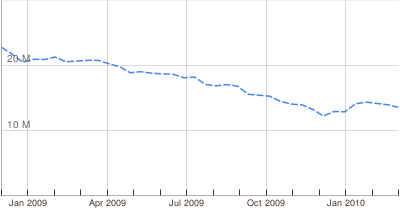
Fear of Public Relations

21 Sunday Mar 2010

Posted by Paul Kiser in Crisis Management, Human Resources, Information Technology, Lessons of Life, Management Practices, Passionate People, Public Relations, Re-Imagine!, Rotary, Social Interactive Media (SIM), Tom Peters

≈ 4 Comments

Tags

New Business World, Re-Imagine!, Social Media, Tom Peters

The fog of Social Interactive Media is burning off

There are two approaches to Public Relations. The first is to live in fear of it and tremble at the prospect of screwing up. Take only measured steps that are carefully calculated and planned.

The other approach is to dive in. Risk mistakes and live and breathe being real and human.

The old school of Public Relations is the former. It is controlled by the Chain of Command. No one is authorized to speak unless cleared by multiple levels of authority and even then, to say or do anything that is nothing less than perfect is to fail. It is that Public Relations of which the world has become accustomed. Anyone who mars the perfect image risks banishment from the corporate world. Nightmare situations such as the current Toyota recalls reinforce the fear that Public Relations is a beast that must be closely guarded and heavily controlled.

This is why the new world of social media terrifies the old school. The unprecedented access to expressing our individuality on Facebook, Twitter, or even our own blog is the worst possible situation for those who believe that control of the message is the alpha and omega of Public Relations. Many companies are establishing strict policies for their employees on using Facebook, blogging, and all other avenues of professional or personal expression. Most of this comes from the management attitude that employees are a necessary evil and potentially a major embarrassment to the company.

What the old school of Public Relations doesn’t understand is that social interactive media (SIM) is creating a new model of business that is being driven by a desire of the consumer to do business with real people, not corporations. In today’s interactive world the branding of the individual is now becoming a driving force to he branding of the corporation. This is 180 degrees from the mission of most Public Relation professionals in major companies and it gives indigestion to old school managers that live in fear of employee self-expression.

Re-Imagine! Business Excellence in a Disruptive Age

In 2003, Tom Peters came out with a book called Re-Imagine!: Business Excellence in a Disruptive Age. If you understand that the book was published before Twitter and Facebook were available to the public, you have to wonder if Tom Peters can travel into the future and back again. Today everyone throws around the term ‘Branding’ but few know that today’s usage of the term originated from Peter’s 2003 book. On page 232 of Re-Imagine! Peters explains a new world of people who develop her or his individual brand separate from the corporate world. Now, in 2010, social interactive media has provided the vehicle for individuals to show off who they are and what they know and Peters has become the Moses of the new business world.

Like all business, the winner will always be the one who can embrace change before others. Companies that can adapt and use social interactive media to promote and showcase the quality and expertise of the individual within their ranks will have the advantage over the competition. In those companies the new role for the Public Relations professional is to help employees brand themselves instead of trying to muzzle them.

Still, the old school will loudly point out every slight misstep or mistake made by an employee that may reflect poorly on a company’s reputation. What they don’t understand is that errors make us human and that can deepen the bond between the company and the customer. An error is the opportunity to make things right and that is the key to all long-term relationships.

What’s in a Blog?

17 Wednesday Mar 2010

Posted by Paul Kiser in Lessons of Life, Social Interactive Media (SIM)

≈ Leave a comment

Tags

Airlines, American, Blogging, Bret L. Simmons, Creativity, Delta, Erin Kotecki Vest, Queen of Spain Blog, Southwest, Spirit Magazine, United, writing

I wish I could Write!  I know I am ‘writing’ and I have the ability to put words together in ‘written’ form, but there is more to writing than pounding out sentences on a keyboard.  I would like to write well.  Write with the capital ‘W’ and an exclamation mark.  Write!  It takes creativity….cleverness….style.  I don’t think have any of those qualities.  Maybe that’s my problem.

Paul Kiser - Not a Write!-er

Just take ‘creativity’.  My blog title is Paul Kiser’s Blog.  That’s not creative, that’s just my name.  If anyone can be credited for creativity it is my parents.  They gave me the name and I just used it for my blog.  I can’t even credit myself for the idea to use my name.  Some guy, I think his name is Simmons[1], suggested that people should use her or his real name on websites and blogs to build credibility to his or her brand.  Once again, someone else has the ideas and I just follow along.

Some people are very creative in naming their blog.  One person titled her blog, “Queen of Spain[2].”  Now that’s impressive.  She’s not only been creative, she’s made herself royalty.  I don’t think she is even French.  I’ve read her blog and she can Write!  She talks about socks and her daughter…apparently this is stuff that women like to read because she writes for blogHer, which is another creative name.  I could name my blog blogHim, but I don’t think even men want to read my writing.  I’m not seeking pity, just noting that I don’t have the Write! stuff.

I recently read a piece in the Spirit magazine.  That’s the Southwest Airline magazine.  I think you really have to be able to Write! to be published in the magazine that can only be found in the pocket on the backside of the seat in front of you.  Anyway this guy was writing about clowns moving in next door.  It was funny and sad.  He lost his wife to the clowns.  I’m not sure why that is funny…or sad, but he made it so because he could Write!  Maybe I just need more experience with odd life experiences and then I could be creative…but maybe not.

Speaking of airlines, is there some FAA rule that their names cannot be creative.  I thought my blog name lacked style, but I’m a genius compared to the guys who named the airlines.  United, which is not a very creative name to start with, named their low-cost service…uhmm…Ted.  Wow, some guy took the last three letters of United and came up with ‘Ted’.  I’m not sure who to feel sorry for, the guy who came up with the name, or the Board of Directors at United who approved the idea.  I would give them style points even if they just used the first three letters of United.  Uni Airlines sounds a lot better than Ted Airlines.  I’m betting that the vacuum of ideas at United headquarters requires that all office chairs come with oxygen tanks attached.

But why am I picking on United.  Southwest, Delta, American are not names that inspire the imagination.  At least Virgin Airlines stepped out of the box and came up with a name that brings a smile to a man’s face…no offense to blogHer, but if you had called it blogVirgin I’m sure men would read it regardless of the subject matter.

I’ll continue to write and hope that someday I can learn how to Write!, but for now I’ll stick to calling my blog Paul Kiser’s Blog.  It’s not creative, but it’s better than calling it TedBlog.


[1] Dr. Bret Simmons, Professor, College of Business, University of Nevada.  www.bretlsimmons.com

[2] Erin Kotecki Vest.  www.queenofspainblog.com She can Write!.

Breakthrough Training Radio Appearance

16 Tuesday Mar 2010

Posted by Paul Kiser in Information Technology, Lessons of Life, Management Practices, Public Relations, Rotary, Social Interactive Media (SIM)

≈ Leave a comment

Tags

99.1 FM Reno, Breakthrough Training, Jeffrey Benjamin, Motivational Speaker

Jeffrey Benjamin Motivates

This is an interview segment (about 6 mins.) on Jeffrey Benjamin’s (Breakthrough Training) radio show  on Reno 99.1 FM on Sunday, March 14, 2010.  Jeffrey is a motivational (kick you in the butt) consultant/speaker.  I talked about my company and Rotary.

Breakthrough Radio Interview

← Older posts
Newer posts →

Other Pages of This Blog

  • About Paul Kiser
  • Common Core: Are You a Good Switch or a Bad Switch?
  • Familius Interruptus: Lessons of a DNA Shocker
  • Moffat County, Colorado: The Story of Two Families
  • Rules on Comments
  • Six Things The United States Must Do
  • Why We Are Here: A 65-Year Historical Perspective of the United States

Paul’s Recent Blogs

  • Dysfunctional Social Identity & Its Impact on Society
  • Road Less Traveled: How Craig, CO Was Orphaned
  • GOP Political Syndicate Seizes CO School District
  • DNA Shock +5 Years: What I Know & Lessons Learned
  • Solstices and Sunshine In North America
  • Blindsided: End of U.S. Solar Observation Capabilities?
  • Inspiration4: A Waste of Space Exploration

Paul Kiser’s Tweets

Tweets by PaulKiser

What’s Up

April 2026
S M T W T F S
 1234
567891011
12131415161718
19202122232425
2627282930  
« Jun    

Follow Blog via Email

Enter your email address to follow this blog and receive notifications of new posts by email.

Join 688 other subscribers

Create a website or blog at WordPress.com


Loading Comments...