3rd From Sol

~ Learn from before. Live now. Look ahead.

3rd From Sol

Category Archives: Travel

The Ugly Side of Annual Vacations with the Extended Family

15 Friday Jul 2016

Posted by Paul Kiser in Aging, Generational, Health, Lessons of Life, Respect, Travel

≈ Leave a comment

Tags

Family, family time, family vacations, leisure time, parenting, Travel

But you like to be with my family!

If I had a British pound for every time that was said regarding the annual extended family vacation, I would have less than what I had a month ago…but that’s another story.

_DSC3743 (2)The annual extended family vacation. I’m not talking about the vacation where you and your spouse plan to go to a new and different place every year with your children. That activity has its own stresses and issues, but is usually a healthy activity for those involved. What I’m talking about is when one person or one family decides to go to the same place every year, and others are expected to join them.

_DSC4389 (2)

Often it starts with a family having a traditional summer vacation to the same place with their children, but as the children become adults, they may stop going on the annual vacation.

However, after they marry and begin their own families, they are invited to rejoin the annual family vacation, with an expectation that the spouses will become part of their annual pilgrimage. For a few years it may be a fun event, something to look forward to each summer, but then the event becomes more important than any other vacation that doesn’t involve the extended family. Vacations become determined by bloodlines, not along family lines.

Alternate vacation ideas, or visits to relatives that aren’t of the bloodline of the family of origin become a lower priority. Everyone is expected to preserve and protect the big event. After so many times of going to the same place with another family, or families, one may begin to feel that they’re tagging along on someone else’s vacation. Once in the situation, you can only be the bad person if you refuse to go.

There are always great reasons for extended families to get together occasionally. It is an opportunity to reclaim family ties, and share time together. Going for a week or more on trip with a group of people can be fun; however, committing two or more families to an annual vacation, to the destination determined by one family says something about the nature of the relationship of one family over another. 

However, vacations that are determined by one family, or one side of the family, year after year after year, are about control. At some point an adult child has to decide whether their commitment is to their family of origin, or to their own family. 

Moffat County, Colorado: Story of Two Families (Part III-Another Radiator Springs)

12 Friday Feb 2016

Posted by Paul Kiser in Aging, Business, College, Education, Generational, Government, History, Lessons of Life, The Tipping Point, Travel, US History

≈ 2 Comments

Tags

Barrick, Colorado, Colorado Street, Craig, Family, Frances Barrick, genealogy, Kiser, Maybell, Mike Kiser, Vernon Kiser

1940’s-Kiser/Barrick Merger
By 1939, both the Barrick and Kiser family had established themselves in Moffat County. The original two families had lived in northwestern Colorado for over two decades and the children born there were now old enough to start their own families. Vernon, the oldest son of the Kiser family and Frances, the eldest daughter of the Barrick family married on October 29, 1939. Both were first generation natives of Moffat County.

Vernon and Frances Kiser

Vernon and Frances Kiser

To support themselves, Vernon took jobs wherever he could in the 1940’s. He and Frances moved several times around northwestern Colorado to be where the work took them. World War II had little impact on Vernon and Frances as he had broken his arm as a child and it failed to heal properly.

His disqualification to join the military was a blessing as he became a father in 1945. Kenneth Clyde was born on July 10, and by that time Vernon had settled into a career as a heavy equipment operator. In 1949, Vernon began working for Henderson Construction where he would remain for the next 22 years.

However, World War II did have an impact on other members of the Kiser and Barrick family. Vernon’s brothers, Loren and Hubert Kiser and, the brother of Frances, George Jr. and two of her brother-in-laws, Lewis Hurlburt and Ed Annon served in the military during the war. All survived the war, but they, and their families, all relocated outside of Moffat County after they returned.

1950-70 The Hahn’s Peak Years
Vernon’s work with Henderson Construction was largely with a small mining company. One of their mining claims was Hahn’s Peak in nearby Routt County. The idea was that because gold had been found in a radius around the extinct volcano, perhaps there were veins of gold in the mountain. For many years Vernon was employed to build and maintain roads on Hahn’s Peak for the mining operations on the mountain. Almost all of the roads on Hahn’s Peak were carved out by Vernon.

Hahn's Peak - Roads by Vernon Kiser

Hahn’s Peak – Roads by Vernon Kiser

Vernon and Frances had three more boys during his tenure with Henderson Construction. Michael Warner was born in 1950, Roy Dean was born in 1953, and Paul Alan was born in 1957.

Because Hahn’s Peak was about an hour and a half from Craig, Vernon lived in a trailer house at the base of the Hahn’s Peak during the week. During the summer when school was out the family would join their Dad and live at the camp for the summer. Once a week Frances and the boys would come into town to wash clothes, shop, and maintain the yard at the house, then head back to Hahn’s Peak.

1960-80 677 Colorado Street
Much of the Barrick family had moved out of Moffat County during the 1940’s and 50’s; however, the Vernon and Frances built a home at 677 Colorado Street in Craig, and From 1958 until 1978, that house was the anchor of the Kiser family. All their boys attended school in Craig, played sports, and graduated from Moffat County High School while living in that house.

The Kiser Family in 1957

The Kiser Family in 1957 at the new house, 677 Colorado Street

Henderson Construction closed it’s doors in 1972, and eventually Vernon took a job at the Moffat County Road Department where he moved up to the Assistant Road Supervisor. By 1976, all of their boys had graduated and left Craig, so Vernon and Frances decided to move to Great Divide and manage one of the county’s remote road maintenance stations.

Of their four boys, Mike Kiser was the only one who returned to northwest Colorado to stay. He was a helicopter mechanic for the Army and was stationed in Germany. After his tour of duty he worked a couple of years as a mechanic for the City of Sandy, Utah. Mike married a woman he met in Utah and they moved back to Craig. In 1975, they had a daughter, Carey.

In Craig, he took a job with the Moffat County Road Department and later became a member of Craig’s volunteer fire department. Unfortunately, while Mike was in his 30’s he was stricken with a hereditary autoimmune disorder that put him in the hospital for weeks at a time and he had to stop working. Eventually, Mike moved out to Maybell where he lived for the rest of his life.

1980’s to 2015-End of an Era
Craig’s story is similar to the story of Radiator Springs in Disney’s fictional town in the animated movie Lightning McQueen, Craig is the town that saw its glory days when U.S. Highway 40 was the best route between Denver and Salt Lake City. Once Interstates 70 and 80 were built, Craig became more isolated even though the two-lane highway is shortest route between the two major cities.

For a person graduating from Moffat County High School, Craig’s career opportunities are limited and the community can’t absorb 100 new job seekers every June. A diploma for many graduates is an order to work for the family business, a signal to scramble to find a local job, or a ticket to pack and leave northwestern Colorado.

Since the Barrick family emigrated to Moffat County in 1913, at least 24 Kiser/Barrick family members lived in northwestern Colorado. By 1990 there were only five members living in the county. The rest left the area for military service, college, better jobs, or just to discover other places. 

The family members still living in Moffat County were Vernon and Frances Kiser, Mike Kiser, Virginia Barrick Hurlburt (sister of Frances,) and George Dean Jr. (brother of Frances.) Vernon had retired from the Road Department and he and Frances purchased a small ranch on the Yampa River west of Maybell. Mike Kiser and Frances’ sister, Virginia Hurlbert, also moved out to Maybell. The five survivors of the Kiser/Barrick family were all natives of Moffat County.

For several years Vernon and Frances enjoyed the return to life on a ranch until Vernon began having health problems. Vernon, the first child of the Kiser/Barrick clan to be born in Moffat County, died at Craig Memorial Hospital in 1996. He was 77. Virginia died in Maybell in 2004. She was 76. George Dean Jr. died in Craig two years later. He was 84. Frances, the last of the first generation of homesteader’s children died at her home in Maybell in 2008. She was also 84.

Michael Warner Kiser 1950-2015

Michael Warner Kiser 1950-2015

After his mother’s death, Mike Kiser remained at the home west of Maybell. He had been married twice, but he had been single for most of the last half of his life. Although he lived with chronic pain, he had been feeling healthier lately. Local people had seen him taking long walks near his home on Highway 318. He had been out on Thursday, November 19, 2015, but no one had seen him since. His brother, Roy, tried to call him on the weekend and when he couldn’t get ahold of Mike he asked the Moffat County Sheriff’s Department to check up on him. They found him dead of a heart attack in his home.

The Kiser/Barrick family line in Moffat County

The Kiser/Barrick family line in Moffat County

Mike’s passing ended a century of the Kiser/Barrick family in Moffat County. The Kisers and the Barricks that were born and raised in northwestern Colorado weren’t really noteworthy. None of them ran for political office, none of them were high-profile citizens, and rarely did you see their names in the local papers. They attended the local schools, worked at local jobs, were involved in sports in high school, and they quietly raised families.

This July the Kiser and Barrick families will come together at Hahn’s Peak to say goodbye to Mike, and say goodbye to our home in northwestern Colorado.

ALSO:  Part I – Pre-Homesteading

ALSO: Part II – Two Family’s Destiny Unfolds

Moffat County, Colorado: Story of Two Families (Part II-Destiny Unfolds)

11 Thursday Feb 2016

Posted by Paul Kiser in Generational, History, Passionate People, Travel

≈ 2 Comments

Tags

Barrick, Colorado, Craig, Depue, Dust Bowl, emigrant, Family, family history, Frances Barrick, genealogy, Great Depression, John Wesley Depue, Kiser, Lucy Elizabeth Spicer, Mervin E. Barrick, Moffat, Moffat County, Vernon Kiser

Life on the Emigrant Car

Life on the Emigrant Car

The birth of Moffat County occurred in 1911, and it came with a wave of settlers who had been encouraged to claim homesteads in the county. Most travelled by train with their possessions in an emigrant car. The settlers would then hire wagons to deliver the household goods from the train station to the homestead. Both the Barrick and the Kiser families used emigrant cars to haul their possessions to northwestern Colorado.

Mervin Edward Barrick

Mervin Edward Barrick

1913-Barrick Family Emigration
The Barrick family came to Moffat County in April of 1913. 41 year-old Mervin E. Barrick filed for a homestead ten miles southwest of Craig. He, his wife, Lucy Elizabeth Spicer, and three boys, Buford (18), George Dean (12), and Floyd (8) rode the train from Boulder to the end of the line at Steamboat Springs. By that Fall, the track would extend to Craig, but now the family had to take the stage to Craig.

The family found life an adventure in the new country. In Craig they stayed in the Webb Hotel until the wagons with their belongings arrived. Once the wagons had caught up with them they were taken to their new homestead. The family written history gives a bleak description of arriving at their new home:

Lucy Elizabeth Spicer

Lucy Elizabeth Spicer

“We arrived about the middle of the afternoon and unloaded in the sage brush (sic) and grubbed out a place to pitch a tent and a place to cook and sleep until we could build a tent house. We carried our water for a mile for a couple of weeks until we could dig out a spring closer to home.”

The family worked on the track extension near Hayden that summer, with Mervin and Buford working on the grade while Lucy and the two boys prepared and fed a work gang of up to 20 men. The next few years were a mix of working at the Mt. Harris coal mine and continuing to work on the homestead.

1918-Kiser Family Emigration

Earl Leroy Kiser holding his daughter Velma June with his mother Arminda Nixon and his grandmother Anna McFadden

Earl Leroy Kiser holding his daughter Velma June with his mother Arminda Nixon and his grandmother Anna McFadden

Earl Kiser was 24, when he brought his wife, Mabel Warner and two year-old daughter, Velma June to Craig on April 24, 1918. They traveled by car for a week to get to Craig from Selden, Kansas.

Later Velma June, the eldest daughter recounted the events:

“April 17, Dad, Mother, June, Cecil, and Joe Sulzman started from Selden to Craig in an open Ford. We went to Aunt Orpha’s for dinner, took pictures and started on. We stayed with Uncle Dan Warner that night. We got to Uncle Ted Warner’s for late dinner Thursday and went to Uncle Art Warner’s that night. We left Art’s in a storm which lasted all day….” 

The family travelled through northeast Colorado to Ingleside, located northwest of Fort Collins. From there they headed north, probably on a road that was a predecessor of U.S. Highway 287. The narrative continues:

“…That night we stayed at Ingleside, Colorado. We did our own cooking, and an Indian made our coffee. Monday night we stayed at Hanna, Wyoming; Tuesday night, at Dad, Wyoming, and Wednesday night in Craig at the Armstrong Hotel.”

Their homestead was northwest of Craig, but shortly after arriving they decided to take land at High Mesa. The next year Vernon Kiser was born at High Mesa making him the first Kiser child to be born in the County.

The family written narrative lists the highlights of 1919:

“1919. We bought Bess and Bell, a gray team, from Mr. Ledford in the spring. Vernon Warner Kiser was born October 17, with Dr. Davenport in attendance and Mrs. Strailey as nurse. Nina Kinley was the first teacher at High Mesa. Raymond Warren Comstock died of diabeted (sic) September 18. We spent Christmas at home. June got a doll and Vernon a rattle (from) grandpa and Grandma Lizzie Kiser.”

1920’s-Barrick and Kiser Families Grow

George Dean and Leona Barrick

George Dean and Leona Barrick

In July of 1920, now 19 year-old George Dean Barrick married 16 year-old Leona Elizabeth Depue in Craig, Colorado. The Depue family had moved to the Moffat County from Weld County, north of Denver, sometime around or just before 1917. Leona was the youngest daughter of seven Depue children, two of which had died before she was born. Leona’s father, John Wesley Depue, died in Craig in 1917, at the age of 55.

George Dean and Leona Barrick had their first child in 1921, George Dean, Jr. In 1924, Frances Elizabeth was born, followed by three more daughters, Virginia Dale (1928), Lucy Mildred (1934), and Gladys Faye (1939). All the children were born in Craig.

Mabel Alta Kiser

Mabel Alta Kiser

Earl and Mabel Kiser would have two more sons, Loren Dale (1922) and Hubert Leroy (1925). They were both born in Craig. Vernon attended the High Mesa School until 1933, when he graduated from grade school. The next Fall he began attending High School in Craig; however, transportation to and from school was enough of an issue to warrant mentioning in the family history:

“Vernon drove our Ford part of the time and part time went with Byrl. Vernon played football, was right guard, No. 27.”

1936 Craig High School football team

1936 Craig High School football team

193o’s – End of Homesteading
By the 1930’s Moffat County was changing. In the 1920’s the cattlemen had literally fought battles against sheepherders and settlers under the belief that the land they had used for grazing belonged to them. At one point the Colorado State Militia had to be called in to restore the peace between the cattlemen and sheepherders. By 1920, they had lost the battle over ownership of the land and the cattle ranching industry faded dramatically.

Homesteading peaked and was fading in the 1920’s. By 1934, the government had shut down programs encouraging settlers to come the area. Many of those who had homesteaded gave up their land and either left or moved into Craig. In 1920, 25% of county citizens lived in Craig. By 1930, that percentage had increased to almost 30%, and by 1940, almost 42% of Moffat County’s population lived in Craig.

Percent of Moffat County population living in Craig

Percent of Moffat County population living in Craig

This trend of living in town might not have surprised early explorers who expressed doubts that people could live off the land in the high desert of northwestern Colorado. It is also possible the Great Depression and Dust Bowl played a role in moving into town where work of jobs and opportunities were more likely.

NEXT:  Part III – Another Radiator Springs

BACK:  Part I – Pre-Homesteading

Earthbound Astronauts

03 Tuesday Nov 2015

Posted by Paul Kiser in Communication, Government, Internet, Science, Space, Technology, Travel

≈ Leave a comment

Tags

ESA, International Space Station, ISS, NASA, NASA ISS Live Experiment, Tracking Map

Everyday I have the pleasure of joining the International Space Station (ISS) orbiting 250 miles (400 km) above Earth. This is possible because NASA has high-definition (HD) cameras that stream live video of Earth from the International Space Station. The public may connect to this video stream from the comfort of their home with a DSL or higher Internet service. This makes it possible for millions of people to have the view of Earth from space without having to experience liftoff, special toilets, re-entry, and landing.

Streaming image below is a live video feed from the International Space Station.

Broadcast live streaming video on Ustream

Courtesy of NASA TV
Click on the ‘Play’ button to begin live streaming from ISS. (If screen is all black, ISS is on night side of Earth)

This “experiment” began in April 2014, and is meant to test the equipment needed for continuous video streaming from a space environment. It is one ISS experiment that makes us part of the ISS crew and allows us to enjoy their view of Earth almost anytime we desire.

You can watch this video feed:

  1. Above on this page.
  2. On NASA TV (click on the text to go there now.)
  3. Through an application (app) on your phone or tablet.

Some things to note:

  • Each orbit takes approximately 90 minutes and about 30 minutes of each orbit is on the night side of Earth, therefore the screen may be all black.
  • ISS loses streaming signal several times during each orbit when it is out of range of equipped Earth-based communication centers.
  • Cameras and/or angles can change.

If you want to know where ISS is over Earth go to the following link:  ISS Tracking Map

Screen shot images from the ISS HD cameras:

View from ISS as it flies over the Bering Strait area

View from ISS as it flies over the Bering Strait area

Looking southeast as ISS flies over the Northern Pacific

Looking southeast as ISS flies over the Northern Pacific

Looking straight down at the Pacific Ocean

Looking straight down at the Pacific Ocean

View to the northwest as ISS slides into night over Chile

View to the northwest as ISS slides into night over Chile (two Soyuz spacecraft docked)

Living in the Imminent

27 Tuesday Oct 2015

Posted by Paul Kiser in Government, Honor, Passionate People, Pride, Random, Science, Space, Technology, Travel

≈ Leave a comment

Tags

astronauts, cosmonauts, death, ESA, International Space Station, ISS, Japan, NASA, orbit, Russia, scientists, Space, USA

international-space-station-completeSix people near death 

Don’t they know?

They show no fear

They have to know.

They live surrounded by a monster that kills without effort

Yes, in this millisecond they live in peace

In the next they could die in horror

We have no reason to fear walking outside

But these six

They should have reason

Death awaits outside with the tools of the universe

Radiation, heat, cold, or even nothing can kill

These six live where no one should

Yet, these six rob Death

These six live flawlessly where perfection matters

These six know Death and know his tools

Yes, these six know and know the risk

Just before sunrise or just after sunset

We watch them go by

We walk outside and watch them go by

For them, sunrise comes, sunset goes many times a day

But rarely do they go outside to watch

They know what is waiting outside

They know the risk

And three by three they will come and go

Three to rob death, three to come home

Three to look up to, and three to celebrate

Six people near death

But alive and well

Panama’s Historical Struggle For Self-Determinism

28 Tuesday Jul 2015

Posted by Paul Kiser in Education, Ethics, Government, Government Regulation, History, Honor, Panama, Politics, Public Image, Religion, Respect, Travel

≈ Leave a comment

Tags

Columbia, independence, Panama, Panamá Canal, Simon Bolivar, Spain, United States, USA

_DSC0805Panamá has been the victim for most of its history. Because it is the narrowest land division between the Pacific Ocean and the Caribbean Sea (and to the Atlantic Ocean,) Panamá was a strategic gateway for world commerce long before the great canal was built.

Panamá Under Foreign Control
When Spanish Explorer Vasco Núñez de Balboa managed to cross from the northern Caribbean/Atlantic coast to the southern Pacific coast in 1513, the fate of Panamá was sealed. The Spanish instantly knew that this was the access to the Pacific side of the Americas and Panamá was the link that would make conquest possible.

Ruins of the Spanish fortifications in Portobelo, Panama

Ruins of the Spanish fortifications in Portobelo, Panamá

Spain’s official rule of the Americas began in 1538, and lasted almost 300 years, but Spain’s hold on Panamá would not go uncontested. Pirates and English backed privateers attempted to raid Spanish held ports in Panamá in hopes of stealing the wealth of cargo passing across the land. Eventually it would be the Spanish-American wars and rebellions across Latin America that would force Spain to retreat back to Europe.

When Panamá gained independence from Spain in 1821, it became a department of Columbia, but the citizens almost immediately sought to be free of all foreign control. Columbia refused to give Panamá independence, and its strategic value to world trade was probably one of the most significant reasons.

A Spanish Import:  The Catholic Church

A Spanish Import: The Catholic Church

New Outsiders
In the late 19th century a new European power was implanting itself on Panamanian soil. France had decided to take action on the Holy Grail of world trade, an ocean channel through Panamá that would end the need for unloading cargo from a ship, transporting goods across a tropical jungle, and reloading the cargo onto another ship. The French effort eventually killed over 20,000 people before the effort was finally abandon.

Soon after the French failed, the United States decided to insert itself into the effort of building a canal system in Panamá. It initially negotiated a deal with Columbia, but the Colombian Senate rejected the treaty/contract. As the citizens of Panamá had recently attempted to gain independence from Columbia in a 1,000 day war, the United States decided to bypass Columbia’s rejection and assist Panamá’s rebellion effort. The understanding was that the United States would be allowed to build, operate, and control the canal if Panamá was successful in gaining independence.

_DSC1079 (2)

The Panamá Canal has guided Panamá’s fate for over 100 years

A day after U.S. warships created a blockade to stop Columbia from sending troops into Panamá, it declared independence from Columbia on November 3, 1903. Three days later the treaty to give the United States the right-of-way for the canal and a zone extending five miles to each side of the canal.

Though there was no bloodshed in 1903, between Panamá, the United States, and Columbia, the actions taken by the United States, and its motives for assisting Panamá created diplomatic issues with Columbia. Many citizens of Panamá were also unhappy with the cost of independence. Almost two decades later the United States reached an agreement and monetary settlement with Columbia over the events of 1903, but many Panamanians still felt that the United States occupation was only a slight revision of past foreign domination.

20th Century Political Oddity
Under the terms of the treaty of 1903, Panamá was placed in an odd position. The government of Panamá finally governed over the people of Panamá, but not the Panamá Canal. It received annual royalties from the United States, but in return Panamá could not do anything that might threaten use of the canal. The best jobs in Panamá were related to operation and maintenance of the canal, but the United States instituted a system of institutionalized racism in Panamá by selective employment and a preferential pay structure. United States citizens were offered administrative positions and were paid in gold currency (gold roll.) The Hispanic and African-American Panamanians were hired for worker positions and were paid in silver currency (silver roll.)

Housing for U.S. personnel assigned to the canal is now owned and maintained by Panamá

The Panamá government found itself as the liaison between the United States and the Panamanian people. That role led to cycles of odd leadership styles and often corrupt and/or dictator-like political control of the country. The United States military was an oppressive reminder to all Panamanians of who held the power in their country, and yet. the citizens of Panamá found that the presence of the United States military did not keep their leadership from being corrupt or cruel, and attempts by the U.S. to address the corruption and criminality of the government of Panamá failed to resolve the problems.

By the early 1970’s it was apparent that the United States was exacerbating the internal issues in Panamá and negotiations for transferring the ownership and operation of the Panamá Canal to Panamá began. That resulted in a new treaty signed by President Jimmy Carter. Based on the treaty signed in 1977, the control of the Panamá Canal was to be turned over to the Panamanian government on December 31, 1999. 

_DSC1074 (2)Panamá:  Required to Run Before It Walks
In 500 years of world attention, Panamá never had the opportunity to develop its internal government without interference or influence of a foreign power. During the last fifteen years Panamá has faced the task of trying to restructure and address its internal issues in order to map out a sustainable future for its diverse population.

The occupational governments of the Spanish, French, Columbia, and the United States, rarely offered a positive model of good government for Panamá as each foreign power had an agenda for the country that had little, if anything, to do with improving the standard of living for the citizens.

Panamá’s future rests largely on the ability of government to create an ethical environment that protects citizens and limits the potential for corruption. A significant aspect of that environment will be infrastructure that provides access to all people to opportunities currently reserved for the wealthy and powerful.

A Panamanian girl in traditional dress

A Panamanian girl in traditional dress

Education:  The Foundation of Panamá’s Future
Education will play an important role for the future of Panamanian citizens. Basic skills, (mathematics, reading, science, history, etc.,) and more advanced subjects, (multiple languages, music, art, speech, etc.) will create citizens who are better prepared for job opportunities of the 21st century. In addition, education provides a path to overcome corruption. Ethical behavior is a learned function that requires the ability to see a bigger picture of society. Uneducated people tend to gravitate to a, “what’s-in-it-for-me,” mindset that sacrifices the future for a short-term gain.

Simon Bolivar, a key figure in forcing Spain to give up the Americas

Simón Bolivar, a key figure in forcing Spain to give up the Americas

Epilogue For A Country Reborn
Panamá has never been given a chance to develop its own identity. It has three dates that could be called “Independence Days.” Independence from Spain on November 28, 1821; independence from Columbia on November 3, 1903, and independence from United States control of the canal on December 31, 1999. The irony is that while Panamá celebrates the two former days of ‘independence,” it is really the latter date that gave the country true independence of foreign meddling.

For the first time in 500 years Panamá has the opportunity to make choices about its destiny. This freedom comes with a bigger challenge. The leadership of Panamá must establish a new long-term vision for the country that will involve significant projects and programs to develop the infrastructure that the country must have to succeed. Yet, the people of Panamá will justifiably be suspicious their government based upon a long history of great plans and promises that were lies of corrupt officials who pocketed money and didn’t deliver. Winning back the trust of the citizens will be the first task of an independent Panamá.

The Panamá Canal will play a significant role in an independent Panamá. World economics affect world trade, and world trade affects the Panamá canal; however, the country has the opportunity to re-position itself as more than just a conduit of trade. If Panamá can minimize corruption, improve transportation infrastructure, and increase the education level of its citizens, it will have an environment that will continue to grow Panamá’s role as a center of commerce and industry as well as a ocean-to-ocean conduit for cargo passing through the country.

Panamá no longer is a victim of foreign interference. Panamá now has the opportunity, and the burden, of determining its own future.

A Glimpse of Education in Panama

22 Saturday Nov 2014

Posted by Paul Kiser in Customer Relations, Education, Information Technology, Internet, parenting, Passionate People, Technology, Travel

≈ Leave a comment

Tags

Centro Educativo, children, Coronado, Educacion, elementary school, Panama, parenting, San Jose, school

2014NN_119DSC_0129 (2)

The Principal in the classroom in Panama

Teaching children is a challenge anywhere in the world. Culture, government, and environment all affect the quality of education. Still, it seems that the foundation of any great school is the dedication of the staff to the students.

Recently I was on my second visit to a community about 90 km (60 mi.) from Panama City, Panama. While in the area I decided to research their education system by dropping in on a local school, the Centro Educativo San Jose elementary school.

It should be noted that to truly understand the education system in Panama, I should first be proficient in Spanish, and second, I should visit multiple schools, both private and public, over a period of weeks or months. A thirty minute conversation with the Principal, who does not speak English, and a teacher acting as my interpreter is only enough to give a first impression.

However, there are clues about the quality of education that are instantly obvious and transcend language barriers.

2014NN_100DSC_0118 (2)Laughing children. It is difficult to bridle the enthusiasm of children, but some schools seem to manage to stifle the joy of childhood. Centro Educativo San Jose has not made this mistake. At this elementary school the children were well-behaved, but laughing and smiling. It was obvious they understood discipline, but they were obviously happy to be at school.

Panama celebrates Thanksgiving

Panama celebrates Thanksgiving

Helpful children. When I arrived I first met an adult with several children. I wasn’t sure of her role in the school (she may have been a parent,) but when I asked if she spoke English, she said, “No.” Instantly a young girl at her side pointed at one of the teachers and indicated she spoke English, then the girl quickly ran to the teacher and brought her to me. This girl knew she could help and did so without hesitation. That tells me that the school encourages critical thinking that empowers children with the ability to respond quickly to a situation.

Professional Staff. In the tropics the temperature is near 30° C (86° F) year round and the humidity wraps around you like a wet towel. There is no air conditioning at this school and any breeze is welcome in the classroom. Despite these environmental conditions, the staff at the school looked and acted professional.

What I learned during my visit surprised me. The students have access to computers and they have a ‘Technology Room” filled with computers. I couldn’t tell if the computers were connected to the Internet; however, I did not expect an 80 year-old public school to have dozens of desktop computers with flat screen monitors.

This school is funded by government support, which limits the per/student resources; however, most schools in Panama are private where parents pay $1,500 to $3000 per year for tuition.

Many schools in Panama operate double sessions with one group of students attending in the morning and another attending in the afternoon. At this school the morning session is 7 AM to 12 Noon, and the second session is 12 Noon to 5 PM.2014NN_120DSC_0130 (2)

While most private schools are open twelve months a year, public schools are in session March through December, and have ‘summer’ break in January and February.

I asked about homework and parent involvement and heard what I expected. Once the students leave the school they are not expected to do homework and parents are not typically involved in assisting the staff in school. In an environment of low pay and long working hours, parents likely have no time to be involved in their children’s education.

I was told the biggest challenge is teaching English to the students. The impact of being bilingual is significant in a working adult’s life in Panama, and anywhere else. Yet, It is hard to explain that to a child in rural Panama whose only encounter with another language is in the school.

I’m grateful to have the opportunity to visit the school, and hope to do it again the next time I’m in Panama. I apologize to the Principal and the teacher who interpreted for me. I failed to write their names down before I left. Both graciously gave me valuable time out of their schedule and I appreciate it.

It was a pleasure meeting dedicated professionals who are changing lives every day by caring about the future of the students in their school.

Espanol Version (Using Google Translate)

Enseñar a los niños es un desafío en cualquier parte del mundo. Cultura, gobierno, medio ambiente y afectan la calidad de la educación. Aún así, parece que el fundamento de cualquier gran escuela es la dedicación del personal de los estudiantes.

Hace poco estuve en mi segunda visita a una comunidad a unos 90 km (60 mi.) De la Ciudad de Panamá, Panamá. Mientras que en la zona me decidí a investigar su sistema educativo por meterme en una escuela local, la escuela primaria Centro Educativo San José.

Cabe señalar que para comprender verdaderamente el sistema de educación en Panamá, que primero debería ser competentes en español, y en segundo lugar, que debe visitar varias escuelas, tanto públicas como privadas, en un periodo de semanas o meses. Una conversación treinta minutos con el director, que no habla Inglés, y un profesor que actúa como mi intérprete sólo es suficiente para dar una primera impresión.

Sin embargo, hay pistas sobre la calidad de la educación que son inmediatamente obvias y trascienden las barreras del idioma.

Niños de risa. Es difícil de frenar el entusiasmo de los niños, pero algunas escuelas parecen manejar a silenciar la alegría de la infancia. Centro Educativo San José no ha cometido este error. En esta escuela primaria los niños estaban bien atendidos, pero riendo y sonriendo. Era obvio que entendían la disciplina, pero eran obviamente feliz de estar en la escuela.

Niños útiles. Cuando llegué por primera vez a un adulto con varios hijos. Yo no estaba seguro de su papel en la escuela (que puede haber sido uno de los padres), pero cuando le pregunté si hablaba Inglés, dijo, “No.” Al instante una chica joven a su lado señaló a uno de los profesores y indica que hablaba Inglés, entonces la chica corrió rápidamente a la maestra y la trajo a mí. Esta chica sabía que podía ayudar y lo hizo sin dudarlo. Eso me dice que la escuela promueve el pensamiento crítico que permite a los niños con la capacidad para responder rápidamente a una situación.

Personal Profesional. En los trópicos la temperatura es de cerca de 30 ° C (86 ° F) durante todo el año y los abrigos de humedad a su alrededor como una toalla húmeda. No hay aire acondicionado en esta escuela y cualquier brisa es bienvenida en el salón de clases. A pesar de estas condiciones ambientales, el personal de la escuela parecía y actuaba profesional.

Lo que aprendí durante mi visita me sorprendió. Los estudiantes tienen acceso a computadoras y tienen un ‘Room Tecnología “lleno de computadoras. No podría decir si los equipos estaban conectados a Internet; Sin embargo, no esperaba un 80 años de edad de escuelas públicas para tener docenas de computadoras de escritorio con monitores de pantalla plana.

Esta escuela está financiado por el apoyo del gobierno, lo que limita los recursos per / estudiante; Sin embargo, la mayoría de las escuelas en Panamá son privadas donde los padres pagan $ 1.500 a $ 3000 por mes para la matrícula.

Muchas escuelas en Panamá operan sesiones dobles con un grupo de estudiantes que asisten por la mañana y otra que asisten por la tarde. En esta escuela la sesión de la mañana a 7 de la mañana a 12 del mediodía, y la segunda sesión es de 12 del mediodía a 17:00.

Aunque la mayoría de las escuelas privadas están abiertas los doce meses del año, las escuelas públicas están en sesión de marzo a diciembre, y tienen descanso “verano” en enero y febrero.

Le pregunté acerca de la tarea y la participación de los padres y escuché lo que me esperaba. Una vez que los estudiantes salen de la escuela a la que no se espera que hagan los deberes y los padres no suelen participar en la asistencia al personal de la escuela. En un entorno de bajos salarios y largas horas de trabajo, los padres probablemente no tienen tiempo para participar en la educación de sus hijos.

Me dijeron que el mayor desafío es la enseñanza de Inglés a los estudiantes. El impacto de ser bilingüe es importante en la vida de un adulto que trabaja en Panamá, y en cualquier otro lugar. Es difícil de explicar que a un niño que sólo el encuentro con otro idioma es en la escuela.

Fue un placer conocer a los profesionales que están cambiando vidas todos los días por el cuidado por el futuro de los estudiantes en su escuela dedicada.

Detroit To Move City

01 Tuesday Apr 2014

Posted by Paul Kiser in April Fools Day, Fiction, Government, Travel

≈ Leave a comment

Tags

Detroit, La Pesca, Mexico, Mike Duggan, United States

BREAKING NEWS — Detroit, MI, April 1, 2014

The Mayor of Detroit, Mike Duggan, announced that Detroit would be moving to La Pesca, Mexico. Mayor Duggan said:

“This is the out-of-the-box solution that will bring Detroit into the 21st Century.”

He added:

“We were never going to solve our problems by waiting for global warming to make Detroit a place where people wanted to live.”

Duggan also noted that by moving the city, all the problems of an aging infrastructure are left behind. He said that it will be less expensive to build a new infrastructure in the long run.

The move is made possible by a land-swap deal between Detroit, the United States, and Mexico. The United States is trading Detroit for the small coastal city of La Pesca and surrounding land. Detroit will be renamed by Mexico and all Mexican immigrants attempting to cross into the United States will be redirected and sent by bus or plane to the former city of Detroit. About the trade Duggan said:

“This solves the immigration issue and makes Detroit a tropical destination. It’s perfect.”

When asked about the drug cartels and violence in Mexico, Duggan replied:

“This is not a serious problem in this area, but if it were to become a problem I’d put our gangs against their drug cartels any day of the week.”

Officials say the deal will be finalized by the end of April and the new Detroit will be built over the next ten years. The move will begin by late 2015, and Detroit’s government will oversee both cities for the first five years. The transfer of ownership will be complete by 2020.

A Cup of Like

26 Wednesday Mar 2014

Posted by Paul Kiser in About Reno, Branding, Business, Customer Relations, Customer Service, Employee Retention, Ethics, Human Resources, Lessons of Life, Management Practices, Passionate People, Pride, Public Image, Public Relations, Re-Imagine!, Relationships, Respect, The Tipping Point, Tom Peters, Travel

≈ Leave a comment

Tags

Airlines, Coffee, hotels, Lady Gaga, like, people, Starbucks, tea

Grande cup of Like

Grande cup of Like

I don’t feel it’s appropriate for a business to ‘love’ its customers. Loving someone is a personal bond that shouldn’t be related to business, (unless you’re Lady Gaga, then you can love your ‘monsters.’)

However, I do feel strongly that a business should ‘like‘ its customers. When I go into a coffee house I can tell if they are serving drinks, or if they are offering a cup of like. Anyone can serve a drink, but serving like requires more than the mechanics of taking an order, knowing how much milk to put in a cup, and/or yelling, “I have a Venti Latte with two shots on the bar!”

My home Starbucks on 7th and Keystone in Reno, Nevada has ‘like’ down. They seem truly happy when a customer walks in the door. That doesn’t mean they don’t have their down days, but most of the time you will get more than your drink from the staff.

This is not what I experience when I travel. It’s easy to pick on airlines, because if there is one group of people who don’t ‘like’ their customers, it’s the air travel industry, but even finding hotel or restaurant staff that makes you feel liked has become harder and harder to do.

In fact, a business that likes their customer is so rare that a genuine friendly person stands out among the ugliness of customer service in most businesses. The opportunity to beat the competition is to simply like your customers.

The place to start is with management. Managers have to like their staff and like their job. If their not happy then how can the staff possibly be?

One more thought:  In a world of Twitter, Facebook, and Yelp, how can any business not afford to like their customers?

Air Travel Teaches Us Not To Listen

24 Monday Mar 2014

Posted by Paul Kiser in Business, Communication, Customer Relations, Customer Service, Government, Government Regulation, Management Practices, Opinion, Politics, Public Image, Public Relations, Re-Imagine!, Taxes, Technology, Travel

≈ Leave a comment

Tags

Airlines, airports, audio, FAA, Federal Aviation Administration, gate agents, gate announcements, PA, public address systems, public announcements

Zombies are real people forced to listen to airport/airline announcements

Airports and airlines are dedicated to teaching people how to not listen.

There are multiple studies, solid scientific research, on how humans respond to communication and how we best learn and retain information. Unfortunately, air travel offers the antithesis of everything we know about communication.

Outdated Audio Technology
Consider the airport. We have the technology for crystal clear sound in any announcement system. Visit a Disney property and you will hear clear announcements. Every word will be perfect with little or no distortion or hiss.

“Ladies and gentlemen, boys and girls…” 
Disneyland announcement

If we can do it in Disneyland, solely for entertainment purposes, shouldn’t airports invest in the same quality of public announcement (PA) system when it involves matters of even greater importance? PA systems designed to go into ceiling tiles suck. Maybe it’s time we considered a system designed for the airport environment of 2014, not the office building of 1960.

Zoned Out
Every gate at an airport is a different audio zone, and yet few airports have designed PA systems for this environment. Because most airports have overlapping seating at every gate, passengers for one flight could be sitting in any of three gate areas or standing out in the concourse area just outside of the gate. Few airports seem to understand this geographic distribution. Some airports limit gate announcements to one gate area, resulting in flight announcements to be missed by those passengers not in that gate’s audio zone. Other airports group multiple gates into one zone, so that passengers four of five gates away are hearing boarding announcements for every flight in the area.

Over Communication
The greatest sin of airports is over communication. It seems that airports have a perverse need to create ongoing, excessive, annoying noise. Do these sound familiar?

Please keep your bags with you at all times. Unattended baggage may be confiscated and destroyed.

The Federal Aviation Administration allows you to carry up to three containers of liquids, aerosols, and gels. They must be in a clear plastic bag and removed from your luggage for inspection. Please check with your airline for more information.

Do not carry anything in for anyone else….

I have heard these announcements and many more like them while waiting in the gate area. The gate area within TSA’s secure zone. Anyone in this area has been through the security check point and they and their luggage has been searched and cleared. None of these announcements make sense in an area where everyone has been declared safe to board a plane. They are just noise.

At the gate you will also hear multiple announcements by the gate agent. If there is any training involved of gate agents on how to make PA announcements it would not be apparent from my experience in air travel. Recently, I was waiting for a flight in the Newark, New Jersey airport. The longest period I counted without an announcement was nine seconds. Between the meaningless airport general announcements and the multiple gate agent announcements the passengers were bombarded with endless noise.

The Solution
There is important information that passengers need before they board their flight; however, it is impossible for passengers to determine important announcements for the noise generated in an airport. The remedy involves the FAA, Airport Authorities, and the airlines to reevaluate the purpose of airline announcements…actually they need to assign a purpose to their communications.

Better equipment is a must, and better training on how to effectively communicate information over a PA system. Another possibility is to run all announcements through a centralized public address system where boarding announcements would be made by one trained person who filtered information and determined what audio zones would hear it. 

There is another approach but it would involve a complete redesign of the concept of an airport. That’s not likely in an industry that took decades to determine that an iPod isn’t a threat to a plane’s avionics.

From Idea to Reality

17 Monday Mar 2014

Posted by Paul Kiser in Travel

≈ 1 Comment

Our project leader has begun meetings to research and establish a plan for development of a water storage project in Nepal. This project is needed to collect and store water in the rainy season for crops and animals during the dry season. Other aspects of use and scope of this project are pending and will be finalized as the initial research is completed.

If you have any questions about this project or would like to help please contact Narayan Adhikari at 

Reno, Nevada: Dead City Walking

04 Tuesday Mar 2014

Posted by Paul Kiser in About Reno, Branding, Business, Crime, Customer Relations, Customer Service, Government, Management Practices, Opinion, Politics, Pride, Public Image, Public Relations, Re-Imagine!, Recreation, The Tipping Point, Travel

≈ Leave a comment

Tags

Atlantis, casinos, Circus Circus, Eldorado, gambling, gaming, Grand Sierra Resort, hotels, Nevada, Peppermill, properties, Reno, RSCVA, Silver Legacy, The Nugget

The centerpiece of Reno's future

The centerpiece of Reno’s future

What makes Reno, Nevada unique? Here are some of the wrong answers:

  • Mountains – Plenty of cities the size of Reno are next to, or in mountains.
  • Outdoor Recreation — Again, there are no shortages of cities near outdoor recreation.
  • Arts — Many cities have art festivals, and most art festivals have more professional (paid) artists, but Reno relies mostly on artists working for free.
  • Gaming — Absolutely the most non-unique thing about Reno

Reno is Dying
The question about Reno’s uniqueness is critical to the survival of Reno. Over fifty years ago Reno discovered tourism and that vaulted a small desert town into easy money and big growth. The city learned that when people make their money elsewhere and spend it in Reno, the economy of Reno booms.

But for the last decade Reno has lost its uniqueness. Gaming is something you can do at the nearest Indian Casino. If you want to party and see gaudy construction lit up like game show on LSD, then go to Las Vegas. Reno is nothing when it comes to gaming.

Reno’s is Unique
The one thing that Reno has that no other city has is hotel room per capita. Nevada has one hotel room for every 14 residents, and Reno’s ratio equals or exceeds that average. Reno is a city designed for conventions. The problem is how to get convention organizers to consider Reno as a great convention town.

What won’t work is to keep gaming as the attraction. That industry is poison. It demands that the convention goer stay on the property and gamble, which defeats all the other great attractions that might attract repeat business, and American business people do not want to pay for their employees to go and party. The best thing that could happen in Reno is for gaming to be made illegal.

The other challenge is to get all the properties to work as one. That doesn’t happen that often. One property can shoot the city’s bid for a convention down by not cooperating.

However, if Reno can let go of gaming and focus on the big picture, it could be made into the premier convention town.

That’s a big ‘If.’

Image

Image by Paul Kiser

10 Monday Feb 2014

Tags

Nevada, NV, Reno, rock, Sierra Street, wall

Image by Paul Kiser

Rock Wall on Sierra Street in Reno, Nee-va-da

Posted by Paul Kiser | Filed under Travel

≈ Leave a comment

Romney Adds Insult to Stupidity

02 Sunday Feb 2014

Posted by Paul Kiser in Communication, Crisis Management, Opinion, Politics, Public Image, Public Relations, Respect, Travel

≈ Leave a comment

Tags

Great Britain, London, Mitt Romney, Olympics, Russia, safety, security, Sochi, terrorism, Willard Mitt Romney, Winter Olympics

Mitt Romney

It’s Romney’s nature to be insulting, but couldn’t he just get a radio talk show so we wouldn’t notice him?

In 2012, Mitt Romney embarrassed himself and our country when he was asked about Security at the 2012 London Summer Olympic games. He could have said:

I’m not part of the security planning for the games this year, so I can’t answer that, but I those people involved in planning security for the games know what is at stake and I’m sure they will do everything possible to anticipate and address any security threats to the safety of the London Olympic games.

Or he could have just said:

I’m not part of the organizational committee this year, so I can’t answer that question.

Instead he said that he saw:

...a few things that were disconcerting……The stories about the private security firm not having enough people, supposed strike of immigration and customs officials, that obviously is not something which is encouraging.

He insulted Great Britain, the International Olympic Committee, the London Summer Olympic games, and cast doubt on the safety for everyone attending the London games. In the end, the London Summer Olympic games went without any security issues and Mitt Romney lost the election.

Fast forward to 2014. The Sochi Winter Olympic games have been overshadowed by fears of terrorist attacks as the games are being held near areas of recent bombings. In addition, the Sochi games have been notable in making Russian President Vladimir Putin’s friends rich and the games have been labeled as the most corrupt in history.

So what is business-oriented Mitt Romney’s response when he is asked about security at the Winter games. He could have said any number of things that would have made up for his past insult and avoided placing him in a position of judgement on Russia or Great Britain, but this is Mitt Romney, so he said:

I believe the Games will be safe…

SLAP! Without mentioning that he was wrong in 2012, he implies that the Russians know what they are doing and the British didn’t. Romney insults Great Britain again and suggests that he knows something he really doesn’t. He then says that he would be comfortable sending his family to the Sochi games. London was risky, but Sochi could be a family vacation? Ouch.

Great Britain, I sincerely apologize for Mitt Romney. But to be fair, you’ve had your share of badly behaved Royals. We are trying to make up for it with stupid rich people. I think we’re winning.

Bare Trees

14 Thursday Nov 2013

Posted by Paul Kiser in Travel

≈ Leave a comment

Tags

Bare trees, Fall, poetry

Bare trees have no words
Empty branches tell no tales of hope or warmth
Bare trees are the sadness of loss that is unspoken

Yet they are not the end
Bare trees are the pause

Bare trees must be if Spring is to be
See the bare tree as life and you will see life in the bare tree

My Dream: Charlie Rose Interviews…Charlie Rose

06 Friday Sep 2013

Posted by Paul Kiser in Travel

≈ 2 Comments

There are few people I admire more than Charlie Rose. Rose is a master of the interview. He asks the correct questions and knows how reach the information that his audience wants to know without making the guest feel uncomfortable or defensive. He attracts the masters of their field to his table with one exception. He has yet to interview Charlie Rose. If he could it might go like this:

Charlie Rose

Charlie Rose

ROSE:  My next guest is a legend in American television and has no peers in the craft of the on camera interview. At 71, Charlie Rose is involved in four shows, with his flagship show airing five nights a week and hosting the “CBS This Morning“ five mornings a week. His ease at conversation, his top shelf guests, and consistent ability to make any topic intriguing is the envy of the entertainment industry. A seat at Charlie Rose’s table is the definition of success. In a Rose interview pretentiousness and ego whither in the glow of relaxed discussion that makes the audience believe he is best friends with the world. I’m pleased to have Charlie Rose at my table. Welcome.

ROSE:  Thank you.

ROSE:  You have a degree in Law?

ROSE:  Do you need a lawyer?…Because if you do, I’m not the guy you want. (Both laugh)

ROSE:  But you have a law degree.

ROSE:  Yes.

ROSE:  From Duke.

ROSE:  In North Carolina.

ROSE:  You were born and raised in Henderson, North Carolina.

ROSE:  Yes.

ROSE:  And you have a house and a farm in North Carolina. (pause) What is it about North Carolina that attracts you?

ROSE:  Staying in touch with reality. I love the people and energy of New York, but North Carolina is part of me, part of my history.

ROSE:  It’s home.

ROSE:  Certainly, but for me is reminds me that what we see on the endless stream of news everyday is not what is happening in most of the world. I go there to keep the correct perspective.

ROSE:  Your parents had a tobacco farm and a store. And you helped out in the store.

ROSE:  Worked is a better description. I’m not sure my Dad always thought I always helped. It was a great place to grow up . People coming in everyday, talking about all the important things, the family, the weather,…

ROSE:  Is that where you gained the ability to ….talk to people?

ROSE:  It contributed, I’m sure. In a small community there are always interesting people and they always had something interesting to say.

ROSE:  You were an only child….why didn’t you just stay in Henderson and stay with the family’s business?

ROSE:  I suppose it was not meant to be. Partly because I was good at basketball and partly because I wanted more…more knowledge. I had questions and I thought that college would give me answers.

ROSE:  Did it?

ROSE:  No, but it did redirect me.

ROSE:  Into Law.

ROSE:  Law and politics. Both taught me that there is always more to any story.

ROSE:  You worked for Senator Everett Jordan.

ROSE:  Senator Jordan was a great statesman, also from North Carolina.

ROSE:  What was it about that experience that was so important in changing your degree from pre-med to law?

ROSE:  It might have been that I was just really bad at science…(both chuckle)…but Senator Jordan had just become the Chair of the Rules and Administration committee. He was the inside man on the inner workings of the Senate. Working for him I discovered what really drove the process of making new laws.

ROSE:  Morrow was from North Carolina, Brinkley was from North Carolina, Charles Kuralt…what is it about North Carolina the breeds great journalists?

ROSE:  There are a lot of great journalists from other places. I’m not sure North Carolina is any more special than any other place.

ROSE:  Okay, but North Carolina is not a place you’d expect to turn out internationally known journalists. 

ROSE:  I think most good journalists are able to relate to people of diverse backgrounds. If you can get the farmer down the road to talk to you, then you probably talk to anyone.

ROSE:  How is it that you bring the best of the best to your table? You have people who will talk to you that won’t do interviews with anyone else…..How do you do that consistently?

ROSE:  You have great people.

ROSE:  Your ‘other’ Executive Producer, Yvette Vega?

Yvette Vega

Yvette Vega, the other Executive Producer for The Charlie Rose Show

ROSE:  Well, she’s at the top of the list. Yvette condenses my world into something manageable. There are guests that I recruit, but Yvette and the rest of the staff have a system of finding guests and then preparing myself and the guest or guests for the interview.

ROSE:  Your interviews seems spontaneous…are they?

ROSE:  That depends on your definition of spontaneous. I have a list of questions and discussion points. I also know about how much time we think we need to cover the topic. The staff finds out the what is relevant about the guest and topic and we have a game plan before I sit down with the guest. At the red light we finish the process with the interview.

ROSE:  Red light meaning the camera is rolling.

ROSE:  Well, they’re digital now, so nothing really rolls anymore. (ROSE chuckles.)

ROSE:  What’s your toughest interview?

ROSE:  People who are not used to the cameras, and people who hate doing interviews.

ROSE:  What is it about the lack of on camera experience?

ROSE:  I need a person’s total attention and inexperienced people tend to put a show on for the camera. They have a hard time ignoring everything else around us.

ROSE:  And people who hate interviews just don’t want to cooperate?

ROSE:  They spend too much time trying to avoid saying the wrong thing that they don’t say anything.

ROSE:  You worked with Bill Moyers.

ROSE:  Yes.

ROSE:  In 1976 you won a Peabody Award for your interview with President Jimmy Carter….Was that the start of your career?

ROSE:  It was a significant milestone, but there were several things that happened that put me on the path of journalism prior to that interview.

ROSE:  What is it that you do in your interviews that makes the guests comfortable talking to you?

ROSE:  I’m not looking to generate a headline with my guests.

ROSE:  Explain that.

ROSE:  When I talk with someone I’m not looking to unveil any secrets. My guests know that we are working together to educate our audience on the topic under discussion. There is no hidden agenda.

ROSE:  Do you feel any pressure to entertain?

ROSE:  What’s more entertaining than learning something you didn’t know before?

ROSE:  Is there any retirement for Charlie Rose?

ROSE:  I hope not.

ROSE:  You just work until you die?

ROSE:  That would be perfect.

ROSE:  Thank you.

ROSE:  Thank you.

Oooops!

27 Tuesday Aug 2013

Posted by Paul Kiser in Travel

≈ Leave a comment

Yesterday a piece I’ve been working on about Charlie Rose was accidentally published. I’m still working on it and it will be published soon.

NEXT: Yahoo’s New CEO

09 Sunday Sep 2012

Posted by Paul Kiser in Travel

≈ Leave a comment

Tags

CEO, Management, Marissa Mayer, Money, Yahoo

Yahoo! has a new CEO. Marissa Mayer, a VP at Google was hired in July as Yahoo’s new CEO and she is bringing a leadership style that is worth examining. Article will post at 7:00 AM PDT on Monday, September 10.

Southwest Air Gets A Customer Service Win

17 Friday Aug 2012

Posted by Paul Kiser in Business, Customer Relations, Customer Service, Government Regulation, Information Technology, Internet, Public Relations, Respect, Social Media Relations, Travel, Website

≈ Leave a comment

Tags

airfares, Airlines, free market system, Public Image, Southwest Airlines, SWA

Failure is opportunity.

Success is determined by how you respond to failure.

Southwest Air ‘Shamu’ plane

On August 3, Southwest had a big problem. In celebration for reaching 3 million fans on Facebook, Southwest offered a one day ‘flash’ sale of 50% off certain flights for seven specific days this Fall. Unfortunately, their reservation computers decided to take that day off. Apparently the crush of ticket buyers caused their automatic reservation system to lock up. That was bad.

What was worse is that customers who kept hitting the ‘SUBMIT’ button ended up with a ticket purchase each time it was hit. Rumor has it that some people had as many as sixty tickets or more charged for the same flight. Ooooowwww!

I was one of those customers. I didn’t have the multiple ‘submit-hit’ issue, because my ‘SUBMIT’ button went away after I clicked it; however, I didn’t get a confirmation page, and when I checked my account the flight was not recorded. My mistake was repurchasing the ticket when I thought it wasn’t recorded. It was not until the next day that I received two confirmation emails from Southwest Airlines with different confirmation numbers for the same flight. I called 1-800-I-FLY-SWA immediately.

The person who answered patiently waited while I tried to explain the problem and then she explained what happened and apologized profusely. She explained what Southwest was doing to rectify the issue and canceled one of the tickets and refunded the money. She explained that Southwest would be responsible for any overdraft charges, which there weren’t.

At this point Southwest had met my expectations in resolving the issue. They, 1) admitted they made a mistake, 2) took quick action to resolve the basic issue, and 3) offered to resolve any secondary issues caused by the mistake.

Southwest then went one step farther. Three days later I received a $150 voucher towards a future ticket. This is not unheard of in the airline industry; however, it was not required. It reflected the depth of Southwest’s apology. That makes this incident a customer service win for Southwest Airlines.

A customer service failure is never good, but it is only a failure as long as the business fails to respond appropriately.

This situation may also be a good lesson for the airlines. I’ve been watching the airfare rates all summer and they have been outrageously high. The reason there was a rush of people after these ‘one-day-only’ rates is because the airlines have boxed out customers who can defer travel rather than pay inflated ticket prices. The airlines may be comfortable with cutting back seat inventory to keep prices high, but I’m irritated that they are playing games with the free market system to artificially keep the supply low in order to keep demand high.

It brings up the question of whether it’s time to reimpose government regulation on the airlines in order to restore fairness to the customer. 

Nevada’s Death By Stupidity: The Business Friendly Myth

11 Monday Jun 2012

Posted by Paul Kiser in About Reno, Business, Crime, Ethics, Government, Government Regulation, Higher Education, Politics, Public Relations, Taxes, Technology, Travel

≈ Leave a comment

Tags

business friendliness, business friendly, Conservatives, Nevada, smaller government, spending

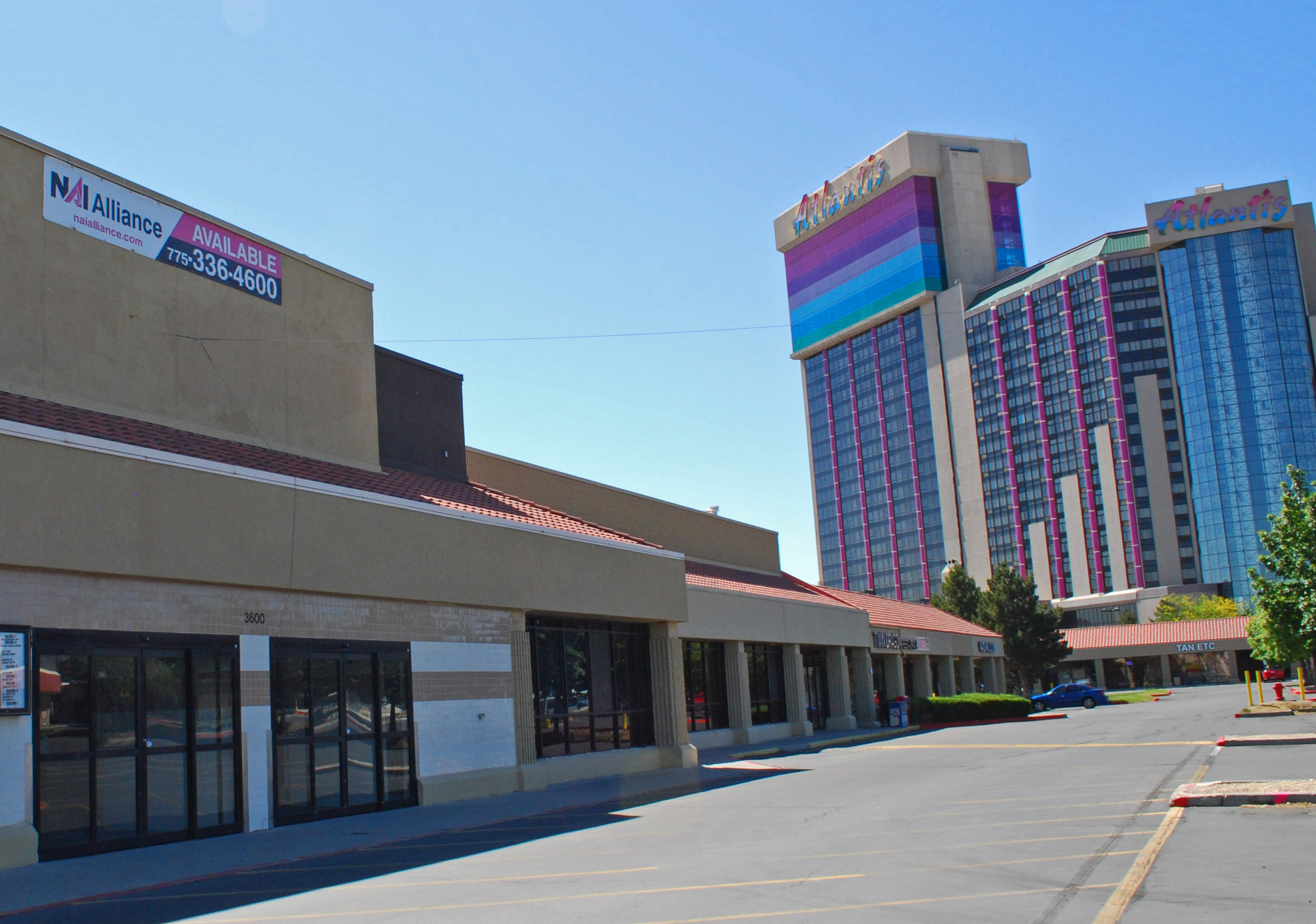
A shuttered grocery store sits in the shadow of one of Reno’s largest Casino’s

Nevada is the poster child of what not to do to save an economy. Politicians who promote failed policies continue to be elected in the State that leads the nation in being the worst at everything (unemployment, foreclosures, violent crime, education, etc.)  Voters have been little more than Pavlov’s dogs in Nevada politics and are roped in by the claim that all Nevada’s problems can be solved by lower taxes and smaller government, which allegedly will make the Silver State more ‘business friendly.’ 

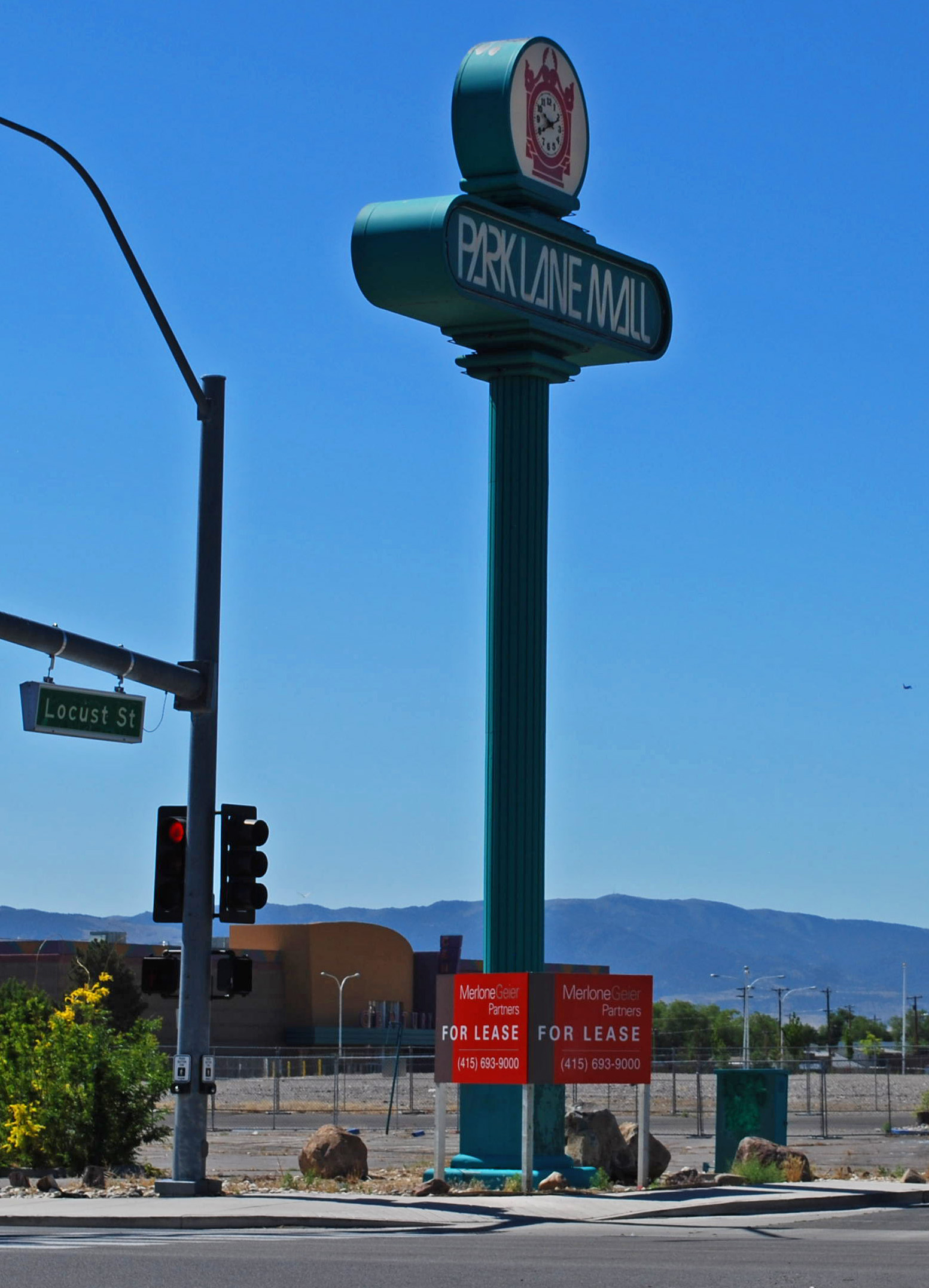
Once Reno’s 2nd largest Mall, Park Lane Mall is now just a sign in front of a vast empty space.

The problem is that Nevada is one of the most business friendly States in the nation and yet Nevada’s economic and social ills continue to spiral downward. Nevada has no income tax, no corporate or capital gains tax, and is one of the easiest States in which to establish a business. Yet, politicians win elections through promises of more jobs by making Nevada what already is: business friendly.   

Nevada leads the nation in unemployment at 11.7% (April 2012). Ranked 50th out of fifty States in 2011 and 2010, and 49th in 2009, jobs¹, or the lack of them, is certainly a major issue for Nevada; however, Conservatives rank Nevada in the top three States as being the most ‘business friendly.’ The data used for this ranking is based primarily on low taxes and low business fees. So if Nevada is business friendly, why is the unemployment the highest in the nation?

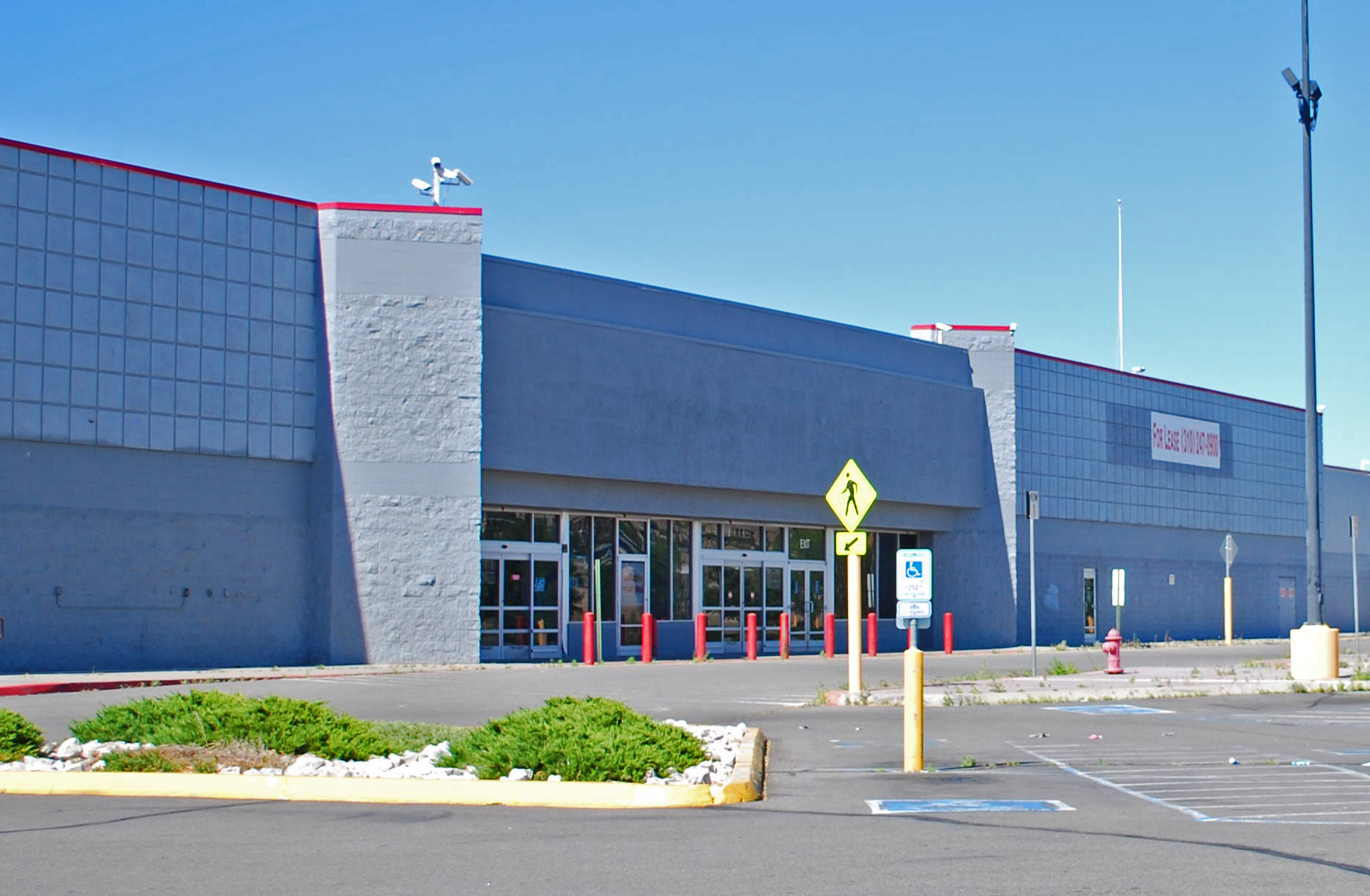
Stores that relocate leave vacant commercial space, sometimes for years

(¹Unemployment for Nevada 2011 – 13.5%, 2010 – 14.9%, 2009 – 11.6%, 2008 – 7.0%. Note that in 2006, Nevada’s unemployment was only 4.2%.)

CNBC also has a business friendly ranking, but low taxes and business fees are only part of the factors considered. CNBC’s 2011 ranking placed Nevada as 45th in Business Friendliness. Among the major factors in the State’s poor ranking were Education (50th,) Economy (50th,) Quality of Life (44th,) and Technology and Innovation (37th.)

Nevada’s fate will be determined by the voter and if CNBC’s rankings are more indicative of business friendliness then Nevada voters must elect politicians willing to invest more money in quality of life issues and infrastructure. Revenue will have to be found to address the real issues or else the Silver State will continue its death spiral.

Next:  Poor Quality Jobs and Education Killing Nevada

Stroke of Fate: Fighting a Winning Battle

20 Monday Feb 2012

Posted by Paul Kiser in About Reno, Generational, Health, Lessons of Life, Travel

≈ 6 Comments

Tags

Nevada, Reno, Renown, Renown Medical Center, stroke, Wallenberg's Stroke, Wallenberg's Syndrome

Why don’t strokes ever cause super powers?

Weapons of Rehab

A stroke has no sense of honor, nor fairness. It can destroy every aspect of human dignity and leave behind a pulp of flesh. A stroke can wipe out speech, sight, hearing, touch, smell, mobility, cognitive thinking, and the list goes on. Never have I heard of a case of a stroke doing good, like giving heightened senses, or more strength. Strokes don’t even fix missing functions, like giving a blind person their sight, or a deaf person hearing. Quite frankly strokes suck.

After my stroke I was faced with the possibility that I could be incapable of independent living for months, years, or even the rest of my life. That didn’t happen. While I still can’t drive, nor safely move without some type of aid (wheelchair, walker, cane, etc.) I can get around on my own. I can eat as long as I’m mindful of what I’m doing, and see well enough to write, although I often have to use just one eye. My prognosis is great, with the expectation that almost all of my disabled functions will repair over the next few weeks and months.

It’s not easy, but I am fighting a winning battle. I’m fortunate because my stroke did not do more damage. I am frustrated by the fact that my brain seems to lack the capacity to correct my balance and vision issues. Cognitively I know exactly what needs to be done, but my brain has the ability to overrule logic and tell my body that I’m about to fall to the right, so lean right….I said correctly, my brain thinks I’m leaning right, but then insists on shifting more to the right. This irony must be fun for my Conservative friends, but to me it only shows how screwed up we become when we lack balance.

Vertigo has become a major issue in my recovery. The sense that the room is spinning varies from almost non-existent, to a strong rotational pull every time I move my head slightly. Walking becomes a drunken stagger when my vertigo kicks in, which makes my physical therapy sessions almost useless.

Still, everyday I am a bit closer to a full recovery and there are times when I feel almost normal. I have a great team of therapists who are working with me to get better…possibly to get me out of their hair. I’ll talk about living in Rehab next.

Paul Kiser’s Blog 2011 in review

01 Sunday Jan 2012

Posted by Paul Kiser in Travel

≈ Leave a comment

The WordPress.com stats helper monkeys prepared a 2011 annual report for this blog.

Here’s an excerpt:

The concert hall at the Sydney Opera House holds 2,700 people. This blog was viewed about 25,000 times in 2011. If it were a concert at Sydney Opera House, it would take about 9 sold-out performances for that many people to see it.

Click here to see the complete report.

If You’re a Conservative in Alabama, You Just Might Be a Racist

09 Wednesday Nov 2011

Posted by Paul Kiser in Ethics, Government, Politics, Travel

≈ 2 Comments

Tags

African Americans, Alabama, Governor Robert Bentley, HB - 56, Hispanics, Illegal Immigrants, Immigration, immigration laws, racism

USA PDT [Twitter: ] [Facebook] [LinkedIn] [Skype: 775.624.5679]

Paul Kiser

Racism is not a ‘card’ to be played, nor is it something that a person absolves themselves from by saying, “I’m not a racist!” Racism is determined by the act(s) of a person and one single act can reveal subconscious or hidden attitudes of a person or group of people who betray their desire to put other races down and keep them there.

Alabama doesn’t have a great record when it comes to racism. The State has a history of implementing laws to obstruct, intimidate, and harass minorities in order to retain the power of government in the hands of white men. When that was ruled illegal by higher authorities, white men used terrorism tactics to suppress and/or drive African-Americans out of Alabama. This was done with the blessing of the State government that enacted laws, and when necessary, involved the Governor and State Police to force minorities to comply.

There you go playing the Racism card

The tactics were effective. African-Americans consisted of almost half (47.7%) of the population of Alabama in 1870. It declined until the 1970 census when the African-American population was down to almost one-quarter (26.2%.) 

But all that is in the past. The racial violence of the 1960’s is all over and everything is better in the South. White men no longer have a need to target minorities with laws that harass and intimidate. Governors in Alabama do not support laws that target a certain race, nor enforce laws intended to obstruct, harass, nor intimidate them. Racism is not the way of the New South.

So, this past June, why did Alabama pass the toughest immigration law (House Bill 56 – 2011) in the country that targets Hispanics and anyone associated with them? Hispanics only consisted of 3.9% of the Alabama’s population in the 2010 census, which was up from 1.7% in the 2000 census. Could the new law that harasses and intimidates anyone who even looks Hispanic be a response to their population doubling in ten years?

The law was sponsored by 25 Republicans in the Alabama House of Representatives. All 58 Republicans in the House voted for the bill along with 9 Democrats. One Democrat voting for the bill, Representative Pebblin Warren told me that her vote was misreported and that she voted ‘Nay.’ Of the other eight Democrats who voted ‘Aye,’ five has since changed parties and are now Republicans. Those five are Representatives Alan C. Boothe, Lynn Greer, Steve Hurst, Mike Millican, and Lesley Vance.  Below are pictures the 63 Republicans and the 3 Democrats who voted for HB – 56:

Alabama Representatives Voting For HB -56

In the Alabama Senate, all but one Republican voted for the bill along with five Democrats. Below are the pictures of the 20 Republicans and 5 Democrats who voted in favor of the immigration reform bill:

Alabama Senators Who Voted For HB - 56

If the ethnic background of the politicians behind this law seem to lack diversity, they do.  The lone African-American who voted for the law, Senator Rodger Smitherman, is confusing because the month before the vote he was quoted as saying:

“We’re going back to some day we don’t want to see, where people can be pulled out of a car because they look like somebody,” 

I contacted a member of his staff to determine if he intended to have his vote recorded in favor of HB – 56; however, he has not responded by the time this was published. Regardless, this bill that targeted one race was proposed and passed almost exclusively by white, conservative politicians.

The final player in this saga is Governor Robert Bentley.  

Alabama Governor Robert Bentley

It seems that ‘Happy Days’ of the Old South are back.

This article first published as
If You’re a Conservative in Alabama, You Just Might Be a Racist
on Technorati.com

9 Most Violent States In the U.S. of the Past Decade

04 Friday Nov 2011

Posted by Paul Kiser in About Reno, Crime, Government, Travel

≈ Leave a comment

Tags

Alaska, California, Colorado, Delaware, FBI, Florida, Hawai'i, Illinois, Louisiana, Maine, Maryland, Nevada, New Mexico, New York, Oregon, South Carolina, Statistics, Tennessee, Uniform Crime Reports, Violent Crime

USA PDT [Twitter: ] [Facebook] [LinkedIn] [Skype: 775.624.5679]

Paul Kiser

South Carolina, Tennessee, Florida, New Mexico, Maryland, Nevada, Louisiana, Delaware, and Alaska are America’s most violent States¹ during the last ten years according to FBI statistics². Violent crime is on the decline in most States; however, these nine have averaged over 600 violent crimes per every 100,000 in population in the last decade. There is an 85 point gap between the tenth highest State (Illinois) and ninth ranked Alaska, which is a significant separation considering that there is only a 116 point spread among the top nine (see TABLE 2.0.)

Graph 1.0 - The 10 Most Violent States of the Past 10 Years and other example States

The good news is that five of the of the top nine States have made major progress in decreasing violent crime during the last ten years. Florida dropped almost 255 points from its 2001 rate to its 2010 rate. Maryland and New Mexico dropped 235 and 192 points respectively. South Carolina and Louisiana both dropped over 100 points during the decade.

Four States still had rates in 2010 that were over 600 violent crimes per 100,000. Two of those States (Delaware and Tennessee) have made little progress over the decade and the other two (Nevada and Alaska) have lost ground from where they were in 2001.

Table 2.0 - 10 Year Violent Crime Averages (per 100,000 pop.)

Nevada began the decade with a violent crime rate below California’s, but the rate jumped in 2006, peaked in 2007, and has slowly declined. Despite the decline, the significant drop of other high ranked States has placed Nevada as the most violent State for the last two years.

Graph 1.0 shows the average violent crime rates over the last ten years for the eleven highest ranking States, plus five other States that are representative of borderline, middle, and low ranking States. Two of the eleven highest ranking (Illinois and California) were ranking relatively high in 2001, but dropped rapidly during the first three years of the decade and ended up with violent crime rates that were just over the United States average.

NOTES

¹ The District of Columbia was excluded from this report as it is not a State and is more representative of an urban area.

²The violent crime statistics are from the FBI’s Uniform Crime Reports, Table 4, years 2001-2010. The information can be found at http://www.fbi.gov/about-us/cjis/ucr/ucr.

This article first published as
Nine Most Violent States of the Past Decade
on Technorati.com

SWA Flight 768: The Golden Flight

24 Monday Oct 2011

Posted by Paul Kiser in Business, Communication, Customer Relations, Customer Service, Information Technology, Internet, Public Relations, Travel

≈ 2 Comments

Tags

business travel, Southwest, Southwest Airlines, SWA, WiFi

USA PDT [Twitter: ] [Facebook] [LinkedIn] [Skype: 775.624.5679]

Paul Kiser

Tonight I am flying from St. Louis to Las Vegas on Southwest Airlines Flight #768. It’s been a long day and before I boarded this flight I was dreading flying all evening and getting back home near midnight; however, I’m actually in a GREAT mood.

It’s not because I’m knocking back a Bloody Mary, although that is helping my mood, and it’s not because the plane is only half full, which is certainly a positive, and it’s not because I’m sharing my row with Alicia, an intelligent, attractive USC student, which is a major positive…nope, the reason I’m elated right now is primarily due to the fact that I’m online and writing this blog while flying at 40,000 feet. That’s right, I’m WiFi in the night sky! I’m knee-deep in the Internet and my only care is will this flight last long enough for me to get this written and posted.

Here's to a sky full of SWA WiFi planes....soon

Some may not share my enthusiasm, but allow me to explain why this is so significant.

American business is Internet dependent. Our entire economy is driven by the ability of business people to connect on-line. The need to problem solve, discuss, plan, propose, and close the deal, in real-time is absolutely critical for commerce in our Brave New World of digital communications.

The problem is that communications stops                  …when we fly. And yet, that is the perfect time for the business traveler to reconnect. Those countless hours in an aluminum cylinder traveling at 525 miles per hour where we must sit alone and unconnected are killing productivity. Southwest Airlines will command the business traveler market if they have consistent, reliable WiFi.

I know they are working on it, and perhaps they have turned a corner. If so, this toast is to the people who are making that happen. There is nothing more valuable to the business traveler than time, and WiFi while traveling is gold to the rank and file business person.

Think about this. You might be reading this before I am back on the ground.  What if all your competitors were that productive? Would you be worried?

← Older posts
Newer posts →

Other Pages of This Blog

  • About Paul Kiser
  • Common Core: Are You a Good Switch or a Bad Switch?
  • Familius Interruptus: Lessons of a DNA Shocker
  • Moffat County, Colorado: The Story of Two Families
  • Rules on Comments
  • Six Things The United States Must Do
  • Why We Are Here: A 65-Year Historical Perspective of the United States

Paul’s Recent Blogs

  • Dysfunctional Social Identity & Its Impact on Society
  • Road Less Traveled: How Craig, CO Was Orphaned
  • GOP Political Syndicate Seizes CO School District
  • DNA Shock +5 Years: What I Know & Lessons Learned
  • Solstices and Sunshine In North America
  • Blindsided: End of U.S. Solar Observation Capabilities?
  • Inspiration4: A Waste of Space Exploration

Paul Kiser’s Tweets

Tweets by PaulKiser

What’s Up

May 2026
S M T W T F S
 12
3456789
10111213141516
17181920212223
24252627282930
31  
« Jun    

Follow Blog via Email

Enter your email address to follow this blog and receive notifications of new posts by email.

Join 688 other subscribers

Create a website or blog at WordPress.com

Loading Comments...