3rd From Sol

~ Learn from before. Live now. Look ahead.

3rd From Sol

Category Archives: Universities

University of Nevada Student Housing Gamble a Lose-Lose Scenario

10 Monday Mar 2014

Posted by Paul Kiser in About Reno, Business, College, Communication, Education, Ethics, Government, Higher Education, Management Practices, parenting, Politics, Public Image, Public Relations, Respect, Taxes, Universities

≈ Leave a comment

Tags

Balfour, California universities, construction, dormitories, dorms, housing prices, New student housing, President Marc Johnson, Ranking, realty, Sterling, student beds, Top 500 International Universities, University of Nevada, UNR

University of Nevada betting on more live-in students

University of Nevada betting on more live-in students

The University of Nevada in Reno (UNR) is about to flood the local housing market with almost 1500 new student beds. The growth comes at a time when higher education expenses have been skyrocketing and the assumption is that there is an untapped source of new students who have the resources to pay even more to attend and live near UNR.

UNR Published Enrollment Data and Projections - Nov 2013

UNR Published Enrollment Data and Projections – Nov 2012

In October, University President Marc Johnson predicted that the school would grow Fall enrollment from the current 18,000 students to 22,000 by 2021 with an annual growth of 400 students per year. President Johnson’s prediction closely matches the average growth in student enrollment over the past fourteen years; however, this growth assumes every new student will be seeking on campus, or near campus housing, which is implausible.

Ironically, eleven months prior to the President’s remarks, the university published past and projected student enrollment growth that contradicted his version of UNR enrollment growth. The projected growth averages less than 300 students per year, falling over 1,000 students short of President Johnson’s 2021 prediction. The November 2012 data remains on the UNR website.

Expecting significant growth in student enrollment is betting against the odds according to a July article in the New York Times (July 25, 2013)

“College enrollment fell 2 percent in 2012-13, the first significant decline since the 1990s, but nearly all of that drop hit for-profit and community colleges; now, signs point to 2013-14 being the year when traditional four-year, nonprofit colleges begin a contraction that will last for several years.“

900 bed Sterling student apartments will open this Fall

900 bed Sterling student apartments will open this Fall

Outcome of Sudden Increase in Student Beds
One of two scenarios are possible as the university waits for new enrollment. The first scenario involves new beds remaining empty as students balk at the increased rental fees for the new properties. This will result in a loss in revenue for the university and the leasing companies of the new housing units.

The second scenario would be that students in rental houses and apartments, move into the newer facilities, which would devalue the current leasing rates in the local economy as the vacancy rate rises. The reaction by some investment properties owners might be foreclosure as owners walk away from money-losing properties.

UNR Losing Reputation as Quality School
President Johnson may be relying on picking up students from California due to large increases in tuition costs increases in recent years; however, the belief that the quality of education at UNR is of equal value to California schools assumes that students and parents are uninformed. 

View of UNR's dormitory row to be joined by new 400 bed unit in 2015

View of UNR’s dormitory row to be joined by new 400 bed unit in 2015

In 2003, UNR, Georgetown, Utah State, and San Diego State University ranked in the top 300 of Shanghai Ranking Top 500 Academic Ranking of World Universities. UNR’s ranking dropped almost every year, and dropped off the top 500 list for the last two years in a row. The other three universities also dropped; however, Georgetown and San Diego State ranked only slightly lower during the past two years than in 2003, and Utah State dropped out of the top 500 in 2011, but has been in the top 500 for 2012 and 2013. In 2013, California had eleven universities in the top 500, with eight in the top 50.

A silver lining to the Silver State's UNR?

A silver lining to the Silver State’s UNR?

Silver Lining?
While the need for this surge of student housing is questionable at best, will result in student beds at higher prices than currently available, and may trigger a local foreclosure crisis, there may be a positive outcome for the university neighborhoods.

If students leave the rental houses, causing a crash in rental prices, and if owners of investment properties walk away from their rental units, the area housing prices will drop. That will open the door for the redevelopment of the sixty-year-old neighborhood with updated houses that would attract families back to the area.

There is much at stake over the next five years for students, homeowners, investment property owners, and the community in general as UNR takes a big risk on short odds.

Armed Teacher Games

13 Thursday Feb 2014

Posted by Paul Kiser in Crime, Crisis Management, Education, Ethics, Government Regulation, Health, Higher Education, Lessons of Life, Opinion, parenting, Politics, Universities, Violence in the Workplace

≈ 2 Comments

Tags

2nd Amendment, active shooter, Active shooter scenarios, Arming Teachers, elementary school, gun laws, gun rights, K-12, law enforcement, National Rifle Association, NRA, school, school violence, War Games

SHALL WE PLAY A GAME?

ARMED TEACHER SCENARIOS

STUDENT DISCOVERY
First grader finds hiding place of gun when teacher isn’t looking and pretends to shoot friend not realizing he’s released the safety. Kills the student. WINNER:  NONE

STUDENT WITH INTENT
Student learns where teacher keeps gun. One day student is despondent and decides to commit suicide and take others with him. Kills teacher, kills two students, kills self. WINNER:  NONE

DESPONDENT TEACHER
Teacher despondent after a series of life-changing events. Takes out gun and shoots self in front of classroom. Teacher dead. WINNER:  NONE

LOUD NOISE
Teacher responds to loud noise in hallway. See a person with a gun and shoots them. Other person is another teacher with a gun also investigating the loud noise. Teacher dead. WINNER:  NONE

STUDENT WITH GUN
Teacher sees a student with a gun. Accesses gun and yells at student to drop weapon, student turns, teacher shoots the student. Student was taking prop fake gun for school play back to office to be secured. Student dead. WINNER:  NONE

ACTIVE SHOOTER CONFRONTATION
Teacher hears popping in hallway. Accesses gun and opens door. Active shooter with assault weapon shoots teacher, enters open classroom door, shoots students who have no time to hide or escape. Teacher dead, 25 students dead. WINNER:  NONE.

OK CORRAL SHOOTOUT
Teacher hears popping noise in hallway. Accesses gun as shooter enters classroom. Gun battle ensues resulting in Teacher, shooter, and several students killed. WINNER:  NONE.

ACCIDENTAL DISCHARGE
Teacher hears popping noise in hallway. Accesses gun. Begins to quietly evacuate students to safety, but accidentally discharges gun and shoots one of the students. WINNER:  NONE

ACCIDENTAL POLICE SHOOTING
Teacher hears popping noise in hallway. Evacuates students to safe area and returns classroom. Accesses gun. Identifies shooter. Kills shooter. Police enter, see a person with gun and orders the person to drop their gun. Person turns, police shoot and kill teacher. WINNER:  NONE.

STRANGE GAME. IT SEEMS THE ONLY WAY TO WIN IS NOT TO PLAY.

Nugent Attempts to Assassinate Obama, Gets Wrong City, Shoots Self

01 Monday Apr 2013

Posted by Paul Kiser in April Fools Day, Crime, Fiction, Government Regulation, Opinion, Politics, Universities

≈ 1 Comment

Tags

guns, National Rifle Association, NRA, President Obama, Ted Nugent

Ted Nugent: America's Epic Fail

Ted Nugent: America’s Epic Failure

Miami, Florida – April 1, 2013

Last April the 64 year-old rock musician Ted Nugent said that if President Barack Obama was re-elected:

“…I will either be dead or in jail by this time next year.” Ted Nugent

It was the latter and he still had two weeks to spare. On April 15, 2012, Nugent made the comment at the National Rifle Association (NRA) convention in St. Louis, Missouri. He was there to support Mitt Romney for President.

Nugent was arrested in Miami, Florida for attempting to assassinate the President; however, it may be hard for the prosecution to make a case against him since he was almost a 1000 miles away from the Commander-in-Chief. The President was scheduled to speak on the campus of the Miami University in Oxford, Ohio; however, Nugent went to the University of Miami in Miami, Florida.

Nugent apparently became enraged when he could not find President Obama and began waving a gun over his head yelling:

“WHERE IS HE! WHERE IS HE! I’LL KILL HIM! I’ll KILL HIM!”

Within minutes several campus police officers arrived and ordered Nugent to drop his weapon. Nugent apparently calmed down and began to tuck the gun under his belt at which point it discharged, wounding himself in the leg. He then yelled:

“You SHOT Me! You SHOT Me!”

The campus police then moved in, took Nugent’s gun and arrested him. It was several hours later that Nugent learned the police had not fired and that he shot himself. He is expected to make a full recovery, but doctors say that he may walk with a limp. When asked if the wound would affect his ability to play and sing, the hospital representative said:

“They’re doctors, not miracle workers.”

A spokesperson for the Secret Service was asked if they would be involved with the case and she said:

“The Secret Service focuses on credible threats, but somebody will probably have to go down to Miami anyway.”

Nugent will be arraigned in Miami on Monday.

Standardized Testing is Not the Solution in American Education

09 Saturday Mar 2013

Posted by Paul Kiser in College, Education, Ethics, Government, Higher Education, Opinion, parenting, Politics, Universities

≈ 5 Comments

Tags

Nevada, Nevada Schools, No Child Left Behind, NSHE, Pay for Performance, Reno, schools, standardized tests, student performance, teachers, Washoe County School District, WCSD

Most of the political discussions about America’s failing education system do two things. First, they blame someone, usually the teachers, and second, they seek simple-minded solutions that assume all children are developmentally equal and live in the same socioeconomic environment.

If education were only about what can be scored on a test, then we don’t need teachers, we need mind programmers

No Child Left Behind was based on the belief that a standard test would be the ultimate measure of a student’s success or failure. The assumption was that if student’s scores on a standardized test failed to achieve established goals then we could all blame the teachers and administrative staff, then punish them. The concept assumed that a student’s base level abilities, and parental support was irrelevant. No Child Left Behind was an idea that applied a corporate-like measurement system, which often fails in a business environment, and forced public schools to leave education behind in pursuit of goals that reduced students to do or die numbers.

The failure of No Child Left Behind is so spectacular that after a decade the program began, over two-thirds of the States are ranked at a “D” or “F” in the quality of education by StudentsFirst.org Report Card. 

Standardized tests assume that every child is an X, but in reality they are A to Z

Standardized tests assume that every child is an X, but in reality they can be A to Z

One of the major failures of the program was the institutionalizing of testing standards that encouraged teachers to focus on teaching their students how to successfully take the tests, but not to understand the material. The program ultimately forced out many excellent teachers that rejected the absurdity of No Child Left Behind, which is ironic because the goal was to force out less effective teachers. The result has been that school after school has failed to produce the results desired leaving America with a generation of students who are even less prepared for adult life.

Nevada’s Washoe County School District (WCSD) is typical of many school districts across the United States. For the 2010-11 school year the standardized tests indicated that an average of 85% of the high school students (9th-12th grades) met or exceeded the established standards for reading, writing, and math. Those scores would indicate that 85% of the students are prepared to move on from high school.

However, of the 1,600 Washoe County School District graduates that attended Nevada state-run universities, almost half (48%) of them required remedial classes to bring them up to college entrance-level work. The standardized tests are designed to measure competency; however, even though the scores indicate the students are prepared, almost 1 out of 2 need to take classes to address educational deficiencies.

Some might say this just confirms the inadequacy of public schools; however, if that were true the standardized tests should reflect those failures and they do not. It is the inadequacy of the standardized test to measure educational performance or lack of performance.  

Standardized tests can be an effective tool in education, but they are just one tool. If we truly want to improve the educational performance of America’s students we must stop holding a knife to the throat of teachers and schools and stop using simple-minded measurements of academic performance to determine whether they live or die. A teacher can’t be held accountable for a parent that doesn’t believe in homework, therefore causing the student to be behind the rest of her/his class. It’s time we began supporting the teachers who have years of training and experience in education, rather than applying failed business models that destroy public education.

What America Must Do: Step 6 – Reinvent Higher Education

14 Wednesday Nov 2012

Posted by Paul Kiser in College, Communication, Education, Generational, Government, Higher Education, History, Information Technology, Internet, Opinion, Politics, Public Relations, Taxes, Technology, The Tipping Point, Traditional Media, Universities, US History

≈ Leave a comment

Tags

college degree, faculty, professors, state run, students, tuition and fees, universities

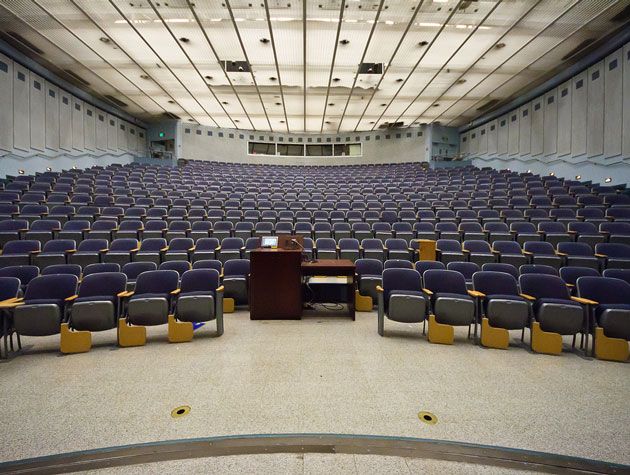
Sans Students: Is this what university classrooms will look like in 2020?

Higher Education is an unmovable object with an unstoppable force heading straight for it and universities are at ground zero. Classrooms as we know them may be doomed and the question is whether our country will lead the world in adapting to a new model, or whether we will be the last ones to accept reality.

The Value of the College Degree
The unmovable object in Higher Education is importance of the college degree in American commerce. Business lives or dies on information. The person who can access, filter, analyze, organize, and explain information tends to be valuable in a company.

High schools are tasked to help students graduate with basic competencies, but they are dealing with children who are still maturing into adulthood and that process needs to be complete before they are morphed into business men and women.

Those who believe high schools should be vocational schools are assuming that all children will become a construction laborer or office drone, so why bother with college prep? The concept of education as a training ground for corporate zombies is too simple-minded to apply in a country that encourages all citizens to reach their maximum potential.

College is where young adults are given the tools to become valued business leaders. College classes require a student to learn how to access and report information, which is central in business competitiveness. The business that can out think its competition always wins, which may be why many top businesses are more concerned about the degree, not the major. A college degree is more than a piece of paper, it is a badge of achievement that says this person is ready for the business world.

The Relentless Rise in the Cost of College
The unstoppable force is the rising cost of a college education. With cuts in federal and state budgets a greater share of the burden is being heaped on those who are least able to avoid it. In Mitt Romney’s failed bid to be President he suggested that students should borrow from their parents to pay for college. That was one telling sign that Romney is out of touch with the real world the rest of us live in.

March 2012 protest in Sacramento over tuition hikes

In 1991 the annual average cost for a university education was at $7,602 or over $30,000 for four years of college. In 2001, that annual cost had risen to $12,922 or over $50,000 in four years. In 2011, the annual cost had risen to $22,092, which meant it cost over $88,000 for the average college four-year degree. That is the equivalent of buying a new car every year a student attends college. If the trend continues it will cost a student an average of over $41,000/year for college by 2021, which means a four-year college degree in 2021 may cost over $167,000.

Students and their parents are already outraged by the rising costs, but it is universities who control the expenses, and therefore control the costs.

Based on current trends, the average annual cost for college may exceed $40,000 by 2021

Students want to be competitive for careers that will lead them to higher paying jobs, but they have no means to afford college and the list of parents who CAN pay over $22,000 a year for four years are on a first name basis with Mitt Romney.

The Other Unmovable Object – Faculty
Teachers at the college level have traditionally been considered the most important asset to a university and for centuries they were treated with dignity and respect by administrators, but financial pressures have made them a target for saving money. While students face escalating tuition and fees, university faculty are also a target of the unstoppable force. Professors have been constantly asked to accept budget cuts and teach more students for the same, or lower pay. 

Some universities have replaced expensive tenured professors with temporary faculty employed by contract on a semester by semester basis. Temporary faculty make a fraction of a full, tenured professor. Not surprisingly, a teacher that may not be offered a contract the next semester tends to be more accepting of increased class sizes, or other cost-cutting measures.

What may be surprising is that a college teacher is likely not receiving a significant portion of the tuition paid by the students in his or her classes. A temporary professor may bring in $100,000 or more in revenue each year for the university, but a temporary professor is often paid less than $4,000 per class with no benefits. Low pay and increased pressure to do more for no additional money makes the teaching environment unpleasant for the student and professor.

A Revolution Caused by the Internet
Ironically, the Internet was originally intended to allow one university to have quick access to the knowledge database at other universities and research laboratories. As it expanded and became commercially available in the late 1980’s and early 1990’s the public began to have access to a vast storage of on and off-campus knowledge without a student ID. Within a decade homes across the world were linked into a mass of dynamic information via business and personal websites, blogs, chat rooms, and other social media sites.

Suddenly anyone could access information and share ideas and they didn’t have to pay tuition to have easy access to it. Certainly some of the information was in error, but often people found information that outpaced the knowledge produced in books. Universities no longer held the monopoly on information.

Government Must Change
State governments and Higher Education face these problems:

  1. A college degree is still a valuable achievement and desired by the public and business.
  2. Tuition and fees are too high and the public can no longer afford them.
  3. Professors have been devalued in a system where more and more of the revenue is channeled away from the them.
  4. University administrators and government legislators have created a paradigm for Higher Education that is unsustainable.

Social media has changed the expectations of the public. People expect to be able to have ready access to anyone to whom they are paying for a service.

Controlling advanced knowledge within ivy covered walls is no longer possible in a world where anyone can do a Google search and know as much or more about the most current knowledge on any topic. However, just doing a Google search does not teach a person how to filter, analyze, organize, and report that information.

State-run universities have a unique opportunity to reinvent Higher Education. The challenge is that they are the most unlikely to do it. Administrators have Accreditation organizations that are established to dictate what Higher Education is and will be today and tomorrow based on the best practices of yesterday. That doesn’t work in a world where today is already history that was recorded by over 340 million tweets a day (March 2012 data.)

When the unstoppable force hits the unmovable objects (value of a degree and the need for faculty) few things about Higher Education will remain unchanged. Now is the time for State-run universities to dodge the upcoming annihilation and take the lead in reinventing Higher Education. They can start considering the following guidelines:

  • Tuition must stabilize and regress. Fees should be eliminated. Universities can assume that there will be no money available to siphon off for student activities, the football program, or any other money-absorbing entity. 
  • Support materials (textbooks, etc.) will be digital only and the cost will be pennies on the dollar of what students have been paying. Goodbye, McGraw-Hill. Hello, Faculty Publishing.
  • Classrooms will be more like Boardrooms with fewer students where the Professor is the CEO of knowledge and students must bring their best or beg for a second chance with someone else. Much of the lecture and information gathering will be done via webcasts and/or outside of class time. ‘Class’ will be where the work outside the classroom is brought in for discussion and idea sharing.
  • Class schedules will not follow a semester system and will be on a schedule that is more like a project team.
  • Faculty will lead students while at the same time work toward advancing knowledge on the subject matter.
  • The most important person to the student will be the educational coordinator (i.e. Counselor or Adviser in the old paradigm) who will create an individualized degree that is based on achieving a level of mastery information handling, not a number of credit hours.

The framework in which this happens must be within a government structure. Private enterprise has proven that when they try to create a system of higher learning they fail. It solves nothing to make Higher Education a profit-based program that is a poor imitation of the old, outdated model. If government can successfully create a new model it will make the United States of America the leader of advanced knowledge. If not, we can expect to be exporters of our future.

Links to:

What America Must Do:  Step 1 – Silence the Wackos in Politics
What America Must Do:  Step 2 – An Extreme Makeover of Government at All Levels
What America Must Do:  Step 3 – Restore Government Revenue and Fair Taxation
What America Must Do:  Step 4 – Balanced Budget By 2015, Debt under 50% of GDP by 2020
What America Must Do:  Step 5 – Restart a Federally Run Space Program

What America Must Do: Step 5 – Restart a Federally Run Space Program

05 Monday Nov 2012

Posted by Paul Kiser in College, Crisis Management, Ethics, Government, Health, Higher Education, History, Information Technology, Opinion, Passionate People, Politics, Pride, Re-Imagine!, Religion, Science, Space, Taxes, Technology, Universities, US History

≈ Leave a comment

Tags

NASA, power, Prosperity, self sustaining, sewer, Space, Space Program, Space X, technologies, water

USSR scared America into the space race and it led to our prosperity

Fifty years ago America was scared. The USSR had sent a man into space and he had orbited the Earth. The Soviet Union was also threatening to plant their ballistic missile weaponry in Cuba. The United States entry into the space race was out of a fear that if we didn’t respond quickly, it might be too late.

This dire situation caused a crisis-type response that defined who we are as a people. Ignoring profit or ROI (return on investment) we established our space program and became proficient at churning out new technologies. Almost overnight we had a new breed of people who literally became rocket scientists.

And then it happened. We discovered that space technology had terrestrial applications. That wasn’t the justification for it, but our space program suddenly pushed the United States of America into the role as the go-to nation for space technology applied to terrestrial application. For decades Americans and the world reaped the benefits of the new materials, equipment and knowledge that came from our effort to go beyond the safety and protection of Earth’s womb.

Young people became excited about the space program and suddenly universities had applicants knocking down their doors to become a scientist, mathematician, or engineer that would go on to shape tomorrow’s world. Space ignited learning and research at colleges that shook up their dusty libraries and ivy covered walls. Philosophy, religion, arts, economics, and literature were blindsided in the 1960’s and 70’s by new questions that challenged our old beliefs and standards.

In 2008, USA space competitiveness was dominant, but today it wanes

Meanwhile, in Russia, scientists were put under extreme pressure to be successful on an accelerated space program. Behaving more like a mega-corporation that pushed for immediate results, Russia’s government forced scientists to try to take major risks in a dangerous environment where failure meant loss of life. When the scientist did have a new breakthrough they became state secrets and the larger population did not benefit. For the Soviets, the space race showcased the failure of running a government like a business.

Fifty years later America can look around at our computers, cell phones, medical devices and almost everything we touch, consume, or use and know that the space program had a direct or indirect impact on its development.

Yet, today America is stagnant. We are desperately trying to be competitive in a global market that spends most of its time figuring out how to make things cheaper, but not better. We say we want young people to pursue careers as engineers and scientists, but there is no burning reason for a high school graduate to pursue those careers. Instead we have university Psychology programs that are filled to overflowing with students who are more inspired to collect a salary by listening to other people’s problems than in designing the transportation and living habitats for a colony on Mars.

The United States is desperate for water in the South and West, but everyday we waste it

For decades the western United States has been battling with a growing population and a dwindling fresh water supply. We also face aging community water and sewer systems that are in need of major updating and repairs. We face global climate change because the we have been filling the air with energy absorbing carbon from burning coal, gasoline and natural gas.

The concept of transporting power, water, and waste is based on 19th and 20th century engineering. Power has to be generated hundreds of miles away and then delivered to homes via power lines that can fail in a major storm. Expensive and overburdened water treatment plants transport fresh, clean water through miles of pipeline and is only used once and then it becomes waste. Purified water that would be the envy of many people in Africa and the Middle East is mindlessly sprayed on our lawns and used to flush our toilets. 

In space water has to be recycled, air must be purified, and power must be generated efficiently on a micro scale. That means focusing on self-sustaining habitats built that will face extreme conditions. On Earth, these technologies will pave the way to a shift from macro water, sewer and power systems (power plants and water and sewage treatment facilities) to cost-effective micro systems that free families from relying on expensive, polluting, and wasteful systems that are unsustainable. Everything we need to solve America’s terrestrial problems can be found by solving the  problems of extended human living in space. In addition, a renewed public space program will inspire High School graduates to pursue careers in engineering and science.

Space X Falcon 9 Engine Array – Redefining space technology

America needs to be pushed into using new technologies that break down the paradigms of the past. In the 1960’s we were pushed by the Soviets and the result was prosperity.  Today we need to push ourselves, not out of fear, but out of pride and courage. I have nothing against Space X or any other private or commercial space program, but prosperity doesn’t happen out of the pursuit of profit. Prosperity happens when everyone sacrifices from the board room to the break room for the good of the United States.  

Space X has made new breakthroughs in the bureaucracies and waste built up over five decades by NASA and its private contractors and they should be the model of a new public space program, but investors and ROI are not the reason America needs to take back the leadership in space exploration.

If the last 50 years have taught us anything it is that raising ships to the stars, we will raise all ships on Earth. It’s time to reclaim our space program.

Links to:

What America Must Do:  Step 1 – Silence the Wackos in Politics
What America Must Do:  Step 2 – An Extreme Makeover of Government at All Levels
What America Must Do:  Step 3 – Restore Government Revenue and Fair Taxation
What America Must Do:  Step 4 – Balanced Budget By 2015, Debt under 50% of GDP by 2020
What America Must Do:  Step 6 – Reinvent Higher Education

What America Must Do: Step 2 – An Extreme Makeover of Government at All Levels

02 Friday Nov 2012

Posted by Paul Kiser in Business, Communication, Customer Service, Ethics, Government, Government Regulation, Higher Education, Honor, Human Resources, Management Practices, Opinion, Politics, Public Relations, Re-Imagine!, Respect, Taxes, Technology, Universities

≈ Leave a comment

Tags

Extreme government makeover, government workers, job descriptions, Organizational Charts, policies and procedures

Over a period of years any organization tends to end up with outdated job descriptions, ineffective departments, and outmoded missions. Five percent of the people cause 95% of all policies and procedures to be written. As common sense is replaced by policies written to address the five percent, an organization fails to serve the 95%.

Sometimes organizational charts are meant to confuse, but governments should be clear and concise

Administrative assistants in most organizations tend to accumulate more and more power over time as they learn the tricks to cutting through the bureaucracy and working around the budget. Learning how to play the ‘game’ is the first step in becoming a corrupt organization.

Because business is established on a motive of basic greed, most businesses fall victim to corruption within a few decades and then fail. Governments established with the blessing of the citizens and motivated by creating a fair playing field for all tend to avoid massive corruption, but fall victim to small-scale corruption as individuals give in to their base human nature. Unlike business, good governments tend last for centuries; however, that doesn’t mean they don’t need to be restructured.

Government workers are the heart of America’s employment

In the United States, governments (federal, state, and local) have performed honorably, but it is time to do an extreme makeover. This means taking all policies and procedures, organizational charts, and job descriptions to the shredder. New ones will have to be written, but they must not be written just to address the five percent causing problems.

This may require the elimination of Human Resource (HR) departments. HR departments tend to be builders of bureaucratic systems and they are often locked into paradigms which dictate that nothing can exist outside of a written policy or job description.

This Extreme Makeover of government should not be done to ‘reduce’ government. The motive should be to create a government structure that answers the needs of ALL the citizens and maintains a fair and ethical environment for business. The idea that we can eliminate or privatize government is an unrealistic, unethical, and expensive mistake. A federal, state, or local government is absolutely necessary to protect all the rights of its citizens. 

Links to:

What America Must Do:  Step 1 – Silence the Wackos in Politics
What America Must Do:  Step 3 – Restore Government Revenue and Fair Taxation
What America Must Do:  Step 4 – Balanced Budget By 2015, Debt under 50% of GDP by 2020
What America Must Do:  Step 5 – Restart a Federally Run Space Program
What America Must Do:  Step 6 – Reinvent Higher Education

Lack of Quality Jobs Killing Nevada’s Future

15 Wednesday Aug 2012

Posted by Paul Kiser in About Reno, Business, College, Education, Ethics, Government, Higher Education, Politics, Public Relations, Taxes, Universities

≈ Leave a comment

Tags

Brian Sandoval, business friendly, Conservatives, Employment, GOP, job creation, job quality, Nevada, Republicans, Sheldon Adelson, Unemployment

No degree? No experience? Welcome to Nevada where you have no future.

For years Nevada conservatives have waved the banner of the ‘business friendly myth‘ that low taxes and minimal regulation will attract new business to Nevada. The truth is that ‘business friendly’ does little, if anything, to attract quality jobs and makes this former Mexican province one of the worst in the nation in societal quality-of-life factors.

Poor Job Quality
Typical experiences of Nevada’s unemployment disaster indicate a long-term unemployment crisis and not a temporary business downturn.

In May of this year a master’s degree engineering graduate from the University of Nevada wanted to keep his family in the state but had to move his family to San Jose, CA to find employment. Another unemployed resident couldn’t find a job because she was “overqualified.” Her skills consisted primarily of a stable work history managing a telephone answering service. In Nevada there are no jobs now nor in the near future that will be available for anything but the lowest qualified worker.

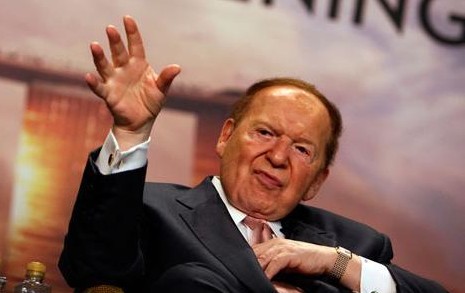
Sheldon Adelson: Godfather of Conservative Politics

While most of the country has experienced some recovery from the massive job losses between 2008 and the first quarter of 2010, Nevada has not, despite the assurances of Governor Brian Sandoval. Conservatives point to wealthy Nevadans as the ‘job creators’ who will be the source of new jobs. Instead wealthy people like casino mogul Sheldon Adelson have poured millions of dollars into campaigns for conservative politicians ( $70 million so far,) while the citizens of the state have borne the impact of the unemployment crisis.

The Las Vegas Review-Journal article by Ed Vogel stated that of the few new Nevada jobs available in the future, most will be low-paying, low-skill, non-career jobs. The top four fastest growing jobs in Nevada are 1) retail salespeople, 2) waiters/waitresses, 3) cashiers, 4) gaming dealers.

These type of jobs do not provide for a career with a progressive future and leave the worker with little spendable income after basic living costs. The highly qualified worker has little hope of finding a job that matches his/her abilities. This creates a ‘Catch-22’ scenario. Educated, skilled workers can’t find work in Nevada so they go elsewhere and businesses with high quality jobs want quality workers, which Nevada can’t retain for a lack of quality jobs.

Nevada is a perfect storm of failure under conservative ‘business friendly’ policies which financially benefit those who allegedly are the ‘job creators,’ but leave the citizens in a ‘unfriendly’ job environment.

Is Higher Education Doomed? (Part III): The missed opportunity – a viable alternative to the status quo

04 Friday Feb 2011

Posted by Paul Kiser in College, Ethics, Government, Higher Education, Independent Studies, Internet, Politics, Social Interactive Media (SIM), Taxes, Universities

≈ Leave a comment

Tags

CHEA, College, college loan crisis, cost of college, Council on Higher Education, higher ed, higher education, independent study programs, online learning, privatization, universities

by Paul Kiser
USA PDT [Twitter: ] [Facebook] [LinkedIn] [Skype:kiserrotary or 775.624.5679]

Paul Kiser

Article first published as
Is Higher Education Doomed? (Part III): The Missed Opportunity – A Viable Alternative To The Status Quo
on Technorati.com

Part III
(Click on link for Part II)

In Part I of this series we reviewed the factors that are setting the stage for a major paradigm shift in Higher Education. In Part II we discussed a hypothetical scenario involving the two people who matter in higher education: the Professor and the Student.

Is the Sun setting on the state-run university?

Unfortunately, when considering how to resolve the current financial crisis confronting higher ed, state-run university administrators have tended to focus increasing class sizes, cutting class offerings, and replacing permanent faculty with less costly contract lecturers as is the case in Iowa (Article:  Iowa State increases class sizes.) No one can defend this strategy as beneficial to the Professor or the Student.

So what is the solution?

Some have proposed replacing public, state-run universities with private, for-profit schools (See: Are America’s University In Danger of Being Privatized?;) however, substituting a public bureaucracy with profit-motivated, uncaring people does not solve the financial pressures crushing higher education. Past attempts to privatize public sector industries demonstrates that the concept rarely offers the results promised (Ellen J. Dannin paper on privatization.) Existing private, for-profit universities are already under fire for mining federal loan programs for their financial gain (See: For-Profits High Risk Loan Strategy.)

Another alternative are online and/or independent study programs. These programs have been around for decades; however, both have a questionable track record with some programs being too expensive, lacking quality learning objectives, and/or being illegitimate scams to trade money for a diploma. The parent university accreditation group (The Council For Higher Education Accreditation or CHEA) encourages universities to aggressively discredit any higher education program that might be a ‘Diploma Mill’ (CHEA paper,) so most alternative higher education programs risk unwanted negative publicity from traditional schools.

Yet, the current crisis in higher education offers an opportunity for a Socrates-type model of learning that re-establishes the Professor/Student focus without the costly baggage of a brick and mortar university. The use of Social Media blogs, webinars, and other online connection tools have the potential to re-invent higher education; however, there is little evidence that these tools will replace the traditional university system of teaching.

No one can doubt that higher education will survive this crisis, because it has too. Our economic success is driven, not by people who have a college degree, but by people who have a higher education. In the end, the success of any post-secondary teaching program will be measured by how well it educates, not how much it costs.


More Articles

Business: Public Relations, Management, and Social Media Related

  • Is Higher Education Doomed? (Part I): Driving over a cliff near you, the state-run university
  • Is Higher Education Doomed? (Part II): The cost of Higher Ed doesn’t add up
  • Taco Bell says taco meat is 88% real beef, not 36%
  • PR Epic Fail: Taco Bell ‘meat’ only 36% beef?
  • Starbucks Siren gets facelift after 40 years
  • “…and your little dog, too”  Words define intent, evil
  • Facebook and Twitter Doomed? …Chicken Crap
  • 5 reasons why you shouldn’t title your blog with number reasons
  • A Question of Ethics
  • HR/Security Hot Topic: Should you watch your employee’s personal Internet activities? (Facebook, MySpace, Twitter, etc.)
  • Relationship Typing: 3 factors that affect the quality and depth of friendship (Part I)
  • Starbucks Re-Imagines the business … again
  • Your Privacy Rights on the Internet: Read before you write
  • Social Media 3Q Update: Who uses Facebook, Twitter,LinkedIn, and MySpace?
  • Richmond Embassy Suites: The best at true Hospitality
  • Dear Business Person: It’s 2010, please update your brain.
  • Selling watered-down beer: The best spin campaign in advertising
  • Communication: Repetition of message does not increase awareness
  • Is it time to fire yourself?
  • Millennium Hotel: Go away, spend your money elsewhere
  • Rogue Flight Attendant shows his arrogance, Airlines dislike for the customer
  • 2Q 2010 Social Media Tools: Facebook/Twitter sail on, LinkedIn/MySpace don’t
  • War Declared on Social Media: Desperate Acts of Traditional Media
  • Pay It Middle: The Balance between Too Much and Too Little Compensation
  • Mega Executive Pay Leads to Poor Performance
  • Relationships and Thin-Slicing: Why the other person knows what you’re really thinking
  • Browser Wars: Internet Explorer losing, Google Chrome gaining ground
  • WiFi on Southwest Airlines: Is it ‘Shovel Ready’?
  • Starbucks makes a smart move: Free WiFi
  • Foul Play: FIFA shows what less regulation offers to business
  • The Shock of the McChrystal Story: The story is over before the article is published
  • Tony Hayward: The very model of a modern Major General
  • Epic Fail: PR ‘Experts’ don’t get Twitter
  • King of Anything: Social Media vs Traditional Media
  • Twitter is the Thunderstorm of World Thought
  • Signs of the Times
  • How Social Interactive Media Could Transform Higher Education
  • How to Become a Zen Master of Social Media
  • Death of All Salesmen!
  • Aristotle’s General Rules on Social Media
  • Social Media: What is it and Why Should You Care?
  • Social Media 2020: Keep it Personal
  • Social Media 2020: Who Shouldn’t Be Teaching Social Media
  • Social Media 2020: Public Relations 2001 vs Social Media Relations 2010
  • Social Media 2020: Who Moved My Public Relations?
  • Publishing Industry to End 2012
  • Who uses Facebook, Twitter, MySpace & LinkedIn?
  • Fear of Public Relations
  • Dissatisfiers: Why John Quit
  • Facebook, Twitter, LinkedIn…Oh My!
  • Does Anybody Really Understand PR?

Rotary Related

  • Leaving Rotary
  • Re-Imagining Rotary
  • Rotary@105: 7 Relationship types that affect membership retention (Part II)
  • What most non-Rotarians don’t know about Rotary
  • Rotary@105: Making Rotary Sexy
  • Rotary@105: Grieving change
  • How Rotary can..must..will plug into Social Media
  • Rotary PR: Disrespecting the Club President is a PR/Membership issue
  • Rotary Membership/Public Image Challenge
  • Rotary New Year: Retread or Renaissance?
  • Rotary@105: A young professionals networking club?
  • One Rotary Center: A home for 1.2 million members
  • Rotary@105: What BP Could Learn from the 1914 Rotary Code of Ethics
  • Rotary Magazine Dilemma Reveals the Impact of Social Media
  • Rotary@105: April 24th – Donald M. Carter Day
  • Rotary@105: What kind of animal is Rotary International?
  • Rotary: The Man in the Yellow Hat as the Ideal Club President?
  • Rotary@105: Our 1st Rotary Club Dropout
  • Rotary Public Relations and Membership: Eight Steps to a Team Win
  • Rotary: All Public Relations is Local
  • Best Practices: Become a Target!

Science Related

  • Happy New Year!!!
  • Negative Time: The Self-fulfilling Prophesy a Scientific Possibility?
  • Physics in 2010: The more we understand, the less we know

Personal Experience Related

  • Knowing when it’s over or beyond over
  • Dear Teresa Laraba, SVP of Southwest Airlines Customer Service
  • Things I didn’t know about being a Father to a four-year-old boy
  • Riding Reno: The Ladies of Reno
  • Up in the air down in Texas
  • I mow my lawn because…
  • Nevada I-580: An Interstate by any other name
  • Nevada’s oldest brewery opens a Reno location
  • Two Barbecues and a Wedding
  • Car Dealership Re-Imagines Customer Service

Our Country and History Related

  • Dates of Historical Note in 2011
  • Sandoval/Reid campaign money not a stimulus for Nevada
  • Nevada’s Best Kept Secret: #1 in Crime
  • The Vultures Start Circling on Election Day
  • The Quality of Mercy: Tea Party seeks its pound of flesh
  • I’m not angry, nor am I stupid … and I voted
  • Point of Confusion
  • What I’m not buying this year
  • Nevada: State of Disaster
  • Thank you, Mr. President
  • America’s Hostile Takeover of Mexico

Is Higher Ed Doomed? (Part II): The cost of Higher Ed doesn’t add up

01 Tuesday Feb 2011

Posted by Paul Kiser in College, Ethics, Government, Higher Education, Independent Studies, Internet, Taxes, Universities

≈ 1 Comment

Tags

College, cost of college, state-run colleges, student loan crisis, universities

by Paul Kiser
USA PDT [Twitter: ] [Facebook] [LinkedIn] [Skype:kiserrotary or 775.624.5679]

Paul Kiser

Article first published as
Is Higher Ed Doomed (Part II): The cost of Higher Education doesn’t add up
on Technorati.com

Part II
(Click on link for Part I)

Since 1983 college tuition increases have not only significantly outpaced cost of living increases, but they have also outpaced the spiraling inflation of medical costs (Wikipedia.) Those involved in Higher Education admit that a major change is needed to address the financial factors crushing affordable education and are throwing around ideas like a ‘three-year’ degrees (Inside Higher Ed article: A Call For Change, From Within,) but these changes seem to only tweak the existing paradigm.

To find a solution to the existing crisis will require stripping higher education down to the basics: The Professor teaching the Student. Consider a hypothetical scenario for an undergraduate degree program.

If a college student paid $250 to each of his or her professors per semester, and this student took five classes (3 credits per class) for 15 credits, then the total amount paid would be $1,250.

College Student – 5 classes @ $250/class = $1,250

Assuming the college professor was paid $250 from each student, and if she or he taught five classes per semester of 20 students per class she/he would earn $25,000 per semester.

College Professor – 5 classes x 20 students @ $250/student = $25,000

Assuming two semesters per year, that makes the annual cost to the student for tuition $2,500 and the total annual salary for the professor will be $50,000.

College Student – $1,250/semester x 2 = $2,500

College Professor – $25,000/semester x 2 = $50,000

Taking this one step further, let’s assume the student pays someone (an ‘Educational Coordinator’) to create an individualized college-degree program, select qualified professors for the desired degree, and coordinate the students schedule with the professor’s availability. For this service the student will pay the Educational Coordinator $150/class.  Assuming five classes per semester and two semesters per year the student will be paying $1,500 per year for his or her Educational Coordinator. Assuming the Educational Coordinator handles 50 students per year that gives them a salary of $75,000.

College Student – Tuition of $2,500 + Educational Coordinator for $1,500 = $4,000

Educational Coordinator – 50 full-time students @ $1,500/student = $75,000

Finally, let’s assume that instead of using textbooks, each professor provides electronic versions of her or his own research/writing and selected scholarly papers and verified information available from the Internet. For this, the student pays a $25 fee per class for an electronic data transfer of documents and URL addresses of the subject matter needed for the class.

State-run universities continue to dig themselves deeper in a hole

The totals are as follows:

The student pays a total of $4,250/year for tuition, individual educational counseling, and digital versions of all required written materials.

The Educational Coordinator earns $75,000/year for giving one-on-one counseling to 50 students

The College Professor earns $55,000/year for teaching 10 classes of 20 students per year.

In 2010, the average annual cost for tuition and fees at a four-year state-run university, excluding textbooks, was $7,605 (College Board website: ‘What It Costs To Go To College.’) This is $3,355 more (almost 180% more) than the hypothetical scenario from above and the student does not need to buy any textbooks. In addition, the student is receiving one-on-one educational counseling and a program individualized to their interests.

The financial burden that is not included in this hypothetical scenario are the student activity fees, housing fees, construction, building maintenance, parking fees, athletic programs, administrative staff, grounds keepers, security, Deans, Presidents, etc. The question that reality forces us to now confront is whether or not we can afford these extra costs.

NEXT:  Is Higher Ed Doomed? (Part III): The missed opportunity – a viable alternative to the status quo


More Articles

Business: Public Relations, Management, and Social Media Related

  • Is Higher Education Doomed? (Part I): Driving over a cliff near you, the state-run university
  • Taco Bell says taco meat is 88% real beef, not 36%
  • PR Epic Fail: Taco Bell ‘meat’ only 36% beef?
  • Starbucks Siren gets facelift after 40 years
  • “…and your little dog, too”  Words define intent, evil
  • Facebook and Twitter Doomed? …Chicken Crap
  • 5 reasons why you shouldn’t title your blog with number reasons
  • A Question of Ethics
  • HR/Security Hot Topic: Should you watch your employee’s personal Internet activities? (Facebook, MySpace, Twitter, etc.)
  • Relationship Typing: 3 factors that affect the quality and depth of friendship (Part I)
  • Starbucks Re-Imagines the business … again
  • Your Privacy Rights on the Internet: Read before you write
  • Social Media 3Q Update: Who uses Facebook, Twitter,LinkedIn, and MySpace?
  • Richmond Embassy Suites: The best at true Hospitality
  • Dear Business Person: It’s 2010, please update your brain.
  • Selling watered-down beer: The best spin campaign in advertising
  • Communication: Repetition of message does not increase awareness
  • Is it time to fire yourself?
  • Millennium Hotel: Go away, spend your money elsewhere
  • Rogue Flight Attendant shows his arrogance, Airlines dislike for the customer
  • 2Q 2010 Social Media Tools: Facebook/Twitter sail on, LinkedIn/MySpace don’t
  • War Declared on Social Media: Desperate Acts of Traditional Media
  • Pay It Middle: The Balance between Too Much and Too Little Compensation
  • Mega Executive Pay Leads to Poor Performance
  • Relationships and Thin-Slicing: Why the other person knows what you’re really thinking
  • Browser Wars: Internet Explorer losing, Google Chrome gaining ground
  • WiFi on Southwest Airlines: Is it ‘Shovel Ready’?
  • Starbucks makes a smart move: Free WiFi
  • Foul Play: FIFA shows what less regulation offers to business
  • The Shock of the McChrystal Story: The story is over before the article is published
  • Tony Hayward: The very model of a modern Major General
  • Epic Fail: PR ‘Experts’ don’t get Twitter
  • King of Anything: Social Media vs Traditional Media
  • Twitter is the Thunderstorm of World Thought
  • Signs of the Times
  • How Social Interactive Media Could Transform Higher Education
  • How to Become a Zen Master of Social Media
  • Death of All Salesmen!
  • Aristotle’s General Rules on Social Media
  • Social Media: What is it and Why Should You Care?
  • Social Media 2020: Keep it Personal
  • Social Media 2020: Who Shouldn’t Be Teaching Social Media
  • Social Media 2020: Public Relations 2001 vs Social Media Relations 2010
  • Social Media 2020: Who Moved My Public Relations?
  • Publishing Industry to End 2012
  • Who uses Facebook, Twitter, MySpace & LinkedIn?
  • Fear of Public Relations
  • Dissatisfiers: Why John Quit
  • Facebook, Twitter, LinkedIn…Oh My!
  • Does Anybody Really Understand PR?

Rotary Related

  • Leaving Rotary
  • Re-Imagining Rotary
  • Rotary@105: 7 Relationship types that affect membership retention (Part II)
  • What most non-Rotarians don’t know about Rotary
  • Rotary@105: Making Rotary Sexy
  • Rotary@105: Grieving change
  • How Rotary can..must..will plug into Social Media
  • Rotary PR: Disrespecting the Club President is a PR/Membership issue
  • Rotary Membership/Public Image Challenge
  • Rotary New Year: Retread or Renaissance?
  • Rotary@105: A young professionals networking club?
  • One Rotary Center: A home for 1.2 million members
  • Rotary@105: What BP Could Learn from the 1914 Rotary Code of Ethics
  • Rotary Magazine Dilemma Reveals the Impact of Social Media
  • Rotary@105: April 24th – Donald M. Carter Day
  • Rotary@105: What kind of animal is Rotary International?
  • Rotary: The Man in the Yellow Hat as the Ideal Club President?
  • Rotary@105: Our 1st Rotary Club Dropout
  • Rotary Public Relations and Membership: Eight Steps to a Team Win
  • Rotary: All Public Relations is Local
  • Best Practices: Become a Target!

Science Related

  • Happy New Year!!!
  • Negative Time: The Self-fulfilling Prophesy a Scientific Possibility?
  • Physics in 2010: The more we understand, the less we know

Personal Experience Related

  • Knowing when it’s over or beyond over
  • Dear Teresa Laraba, SVP of Southwest Airlines Customer Service
  • Things I didn’t know about being a Father to a four-year-old boy
  • Riding Reno: The Ladies of Reno
  • Up in the air down in Texas
  • I mow my lawn because…
  • Nevada I-580: An Interstate by any other name
  • Nevada’s oldest brewery opens a Reno location
  • Two Barbecues and a Wedding
  • Car Dealership Re-Imagines Customer Service

Our Country and History Related

  • Dates of Historical Note in 2011
  • Sandoval/Reid campaign money not a stimulus for Nevada
  • Nevada’s Best Kept Secret: #1 in Crime
  • The Vultures Start Circling on Election Day
  • The Quality of Mercy: Tea Party seeks its pound of flesh
  • I’m not angry, nor am I stupid … and I voted
  • Point of Confusion
  • What I’m not buying this year
  • Nevada: State of Disaster
  • Thank you, Mr. President
  • America’s Hostile Takeover of Mexico

Is Higher Ed Doomed? (Part I): Driving off a cliff near you, the state-run university

31 Monday Jan 2011

Posted by Paul Kiser in College, Ethics, Government, Higher Education, Universities

≈ 2 Comments

Tags

colleges, cost of college, faculty, funding cuts, higher ed, professors, student loan crisis, students, universities, university administration

by Paul Kiser
USA PDT [Twitter: ] [Facebook] [LinkedIn] [Skype:kiserrotary or 775.624.5679]

Paul Kiser

Article first published as
Is Higher Education Doomed (Part I): Driving Off a Cliff Near You – The State-Run University
on Technorati.com

Part I

The average cost of a college degree is rapidly rising. In 2006, the annual average cost for tuition and fees at a state-run (public) four-year school was reported to be $5,836. In 2010, that cost was $7,605, an increase of 30% in the time it takes to earn a typical undergraduate degree. This follows a 46% increase in tuition and fees in the previous four year period (2002 to 2006.) What is even more disturbing is that there is no end in sight in the rapid escalation of the cost of higher education. (What does it cost to go to college? Click on this link to the College Board website.)

So where is all this going? Consider these six facts:

Students are the victims of the Higher Ed crisis

  1. College debt is becoming the next major loan crisis following the same scenario as housing crisis: Too many huge loans made to people who cannot possibly afford them.
  2. States have made, and continue to make massive cuts in funding higher education. Specifically, funding cuts to the operational budgets of state-run universities and colleges.
  3. The budget cuts have driven up tuition and fee costs, making the concept of an ‘affordable’ college education at a state-run institution a myth.
  4. The budget cuts have also forced higher education institutions to increase class sizes and cut services, so students/parents pay more and get less in return.
  5. The budget cuts have effectively ended the concept of job security for the professor as university administrators have hacked away at programs in desperate attempts to slash expenses.
  6. State-run universities and colleges are locked into a brick and mortar concept that demands that education must occur primarily on a centralized campus with massive overhead costs.

Put these six facts together and there is one unmistakable conclusion: state-run universities cannot continue in their present form, and may not survive at all.

In addition to the major problems crushing state-run universities, the refinement of learning/teaching alternatives and an Internet system that removes the ‘it-has-to-be-taught-here’ mentality of campus administrators is presenting options that have yet to be fully explored.

NEXT:  Is Higher Ed Doomed? (Part II): The cost of Higher Ed doesn’t add up (Click for link)


More Articles

Business: Public Relations, Management, and Social Media Related

  • Taco Bell says its taco meat is 88% real beef, not 36%
  • PR Epic Fail: Taco Bell ‘meat’ only 36% beef?
  • Starbucks Siren gets facelift after 40 years
  • “…and your little dog, too”  Words define intent, evil
  • Facebook and Twitter Doomed? …Chicken Crap
  • 5 reasons why you shouldn’t title your blog with number reasons
  • A Question of Ethics
  • HR/Security Hot Topic: Should you watch your employee’s personal Internet activities? (Facebook, MySpace, Twitter, etc.)
  • Relationship Typing: 3 factors that affect the quality and depth of friendship (Part I)
  • Starbucks Re-Imagines the business … again
  • Your Privacy Rights on the Internet: Read before you write
  • Social Media 3Q Update: Who uses Facebook, Twitter,LinkedIn, and MySpace?
  • Richmond Embassy Suites: The best at true Hospitality
  • Dear Business Person: It’s 2010, please update your brain.
  • Selling watered-down beer: The best spin campaign in advertising
  • Communication: Repetition of message does not increase awareness
  • Is it time to fire yourself?
  • Millennium Hotel: Go away, spend your money elsewhere
  • Rogue Flight Attendant shows his arrogance, Airlines dislike for the customer
  • 2Q 2010 Social Media Tools: Facebook/Twitter sail on, LinkedIn/MySpace don’t
  • War Declared on Social Media: Desperate Acts of Traditional Media
  • Pay It Middle: The Balance between Too Much and Too Little Compensation
  • Mega Executive Pay Leads to Poor Performance
  • Relationships and Thin-Slicing: Why the other person knows what you’re really thinking
  • Browser Wars: Internet Explorer losing, Google Chrome gaining ground
  • WiFi on Southwest Airlines: Is it ‘Shovel Ready’?
  • Starbucks makes a smart move: Free WiFi
  • Foul Play: FIFA shows what less regulation offers to business
  • The Shock of the McChrystal Story: The story is over before the article is published
  • Tony Hayward: The very model of a modern Major General
  • Epic Fail: PR ‘Experts’ don’t get Twitter
  • King of Anything: Social Media vs Traditional Media
  • Twitter is the Thunderstorm of World Thought
  • Signs of the Times
  • How Social Interactive Media Could Transform Higher Education
  • How to Become a Zen Master of Social Media
  • Death of All Salesmen!
  • Aristotle’s General Rules on Social Media
  • Social Media: What is it and Why Should You Care?
  • Social Media 2020: Keep it Personal
  • Social Media 2020: Who Shouldn’t Be Teaching Social Media
  • Social Media 2020: Public Relations 2001 vs Social Media Relations 2010
  • Social Media 2020: Who Moved My Public Relations?
  • Publishing Industry to End 2012
  • Who uses Facebook, Twitter, MySpace & LinkedIn?
  • Fear of Public Relations
  • Dissatisfiers: Why John Quit
  • Facebook, Twitter, LinkedIn…Oh My!
  • Does Anybody Really Understand PR?

Rotary Related

  • Leaving Rotary
  • Re-Imagining Rotary
  • Rotary@105: 7 Relationship types that affect membership retention (Part II)
  • What most non-Rotarians don’t know about Rotary
  • Rotary@105: Making Rotary Sexy
  • Rotary@105: Grieving change
  • How Rotary can..must..will plug into Social Media
  • Rotary PR: Disrespecting the Club President is a PR/Membership issue
  • Rotary Membership/Public Image Challenge
  • Rotary New Year: Retread or Renaissance?
  • Rotary@105: A young professionals networking club?
  • One Rotary Center: A home for 1.2 million members
  • Rotary@105: What BP Could Learn from the 1914 Rotary Code of Ethics
  • Rotary Magazine Dilemma Reveals the Impact of Social Media
  • Rotary@105: April 24th – Donald M. Carter Day
  • Rotary@105: What kind of animal is Rotary International?
  • Rotary: The Man in the Yellow Hat as the Ideal Club President?
  • Rotary@105: Our 1st Rotary Club Dropout
  • Rotary Public Relations and Membership: Eight Steps to a Team Win
  • Rotary: All Public Relations is Local
  • Best Practices: Become a Target!

Science Related

  • Happy New Year!!!
  • Negative Time: The Self-fulfilling Prophesy a Scientific Possibility?
  • Physics in 2010: The more we understand, the less we know

Personal Experience Related

  • Knowing when it’s over or beyond over
  • Dear Teresa Laraba, SVP of Southwest Airlines Customer Service
  • Things I didn’t know about being a Father to a four-year-old boy
  • Riding Reno: The Ladies of Reno
  • Up in the air down in Texas
  • I mow my lawn because…
  • Nevada I-580: An Interstate by any other name
  • Nevada’s oldest brewery opens a Reno location
  • Two Barbecues and a Wedding
  • Car Dealership Re-Imagines Customer Service

Our Country and History Related

  • Dates of Historical Note in 2011
  • Sandoval/Reid campaign money not a stimulus for Nevada
  • Nevada’s Best Kept Secret: #1 in Crime
  • The Vultures Start Circling on Election Day
  • The Quality of Mercy: Tea Party seeks its pound of flesh
  • I’m not angry, nor am I stupid … and I voted
  • Point of Confusion
  • What I’m not buying this year
  • Nevada: State of Disaster
  • Thank you, Mr. President
  • America’s Hostile Takeover of Mexico

Is it time to fire yourself?

27 Friday Aug 2010

Posted by Paul Kiser in Business, Communication, Consulting, Customer Relations, Customer Service, Employee Retention, Government Regulation, Higher Education, Human Resources, Lessons of Life, Management Practices, Passionate People, Public Relations, Re-Imagine!, Relationships, Rotary, Tom Peters, Universities

≈ 1 Comment

Tags

Blogging, Blogs, Employee evaluations, Employment, Executive Management, HR, Management Practices, New Business World, Public Relations, Re-Imagine!, Rotary, Tom Peters

by Paul Kiser
USA PDT  [Twitter: ] [Facebook] [LinkedIn] [Skype:kiserrotary or 775.624.5679]

Paul Kiser

One thing I have observed in government, hospitals, universities, and small business management is that all of those fields tend to be people collectors. What I mean is those particular fields have a high incidence of people who have passed their expiration date.

Why?

Government, hospitals, and universities tend to: 1) pay their employees well, 2) offer good to great benefits, 3) offer prestigious positions, and 4) have incompetent human resource professionals. A person who lands in any of these three fields may be an excellent performer for several years; however, every human being needs new challenges and after five to seven years they lose the excitement of the job. The problem is that because they have moved up to the top of the pay scale (pay scale: an example of HR incompetence) the person discovers that if they were ever to leave that job they would have to: 1) take a pay cut, 2) risk losing their excellent benefits, and 3) not find as prestigious position as what they have in their comfy current job.

Now that excellent performer is trapped like a caged animal in a job that has no challenges for them. The result is what we have in America today. Government services, hospitals, and universities that are operated by uninspired people who’s most important priority is to go home at the end of the day. And where is the human resources professional? Standing there preaching that all those systems they created that cause employee burnout are absolutely vital for retaining employees.  People collectors.

Show me an organization that prides itself on long-term employees and I’ll show you a group of people who shoved innovation and creativity into a file drawer decades before.

So why did I include small business owners in with this unhappy, unproductive group of people?

For small business owners the trap of mediocrity is different, but it has the same result.  Initially, a new business owner is excited by the challenge of creating a business from nothing. If they are successful they find the satisfaction of beating the odds, which is like a drug to a business owner. Then comes the fear of losing everything they built. That fear always, always, always leads to becoming conservative. Don’t take chances and don’t risk failure. But it doesn’t stop there.

Eventually, the intelligent business owner realized that his/her business has become stagnant. He/she then tries a series of half measures that stirs the pot but doesn’t make anything new happen. They shake up their sales team, join a peer group (they serve the same function as HR), purchase clever productivity software, or…God forbid, hire a consultant. The result is a temporary change in activity that fails to address the real problem. Fear of failure. Thus, the small business owner becomes a people collector, and they are the one collected. Stuck in a place they can’t get out of and yet, don’t want to be.

My best advice I can give to a small business owner who is stuck in this trap? Fire yourself. Put someone in charge of your company, expect that they will drive it into the ground, and go out and build a new business. At the very least you will no longer live in fear, but you will more alive than you have been in years.

More Articles

  • Up in the air down in Texas
  • I mow my lawn because…
  • Rogue Flight Attendant shows his arrogance, Airlines dislike for the customer
  • Nevada I-580: An Interstate by any other name
  • How Rotary can..must..will plug into Social Media
  • Physics in 2010: The more we understand, the less we know
  • Nevada’s oldest brewery opens a Reno location
  • Rotary Membership/Public Image Challenge
  • 2Q 2010 Social Media Tools: Facebook/Twitter sail on, LinkedIn/MySpace don’t
  • Epic Fail: PR ‘Experts’ don’t get Twitter
  • King of Anything: Social Media vs Traditional Media
  • Rotary PR: Disrespecting the Club President is a PR/Membership issue
  • WiFi on Southwest Airlines: Is it ‘Shovel Ready’?
  • Starbucks makes a smart move: Free WiFi
  • Two Barbecues and a Wedding
  • Foul Play: FIFA shows what less regulation offers to business
  • Rotary New Year: Retread or Renaissance?
  • The Shock of the McChrystal Story: The story is over before the article is published
  • Tony Hayward: The very model of a modern Major General
  • Rotary@105: A young professionals networking club?
  • One Rotary Center: A home for 1.2 million members
  • War Declared on Social Media: Desperate Acts of Traditional Media
  • Pay It Middle: The Balance between Too Much and Too Little Compensation
  • Mega Executive Pay Leads to Poor Performance
  • Relationships and Thin-Slicing: Why the other person knows what you’re really thinking
  • Browser Wars: Internet Explorer losing, Google Chrome gaining ground
  • Rotary@105:  What BP Could Learn from the 1914 Rotary Code of Ethics
  • Twitter is the Thunderstorm of World Thought
  • Signs of the Times
  • Rotary Magazine Dilemma Reveals the Impact of Social Media
  • How Social Interactive Media Could Transform Higher Education
  • How to Become a Zen Master of Social Media
  • Car Dealership Re-Imagines Customer Service
  • Death of All Salesmen!
  • Aristotle’s General Rules on Social Media
  • Social Media:  What is it and Why Should You Care?
  • Social Media 2020:  Keep it Personal
  • Social Media 2020:  Who Shouldn’t Be Teaching Social Media
  • Social Media 2020:  Public Relations 2001 vs Social Media Relations 2010
  • Social Media 2020: Who Moved My Public Relations?
  • Publishing Industry to End 2012
  • Who uses Facebook, Twitter, MySpace & LinkedIn?
  • Fear of Public Relations
  • Dissatisfiers: Why John Quit
  • Facebook, Twitter, LinkedIn…Oh My!
  • Does Anybody Really Understand PR?

Up in the air down in Texas

19 Thursday Aug 2010

Posted by Paul Kiser in Branding, Business, College, Customer Relations, Customer Service, Ethics, Government Regulation, Higher Education, Lessons of Life, Passionate People, Public Relations, Rotary, Travel, Universities

≈ 1 Comment

Tags

Blogging, Blogs, Dallas, Employment, Executive Management, GPS, HR, Management Practices, New Business World, President George Bush Turnpike, Public Image, Public Relations, Re-Imagine!, Rotarians, Social Media, Texas, Toll roads, traveling, turnpike, Value-added, WiFi

by Paul Kiser
USA PDT  [Twitter: ] [Facebook] [LinkedIn] [Skype:kiserrotary or 775.624.5679]

Paul Kiser

I’m traveling a lot for my corporate acting/role-playing gigs lately and that has kept me out of my normal routine. During the last two weeks I have been traveling for The American College and playing multiple roles with students in their Master’s degree program.

I love traveling, but hours on a plane, all day seminars, and a quirky Microsoft Outlook/firewall issue (it conflicts with most hotel WiFi) puts me in a position of scrambling to stay up with email. Everything else begins to fall behind and my blog is one of the victims.

I spent three days in Dallas, Texas and I learned that they like to name their roadways after people. They also like toll roads. The problem with naming roads after people is that the President George Bush Turnpike is a lot for the GPS to spit out before it says, “exit right now”.

Lover's Lane in Dallas

Toll roads are not as common in the western United States, but over the past two decades Denver has been joining their eastern sister cities with pay-to-use roads. Both Denver and Dallas are going over to the dark side with cashless toll roads. The concept is that you don’t have stop and pay to use the roadway. Instead you obtain a transmitter that records your car and deducts the toll from your account.  Great idea, but it has a wicked ‘gotcha’.

The “gotcha’ is that if you don’t have a transmitter, they just take a picture of your license plate and send the bill to the owner. The problem is that rental car companies are making a killing heaping fees on renters who are caught unaware by the cashless toll roads. I went to downtown Dallas for dinner when I left my GPS took me to a toll road. I didn’t know it was cashless until I was on it and it was too late to exit. GOTCHA!

Dallas is the only city I know that will charge you $2 to drive by the airport. I understand that this road is the access to all the terminals at the Dallas-Fort Worth (DFW) airport, but it also continues past the airport and if you are using the road to get from south of DFW to north of DFW it will cost you $2. Ironically, I dropped someone off at the airport and it only cost $1 even though I spent longer in on the DFW property.

Thanksgiving Square in Dallas

Despite my negative comments, I liked Dallas. It reminded me of Denver, without the mountains…and warmer…a lot warmer. I spent just enough time in Dallas to get a 10,000 foot view and that is not enough to really know the city. The next time I’m back I will have a better plan to ferret out the cool things to do in Dallas.

I met with the District Governor and District Membership Chair for the Dallas/Fort Worth region and discovered that Rotary clubs in Texas are not that much different from the clubs in northeast California/northern Nevada. We face similar challenges in membership recruitment and the adaptation to using Social Media tools is on a similar pace; however most of their clubs have an existing website. I appreciated the opportunity to meet with them and learn about Rotary Texas style.

I was in Chicago last week and I have trips to Minnesota and Richmond, VA coming up. Might as well make this a travel blog…or not.

More Articles

  • I mow my lawn because…
  • Rogue Flight Attendant shows his arrogance, Airlines dislike for the customer
  • Nevada I-580: An Interstate by any other name
  • How Rotary can..must..will plug into Social Media
  • Physics in 2010: The more we understand, the less we know
  • Nevada’s oldest brewery opens a Reno location
  • Rotary Membership/Public Image Challenge
  • 2Q 2010 Social Media Tools: Facebook/Twitter sail on, LinkedIn/MySpace don’t
  • Epic Fail: PR ‘Experts’ don’t get Twitter
  • King of Anything: Social Media vs Traditional Media
  • Rotary PR: Disrespecting the Club President is a PR/Membership issue
  • WiFi on Southwest Airlines: Is it ‘Shovel Ready’?
  • Starbucks makes a smart move: Free WiFi
  • Two Barbecues and a Wedding
  • Foul Play: FIFA shows what less regulation offers to business
  • Rotary New Year: Retread or Renaissance?
  • The Shock of the McChrystal Story: The story is over before the article is published
  • Tony Hayward: The very model of a modern Major General
  • Rotary@105: A young professionals networking club?
  • One Rotary Center: A home for 1.2 million members
  • War Declared on Social Media: Desperate Acts of Traditional Media
  • Pay It Middle: The Balance between Too Much and Too Little Compensation
  • Mega Executive Pay Leads to Poor Performance
  • Relationships and Thin-Slicing: Why the other person knows what you’re really thinking
  • Browser Wars: Internet Explorer losing, Google Chrome gaining ground
  • Rotary@105:  What BP Could Learn from the 1914 Rotary Code of Ethics
  • Twitter is the Thunderstorm of World Thought
  • Signs of the Times
  • Rotary Magazine Dilemma Reveals the Impact of Social Media
  • How Social Interactive Media Could Transform Higher Education
  • How to Become a Zen Master of Social Media
  • Car Dealership Re-Imagines Customer Service
  • Death of All Salesmen!
  • Aristotle’s General Rules on Social Media
  • Social Media:  What is it and Why Should You Care?
  • Social Media 2020:  Keep it Personal
  • Social Media 2020:  Who Shouldn’t Be Teaching Social Media
  • Social Media 2020:  Public Relations 2001 vs Social Media Relations 2010
  • Social Media 2020: Who Moved My Public Relations?
  • Publishing Industry to End 2012
  • Who uses Facebook, Twitter, MySpace & LinkedIn?
  • Fear of Public Relations
  • Dissatisfiers: Why John Quit
  • Facebook, Twitter, LinkedIn…Oh My!
  • Does Anybody Really Understand PR?

How Social Interactive Media Could Transform Higher Education

06 Thursday May 2010

Posted by Paul Kiser in College, Consulting, Customer Relations, Customer Service, Higher Education, Independent Studies, Information Technology, Management Practices, parenting, Public Relations, Re-Imagine!, Rotary, Social Interactive Media (SIM), Social Media Relations, Tom Peters, Universities

≈ 1 Comment

Tags

Blogging, Blogs, Facebook, LinkedIn, Nevada, New Business World, Re-Imagine!, Rotary, Social Media, Social Networking, Tom Peters, Twitter, Value-added

by Paul Kiser

Mom!

A Future Phone Conversation Between Mom and her Son
Mom! I just got a flash from Dr. Ramjan..HE ACCEPTED ME!!!!…Yes!…I start his program right away….for crepe’s sake Mom, it’s not like when you went to college. I don’t have to go sit in a classroom and listen to some no-name drone on about stuff nobody cares about!….No, I’m not slamming your education, but honestly Mom why did you put up with it? Going to classes, paying for parking, student fees, and being told what professors you had to learn from, etc., etc….

Paul Kiser - CEO 2020 Enterprise Technologies

Tomorrow’s College to Be Professor Based, Not University Based?
Brick and mortar universities have created elaborate rules and policies (and fees) that tell a student what classes they must complete (some required, a few elective) to obtain a degree. Many of the classes will have facts based on outdated research that must be memorized for tests. In the end the student has a degree that includes course work that had little to do with what is going in today’s working world, but was forced on him or her by a system of Higher Education that is designed for the education of a group, not of an individual.

Social Interactive Media (SIM) tools create new options for Higher Education that could overcome many of the shortcomings of the current University environment. Here are a few issues with the status quo and how Social Interactive Media offers solutions to these issues:

Less Education at a Higher Cost – Universities are slashing budgets as they are being given less money with which to operate.  This means larger classes, fewer professors, and older facilities and equipment.

SIM Solution: Eliminate the major costs of massive campuses and administrative overhead using Social Media as a student’s access to the professor. The classroom can be anywhere in the world, including in the field or in the student’s home. This is not a new idea and the use of the Internet for teaching is becoming widely accepted.

Lack of Choice – In the University environment the student has little say in what classes they will take and even less choice in the professor. The professor might be a graduate student with little or no teaching experience, or a tenured professor that has years of teaching experience, but has not performed any research in his or her field for a decade or more.

SIM Solution – Allow the student to choose the seminars and the instructors based on the information and reputation of the professors through blogs and references online. This may create a new classification of the Education Coach who advises and recommends professors and course work. Perhaps Education Coaches will be individually accredited and specialize in certain fields, or perhaps they will be accredited to help a student define a general studies (liberal arts) type program.

Inflexible Scheduling – University classes are based on the concept of group teaching, which requires all students conform their lives to the schedule determined by administrators.

SIM Solution – Individualized studies where the professor works with the student schedules programs that are mutually beneficial.

For decades there have been versions of independent study programs and in the past decade, many legitimate Internet-based colleges programs; however, the negatives of the existing University environment, exacerbated by funding shortfalls open the door to Re-Imagining higher education as a Student/Professor centered system that is relevant, rather than an administrator/bureaucratic centered system that is insensitive to the individual.

More articles

  • Tony Hayward: The very model of a modern Major General
  • Rotary@105: A young professionals networking club?
  • One Rotary Center: A home for 1.2 million members
  • War Declared on Social Media: Desperate Acts of Traditional Media
  • Pay It Middle: The Balance between Too Much and Too Little Compensation
  • Mega Executive Pay Leads to Poor Performance
  • Relationships and Thin-Slicing: Why the other person knows what you’re really thinking
  • Browser Wars: Internet Explorer losing, Google Chrome gaining ground
  • Rotary@105:  What BP Could Learn from the 1914 Rotary Code of Ethics
  • Twitter is the Thunderstorm of World Thought
  • Signs of the Times
  • Rotary Magazine Dilemma Reveals the Impact of Social Media
  • How Social Interactive Media Could Transform Higher Education
  • How to Become a Zen Master of Social Media
  • Car Dealership Re-Imagines Customer Service
  • Death of All Salesmen!
  • Aristotle’s General Rules on Social Media
  • Social Media:  What is it and Why Should You Care?
  • Social Media 2020:  Keep it Personal
  • Social Media 2020:  Who Shouldn’t Be Teaching Social Media
  • Social Media 2020:  Public Relations 2001 vs Social Media Relations 2010
  • Social Media 2020: Who Moved My Public Relations?
  • Publishing Industry to End 2012
  • Who uses Facebook, Twitter, MySpace & LinkedIn?
  • Fear of Public Relations
  • Facebook, Twitter, LinkedIn…Oh My!
  • Does Anybody Really Understand PR?
Newer posts →

Other Pages of This Blog

  • About Paul Kiser
  • Common Core: Are You a Good Switch or a Bad Switch?
  • Familius Interruptus: Lessons of a DNA Shocker
  • Moffat County, Colorado: The Story of Two Families
  • Rules on Comments
  • Six Things The United States Must Do
  • Why We Are Here: A 65-Year Historical Perspective of the United States

Paul’s Recent Blogs

  • Dysfunctional Social Identity & Its Impact on Society
  • Road Less Traveled: How Craig, CO Was Orphaned
  • GOP Political Syndicate Seizes CO School District
  • DNA Shock +5 Years: What I Know & Lessons Learned
  • Solstices and Sunshine In North America
  • Blindsided: End of U.S. Solar Observation Capabilities?
  • Inspiration4: A Waste of Space Exploration

Paul Kiser’s Tweets

Tweets by PaulKiser

What’s Up

May 2026
S M T W T F S
 12
3456789
10111213141516
17181920212223
24252627282930
31  
« Jun    

Follow Blog via Email

Enter your email address to follow this blog and receive notifications of new posts by email.

Join 688 other subscribers

Create a website or blog at WordPress.com

Loading Comments...