3rd From Sol

~ Learn from before. Live now. Look ahead.

3rd From Sol

Category Archives: The Tipping Point

A Cup of Like

26 Wednesday Mar 2014

Posted by Paul Kiser in About Reno, Branding, Business, Customer Relations, Customer Service, Employee Retention, Ethics, Human Resources, Lessons of Life, Management Practices, Passionate People, Pride, Public Image, Public Relations, Re-Imagine!, Relationships, Respect, The Tipping Point, Tom Peters, Travel

≈ Leave a comment

Tags

Airlines, Coffee, hotels, Lady Gaga, like, people, Starbucks, tea

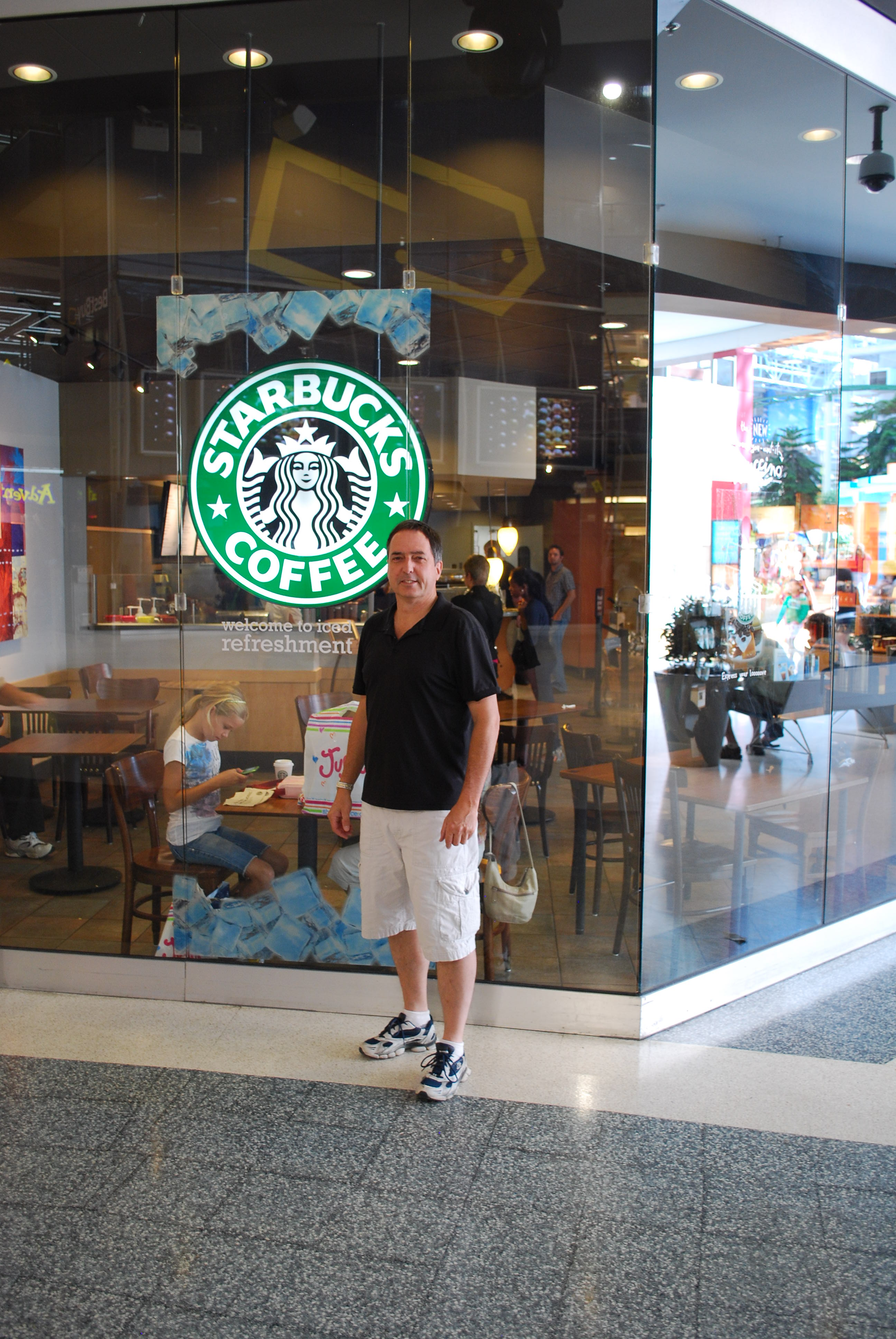
Grande cup of Like

Grande cup of Like

I don’t feel it’s appropriate for a business to ‘love’ its customers. Loving someone is a personal bond that shouldn’t be related to business, (unless you’re Lady Gaga, then you can love your ‘monsters.’)

However, I do feel strongly that a business should ‘like‘ its customers. When I go into a coffee house I can tell if they are serving drinks, or if they are offering a cup of like. Anyone can serve a drink, but serving like requires more than the mechanics of taking an order, knowing how much milk to put in a cup, and/or yelling, “I have a Venti Latte with two shots on the bar!”

My home Starbucks on 7th and Keystone in Reno, Nevada has ‘like’ down. They seem truly happy when a customer walks in the door. That doesn’t mean they don’t have their down days, but most of the time you will get more than your drink from the staff.

This is not what I experience when I travel. It’s easy to pick on airlines, because if there is one group of people who don’t ‘like’ their customers, it’s the air travel industry, but even finding hotel or restaurant staff that makes you feel liked has become harder and harder to do.

In fact, a business that likes their customer is so rare that a genuine friendly person stands out among the ugliness of customer service in most businesses. The opportunity to beat the competition is to simply like your customers.

The place to start is with management. Managers have to like their staff and like their job. If their not happy then how can the staff possibly be?

One more thought:  In a world of Twitter, Facebook, and Yelp, how can any business not afford to like their customers?

Reno, Nevada: Dead City Walking

04 Tuesday Mar 2014

Posted by Paul Kiser in About Reno, Branding, Business, Crime, Customer Relations, Customer Service, Government, Management Practices, Opinion, Politics, Pride, Public Image, Public Relations, Re-Imagine!, Recreation, The Tipping Point, Travel

≈ Leave a comment

Tags

Atlantis, casinos, Circus Circus, Eldorado, gambling, gaming, Grand Sierra Resort, hotels, Nevada, Peppermill, properties, Reno, RSCVA, Silver Legacy, The Nugget

The centerpiece of Reno's future

The centerpiece of Reno’s future

What makes Reno, Nevada unique? Here are some of the wrong answers:

  • Mountains – Plenty of cities the size of Reno are next to, or in mountains.
  • Outdoor Recreation — Again, there are no shortages of cities near outdoor recreation.
  • Arts — Many cities have art festivals, and most art festivals have more professional (paid) artists, but Reno relies mostly on artists working for free.
  • Gaming — Absolutely the most non-unique thing about Reno

Reno is Dying
The question about Reno’s uniqueness is critical to the survival of Reno. Over fifty years ago Reno discovered tourism and that vaulted a small desert town into easy money and big growth. The city learned that when people make their money elsewhere and spend it in Reno, the economy of Reno booms.

But for the last decade Reno has lost its uniqueness. Gaming is something you can do at the nearest Indian Casino. If you want to party and see gaudy construction lit up like game show on LSD, then go to Las Vegas. Reno is nothing when it comes to gaming.

Reno’s is Unique
The one thing that Reno has that no other city has is hotel room per capita. Nevada has one hotel room for every 14 residents, and Reno’s ratio equals or exceeds that average. Reno is a city designed for conventions. The problem is how to get convention organizers to consider Reno as a great convention town.

What won’t work is to keep gaming as the attraction. That industry is poison. It demands that the convention goer stay on the property and gamble, which defeats all the other great attractions that might attract repeat business, and American business people do not want to pay for their employees to go and party. The best thing that could happen in Reno is for gaming to be made illegal.

The other challenge is to get all the properties to work as one. That doesn’t happen that often. One property can shoot the city’s bid for a convention down by not cooperating.

However, if Reno can let go of gaming and focus on the big picture, it could be made into the premier convention town.

That’s a big ‘If.’

What America Must Do: Step 6 – Reinvent Higher Education

14 Wednesday Nov 2012

Posted by Paul Kiser in College, Communication, Education, Generational, Government, Higher Education, History, Information Technology, Internet, Opinion, Politics, Public Relations, Taxes, Technology, The Tipping Point, Traditional Media, Universities, US History

≈ Leave a comment

Tags

college degree, faculty, professors, state run, students, tuition and fees, universities

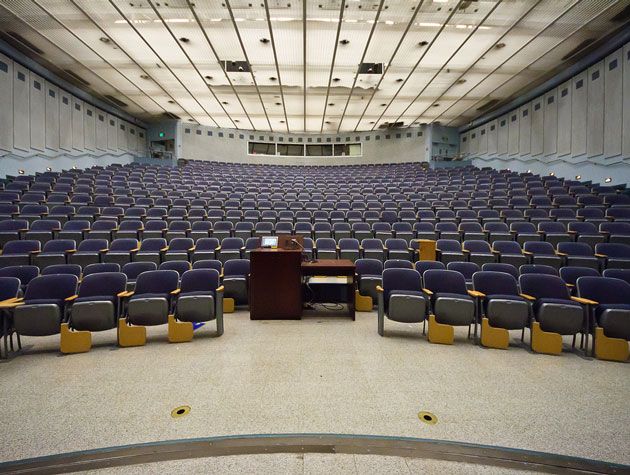
Sans Students: Is this what university classrooms will look like in 2020?

Higher Education is an unmovable object with an unstoppable force heading straight for it and universities are at ground zero. Classrooms as we know them may be doomed and the question is whether our country will lead the world in adapting to a new model, or whether we will be the last ones to accept reality.

The Value of the College Degree
The unmovable object in Higher Education is importance of the college degree in American commerce. Business lives or dies on information. The person who can access, filter, analyze, organize, and explain information tends to be valuable in a company.

High schools are tasked to help students graduate with basic competencies, but they are dealing with children who are still maturing into adulthood and that process needs to be complete before they are morphed into business men and women.

Those who believe high schools should be vocational schools are assuming that all children will become a construction laborer or office drone, so why bother with college prep? The concept of education as a training ground for corporate zombies is too simple-minded to apply in a country that encourages all citizens to reach their maximum potential.

College is where young adults are given the tools to become valued business leaders. College classes require a student to learn how to access and report information, which is central in business competitiveness. The business that can out think its competition always wins, which may be why many top businesses are more concerned about the degree, not the major. A college degree is more than a piece of paper, it is a badge of achievement that says this person is ready for the business world.

The Relentless Rise in the Cost of College
The unstoppable force is the rising cost of a college education. With cuts in federal and state budgets a greater share of the burden is being heaped on those who are least able to avoid it. In Mitt Romney’s failed bid to be President he suggested that students should borrow from their parents to pay for college. That was one telling sign that Romney is out of touch with the real world the rest of us live in.

March 2012 protest in Sacramento over tuition hikes

In 1991 the annual average cost for a university education was at $7,602 or over $30,000 for four years of college. In 2001, that annual cost had risen to $12,922 or over $50,000 in four years. In 2011, the annual cost had risen to $22,092, which meant it cost over $88,000 for the average college four-year degree. That is the equivalent of buying a new car every year a student attends college. If the trend continues it will cost a student an average of over $41,000/year for college by 2021, which means a four-year college degree in 2021 may cost over $167,000.

Students and their parents are already outraged by the rising costs, but it is universities who control the expenses, and therefore control the costs.

Based on current trends, the average annual cost for college may exceed $40,000 by 2021

Students want to be competitive for careers that will lead them to higher paying jobs, but they have no means to afford college and the list of parents who CAN pay over $22,000 a year for four years are on a first name basis with Mitt Romney.

The Other Unmovable Object – Faculty
Teachers at the college level have traditionally been considered the most important asset to a university and for centuries they were treated with dignity and respect by administrators, but financial pressures have made them a target for saving money. While students face escalating tuition and fees, university faculty are also a target of the unstoppable force. Professors have been constantly asked to accept budget cuts and teach more students for the same, or lower pay. 

Some universities have replaced expensive tenured professors with temporary faculty employed by contract on a semester by semester basis. Temporary faculty make a fraction of a full, tenured professor. Not surprisingly, a teacher that may not be offered a contract the next semester tends to be more accepting of increased class sizes, or other cost-cutting measures.

What may be surprising is that a college teacher is likely not receiving a significant portion of the tuition paid by the students in his or her classes. A temporary professor may bring in $100,000 or more in revenue each year for the university, but a temporary professor is often paid less than $4,000 per class with no benefits. Low pay and increased pressure to do more for no additional money makes the teaching environment unpleasant for the student and professor.

A Revolution Caused by the Internet
Ironically, the Internet was originally intended to allow one university to have quick access to the knowledge database at other universities and research laboratories. As it expanded and became commercially available in the late 1980’s and early 1990’s the public began to have access to a vast storage of on and off-campus knowledge without a student ID. Within a decade homes across the world were linked into a mass of dynamic information via business and personal websites, blogs, chat rooms, and other social media sites.

Suddenly anyone could access information and share ideas and they didn’t have to pay tuition to have easy access to it. Certainly some of the information was in error, but often people found information that outpaced the knowledge produced in books. Universities no longer held the monopoly on information.

Government Must Change
State governments and Higher Education face these problems:

  1. A college degree is still a valuable achievement and desired by the public and business.
  2. Tuition and fees are too high and the public can no longer afford them.
  3. Professors have been devalued in a system where more and more of the revenue is channeled away from the them.
  4. University administrators and government legislators have created a paradigm for Higher Education that is unsustainable.

Social media has changed the expectations of the public. People expect to be able to have ready access to anyone to whom they are paying for a service.

Controlling advanced knowledge within ivy covered walls is no longer possible in a world where anyone can do a Google search and know as much or more about the most current knowledge on any topic. However, just doing a Google search does not teach a person how to filter, analyze, organize, and report that information.

State-run universities have a unique opportunity to reinvent Higher Education. The challenge is that they are the most unlikely to do it. Administrators have Accreditation organizations that are established to dictate what Higher Education is and will be today and tomorrow based on the best practices of yesterday. That doesn’t work in a world where today is already history that was recorded by over 340 million tweets a day (March 2012 data.)

When the unstoppable force hits the unmovable objects (value of a degree and the need for faculty) few things about Higher Education will remain unchanged. Now is the time for State-run universities to dodge the upcoming annihilation and take the lead in reinventing Higher Education. They can start considering the following guidelines:

  • Tuition must stabilize and regress. Fees should be eliminated. Universities can assume that there will be no money available to siphon off for student activities, the football program, or any other money-absorbing entity. 
  • Support materials (textbooks, etc.) will be digital only and the cost will be pennies on the dollar of what students have been paying. Goodbye, McGraw-Hill. Hello, Faculty Publishing.
  • Classrooms will be more like Boardrooms with fewer students where the Professor is the CEO of knowledge and students must bring their best or beg for a second chance with someone else. Much of the lecture and information gathering will be done via webcasts and/or outside of class time. ‘Class’ will be where the work outside the classroom is brought in for discussion and idea sharing.
  • Class schedules will not follow a semester system and will be on a schedule that is more like a project team.
  • Faculty will lead students while at the same time work toward advancing knowledge on the subject matter.
  • The most important person to the student will be the educational coordinator (i.e. Counselor or Adviser in the old paradigm) who will create an individualized degree that is based on achieving a level of mastery information handling, not a number of credit hours.

The framework in which this happens must be within a government structure. Private enterprise has proven that when they try to create a system of higher learning they fail. It solves nothing to make Higher Education a profit-based program that is a poor imitation of the old, outdated model. If government can successfully create a new model it will make the United States of America the leader of advanced knowledge. If not, we can expect to be exporters of our future.

Links to:

What America Must Do:  Step 1 – Silence the Wackos in Politics
What America Must Do:  Step 2 – An Extreme Makeover of Government at All Levels
What America Must Do:  Step 3 – Restore Government Revenue and Fair Taxation
What America Must Do:  Step 4 – Balanced Budget By 2015, Debt under 50% of GDP by 2020
What America Must Do:  Step 5 – Restart a Federally Run Space Program

4 Lesson’s Yahoo’s CEO Marissa Mayer Has Taught Us

10 Monday Sep 2012

Posted by Paul Kiser in Business, Communication, Crisis Management, Customer Relations, Customer Service, Education, Employee Retention, Ethics, Human Resources, Information Technology, Internet, Lessons of Life, Management Practices, Opinion, Public Relations, Respect, The Tipping Point

≈ Leave a comment

Tags

CEO, employee morale, Google, Kathy Savitt, leadership, management by intimidation, Marissa Mayer, Mollie Spillman, Yahoo

Marissa Mayer: Management by Destruction

On July 16, Yahoo announced that they hired 37-year-old Marissa Mayer, a former Google Vice President (VP), as the new Chief Executive Officer (CEO) to turnaround the company. A little over a month later Mayer hired a new Chief Marketing Officer (CMO), which should not be surprising. How she did it tells us a lot about her management capabilities and about Yahoo’s Board of Directors.

Often a change in direction for a company will require new leadership in key management positions. Anyone who doesn’t know their job is in jeopardy when a new CEO walks in the door is kidding themselves. Sometimes a new CEO will ask for the top management to resign. Sometimes a new CEO will just give the old management team a severance package. Sometimes a CEO will take six months to get to know the company and then make changes. All these options a part of nominal business operations.

However, Mayer reportedly fired Mollie Spillman, her old CMO 1) by phone, 2) while she was on vacation, and 3) ten minutes before Yahoo’s official announcement that the new CMO would be Kathy Savitt.

Wow. Apparently, Mayer like burning all her bridges before she blows them up.

It’s important to note that Mayer’s age and/or gender are not at issue. Man or woman, old or young, what Mayer did was ethically questionable and has far reaching implications for Yahoo. Her slam-bam-you’re-fired-ma’am stunt is worthy of analysis for what it says about Mayer, Yahoo, and management-by-intimidation.

Lesson 1:  Mayer’s Questionable Ethics and Leadership
It doesn’t take guts to fire somebody. Firing someone is easy. Firing someone is a power trip. If you walk up to person on the street and say, “You’re Fired!,” it will probably only get you a confused stare followed by a laugh, but if you say, “You’re Fired!” at an underling employee, you have shown you are dominant and all powerful. To fire someone is a rush to the sadist.

Separating an employee from an organization with dignity and respect takes sensitivity, experience, and humility. It requires that the manager talks with (not at) the employee, and it requires the manager check their need for power at the door. Firing someone over the phone while they’re on vacation demonstrates a lack of experience and a lack of humanity.

In her defense, Mayer may have been reacting to another executive who left Yahoo one week before. It is possible that Mayer thought that Spillman might also leave and decided she would exercise a preemptive strike by replacing her before she could find another job. Still, that’s a weak reason to behave like a tree house club President.

Lesson 2:  How to Destroy Morale
When the CEO trash-n-bashes an employee it sends a message to everyone else in the company: Time to look for another job. How can any employee at Yahoo avoid wondering if they will be fired the next time they’re on vacation? How can any manager at Yahoo not believe that Mayer’s questionable ethics is now the model they should be following?

No Reason to Yahoo Behind This Sign

No Reason to Yahoo Behind This Sign

Mayer did make a peace offering to her employees soon after she took over by offering free food to full-time employees and a free iPhone. But her offerings weren’t free. In return for free perks she put extreme pressure to perform. She pushed a new product up by months and gave the development team one week to prove it could be done. When the team came back a week later and said it couldn’t be done on the schedule she demanded she said she would find another team that could do it.

This shows the classic fatal error in management-by-intimidation (MBI): Failing to trust and listen to the people you have working for you. It may be great to tell the investor a tale of tough-love while scratching your balls and dining on the company’s dime, but it really means that the customer is going to get a rushed, half-baked product that shows how mediocre your organization can be when it comes to innovation. Don’t get me wrong, some people…okay most people, need to be pushed, but most people don’t like to work in a threatening environment.

This shows the classic fatal error in management-by-intimidation:  Failing to trust and listen to the people you have working for you.

The result of MBI is that all your employees start looking for other employment options. The people with great ideas and skills are grabbed up by the competition and Yahoo will be left with the people who nobody else wants. Now you have an organization consisting of the worst performers.

Lesson 3:  Yahoo’s Future is in Doubt
In the past five years it has averaged a new CEO each year. That says more about the Board of Directors than it does about the CEO’s. The problem is that there is no quick fix and it is likely that Mayer management style is being encouraged by dysfunctional leadership in the Board room. Yahoo needs positive, creative, loyal, and happy employees if the company is to dig its way out of the hole its in. Creating an environment of fearful, anxious, angry employees is guaranteed to keep them noncompetitive now and in the future.

Throwing money, free food, or free iPhones may appease employees temporarily, but people want and need to be valued and treated with respect. The moment an employee feels that their neck is on the line is the moment they are no longer have ownership in the company, and when employees don’t have ownership, they stop caring. Uncaring employees are saboteurs in an organization. Yahoo likely has almost 15,000 saboteurs with intimate knowledge of the company’s secrets, weaknesses, and plans. That doesn’t bode well for customer satisfaction, nor company stock price.

Lesson 4:  Inexperience Does Not a Good Manager Make 
Of the Fortune 500 club, Mayer is the youngest CEO. Publicly, she has been a celebrated rising star at Google since she joined as employee #20 in 1999, and was Google’s first female engineer. Privately, some accused her of being a glory-hound seeking attention and fame. Despite having no business degrees (her bachelor’s and master’s degrees from Stanford are in computer engineering specializing in artificial intelligence,) she rose through the company to be a Vice President.

It was appropriate for Yahoo to hire a young executive. There are many people under 40 who are wise beyond their age, or have solid experience in people and resource management; however, Mayer’s lack extensive executive management experience seems to be demonstrated in her immature behavior.

Bonus Lesson:  Micromanagement – Slapping Your Team in the Face
It was reported last week that Mayer is now reviewing the candidates for every open position at Yahoo. That’s correct, Mayer is overseeing every potential new hire for every opening in a company of 15,000 employees. Nothing says you’re a ‘stupid ass’ to your management team quite like taking away their ability to choose who will work for them. If anyone at Yahoo didn’t know that they are valueless, Mayer and the Board of Directors have certainly removed all doubt.

Every business school should be studying Yahoo. Studying successful management is important, but studying an organization that is in a meltdown can teach future would be leaders why you can’t build up your organization by tearing apart your employees.

Rotary@105: 7 Relationship types that affect membership retention (Part II)

27 Wednesday Oct 2010

Posted by Paul Kiser in Branding, Business, Club Leadership, Communication, Customer Relations, Customer Service, Employee Retention, Ethics, Honor, Human Resources, Information Technology, Internet, Lessons of Life, Management Practices, Membership Recruitment, Membership Retention, Passionate People, Pride, Public Relations, Relationships, Rotary, Rotary@105, Social Interactive Media (SIM), Social Media Relations, The Tipping Point, Women

≈ 1 Comment

Tags

Alien, Blank, Blogging, Blogs, Club Members, Common Interests, Competitor, Customer Loyalty, Equality, Executive Management, Facebook, Friend, Internet, LinkedIn, Management Practices, Membership Recruitment, Membership Retention, Mentor, New Business World, Partner, Public Image, Public Relations, Rival, Rotarians, Rotary, Rotary Club, Seven Benchmark Relationships, Social Media, Social Networking, Star, Stranger, Submissive, Subordinate, The Star, Trust, Twitter, Value-added

by Paul Kiser
USA PDT  [Twitter: ] [Facebook] [LinkedIn] [Skype:kiserrotary or 775.624.5679]

Paul Kiser

NOTE: This article is a secondary article to
Relationships Typing: 3 factors that the affect quality and depth of friendship

As mentioned in the first part of this article, I have defined three factors that seem to determine the quality of my relationships. 1) Trust, 2) Common Interests and/or Experiences, 3) Equality.

By using a 21-point scale to rate each factor in various relationship types we can see how Trust (or the lack of), Common Interests and/or Experiences (or the lack of), and Equality (or the lack of) define the relationship. Below are seven types of benchmark relationships and how they might affect membership retention in a Rotary club.

Too much friendship?

The Star
We all have people who we look up to, but there are just a few people that we put on a pedestal. I see the Star relationship as one where the trust level is relatively high (+7 on a scale of -10 to +10) as well as the common interest level (+8 on a scale of -10 to +10), but we feel inferior (a -9 on a scale of -10 to +10) to this person. In this relationship the depth and quality of the relationship is usually shallow. These people are not close friends, but rather an admired acquaintance. A new member in a Rotary club might see the Club President as the Star.

The Mentor
The Mentor is a different version of the Star. The difference is that we trust the Mentor implicitly (+10) and we have a strong common interest (+9); however, we see ourselves as inferior (-6) to our Mentor. The Mentor has achieved a level of success that we hope reach and our relationship is based on a mutual effort to gain an equal level of success in the future. I think it is a mistake to believe that a Mentor relationship can be imposed. The only successful Mentor relationships I have observed are those that have occurred by a mutual agreement of both parties. In over nine years in Rotary have witnessed few successful Mentor relationships. When it does happen it is a win-win situation for both members, but the Mentor must be highly skilled and/or knowledgeable, a passionate person, and a great trainer. In addition, the ‘trainee’ must recognize the Mentor’s superior knowledge and have a desire to learn from him or her. If not, the relationship will fail.

A Partnership is not necessarily a friendship

The Partner
I see the Partner as a relationship seeking mutual benefit for both people, but without the level of trust of a Mentor relationship. In a Partner relationship the trust is conditional (0, not + or -) and the two people usually see the other as his or her  equal (0) or at least they have something of value that balances the relationship, but the common interest is high (+9). I would consider the Partner relationship to be a symbiotic or co-dependent relationship and while the relationship may seem to be a strong bond, the slightest feeling of inequality or betrayal can end the relationship. In Part I of this series I mentioned that the employer/employee relationship might be a partnership, but I also believe that some marriages can start out, or devolve into Partner type relationships. In a Rotary club a member who has established mostly Partner relationships with other members is likely to have no deep attachment to the club and likely to leave.

The Friend
Of all relationships, I think a Friend is the hardest to achieve. A quality friendship involves a high level of trust (+9) and a significant level of common interests and/or experiences (+6), but also a genuine feeling of equality (0) must exist. The trust and equality factors for a friendship are difficult for most people to offer to another person. It is a special relationship and one to be highly valued, but once achieved it is a strong bond that lasts over time and distance. If every member were to have only one other true ‘Friend’ in his or her club most members would never consider leaving.

The Rival or Competitor
A rival is a relationship, even though we usually don’t think of it as one. It is a relationship based on mistrust (-8) of another person and somewhat ironically, a relationship that includes a high level of common interests (+8). I think that while we may feel we are superior to our rival that the truth is that we are afraid that we are not, thus I give an equality rating of (+3) to a Rival relationship. The Rival relationship is one of the worst possible relationships that could develop in a Rotary club. Sooner or later the club is going to be drawn into the conflict or one or more members will leave because of it. Ironically, it is the high level of common interest that seems to set up the Rival/Competitor situation. Without the envy or jealousy caused by the common interest both people would probably ignore each other.

Common Interest can enhance a relationship, or create conflict

The Subordinate or Submissive
Note that with the Subordinate relationship I am talking about someone who sees another person as their subordinate or submissive. This can be an employer/employee type relationship, but it is any relationship where a person sees him/herself as superior (+10) to another person. The trust level is relatively high (+5) as the person with the bigger ego expects the subordinate to obey their wishes and typically there is somewhat of a common interest (+3), but not necessarily a significant level of commonality. The big problem I have seen with this type of relationship is that the target of this attitude may not feel that they should be the subordinate. In a Rotary club it is surprising easy for a club leader to see other club members as their subordinate. Nothing creates a false sense of power like a title and in a volunteer organization titles are meant to assign responsibility, not authority, but not everyone understands that concept.

The Alien or Blank
It seems somewhat pointless to talk about the lack of a relationship as a type of relationship, but the I find it interesting to understand that some people just don’t show up on our relationship radar even though we may see them on a regular basis. I didn’t fully understand this until I was in Rotary, but after a few years in a club you learn the some people can disappear in plain sight. I feel the lack of a relationship, when there realistically should be is a type of relationship and I refer to it as an Alien or Blank relationship.

The quality of Friendship
I would not argue the point that it takes two to make or break a relationship; however, I would argue that the quality and depth of any relationship is determined largely by our own attitudes, in concert with the way the other person treats us. Understanding the factors that influence a relationship is the first step to making positive changes. In a Rotary club, failing to recognize that not all relationships are constructive can have major consequences on membership retention.

In Part I of this series I talked about a facilitator at a meeting who didn’t want to dilute his ‘friendships’ with people in the Social Media. My response to him is this: friendship is more about what we bring to the table and not the method of connection. The Social Media is not a threat to good friendships, just a different way to engage in them.

More Articles

Business: Public Relations, Management, and Social Media Related

  • Starbucks Re-Imagines the business … again
  • Your Privacy Rights on the Internet: Read before you write
  • Social Media 3Q Update: Who uses Facebook, Twitter,LinkedIn, and MySpace?
  • Richmond Embassy Suites: The best at true Hospitality
  • Dear Business Person: It’s 2010, please update your brain.
  • Selling watered-down beer: The best spin campaign in advertising
  • Communication: Repetition of message does not increase awareness
  • Is it time to fire yourself?
  • Millennium Hotel: Go away, spend your money elsewhere
  • Rogue Flight Attendant shows his arrogance, Airlines dislike for the customer
  • 2Q 2010 Social Media Tools: Facebook/Twitter sail on, LinkedIn/MySpace don’t
  • War Declared on Social Media: Desperate Acts of Traditional Media
  • Pay It Middle: The Balance between Too Much and Too Little Compensation
  • Mega Executive Pay Leads to Poor Performance
  • Relationships and Thin-Slicing: Why the other person knows what you’re really thinking
  • Browser Wars: Internet Explorer losing, Google Chrome gaining ground
  • WiFi on Southwest Airlines: Is it ‘Shovel Ready’?
  • Starbucks makes a smart move: Free WiFi
  • Foul Play: FIFA shows what less regulation offers to business
  • The Shock of the McChrystal Story: The story is over before the article is published
  • Tony Hayward: The very model of a modern Major General
  • Epic Fail: PR ‘Experts’ don’t get Twitter
  • King of Anything: Social Media vs Traditional Media
  • Twitter is the Thunderstorm of World Thought
  • Signs of the Times
  • How Social Interactive Media Could Transform Higher Education
  • How to Become a Zen Master of Social Media
  • Death of All Salesmen!
  • Aristotle’s General Rules on Social Media
  • Social Media:  What is it and Why Should You Care?
  • Social Media 2020:  Keep it Personal
  • Social Media 2020:  Who Shouldn’t Be Teaching Social Media
  • Social Media 2020:  Public Relations 2001 vs Social Media Relations 2010
  • Social Media 2020: Who Moved My Public Relations?
  • Publishing Industry to End 2012
  • Who uses Facebook, Twitter, MySpace & LinkedIn?
  • Fear of Public Relations
  • Dissatisfiers: Why John Quit
  • Facebook, Twitter, LinkedIn…Oh My!
  • Does Anybody Really Understand PR?

Rotary Related

  • What most non-Rotarians don’t know about Rotary
  • Rotary@105: Making Rotary Sexy
  • Rotary@105: Grieving change
  • How Rotary can..must..will plug into Social Media
  • Rotary PR: Disrespecting the Club President is a PR/Membership issue
  • Rotary Membership/Public Image Challenge
  • Rotary New Year: Retread or Renaissance?
  • Rotary@105: A young professionals networking club?
  • One Rotary Center: A home for 1.2 million members
  • Rotary@105:  What BP Could Learn from the 1914 Rotary Code of Ethics
  • Rotary Magazine Dilemma Reveals the Impact of Social Media
  • Rotary@105:  April 24th – Donald M. Carter Day
  • Rotary@105:  What kind of animal is Rotary International?
  • Rotary:  The Man in the Yellow Hat as the Ideal Club President?
  • Rotary@105:  Our 1st Rotary Club Dropout
  • Rotary Public Relations and Membership: Eight Steps to a Team Win
  • Rotary: All Public Relations is Local
  • Best Practices:  Become a Target!

Science Related

  • Negative Time: The Self-fulfilling Prophesy a Scientific Possibility?
  • Physics in 2010: The more we understand, the less we know

Personal Experience Related

  • Knowing when it’s over or beyond over
  • Dear Teresa Laraba, SVP of Southwest Airlines Customer Service
  • Things I didn’t know about being a Father to a four-year-old boy
  • Riding Reno: The Ladies of Reno
  • Up in the air down in Texas
  • I mow my lawn because…
  • Nevada I-580: An Interstate by any other name
  • Nevada’s oldest brewery opens a Reno location
  • Two Barbecues and a Wedding
  • Car Dealership Re-Imagines Customer Service

Our Country and History Related

  • I’m not angry, nor am I stupid … and I voted
  • Point of Confusion
  • What I’m not buying this year
  • Nevada: State of Disaster
  • Thank you, Mr. President
  • America’s Hostile Takeover of Mexico

What I’m Not Buying This Year

13 Wednesday Oct 2010

Posted by Paul Kiser in Branding, Business, Communication, Ethics, Government, Government Regulation, History, Honor, Internet, Lessons of Life, Management Practices, Passionate People, Politics, Pride, Public Relations, Random, Re-Imagine!, Relationships, Respect, Rotary, Taxes, The Tipping Point, US History

≈ 3 Comments

Tags

Blogging, Blogs, Christine O'Donnell, Conservatives, Crime, Depression, Ethics, Executive Management, Good Government, Hispanic, Illegal Aliens, Illegal Immigrants, LoCOS, Management Practices, Mexican Nationals, Mexico, Nevada, New Business World, Political Parties, Politics, Public Image, Public Relations, Publicity, Re-Imagine!, Recession, Republicans, Rotary, Sharron Angle, Tea Party, Unemployment, Unethical Business Practices

by Paul Kiser
USA PDT  [Twitter: ] [Facebook] [LinkedIn] [Skype:kiserrotary or 775.624.5679]

Paul Kiser

Tis the season and there are a lot of political candidates out there selling their version of what is wrong with this country/state/county/city and how they are going to fix what ails us. This year is different from most because it seems that a lynch mob has taken over a prominent role in politics and like most lynch mobs they don’t need facts, they just need someone to be angry at and someone to blame.

It would be easy to label the people behind this political lynch mob as ‘stupid’, but that is probably overly harsh. These people are driven by emotions, not a lack of intelligence, so stupid is not the correct term. I prefer to describe the lynch mob as people who have a Lack Of Critical Observation Skills (LoCOS for short.)  This year the LoCOS are trying to sell a lot of garbage and I’m not buying it. For example:

Nevada: The best at doing it wrong

LoCOS:  Lower taxes will improve the economy
To the LoCOS who are selling the load I have one word. Nevada. Nevada has no Income tax. Nevada has no Capital Gains tax. Nevada has no Corporate tax. Nevada has no Inventory tax. Even conservative business groups rate Nevada as one of the most ‘business-friendly’ states. Nevada is to business what the Bunny Ranch was to male ego.

According the LoCOS argument, Nevada should be awash in new business. Nevada’s economy should be booming. Nevada should be the poster child of the low tax concept.

The fact is that the State exposes the Lo Tax/Mo Biz as a myth. Nevada is Number ONE in unemployment (2nd place Florida is over a full point better than the Silver State.) Nevada is Number ONE in crime. Nevada is Number ONE in housing foreclosures. Nevada is consistently among the lowest in unbiased education rankings. Nevada is proof that lower taxes does not make for a better economy.

(Article: Nevada’s State of Disaster)

LoCOS: Business is better at running our government
Let’s remember that it wasn’t government that put us in a recession but business…BAD business. Government was an enabler, in that it stopped regulating and monitoring the unbridled greed of the incestuous investor-run business world, but at the end of the day it was business people who made all the decisions. The corporate executives chose to ignore the obvious result that would happen from their greed and dove head on into unethical practices that doomed our economy.

Greed is inherent in business. Greed is why business exists. There is no ‘care for fellow citizen’ in the business world. Business is based on competition, winners and losers, and often the losers are not the weakest, but rather loser’s are the one’s with morals. Business only keeps to a moral compass when there is an unbiased arbiter oversees its activities. That is the role of government.

This year we are seeing the perversion of investor-run business with clearer eyes. The Chamber of Commerce has abandoned their mission of promoting good business in the community in favor of attacking local governments and promoting only those candidates that will remove the protections for honest business and our citizens. It is ironic that anyone would suggest that business, with its greed-driven motives and proven track record of unethical practices, should replace good government.

Don’t get me wrong, a strong economy needs good, healthy businesses, but good, healthy businesses need a strong government to create and monitor the rules for which guide and protect all. The leap of logic of the LoCOS, that our government should be run as a business, is as absurd as saying that FIFA needs fewer referees on the soccer field.

LoCOS: The trillion-dollar debt is bad
The LoCOS must have Alzheimer’s.

I’m not in favor of a large deficit, especially when it involves sending US dollars to finance the destruction of another country …. but I’m really not in favor of is a Depression. That is what we faced in early 2009. Business had raped our economy through outrageous, unregulated practices and we were on the brink of an abyss that had no bottom. Again, business, not government caused our economy to fail. Initially, our country let big banks suffer the consequences of what they had done, but it quickly became apparent that what was about to happen was the massive collapse of the entire economic system, which would have forced the United States government to take over the day-to-day operations of almost all of our major financial institutions.

Cheney's Folly: The start of our debt problems

The alternative to a nuclear meltdown of our economy was to lend money to those institutions, help initiate controlled purchases of ailing banks, and invest government money in key assistance programs. Was it a bailout? Yes, but it was investing, not buying, which meant we would get the money back in almost every case.

The government also invested money in the mismanaged auto industry that, if not preserved, would have sent us into Depression-era unemployment overnight. Yes, it increased our nation’s debt. A debt that had gone from surplus in President Clinton’s years, to a deficit under George Bush. It would have been better if we had not spent so much money on Cheney’s overseas folly and already been in the hole when the house of cards of bad business fell, but there was no choice. The decisions made in late 2008 and early 2009 were necessary and save our country from disaster.

Have we recovered? No. But the LoCOS rage over a big deficit is being driven and financed by the major corporations that would prefer the citizen forget what really happened. I wish business hadn’t forced us to use trillions of taxpayer’s dollar to remedy their greed, but we had no choice.

LoCOS: Government is bad
Government is really, really good providing it is run by reasonable people who truly care for the citizens … all the citizens. There is one difference between civilization and anarchy and that is government. Every time I hear the LoCOS point out an example of bad government I can think of a hundred ways that government has made our country great. I mentioned to a person that the airlines need to be regulated again and they pointed out how, under government regulation, an airline was forced to maintain a route to a small city that was not profitable. Yes, that is tough, but what about the scores of lucrative routes that government regulation handed that same airline on a silver platter? I’m really weary of the single exceptions to how great government has been in making this the strongest country in the history of the world. Single exceptions do not make an argument for destroying our country.

Government is the foundation of our society and the only people who don’t benefit from a strong government are the greedy and unethical. When we were in school we would have rather had no teachers telling us what to do, but that wouldn’t have made our education better. It’s time we stopped making the argument of a 5th grader…and time we started respecting what a blessing it is to have a government that keeps our society from devolving into anarchy.

The Face of the LoCO People

LoCOS: Electing stupid people is smart
This one mystifies me. A candidate from any other party would be laughed out of politics for saying or doing something stupid and yet candidates for the LoCOS wear their stupidity like a new hat.
LoCOS candidates are avoiding the media, saying one thing, then changing their story. They scream about illegal aliens and how they are destroying our country, then it’s revealed they were employing them. They dress in Nazi uniforms. They steal other people’s work and claim it as their own. They take campaign money and pay their personal bills with it. They have to explain to people why they are not a witch. They threaten violence on people, yell about almost anything, deceive, and often outright lie…and the LoCOS cheer on.

I know that the quality of candidates of the LoCOS is a reflection of the lack of respect they have for our country and government, but isn’t prima facie evidence that the LoCOS can’t really be trying to improve our country when they are represented by the worst of the worst?

LoCO S: Illegal aliens (=Hispanics) are destroying this country
First, let’s remember that a major portion of the United States (California, Nevada, Utah, southwestern Wyoming, western Colorado, Arizona, New Mexico, Oklahoma, and Texas belonged to Mexico until the mid-1800’s. We took the land from them at gunpoint and paid fifty cents on the dollar for the land. I could make a strong argument that Mexican nationals are not really the illegal aliens in Alta California, Nuevo Mexico, and Tejas, but I will let that dog rest.

(Article: America’s Hostile Takeover of Mexico)

Regardless of the history of Mexico and the United States, the fact is that a typical tactic of a lynch mob is to find a symbol (person or group) that has little or no opportunity to defend themselves and present them as evil. This is a tactic used by the KKK, the Nazis, and every ultra-right wing, nationalistic, racist group. It doesn’t matter of whether the targeted group is guilty of anything, just that they, or no one else, is able or willing to stand up and challenge the accusations. Mexican immigrants are the perfect target for a group like the LoCOS.

The facts are that:

  • Most Mexican undocumented immigrants lead quiet, peaceful, law-abiding lives in the United States (a fact that the LoCOS lie about)
  • Mexican undocumented immigrants are working jobs that no American citizen wants to do
  • That the United States is the primary enabler of the drug wars in Mexico (we buy the product and sell them the arms)
  • Mexican undocumented immigrants can’t file for Income Tax refunds (which most would get if they were citizens) so the United States collects and keeps all the money deducted from their pay.

But according to the LoCOS, they are pure evil and responsible for our all our economic and societal ills. In Arizona, a sheriff’s deputy called that he was under attack by Mexican drug smugglers and was shot. He became the hero of the LoCOS.

Deputy Puroll's wound

Despite a massive effort, no drug smugglers were found. Now it turns out that the wound was from a bullet fired at close range (not from 25 yards as he claimed) and likely self-inflicted. Almost no one questioned the story of the deputy at the time, despite the inconsistencies in his account. Why should they, blame it on the Mexicans. Naturally, the story has to be true!

To me, the whole issue of ‘illegal aliens’ is a tornado in search of a trailer park. The damning terminology, the use of single examples, and falsified facts all indicate that the LoCOS need to create a threat and it the Muslims are too far away to pick on so the target is Mexican nationals.

The New Testament of the Bible has clear instructions on how a Christian is behave. Jesus said to love thy neighbor as thyself. The Apostle Paul says, “…as touching brotherly love ye need not that I write unto you: for ye yourselves are taught of God to love one another..” (1 Thessalonians 4:9). The LoCOS often boast of their devotion to Christ and then desecrate his teachings by their un-Christian attitude towards those of Hispanic descent.

I’m not buying it.

LoCOS: Threatening our government and the electorate with armed rebellion
Several members of the LoCOS, including LoCOS candidates have indicated that ‘some people’ may be mad enough at our government to invoke ‘their Second Amendment Rights’. I don’t care how you say it, to suggest that some people are going to take up arms against their fellow citizens (if the LoCOS don’t get their way) is wrong. In this country we vote, and we don’t take up arms to enforce the LoCOS will on the majority. Anyone who suggests this is a threat to our Constitution and to this country. Mad or not, there is a line that cannot be crossed over.

I know that everything I said here will not make any difference to the LoCOS. In fact, they will be outraged that I spoke out against their unbridled illogical arguments. You can’t reason with a lynch mob. But sometime in the future we will all look back on this and say, “What were the LoCOS thinking?” The problem is that they are not.

More Articles

Business: Public Relations, Management, and Social Media Related

  • Your Privacy Rights on the Internet: Read before you write
  • Social Media 3Q Update: Who uses Facebook, Twitter,LinkedIn, and MySpace?
  • Richmond Embassy Suites: The best at true Hospitality
  • Dear Business Person: It’s 2010, please update your brain.
  • Selling watered-down beer: The best spin campaign in advertising
  • Communication: Repetition of message does not increase awareness
  • Is it time to fire yourself?
  • Millennium Hotel: Go away, spend your money elsewhere
  • Rogue Flight Attendant shows his arrogance, Airlines dislike for the customer
  • 2Q 2010 Social Media Tools: Facebook/Twitter sail on, LinkedIn/MySpace don’t
  • War Declared on Social Media: Desperate Acts of Traditional Media
  • Pay It Middle: The Balance between Too Much and Too Little Compensation
  • Mega Executive Pay Leads to Poor Performance
  • Relationships and Thin-Slicing: Why the other person knows what you’re really thinking
  • Browser Wars: Internet Explorer losing, Google Chrome gaining ground
  • WiFi on Southwest Airlines: Is it ‘Shovel Ready’?
  • Starbucks makes a smart move: Free WiFi
  • Foul Play: FIFA shows what less regulation offers to business
  • The Shock of the McChrystal Story: The story is over before the article is published
  • Tony Hayward: The very model of a modern Major General
  • Epic Fail: PR ‘Experts’ don’t get Twitter
  • King of Anything: Social Media vs Traditional Media
  • Twitter is the Thunderstorm of World Thought
  • Signs of the Times
  • How Social Interactive Media Could Transform Higher Education
  • How to Become a Zen Master of Social Media
  • Death of All Salesmen!
  • Aristotle’s General Rules on Social Media
  • Social Media:  What is it and Why Should You Care?
  • Social Media 2020:  Keep it Personal
  • Social Media 2020:  Who Shouldn’t Be Teaching Social Media
  • Social Media 2020:  Public Relations 2001 vs Social Media Relations 2010
  • Social Media 2020: Who Moved My Public Relations?
  • Publishing Industry to End 2012
  • Who uses Facebook, Twitter, MySpace & LinkedIn?
  • Fear of Public Relations
  • Dissatisfiers: Why John Quit
  • Facebook, Twitter, LinkedIn…Oh My!
  • Does Anybody Really Understand PR?

Rotary Related

  • What most non-Rotarians don’t know about Rotary
  • Rotary@105: Making Rotary Sexy
  • Rotary@105: Grieving change
  • How Rotary can..must..will plug into Social Media
  • Rotary PR: Disrespecting the Club President is a PR/Membership issue
  • Rotary Membership/Public Image Challenge
  • Rotary New Year: Retread or Renaissance?
  • Rotary@105: A young professionals networking club?
  • One Rotary Center: A home for 1.2 million members
  • Rotary@105:  What BP Could Learn from the 1914 Rotary Code of Ethics
  • Rotary Magazine Dilemma Reveals the Impact of Social Media
  • Rotary@105:  April 24th – Donald M. Carter Day
  • Rotary@105:  What kind of animal is Rotary International?
  • Rotary:  The Man in the Yellow Hat as the Ideal Club President?
  • Rotary@105:  Our 1st Rotary Club Dropout
  • Rotary Public Relations and Membership: Eight Steps to a Team Win
  • Rotary: All Public Relations is Local
  • Best Practices:  Become a Target!

Science Related

  • Negative Time: The Self-fulfilling Prophesy a Scientific Possibility?
  • Physics in 2010: The more we understand, the less we know

Personal Experience Related

  • Things I didn’t know about being a Father to a four-year-old boy
  • Riding Reno: The Ladies of Reno
  • Up in the air down in Texas
  • I mow my lawn because…
  • Nevada I-580: An Interstate by any other name
  • Nevada’s oldest brewery opens a Reno location
  • Two Barbecues and a Wedding
  • Car Dealership Re-Imagines Customer Service

Our Country and History Related

  • Nevada: State of Disaster
  • Thank you, Mr. President
  • America’s Hostile Takeover of Mexico

Social Media 3Q 2010 Update: Who Uses Facebook, Twitter, LinkedIn, & MySpace:

08 Friday Oct 2010

Posted by Paul Kiser in Branding, Business, Communication, Consulting, Customer Relations, Customer Service, Ethics, Information Technology, Internet, Management Practices, Passionate People, Public Relations, Re-Imagine!, Relationships, Rotary, Social Interactive Media (SIM), Social Media Relations, The Tipping Point, Tom Peters, Traditional Media

≈ 4 Comments

Tags

Age, Blogging, Blogs, Demographics, Facebook, Gender, Internet, LinkedIn, New Business World, Newspapers, Public Image, Public Relations, Publicity, Re-Imagine!, Rotary, Rotary Club, Rotary International, Social Media, Social Networking, Tom Peters, TweetDeck, Twitter, USA Today

by Paul Kiser
USA PDT  [Twitter: ] [Facebook] [LinkedIn] [Skype:kiserrotary or 775.624.5679]

Paul Kiser

The third quarter 2010 demographics of Social Media users according to Google’s Adplanner services has a few surprises. Facebook actually dropped from 550 to 540 million users in the third quarter, and Facebook users over age 54 dropped from 16% to 10% in the last six months. Based on the data from the 2nd and 3rd quarters there is a significant slowing in the growth of the major Social Media tools.

Among the numbers are the interesting age group distributions of each of the networking sites. The data gives important clues of what each site is being used for in addition to who is using it.

Facebook’s Fire Cools
No one can dispute Facebook’s impact on the world. It is BIG, and with millions of posts and interactions each day, the influence of its users is the envy of every marketing professional. Traditional media professional and other old people will be tempted to look at the 3rd quarter data and declare that the Social Media ‘fad’ is over and on the decline. That would be a statement of ignorance.

Facebook 3rdQ 2010 DAILY visits

Facebook’s growth could not continue indefinitely and its amazing growth in users from 2008 to the start of 2010 was being fueled by a viral exploration of a new media that allowed people to connect in a way they never had before. Now that exploration has calmed and I believe we are seeing the coming of age of Social Media.

The drop of 10 million users during the third quarter is only significant in that it shows a leveling off of the growth. The average time on the site is over 23 minutes, which is much longer than the other three major U.S. Social Media tools (MySpace 14:40 mins., Twitter 13:10 mins., LinkedIn 9:50 mins.) That is important as more time spent means more interaction and more influence by users and advertisers.

Facebook reaches almost 57% of the people in the United States (35% worldwide) which is a staggering statistic. If USA Today could reach 57% of Americans (without giving the newspaper away to every hotel guest) and know that the readers were spending over 23 minutes looking at their paper they would probably be the only newspaper in the United States… and mega rich. As of March 2010, USA Today has a circulation of only 1.8 million compared to Facebook’s over 65 million visitors (based on cookies.)

3rdQ Facebook Users by Age

1stQ Facebook Users by Age

One statistic that keeps bouncing around in the Social Media world is that “women over 55 is the fastest growing group of Facebook users.” That it is old data. While the over 55 group had climbed to 16% at the end of March 2010, it is now the fastest shrinking age group and Facebook users under 18 years old have been the fastest growing group during the last six months.

Finally, 57% of the Facebook users are women, which is about the same as six months ago. That seems to confirm that Facebook is about ‘social’ networking and making personal connections. Facebook continues to be the place where buying decisions are influenced through small group interactions. Business and Marketing people will find that if they try to manipulate these discussions it will eventually backfire on them. Facebook is where business should LISTEN, not talk.

Twitter 3rdQ 2010 DAILY visits

Twitter Continues to Pause
The biggest surprise in the 3rd Quarter with Twitter was that it did not break the 100 million user mark. At the end of the 2nd Quarter it was at 96 million users, which was up by 16 million from the 1st Quarter. However, Twitter only grew by 2 million and now stands at 98 million users.

Twitter’s daily visits have leveled off for the last six months, and some might see this as an ominous sign for the hyper-fast post Social Media tool; however, this is deceiving as many Twitter users, (like myself,) don’t go to the Twitter site to use the tool, but rather use an application, like TweetDeck, to interact on the site. Thus the visit count would not be recorded as a site visit.

Twitter’s lack of significant growth in the number of users may be do to a continued lack of understanding of the value of the Tweet world and a period of constant ‘Fail Whales’ in the 2nd Quarter and early 3rd Quarter. The service has seemed to address the major problems in system overloads, but lately has had a return of a few service interruptions in the past few weeks. Obviously, if Twitter continues to have problems it won’t be able to survive in an environment where reliability is oxygen to users.

As for the lack of understanding of the value of Twitter, the service will struggle to grow until people can learn that the impact of Twitter is not in the posts, but the conversations and the URL links to other blogs and webpages. Twitter is like Headline News for new ideas and concepts. Often posts reveal a new approach or cutting-edge information that won’t be in the traditional public arena for months. That is why I still see Twitter growing if they can rid themselves of service interruptions.

3rdQ 2010 Twitter users by Age

1stQ 2010 Twitter users by Age

One interesting development in the latest data is the shift in the age demographics. Twitter seems to have made a shift to younger adults. The 18-34 age group is up by 16%, while the 35-64 age group is down by 9% from six months ago. Also, teenagers (under 18) have dropped by 6% since the 1st quarter and now make up only 4% of all Twitter users. The apparent dislike for Twitter among teenagers is a clear age defining characteristic. I have had two separate teenagers say to me “You’re not on Twitter, are you!?”

Apparently Twitter gives you cooties. Who knew?

MySpace Back From the Brink?
I have predicted the end of MySpace for sometime, but in the 3rd quarter it did something bizarre … it gained users. It had dropped 14 million users from the 1st to the 2nd quarter and then it gained one million users back in the 3rd quarter. MySpace now stands at 67 million users. Not earth-shaking, but certainly noteworthy. LinkedIn would sacrifice several interns to have that many users. MySpace also has more women. Female users consist of 64% of the MySpace population.

MySpace 3rdQ 2010 DAILY visits

The reason? Well, no other major Social Media tool lets you search by gender … and age … and height … and race … and body type … and sexual orientation … are you getting the picture? MySpace is a social dating site as much as anything else and lonely people make up a lot of our world’s population. So maybe MySpace has found its niche as a romance network and that will stop the freefall of the past two quarters.

3Q 2010 MySpace users by Age

3rdQ 2010 MySpace users by Age

Yes, there are more teenagers on this site than most (14%), but 63% of the users are between 18 and 44 years old. One caveat. MySpace has limited the ‘find-a-friend’ search function to give the results of people age 18 and over. That is a smart move to protect minors; however, some teenagers have simply listed themselves as an age of 18 or older to circumvent the limitation. I caught a few teenagers that list themselves as 19, but on their main page description they indicate their real age. This is likely why the number of ‘under 18’ users have dropped from 34% to 14% in six months.

LinkedIn Drifting in Niche
The 3rd quarter statistics show that despite millions of people looking work, the business person to business person website of LinkedIn is not growing. It is at 41 million,
which is actually higher than the end of 2nd quarter, but the same as the end of the 1st quarter.

LinkedIn 3rdQ DAILY visits

Like MySpace, LinkedIn has found its niche. Essentially, LinkedIn is a business-oriented website that provides a job exchange service. Most users are using the networking website as their digital résumé in order to attract job offers. In the Tom Peters ‘Re-Imagine’ business world where branding is a key element of survival, LinkedIn is Mecca for self-promotion.

Unfortunately, LinkedIn is not as successful as Facebook and Twitter in two-way interaction. Both of those Social Media tools do not have as much as of an ‘agenda’ by individual users as LinkedIn. Users of the business-oriented network seem to spend more time professing what they know and don’t spend as much time listening to others. This is the traditional media model of one-way communication, which is the style of communication that Social Media has displaced. For some, the self-promotion run amuck style of some LinkedIn users is a turn off that may hurt the site in the long run.

3Q 2010 LinkedIn user by Age

1stQ 2010 LinkedIn users by Age

It will be interesting to see how LinkedIn will fare as the business-caused Recession of 2007-09 eases and people are employed again. LinkedIn could be a key to a sudden labor shortage in 2012 as those companies with the best opportunities will be able to target and recruit candidates through LinkedIn, leaving other employers to either compete or settle for what’s left over.

Age and gender on LinkedIn reinforce the business-world orientation as more males (57%) are users and the distribution of the age groups reflects the working world. Interestingly, while LinkedIn still has more users over 54 years old (15%), this is 7% drop from the 1st quarter. That is offset by an 8% jump of the 24-34 year old users in the last six months.

4th Quarter Predictions?
I believe we are seeing a refinement of each of the big four Social Media tools. Facebook has become the social sharing network, Twitter is the thought-provoking, learning network, MySpace is the social relationship network, and LinkedIn the branding and résumé network. The demographics are settling in to reinforce the existing nature of each of the networks. Facebook, MySpace and LinkedIn will likely end 2010 about where they are now unless something viral either cause a rush of new users, or sends people running away. Twitter still has potential significant growth, but I don’t see that happening in the 4th quarter.

The volatility of the Social Media networks have made it difficult to understand what they will eventually represent in our world; however, now that there seems to be a calming of the major networks, the value and purpose is becoming clearer. That will allow the big four to lock in their market; however, it will also open the door for other networks to identify areas of opportunities and weakness. My prediction is that 2011 will be the entrenchment of the Social Media, followed by more competition by other networks seeking to improve or offer alternatives to the established services.

More Articles

Business: Public Relations, Management, and Social Media Related

  • Richmond Embassy Suites: The best at true Hospitality
  • Dear Business Person: It’s 2010, please update your brain.
  • Selling watered-down beer: The best spin campaign in advertising
  • Communication: Repetition of message does not increase awareness
  • Is it time to fire yourself?
  • Millennium Hotel: Go away, spend your money elsewhere
  • Rogue Flight Attendant shows his arrogance, Airlines dislike for the customer
  • 2Q 2010 Social Media Tools: Facebook/Twitter sail on, LinkedIn/MySpace don’t
  • War Declared on Social Media: Desperate Acts of Traditional Media
  • Pay It Middle: The Balance between Too Much and Too Little Compensation
  • Mega Executive Pay Leads to Poor Performance
  • Relationships and Thin-Slicing: Why the other person knows what you’re really thinking
  • Browser Wars: Internet Explorer losing, Google Chrome gaining ground
  • WiFi on Southwest Airlines: Is it ‘Shovel Ready’?
  • Starbucks makes a smart move: Free WiFi
  • Foul Play: FIFA shows what less regulation offers to business
  • The Shock of the McChrystal Story: The story is over before the article is published
  • Tony Hayward: The very model of a modern Major General
  • Epic Fail: PR ‘Experts’ don’t get Twitter
  • King of Anything: Social Media vs Traditional Media
  • Twitter is the Thunderstorm of World Thought
  • Signs of the Times
  • How Social Interactive Media Could Transform Higher Education
  • How to Become a Zen Master of Social Media
  • Death of All Salesmen!
  • Aristotle’s General Rules on Social Media
  • Social Media:  What is it and Why Should You Care?
  • Social Media 2020:  Keep it Personal
  • Social Media 2020:  Who Shouldn’t Be Teaching Social Media
  • Social Media 2020:  Public Relations 2001 vs Social Media Relations 2010
  • Social Media 2020: Who Moved My Public Relations?
  • Publishing Industry to End 2012
  • Who uses Facebook, Twitter, MySpace & LinkedIn?
  • Fear of Public Relations
  • Dissatisfiers: Why John Quit
  • Facebook, Twitter, LinkedIn…Oh My!
  • Does Anybody Really Understand PR?

Rotary Related

  • What most non-Rotarians don’t know about Rotary
  • Rotary@105: Making Rotary Sexy
  • Rotary@105: Grieving change
  • How Rotary can..must..will plug into Social Media
  • Rotary PR: Disrespecting the Club President is a PR/Membership issue
  • Rotary Membership/Public Image Challenge
  • Rotary New Year: Retread or Renaissance?
  • Rotary@105: A young professionals networking club?
  • One Rotary Center: A home for 1.2 million members
  • Rotary@105:  What BP Could Learn from the 1914 Rotary Code of Ethics
  • Rotary Magazine Dilemma Reveals the Impact of Social Media
  • Rotary@105:  April 24th – Donald M. Carter Day
  • Rotary@105:  What kind of animal is Rotary International?
  • Rotary:  The Man in the Yellow Hat as the Ideal Club President?
  • Rotary@105:  Our 1st Rotary Club Dropout
  • Rotary Public Relations and Membership: Eight Steps to a Team Win
  • Rotary: All Public Relations is Local
  • Best Practices:  Become a Target!

Science Related

  • Negative Time: The Self-fulfilling Prophesy a Scientific Possibility?
  • Physics in 2010: The more we understand, the less we know

Personal Experience Related

  • Things I didn’t know about being a Father to a four-year-old boy
  • Riding Reno: The Ladies of Reno
  • Up in the air down in Texas
  • I mow my lawn because…
  • Nevada I-580: An Interstate by any other name
  • Nevada’s oldest brewery opens a Reno location
  • Two Barbecues and a Wedding
  • Car Dealership Re-Imagines Customer Service

Our Country and History Related

  • Nevada: State of Disaster
  • Thank you, Mr. President
  • America’s Hostile Takeover of Mexico

Richmond Embassy Suites: The best at true Hospitality!

01 Friday Oct 2010

Posted by Paul Kiser in Branding, Business, Customer Relations, Customer Service, Employee Retention, Ethics, Honor, Information Technology, Internet, Lessons of Life, Management Practices, Passionate People, Pride, Public Relations, Random, Re-Imagine!, Recreation, Relationships, Respect, Rotary, Rotary@105, The Tipping Point, Tom Peters, Travel, Women

≈ 1 Comment

Tags

Blogging, Blogs, Customer Loyalty, Embassy Suites, Executive Management, Free Internet, Free WiFi, Hospitality, hotels, HR, Internet, Kathleen Lyons, Management Practices, Motels, New Business World, Public Image, Public Relations, Publicity, Re-Imagine!, Richmond, Richmond VA, Rotary, Starbucks, teamwork, Value-added, Virginia

by Paul Kiser
USA PDT  [Twitter: ] [Facebook] [LinkedIn] [Skype:kiserrotary or 775.624.5679]

Paul Kiser

In August I stayed in hotels in seven different cities (Dallas, TX; Bloomington, IL; Chicago,IL; Minneapolis, MN; Norfolk, VA; Richmond, VA; and Virginia Beach, VA..) In a previous post I expressed my displeasure with pay-for-Internet at the Millennium Hotel* in Minneapolis, which was slightly unfair as the hotel was a pleasant, although completely expected, experience. As a people warehouse the Millennium Hotel fits the mold that is typical of most business traveler-type hotels. However, out of the seven hotels of which I was a guest, there was one that made a big impression on me, the Embassy Suites in Richmond, Virginia.

(*Millennium Hotel: Go Away)

The main entrance the Embassy Suites in Richmond

The Embassy Suites hotel in Richmond, Virginia is not a flashy, Vegas-type hotel. From the outside it is a modern, yet modest building tucked back from busy streets; however, access to the Interstate is nearby. Like many hotels it is surrounded by a massive asphalt parking lot; however, the entrance is behind a landscaped island of trees. The great thing about the foliage is that it creates the sense from the outside that this hotel is not just a people warehouse like so many others.

After entering the hotel one doesn’t have to hunt for the Registration Desk as it is positioned in such a way that it oversees the entrance area, but it doesn’t intrude into the path of a guest walking to their room from the parking lot.

The Inner Courtyard

The striking feature of the hotel is the inner courtyard. I have seen this design before, but it was a refreshing change from institutional interior designs of most people warehouses. The open interior gives a community feel to the hotel rather than the impression that you just walked into a U-Store-It facility, as is the feel of most hotels. The interior landscaping and flowing water features create a tropical environment. This hotel was number six for me during my August travels and it was a refreshing change from the five previous corporate institutions of I had visited.

My room was also vastly different from my previous guest experiences. This was a true ‘suite’ and not just a room with a bed. There was a clearly defined living space with a television, desk, couch, and bar area. The bedroom was in the rear of the suite with a door that would allow privacy if two people were in the room and one wanted to watch television or work while the other one slept. The bedroom had a counter with running water and its own television. The bathroom was in the transition area between the living room and the bedroom offering easy access from both rooms. The entire suite is a brilliant design.

Of course the Internet was free (my minimum requirement) and I had no problems making a connection. If needed, I could have easily made the suite my home base. It is a comfortable living and working environment. I would have had no concerns about hosting small meetings in my room. I had everything I needed except for my Starbucks Chai Tea.

The Embassy Suite's Dining/Reception Area

One of my issues with most hotels is the assumption that people don’t want to interact with other people when they stay in a hotel. I’m as reclusive as most, but to visit a city and never come out of my hotel room is what creates that ‘warehouse feeling’.

At the Richmond Embassy Suites the open feel of the courtyard was put to good use by encouraging guests to congregate twice a day for a free manager’s reception each evening and free breakfast each morning. The reception offered adult and non-alcoholic beverages along with a variety of choices of snack items (hors devours.) The breakfast was as good or better than the breakfasts I’ve eaten at eaten at most Sunrise Rotary Clubs. Those who have eaten a breakfast at a Rotary Club may think that may not be saying much, but I typically pay $14 to $15 to eat a Rotary breakfast and this was free. The free gatherings were the most ‘value-added’ service I have experienced in a hotel.

From the few interactions I had with the hotel staff it was obvious that the Chief Executive of this property, Kathleen Lyons, and her staff understood the meaning of the word ‘guest’. I was always treated with respect and a smile. It was apparent that they were pleased that I choose their hotel over the other options in Richmond.

Giving great customer service is not that mysterious, but it requires that everyone from the bottom (no offense intended, Ms. Lyons, but in my world that means you) up to the top (the maintenance and housekeeping staff) must enjoy what they do and enjoy working with people. It was clear that the Embassy Suites in Richmond is not run by ‘management’, but managed through leadership. Bravo to Ms. Lyons and her team!

More Articles

Our Country and History Related

  • Nevada: State of Disaster
  • Thank you, Mr. President
  • America’s Hostile Takeover of Mexico

Business: Public Relations, Management, and Social Media Related

  • Dear Business Person: It’s 2010, please update your brain.
  • Selling watered-down beer: The best spin campaign in advertising
  • Communication: Repetition of message does not increase awareness
  • Is it time to fire yourself?
  • Millennium Hotel: Go away, spend your money elsewhere
  • Rogue Flight Attendant shows his arrogance, Airlines dislike for the customer
  • 2Q 2010 Social Media Tools: Facebook/Twitter sail on, LinkedIn/MySpace don’t
  • War Declared on Social Media: Desperate Acts of Traditional Media
  • Pay It Middle: The Balance between Too Much and Too Little Compensation
  • Mega Executive Pay Leads to Poor Performance
  • Relationships and Thin-Slicing: Why the other person knows what you’re really thinking
  • Browser Wars: Internet Explorer losing, Google Chrome gaining ground
  • WiFi on Southwest Airlines: Is it ‘Shovel Ready’?
  • Starbucks makes a smart move: Free WiFi
  • Foul Play: FIFA shows what less regulation offers to business
  • The Shock of the McChrystal Story: The story is over before the article is published
  • Tony Hayward: The very model of a modern Major General
  • Epic Fail: PR ‘Experts’ don’t get Twitter
  • King of Anything: Social Media vs Traditional Media
  • Twitter is the Thunderstorm of World Thought
  • Signs of the Times
  • How Social Interactive Media Could Transform Higher Education
  • How to Become a Zen Master of Social Media
  • Death of All Salesmen!
  • Aristotle’s General Rules on Social Media
  • Social Media:  What is it and Why Should You Care?
  • Social Media 2020:  Keep it Personal
  • Social Media 2020:  Who Shouldn’t Be Teaching Social Media
  • Social Media 2020:  Public Relations 2001 vs Social Media Relations 2010
  • Social Media 2020: Who Moved My Public Relations?
  • Publishing Industry to End 2012
  • Who uses Facebook, Twitter, MySpace & LinkedIn?
  • Fear of Public Relations
  • Dissatisfiers: Why John Quit
  • Facebook, Twitter, LinkedIn…Oh My!
  • Does Anybody Really Understand PR?

Rotary Related

  • What most non-Rotarians don’t know about Rotary
  • Rotary@105: Making Rotary Sexy
  • Rotary@105: Grieving change
  • How Rotary can..must..will plug into Social Media
  • Rotary PR: Disrespecting the Club President is a PR/Membership issue
  • Rotary Membership/Public Image Challenge
  • Rotary New Year: Retread or Renaissance?
  • Rotary@105: A young professionals networking club?
  • One Rotary Center: A home for 1.2 million members
  • Rotary@105:  What BP Could Learn from the 1914 Rotary Code of Ethics
  • Rotary Magazine Dilemma Reveals the Impact of Social Media
  • Rotary@105:  April 24th – Donald M. Carter Day
  • Rotary@105:  What kind of animal is Rotary International?
  • Rotary:  The Man in the Yellow Hat as the Ideal Club President?
  • Rotary@105:  Our 1st Rotary Club Dropout
  • Rotary Public Relations and Membership: Eight Steps to a Team Win
  • Rotary: All Public Relations is Local
  • Best Practices:  Become a Target!

Science Related

  • Negative Time: The Self-fulfilling Prophesy a Scientific Possibility?
  • Physics in 2010: The more we understand, the less we know

Personal Experience Related

  • Things I didn’t know about being a Father to a four-year-old boy
  • Riding Reno: The Ladies of Reno
  • Up in the air down in Texas
  • I mow my lawn because…
  • Nevada I-580: An Interstate by any other name
  • Nevada’s oldest brewery opens a Reno location
  • Two Barbecues and a Wedding
  • Car Dealership Re-Imagines Customer Service

Nevada: State of Disaster

30 Thursday Sep 2010

Posted by Paul Kiser in Branding, Business, Crisis Management, Ethics, Government, Higher Education, History, Lessons of Life, Management Practices, Passionate People, Pride, Public Relations, Random, Respect, Rotary, The Tipping Point, US History

≈ 4 Comments

Tags

Blogging, Blogs, Executive Management, Management Practices, Nevada, New Business World, Public Image, Public Relations, Publicity, Rotary, Rotary District 5190

by Paul Kiser
USA PDT  [Twitter: ] [Facebook] [LinkedIn] [Skype:kiserrotary or 775.624.5679]

Paul Kiser

Among our Country’s 50 States, Nevada has been imploding for several years and is on the brink of complete collapse. Nevada ranks:

  • 1st in Unemployment at 14.4% (over a point higher than the next highest State)
  • 1st in Foreclosures (1 in 84 homes)
  • 1st in Crime (2009 – CQ Press)
  • 44th in 8th Grade Math Scores (2009)
  • 48th in 8th Grade Reading Scores (2009)
  • 49th Smartest State (2004, 2005, and 2007 – based on 21 factors)
  • 45th Healthiest State (2009 – United Health Foundation)

Nevada has managed to take advantage of traditional and non-traditional industries to keep its economy viable, but it has typically been dependent on easily exploited, non-competitive markets (gaming, quickie marriage, quickie divorce, and …quickies.) Unfortunately, in the past decade the strategy of taking advantage of human vices and lusts has failed as other States have decided they’re not as moral as they thought. As one might expect, Nevada’s government has been as precariously designed on a Natural Law type framework where accommodation of business needs supersede governing for and by the people.

Clouds on the Nevada horizon

As the statistics show, all that has now caught up with the Silver State and the result is a failing, under-funded, dysfunctional society that is so deep in a hole that they can’t see the way out. But to understand Nevada, a person needs to understand the history of a State that had a premature birth and since then it has behaved like the bastard child of our Country.

Nevada’s Sordid History
Nevada was founded in 1864, not because it met the minimum requirements for Statehood, but because of a marriage of convenience when; 1) President Abe Lincoln needed more political support and, 2) the residents were trying to rid themselves of Mormon control.

The re-election of Abe Lincoln eight days after Nevada became a State was not a coincidence as the political powers in Nevada openly favored President Lincoln. By giving Nevada Statehood, President Lincoln was assured that his Administration would maintain control as the Civil War reached a crucial stage in the last year of the conflict.

Nevada's State Flag

At the same time, many of the residents of the region were motivated by a distaste for the governance by the Utah Territory authorities as it was being handled by the Church of Latter-Day Saints where all positions were filled by faithful Mormons. Fortunately for the soon-to-be Nevadans, the Church was not in good graces with the U.S. Government and the Mormon Rebellion in 1857-8 (a saber rattling affair) led to the Mormons retreating back into the Salt Lake area, leaving the door open for residents to split off the western two-thirds of existing State as the Nevada Territory. They then pursued Statehood ensure a local government free of Mormon domination.

Although initially rejected, Nevada’s application for Statehood became seductive to the Republicans who sought to outmaneuver political opponents in Washington, D.C. Thus, Nevada’s motto, “Battle Born” is probably more reflective of the political games of the time, rather than the State’s birth during the Civil War.

Open For Business
Though it is the nation’s 7th largest State by area, it is in the bottom third of the Country as measured by population. Eighty-five percent of Nevada’s 2.5 million people live in either Las Vegas or Reno and only 14% of the residents were born in the State.

Because Nevada’s population has always been small and transient, it has been easy for the State government to be controlled by business interests. In the early years mining, ranching, and railroad interests heavily influenced the government and while Railroad owner’s power has faded, the gaming industry has stepped in to take their place.

One example of how the State has been run by and for business men is John Sparks, for which Reno’s sister city is named. John Sparks was a shrewd, unethical man who purchased small parcels of land in Eastern Nevada around water sources and then denied access to other ranchers. In this way he could use public land for grazing his cattle but prevent other ranchers from having access to water for their cattle. He and a partner eventually became mega-land owners through shady manipulation of Homesteading laws.

Although he lost most of his wealth when his company’s cattle died in a severe winter near the end of the 19th Century, he was elected Governor in 1902. In political office he became the darling of the Railroad owners who gave him free train travel from his home south of Reno to his office in Carson City. Governor Sparks political legacy is measured by the favorable railroad legislation produced during his administration. In 1905, the City of Sparks was founded soon after his death and to this day associates itself with its ‘railroad heritage’.

The Road Not Taken

The mining industry has the longest association of political clout with the State and even today enjoys an unusually favorable tax status in Nevada as they pay taxes on net profit. Because the taxes are calculated on net instead of gross profit, the mining corporations can avoid paying taxes in years of high revenue by spending more money on equipment and services. Much of the money spent goes to companies outside the State, leaving the Silver State holding the bag, not the money. Mining companies have major lobbying forces in Nevada that not only promotes their interests with State legislators, but also have been rumored to aggressively go after citizens and groups who oppose their favored tax status.

How favorable is Nevada’s mining tax status? This year mining is projected to contribute on 1.4% of the State’s revenue. That is roughly equal to the total tax paid for renting a car in Nevada OR the tax paid on liquor purchases. It is half the tax collected on cigarette and tobacco sales. Mining is a $1.5 Billion dollar industry in Nevada and contributes one of the smallest portions to the States revenue, but is voraciously defended by senior legislators of both parties at both the State and Federal levels.

In the last half of the 20th Century, gaming interests have assumed a share of influence as almost 25% of the State’s budget is financed by gaming taxes. Because of the massive lobbying efforts of mining, gaming, and Chamber of Commerce groups, the State government is run predominantly by and for conservative business interests. Nevada is ranked as one of the top business-friendly States and is a safe haven for wealthy individuals and corporations who seek to take advantage of Nevada’s lack of corporate, inventory, income and capital gains taxes.

The Failed Argument
Conservatives across the nation have suggested that taxes are killing the free market and all economic ills would disappear if not for the evil of a government-created fair playing field. That argument is proven wrong in Nevada. Despite the State’s business-friendly environment, it has the highest jobless rate in America and businesses are not thriving, but dying. There is no spin anyone can put on Nevada’s grand experiment. Government is not the source of our economic ills.

In a recent political debate in California, the Republican candidate for Governor argued that businesses were leaving California because of more favorable business environments in neighboring western States. She even went so far as to name them. Ironically, the one State she couldn’t add to her list, Nevada, has a more favorable businesses environment than any of the State’s named. If her argument were true, why aren’t businesses flocking to Nevada?

The Disaster Brewing for Decades
Politicians have known for decades that the economy of the Nevada was unsustainable and that economic disaster is a matter of ‘when’, not ‘if’. Dependence on only a few industries for the State’s economy has always kept Nevada vulnerable to significant changes in economic and/or business conditions. For years, Nevada’s main source of tourism and gaming revenue have been consistently in decline because of California Indian gaming.

2010 Projected Nevada Tax Revenue

Over reliance on the gaming tax revenue coupled with the lack of traditional tax revenue sources like income taxes have pushed the State to make up for it by having among the highest sales and gasoline taxes in the nation. The lack of corporate and capital gains taxes on wealthier tax payers has pushed the burden on those who are least able to pay.

Epic Failed State
Last year, like many States, Nevada felt the crushing blow of the 2007-09 Recession. Massive cuts (Higher Education was presented with a 36% cut in the Governor’s budget) and a few minor tax increases made it possible for the 2009 Legislature to finalize a budget. But in 2011, the well is dry. No one can predict how the politicians will come up with a budget, but with the Tea Party’s domination of Nevada politics and a hysteria over cutting taxes that don’t even exist it is obvious that any solution will involve gutting programs and shredding the State’s infrastructure. As Nevada is already No. 1 in crime, unemployment, and foreclosures, the continued devolution of the State’s government will mean we can only watch the situation go from worst to Epic Fail.

Poor Role Models: Governor's Dinner in Washington, D.C. - image thanks to 8NewsNow.com

Political Wackos Rule
A rational person would probably look at the current situation in Nevada and determine that this would be the time to find people of high moral character and great thinkers to take control of the crisis. This would also the time to capitalize on those people who are in positions to use their influence and power to act on behalf of the State at all levels of government. Unfortunately, a lynch-mob mentality has besieged the electorate and a blood-hunt by the national Republican Party has poured millions of dollars in an effort that will eviscerate Nevada’s voice in American politics.

There is little reason to believe that anything can prevent Nevada from an economic meltdown along with a catastrophic failure of government infrastructure. The cities and counties will experience the full brunt of the disaster as the Nevada constitution prohibits Home Rule, which means that they cannot take independent action to preserve themselves by isolating and controlling their revenue sources.

There is one positive aspect of this situation. As the nation works to recover from the Recession of 2007-09, every other State in the nation will be able to say, “Well, at least we’re not Nevada.”

More Articles

Our Country and History Related

  • Thank you, Mr. President
  • America’s Hostile Takeover of Mexico

Business: Public Relations, Management, and Social Media Related

  • Dear Business Person: It’s 2010, please update your brain.
  • Selling watered-down beer: The best spin campaign in advertising
  • Communication: Repetition of message does not increase awareness
  • Is it time to fire yourself?
  • Millennium Hotel: Go away, spend your money elsewhere
  • Rogue Flight Attendant shows his arrogance, Airlines dislike for the customer
  • 2Q 2010 Social Media Tools: Facebook/Twitter sail on, LinkedIn/MySpace don’t
  • War Declared on Social Media: Desperate Acts of Traditional Media
  • Pay It Middle: The Balance between Too Much and Too Little Compensation
  • Mega Executive Pay Leads to Poor Performance
  • Relationships and Thin-Slicing: Why the other person knows what you’re really thinking
  • Browser Wars: Internet Explorer losing, Google Chrome gaining ground
  • WiFi on Southwest Airlines: Is it ‘Shovel Ready’?
  • Starbucks makes a smart move: Free WiFi
  • Foul Play: FIFA shows what less regulation offers to business
  • The Shock of the McChrystal Story: The story is over before the article is published
  • Tony Hayward: The very model of a modern Major General
  • Epic Fail: PR ‘Experts’ don’t get Twitter
  • King of Anything: Social Media vs Traditional Media
  • Twitter is the Thunderstorm of World Thought
  • Signs of the Times
  • How Social Interactive Media Could Transform Higher Education
  • How to Become a Zen Master of Social Media
  • Death of All Salesmen!
  • Aristotle’s General Rules on Social Media
  • Social Media:  What is it and Why Should You Care?
  • Social Media 2020:  Keep it Personal
  • Social Media 2020:  Who Shouldn’t Be Teaching Social Media
  • Social Media 2020:  Public Relations 2001 vs Social Media Relations 2010
  • Social Media 2020: Who Moved My Public Relations?
  • Publishing Industry to End 2012
  • Who uses Facebook, Twitter, MySpace & LinkedIn?
  • Fear of Public Relations
  • Dissatisfiers: Why John Quit
  • Facebook, Twitter, LinkedIn…Oh My!
  • Does Anybody Really Understand PR?

Rotary Related

  • What most non-Rotarians don’t know about Rotary
  • Rotary@105: Making Rotary Sexy
  • Rotary@105: Grieving change
  • How Rotary can..must..will plug into Social Media
  • Rotary PR: Disrespecting the Club President is a PR/Membership issue
  • Rotary Membership/Public Image Challenge
  • Rotary New Year: Retread or Renaissance?
  • Rotary@105: A young professionals networking club?
  • One Rotary Center: A home for 1.2 million members
  • Rotary@105:  What BP Could Learn from the 1914 Rotary Code of Ethics
  • Rotary Magazine Dilemma Reveals the Impact of Social Media
  • Rotary@105:  April 24th – Donald M. Carter Day
  • Rotary@105:  What kind of animal is Rotary International?
  • Rotary:  The Man in the Yellow Hat as the Ideal Club President?
  • Rotary@105:  Our 1st Rotary Club Dropout
  • Rotary Public Relations and Membership: Eight Steps to a Team Win
  • Rotary: All Public Relations is Local
  • Best Practices:  Become a Target!

Science Related

  • Negative Time: The Self-fulfilling Prophesy a Scientific Possibility?
  • Physics in 2010: The more we understand, the less we know

Personal Experience Related

  • Things I didn’t know about being a Father to a four-year-old boy
  • Riding Reno: The Ladies of Reno
  • Up in the air down in Texas
  • I mow my lawn because…
  • Nevada I-580: An Interstate by any other name
  • Nevada’s oldest brewery opens a Reno location
  • Two Barbecues and a Wedding
  • Car Dealership Re-Imagines Customer Service

Rotary@105: Making Rotary Sexy

20 Monday Sep 2010

Posted by Paul Kiser in Branding, Business, Club Leadership, Communication, Customer Relations, Customer Service, Ethics, History, Human Resources, Lessons of Life, Management Practices, Membership Recruitment, Membership Retention, Passionate People, Public Relations, Relationships, Rotary, Rotary@105, Social Interactive Media (SIM), Social Media Relations, The Tipping Point

≈ 2 Comments

Tags

2008 Rotary Focus Group Study, bad behavior, Blogging, Blogs, Club Members, Executive Management, History of Rotary, Management Practices, Membership Recruitment, Membership Retention, Paul Harris, Public Image, Public Relations, Publicity, Rotarians, Rotary, Rotary Club, Rotary District 5190, Rotary International, Social Media, Social Networking, Value-added

by Paul Kiser
USA PDT  [Twitter: ] [Facebook] [LinkedIn] [Skype:kiserrotary or 775.624.5679]

Paul Kiser - Rotary Public Relations Chair - District 5190

In 2008, Rotary International did a focus group study to discover the perception of non-Rotarians about our organization. It was an eye opener. In order to avoid a conditioned or biased response to the questions the participants of the study were unaware of who funded the study . While no cities in the United States of America were included in the focus group study, it is the best information we have to date about the Public Image (what other people think) of Rotary.  At the risk of airing dirty laundry, here’s what we learned:

Study Finding:
People are very cautious about ‘volunteering’

“In most cases individuals are inclined to volunteer, however they are very intent on maintaining enough ‘personal’ time, and they do not consider humanitarian efforts or volunteering as something for which they would give up their ‘personal’ time.”

What may look like fun to some may be scary to others

This is important to note because most Rotarians often remark that ‘giving back’ and ‘service’ is one of the reasons they belong to Rotary, and we tend to readily share with prospective members that volunteering is one of the positive aspects of joining a club. However, this seems to be something we LEARN AFTER we become Rotarians. By approaching potential members with an emphasis on volunteering, we may be dissuading, not persuading them.

We have to remember that all Rotarians usually pick the volunteer activities in which they participate based on their passion for the need. While ‘Service Above Self’ is our motto, the magic of Rotary is that most clubs offer a wide variety of projects and programs, which allow the individual member to choose how and where to invest their time, money, and/or energy. This makes volunteerism a rewarding experience, rather than an obligation. My experience is that every successful new project or program has had a single member who was passionate about the need and was able to excite the other members to join in. The great feeling we have about volunteering is something we learn by experiencing.

Study Finding:
Mistrust of Large Organizations

“An issue that came up in all three regions was the mistrust or skepticism towards large organizational structures …. Respondents also noted that there is a tendency to view smaller organizations as more effective in getting things accomplished at the local level.”

This finding is what caused me to start using the phrase, “All Public Relations is local.” A big billboard about Rotary International will not be as effective as a one license plate holder driving around town on the back of a member’s car. The face of Rotary is and always been the face of our members and those who benefit from our projects and programs at the local level. This is not to minimize the value of our regional and international involvement, but when talking to someone who might be interested in Rotary, they want to know about the club, not the mega-organization.

Study Finding:
Rotary’s Public Image

How Rotary is perceived: “business men, elite, secretive, older, wealthy, largely based on formal rules, inflexible, not sure that women are allowed into local clubs, associated with Free Masons, not ‘trendy’, not ‘sexy’.”

Every time I have presented these findings to Rotarians I have had some uncomfortable laughter, some squirming in the seats, and/or a small gasp. Deep down we know that these perceptions are valid. While we often become blind to the Public Image of our club, by visiting another Rotary club that is more than ten years old we often see how someone could have the perceptions listed above.

I have observed members in some clubs behaving in ways that would not normally be acceptable in a public environment. Professionalism sometimes gives way to fraternity-type behavior with rude jokes, harsh ribbing, and political references that are inappropriate in a business setting. Last year I listened to a speech by a prominent Past District Governor who began by making an offensive political-laced joke about our nation’s President and his wife. All of these behaviors are contrary to Rotary’s mission and our organization’s Constitution.

The challenge is to:  1) accept that we have a Public Image problem, 2) identify the behaviors and actions by clubs and their members that reinforce a negative Public Image, 3) educate the members, 4) perform a Public Image makeover. This process may begin with the Board of Directors, but progress will only be achieved with the acceptance and cooperation of every member regardless of position.

We have one uniting goal in the next 24 months, and that is to make Rotary ‘sexy’ again. Rotary was ‘sexy’ when Paul Harris and three other people created our organization 105 years ago. Within five years cities around the nation were falling all over themselves to start a Rotary club in their community. The unique combination of an emphasis on ethical business practices, friendship, and reaching out to others was the fire that made Rotary’s lamp so bright. It’s time we fueled that fire again.

More Articles

  • Dear Business Person: It’s 2010, please update your brain.
  • Riding Reno: The Ladies of Reno
  • America’s Hostile Takeover of Mexico
  • Selling watered-down beer: The best spin campaign in advertising
  • Rotary@105: Grieving change
  • Communication: Repetition of message does not increase awareness
  • Millennium Hotel: Go away, spend your money elsewhere
  • Is it time to fire yourself?
  • Up in the air down in Texas
  • I mow my lawn because…
  • Rogue Flight Attendant shows his arrogance, Airlines dislike for the customer
  • Nevada I-580: An Interstate by any other name
  • How Rotary can..must..will plug into Social Media
  • Physics in 2010: The more we understand, the less we know
  • Nevada’s oldest brewery opens a Reno location
  • Rotary Membership/Public Image Challenge
  • 2Q 2010 Social Media Tools: Facebook/Twitter sail on, LinkedIn/MySpace don’t
  • Epic Fail: PR ‘Experts’ don’t get Twitter
  • King of Anything: Social Media vs Traditional Media
  • Rotary PR: Disrespecting the Club President is a PR/Membership issue
  • WiFi on Southwest Airlines: Is it ‘Shovel Ready’?
  • Starbucks makes a smart move: Free WiFi
  • Two Barbecues and a Wedding
  • Foul Play: FIFA shows what less regulation offers to business
  • Rotary New Year: Retread or Renaissance?
  • The Shock of the McChrystal Story: The story is over before the article is published
  • Tony Hayward: The very model of a modern Major General
  • Rotary@105: A young professionals networking club?
  • One Rotary Center: A home for 1.2 million members
  • War Declared on Social Media: Desperate Acts of Traditional Media
  • Pay It Middle: The Balance between Too Much and Too Little Compensation
  • Mega Executive Pay Leads to Poor Performance
  • Relationships and Thin-Slicing: Why the other person knows what you’re really thinking
  • Browser Wars: Internet Explorer losing, Google Chrome gaining ground
  • Rotary@105:  What BP Could Learn from the 1914 Rotary Code of Ethics
  • Twitter is the Thunderstorm of World Thought
  • Signs of the Times
  • Rotary Magazine Dilemma Reveals the Impact of Social Media
  • How Social Interactive Media Could Transform Higher Education
  • How to Become a Zen Master of Social Media
  • Car Dealership Re-Imagines Customer Service
  • Death of All Salesmen!
  • Aristotle’s General Rules on Social Media
  • Social Media:  What is it and Why Should You Care?
  • Social Media 2020:  Keep it Personal
  • Social Media 2020:  Who Shouldn’t Be Teaching Social Media
  • Social Media 2020:  Public Relations 2001 vs Social Media Relations 2010
  • Social Media 2020: Who Moved My Public Relations?
  • Publishing Industry to End 2012
  • Who uses Facebook, Twitter, MySpace & LinkedIn?
  • Fear of Public Relations
  • Dissatisfiers: Why John Quit
  • Facebook, Twitter, LinkedIn…Oh My!
  • Does Anybody Really Understand PR?
  • Rotary@105:  April 24th – Donald M. Carter Day
  • Rotary@105:  What kind of animal is Rotary International?
  • Rotary:  The Man in the Yellow Hat as the Ideal Club President?
  • Rotary@105:  Our 1st Rotary Club Dropout
  • Rotary Public Relations and Membership: Eight Steps to a Team Win
  • Rotary: All Public Relations is Local
  • Best Practices:  Become a Target!

Dear Business Person: It is 2010. Please update your brain.

17 Friday Sep 2010

Posted by Paul Kiser in Branding, Business, Communication, Customer Relations, Customer Service, Employee Retention, Government Regulation, History, Information Technology, Internet, Lessons of Life, Management Practices, Membership Recruitment, Membership Retention, Passionate People, Print Media, Public Relations, Re-Imagine!, Relationships, Rotary, Rotary@105, Social Interactive Media (SIM), Social Media Relations, The Tipping Point, Traditional Media, Website

≈ 3 Comments

Tags

Bloggers, Blogging, Blogs, Business, Customer Loyalty, Education, Executive Management, Facebook, Internet, LinkedIn, Management Practices, Membership Recruitment, Membership Retention, MySpace, Networking, Nevada, New Business World, Newspapers, Public Image, Public Relations, Publicity, Re-Imagine!, Referrals, Rotarians, Rotary, Rotary Club, Sales, Selling, Social Media, Social Networking, Twitter, Value-added, Year 2002, YouTube

by Paul Kiser
USA PDT  [Twitter: ] [Facebook] [LinkedIn] [Skype:kiserrotary or 775.624.5679]

Paul Kiser

Recently I listened to a presentation on how to network to increase referrals of potential customers. The speaker made her living by teaching people how to do this, so there is no doubt she knew her subject. Personally, I agree that face-to-face networking skills are critical if you are going to be in business, especially if you have direct customer contact.

However, she quoted statistics from a 2002 study done by the Chamber of Commerce on referral effectiveness based on the method of contact. 2002. That is where she lost me.

How far back is 2002? In 2002, the Department of Justice announced it was going to investigate Enron, the UN Security Council froze the assets of Osama bin Laden, Al-Qaeda, and the Taliban, the Winter Olympics were held in Salt Lake City, Utah, The US Secretary of Energy declared Yucca Mountain, Nevada to be a suitable nuclear waste depository, the Space Shuttle Columbia completed a mission to update the Hubble Space Telescope…it’s last before it would be destroyed on re-entry from it’s next mission in 2003, the United States led coalition invaded Afghanistan, A Beautiful Mind won Best Picture, United Airlines and WorldCom filed for bankruptcy, Congress approved a resolution to go to war with Iraq, and President George W. Bush created the Department of Homeland Security.

Columbia Space Shuttle Breakup in 2003

To some, it may seem like 2002 was yesterday, but when discussing a topic on how business referrals are made in 2010, quoting data from a single, eight year-old study makes me question the relevancy of any of the information provided. Note that the Internet was only eleven years old in 2002. The first Social Media site, Friendster was started in 2002. It wasn’t until 2003, that the more known sites of LinkedIn (May) and MySpace (August) were introduced. Facebook didn’t come on-line until February 2004, YouTube began a year later, and Twitter didn’t start until July 15, 2006.

The world of communication and business have changed dramatically in the past 36 months, let alone the changes over the past eight years. To discuss ‘networking’ from a perspective of the world in 2002 is to be in Denial* of the world of 2010. While ‘more experienced’ business people scoff at “these young people” and their Social Media, the reality is that referrals are being replaced by customer recommendations read off of blogs and other Internet sources. ‘Experienced’ business people can be angry, condescending, and ignorant all they want about the impact of Social Media on business…but it won’t change what has happened. Many people blame government regulation for business failures, but more businesses fail because of outdated business minds and practices than anything other cause and we are neck-deep in 2002 business thinking.

(*See Rotary@105: Grieving Change)

Face-to-face networking is important, but compare the number of face-to-face interactions/connections that a person can make in a day with the number of interactions/connections that can be made through blogs, LinkedIn, Facebook, and Twitter in an hour, and it becomes apparent that dismissing the power of Social Media makes a business person appear uninformed and outdated…sort of like a man who wears shorts, sandals…and black socks. That analogy may not make sense to some people, but then again, those people probably aren’t reading this blog…or any others.

More Articles

  • Riding Reno: The Ladies of Reno
  • America’s Hostile Takeover of Mexico
  • Selling watered-down beer: The best spin campaign in advertising
  • Rotary@105: Grieving change
  • Communication: Repetition of message does not increase awareness
  • Millennium Hotel: Go away, spend your money elsewhere
  • Is it time to fire yourself?
  • Up in the air down in Texas
  • I mow my lawn because…
  • Rogue Flight Attendant shows his arrogance, Airlines dislike for the customer
  • Nevada I-580: An Interstate by any other name
  • How Rotary can..must..will plug into Social Media
  • Physics in 2010: The more we understand, the less we know
  • Nevada’s oldest brewery opens a Reno location
  • Rotary Membership/Public Image Challenge
  • 2Q 2010 Social Media Tools: Facebook/Twitter sail on, LinkedIn/MySpace don’t
  • Epic Fail: PR ‘Experts’ don’t get Twitter
  • King of Anything: Social Media vs Traditional Media
  • Rotary PR: Disrespecting the Club President is a PR/Membership issue
  • WiFi on Southwest Airlines: Is it ‘Shovel Ready’?
  • Starbucks makes a smart move: Free WiFi
  • Two Barbecues and a Wedding
  • Foul Play: FIFA shows what less regulation offers to business
  • Rotary New Year: Retread or Renaissance?
  • The Shock of the McChrystal Story: The story is over before the article is published
  • Tony Hayward: The very model of a modern Major General
  • Rotary@105: A young professionals networking club?
  • One Rotary Center: A home for 1.2 million members
  • War Declared on Social Media: Desperate Acts of Traditional Media
  • Pay It Middle: The Balance between Too Much and Too Little Compensation
  • Mega Executive Pay Leads to Poor Performance
  • Relationships and Thin-Slicing: Why the other person knows what you’re really thinking
  • Browser Wars: Internet Explorer losing, Google Chrome gaining ground
  • Rotary@105:  What BP Could Learn from the 1914 Rotary Code of Ethics
  • Twitter is the Thunderstorm of World Thought
  • Signs of the Times
  • Rotary Magazine Dilemma Reveals the Impact of Social Media
  • How Social Interactive Media Could Transform Higher Education
  • How to Become a Zen Master of Social Media
  • Car Dealership Re-Imagines Customer Service
  • Death of All Salesmen!
  • Aristotle’s General Rules on Social Media
  • Social Media:  What is it and Why Should You Care?
  • Social Media 2020:  Keep it Personal
  • Social Media 2020:  Who Shouldn’t Be Teaching Social Media
  • Social Media 2020:  Public Relations 2001 vs Social Media Relations 2010
  • Social Media 2020: Who Moved My Public Relations?
  • Publishing Industry to End 2012
  • Who uses Facebook, Twitter, MySpace & LinkedIn?
  • Fear of Public Relations
  • Dissatisfiers: Why John Quit
  • Facebook, Twitter, LinkedIn…Oh My!
  • Does Anybody Really Understand PR?
  • Rotary@105:  April 24th – Donald M. Carter Day
  • Rotary@105:  What kind of animal is Rotary International?
  • Rotary:  The Man in the Yellow Hat as the Ideal Club President?
  • Rotary@105:  Our 1st Rotary Club Dropout
  • Rotary Public Relations and Membership: Eight Steps to a Team Win
  • Rotary: All Public Relations is Local
  • Best Practices:  Become a Target!

Selling Watered-Down Beer: The best spin campaign in advertising

10 Friday Sep 2010

Posted by Paul Kiser in Branding, Business, Communication, Customer Relations, Customer Service, Ethics, Management Practices, Passionate People, Public Relations, Random, Rotary, The Tipping Point, Traditional Media

≈ 3 Comments

Tags

advertising, Beer, Blogging, Customer Loyalty, Executive Management, light beer, lite beer, Management Practices, Marketing, New Business World, Public Image, Public Relations, Publicity, Re-Imagine!, Selling, Value-added

by Paul Kiser
USA PDT  [Twitter: ] [Facebook] [LinkedIn] [Skype:kiserrotary or 775.624.5679]

Paul Kiser

It is one of the best spin campaigns ever sold in the age of advertising. Few people would ask for diluted beer, but mega brewers have managed to make the ‘light’ in light…or lite beer seem like a health drink instead of one of the most clever advertising sell jobs in history.

Have you ever wondered what makes light beer, light? It’s a question most people don’t ask, but they should. Don’t get me wrong, making light beer usually is a different brewing process than brewing regular beer. Different enzymes are used to breakdown the carbohydrates, which helps reduce the calories; however, in the end the prime ingredient in most light beer is….water. Light beer is, at least in part, water-down beer. Of course, mega-brewers don’t put it that way. In fact, they go out of their way to avoid the subject, but to achieve any significant reduction in calories, some water must be added. One brewer’s motto is, “It’s the water, and a lot more,” but with their light beer the motto should be, “It’s the water, and more of it.”

One ad campaign that amuses me is the brewer that touts ‘only 64 calories’ with their light beer. I’m not an expert, but from my research, the only way you can get down to 64 calories is to add as much water as possible while retaining a beer flavor. That demonstrates the power of advertising. To create a product that people pay more to get less. Never underestimate how advertising can disguise the reality of a product and create an impression that the product has more value added by giving you less.

Lets not tell wineries about this.  We don’t need light wine.

More Articles

  • Rotary@105: Grieving change
  • Communication: Repetition of message does not increase awareness
  • Millennium Hotel: Go away, spend your money elsewhere
  • Is it time to fire yourself?
  • Up in the air down in Texas
  • I mow my lawn because…
  • Rogue Flight Attendant shows his arrogance, Airlines dislike for the customer
  • Nevada I-580: An Interstate by any other name
  • How Rotary can..must..will plug into Social Media
  • Physics in 2010: The more we understand, the less we know
  • Nevada’s oldest brewery opens a Reno location
  • Rotary Membership/Public Image Challenge
  • 2Q 2010 Social Media Tools: Facebook/Twitter sail on, LinkedIn/MySpace don’t
  • Epic Fail: PR ‘Experts’ don’t get Twitter
  • King of Anything: Social Media vs Traditional Media
  • Rotary PR: Disrespecting the Club President is a PR/Membership issue
  • WiFi on Southwest Airlines: Is it ‘Shovel Ready’?
  • Starbucks makes a smart move: Free WiFi
  • Two Barbecues and a Wedding
  • Foul Play: FIFA shows what less regulation offers to business
  • Rotary New Year: Retread or Renaissance?
  • The Shock of the McChrystal Story: The story is over before the article is published
  • Tony Hayward: The very model of a modern Major General
  • Rotary@105: A young professionals networking club?
  • One Rotary Center: A home for 1.2 million members
  • War Declared on Social Media: Desperate Acts of Traditional Media
  • Pay It Middle: The Balance between Too Much and Too Little Compensation
  • Mega Executive Pay Leads to Poor Performance
  • Relationships and Thin-Slicing: Why the other person knows what you’re really thinking
  • Browser Wars: Internet Explorer losing, Google Chrome gaining ground
  • Rotary@105:  What BP Could Learn from the 1914 Rotary Code of Ethics
  • Twitter is the Thunderstorm of World Thought
  • Signs of the Times
  • Rotary Magazine Dilemma Reveals the Impact of Social Media
  • How Social Interactive Media Could Transform Higher Education
  • How to Become a Zen Master of Social Media
  • Car Dealership Re-Imagines Customer Service
  • Death of All Salesmen!
  • Aristotle’s General Rules on Social Media
  • Social Media:  What is it and Why Should You Care?
  • Social Media 2020:  Keep it Personal
  • Social Media 2020:  Who Shouldn’t Be Teaching Social Media
  • Social Media 2020:  Public Relations 2001 vs Social Media Relations 2010
  • Social Media 2020: Who Moved My Public Relations?
  • Publishing Industry to End 2012
  • Who uses Facebook, Twitter, MySpace & LinkedIn?
  • Fear of Public Relations
  • Dissatisfiers: Why John Quit
  • Facebook, Twitter, LinkedIn…Oh My!
  • Does Anybody Really Understand PR?
  • Rotary@105:  April 24th – Donald M. Carter Day
  • Rotary@105:  What kind of animal is Rotary International?
  • Rotary:  The Man in the Yellow Hat as the Ideal Club President?
  • Rotary@105:  Our 1st Rotary Club Dropout
  • Rotary Public Relations and Membership: Eight Steps to a Team Win
  • Rotary: All Public Relations is Local
  • Best Practices:  Become a Target!

Rotary@105: Grieving Change

07 Tuesday Sep 2010

Posted by Paul Kiser in Book Review, Branding, Business, Club Leadership, Communication, Crisis Management, Customer Relations, Customer Service, Information Technology, Internet, Lessons of Life, Management Practices, Membership Recruitment, Membership Retention, Passionate People, Print Media, Public Relations, Random, Re-Imagine!, Relationships, Rotary, Rotary@105, Science, Social Interactive Media (SIM), Social Media Relations, The Tipping Point, Traditional Media, Website

≈ 1 Comment

Tags

Acceptance, Anger, Bargaining, Blogging, Blogs, Book, Change, Club Members, Customer Loyalty, Denial, Depression, Elisabeth Kübler-Ross, Executive Management, Facebook, Grief, Grieving, Grieving Loss, History of Rotary, Internet, LinkedIn, Loss, Management Practices, Membership Recruitment, Membership Retention, New Business World, On Death and Dying, Paul Harris, Public Image, Public Relations, Publicity, Re-Imagine!, Rotarians, Rotary, Rotary Club, Rotary District 5190, Rotary International, Social Media, Tradition, Twitter, Value-added

by Paul Kiser
USA PDT  [Twitter] [Facebook] [LinkedIn] [Skype:kiserrotary or 775.624.5679]

Paul Kiser

On October 16th, our Rotary District (5190) will hold the second annual Public Relations (PR) seminar. It is a difficult topic because PR is a vital component to all aspects of Club operations, especially Membership recruitment and retention; however, for very ‘human’ reasons many members/clubs may not ready to listen to many of the key concepts because they are not ready to face the reality of the current situation.

To understand the resistance to the topic I need to refer to the 1969 book by Elisabeth Kübler-Ross, On Death and Dying and her model of the grieving process. Her book became a major work in the fields of psychology and counseling for decades and while many experts now reject the idea of ‘stages’ of grieving, her model serves to remind us that people are influenced by their emotional state and some information will not be easily accepted when change intersects with tradition.

On Death and Dying by Elisabeth Kübler-Ross

In the book, Kübler-Ross proposes that the grieving process involves five stages that help us recover from personal crisis back to a more balanced life where the incident or loss does not rule our lives and influence our decision-making. The stages are: 1) Denial, 2) Anger, 3) Bargaining, 4) Depression, and finally, 5) Acceptance.

So what is happening in Rotary that would cause a member or a club to be in crisis? Two issues come to mind.

Membership in Crisis
First, Rotary has been battling a significant membership issue for almost 15 years. For example, in 2005, Rotary Zone 23 (now re-zoned as Zone 25) had 568 clubs consisting of 33,921 members and five years later (2009) Zone 23 consisted of 33,304 members in 588 clubs.  While the number of clubs had increased by 20, total membership had decreased by over 600 people. This is only about a two percent loss over five years; however, the problem is that, 1) this has been a consistent trend for most of the last 15 years, and 2) every Rotary International President for the last nine years has pushed for increased membership as part of the key programs for his year.

The facts are simple: Rotary is bleeding membership and clubs are getting smaller (in Zone 23, an average of 3 members smaller over five years.) In seven years Rotary has brought in 1.2 million members…and lost 1.2 million members. Membership in North America, and many other western countries is on the decline. If current trends continue, over the next 15 to 20 years many community Rotary clubs will shrink until they are no longer relevant and then disband. Many small clubs are already facing this problem today and have less than five years to solve their membership crisis.

A New Business World
The second issue is external to the Rotary club. Business and communication is undergoing a rapid change and all the rules are changing. The Internet and, in particular, Social Media have challenged how business operates in a world where one person can be heard by millions, and if that person is talking about your product or service you have to be plugged in and listening or be lost in ignorance of what your customers and potential customers know about you. This new world demands personal involvement, yet many people (especially older business people) don’t want to be forced to participate in Social Media tools that put them and their company up for public scrutiny. There is a growing division between older professionals that tend to reject Social Media tools and younger professionals that tend to accept them. Guess in which category most Rotarians fit?

Action Obstructed by Grieving
Public Relations offers potential solutions to both issues. By becoming aware of the Club’s public image (how non-members perceive Rotary) the members can adapt their PR plan to maximize the value of the club projects and programs to help non-members understand the purpose and scope of Rotary. Members can also be aware of behaviors and information that reinforce negative stereotypes that non-members may have about Rotary, then avoid situations that might damage the reputation of the club. P
R can also help members understand and adapt to the Social Media tools and use them to the best advantage for the club…and their business.

The problem is that discussion of these solutions is premature when someone is grieving. It is akin to telling the man who just lost his wife that, “there are plenty of fish in the ocean.” The combination of scrambling to understand a new business environment while facing a slow bleed of Rotary club members has many Rotarians in the one of the stages of grieving.

For some it is the first stage: Denial:

Stages of Coping with Loss

“There is no membership crisis. The world is the same today as it always has been. Our club is fine, we’ve been around for decades and we will continue to be here for decades to come.”

For others it is Anger:

“This is our club! We don’t need to change, if someone wants to belong to our club they need to change to our way of doing things! Don’t tell me what to do, I’ve been around a lot longer than you! Most of our members aren’t even on Facebook!”

For some it is Bargaining:

“We need QUALITY members, not more members. What help are we going to get to make these changes? How do you know this will work? How do I know this is not just a waste of time?”

And for some it is Depression:

“….”

Of all of the stages, a club should fear depression the most. Apathy and membership are never good combinations; however, for some members who are overwhelmed by change, the depression over the issues will open the door for them to quietly leave Rotary. In some cases, a member who is entrenched in tradition may not be able to accept change and leaving Rotary is the only option, but hopefully we can be aware that grieving change is part of the process and present the message in a way that will help members to the final stage of grieving, Acceptance.

More Articles

  • Communication: Repetition of message does not increase awareness
  • Millennium Hotel: Go away, spend your money elsewhere
  • Is it time to fire yourself?
  • Up in the air down in Texas
  • I mow my lawn because…
  • Rogue Flight Attendant shows his arrogance, Airlines dislike for the customer
  • Nevada I-580: An Interstate by any other name
  • How Rotary can..must..will plug into Social Media
  • Physics in 2010: The more we understand, the less we know
  • Nevada’s oldest brewery opens a Reno location
  • Rotary Membership/Public Image Challenge
  • 2Q 2010 Social Media Tools: Facebook/Twitter sail on, LinkedIn/MySpace don’t
  • Epic Fail: PR ‘Experts’ don’t get Twitter
  • King of Anything: Social Media vs Traditional Media
  • Rotary PR: Disrespecting the Club President is a PR/Membership issue
  • WiFi on Southwest Airlines: Is it ‘Shovel Ready’?
  • Starbucks makes a smart move: Free WiFi
  • Two Barbecues and a Wedding
  • Foul Play: FIFA shows what less regulation offers to business
  • Rotary New Year: Retread or Renaissance?
  • The Shock of the McChrystal Story: The story is over before the article is published
  • Tony Hayward: The very model of a modern Major General
  • Rotary@105: A young professionals networking club?
  • One Rotary Center: A home for 1.2 million members
  • War Declared on Social Media: Desperate Acts of Traditional Media
  • Pay It Middle: The Balance between Too Much and Too Little Compensation
  • Mega Executive Pay Leads to Poor Performance
  • Relationships and Thin-Slicing: Why the other person knows what you’re really thinking
  • Browser Wars: Internet Explorer losing, Google Chrome gaining ground
  • Rotary@105:  What BP Could Learn from the 1914 Rotary Code of Ethics
  • Twitter is the Thunderstorm of World Thought
  • Signs of the Times
  • Rotary Magazine Dilemma Reveals the Impact of Social Media
  • How Social Interactive Media Could Transform Higher Education
  • How to Become a Zen Master of Social Media
  • Car Dealership Re-Imagines Customer Service
  • Death of All Salesmen!
  • Aristotle’s General Rules on Social Media
  • Social Media:  What is it and Why Should You Care?
  • Social Media 2020:  Keep it Personal
  • Social Media 2020:  Who Shouldn’t Be Teaching Social Media
  • Social Media 2020:  Public Relations 2001 vs Social Media Relations 2010
  • Social Media 2020: Who Moved My Public Relations?
  • Publishing Industry to End 2012
  • Who uses Facebook, Twitter, MySpace & LinkedIn?
  • Fear of Public Relations
  • Dissatisfiers: Why John Quit
  • Facebook, Twitter, LinkedIn…Oh My!
  • Does Anybody Really Understand PR?
  • Rotary@105:  April 24th – Donald M. Carter Day
  • Rotary@105:  What kind of animal is Rotary International?
  • Rotary:  The Man in the Yellow Hat as the Ideal Club President?
  • Rotary@105:  Our 1st Rotary Club Dropout
  • Rotary Public Relations and Membership: Eight Steps to a Team Win
  • Rotary: All Public Relations is Local
  • Best Practices:  Become a Target!

Millennium Hotel: Go away, spend your money elsewhere

27 Friday Aug 2010

Posted by Paul Kiser in Branding, Business, Communication, Customer Relations, Customer Service, Information Technology, Internet, Lessons of Life, Management Practices, Passionate People, Public Relations, Re-Imagine!, Rotary, Social Interactive Media (SIM), Social Media Relations, The Tipping Point, Tom Peters, Travel

≈ 3 Comments

Tags

Blogging, Customer Loyalty, Executive Management, Free Internet, Free WiFi, hotels, Internet, Management Practices, Millennium Hotel, Minneapolis, Minnesota, New Business World, Public Image, Public Relations, Publicity, Re-Imagine!, Social Media, Social Networking, Tom Peters, Value-added, WiFi

by Paul Kiser
USA PDT  [Twitter] [Facebook] [LinkedIn] [Skype:kiserrotary or 775.624.5679]

Paul Kiser

This week I spent a couple of nights in the Millennium Hotel in downtown Minneapolis, Minnesota, USA. Now this is a good hotel and it has everything you would expect for the business traveler. The rooms are clean and reasonably updated. The staff is pleasant. It has a restaurant and a bar (although it struck me that maybe both were afterthoughts in the lobby design.) It has a pool on a fitness room (I didn’t go to hunt for them, but I’m assured that they exist.) It has a television with a selection of stations and optional pay-for-movies.

They have everything you might expect, save one item. Free WiFi/Internet. To access the Internet in the Millennium Hotel in Minneapolis you must add $10 (okay, $9.95) to the daily room rate.

Some business practices reflect old ideas.

This means one of two things. Either they decided to contract out their Internet service and they are getting some kind of kickback, or they have a bean-counter in their organization that has said to management, “Hey, we can boost our room rate by $10 if we charge for the Internet!”

It doesn’t matter why they charge for Internet service because what it says to me is simply, “We would prefer that you go elsewhere for Internet service.” In my case, I go to Starbucks where I can get online for free…and buy my tea with my extra $10…and then, rather than go back to the hotel to eat I find a place near Starbucks. Is that what they want their guests to do? Apparently.

A better place to spend $10/day

Next month I will be going back to Minneapolis and I will find my hotel on Priceline.com. That may land me back in the Millennium Hotel and once more I will go outside the hotel to connect to the world…and spend my money. I wonder if they have a clue? I seriously doubt it.

More Articles

  • Is it time to fire yourself?
  • Up in the air down in Texas
  • I mow my lawn because…
  • Rogue Flight Attendant shows his arrogance, Airlines dislike for the customer
  • Nevada I-580: An Interstate by any other name
  • How Rotary can..must..will plug into Social Media
  • Physics in 2010: The more we understand, the less we know
  • Nevada’s oldest brewery opens a Reno location
  • Rotary Membership/Public Image Challenge
  • 2Q 2010 Social Media Tools: Facebook/Twitter sail on, LinkedIn/MySpace don’t
  • Epic Fail: PR ‘Experts’ don’t get Twitter
  • King of Anything: Social Media vs Traditional Media
  • Rotary PR: Disrespecting the Club President is a PR/Membership issue
  • WiFi on Southwest Airlines: Is it ‘Shovel Ready’?
  • Starbucks makes a smart move: Free WiFi
  • Two Barbecues and a Wedding
  • Foul Play: FIFA shows what less regulation offers to business
  • Rotary New Year: Retread or Renaissance?
  • The Shock of the McChrystal Story: The story is over before the article is published
  • Tony Hayward: The very model of a modern Major General
  • Rotary@105: A young professionals networking club?
  • One Rotary Center: A home for 1.2 million members
  • War Declared on Social Media: Desperate Acts of Traditional Media
  • Pay It Middle: The Balance between Too Much and Too Little Compensation
  • Mega Executive Pay Leads to Poor Performance
  • Relationships and Thin-Slicing: Why the other person knows what you’re really thinking
  • Browser Wars: Internet Explorer losing, Google Chrome gaining ground
  • Rotary@105:  What BP Could Learn from the 1914 Rotary Code of Ethics
  • Twitter is the Thunderstorm of World Thought
  • Signs of the Times
  • Rotary Magazine Dilemma Reveals the Impact of Social Media
  • How Social Interactive Media Could Transform Higher Education
  • How to Become a Zen Master of Social Media
  • Car Dealership Re-Imagines Customer Service
  • Death of All Salesmen!
  • Aristotle’s General Rules on Social Media
  • Social Media:  What is it and Why Should You Care?
  • Social Media 2020:  Keep it Personal
  • Social Media 2020:  Who Shouldn’t Be Teaching Social Media
  • Social Media 2020:  Public Relations 2001 vs Social Media Relations 2010
  • Social Media 2020: Who Moved My Public Relations?
  • Publishing Industry to End 2012
  • Who uses Facebook, Twitter, MySpace & LinkedIn?
  • Fear of Public Relations
  • Dissatisfiers: Why John Quit
  • Facebook, Twitter, LinkedIn…Oh My!
  • Does Anybody Really Understand PR?
  • Rotary@105:  April 24th – Donald M. Carter Day
  • Rotary@105:  What kind of animal is Rotary International?
  • Rotary:  The Man in the Yellow Hat as the Ideal Club President?
  • Rotary@105:  Our 1st Rotary Club Dropout
  • Rotary Public Relations and Membership: Eight Steps to a Team Win
  • Rotary: All Public Relations is Local
  • Best Practices:  Become a Target!

I mow my lawn because…

17 Tuesday Aug 2010

Posted by Paul Kiser in Branding, Business, Club Leadership, Communication, Crisis Management, Customer Relations, Customer Service, Employee Retention, Ethics, Government Regulation, Higher Education, Lessons of Life, Management Practices, Membership Recruitment, Membership Retention, Passionate People, Public Relations, Random, Re-Imagine!, Recreation, Relationships, Rotary, The Tipping Point

≈ 1 Comment

Tags

Agent Smith, Blogging, Blogs, Club Members, Customer Loyalty, Executive Management, HR, inevitability, lawns, Management Practices, Membership Recruitment, Membership Retention, movie, mowing, mowing the lawn, Mr. Anderson, nature, Neo, New Business World, overcoming the odds, parenting, Public Image, Public Relations, Publicity, Re-Imagine!, Rotarians, Rotary, Rotary Club, Social Media, The Matrix, Value-added

by Paul Kiser
USA PDT  [Twitter: ] [Facebook] [LinkedIn] [Skype:kiserrotary or 775.624.5679]

Paul Kiser

Mowing the lawn is a futile task.

It’s like Agent Smith said to Mr. Anderson (Neo) in The Matrix as he held him as the subway train rushed toward them:

Do you hear that Mr. Anderson? That is the sound of inevitability. It is the sound of your own death.

That is what my lawn says to me everyday as it smirks and says, “Do you hear that Mr. Kiser? That is the sound of inevitability. It is the sound of nature winning.” It doesn’t stop with the grass. Everyday we face the battle against the march of  time. We live in a reality that will always have the last word…and last laugh. We cannot win….

Agent Smith: The sound of inevitability

…but I don’t see it that way.

I mow my lawn and I do it as an act of defiance. Yes, it is going to grow back, and yes, I could spend my time some other way than weekly harvesting my valueless grass, but that would be giving up.

We can have small victories. We can defy the odds and make nature work for her ‘inevitability’. Yes, the grass will grow, but look at my lawn and today… it didn’t win. The day belongs to me and my lawnmower. Take your inevitability and chew on it, Mother Nature, because today I own you.

In the past few years I have noticed that many people have given in to Agent Smith. They see only the inevitability. Everything will only lead to failure, so why try? The only problem is that everything great that humans have accomplished have been done by defying inevitability. bridges, tunnels, interstate highways, monuments, dams, water systems, sewer systems, powerlines,….the list goes on. It is in our nature to defy nature…and win….even if it is only for today.

Whether it is the start of a new school year, greeting the 833rd customer of the day, inviting the 18th prospective new member when the first 17 didn’t join, planning the fundraiser…again, walking around and talking to the employees for the third time today, or convincing someone that a new creative idea really can work, we beat the odds and make inevitability wait and that’s why we exist.

Beating inevitability

So I will continue to mow my lawn…until Alexander is old enough to do it.

More Articles

  • Rogue Flight Attendant shows his arrogance, Airlines dislike for the customer
  • Nevada I-580: An Interstate by any other name
  • How Rotary can..must..will plug into Social Media
  • Physics in 2010: The more we understand, the less we know
  • Nevada’s oldest brewery opens a Reno location
  • Rotary Membership/Public Image Challenge
  • 2Q 2010 Social Media Tools: Facebook/Twitter sail on, LinkedIn/MySpace don’t
  • Epic Fail: PR ‘Experts’ don’t get Twitter
  • King of Anything: Social Media vs Traditional Media
  • Rotary PR: Disrespecting the Club President is a PR/Membership issue
  • WiFi on Southwest Airlines: Is it ‘Shovel Ready’?
  • Starbucks makes a smart move: Free WiFi
  • Two Barbecues and a Wedding
  • Foul Play: FIFA shows what less regulation offers to business
  • Rotary New Year: Retread or Renaissance?
  • The Shock of the McChrystal Story: The story is over before the article is published
  • Tony Hayward: The very model of a modern Major General
  • Rotary@105: A young professionals networking club?
  • One Rotary Center: A home for 1.2 million members
  • War Declared on Social Media: Desperate Acts of Traditional Media
  • Pay It Middle: The Balance between Too Much and Too Little Compensation
  • Mega Executive Pay Leads to Poor Performance
  • Relationships and Thin-Slicing: Why the other person knows what you’re really thinking
  • Browser Wars: Internet Explorer losing, Google Chrome gaining ground
  • Rotary@105:  What BP Could Learn from the 1914 Rotary Code of Ethics
  • Twitter is the Thunderstorm of World Thought
  • Signs of the Times
  • Rotary Magazine Dilemma Reveals the Impact of Social Media
  • How Social Interactive Media Could Transform Higher Education
  • How to Become a Zen Master of Social Media
  • Car Dealership Re-Imagines Customer Service
  • Death of All Salesmen!
  • Aristotle’s General Rules on Social Media
  • Social Media:  What is it and Why Should You Care?
  • Social Media 2020:  Keep it Personal
  • Social Media 2020:  Who Shouldn’t Be Teaching Social Media
  • Social Media 2020:  Public Relations 2001 vs Social Media Relations 2010
  • Social Media 2020: Who Moved My Public Relations?
  • Publishing Industry to End 2012
  • Who uses Facebook, Twitter, MySpace & LinkedIn?
  • Fear of Public Relations
  • Dissatisfiers: Why John Quit
  • Facebook, Twitter, LinkedIn…Oh My!
  • Does Anybody Really Understand PR?

Rotary@105: Membership/Public Image Challenge

20 Tuesday Jul 2010

Posted by Paul Kiser in Branding, Club Leadership, Communication, Customer Relations, Customer Service, Lessons of Life, Management Practices, Membership Recruitment, Membership Retention, Passionate People, Public Relations, Relationships, Rotary, Rotary@105, The Tipping Point, Women

≈ 2 Comments

Tags

Blogging, Club Members, Customer Loyalty, exit interviews, Management Practices, Membership Recruitment, Membership Retention, New Business World, Paul Harris, Public Image, Public Relations, Publicity, Rotarians, Rotary, Rotary Club, Rotary District 5190, Rotary International, survey, Value-added

by Paul Kiser
USA PDT  [Twitter: ] [Facebook] [LinkedIn] [Skype:kiserrotary or 775.624.5679]

Paul Kiser - Rotary Public Relations Chair - District 5190

I have a challenge for every North American Rotary club that is at least ten years old:

Step 1. Look up all the new members that were inducted in the last three and a half years, excluding the new members inducted in the last six months (e.g; members inducted between January 2007 and January 2010.)
Step 2. Determine how many of those members left the club.
Step 3. Contact them (if living) and ask the following questions:

  • Why did you leave the club?
  • Why did you really leave the club?
  • In a time when more connections with business people would be more critical, why didn’t our club offer this to you?
  • What type of person would you recommend to join our club? (Age, gender, personality, etc.)
  • What irritated/disappointed you about our club?

Step 4. Hold a Board Meeting to discuss the results.

Rule One is that no one is allowed to diminish or discount the statements of the former member (e.g.; “She never was really happy with us.” or “They just wanted to network.” or “He joined for the wrong reasons.”)

Rule Two is that no one on the Board who has served over three years is allowed to participate in the discussion for the first 30 minutes.

I think you’ll find the results interesting and tell you the public image that your club projects to others. Why? Too many Rotarians are looking for members who think, believe, talk, act, and look like the existing club members. New members who don’t fit the mold are the first to leave. The question is whether the club is ready to adjust their behavior to be more inclusive of business professionals who may not fit the mold.

The reason to limit the participation of long-term Board members is because members who have become entrenched in the decision-making process of the club tend to have too much say and tend to try to preserve the status quo.

Let me know what you discover about your club’s public image.

More Articles

  • 2Q 2010 Social Media Tools: Facebook/Twitter sail on, LinkedIn/MySpace don’t
  • Epic Fail: PR ‘Experts’ don’t get Twitter
  • King of Anything: Social Media vs Traditional Media
  • Rotary PR: Disrespecting the Club President is a PR/Membership issue
  • WiFi on Southwest Airlines: Is it ‘Shovel Ready’?
  • Starbucks makes a smart move: Free WiFi
  • Two Barbecues and a Wedding
  • Foul Play: FIFA shows what less regulation offers to business
  • Rotary New Year: Retread or Renaissance?
  • The Shock of the McChrystal Story: The story is over before the article is published
  • Tony Hayward: The very model of a modern Major General
  • Rotary@105: A young professionals networking club?
  • One Rotary Center: A home for 1.2 million members
  • War Declared on Social Media: Desperate Acts of Traditional Media
  • Pay It Middle: The Balance between Too Much and Too Little Compensation
  • Mega Executive Pay Leads to Poor Performance
  • Relationships and Thin-Slicing: Why the other person knows what you’re really thinking
  • Browser Wars: Internet Explorer losing, Google Chrome gaining ground
  • Rotary@105:  What BP Could Learn from the 1914 Rotary Code of Ethics
  • Twitter is the Thunderstorm of World Thought
  • Signs of the Times
  • Rotary Magazine Dilemma Reveals the Impact of Social Media
  • How Social Interactive Media Could Transform Higher Education
  • How to Become a Zen Master of Social Media
  • Car Dealership Re-Imagines Customer Service
  • Death of All Salesmen!
  • Aristotle’s General Rules on Social Media
  • Social Media:  What is it and Why Should You Care?
  • Social Media 2020:  Keep it Personal
  • Social Media 2020:  Who Shouldn’t Be Teaching Social Media
  • Social Media 2020:  Public Relations 2001 vs Social Media Relations 2010
  • Social Media 2020: Who Moved My Public Relations?
  • Publishing Industry to End 2012
  • Who uses Facebook, Twitter, MySpace & LinkedIn?
  • Fear of Public Relations
  • Dissatisfiers: Why John Quit
  • Facebook, Twitter, LinkedIn…Oh My!
  • Does Anybody Really Understand PR?

2Q 2010 Social Media Tools: Facebook/Twitter sail on, LinkedIn/MySpace don’t

20 Tuesday Jul 2010

Posted by Paul Kiser in Communication, Consulting, Customer Relations, Customer Service, Information Technology, Internet, Management Practices, Passionate People, Public Relations, Re-Imagine!, Relationships, Rotary, SEO, Social Interactive Media (SIM), Social Media Relations, The Tipping Point

≈ 1 Comment

Tags

2nd Quarter Social Media Stats, Bloggers, Blogging, Blogs, Customer Loyalty, Facebook, Google Ad Planner, LinkedIn, Management Practices, MySpace, New Business World, New York Times, npr, Public Image, Public Relations, Publicity, Rotarians, Rotary, Social Media, Social Networking, The Denver Post, Twitter, users

by Paul Kiser
USA PDT  [Twitter: ] [Facebook] [LinkedIn] [Skype:kiserrotary or 775.624.5679]

Paul Kiser

Facebook Dragging Anchor?
Facebook hit 500 million users recently (Google Ad Planner puts them at 550 million as of June) and Twitter is hovering near 100 million. When you consider that Facebook doubled the number of users in about a year it seems like the growth of the giant will not stop, but something interesting has happened in the past three months. The growth in visitors (measured via cookies) has slowed; however, Facebook has gained 60 million users in the second quarter, so no one can reach a conclusion, yet.

Yes, everyone was going to quit Facebook on May 31, 2010, and that didn’t happen, but there may be a new temperamental wind blowing in the world of Social Media. It’s possible that Facebook’s bad press over privacy issues has had an impact on new users and/or it’s possible that Facebook has reached a point of saturation. Regardless, Facebook has hit a speed bump, which leads everyone to wonder if it is a temporary blip, or has the bubble burst?

Facebook Visitors 2Q 2010 (not users)

Twitter Whale of a Fail
Twitter has also seen a slight decrease in visitors over the last two months; however, Twitter gained 16 million users in the second quarter and it should easily exceed the 100 million user mark in the third quarter. Twitter may be experiencing fallout from the backlash at Facebook, but it is more likely that Twitters persistent ‘Fail Whale’ capacity issues are preventing the service from scoring big gains with new users. For several weeks in June, Twitter users experienced constant interruptions in service that were a major annoyance causing many to exacerbate the problem by Tweeting their complaints. The issues were similar to the days when AOL dial-up service lacked the capacity to handle the volume of users…and remind us of the risk an organization takes in failing to anticipate rapid growth.

Twitter Visitors 2Q 2010

From a position of potential demand by business-oriented users, Twitter is in the best position to grow into the Facebook of the business world, but it has to overcome the confusion by older users of the usefulness of the service; however, there is a ‘Tipping Point’ that once achieved could push Twitter into mega growth and a potential of becoming larger than Facebook in total users.

Twitter up-time seems to be getting better in the past two weeks, but continued reliability problems could have a significant impact on user happiness and that opens the door for another service to step up and prove that they offer more than twitchy connections.

LinkedIn Visitors 2Q 2010

LinkedIn Becalmed
The surprise in the 2nd Quarter was the loss of users for LinkedIn. Dropping from 41 million down to 38 million for the business networking website may indicate that it is in a market that is too narrow. LinkedIn encourages long discussions of business issues, and the formation of related groups, but the downside is that few care to read 257 posts of people’s opinions where the knowledgeable people are mixed in with the clueless. LinkedIn also discourages connecting to another user unless you already have a relationship with them, which means you’re talking to the same people you already know. Twitter’s advantage is a more rapid discussion that spins off to other blogs rather than an on-line list of opinions. Twitter also connects people in a way that allows the user to edit their followers, rather than depending on an existing relationship. This could be the signal of a trend and LinkedIn may come out on the short end of Darwin’s evolution theory.

MySpace Visitors 2Q 2010

MySpace: The Titanic of Social Media
MySpace is proof that failure is an option in the world of Social Media. Of course, they are a failure with 66 million followers at the end of the 2nd Quarter, but they had 80 million users at the end of the 1st Quarter. At this pace they will under 10 million users by next summer. MySpace is the Wicked Witch of the West and she is sitting under Niagara Falls …. ‘I’m meltinggggg.’

It is possible that by the end of the 3rd Quarter the field of Social Media tools could be clearly down to Facebook and Twitter. MySpace would need a massive public relations campaign and cool new tricks to stop its decline. It is the BP of the Social Media and it doesn’t have the finances to pull up before it noses into the corn field. LinkedIn is sitting on a house of cards. Being a ‘Business Networking’ service is not enough to keep it viable. If it drops under 30 million users by the end of 3rd Quarter I predict that it will be a race between LinkedIn and MySpace to be the first to dissolve in 2011. MySpace’s loss will be Facebook’s gain and LinkedIn’s loss will be Twitter’s gain. I still believe Twitter has more potential than Facebook, but they will have to overcome the misconceptions by older users of its purpose and value.

We wait for the 3rd Quarter…what will people do?

More Articles

  • Epic Fail: PR ‘Experts’ don’t get Twitter
  • King of Anything: Social Media vs Traditional Media
  • Rotary PR: Disrespecting the Club President is a PR/Membership issue
  • WiFi on Southwest Airlines: Is it ‘Shovel Ready’?
  • Starbucks makes a smart move: Free WiFi
  • Two Barbecues and a Wedding
  • Foul Play: FIFA shows what less regulation offers to business
  • Rotary New Year: Retread or Renaissance?
  • The Shock of the McChrystal Story: The story is over before the article is published
  • Tony Hayward: The very model of a modern Major General
  • Rotary@105: A young professionals networking club?
  • One Rotary Center: A home for 1.2 million members
  • War Declared on Social Media: Desperate Acts of Traditional Media
  • Pay It Middle: The Balance between Too Much and Too Little Compensation
  • Mega Executive Pay Leads to Poor Performance
  • Relationships and Thin-Slicing: Why the other person knows what you’re really thinking
  • Browser Wars: Internet Explorer losing, Google Chrome gaining ground
  • Rotary@105:  What BP Could Learn from the 1914 Rotary Code of Ethics
  • Twitter is the Thunderstorm of World Thought
  • Signs of the Times
  • Rotary Magazine Dilemma Reveals the Impact of Social Media
  • How Social Interactive Media Could Transform Higher Education
  • How to Become a Zen Master of Social Media
  • Car Dealership Re-Imagines Customer Service
  • Death of All Salesmen!
  • Aristotle’s General Rules on Social Media
  • Social Media:  What is it and Why Should You Care?
  • Social Media 2020:  Keep it Personal
  • Social Media 2020:  Who Shouldn’t Be Teaching Social Media
  • Social Media 2020:  Public Relations 2001 vs Social Media Relations 2010
  • Social Media 2020: Who Moved My Public Relations?
  • Publishing Industry to End 2012
  • Who uses Facebook, Twitter, MySpace & LinkedIn?
  • Fear of Public Relations
  • Dissatisfiers: Why John Quit
  • Facebook, Twitter, LinkedIn…Oh My!
  • Does Anybody Really Understand PR?

Epic Fail: Media/PR ‘Experts’ don’t get Twitter

13 Tuesday Jul 2010

Posted by Paul Kiser in Branding, Communication, Customer Relations, Customer Service, Ethics, Information Technology, Internet, Lessons of Life, Management Practices, Passionate People, Print Media, Public Relations, Re-Imagine!, Relationships, Rotary, SEO, Social Interactive Media (SIM), Social Media Relations, The Tipping Point, Traditional Media

≈ 2 Comments

Tags

Blogs, Customer Loyalty, Epic Fail, Facebook, LinkedIn, Management Practices, Marketing, Media, New Business World, PR, Public Image, Public Relations, Publicity, Re-Imagine!, Rotary, Sales, sell, Selling, Social Media, Social Networking, Twitter, Value-added

by Paul Kiser
USA PDT  [Twitter: ] [Facebook] [LinkedIn] [Skype:kiserrotary or 775.624.5679]

“I just don’t see a way to monetize it” – Local PR Company Owner

Paul Kiser

Some of my best friends are Media/Public Relations (PR)/Marketing Experts…okay, maybe not my best friends, but I do have several people I consider friends who have been/are major players in the PR industry in their market and almost all of them either reject Twitter or are mystified by it. The three questions/comments I hear most from my PR friends are as follows:

  • How do you have time to do it?
  • I don’t see how to monetize Twitter.
  • I just don’t get it

The first question requires that a person accept that Twitter can be something of value to their (or their client’s) business. Unfortunately, many ‘experienced’ business people have a misconception of what Twitter is (or is not,) so they are already under the presumption of guilt on the charge the Twitter is a waste of time. They have to be convinced that it has value, thus deserving it merits their ‘time’. But for many ‘seasoned’ PR types the only way they will accept Twitter as worth their time is if it has an immediate dollar return, which leads to the second comment.

The fact is that Twitter a communication tool leads the experienced Media/PR person to fall back to the concept that it can be used for advertising/spam purposes and when Social Media users respond by unfriending/unfollowing them, they decide that Twitter is a waste of time. All their training and experience tells them that Social Media is a billboard that if they can just find the right ‘trick’ then Twitter can be used to manipulate the public to buy whatever they (or their client) is selling. That is what they know and thus it leads to the third comment, that they just don’t get it.

Twitter is a new variety of the PR Cherry

Twitter is not a spam tool. The idea that you can make revenue directly from Social Media demonstrates a lack of understanding of the environment. It would be like trying to add spam to someone’s personal email. People would not accept their personal message being overshadowed by spam for Sam’s Plumbing and it would be annoying to the receiver. Spam/advertising (all advertising is spam) is an affront to people’s intelligence and when people can turn it off they do, and that means Twitter has no value to many ‘experienced’ Media/PR people.

The failing is in the concept of trying to ‘sell’. Any reputable business does not need to ‘sell’ their product or service. I’ll say that again. Any reputable business does NOT need to sell their product or service. What they need to do is educate the public on their product or service and why it will improve their life. Educating is not selling. Selling assumes that you can manipulate people to buy whatever you’re selling. Selling is a function of greed and greed is unethical.

The Social Media environment exposes selling and rejects it, but it loves educating. Social Media is a learning environment and the PR professional that doesn’t understand that will not understand Twitter. This opens the door for those who can reject the old ideas of PR and accept a new strategy of service/product management.

Meanwhile, we should create a new Social Media tool for those who love to sell. They can all join it and try to sell to each other. Maybe we can call in ‘Spinster’?

More Articles

  • King of Anything: Social Media vs Traditional Media
  • Rotary PR: Disrespecting the Club President is a PR/Membership issue
  • WiFi on Southwest Airlines: Is it ‘Shovel Ready’?
  • Starbucks makes a smart move: Free WiFi
  • Two Barbecues and a Wedding
  • Foul Play: FIFA shows what less regulation offers to business
  • Rotary New Year: Retread or Renaissance?
  • The Shock of the McChrystal Story: The story is over before the article is published
  • Tony Hayward: The very model of a modern Major General
  • Rotary@105: A young professionals networking club?
  • One Rotary Center: A home for 1.2 million members
  • War Declared on Social Media: Desperate Acts of Traditional Media
  • Pay It Middle: The Balance between Too Much and Too Little Compensation
  • Mega Executive Pay Leads to Poor Performance
  • Relationships and Thin-Slicing: Why the other person knows what you’re really thinking
  • Browser Wars: Internet Explorer losing, Google Chrome gaining ground
  • Rotary@105:  What BP Could Learn from the 1914 Rotary Code of Ethics
  • Twitter is the Thunderstorm of World Thought
  • Signs of the Times
  • Rotary Magazine Dilemma Reveals the Impact of Social Media
  • How Social Interactive Media Could Transform Higher Education
  • How to Become a Zen Master of Social Media
  • Car Dealership Re-Imagines Customer Service
  • Death of All Salesmen!
  • Aristotle’s General Rules on Social Media
  • Social Media:  What is it and Why Should You Care?
  • Social Media 2020:  Keep it Personal
  • Social Media 2020:  Who Shouldn’t Be Teaching Social Media
  • Social Media 2020:  Public Relations 2001 vs Social Media Relations 2010
  • Social Media 2020: Who Moved My Public Relations?
  • Publishing Industry to End 2012
  • Who uses Facebook, Twitter, MySpace & LinkedIn?
  • Fear of Public Relations
  • Dissatisfiers: Why John Quit
  • Facebook, Twitter, LinkedIn…Oh My!
  • Does Anybody Really Understand PR?

Starbucks makes a smart move: Free WiFi

09 Friday Jul 2010

Posted by Paul Kiser in About Reno, Branding, Communication, Customer Relations, Customer Service, Information Technology, Internet, Lessons of Life, Management Practices, Public Relations, Re-Imagine!, Relationships, Rotary, Social Interactive Media (SIM), Social Media Relations, The Tipping Point

≈ 11 Comments

Tags

Blogging, Blogs, Circus Circus, Coffee, convention authority, Customer Loyalty, Executive Management, Free Internet, Free WiFi, gambling, Gaming properties, Grand Sierra Resort, hotels, John Ascuaga's Nugget, Las Vegas, Management Practices, Nevada gaming, New Business World, Public Image, Public Relations, Publicity, Re-Imagine!, Reno Gaming, Rotary, Social Media, Social Networking, South Point, Starbucks, The Atlantis, The Eldorado, The Peppermill, The Silver Legacy, Value-added, WiFi

by Paul Kiser
USA PDT  [Twitter: ] [Facebook] [LinkedIn] [Skype:kiserrotary or 775.624.5679]

Customer Loyalty: Paul Kiser in Starbucks style

Today I’m dressed like a Starbucks employee to honor the wisdom of the decision-makers at the famous coffee company to team with AT&T to offer free WiFi to all. They started it on July 1st. It is a smart move…a very smart move.

Why? There is one common aspect of every successful business and it is simply to give your customers a reason to love you. That’s it! Customers who love a service or product is an absolute ‘must’ if you want to build customer loyalty and business referrals. You can spend millions of dollars in advertising and not get the return that a company gets with requited love from their customers. With free WiFi Starbucks has found a way of creating value-added service that will cause many people to love Starbucks.

If you have a ‘butts-in-the-seats’ type of business and you want customers to: 1) frequent your location, 2) spend time and money in your business and, 3) be loyal to your business then free WiFi is one of the best ways to make it happen. Here’s what will happen for Starbucks over the next 12 months.

  • Starbucks will see increased traffic of laptop users (a ‘small’ market of people who will buy almost 200 million laptops in 2010)
  • Starbucks will see more repeat business
  • Starbucks will be more visible to more people
  • Starbucks will not need to spend as much on advertising and will get more social media publicity

All butts-in-the-seats organizations would like to experience these four outcomes in their business, so why don’t more places offer free WiFi? In brief, the answer is ‘accountant-think’, which is always short-sighted. The common rationale is one of two issues. First, instead of seeing free WiFi as an inexpensive way to add value to their service the accountant-think business people try to make it a revenue source. In Reno, Nevada the major hotel/gaming properties have been known to charge as much as $500 to ‘turn on’ WiFi in their convention areas and most of the properties charge around $13/day for guests to have access to WiFi. The result is that technology conventions go elsewhere rather than be charged for a service that they can get for considerably less (or free) in another market. The Reno gaming properties have boxed themselves in with contracts or dependence on the revenue source from WiFi, so they are now in a death spiral of losing more and more business or give up a piece of their dwindling revenue.

Last year I was in Las Vegas on a business trip and stayed at the South Point property. They charged a fee for WiFi, so I went to Starbucks to get online (my home account is with AT&T, so I’ve always had free access at Starbucks.) Afterward I picked up dinner at the Outback Restaurant next door and took it back to my room. South Point didn’t get me to stay on property, nor did they even get me to eat at in-house, simply because they didn’t offer Free WiFi. Is that a smart business move on their part? Nope, just good, solid accountant-think.

The second rationale accountant-think executives is that WiFi customers don’t have a revenue impact. In August of 2009, Erica Alini wrote an article for the Wall Street Journal (NOTE: the Wall Street Journal or WSJ is a historical archive of old business trends written by accountant-think reporters) that declared, “Coffee Shops Pull the Plug on Laptop Users.” For her article Ms. Alini cites three examples in New York that discussed limiting or eliminating laptops at a cafe or coffee shop. The most common problem seemed to be too many customers … what a tragic problem … and that some laptop users were purchasing minimal product. However, Ms. Alini admits that some places were using laptop users to ‘make the place look busy.’

A deserted restaurant is cause for people to avoid the business, so having customers, even minimal revenue producing customers, can mean more paying customers. My question is how much would a coffee shop have to pay people to sit and look like customers? Free WiFi is a small price to pay. I spend $10 to $15 per day at my Home Starbucks on Keystone in Reno, NV, USA. It will not make me a shareholder, but it is money I would not spend in one place, except for the fact that I am a captured customer. I also always meet with people at a Starbucks, so I bring in additional customers. The major factor in my customer loyalty is the access to free WiFi.

Starbucks has made a very smart business move with making free WiFi a value-added service for all and the return on the service will reap big dividends in customer loyalty and increased traffic (butts in the seats.) Starbucks customers have a new reason to love Starbucks and that is key to survival in today’s world. But don’t try telling that to the accountant-think executives running other stores and restaurants. They just won’t understand it … and I’m sure that’s okay with Starbucks.

More Articles

  • Two Barbecues and a Wedding
  • Foul Play: FIFA shows what less regulation offers to business
  • Rotary New Year: Retread or Renaissance?
  • The Shock of the McChrystal Story: The story is over before the article is published
  • Tony Hayward: The very model of a modern Major General
  • Rotary@105: A young professionals networking club?
  • One Rotary Center: A home for 1.2 million members
  • War Declared on Social Media: Desperate Acts of Traditional Media
  • Pay It Middle: The Balance between Too Much and Too Little Compensation
  • Mega Executive Pay Leads to Poor Performance
  • Relationships and Thin-Slicing: Why the other person knows what you’re really thinking
  • Browser Wars: Internet Explorer losing, Google Chrome gaining ground
  • Rotary@105:  What BP Could Learn from the 1914 Rotary Code of Ethics
  • Twitter is the Thunderstorm of World Thought
  • Signs of the Times
  • Rotary Magazine Dilemma Reveals the Impact of Social Media
  • How Social Interactive Media Could Transform Higher Education
  • How to Become a Zen Master of Social Media
  • Car Dealership Re-Imagines Customer Service
  • Death of All Salesmen!
  • Aristotle’s General Rules on Social Media
  • Social Media:  What is it and Why Should You Care?
  • Social Media 2020:  Keep it Personal
  • Social Media 2020:  Who Shouldn’t Be Teaching Social Media
  • Social Media 2020:  Public Relations 2001 vs Social Media Relations 2010
  • Social Media 2020: Who Moved My Public Relations?
  • Publishing Industry to End 2012
  • Who uses Facebook, Twitter, MySpace & LinkedIn?
  • Fear of Public Relations
  • Facebook, Twitter, LinkedIn…Oh My!
  • Does Anybody Really Understand PR?

Relationships and Thin Slicing: Why the Other Person Knows What You’re Really Thinking

28 Friday May 2010

Posted by Paul Kiser in 2020 Enterprise Technologies, Book Review, Branding, Communication, Customer Relations, Human Resources, Lessons of Life, Management Practices, Membership Retention, parenting, Public Relations, Relationships, Rotary, Science, Social Media Relations, The Tipping Point, Violence in the Workplace

≈ 7 Comments

Tags

Blink, Blogs, Club Members, Employee evaluations, Employee privacy, Employment, Four-Way Test, HR, job standards, John Gottman, Malcolm Gladwell, Management Practices, Membership Retention, negative relationships, New Business World, performance reviews, positive relationships, Public Image, Public Relations, Rotarians, Rotary, Rotary Club, Rotary District 5190, Rotary International, Social Media, Social Networking, The Power of Thinking Without Thinking, Thin-slicing

by Paul Kiser [Twitter: ] [Facebook] [LinkedIn] [Skype: kiserrotary or 775.624.5679]

Paul Kiser - CEO of Enterprise Technologies, inc.

You’ve been warned about ‘this person’ and now you’re being introduced to them. You smile and shake his hand and say, “nice to meet you.” Visibly, you are polite and friendly; however, inside your hoping to be able to move on because even though you’ve never met him before you are preconditioned to not like him. The introduction ends and you move on believing that went things went smoothly. He walks away knowing that you dislike him and he begins to form a negative impression of you. In less than five seconds you have cemented a negative relationship…and you didn’t even know it. What happened?

Malcolm Gladwell

In Malcolm Gladwell’s book, Blink: The Power of Thinking Without Thinking, it is called it thin-slicing and it is based on solid research. Gladwell uses many examples of how the human brain picks up seemingly unseen and unheard clues and can accurately identify what is going on in a given situation. In one example, researcher John Gottman and his team coded conversations between married couples using 14 emotional identifiers (1=contempt, 2=anger, etc.) and found that they could accurately predict whether or not the couple was heading for a divorce by the subtle clues that betrayed the inner thoughts and attitudes of each person. Most of these signals lasted a second or less, but the signal clearly indicated the inner feelings of the person and the pattern of their relationship.

Gladwell argues that in a thin-slice experience we usually do not know what we know, nor why we know it, but the evidence is conclusive, we do know it. It is often described as a ‘feeling’ and people usually cannot explain it to others, so it is usually dismissed as being oversensitive. Gladwell‘s research suggests that the feeling is real and that our unconscious mind is the source of the analysis that creates a tangible, and accurate feeling and/or assessment of the situation.

Conversations Are Never Just Casual

Based on the information in Blink one can conclude that when someone has a dislike for someone, or when people discuss someone else behind their back, the attitudes felt or expressed privately will be exposed in subtle hints the next time we meet the subject of the gossip. We are taught as children to not gossip about others, which was a valuable lesson based on what we now know; however, in the business world people often discuss work performance of subordinates with their peers or superiors. Those discussions then shape our attitudes about the subordinate, which are then revealed in our next interaction with the worker. The same can be said of any relationship, whether it be a superior/subordinate, peer/peer, Club member/member, parent/child, spouse/spouse, or any interaction between two people. Simply put, strong attitudes and opinions about another person can and will be read by that person at the next meeting.

But what is worse is once a negative relationship is formed it is almost impossible to revert it to a positive relationship. Gladwell says that if a person has contempt or other negative attitudes towards someone, even a kind or reconciliatory gesture will be misread as manipulation or motivated by a hidden agenda. That idea is reinforced by the theory of cognitive dissonance, which suggests that once we have an opinion or belief about something we will reject evidence that contradicts our opinion or belief and will even go so far as to manufacture evidence or examples to support our version of the truth.

Do We Have to Like Everyone?
Certainly we don’t have to have a positive relationship with everyone, but negative relationships tend to expend more of our energy and time. This is especially true for people in positions of leadership. Consider the time spent on emails, meetings, phone calls, and emotional stress that involve interactions with people who we have an adversarial relationship versus the support and positive reinforcement we receive through friendly relationships. It is obvious that a negative relationship that is based on our preconditioning to dislike them is not only counterproductive, but also an unnecessary waste of time and emotion.

The first step in avoiding the downward spiral of negative relationships is to recognize that our internal dislike for someone is not hidden from that person. Our actions, behaviors, and responses will be picked up and will, in turn, dictate their response to us. Gossip, whether it is causally done with friends, or professionally sanctioned as part of ‘assessment’ of subordinates is dangerous to our relationship with that person and will ultimately make our life more difficult. Most of us were taught at some point to never say anything about anyone unless you are prepared to say it to their face….it is a good rule in the home, at work, or anywhere else.

Rotary's Four-Way Test

Rotary has a Four-Way Test that is a guide to any relationship. It is meant to take Rotarians to a higher standard in business and in life. The ‘test’ is as follows:

  • First, is it the Truth?
  • Second, is it fair to all concerned?
  • Third, will it build goodwill and better friendships?
  • Fourth, will it be beneficial to all concerned?

Great words that can help us to build great relationships…even when sliced thin.

More articles

  • Browser Wars: Internet Explorer losing, Google Chrome gaining ground
  • Rotary@105:  What BP Could Learn from the 1914 Rotary Code of Ethics
  • Twitter is the Thunderstorm of World Thought
  • Signs of the Times
  • The Quality of Relationships and Social Interactive Media
  • Rotary Magazine Dilemma Reveals the Impact of Social Media
  • How Social Interactive Media Could Transform Higher Education
  • How to Become a Zen Master of Social Media
  • Car Dealership Re-Imagines Customer Service
  • Death of All Salesmen!
  • Aristotle’s General Rules on Social Media
  • Social Media:  What is it and Why Should You Care?
  • Social Media 2020:  Keep it Personal
  • Social Media 2020:  Who Shouldn’t Be Teaching Social Media
  • Social Media 2020:  Public Relations 2001 vs Social Media Relations 2010
  • Social Media 2020: Who Moved My Public Relations?
  • Publishing Industry to End 2012
  • Who uses Facebook, Twitter, MySpace & LinkedIn?
  • Fear of Public Relations
  • Facebook, Twitter, LinkedIn…Oh My!
  • Does Anybody Really Understand PR?

Browser Wars: Internet Explorer losing, Google Chrome gaining ground

26 Wednesday May 2010

Posted by Paul Kiser in 2020 Enterprise Technologies, Communication, Customer Relations, Customer Service, History, Information Technology, Internet, Management Practices, Public Relations, Rotary, SEO, Social Interactive Media (SIM), Social Media Relations, The Tipping Point, Website

≈ 1 Comment

Tags

Apple Inc., Blogs, Browsers, Chrome, Firefox, Google, Google Aps, Internet, Internet Explorer, iPod, iTunes, Microsoft, Mozilla, Net Applications, New Business World, Public Image, Rotary, Safari, Social Media, Social Networking, Value-added

by Paul Kiser [Twitter: ] [Facebook] [LinkedIn] [Skype: kiserrotary or 775.624.5679]

Paul Kiser - CEO of 2020 Enterprise Technologies, inc.

Browsers are simply a platform that facilitates our access to webpages on the Internet. They are a vehicle that takes a user to the places they want to go on the Internet. Using the auto analogy, Internet Explorer (IE) would be a utilitarian type of car….a white, 4-cylinder sedan with no air conditioning and an AM radio. That may sound like a biased description, but it is not meant to be derogatory. IE’s browser has served us for 15 years (version 1.0 was launched in 1995) in the capacity it was designed; to get us around on the web with no frills or flash. But many people are no longer satisfied with just getting there. They want more, and IE is losing market share as customers learn to expect more from their browser.

In May 2005, ninety percent of website hits were via Microsoft’s Internet Explorer. It was the 800-pound gorilla of the Internet, but by April 2010, IE users only made up about half of the Internet browser market and one group (w3schools.com) showed IE’s share down to almost one-third. The past two years have seen a major change in the industry with Mozilla Firefox’s browser in a commanding second place and Google’s new Chrome browser successfully gaining market share.

April 2010 Market Share (Ave. of data by Wikipedia)

According to a report by Net Applications, Firefox had 18.3% of the browser market in May 2008, which grew to over 24% (Wikipedia’s average is 28%) by last Fall; however, Firefox’s market share growth has been flat (most survey groups actually indicate market shrinkage) during the last seven months while Google’s Chrome browser (introduced in December 2008) has had a steady half percent growth in market share each month during the same period. It is clear that Google’s new offering is still not on the radar of most browser users, but it seems that it is nearing a Tipping Point that could create a major jump in market share by the end of this year.

May 2008 Browser Market - Data courtesy of Net Applications

Dissatisfiers Driving the Change
Internet Explorer has had the advantage of being the product of Microsoft and as such it was the default browser for most Internet users. Several attempts have been made to usurp IE but none were successful until Firefox managed to gain a foothold in 2004 and started a march to capture almost a quarter of the browser market by late last year. During its growth Firefox exposed the increasing dissatisfaction of IE users with Microsoft’s product.

The most common issue for users has been the slow response of IE browser. As everything else in the world has sped up, Internet Explorer has been slowing down. It can take a minute or more for the IE browser to load up pages. Also, many of the Internet Service Provider (ISP) services like Yahoo have embedded advertising (spam) in prominent places on the page and they don’t allow the user to delete or move the ads. These ISP pages have become the home page for many IE users and they associate the spam with the IE browser even though it is a function of the ISP, not Microsoft.

Google Chrome App Page

Chrome ‘s Speed  and Apps Capturing IE Users

As people become more educated about browser alternatives, IE is likely to lose more market share to newer, flashier options. Google has used Firefox’s success with a new concept of an Internet tool to advance web browsing to a new level. Users are pleasantly surprised with Chrome’s a 15-second response time versus IE’s 30 to 60 second wait. Google’s browser also offers a wide group of applications for an easy build-it-yourself home page that doesn’t include any spam. Firefox also offers apps, but it does not have the ease of drag and drop page construction of Chrome, which makes Google’s browser feel more like an Apple product in the sense that it seems more user-friendly.

That brings up the question of where is Apple in the mix? Apple has attempted to duplicate Microsoft’s model of forcing it’s Safari browser on users of Apple’s iPod/iTunes users. In over three years in the market and despite it being included in every update of iTunes, Safari (not so goody) has failed to make any headway with consumers. Google has managed to leapfrog Apple’s product, which has to be a source of irritation for the company that wants to be the primary thorn in the side of Microsoft.

The rest of 2010 will be important to the three leaders in the browser market. Google is positioned to capture a significant percentage of the Internet users and if they end the year with a market share of 14% or more it is likely that Internet Explorer and Firefox could be in a battle for survival in 2011.

More articles

  • Rotary@105:  What BP Could Learn from the 1914 Rotary Code of Ethics
  • Twitter is the Thunderstorm of World Thought
  • Signs of the Times
  • The Quality of Relationships and Social Interactive Media
  • Rotary Magazine Dilemma Reveals the Impact of Social Media
  • How Social Interactive Media Could Transform Higher Education
  • How to Become a Zen Master of Social Media
  • Car Dealership Re-Imagines Customer Service
  • Death of All Salesmen!
  • Aristotle’s General Rules on Social Media
  • Social Media:  What is it and Why Should You Care?
  • Social Media 2020:  Keep it Personal
  • Social Media 2020:  Who Shouldn’t Be Teaching Social Media
  • Social Media 2020:  Public Relations 2001 vs Social Media Relations 2010
  • Social Media 2020: Who Moved My Public Relations?
  • Publishing Industry to End 2012
  • Who uses Facebook, Twitter, MySpace & LinkedIn?
  • Fear of Public Relations
  • Facebook, Twitter, LinkedIn…Oh My!
  • Does Anybody Really Understand PR?

The Tipping Point Explains How Twitter Works

20 Thursday May 2010

Posted by Paul Kiser in 2020 Enterprise Technologies, Book Review, Communication, Customer Relations, Customer Service, History, Information Technology, Internet, Lessons of Life, Public Relations, Random, Re-Imagine!, Rotary, Science, Social Interactive Media (SIM), Social Media Relations, The Tipping Point

≈ 1 Comment

Tags

40404, Bloggers, Blogging, Blogs, Earth Science, Jack Dorsey, Lightening, Malcolm Gladwell, New Business World, Public Image, Public Relations, Publicity, Rotarians, Rotary, Social Media, Social Networking, The Tipping Point, Thunderstorms, Tweets, Twitter, Wikepedia

by Paul Kiser

Paul Kiser - CEO of Enterprise Technologies, inc.

People will often to say to me, “I just don’t get Twitter.” What people have to understand is that Twitter functions like a thunderstorm in the world of ideas. In the summer, air (including water vapor) heats and rises. The water vapor in the air is wrung out of the rising air (water vapor condenses to water droplets) and clouds form. For reasons not exactly understood, a discharge of electricity leaps between the positive and negative regions. FLASH! BAM! A thunderstorm is born.

Like a summer thunderstorm, 40404* provides the environment for ideas to flash across the Internet. Jack Dorsey, the Chairman and one of the creators of Twitter eludes to this ‘electricity’ when explaining how they arrived at the name:

Ideas: Lightning on the grassy plains of Twitter

“…we wanted to capture that feeling: the physical sensation that you’re buzzing your friend’s pocket. It’s like buzzing all over the world. So we did a bunch of name-storming, and we came up with the word “twitch,” because the phone kind of vibrates when it moves. But “twitch” is not a good product name because it doesn’t bring up the right imagery. So we looked in the dictionary for words around it, and we came across the word “twitter,” and it was just perfect.

(*40404 is the SMS Code for Twitter – Read more here)

I was re-reading The Tipping Point by Malcolm Gladwell and he compares mass social events/phenomenons to epidemics.  He offers three factors that are common to all mass social behaviors.

  1. The Law of the Few
  2. The Stickiness Factor
  3. The Power of Context

Note that Gladwell’s book was first published in 2000, six years before Twitter was launched, but his three factors perfectly describe the workings of Twitter. The Law of the Few suggests that a few ‘extraordinary’ people tend to trigger mass social events. In the case of Twitter, we have users who the ability to attract masses of followers that fan out information to their followers, who continue the ‘retweets’ to their followers. A few people who have a large impact and influence throughout the world.

Not every tweet or URL of a blog, becomes a ‘Viral Tweet’ but those that do have a Stickiness Factor. They hit upon an idea or thought that causes an emotional reaction among other users, which leads to the final factor of The Power of Context. A Tweet that races across the Twitter world like lightning manages to ignite something that has been brewing in a person’s mind…more specifically brewing in the minds of many people, but somehow the Tweet or blog is the perfect polarity to cause a reaction in mass.

That is why Twitter is like a thunderstorm in the world of ideas. It provides the conditions and media for ideas and thoughts to leap out of one mind and into millions…in the flash of …well, enough with the analogy.

More blogs

  • Signs of the Times
  • The Quality of Relationships and Social Interactive Media
  • Rotary Magazine Dilemma Reveals the Impact of Social Media
  • How Social Interactive Media Could Transform Higher Education
  • How to Become a Zen Master of Social Media
  • Car Dealership Re-Imagines Customer Service
  • Death of All Salesmen!
  • Aristotle’s General Rules on Social Media
  • Social Media:  What is it and Why Should You Care?
  • Social Media 2020:  Keep it Personal
  • Social Media 2020:  Who Shouldn’t Be Teaching Social Media
  • Social Media 2020:  Public Relations 2001 vs Social Media Relations 2010
  • Social Media 2020: Who Moved My Public Relations?
  • Publishing Industry to End 2012
  • Who uses Facebook, Twitter, MySpace & LinkedIn?
  • Fear of Public Relations
  • Facebook, Twitter, LinkedIn…Oh My!
  • Does Anybody Really Understand PR?

Aristotle’s General Rules of Social Media

27 Tuesday Apr 2010

Posted by Paul Kiser in Branding, Communication, Ethics, Information Technology, Lessons of Life, Passionate People, Public Relations, Random, Re-Imagine!, Rotary, Social Interactive Media (SIM), Social Media Relations, The Tipping Point

≈ 5 Comments

Tags

Bloggers, Blogging, Blogs, Facebook, LinkedIn, New Business World, Public Relations, Publicity, Re-Imagine!, Rotarians, Rotary, Rules of Social Media, Social Media, Social Networking, Stereotypes online, Twitter

by Paul Kiser
USA PDT  [Twitter: ] [Facebook] [LinkedIn] [Skype:kiserrotary or 775.624.5679]

We learn the rules as we gain new experiences

Most people would not walk up to a stranger on the street and say, “I’m so f*&king happy! I just got laid!”; however, there are many people who might say this, or some other inappropriate remark on Facebook, Twitter, or more likely, MySpace.  It sometimes can be easy to think that writing online is his or her online diary, but the reality is that when sharing your thoughts on Facebook or Twitter, you are sharing to the general public, and those thoughts will be recorded for all time. Unfortunately, there are no rules of etiquette, except that abusers (as defined by other Users) can be identified and the operators of the service can ‘de-member’ them.

(Blog – Social Media: What is it and why should you care?)

However, Social Media (SM) is the ultimate democracy in that it is self-correcting.  On most Social Media tools members choose who they want to ‘friend’ or ‘follow’, so if someone is offended by the posts or practices of another member they can stop including them in his or her circle of friends. That is why there is significant peer pressure to abide by the unwritten rules.

How Rules are Formed in New Media
Historically, when any new method of communicating is established the rules of the media are created by the people who use the media.  It is a system of experimentation where new concepts are tested and those that work become the unwritten rules.  A good example is Western theatre which was formalized by the Greek civilization.  The Greek playwrights established the characteristics of comedy and tragedy, but it was later observers, like Aristotle, who saw patterns in the different genres of plays and put these ‘rules’ down in writing for others to understand and follow.

Social Media has started out in the same way, with the Users creating unwritten rules and observers trying to identify and discuss those rules. The difference with the Social Media tools is that everyone has different pet peeves, which means the rules vary from User to User.  Still, by using personal experiences and listening to the experiences of others it is possible to identify general traits and rules of Social Media.

User Types
There are some stereotypes that seem to find a home in one or more of the online social networks.  Here are a few:

  • Sit-Down Comic – This person has posts about everyday life and can often find the absurdity in her or his life to present to others.  For the older crowd, think Erma Bombeck and for the younger crowd, think Paula Poundstone as examples.
  • The Informer – This person typically posts informative items on a topic and may provide links to blogs or websites that elaborate on the subject.  Often this is the person who wants to establish/brand themselves as the expert on the subject and uses SM to gather a following of believers.
  • All About Me – This person is not at the level of humor of the Sit-Down Comic but tends to have a running dialogue about his or her life.  It would be easy to identify this person with the teenage girl, but to varying degrees you can usually find people of both genders and all ages who fall into this category.  To most, this User can be annoying; however, her or his circle of friends is often compact and consists of other Users who want to hear the diary of a friend.
  • Pollyanna – This person seems driven to spread good cheer to all. Typically they quote others, but the quotes are always positive and uplifting.  However, if the posts are used a vehicle for the person to preach and pray online then the User risks being unfriended by those who are not as zealous.

Some photos should just go away

  • The Photo Op – This person loves their camera, or at least photos. Often they are one of the other stereotypes I’ve mentioned, but they like to dress their posts with pictures.  It can be great if they are a good photographer showing interesting photos…or bad if it is all pictures of them in varying states of embarrassing or incriminating poses.
  • The Observer – This is the most mysterious User. They never comment or post, they just read other User’s posts. In some ways they can be creepy if they are male, but bizarrely okay if they are female.

There are some stereotypes in SM that are often seen as bad or annoying. They typically have a high loss rate in friends/followers:

  • The Hoser – This person floods the network with posts.  Sometimes it is for a short period of time each day (an hour or so) and sometimes it’s for multiple times during the day. This is the person who wants to dominate the conversation. It may be that these users just need to be loved, but my money is that they just need therapy.
  • The Political Nazi – This person has an opinion and wants everyone know what that opinion.  It can be appropriate if all of their friends are like-minded, but if not, their connections will soon shrink to just the like-minded.
  • The Salesman – For most, the fastest unfriend/unfollow is the Salesman. People like the Social Media tools because they want to connect to real people, and not to someone trying to sell something. I’m amazed by people who just don’t get that SM is not a billboard for their use, but everyday someone tries to Amway/Mary Kay their friends or promote their service.
  • Tally Ho – This person believes that quantity of friends=success, and so they are driven by getting the most friends or followers.  They will do or try anything to get their numbers up.  They are a number Ho.
  • Prime Time Host – This person creates the impression that they are the person in charge and you are on his or her show.  They tend to be online and connected all the time, ready to make comment on anything.  They have a life….and it is spent watching you!

Typically a user of SM does not fit into one single stereotype, but is a combination of many online personalities.  Regardless of the characteristics of the User, the unwritten rules have more control over all User types.  These rules are mostly common-sense concepts.

Aristotle’s General Rules of Social Media

Chart 1 - Social Appreciation Scale

Overposting and/or  Underposting – This is when a User is too visible or not visible enough on the media. On Chart 1 is a best guess at what turns Users on, or turns them off regarding the volume of posts by other Users.  There is no good way to measure this value in the real world because most people just react when they’ve seen too many posts from one person and unfriend them. I would guess that an average of one or two posts an hour is near the ideal. Too few posts and a User becomes invisible, and posting excessively makes a User is too visible. The scale is a 1 to 10 rating with 10 being the ideal.

Be Interesting, Be Fun – It’s one thing to inform people, but if all your posts are a lecture delivered in 48 parts, then you become boring.  Crossing over different stereotypes throughout the day makes for more interesting reading.

NEVER, EVER, EVER SELL on Social Media – Be the expert, inform, but anything that smacks of advertising will be interpreted as spam.

Age Mismatches – It’s okay to follow or friend younger or older Users, but older Users need to be restrained in commenting on younger Users posts.  It will always be interpreted as creepy regardless of the intention.  Yes, you have wisdom, but younger people don’t care to have another father or mother watching over them and it’s more likely to be seen as a sexual come-on.

Be Real, but Not Too Real – It’s okay for people to know your political and religious opinions, but they should be showing like a bra strap and not like exposed underwear. Passion is great, but it is exhausting and uncomfortable for others. The same goes for emotions, unprofessional conduct (drunk photos) and mating behavior (sexy talk, photos).

It’s Forever – Jimmy Buffet has a song that refers to a tattoo as a “permanent reminder of a temporary feeling.”  That’s a good way to think about the Social Media. Anything written online is there to stay…forever.  That scares many people, but if you just remember that your online self is just an extension of who you are in a public place like a mall or church, then you can keep your comments and emotions in perspective.

Social Media is the most empowering personal tool that has been invented since the automobile. It has the potential to change a person’s life…for better or worse.  For years, the Social Media as been making or breaking the public and political figures that we all look up to, or down on. Companies and governments are being heavily influenced by the impact of SM.  It is hard to overstate what tools like Blogs, Facebook, Twitter, and LinkedIn are having on our lives, but the people who participate will have an advantage over those who don’t and those that participate need to know the rules.

More Articles

  • Epic Fail: PR ‘Experts’ don’t get Twitter
  • King of Anything: Social Media vs Traditional Media
  • Rotary PR: Disrespecting the Club President is a PR/Membership issue
  • WiFi on Southwest Airlines: Is it ‘Shovel Ready’?
  • Starbucks makes a smart move: Free WiFi
  • Two Barbecues and a Wedding
  • Foul Play: FIFA shows what less regulation offers to business
  • Rotary New Year: Retread or Renaissance?
  • The Shock of the McChrystal Story: The story is over before the article is published
  • Tony Hayward: The very model of a modern Major General
  • Rotary@105: A young professionals networking club?
  • One Rotary Center: A home for 1.2 million members
  • War Declared on Social Media: Desperate Acts of Traditional Media
  • Pay It Middle: The Balance between Too Much and Too Little Compensation
  • Mega Executive Pay Leads to Poor Performance
  • Relationships and Thin-Slicing: Why the other person knows what you’re really thinking
  • Browser Wars: Internet Explorer losing, Google Chrome gaining ground
  • Rotary@105:  What BP Could Learn from the 1914 Rotary Code of Ethics
  • Twitter is the Thunderstorm of World Thought
  • Signs of the Times
  • Rotary Magazine Dilemma Reveals the Impact of Social Media
  • How Social Interactive Media Could Transform Higher Education
  • How to Become a Zen Master of Social Media
  • Car Dealership Re-Imagines Customer Service
  • Death of All Salesmen!
  • Aristotle’s General Rules on Social Media
  • Social Media:  What is it and Why Should You Care?
  • Social Media 2020:  Keep it Personal
  • Social Media 2020:  Who Shouldn’t Be Teaching Social Media
  • Social Media 2020:  Public Relations 2001 vs Social Media Relations 2010
  • Social Media 2020: Who Moved My Public Relations?
  • Publishing Industry to End 2012
  • Who uses Facebook, Twitter, MySpace & LinkedIn?
  • Fear of Public Relations
  • Dissatisfiers: Why John Quit
  • Facebook, Twitter, LinkedIn…Oh My!
  • Does Anybody Really Understand PR?

Rotary: Club Websites Not Optional

19 Monday Apr 2010

Posted by Paul Kiser in Branding, Club Leadership, Customer Relations, Customer Service, Information Technology, Internet, Management Practices, Membership Recruitment, Membership Retention, Passionate People, Public Relations, Re-Imagine!, Rotary, Rotary@105, Social Interactive Media (SIM), Social Media Relations, The Tipping Point, Website

≈ 1 Comment

Tags

Club Members, Club Website, Facebook, GM, History of Rotary, LinkedIn, Membership Retention, New Business World, Public Image, Public Relations, Publicity, Rotarians, Rotary Club, Rotary District 5190, Rotary International, Social Media

by Paul Kiser
USA PDT  [Twitter: ] [Facebook] [LinkedIn] [Skype:kiserrotary or 775.624.5679]

Looking In From Outside: Understanding Our Public Image

Paul Kiser - Rotary District 5190 Public Relations Chair - RC of Reno Sunrise, NV

When Congress was considering giving survival loans to American car manufacturers it was interesting to see the reaction of the American public. There were calls by many to let the car manufacturers fail even if it meant forcing hundreds of thousands of Americans out of a job. This is a great study in Public Relations, or the lack of it. The American auto industry spends millions of dollars to advertise.  From a standpoint of ‘publicity’ they have one of the largest shares of advertising power of all the industries in America.

But while the auto industry may be giants in ‘publicity’, they suck at Public Relations.  How bad do you have to be at Public Relations to have your customers and potential customers wanting to see you fail?  A key component to Public Relations is understanding your ‘public image’ and that involves looking at your organization as an ‘outsider.’ The auto industry either was blissfully ignorant of their public image, or just didn’t care.  It’s an easy mistake to make, but it’s almost always a fatal error.

A Rotarian sees our organization from an inside view.  She or he typically understands and accepts the purpose of Rotary and values the organization as fulfilling a significant role in her or his life, as well as in the local and world communities.  Whether it is by design or by accident, the leadership of the Rotary Club creates an internal public relations message that is communicated both actively and passively to the membership. From that internal message the member forms an attitude and opinion of what Rotary means to them.

However, when discussing the positive and negative aspects the Club’s public image we must ignore everything that we have learned from the internal message and put ourselves in the place of the person who knows nothing about Rotary.  This is a critical step if we are to understand the strengths and weaknesses of our external public relations message.

In fact, the issue goes farther than assuming a person knows nothing about Rotary because in many cases people have heard of Rotary and they have a skewed and/or false impression of the organization. The person who is not a member of Rotary either:

  1. Doesn’t know about Rotary
  2. Knows, but doesn’t understand the purpose of Rotary
  3. Has a false and/or misleading impression of Rotary and therefore doesn’t believe that the organization to be worthwhile
  4. Knows and understands the purpose of Rotary, but doesn’t want to participate in the organization for some reason

Of these four reasons, the first three require additional information for the person to make an informed decision about participating in, and/or supporting Rotary club’s programs and projects.

Making Clubs More Accessible

The challenge is to somehow make more information available to the public about Rotary, the Rotary club, and our purpose as a service organization.  We can do this through one-on-one contact, which is a valuable tool; however, even with a one-on-one contact the person is seeing Rotary through the eyes of one Rotarian and that member may not have all the information needed for the person to make an informed decision about the purpose and value of Rotary.  Even attending a club meeting will not provide enough information for a person to understand why Rotary might be an organization that could meet her or his personal needs.

In addition to one-on-one contact, we can also purchase advertising and send out public service announcements to inform the general public of the scope and purpose of Rotary; however, people may be exposed to the message for only a few seconds, which may create more questions than answers.

The problem is that we need to make information about a Rotary Club more accessible.  This would be hard under normal circumstances, but at the same time we are looking to ramp up Public Relations to make Clubs more accessible, the world of communication and information technology is undergoing a metamorphosis.

Communication 2010:  Not Your Father’s, but, Your Children’s Internet.

By 1995, it was clear that the Internet, and websites in particular, were going to become a valuable business tool, but to find a company’s website you typically had to know the web address.  By early in the new century, Google had created a search engine that was so effective, it began to replace phone books and print advertising as tools to market and provide information about an organization.

In addition to websites, the explosion of new social networks like Facebook and Twitter have changed the landscape of Marketing and Public Relations. Traditional methods of communicating information are being replaced with an Internet media that is so rapid that even oppressive governments find it difficult to keep pace and silence their citizens.

The changes in information communication have happened so fast that a ten year-old child in 2000 has seen the birth and rise of Google; the Blackberry; text messaging; MySpace; Facebook, Twitter, and all the other Social Media.  That ten year-old child of 2000 is now a twenty year-old adult in 2010 and they have seen newspapers and magazines first falter, then collapse as the new media displaces slow and expensive with fast and inexpensive.

Accessibility is the Alpha and Omega of Public Relations in 2010

A Rotary Club exists for one and one half hours once a week.  The Club is inaccessible to most of the public the remaining 166.5 hours of the week. To become more accessible we must bypass yesterday’s traditional methods for communication and information sharing that are no longer viable options as effective Public Relations tools.  Clubs must learn to use communication methods that will allow accessibility to the public using today’s technology and we must be prepared to change our methods in order to adapt to new technologies.

While a Club website is hardly a new idea, many clubs fail to have even this basic Public Relations tool.  The Club website creates a 24/7/365 presence that allows it to be accessible to anyone in the world.  The Club website is the ultimate membership recruitment tool as it can offer a full explanation of the club, and its projects and programs.  In addition, the website can give an interested person direct access to someone who can help them take the next step to becoming a member.  An updated and dynamic Club website can no longer be considered an option for any Club that seeks to remain relevant in the community.  It is absolutely essential for successful external Public Relations.

A great example of a Rotary Club website is the Rotary Club of Reno New Generations.  It has a great look, and it has several functions that use Social Media tools.

(See their website at www.renonewgenrotary.org)

It is easy to overlook how critical Public Relations can be to a Club’s survival, but for every Club that is scratching their heads over why recruiting new members is so difficult, take a hard look at your Club website…or lack of one.

More Articles

  • Up in the air down in Texas
  • I mow my lawn because…
  • Rogue Flight Attendant shows his arrogance, Airlines dislike for the customer
  • Nevada I-580: An Interstate by any other name
  • How Rotary can..must..will plug into Social Media
  • Physics in 2010: The more we understand, the less we know
  • Nevada’s oldest brewery opens a Reno location
  • Rotary Membership/Public Image Challenge
  • 2Q 2010 Social Media Tools: Facebook/Twitter sail on, LinkedIn/MySpace don’t
  • Epic Fail: PR ‘Experts’ don’t get Twitter
  • King of Anything: Social Media vs Traditional Media
  • Rotary PR: Disrespecting the Club President is a PR/Membership issue
  • WiFi on Southwest Airlines: Is it ‘Shovel Ready’?
  • Starbucks makes a smart move: Free WiFi
  • Two Barbecues and a Wedding
  • Foul Play: FIFA shows what less regulation offers to business
  • Rotary New Year: Retread or Renaissance?
  • The Shock of the McChrystal Story: The story is over before the article is published
  • Tony Hayward: The very model of a modern Major General
  • Rotary@105: A young professionals networking club?
  • One Rotary Center: A home for 1.2 million members
  • War Declared on Social Media: Desperate Acts of Traditional Media
  • Pay It Middle: The Balance between Too Much and Too Little Compensation
  • Mega Executive Pay Leads to Poor Performance
  • Relationships and Thin-Slicing: Why the other person knows what you’re really thinking
  • Browser Wars: Internet Explorer losing, Google Chrome gaining ground
  • Rotary@105:  What BP Could Learn from the 1914 Rotary Code of Ethics
  • Twitter is the Thunderstorm of World Thought
  • Signs of the Times
  • Rotary Magazine Dilemma Reveals the Impact of Social Media
  • How Social Interactive Media Could Transform Higher Education
  • How to Become a Zen Master of Social Media
  • Car Dealership Re-Imagines Customer Service
  • Death of All Salesmen!
  • Aristotle’s General Rules on Social Media
  • Social Media:  What is it and Why Should You Care?
  • Social Media 2020:  Keep it Personal
  • Social Media 2020:  Who Shouldn’t Be Teaching Social Media
  • Social Media 2020:  Public Relations 2001 vs Social Media Relations 2010
  • Social Media 2020: Who Moved My Public Relations?
  • Publishing Industry to End 2012
  • Who uses Facebook, Twitter, MySpace & LinkedIn?
  • Fear of Public Relations
  • Dissatisfiers: Why John Quit
  • Facebook, Twitter, LinkedIn…Oh My!
  • Does Anybody Really Understand PR?
  • Rotary@105:  April 24th – Donald M. Carter Day
  • Rotary@105:  What kind of animal is Rotary International?
  • Rotary:  The Man in the Yellow Hat as the Ideal Club President?
  • Rotary@105:  Our 1st Rotary Club Dropout
  • Rotary Public Relations and Membership: Eight Steps to a Team Win
  • Rotary: All Public Relations is Local
  • Best Practices:  Become a Target!

Dissatisfiers: Why John Quit

21 Sunday Feb 2010

Posted by Paul Kiser in Club Leadership, Communication, Customer Relations, Customer Service, Employee Retention, Human Resources, Lessons of Life, Management Practices, Membership Retention, Public Relations, Relationships, Rotary, Rotary@105, Social Media Relations, The Tipping Point

≈ 4 Comments

Tags

Attrition, Blogging, Blogs, Club Members, Customer Loyalty, Employee evaluations, Employment, Executive Management, exit interviews, HR, Management Practices, Membership Retention, New Business World, Public Relations, quitting, retention, Rotarians, Rotary, Rotary Club, Value-added, volunteer organizations

by Paul Kiser
USA PDT [Twitter: ] [Facebook] [LinkedIn] Skype: kiserrotary or 775.624.5679]

Paul Kiser

Why Did John Quit?
In my years in management, human resources, and service club involvement I have watched many people leave organizations and periodically someone in the organization starts throwing around the ‘R’ word: Retention. What follows are committee meetings, calls for surveys, and finger-pointing. The search usually turns up discovery of a plausible single cause for the problem based upon limited evidence, followed by a shrug of shoulders because the alledged cause is almost always determined to be a reason that is out of control of the organization.

Finding the real reason for attrition for any organization is elusive because there is almost never just one reason for someone to quit. The decision to quit is typically after the person has accumulated multiple ‘dissatisfiers‘ or negative experiences that finally caused the person to make a change by leaving. Dissatisfiers can be issues about pay, benefits, or other tangible reasons; however, most negative experiences are intangible acts that weaken (or fail to strengthen) a person’s perception of belonging to the organization.

A Dissatisfier may be something small, like a person not getting thanked for his or her contribution to a special project, or something more significant, like a lack of a desired promotion. As each Dissatisfier is added the person gets closer to the decision that the organization is not meeting his or her needs.

While a group or organization may be unaware of their actions that cause a Dissatisfier for an individual, people often consciously use Dissatisfiers to drive away a member or employee from a group because it is a subtle form of discrimination that is difficult to detect and easy to blame the victim as being overly sensitive. We learn this tactic at a young age and often as a byproduct of sibling rivalry when one child torments another by subtlety annoying them until they react violently. In adults, the behavior is rarely as overt, nor does it result in violence, but can be very effective in weeding out diversity in the group.

When the Dissatisfiers are not the result of a conscious effort against a person, but rather the failure to include the person, the result can be the same. Over time the person may ultimately decide to quit for a better opportunity, or, in the case of a volunteer organization, leave for no other opportunity.

The Perfect Environment to Study Dissatisfiers
Volunteer organizations are an ideal environment to study the effect of Dissatisfiers because the issue of compensation and/or benefits (tangible rewards) can be ruled out as factors for attrition. While some may conclude that because there is no tangible rewards for a volunteer, his or her involvement is tenuous all the time; however, often an individual has a deeper commitment to a volunteer organization simply because they are involved for more meaningful reasons. That reason may be as simple as wanting to be a part of an organization that seeks to do good, but for many people who need is often more powerful than monetary gain.

Members of a volunteer organization should feel that the work they perform not only gives them a sense of accomplishment; but also gives them a sense  of worth, belonging (or friendship) and pride. For a member to leave that organization means that the group failed to provide or connect the member to the key rewards of volunteer service. Attrition in a volunteer organization is often blamed on a single external factor (a bad economy) or the person (not in the organization for the right reasons) rather than examine the Dissatisfiers that they might have been able to address that would have retained that member.

To improve retention organizations need to stop looking for the single factor for attrition, and start looking for the list of Dissatisfiers that led to the decision to quit. In volunteer organizations, a member’s involvement is to fill a need of belonging and attrition can only be attributed to internal Dissatisfiers, not external factors.

More Articles

  • WiFi on Southwest Airlines: Is it ‘Shovel Ready’?
  • Starbucks makes a smart move: Free WiFi
  • Two Barbecues and a Wedding
  • Foul Play: FIFA shows what less regulation offers to business
  • Rotary New Year: Retread or Renaissance?
  • The Shock of the McChrystal Story: The story is over before the article is published
  • Tony Hayward: The very model of a modern Major General
  • Rotary@105: A young professionals networking club?
  • One Rotary Center: A home for 1.2 million members
  • War Declared on Social Media: Desperate Acts of Traditional Media
  • Pay It Middle: The Balance between Too Much and Too Little Compensation
  • Mega Executive Pay Leads to Poor Performance
  • Relationships and Thin-Slicing: Why the other person knows what you’re really thinking
  • Browser Wars: Internet Explorer losing, Google Chrome gaining ground
  • Rotary@105:  What BP Could Learn from the 1914 Rotary Code of Ethics
  • Twitter is the Thunderstorm of World Thought
  • Signs of the Times
  • Rotary Magazine Dilemma Reveals the Impact of Social Media
  • How Social Interactive Media Could Transform Higher Education
  • How to Become a Zen Master of Social Media
  • Car Dealership Re-Imagines Customer Service
  • Death of All Salesmen!
  • Aristotle’s General Rules on Social Media
  • Social Media:  What is it and Why Should You Care?
  • Social Media 2020:  Keep it Personal
  • Social Media 2020:  Who Shouldn’t Be Teaching Social Media
  • Social Media 2020:  Public Relations 2001 vs Social Media Relations 2010
  • Social Media 2020: Who Moved My Public Relations?
  • Publishing Industry to End 2012
  • Who uses Facebook, Twitter, MySpace & LinkedIn?
  • Fear of Public Relations
  • Facebook, Twitter, LinkedIn…Oh My!
  • Does Anybody Really Understand PR?
Newer posts →

Other Pages of This Blog

  • About Paul Kiser
  • Common Core: Are You a Good Switch or a Bad Switch?
  • Familius Interruptus: Lessons of a DNA Shocker
  • Moffat County, Colorado: The Story of Two Families
  • Rules on Comments
  • Six Things The United States Must Do
  • Why We Are Here: A 65-Year Historical Perspective of the United States

Paul’s Recent Blogs

  • Dysfunctional Social Identity & Its Impact on Society
  • Road Less Traveled: How Craig, CO Was Orphaned
  • GOP Political Syndicate Seizes CO School District
  • DNA Shock +5 Years: What I Know & Lessons Learned
  • Solstices and Sunshine In North America
  • Blindsided: End of U.S. Solar Observation Capabilities?
  • Inspiration4: A Waste of Space Exploration

Paul Kiser’s Tweets

Tweets by PaulKiser

What’s Up

May 2026
S M T W T F S
 12
3456789
10111213141516
17181920212223
24252627282930
31  
« Jun    

Follow Blog via Email

Enter your email address to follow this blog and receive notifications of new posts by email.

Join 688 other subscribers

Create a website or blog at WordPress.com

Loading Comments...